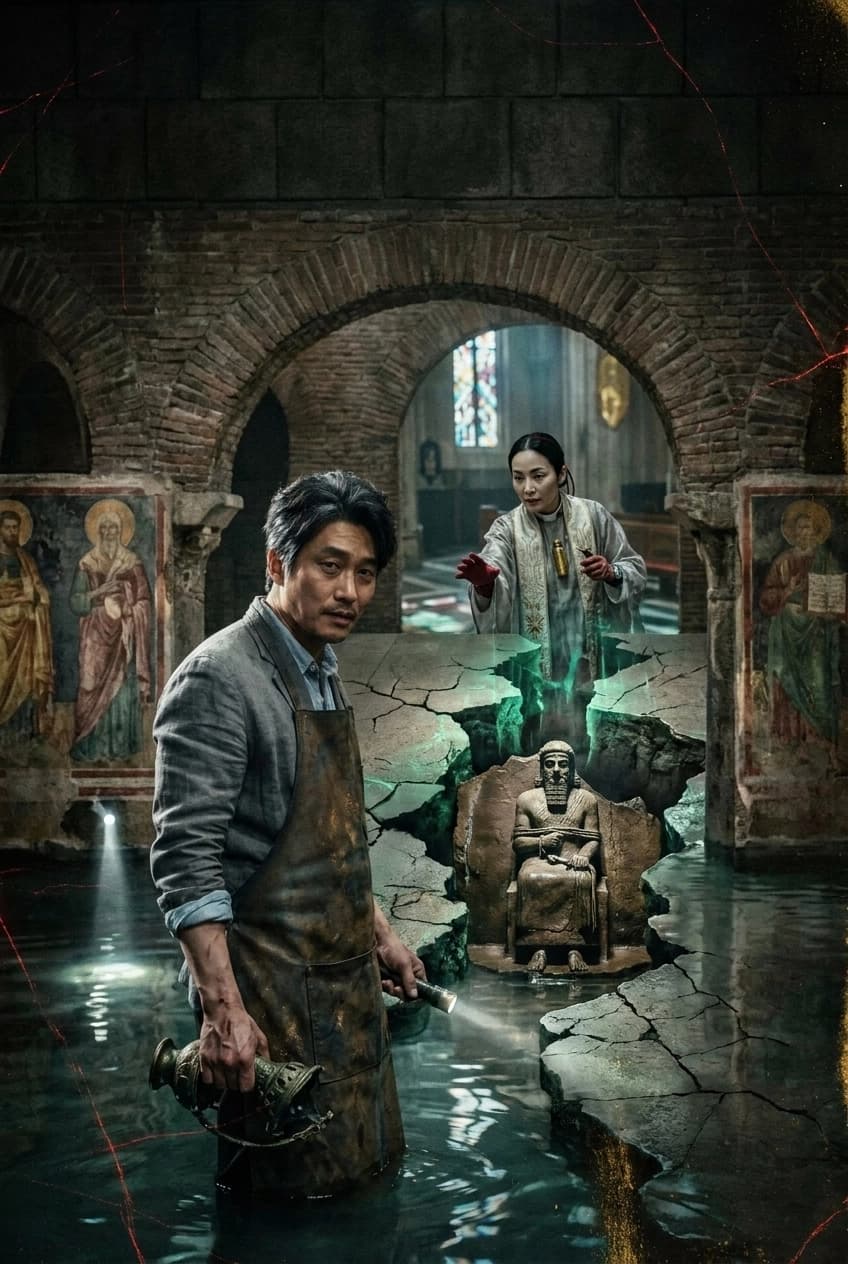

Confessions for the Damned cover image

Confessions for the Damned

What if, in postwar Berlin, three ancient fairies—bearing centuries-old curses—transformed a bombed-out brothel into a moonlit confessional, luring mortals and vampires desperate for absolution? Through hypnotic rites, each patron’s secret is exchanged for a fever-dream drive: lust that transcends boundaries, hunger for forbidden histories, or an urge to expose society’s rot. As the city’s wounds are reopened and its hidden powers awaken, the fairies confront the true price of amplifying desire—shaping the fate of both monsters and mortals in a world teetering between liberation and annihilation.

Weekly ranking

rank icon image
#1 inConcept
rank icon image
#1 inConcept
rank icon image
#1 inConcept
Scroll

Character

Protagonist Character

Valentine Krieger

GenderMale
OccupationFormer cabaret pianist, now the brothel’s “confessor” and doorman

Profile

Valentine Krieger, a 41-year-old German of mixed Silesian and French descent, is a lanky, stoop-shouldered figure whose presence at the brothel’s battered threshold is as magnetic as it is unsettling. Standing just over six feet, with a pianist’s long, elegant fingers and a body grown wiry from years of rationed meals and nocturnal labor, he exudes a faded glamour: high cheekbones and a narrow, expressive mouth made for wry half-smiles or murmured confidences, his storm-grey eyes flickering with both compassion and faint contempt. His once-jet hair, now streaked with premature silver, is slicked back with cheap pomade, though rebellious wisps always escape to shadow his pallid brow. A faint burn scar mars the left side of his jaw—a souvenir from the brothel’s bombing—lending him a ghostly aspect beneath the flickering neon and moonlight. Valentine dresses in thrifted formalwear: threadbare tuxedo jackets, silk scarves knotted at the throat, and scuffed patent shoes, his attire an ironic homage to vanished nights of Weimar decadence. Formerly the cabaret’s darling, Valentine’s hands still hover over invisible keys as he listens to confessions, his speech a blend of clipped Berliner street argot and florid, old-world turns of phrase, laced with sardonic wit and the occasional French endearment. Haunted by his own muddled past—an illicit love affair, fleeting brushes with fame, and the guilt of surviving when others did not—he possesses an uncanny intuition for reading desire and shame in others, making him both confidant and puppet-master for the desperate souls who seek the fairies’ rites. Though he claims disinterest in absolution, his hunger for stories and secrets is insatiable, hinting at a deep longing for connection or perhaps self-annihilation. His closest bond is with the brothel’s fairies, whom he both reveres and resents, seeing in them echoes of his own broken immortality. Restless and perennially on edge, Valentine chain-smokes clove cigarettes, hums Schubert lieder under his breath, and compulsively polishes the battered brass doorknob as if warding off some creeping taint. He is a man who has learned to weaponize empathy, using his acute sensitivity to both seduce and protect, but his tendency toward self-loathing and manipulation means he teeters constantly between genuine care for his charges and the temptation to exploit their vulnerabilities, making him a singularly treacherous—and indispensable—guide through Berlin’s postwar netherworld.

Antagonist Character

Baroness Ludmila von Schattenwald

GenderFemale
OccupationOccult Arms Dealer and Blackmailer

Profile

Baroness Ludmila von Schattenwald, a 59-year-old woman of Silesian-Polish nobility, stands at an imposing six feet, her frame sinewy yet regal, with the bearing of someone who has survived the collapse of empires and the mutinous tides of war. Sharp-cheeked and hawk-eyed, her pallor is accentuated by streaks of iron-grey hair pulled into an austere chignon, while a jagged shrapnel scar slices across her left brow—a memento from her brothel’s final bombardment. Her wardrobe, a calculated blend of velvet military coats and moth-eaten silk gowns, both conceals and flaunts her ambiguous allegiances and penchant for theatrical intimidation. Inhabiting the ruined penthouse of a once-grand hotel, she cultivates an atmosphere of decadent decay—her salon heavy with incense, antique weaponry, and the echo of whispered confessions. Ludmila’s clipped, archaic speech—punctuated by sardonic asides in German and Polish—betrays her patrician upbringing and a cultivated disdain for sentimentality. As an occult arms dealer, she traffics in relics and secrets, leveraging her encyclopedic knowledge of both supernatural currencies and human vice to manipulate Berlin’s desperate underbelly. Her relationships are transactional, maintained through favors and threats rather than affection; yet she privately longs to reclaim the power and reverence her lineage once commanded. Driven by a compulsion to control the city’s resurgent forces—be they vampiric, mortal, or fairy—she is ruthless, adaptive, and brilliant, but her obsessions leave her vulnerable to betrayal and moments of almost superstitious paranoia. A connoisseur of guilt, Ludmila is both drawn to and repelled by the confessional rites of the fairies, regarding their influence as an existential threat to her own dominion. Her calculated cruelty is undercut by flashes of morbid wit, and her habitual ritual—counting the bullets in her mother’s heirloom revolver before sleep—reveals a mind always bracing for the next siege. In this fractured city, she is a specter of old-world menace and modern desperation, her every maneuver shaping the moral and supernatural frontiers the protagonists must navigate.
Sidekick Character

Mireille Szabó

GenderFemale
OccupationDisgraced Red Army nurse turned potion-runner

Profile

Mireille Szabó, a 27-year-old Hungarian Jew with a gaunt, sinewy frame and a perpetual duskiness beneath her sharp cheekbones, stands just shy of five-foot-seven—her presence wiry but arresting, as if famine and adrenaline have sculpted her anew since the war’s end. Once a Red Army nurse, she was exiled in disgrace for pilfering morphine and “improper fraternization,” and now haunts the shattered arteries of Berlin as a potion-runner, ferrying illicit tinctures, black-market blood, and numinous relics between the city’s spectral underbelly and its desperate survivors. Her dark, cropped hair—often jammed beneath a threadbare beret—frames an angular face where mismatched eyes (one steel blue, the other a clouded gray from shrapnel) flicker with both suspicion and startling empathy; an old bullet scar mars her left eyebrow, a relic she never bothers to conceal. Mireille’s clothing is scavenged but purposeful: men’s woolen trousers, battered boots, and a moth-eaten military greatcoat lined with secret pockets, all chosen as much for camouflage as for utility. Her speech is clipped, carrying a guttural Budapest lilt, peppered with medical jargon and the occasional Russian oath—she is blunt, practical, and suspicious of sentiment, yet her bedside voice softens for the broken and dying. Fiercely pragmatic, she harbors little patience for Valentine’s confessional theatrics, but admires his resilience and his gift for reading souls; with the Baroness, she shares a mutual disdain, recognizing in the older woman a predatory hunger for power she both fears and envies. Mireille’s motivations run deeper than mere survival: she’s compelled by a restless urge to atone—not for her wartime crimes, but for her inability to save those she deems innocent, a guilt that manifests as compulsive risk-taking and an almost religious devotion to concocting “remedies” from scraps of folklore and battlefield science. Her wry humor and brusque bedside manner mask a crippling insomnia and a secret fascination with the supernatural forces threading through Berlin’s ruins; she is drawn to the fairies’ confessional not for redemption, but for the hope that their rites might unlock a new way to heal wounds—spiritual and corporeal—when science and reason fail. Mireille’s presence offsets Valentine’s dreamy fatalism with her skeptical, hands-on approach, and her resourcefulness fills the gaps left by his emotional entanglements; she is a catalyst and a skeptic, at once drawn to and wary of the city’s forbidden appetites, and her gritty realism and self-sufficiency both challenge and deepen the story’s central web of seduction, guilt, and transformation.

Plot Synopsis

In the charred heart of postwar Berlin, Valentine Krieger stands sentinel at the threshold of the city’s most notorious ruin: a brothel blasted open by Allied bombs and since transformed by three ancient fairies into something far stranger. The fairies, exiled from their woodland haunts centuries ago and cursed to feed on mortal secrets, have made the brothel a moonlit confessional—a place where shame, hunger, and desire swirl together in rites more intoxicating than any opium. Valentine, once the cabaret’s darling pianist and now its haunted maître d’, is driven by the compulsion to collect stories—a hunger for connection that borders on self-destruction. Each night, as Berlin’s monsters and mortals stumble through the battered door, Valentine reads the flicker of hope and dread in their eyes and ushers them toward the fairies’ velvet-draped chamber. He tells himself he’s above absolution, yet it’s his own guilt—the illicit wartime affair, the friends and lovers lost in fire and rubble—that gnaws at him as he polishes the brass doorknob, waiting for the next confession.

Valentine’s closest confidant is Mireille Szabó, the brothel’s potion-runner and an exile in her own right. Mireille, with her mismatched eyes and bullet-scarred brow, is propelled by a desperate urge to atone for her failures as a nurse during the chaos of war. She scoffs at the fairies’ rites—what good is moonlight and myth when bodies bleed real blood?—yet each night, she lingers in the confessional’s shadows, searching for a way to heal what science cannot touch. Mireille’s brusque pragmatism anchors Valentine’s flights of fatalism; she ferries potions and relics through Berlin’s ruins, always skeptical, always hungry for proof that the supernatural can be bent toward mercy rather than manipulation. Her presence is both a balm and a challenge to Valentine, who finds himself confiding in her more than he intends, drawn by the kinship of survivors who can’t quite forgive themselves.

Into this feverish world stalks Baroness Ludmila von Schattenwald, the brothel’s onetime madam and now Berlin’s most feared occult arms dealer. Ludmila, regal even in ruin, traffics not only in ancient weapons but in secrets—her own and others’. She despises the fairies’ confessional, recognizing its rituals as a threat to her own dominion over the city’s desperate and damned. Yet she cannot stay away; the Baroness is both repelled by and addicted to the rites, drawn by a compulsion to control the city’s resurgent powers and haunted by the loss of her aristocratic legacy. Ludmila’s every maneuver is calculated to preserve her influence, but her obsession with the brothel’s magic leaves her exposed to betrayal—from enemies and, more dangerously, from her own haunted conscience. She trades favors and threats with Valentine and Mireille, her alliances shifting as she seeks to shape Berlin’s supernatural underworld before it consumes her.

The fairies’ confessional quickly becomes Berlin’s worst-kept secret. Vampires, black marketeers, and shell-shocked soldiers queue at the broken door, each bartering secrets for a fever-dream drive—lust that transcends boundaries, hunger for forbidden histories, or a compulsion to expose the city’s festering rot. But as the rites amplify desire rather than soothing it, the city’s wounds begin to fester anew. A wave of violence erupts: a vampire prince is assassinated mid-ecstasy, his blood igniting a turf war among rival clans; a Catholic priest, driven mad by the fairies’ rites, exposes the sins of his congregation from the pulpit, sparking riots that echo through ruined cathedrals. Valentine, caught between his need to bear witness and his fear of what the confessions might unleash, finds himself teetering on the edge of complicity. Mireille, horrified by the contagion of unleashed desire, turns to forbidden alchemy in a desperate bid to contain the damage—her potions growing darker as she seeks to reverse what the fairies have wrought.

As the city spirals, Ludmila moves to reclaim control, orchestrating a clandestine summit between Berlin’s supernatural factions in her shattered penthouse. She proposes a pact: the fairies will restrict their rites, the vampires will curb their hunger, and the mortals will—however reluctantly—accept a new equilibrium. But the fairies, bound by their ancient curse, cannot simply stop. Their hunger is growing, and with it, the city’s descent accelerates. Valentine, desperate to save the brothel and its denizens from annihilation, strikes a terrible bargain with the fairies: he will offer up the deepest secret he possesses—his role in betraying a lover

Scenes

Scene 1
scene 1 image
Smoke and Velvet: The Night Valentine Refuses a Confession
[Place]
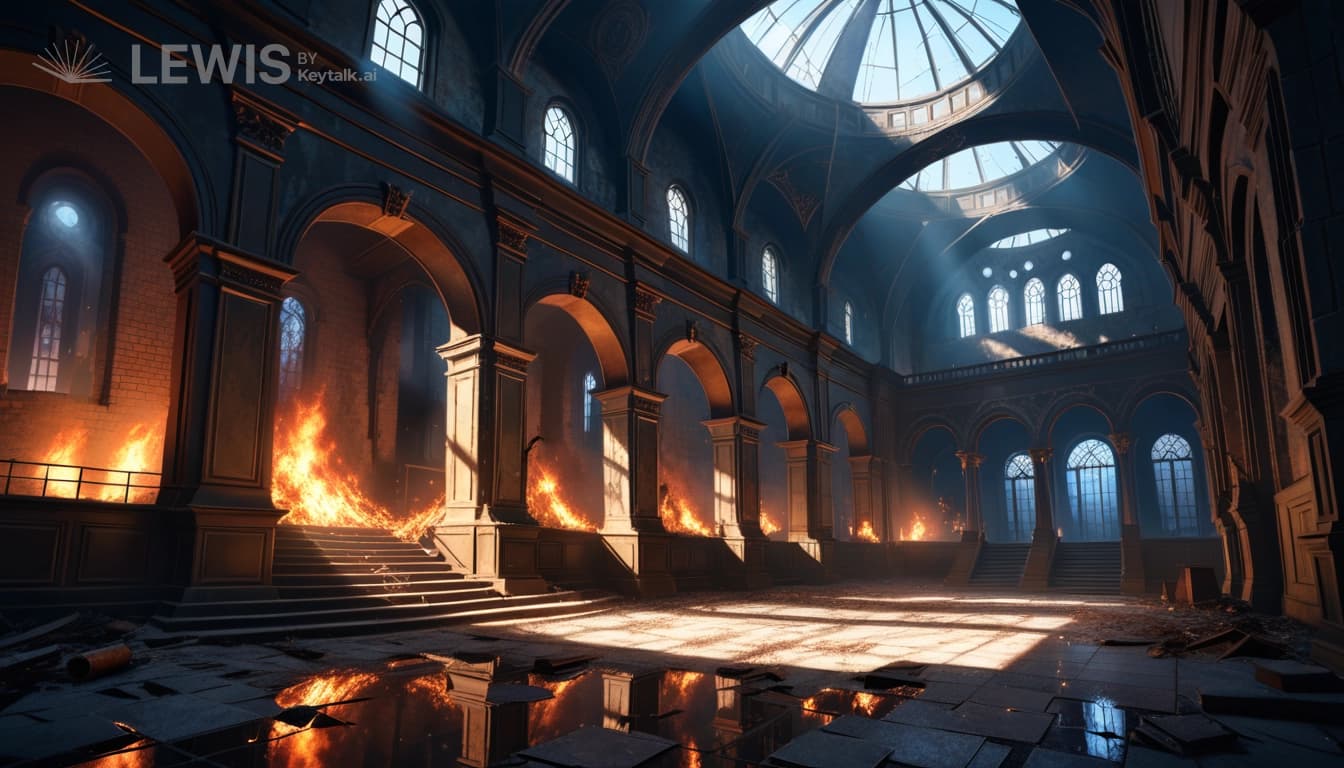
The shattered foyer of the brothel—once a palace of mirrors and gold, now all scorched velvet, broken chandeliers, and the thick scent of candle smoke. Moonlight seeps through the cracks in the boarded windows, pooling on the warped floorboards where guests linger, waiting for the next rite.

[Time]
Late at night, just after curfew, in the uneasy hush before the city’s nocturnal monsters emerge in full force. The aftermath of another bombing raid still hangs in the air, mingling with the perfume of desperation and the faint echo of distant sirens.

[Action]
The scene opens with Valentine methodically preparing the brothel for another night, polishing the battered brass doorknob, inspecting the velvet drapes for fresh tears, and lighting the last of the precious candles. His every movement is ritual, a way to hold chaos at bay. A young, shell-shocked soldier arrives, desperate to unburden himself in the fairies’ chamber. Valentine, reading the boy’s haunted eyes, is seized by a sudden, overwhelming sense of responsibility—he sees in the soldier a reflection of his own guilt, and for the first time, he hesitates.

Mireille interrupts, arms full of clinking potion bottles, her presence brisk but laced with concern as she notices Valentine’s distress. Their dynamic plays out in charged glances and clipped exchanges: Mireille tries to coax Valentine back into his role, while Valentine confides—haltingly—that he can’t keep feeding the fairies’ hunger at the expense of broken souls. The tension between duty and compassion crackles in the air.

The fairies themselves make a fleeting, unsettling appearance at the edge of the scene, their otherworldly hunger palpable. They pressure Valentine to send the soldier in, their whispers both seductive and menacing. Valentine, heart pounding, refuses—gently steering the soldier away and risking the fairies’ wrath. The decision costs him: the fairies’ magic recoils, and the air grows colder, the candles flickering with sudden violence.

The guests sense the rupture in the ritual. Some grow restless, others fearful. Mireille and Valentine exchange a look of uneasy alliance: the first fissure has appeared in the confessional’s carefully maintained order, and both know it will have consequences.

[Impact on the story]
This scene establishes Valentine’s internal conflict and sets the tone for his struggle between complicity and conscience. It marks the first time he actively resists the fairies’ demands, sowing seeds of distrust and danger. Mireille’s protective instincts and skepticism are sharpened, deepening her connection to Valentine. The fairies’ hunger is made tangible, and the fragile peace within the brothel is visibly shaken, foreshadowing the chaos to come.

[Description]
Valentine, haunted by guilt, refuses to send a broken young soldier into the fairies’ confessional, disrupting the brothel’s nightly ritual. Mireille’s support and the fairies’ wrath collide, exposing cracks in the uneasy truce that holds the ruin together. The first act of defiance ripples through the brothel, altering the balance of power and setting the story’s central conflicts in motion.
Scene 2
scene 2 image
[Mireille’s Wounds: Blood on the Bedsheets, Secrets on Her Tongue]

[Place]
A cramped attic room above the brothel, converted into Mireille’s makeshift infirmary. Dust motes drift through a shattered skylight, illuminating the scattered remnants of medical supplies, scorched bedsheets, and a battered trunk brimming with forbidden ingredients.

[Time]
The dead of night, just after Valentine’s act of defiance in the foyer. The city outside is restless—distant gunshots and drunken shouts filter through the cracked window, mingling with the tense quiet that settles after an argument.

[Action]
Mireille is tending to a wounded black marketeer—a regular, too bold for his own good—whose blood stains the faded sheets. She works with gritty determination, hands deft despite exhaustion, muttering about the futility of patching up bodies that will only return broken again. As she stitches him up, the marketeer, feverish and half-delirious, spills a secret meant for the fairies: the vampire prince’s enemies are plotting, and the brothel is their chosen battlefield. Mireille suppresses a shudder, knowing this knowledge is dangerous currency. The wounded man begs her to take his secret to the fairies in his stead, but she refuses, torn between her scientific skepticism and the lure of supernatural intervention.

Valentine enters, still shaken from the foyer, seeking Mireille’s counsel—and perhaps her absolution. Their conversation is tense and intimate, each confessing fragments of their failures and fears. Valentine admits the cost of his refusal, the fairies’ anger growing palpable even up here. Mireille, haunted by her inability to save everyone, wonders aloud if the brothel’s rites do more harm than good. Their bond tightens in this moment, forged by shared guilt and a fragile hope that maybe they can keep each other from drowning.

As the marketeer slips into uneasy sleep, Mireille tucks away his confession—a literal scrap of paper with a bloodstained secret—into her trunk of potions, choosing to bear the burden herself. The scene ends with Mireille peering out the attic window, watching the shadows shift in the ruined street below, knowing the violence is coming closer, and that her own wounds—physical and emotional—are far from healed.

[Impact on the story]
This scene deepens Mireille’s internal struggle, cementing her role as both healer and reluctant confidant. The revelation of the brewing vampire conflict raises the stakes and foreshadows chaos, while Mireille’s choice to withhold the secret introduces personal risk and a new thread of tension. Her dynamic with Valentine grows more layered, their mutual vulnerability exposing how deeply the brothel’s rituals have scarred them both.

[Description]
In her attic infirmary, Mireille tends to a wounded smuggler who entrusts her with a perilous secret. As Valentine seeks comfort and confides his fears, Mireille must decide whether to protect the brothel or risk everything by withholding the truth, deepening her bond with Valentine and setting the fuse for coming violence.
Scene 3
scene 3 image
[Title]
The Baroness Returns: Champagne, Gunpowder, and a Dead Man’s Dance

[Place]
The brothel’s grand parlor—once decadent, now a velvet-clad carcass of its former self. Faded mirrors, bullet-pocked paneling, and a chandelier strung with scavenged candles set the stage for a night thick with anticipation.

[Time]
A few hours after Mireille’s attic vigil, just past midnight. The city outside pulses with unrest; inside, the brothel’s clientele grows restless, rumors of violence rippling through the smoky air.

[Action]
Ludmila von Schattenwald sweeps into the parlor with her signature bravado—part warlord, part fallen aristocrat. She is trailed by two bodyguards and a battered trunk, the latter rumored to contain anything from relics to grenades. The regulars stiffen; no one knows whether to bow or bolt. She claims her old corner table with a regal sneer and summons Valentine, demanding both champagne and a private audience. The air is electric with the sense that something seismic is about to shift.

Valentine, still raw from his confrontation with the fairies and Mireille, masks his turmoil behind a host’s practiced grace. As he pours the Baroness her drink, their exchange is laced with old wounds and new threats. Ludmila probes for information about the recent disturbances—the vampire prince’s rumored enemies, the brothel’s swelling queue of desperate petitioners—but Valentine parries, wary of her motives. Their conversation is a chess match: each move a veiled warning, each glance a test of loyalty.

Ludmila’s real purpose surfaces as she presents Valentine with an ultimatum: the brothel’s supernatural rites are drawing too much attention, endangering her own operations. She warns that if the fairies cannot be controlled, she will take matters into her own hands—through violence, subterfuge, or both. Simultaneously, she offers a twisted olive branch: a partnership of convenience, her protection in exchange for privileged access to the secrets the fairies are harvesting.

Meanwhile, Mireille hovers in the background, catching fragments of their tense negotiation. She is torn between eavesdropping and intervening, knowing that any alliance with the Baroness will complicate their already precarious existence. Her skepticism of both Ludmila and the fairies grows, fueling her determination to find a third path.

The scene culminates in a symbolic gesture: Ludmila orders the band to play a waltz, commandeering the dance floor with a faceless patron as her partner. The dance is both a threat and an invitation—a declaration that she is back, and the rules have changed. Valentine watches, caught between dread and fascination, as Mireille slips away to prepare for the coming storm.

[Impact on the story]
Ludmila’s return decisively escalates the conflict, forcing Valentine and Mireille to reckon with threats from within and without. The uneasy truce between the brothel’s supernatural and mortal forces teeters on collapse, while Ludmila’s ultimatum sharpens the stakes: control the fairies or lose everything. Valentine’s loyalty is tested, and Mireille’s distrust of both magic and power intensifies, driving her toward riskier forms of resistance.

[Description]
The Baroness returns to the brothel, stirring fear and fascination as she demands control over the fairies’ dangerous rites. Her ultimatum and veiled offer force Valentine and Mireille to confront the fragility of their alliances, setting the stage for a deadly escalation in Berlin’s supernatural underworld.

Scene 4
scene 4 image
[Title]
The Fairies’ Hunger: Moonlit Rites and the Cost of Desire

[Place]
The brothel’s confessional chamber—a surreal, velvet-draped sanctum, pulsing with shadows and the intoxicating shimmer of fairy glamour. The city’s nocturnal creatures wait in the corridor outside, their secrets burning on their tongues.

[Time]
Shortly after the Baroness’s waltz, well past midnight. The city’s tension presses in, and the brothel’s walls seem to pulse with restless, hungry energy.

[Action]
The fairies’ hunger has reached a fever pitch, and tonight’s rites are more frenzied than ever. Valentine, raw from his confrontation with Ludmila, is forced to shepherd a surging crowd—vampires, war profiteers, wounded soldiers—into the fairies’ presence, watching as each is unraveled by the confessional’s magic. The fairies themselves are unpredictable, their ancient beauty edged with desperation; their need for mortal secrets is palpable, and their rituals bleed into something darker, more dangerous. Valentine is deeply unsettled, guilt gnawing at him as he recognizes that the confessions—meant to cleanse—are instead inflaming the city’s wounds. He is haunted by glimpses of his own past among the confessions, and for a moment, nearly falters in his duties.

Mireille, determined to witness the rites firsthand, slips into the chamber’s periphery. She sees the aftermath—the trembling hands, the wild-eyed need, the way the fairies’ magic leaves both confessor and confessant raw and ravenous. Her skepticism turns to alarm as she realizes the rites are not just uncovering secrets but weaponizing them. She attempts to intervene when a young soldier collapses, his mind fractured by the weight of his confession, but the fairies rebuff her with chilling indifference. Mireille’s frustration boils over; she resolves to concoct a potion that might shield the vulnerable from the fairies’ predation, even if it means breaking her own code.

Elsewhere, rumors of the night’s excesses ripple through the brothel. Some patrons are emboldened, others terrified. The atmosphere teeters on the edge of ecstasy and ruin. Valentine and Mireille share a fraught, private moment in the corridor—Valentine confesses his doubts about the cost of these rites, while Mireille’s resolve hardens. Both sense that the balance of power within the brothel—and the city beyond—has shifted dangerously.

[Impact on the story]
This scene marks a crucial escalation: the fairies’ hunger becomes an existential threat, and the confessional shifts from sanctuary to crucible. Valentine’s internal conflict deepens as he witnesses the destructive consequences of the rites, and Mireille’s determination to resist through alchemy emerges as a new, urgent subplot. The brothel’s status as a place of confession and catharsis is fatally compromised, setting all characters on a collision course with their own secrets and the city’s unraveling order.

[Description]
As the fairies’ rites spiral out of control, the brothel becomes a site of both revelation and ruin. Valentine and Mireille are forced to confront the true cost of feeding on secrets, each pushed toward desperate action as Berlin’s supernatural underworld edges closer to chaos.
Scene 5
scene 5 image
[Title]
Ashes in the Attic: Mireille Confronts the Ghosts She Failed to Save

[Place]
The brothel’s forgotten attic—a narrow, dust-choked space littered with relics from before the war: splintered furniture, scorched costumes, and broken talismans buried beneath ash and moonlight.

[Time]
Just before dawn, with Berlin’s streets eerily quiet after the frenzy of the night. The rest of the brothel lies in uneasy sleep, but Mireille is wide awake, driven by turmoil.

[Action]
Mireille slips away from the chaos below, carrying with her the weight of what she witnessed during the fairies’ rites. She climbs to the attic, seeking solitude but unable to escape the memories that haunt her—faces of wounded soldiers she could not save, gasping for breath in makeshift hospital wards, their secrets and suffering echoing the confessions she just saw weaponized. She searches through old trunks for remnants of her past, uncovering a bloodstained nurse’s uniform, half-finished potion bottles, and a faded photograph of friends lost to the war. The attic becomes a liminal space where reality blurs with memory and regret. Mireille’s hands shake as she tries to concoct a new potion, driven by a desperate hope to shield others from the fairies’ predation, but she’s taunted by her own failures—every attempt at healing feeling like a betrayal of those she couldn’t help. In the shadows, she’s visited by a hallucination or ghostly presence: a young soldier she failed to save, who questions whether she’s trying to help others or atone for her own guilt. The confrontation leaves her raw but determined. As sunlight breaks through a shattered window, Mireille resolves to finish the potion, even if it means defying the fairies’ rules and risking the brothel’s fragile order.

Meanwhile, downstairs, Valentine discovers Mireille’s absence and senses something has shifted. He’s uneasy, realizing that Mireille’s quest for redemption might lead her down a dangerous path—and that he, too, is nearing a reckoning with the past he’s tried to bury.

[Impact on the story]
This scene crystallizes Mireille’s motivation and thrusts her deeper into her own subplot. Her emotional breakdown and confrontation with her past fuel her determination to challenge the fairies’ rites, setting her on a collision course with both the supernatural and her own conscience. It also signals to Valentine that his closest ally may soon be at odds with the brothel’s dangerous status quo, upping the emotional and narrative stakes.

[Description]
Haunted by failures she cannot forget, Mireille seeks solace and resolve among the attic’s ruins. Her decision to fight back against the fairies’ predation, fueled by guilt and hope, transforms her from skeptic to active opponent—placing herself and the fragile peace of the brothel in jeopardy.
Scene 6
scene 6 image
[Title]
The Vampire’s Last Waltz: Death in the Confessional and a City Set Ablaze

[Place]
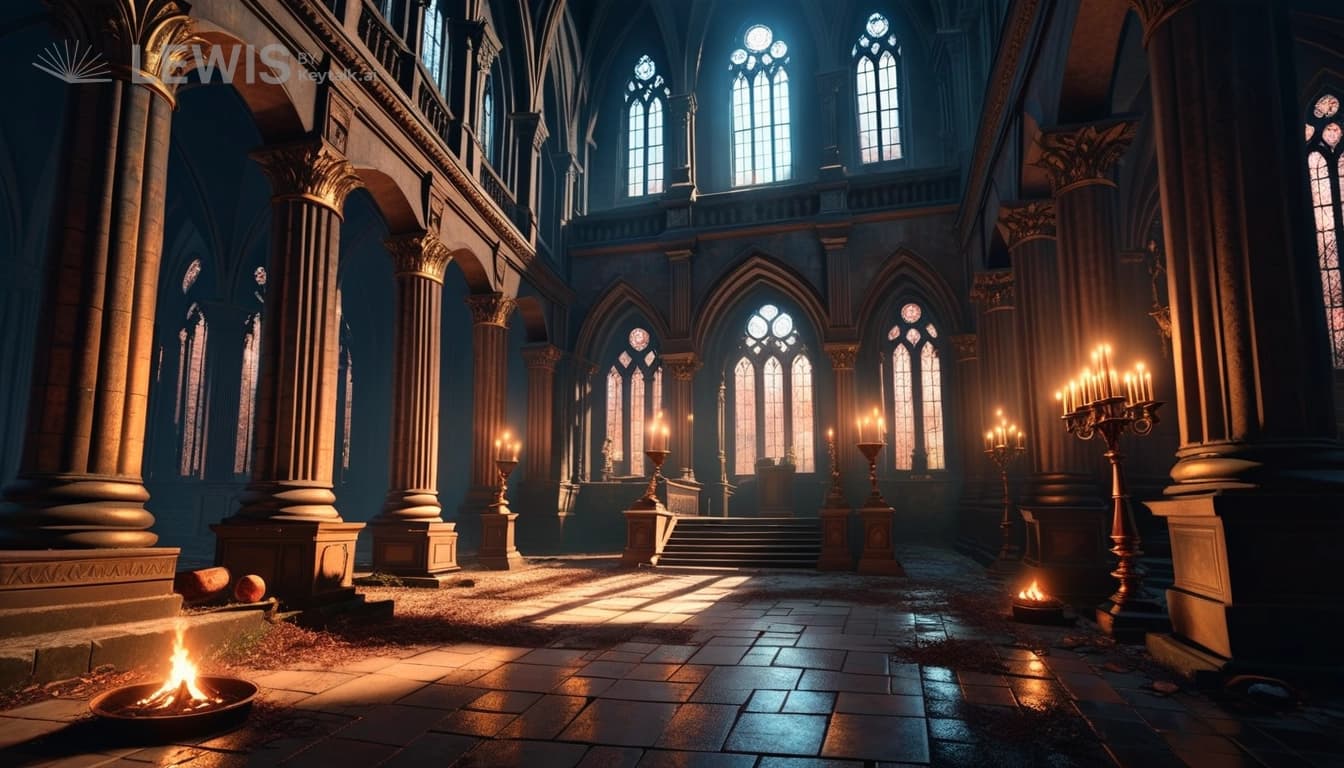
The brothel’s confessional chamber—once a boudoir, now a candlelit sanctum draped in velvet and shadow, pulsing with restless energy. Outside, the queue of Berlin’s desperate swells toward the street, the air thick with anticipation and fear.

[Time]
The deep blue hours just before dawn’s return, when revelers and predators are most unmoored and the city seems poised between oblivion and renewal.

[Action]
The scene opens with Valentine, brittle and exhausted, ushering a high-ranking vampire prince—known for his cruel elegance—into the confessional chamber. The fairies, hungry and luminous, sense the potency of the secret he brings. Tension simmers between Valentine and the prince; neither trusts the other, but both are compelled by forces greater than themselves. Mireille, clutching her unfinished potion, lingers in the shadows, torn between her longing to intervene and her fear of what she might unleash.

As the rite begins, the chamber becomes a crucible for secrets: the prince confesses a betrayal that threatens the fragile detente among Berlin’s vampire clans. The fairies feed greedily, their hunger stoked to a fever pitch by the magnitude of the revelation. The air crackles—magic, resentment, lust, and regret layered thick as smoke. Mireille’s potion slips from her grasp and shatters, its contents hissing across the floor, mixing with the spilled candle wax and the sharp scent of blood.

Suddenly, chaos erupts: an unseen assassin strikes from the shadows, plunging a silver blade into the prince’s heart mid-ecstasy. The fairies shriek, their ritual disrupted, and pandemonium spills into the brothel’s halls. Valentine, stunned and spattered with blood, tries to contain the violence as the prince’s death ignites a turf war—rival vampires and their mortal allies storm the chamber, desperate to seize advantage or escape vengeance. Mireille, shaken but resolute, uses shards from her broken potion to create a makeshift barrier, saving several would-be victims but drawing dangerous attention to herself.

The fairies, frenzied and starving, lash out indiscriminately, their curse amplifying the riot. Ludmila appears in the aftermath, surveying the carnage with cold calculation and making quick, ruthless decisions to salvage what power she can. The night ends with the brothel in ruins, the city’s supernatural factions in open conflict, and Valentine and Mireille realizing they have crossed a threshold from which there is no return.

[Impact on the story]
This scene is the spark that sets Berlin ablaze, shattering any pretense of order. The assassination plunges the supernatural underworld into chaos, forcing every major character—Valentine, Mireille, Ludmila, and the fairies—to confront the consequences of secrets unleashed. Mireille’s attempt to intervene reveals both her courage and her recklessness, while Valentine’s helplessness in the face of violence deepens his guilt and desperation. Ludmila’s power play intensifies, and the fairies’ hunger grows more dangerous, setting up the next round of confrontations and desperate bargains.

[Description]
A vampire prince’s murder during the fairies’ rite explodes into riot and bloodshed, fracturing the fragile peace and exposing every character’s fault lines. Mireille’s failed intervention and Valentine’s inability to prevent disaster mark a point of no return: the brothel is now a battleground, and Berlin’s descent accelerates.
Scene 7
scene 7 image
[Title]
The Riot Priest: Sermons of Madness Amidst Broken Glass

[Place]
A gutted cathedral near the Tiergarten, its stained glass shattered and pews splintered. Makeshift altars, scorched icons, and flickering candles cast fractured shadows. The crowd spills from the nave into the streets—mortals, vampires, and desperate souls alike, drawn by rumors of a priest gone mad.

[Time]
The morning after the brothel massacre, as gray daylight seeps through the ruins and the city’s wounds are raw and open.

[Action]
The scene opens with word of the vampire prince’s murder ricocheting through Berlin’s underworld, reaching even the city’s haunted clergy. Valentine, battered and sleepless, is drawn to the cathedral by the clamor—half out of guilt, half out of a need to bear witness. Mireille, shaken by her failures, follows him, desperate to do something—anything—to stem the tide of violence the confessional has unleashed.

Inside, a Catholic priest, eyes wild and vestments torn, stands atop the altar, delivering a fevered sermon. He exposes the secret sins of his congregation one by one—affairs, betrayals, black market deals—each confession drawn from the fairies’ rites and now hurled into the open. The congregation grows restless, then panicked, as private shames become public ammunition. Supernatural and mortal factions intermingle, suspicion and violence simmering beneath every shouted accusation.

Valentine tries to intervene, pleading with the priest to stop, but his own reputation as the brothel’s gatekeeper makes him a lightning rod for blame. Mireille, sensing the priest is under a supernatural compulsion, attempts to calm him with a hastily-mixed draught, but is nearly trampled in the chaos as the crowd turns on itself. A fight breaks out—old resentments and new revelations fueling a riot that spills out into the daylight, shattering what little peace remains in the quarter.

Ludmila arrives, using her authority and presence to quell the worst of the violence, but she is calculating—she gathers names, notes alliances, and quietly makes threats, already plotting how to turn this upheaval to her advantage. The fairies, lurking unseen, feed on the public spectacle of shame, their hunger growing even as the city’s order collapses further.

As the riot ebbs, Valentine and Mireille are left among the wreckage—more isolated than ever, haunted by the knowledge that the confessional’s magic is now uncontrollable, poisoning the city rather than healing it.

[Impact on the story]
This scene marks the moment when the contagion of confession escapes the brothel and infects the city’s soul. Valentine is forced to confront his role as both witness and catalyst, deepening his sense of culpability. Mireille’s attempts at intervention only highlight her helplessness, driving her toward darker methods. Ludmila’s ruthlessness and opportunism are amplified, while the fairies’ hunger becomes a citywide epidemic. The fragile boundaries between public and private, sacred and profane, are obliterated, setting the stage for desperate bargains and escalating violence.

[Description]
The priest’s public unmasking of secrets ignites a riot, turning confession into a weapon and plunging the city into deeper chaos. Valentine and Mireille’s powerlessness is laid bare, and the fairies’ curse seeps beyond the brothel, infecting Berlin’s very heart.
Scene 8
scene 8 image
[Title]
Bargains in the Blackout: Mireille’s Forbidden Alchemy and Valentine’s Confession

[Place]
The brothel’s candlelit backroom, now a makeshift apothecary—shelves lined with scavenged bottles, bloodied rags, and alchemical paraphernalia. Shattered mirrors reflect nervous faces as the city outside flickers with blackout and distant fire.

[Time]
Nightfall, hours after the cathedral riot. The city is tense and silent, save for distant sirens and the occasional gunshot. The brothel feels both fortress and prison.

[Action]
The scene opens with Mireille hunched over her workbench, frantically mixing a new, untested potion—her hands trembling, face streaked with ash and old tears. The failures of the morning haunt her; she’s convinced herself that ordinary medicine is useless against the supernatural contagion unleashed by the fairies’ rites. Her alchemy veers into dangerous territory: she uses ingredients she knows are forbidden, risking not just her own soul but the fragile boundary between life and death. The room is thick with the scent of burnt herbs and desperation.

Valentine enters, visibly shaken from the riot, bearing a fresh wound—physical and emotional. He confides in Mireille, unable to carry his guilt alone any longer, and reveals the full truth of his wartime betrayal. The confession is raw, halting, and nearly tears them both apart. Mireille is torn between empathy and anger; she knows the cost of secrets, but the magnitude of Valentine’s shame shocks her. Their bond is tested—Mireille challenges him, refuses to let him wallow, but also admits her own failures, creating a moment of rare mutual vulnerability.

As they argue, the fairies’ presence becomes palpable. They lurk just beyond the threshold, drawn by the scent of a secret too potent to resist. Valentine realizes the fairies are growing desperate, the city’s agony feeding their hunger. Mireille’s potion—intended to suppress the supernatural compulsion—fizzles ominously; she’s unsure if it will heal or corrupt further.

The scene climaxes with Valentine making a terrible, deliberate decision: he will offer his deepest secret to the fairies, believing it may buy the city precious time or at least contain the chaos. Mireille tries to stop him, but he’s resolute; she begs him not to sacrifice himself, but he’s convinced this is his only way to make amends. The emotional stakes between them rise—love, anger, fear, and the bitter solidarity of survivors blending in the candlelight.

[Impact on the story]
This scene is a crucible for both Valentine and Mireille, forcing them to confront their guilt and the limits of their power. Valentine’s confession is the pivot on which the climax will turn, as he chooses active complicity in the fairies’ hunger, hoping it will spare others. Mireille’s turn to forbidden alchemy signals her willingness to cross ethical lines, setting up the dangerous magic she’ll unleash in the finale. Their relationship is pushed to the brink but deepens in complexity and pain.

[Description]
In the brothel’s shadowy heart, Mireille risks everything with a forbidden potion while Valentine bares the secret that has haunted him for years. Their confessions and desperate bargains set the stage for the final reckoning, as the fairies’ hunger and Berlin’s doom grow impossible to ignore.
Scene 9
scene 9 image
[Title]
The Summit of Ruins: Ludmila’s Pact and the Fracture of Berlin’s Night

[Place]
Baroness Ludmila von Schattenwald’s shattered penthouse, looming over the bomb-blasted heart of Berlin—a grand space gutted by fire, windows jagged as broken teeth, moonlight leaking across ruined parquet and bloodstained velvet.

[Time]
Midnight, the night after Mireille’s failed alchemy and Valentine’s confession. The city simmers beneath a blackout, tension palpable in the unnatural quiet; word of the riots and murders has reached every shadowy corner.

[Action]
The scene opens with Ludmila orchestrating a clandestine gathering of Berlin’s supernatural factions—vampires, black marketeers, battered mortal survivors, and the fairies themselves—each entering her ruined domain under threat, promise, or desperate hope. Ludmila, regal but visibly fraying, commands the room with brittle poise, determined to reclaim control over the chaos unleashed by the confessional’s rites. She’s driven by both self-preservation and a genuine—if prideful—need to see the city survive her own legacy.

Valentine arrives, still raw from his confession, bearing the weight of what he’s agreed to do. Mireille, exhausted and wary, shadows him, clutching her failed potion as both shield and curse. The fairies appear, luminous and hungry, their presence unsettling even to the jaded vampires. Everyone is on edge, alliances uncertain, old betrayals flickering in every glance.

Ludmila presents her proposal: a pact that will bind each faction to strict limits—the fairies must restrict their rites, the vampires must curb their feeding, and mortals must accept the uneasy truce. She wields her remaining power ruthlessly, trading threats for promises, invoking debts and old wounds. The negotiations are tense and fractious; old rivalries flare, and each party tries to twist the terms to their own advantage.

The fairies resist—bound to their curse, they cannot agree to starve themselves. Tension escalates as their hunger becomes palpable, threatening to erupt into violence. Valentine, trapped by the bargain he made, stands as a reluctant intermediary; he’s the only one who truly understands the fairies’ limits and the stakes if they refuse. Mireille, caught between scientific pragmatism and the supernatural, tries to sway the group toward a solution that doesn’t involve more bloodshed or magical addiction.

As the summit spirals toward collapse, Ludmila is forced to reveal a secret of her own—a hidden vulnerability or past sin—offering it as leverage or sacrifice to keep the negotiations alive. This moment shakes her authority but also humanizes her in the eyes of the others, exposing the cost of leadership in a ruined world. The fairies, sensing fresh secrets and pain, are drawn to her, their hunger sharpening the sense of imminent disaster.

The scene ends with the pact agreed upon in principle but deeply unstable: the fairies’ hunger is only barely contained, the vampires are dissatisfied, and the mortals are left suspicious and fearful. Valentine and Mireille exchange a loaded, exhausted look—knowing that the balance struck here is temporary at best, and their own sacrifices are far from over.

[Impact on the story]
This scene establishes the fragile, necessary alliance that will determine Berlin’s fate. Ludmila’s authority is both tested and deepened, as she risks personal exposure to save her city. The fairies’ limits and hunger are made explicit, raising the stakes for the final confrontation. Valentine’s and Mireille’s roles shift from passive survivors to key players holding the city’s fate in their hands. The summit’s uneasy outcome creates both hope and dread, setting the tone for the story’s final reckoning.

[Description]
In the ruins of Ludmila’s penthouse, Berlin’s supernatural underworld hammers out a desperate truce—one stained by old wounds, fresh secrets, and the threat of unraveling. The scene forges an uneasy alliance, but the city’s fate hangs by a thread, as hunger, guilt, and the ghosts of war refuse to rest.
Scene 10
scene 10 image
[Title]
The Secret Beneath the Floorboards: Valentine’s Betrayal, the Fairies’ Reckoning, and the Choice That Breaks the Cycle

[Place]
The brothel’s confessional chamber—what remains of the moonlit, velvet-draped heart—shattered but stubbornly alive in the gutted ruins.

[Time]
Predawn, the night after the failed summit—Berlin’s blackout deepening, cold blue light bleeding through cracks in the ceiling, the city outside eerily hushed in anticipation.

[Action]
The scene opens with Valentine alone, standing in the confessional where so many secrets have been surrendered. He’s haunted and hollowed out, replaying the bargain he struck and the summit’s uneasy truce—fully aware that what he’s about to do will change everything, perhaps even destroy the fragile peace Ludmila risked herself to build. Valentine’s motivation is a fierce, desperate hope: to break the fairies’ curse, end the city’s spiral, and finally atone for his role in the betrayal that ended his wartime lover’s life. He knows the only way out is through complete, devastating honesty—offering up his most damning secret, not just to the fairies but to Mireille, Ludmila, and, in a sense, the entire city.

As he pries up the warped floorboards beneath the confessional, he uncovers the hidden relic tied to his betrayal—a bloodstained locket, or a letter, something tangible that holds the truth of what he did. The fairies are summoned by the scent of raw confession, their hunger now feral, barely controlled by the pact. Their arrival is electric, dangerous; they circle Valentine, sensing the weight of what he’s about to reveal.

Mireille bursts in, having followed clues from the failed summit—she’s torn between trying to stop Valentine (fearing the fairies’ reaction will destroy him) and her own need for closure. Her presence grounds the scene, her skepticism and care a counterpoint to Valentine’s near-martyrdom. Ludmila soon appears, driven by suspicion and self-preservation, determined to see if the pact can hold or if she must intervene by force. All three women—Mireille, Ludmila, and the fairies—are witnesses, each carrying their own scars and secrets.

Valentine confronts the fairies directly, offering up both the relic and the memory, refusing to hide the ugliest truth of his past. The act is excruciating: the fairies feed on the secret, but instead of simple satiation, the ritual twists. The chamber is flooded with visions—Berlin’s war-torn streets, the night of the betrayal, all the lives lost or changed by secrets kept and confessed. The fairies are forced to reckon with the cost of their hunger, experiencing the pain they have consumed for centuries. Mireille, caught in the storm of memory, finally understands the depth of Valentine’s guilt and her own need for forgiveness. Ludmila, facing the echo of her own confessions, is shaken but resolute.

At the climax, the fairies must choose: continue their predation and risk annihilating the city, or accept the pain of Valentine’s truth as a catalyst to break their curse—ending their need to feed but dooming them to mortal suffering, or even oblivion. Valentine, shattered but honest, offers them mercy or justice—his fate in their hands. Mireille and Ludmila, moved by his sacrifice, step forward to share the burden, offering their own confessions in solidarity.

The scene closes with the fairies making their choice, the confessional’s magic unspooling in a wave that ripples through the city. The brothel is transformed—either into a place of true healing or finally reduced to ashes. The survivors—Valentine, Mireille, Ludmila—are left in the dawn’s uncertain light, forever changed but finally free of the secrets that bound them.

[Impact on the story]
This scene is the emotional and narrative climax: Valentine’s confession forces the fairies to confront the consequences of their hunger, breaking the supernatural cycle that has tormented Berlin. The act of shared confession and sacrifice deepens the bond between the main characters, offering bittersweet closure and a chance at redemption. The city’s fate is irrevocably altered—either toward fragile hope or necessary loss. Each character emerges changed: Valentine by catharsis, Mireille by forgiveness, Ludmila by humility, and the fairies by the end of their curse.

[Description]
In the brothel’s ruined heart, Valentine’s ultimate confession becomes a reckoning for fairies and mortals alike. Secrets are exhumed, curses challenged, and the cycle of hunger and shame is finally broken—leaving Berlin’s survivors to rebuild beneath
'Confessions for the Damned'Story Chat

Want to chat with the characters from this story?

'Confessions for the Damned'Story Chat

Want to chat with the characters from this story?

story image
story image
story image

You might also like

Comments0

theme music