She Sold Her Love—Now the Receipt Demands She Forge the Same Night cover image

She Sold Her Love—Now the Receipt Demands She Forge the Same Night

In a city that buys and sells human memories by the ounce, a debt-ridden memory forger hides in plain sight—until she sells the one recollection she swore never to trade: the night she fell in love. The next morning, the man from that vanished evening walks into her shop as a cold stranger, clutching a receipt stamped with her name and dates that shouldn’t exist. He offers payment, then demands she forge the very evening she erased, trapping her between survival and the wreckage of his new, borrowed self. Every hour she hesitates, more people begin to forget her too, as if her signature is being edited out of reality itself.
Scroll

Character

Protagonist Character

Mara Vellin

GenderFemale
Occupationmemory forger and contract broker for the Ounce Ledger

Profile

Mara survives by repairing other people’s recollections, barred from forging her own past—until she accidentally sells the night she loved, leaving her with a proof-shaped absence that keeps stealing her from herself.

She speaks softly and works cleanly, but her hands tremble only when a client asks for something that resembles her missing evening; she can stitch truth back together while feeling it slip away in real time. Mara measures mercy in the small, immediate way—one more repaired memory, one less person forgotten—yet her deepest instinct is to break rules faster than she can justify them, because the city’s contracts treat time like a debt.

Background

Once, Mara apprenticed under a contract-law restorer who taught her the “Ward-safe” method of repairing memories—strict, repeatable, and designed to erase the forger’s own trace. Years later, when debt syndicates seized her ledger account, she used a loophole to sell repairs under her own signature, and the transaction “corrected” itself by removing the very night she dared to live fully: the beginning of her love for Elias Sorn.

Appearance

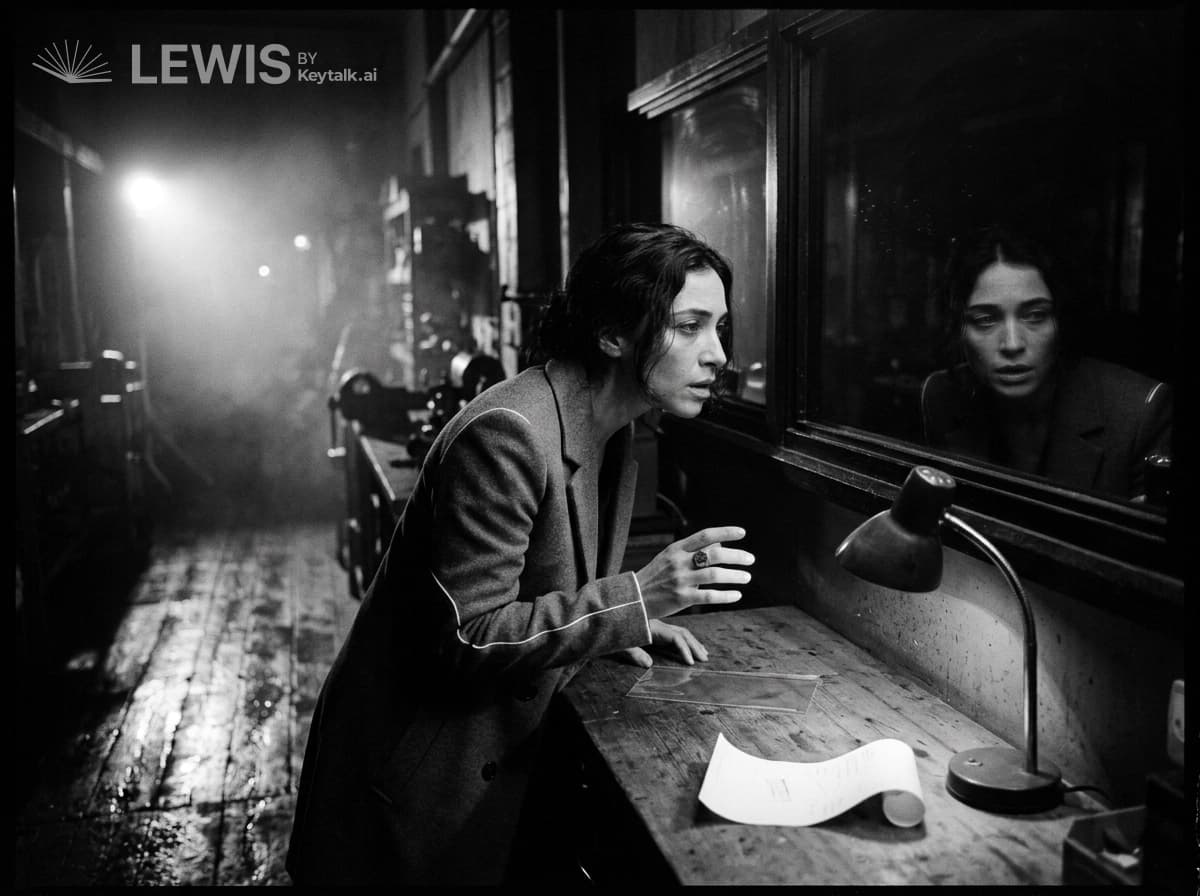
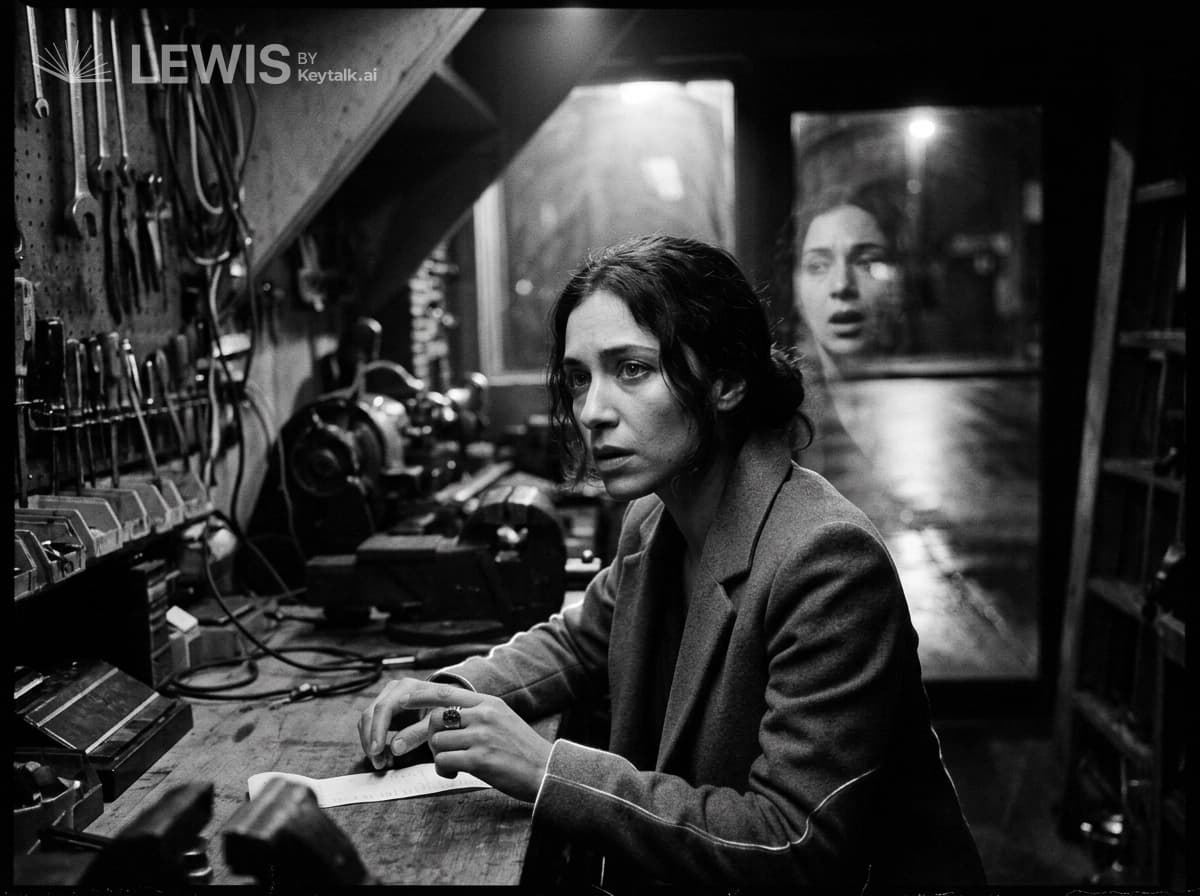
Mara Vellin presents like a careful clerk whose kindness is always one breath from panic: her dark eyes stay steady while the tendons in her hands betray an ongoing tremor, as though the city’s contracts are pulling her strings. She wears a soot-gray forger’s coat lined with fine, wrist-worn calibration threads and a thin brass ledger-ring on her index finger; her posture is slightly hunched over work even in stillness, lips parted with soft, practiced restraint. A faint scar arcs beneath her left jaw, and the way she avoids looking too long at her own reflection makes her seem both intimate and already erased—like someone listening for her name to be edited out of the air.
Love Interest

Elias Sorn

GenderMale
Occupationlicensed memory borrower and retrieval courier for the vanishing debts bureau

Profile

Elias enters Mara’s shop with a receipt stamped in her hand yet dated for a night he cannot fully remember—because he is the product of an edited absence meant to erase his own missing hours. His pursuit is also his procurement: reclaim the version of himself who loved Mara, even if the act of restoration starts rewriting Mara from the inside out.

He presents as coldly procedural, speaking in measurements and deadlines, but his control frays the moment Mara’s name is spoken out loud—his eyes track for a past that keeps slipping between frames. He wants justice in the form of a returned self, yet he’s willing to bargain with the machinery that broke him, because the alternative is admitting he was erased on purpose and chose nothing at all.

Background

Elias once served as a Ledger-Claim Broker, retrieving disputed recollections for the same syndicates that now collect him—until a forged contract “resolved” a personal loss by subtracting an entire night. The subtraction created a patchwork man: legally present, emotionally missing, and carrying evidence of Mara’s forbidden signature because the receipt survived where his memory did not.

Appearance

Elias Sorn appears as the city’s rules made human—lean and tightly measured—yet something in him keeps misaligning with the moment he stands in. His slate-gray broker coat hangs too neatly over a courier’s harness, and when Mara’s name flickers in the air his jaw tightens by fractions, eyes drifting as if counting missing hours that won’t stay put. A thin, silvery scar runs along his left collarbone like a seam that was stitched closed after a subtraction, and his half-turned posture—receipt hand lowered, body angled toward the shop door—reads as both a demand and a retreat from being recognized.
Antagonist Character

Galen Rusk

GenderMale
Occupationdebt collector for memory syndicates, certified auditor, and blackmail courier

Profile

Galen enforces city contracts while secretly “balancing” the books by rewriting signatures in memory—needed to erase Mara’s name on a strict schedule so his own debt ledger stays clean.

He treats people like arithmetic: when they plead, he smiles as if their suffering is a variance he enjoys correcting. Under his tidy manners lives a practical superstition—if he misses an hour, his edits begin to leak into reality and he may be erased like anyone else.

Background

Galen was once a subordinate auditor who discovered a loophole in signature-binding: erase the person who signed, and the contract cannot complain. He climbed by offering “merciful” revisions—then learned the city rewards punctual harm, making him complicit in the very identity fractures he claims to prevent.

Appearance

Galen Rusk presents as immaculate and unnervingly cheerful, tailored in slate-gray auditor finery with a thin memory-syndicate braid pinned at his lapel like a badge of professional devotion. He smiles with a clerk’s patience while his gaze measures exits and loopholes, shoulders squared as if bracing for an audit he expects to win; the ever-so-slight delay in his movements suggests the city’s hour-bound edits could “leak” at any moment. One signature detail anchors him: a pale crescent scar at his right temple, and his right hand always hovers near a brass ink-watch that never quite matches the room’s time.
Rival

Ysolde Kynn

GenderFemale
Occupationfield technician for the Chrono-Weave Exchange; specializes in “restorations” that never fully match

Profile

Ysolde masquerades as Mara’s professional rival while she quietly siphons living fragments from the same source Mara once tapped, then attempts to reconstruct the refusal-pattern behind memories that won’t be sold. She believes perfect restoration is a kind of justice—until her restorations begin to behave like predatory edits that rewrite who is owed what.

Ysolde speaks with courtly precision and keeps a warm, practical smile that makes people lower their guard, even as she tracks their confusion like a metronome. Her private need is to solve the mystery at any cost: she will trade someone’s grief for accuracy, then call it mercy when the ledger confirms she was “right.”

Background

Before the Ounce Ledger tightened its rules, Ysolde apprenticed under an auditor who taught her that a missing hour is never lost—only reclassified. When a restoration she performed to clear her mentor’s debts caused several neighborhoods to forget their own names, she escaped legal blame by becoming indispensably “helpful,” targeting Mara now because Mara’s forbidden draftwork matches the same anomaly pattern.

Appearance

Ysolde Kynn wears her “restoration” competence like polished armor: a warm, practical smile that never quite reaches the eyes, while her attention flicks between people as if counting their confusion. She moves with tidy efficiency—shoulders squared, chin slightly tilted—holding a field technician’s diagnostic case against her ribs, posture suggesting she’s listening to the building itself for the missing hour. A thin, pale scar traces the underside of her right wrist where a calibration mishap once reclassified her life, a quiet signature that makes her kindness feel measured rather than earned.
Guardian

Brother Tavi Rell

Gendernon-binary
Occupationcaretaker of the Ward Archive, a legal sanctuary storing orphaned recollections

Profile

Tavi guides Mara through the blind spots of memory law—the clauses courts and textbooks omit—while guarding her from becoming collateral to the very system that claims to regulate mercy. Their own hands are not clean: years ago they helped draft a “necessary” ban on a class of recollections, and a neighborhood’s names vanished overnight as if erased by a signature, forcing Tavi to treat every lesson like a vow and every protection like a wager.

Tavi speaks like a librarian with ink under their nails: precise, patient, and quietly feral whenever someone tries to call coercion “order.” They keep a ledger of promises instead of debts, yet they flinch from their own past choice—an instinctive need to fix the present collides with the fear that fixing it will reproduce the same harm. Their humor is gallows-light, the kind that arrives just before danger, because optimism is how they measure whether they’re lying to themselves.

Background

Raised in the Civic Lexicon district where memory contracts are carved into public stone, Tavi apprenticed under a judge-archivist who taught that mercy could be legislated. During a “preventative” audit, Tavi helped conceal an inconvenient precedent—one that later surfaced as the reason a whole block forgot its own names—and ever since, they’ve survived by extracting truth in fragments: a clause here, a loophole there, a door they can hold closed long enough for someone else to slip through.

Appearance

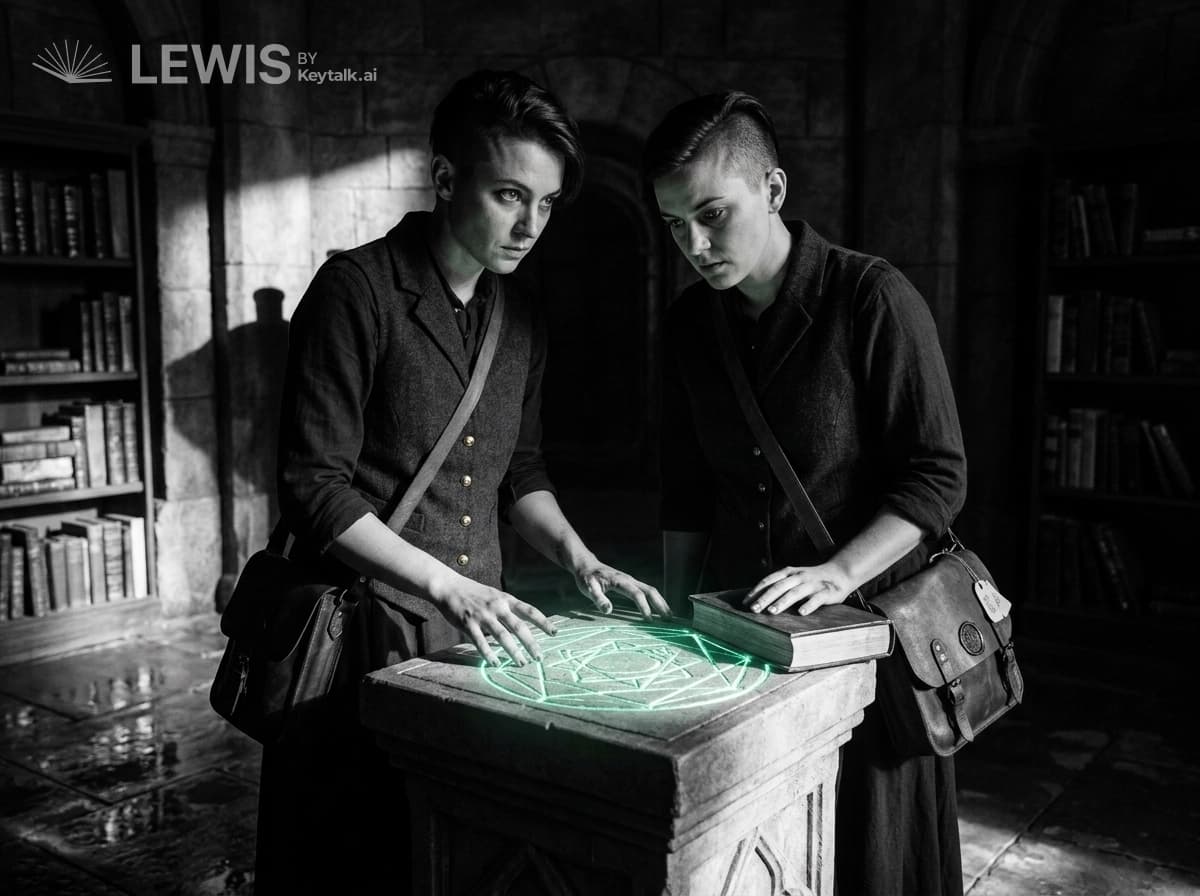
Brother Tavi Rell moves with the careful economy of someone who has memorized every legal clause by touch; their shoulders stay squared like a librarian at rest, yet their gaze keeps skimming the room for the nearest exit. They wear a dark archival habit-drape over a clerk’s vest and brass-keyed satchel straps, ink stains feathering at the cuffs, while a silver signet ring catches the light whenever they clasp their hands to keep from fidgeting. A thin, pale scar crosses one cheekbone—an old ward-mark from that “preventative” audit—making even their quiet smile feel like a promise held under threat.

Plot Synopsis

Dawn in Ledgerhollow arrives smeared with bruise-purple fog, and the city’s first Audit Week click-sounds drift through Mara Vellin’s shop like metronomes that have learned to breathe. She has done everything “right” since she broke the one rule that mattered—patched other people’s memories cleanly, kept her hands steady, let the Ounce Ledger’s instruments name the value of everyone else’s love and grief. But last night she sold the one recollection she swore not to trade: the hour her life tilted toward someone who made her feel, for the first time, like she belonged to her own skin. The payment cleared too easily. The signature scar on the ledger systems burned too brightly. And now, as if her body is paying interest on that sale even while she stands upright, the symptoms begin: the streetlights outside her window stutter, a delivery receipt in her ledger desk curls at the edge like it’s been edited, and a customer’s face softens into a blank familiarity when they ask for “the forger who used to—” then forgets the rest of the sentence mid-breath. Mara watches edit gutters glow mint-green under her threshold, the pale mint marching toward her door in a direction she recognizes too well—proximity and recordability, her city’s quiet law of contagion.

She tries to work anyway, because work is the only ritual that keeps her from unraveling. Her tools are calibrated, her contract templates are stacked in neat rows, and she can repair most damage with the right referent signatures—an existing stamp, an oath-ward imprint, a bureaucratic token that tells the Chrono-Weave what it is allowed to be faithful to. Yet the missing night leaves behind a proof-shaped absence that keeps returning to ledger systems as a fraud-detectable template. The colder truth presses in: by selling that love-night, she didn’t just remove it from herself; she created a ghost referent other people can notice and weaponize. Every hour she hesitates, more witnesses begin to lose her name in their mouths, as if reality is erasing the author the way a clerk blanks a line item.

The knock comes at opening bell. Elias Sorn steps into Mara’s shop holding a receipt with her name on it, ink stamped with her signature and dated for a night that no longer exists in her personal continuity—and in his. His posture is precise in the way of a man who learned control by being made to live without choices; his words arrive as measurements and deadlines rather than feelings, as if language were a corridor he can’t afford to walk without a railing. He should not be able to show up at all. His very presence is a contradiction made physical: a licensed memory borrower with a missing segment, a retrieval courier whose current self displays “variance penalties” that make him compulsively chase the absence that owns him. Elias’s eyes track the space Mara occupies like his gaze is trying to stitch itself to a referent template. He speaks coldly at first—about debt retrieval, about contract compliance—then the moment her name is said out loud, his mask slips, just for a breath. His hand tightens on the receipt as if he is holding onto a cliff edge. He asks her to forge the very evening she just erased.

Mara refuses instantly, the way survival reflexes before reason can catch up. The rules are cruelly clear: once a memory is extracted and paid for, its anchor to the ledger entry locks the owner’s continuity. Deleting or falsifying the ledger entry produces identity drift for the original person—collateral erasures that ripple outward through conversations, documents, and anyone who has recently handled the edited artifact. Forging her missing love-night would not “give Elias his past.” It would create an alternate continuity—one anchored to Mara’s signature, one that would become real enough to alter who she is while she stands there. Still, Elias’s request is not merely an act of obsession; it is also a trap built from the same rules. The receipt he presents is proof that someone else has already negotiated the existence of her erased night into a legal metadata structure. He’s not offering an impossible bargain—he is offering the one bargain reality has already decided is available.

Mara tries to buy time by negotiating repairs, offering smaller restorative stitches that don’t require touching the sold core. Elias listens like a man hearing weather reports he cannot change. He mentions the vanishing debts bureau with the calm of someone reciting the terms under which he was licensed to exist, and he gives her a detail that makes her stomach hollow: the receipt bears dates corresponding to Audit Week recalibrations that only occur at midnight, yet he holds it at dawn. His own missing hours are being rewritten to fit a schedule. Someone is editing his absence at the same time the city is editing her name out of the world.

When Mara pivots toward help, Brother Tavi Rell waits where she can’t ignore them—inside the Ward Archive’s legal sanctuary, a place whose oath-wards hum faintly when lies brush too close. Tavi’s presence is a quiet pressure on Mara’s shoulders, not comfort but accountability. Their ink-stained hands smell faintly of copper and paper. They explain, with the gentleness of someone who has had to tell people the same nightmare twice: the Ward Archive can prevent physical sampling without oath-consent tokens, but it can’t stop metadata fraud from counting as consent. If the ledger entry that anchors Mara’s missing night is already poisoned, then any “restoration” will ride the poisoned consent chain. Tavi also warns her about the watermark of signature scars—those unusually bright marks collectors and auditors track. Selling her love-night has made her absence a lantern, and an auditor can follow that light whether she hides behind law or not.

Before Mara can decide what mercy looks like in this particular cage, Galen Rusk arrives like a footnote made into a man. He comes through the shop door rather than the Archive, confident enough to treat sanctuary as a delay. He is a debt collector and certified auditor for memory syndicates, the kind of professional who smiles as if people’s suffering were a variance he can enjoy correcting. In his tidy manner lives a practical superstition: if he misses an audit slot, his own edits begin to leak, and he may become a second “vanishing debt,” erased as collateral for his failure to balance his ledger. His fear gives him predatory urgency. He shows Mara a schedule—tiny clockworks etched into brass ledger plates, each one ticking audibly—and he speaks of “compliance” with the soft voice people use when they are certain their victim will consent out of desperation. He frames Elias’s request as retrieval justice, not theft. If Mara refuses, she will be flagged as a contract broker who violated exchange law, and the collateral identity drift will reach beyond her: her clients, her customers, even people who merely glanced at her name on a transit board.

Galen’s leverage is not only legal. It is intimate in a way that feels like being touched by someone who has read your diary. He references the love-night indirectly, not by saying what happened, but by describing its coherence—the emotional density that makes such scenes expensive—and the particular way Mara’s signature scar marks the proof-shaped absence. Mara realizes the worst part: Galen is already rewriting signatures in memory to keep his own debt ledger clean, and her love-night sale has given him the perfect template to adjust the balance. Her refusal would not stop his edits; it would make his edits bleed into her world faster, because the system always assumes she is the one whose absence must be corrected, priced, or erased.

At the edge of this mounting pressure, Ysolde Kynn moves through the crowd like a warm blade. She introduces herself as a technician from the Chrono-Weave Exchange—courtly precision, practical smile, the kind of friendliness that makes people lower their guard—and she offers to “help” Mara by analyzing the proof-shaped absence. She keeps her gaze on Mara’s hands, on the exact tremor she tries to hide, and her questions are aimed with surgical politeness. Ysolde believes perfect restoration is a kind of justice, but her technique is disruptively close to violence: she siphons living fragments from the same source Mara once tapped and tries to reconstruct refusal-patterns around missing templates. She speaks of accuracy like it is mercy, then she tests the edges of Mara’s refusal-pattern as if prodding a bruise to see how it responds.

Mara tries to enlist Elias rather than fight him alone. She forces the conversation to turn inward, away from contract terms and toward the emotional logic of the absence. Elias admits, in careful increments, that he doesn’t fully remember the vanished night either. He is the product of an edited absence meant to erase his own missing hours. His current behavior, his compulsive pursuit, is not romance—it is a variance penalty pushing him toward the missing segment like a magnet searching for an earlier north. The cold procedural demeanor is both mask and symptom: a man who learned to keep his hands steady because he was built out of omissions. In spite of himself, Elias keeps circling back to a single sensory detail Mara recognizes from the moment she sold: the taste of winter air over warm street-candied nuts at a canal-side stall; a laugh that did not belong to him, yet lands in his chest like a borrowed heartbeat. The more he tries to retrieve it, the more he becomes an echo of Mara’s erased past—a borrowed self taking root.

The turning point arrives when Mara recognizes the receipt stamp as a stable referent signature she once used, long before she sold her forbidden love-night. It is not just her name; it is her method made visible. Someone has traced the outline of her technique and turned it into a template for fraud. The proof-shaped absence—her scar—has been repurposed to bind forgeries to a bureaucratic pattern, ensuring that any attempt to “repair” will be legible to the system as legitimate consent. In other words, the network doesn’t just know she erased something; it knows exactly how she would have repaired it. She has been engineered into being predictable.

Mara and Elias reach a moral collision they can’t avoid. If she forges the evening now, she might create a plausible continuity that ends the identity drift for others—stopping the erasures that are beginning to reach her clients and community. But she will also be manufacturing a new version of herself, one that includes a love-night she no longer holds and cannot verify. Restoration can’t perfectly reconstruct what was sold; it can only recompose plausible continuity using surviving fragments and templates. She cannot guarantee the “justice” she’s asked to provide won’t become another kind of theft, another cycle of erasing someone’s agency under the banner of repair.

Brother Tavi offers a countermeasure that is both legal and dangerous: they suggest rerouting consent metadata through the Ward Archive’s oath-wards without physically sampling the Archive’s prohibited recollections. The plan hinges on a loophole Tavi hates—because it’s the same loophole their institution has used before to protect people by bending the law that protects them. Mara must allow an oath-consent token to be generated by a third party template, one that doesn’t point to her signature scar. If they can break the chain Elias’s receipt implies, they can force the system to treat the forged memory as a new legal artifact rather than a direct correction of her stolen evening. But the loophole will also make Mara an accomplice in the creation of a “legal fiction,” and the burden of that fiction will be on whoever holds the oath-ward imprint. Tavi’s hands shake for the first time since Mara entered the Archive, not from fear of consequences but from guilt at repeating a choice that once erased neighbors’ names overnight.

Galen, hearing whispers of a diversion, escalates by moving the Audit Week recalibration up and forward in time. He wants Mara to comply before the system finishes indexing the absence. When Mara hesitates—just an hour, just long enough to think—the mint-green glow of edit gutters surges under nearby storefronts, and the faces of passersby stutter in the canals like films misregistered by a careless editor. People who have never met Mara look at her shop sign and cannot read the letters; they pronounce them incorrectly as if their mouths remember a different name. Mara’s own reflection in the black-glass canal lags half a heartbeat behind her movements, then begins to drift toward another shape, as if her body itself is losing referent stability. Elias’s variance penalties intensify too; he begins to hallucinate fragments of the night as if he is walking through a double exposure that refuses to resolve.

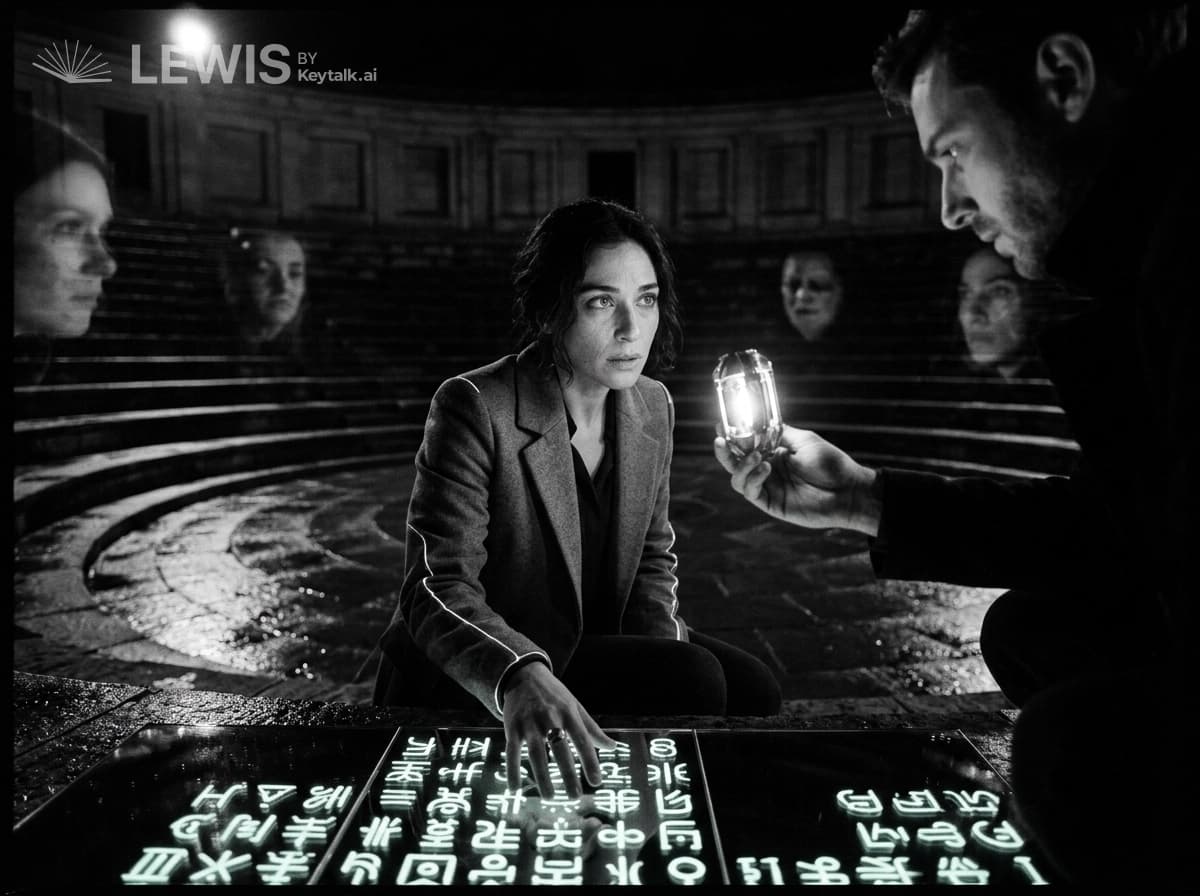
Ysolde tries to seize control of the procedure at the Chrono-Weave Exchange test grounds. She lures Mara with the promise of “accuracy,” but her real aim is to solve the refusal-pattern behind memories that won’t be sold. She wants the template, not the people. In the amphitheater of segmented mirrors, the air ripples and shows double-exposures of people who aren’t physically present, the ghost-impressions flickering like predatory suggestions. When Mara refuses to hand over her scar-template willingly, Ysolde attempts to siphon living fragments from the same source Mara once tapped—an act that feels less like help and more like harvesting a wound. The restoration attempt behaves like a predatory edit: it doesn’t just correct the missing night; it subtly rewrites who is owed what, turning Mara’s resistance into an input the system can interpret as consent.

The climax converges around the exact thing Mara tried to keep: the night she fell in love. Elias corners her at the edge of the Chrono-Weave mirrors, insisting he won’t survive the continuing drift without some form of retrieval. Galen stands nearby with ledger tokens that hum with authority, eager to certify whichever outcome will keep his solvency intact. Tavi watches from an oath-ward line that glows faintly around their feet, prepared to counter the metadata chain but knowing their own past complicates every protection they offer. Ysolde, smiling warmly, offers Mara a “choice” between imperfect restoration and total erasure, then pushes a device toward Mara that would bind the oath token to the very signature scar Galen wants exploited. The ticking clock isn’t just hours—it’s the speed at which information flows accelerants reality. Every witness looking up a name, every ledger record fetched by a bored clerk, every transit board announcing a contract renewal becomes fuel.

Mara makes her decision not by surrendering to the system’s definition of justice, but by weaponizing the system’s rules against its cruelest tendency. She agrees to forge, but only after reshaping the referent template so the forged evening becomes a new legal artifact with a consent chain that does not claim she is restoring her own stolen past. It’s an act of mercy framed as compliance, and it costs her something immediate: in the moment the memory takes shape in the Chrono-Weave instruments, her shop door briefly loses its sign, and a customer’s face blurs into anonymity as her name is edited out of their continuity for a handful of heartbeats. The cost proves she is still tethered to the missing segment—she hasn’t escaped identity drift by choosing for others; she has simply delayed the knife until after she can choose where it lands. Elias receives the forged evening as a continuity anchor, and his ghost-impressions resolve into a coherent emotional narrative—winter air and warm street-candied nuts, a laugh that belonged to Mara’s erased self. But the restoration can’t perfectly reconstruct the sold love; it recomposes plausible continuity using surviving fragments and templates, and those fragments arrive with an unsettling truth: the night Elias receives doesn’t just belong to him. It becomes a new version of Mara that he now carries inside his borrowed self.

When the mirrors settle, Elias looks at Mara with a warmth that feels like recognition rather than obligation—and for the first time, his control frays in a way that is not procedural. He doesn’t simply thank her. He asks her, quietly, if she remembers what she loved about him. Mara cannot answer. Her missing evening is still missing from her own continuity, yet she can see the shape of it in Elias’s recovered self like a shadow cast by a candle she no longer owns. She realizes the tragic paradox: forging Elias’s night has returned love to a man who was erased, but it has also ensured that love will now overwrite parts of her—through his borrowed memory, through the way he will speak of that evening to others, through the way the system will index her signature as the author of a new continuity. Even as the mint-green glow under her threshold fades, the absence doesn’t stop existing; it migrates. It seeks proximity, recordability, and acknowledgement.

Galen’s fear spikes too late. His ledger tokens fail to certify the outcome cleanly because the oath-consent metadata chain no longer matches the proof-shaped absence template he intended to exploit. He tries to recover solvency by pressing harder—threatening to report contract violations, preparing to correct Mara’s identity drift by force. Tavi steps forward, humor gone sharp at the edges, and points out the legal hazard Galen helped create: his earlier belief that signatures can be balanced without consequence was always superstition wearing a uniform. The system’s rules aren’t neutral; they punish the people who treat identity like arithmetic when edits leak into their own continuity. Galen has mis-timed his slot long enough for the audit recalibration to begin swallowing mismatched signatures. His tidy confidence begins to stutter like the faces in black-glass canals.

Resolution arrives not as a clean victory but as a negotiated ceasefire with reality. Mara returns to her shop to find her name still there—barely, like a stitch holding a hem together. Some customers will remember her, some will not; the erasure has been slowed, not cured. Elias, newly anchored to a love-night he can now describe in coherent emotional density, becomes both ally and reminder. When he speaks of the night, Mara hears the absence behind the words—the bright signature scar where her own continuity should have been. Her internal need remains unchanged: she wants mercy that is immediate and relational, not procedural cruelty disguised as contract. But now she understands the deeper cost of making mercy act like law: every fix can reproduce harm if it uses the wrong template, binds consent to a scar, or treats a person’s identity fracture as collateral arithmetic.

Tavi, bearing their own mentor wound, makes a vow to keep the Ward Archive’s sanctity from becoming another loophole Mara must use to survive. They propose a long-term strategy built on promises rather than debts—collecting evidence of metadata fraud patterns, mapping proof-shaped templates the way librarians catalog dangerous books—yet their eyes carry the fear that truth, once indexed, can be weaponized too. Ysolde disappears from public view after the botched predatory siphon, leaving behind an imperfect restoration lattice that flickers in the Chrono-Weave instruments. Whether she will return as a rival or a cautionary ghost depends on how hungry her justice has become.

In the final quiet after Audit Week’s loudness, Mara chooses to stay in motion rather than chase the stolen night into total self-erasure. She takes on fewer repair contracts that resemble her love-night—because she can feel the tremor in her hands returning whenever someone requests something coherent in the same emotional register—and she starts, carefully, to write new templates into the city’s machinery: referents that don’t bind to her scar. The love Elias now carries does not heal her missing hour, but it gives her a new understanding of what she’s been fighting for: belonging that isn’t granted by ledger solvency. Somewhere in Ledgerhollow’s layered ecology, edit gutters dim to embers, and the city resumes its stuttering glow—less certain, less hungry for erasure. Mara stands in her shop at bruise-purple dusk, listening to the clockworks tick audibly in the walls, and for the first time since she sold the forbidden night, she makes a choice that isn’t about paying a debt or dodging an auditor. It is about refusing—again and again—to let her life be rewritten by anyone holding a receipt.


Scenes

Scene 1

Opening Bell, Edited Air

Opening Bell, Edited Air
Dawn bruises bruise-purple across the canal while the shop’s brass clockworks tick louder than the street, each click landing a fraction too late in Mara’s ears. Under her threshold, mint-green edit gutters hiss and crawl—slow at first, then eager—until the glow reaches the legs of her worktable and warms the air with a cold, papery tang like old letters steamed open. Mara lifts her hand to steady her tools and watches her reflection in the black-glass pane lag half a heartbeat, her fingers arriving late as the shop sign above the door briefly refuses to spell her name. A first customer steps in with practiced politeness, tastes the air as if selecting a memory to forget, and exits without asking the question she knows they came to ask; behind them, a pale mint smear on the floor fades, leaving Mara’s contract tags slightly curled—paper trying to decide who wrote it.
Scene 2

The Proof-Shaped Absence Finds Her

The Proof-Shaped Absence Finds Her
Mara’s fingers smell of cold papery ink and dried flowers as she sets a repair canister down, but the moment the Chrono-Weave calibration needle touches the client tag, mint-green light flares brighter under her threshold and the canal’s black-glass reflection arrives a half-beat late—mouth forming the wrong letters to her own name. A fresh strip of receipt paper curls from the bottom edge like it’s deciding who wrote it, and when she holds it to the brass lamp’s halo, a hairline ghost mark appears in the stamp logic—an imitation of her receipt-stamp method, proof-shaped and repeatable. The shop’s air tastes faintly of ozone as she realizes the system isn’t merely forgetting her; it’s copying her predictability—and she snatches a contract slate, beginning an objection framed to carry into the Ward Archive rather than waiting for Galen’s addendum to certify it for everyone else.
Scene 3

Receipt-Stamp as Weapon

Receipt-Stamp as Weapon
Mint-green light gnaws along the shop floorboards, cold enough to raise gooseflesh beneath Mara’s wrists as her brass clockworks tick out of rhythm. The air tastes of ozone and cold papery ink while her reflection in the black-glass canal keeps mouthing the wrong letters, and the curling “auditor addendum” slips a new ghost-line stamp-shape into view as if the paper is rewriting itself under her lamp.
Scene 4

Fog Over the Shop Sign

Fog Over the Shop Sign
Dawn light slides across Mara’s counter like oil, and outside the black-glass canal the fog makes pedestrians’ faces stutter by a half-beat. Under her threshold, mint-green edit gutters flare brighter with each syllable she tries to shape into her own name, and the air tastes faintly of ozone and cold paper. In the ledger desk, a thin receipt has curled into existence—its edge warm from recent minting—yet when Mara leans in to inspect the stamp, her reflection in the canal window lags, mouthing the wrong letters on her shop sign while her fingertips register a brief, numb misalignment in her tools’ grip.
Scene 5

The Receipt That Isn’t Hers

The Receipt That Isn’t Hers
Mint-green light crawls along the shop’s floorboards and under the worktable, tinting the air so it looks bruised from the inside out; Mara’s lamp hums with a soft, metronomic click as her reflection lags, mouthing the wrong letters on her shop sign. The impossible receipt lies half-curled beside her ledger tools—its paper carries a cold papery scent like old letters left in winter rain—while Mara’s fingertips prickle as her instruments try to “help” and misalign the referent, turning her own name into a question mark. She spots the ghost-line in the stamp—an extra logic-seam that matches her repair cadence but binds it to a substituted anchor—and when she reaches to redraw it, the gutters flare and the ledger interface blooms with Galen’s midnight “auditor’s addendum,” making silence feel like a consent she hasn’t agreed to.
Scene 6

Galen’s Auditor’s Addendum

Galen’s Auditor’s Addendum
In Mara’s shop, mint-green light crawls like mint-ink under the floorboards, hissing softly as the curled proof-receipt steams at the edge of her ledger desk with a cold, papery scent like letters left in winter rain. Galen Rusk enters with measured confidence, placing a brass ledger token beside her tools; the token’s tick matches the shop’s clockworks, and when Mara tries to read the receipt stamp, her reflection in the black-glass window mouths the wrong words while the paper’s ghost-line sharpens into an official, ledger-legible seam.

Galen smiles as if balancing arithmetic, sliding an auditor’s addendum forward—ink still midnight-cold, dated for a recalibration that hasn’t arrived—then speaks in compliance clauses that make silence sound like consent. Mara’s fingers tremble against the slate, feeling the desk vibrate with each look-up she makes; the mint-glyphs on the margins crawl past the threshold toward the door like a contagion with paperwork, and Galen offers her the hard choice in the language the city rewards: object and broadcast the template, or file nothing and let the system lock her name to a repair she never performed.
Scene 7

Ink at the Gate, Salt in the Air

Ink at the Gate, Salt in the Air
The vestibule smells of iron brine and old paper as if letters have been left to dry in seawater; brass ledger plaques tick like trapped insects while mint-green light worries the doorframe from the outside. Tavi presses an inked token-blank into the oath-geometry, and the floor answers with a low hum—then the certification imprint flares and, for a heartbeat, shows the same proof-shaped absence outline as Mara’s scar-template, only refracted through the Archive’s legality. Mara’s breath catches; far down the corridor, a contract bell sounds once with Galen’s cadence, and Tavi feels the ward’s physics tug at their past before they can complete the reroute—so they generate the token anyway, knowing the Archive is already writing someone’s liability into the ink.
Scene 8

Receipt-Logic in a Sanctuary of Oaths

Receipt-Logic in a Sanctuary of Oaths
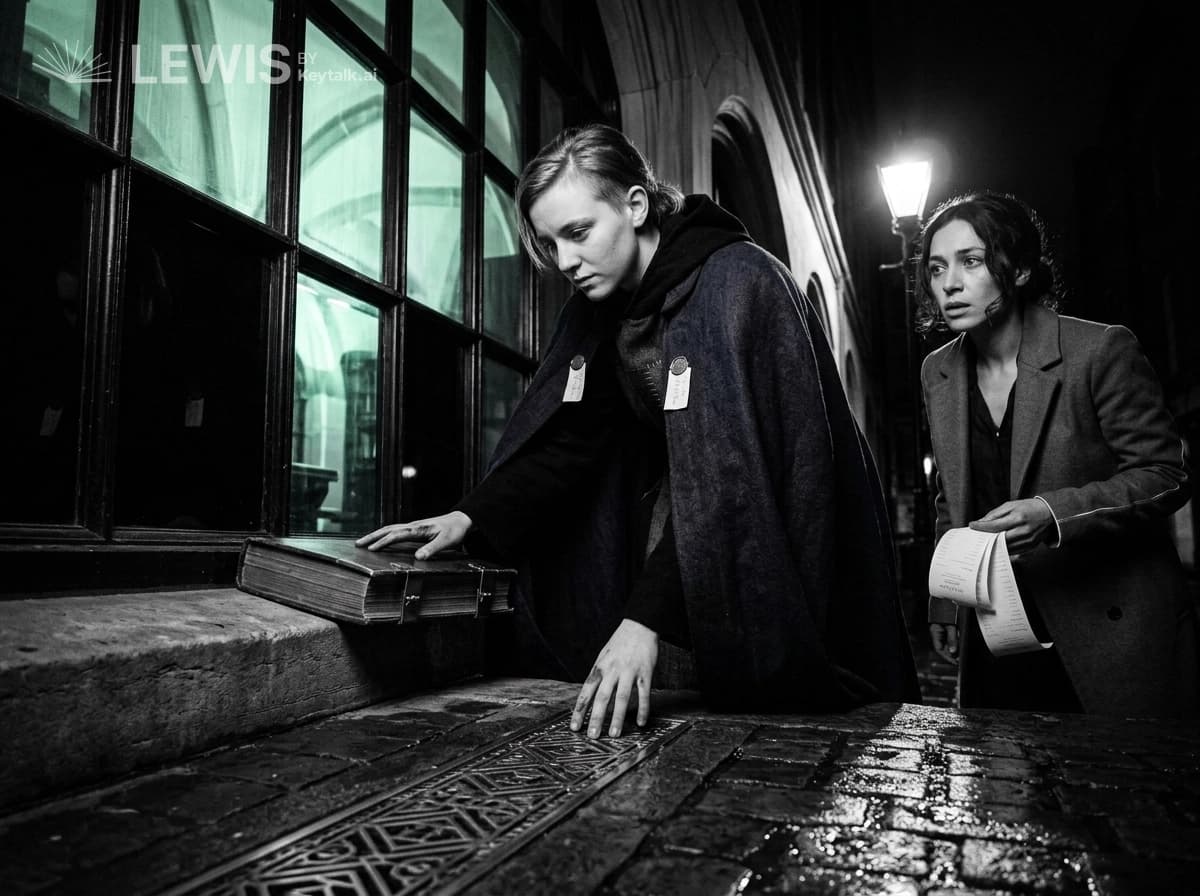
Brother Tavi guides Mara to the trench of brass filigree at the Ward Archive’s edge; the air underfoot is cold enough to raise gooseflesh and smells faintly of dried flowers steeped in ink. Beyond the black-glass panes, mint-green edit gutters lick along the street like a slow fire searching for breath, and the oath-ward line answers with a low, toothy hum that makes Mara’s receipts curl in her hands. When Tavi lays the token-blank into the oath-geometry and speaks the neutral template aloud, the sanctuary’s certification glow blooms—then shivers, as if trying to read itself with the poisoned logic of a “receipt that shouldn’t exist.” The Archive flashes a reflected stamp-shape—proof-shaped, familiar, and wrong—before Tavi forcibly reroutes the certification so the chain cannot anchor to Mara’s scar; the law accepts the rewrite by binding new liability to Tavi’s own compromised past-ward, and Tavi’s ink-stained fingers tremble as the hum turns into a quiet, resigned purr like a lock closing on someone else’s sentence.
Scene 9

The Liability is a Living Thing

The Liability is a Living Thing
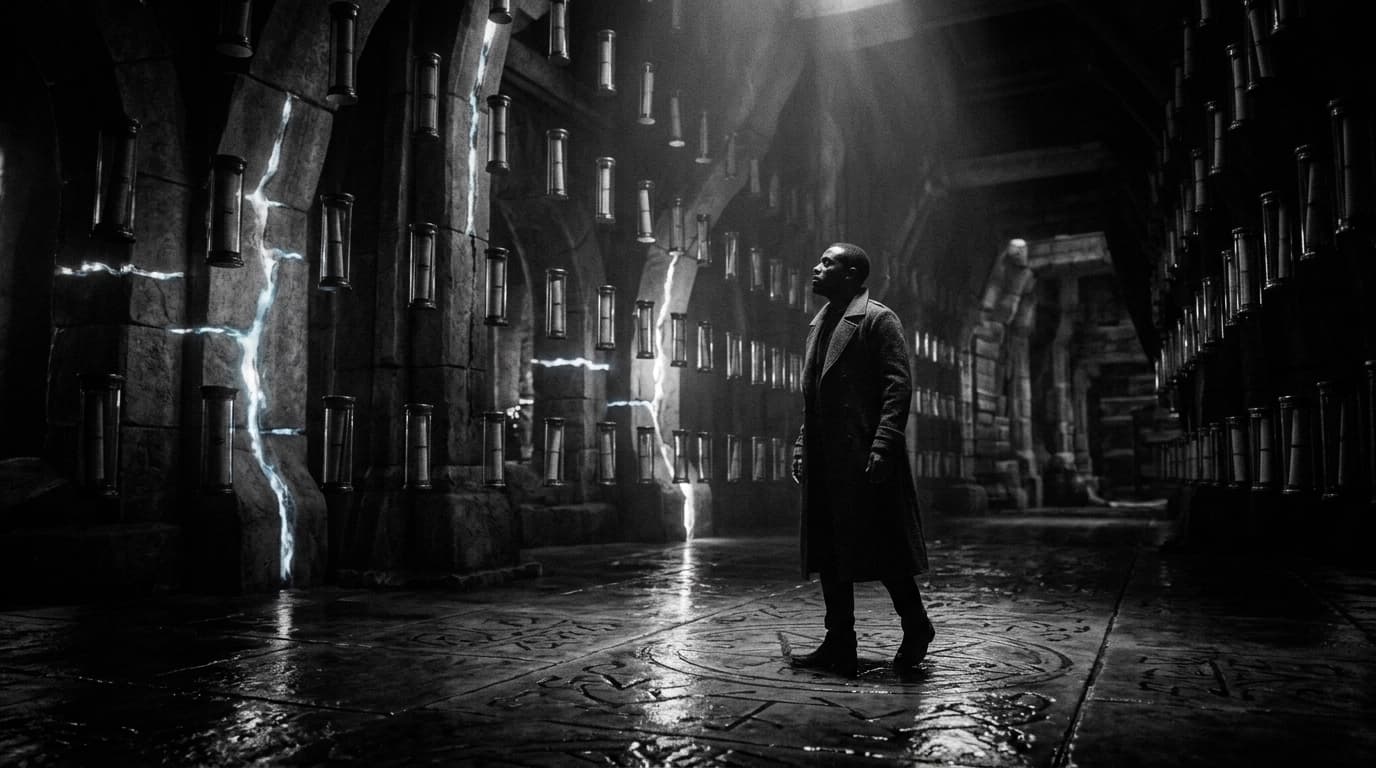
In the Vault Antechamber, the oath-ward filigree hums like a held breath, and the air tastes of salt and old paper as mint-green light seeps under the brass threshold in tiny, urgent pulses. Tavi presses an inked token-blank into the oath-geometry with numb care—then the certification glow blooms and, for a heartbeat, shows the familiar proof-shaped absence—before snapping to Tavi’s own name in the ledger-echo, as if the sanctuary itself has decided who deserves the consequence.
Mara’s voice is close but muffled by the ward’s low resonance; behind the stone, a contract bell rings once with Galen’s cadence, and the token in Tavi’s palm goes warm, heavier, almost alive. Tavi steadies their shaking fingers by touchless guidance—guiding Mara back from the glowing boundary—while the sanctuary seals the new liability anchor onto Tavi’s compromised past-ward imprint, blocking the chain that would have certified Mara’s stolen love-night and leaving Tavi to feel the threat of becoming the next vanishing debt.
Scene 10

Lattice Door, Bruise-Fog

Lattice Door, Bruise-Fog
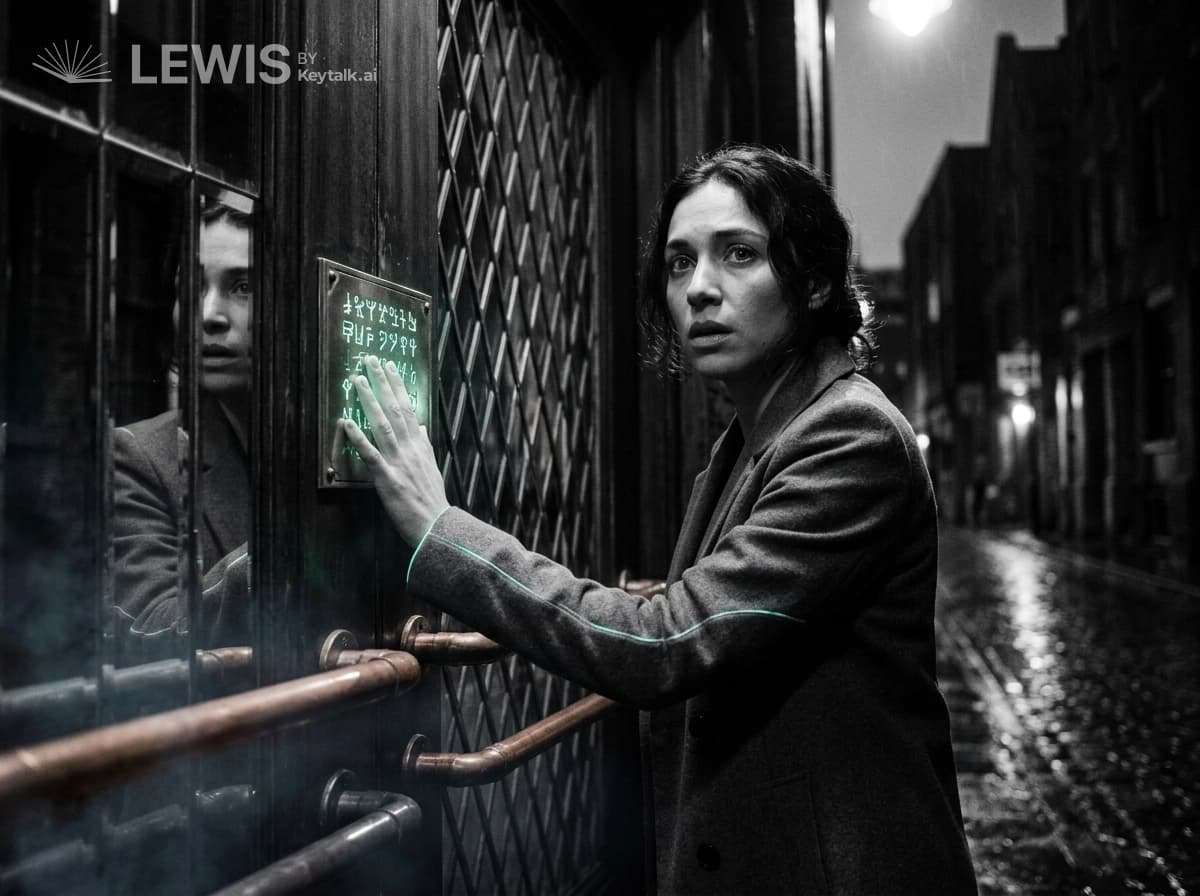
The lattice door resists with a soft, metallic click, and when Mara presses her palm to the plaque the cold under her skin tastes faintly of old letters and dried flowers. Bruise-fog drifts around the copper rails as the segmented mirrors behind the glass shiver—air rippling like a second heartbeat—and for an instant she sees her erased winter-air moment projected as if it belongs to someone else, mint-green glyphs flickering at the edges of the image. Behind her, Ysolde’s voice turns gentle as cloth, asking whether Mara can “remember precisely,” while, far away, Audit Week’s clockwork click-speeds up; even through the antechamber barrier Mara feels the edit gutter’s mint light press closer along the floor, ready to turn observation into involuntary consent.
Scene 11

Warm Smile, Cold Siphon

Warm Smile, Cold Siphon
Warm air from the calibration bay vents smells faintly of dried flowers and cold copper, but the mirrors’ segmented light turns everything antiseptic—each time Ysolde speaks softly, the red calibration bands tick once, like a metronome resetting. Ysolde leans close with courtly patience, her gloved fingers holding a neutral oath-ward simulation plate while Mara’s pulse answers the mirrors’ whisper; under the skylight, the air ripples and briefly shows a double-exposure of Elias’s anchored love—winter-air over street-candied nuts—wrapped in mint-green glyphs that crawl up Mara’s own hands like labels on a canister. Galen’s ledger token hums a legal note that tastes like pennies on Mara’s tongue; Ysolde’s siphon draws Mara’s refusal-pattern toward the oath-simulation, and Mara forces the lattice to bite a decoy referent—her chosen misdirection—so the mint-green glow fractures into a readable ‘fingerprint’ of method, exposing how the consent chain is being forged rather than repaired.
Scene 12

Proof-Shaped Rejection

Proof-Shaped Rejection
The air in the amphitheater tastes of ozone and cold paper as the segmented mirrors shimmer under a skylight that never quite settles; Mara feels the floor vibrate through her shoes, hears the clockwork tick of Audit Week speeding up, and watches Galen’s auditor token pulse like a slow heartbeat. When Mara presses her extracted fingerprint into the calibration field, mint-green glyphs crawl across the mirror rings in bright, readable seams—then the restitution lattice answers with a harsh, stuttering refusal: Elias’s winter-air memory blooms in coherent emotional density while Ysolde’s predatory signature overlays it like a glitching caption. For two breaths the world misregisters—faces in the periphery blur, then re-form—and the ledger certification sound dies mid-note as if the Exchange itself has decided Galen’s version of reality can’t be reconciled.
Scene 13

Click-Sounds, Soft Evidence

Click-Sounds, Soft Evidence
The clockwork in Mara’s walls ticks louder than the streetlights, each click sounding like a tiny seal being pressed into place; the mint-green glow under her shop door keeps crawling, then hesitates as her fingers touch the third-party token. The air tastes of ozone and iron ink while her repaired contract slips curl at their edges—soft evidence of what Galen tried to certify—until Mara slides her constraints into the ledger interface with the steadiness of a vow. When the forge completes, the black-glass canal outside shows her reflection lag a fraction of a heartbeat, then recover; the contagion’s glow unhooks in a thin mint seam and drifts upward into an ‘orphaned template’ cabinet entry, leaving behind only the scar as a severed, cataloged datum instead of a widening erasure.
Scene 14

Oath-Token With Teeth

Oath-Token With Teeth
The oath-ward corridor feels like stepping onto a cooled gear: brass inlays bite gently through Mara’s shoes, and the air reeks of copper, old parchment, and ozone as the mint-green hiss from outside grows louder with every minute she hesitates. Brother Tavi’s inked hands hover over the token-blank, and as Mara watches the ward geometry flare, Galen’s certification logic tries to ‘reach’ the token—each time the ghosted stamp glyph appears, the ward’s teeth snap shut, ringing with a hard, metallic note that makes Elias’s name taste wrong in Mara’s mouth.
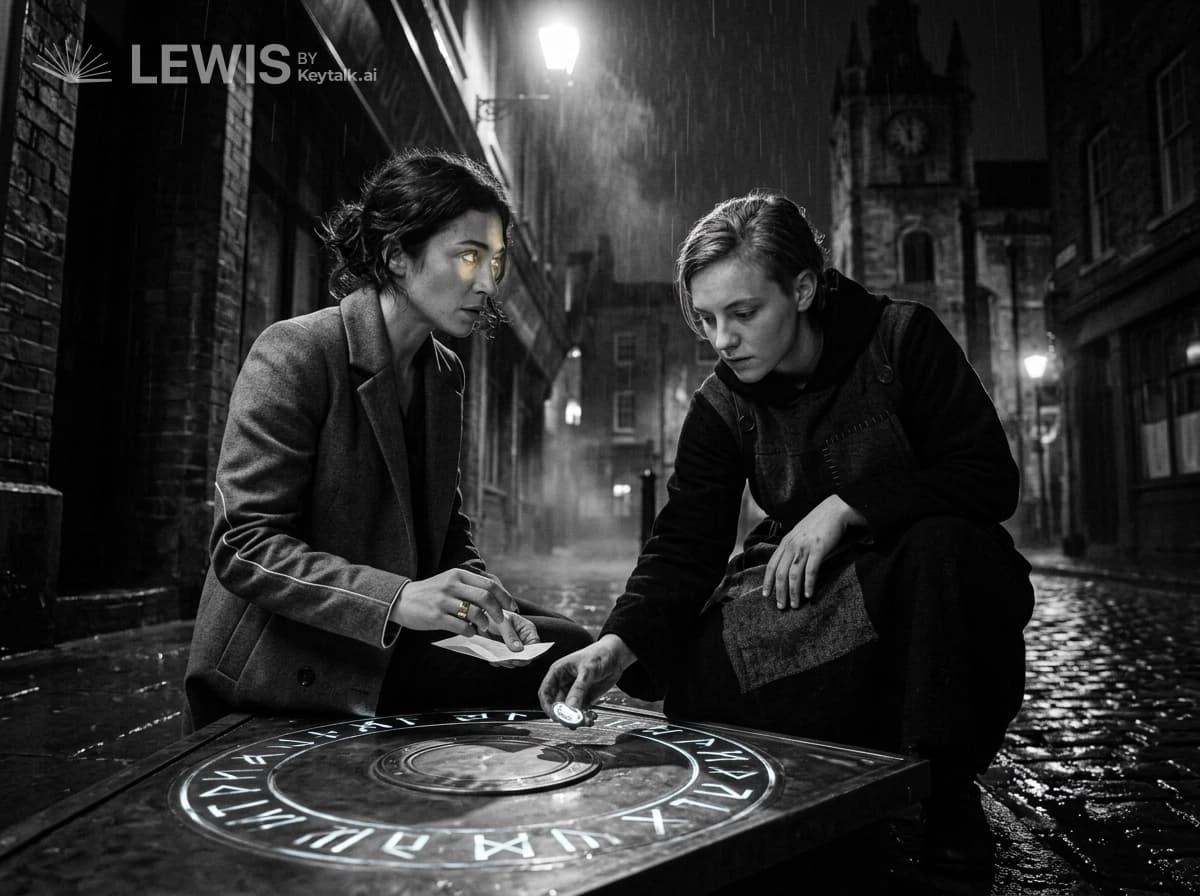
When Ysolde’s warm smile presses into the corner of Mara’s vision, the offered shortcut oath-template tries to key itself to Mara’s receipt-stamp scar. Mara refuses with a whisper and signs anyway in the only way the Archive will accept—letting Tavi’s endorsement imprint become the chain instead of her scar—so the finished token glows pale, lawful white rather than mint-green. The moment the token seals, Tavi flinches as if struck by cold paper, ink-friction leaving a tooth-shaped mark on their ledger entry, and Mara feels the identity drift under her threshold pause—just long enough to make the next step possible.
Scene 15

Leaving the Scar Behind

Leaving the Scar Behind
The mirror-ring hum thickens into a low, almost conversational vibration as Mara lays the neutral oath-token beside the canister of the ledger-weighted replacement evening; each click of the bay’s clockwork sounds like a seal pressed too close to an open bruise. Galen’s ledger token hisses mint-green at the chamber seams and Ysolde’s warm smile angles toward Mara’s hands, but Mara holds her tools steady, signing the consent reroute with her jaw clenched and tasting ozone as the restitution lattice bites only into the decoy referent. For a heartbeat, Elias’s anchored love projects in the air—winter air over street-candied nuts, a laugh like a borrowed heartbeat—then the light unhooks from Mara’s receipt-stamp logic: the mint-green drains into a thin, dying seam as the scar-template migrates into an “orphaned template” cabinet, leaving Mara with her name intact for the first time in days.
'She Sold Her Love—Now the Receipt Demands She Forge the Same Night'Story Chat

Want to chat with the characters from this story?

'She Sold Her Love—Now the Receipt Demands She Forge the Same Night'Story Chat

Want to chat with the characters from this story?

story image
story image
story image
story image
story image

Comments0

theme music
She Sold Her Love—Now the Receipt Demands She Forge the Same Night by Writer K