The Lighthouse Sends Apologies Back—Then Steals the Person You Love cover image

The Lighthouse Sends Apologies Back—Then Steals the Person You Love

Inside a seaside town, a retired lighthouse keeper discovers a letter sealed with wax that never melts—addressed to a child who isn’t born yet. The message predicts the next week’s storms with unnerving precision, yet every time the keeper tries to stop one disaster, the town’s power grid “corrects” itself by erasing a different memory from someone nearby. A young volunteer nurse realizes the lighthouse isn’t sending forecasts at all; it’s stealing timelines to keep a promise made generations ago. With another seal cracking at midnight, the only way to save the town may be to sacrifice the nurse’s own origin—or accept that preventing catastrophe will cost something equally real.

Weekly ranking

rank icon image
#1 inGenre
Scroll

Character

Protagonist Character

Naomi Park

GenderFemale
OccupationRetired Lighthouse Keeper’s assistant-turned-timeline investigator (volunteer with town grid access)

Profile

Naomi treats the sealed-wax prophecy as performative fraud—until the storm interventions she authorizes begin rewriting her own recollection at the shoreline’s edge. Each time she tries to avert disaster, the town’s systems “correct” themselves by erasing someone’s memory—and fragments of her promised lover’s identity surface, then vanish again.

Naomi’s skepticism is a defensive instrument: she questions every candle-wax seal, yet she keeps returning to the lighthouse like a surgeon to a wound that won’t stop bleeding. When her past starts to change, she becomes ruthlessly practical—counting currents, logging substation anomalies—while privately panicking that she’s falling in love with a version of someone who may not be real. Her stubborn mercy shows up as refusing to let the town buy safety with a stranger’s amnesia, even when the choice makes her look cruel to people she’s trying to save.

Background

Raised in the town’s shadow as the child of a technician who disappeared after “accidental” grid corrections, Naomi learned to distrust official narratives and to love evidence more than reassurance. She came back as a night meter auditor because the job puts her closest to the moment the power grid rewrites itself—an intimacy that makes the wax prophecy feel less like myth and more like a pattern she once lived through. The promise of a lover—someone she swears she has already met—drags her into the lighthouse’s orbit every time she tries to stop the next storm, because her memories refuse to stay still.

Appearance

Naomi Park stands with the tense economy of someone who has learned to measure the air before acting—shoulders slightly forward, chin tucked as if listening for static that no one else can hear. She wears a salt-stained utility jacket over a faded navy meter-auditor vest, the fabric scuffed like it’s been dragged through midnight diagnostics, and her expression holds skeptical tenderness: brows knit, mouth set in restrained refusal as the edge of her confidence frays. A thin white scar arcs beneath her left collarbone, and she keeps one gloved hand resting near her chest as though guarding a failing memory.
Antagonist Character

Eiji Morozumi

GenderMale
OccupationCoastal utility subcontractor who maintains the emergency power grid 'corrections'

Profile

Eiji secretly installs the town’s “fixes” that erase memories, treating people like variables so the grid can reconcile fractures it detects but cannot explain. When the earlier seals began to fail, he cracked them first—then began a desperate, personal pursuit of Naomi, hoping love will keep her from noticing the ledger balancing against her past.

Eiji speaks like a technician but feels like an accountant with a soul: meticulous, calm, and always calculating what he can afford to lose. He is haunted by the possibility of being seen as the cause of other people’s forgettings, so he performs competence in public while lying with surgical precision in private. His tenderness toward Naomi turns predatory at the edges—he wants her memories to be intact, yet he will amputate them himself if it keeps the timeline from unraveling.

Background

Born into a family that repaired maritime infrastructure after storms and shipwrecks, Eiji learned early that survival often depended on invisible systems nobody thanked. After the first “sealed” anomaly surfaced—when the power grid began correcting paradoxes by erasing memories—he was recruited for his ability to interpret how the grid “balances.” He cracked an earlier seal to buy time, and the cost arrived as omissions Naomi should have had; now he chases her through town, trying to ensure the final reconciliation lands in his favor before she discovers his name in the logic of the erasures.

Appearance

Eiji Morozumi presents as the kind of man who never raises his voice—salt-dried calm in a crisp gray maintenance coat dusted with fine sea grit, his hands always hovering as if he’s about to close a panel latch. His eyes track people like ledgers, expression composed yet faintly starved, and his mouth holds a technician’s restraint that never quite reaches warmth; he stands with one shoulder angled away, posture subtly defensive as though being observed is a solvable variable. The signature detail—a thin pale scar curving along his left jaw beneath the collar edge—catches the light when he studies Naomi, tenderness turning predatory at the edges of his calculation.
Mentor

Margot Sato

GenderFemale
OccupationFormer radio engineer turned lighthouse archive caretaker

Profile

Margot knows the station’s rules and the letter’s provenance intimately, but her belief in miracles is rationed by experience—she once used “ease” to spare her own nerves and cost a stranger their life-story. She guides Naomi with misdirection and wry warnings, teaching her how to apologize into the past without accidentally erasing the wrong kind of love.

Margot speaks like a technician with a bruise: every instruction comes wrapped in a joke, but her eyes track consequences a half-step ahead of the soundboard. She can improvise when the station behaves strangely, yet she flinches whenever someone mentions the promise she witnessed fail, as if hope has teeth. Her mentorship is an act of compensation—she wants to be the adult in the room for once, even while resenting how little control she truly has.

Background

Years ago, Margot was the supervisor who signed off on the midnight broadcast system after a coastal outage, and she learned the hard way that the station doesn’t just transmit—it edits. She later learned the letter’s provenance traces to a previous lighthouse-keeper’s sealed vow, but she also carries the scar of a corrective broadcast that “fixed” her own inconvenience by erasing a stranger’s memory. That failure made her careful, not cynical: she stays near the station because it’s the only place where she might prevent another promise from breaking someone else.

Appearance

Margot Sato stands in the half-light of the archive as if she’s already listening for the station’s next “correction”—chin slightly tucked, shoulders squared but never relaxed, mouth curved in a joke that doesn’t reach her eyes. Her salt-and-iron gaze tracks the soundboard cables and sealed-letter wax with weary precision, while a faint puckered scar near her collarbone tugs the skin when she flinches at anything that resembles the failed promise.
Love Interest

Inez Calder

GenderFemale
OccupationVolunteer nurse at the town infirmary who logs patient histories for continuity

Profile

Inez suspects the lighthouse’s “storm forecasts” are actually ritual theft—stealing people’s pasts to enforce a vow she can’t yet name. She keeps evidence on paper because the town’s digital records rewrite themselves, and she falls for Naomi even as the magic tries to reassign who Naomi was.

Inez’s mercy is quiet and deliberate: she writes down what happened before the world changes, then gives Naomi the smallest kindness that can’t be downloaded into a lie. She is meticulous with receipts and stubborn with boundaries, but her certainty curdles when she realizes each intervention makes the town “correct” itself by deleting someone else. She argues like a lawyer in a burning building—fast, precise, and haunted by how often the truth arrives too late.

Background

Inez returned to the seaside town of Greyharbor after a decade cataloging archives in a coastal metropole where records had to be trusted—until they stopped being stable. A year ago, a family dispute and a missing month of her own life drove her to the lighthouse keeper’s old correspondence, where she found the wax-sealed letter anomaly and learned why the grid “fixes” what magic unthreads. Now she has a paper trail leading to the vow, and she wants to preserve autonomy even if saving Naomi means bargaining with the very mechanism that rewrites her love.

Appearance

Inez Calder stands in the infirmary’s backroom with a ledger hugged to her ribs as if it might tear out of time; her expression is calm but sharpened, the kind of restraint that trembles at the edges. She wears a practical nurse’s uniform with salt-damp sleeves and a thin oilskin apron, her gaze flicking between people and paper receipts that the world keeps trying to overwrite, and a small crescent scar near her jaw anchors her focus when she argues. The way she plants one heel slightly forward—ready to move, ready to document—makes her look like mercy with a deadline.
Trickster

Caleb Wren

Gendernon-binary
OccupationFreelance coastal amateur historian who sells 'storm stories' to tourists

Profile

Caleb has spent years fabricating harmless legends to keep outsiders away from the seaside town’s oddities—until the wax-sealed letter chooses him as the one who can read it without triggering the town’s memory corrections. He realizes the midnight “pattern” is repeatable and, panicked by the possibility of an infinite loop, he deliberately misleads everyone (including himself) to engineer a reversal at the exact strike of midnight.

Caleb talks like a locksmith—always clicking the right phrase into place—yet his hands tremble when he’s alone, because he can feel memories slipping from the world like sand through a net. He measures truth by its usefulness: a lie can be a life raft, a confession a flood, and he keeps switching which one he believes until he can’t tell whether his courage is strategy or desperation. When the town’s power grid “corrects” reality, he improvises jokes and false leads faster than he can grieve, using gallows humor as a muzzle for his fear.

Background

Born to a fisherman’s family that came to the town for work and stayed for a rumor, Caleb learned early how outsiders spread maps—and how maps invite disaster. Years ago, he stumbled on the sealed wax while “fixing” a broken reading lamp at the lighthouse, watched a stranger forget the last hour of their life, and decided the only protection he could offer was narrative: invent stories big enough to scare curiosity away. Now, after the letter sealed with wax that never melts reappears, Caleb becomes the accidental key to the town’s logic, and the very trickster who built false borders must try to break a rule-bound cycle without knowing whether the rules are keeping him safe or keeping him trapped.

Appearance

Caleb Wren looks like he’s always mid-joke, but the humor never quite lands in his eyes—his smile is slight, practiced, and his gaze keeps flicking to the edges of rooms as if checking which parts of reality are about to vanish. He wears a salt-stained historian’s jacket over a patched knit sweater and a coil of chart-tape at his belt, shoulders angled like he’s bracing for a trap; when he stands, he keeps one hand loosely raised near a brass locket while the other grips a dog-eared notebook, knuckles trembling with contained dread. A thin pale scar runs from his jaw toward his ear, the only mark that feels permanent even when memory isn’t.

Plot Synopsis

On a Thursday night when the sea is too calm for the promised six-day storm cycle, Naomi Park locks up the lighthouse archive with the peculiar superstition of someone who has seen fraud behave like physics. For weeks she and volunteer nurse Inez Calder have been chasing mismatched records—patients waking with blank spaces where their own trust used to live—only to discover that the town’s “storm forecasts” are not weather reports at all, but apology packets broadcast backward through the lighthouse’s midnight radio station. Naomi insists on procedure, logs analog continuity cards, and treats each wax-sealed letter as a lever that can be pulled correctly or incorrectly; the trouble is that every intervention she authorizes makes the world compensate elsewhere. People lose memories the way the tide takes footprints: not entirely erased, but changed—someone forgets the scent of their mother’s coat, another cannot quite recall why a road feels like home. Naomi can survive strangers forgetting. She is less prepared for her own promised love to begin arriving in fragments—an almost-name, a face she recognizes without being able to claim why.

Their work is derailed when the final wax seals begin to loosen at midnight, not all at once but in a sequence that suggests intent. Margot Sato, the archive caretaker with a radio engineer’s haunted caution, warns Naomi that the seals are not mere keys; they index what thread of the vow will be preserved, and cracked seals will sometimes preserve the wrong kind of love. Naomi almost believes she can outsmart the ledger. She authorizes another apology packet to avert a predicted substation fire that would have fried Lornwyck’s grid and likely trapped dozens in elevators and stairwells during the coming surge. The transmission should buy time—save lives—yet at the shoreline edge, Naomi watches fog curl around submerged cables and feels the air stutter as if the world is reconsidering. By morning, the substation holds. The grid stabilizes. But someone nearby has lost a memory of something equally vital, and Naomi’s logbook contains a note she doesn’t remember writing: a reference to “Inez—don’t let her become the anchor.” The handwriting is hers, but the sentence arrives like a stranger’s warning.

Inez, who has been keeping evidence in ink precisely because the town rewrites digital records during correction sweeps, notices the same pattern every time Naomi pushes the lever: the forecast becomes correct only in weather, not in consequence. Patients who were spared now wake with holes in their histories; volunteers forget each other mid-shift; the infirmary ledger shifts margins the way paper buckles under heat. Yet the strangest thing happens when Naomi’s own past begins to slip. Inez sees Naomi flinch at the sound of a specific song coming from a radio in the square—an old melody that makes Naomi’s eyes shine with something like recognition, then vanish. That melody, Inez suspects, is not music but a timestamp embedded in the apology packets, evidence that the apology is not only reaching the past but actively selecting which memories count as payment. When Naomi finally confesses that her promised lover keeps surfacing and disappearing, Inez refuses to accept that love is just another ledger line the town can debit. She argues like a lawyer in a burning building, insisting they counter-log the truth on paper and keep physical records of every intervention—because observers can become evidence, and the grid seems to reward detailed proof.

Their alliance becomes an uneasy duet of faith and skepticism. Naomi distrusts magic disguised as infrastructure; Inez mistrusts people disguised as helpers. Both are haunted by what the conservation of harm demands: if one calamity is prevented, an equivalent unit is removed elsewhere, often as a missing memory fragment, and the grid’s correction sweep rewrites soft records to reconcile discontinuities in the predicted load and the actual sea states. They do not know where Eiji Morozumi fits into the mechanism until it becomes impossible to ignore. Eiji is a utility subcontractor whose calm technical competence keeps the town’s emergency systems from collapsing during storms, but he also appears whenever the corrections begin—around substations, behind the scenes, with access badges and diagnostic keys. Naomi catches him quietly disabling a continuity card reader on the night the archive’s lights flicker in sympathy with a wax seal crack. He offers no resistance when confronted. He offers only reassurance, gentle as a diagnosis: he is not the one choosing which memories are paid. He is the one ensuring the ledger balances so the entire town doesn’t drown.

The deeper Naomi investigates, the more Eiji’s tenderness seems less like kindness than ownership of outcomes. His affection toward Naomi grows in the spaces between corrections—when she is most disoriented, he is most attentive, his voice steady enough to become an anchor of its own. Yet his eyes track the same warning patterns Naomi has learned to fear; he speaks as if he has been reading the town’s bookkeeping directly. When Naomi asks why certain neighborhoods are “near enough to be corrected” more often, he answers with procedural clarity that feels like evasion. He can maintain the grid’s correction layer without explaining how he knows which relays will reconcile. He can remove contradictions from the world without removing his own involvement from the ledger, and Naomi’s skepticism turns brittle with the suspicion that he is harvesting the cost rather than distributing it.

Meanwhile Caleb Wren, the freelance coastal historian who has sold harmless “storm stories” to tourists for years, reappears as the town’s odd missing variable. He claims he has been chosen by the wax-sealed letter network in a way he can’t fully describe; he can read the letter without triggering certain corrections the way Naomi and Margot do. His panic leaks into jokes: he worries the midnight pattern can be repeated indefinitely, creating an infinite loop where mercy becomes a machine. Where Naomi tries to save lives by sending apologies into the past, Caleb tries to save lives by weaponizing misdirection. He begins planting false tourist narratives and deliberately contradictory “storm legends” through analog channels that might survive the town’s corrections, hoping the grid will overwrite his lies instead of someone’s truth. It’s a strategy that makes Naomi furious—until she realizes the strategy is also an admission: the town is accountable for what it chooses to erase, and the more confusing the evidence, the harder it is for the ledger to pick a clean target.

The story tightens when Margot, whose mentorship has always been a compromise between hope and resignation, finally admits she once used “ease” to spare her own nerves—only to cost a stranger their life-story. The confession arrives as an echo from Naomi’s fogged mind, and Naomi understands with a cold clarity that Margot’s warning about misrouting love wasn’t only about the seals; it was about the moral arithmetic of comfort. The promise made across generations isn’t sentiment; it’s a binding constraint encoded into wax-seal keys. Margot witnessed the promise fail before, and the only reason Naomi’s interventions have felt like surgery rather than slaughter is because the cost has always been paid somewhere else. Now the cost is approaching the people Naomi loves—including, inevitably, Inez.

As the seals loosen in sequence, the interventions grow more desperate and more precise. Naomi authorizes another apology packet to avert a storm surge overtopping the seawall, careful to specify the recipient identifier and to stabilize the anchor by using analog continuity cards as physical evidence. The grid corrects by erasing a memory from someone close—exactly as the rules predict—but the correction is also subtly wrong: the omitted memory isn’t random. It points toward Inez. In the wake of the sweep, Inez discovers that her own origin—the earliest thread of her recorded relationship network—has shifted by a day, and a note she keeps on paper describing her first meeting with Naomi now contains an unfamiliar detail. She doesn’t forget Naomi; she forgets the reason that she ever came to Lornwyck, and the certainty with which she has always held her own past begins to fray. The town isn’t merely deleting; it’s selecting anchors that can keep the apology packets stable.

Eiji intervenes under the guise of prevention. During the next correction window, he offers Naomi a solution he describes as “technical reconciliation”: if the grid is being forced to account for a discontinuity, then the only way to stop it from stealing the wrong memory is to provide a different origin anchor at midnight, one strong enough to satisfy the ledger without touching the intended love thread. Naomi, exhausted by bargaining with cosmic paperwork, almost accepts. Eiji’s voice is persuasive and his hands are careful—he speaks the language of salvaging systems, not souls. But when Naomi asks what he means by “different origin,” she finds herself staring at a truth she doesn’t want: Eiji is suggesting a sacrifice, not of a stranger’s memory, but of identity itself. The reversal cost rule has always been there under the surface. Undoing an intervention requires restoring the missing memory unit or offering a different anchor—birth record, earliest name, first recorded relationship—to keep the apology packet stable. Eiji knows which anchors the town will accept. He knows how to steer what gets stolen.

The conspiracy becomes personal when Naomi notices that her own fragments of the promised lover align suspiciously well with Eiji’s meticulous stories. It is as if the grid is negotiating: it will preserve whatever love thread can prevent immediate catastrophe, even if that means swapping what the love is made of. Caleb, sensing an endgame, tries to break the loop by lying loudly enough that the ledger’s corrections become entangled. He floods the promenade with printed “storm histories” featuring intentional contradictions about the lighthouse archive’s midnight broadcasts—timestamps and recipient identifiers mixed like bait in currents. Yet the grid behaves like an adjudicator who reads proof, not intentions. Instead of overwriting Caleb’s lies, the correction sweeps begin targeting the most vulnerable evidence: Inez’s paper trail. When Inez’s continuity notes rewrite themselves in subtle ways, Naomi realizes Caleb’s misdirection has merely provided the grid clearer information about what it wants to erase. Even deception can become a map the town uses.

The climax approaches at the exact strike of midnight on the final day of the loosening sequence. The lighthouse lens stutters as if the air is reconsidering its own physics. Amber work-lamps flicker; paper slips in the archive flutter without wind; cold mist exhales from the ventilation grills smelling of storm-iron and burnt paper. Naomi receives a final apology packet—sound-like, timestamped, recipient-identified—whose logic she recognizes from earlier interventions: it is not only a warning against disaster but a mechanism designed to preserve a specific promise thread. The cost, now, will be paid in a way Naomi cannot avoid: either she prevents catastrophe and watches Inez lose the origin that makes her herself, or she refuses to send the apology and lets the seawall and grid fail, killing people the town has already decided are expendable. Naomi’s internal need—her stubborn mercy paired with her fear of being loved by a fabricated version of someone—collides with the external demand of the storm cycle.

She chooses an act that feels like rebellion but may be compliance. Naomi asks Margot and Caleb for the physical counter-logs they have kept, then sends a tailored apology packet that attempts to redirect the conservation unit. But she discovers too late that the recipient identifier quality is unstable; one wax seal has cracked more than Margot admitted, and the packet’s index is misrouted. Lives are saved in the immediate sense—this time the surge holds back, the grid corrects without frying the substations—but the ledger takes its payment from the nearest anchor it can reach: Inez’s origin. As midnight passes, Inez looks at Naomi as if seeing her for the first time, yet her face holds a familiar gentleness she cannot name. Inez’s paper receipts survive, but the meaning of them has been unmoored. She can read what she wrote—proof that she loved Naomi already exists on paper—but she can’t feel how it began. Naomi’s promised lover fragments return violently: the name, the almost-face, the outline of what love was supposed to be, now tied to someone else’s continuity. For the first time, Naomi is not merely losing memory; she is watching the world reorganize love itself.

In the aftermath, the final tension is resolved through pursuit and refusal. Eiji, believing the sacrifice has secured the promise thread and stabilized the timeline, attempts to draw Naomi into his version of reconciliation—his plan, he implies, will restore only what is stable, not what is true. Naomi rejects him outright. She realizes his “corrections” have never been neutral. He has been steering which memories are removed, likely to preserve his own ability to exist in Naomi’s revised world. Caleb, shaken by the loop and by the way the grid uses every clue to choose a cost, confesses that he has been reading the letter network’s patterns and trying to provoke a reversal at midnight. He believes he can reverse once the loop is fully charted, but only if they can restore the missing memory unit or offer a different anchor at the reversal boundary. Margot, who has always flinched at the promise made generations ago, finally offers her own worst truth: she has kept a wax rubbings set of the original archive seals, an analog artifact the grid cannot easily overwrite because it is embedded in the lighthouse’s history itself. If they restore the correct wax-seal state, the apology packets might reattach to the right thread without demanding a person’s origin as payment.

The resolution demands a bargain that mirrors the story’s premise. Naomi cannot simply win by sending more apologies; she must undo the cause of why the ledger keeps balancing against love. She uses the counter-logged analog paper evidence, Caleb’s misdirection to confuse the grid’s soft-data selection, and Margot’s rubbings to restore the cracked seal state—only now she must decide what kind of anchor can keep Inez stable without stealing someone else. Eiji tries to stop her, not with force but with careful logic: restoring the seal might shift the cost to the people closest to the substations, to children in the continuity card system, to anyone in the correction radius. Naomi understands that the grid’s enforcement layer is selecting victims based on proximity to infrastructure and the clarity of evidence. There is no clean solution; there is only the least cruel accounting.

Naomi chooses the only anchor she truly controls: her own origin. At the reversal cost boundary, she volunteers to have her remembered relationship thread replaced by a different earliest name and relationship—something she can supply from paper records and physical evidence kept in the lighthouse archive. It is a deliberate act of self-erasure, not of love but of identity as the ledger tries to keep the promise intact. When the next midnight signal pulses through the lighthouse coils, Naomi feels the shoreline tilt beneath her certainty. Her memories of Inez begin to loosen—but not into emptiness. Instead, Inez’s blankness fills with something she can read but doesn’t fully believe, a promise thread anchored by the restored seal state. She remembers Naomi the way a photograph remembers a face: not with the old biography, but with enough continuity to recognize devotion.

By morning, the storms do not return to their original fatal script. The seawall holds, the grid stabilizes, and the town’s correction sweeps quiet to a simmer. Yet the price is not neatly distributed. Some residents regain their erased memories with delayed clarity, while others carry new gaps that were always latent in the ledger. Inez still cannot fully retrieve how her life began in Lornwyck; her origin is altered in a way her paper receipts can document but her body cannot wholly reclaim. Naomi is aware of a missing piece of herself—an ache that follows her like tide-water—but she also experiences an unexpected mercy: the love between her and Inez persists without requiring the exact same past. Eiji, stripped of the ability to steer further corrections because the seal state is restored and his evidentiary manipulation no longer matches the grid’s accounting, becomes a cautionary figure rather than a savior. Margot, watching a second chance arrive with teeth, finally allows herself to accept that miracles are rationed—yet not impossible. Caleb, exhausted and newly serious, stops selling “storm stories” and begins recording what actually happened, not because truth saves by itself, but because evidence can be counter-weaponized.

In the final quiet, the lighthouse stones still sweat brine, and the midnight radio station sits decommissioned in name only. The ventilation grills exhale mist on schedule, but the smell is lighter now—less burnt paper, more salt. Naomi and Inez stand on the promenade where streetlamps reflect like broken moons, and Naomi realizes her skepticism was never only about magic; it was about the terror of being loved in a world that edits itself. She cannot control the ledger. She can only choose what she will sacrifice to keep love from becoming collateral again—and she has chosen, at last, to pay with her own identity rather than with someone else’s. The storms may be forecasted accurately, but the town has learned something the rules never guarantee: preventing catastrophe is not just an act of bravery. It is an act of authorship, written in wax, ink, and the cost that follows every apology into the past.

Scenes

Scene 1

The Drawers Tick Their Own Time

The Drawers Tick Their Own Time
Place
Naomi Park’s Salt-Cured Index Room beneath the cliffside lighthouse: slate-blue water stains on iron ribs, brine-slick stone underfoot, glass-front cabinets with wax-sealed drawers, and a wavering condenser strip light that throws long shadows like listening silhouettes; the air is thick with salt, old paper, and faint ozone from the station coils above.
Time
Thursday night, just before midnight, with the sea unnaturally calm for the promised six-day storm cycle; Naomi’s last lockup is happening inside the room’s usual pre-correction hush.
Action
Naomi performs a meticulous systems check—comparing continuity cards to drawer labels and touching wax-seal seams—until the room’s muted fan hisses in a different pitch for half a heartbeat; during that slip, one drawer label subtly changes, and a continuity card inserted in the pneumatic sorter shows a timestamp that doesn’t belong to tonight’s forecast, suggesting a misrouted apology packet is already being accounted for. She hides the anomaly by resealing the drawer properly on the outside while quietly photographing the card with an analog continuity marker, then hears the cabinet tick shift rhythm as if “time” in the room has started to run on a different ledger.
Impact
The chapter’s central mystery ignites: Naomi confirms the magic can be triggered and corrected from inside the archive without her consent, and she obtains the first physical lead—wrong timestamp + altered drawer index—as evidence that someone (possibly with Eiji’s grid access) is feeding the conservation ledger toward a target memory thread that may not be the one she intends to protect.

Naomi crouches over the Salt-Cured Index Room’s glass cabinet, fingertips cooling as wax turns from brittle to faintly tacky under her touch, while the condenser strip light jitters and throws her shadow sideways across damp paper tags. The fan’s hiss—steady as a metronome—stutters into a lower, stranger note for the span of a swallowed breath, and when Naomi opens the drawer she finds a continuity card whose stamped time has slid forward by exactly one cycle, as if the room has edited its own paperwork. She presses analog marker tape to the card’s edge, reseals the drawer with practiced care, and stands too quickly—making the tide-slick floorboards creak—because the cabinet drawers tick in a new cadence, the sound of a clock that has started keeping time for someone else.
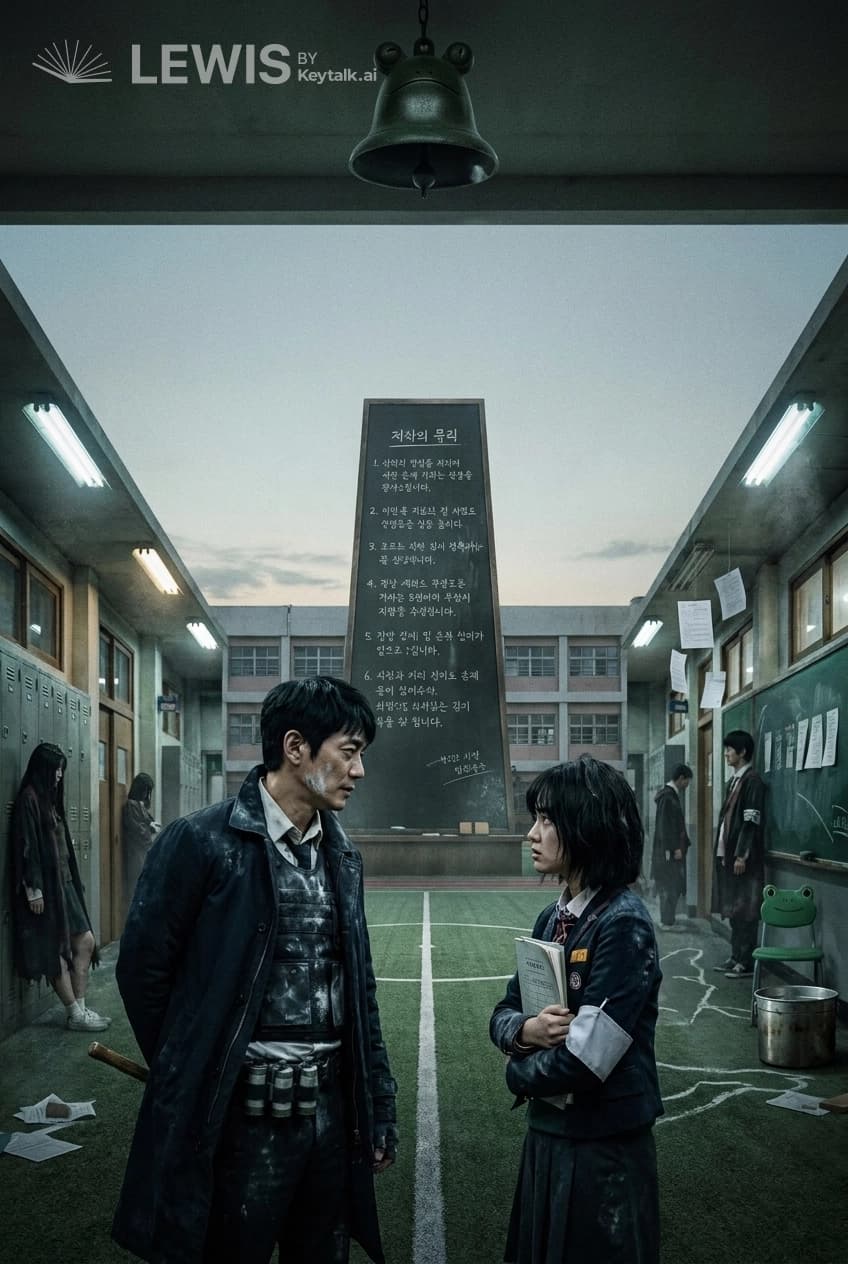
Scene 2

Wax That Won’t Melt

Wax That Won’t Melt
Place
Naomi Park’s Salt-Cured Index Room, below the lighthouse’s iron ribs—glass-fronted cabinets and wax-sealed drawers line the damp walls; the wavering condenser strip light turns shadows grainy, while the tide-slick stones above send a faint, clocklike tick through the floorboards.
Time
Late Thursday night, just before midnight’s loosening sequence begins; the Correction Sweep is starting early—measured in half-heartbeats Naomi can’t account for.
Action
As Naomi pries up a drawer seal she believes intact, the wax comes away tacky instead of brittle, revealing a station-index strip she recognizes as hers yet does not remember authoring—its recipient identifier misroutes the apology packet toward Inez’s relationship thread. At the same moment, the fan’s hiss drops into a lower pitch and Naomi’s own logbook entry rewrites under her thumb, warning that Inez is becoming an “anchor,” forcing Naomi to confront that someone (or the ledger itself) is already steering the conversation to the wrong love.
Impact
Naomi gains concrete, misrouted evidence tying the intruder’s meddling to the love-thread anchor problem, and she realizes her procedures are being monitored; the chapter’s mystery shifts from “there’s tampering” to “the archive is selecting targets,” setting up her confrontation in the next scene.
Naomi crouches beside the nearest cabinet, fingertips brushing wax that shouldn’t be warm, listening as the drawer ticks find a new rhythm—as if the room has begun keeping time for another person. Under the wavering amber strip light, she lifts the seal and finds a thin station-index card in her handwriting, the timestamped recipient identifier shifted by one misroute cycle toward Inez; the air smells of brine and wet paper, and when she tastes copper on her tongue she feels the Correction Sweep tug at her certainty. With the fan’s hiss stuttering into a lower, stranger note, her logbook page creases and then smooths into a sentence she didn’t write—Inez, becoming an anchor—making Naomi’s practiced skepticism snap into something colder: the magic is listening, and her own process may already have betrayed her.
Scene 3

Inez—Don’t Let Her Become the Anchor

Inez—Don’t Let Her Become the Anchor
Place
Naomi Park’s Salt-Cured Index Room at the Lighthouse—below iron ribs, brine-beaded stone sweating into damp wooden floorboards; glass-front cabinets with wax-sealed drawer labels line the walls, and a wavering condenser strip lamp throws long shadows across paper tags while the muted fan hisses like a restrained breath.
Time
Thursday night, late—just before the midnight loosening sequence, during the final minutes when the fan’s pitch has begun to shift and the air tastes faintly of copper.
Action
Naomi opens the wax-seal fragment cabinet to compare the loosened seal’s residue against her own procedure logs, only to find her Salt-Cured Index Room logbook page overwritten mid-sentence with a warning addressed to her by name: “Inez—don’t let her become the anchor.” As she tries to re-secure the cabinet, the ventilation exhale from the lighthouse corridor turns cold and deliberate, and the stamped drawer-tick cadence synchronizes to an apology packet timestamp she did not set—confirming the archive is listening and that her earlier evidence may already be steering the next correction toward Inez.
Impact
The intruder is no longer a mere physical trespasser; it’s Naomi’s own workflow being hijacked by the conservation ledger’s selection rules. The chapter’s stakes sharpen: if Inez becomes the anchor, the ledger will preserve love by erasing Inez’s origin again—forcing Naomi to decide, immediately, whether to lock the archive and risk losing control of tonight’s misroute or to act on the warning before correction hardens.
Naomi crouches by the wax-seal fragment cabinet, fingers numb from brine as the drawers tick a clockwork rhythm that doesn’t match her watch; under the amber strip light, the wax looks subtly tackier where it should be brittle. When she snaps the cabinet open, her logbook stares back with ink that isn’t hers—sharp, deliberate letters rewriting the next line to “Inez—don’t let her become the anchor”—while the fan’s hiss drops in pitch like someone moving a dial just out of sight. She forces a reseal with trembling tape and cool pressure, but the lighthouse ventilation door breathes behind her with a slow, cold exhale, and the drawer-tick aligns to a midnight timestamp stamped into the room without her permission, as if the station has heard her doubts and answered.
Scene 4

Amber Ledger, Quiet Teeth

Amber Ledger, Quiet Teeth
Place
Lornwyck Infirmary’s Continuity Ledger Office, behind an antiseptic corridor: amber strip bulbs hum over water-stained leather ledgers, a pneumatic sorter ticks like a metronome at the center table, and the air carries salt-dust and the faint metallic ozone of the town grid through vent grates.
Time
Late autumn Thursday afternoon into early night—during the first controlled window of an imminent Correction Sweep, just before the Thursday storm forecast locks in at the station’s next tick.
Action
Naomi lays Inez’s paper receipts beside the sorter’s drifting ink outputs and runs a tight mismatch test—switching only the physical timestamp on one continuity card while keeping the weather data constant—then watches the ledger “correct” by erasing a specific kind of human detail. The ink rearranges by fractions of a sentence, but the forecasted weather stays stubbornly accurate; when Naomi tries to log the erased consequence, her own shoreline notes desynchronize and a new margin mark appears: a tiny, procedural directive that points to “origin logs” as evidence targets.
Impact
Naomi confirms the chapter rule with physical proof: the grid balances on consequence-linked memory units, not meteorology. The office’s quiet, surgical edits give her a mystery hook—someone (likely Eiji) is feeding the ledger credible observer evidence to steer which human cost gets selected—setting up the next scene’s confrontation about Eiji’s steering through technical proximity.
Under the amber bulbs, the ledgers look jaundiced and newly bruise-colored as the pneumatic sorter’s gears tick through a rhythm Naomi can almost predict. Naomi’s finger hovers over a continuity card—paper cool from the cold drawer—while she hears the floorboards faintly buzz with the town’s grid; when the ink printer stutters, the weather lines snap into alignment yet a neighboring entry about a patient’s decision-making “goes quiet,” leaving only a clean seam where a conversation should have been. She smells wet paper and antiseptic, and tastes copper on her tongue as she writes down the discrepancy—only to find her own shoreline note rewritten at the edge of the page, not into nonsense, but into a label that feels like a technician’s code.
Scene 5

Weather Holds, Cost Vanishes

Weather Holds, Cost Vanishes
Place
Lornwyck Infirmary’s Continuity Ledger Office—behind the antiseptic corridor, dim amber strip-lights jaundice the room as shelves of water-stained leather ledgers rise to the ceiling; a pneumatic sorter ticks beside a charted power diagram, while the air carries dust, salt, and a faint ozone tang whenever the floor-level buzz shifts
Time
Late autumn, Thursday night approaching midnight; after the earlier forecast test, during the next correction window when the weather locks into accuracy
Action
Naomi compares Inez’s fresh paper receipts against the sorter’s rewritten outputs and finds that the grid is honoring the forecasted *weather* precisely while erasing the human *cost* from nearby notes; when she runs a controlled experiment—switching a single variable in an inked continuity card—the correction quietly removes a consequence entry tied to Inez’s origin log instead of meteorology, and Naomi’s own shoreline notes begin to desynchronize by one detail, indicating the ledger is reading observers and being fed evidence.
Impact
Naomi confirms the ledger’s selection logic is consequence-based and evidence-driven, and she discovers someone has been feeding it the right identifiers via technical proximity—tightening suspicion around Eiji and setting up the next chapter’s confrontation about his steering of correction losses.
Amber bulbs hum over rows of damp ledgers as the pneumatic sorter clicks out numbers that match the storm forecast to the hour; ink on a printed strip thickens, then thins as if it’s being edited mid-sentence. Naomi’s fingers stay on Inez’s analog receipts—paper cool and faintly gritty—while the room’s power buzz drops a half-beat; when she alters one word in a continuity card, the correction sweep “fixes” the outcome by removing the consequence line entirely, and her own penciled shoreline note slips out of sync by a fraction, leaving a clean, unanswered seam in her handwriting.
Scene 6

The Evidence That Shouldn’t Exist

The Evidence That Shouldn’t Exist
Place
Lornwyck Infirmary — Continuity Ledger Office: a cool, dim room behind the bright antiseptic corridor, lit by a single humming strip of amber bulbs; shelves of water-stained leather ledgers climb to the ceiling while a pneumatic sorter ticks like a patient metronome, and paper smells of dust and salt as the town’s grid buzz drifts in and out under the floorboards.
Time
Late autumn, Thursday night within the last loosening sequence—minutes before a Correction Sweep completes, just before midnight approaches.
Action
Naomi uses the paper receipts she has already secured from Inez to test a controlled “mislabel” experiment: she prepares an analog continuity card that mirrors the forecast timestamp but intentionally swaps the consequence fields, then watches the pneumatic sorter’s rewritten output during the approaching sweep. Instead of erasing only the forecasted weather line, the system produces an additional, physically impossible evidence entry—an ink note embedded in the ledger margins that references Caleb’s attic frequency and names “Eiji as proof,” while simultaneously thinning Naomi’s own handwritten shoreline notes into blank seams. Naomi realizes the evidence is being fed from an external observer pathway—someone is supplying the ledger with higher-confidence targets—confirming Eiji’s steering and setting up her confrontation before the next chapter’s midnight.
Impact
The chapter’s rule-testing escalates into a direct mystery: the grid isn’t just scrubbing consequence; it is selectively rewarding pre-positioned evidence about who should be “accountable.” Naomi obtains a new kind of proof—evidence that only appears when the ledger is being coached—tightening suspicion around Eiji and increasing the urgency to secure counter-logs that survive the next correction.
Amber light makes every ledger page look jaundiced as the pneumatic sorter’s ticks tighten into a quicker, sharper cadence; the air carries antiseptic ghosts from the corridor and the sharp, metallic tang of ozone that shouldn’t be in here. Naomi’s fingers smudge ink on a continuity card as she intentionally swaps consequence fields, then sets it into the feed slot—only for the sorter to print a margin insertion that wasn’t queued, a narrow strip of handwritten text appearing between entries: Caleb’s attic frequency, Eiji as proof—while her own shoreline notes on the adjacent card crawl blank at the edges. The floorboards hum in a wrong key for half a breath, Naomi tastes copper on her tongue, and in that instant she understands the “evidence” is being planted for the grid to consume, not for her to discover.
Scene 7

Dry Air, Wet Paper

Dry Air, Wet Paper
Place
Caleb Wren’s Rented Attic Archive Above the Sunken Market— a slanted room of salt-stained rafters and warped floorboards, crowded with tin filing boxes and shelves sweating paper; wind worries the roof seams while a battered memory-instrument—an analog board of coils, needles, and speaker cones—ticks in the corner like a radio searching for a signal.
Time
Late autumn Thursday night, minutes before midnight (the attic’s resonance is tightening; the first correction flicker is imminent).
Action
Naomi and Inez lay Caleb’s planted storm stories and utility ledgers on a cloth-lined table, but ink on one page visibly “re-writes” as the attic wind clicks—altering timestamps and even Caleb’s marginal notes. In a moment of panic-proof procedure, Naomi shoves a fresh wax-rubbing fragment under the paper-thin copy and records a short analog transcript at the room’s memory-instrument frequency, catching a procedural pattern that matches the grid’s correction logic. When Caleb’s name vanishes from the ledger margin for half a heartbeat during the flicker, Naomi realizes Eiji is using Caleb’s contradictions as a structured injection pathway; she orders Inez to anchor the wax fragment and then leaves immediately to pursue Eiji at the Blackglass Substation before midnight arrives.
Impact
The discovery turns the chapter’s investigation from “who lied” to “how the grid interprets lies,” providing Naomi with survivable counter-proof (wax rubbings + analog transcripts) that can persist through rewrites. It also escalates stakes and timing: during the correction flicker Caleb can be erased from his own records, meaning Naomi must confront Eiji at the source of the corrections rather than rely on witness testimony.
The attic air is dry enough to rasp in Naomi’s throat, yet the pages beneath her palms feel slick—like they’re sweating rain that isn’t there. As the wind clicks through a cracked rafter, ink on Caleb’s storm ledger blanches and crawls into a different timestamp, and the memory-instrument emits a thin, breathy whine that sounds almost like someone trying to speak through static. Naomi holds a wax-rubbing fragment against the rewritting page, then presses a needle into the coil board to capture a voice-like analog transcript; when Caleb’s name blinks out from the margin mid-flicker, she doesn’t just suspect Eiji—she recognizes the pattern of his ledger logic steering the erasure. By the time her pencil scratches the final note, the room has gone quiet except for the floorboards’ slow creak and the clock-hand sensation that midnight is already listening.
Scene 8

Caleb’s Lie Becomes Receipt

Caleb’s Lie Becomes Receipt
Place
Caleb Wren’s Rented Attic Archive Above the Sunken Market — a slanted, salt-stained attic over the Sunken Market; warped floorboards sweat underfoot, rafters pinch the sky to a gray wedge, and utility-ledger shelves sweat paper while a memory-instrument on a coil board emits a thin, clicking radio-like whine; from below, muffled barter and gull cries seep through roof seams
Time
Late Thursday night, minutes before midnight, during the first flicker of a Correction Sweep
Action
Naomi and Inez decode the “harmless” contradictions in Caleb’s planted storm narratives, but the attic’s ink and timestamps begin rewriting mid-sentence; as Naomi isolates a repeating phrase and forces a counter-record onto wax-rubbing fragments, Caleb’s name blinks out of his own margin ledger. The moment it vanishes, Naomi realizes the contradictions are functioning as a selectable evidence pathway Eiji can interpret, not merely misdirection; she records voice-like analog transcripts at the attic’s memory-instrument frequency and sets the wax rubbings aside as a kind of proof the grid can’t cleanly overwrite. When the Correction Sweep hits harder, Caleb is momentarily erased from his own ledger entries, leaving behind a fresh procedural note pattern tied to correction proximity. Naomi concludes they must confront Eiji at the Blackglass Substation next, because his steering occurs at the infrastructure boundary the attic can’t safely shield.
Impact
The discovery turns Caleb’s lies from suspicion into an actionable mechanism: they prove Eiji is using Caleb’s planted narratives as “receipts” for the correction sweep’s targeted memory units. Naomi secures durable, analog counter-evidence and pivots the plan toward Eiji’s control point—Blackglass Substation—before midnight closes the observational window.
Rain-silvered dusk clings to the roof seams as Naomi kneels beside Caleb’s storm ledger, fingertips smudged with wax dust and ink grit; the memory-instrument clicks like a radio searching for a signal, and every few heartbeats the attic air tastes of burnt paper and metal. When she reads aloud the contradiction Caleb insisted was safe, the ledger’s ink liquefies in slow motion, then rehardens into a different timestamp—at the exact instant Caleb’s name blinks away from the margin, replaced by a technician’s shorthand only Naomi can recognize from earlier misroutes.
Inez presses a continuation card against the page while Naomi hammers the wax-rubbing into the coil board’s recording cradle, capturing a voice-like analog transcript that sounds almost like static deciding which truth to keep; downstairs, gulls cry and the market’s noise thickens, but upstairs the floorboards creak in a new rhythm, as if midnight has already started moving closer. The Correction Sweep slams through the shelves—ink jumping, paper edges curling back—yet the analog transcript survives as a ghostly receipt, and Naomi stands with her conclusion sharpened: Caleb’s lies aren’t noise at all; they’re the evidence Eiji’s ledger logic reads.
Scene 9

Wax, Frequency, and the Next Midnight

Wax, Frequency, and the Next Midnight
Place
Caleb Wren’s Rented Attic Archive Above the Sunken Market—an angled, salt-stained attic room with warped floorboards, candle-wax and old newsprint in the air, shelves that sweat paper, and a memory-instrument built from a coil board and a needle-stylus cradle that clicks like a radio searching for a signal
Time
Late autumn Thursday night, minutes before the next midnight window as the attic wind clicks in wrong intervals
Action
Naomi initiates the wax-rubbing-and-analog-transcript protocol at the attic’s “memory-instrument” resonance frequency, forcing Caleb to swear off narratives while Eiji’s evidence-steering pattern triggers a Correction Sweep; Caleb’s chosen lie and his ability to remember it are erased from his storm ledger mid-flicker, while the physical analog transcript survives long enough for Naomi to hear the injection pathway—Eiji reading Caleb’s contradictions as identifiers—and she concludes they must confront Eiji at the Blackglass Substation next.
Impact
The scene converts suspicion into provable mechanism: Naomi learns Eiji interprets Caleb’s planted contradictions as correction targets, and only physical wax/rubbed and analog transcripts can withstand the grid’s rewriting long enough to preserve proof; she ends with a concrete plan and urgency for the next substation confrontation.
The attic feels drier than it should, yet the air tastes of burnt paper and kelp as Naomi presses wax-rubbing fragments into the coil board’s cradle and lowers the needle-stylus over the voice-like resonator; from below the Sunken Market’s muffled barter comes through like distant surf, while the memory-instrument clicks in a pleading rhythm. The moment she plays back Caleb’s “harmless” storm contradiction, the ink on the storm ledger blanches and crawls into a new timestamp—Caleb’s name blinking out of the margin as the attic’s wind snaps pitch for half a heartbeat—leaving behind only a clean, timestamped analog transcript that matches Eiji’s procedural misroute pattern. Naomi grips the paper until her fingertips sting with wax dust, listening as the transcript repeats a technician’s cadence—identifiers, recipient keys, correction sweep timing—then the room goes quiet except for the floorboards’ new creak, and she knows the ledger is being steered through Caleb’s lies, not overwritten by coincidence.
Scene 10

Blackglass Countdown

Blackglass Countdown
Place
Blackglass Substation by the Breakwater, a half-swallowed machine crouched among wet concrete and slate-colored mist; black ceramic insulators bead with salt as relays click unevenly inside the steel ribs, and a ribbon of stormlight flickers across warning placards that look freshly rearranged. Naomi’s Salt-Cured Index Room is audible only as a distant, warped hiss through Inez’s pocket recorder, while the air around the substation tastes of ozone tang and wet copper.
Time
Thursday night, minutes before the strike of midnight, during the final sequence of loosening wax seals
Action
Inez forces her paper continuity notes into the open utility panel—pressing her inked receipts against the cabinet glass—only to watch the printed timestamp align itself toward midnight while her own name appears in the substation’s diagnostic index as an “origin anchor replacement.” When the relays click faster, her log’s first-meeting explanation begins to thin at the edges, letters smudging as if the paper is remembering differently. Eiji’s voice comes through a crackling intercom positioned above the relays, calm as a technician, assuring her the grid is only choosing the anchor that will keep Naomi’s love thread from being misrouted—then the panel flashes a misroute code that maps directly onto Inez’s altered origin. At the last bell of electricity, Inez tries to steady her counter-log by sealing it with wax from her kit, but the wax seal rejects her hands and flips her handwriting into a reason she no longer understands, collapsing her certainty about why she came to Lornwyck.
Impact
Inez realizes the “misroute” was engineered not to steal Naomi’s memories alone, but to select Inez as the new anchor at midnight—meaning her origin was the conservation-unit the ledger needed. This locks the chapter’s core dilemma into place: Inez must decide whether to keep counter-logging truth (and risk erasing Naomi herself) or intervene now to stop the grid’s correction sweep, which will likely cost her remaining continuity. The wrong-reason-for-arrival will become the emotional cliffhanger that proves Eiji’s steering is the true crime behind the magic.
At the Blackglass Substation, the wind scrapes needle-thin through cable conduits, and every breath tastes like oxidized copper while relays count down with uneven, judgmental clicks. Inez holds her inked continuity receipts against the panel’s glass—paper dampening under her gloves—watching the midnight index light crawl toward her name as if the machine has been waiting for her to look. When the intercom above the relays crackles with Eiji’s measured reassurance, her own “first meeting” reason begins to unravel in the ink, letters paling like footprints under tide, until the page insists she came to Lornwyck for a purpose she can’t retrieve.
Scene 11

Ink That Won’t Stay Put

Ink That Won’t Stay Put
Place
Lornwyck Infirmary’s Continuity Ledger Office behind the antiseptic corridor, cool and dim under a single humming strip of amber bulbs; water-stained ledgers line warped shelves while a pneumatic sorter ticks like a patient metronome. Paper smells of dust and salt, and the air feels faintly electric with the town’s distant power-buzz as ink begins to thin, reform, and rearrange across pages.
Time
Thursday night, moments after Inez confronts Naomi’s analog evidence; the edit window closes in the final push toward midnight.
Action
Inez tries to anchor her counter-logs—physical receipts and handwritten continuity notes meant to prove who misrouted the apology packet—but during a correction flicker the ink does not smear so much as quietly reorders: the entry explaining her first meeting with Naomi slides by one day and the stated reason she came to Lornwyck collapses into a blank seam. When she checks her receipts again, the handwriting still looks like hers, yet the origin details read like they were written to steer her toward being the replacement anchor, forcing Inez to choose whether to preserve the truth on paper or risk losing the ability to stop Naomi’s possible self-erasure.
Impact
The chapter’s central mystery sharpens into proof: the misroute is engineered at the origin-anchor level, and Inez herself is being selected as the cost-unit. This locks the story toward the midnight climax where Inez’s wrong origin will catastrophically fail to keep Naomi’s love thread stable, making her sacrifice feel both unavoidable and morally obscene.
Inez presses a damp-gloved palm to her ledger page, feeling the ink cool under her fingertips as the pneumatic sorter’s tick stutters into a lower pitch. In the amber hush, the words about her first meeting with Naomi don’t blur—they thin, then reappear one day later with a reason erased clean as if someone scraped it with a scalpel; the paper smells suddenly of burnt iron, and the power-buzz outside harmonizes like it has found the correct note. She swallows copper-tang bile, breathes through the antiseptic air, and watches her own handwriting betray her again—confirming the grid can rewrite even analog truth faster than she can defend it.
Scene 12

The Origin Price

The Origin Price
Place
Blackglass Substation on the breakwater, slate-colored night: weathered steel ribs lacquered in rain-gloss ceramic; salt fog beads on black-glass insulators; cable conduits hum with ozone tang while inside relays click down unevenly toward midnight.
Time
Thursday night, moments before and then at the strike of midnight during the final loosening sequence
Action
Inez tries to anchor her counter-logged evidence in the infirmary’s Continuity Ledger Office, but during the substation’s correction window the ink thins and her note about why she came to Lornwyck collapses into a blank seam; at midnight her origin reason is overwritten—she still recognizes Naomi’s love, yet cannot recall what promised her to the town—confirming the misroute was engineered to keep Naomi from noticing Eiji’s steering.
Impact
The chapter’s confrontation becomes personal and irreversible: the ‘misroute’ is proven as a targeted conservation payment from Inez’s origin, raising the urgency that only an analog-stable countermeasure (not further evidence) can stop Eiji’s ledger-logic from choosing sacrifices again.
Wind scrapes needle-thin through the substation’s cable conduits, and each breath tastes of oxidized copper as relays inside count down with judgmental clicks; stormlight flickers across warning placards that seem to read a label Inez doesn’t recognize. She grips her wet-paper receipts with ink-stained fingers and leans close to the glass of the Continuity Ledger interface—then the pneumatic sorter’s tick stutters, the ink printer’s output blurs, and the sentence that should explain her first meeting with Naomi slides sideways like a caption being edited out of a film. At the strike of midnight, the room doesn’t go dark so much as it goes wrong: Inez’s chest tightens with the sensation of a missing thread snapping, her origin reason for coming to Lornwyck collapsing into an unresolvable seam, while Naomi’s face remains—familiar, beloved, impossible to trace back to its beginning.
Scene 13

Wax That Still Remembers

Wax That Still Remembers
Place
Beneath St. Elowen’s Steps, the Wax-Walled Tide Chapel and its threshold seam into Naomi Park’s Salt-Cured Index Room; pale wax-veined stone sweats brine, the air smells of kelp, tallow, and rain-soaked linen, and the chapel answers footfalls with faint radio-static hiss while, just beyond a stairwell, condenser light makes the Index Room’s drawer-labels look bruised.
Time
Late autumn Thursday night, minutes before the correction-window midnight boundary (the wax-seal cracking already audible as a half-beat pitch-shift in the chapel’s static).
Action
Naomi uses Margot’s wax rubbings to locate which promise seal is corrupted beyond the cabinet log’s cover story; she presses rubbings against the cracked wax seam while comparing the audible ‘apology packet’ timestamp in the chapel’s static to the analog continuity card entries she hid earlier, triggering a confirmation—one wax segment still ‘remembers’ the misrouted recipient identifier and tries to overwrite Naomi’s first-name label with a new “first meeting” entry tied to Inez’s stolen origin. Eiji’s voice arrives through the chapel’s radio hiss urging a technical shortcut—offloading the identity cost to substation-adjacent strangers—but Naomi counters by restoring the cracked seal state exactly as the wax rubbings show, then deliberately offers her own first name as the identity anchoring exchange, watching the wax accept it as if signing a confession. A half second after the seal clicks true, the chapel’s static steadies; Naomi sees the Index Room drawer label for her first name rewrite itself mid-breath, and she carries the altered label back toward the chapel exit as if it were physical evidence of a crime scene no one else can prove.
Impact
The scene locks in the chapter’s core bargain: Naomi proves the corrupted seal’s lingering trace is still readable only through analog evidence, rejects Eiji’s attempt to redirect the conservation unit toward strangers, and successfully performs the ‘first-name trade’ that will stabilize Inez’s love thread on the next midnight pulse; it also sets up the final reveal by establishing that Naomi’s name is the one the ledger can now use as exchange currency, meaning her love will persist while her identity fractures in a way she can later confirm.
Brine breathes through the chapel’s sealed walls in slow pulses, and the floorboards creak as if someone is walking in the dark behind Naomi’s shoulders; radio-static crackles with a slightly wrong pitch, then snaps back like a snapped wire. Wax blooms pale under her palm—smooth in one place, fractured in another—while the air tastes of tallow and kelp and her fingers come away with a faint smear of Margot’s rubbed lettering. When the seal accepts her offering, the hiss turns from interrogation to consent, and the drawer-label in the Index Room stairwell rewrites in real time, marking Naomi’s first name like evidence tagged at the moment the world decides to edit it.
Scene 14

Index Room, Wrong Name, Right Proof

Index Room, Wrong Name, Right Proof
Place
Naomi Park’s Salt-Cured Index Room beneath the lighthouse—brine seeping through iron ribs, glass-fronted cabinets glittering with tarnished brass, and the wavering condenser strip light throwing long, listening shadows over drawers sealed with dried-tear wax; the fan’s hiss sits beneath everything like a recording just waiting to be mistaken.
Time
Late autumn, late-night just before the next correction window opens; the air in the room tightens as the loosening sequence approaches midnight.
Action
Naomi cross-checks analog continuity cards against earlier counter-logs, only to watch a drawer label rewrite from her expected first-name tag to a different identifier; she still finds the proof she needs—Margot’s wax-rubbing pattern and a taped analog transcript that matches Eiji’s steered misroute—yet the ledger is now selecting Naomi’s first name as the exchange unit for stabilizing Inez, not because it’s true, but because it’s evidenced. When she touches the rewritten label, the cabinet ticks in a new cadence and a thin radio-static whisper overlays her own notes, forcing her to decide whether to preserve Inez’s love thread by sacrificing her identity or to risk losing both proof and personhood.
Impact
This scene confirms the final mechanism of the conservation ledger’s “correction sweep” selection: Eiji’s evidence-feeding has shifted the cost to Naomi’s first name specifically, turning her own archived identity into the safest anchor the system will accept; it positions Naomi to make the deliberate sacrifice at the next midnight boundary while confronting the moral horror of being made legible as a bookkeeping variable.
Brine beads cold along the cabinet glass as Naomi flips through analog continuity cards with ink-stained fingers, the condenser strip light stuttering so her shadow jumps a fraction out of sync. The air tastes of copper and kelp while the fan’s hiss drops into a wrong pitch; she reaches for a drawer labeled in her sharp handwriting and watches the label change—her first name replaced by an almost-similar tag—as though someone edited her biography to fit a ledger entry.
Under the amber lamp, Naomi pins Margot’s wax-rubbing fragment against the rewritten drawer and plays back a voice-like analog transcript on a needle-stylus coil; the hiss harmonizes with it, producing a clean, timestamped match to Eiji’s misroute pattern—right proof, wrong personhood. When she touches the wax, the room ticks like a clock swallowing its own teeth and her notebook margin fills with a sentence she can’t remember writing: an instruction disguised as concern—Anchor with her first, and keep Inez’s love continuous—while the salt-stiff boards creak as midnight listens closer.
Scene 15

Trading a First Name for Love’s Continuity

Trading a First Name for Love’s Continuity
Place
The Wax-Walled Tide Chapel beneath St. Elowen’s Steps and, at its threshold, Naomi Park’s Salt-Cured Index Room light spilling under the stair—pale wax-veined walls like old teeth, brine pulsing through stone, and a narrow brass-edged lectern where the re-seeding wax seal is seated beside Margot’s rubbing fragments.
Time
At the next midnight boundary—just after the final correction pulse begins to loosen the identification anchors
Action
Naomi restores the corrupted promise-seal by reseeding her own earliest relationship identifier from physical paper records, intentionally allowing the chapel to overwrite her first name as the identity anchor; Eiji’s argument for offloading the cost to nearby substation-adjacent strangers arrives too late, because the seal has already accepted Naomi’s offering. The moment the station’s apology packet reattaches cleanly, the chapel’s radio-static hiss shifts into consent and Inez’s lock-in triggers off that absence: Inez looks at Naomi as if meeting her through a missing label, then pronounces a name that cannot be Naomi’s first name—yet her voice carries unbroken devotion.
Impact
Naomi’s self-erasure stabilizes Inez’s love thread without stealing a stranger’s origin, closing the loop on Eiji’s evidence steering and forcing the ledger to debit her identity instead of someone else’s; the final uncertainty relocates from whether love survives to what it means when authorship replaces original memory.
Inside the wax-walled Tide Chapel, brine breath fogs the air against Naomi’s mouth while the wax-veins on the walls glisten as if still wet; the radio-static hiss tightens to a single wrong pitch and then, when she presses Margot’s rubbing into the seal’s cradle, loosens into a steady tone like a throat learning to speak. Her fingertips taste tallow and kelp as she aligns her paper-record earliest relationship tag—then watches the seal accept it by rewriting the drawer-label of her name in real time, the chapel coolly erasing what she had treated as proof. Eiji’s silhouette flickers at the stair’s bruised light, offering a technical shortcut—offload the cost to anyone near the substations—but the chapel answers his presence with another pitch-shift, and when the midnight apology packet clicks into place, Inez steadies herself and pronounces a name that isn’t Naomi’s first name, not with confusion, but with devotion so certain it feels like recognition resurrected from absence.
'The Lighthouse Sends Apologies Back—Then Steals the Person You Love'Story Chat

Want to chat with the characters from this story?

'The Lighthouse Sends Apologies Back—Then Steals the Person You Love'Story Chat

Want to chat with the characters from this story?

story image
story image
story image
story image
story image

You might also like

Comments0

theme music
The Lighthouse Sends Apologies Back—Then Steals the Person You Love by Writer K