Plot Synopsis
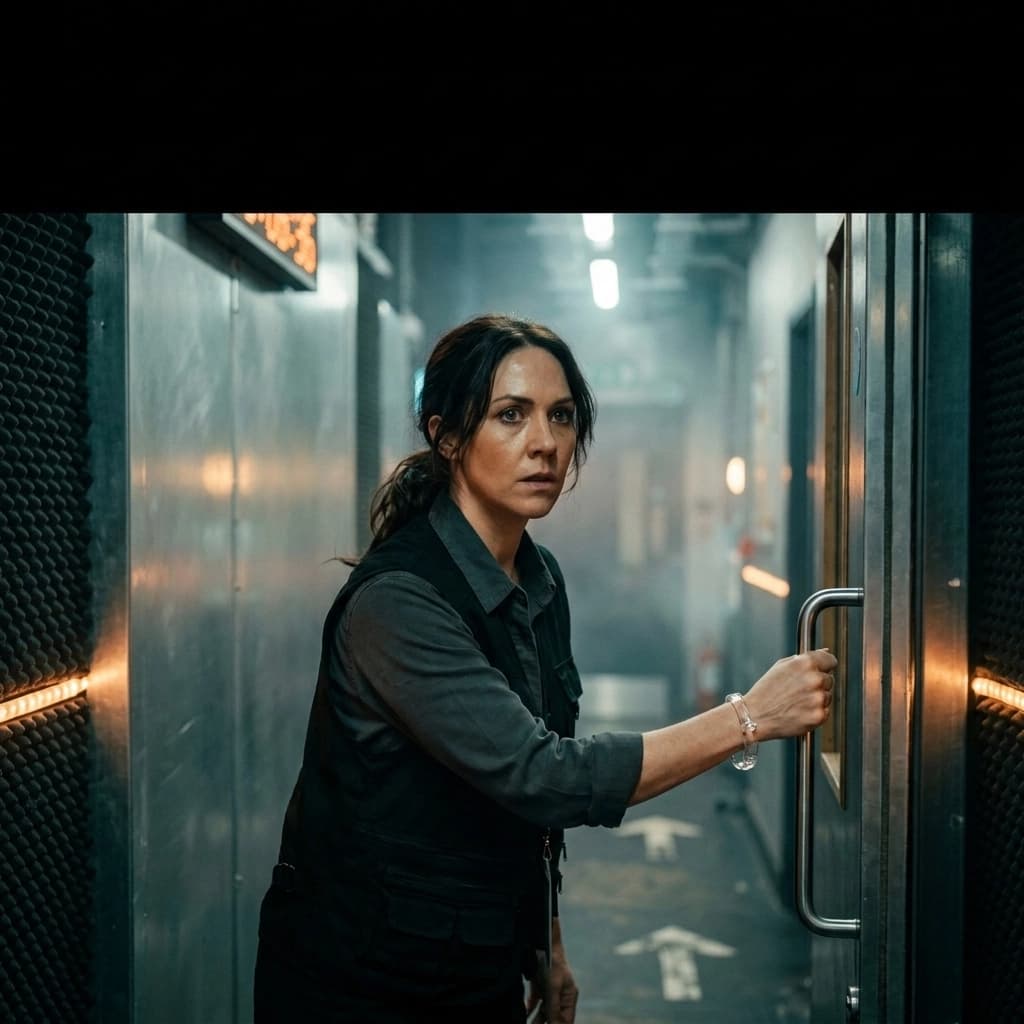
The live broadcast rehearsal in Seoul starts like any other—cool concrete underfoot, blue emergency LEDs striping the rehearsal corridors, hairspray and solder hanging in the warm air—until ATEEZ’s leader stumbles a half-beat in the choreo. It isn’t a visible mistake; it’s a sound that shouldn’t be there. Under the backing track, something else hums—thin, wrong, like a harmonizer caught between stations. On the audience side, two ATINY answer-makers are the kind who can’t sit still: 서윤아, who organizes fan questions with trembling hands because being “almost correct” feels like failure, and 민호준, who maps prop lanes and floor markers like they’re coordinates in a world that only makes sense when he draws it clean enough. They’ve barely finished comparing their lightstick charms—tiny matching charms that glow faintly when they’re close—when a door behind the faux stage wall claps shut and a crew member wedges an envelope into 서윤아’s palm.
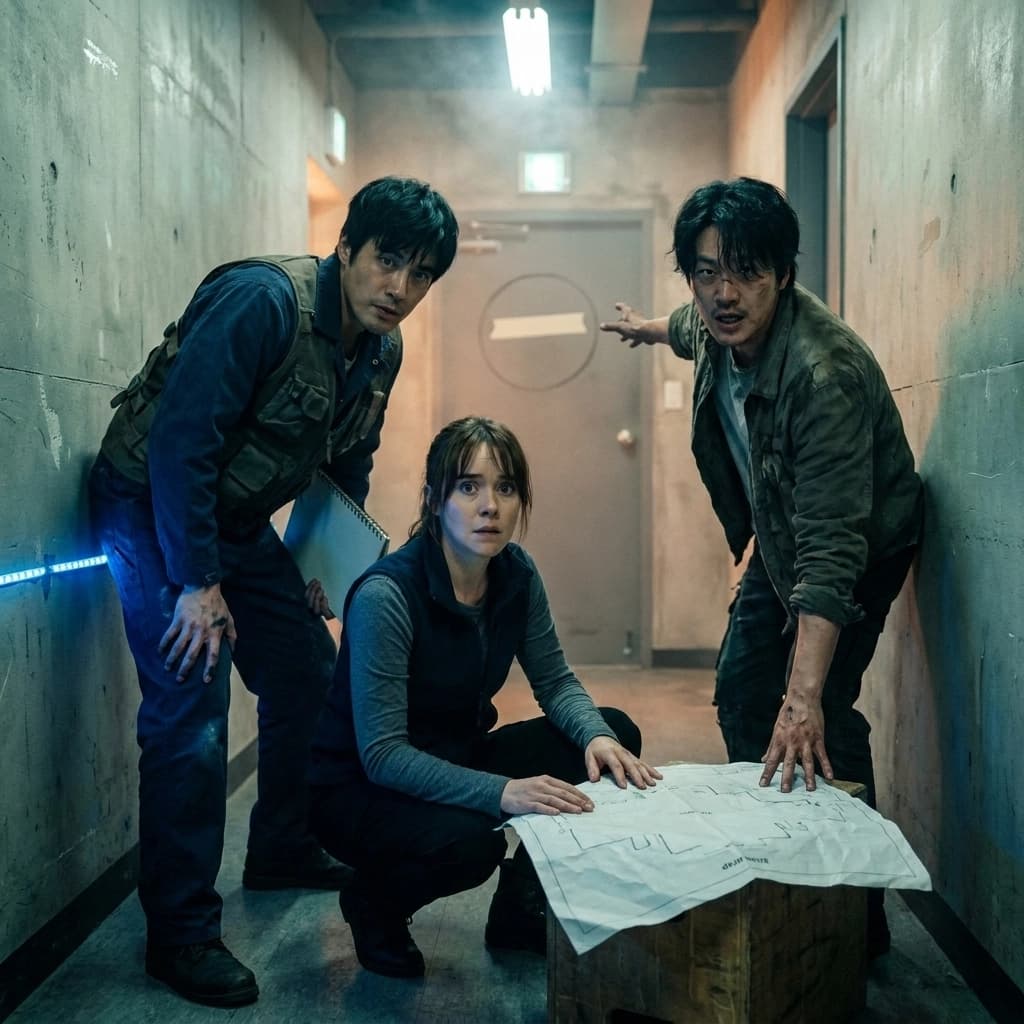
“Emergency rehearsal room,” the crew member hisses, voice flat with practiced urgency. “You’ve got forty minutes. That circled door on the map—don’t let the feed lock it.” Even before they look, the words land like a rule. The stage monitor above the corridor shows the backup feed timer starting to tick down, though they haven’t heard any official announcement. The countdown sits beside the same circled door on the crumpled map, the ink smudged where someone’s thumb pressed too hard.
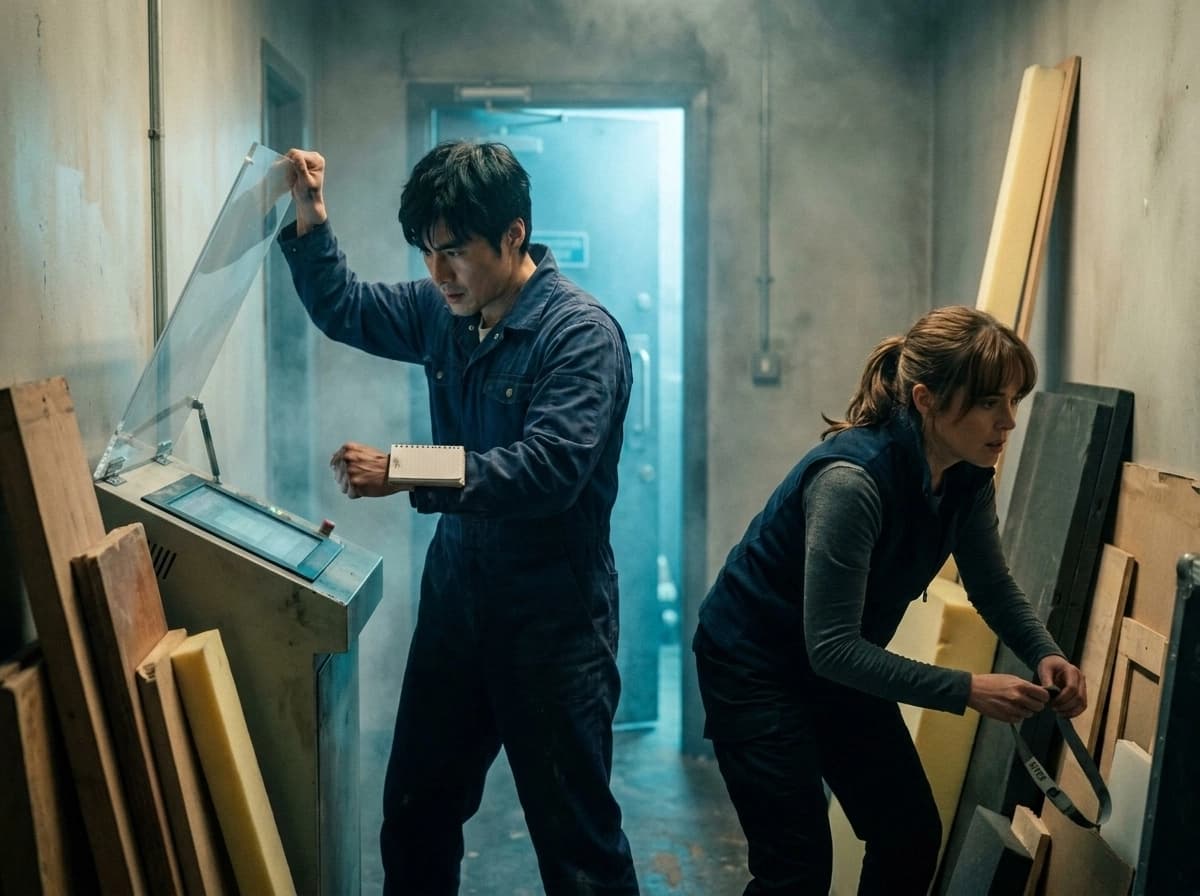
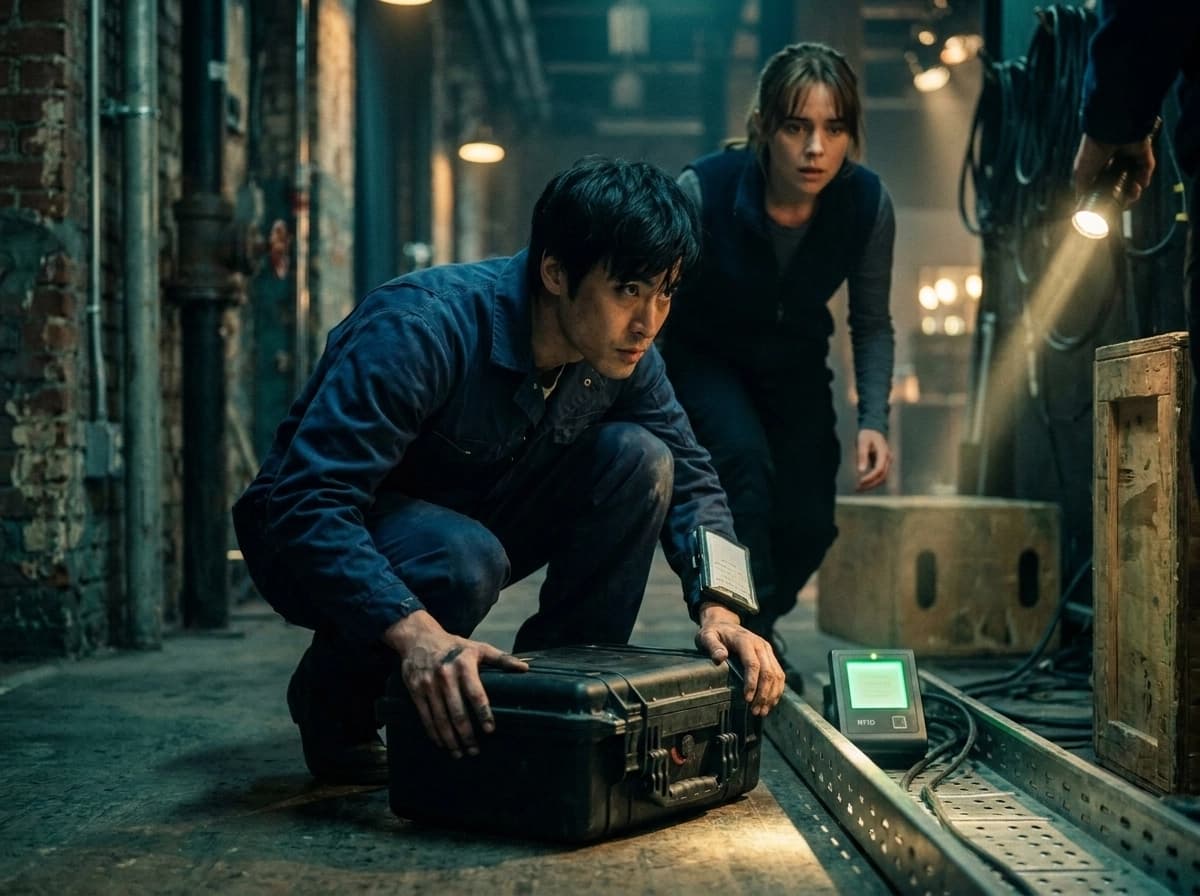
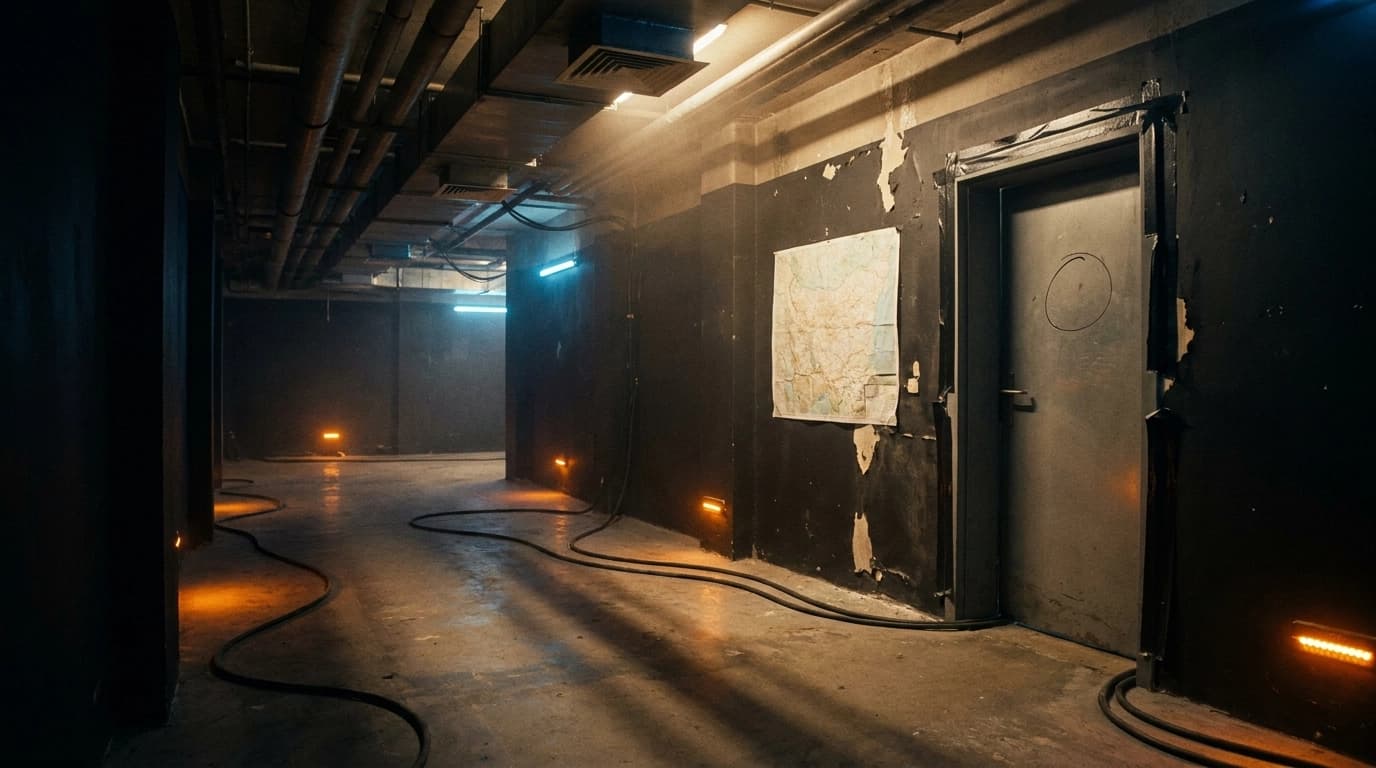
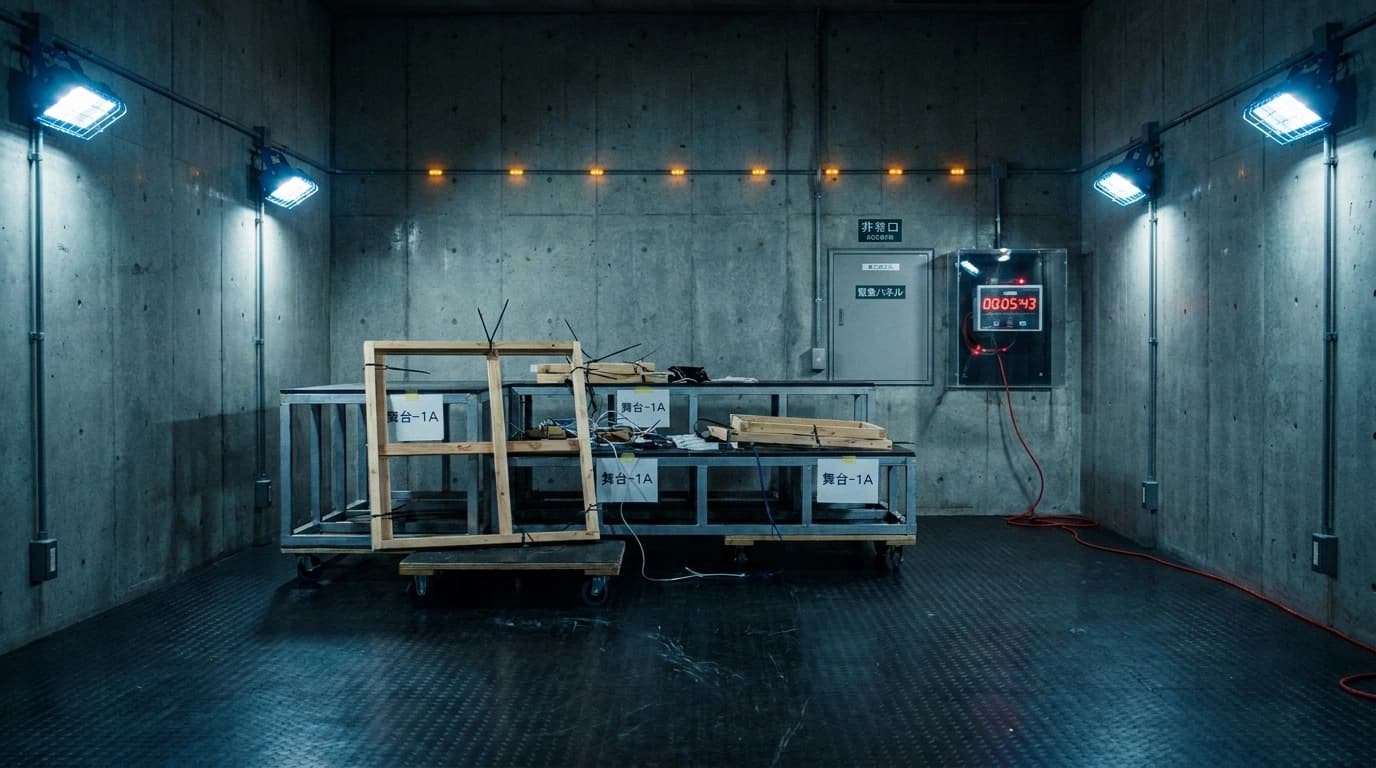
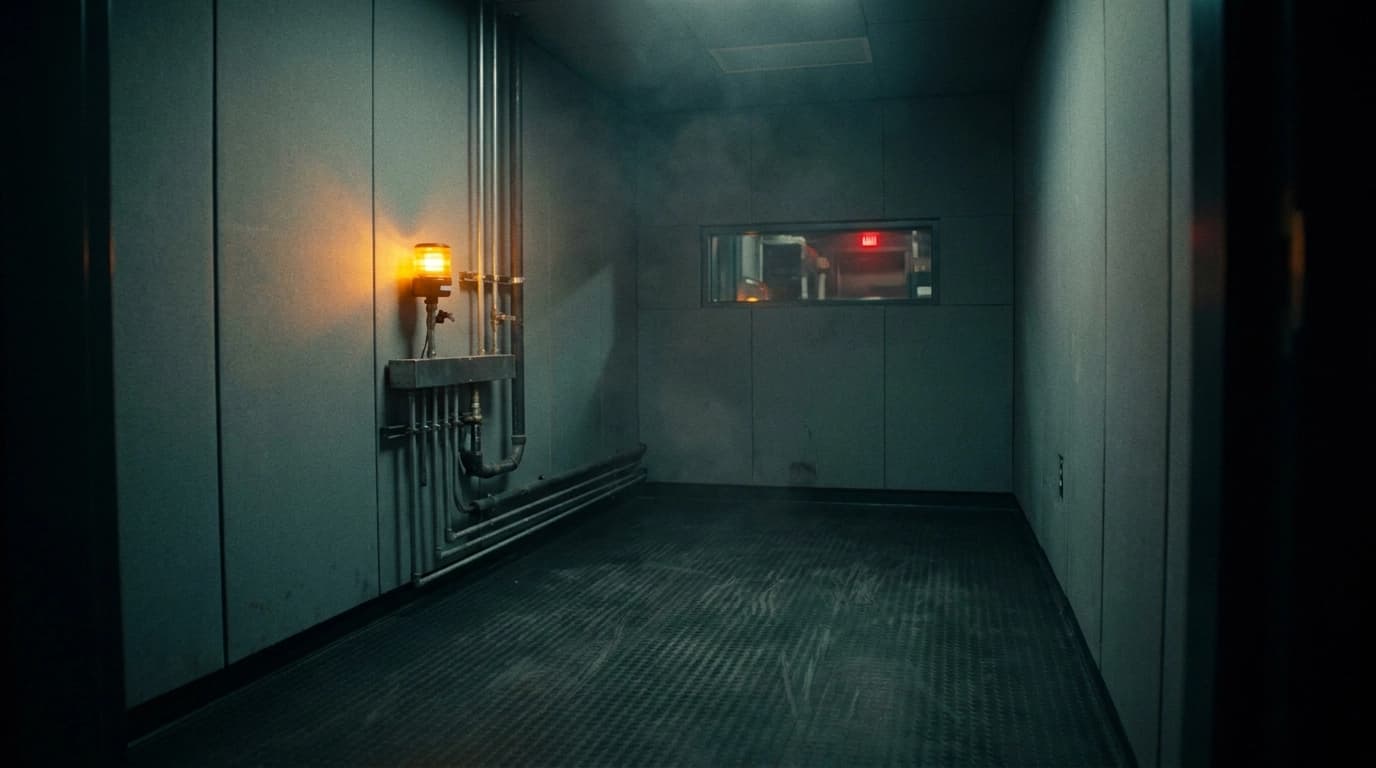
They’re pulled through the emergency rehearsal room’s narrow prop lane, past amber status lights from the floor-marker relays that blink like a nervous heartbeat. It smells like dust and damp fabric. Somewhere deeper in the venue, the hidden broadcast control pocket is already preparing to override what the public feed claims is “current,” and everyone who believes in procedure knows the consequence: when the timer hits zero, the wrong floor-marker sequence becomes permanently latched into the safety-and-ops system. That would force a stampede-prevention routine that physically relocates the crowd—fast, loud, and unforgiving—triggered by rehearsal cues that don’t match what cameras and tracking expect. The venue won’t rewind. The audience can’t.
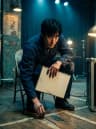
서윤아 reads the circled door like it’s a question she hasn’t earned yet. Her fingers tighten around the paper until the edges bite her skin. She can’t stop scanning for the moment she might be wrong: the kind of wrong that makes her feel she’s stolen something from the people she came to support. 민호준 grabs the other side of the envelope, already mentally rewriting his clean floor-marker plan, already fighting the feeling that his control isn’t enough. He wants to tell her to stay back, wants to demand the crew explain themselves, but the corridor behind them grows more crowded with hurried staff and tightening routes—security isn’t waiting for ATINY to understand.
A stage-safety culture lives down here: no improvisation when the feed is live. Everything passes through Prop-Swirl Protocol readers, RFID-tagged and verified; bypassing it doesn’t just break rules, it triggers a visible smoke-test alarm—classroom-grade aerosol fog—forcing staff to clear the corridor for safety. That clearance isn’t clean either. Each smoke-test acknowledgement updates security guard routes, narrowing escape windows in real time. Their plan has only two possible shapes: do the correct swap fast and quietly, or make noise and run while the venue reorganizes itself around the alarm.
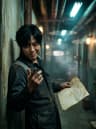
The only person who doesn’t panic is 강도현, a stage prop maintenance worker who moves like he’s always late to a joke. He’s leaning against the wall outside the emergency rehearsal room, glancing toward the monitor with half-lidded amusement as though the countdown is a prank someone forgot to stop. When 서윤아 and 민호준 appear, he raises his hands in mock surrender. “See? I told you you’d get your drama,” he says, voice bright enough to sound harmless. He’s the kind of sympathetic villain who doesn’t like being cruel but will do anything to prevent a worse outcome. The joke doesn’t fool them for long, though—his eyes keep catching on the circled door, then flicking away as if he’s embarrassed by how much he wants proof.
민호준 confronts him first. “You know about this. The harmonizer—something’s wrong with the track confirmation.” His words come out clipped, as if speed can keep them accurate. He shows 강도현 the map’s circled door and points to the prop lane where the floor-marker relays blink amber. “We have to swap props. We can’t let the feed lock—”
강도현 cuts him off by stepping closer, not to reassure but to claim physical space. He leans in so the three of them stand within arm’s reach, blocking the corridor behind him as if the walls have ears. “You two are fans,” he says, lowering his voice to match the hum of the electronics. “You shouldn’t be here. But you’re already in the room with the ticking. So listen. There’s a reason the backup feed thinks it’s right. Someone’s trying to turn back time—trying to force the system into believing an older staging state. The wrong floor markers won’t just look bad. They’ll move people. And once they move, they don’t get to stay put.” He lets the last part hang just long enough for 서윤아’s breathing to turn shallow.
서윤아 hates the helplessness more than the fear. She can feel her pulse in her fingertips, the way it shakes when a status light flutters. “If we swap the props,” she says quickly, already trying to make it a checklist, “we pass the Prop-Swirl Protocol readers. Then the verified configuration updates. Then the feed won’t lock the—” She stops herself before she sounds like she’s asking permission to save them.
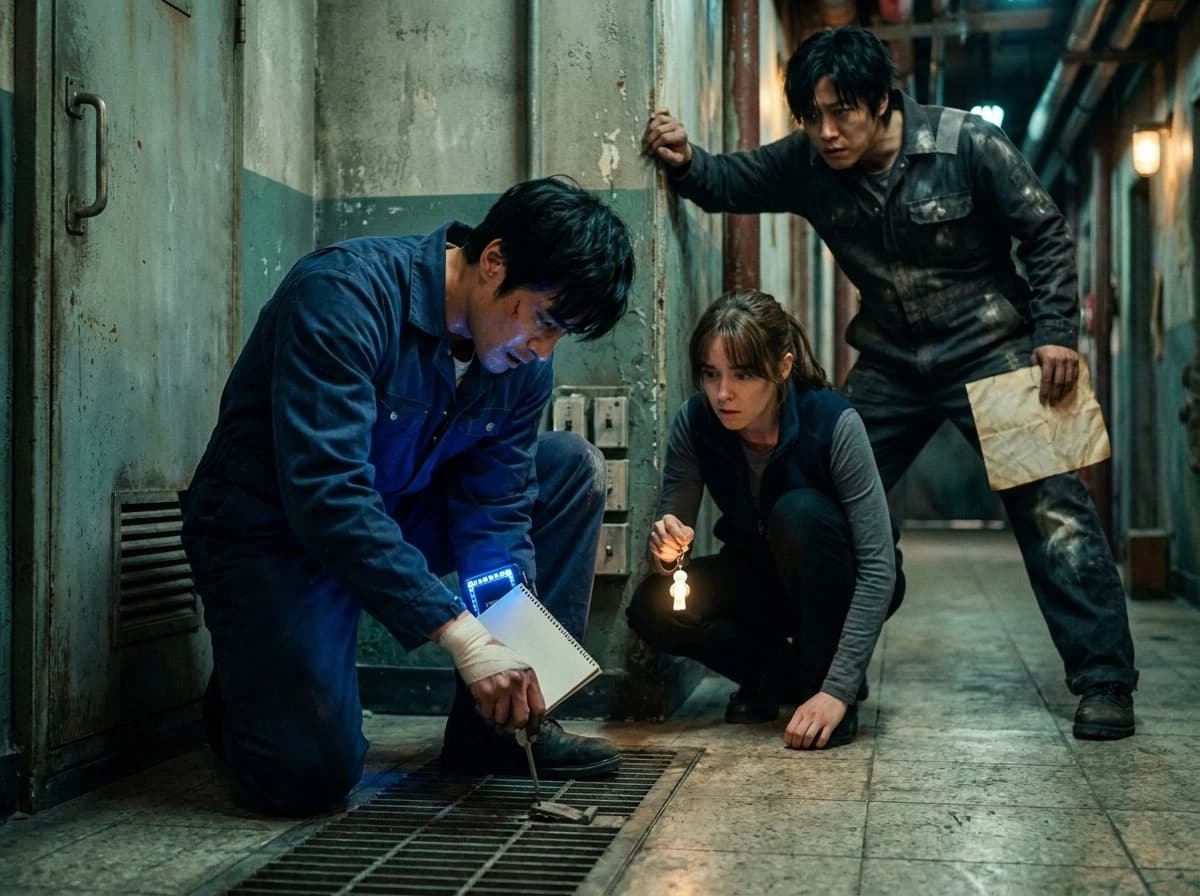
강도현 watches her hands. He can see the way she presses her thumb into the paper edge to keep her thoughts from spilling out. “You won’t have time to explain it,” he replies. “You’ll have time to do it.” Then he gives them the thing the crew wouldn’t: a route. Not an official one, not a safe one—an awkward corridor line that uses the venue’s own geometry to hide their motion from the security guard routes that keep recalculating when alarms go off. He points at a cable run overhead and a maintenance stairwell label half-scratched by past shoes.
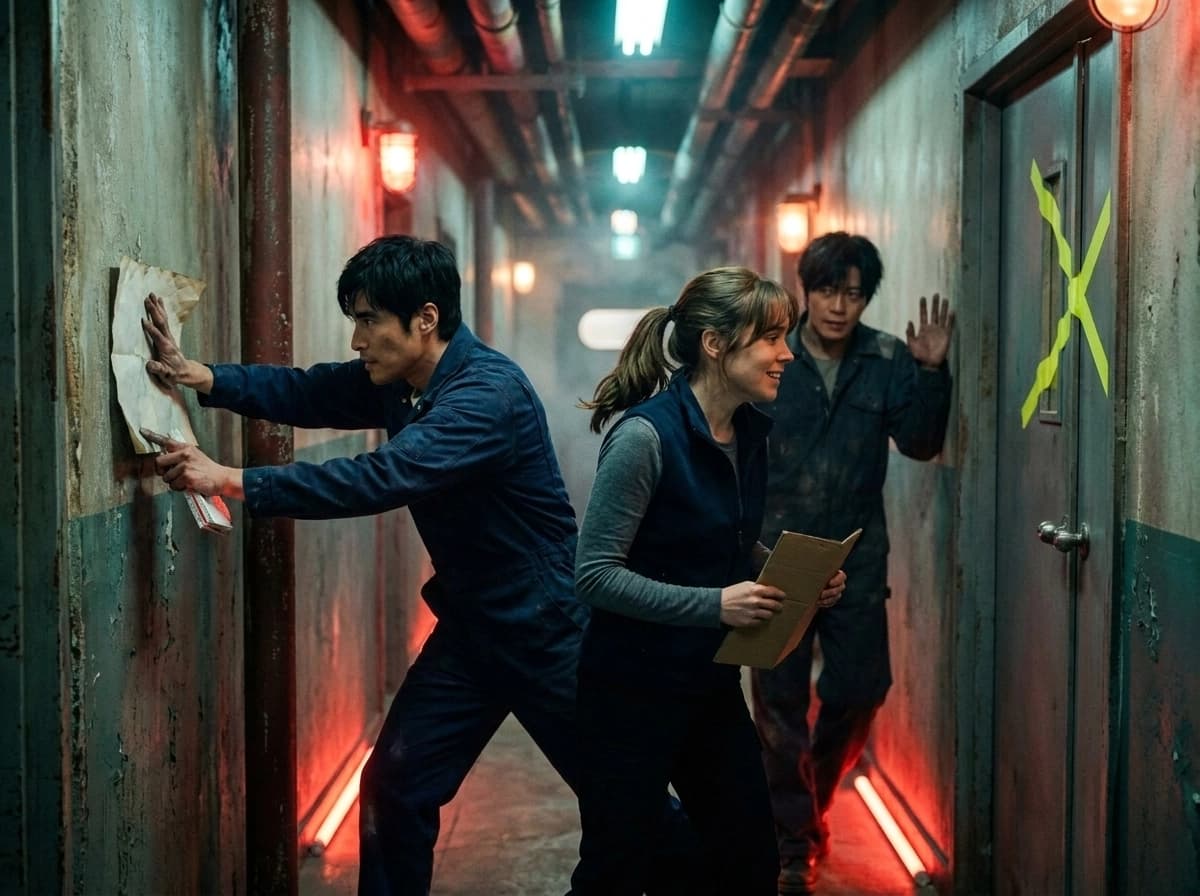
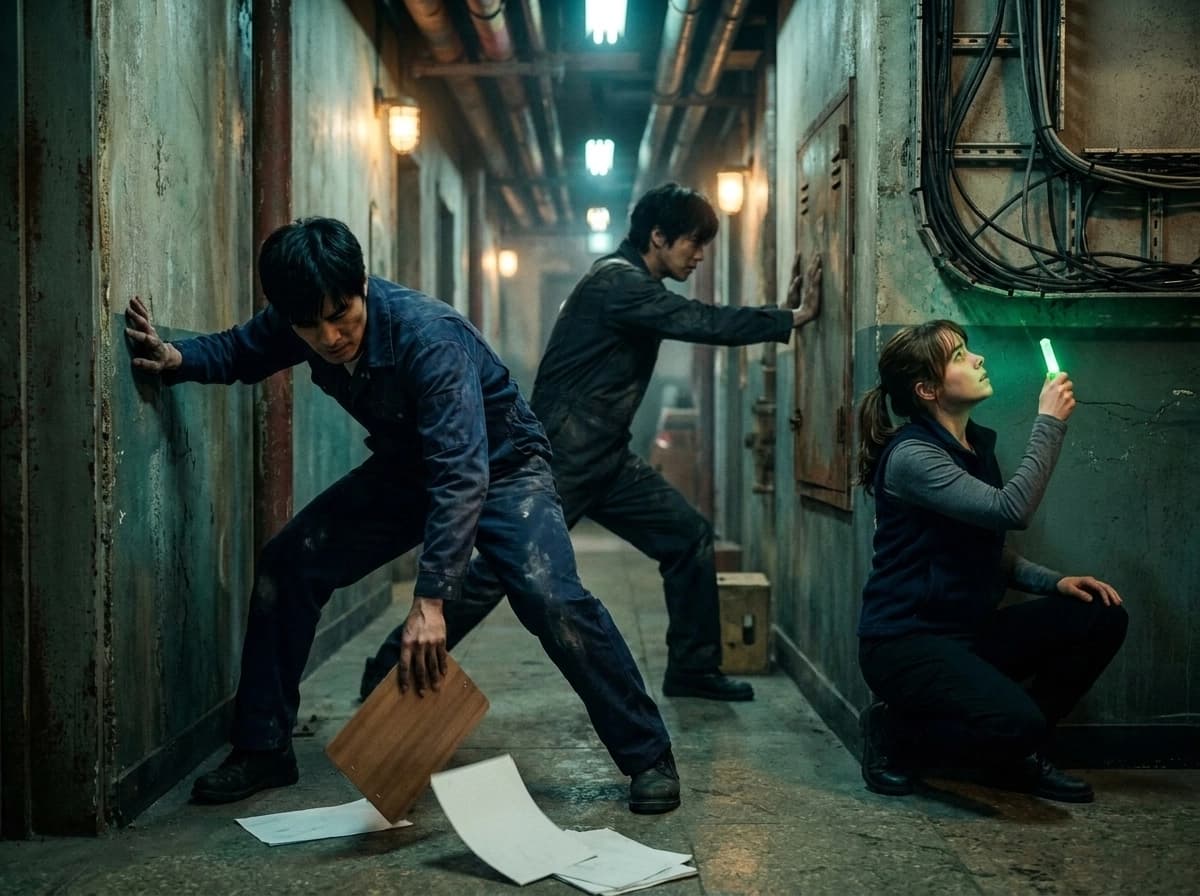
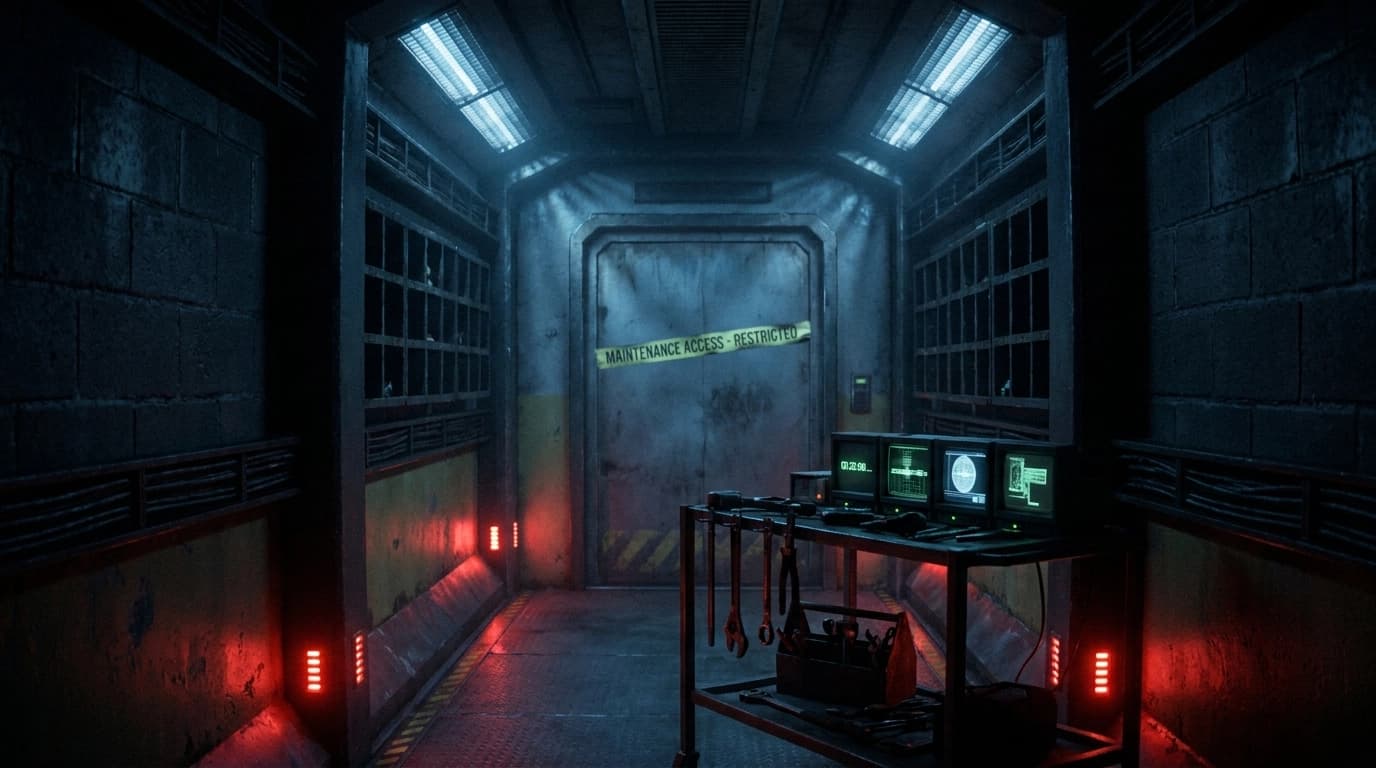
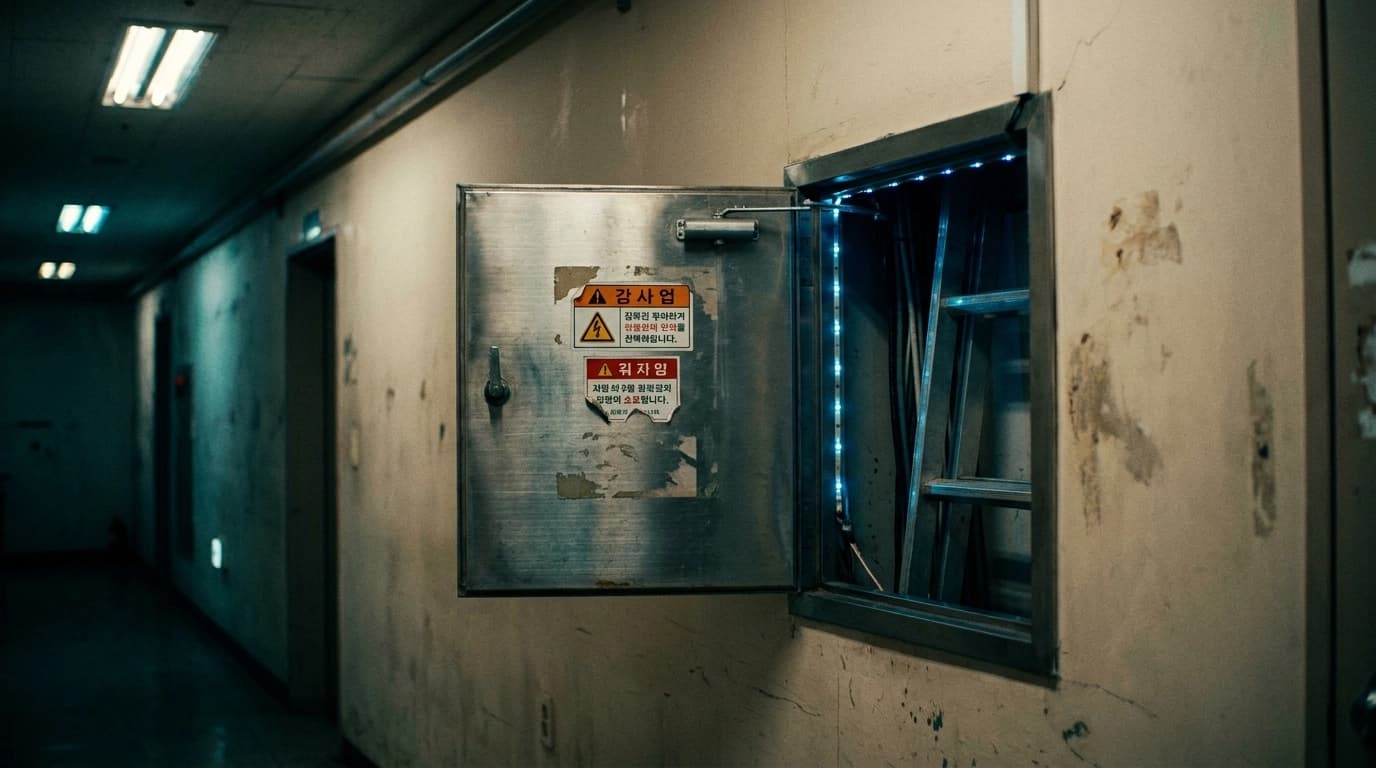
They move together, the three of them slipping into a narrow stretch of rehearsal corridor where the off-white doors blend with the matte black walls. Blue emergency LEDs make everyone’s faces look slightly bluish, slightly unreal. The circled door on the map sits in the same position as the door in front of them, framed by fresh gaffer tape smear—like someone recently marked it as the problem without admitting it. As they approach, 민호준’s eyes narrow on the floor marker relay tags near the threshold. He reaches for the correct prop cases—ones labeled by RFID identity—only to find that two of the cases have been swapped with look-alike ones. It’s not a dramatic change; it’s a subtle wrongness, the kind that a system can latch onto without human doubt. The harmonizer anomaly wasn’t random. It was a glitch that started the chain, a cue that made the broadcast switcher pay attention to the wrong “verified” staging.
The first obstacle is physical and immediate: a security guard rounds the corner at the wrong time, boots squeaking faintly on polished floor. His radio crackles. His flashlight sweeps, slow and deliberate, cutting through sharp strobing shadows cast by ceiling cables. 민호준 freezes, then tries to move anyway, but his instincts argue with themselves—control his breathing, control his hands, control the sequence—and his fear makes him look like someone guilty even when he isn’t. 서윤아 steps forward without thinking, raising her lightstick charm so it catches the blue LEDs and throws a reflection toward the guard’s eyes, creating a momentary blind spot. She doesn’t run. She pretends to be a late-arriving fan, holds the charm like a ticket, and says in a breathy voice that sounds practiced, “Sorry, I think I took the wrong hallway.”
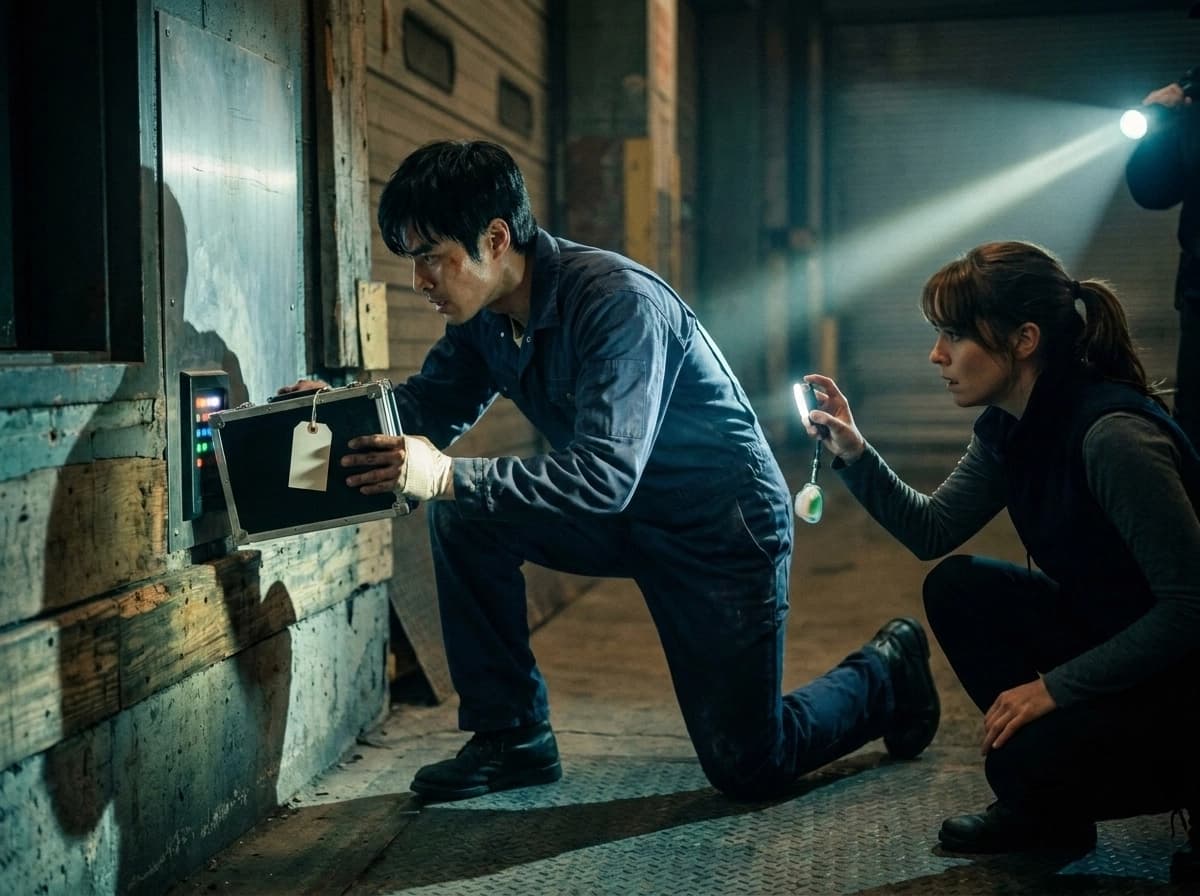
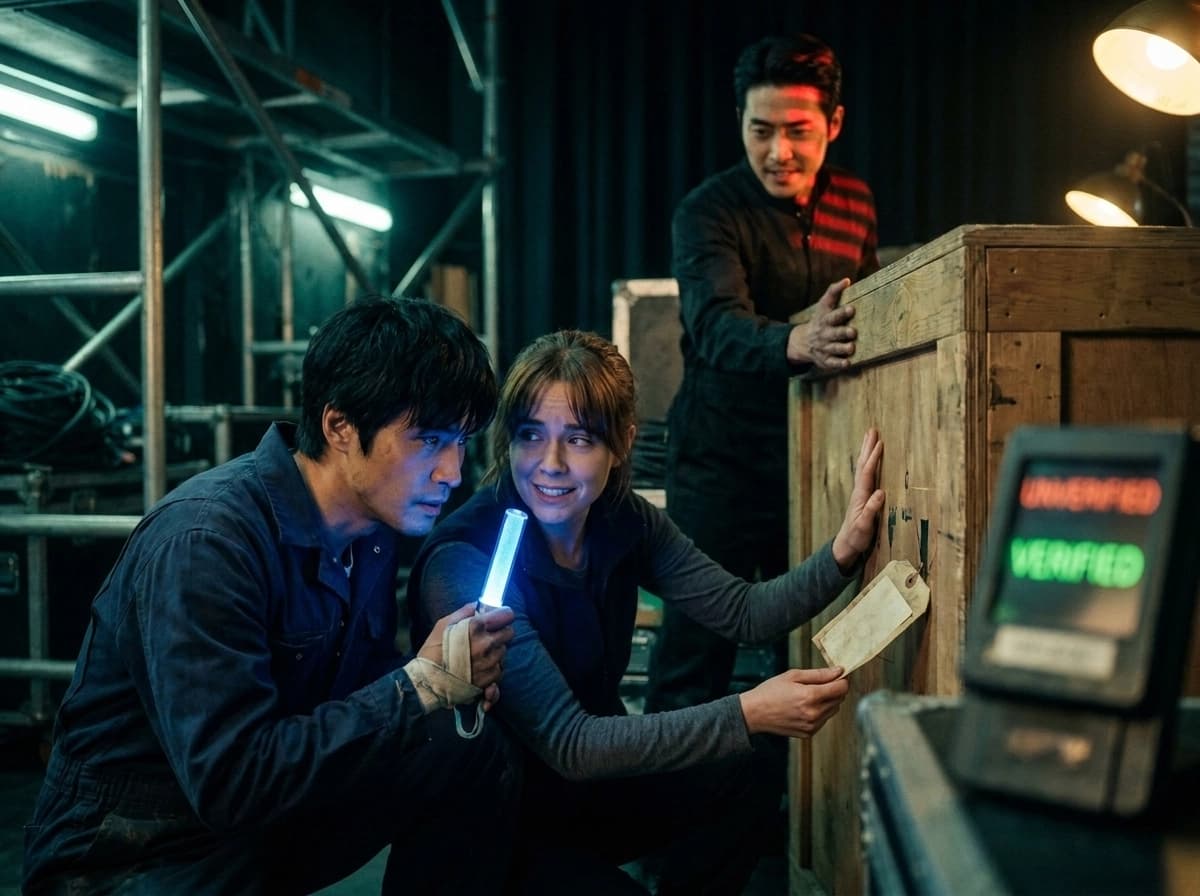
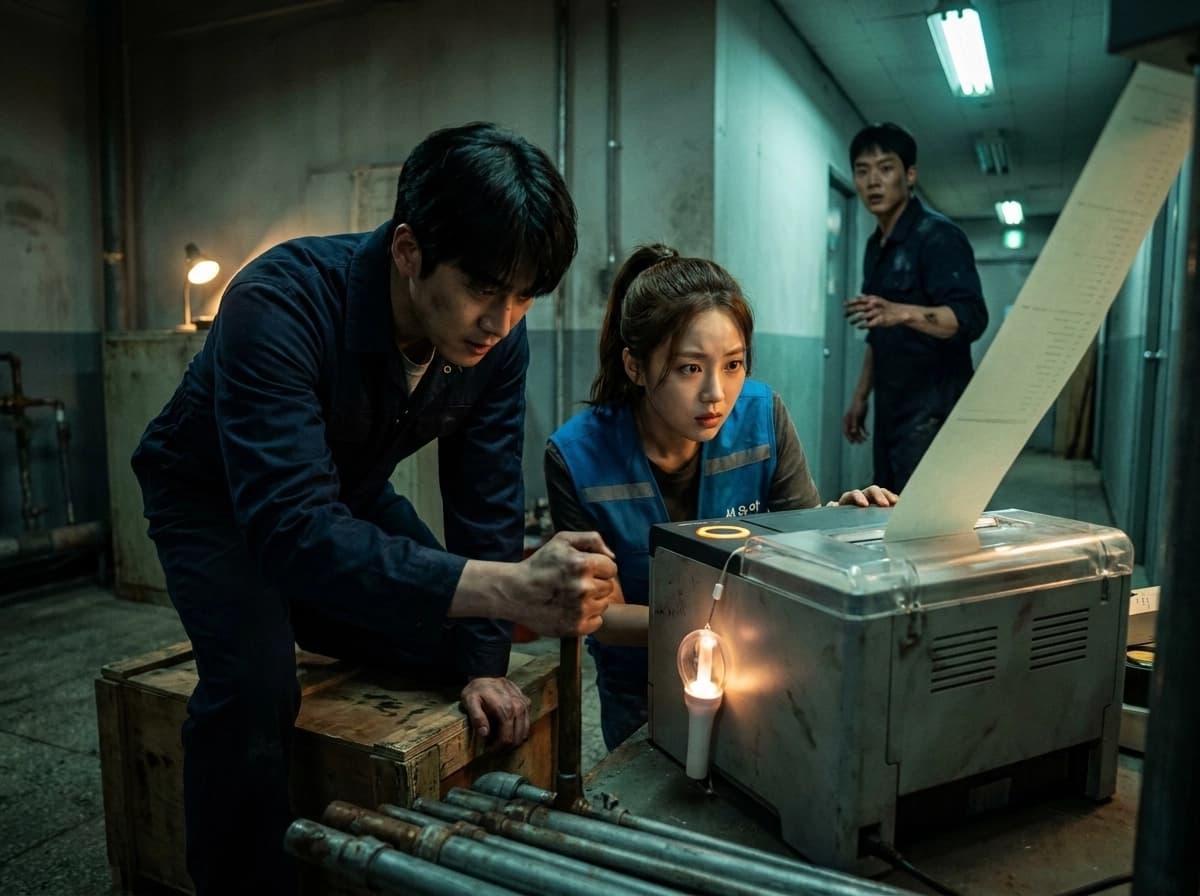
It works for a heartbeat. The guard’s expression shifts, confused for the first time. He turns his head, radio pressed to his shoulder, and then notices the prop lane’s amber light blinking faster—reacting to motion. That’s enough. He steps closer to investigate, and 민호준’s body reacts like a machine stuck between commands. He tries to shove the correct case into place while moving his shoulders to hide tag labels, but the guard’s flashlight catches the RFID reader panel mounted beside the circled door. The reader emits a low chirp, and the screen on the panel briefly displays “UNVERIFIED CONFIGURATION.” It’s not a smoke test yet—just a warning that something is off.
강도현 doesn’t argue with the warning. He moves. With sudden, deliberate clumsiness, he walks in front of the guard as if he’s a staff member late to a setup. He leans his weight onto the wall to look casual, cracks a dry line—something about how the venue loves to “practice fear for safety day”—and then, as if annoyed at himself for needing to be believed, he unclasps his gloves. The smell of oily fingertips hits the air when he presses his bare hands against the prop reader panel’s latch, overriding the fear in his own body with procedure he’s willing to bend only when the cost is clear. He looks at the guard, smiles like nothing matters, and says, “This reader’s temperamental. I’ll reset it.”
He doesn’t reset it the way a rule-following technician would. He acknowledges the read and holds the panel’s lid closed just long enough for the system’s internal check to re-scan the tag identities of the cases they’ve got in hand. It buys them seconds; it doesn’t bypass Prop-Swirl Protocol. But those seconds decide whether the backup feed locks. The security guard watches him like he’s watching a magician, waiting for the trick to become an excuse to call for more staff. Before anyone can decide, 민호준 slides the correct prop case into the lane’s docking slot, his hands moving fast enough that the paper notes on his wrist flutter. He hears 서윤아 swallow, sees her lightstick charm shadow mapping the floor as she positions her body to block the guard’s flashlight from the tag labels.
The reader chirps again. This time, it displays “VERIFIED.” Amber lights settle into a steadier rhythm. Relief flashes through the trio, quick enough to feel like it might be permanent—until the guard shifts, and the flashlight beam finds another case at the edge of the prop lane. That case is wrong again. Someone—unknown, but close enough to have swapped things—has placed a mismatched prop for the floor-marker relays that control lighting cues and camera tracking. If they fix only one element, the system will still see the configuration as incorrect and choose backup. It’s not just a visual problem. It’s a synchronized sequence problem that can trigger the stampede-prevention routine when the show begins.
Time is suddenly heavier. The backup feed timer continues to tick down on the monitor they can see through the corridor’s glass window. Forty minutes is already less than a promise now. Their breathing shortens, like their bodies are bracing for impact.
They split their roles in the only way that makes sense without breaking the rule-first culture: 민호준 and 서윤아 handle the swaps inside the prop lane docks, matching tag identities and physically moving cases past the reader; 강도현 acts as the human moving barrier, keeping the guard from turning the corridor into an alarm-triggering stampede of staff. He’s still performing jokes, still pretending to be careless, but his body language is the opposite of careless. He keeps stepping into the guard’s line of sight, offering himself as a target for attention while his bare hands loosen case latches quickly. He’s building a second kind of map—one drawn in footsteps and obstruction.
The stampeding consequence becomes real in a different way: not because someone says it, but because the guard finally realizes they’re not supposed to be back here. His radio crackles louder, and he moves to acknowledge the smoke-test alarm protocol “just in case.” His finger hovers near a wall button. That’s the moment the air changes. If he acknowledges it, classroom-grade aerosol fog bursts down the corridor, and the venue clears the area in a panic-shaped choreography that updates his route. That clearance narrows escape windows and could trap them inside the prop lane at the exact moment the system locks. It would turn their careful secrecy into a chase.
민호준 lunges—not toward the button but toward the guard’s wrist. He grabs hold hard enough that it pulls the guard’s arm sideways, and the flashlight beam smears across the tag labels. 서윤아 uses that smeared beam as cover to push the second correct prop case into place, sliding it so the RFID identity passes the reader cleanly. Her hands shake so hard she has to clamp her fingernails into the edge of the case handle to keep her grip from slipping. The reader chirps, then briefly displays the verified configuration sequence for the floor markers, as if relieved.
The guard jerks, tries to wrench free, and 강도현 steps in. He doesn’t hit. He grabs the guard’s radio mic, yanks it down just enough to delay the alarm acknowledgement, then shoves a foam-covered prop dummy cart into the guard’s legs—an awkward, harmless collision that makes the guard stumble without hurting him. It gives them the fraction of a second needed. The guard’s hand finally misses the wall button by inches, and the smoke-test alarm never triggers. Their corridor remains clear enough to run.
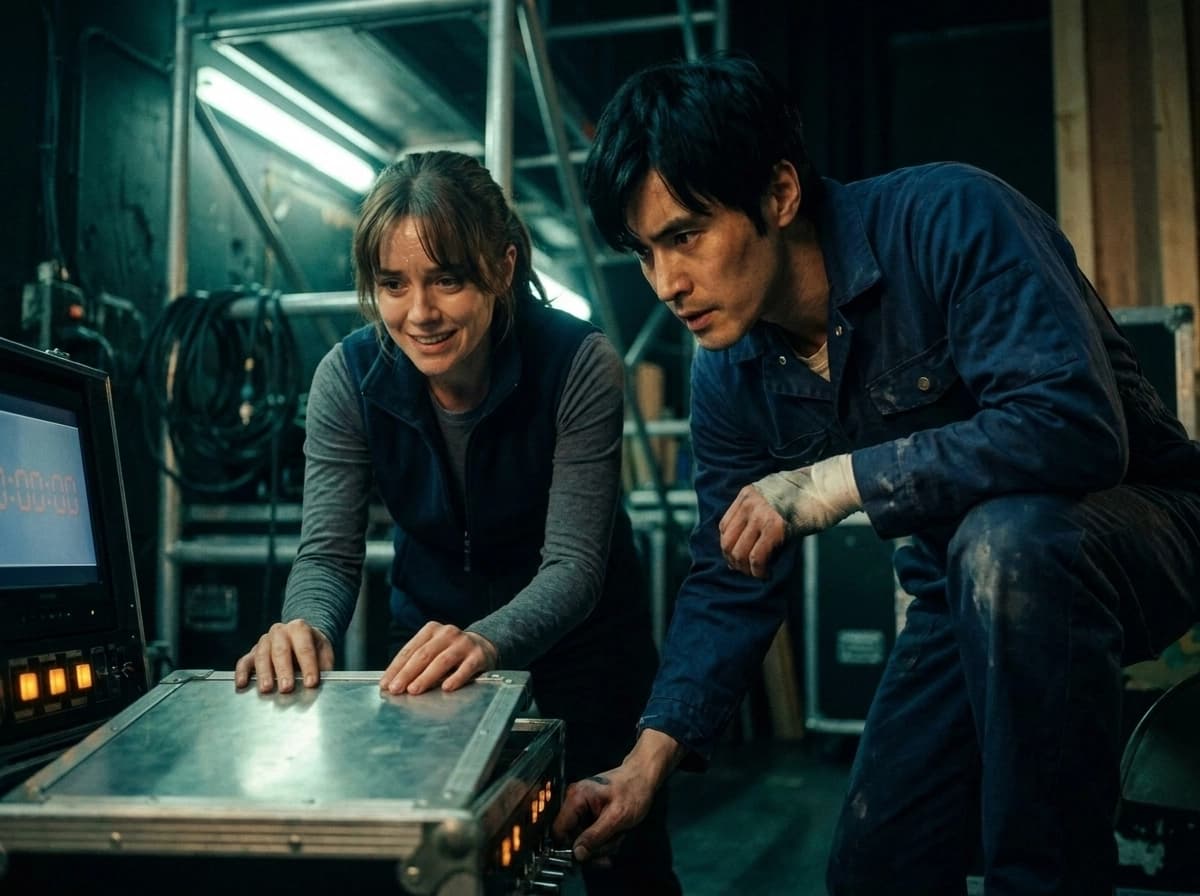
But the venue isn’t forgiving. As soon as the verified sequence locks, the monitor’s backup feed timer flashes a warning: “FEED PENDING FINAL CUE.” That means the system hasn’t fully stopped the backup override. It’s waiting for the final rehearsal cue to confirm staging. If anything is still wrong—if the harmonizer anomaly meant something deeper than swapped props—then the feed will lock anyway.
They don’t have room for doubt. The circled door on the map isn’t just a door; it’s attached to a chain of floor-marker relays that guide lighting, camera tracking, and crowd-safety guidance. If the relays are configured incorrectly, even a correct-looking prop swap won’t stop the wrong floor marker sequence. So they race to the circled door itself, piling into the small emergency rehearsal room attached to the prop lane. The door’s off-white paint matches the walls so closely it seems like it’s always been part of the corridor until fresh gaffer tape marks it for attention. The hinge squeals slightly when 민호준 pulls it open.
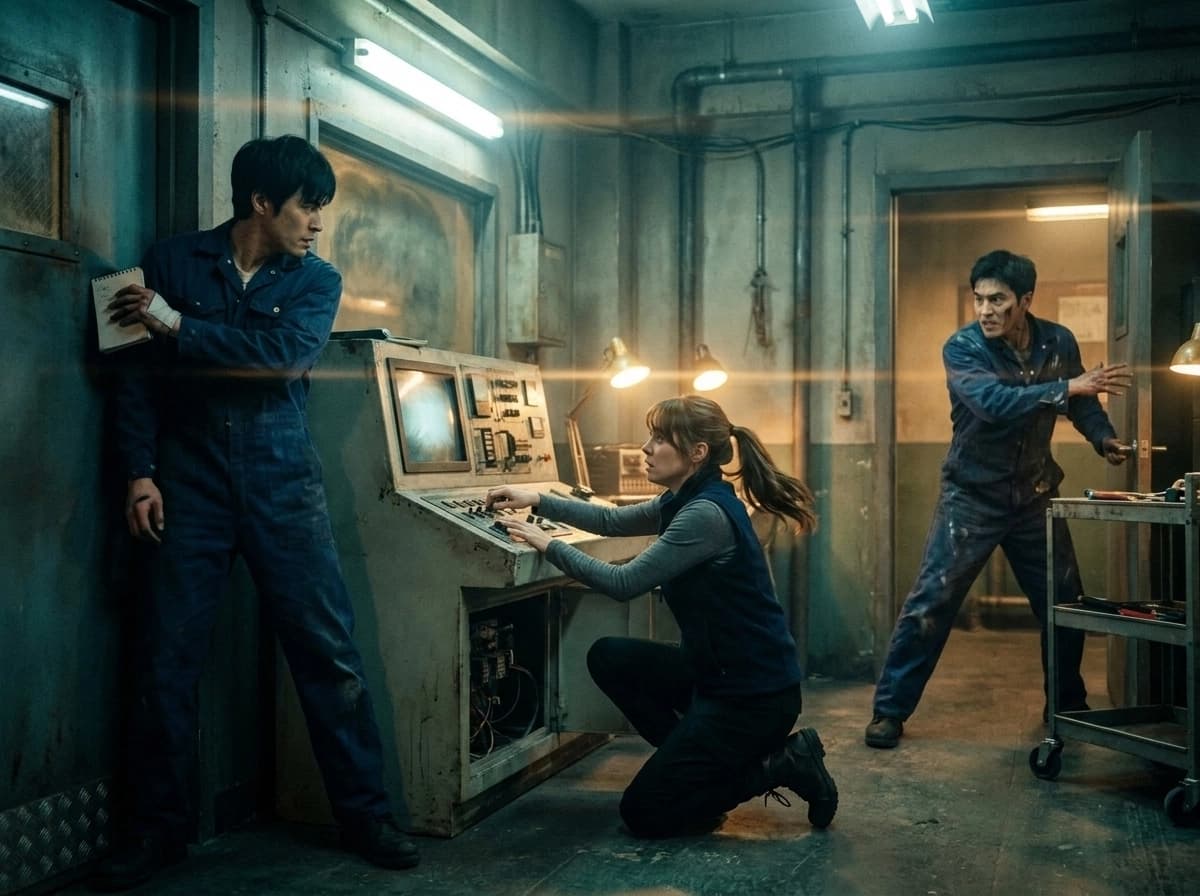
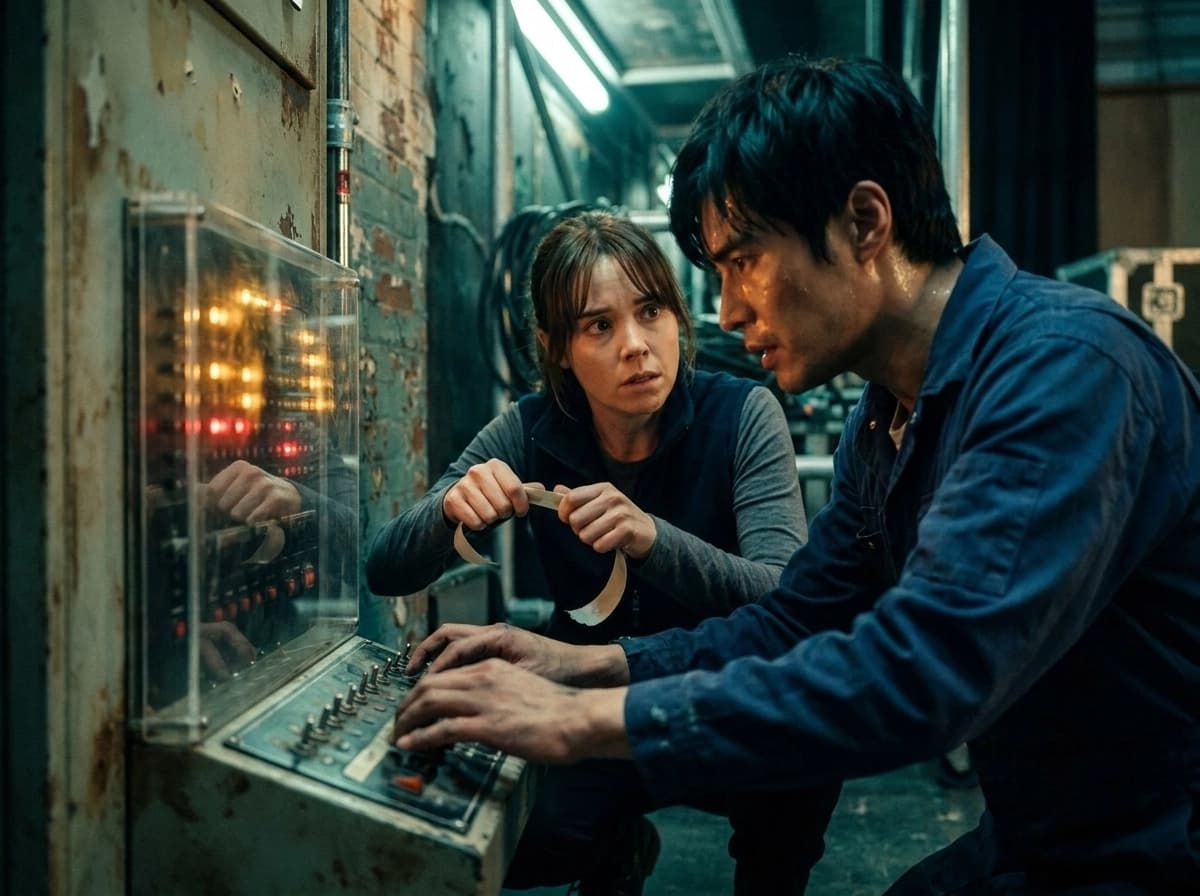
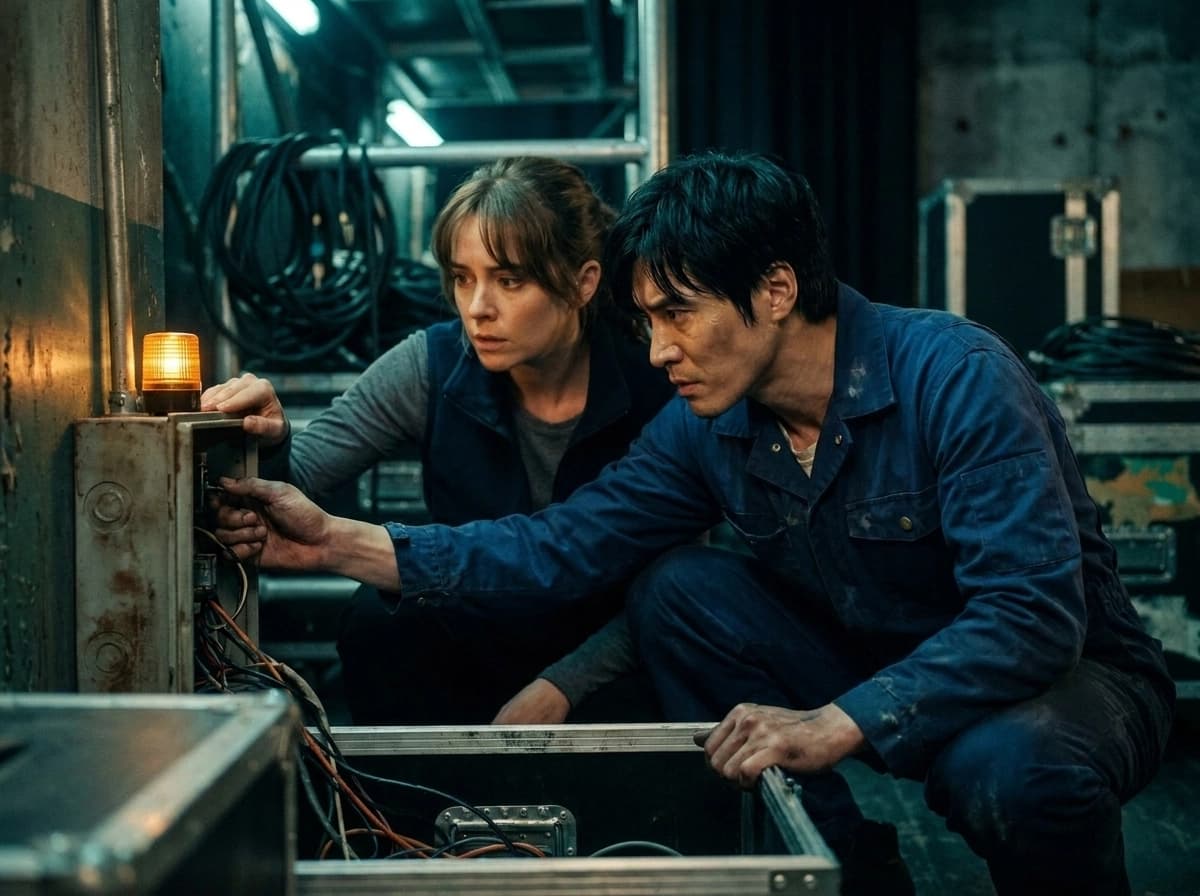
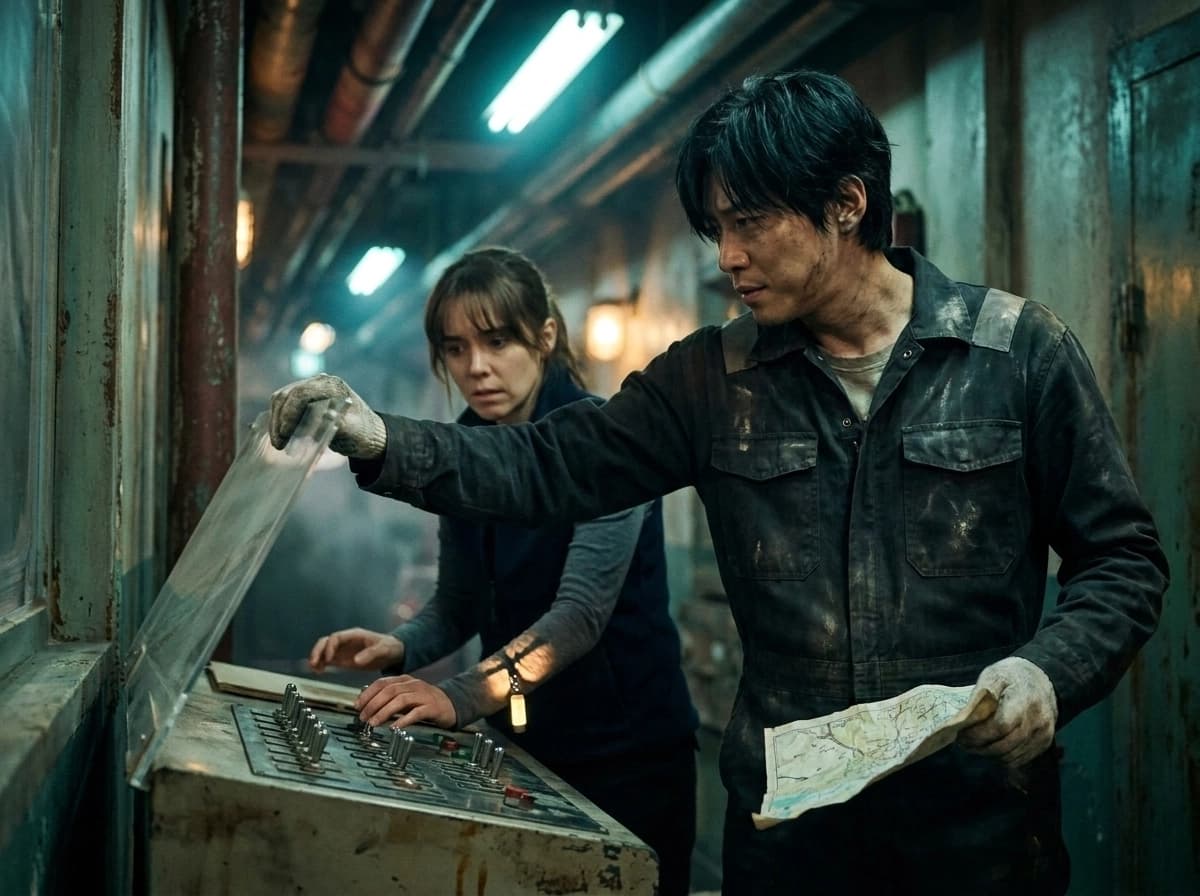
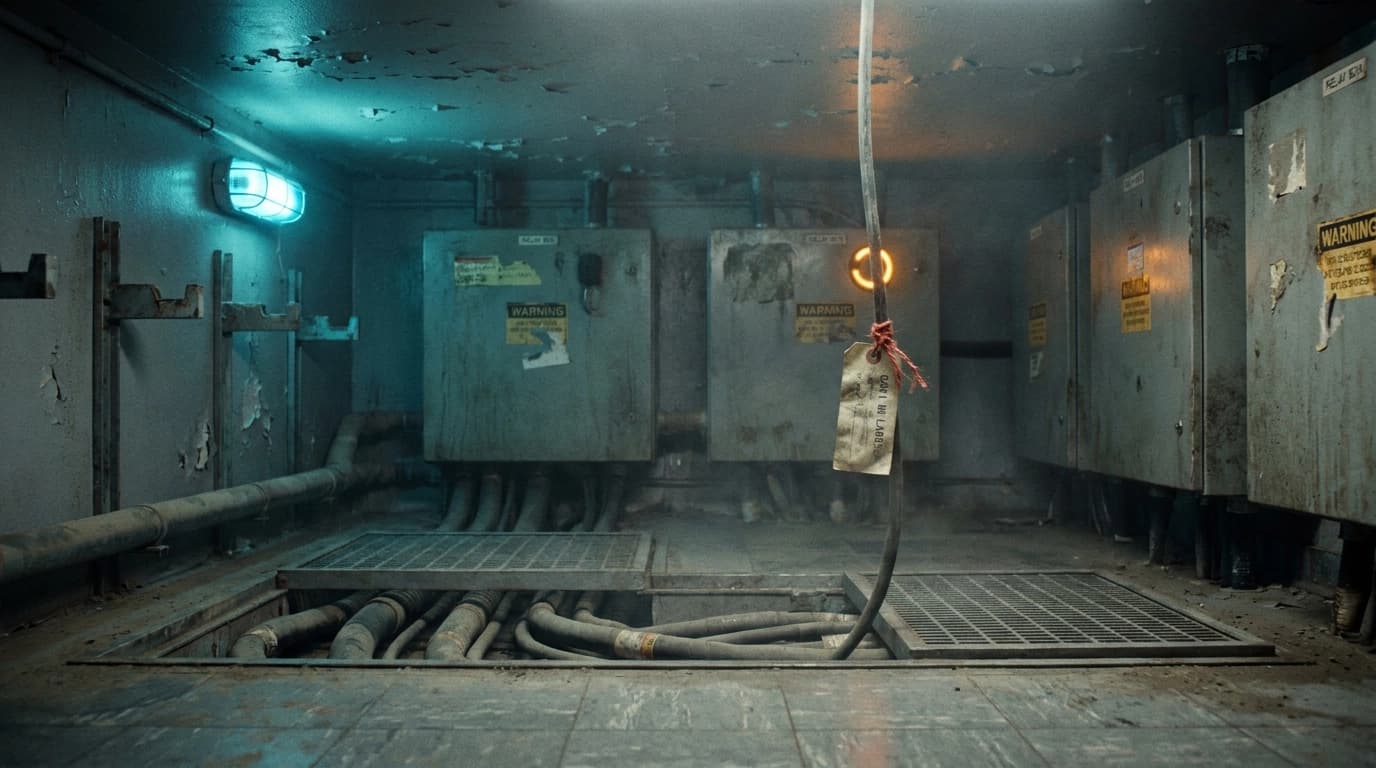
Inside, a narrow control pocket hums with system electronics. A single maintenance console waits behind a clear cover—manual relay mapping inside—but it can only accept changes from verified configurations. It also has a smoke-test alarm acknowledgment override. Not the button the guard almost hit—the console version, deeper. If they touch it wrong, they might trigger the classroom fog anyway, and the security route will update again. If they don’t touch it, the relays might still be latched incorrectly behind the backup feed.
The floor-marker relays’ status lights in the room start flashing in a stuttering pattern, like the system is trying to decide which timeline to trust. 서윤아’s lightstick charm mirrors the flashing onto her knuckles; her shadow trembles over the console cover. For her, the internal need is as sharp as the external goal: she can’t bear being the reason the right becomes wrong. The dizziness comes in waves when she sees how little margin there is.
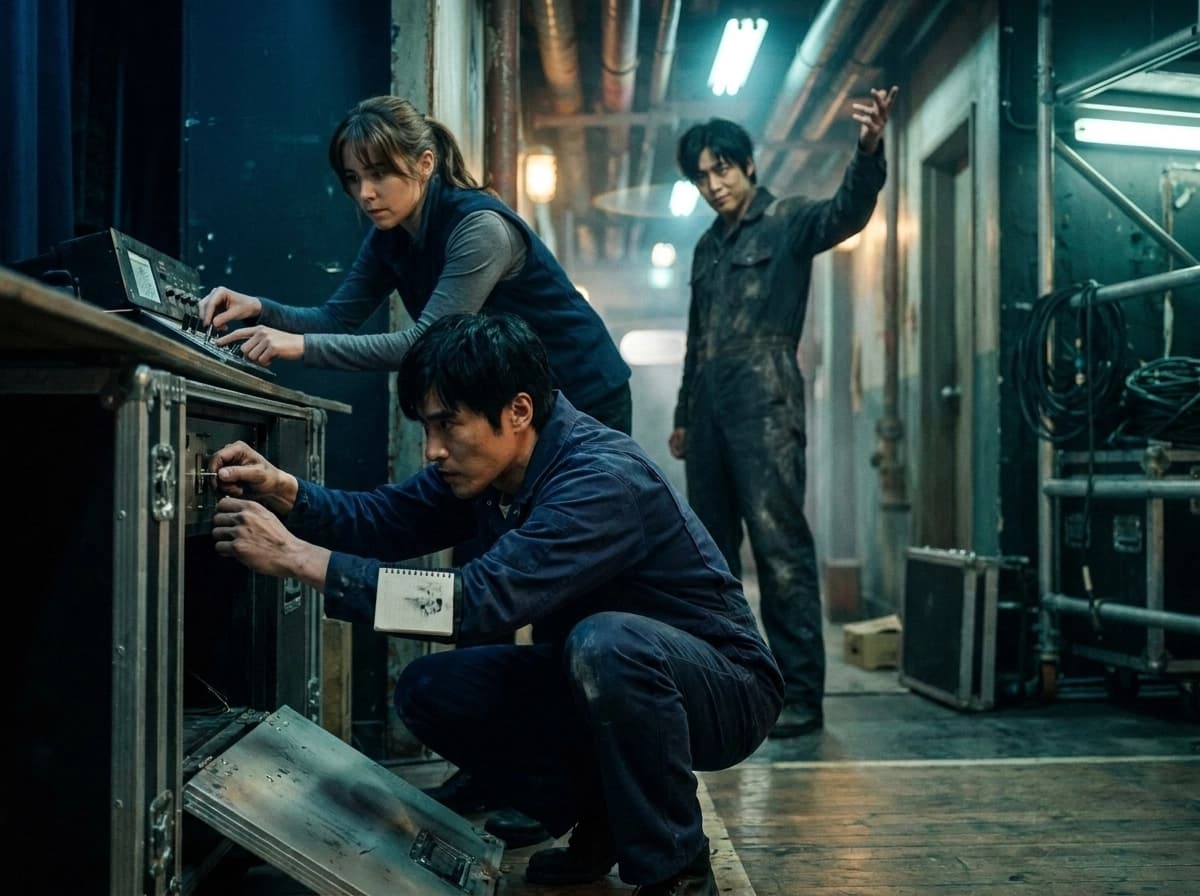
강도현 is the one who notices the flaw first, not because he understands fan logic, but because he understands prop behavior. He crouches beside the console and taps the casing near the reader interface. “The verified config isn’t propagating,” he mutters. “It’s like it’s been verified for the reader, but the relays are still set to the old sequence. Someone changed the chain after verification.” He looks up, and his humor is gone now. “That harmonizer wasn’t just a sound. It started a workflow loop. The feed thinks it’s corrected, but the floor-marker mapping behind the curtain didn’t update.”
민호준 slams his palm onto the console cover, not in anger but to steady his own thinking. He’s always treated the venue like a blueprint, always believed rules meant safety. Now his unreliable reality arrives: his own control isn’t enough, because the system’s last-verified trust might be stuck in the past. He turns his wrist and rips his waterproof memo strip from his band, then reuses it as a physical strip to jam the console latch just enough to open the maintenance panel. The motion is precise and fast, but his fingers tremble; when he notices, he presses the edge of the paper against the panel seam to keep his ink from smudging into nonsense.
The maintenance panel opens with a soft click. Inside is a row of manual relay toggles, each labeled for floor-marker sequences. If they set them wrong, the backup feed will lock the incorrect stage state when the final rehearsal cue hits. If they set them right, the backup feed may be forced to accept the change before the countdown completes.
There’s no time for negotiation with the relays. The three of them lean over the open panel, shoulders close, breath fogging faintly near the electronics. The console’s small speaker crackles with a warning tone and a countdown that mirrors the broadcast timer. A final cue is coming—someone backstage will flip the rehearsal switch, and the monitor will decide what the world sees.
서윤아 puts her hand on the toggle that corresponds to the correct floor-marker sequence, then hesitates so briefly it feels like a cliff edge. Her fear of being wrong fights her need to fix what she can. Her eyes flick toward 민호준 as if he’s the referee for her anxiety. He doesn’t tell her it’s okay. He simply grips the edge of the open panel with his other hand to anchor it in place, offering her an act of certainty she can borrow without feeling stupid. He’s not soothing; he’s containing. That’s the kind of love that isn’t sentimental—just a physical agreement to keep the moment from slipping.
강도현 holds the console door open with his body, blocking the corridor entrance so the security guard can’t suddenly rush in and force the smoke-test acknowledgment. He’s already planning for the worst, already bracing for the alarm routes that narrow with each acknowledgement. He shifts his weight, and the relay toggles are exposed to a corridor’s cold air draft for just long enough to cool the panel, preventing condensation that could make a tactile toggle feel “stuck.” That’s not magic. It’s experience with machines and fear he refuses to name.
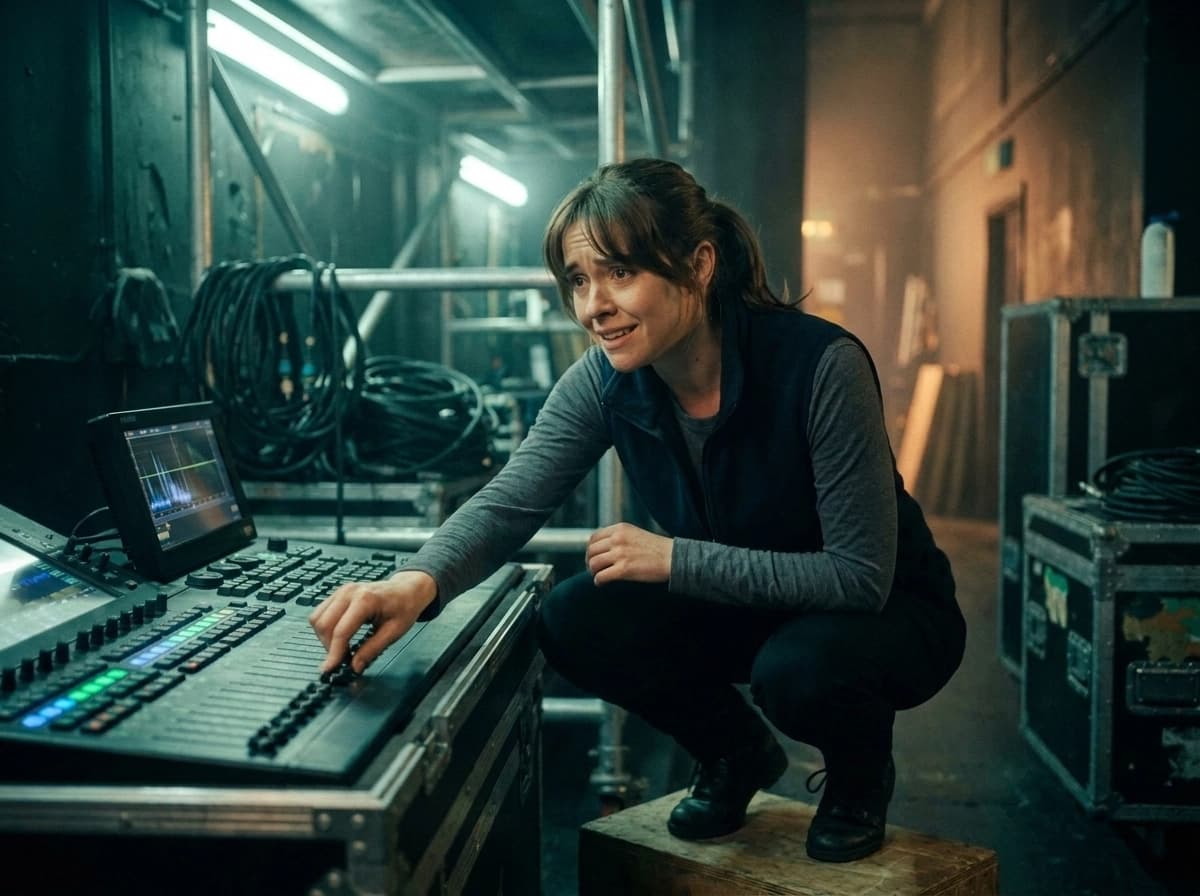
The final rehearsal cue hits. Outside, somewhere beyond the circled door, ATEEZ’s members shift positions, their footsteps tapping against the floor markers the audience will later trust without knowing what almost went wrong. Inside the room, the console’s speaker clicks. The toggles feel firm under 서윤아’s fingers as she sets them to the correct sequence—then immediately checks the status LEDs beside the manual mapping. They don’t just glow; they stabilize, turning from strobe-like warning to steady confirmation.
The monitor in the corridor flickers. For a heartbeat, the backup feed timer stops. Then it continues, but the warning changes: “Backup override canceled—verified stage mapping restored.” It isn’t just an internal system update. The room’s ambient hum changes pitch, like a ship settling after a near miss. The floor-marker relay lights across the prop lane calm down to normal cadence. The security route recalculation never triggers smoke-test fog. The corridor remains clear.
Still, there’s an aftertaste to what they did. The guard, delayed by the obstruction and radio interference, finally bursts into view at the doorway with another staffer behind him, faces tense, flashlights blazing. They catch the three of them in the act of having just fixed the very thing they weren’t supposed to touch. For a moment, everyone is still. 서윤아’s lightstick charm hangs at her wrist, glowing where it shouldn’t, and her instinct to apologize rises like bile. 민호준’s first words are not an excuse; they’re a demand for procedure.
“Don’t hit the alarm,” he says, voice sharp enough to cut. “The mapping is restored. You don’t need smoke. You need to lock the verified sequence now.” It’s the same rule-first language the venue respects, delivered with the urgency of someone who has seen what the wrong answer does to real bodies in real time.
강도현 steps in as the social buffer and the moral compromise. He laughs like he’s annoyed at the situation, as though he’s the one inconvenienced by fans and not the other way around. “Look,” he says to the guard, palms up, showing empty hands now that the manual panel is closed, “I told you this place is temperamental. They were just… helping.” He doesn’t ask permission. He offers a narrative the staff can accept without losing face. Sympathetic villain, but still a lifeline.
The guard hesitates, eyes on the confirmation LEDs, then on the panel. The other staffer scans the room’s console readout and sees the restored verified mapping. The tension breaks, not because everyone trusts them, but because the system confirms. Safety doesn’t care about feelings; it cares about steady lights.
When the corridor finally thins and the emergency rehearsal room door swings shut behind them, the story’s ticking doesn’t vanish—it turns into something quieter, heavier. 서윤아 leans against the wall and exhales too hard, like she’s been holding her breath since the backup timer first appeared. Her fingertips are red where she pressed too tightly on the case handles. 민호준 sits on the floor with his sketchpad in his lap, staring at the blueprint lines he drew earlier. They’re now wrong in a way that doesn’t feel like failure, only like learning: the venue had a loop he couldn’t see from the audience floor, and his control had been fragile.
강도현 doesn’t let them wallow. He puts the maintenance gloves back on slowly, almost ceremonially, and makes one last dry joke that tries to keep the panic from turning into guilt. But his eyes stay on the circled door’s gaffer tape smear, the place where time almost got overwritten. “You two,” he says, “you didn’t just run errands. You made the system choose a safer version. That’s rare. That’s… expensive.”
They do make it back to the broadcast-ready area in time for the show’s real rehearsal cue, with the lighting and camera tracking markers now matching what the public feed expects. ATEEZ resumes without stumbling, the harmonizer anomaly swallowed by corrected track confirmation. On the audience side, ATINY cheers with relief instead of confusion, waving their lightsticks at the markers that will never show the truth of the corridors underneath. The backup feed timer stops permanently before it can lock anything wrong.
And afterward, when the last run ends and the venue’s blue emergency LEDs dim toward standard lighting, 서윤아 and 민호준 are left holding something they didn’t plan to carry: the knowledge that being “almost right” can move thousands of people by force. Their answer-making work still matters—questions still get collected, answers still get compiled—but now their hands remember the tremor of a wrong configuration and the strange mercy of a system that could be convinced before time ran out. 강도현 walks away into the maintenance corridors without asking to be thanked, humor returned like a mask he can’t quite stop wearing—because if the venue ever learns exactly how close they came to triggering smoke-test fog in a corridor full of people, it won’t just be a technical failure. It would be a blame story, and none of them have the luxury of playing hero without consequences ever again.