Plot Synopsis
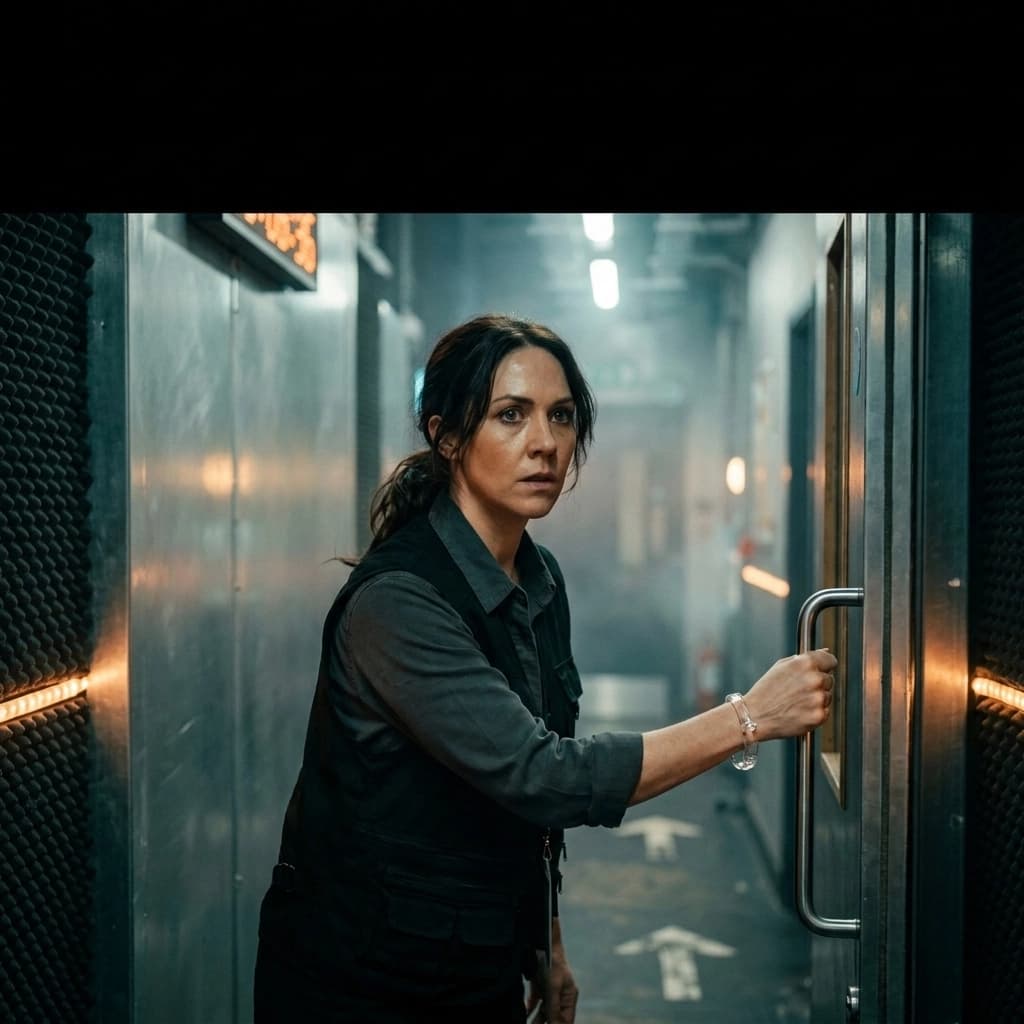
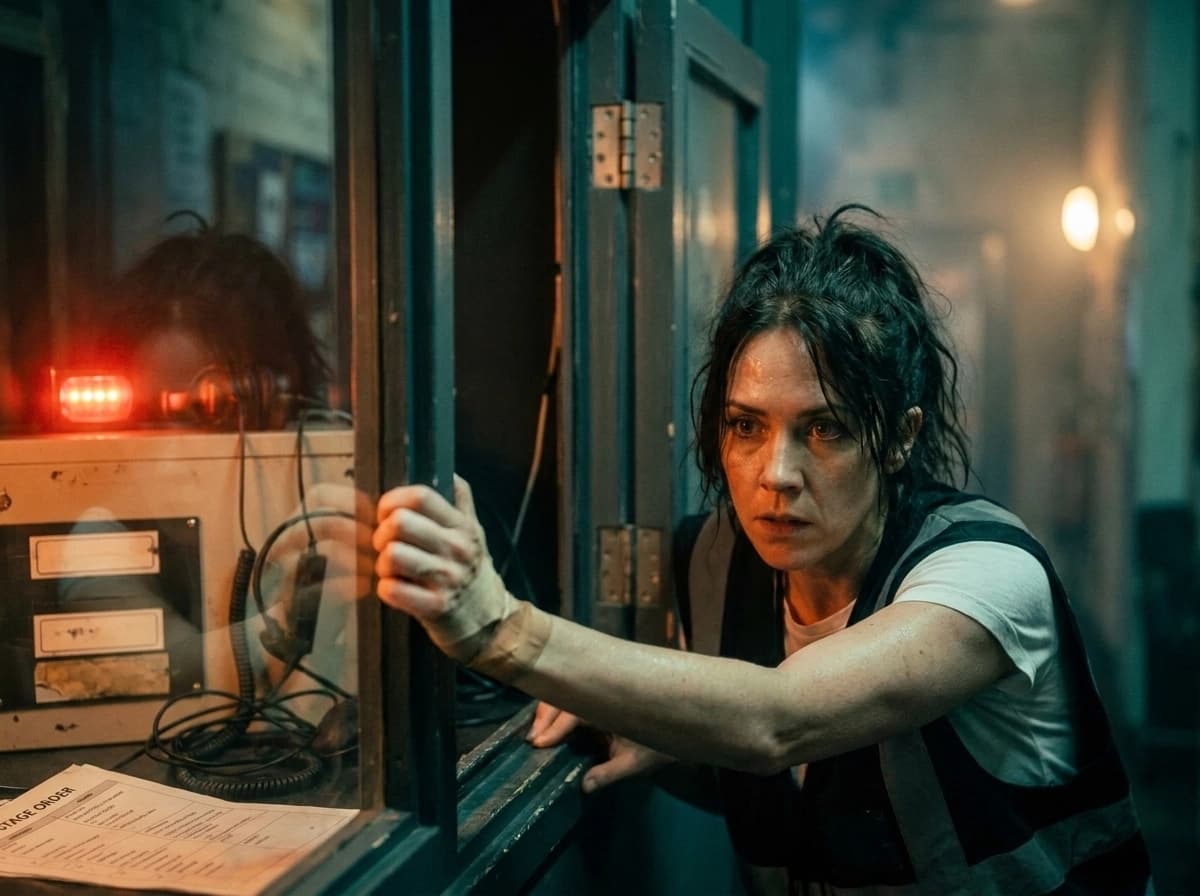
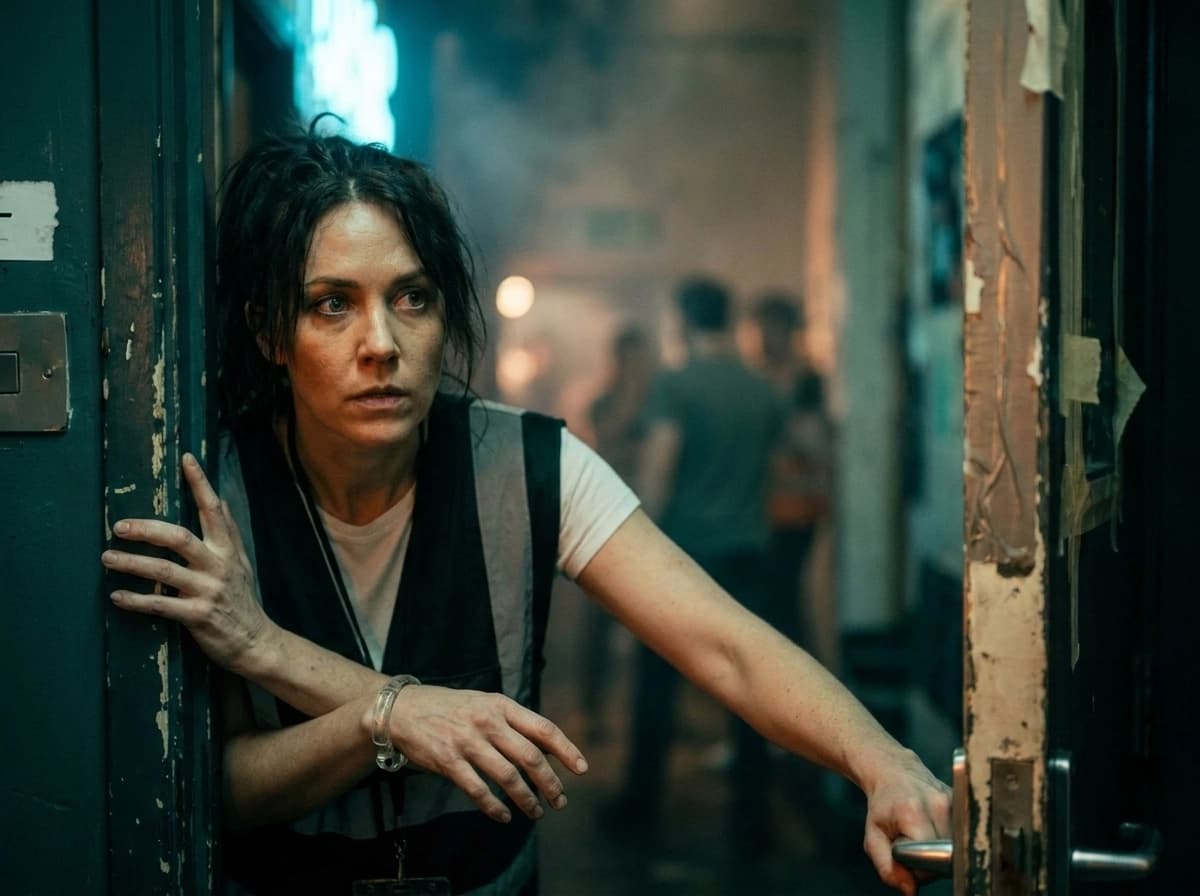
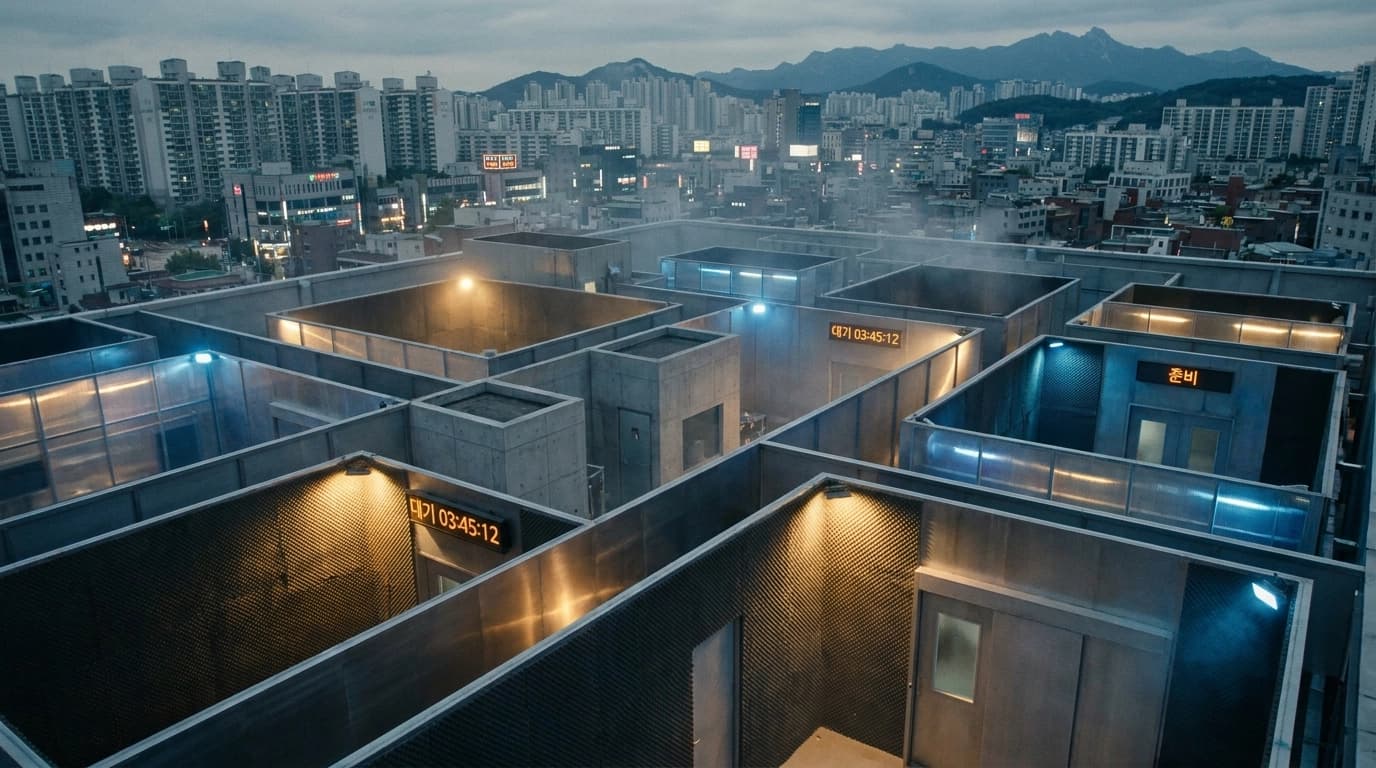
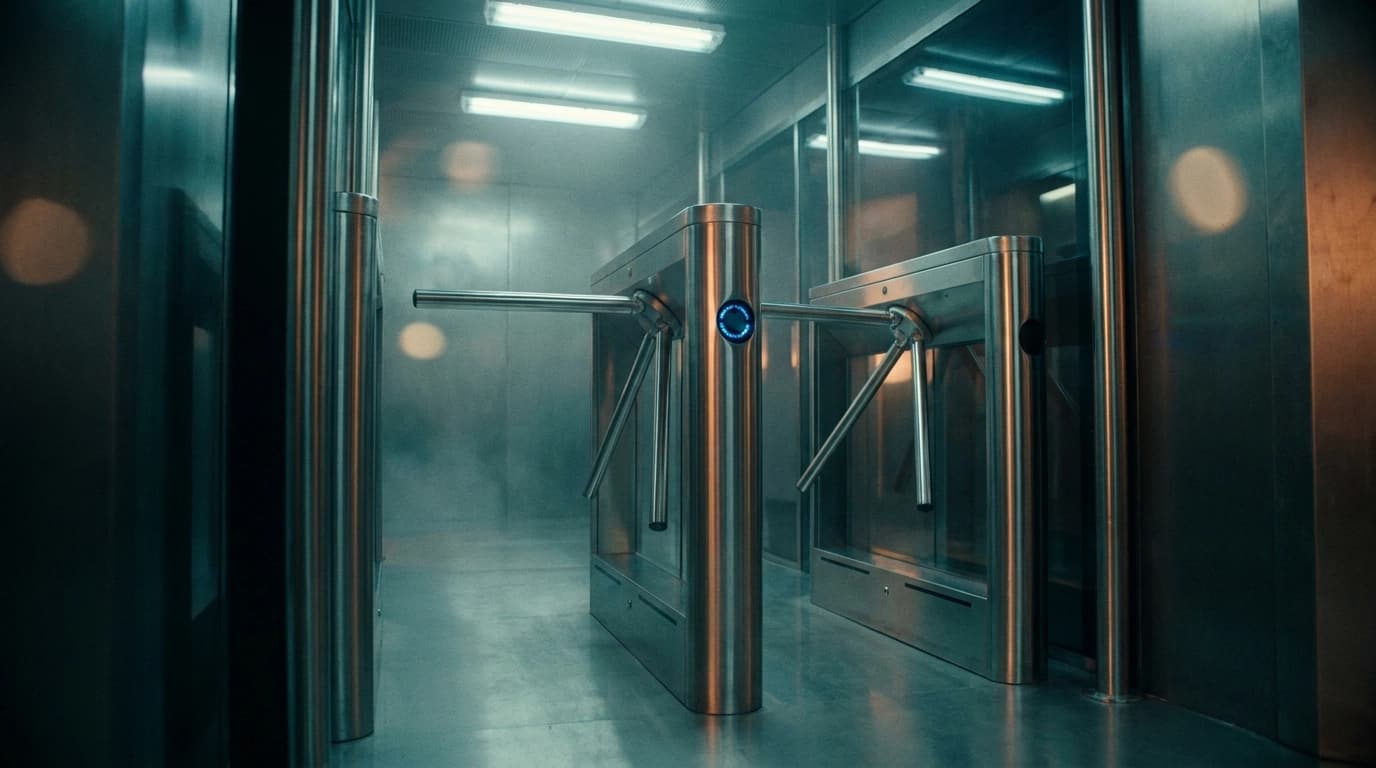
Late evening on soundcheck night, 서윤아 isn’t supposed to be anywhere that smells like fresh paint. She got through the service corridor on a borrowed tour badge and a quiet smile that makes security guards look away, but the moment she slips into the Quiet Room hallway the air changes—citrus disinfectant over hot electronics, then that new, sharp odor that clings to the back of her throat like a warning. Brushed steel walls catch the rehearsal spotlights and throw them back in pale stripes across sound-dampening foam. Above each windowless door, a wall LED strip holds steady—until she hears it, the building’s “calm” system flickering in the seams: a shimmer on the strip like heat over asphalt, then a second shimmer, and a third, as if someone nearby is scanning and rescanning the same badge.
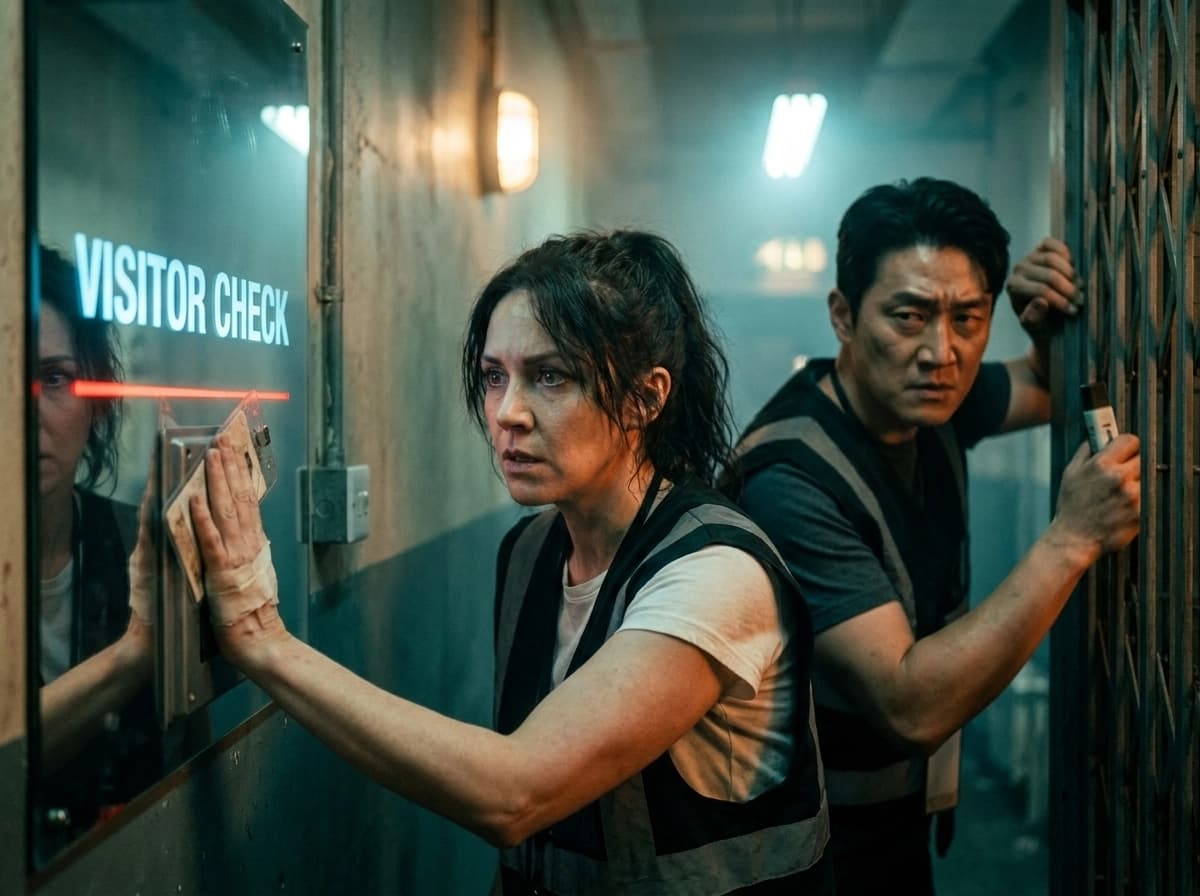
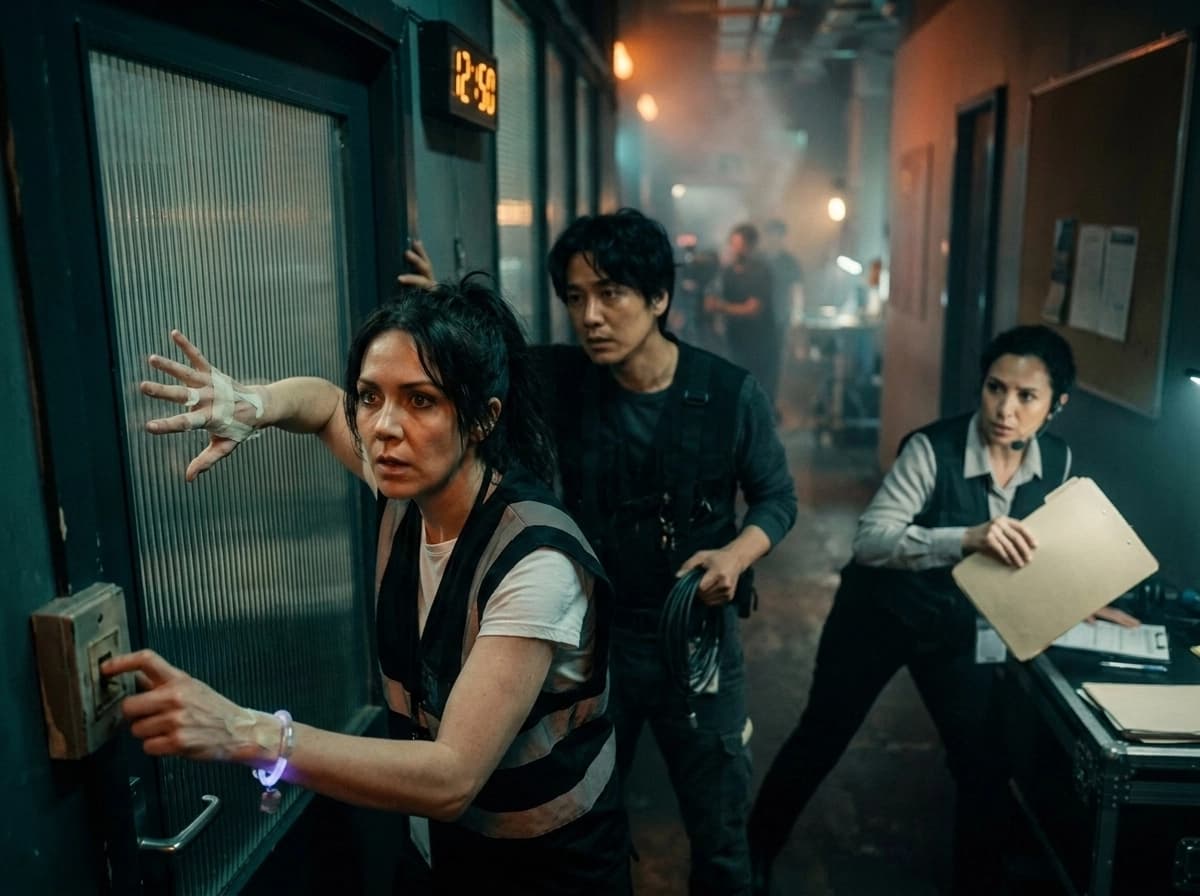
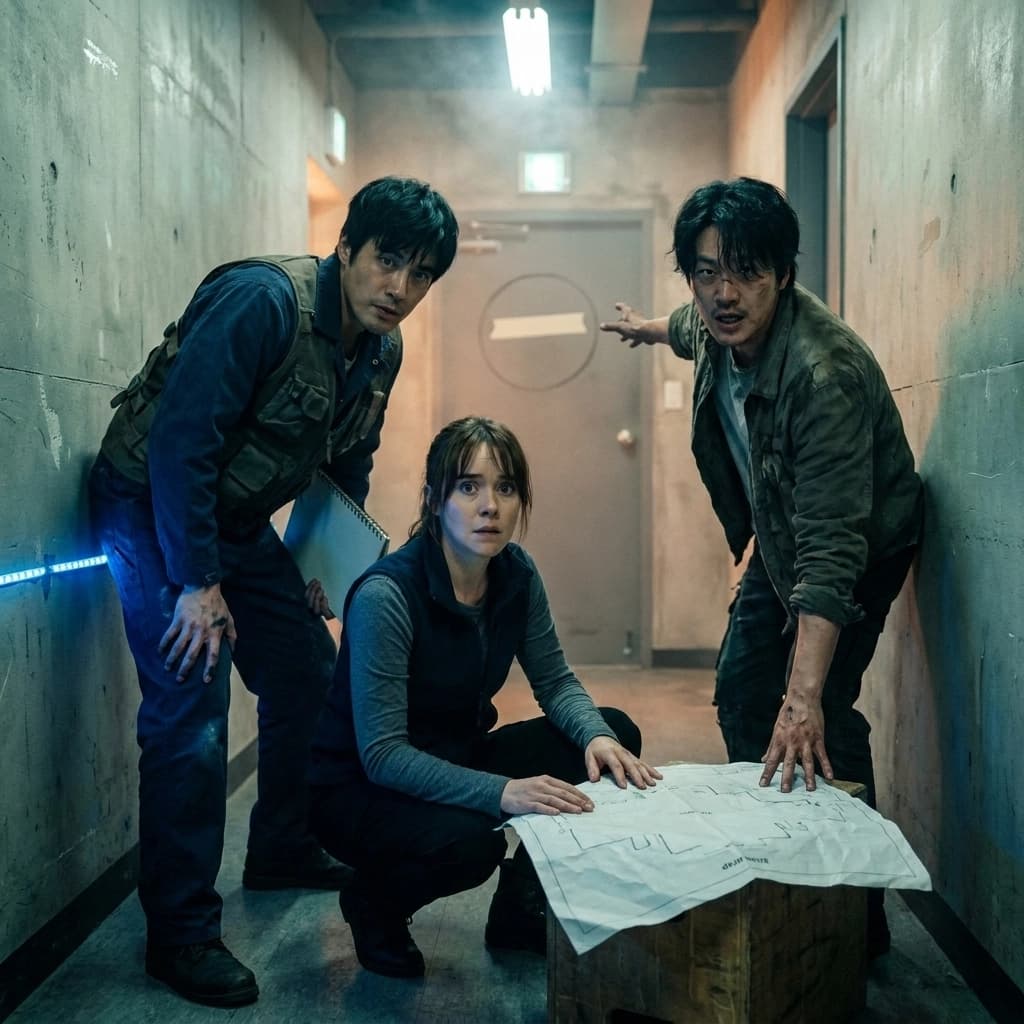
She and 김도현 burst into the corridor together, both of them breathing fast enough to fog the narrow space between their words. He moves like he’s always mapping routes in his head, fingers already touching the line-marker he uses to track crowd-to-staff flow; her eyes are fixed on the floor arrows taped in neat directions that look authoritative until you realize someone has been walking against them. The corridor doesn’t lead to exits so much as it funnels into windowless rooms labeled by stage order—numbers that should mean safety, not countdown. The second they spot a service door ajar and a label on the table inside, 서윤아’s chest tightens: a plastic bracelet, identical to the one she traded for at a fan-sign, sits on a props surface beside a file stamped with tonight’s stage sequence. Except one charm is missing. The rest of the bracelet catches light like a promise—warm sunrise-gold against cold gray—then the missing charm makes it look suddenly unfinished, like a face without a name.
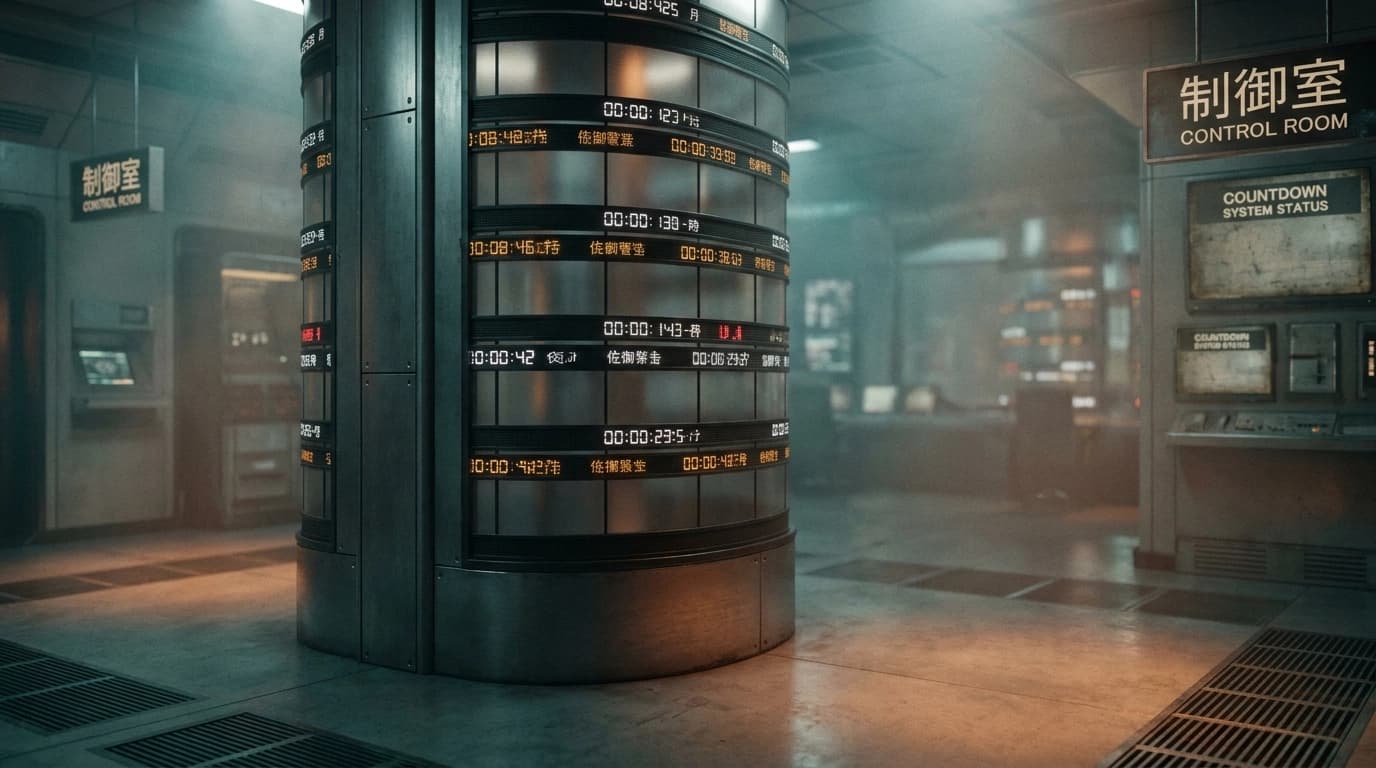
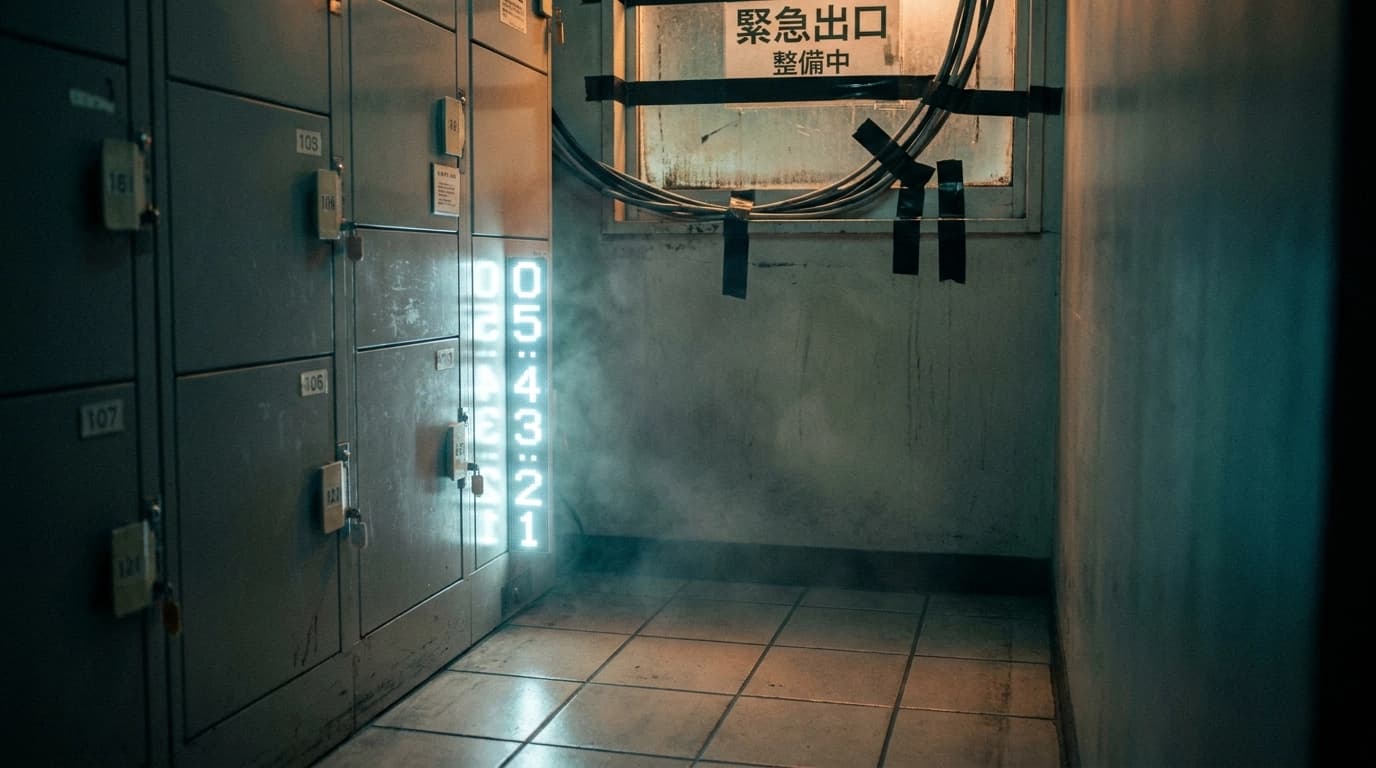
They don’t have time to process. The room is already “alive.” Under bright rehearsal spotlights, ZEROBASEONE members move through choreography for a track that should be locked in the correct take, but their spacing is subtly wrong—an elbow too close to a path, a turn that lands a fraction off from where the camera rig expects them. The stage-order LED screen above the scuffed service sink begins counting down, amber numerals crisp as printed teeth. Somewhere down the corridor, a countdown from another Quiet Room begins too, faintly delayed, as if the building is distributing mistakes to nearby monitors. 서윤아 feels the clock in her bones and, before she can talk herself out of it, she steps toward the table, reaching for the bracelet with bare fingers—only to stop short when she notices the air around the table. The paint smell is strongest there, fresh and wet enough to be real. She can’t tell if the room was repaired yesterday or if someone has just “covered” something invisible.
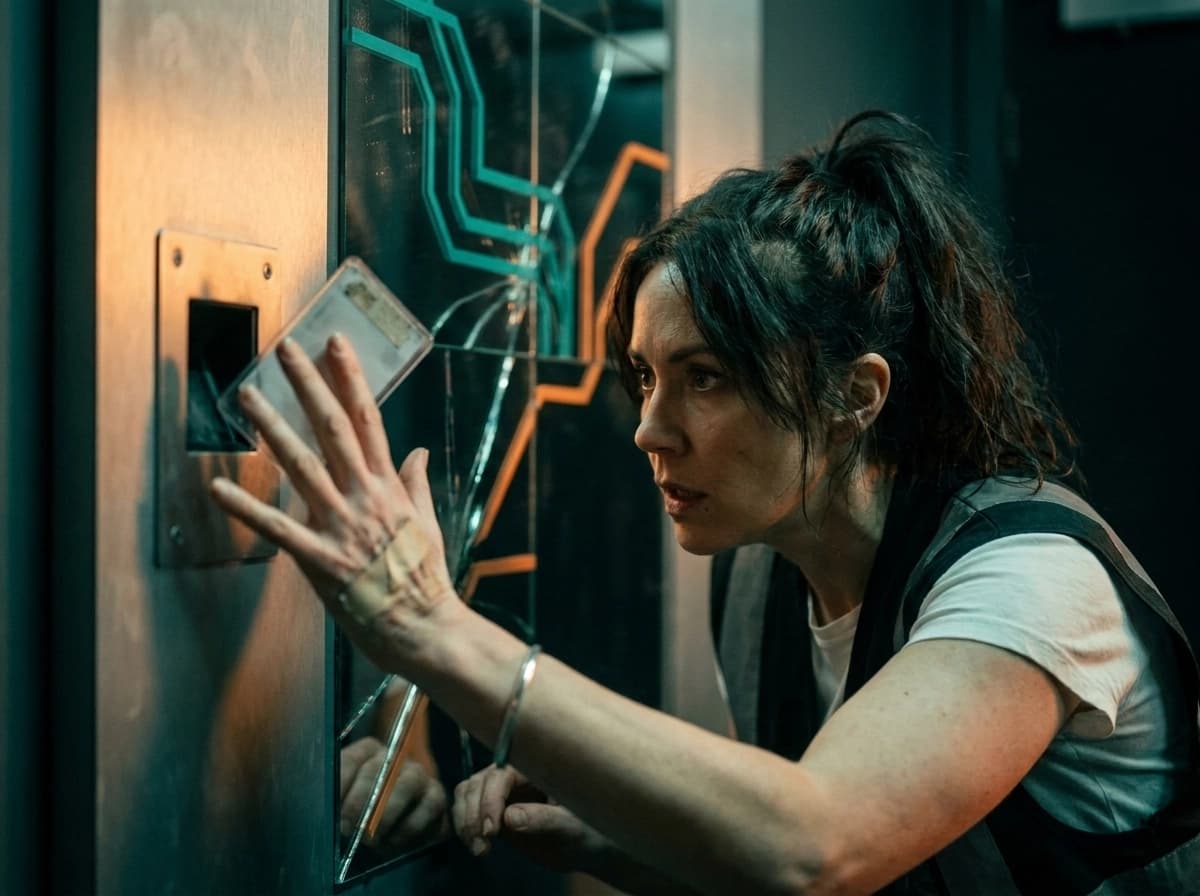
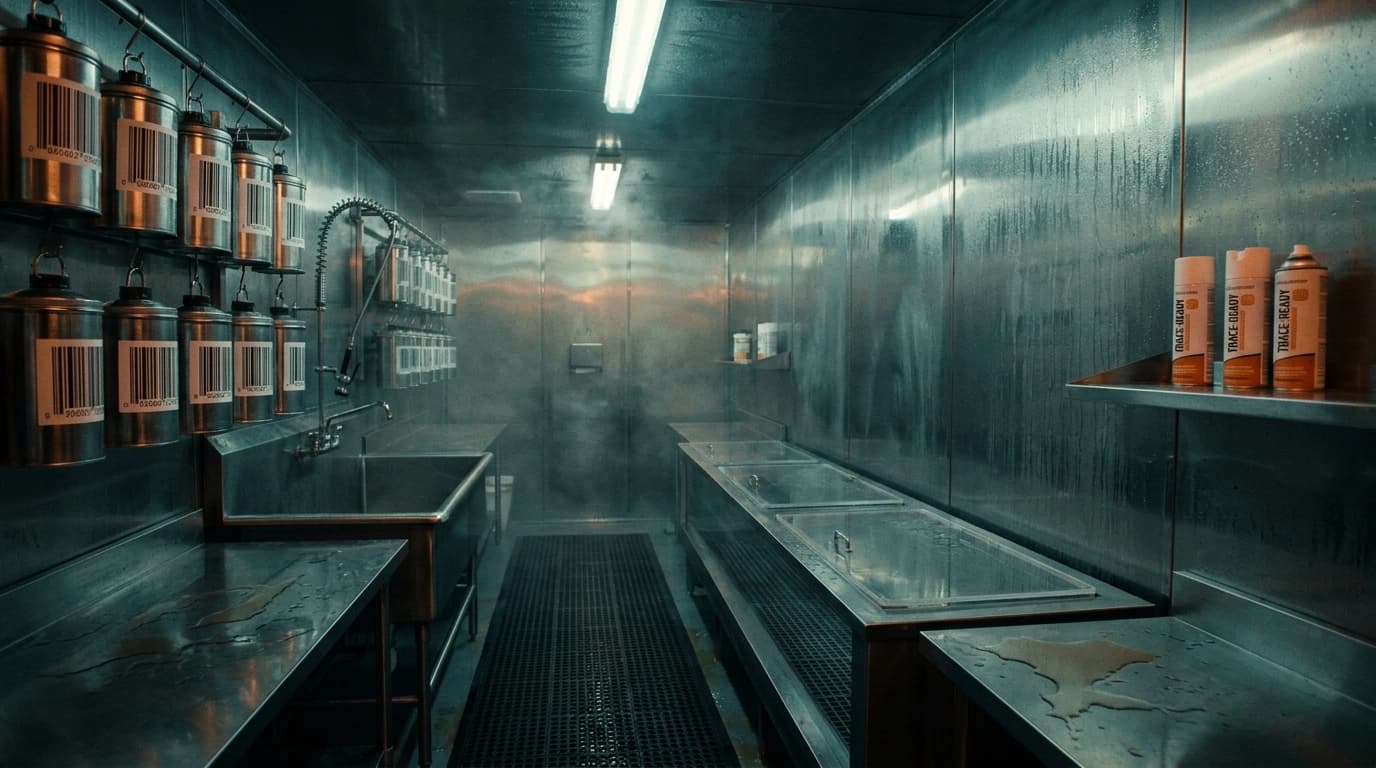
김도현’s jaw clenches. He’s built his whole career around Trace-Ready accountability—badges don’t just open doors; scans timestamp onto visible LEDs. He sees the trick instantly: that shimmer trail on the wall strip isn’t just a door lock problem, it’s evidence left behind by someone who wants staff to notice, then misread. He presses his palm flat against the brushed steel to steady himself and watches the members rehearse with the wrong timing cues loading into their in-ear monitors. When the countdown hits a number that makes the air feel thinner, he leans toward the room’s intercom and speaks in the staff tone everyone trained to use.
“점검 중.”
But the rehearsal doesn’t get safer; it gets more dangerous. When a beat lands, the choreography correction that should be automatic for broadcast timing fails—spacing is off, and the members adjust mid-motion, shoulders twisting and feet changing trajectory. A dancer’s hand grazes a cable tray, not enough to yank it, but enough that the metal makes a sharp little clatter that echoes through the sound-dampening foam. Under spotlights, that noise sounds too loud, like a mistake trying to become an injury. 서윤아’s fingertips curl around the missing-charm bracelet, and the sensation of it—plastic coolness, the exact contour of the charm track—hits her like a memory snap. Not a flashback she can explain. A physical certainty: she knows where the charm should be because she once held it up to compare against her own bracelet at the fan-sign, laughing because their charms matched except for the tiny difference they joked about. She remembers the exact way the staff member turned the bracelet on its cardboard backing, letting the sunlight catch the edge.
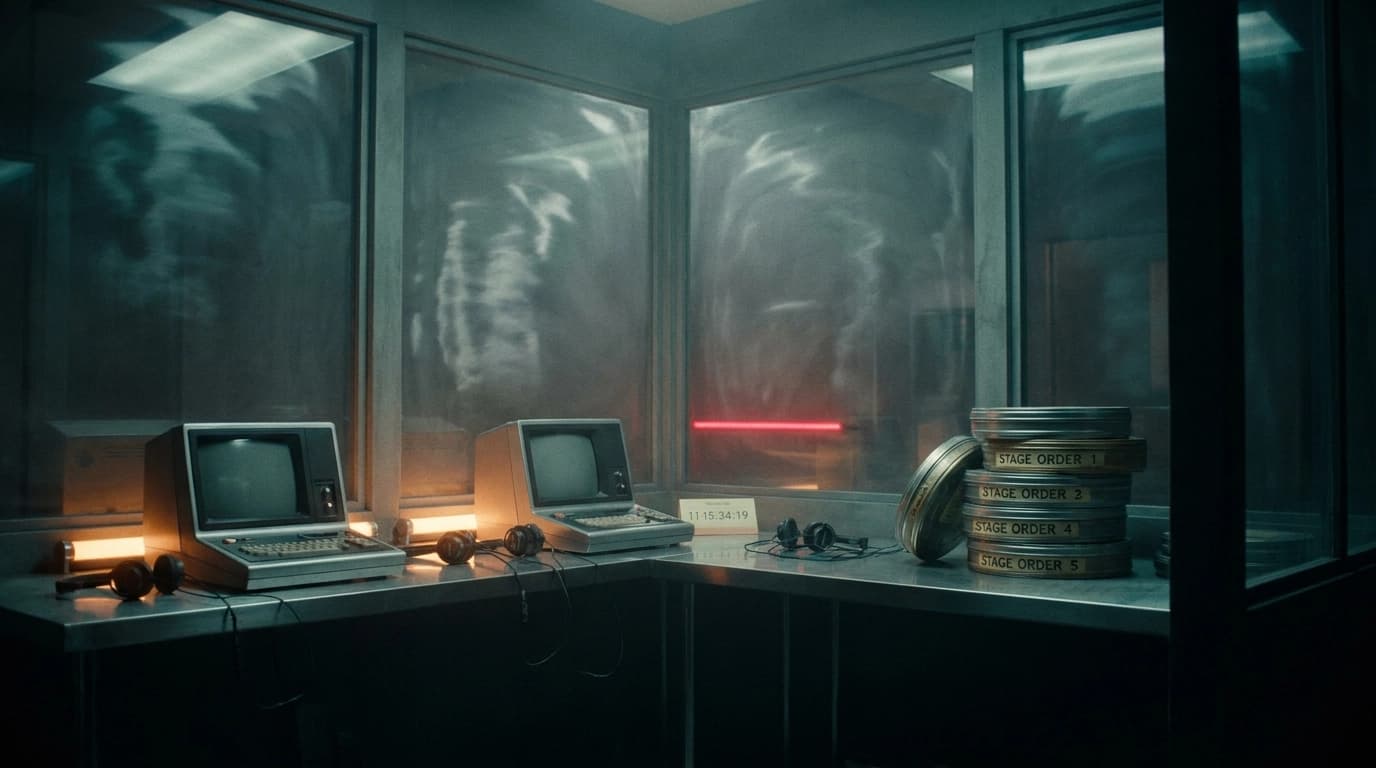
That knowledge turns into action. 서윤아 looks at the table label and sees the stage order number printed on it. She flips the file cover. It’s wrong. The title matches tonight’s broadcast, but the take designation is off by one—someone swapped the rehearsal recordings and timed it so the room’s countdown would trigger only when the wrong media was loaded. The Quiet Room behaves like a locked chamber that corrects anything that doesn’t perfectly match. If the bracelet doesn’t match the expected charm count, the system treats it like an “unverified key” and responds by flickering the cues spread to the nearest monitor.
김도현 sees that too. His hidden secret surfaces in the way his eyes avoid certain corners. He knows exactly why the swap happened—he’d been around enough audio and monitor feeds to recognize the “pattern” of the wrong take. He’d been asked to help with a reroute earlier, a favor disguised as a routine check, and he’d agreed because he wanted to keep some other problem from being audited. Now the building is turning his earlier choice into a live danger. He wants to fix it cleanly and quietly, but the countdown makes clean impossible.
박하린 arrives like a professional storm.
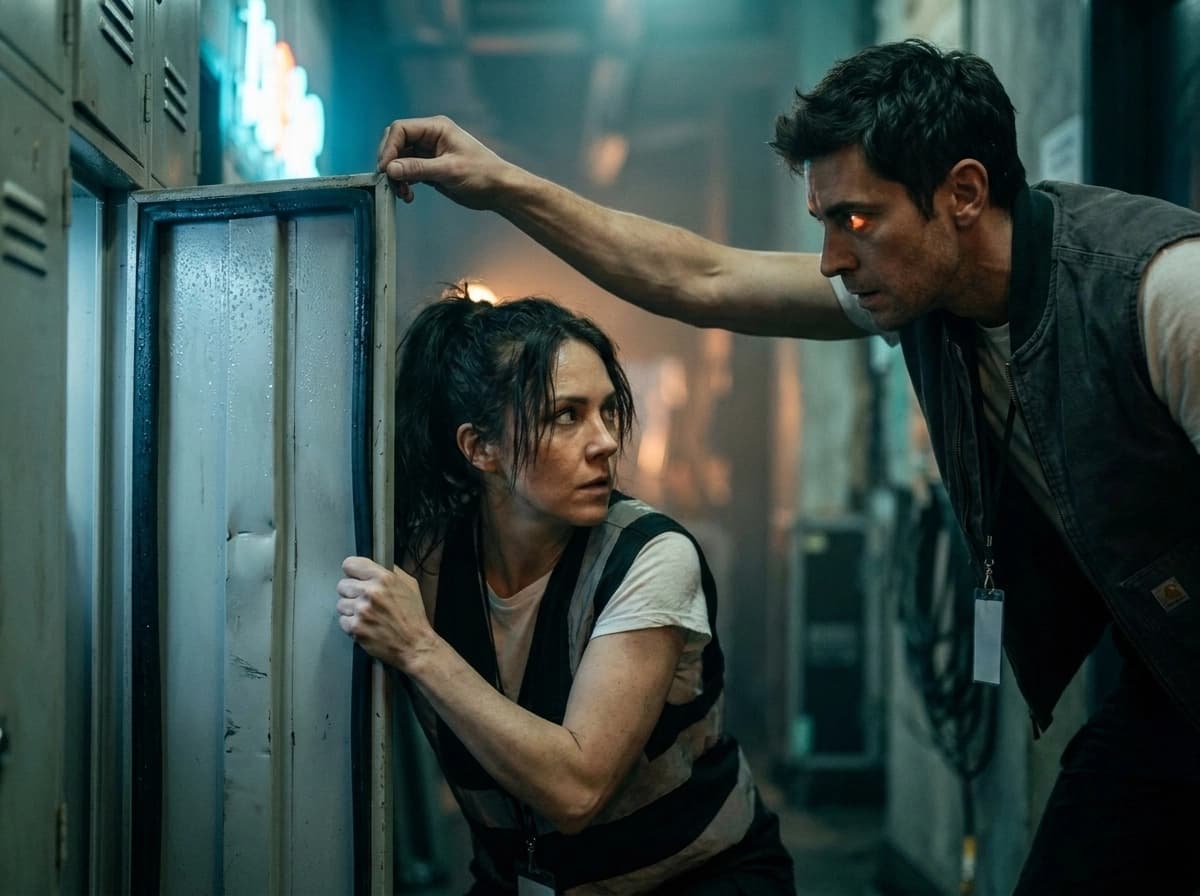
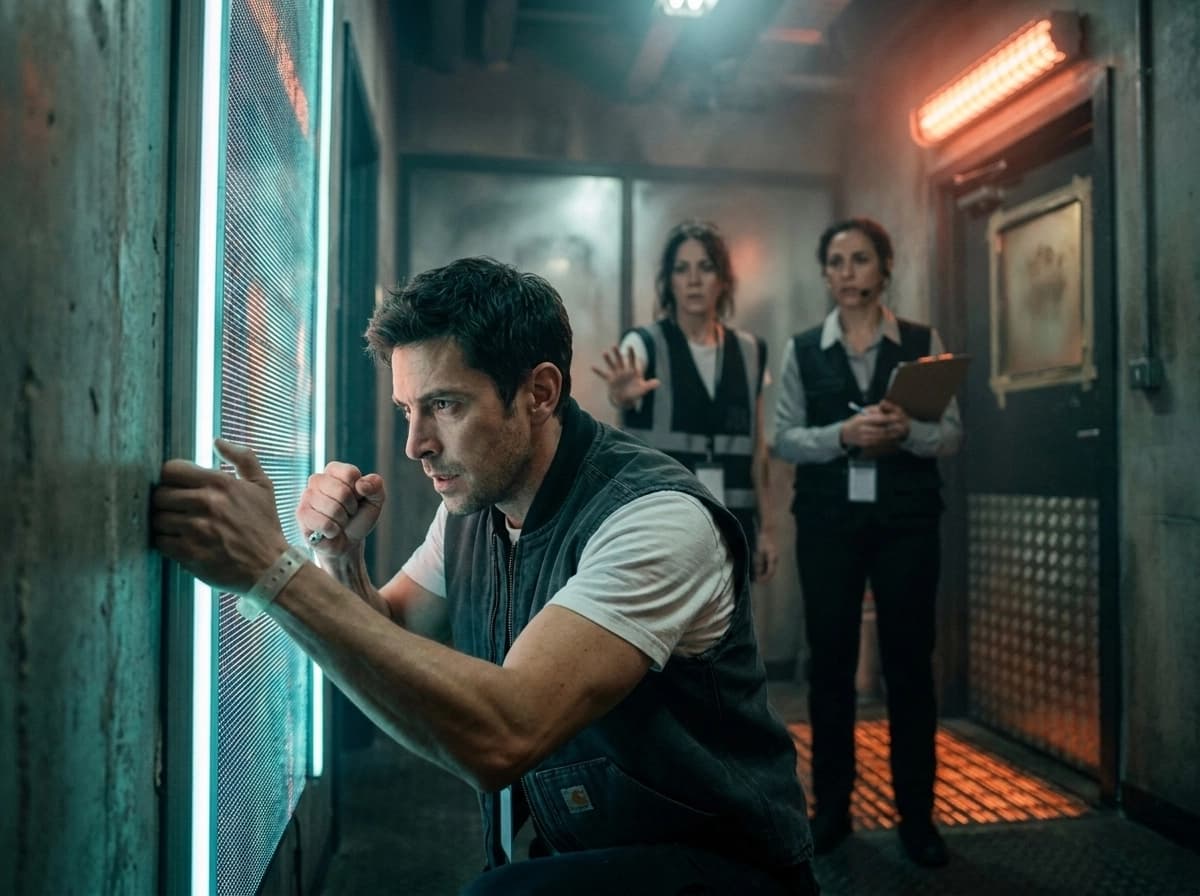
The door clicks open with the calm finality of a security system that doesn’t care who you are. She’s holding a clipboard tight against her ribs, face composed in that way stage staff do when they’re about to claim control. She doesn’t ask who they are. She walks directly to the table, reaches for the file, and pulls it closer with two hands. 서윤아 tries to stop her with a half-step, then realizes she’s in the way of safety protocols—if박하린 yanks the wrong item, the system will interpret it as another unverified key scan. But 박하린 is faster, and her eyes go to the bracelet immediately.
“Oh,” she says softly, like she’s surprised by a missing button. Her gaze flicks to the countdown on the wall. It’s already in a lower number range, the amber digits ticking with a relentless, almost patient rhythm. “That charm is off. Of course it is.”
She treats it like a solvable mistake, not a clue. She reaches into her pocket and pulls out a small plastic charm—one that looks similar, but not identical in the way the edges meet the charm track. She intends to snap it onto 서윤아’s bracelet right there, to make the item “match exactly,” and restore broadcast safety by feeding the system a corrected identifier. It’s the kind of intervention that sounds reasonable until you realize it also erases the only proof of what was swapped.
서윤아 flinches back. Her internal need is clear to her in the heat of the moment: she needs that bracelet charm’s absence to stay true long enough to force the system to stop “correcting” cues based on a false match. If 박하린 completes the bracelet fix, the building will behave like everything is normal. If everything is normal, the wrong take will continue rewriting choreography choices and someone will eventually get hurt.
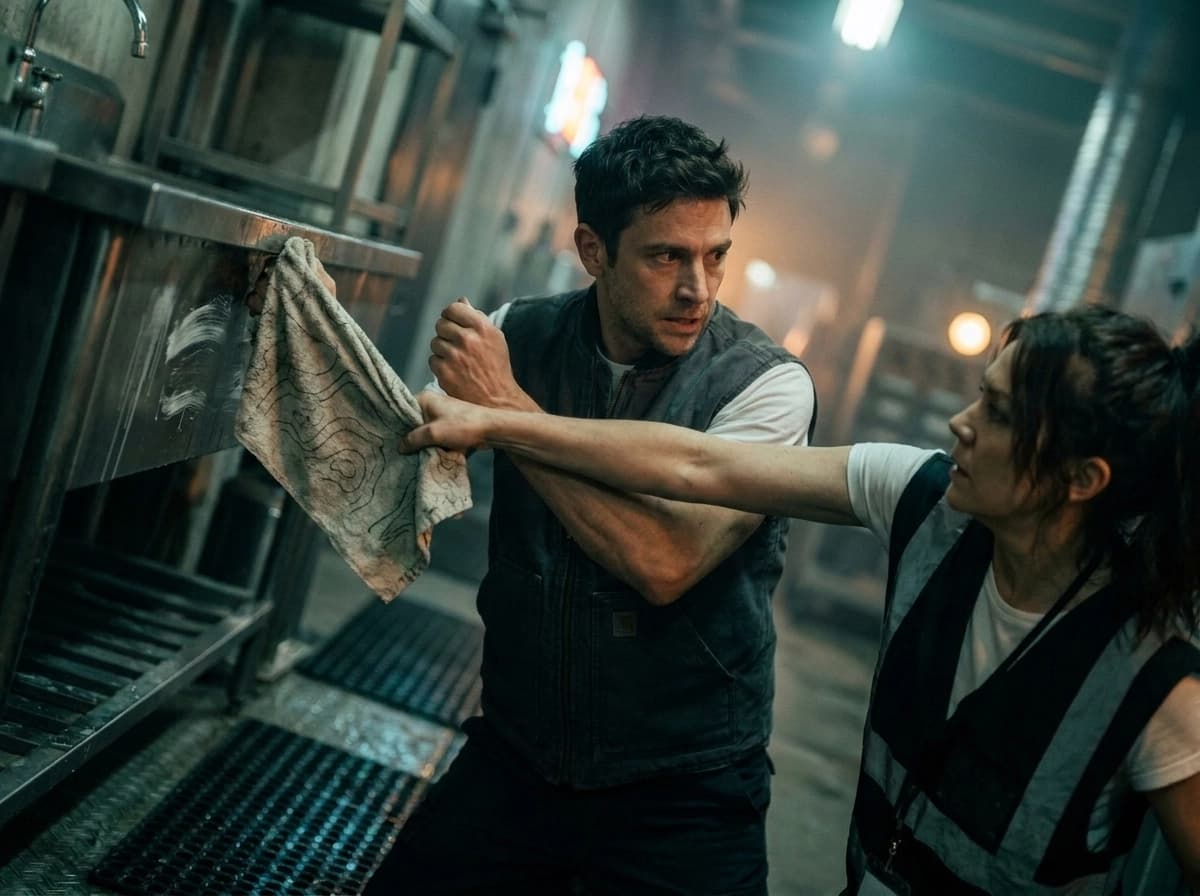
So 서윤아 chooses the rule-breaking option: she grabs 박하린’s wrist before the charm touches the bracelet.
Her hand closes around skin and fabric, firm enough that 박하린’s clipboard shifts and the edge knocks against the table label. The sound is small but final. 박하린’s eyes sharpen—not angry, just calculating. Her voice drops, the staff cadence smoothing over panic.
“놓으세요. 점검 중입니다.”
김도현 steps forward, but he hesitates, because 박하린 isn’t just blocking access—she’s trying to control the narrative of “what happened.” He watches the wall LED shimmer above the door, remembering how each scan leaves a trace. If he intervenes wrong, he’ll add more shimmer gaps to the corridor trail, making it obvious someone has been tampering. If he does nothing, the members rehearse under incorrect spacing until the countdown hits zero and the live broadcast begins with misloaded choreography.
The room’s fluorescent panel hums louder, and the spotlights cast long striped shadows across the foam. ZEROBASEONE pauses mid-transition, waiting for the count they think they heard in their monitors. That pause is a physical invitation for injury—feet planted, bodies leaning into momentum that isn’t there yet. 서윤아 feels the countdown’s pressure like gravity increasing. The amber digits blink once, then skip forward—glitch-snow across the screen making the number jump as if the system is compensating for a mismatch.
Inside her grip, 박하린’s wrist is tense. She’s not wrestling to win; she’s wrestling to preserve her control. She pulls her arm free with a twist that leaves 서윤아’s fingers scraping the bracelet’s charm track—her fingertips catch on a tiny scuff, a place the missing charm didn’t align. That scuff is different from what 서윤아 remembers. It’s a recent attempt to force a match. 박하린 has already handled this bracelet before, long enough to leave micro-marks.
That fact hits 서윤아 like another memory snap, making the puzzle click into something sharper. The charm wasn’t removed accidentally. It was removed intentionally as part of the sabotage—and the “fresh paint” smell near the table is cover-up, not repair. Someone patched the room quickly, repainting skirting boards and door frames so if staff look for smudges, they’ll find only clean surfaces and won’t find the trail of hands that swapped takes.
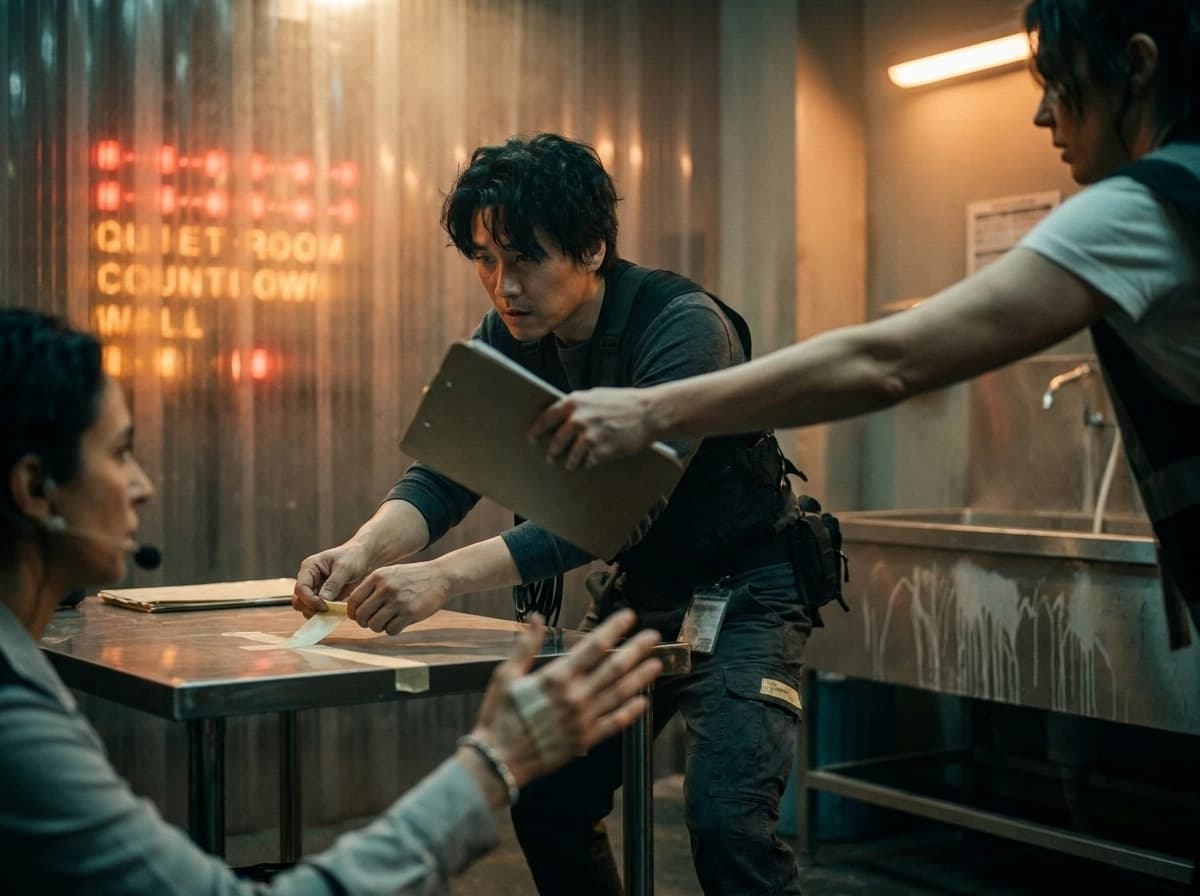
박하린 sees the bracelet’s scuffed track and misunderstands what 서윤아 understands. She tightens her jaw and tries again, not with her charm this time, but with authority. She shoves the clipboard toward 김도현, forcing him to step in front of the service sink where the wall LED is visible.
“You,” she says, pointing to the file. “Bring the correct take sheet. Now.”
It’s a demand, but it’s also a trap: if 김도현 leaves the room to fetch the correct sheet, he loses visual control of the table props, and the members continue rehearsing under wrong spacing until the countdown finishes. 서윤아 realizes 박하린 is betting that time pressure will make everyone accept the “safe” bracelet fix and stop chasing proof.
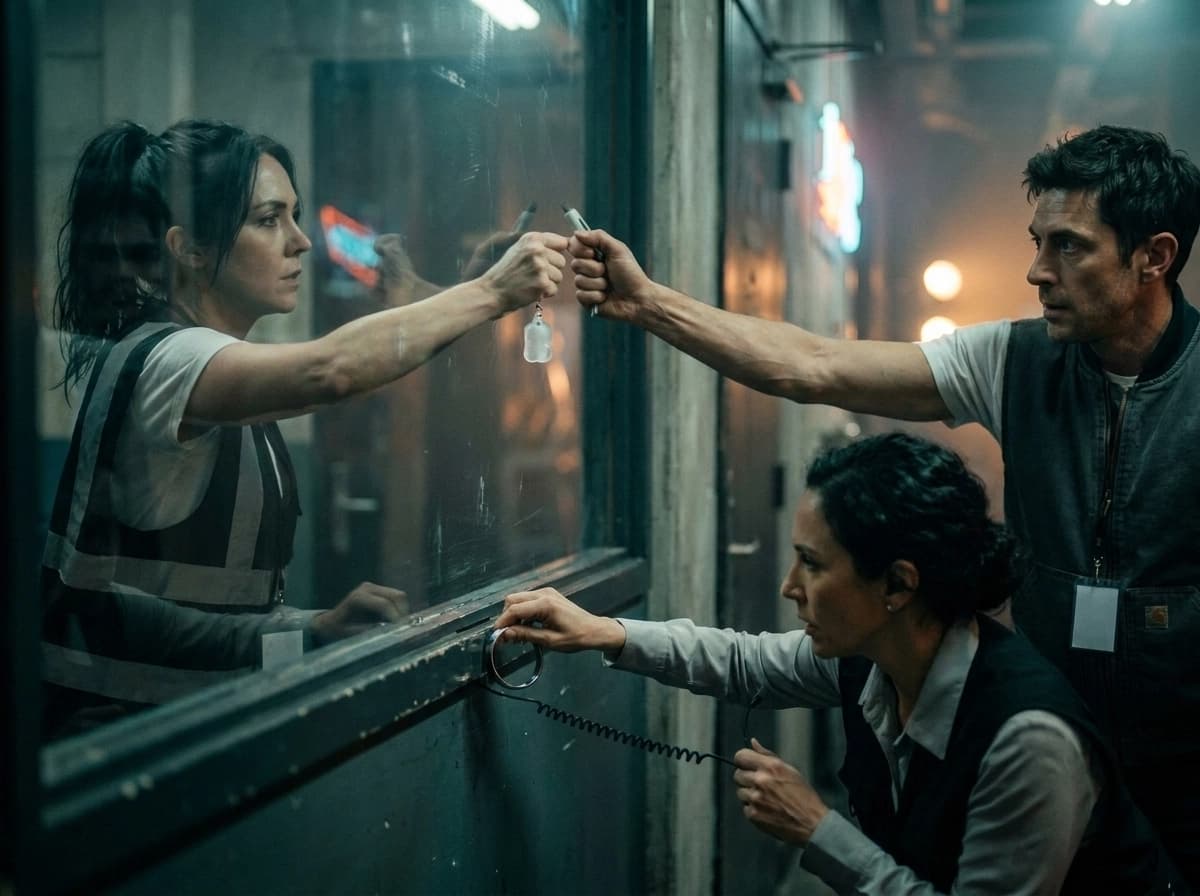
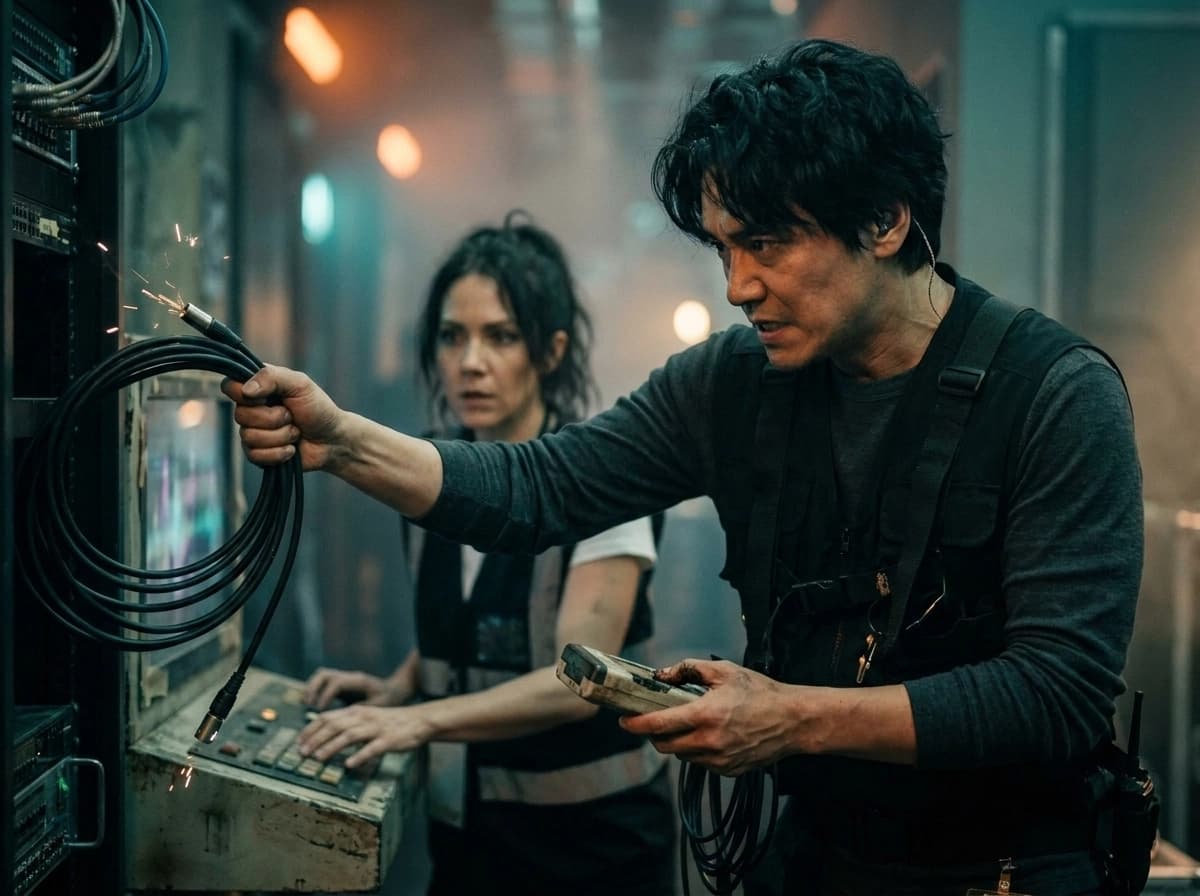
At the back of the room, the Quiet Room intercom crackles. 오성민 steps in with the air of someone who has been watching from behind a wall of monitors. His hands are already in motion—he’s holding a coil of black cable, and his eyes track the wall LED like a metronome.
“Stop messing with the identifier,” he says, voice low. His tone is sharp enough to be professional, but his shoulders are tense like he’s been carrying a bruise. “The countdown is tied to active stage-order routing. You do anything that triggers another scan, it spreads the cue correction to the nearest monitor.”
박하린 turns at once, relief flickering through her composure because 오성민 validates her instinct to control the timeline—she just wants control for the right reason. 서윤아 turns too, and now she can see the “mentor wound” in his posture: he’s the kind of person who knows the safety protocols so deeply they hurt. He’s the kind of person who has had to say no to prevent harm before, and today the building is forcing him to choose between procedure and truth.
He doesn’t wait for anyone’s permission. He moves to the service sink, reaches behind a panel, and yanks a small control unit free—one of the Quiet Rooms’ local media re-encode boxes. He doesn’t open it like an engineer in a quiet lab; he throws it onto a rolling equipment cart, and the cart squeals across foam-covered flooring. That jolt makes the rehearsal stop again, bodies freezing where they last tried to adjust.
“Who loaded the wrong take?” 오성민 asks, but he doesn’t sound like he wants an answer. He sounds like he wants someone to admit they intended this.
김도현’s gaze drops. Not because he’s guilty of swapping the take himself in this moment, but because he recognizes the pattern of the audio routing and the timestamp behavior that only someone familiar with monitor reroutes would create. His 숨 is shallow; his hands fidget with the edge of his line-marker, and the habit speeds up the way it always does under stress.
박하린 tries to cover for him with the calm tone she uses to redirect. “This is maintenance. We’ll resolve it.”
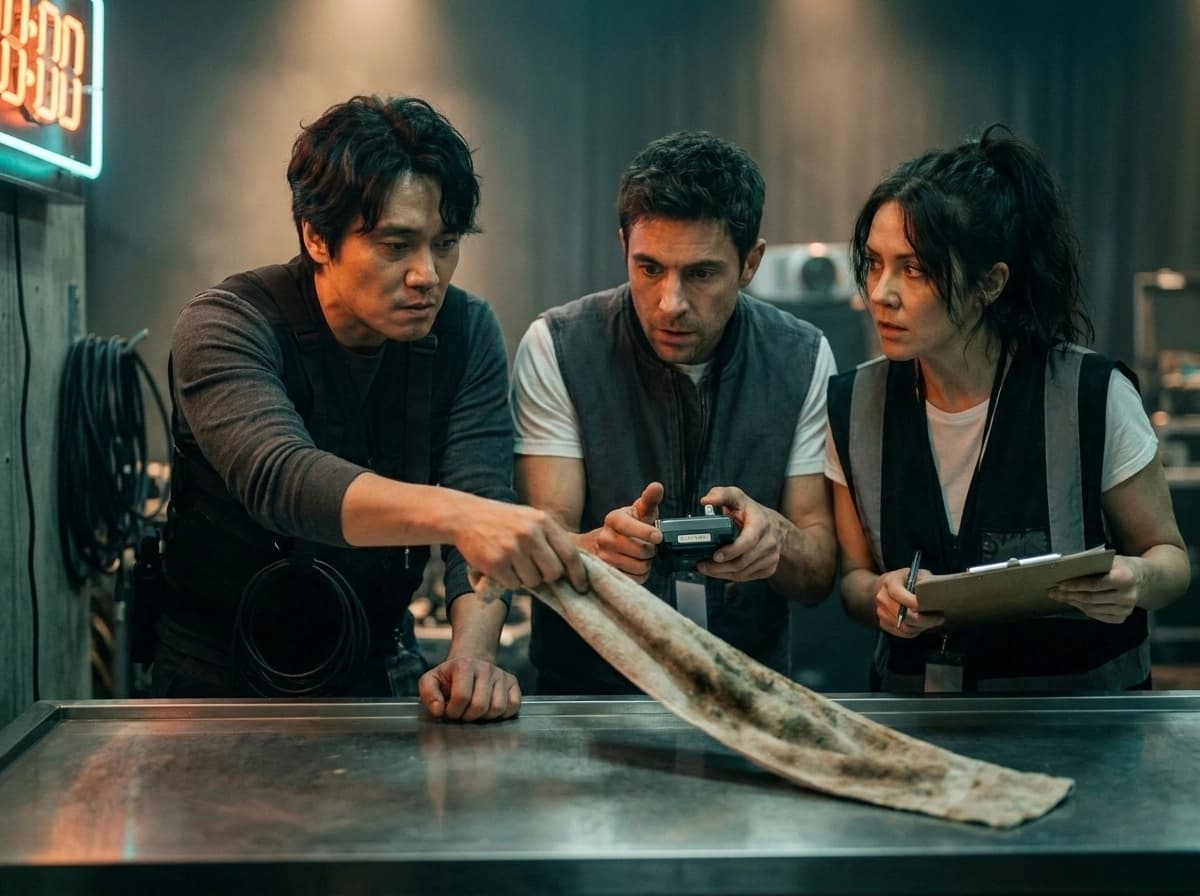
오성민 doesn’t buy it. He plugs the control unit into a handheld port on the cart and taps the screen, not to “edit” quietly but to read. On the small display, he scrolls through take metadata and scan history enough to confirm the sabotage mechanism: the wrong choreography spacing is being selected by stage order because the room believes it has a correct identifier loaded. The missing charm is acting like an unverified key, and the system’s correction logic is feeding wrong cues into the rehearsal monitoring.
The display glitches, and the wall LED above the door throws another amber jump. Countdown continues. The room’s lock already knows they’re here. The only thing that changes is how close they are to zero.
서윤아 acts with both hands now. She yanks the bracelet file label down from the table and flips it to the back where a faint adhesive patch holds a photograph—an inventory card staff sometimes tape over for quick prop checks. She sees the charm’s outline and where it should sit on the bracelet track. Her internal need becomes external goal: she must keep the bracelet’s mismatch intact long enough to force the system to stop using it as a key and to return the correct take routing. She can’t let 박하린’s attempt erase the clue, and she can’t let 김도현’s hidden history turn the situation into a managed “resolution” that satisfies audits but endangers performers.
She steps into 박하린’s space and shoves the file under 박하린’s clipboard, forcing her to look at what’s on the adhesive card: the outline of the missing charm matches the scuff where someone tried to snap a charm on and failed. It’s not random. It’s staged.
박하린’s eyes narrow. For a second, her face loses its staff mask. Then she regains it by moving closer to 서윤아. She reaches for 서윤아’s bracelet again, but this time she doesn’t aim for the charm track. She aims for the bracelet itself—trying to lift it off the table and take it out of the room, where she can control what it becomes.
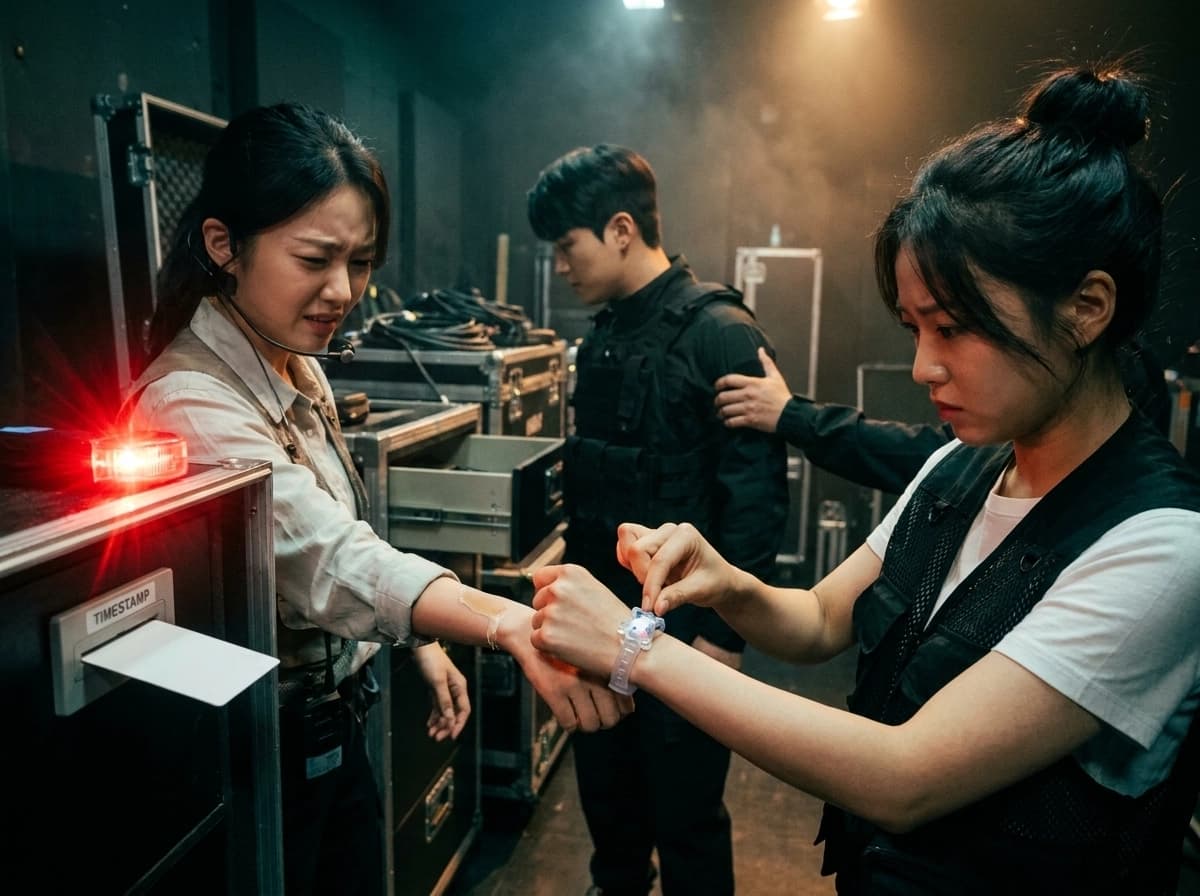
So 서윤아 does the one thing she hadn’t planned on doing: she pulls the bracelet across her own wrist, and when 박하린 grips at it, the bracelet scrapes and a thin strip of tape on her palm—one she’d left earlier like a personal marker—peels away. A tiny shimmer response appears on the wall LED strip above the door, as if her bracelet handling counts as a new scan attempt. The building doesn’t just lock the door; it timestamps the scan time as visual evidence. The system is learning their pattern.
김도현 sees the shimmer gaps and swears under his breath. He understands the cost now: if they trigger too many scans, staff can identify them as tampering, and the consequences might not be punishment-free. But he also understands the benefit: the system is reacting to the mismatch, which means the mismatch is still “real” to it. If they can survive the next few digits, the room’s correction logic might revert once it realizes the identifier is inconsistent.
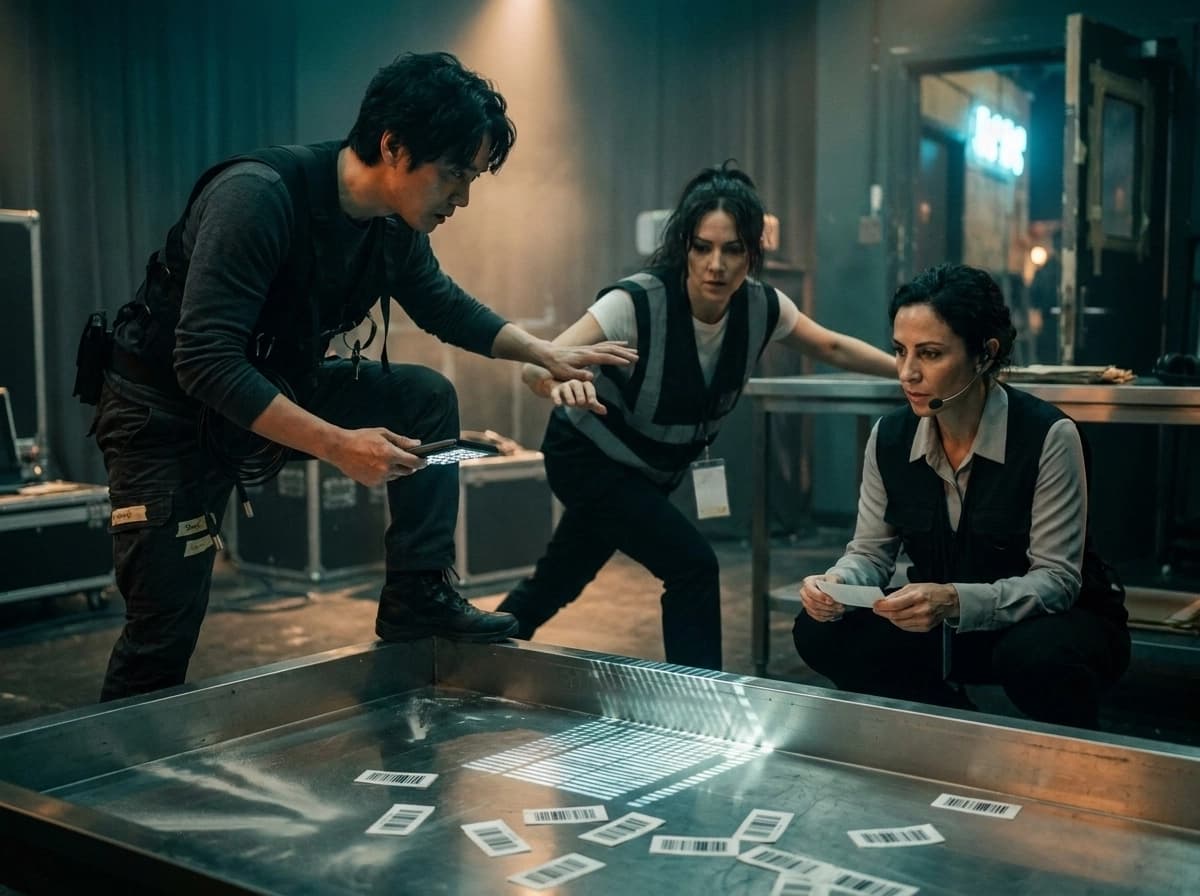
오성민 doesn’t give them time to debate. He yanks the control unit’s cable out of the cart and shoves it into a different port, directing local re-encode back to the correct take. But he can’t do it blindly—his handheld display must confirm the stage-order number and the active take version. That confirmation requires someone physically at the props table: someone must compare the bracelet against what the label expects and force the system to re-route. With the wrong charm handling, the building will keep selecting the wrong spacing version.
“서윤아,” 오성민 calls, and his voice breaks slightly on her name like he knows her without permission. “You have to keep the bracelet mismatch visible. Don’t let her finish the fix.”
박하린 goes still, because she’s recognized that he’s talking to 서윤아 instead of to her. In that stillness, she looks briefly like someone who wanted the sabotage to fail quietly and is now angry at the universe for refusing. Then she lunges.
She doesn’t shove. She blocks. Her body cuts in front of the props table, shoulder first, clipboard held like a shield, and she forces 서윤아 to stop moving toward the label. The members in the spotlights stumble because rehearsal resumes on the wrong spacing cue, and their feet almost collide with the cart’s path. The room is no longer just dangerous in theory; it’s dangerous in motion.
김도현 makes his choice then. He steps between 박하린 and the table—not to argue, not to negotiate, but to physically hold her back long enough for 서윤아 to read the label and act. His body becomes the wall he’s been avoiding. 박하린’s arm slams into his shoulder. He grunts, breath knocked out, but he doesn’t move away. He looks at 서윤아 with an apology he doesn’t say out loud, because he doesn’t have the luxury.
“도현 씨!” 서윤아 shouts, and her voice is sharper than she means. The countdown is nearly to the last range now, and the amber digits feel like they’re hitting the room walls like sound.
오성민 uses the brief opening. He taps the control unit, switches the re-encode back to the correct take sheet, and yells toward the members through the room intercom—“Hold the line!”—but the members only hear it as another cue glitch when the monitors flicker. Their bodies keep moving under instruction that is now partially corrected and partially wrong. That half-correction is worse than wrong for a moment: it’s uncertainty, and uncertainty is where collisions happen.
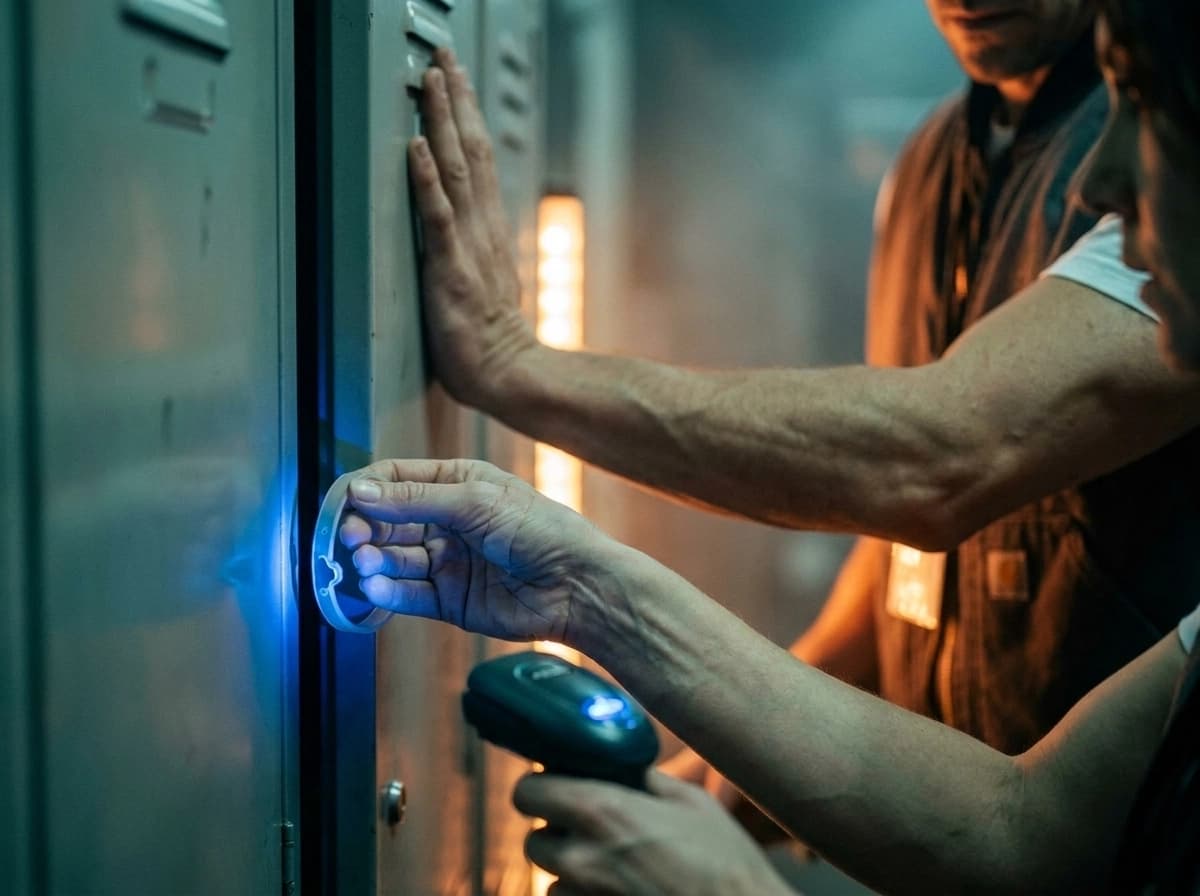
So 서윤아 stops chasing perfect logic and chases one clean action. She grabs the missing charm’s housing from her own taped palm—there’s a tiny adhesive strip there she used earlier to mark movement times, now partially peeled—and she presses it against the bracelet’s track to make the mismatch obvious, preventing any quick snap-on fix. It’s not elegant. It’s physical and messy. It makes the charm track look incomplete, like an unverified key that can’t pretend it’s valid.
The wall LED above the door shimmers hard, then steadies for half a second—enough for 오성민 to see that the system’s correction logic is recalculating based on mismatch. He hits the re-encode confirmation. The handheld display stabilizes: stage order number matches tonight’s expected prop table, and the take version returns to the correct one. At the same time, the countdown screen above the door stops glitching and begins counting down in a clean, steady rhythm rather than jump-snow skipping.
박하린 tries one last time to reclaim the bracelet. She yanks at 서윤아’s wrist, and 서윤아’s arm jerks. The tape marker on her palm fully tears away, leaving a smear of residue on her skin—but she doesn’t let go. Her hand locks the bracelet against the table label, aligning the incomplete track with what the system expects to see when it can’t trust an unverified key.
김도현, still bracing himself against 박하린’s body, finally shoves her back away from the props table. His shoulder hurts—he can feel it through his shirt, a hot ache spreading—but he stays upright. For once, he prioritizes the performers over the audit trail. He looks at the wall LED as if he can will the last digits to slow.
When the countdown hits the final number, the Quiet Room’s loudspeaker chirps once—a system “handoff” sound. The choreography cue in the room changes. ZEROBASEONE members correct their spacing in the exact way they’re trained to do right after a safe confirmation: a synchronized shift, feet landing with a safer gap, hands tracing the air rather than reaching for what might be a cable. The cart stops squealing as someone adjusts its path. The spotlights stay steady, no sudden flicker, no monitor seizure.
Then the door lock releases with a click that sounds almost gentle.
But the aftermath isn’t gentle. Staff will notice the scan shimmer trail. The building will have recorded multiple badge scan times, and the bracelet mismatch—now visibly handled by a fan—will be traceable. 서윤아 doesn’t celebrate. She feels exhausted and hollow, because saving someone’s body is only the first part of safety. The second part is what happens to the people who prevented the injury.
As they move out of the Quiet Room into the brushed steel corridor, 박하린’s face hardens into something more honest than her earlier control. She isn’t laughing or apologizing. She’s furious—not at 서윤아 alone, but at the fact that the sabotage logic didn’t behave like a tidy problem she could cover. She leans close enough for 서윤아 to smell the same sharp paint odor on her breath and says, quiet and precise, “You thought the clue would stay a clue.”
서윤아 meets her eyes. “It did,” she replies, voice shaking only once. “Until you tried to erase it.”
김도현 limps toward the corridor’s junction, checking the wall LED timestamps without admitting he’s checking them. 오성민 stays half a step behind, watching the equipment carts and the cable trays like they’re potential hazards even after the danger passes. In the silence between their movements, 서윤아 realizes the bitter truth of the building’s philosophy: control-through-verification doesn’t stop harm; it only decides who gets blamed after harm narrowly avoids happening.
On the corridor’s LED strip, the last shimmer gap stabilizes into a clean mark—auditable, visible. The wrong take has been corrected. The performers have rehearsed safely for live broadcast. But the system has also learned that a fan’s bracelet can become an unverified key and that someone in the building knows how to exploit that.
The story closes with 서윤아 holding her torn tape marker residue in her palm and staring down the corridor where the next Quiet Room door awaits. The countdown is done for tonight’s stage, but the trace is now permanent—proof that someone tried to make rehearsal unsafe for broadcast advantage, and proof that the only way to stop it came from breaking the rules faster than the rules could punish her.