Plot Synopsis
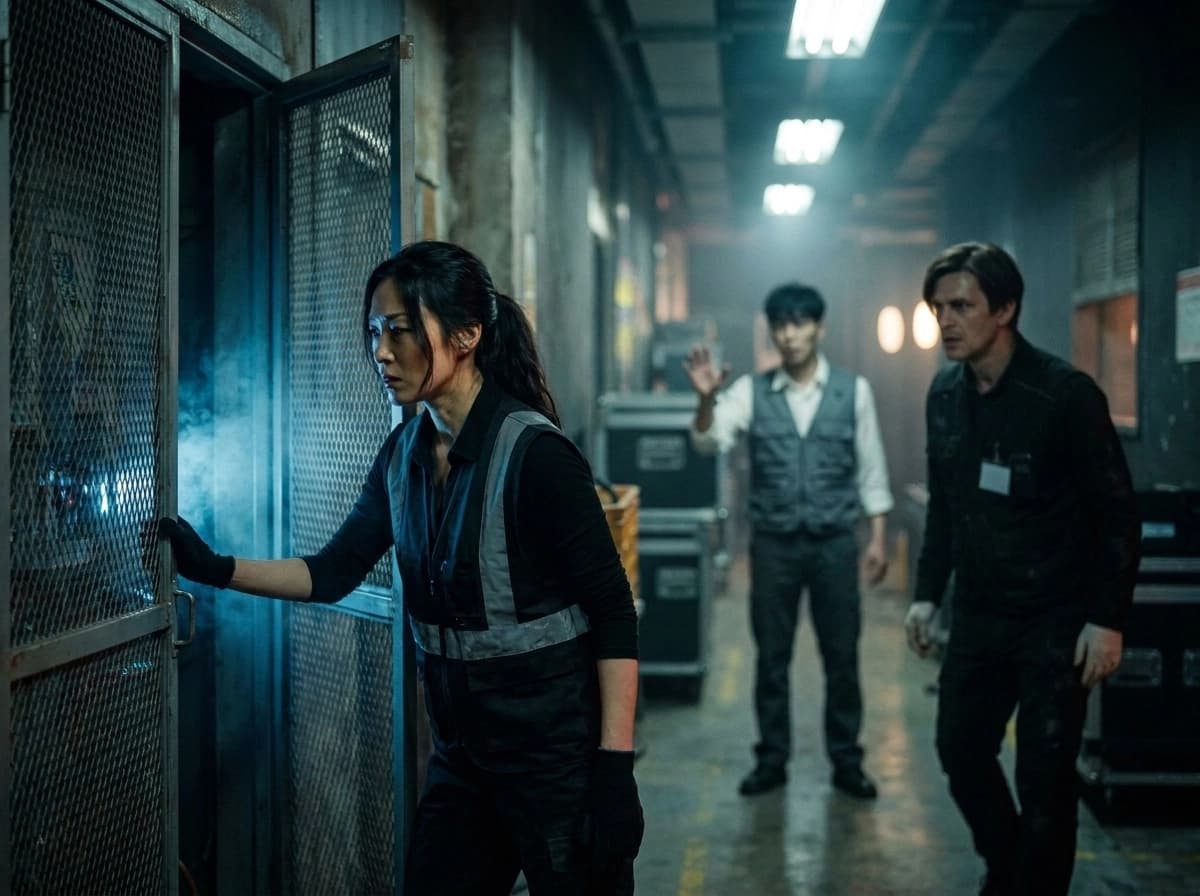
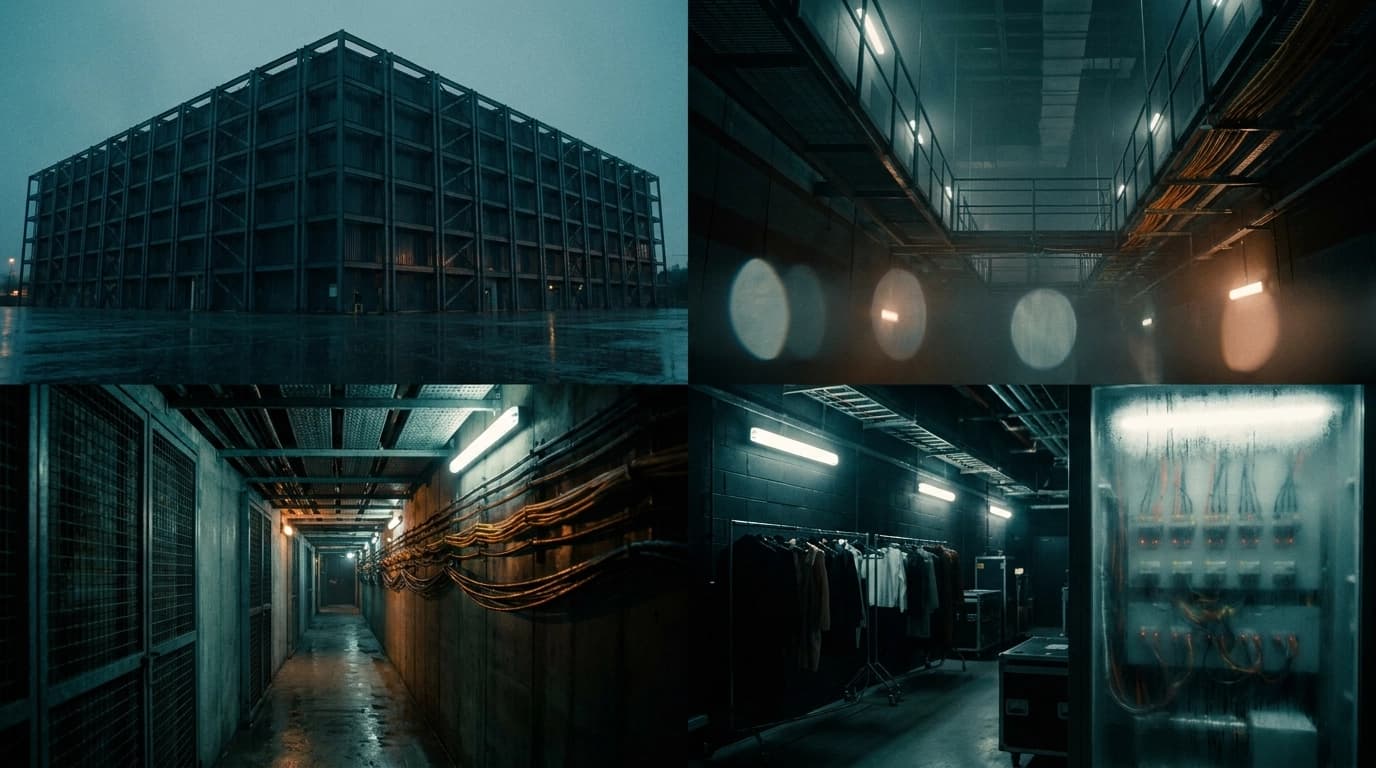
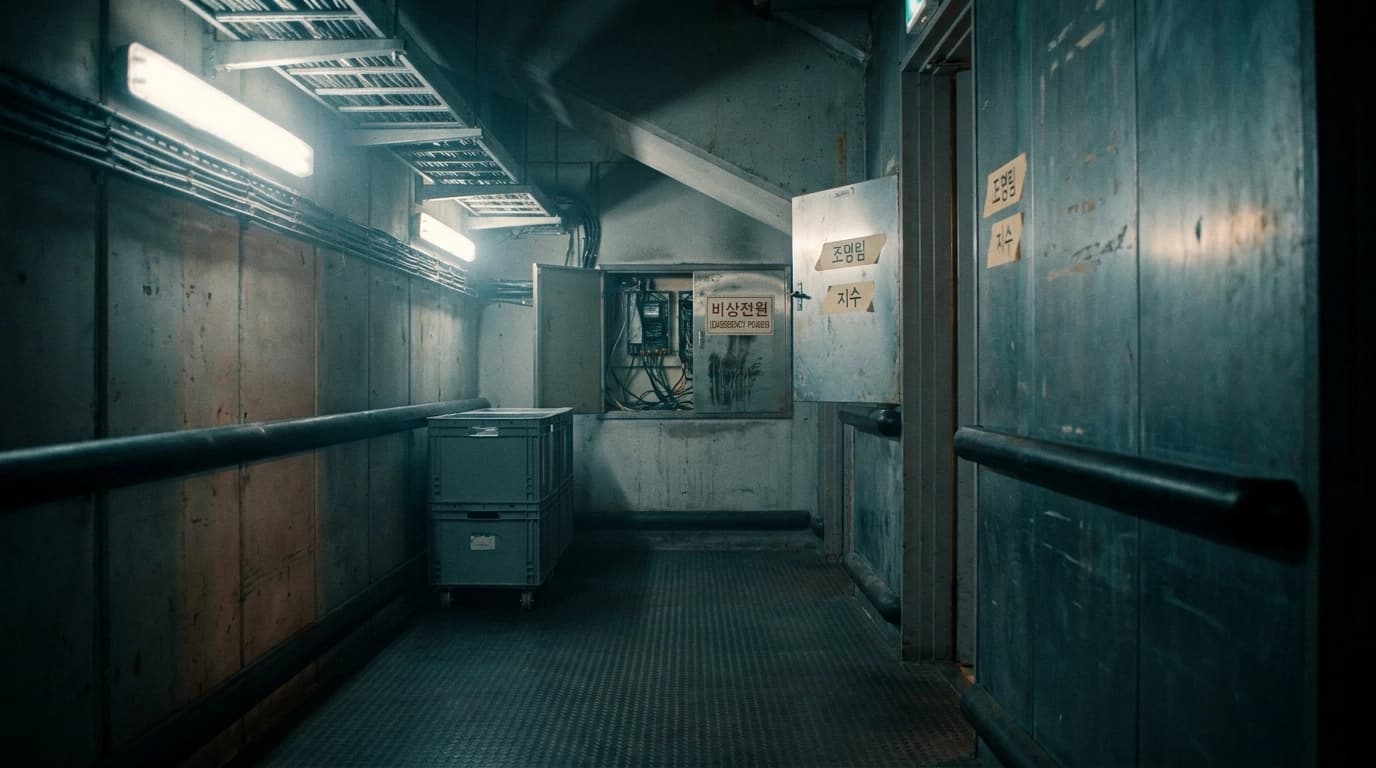
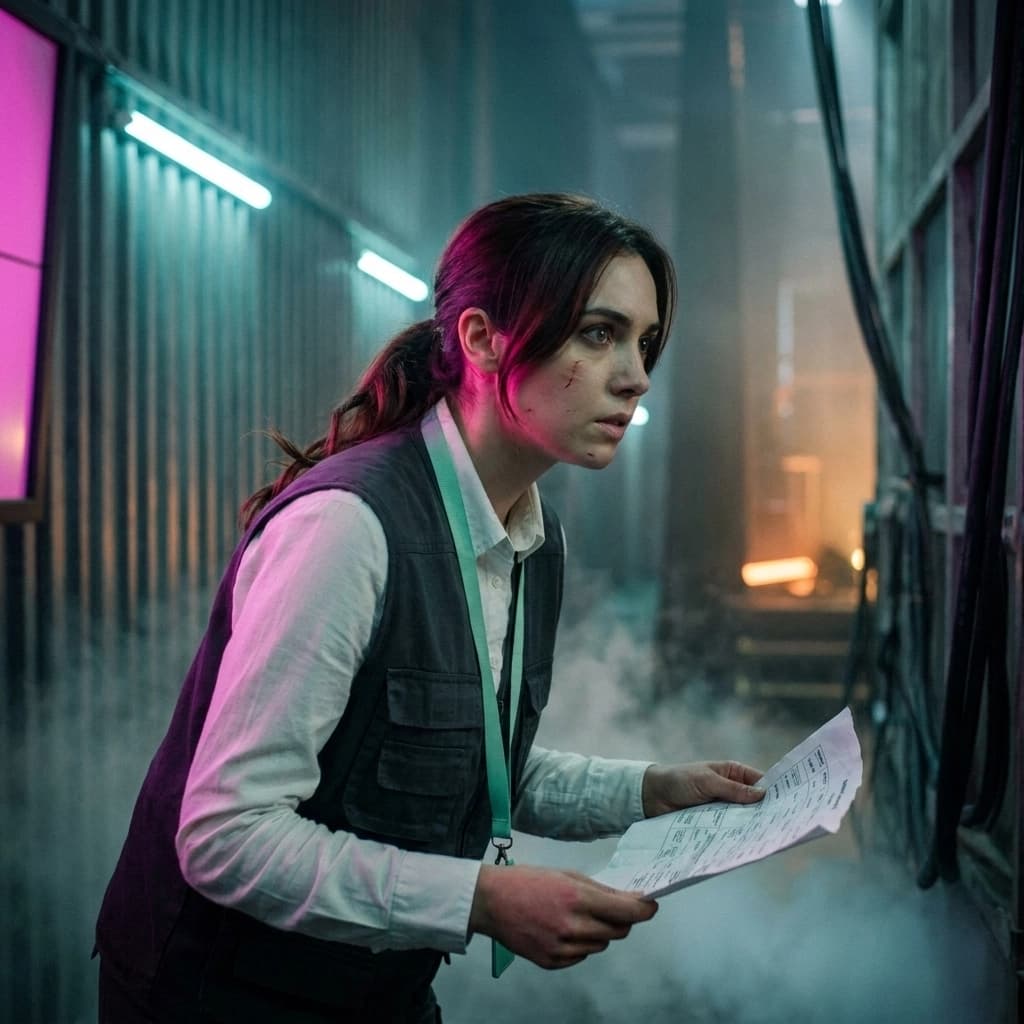
Late night slides into pre-show countdown like cold water into a channel: the service throat under the arena glows with blue-white fluorescents, damp steel grates sweating under recent rain, and the stage above waits on a power heartbeat that won’t quite catch. 서하린 has spent years reading that heartbeat through heat—bare fingertips grazing cable jackets, gloves saved for other people—until she can tell, by the angle of warmth and the way the insulation fogs, whether the system is simply tired or about to snap. Tonight the arena lights refuse to warm up at the exact moment BLINK should be walking toward the ramp, and she is already in the loading throat with two thoughts fighting in her chest: she needs this show to survive, and every time she gets close to proving someone tampered with the panel, her past teaches her how easily “proof” becomes a reason to run.
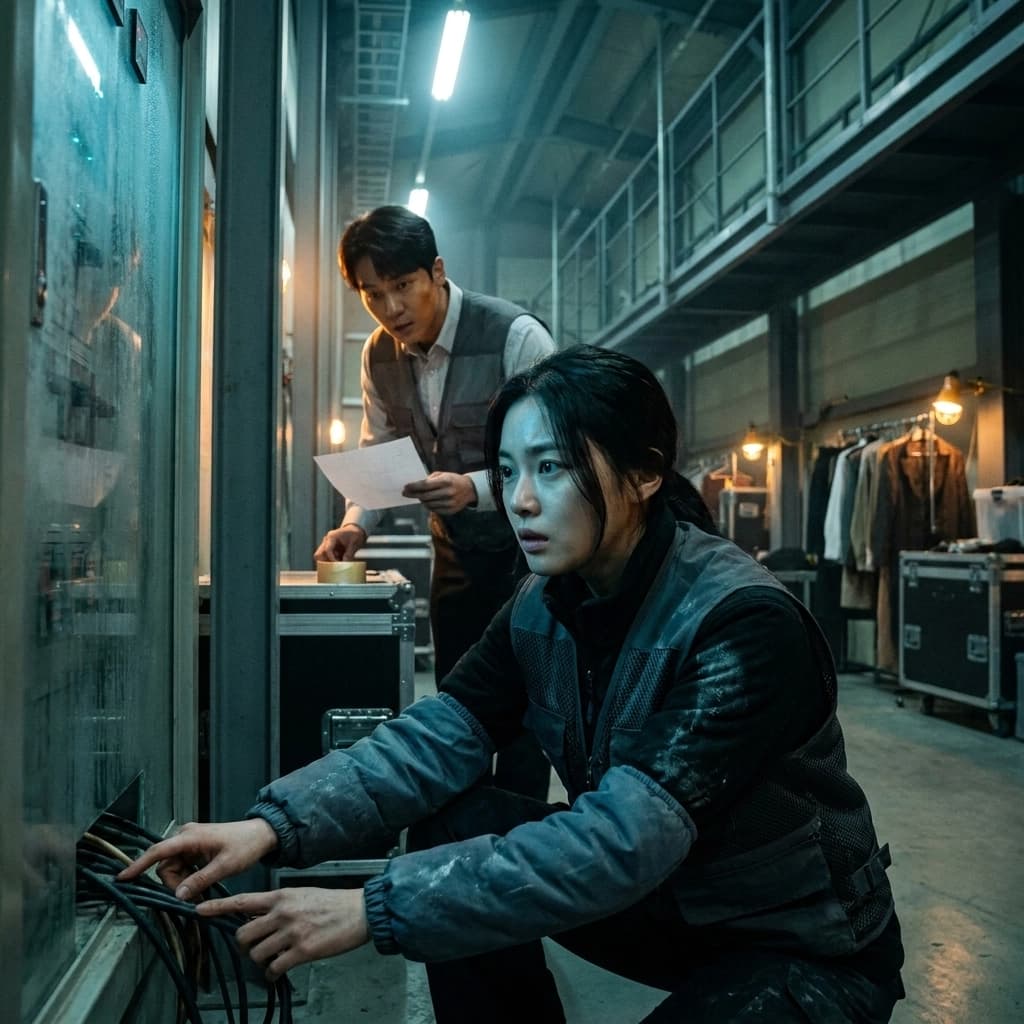
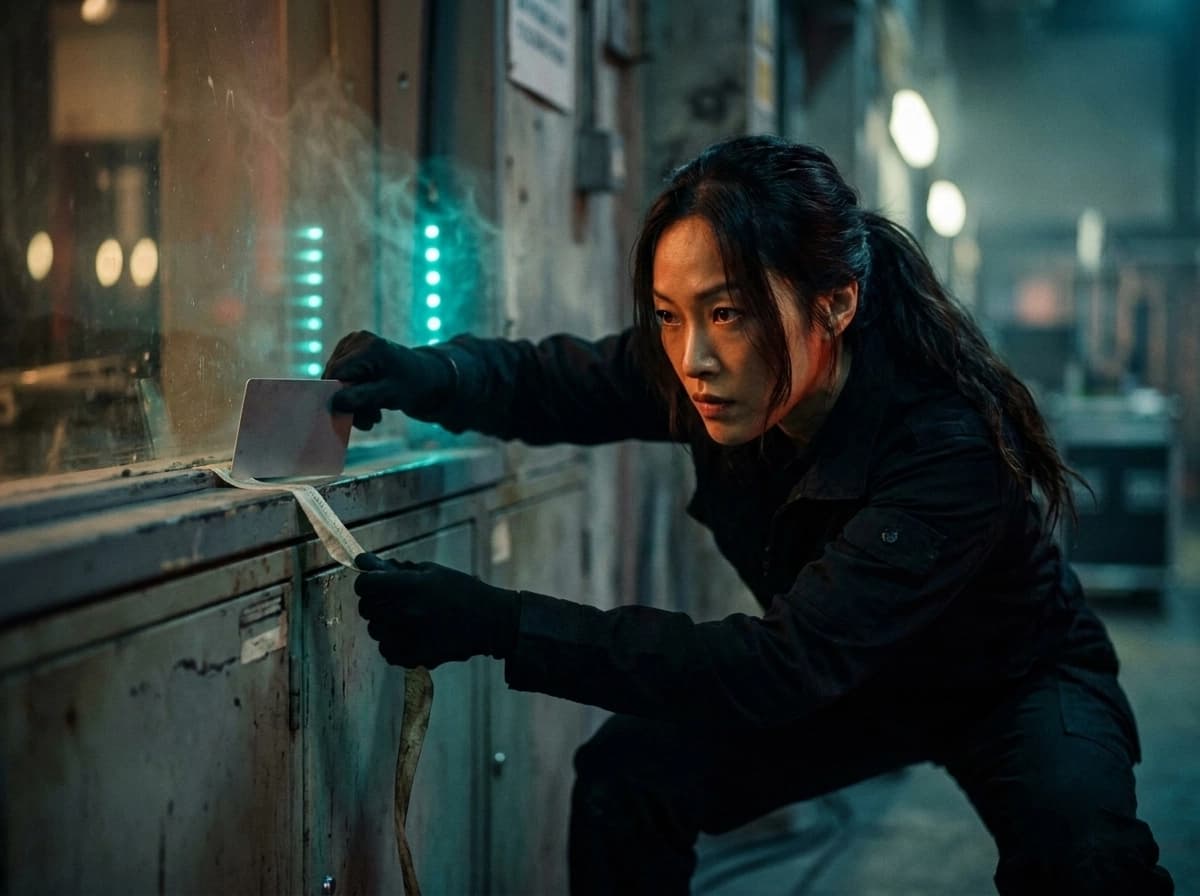
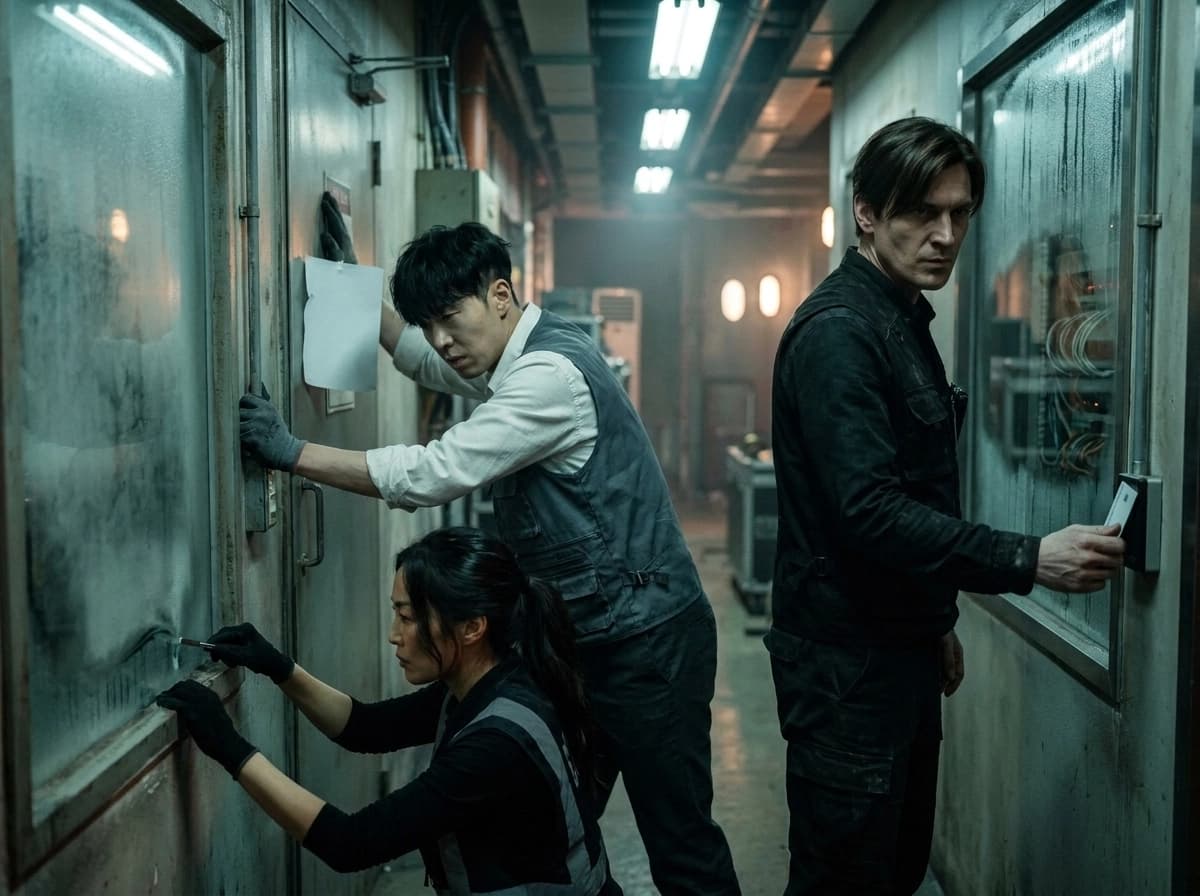
She and 박도윤 don’t arrive as strangers. They share a language built from near-misses: the soft click of switches, the way adhesive clings to metal, the fear of being the one who’s holding the wrong truth when security asks questions. 도윤 works for a stage equipment rental supplier—an “insider” who shouldn’t be touching wiring history, who knows how to follow invoice trails the way other people follow fingerprints. He has the keycard stolen from the right drawer in the wrong locker, and he keeps it in his palm like it might burn through his skin. 서하린 threads the narrow maintenance corridor with her wrist near the inspection window on the wiring panel, watching condensation thicken in slow breath-clouds over the transparent cover.
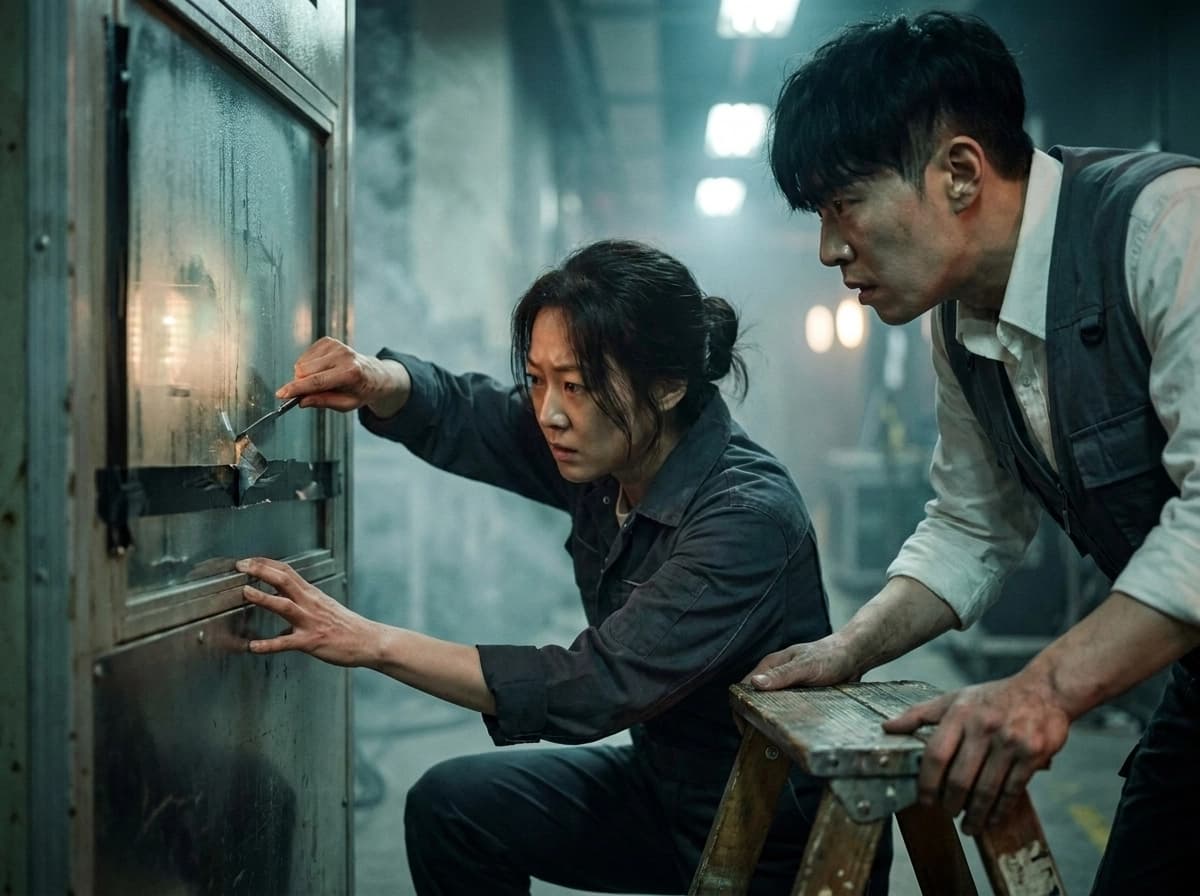
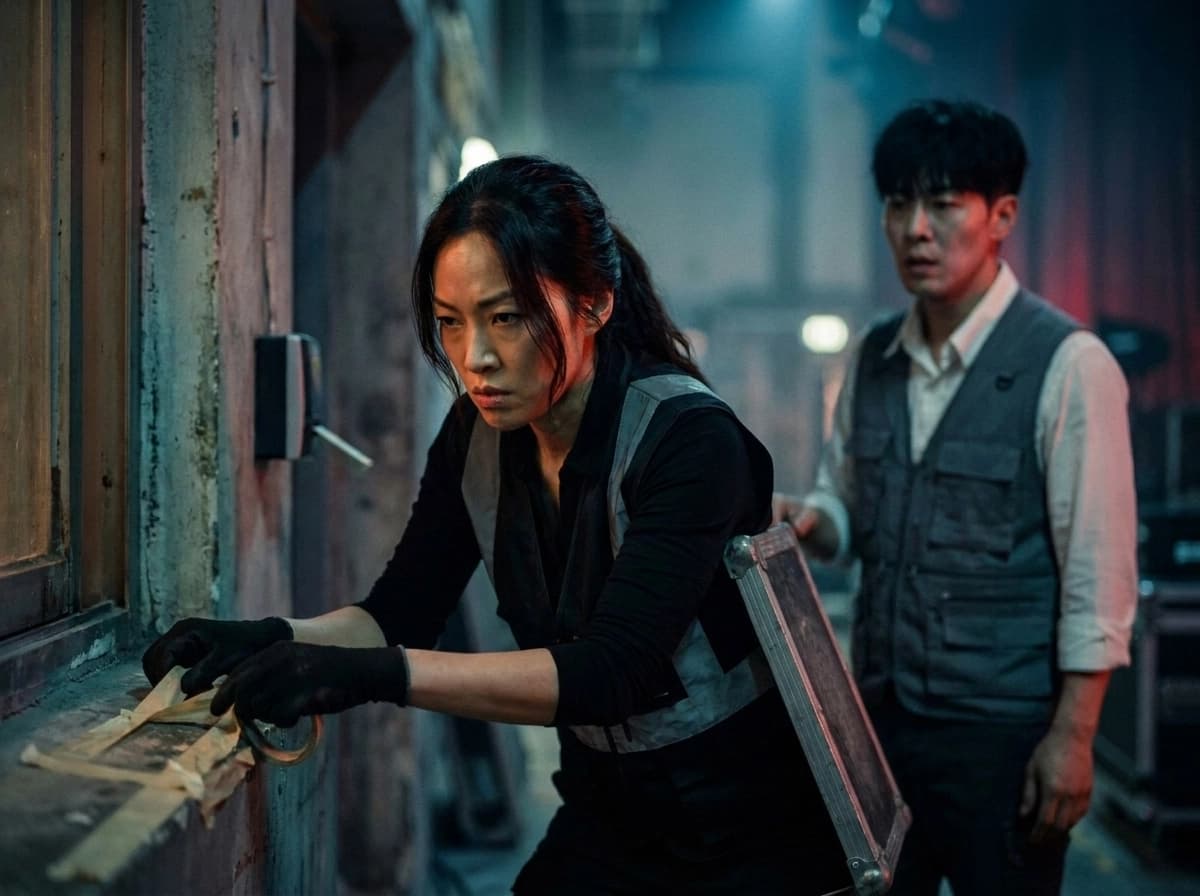
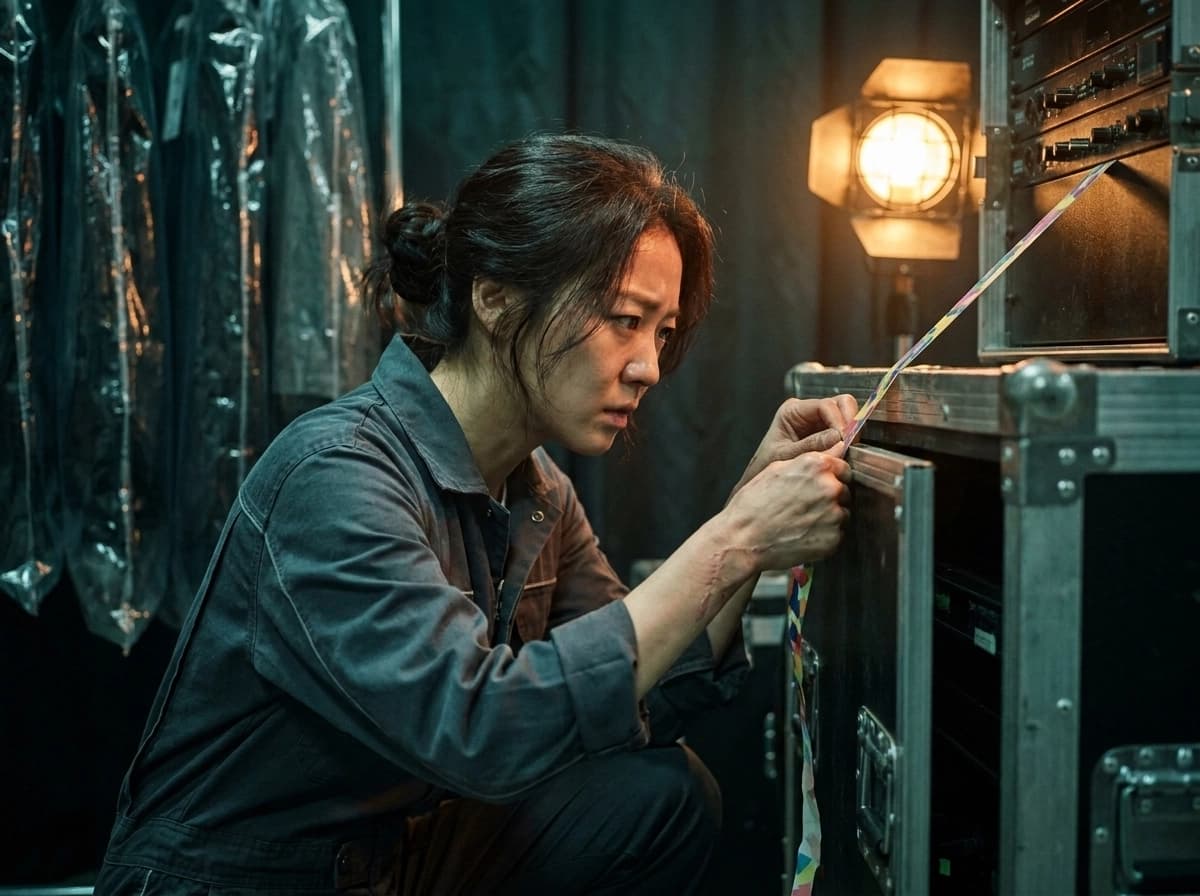
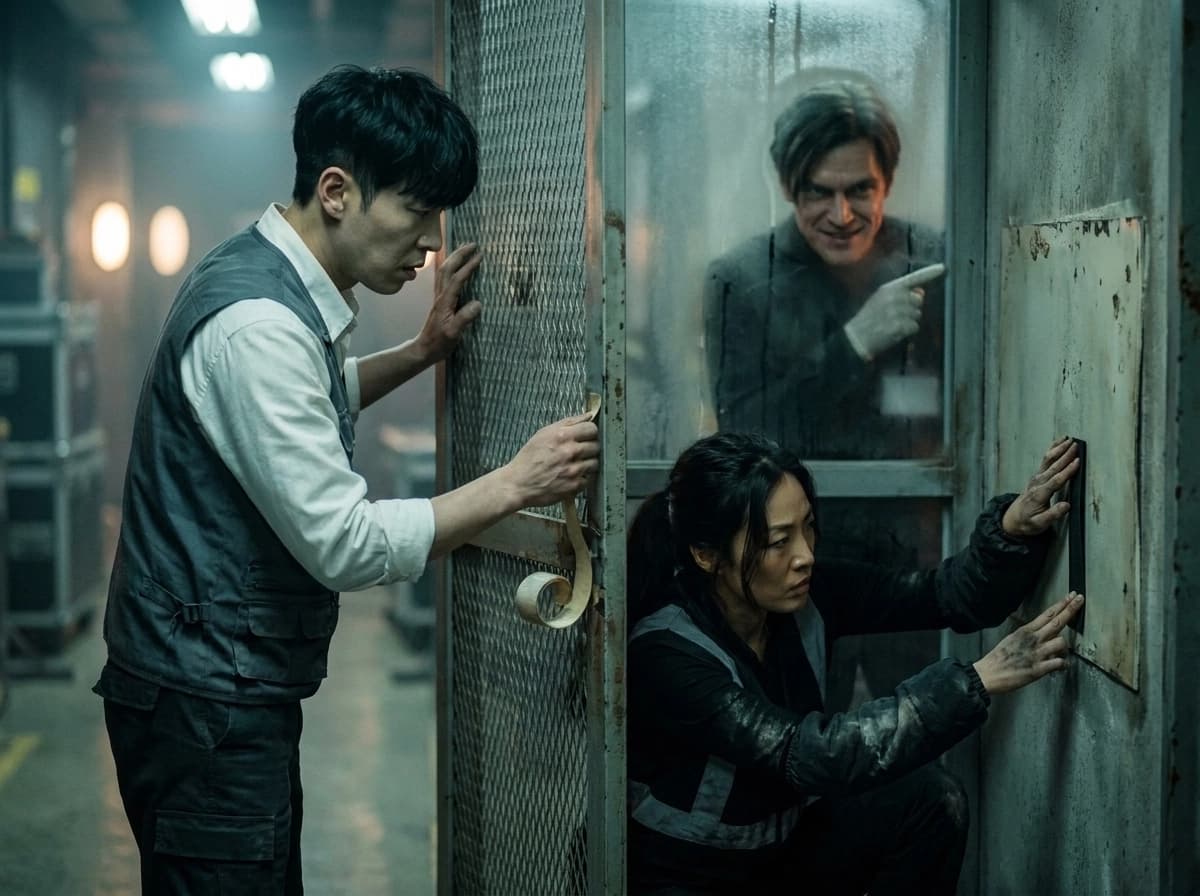
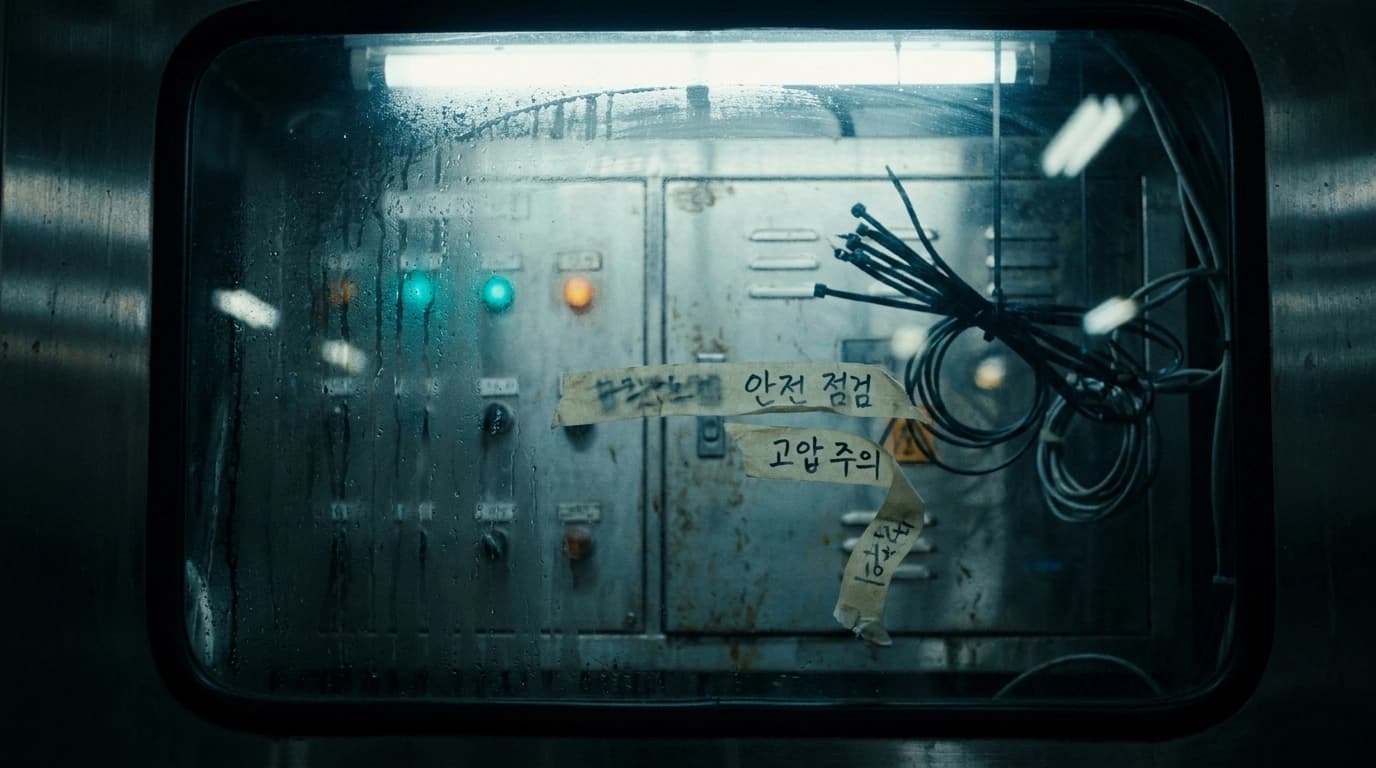
When the panel comes into view, their stomachs tighten for a reason that isn’t just malfunction. Under the glass, the fog pattern is smeared the way it always is after rewiring—like someone pressed warm fingers against cold armor. And on the panel’s side, tape has been applied with labels in both Korean and BLINK’s nickname, bright enough to look cheerful against the gray metal. The arena safety tag system, normally neat and stamped, has been bypassed with something messier and more personal. 서하린’s hand jerks back before she can stop it; she can feel the ghost of her own earlier mistakes in her bones—how evidence can be gathered and still end up pointing at the wrong person.
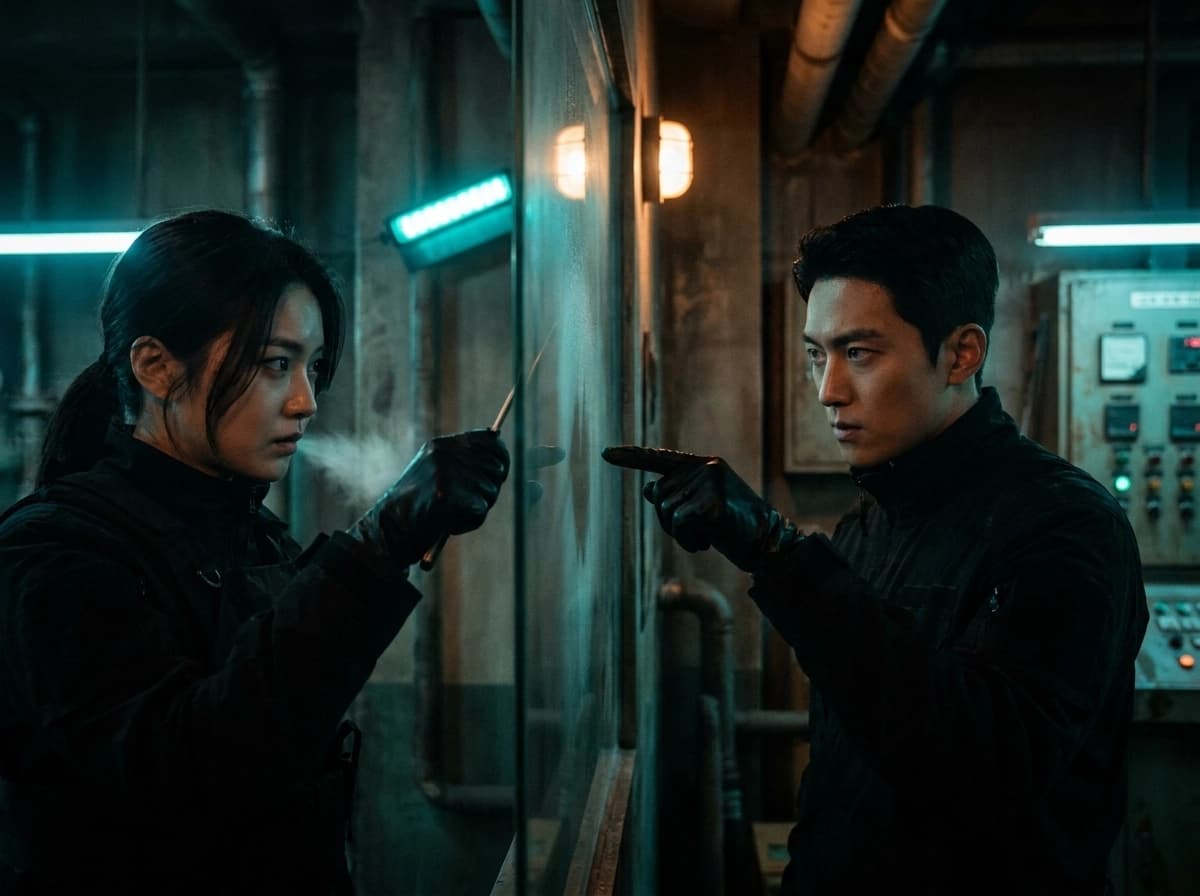
They don’t have time to decide what they’ve found. A clipped, familiar fury cuts through the throat’s hum as Jennie and Jisoo appear near the maintenance door, not in full stage glow but close enough that the wrong light makes their expressions sharper. Their body language is all angles and control—shoulders squared, eyes scanning the same fogging window 서하린 is staring at, hands already searching for a lock or a tool. The wiring change is one that caused their last show to cut halfway through, and the anger is packaged with specific memory: they don’t just suspect sabotage; they recognize the exact kind of tampering by the way the panel cover sits back on its frame, slightly wrong, as if someone tried to make it look “unbothered” and failed.
서하린 and 도윤 freeze in the narrow space between the panel and a wall of stacked equipment bins, and their hearts beat louder than the ballast hum. Then a third presence slides into the moment—김예린, the 공연 그래픽 소품 제작 리드. She looks too calm, the kind of calm that happens when you’ve replayed a mistake so many times it becomes a habit. When she sees the tape on the panel, her gaze flicks to the corners of the wiring window, then to a shelf unit holding the costume racks, as if she’s mapping distances even while she pretends not to. She has the facts you can’t print on a label: she knows where the confetti-canary badge should be, and she knows how the last show failed because the wrong sequence of props locked the stage choreography. For her, this isn’t only about safety; it’s about preventing her own recurring error by any means that stays within her definition of “right.”
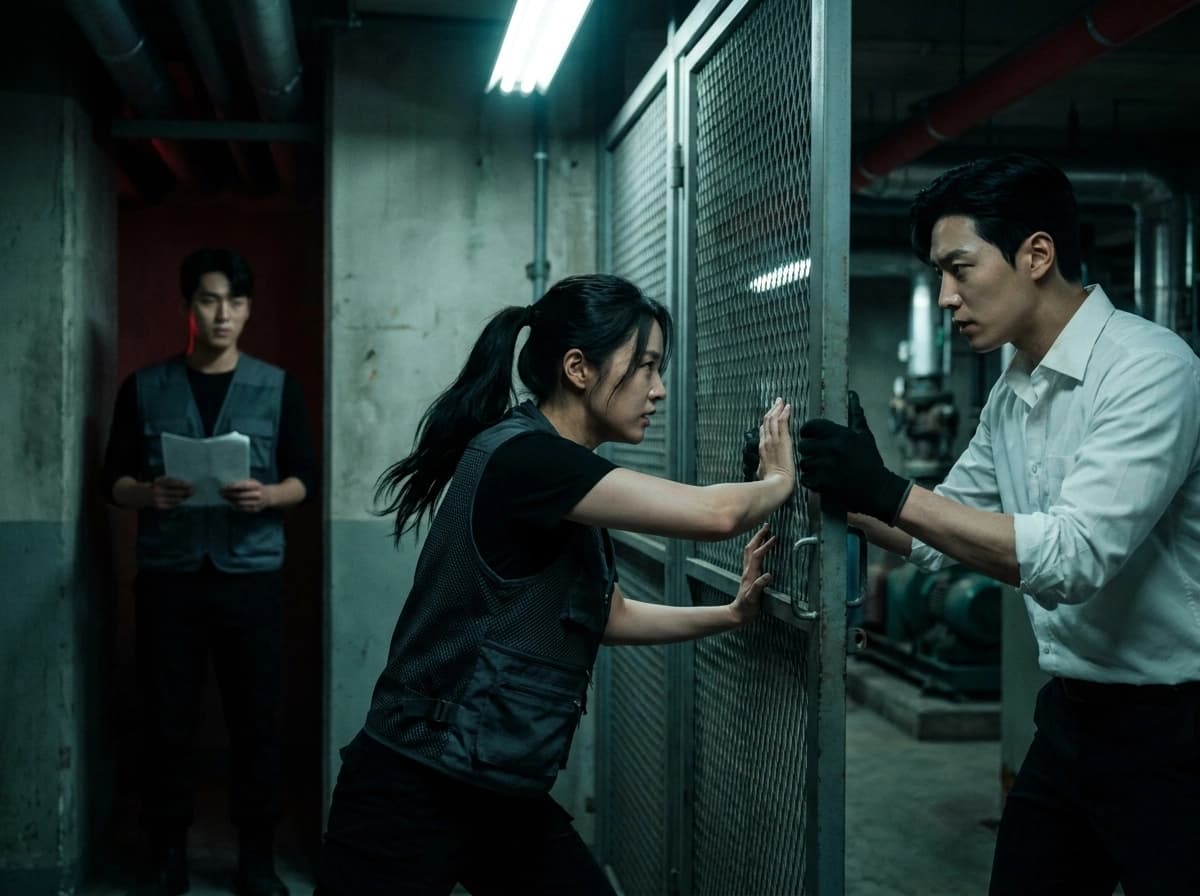
The moral dilemma arrives before anyone can breathe it in: if they restore power now, they can’t name who touched the panel without inviting security to treat “tampering” as a single target rather than a chain of touches. But if they pull the emergency breakers and cancel, the countdown still has zero on it soon enough to make cancellation look like negligence instead of protection. Jennie and Jisoo force the room smaller with their bodies—one steps in front of the maintenance relay panel door, the other blocks the path back toward the stage subfloor stairs—until the fans feel trapped inside someone else’s anger. 서하린’s face stays neutral by force, but her fingers twitch at the seams of tape edges she wants to peel and can’t. 도윤 shifts his grip on the keycard, weighing what it would cost to let security follow it back to a person. In his head, he can already see the confession-cancel ledger forming: how one wrong step can turn truth into blame.
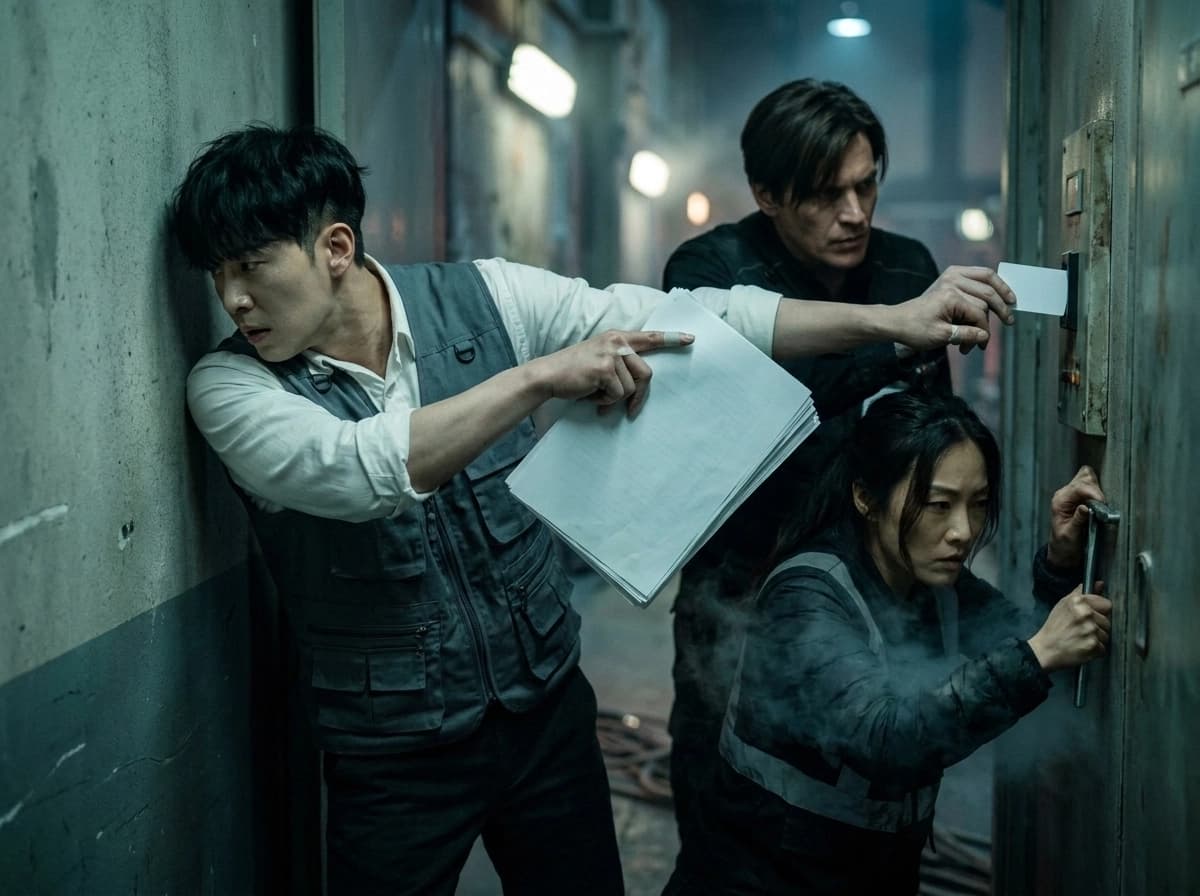
장민규, the security liaison from a cooperating field team, joins them like a rule walking upright. He arrives with printed 회선 변경 records held between two fingers, as if paper itself might be evidence of intent. He smiles the way someone does when they already know the answer and just want you to say it first. He steps into the same tight space, counts solder points on the panel cover with his fingertip instead of touching the wiring directly, and requests—politely, insistently—that the team explain the mismatch between the official stabilization procedure and the current fog pattern. His questions come with a low, practiced rhythm, and his presence makes 서하린’s skin tighten as if the air itself has become a sensor. He isn’t only looking for a culprit; he’s protecting the institution’s narrative of “rules over nuance.”
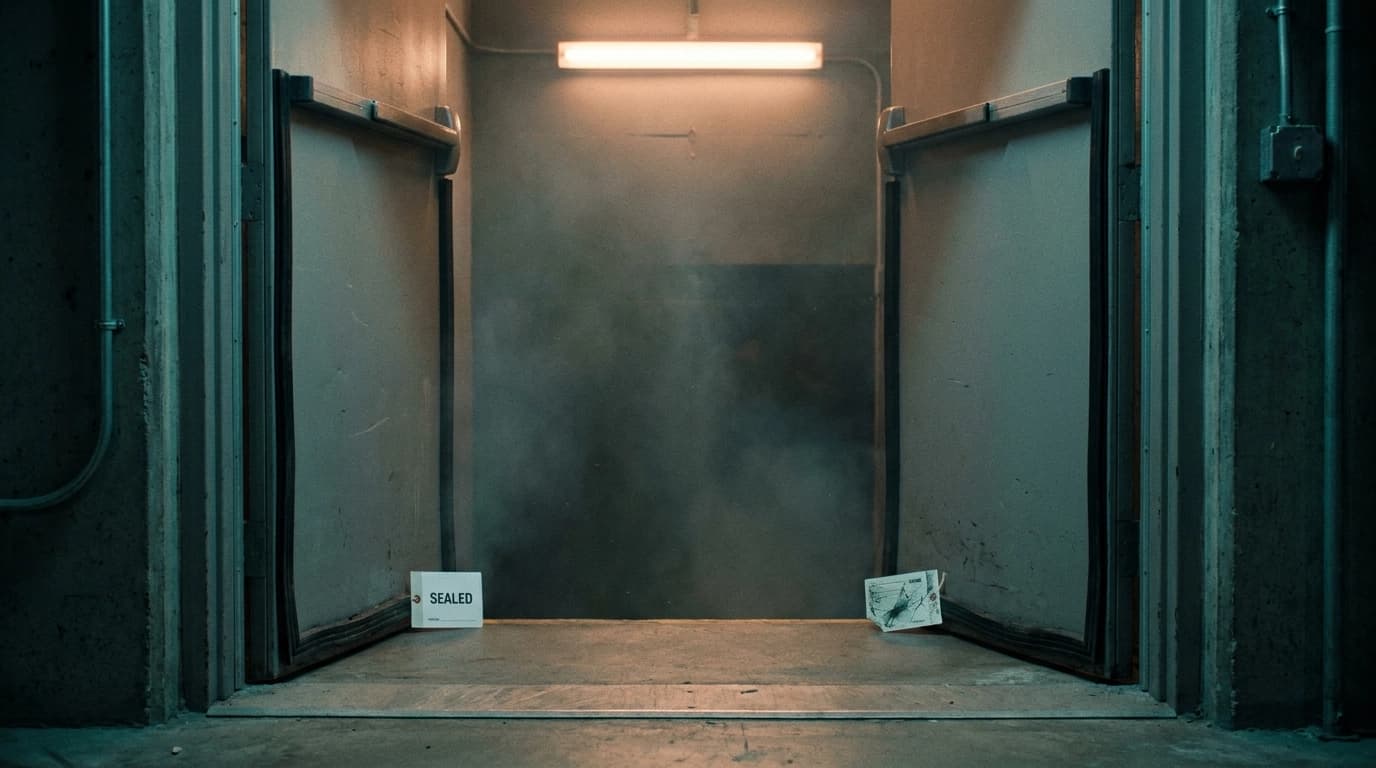
They find out the panel was already rewired when the last volunteer tries to restore stage power. The inspection window fog thickens in a pattern that doesn’t match the required “safe temperature” envelope; lights above remain cold. The stage catwalks and suspended techs need stabilization before the countdown hits zero, or the protection relays will hard-cut and lock out manual override for five minutes. That consequence is specific and brutal in a way that isn’t abstract: the show will cancel unless the overheated state at the panel can be stopped or reversed quickly, and the relays’ lockout means no one can simply “try again later.”
Jennie and Jisoo want action. 장민규 wants process. 서하린 and 도윤 want time without a name spoken. 김예린 wants the confetti sequence to land where it should so the choreography scanner won’t misroute props into safety holds. 한서준, the 의상 랙 운영 보조, arrives at the exact moment the room becomes too small for secrets. He moves like someone trained to notice what shifts among fabric and metal. He can smell tension—warm dust and sweat under rain-cold steel—and when he sees the tape labeled with BLINK’s nickname, he looks not at the panel but at the costume racks. His hands hover as if he’s already listening for the friction noise that tells him which rack door was opened last and by whose route through the aisle. When he realizes the confetti-canary badge is missing from its staging position, his eyes flash with bittersweet worry: he knows the badge can buy time because the routing scanner recognizes only one at a time, but he also knows misplacement can’t fully erase investigation. Security will still converge. The question is whether they can buy the minutes needed to cool the panel and still keep the audience fed with the right spectacle.
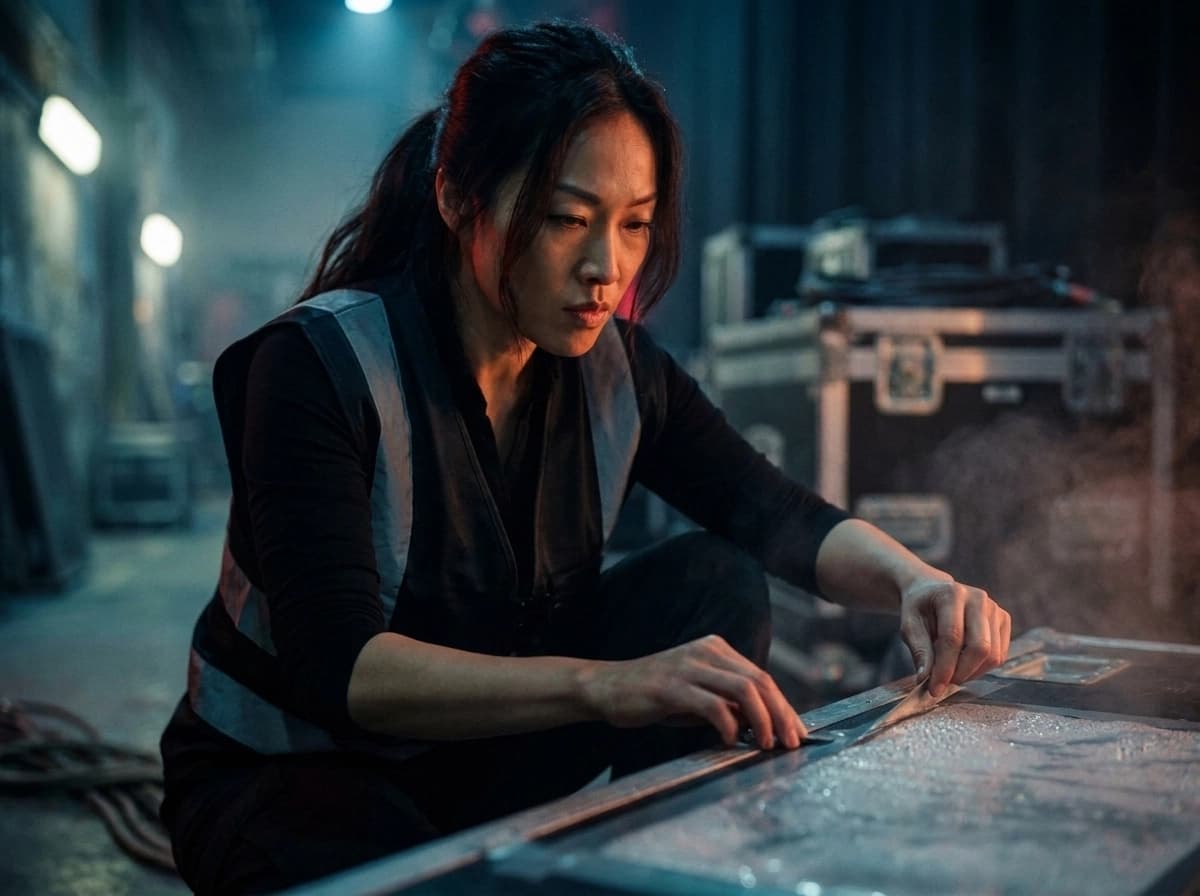
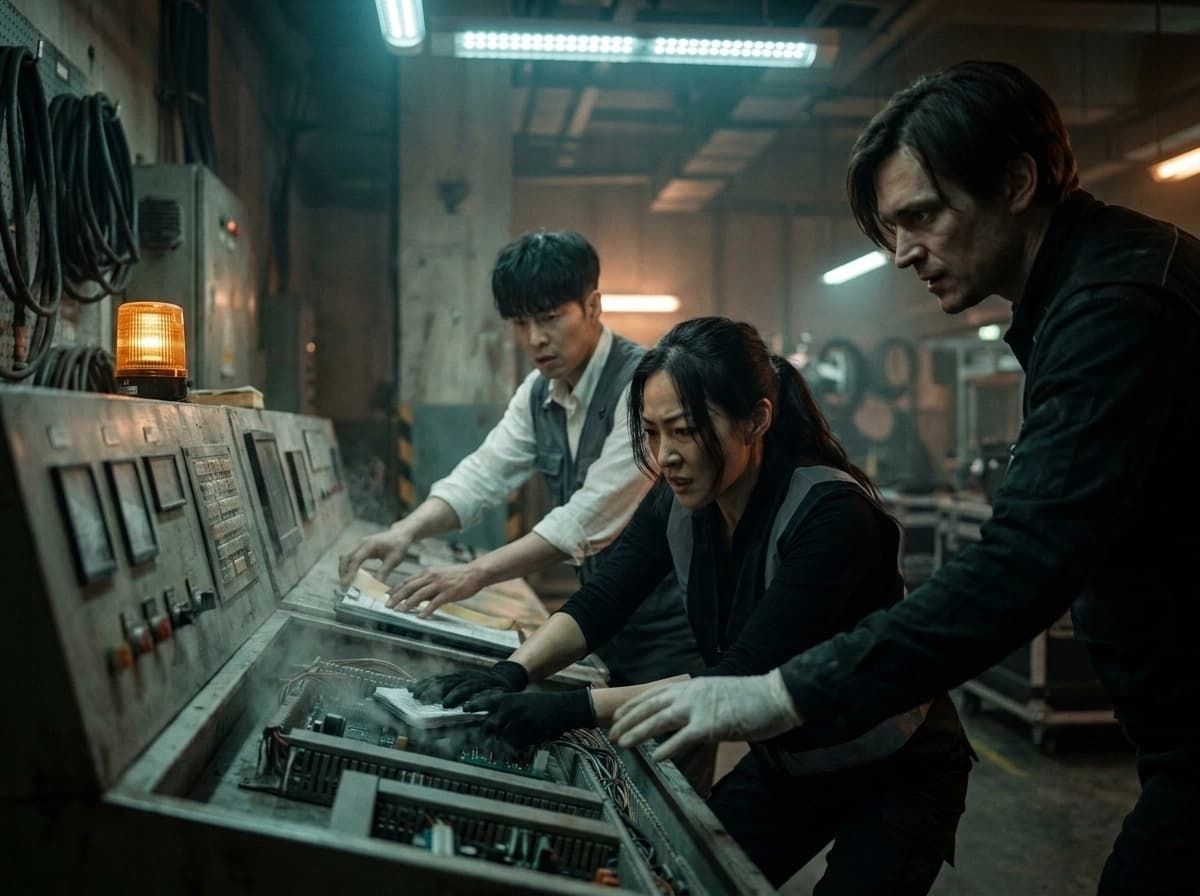
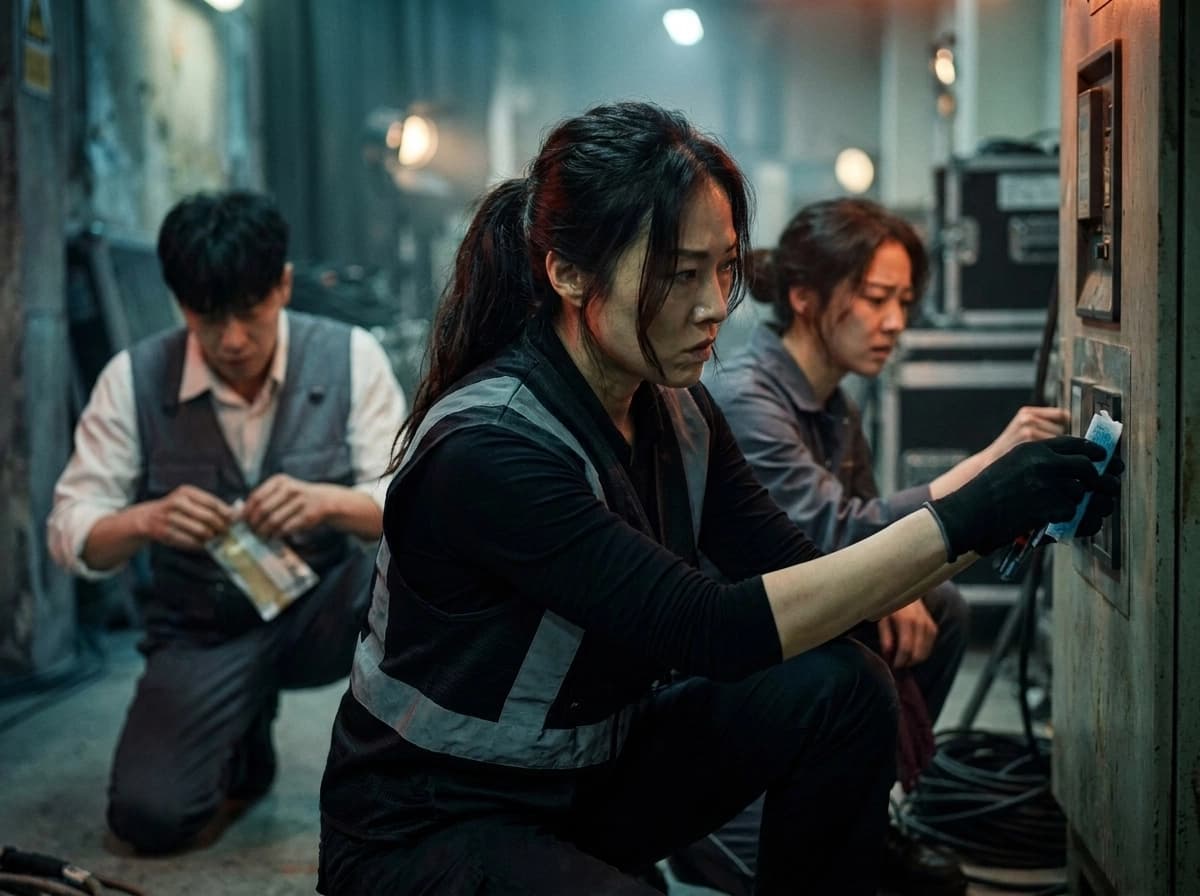
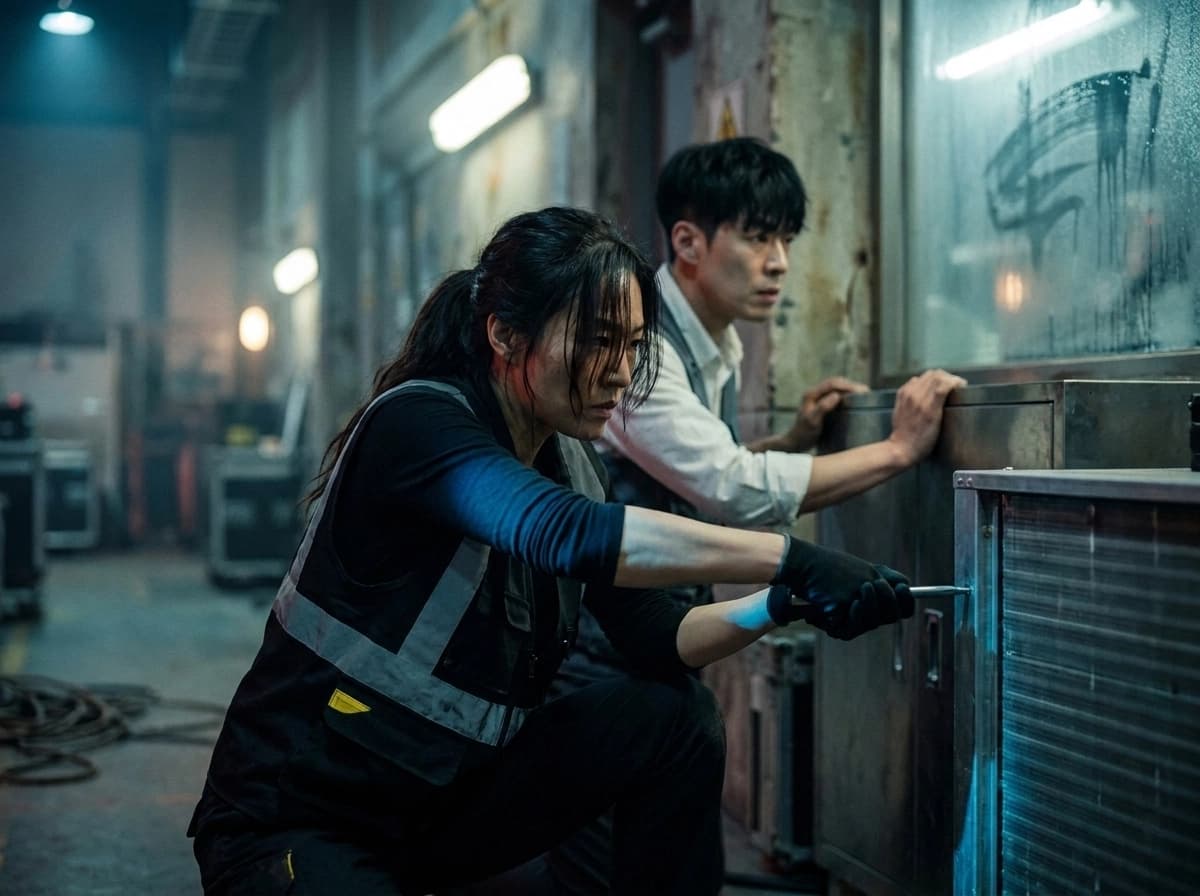
The story forces the cast into the hide-and-recover choice that defines them. 서하린 steps toward the wiring panel cover despite the instinct to retreat from “proof.” She doesn’t touch it bare-handed; she uses the metal edge of a tool to feel how heat radiates without leaving skin-contact patterns. She and 도윤 coordinate in motion rather than dialogue: 도윤 kneels beside the panel’s lower inspection area, slides a thin cover panel back, and checks the taped label’s edge lift—how it peeled and re-adhered—while 서하린 tracks the fog’s thickness across the transparent window, pointing to where condensation smears stop, as if the tape itself left fingerprints in weather. Their actions say they’re cooperating, but their eyes keep checking which exit is safest from security’s line of sight.
장민규 clocks the hesitation instantly. He tries to take the printed 회선 변경 record closer to the panel, angling it like a shield, and he demands that someone identify the last authorized person to handle the maintenance relay keycard. Jennie cuts in, voice clipped: “We don’t have time for names.” Jisoo adds, jaw tight, that the wrong wiring change isn’t new. She doesn’t accuse; she describes the effect like a scar. Security culture prizes rule adherence over nuance, and 장민규 treats that as both limitation and opening. He moves his body to occupy the path between the panel and the keycard access point, preventing anyone from swapping parts without him seeing. In that moment, the pursuit and evasion isn’t about running down a hallway; it’s about holding your ground in a room that’s already being claimed by bodies.
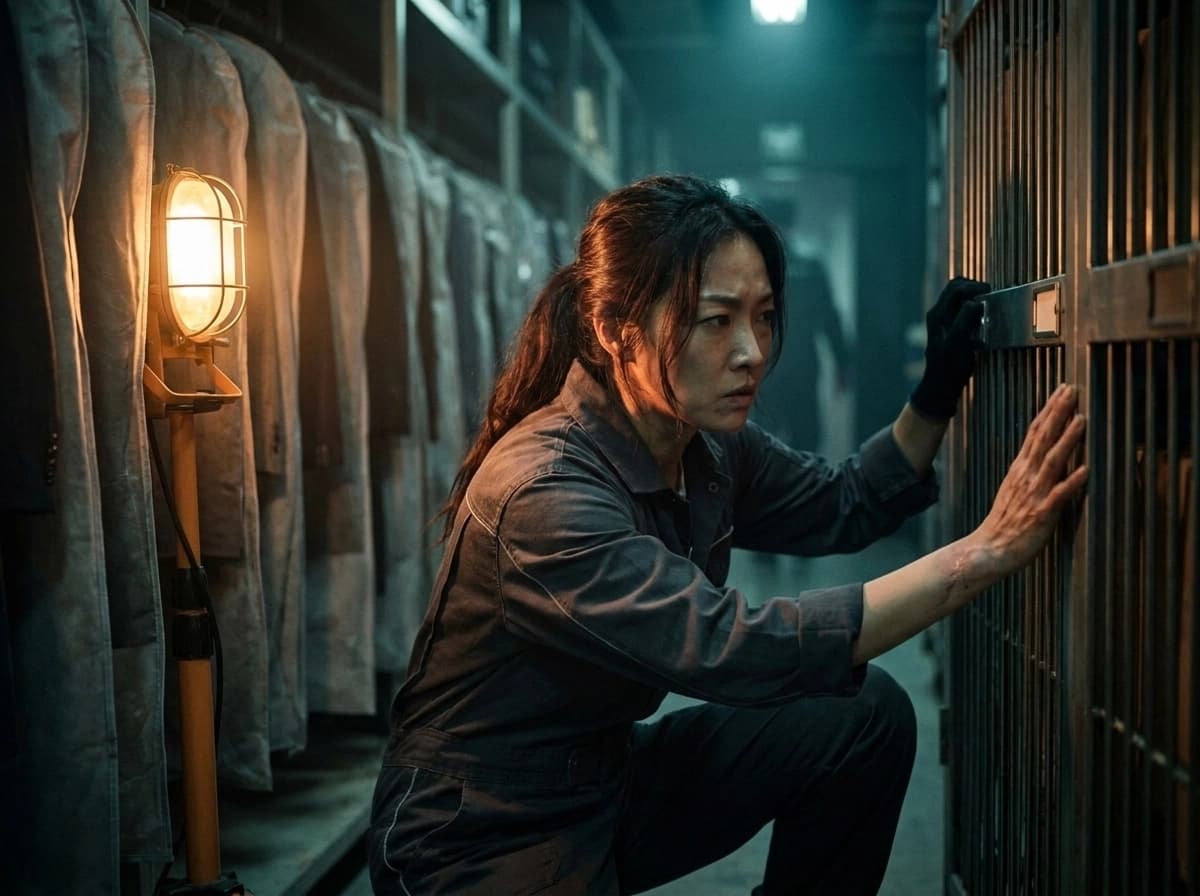
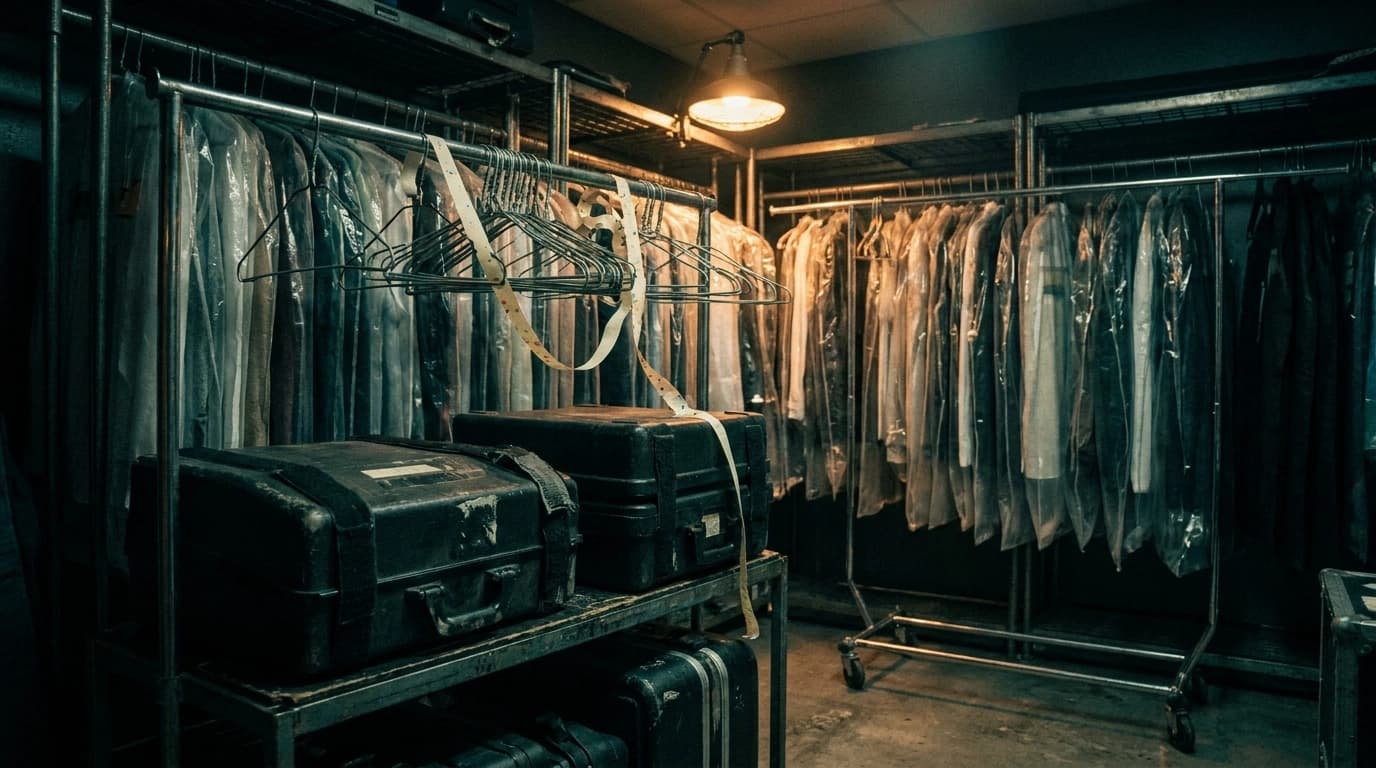
So they choose the other lever: the confetti-canary badge. 김예린 doesn’t argue about hiding evidence anymore; her mind snaps into a cold, efficient focus. She pulls a small storage tag—one that belongs to the badge’s expected routing path—and when 한서준 confirms, by tapping along a rack’s inner frame and listening to the hollowness, that a costume rack door was staged earlier with different latch wear, she pushes them toward the only hiding place that won’t feel like a lie to the arena scanner later: inside the costume rack the wrong person already prepared. The rack is already labeled on its bin—warm amber worklamp strips carve sharp shadows across damp dust—and it’s the one spot the routing scan would interpret as “in system,” not “interfered with.”
The tactic requires hands to move fast. 서하린 watches, then acts: she reaches into a prop bin for a backup badge sleeve, swaps it with the empty staging envelope she knows will confuse the scanner just long enough, and slides the confetti-canary badge into the back corner of the costume rack’s interior shelf—between hanging garments that brush her knuckles with fabric-soft friction. 한서준 helps with choreography-body knowledge: he opens the rack door without metal-on-metal squeal, swipes a trace of tape residue off with the edge of a cloth, and keeps his eyes on the badge slot as if it might slip away into security’s hands. 도윤, still kneeling near the wiring panel, keeps one hand hovering over a small relay access point—not touching, just ready—while his other hand gathers the torn tape corner that’s too obvious to leave behind. He doesn’t peel it cleanly; he tears a segment and uses a tool to keep it from flying into the air, because if security can’t see the contact point clearly, the audit trail becomes harder to map to a specific person without longer exposure time.
The cost arrives immediately. Security hears movement. 장민규 turns his head sharply toward the racks when the worklamps flicker from an energized switch attempt. He can’t ignore the bag of props being handled; he steps toward the rack line, and his shoulder nearly collides with 김예린’s arm. Jennie tries to pull him back by gesturing toward the panel—“Stop staring at closets; cool the system”—but 장민규’s answer is a low, tight recitation of procedure, and he reaches for the maintenance relay access panel just as 도윤 shifts closer.
That’s where the reversal tightens. 도윤 has the trap narrative in mind—not to trap anyone innocent, but to keep the room’s physical attention from locking onto the badge hide and the panel’s tape. He makes a choice that costs him emotionally: he lifts the keycard from his palm and places it openly on the panel’s authorized holder, forcing 장민규’s gaze to follow the system’s correct object rather than the wrong one. The act is visible, immediate, and creates a brief window of permission. He then takes a step—just one—between 장민규’s hand and the panel cover, blocking access with his body while 서하린 works. 서하린’s heat-fingers twitch under gloves this time; she presses a cooling pad against the exact segment the fog pattern indicates as stressed, watching condensation thin like breath drawn out. She doesn’t solve the whole issue, but she stabilizes the worst hotspot enough that the relays don’t hard-cut into lockout.
The clock doesn’t stop. Countdown noise from the arena control desk pulses faintly through the service throat, and the amber glow on stressed cables steadies only briefly. When it warms again, it warms too fast, and they know the panel modification isn’t just a “slight deviation.” It’s a sabotage-like reroute designed to mimic safe behavior until the last stretch. 서하린 spots it by the way the fog thickens unevenly around the transparent window’s lower left corner—like someone warmed one side to hide the other. She doesn’t speak the conclusion; she touches the cable jacket with a tool tip and watches for micro-heat rise in the insulation’s surface. She points. Jennie follows her finger, then yanks a connector housing back just enough to reveal a taped junction that shouldn’t exist under this relay configuration.
Now, the conflict becomes physical and close: 김예린 holds the costume rack door open with one forearm so 한서준 can slip the badge sleeve further inward without scraping tape residue. 한서준’s fingers move with that faint, repetitive “cloth-on-cloth” friction sound as if he’s trying to keep rhythm with a panic he refuses to show. Meanwhile 도윤 and 서하린 argue with their hands. 도윤 retrieves the taped segment he tore earlier and uses it to create a “recoverable contact point” that security can’t match to the last authorized timeline easily. He doesn’t destroy; he packages. Then he swaps the segment’s orientation so the sticky residue reads as a later contact rather than the first touch. It’s not erasing—rules can catch erasure—but it’s buying them interpretive slack before the audit trace becomes permanent and legible.
장민규 notices the packaging. He steps in, grabbing for 도윤’s wrist, and for a moment the entire room becomes a wrestling of process and panic. Jennie pulls him back with a hand on his upper arm, her grip firm enough to bruise under tour adrenaline. Jisoo blocks the maintenance relay door again, turning her whole body into a barricade because she understands that if 장민규 gets inside the relay access zone now, the show’s cooling window disappears. Security staff can’t override a locked-out zone fast enough; the protagonists can. The moral dilemma flares again: do they let security pin down tampering and accept cancellation as punishment, or do they risk being “tampering” themselves by acting too aggressively?
They choose the show, but they don’t choose it blindly. 서하린 checks the heat with one last tool touch, then physically presses the panel’s cooling shroud down so the condensation window clears further. 도윤 watches the panel’s inspection window fog for a specific pattern he can confirm within seconds—smearing that indicates unmodified airflow—then nods. 김예린, seeing that the countdown is close enough for misrouting to matter, runs to the rack line and opens the exact costume rack door they prepared. She doesn’t pull the badge out; she only touches the empty sleeve where it should have been, letting the routing scanner’s next pass interpret the badge’s presence as “inside the staging path.” That action buys minutes because only one confetti-canary badge is recognized at a time, and now it’s recognized where it shouldn’t be blamed.
In the end, it’s not a quiet fix. The stage subfloor amber glow stops stuttering and becomes stable enough for the protection relays to hold their manual override window. Lights on the ramp warm for the first time all night, not like a gentle sunrise but like a switch turning on in a dark room—sudden and harsh, making everyone’s faces flash pale and startled. The arena control system releases a fraction of the lockout logic, and the countdown continues to zero instead of the deeper cancellation state.
Security still converges. 장민규 can feel the story slipping away from his neat process, and he refuses to accept “luck” as an explanation. He angles his body toward the area where the tape residue was packed, then toward the costume racks, forcing a triage: he can only check one path first. He chooses the panel evidence first because that’s where the official mismatch is strongest—where the fog pattern can be photographed as proof. That choice, intended to be corrective, creates the brief cover 서하린 needs.
As he leaves to fetch more documentation, the remaining cast moves like a single nervous organism. 서하린 and 도윤 rush to the panel one last time, fastening the cooling shroud and reseating the cover so the condensation window won’t show fresh smears. 김예린 closes the costume rack door gently—no squeal, no extra tap marks—while 한서준 checks the route of garments to ensure nothing drags against the badge sleeve’s hidden slot. Their faces don’t soften into relief. The tenderness is in their urgency: every movement says they care about the show and about each other, but they also care about not becoming scapegoats that destroy a fandom from the inside.
When the countdown nears zero, BLINK finally takes the stage. The audience sees spectacle—lights warm, catwalks hover, a ribbon of confetti holds back just long enough for the timing to land. The first confetti burst hits at the correct cue because the scanner now thinks the badge is properly staged, even if the truth is tangled inside a costume rack. Jennie and Jisoo smile like professional triumph, but their eyes flick to the service throat camera feed and then away again, as if they’re deciding whether to forgive or to hunt.
The resolution doesn’t end with a clean confession. In a final convergence scene, security returns with a technician and a fresh set of labels. 장민규 stands close to the wiring panel and pulls up his printed records, tapping the edge with a finger that’s too calm. 서하린 keeps her hands visible, thumbs pressed against her gloves, and 도윤 keeps the package of tape residue tucked low in his coat pocket—physically present, emotionally unbearable. 김예린 stands near the costume racks, her expression controlled, but her eyes track every tool in the technician’s hands the way she tracks her own past mistakes. 한서준 stays just behind her, ready to cover a rack door with his body if it opens too fast.
No one says a name. That is the bargain they make with their own fear. Instead, the panel’s fogging and the recoverable tape contact point leave uncertainty in the logs—enough ambiguity that 장민규 can’t pin the tampering to a specific person without extending the audit window. He hates it. You can see it in how his smile fades, how the rulebook turns into a weapon that can’t quite cut where he wants. But with the show’s safety stabilized and the stage lights working, the immediate threat is gone, and he has to live with the rest as “pending review.”
In the quiet seconds after the first successful cue, 서하린 finally allows herself a breath that doesn’t feel like running. 도윤’s shoulders drop, but only for a moment—he knows confession-cancel ledger logic is still there, waiting like a timer beneath every camera. 김예린 steps aside, not to celebrate, but to ensure no one else touches the badge hide without knowing why. 한서준 glances at the rack where the badge disappeared and returns his hand to the cloth rhythm of work, because if you can keep moving while everyone else watches, you can keep a mistake from turning into a monster.
The arena’s lights shine warm now, but the service throat remains cold. The story closes with the same physical tension it began with: condensation on the wiring panel’s window continues to thicken and clear in slow, readable patterns, as if the infrastructure really does “remember.” Only this time, the fans choose what kind of memory they can live with—stabilizing the show, hiding the immediate badge trace inside a costume rack, and letting the truth stay unsaid long enough for BLINK to perform—while the clock keeps ticking, patient and merciless, toward the next moment security will demand names.