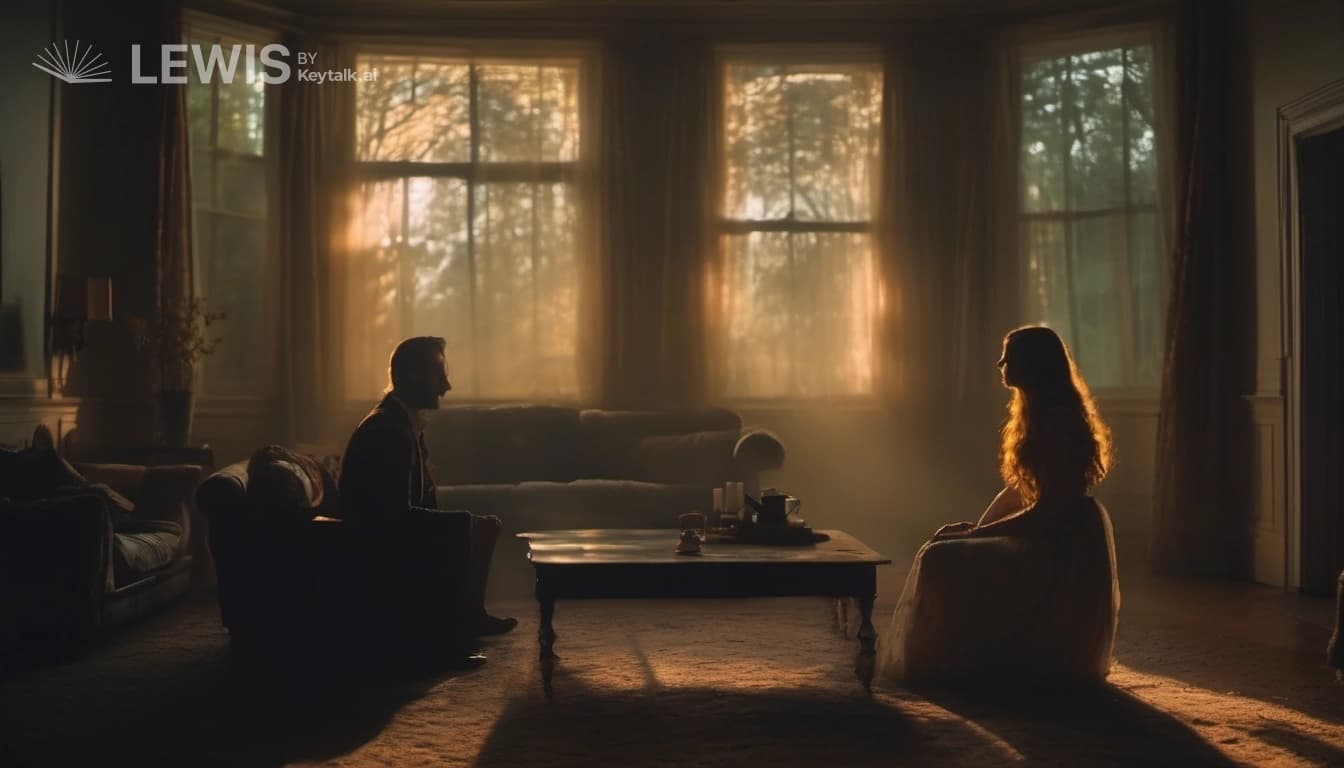
Beyond the View cover image

Beyond the View

Inspired by Raymond Carver's 'Cathedral,' a story emerges of a cynical man who, through an unusual encounter with a blind man visiting his home, confronts his prejudices and discovers the unlikely bridges between sight and perception, leading to a transformative personal revelation.

Weekly ranking

rank icon image
#48 inGenre
Scroll

Character

Protagonist Character

Eliot Crane

GenderMale
OccupationAccountant

Profile

- Profile: Eliot Crane, a 34-year-old male accountant of mixed European and Asian heritage, leads a life marked by cynicism and routine until an unprecedented encounter sets him on a path of introspection and discovery. Crane's story unfolds in an environment that emphasizes the stark contrast between his logical, numbers-driven worldview and the expansive, intuitive perspective introduced by the visit of a blind man. This visitor becomes the catalyst for Crane's internal conflict, challenging his preconceived notions about perception, connection, and the unseen bridges that link disparate experiences. Externally, Eliot wrestles with societal expectations and the skepticism of his peers as he navigates this transformative journey. His role as the protagonist is to embody the resistance to change and then demonstrate the potential for growth that lies within challenging one's limitations and biases.
Antagonist Character

Cormac Voss

GenderMale
OccupationUniversity Professor of Philosophy

Profile

- Profile: Cormac Voss, a 52-year-old University Professor of Philosophy, embodies the antagonist in the narrative inspired by Raymond Carver's 'Cathedral.' He encompasses a blend of European descent, marked by a cultural background that emphasizes intellectual achievement and skepticism over emotional or experiential understanding. Voss is entrenched in his world of philosophical debate and scholarly pursuits, often dismissing the value of experiences that cannot be quantified or argued through logic. His role in the story is crucial; he represents the cynicism and prejudice that the protagonist must overcome. Internally, Voss struggles with the fear of the unknown and the discomfort of vulnerability, leading him to dismiss and underestimate the blind man’s perspective. Externally, his challenge comes from his professional environment, where his reputation and beliefs are questioned and put to the test during the blind man's visit. These conflicts drive him to confront his prejudices and ultimately contribute to the narrative's exploration of the themes of insight, understanding, and transformation.
Sidekick Character

Clarity Vale

GenderFemale
OccupationArtistic Mentor

Profile

- Profile: Clarity Vale, at the age of 34, steps into the narrative with a rich cultural tapestry woven from her mixed African-American and Irish heritage, accentuating the diversity and depth of her character. As an artistic mentor, she embodies creativity and insight, playing a pivotal role in navigating the cynical protagonist towards empathy and understanding. Stationed at this unique crossroad of professions, Clarity confronts her internal conflict – the challenge of nurturing art that transcends mere sight and touches the soul, against the backdrop of her own doubts about the transformative power of art. Externally, she battles societal skepticism regarding her unconventional approach to teaching and art's role in bridging gaps between differing perceptions. Her journey alongside the protagonist underlines the narrative, driving them both towards an unexpected enlightenment where sight translates into vision, and prejudices dissolve into acceptance.

Plot Synopsis

In a tale reminiscent of Raymond Carver's 'Cathedral', Eliot Crane, a 34-year-old accountant with a penchant for cynicism, finds his monochrome world upended by the appearance of an unexpected guest. His structured, logical life, grounded in numbers and routine, is thrust into the realm of introspection and discovery through the visit of a blind man, challenging Crane's long-held beliefs about perception, connection, and the invisible threads that knit disparate lives together.

Crane's journey begins in earnest with the arrival of Cormac Voss, a 52-year-old University Professor of Philosophy at Crane's home. Voss, bearing a cultural legacy of intellectual accomplishment and skepticism, represents the tangible embodiment of the barriers Crane must overcome. Initially, Crane's interactions with Voss are marred by discomfort and prejudgment, mirroring his internal conflict against societal expectations and his own skepticism. Voss, for his part, dismisses the perspectives and experiences that can't be quantified or logically argued, including the blind visitor's unique worldview, thereby anchoring the story's thematic exploration of understanding beyond sight.

As Crane grapples with Voss's presence and the blind man's influence, he is unexpectedly drawn to Clarity Vale, a 34-year-old artistic mentor of mixed heritage. Vale, with her deep commitment to art that transcends visuality and touches the soul, becomes a crucial guide for Crane. She embodies creativity and insight, challenging Crane to see beyond the literal and embrace empathy and understanding. Together, their interactions steer Crane towards a confrontation with his own biases and limitations, urging him toward growth and change.

The narrative's tension crescendos as Crane's evolving perspective begins to alienate him from his logical and skeptical peers, including Voss. Crane's burgeoning empathy and openness to new experiences, stoked by his interactions with both the blind man and Vale, come to represent a direct challenge to Voss's rigid worldview. This escalating conflict forces each character to confront their own vulnerabilities and prejudices, laying bare the philosophical underpinnings that divide them.

In a turning point, through an art exhibit crafted by Vale that emphasizes expression over sight, Crane undergoes a profound personal transformation. The exhibit—designed to be experienced without vision—serves as the ultimate test of Crane's newfound understanding, challenging him to fully let go of his reliance on the visible world. It is here, within this space of darkness and vulnerability, that Crane achieves a moment of clarity and connection unlike anything he's known before, bridging the gap between his and the blind man's worlds.

The climax reaches an emotional peak when Crane, now deeply changed by his experiences, extends an olive branch to Voss. In a symbolic gesture of reconciliation and understanding, he invites Voss to experience the exhibit. Witnessing firsthand the powerful connections that can be forged in the absence of sight, Voss confronts his own prejudices and fears, leading to a quiet, introspective resolution between the two men.

In the end, Crane's world, once defined by cynicism and isolation, is irrevocably altered. Through his unexpected journey, he discovers the vast landscapes that lie just beyond the limits of perception, guided by the unlikely figures who enter his life. The story closes on a note of hopeful ambiguity, leaving Crane—and the audience—pondering the infinite ways in which the world can be seen, understood, and connected, not through sight, but through the heart and mind.
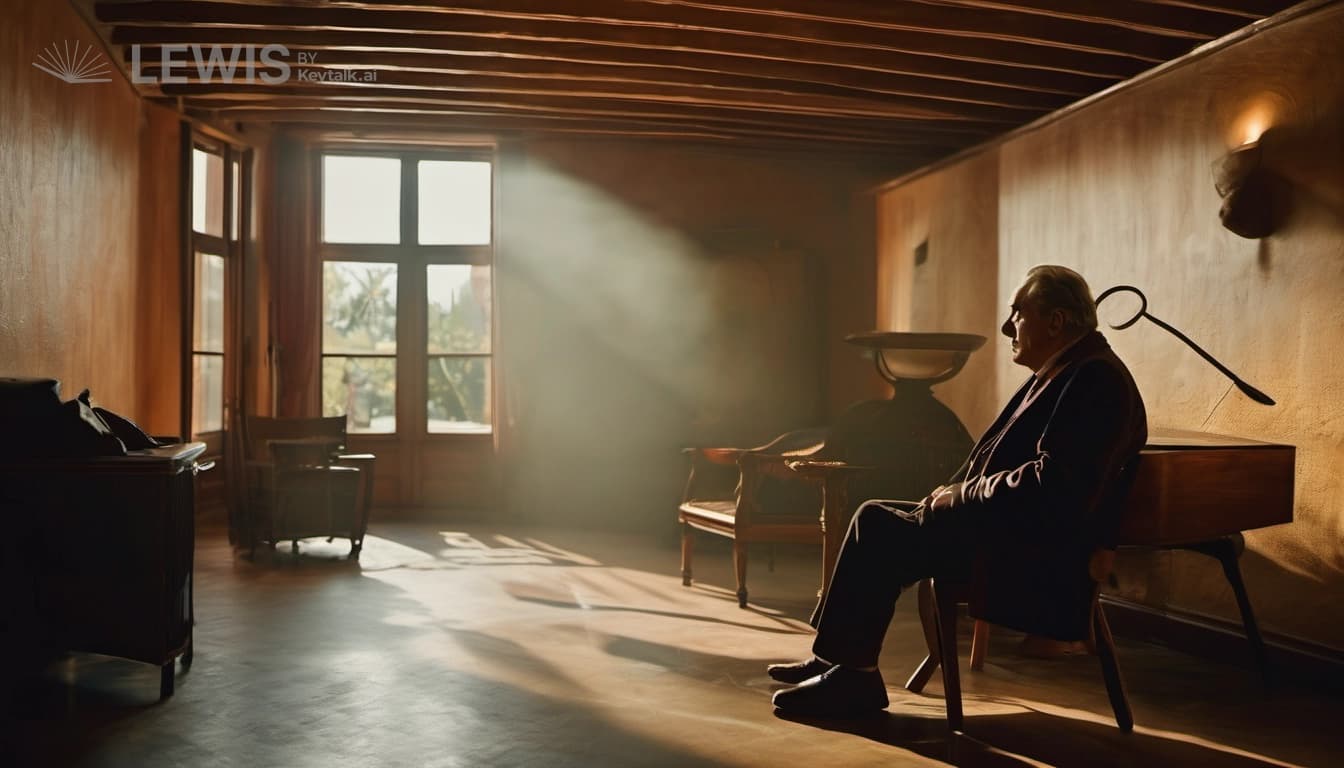
'Beyond the View'Story Chat

Want to chat with the characters from this story?

'Beyond the View'Story Chat

Want to chat with the characters from this story?

story image
story image
story image

You might also like

Comments0

theme music