Plot Synopsis
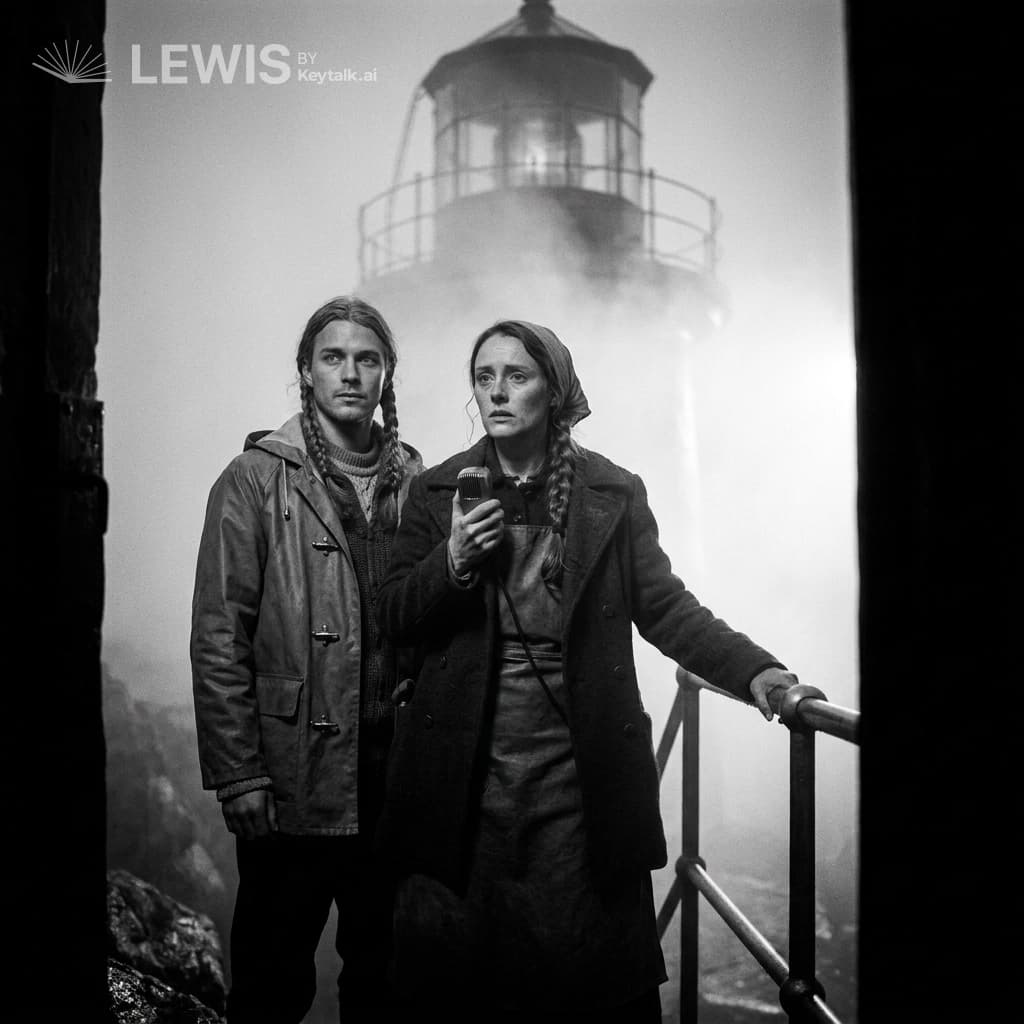
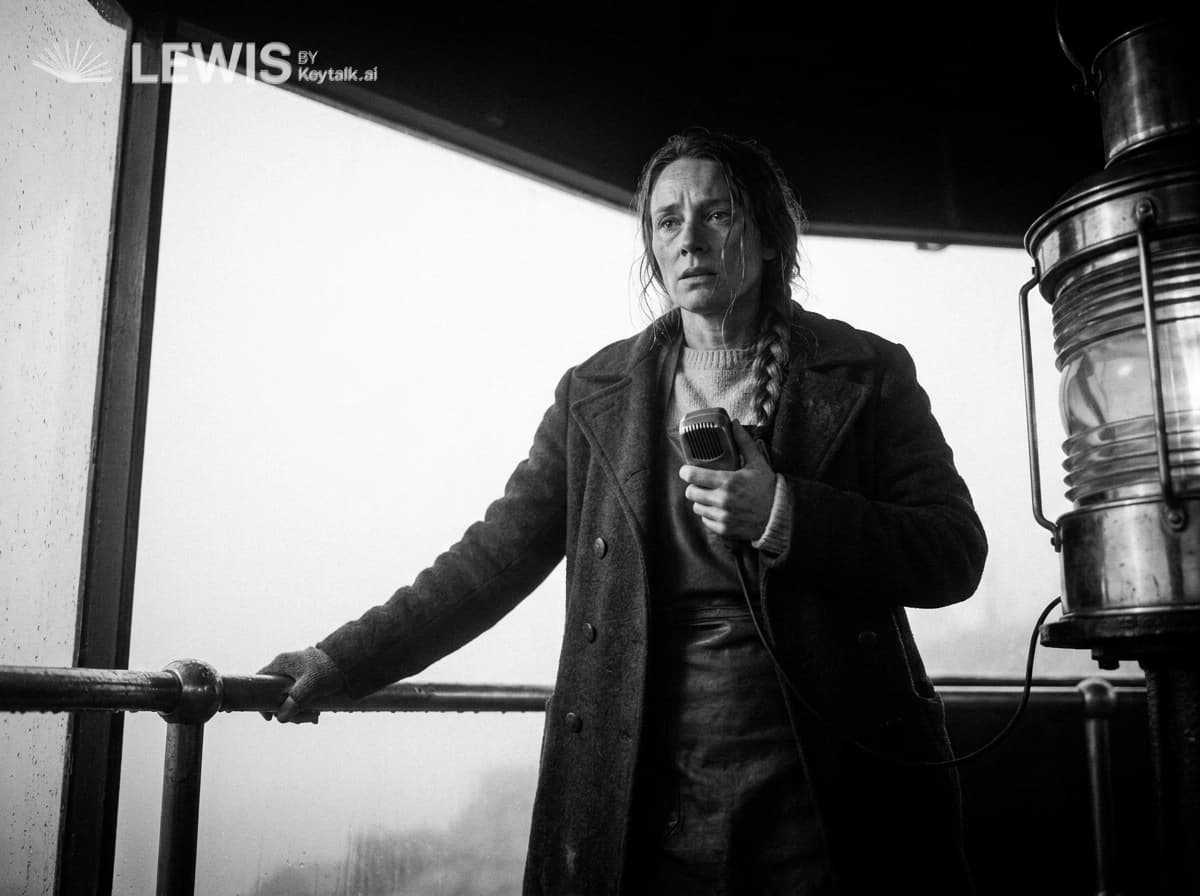
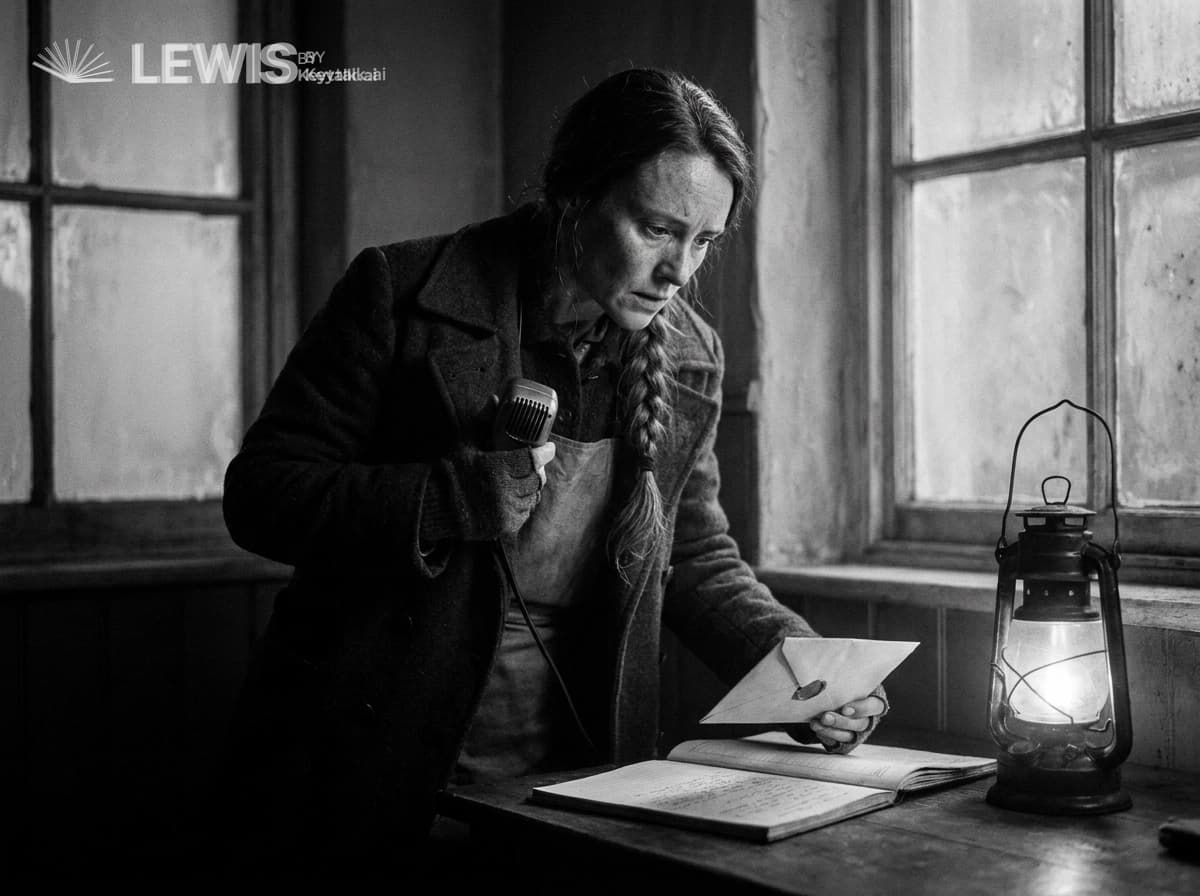
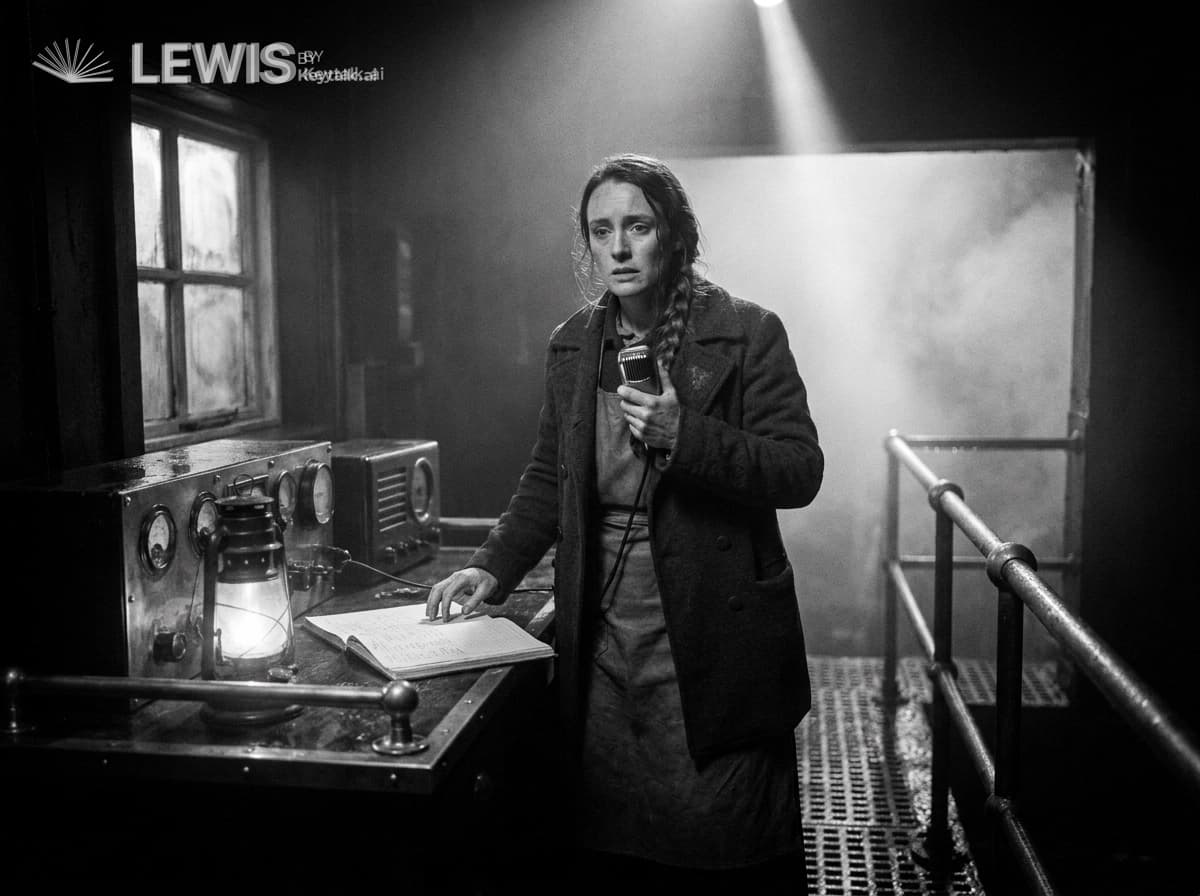
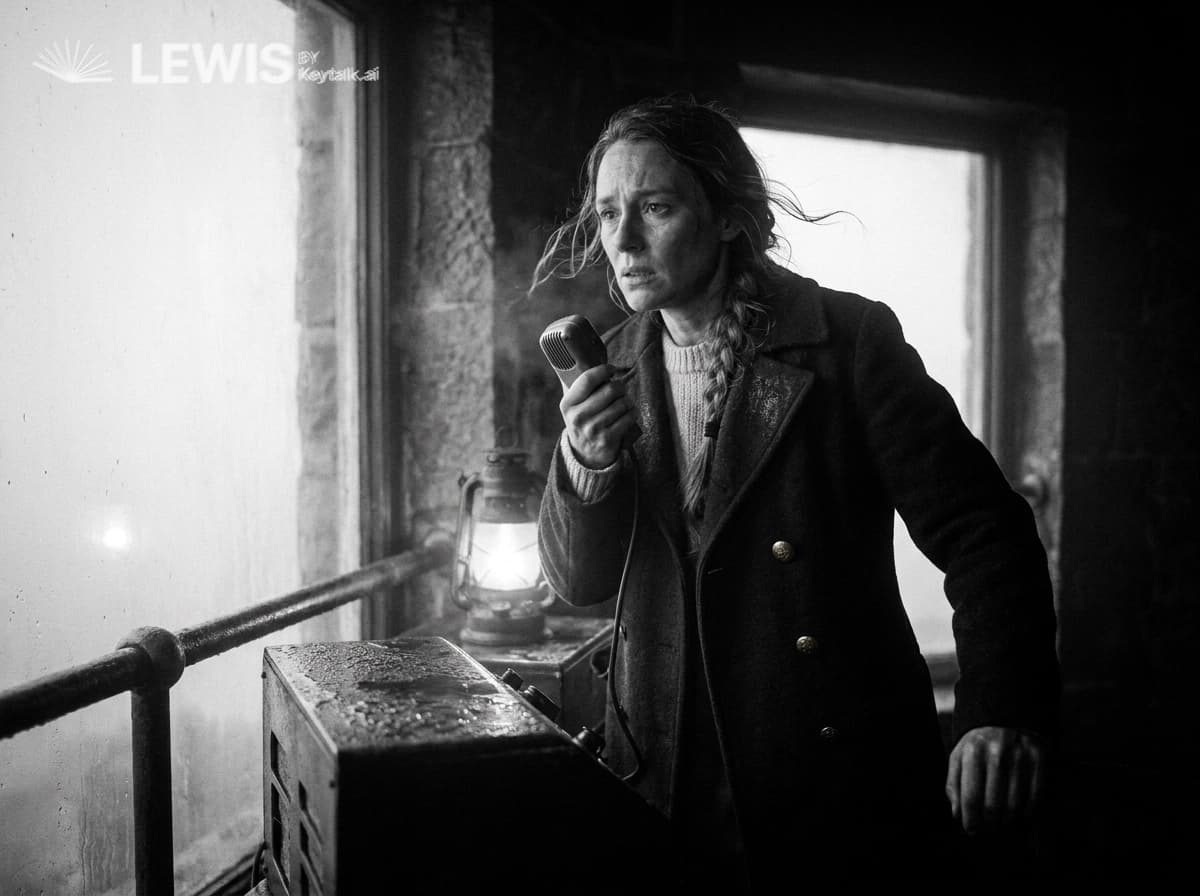
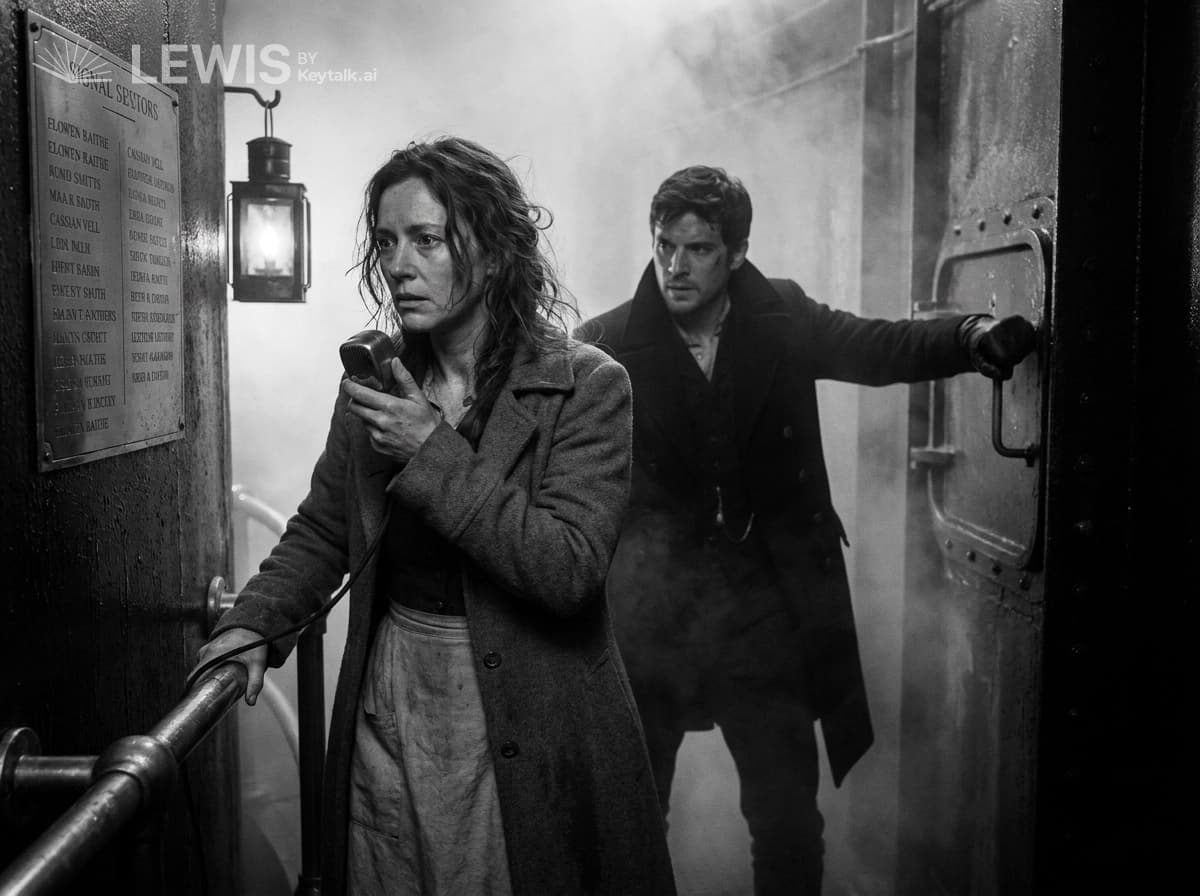
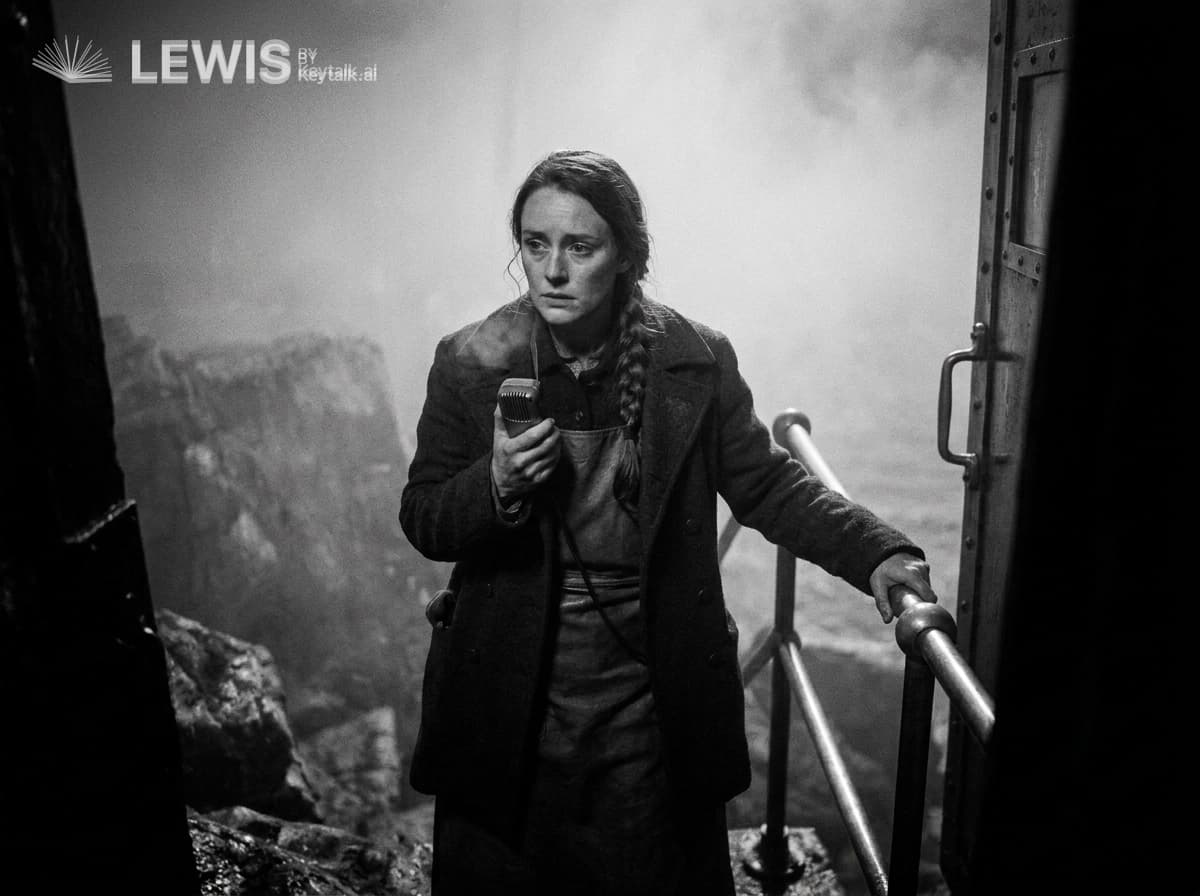
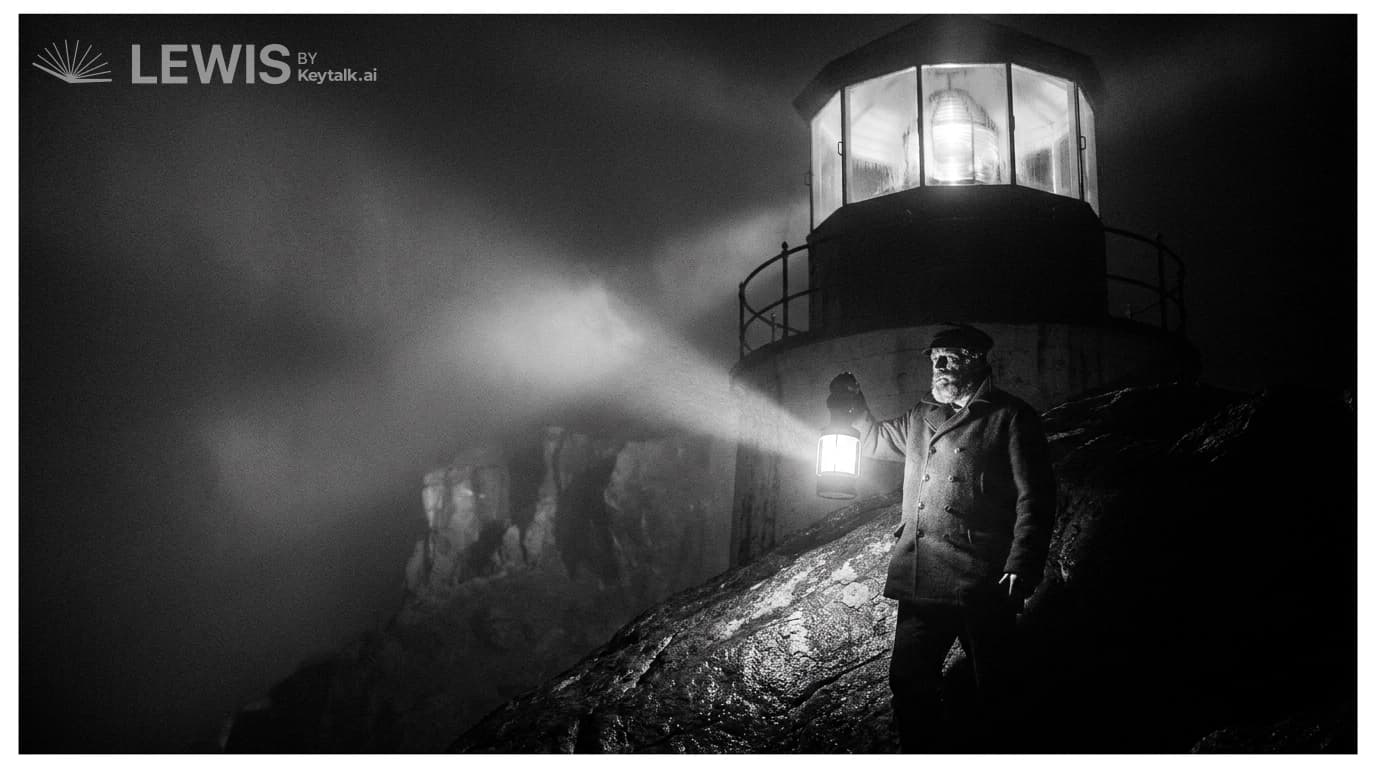
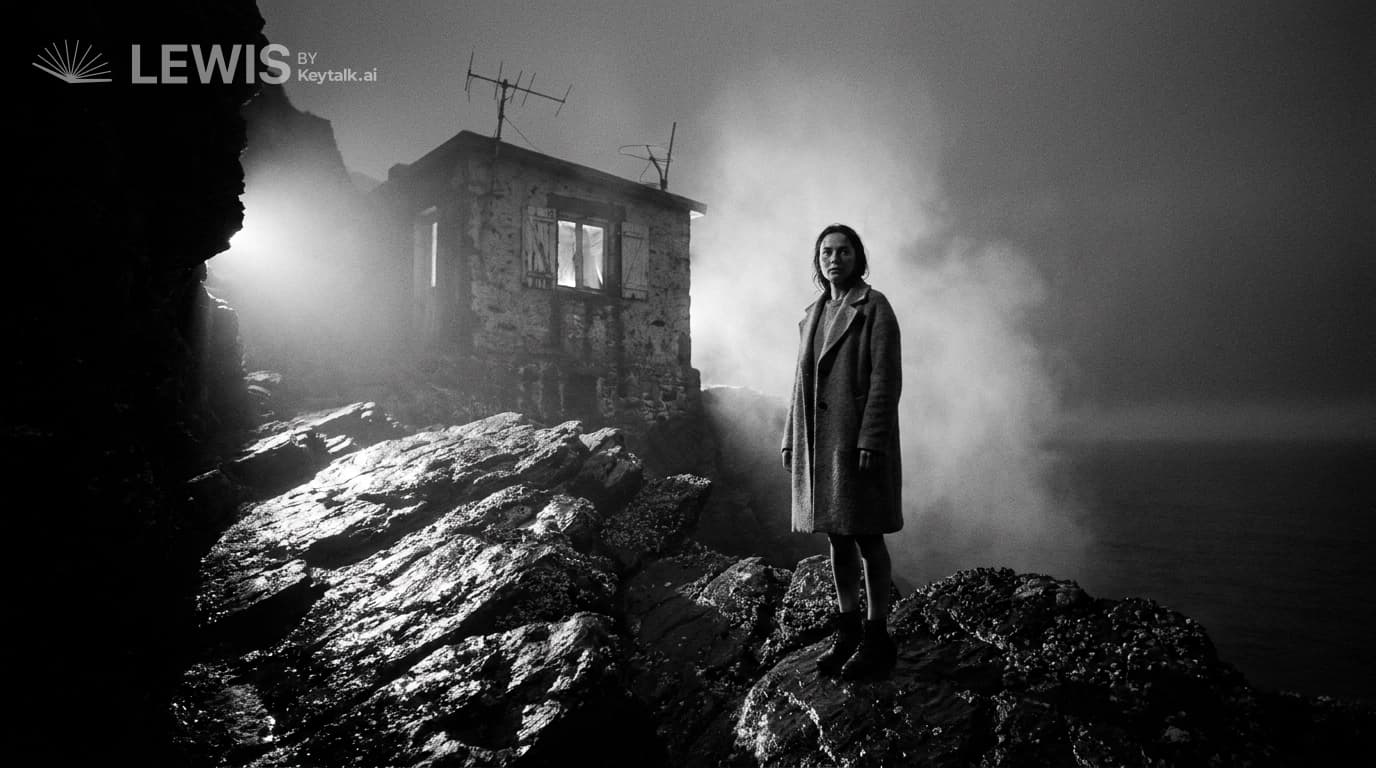
On a night when the sea looks ink-black and the fog arrives early, Elowen Price—lighthouse keeper and custodian of the signal archive—feels the familiar pressure-hush before she ever sees the milky-white bands. Routine has become her kindness: she logs temperature, checks insulators, stamps visitor nameplates with the care of a surgeon sealing a vessel, and she keeps the lantern beam calibrated as if precision could substitute for control. Yet this fog doesn’t roll in like weather. It folds with intent around the lantern room, as though it has learned the geometry of remembrance. By morning, the first tourists to disembark from the courier skiff speak in blank, polite fragments. Their nameplates still bear fresh ink, their hands still carry the salt-stiff artifacts the archive requires—but their eyes won’t land on any coherent past. Elowen watches her own radio condenser record the day’s greetings with micro-hesitations that feel almost like her voice, then go flat as if someone has rubbed out the meaning between words.
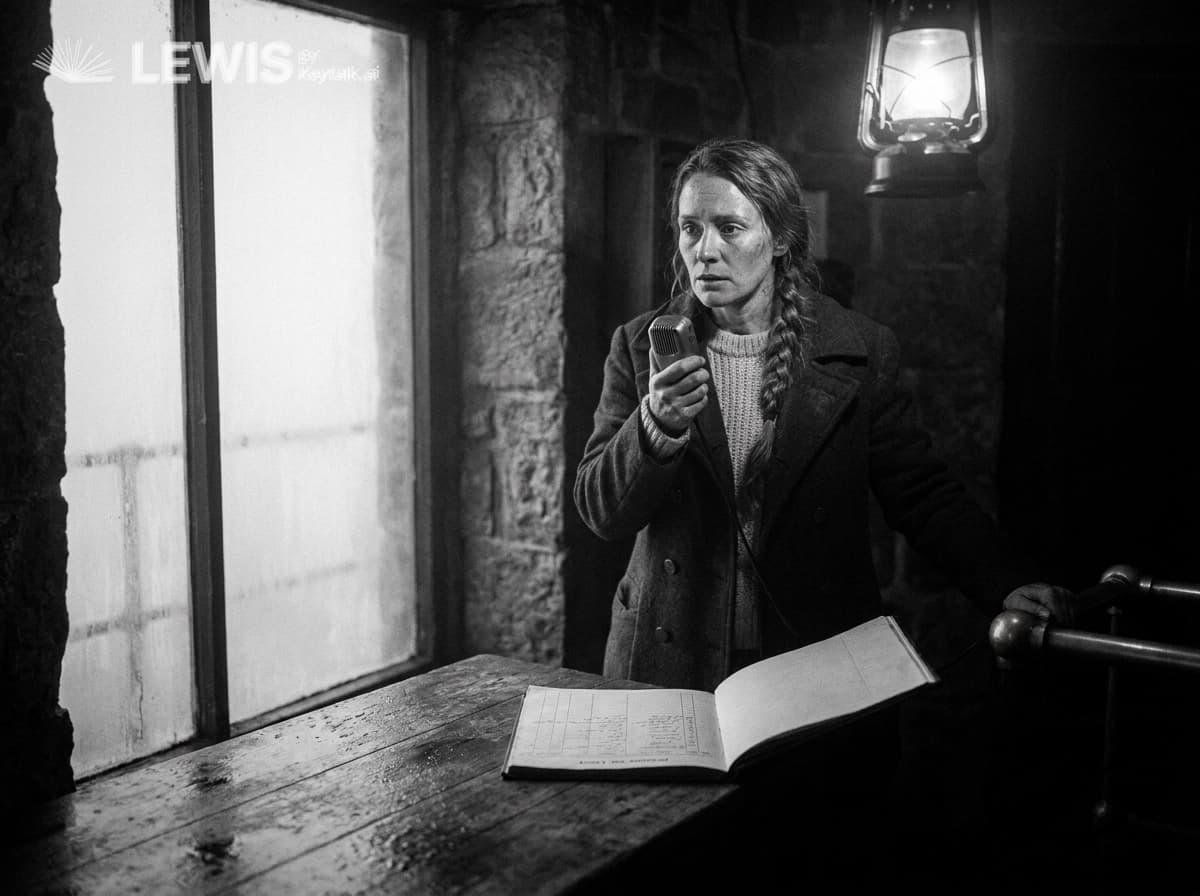
When her logbook entry—written that same night, pressure-ink gleaming—proves impossible to reconcile with the missing minutes in her mind, Elowen realizes the fog isn’t merely concealing. It is feeding on contiguous recollection, erasing in sequence: names first, then dates, then place-order, leaving dreams that can’t hold their shape. The rule is new in practice. The island’s systems were built to stabilize echoes only with redundancy, to translate memory into redundantly recorded signal—ink, radio residue, and physical artifacts. But the fog has begun to target what minds try to retrieve in coherent order, pressing against her visitors’ attempts to remember like a hand that knows exactly where the bruise is. Elowen tries to anchor a missing woman by repeating her own name and the stamp number from the onboarding plate, only to feel the chain reaction: a gap blooms in the woman’s face as if truth has been cut from the middle of her thoughts, and Elowen’s own confidence record—etched into the pressure-ink—begins to lose its fine grain. She hears the fray in her own memory the way she hears wind strain a wire.
Elowen is not alone in her dread. Marek Silt, the island surveyor who once mapped the headland before it was engineered for signals, insists the fog is reacting to something beneath the rocks and argues for containment. He fears panic more than erasure, and his submerged navigation archive—reachable only by dry-dock tide tunnels—sits like a sealed lung beneath the lighthouse, full of stabilizing grid residue and field records that might explain the fog’s shift. But the archive has its own curse: any attempt to bulk-restore memories from it risks “global drift,” turning local corrections into sympathetic forgetting on the mainland. Marek wants to keep knowledge contained, not because he doesn’t believe Elowen, but because he believes belief without tolerance is how people become gaps en masse.
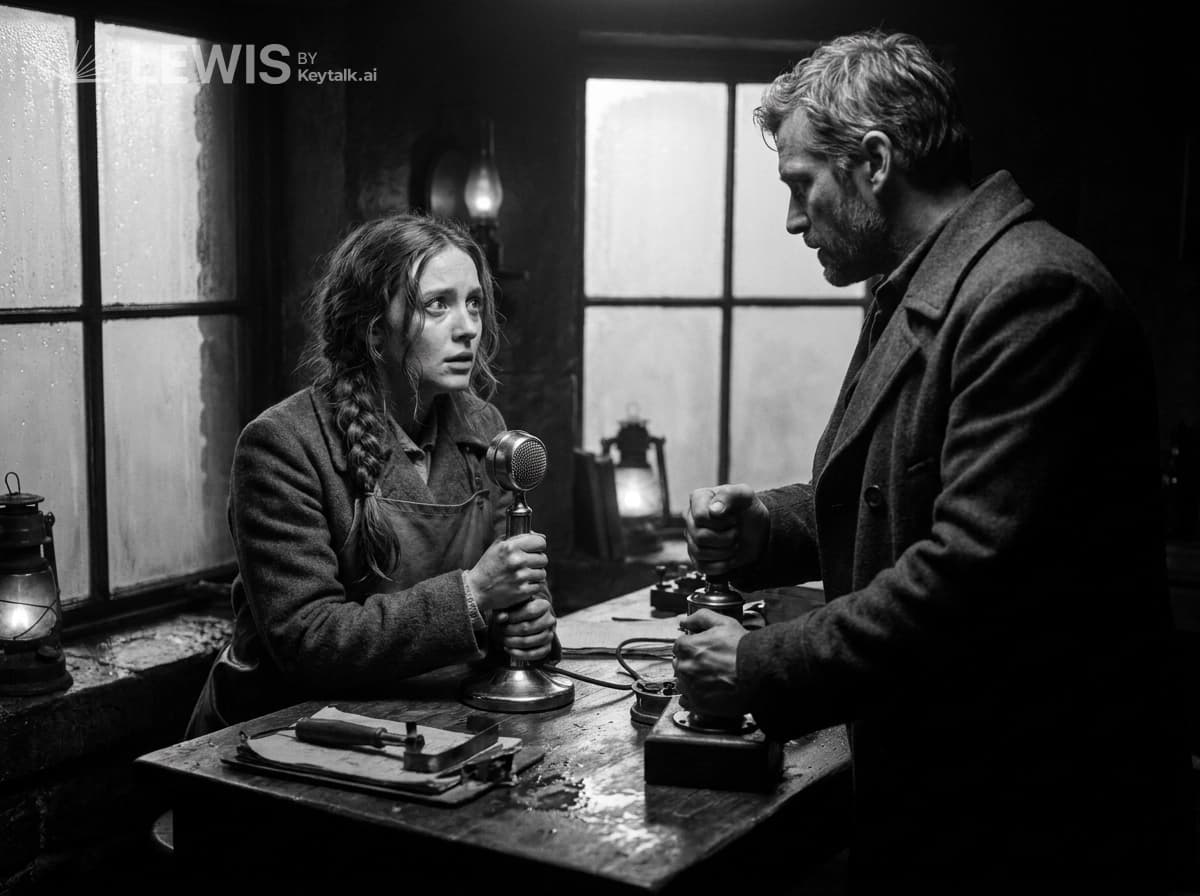
As Elowen argues with him over a table of salt-stained line samples and radio coils, Dr. Tamsin Kestrel reappears—retired memory-systems researcher with clandestine equipment on the mainland. Tamsin understands stabilization fields as consent-sensitive but not value-neutral; they can restore memory only in forms a mind can tolerate, but forced recall produces identity fracture, a separate self that can be witnessed yet not fully inhabited. Tamsin’s proposal is both lifeline and threat: anchor memories through a stabilization broadcast, not by demanding people “remember,” but by letting their minds accept truth in a structured, consent-bounded way. The bargain is viciously practical. Tamsin will help, but only if Elowen agrees to broadcast the cure’s framework publicly—risking resonance cascade and the courier network’s clampdown. The ethic is clear and thorny: stabilization through consent versus stabilization through utility.
The first breakthrough comes not from official equipment but from an odd scrap Elowen finds clinging to her gloves without staining her skin: a line-sample thread humming with radio residue, faintly prismatic under the lantern beam like oil on rainwater. It carries a frequency band she recognizes from her own pre-fog training days—dates that don’t align with the current calendar, labels that insist on an earlier sequence of nights. She has a paradox in her hands, and paradoxes are the only language the fog seems to speak. The radio reels’ labeling points to the submerged navigation archive, and to an interface deeper than the lighthouse systems were meant to expose. Mara Sable, coastal salvage diver and fog-chart conservator for the lighthouse network, arrives as if she was already expected. Mara trusts evidence the way other people trust scripture: small captures, redundant preservation, and no grand restoration that might convert survivors into empty vessels. She suggests Elowen stop trying to pull memories back by force; instead, capture fragments in controlled quantities before the fog turns them into unplaceable gaps. She offers to dive, not to solve, but to gather—because if the fog has changed its appetite, Elowen needs to know what it has begun to digest.
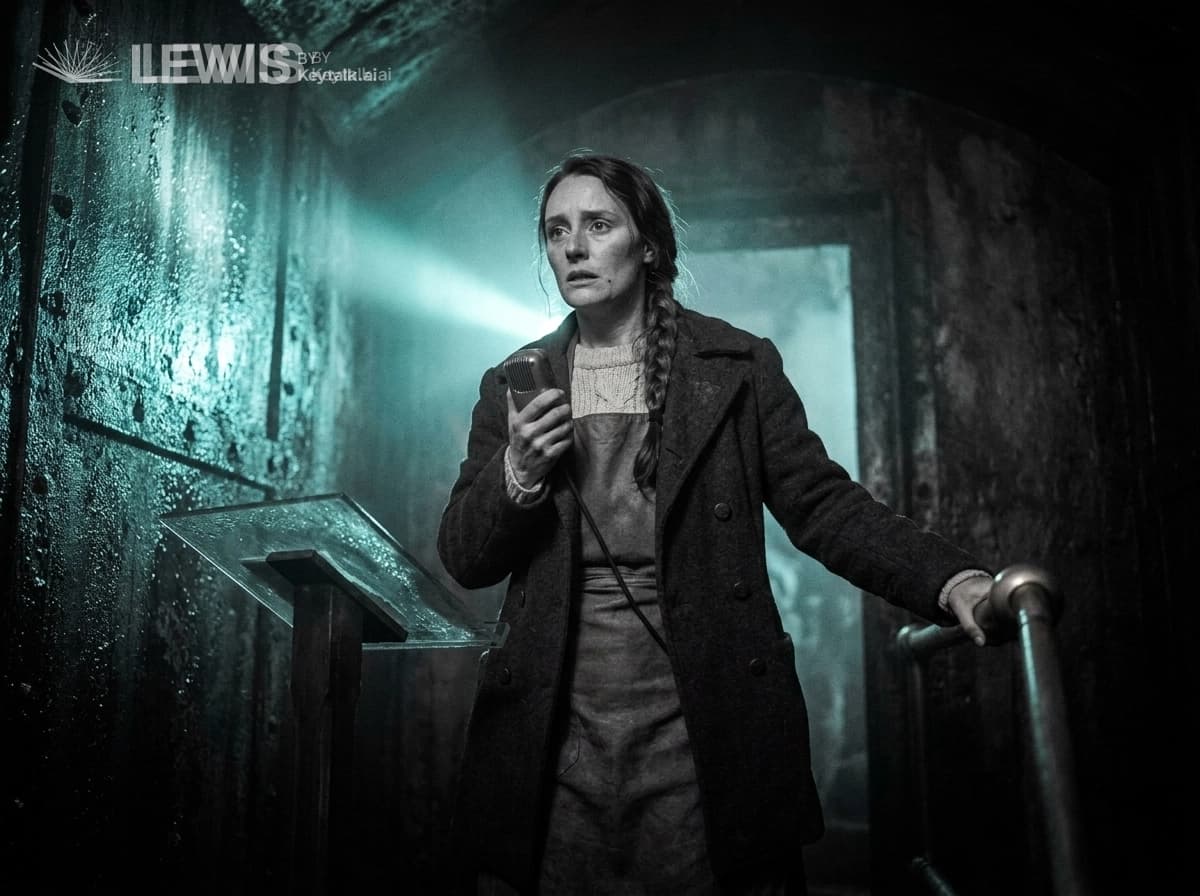
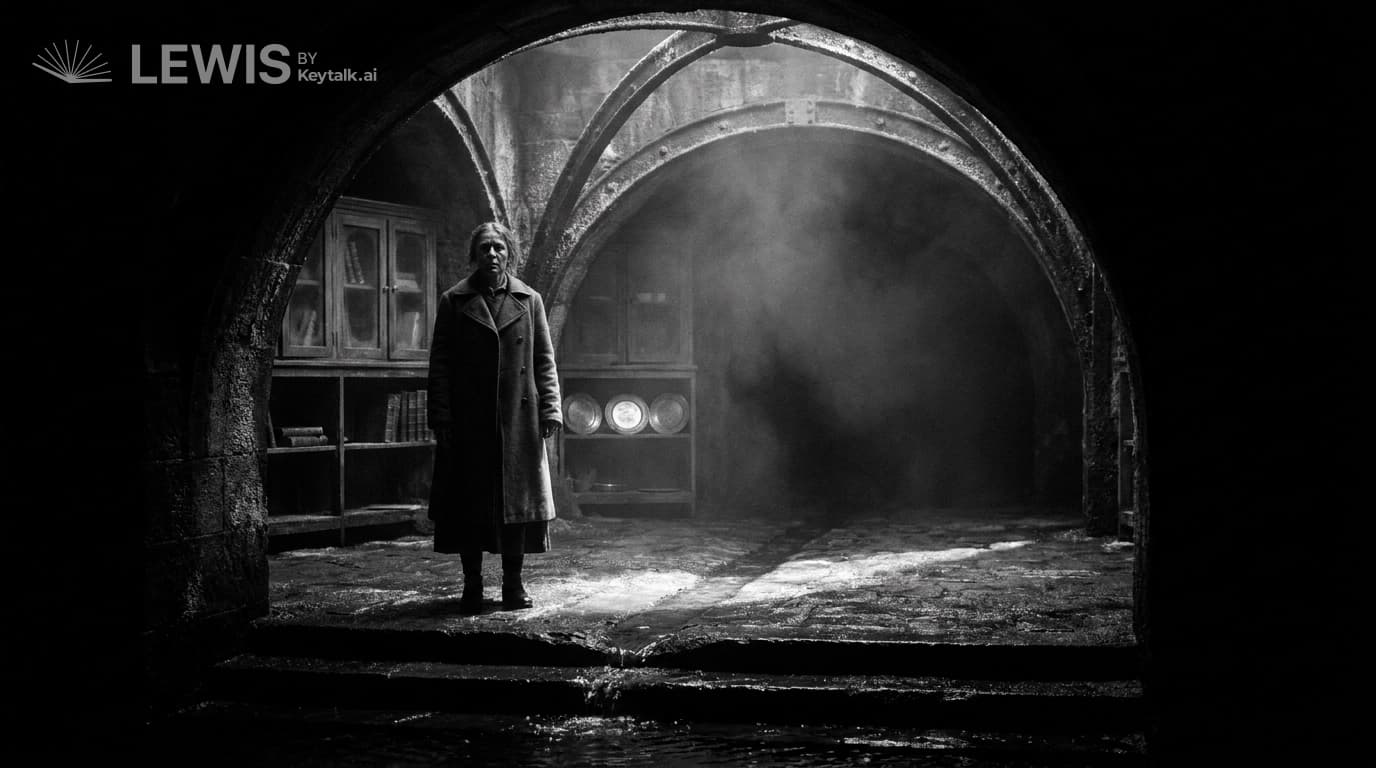
Down in the tide tunnel, Mara’s diver lamp catches metal in cold turquoise pockets and reveals what the island has been burying: not only old navigation signage, but fog-erasure field records embedded in the stabilizing grid, as if someone has been rehearsing a quarantine and refining it. The archive is protected against wrong timelines by corrosive time-salt and biofilm that rejects “incorrect” retrieval; the fog, now, is learning to lie the way a body learns an illness. Elowen realizes that if she tries to fix the fog by correcting the archive all at once, the identity fracture will spread outward—turning mainland towns into synchronized absences. She has to work in redundancy, not restitution.
That is when Seraphine Vale arrives in the periphery of the night, a fog-echo broker who treats other people’s missing history like contraband. Elowen has seen Seraphine only intermittently, always when the fog thickens and her radio static begins to form rhythmic bands like speech. Seraphine speaks in fragments of voices she can’t fully own, and when she approaches, the air tastes faintly metallic, like old coins and ozone. Seraphine offers Elowen a trade bounded by metaphorical contracts: if Elowen will relinquish certain recorded frequencies from the radio archive—externalized components that the fog already has—Seraphine can shift what the fog erases, moving the “anchor” from near the lantern room to somewhere else. The bargain is tempting precisely because it is partial. It promises mercy without forcing full remembrance, which Elowen desperately wants for the people waking each morning with blank eyes.
But Seraphine’s kindness has a price she won’t say aloud. Marek’s earlier caution surfaces as a sharper blade: a broker depends on externalized knowledge the fog has already chewed. If Elowen gives up records, she might save visitors today at the cost of making herself the fog’s new target tomorrow. Even worse, Seraphine flinches when Elowen’s voice appears on the radio—because Seraphine fears being discovered as the person who first loosened the fog’s boundary. Elowen senses that Seraphine doesn’t simply want to live with the fog; she wants to survive her own introduction of it.
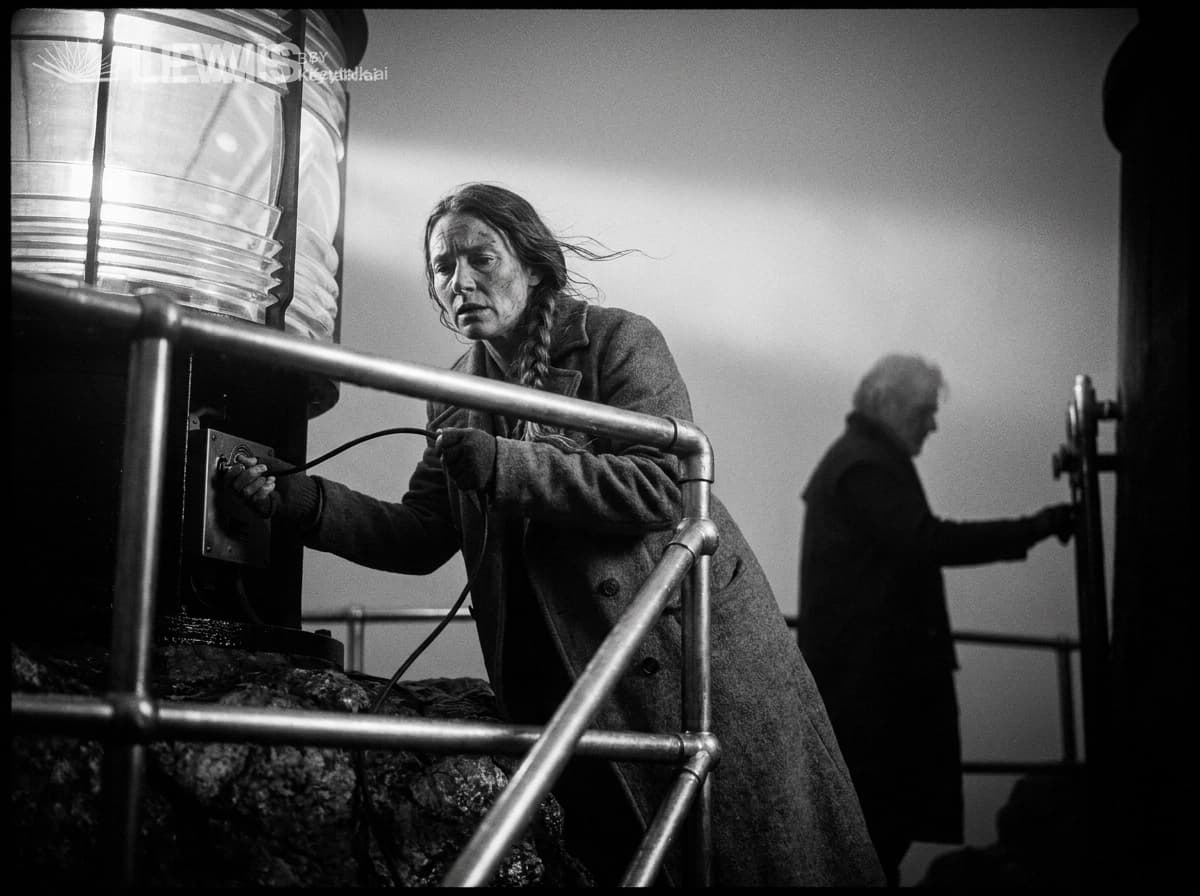
Reluctantly, Elowen agrees to test the trade with a thin, carefully chosen set of frequencies and artifact tags, while Mara insists on capturing everything redundantly so no one becomes an untraceable gap. The experiment seems to work for a night: visitors wake with slightly fuller fragments—names intact for the first hour, dates that don’t collapse instantly when spoken. The lantern beam’s amber core appears to “teach” the fog where to anchor, and for a moment Elowen allows herself the fragile hope that she can steer this ecology without breaking it. Then the fog thickens on the threshold night, and the light begins to misalign—not because she has tuned it wrong, but because the grid beneath the island is changing its health and the fog is learning the anchor’s pattern.
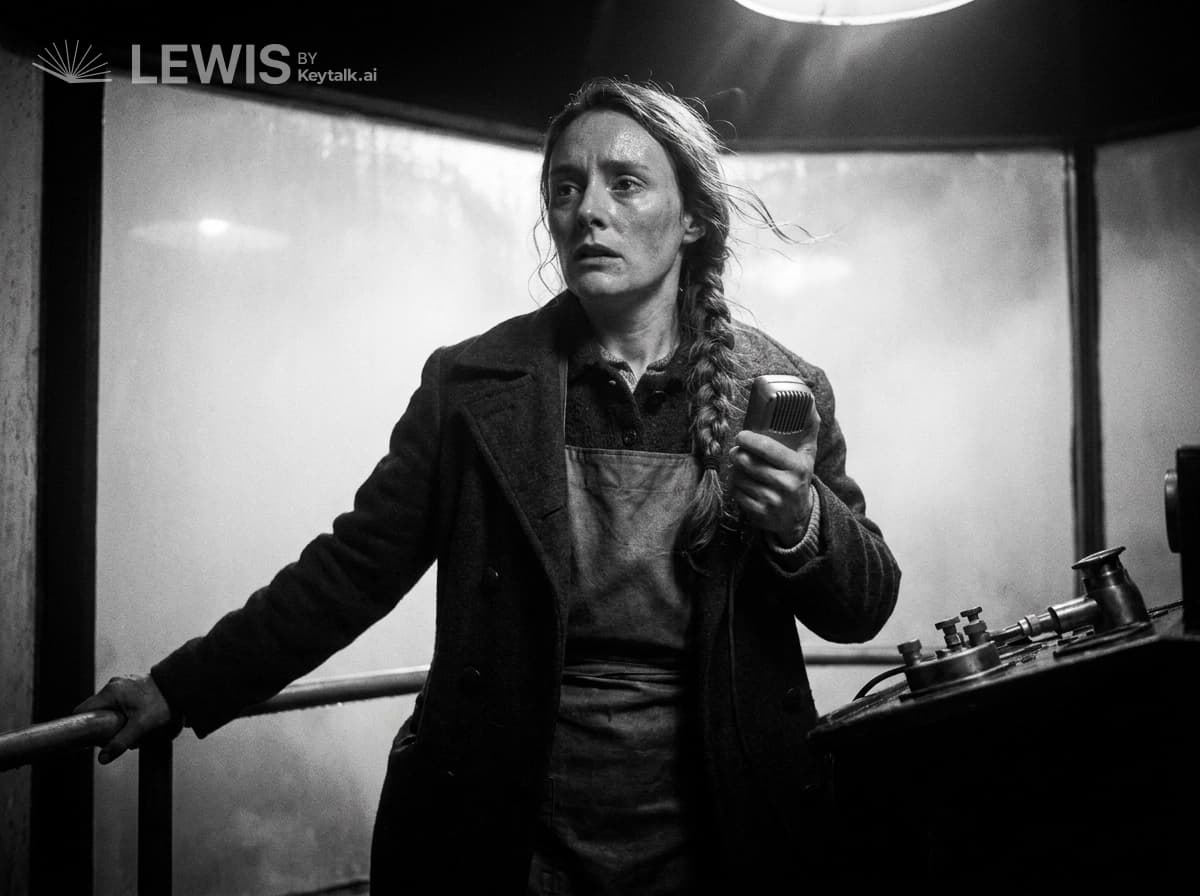
In the morning, a new failure is visible in the visitors’ behavior, not their eyes. They speak their full names into the radio by instinct—because the onboarding ritual expects it—and the fog reacts as if it has been waiting for that insistence. When Elowen tries to stop them, she notices something worse: her own logbook entry from the night before refuses to match the ink’s micro-hesitations. The pressure record shows her faltering where she’s certain she was steady. Her certainty decays like a tide going out too fast, and the fog is starting to erase the anchor itself. Elowen realizes the ticking clock is no longer about whether she can save other people; it’s whether she will still remember she is the only witness who can even understand what is happening.
Chaos intrudes in the form of Juno Brack, an improvised radio scavenger and runner for the mainland courier network, arriving exactly when the fog begins. Juno brings patched-together parts and urgency disguised as bravado, insisting he can get Elowen’s logbook out to the mainland—if she lets him copy it before the next cycle. He wants access to proof that will make bureaucrats believe, but he also fears being used as a conduit. Juno lies even when truth would save him, and Elowen can feel the danger in that habit: lies are contiguous too, they form sequences the fog can feed upon. When Juno attempts to steal a page from the logbook, the page warps under his fingers—not physically, but in meaning. He drops it as if it has burned him, and the radio static around them starts to form voices he can’t quite own. Elowen has to decide whether to protect Juno from the fog’s appetite or use him, briefly, as an external redundancy channel.
The climactic convergence builds through bitter negotiations and escalating tests. Marek, watching the misalignment worsen, demands Elowen cease broadcasting any further frequencies; he wants the archive untouched. Mara insists she keep captures small, because a global bulk restoration will produce drift no one can consent to. Tamsin warns that stabilization fields, if forced through identity fractures, can create a separate self that will resemble the restored memory yet fail to live it. Elowen’s internal need sharpens into an ethic: she wants to save without violating the fragile boundary the fog enforces, but she also wants truth to be more than a private weapon. Meanwhile Cassian Vell, maritime ordinance archivist and custodian of fog-erasure field records, arrives with the calm certainty of someone who believes ignorance is mercy administered through quarantine. Cassian frames Elowen’s remembered contradictions as a liability and argues that the fog should be treated as a field quarantine for a dangerous truth beneath the island. He wants to use her logbook evidence to “lock down” the wider world’s knowledge—meaning he intends to erase choice itself, not just remove confusion.
Elowen’s response is not rebellion for its own sake; it is an engineering solution shaped like a moral question. She uses the lantern’s light as a timing signal, the rule that defines where erasure will anchor first, and she turns it into a map—not of harm, but of responsibility. She and Mara decide to create redundant recordings of a single anchor event: one coherent sequence of names and dates that includes a stabilizable memory and excludes anything that would fracture minds violently. The anchor must be external enough to preserve, but bounded enough to avoid identity drift. To do this, Elowen recruits Theron Havelock, retired hydro-bibliographer and keeper of the island’s sealed fog-index in the submerged archive. Theron does not offer comfort; he offers method. He teaches Elowen to treat remembrance like a tide-table—measurable, containable, and dangerous—and he reveals that earlier attempts to “help the lost find their way back” spread the cost until strangers were paying for rescue they hadn’t asked for. His calm is rationed; his warnings feel like a hand on the back of Elowen’s neck, steering her away from the cliff edge she keeps pretending isn’t there. He also corrects her hesitations with startling tenderness, as if kindness can still be a tool even when the world is eating tools.
On the third threshold night, when the stabilization grid’s health has decayed enough that the fog can begin erasing the identity of the anchor, Elowen enacts a plan that is both technical and painfully personal. She prepares a consent-bounded stabilization broadcast through Tamsin’s field apparatus, but she refuses the mainland-wide cure Tamsin originally demanded. Instead, she broadcasts only to those whose consent can be inferred from their onboarding ritual—those who speak full names into the radio and carry stamped artifacts—limiting externalizing redundancy to a manageable subset. She also chooses to anchor herself, briefly, by forcing the logbook’s pressure-ink record to include one stabilizable sentence she can tolerate repeating: her own name, her role, and one single act of care she has already done for others. The fog, which feeds on contiguous recollection, cannot digest what she will not try to retrieve beyond that bounded sequence. She makes truth small enough to hold, and therefore small enough to distribute without fracture.
Cassian attempts to interrupt the broadcast at the last moment, using ordinance authority to seize the signal apparatus and claim that secrecy is the only safe kindness. Mara prevents him with practiced restraint and capture—she doesn’t harm him; she reroutes the equipment’s physical signal path into the underwater gallery where his access privileges fail and his certainty can’t translate into control. Seraphine Vale, sensing that her bargain is collapsing as the fog’s anchor behavior shifts, tries to bargain again through the radio, offering Elowen the illusion of moving the erasure elsewhere. Juno, caught between courier obligations and his fear of being used as a conduit, makes a choice that costs him his usual advantage: he runs the copied frequencies into the nearest sanctioned receiver so the broadcast reaches the intended consent-bounded recipients rather than Cassian’s intended silence. He doesn’t do it cleanly. The fog trims his narration, and the courier network later blames “signal interference.” But the message lands.
When the broadcast triggers, the lantern beam warms the fog into honeyed cones, and for a handful of minutes the island sounds different, as if pressure itself has learned to speak. Those who are stabilized wake with memories restored only in tolerable fragments: not the whole past, but enough to recognize who they are to each other and enough to feel sorrow without drowning in it. Some of them experience identity fracture—briefly, a separate self watches them from behind their eyes—but the fracture is contained, and the fog’s hunger slows because it can no longer find a coherent sequence to feed on. Elowen, however, pays the price of being the original anchor. In the moment when she repeats her bounded sentence—her name, her role, her act of care—she feels the world loosen. The logbook’s micro-hesitations soften. Her own certainty thins until it is almost chalky, like the matte fog outside the lantern cone. She realizes she has bought safety for others by sacrificing the continuity that made her the only witness.
In the aftermath, Elowen no longer remembers everything, but she remembers enough to choose again. Theron’s tide-table lesson holds: she can anchor without forcing a full return, and she can build redundancy so the truth doesn’t need a single mind to survive. Mara preserves radio residue and physical fragments in small quantities, refusing grand restoration. Marek, forced to accept that containment through ignorance is not protection but delay, helps coordinate a new ritualized onboarding protocol that treats consent and externalization as measured infrastructure rather than tradition. Tamsin, furious and relieved in equal measure, admits the cure framework can be adapted to smaller broadcasts; their ethics are compromised, but not discarded. Cassian disappears into the fog-index records he helped curate, leaving behind fewer field records than he intended—some of which, thanks to Elowen’s targeted redundancy, are now useless to him.
Seraphine Vale’s bargain also breaks—not with violence, but with irrelevance. With the fog’s anchor behavior redirected and the stabilization grid partially stabilized by redundant capture, the broker loses the commodity she sells: gaps that can be traded for obedience. In the new quiet, the fog still comes each night, because the island’s ecosystem has not been extinguished, but it arrives as weather again rather than a scalpel. Elowen watches visitors leave with nameplates stamped correctly and memories that will not collapse into dream. She walks the iron walkway under an amber core that now holds alignment more steadily, though she still checks it too often, as if the habit could keep her future self from forgetting what she once learned.
The final cost is held in a small, merciless detail: Elowen finds another logbook entry the next morning, written in her pressure-ink style, but it contains a sentence she does not fully inhabit—her own name paired with an unfamiliar choice. She recognizes the handwriting’s micro-hesitation as hers, yet she cannot remember making that choice. It’s identity fracture in miniature: a self that carries truth but can’t live it. Still, the existence of the entry is proof that the plan worked enough to outlast the anchor. She doesn’t have to be the only witness anymore; she just has to remain a custodian. And as the fog presses softly against the glass and the lighthouse light turns, Elowen accepts the bittersweet geometry of her survival: she will not force the whole world back into sequence, but she will keep building redundancies where mercy can take root, even if her own mind must become one more fragment spared from being erased.