筋書き
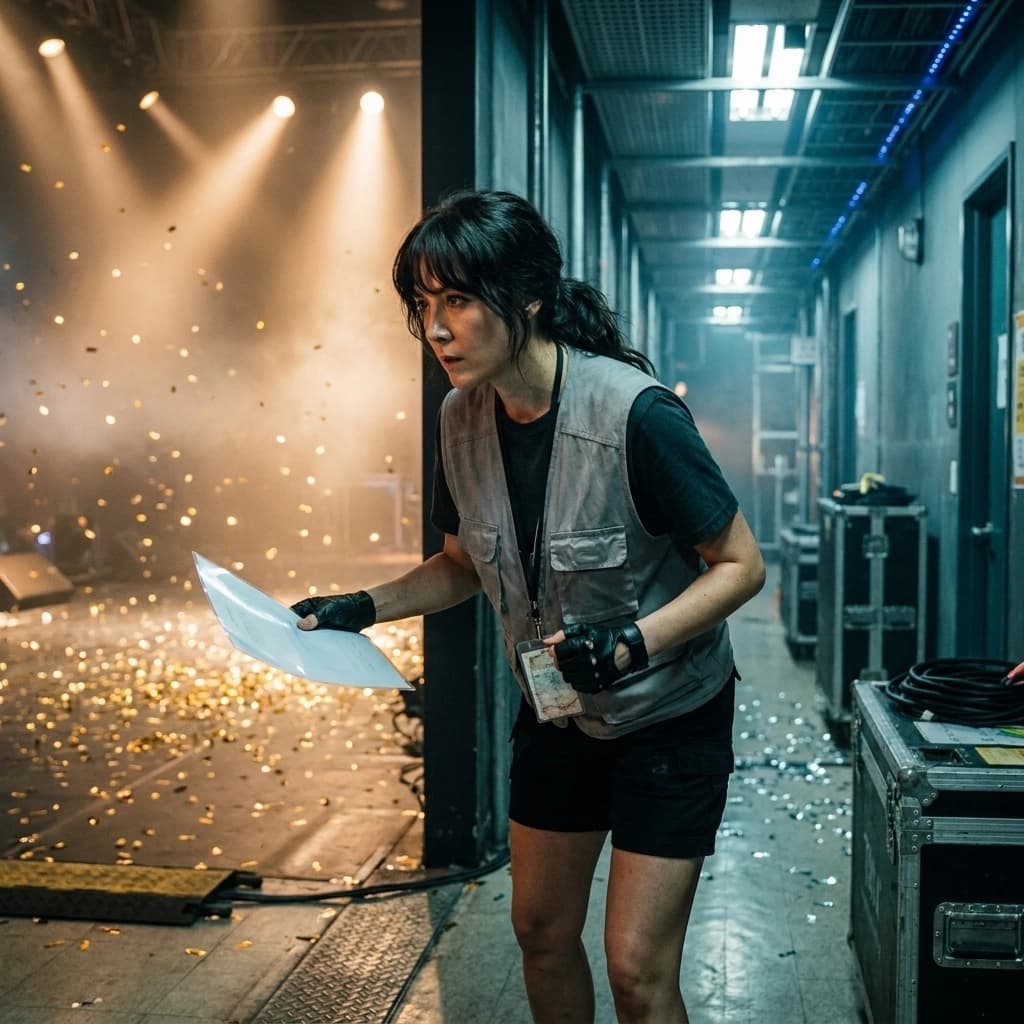
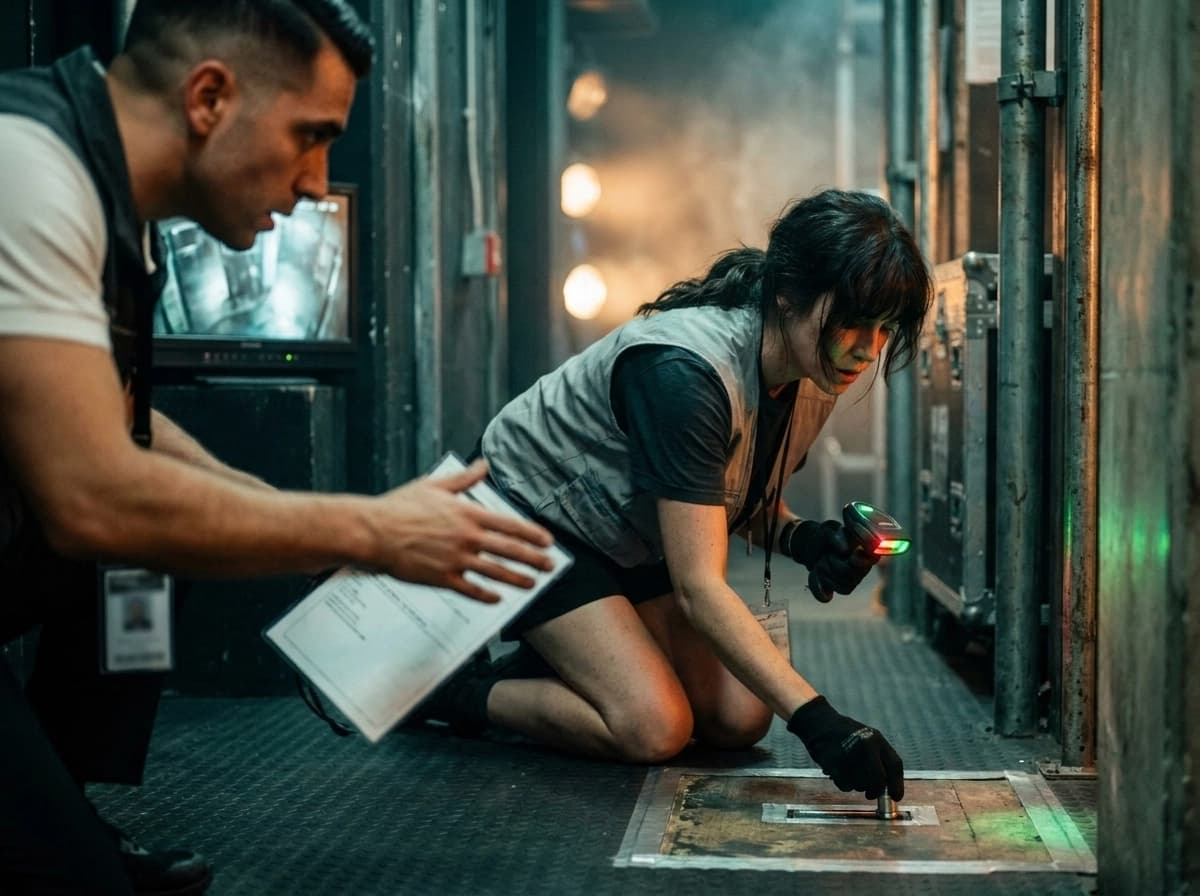
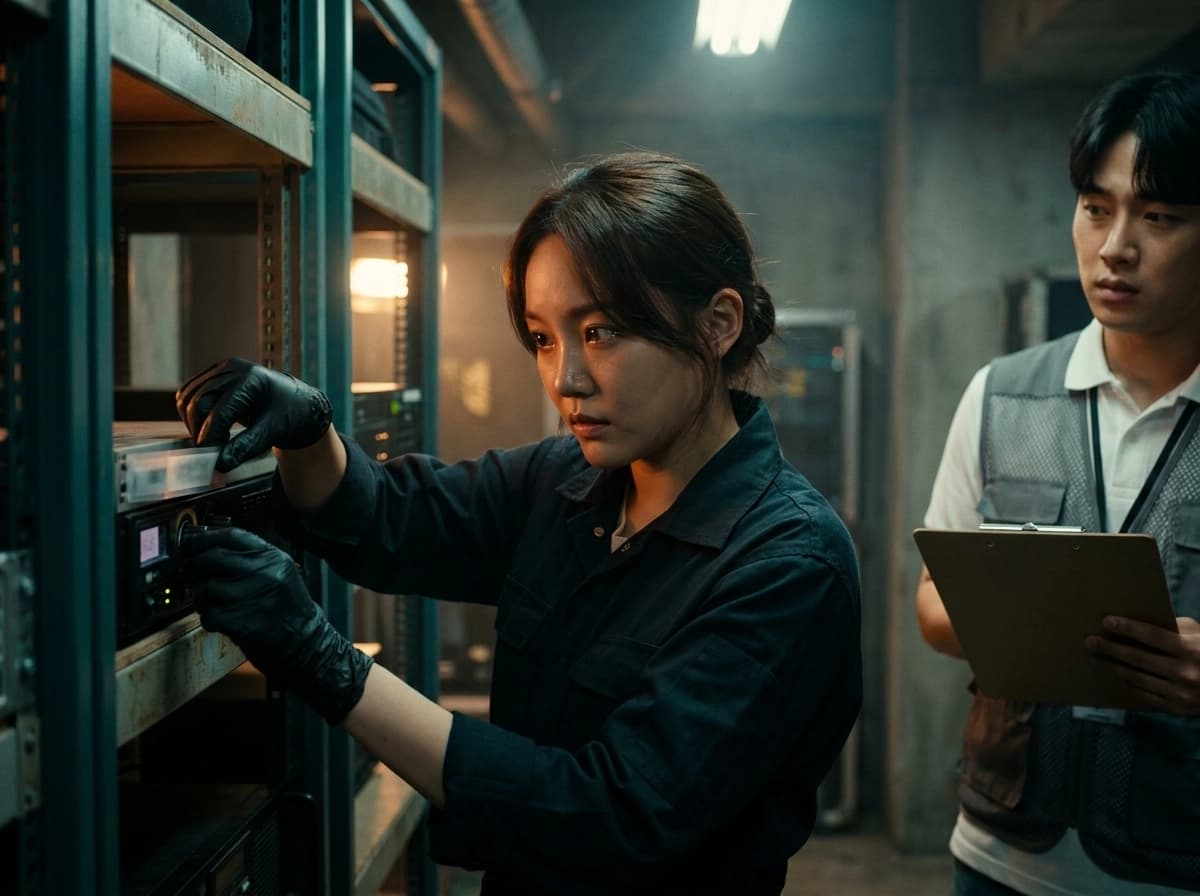
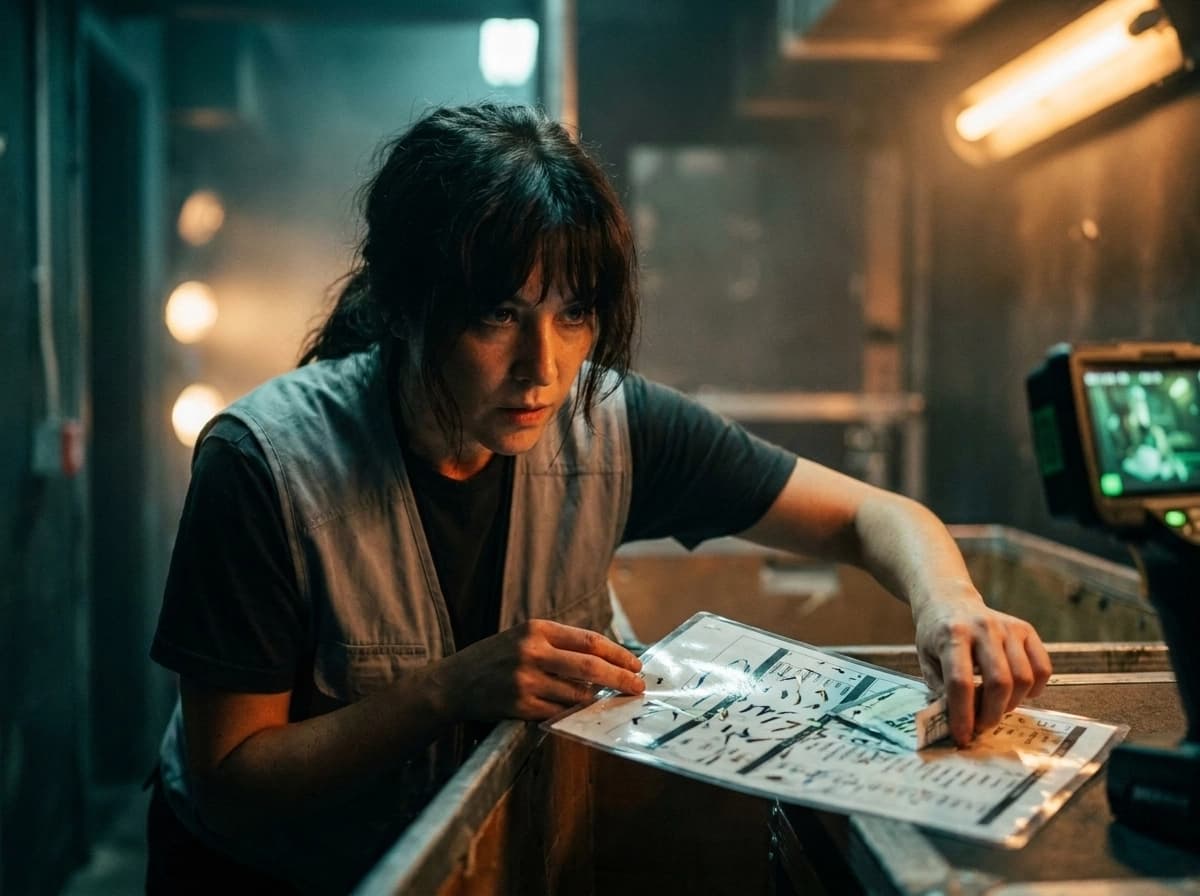
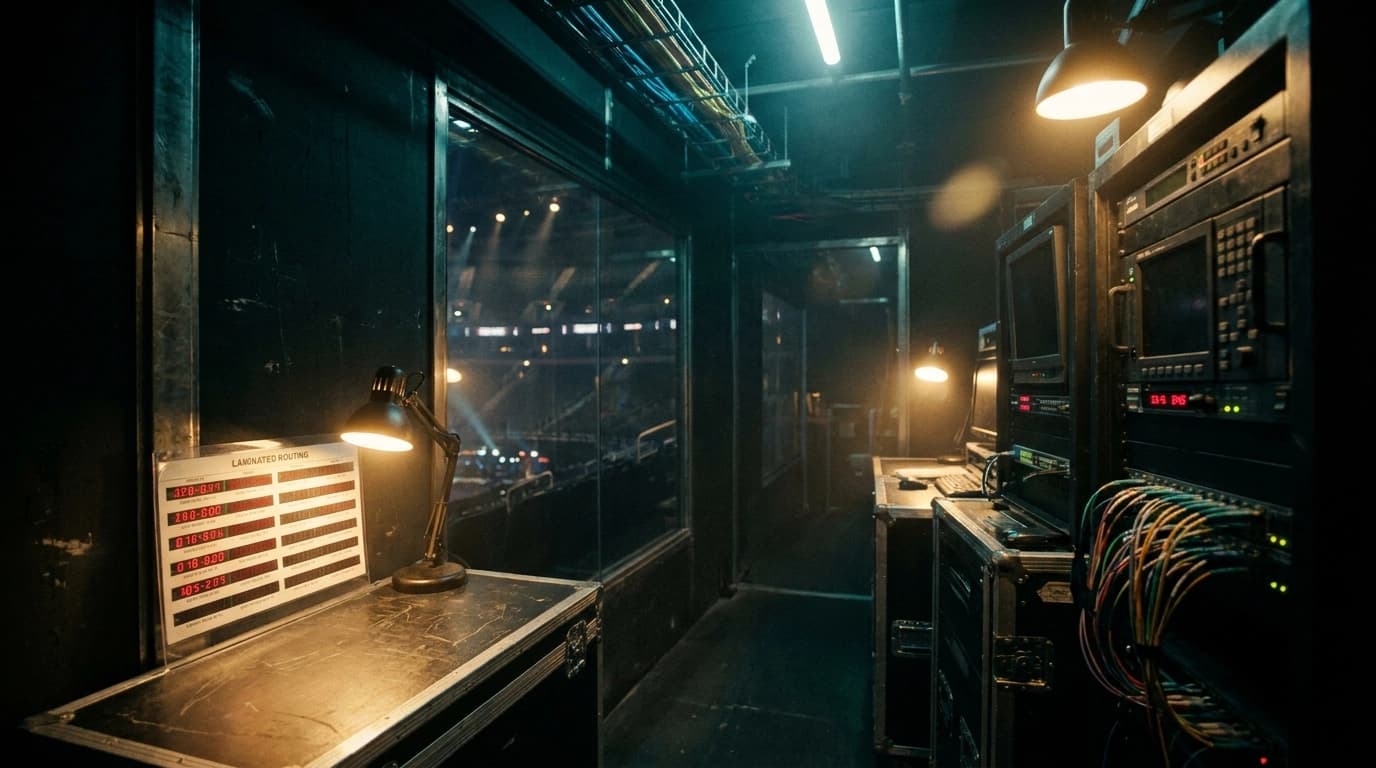
Late autumn, in the last ninety minutes before dawn at Glass Corridor Arena, 윤하린 is cradling a laminated run-sheet like it’s a pulse she can’t afford to lose. The venue’s Story-Linked Broadcast System has already started to wobble; the concourse wall strips keep updating themselves, but the printed paper in her hands insists on the older truth. She’s a mid-sized Teume fan-club intern, small enough that security tends to treat her as harmless—until the ten-second timing-alarm window turns one wrong step into a staff escort and a wiped badge that night. Her stage support badge is supposed to last her through the TREASURE encore, cue by cue, with three simple tasks: confirm the lighting transition, find the exact moment the backup mic channel should pair, and be at the right point on the suspended deck walkway when the camera operators need the cable swapped in the same minute as the cue’s lighting change.
She doesn’t notice the sabotage at first because she’s looking for people, not proof. She watches hands as she passes: a stagehand’s knuckles hovering over a cable sleeve, an operator’s thumb tapping a headset twice, a guard leaning just out of her peripheral vision at each door timing-window. She only fully realizes something is wrong when she reaches the laminated run-sheet’s last third and sees three performance cues missing—blank rectangles where black text should be. Her stomach drops in a quiet, physical way, like the stage deck has dipped beneath her feet.
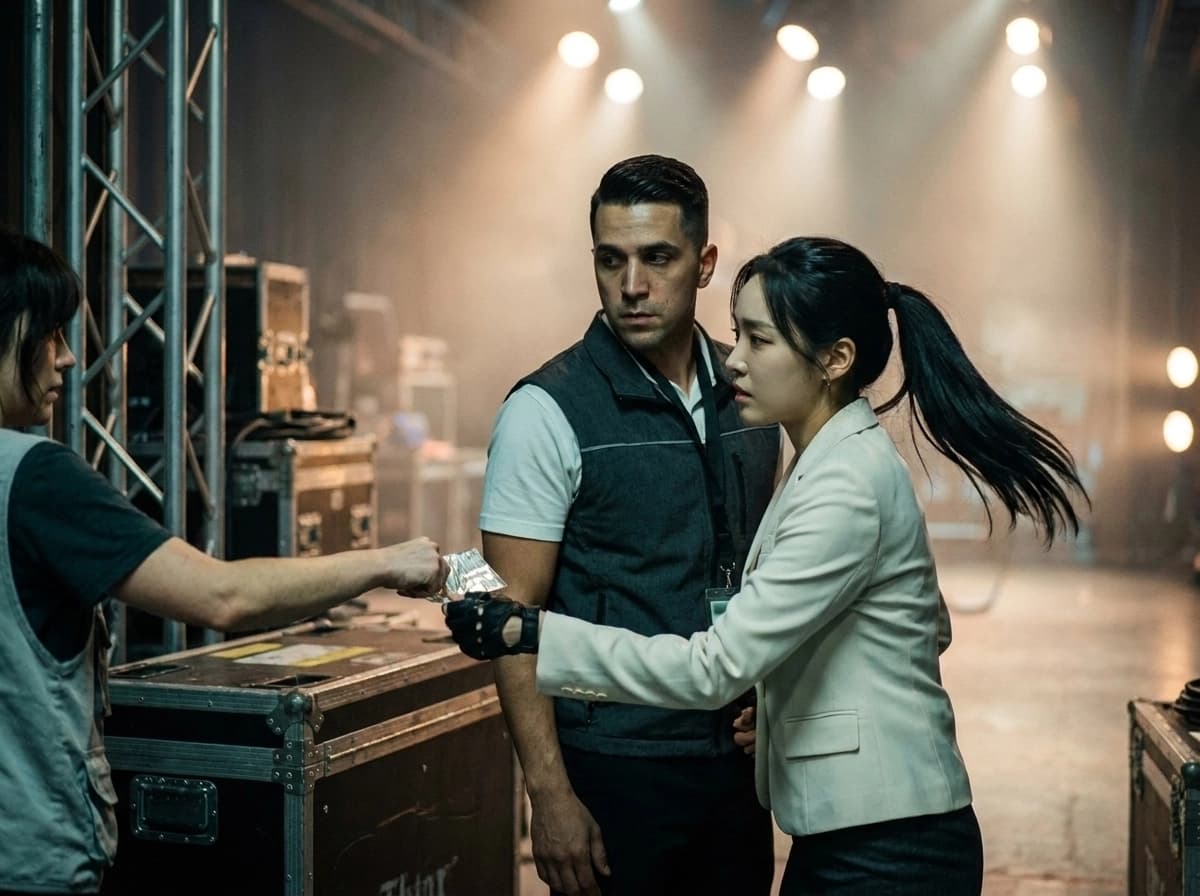
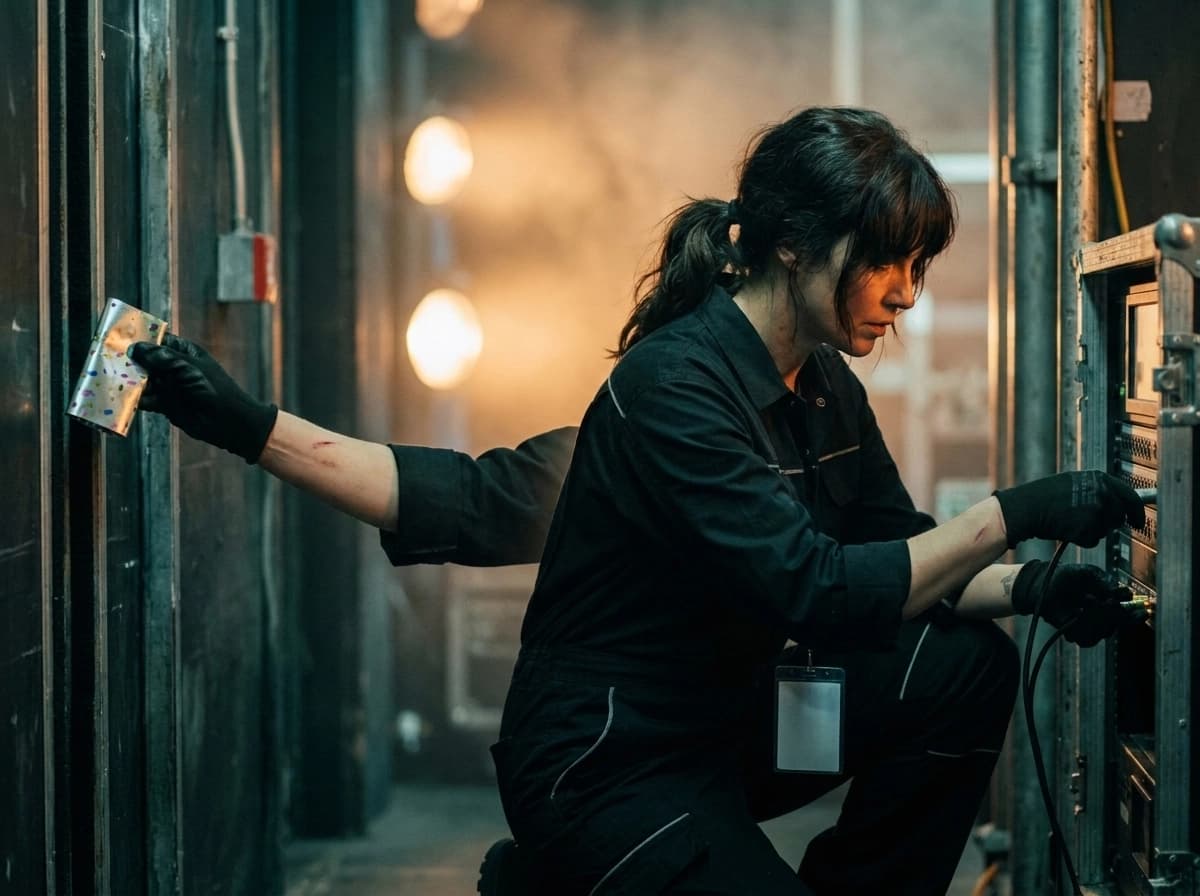
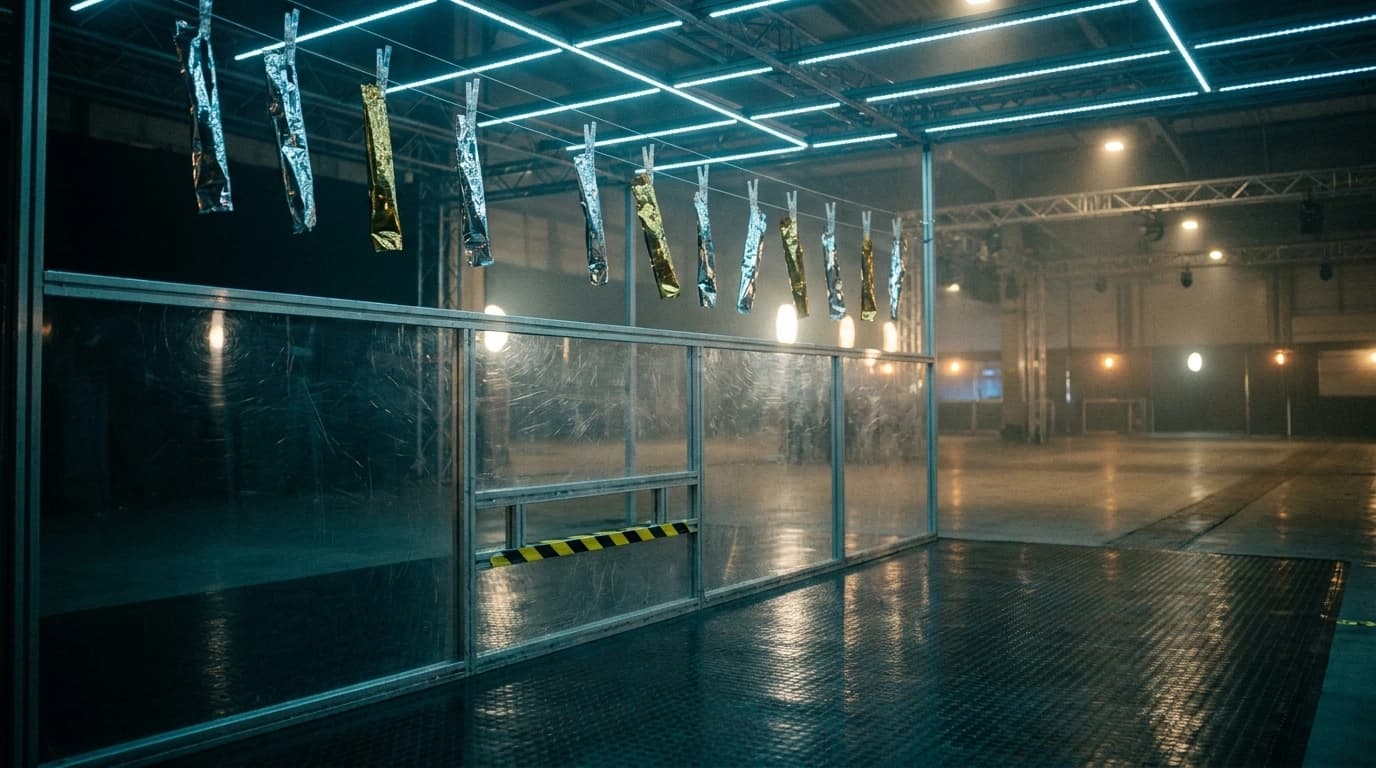
Two rows behind, 김민서—Teume fan-club official photo-book curator—tilts her head as if she knows the fall of 윤하린’s breath. She’s always been the kind of person who can make attention feel like a joke, but tonight her smile has an edge. When the audience’s warm spotlights arc across the stands, 김민서 lets a metallic confetti sleeve drift down near the aisle. The sleeve lands with a careful hush, as if it were meant to look accidental, and 윤하린 catches it on reflex. Inside the confetti paper-thin lining is a folded note, the ink written at a slant that matches 김민서’s usual habit of making serious things look playful. It’s not just a warning—part of it is instructions to ignore a specific line of her run-sheet, as though someone else’s “truth” is already in motion. 윤하린 grips the confetti sleeve so hard the foil bites her palm, and she forces herself to breathe through the sting so she won’t drop it before the next cue.
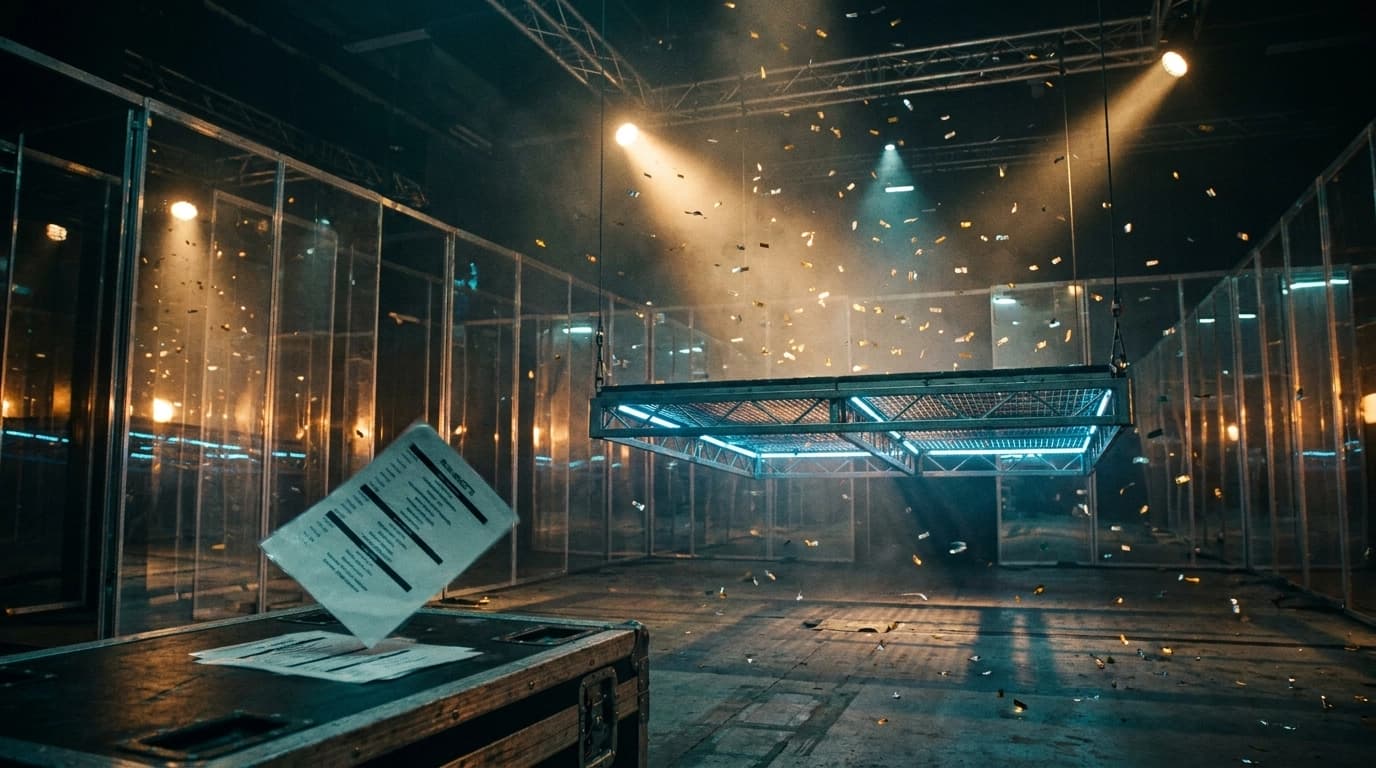
The missing cues aren’t only a problem of timing. They’re a problem of story. When the lights shift and TREASURE starts the encore, the stage haze catches the beam edges and makes the choreography look like visible handwriting. 윤하린 watches for the first discrepancy and sees it right away: a light transition lands a beat early, and the sound desk’s monitor—visible for a moment through a gray equipment bay door—shows a mic pairing that doesn’t match the encore’s second verse. She moves anyway, because standing still is worse than being wrong. She threads between seated fans with her badge held low, her sneakers whispering against the arena’s warm carpeting while the cold service lights glow under the suspended deck like operating lamps.
On the concourse, the layered doorways are a maze of mirrored acrylic partitions, each with that small silent timing-alarm window that flashes for ten seconds before it seals. 윤하린 knows the procedure. She knows the cost. She also knows what it feels like to lose corrections forever when an alarm has been triggered—she has watched other interns get escorted out, watched their eyes go blank with the sudden realization that the night’s chance is gone. So when 박주원 appears at the next service corridor—performing as a friendly staff figure but dressed like someone who always carries an extra minute—she doesn’t just pass him. She turns toward him and points at her run-sheet, showing the three missing cues.
박주원’s expression shifts the way a stage light shifts: warm on the face, cold underneath. He doesn’t argue. He steps closer, lowers his voice, and places a laminated slip beside her paper. The slip looks official enough to be mistaken for venue stock. It contains an alternate set of cues, timings that align to the lighting arcs she’s already seen. His tone suggests mercy, like he’s rescuing her from confusion rather than steering her into something. “The feed desynced,” he murmurs, and then his eyes flick to the nearest camera dome long enough for her to notice. “This will save you time.”
윤하린 reads the alternate times, and part of her believes him. Part of her does not—because the alternate list repeats the same two-second gaps the sabotaged schedule would have naturally created, like someone used her mistake as a template. She takes the slip anyway because she can’t afford to stall, but she keeps her original run-sheet hidden behind her hoodie, as if hiding the evidence could keep her from being rewritten by it.
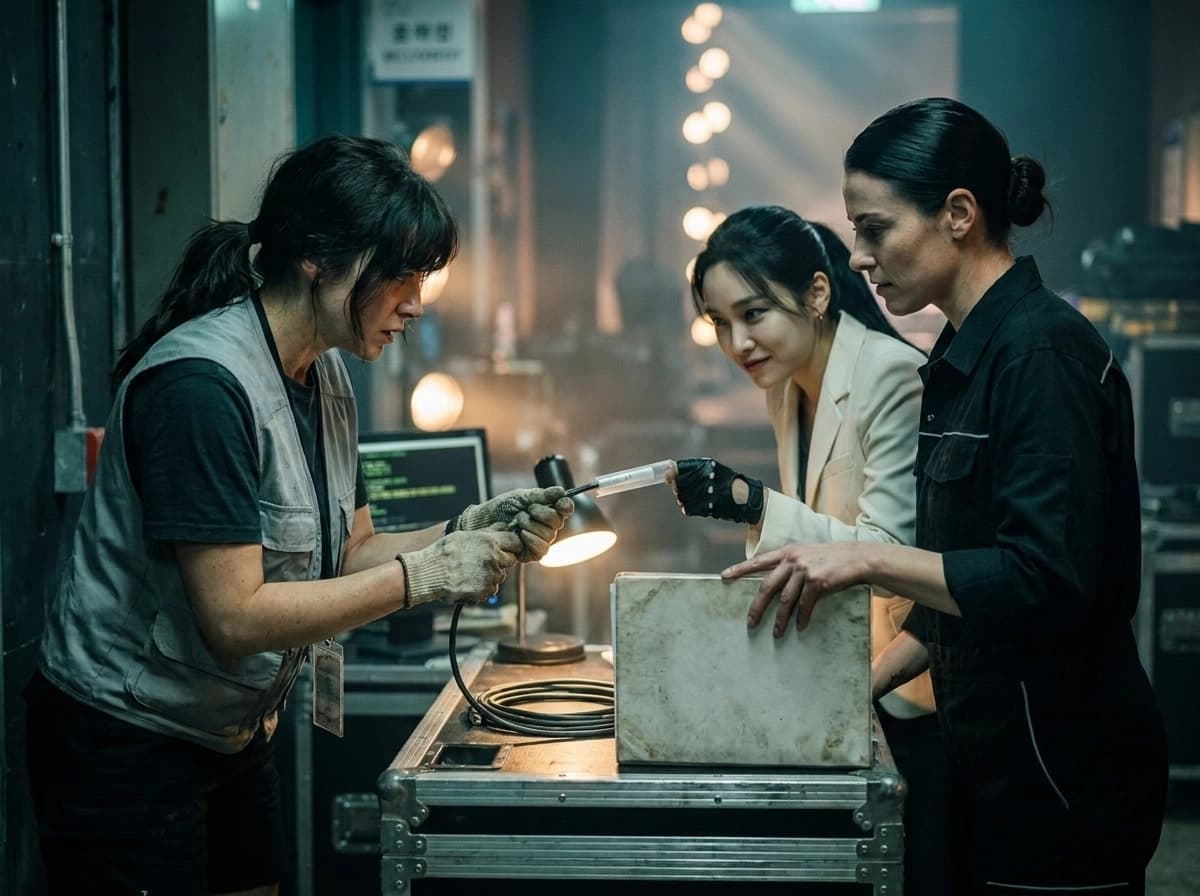
Her turning point comes at the moment she’s supposed to prepare for the backup mic problem. TREASURE goes backstage with a backup mic that won’t pair; the pairing delay is visible in the operators’ glances and the way the stage manager’s shoulders climb. 최서율, the TREASURE stage technology liaison, is already moving with rehearsed calm. She doesn’t scold. She laughs once—soft, quick—like she’s smoothing an invisible wrinkle on the air. “We’ll handle it,” she tells the nearest crew member, and her voice carries just enough warmth to keep panic from spreading.
But warmth doesn’t stop cable physics. 윤하린 sees the cable sleeve in the liaison’s hand has been swapped: not the length written in her run-sheet, and not the length the cue timing should demand. She hears the sound operator say, almost under his breath, that the channel pairing will fail unless the correct connector is swapped within the lighting change window. The whole system is coordinated narrative—light cues and microphone channels like threads pulled through the same needle—so one wrong swap doesn’t just make the audio wrong. It makes the performance’s story wrong, publicly.
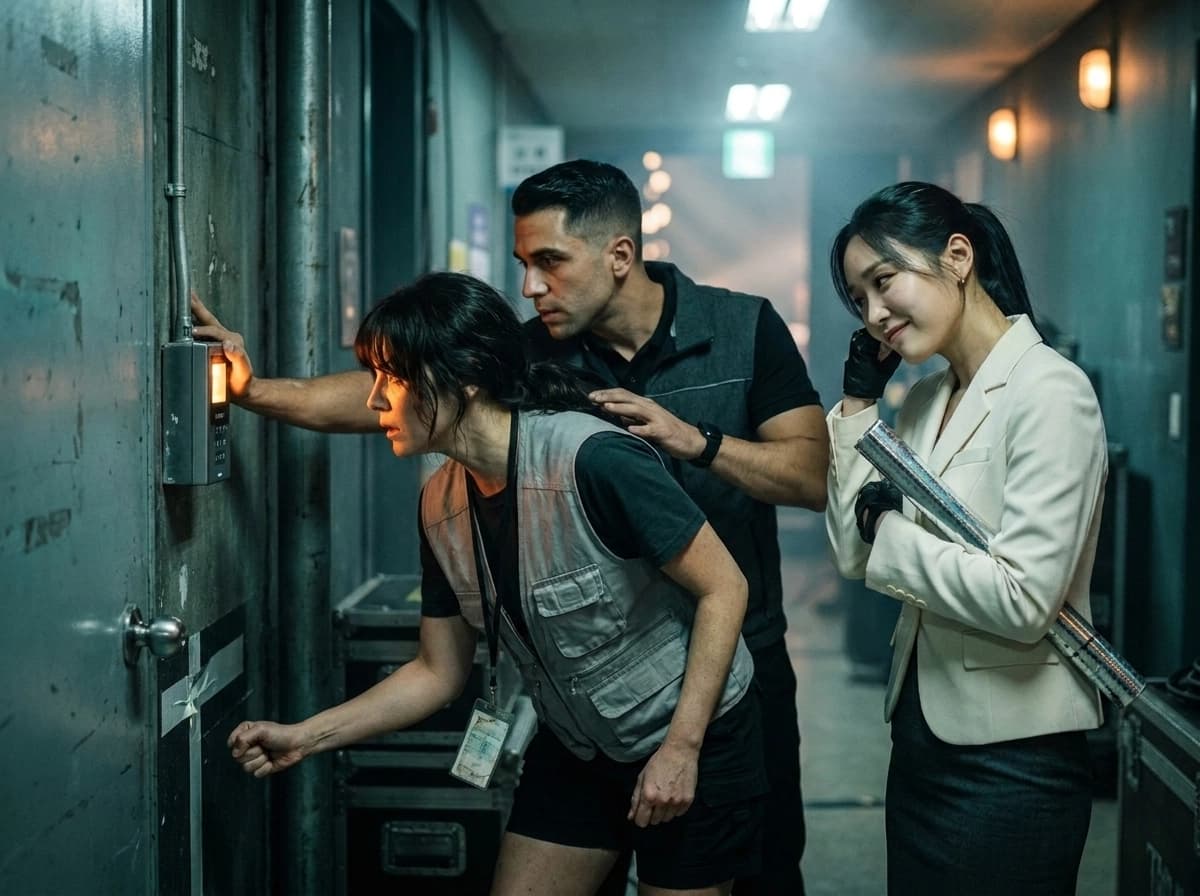
The sabotage’s shape becomes clear when 윤하린 steps toward the stage-side access panel and feels a guard’s gaze lock onto her badge. She has to physically move from seat to stage, swap the cable without getting caught by security timing-alarms, and do it before the cue’s lighting arc finishes drawing itself. Her internal need is simple and ferocious: she wants to see her bias up close without letting anyone else’s manipulation win. Her external goal is technical but brutal—swap the correct cable in the same minute as the lighting change and keep her badge intact.
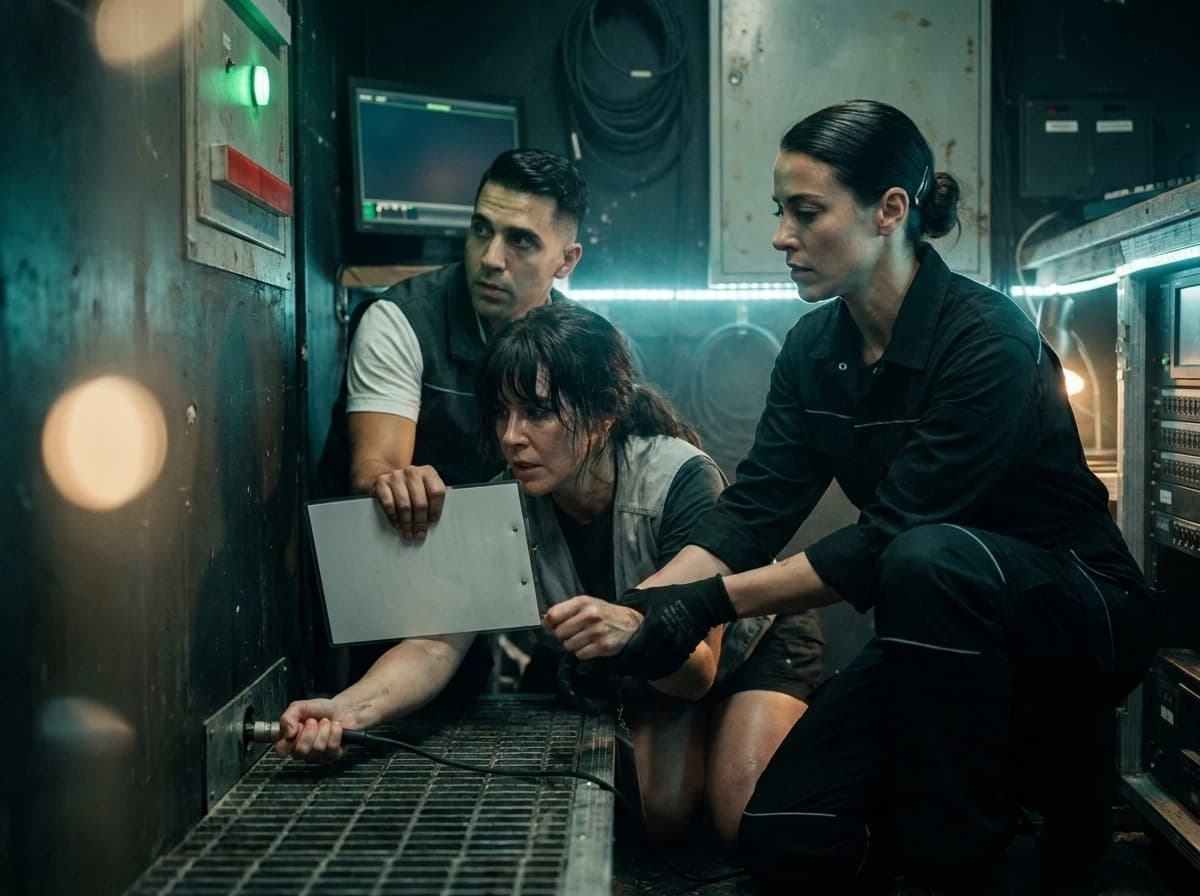
She uses the arena like a practiced map, slipping through maintenance crawlway doors only during their brief ten-second windows. Her hands tremble once when she reaches for the cable sleeve, then steady as she matches the connector end—length markings, tiny notch positions—against what her fingers remember from earlier rehearsals. She makes it to the stage deck walkway at the exact wrong time, because 박주원’s alternate slip has shifted her by a beat. The timing-alarm window at the door ahead is flashing, sealing itself in ten seconds, and she knows the distance to the next service panel is too long if she has to do it all in one go.
박주원 is there when she realizes she’s been nudged. He’s standing near the maintenance LED “veins,” holding a clipboard against his chest like a shield. For a moment, his face is almost apologetic. Then he steps forward and blocks her path with his body, not aggressively, but decisively—just enough that she cannot slip past before the alarm window closes. “That door locks in five,” he says, as if it’s a neutral fact. “Go around. Faster.”
The camera dome swivels a fraction. 윤하린 can’t move without triggering an alarm, not with the guard timing her breath. She looks at his clipboard, and for the first time she notices something wrong: the edge of a confetti-like metallic sleeve stuck between pages, its dull silver catching the cold service light. It’s the same kind of metallic confetti 김민서 used, but it’s not in her hands now. It’s on 박주원’s paperwork, as if he’s been carrying the sabotage’s signal in plain sight.
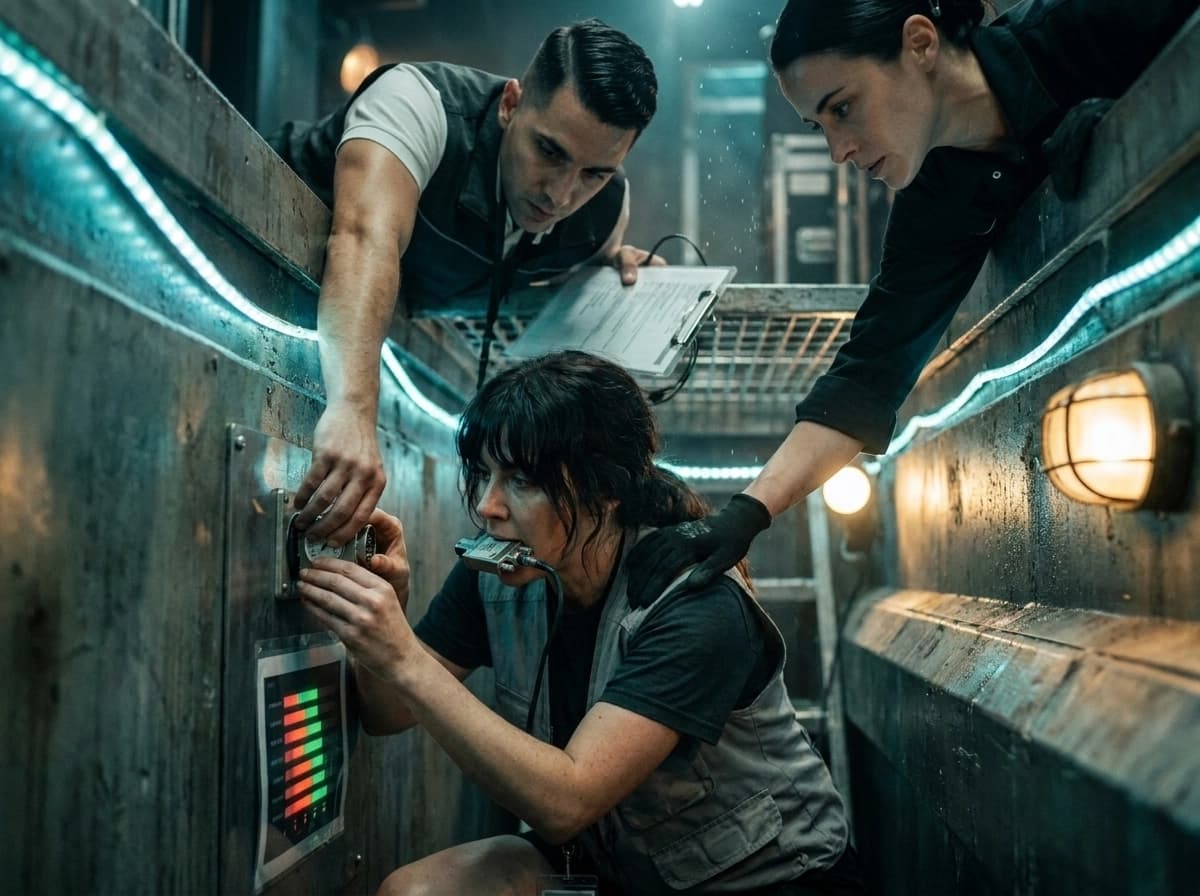
윤하린’s anger doesn’t make her reckless. It makes her precise. She steps back half a pace, watches the guard’s eyes, and then makes a choice that costs her comfort: she breaks procedure in a controlled way by using her own badge-suture logic. She re-centers her route not around the blocked door but around the stage deck’s maintenance crawlway under the suspended deck, where service lights are dimmer and camera lines are narrower because of the mirrored acrylic partitions above.
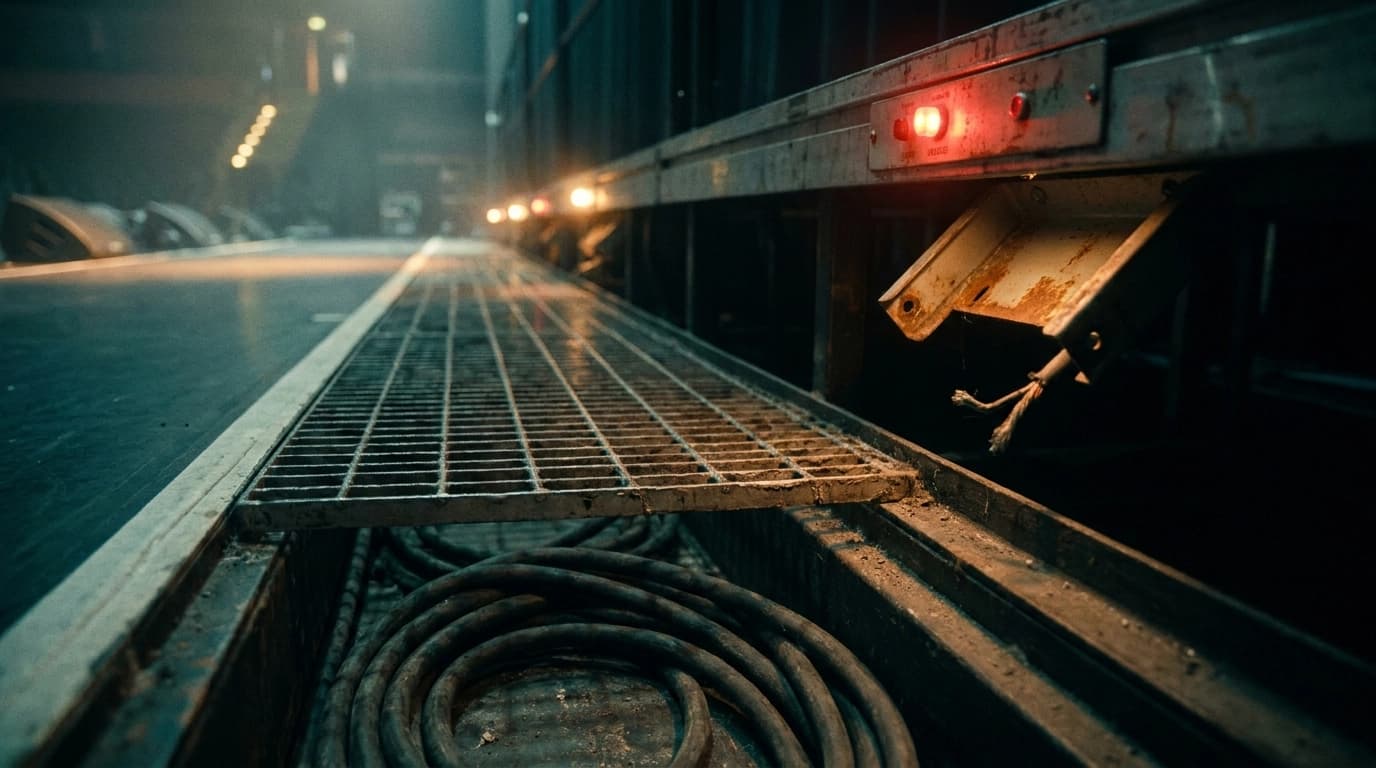
She pulls herself under the stage deck, the air cooler and smelling like dust and fresh rubber cable sleeves. Above her, TREASURE begins to hit the encore’s next segment, and the stage sound rushes down through the deck gaps. Her hands find the cable sleeve connection point by touch—connector edges warm from recent handling, cable sheath slick under her fingertips. The swap is fast, but she isn’t alone under the deck for long. 최서율 appears at the crawlway ladder, her face calm in the harsh cold. “You’re early,” she says, as if they’re sharing a joke.
Her calm is what makes 윤하린 suspicious. 최서율 knows the schedule. She knows the cue windows. Yet she’s been “helpful” in ways that keep 윤하린 just slightly delayed, just slightly off the best route. 윤하린 feels that she’s being nudged again, not by obvious force but by timed kindness. The two women stare at each other in the crawlway’s tight space—warm eyes on cold metal, the sound of applause thudding through the deck above.
Then 김민서 slips into view from a side service opening, holding her phone low like it’s only for checking photos. She doesn’t look shocked to see 윤하린 under the stage. She looks determined. “Don’t get caught,” she says, and the words are almost a plea, not a command. Her foil relationship with 윤하린—promises made, hearts kept out of sight—surfaces in her body language: she’s always wanted to stay responsible for what’s “true,” but she’s made compromises before.
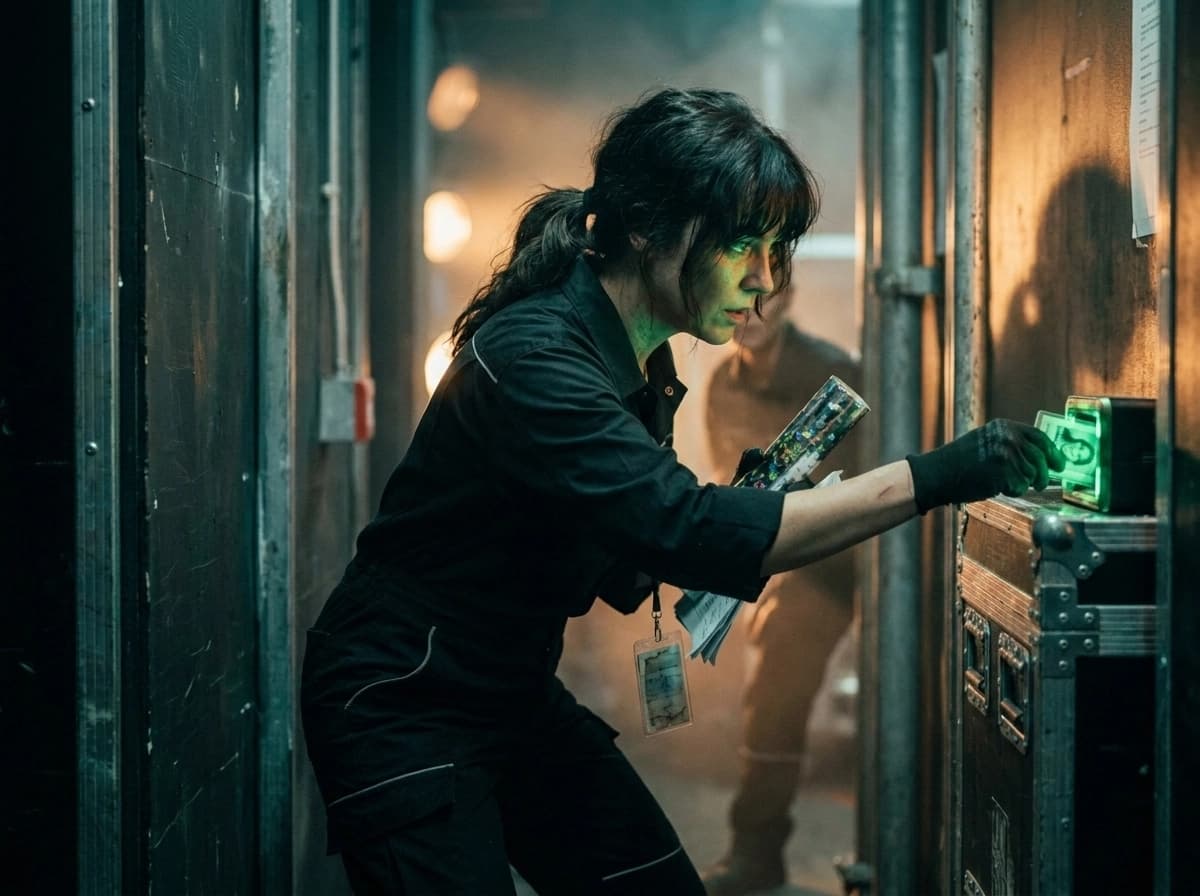
김민서’s hand moves first. She presses a small metallic confetti capsule into 윤하린’s palm. “This opens the side access bin,” she says, pointing to a numbered bay with a latch that should be locked. “But only for the time between the lighting arc.” Her humor returns as a cover—she winks when she shouldn’t—but her eyes don’t match. She knows what she’s doing. She knows it’s risky. And she also knows why she can’t let 윤하린 see the full schedule: because it’s not just a technical sabotage. It’s a fight over what the encore is supposed to mean.
In the same breath, 박주원’s shadow stretches across the crawlway floor as he leans into the opening, as if he came to “check” after hearing something. He sees the confetti capsule in 윤하린’s hand. He doesn’t call her out with anger. He just raises his clipboard—blocking her line of sight again—and tells her she’s in the wrong place. “Security will take over,” he says, voice steady, like he’s reading from a playbook. “Let us handle it.”
윤하린’s frustration flares into clarity. This is the trap: not the alarm itself, but the way the trap uses the fear of the alarm to make her accept someone else’s version of the cues. She remembers the missing three performance cues on her run-sheet. She remembers how the alternate timings “helped” her too neatly. She remembers that the confession-like symbolic slips in venue operations always arrive when someone is about to fail.
So she does something she wasn’t planning to do: she refuses both the official route and 박주원’s “mercy.” Instead, she shoves past the clipboard with her shoulder, grabbing the numbered access bin latch and pulling the side door open in the ten-second timing window, capsule in hand. The latch clicks too loudly in the enclosed space. A guard’s head turns above. The countdown is real. 윤하린 can feel the venue clock in her teeth.
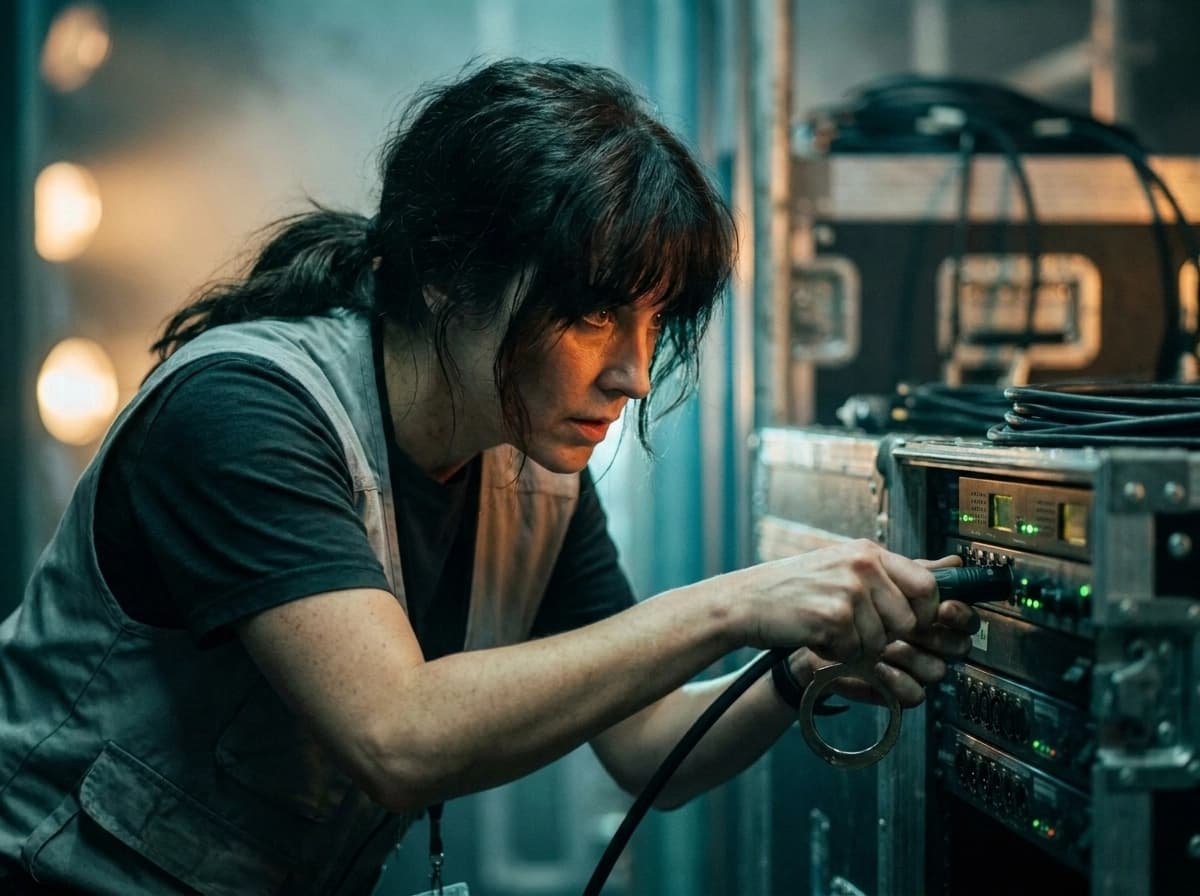
Cable exchange comes down to one clean, visible action. She yanks the wrong backup-mic cable away and snaps in the correct connector with a pressure that makes her knuckles ache. The connector clicks like a lock turning, and above, the stage sound desk’s monitors flicker. She hears the audio operator suck in a breath—a change in the way the room sounds when the right channel finally pairs. The lighting cue arc finishes drawing itself across the stage haze, and the microphone now rides the correct channel. Onstage, TREASURE’s next lines land without the awkward gap that would have ruined the story beat.
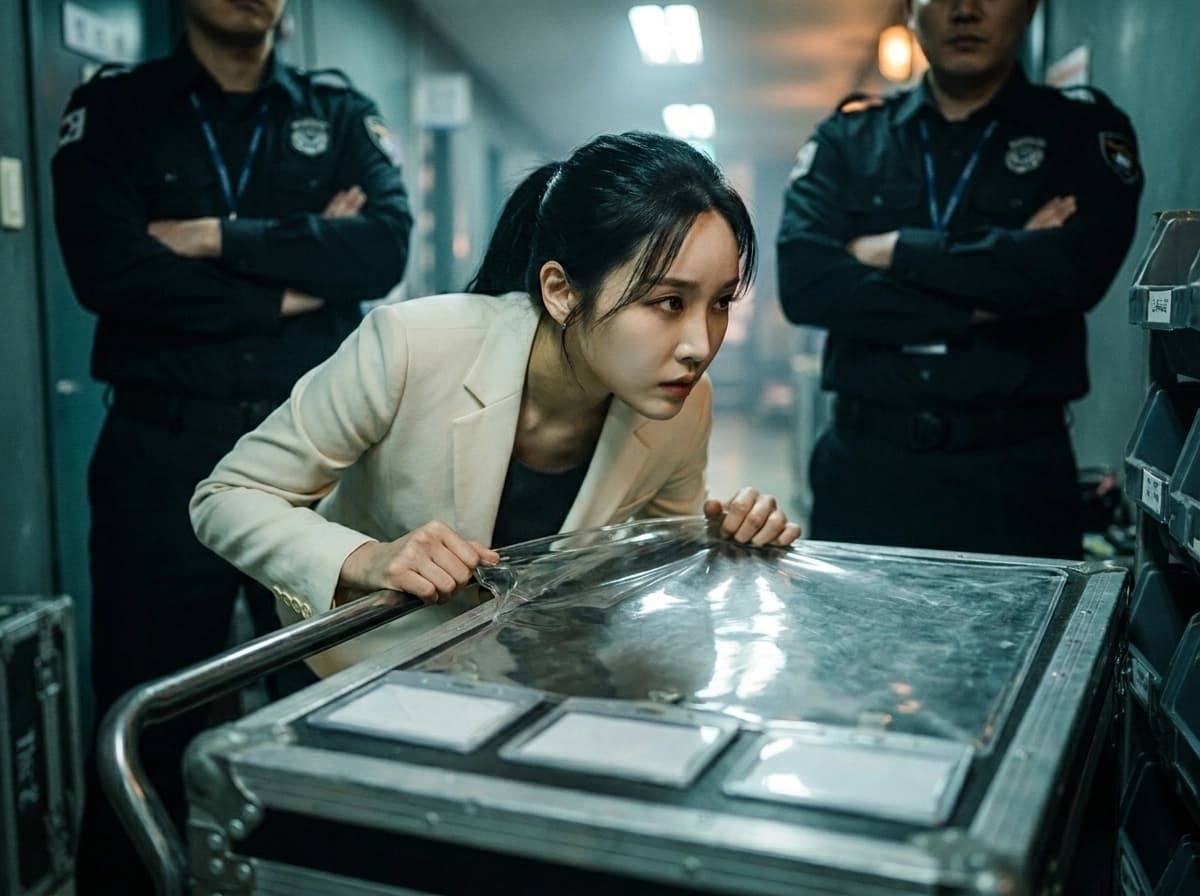
But success doesn’t mean safety. Metallic confetti is evidence if it’s deployed outside approved prop-releases, and the venue treats vigilant behavior differently when it detects it. In the stands, the confetti sleeves already used by 김민서 are counted by someone’s checklist—윤하린 sees a guard’s flashlight beam sweep the aisle as he searches for “unregistered signals.” 노아야마’s influence becomes clear at that exact moment. He is visible only in fragments at first—an open prop case on a maintenance cart, a glitter of gold confetti under warm audience light, a laugh where a stagehand should only be breathing. He slips a new golden sleeve into place near the service entrance, acting like he’s delivering a harmless prop release for the story, but in the way only someone designing stage reality would: timed so the security guard’s attention shifts to the sleeve count rather than the access door she just opened.
노아야마’s trick buys seconds, not freedom. 윤하린 sprints back up the crawlway ladder as the side door tries to seal and nearly catches her sleeve. She doesn’t look at the guard; she looks at the stage edge and runs to the stage support panel where 최서율 expects her to be. 최서율 is already there, smiling like she knew she’d arrive. “You made it,” she says, and for the first time her warmth doesn’t reassure. It assesses.
윤하린 looks at the backup mic display and the connector’s labeling. It’s correct now. The system’s story linkage works. Yet the sabotage isn’t finished. Because when the encore approaches its final beat, the stage manager calls for a specific handoff to cue the last line, and the cue window is one of the missing three. The run-sheet cue is absent in 윤하린’s paper, but the lighting arcs and sound monitor updates are now aligned incorrectly anyway—suggesting another layer of tampering beyond missing text. Someone doesn’t just want the encore to fail; they want it to reset publicly, wiping the chance to see the bias up close before dawn.
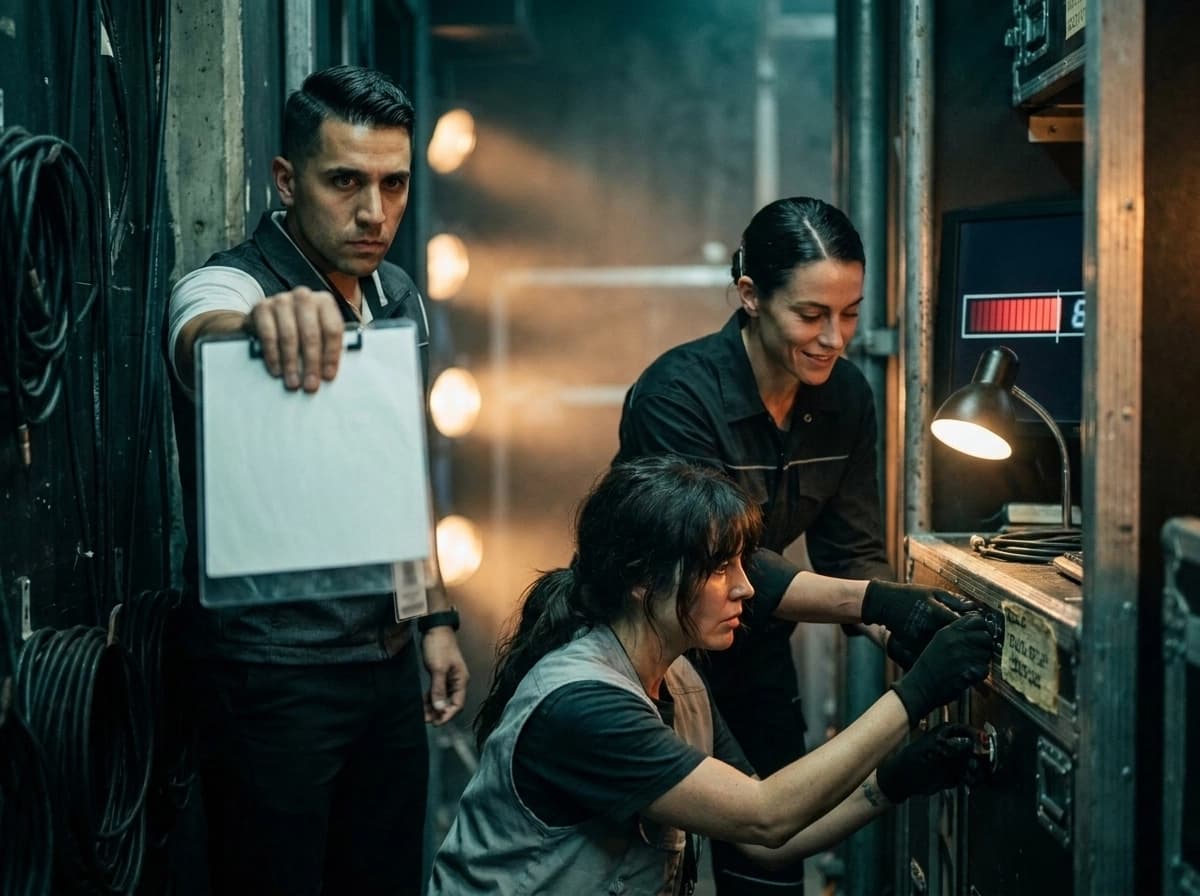
At this point, 박주원 steps into the same room as the protagonist again—no longer in corridor distance, but right at the access panel where security will have to decide who is responsible. He confronts 윤하린 with his clipboard and a prepared explanation. “You went off-script,” he says. His voice is measured, almost kind, and he gestures toward the confetti evidence and the capsule route. “If we correct it again, you’ll miss backstage access entirely.”
윤하린 could argue. She could point out the missing cues and the alternate slip. But her proof is fragile—paper evidence, a confetti capsule that can be used as evidence against her, an access door that should have stayed sealed. She realizes that the sabotage’s final move is to force her into a single confession: either she admits she broke procedure and loses her badge for the night, or she keeps insisting on the truth and gets taken away before she can deliver her fan-made project at dawn.
Her fan-made project is the true external urgency threaded through the technical problem. She promised the members backstage in a careful note—sent earlier, sealed with her signature—that she would deliver a handmade banner and a set of printed letters compiled by fans at dawn. If her badge is wiped and she gets escorted out, her route to the backstage delivery bay is gone. The encore must not become a public reset, because the only way she’ll get the dawn access is if she stays inside the backstage arteries until sunrise.
So 윤하린 chooses a third way: she doesn’t try to “win” by proving innocence. She wins by redirecting the story linkage back toward correctness before anyone can declare a failure. She turns to 최서율, who is still smiling too steadily, and physically hands her the original run-sheet with the missing cues visible. “If you know the correct story,” 윤하린 says, voice low enough to avoid triggering raised security volume, “tell me which three cues you removed.”
For a moment, 최서율’s eyes flicker—painful, human. She’s been protecting someone’s plan by acting like it’s technical necessity. Her belonging to the backstage team and her exile from full truth war in her expression. She could lie again. She could protect the narrative. Instead, she pulls her own one-page note from her pocket—exactly one page, with a line missing where a signature should be, as if she’s allowed only partial honesty. She slides it toward 박주원, not to accuse him, but to force him to react. “Check the cue windows against this,” she says.
박주원 reaches for the note. His fingers tighten. That tiny movement tells 윤하린 everything: the notes aren’t meant to be checked; they’re meant to be used as a cover. His attempt to control interpretation fails for the first time.
김민서 steps forward then—not as an ally, not as a rival in the romantic sense, but as someone finally tired of letting her own gallows humor be armor. She opens her photo-book case and pulls out an old prop sleeve—one that’s normally empty until someone fills it with staged confetti. Inside, she’s been hiding a small strip of physical cues she copied earlier from the run-sheet feed before it desynced. She hands it to 윤하린 with both hands, as if offering a fragile truth. “It doesn’t match the story,” she says, echoing what she’d been trying to warn. Her words land like a confession that’s been waiting all night.
The climax turns not on dialogue but on a decision visible to security. In the narrow backstage bay, security arrives because alarms triggered earlier are now summoning staff to verify evidence counts and cue alignment. 박주원 tries to claim that 윤하린 is the source of the disorder. 최서율 tries to step between them with calm professionalism. 노아야마 steps in with another sleeve, trying to keep the attention on confetti counts and away from the access door logs. The room fills with moving bodies—guards, staff, fan curators—each person’s position narrowing what someone can physically do.
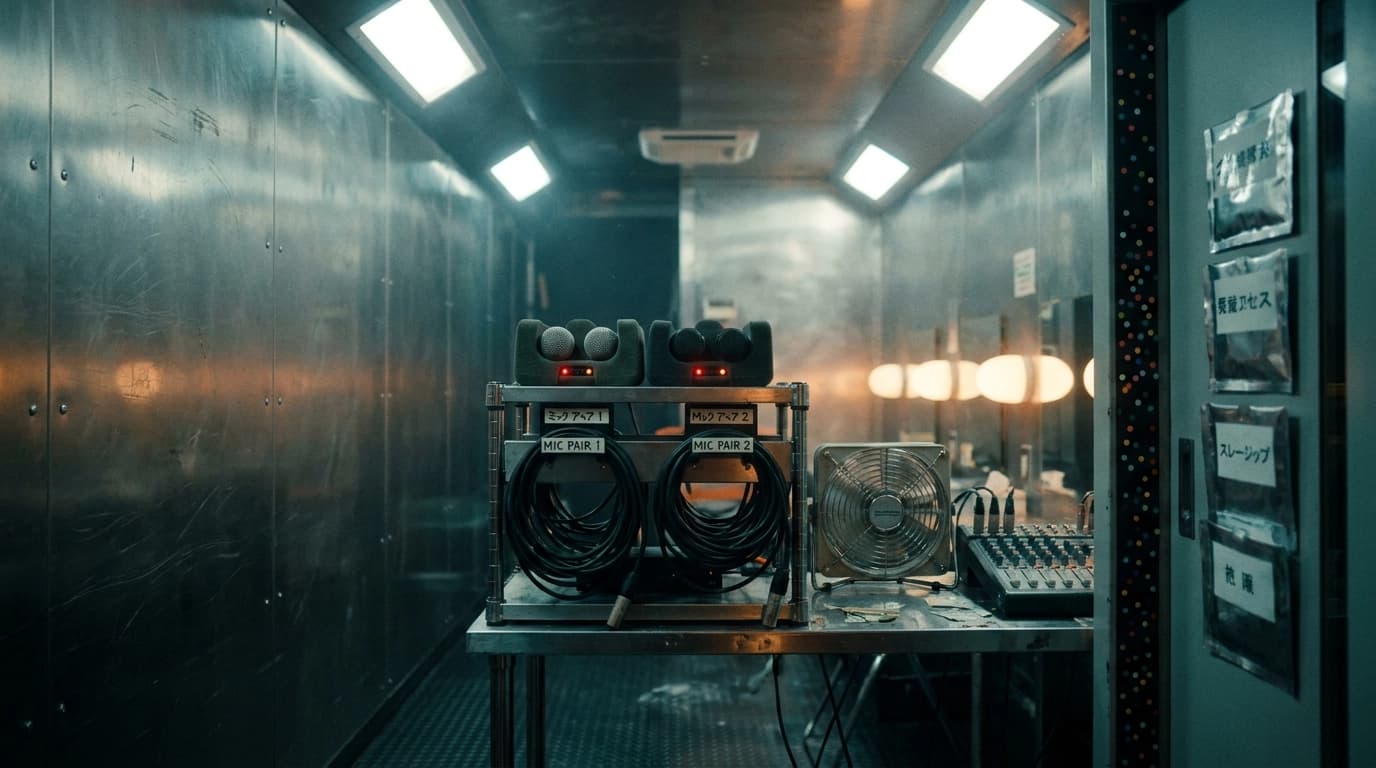
윤하린 uses the one thing sabotage can’t easily erase: the physical cable now proving the correct pairing works. She gestures to the backstage sound monitor and to the camera cable channel label, both visible under the harsh fluorescents. “Watch,” she says, and she doesn’t ask permission. She climbs onto a low equipment platform, reaches into the cable run, and taps the correct channel label again—making it undeniable that the system can be restored in real time. She holds it steady while the lighting cue plays its final arc for the encore ending. The monitor shows the correct audio routing. The cameras capture it. The encore doesn’t reset.
But stopping the reset doesn’t automatically protect her. Security still has to decide whether she “caused” the earlier mismatch. 박주원 makes one last play—he points to the confetti capsule and argues it’s unapproved. His voice is smooth, like he’s offering justice. 윤하린’s face tightens at the unfairness, but she doesn’t just fight. She physically steps between the accusing guard and the evidence case, blocking their view of the cable label, then reaches behind the evidence bin to retrieve her original laminated run-sheet. She places it in the guard’s hands so they can see the missing cues themselves—paper truth, not notes that can be dismissed as “feed updates.”
For a second, the guard’s posture changes. Not because he’s convinced emotionally, but because the evidence is now in his grasp. The timing-alarm logs on the wall monitor, meanwhile, show gaps that align with 박주원’s suggested route detours. The choreography of blame collapses.
The room doesn’t become a courtroom; it becomes a rescue. 최서율, finally no longer able to hide behind partial honesty, takes charge of getting 윤하린’s badge reinstated by appealing to the system’s proven correction. 김민서 clears confetti evidence as a prop release only after 노아야마 throws in a coded gold sleeve that was technically approved earlier in the tour’s packet—his trick, his apology wrapped in mischief. 노아야마 still insists it’s “for the story,” but now his grin isn’t just a cover; it’s a tool used to buy time while staff verify what happened.
By the time TREASURE finishes the encore and the audience noise becomes a distant tide, 윤하린 is breathing hard but moving. She returns backstage through the arteries she memorized, badge still warm against her palm, because security’s attention is shifting from punishment to procedure. The dorm-like fluorescents in the backstage corridor make her feel like she’s walking through an aquarium—everything behind glass, every reflection doubling her anxiety.
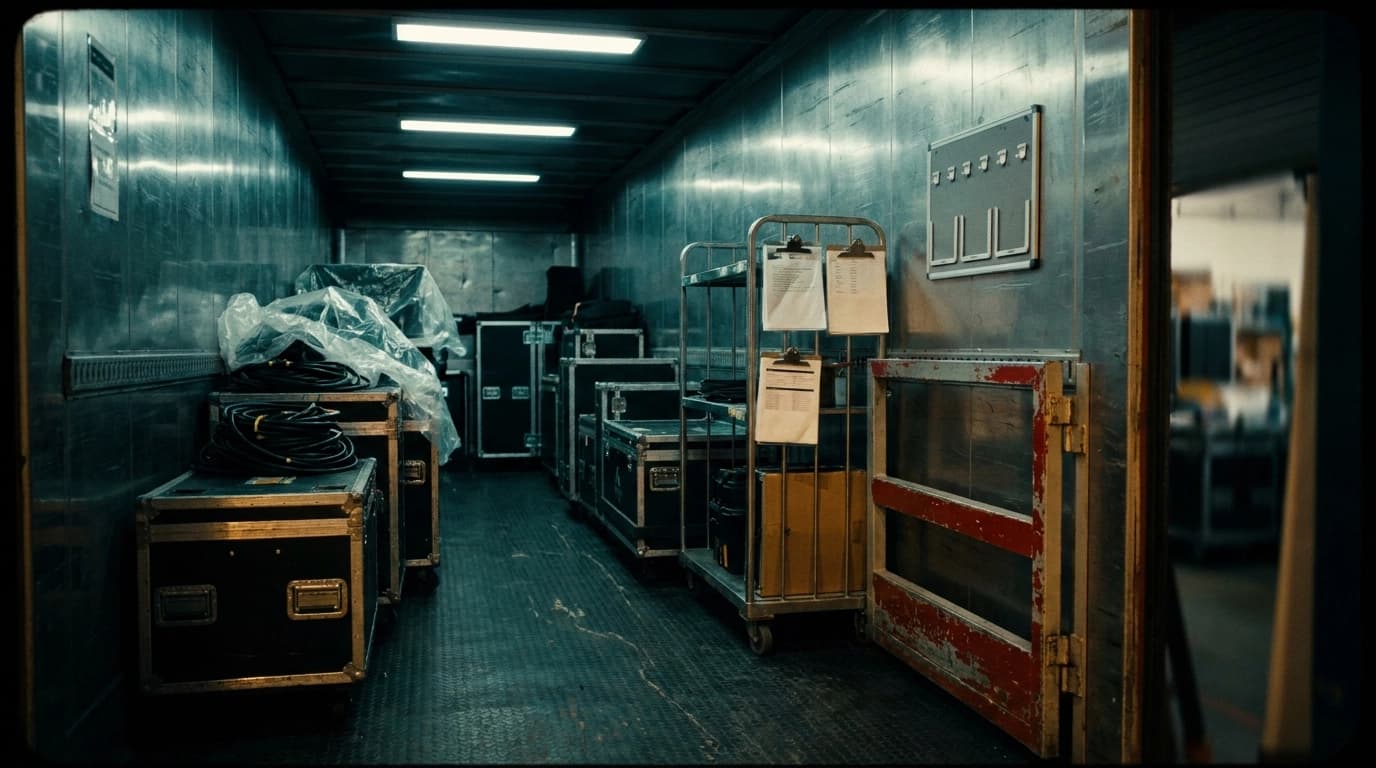
At dawn, the fan-made project is waiting in a delivery bay with a numbered access bin. 윤하린 kneels beside it and checks the seal she made hours earlier. It’s intact. The letters she promised the members are still dry; the banner edges still hold their careful stitching. She doesn’t stand there savoring it. She moves it through the last gate window, because the venue’s synchronization clock will decide whether she gets to hand it over or whether it becomes another missing cue no one will admit happened.
When she meets TREASURE backstage for that promised close-up moment, she doesn’t let herself romanticize the relief. She simply offers the project, and she watches their faces for the moment when they recognize the sincerity behind the sabotage-shaped chaos she survived. TREASURE members glance at the banner, then at her hands—ink smudges, small bruises from cable connectors and door edges—and the tenderness shows in their immediate, physical reactions: a hand brushing the banner edge, a quick nod, someone adjusting their microphone stand without asking staff.
Behind her, 박주원 is not arrested in the way stories promise. He just looks smaller as he realizes his “mercy” detour failed to erase the evidence. His jaw tightens once, then relaxes into a smile that doesn’t reach his eyes. 김민서 watches 윤하린 with a gentler expression than before, the rival dynamic softened not by abandonment but by shared risk. 최서율 catches 윤하린’s gaze briefly—gratitude and fear tangled together—and then turns away because her job isn’t finished, because belonging in the backstage system is earned in small, careful steps. 노아야마 drifts in the background, still amused, but now his metallic sleeve is only trash, not a signal, and he knows it too.
The last beat of the night isn’t a kiss or a dramatic confession. It’s quieter and harder: 윤하린 sits on a bench just outside a restricted door and forces herself to write down the three missing cues from memory in a new laminated sheet, because she refuses to let “ghost cues” erase her understanding again. Her hand shakes only once. Then she presses the pen harder, sealing the truth into plastic before anyone else can remove it.