本文へスキップ
Haunted Clinic, Neon Masquerade cover image

Haunted Clinic, Neon Masquerade

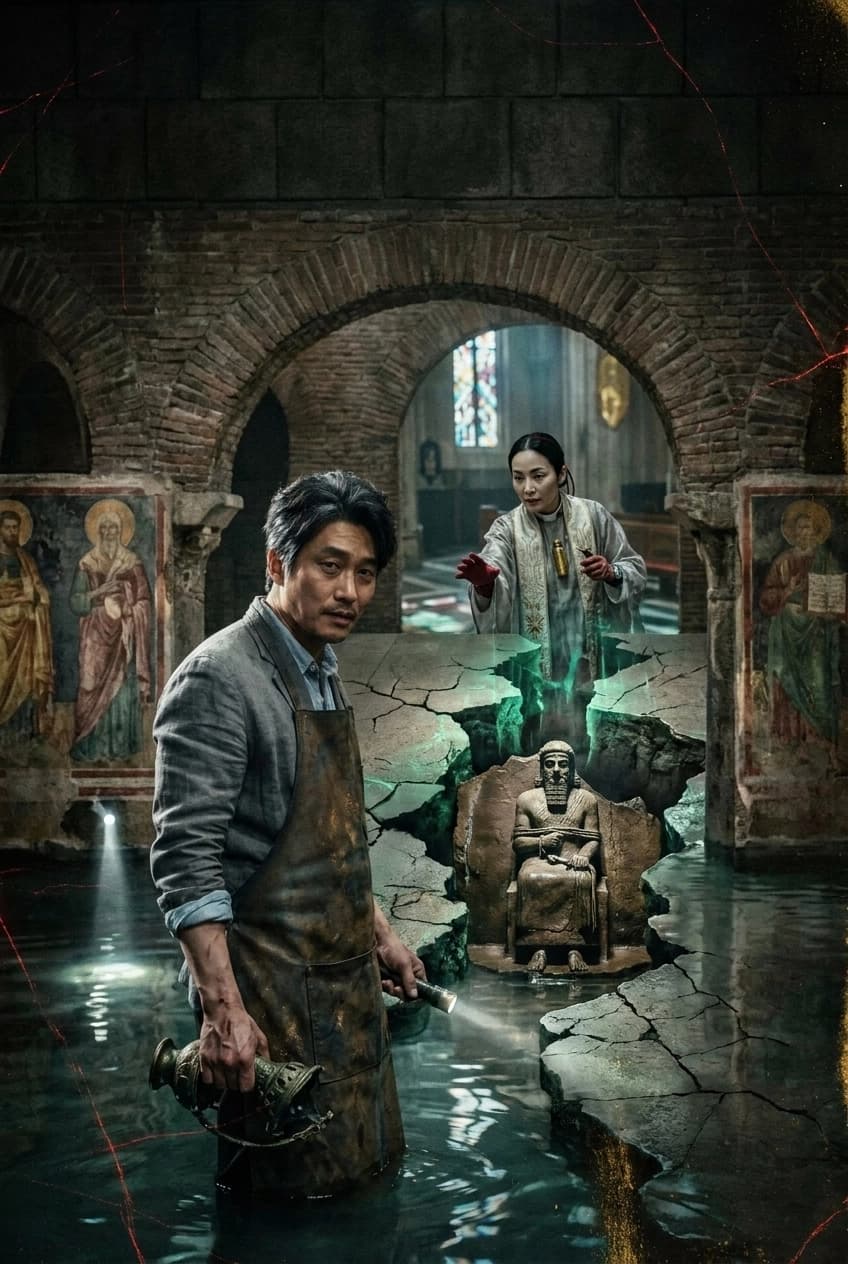
Amid the neon geometry of a fashion-forward resort rising over ancient haunted wreckage, a disillusioned young witch presides over a clandestine clinic—the only place where broken souls get patched up without judgment. An ethereal, allusive presence creeps ever closer, tempting her with cryptic visions and the possibility of a forbidden, transformative love that threatens to shatter not only her own understanding of justice and peace, but the very nature of empowerment itself. To protect her secret and those who depend on her, she must shatter inherited ideals, forging a radical new kind of pacifist rebellion—one where disaster and desire become inseparable on the path to survival.

週間ランキング

rank icon image
#1 Concept
rank icon image
#1 Genre
rank icon image
#1 Theme
スクロール

キャラ

主人公

Vivian Mercy Blackwell

性別女性
職業Underground Healer / Witch

プロフィール

Vivian Mercy Blackwell stands just under five foot eight, her lean, sharply angular frame accentuated by the fluid, avant-garde drapery of midnight-blue silks and iridescent, mismatched jewelry scavenged from both bygone centuries and the resort’s glimmering boutiques. With porcelain skin veined faintly in silver—a mark of her ancestral magic—Vivian’s striking, aquiline features are softened only by the perpetual exhaustion beneath her storm-gray eyes, which flicker with intelligence and a calculated skepticism. Her sable hair, cropped asymmetrically at the jaw and streaked with blue-black, is always meticulously kept, save for the occasional strand that escapes during the frenetic hours she spends tending to the wounded and the desperate in her clandestine clinic. Raised in a line of witches who once prized absolute noninterference, she grew up steeped in ritual and tradition, yet her pragmatic bent and dry, sardonic wit set her apart even in childhood—she learned to question, to doubt, and to quietly rebel. Now, as the city’s only known underground healer, Vivian navigates the treacherous liminality between the decadent, fashion-obsessed elite and the broken, haunted outcasts whose secrets she keeps. Her demeanor is brisk, her words precise and often laced with irony, though in rare moments of vulnerability she reveals a gentler cadence tinged with regret and longing. She is fiercely loyal to her chosen family of lost souls, yet remains emotionally guarded, haunted by the sense that true connection always exacts too high a price. Vivian’s hands—delicate, ring-laden, and callused from years of clandestine labor—move with ritualistic precision, betraying a perfectionism that borders on obsession. Her greatest strength is her unwavering moral clarity in the face of ambiguity, but this very certitude risks calcifying into isolation or dogma; she is driven by a restless yearning for justice that no longer fits the inherited mold, and by the secret hope that love—however dangerous or forbidden—might offer a path to redemption she scarcely allows herself to imagine.
敵役

Lucien Rojas Delacroix

性別男性
職業Resort Creative Director / Occult Curator

プロフィール

Lucien Rojas Delacroix, standing at a commanding six feet two inches with a lithe, almost feline build, is the resort’s Creative Director and its enigmatic Occult Curator—a dual role that positions him at the crossroads of avant-garde spectacle and ancient taboo. Of mixed Spanish-Filipino and French heritage, his olive skin is offset by a rakish streak of silver in his otherwise obsidian hair, swept back from an angular face marked by high cheekbones and a narrow, aquiline nose; his eyes, a disconcerting shade of stormy grey, often linger too long, as if deciphering the soul beneath the surface. Lucien’s sartorial choices blend tailored monochrome suits with subtle arcane embroidery, and he favors silk scarves that whisper of old family secrets. Charismatic yet inscrutable, he exerts almost hypnotic control over his domain, his speech a fluid, cosmopolitan blend—formal in public, but with an undercurrent of sardonic wit, and a faint trace of an Andalusian lilt that emerges when he is either amused or enraged. Raised amid the fractured remnants of aristocratic privilege in Manila and Paris, Lucien learned early to wield both art and rumor as weapons, cultivating a worldview where survival demands aesthetic mastery and emotional detachment. His reputation for orchestrating immersive, unsettling events draws both celebrities and occult thrill-seekers, yet he privately bristles against the resort’s commercialization, longing to resurrect the ancient rituals buried beneath its foundations. Haunted by a clandestine rivalry with his late father—a notorious collector of forbidden artifacts—Lucien’s aspirations are both grandiose and deeply personal: he seeks not only to cement his legacy as a visionary, but to unlock the mysteries of power and desire that have always eluded him. He shuns intimate connection, preferring the company of rare objects and whispered confidences, yet his meticulous control masks a volatile temper and a penchant for subtle manipulation. Lucien’s signature habit of tracing sigils on glass surfaces betrays a restless mind, and his cultivated air of detachment is marred by insomnia and a lingering dependence on rare herbal infusions. Though outwardly unflappable, he is acutely aware of the delicate balance between spectacle and sacrilege within the resort’s neon-lit halls—a balance he is willing to tip, even if it means becoming the architect of both ruin and revelation.
相棒

Adisa Okwu

性別Non-binary
職業Urban Folklorist / Night Concierge

プロフィール

Adisa Okwu, a non-binary urban folklorist and night concierge of Igbo and Afro-Caribbean descent, stands at a poised six feet, their slender yet athletic frame draped in hand-dyed silks and tailored streetwear that blends modern angularity with ancestral motifs—a visual testament to their dual allegiance to heritage and reinvention. Their skin is a rich bronze, eyes wide and liquid onyx, perpetually scanning the margins between myth and reality; a constellation of ritual scars dusts their cheekbones, hinting at rites survived and secrets kept. Adisa’s tightly coiled hair, dyed midnight blue and kept in a low, asymmetrical fade, suggests both defiance and discipline, while a trio of silver ear cuffs and a serpentine tattoo twining up their left forearm serve as silent commentary on their devotion to the unseen. Having spent a nomadic youth traversing postcolonial cities and forgotten villages, Adisa became fluent in the coded languages of rumor, shadow economies, and the ghosts that nestle in urban ruins—skills now leveraged nightly to guide desperate guests through the resort’s labyrinthine underbelly and to quietly archive the whispered histories that elude official memory. Their speech, measured and melodic, shifts from crisp Queen’s English to patois or Igbo proverbs depending on the company, lending their counsel an oracular quality that is equal parts alluring and unsettling. Adisa’s core motivation is both personal and collective: to salvage the dignity of erased stories and resist the resort’s gentrifying erasure of the supernatural, all while maintaining an uneasy peace between the living and the spectral. Their relationship with Vivian Mercy Blackwell is marked by friction and fascination—Adisa’s pragmatic, ethnographic approach to the occult often clashes with Vivian’s raw idealism and intuitive healing, yet Adisa’s cool detachment and lateral thinking counterbalance Vivian’s emotional volatility. Unlike the protagonist’s drive to mend souls, Adisa is compelled by the preservation of narrative power—sometimes at the expense of individual happiness—creating a tension between witness and participant, archivist and activist. Their nuanced skepticism toward Lucien Rojas Delacroix, the resort’s enigmatic creative director, stems not from open rivalry but from a deep suspicion of curated mythologies and the seductive violence of spectacle. Adisa is resourceful but reticent, fiercely loyal yet wary of intimacy, haunted by the fear that their own careful neutrality may someday be complicit in greater harm. They are prone to late-night wanderings, compulsively recording oral histories and leaving coded offerings in forgotten alcoves, and though their humor is dry and understated, their presence quietly anchors the clinic’s fragile sense of sanctuary. As the story’s inciting forces gather, Adisa stands ready to mediate, challenge, and—should the need arise—reshape the very boundaries of what it means to belong.

筋書き

Vivian Mercy Blackwell’s clinic thrives in the shadows beneath the neon cascade of the Solace Resort—a monstrous, glass-and-light construct perched atop the bones of a drowned colonial city. By day, the resort is a fever dream of couture and curated decadence, but at night, Vivian’s hands work with merciless grace, stitching up wounds both mundane and magical. Her clientele are the outcasts the resort pretends don’t exist: gamblers with curses embedded in their veins, dancers with spirits clinging to their spines, even the occasional executive desperate to erase a memory before sunrise. Vivian moves through this secret world with the brisk efficiency of someone who learned long ago that compassion is safest when rationed. She is driven by a restless need to heal, but also by a stubborn refusal to become her mother—a witch who watched the world burn rather than risk breaking the old family code of noninterference.

Her closest confidant, Adisa Okwu, keeps the pulse of the city’s underbelly. They chronicle the unspoken histories, ferrying rumors and stories to and from the clinic, their loyalty tempered by a folklorist’s distance. Adisa is the first to notice the change in the air as the resort’s next big event approaches—a masquerade that promises to resurrect the forgotten spirits beneath the city for one night only. Adisa’s instincts scream that something is wrong: guests report waking from dreams they can’t recall, and the ghosts in the resort’s lower corridors grow restless. Vivian, too, is plagued by visions—fleeting glimpses of a figure half-seen in mirrors and puddles, always just out of reach, whispering riddles about desire, justice, and the price of peace.

Into this electric unease steps Lucien Rojas Delacroix, the resort’s newly appointed Creative Director and self-styled Occult Curator. Lucien is a contradiction in tailored silk: both spectacle and secret, his gaze as sharp as the sigils he traces on the glass. He orchestrates the masquerade with ruthless artistry, driven by a longing to transcend the resort’s shallow hedonism and awaken the ancient powers slumbering beneath it. For Lucien, the event is a chance to outdo his late father’s notorious occult exploits and to prove—to himself most of all—that he can control the forces his ancestors only toyed with. When Lucien’s path crosses Vivian’s, the collision is incendiary: her skepticism and moral clarity upend his carefully maintained detachment, while his ambition and charisma threaten to seduce her into breaking every rule she’s lived by.

As the masquerade nears, Vivian’s clinic becomes a battlefield. Her patients multiply, their injuries stranger and more desperate. Adisa brings word that the line between the living and the dead is thinning; spectral figures slip through locked doors, and old curses awaken in the marble lobbies above. The ethereal presence haunting Vivian grows bolder, offering glimpses of a world where desire and disaster are inseparable, where justice is not the absence of harm but the willingness to risk everything for transformation. Vivian is tempted, but also terrified—she knows that surrendering to this vision could mean betraying her pacifist legacy and endangering everyone who depends on her.

The night of the masquerade arrives in a riot of masked faces and shimmering fabrics. Lucien unveils his masterpiece: a ritual performance designed to summon and bind the city’s oldest ghosts, promising catharsis and spectacle to his jaded audience. But the ritual spins out of control—Vivian recognizes too late that the lines Lucien draws are not containment, but invitation. The resort’s foundations tremble as ancient spirits surge, hungry for retribution against the living who built their paradise atop unquiet graves. Vivian is forced into an impossible choice: uphold her family’s code of noninterference, or intervene and risk unleashing even greater chaos.

In the crucible of disaster, Vivian chooses rebellion. With Adisa’s knowledge of forgotten rites and Lucien’s grudging cooperation—his veneer of control shattered by the havoc he’s wrought—they improvise a new kind of ritual, one that does not bind or banish but invites the spirits to speak for themselves. Vivian sacrifices her clinic’s secrecy, revealing her magic to the resort’s elite and the city’s outcasts alike. The process is raw, messy, and dangerous: old wounds are torn open, ancient injustices named and witnessed. In the aftermath, the resort’s power is broken—its neon glamour dimmed, its guests transformed by truths they cannot unsee.

Vivian and Lucien’s connection, forged in crisis, is fraught with longing and regret. Their love is not a neat resolution but an open question—intense, necessary, and forever marked by the disaster they survived. Adisa, too, is changed; their role as witness becomes one of active shaper, helping to rebuild

シーン

シーン 1
scene 1 image
The Price of Quiet Hands
[Place]
Vivian Mercy Blackwell’s clandestine clinic, hidden in the labyrinthine service corridors beneath the Solace Resort, surrounded by the hum of machinery and the distant thump of nightlife above.

[Time]
Late at night, just after the resort’s revelers have retreated behind closed doors, and the city’s outcasts emerge to seek help before dawn.

[Action]
Vivian works with clinical intensity, patching up a steady stream of wounded clients—some marked by mundane violence, others by strange, supernatural afflictions that leave traces of shimmering bruises or curses twisting under their skin. She moves from patient to patient, her hands efficient but her eyes haunted by exhaustion and recent, unsettling visions. Adisa arrives, their presence bringing both comfort and tension, as they quietly update Vivian on rumors spreading through the city: rising spectral activity, guests waking with lost memories, and a growing sense of unease among the ghosts lurking in the lower corridors. Vivian’s internal conflict surfaces—her urge to help is at war with the need to keep her clinic (and heart) safely detached. Between medical emergencies, she glimpses unsettling reflections in polished metal and puddles—ephemeral hints of the mysterious figure that has begun to haunt her. Adisa prods her for answers, sensing Vivian is holding back, but she refuses to admit how deeply the visions are shaking her. The scene closes as a new patient stumbles in, bearing a wound that defies both medical and magical logic, forcing Vivian to confront the possibility that her sanctuary is no longer safe from the city’s escalating strangeness.

[Impact on the story]
This scene establishes Vivian’s dual role as healer and reluctant witch, highlighting her moral boundaries and the pressure she feels as supernatural disturbances escalate. Her relationship with Adisa deepens, revealing trust but also the beginnings of secrecy and doubt. The intrusion of the strange new patient signals the collapse of the line between ordinary troubles and the larger, more dangerous forces gathering around the resort, setting the tone of unease and urgency that will drive the story forward.

[Description]
Vivian’s late-night clinic work is disrupted by a surge of bizarre cases and haunting visions, while Adisa brings warning of supernatural unrest in the city. Their bond is tested as Vivian struggles to keep her fears hidden, even as a new, inexplicable wound arrives at her door. The safety of her hidden world begins to unravel, foreshadowing greater threats and forcing her to confront the limits of her detachment.
シーン 2
scene 2 image
[Curses in Velvet Shadows]
[Place]
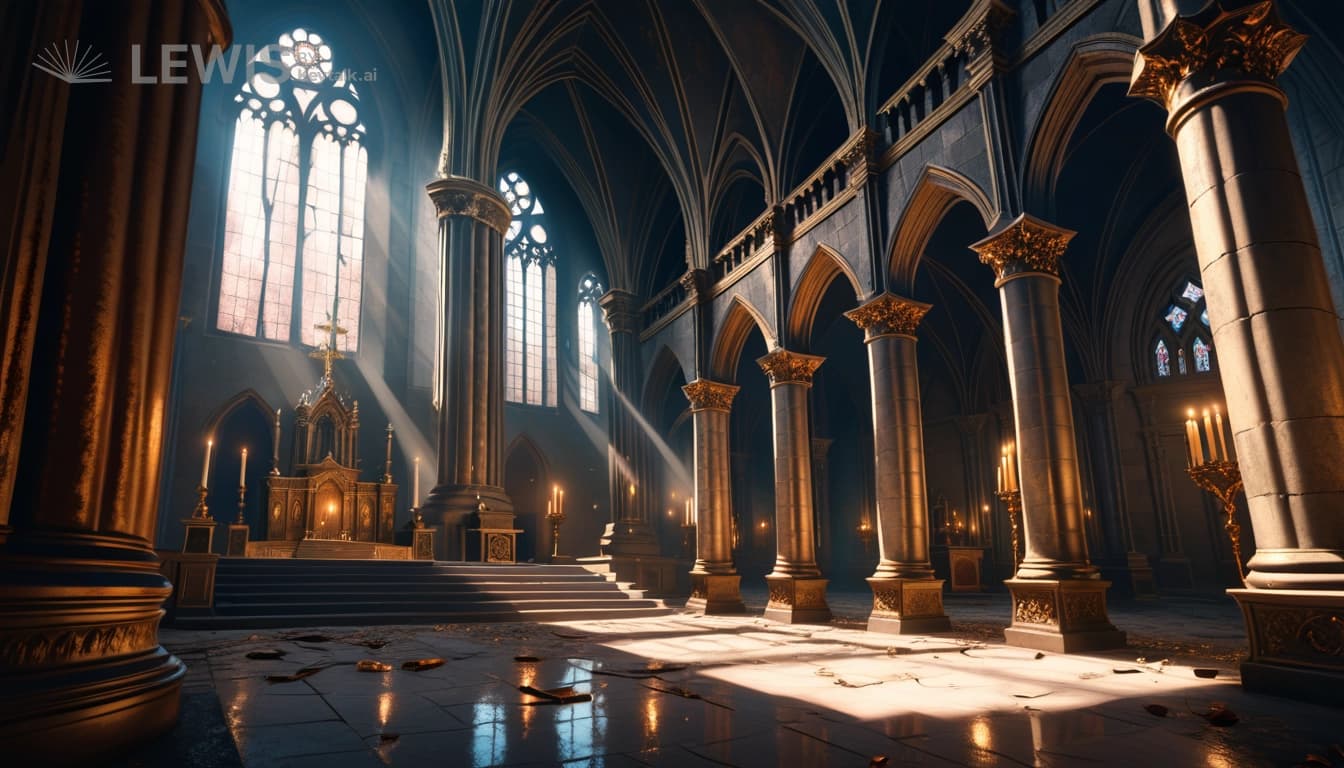
A dim, secret lounge in the underbelly of the Solace Resort—a halfway space between the glittering lobbies above and the forgotten tunnels below. Plush, outdated velvet furniture and flickering, enchanted sconces provide the illusion of comfort, but shadows gather thick around the edges. This is where the city’s outcasts come to barter rumors, curses, and favors in relative safety.

[Time]
The following evening, as the resort’s masquerade preparations intensify and the city’s energy skews further toward the uncanny. The air is thick with anticipation and unease, just before midnight.

[Action]
Vivian arrives, summoned by Adisa’s urgent message, still rattled from the previous night’s inexplicable wound. She’s drawn into a clandestine gathering of the undercity’s misfits: gamblers, spirit-haunted dancers, and disgraced magicians, all speaking in hushed, nervous tones about the coming masquerade and the strange happenings haunting them. Adisa, acting as both host and investigator, quietly introduces Vivian to a dancer who has begun to physically manifest the ghost clinging to her—her shadow now moves independently, whispering secrets only she can hear. Vivian examines the dancer, trying to mask her concern as she discovers the affliction is spreading; several guests sport fresh, spectral injuries that resist both medicine and magic. Tension spikes when a masked resort executive arrives, desperate for Vivian’s help to erase a memory she claims is “not hers”—a memory of drowning, salt, and colonial violence she cannot account for. Through whispered negotiations, it becomes clear these wounds and memories are linked to the masquerade’s occult preparations, and that someone—likely Lucien—is tampering with the boundary between the living and the dead. Vivian’s skepticism and protective instincts flare; she clashes with Adisa over how much risk to take, and whether to confront Lucien directly. The scene ends with Vivian forced to make a fraught promise to the afflicted guests: she will try to find the source of the curse, knowing that any intervention risks exposing her magic and breaking her family’s code.

[Impact on the story]
This scene pushes Vivian out of the safety of her clinic and into the city’s wider network of the wounded and wary, expanding her sense of responsibility. Her relationship with Adisa is strained by conflicting loyalties and philosophies—Adisa wants to expose and document, while Vivian wants to protect and contain. The appearance of the executive and the contagious nature of the spectral afflictions escalate the stakes, drawing Vivian into the masquerade’s dark orbit and foreshadowing her inevitable confrontation with Lucien. The sense of mounting dread and interconnectedness among the outcasts signals that the coming event will threaten not just individuals but the entire city’s fragile balance.

[Description]
Vivian is drawn into a secret gathering of the city’s afflicted, discovering that the supernatural disturbances are spreading and tied to the masquerade. Her bond with Adisa is tested as they disagree on how to respond, and Vivian is forced to promise action, setting her on a collision course with Lucien and the resort’s dangerous ambitions. The boundaries between magic, memory, and self begin to blur, raising the stakes for all involved.
シーン 3
scene 3 image
[Folklore for the Unforgiven]
[Place]
Vivian’s cramped backroom office in her clinic, cluttered with jars of herbs, old family grimoires, and half-melted candles. The hum of the city above is muffled by thick stone walls, broken only by the distant bass of the resort’s preparations. Shadows flicker on the peeling wallpaper, restless as the ghosts in the streets.

[Time]
Late night, bleeding into the early hours—the city in a liminal hush, the masquerade now only a day away. Vivian hasn’t slept; the world feels thinner, haunted at the seams.

[Action]
Vivian pores over handwritten notes, medical sketches, and Adisa’s collected rumors, searching for a pattern in the spectral afflictions. She’s interrupted by Adisa slipping in, breathless and visibly shaken, carrying new folklore gathered from the city’s edges—a patchwork of warnings, old songs, and stories of drowned cities that refuse to stay buried. As they share findings, the tension between them sparks again: Adisa insists that the stories themselves hold the key, urging Vivian to look beyond science and spellcraft to the mythic history beneath the resort. Vivian resists, clinging to clinical detachment, but the evidence is undeniable: the wounds and memories mirror the legends Adisa recounts—tales of vengeful spirits, colonial betrayal, and rituals gone wrong.

Their argument is interrupted by a sudden, uncanny event: the room chills, and Vivian’s shadow splits from her body, momentarily acting on its own. Both are shaken—Vivian’s skepticism falters as she realizes she’s now marked by the same affliction as her patients. Adisa, torn between fear and vindication, urges Vivian to accept that the boundaries between past and present, living and dead, are collapsing. The scene ends with Vivian reluctantly agreeing to let Adisa guide her through a forbidden family ritual, blending folklore and magic in hopes of understanding the true nature of the curse before the masquerade. Both know the act will bind them together in ways neither fully trusts.

[Impact on the story]
This scene deepens the rift and intimacy between Vivian and Adisa, forcing Vivian to confront the limitations of her rationalism and the legacy she’s tried to avoid. The supernatural event personalizes the curse, making Vivian not just a healer but a victim. The collaboration with Adisa marks a turning point: Vivian must embrace her heritage and the city’s forgotten histories, setting the stage for her inevitable entanglement with Lucien and the masquerade’s dangerous magic.

[Description]
In her clinic, Vivian and Adisa clash and collaborate over the meaning of the city’s afflictions, culminating in Vivian’s own supernatural marking. Forced to accept the power of folklore and her family’s magic, Vivian agrees to a risky ritual, binding herself to Adisa and the city’s unraveling fate. The curse becomes personal, and the stakes rise as the masquerade approaches.
シーン 4
scene 4 image
[Title]
Glass Masks, Hidden Wars

[Place]
The Solace Resort’s private costume atelier—a mirrored, labyrinthine space behind locked doors, filled with half-finished gowns, velvet masks, and racks of shimmering disguises. The air is scented with expensive perfume and the faint, unplaceable tang of old magic.

[Time]
Late morning, the day before the masquerade. Sunlight fractures through the glass ceiling, casting prismatic patterns across the chaos. Resort staff flit in and out, but the heart of the atelier is a tense, private battlefield.

[Action]
Vivian is summoned to the atelier under the pretense of providing medical support for an “artistic accident,” but she quickly realizes she’s been maneuvered into Lucien’s territory. Lucien oversees the final preparations, orchestrating the creation of extravagant masks—each embedded with subtle protective wards and, unknown to most, elements designed to channel spectral energy during the masquerade. He’s testing his control: over the staff, the event, and now, over Vivian herself.

Lucien confronts Vivian about her clandestine treatments of the resort’s staff and guests, his tone equal parts curiosity and threat. Their first direct encounter crackles with tension: Lucien’s calculated charm meets Vivian’s guarded pragmatism. He probes for weaknesses, hinting that he knows more about her background—and the city’s recent disturbances—than he lets on. Vivian is wary but refuses to yield ground, leveraging her knowledge of the staff’s afflictions to challenge Lucien’s veneer of control.

As they circle each other, the atmosphere becomes increasingly charged. Lucien offers Vivian a mask—ostensibly a peace offering, but laced with a subtle compulsion spell designed to test her magical boundaries. Vivian recognizes the enchantment, counteracts it with a deft, silent ritual, and lets Lucien see that she knows. The moment is intimate and adversarial, a mutual unmasking beneath the pretense of the masquerade.

Meanwhile, Adisa, posing as a costume assistant, surreptitiously gathers intelligence and plants protective charms on the costumes of vulnerable staff. They observe the escalating power play between Vivian and Lucien, realizing that the masquerade is not just a party, but a stage for a deeper, more dangerous conflict. The scene ends with Lucien inviting Vivian to attend the masquerade as his “guest”—a calculated move that forces her to choose between remaining in the shadows or stepping into the center of the coming storm.

[Impact on the story]
This scene ignites the central rivalry and attraction between Vivian and Lucien, setting the tone for their future collaboration and conflict. It forces Vivian to publicly acknowledge her magical abilities and stake her claim in the resort’s hidden power struggles. Adisa’s subplot adds tension and urgency, as the stakes for the staff and the city’s underclass become intertwined with the fate of the masquerade. The scene builds anticipation for the event, escalating the sense that something irreversibly dangerous is about to be unleashed.

[Description]
In the Solace Resort’s mirrored atelier, Vivian and Lucien clash and flirt over magical masks and hidden motives, establishing a combustible dynamic. Adisa gathers intelligence in the background, sensing the masquerade is more perilous than anyone admits. By the scene’s end, alliances and enmities are drawn, and Vivian is drawn out of hiding—her involvement now inescapable.
シーン 5
scene 5 image
[Title]
The Mirror’s Riddle and the Unwelcome Guest

[Place]
Vivian’s underground clinic—cramped, cluttered, and half-lit by the blue glow of medical wards and flickering spirit-lamps. Outside, the city’s foundation rumbles with distant nightlife and restless ghosts.

[Time]
Late afternoon, the day before the masquerade. Storm clouds gather outside, their shadows pooling in the alleyways above as the city holds its breath.

[Action]
Vivian returns to her clinic, shaken but alert after her confrontation with Lucien. She tries to focus on her work, treating a surge of desperate patients: a croupier with a memory curse eating holes in her recollection, a dancer whose feet bleed spectral salt, an executive trembling with the aftereffects of a dream he can’t remember. The cases are stranger and more urgent than usual, their symptoms hinting at a city-wide escalation of supernatural unrest. Vivian’s defenses are up, but she’s stretched thin, her private fears about the masquerade mounting with every wound she stitches.

As Vivian works, the haunting presence that’s stalked her dreams suddenly manifests—this time not in a mirror, but in the clinic itself, flickering at the edge of her vision. The apparition is more corporeal than before, its riddles sharper, its warnings louder. It taunts Vivian with visions of the masquerade’s aftermath: blood on marble, secrets dragged into light, the cost of refusing to act. The encounter is intimate and invasive, forcing Vivian to question whether her refusal to intervene is cowardice or principle.

Midway through the haunting, Adisa bursts in, breathless and rain-soaked, with urgent news: Lucien’s masquerade preparations are accelerating, and rumors swirl that he intends to use the event to harness the city’s oldest ghosts for his own ends. Adisa brings a coded message from one of the resort’s kitchen witches—a warning that the protective wards around the resort are failing. The weight of responsibility settles on Vivian; she realizes that her passive stance is no longer tenable.

The tension is broken by the arrival of an unexpected visitor: Lucien himself, appearing at the clinic’s threshold, out of place and dangerous in his tailored finery. He’s come to “check on” Vivian—ostensibly concerned about her patients, but really to issue a veiled warning (or invitation) about the masquerade. Lucien’s presence fills the room with electric unease; he hints at the consequences of meddling, but also at his own uncertainty and the limits of his control. The unspoken challenge between Vivian and Lucien sharpens, while Adisa hovers, wary and ready to defend.

The scene ends with the three of them locked in a tense truce, each holding secrets and grievances. Vivian, haunted and cornered, resolves to act—even if it means breaking her family’s most sacred rule. The mirror’s riddle lingers in her mind: What is the cost of peace when justice demands a reckoning?

[Impact on the story]
This scene drives Vivian to a turning point, confronting her with the consequences of inaction and the reality that the masquerade’s danger is both magical and personal. The escalation of supernatural unrest, the direct haunting, and Lucien’s intrusion all force Vivian to abandon neutrality, setting up her active involvement in the coming disaster. Adisa’s role as messenger and ally is deepened, while Lucien’s presence cements the complicated web of rivalry, temptation, and mutual need between the three. The stakes are made painfully personal and immediate.

[Description]
Vivian’s clinic becomes a pressure cooker as supernatural unrest surges, a haunting grows bold, and Lucien arrives with threats and invitations. Forced to confront her own boundaries and the city’s unraveling, Vivian finally chooses action, setting the stage for open conflict at the masquerade. The trio’s uneasy alliance is forged in fear, attraction, and necessity.
シーン 6
scene 6 image
[Title]
Lucien’s Invitation, Vivian’s Warning

[Place]
A private salon in Lucien’s penthouse suite atop the Solace Resort—a room lined with mirrors, occult artifacts, and half-unpacked crates from his late father’s estate. The city sprawls below in a storm-lit panorama, neon and thunder echoing against the glass.

[Time]
Nightfall, just hours after Lucien’s visit to Vivian’s clinic and the eve of the masquerade. The storm has broken; rain lashes the windows, and lightning flickers over the drowned city’s bones.

[Action]
Lucien hosts a clandestine gathering in his suite—a carefully curated selection of resort staff, influential guests, and occult practitioners who orbit the masquerade’s preparations. The atmosphere is electric and brittle: Lucien performs the part of gracious host, but beneath the charm, he’s anxious, driven by a need to assert control over the forces he’s set in motion. He reveals fragments of his ritual plans, dazzling his audience with promises of spectacle and transformation, but keeps the true nature of the summoning close to his chest.

Vivian arrives unexpectedly, having followed a trail of whispered warnings and Adisa’s coded directions. She interrupts the gathering, her presence at once a challenge and a disruption. Her arrival throws Lucien off-balance—he’s forced to address her directly, the tension between them simmering in every glance. Vivian confronts Lucien in front of his chosen inner circle, warning him of the dangers he’s courting. She demands answers about the ritual’s intent and the failing wards, refusing to let him hide behind charm or ambiguity.

Their confrontation is public, charged with personal history and mutual attraction. Lucien attempts to dismiss her warnings, but his bravado falters under Vivian’s relentless clarity. She exposes his uncertainty to the group, sowing doubt among his allies and fracturing the veneer of confidence he’s cultivated. The exchange is heated and intimate, exposing both Lucien’s ambition and his fear that he’s losing control.

Meanwhile, Adisa lingers at the edge of the salon, eavesdropping and quietly gathering leverage—documenting the faces present, noting alliances, and catching rumors that suggest some guests are more than they appear. Adisa senses the presence of something otherworldly in the room: shadows flicker at the edges of mirrors, and faint whispers hint that the dead are already listening.

As the gathering breaks up, Lucien corners Vivian in a private alcove, dropping his public mask. He tries to persuade her to join him—to channel her power into the ritual and help him manage its risks. Vivian, still reeling from the haunting in her clinic, refuses: she insists on transparency, accountability, and a warning to the city’s vulnerable. The conversation ends unresolved, but with a sense that neither can walk away untouched.

[Impact on the story]
This scene crystallizes the personal and ideological conflict between Vivian and Lucien, transforming their private tension into a public power struggle. Vivian’s defiance shakes Lucien’s confidence, forcing him to reckon with the limits of his ambition and the consequences of secrecy. Adisa’s subtle intervention deepens their role as both ally and observer, gathering information that will prove crucial. The supernatural threat is made tangible—no longer just rumors, but a presence in the very heart of the resort’s power. The scene sets the masquerade on a knife’s edge, with alliances strained and the stakes unmistakably raised.

[Description]
A charged confrontation in Lucien’s penthouse exposes the cracks in his plan and the cost of secrecy. Vivian publicly challenges his ritual, forcing hidden truths to the surface and shifting the balance of power. The trio’s fates are now inextricably linked as the masquerade approaches, with the dead already gathering at the door.
シーン 7
scene 7 image
[Title]
Blood on the Ballroom Tiles

[Place]
The grand ballroom of the Solace Resort—transformed for masquerade preparations. Velvet-draped balconies overlook a vast, gleaming floor. The air shimmers with anticipation and a faint, acrid tang of ozone. In the shadowed corners, staff move with frantic precision, while masked guests rehearse their roles amid flickering candlelight and the distant thrum of thunder.

[Time]
Night—mere hours before the masquerade officially begins. The resort pulses with nervous energy as storm clouds bruise the horizon and the city’s restless dead press closer.

[Action]
The scene opens with the final stage of masquerade preparations: costumed guests, performers, and staff swirl through the ballroom in a fever of nervous excitement and private dread. Lucien, visibly frayed from his confrontation with Vivian, prowls the room, issuing sharp instructions and obsessively inspecting the ritual sigils chalked onto the marble tiles. He’s desperate for control, masking his anxiety with imperious charm, but sharp-eyed staff notice his hands tremble as he traces wards that seem to flicker and blur at the edges.

Vivian arrives, drawn by a patient’s urgent summons—a young dancer whose body is wracked by a curse that’s flared violently out of control. The dancer collapses amid the rehearsing crowd, blood seeping through their costume in unnatural patterns, the curse manifesting as spectral wounds that refuse to close. Vivian’s presence, once tolerated, is now met with suspicion and fear by staff loyal to Lucien, who see her as a destabilizing force. Still, she pushes through, her determination overriding propriety as she kneels beside the dancer, unspooling her magic in full view of shocked onlookers.

As Vivian works, Adisa slips through the edges of the chaos, piecing together the threads of a larger disaster: snippets of conversation reveal that other staff have gone missing, and rumors swirl that some masks conceal more than human faces. Adisa uncovers evidence that the ballroom itself is becoming a nexus—a place where the veil between worlds is thinnest, the ritual already bleeding into reality before it’s even begun.

Lucien, seeing the dancer’s collapse as a harbinger of his own unraveling plans, confronts Vivian again—this time in front of a crowd too frightened to look away. Their clash is raw, stripped of earlier civility: Lucien blames Vivian for undermining his authority, while she accuses him of reckless ambition and failing to protect those in his care. The fight escalates as the curse threatens to spill beyond the dancer, shadows writhing on the marble and mirrored light fracturing across the walls.

In a decisive moment, Vivian forces Lucien to help—demanding he channel his energy into containing the spreading curse. Their magic entwines in a fraught, improvisational ritual, watched by an audience equal parts horrified and mesmerized. The cost is immediate: Vivian’s hands are bloodied, Lucien is left visibly drained, and the dancer survives—scarred but conscious—but the ballroom is irrevocably changed. The sigils on the floor are smeared, the wards destabilized, and the air now crackles with the promise of disaster.

As order collapses, Adisa gathers the shaken witnesses, urging them to spread warnings through the resort. The scene ends with the ballroom silent but for the distant wail of sirens and the echo of a threat that can no longer be contained.

[Impact on the story]
This scene rips the masquerade’s fragile glamour apart, exposing the raw consequences of Lucien’s ambition and Vivian’s refusal to stand by. Their public, magical collaboration shatters old boundaries—forcing Lucien to reckon with his vulnerability and Vivian to embrace open defiance of her family’s code. The curse’s eruption foreshadows the larger supernatural breach to come, while Adisa’s efforts set the stage for collective resistance. The ballroom is no longer a stage for spectacle but a battlefield where alliances and enmities are forged in crisis.

[Description]
On the eve of the masquerade, a cursed collapse in the ballroom forces Vivian and Lucien into a desperate, public act of magic, exposing the depths of the coming catastrophe. The boundaries between worlds fracture before a captive audience, setting the entire resort on edge and drawing all three protagonists onto a collision course with the dead.
シーン 8
scene 8 image
[Title]
When the Dead Refuse to Wait

[Place]
The subterranean corridors beneath the Solace Resort—abandoned service tunnels and forgotten crypts where the city’s drowned foundations meet the modern world. Damp stone walls pulse with unnatural cold, flickering with ghostlight leaking up through cracks in the marble above. The hum of the masquerade’s music is muffled and distant, replaced by the echo of footsteps, voices, and something older, rising.

[Time]
Later that same night, in the immediate aftermath of the cursed incident in the ballroom. The masquerade has officially begun upstairs, but down here, the air is thick with anticipation and dread as word spreads of the disaster above.

[Action]
Vivian, still shaken and bloodstained from the public ritual, is drawn below by the urgent pleas of Adisa, who has tracked a surge of spectral activity to the resort’s deepest levels. Adisa insists that the dead are no longer content to be conjured as spectacle—they are gathering with purpose, their anger sharpened by the failed ritual and the wounds of history. Vivian hesitates, torn between tending to her remaining patients and the growing certainty that the real crisis now lies beneath the resort. Guilt and fear war in her chest as she realizes the collapse upstairs was only a beginning.

Lucien, stripped of his usual poise, follows Vivian and Adisa into the tunnels. He is desperate to regain control, convinced he can repair the unraveling wards before all is lost. His pride is battered, but he clings to the hope that his knowledge of the resort’s occult architecture will make a difference. Tension crackles between him and Vivian—remnants of their earlier conflict now mixed with a reluctant camaraderie born of shared failure.

As the trio navigates the labyrinthine corridors, they encounter a series of haunting tableaus: staff and guests trapped in fugue states, whispering fragments of drowned memories; spectral figures flickering through walls, faces twisted with grief and accusation; and, at the heart of it all, a gathering storm of spirits coalescing in the old crypts beneath the ballroom. The dead speak through broken mirrors and shattered tiles, their voices a chorus of demands for justice, recognition, and release.

Vivian is forced to confront the legacy of her family’s code—realizing that noninterference has only allowed old wounds to fester. Adisa, usually the observer, steps forward to mediate, using their deep knowledge of the city’s folklore to negotiate with the dead and piece together what the spirits truly want. Lucien, for the first time, admits to his own terror—that his ritual was never about healing, but about proving himself worthy of the city’s dangerous magic.

The scene culminates in a tense stand-off: the dead threaten to break through to the masquerade above, risking mass possession and chaos. Vivian, Adisa, and Lucien must quickly improvise a fragile truce, promising to bear witness to the city’s true history in exchange for time to prepare a new ritual. The cost is steep—Vivian must reveal her magic to the spirits and to her companions, shattering her last defenses. The dead relent, for now, but the trio emerges from the tunnels changed, knowing that the masquerade is now a powder keg waiting for a single spark.

[Impact on the story]
This scene marks the point where private wounds become public reckonings. Vivian is forced to choose action over secrecy, irrevocably breaking her family’s code and deepening her bond with Adisa and Lucien through shared vulnerability. Lucien’s façade crumbles as he faces the failure of his ambition, while Adisa’s role shifts from chronicler to active mediator. The spirits’ ultimatum raises the stakes for the masquerade, setting up an unavoidable confrontation and uniting the protagonists in purpose, if not in trust.

[Description]
Beneath the masquerade’s glitter, Vivian, Lucien, and Adisa descend into the resort’s haunted foundations, where the dead demand justice and refuse to wait for permission. The trio forges a fragile truce with the restless spirits, sacrificing secrecy and pride in a desperate bid to prevent all-out catastrophe above.
シーン 9
scene 9 image
[Title]
The Unbinding: A Ritual of Ruin and Reckoning

[Place]
The grand ballroom of the Solace Resort, now a fractured jewel—mirrors cracked and velvet curtains torn, the marble floor slick with a sheen of spilled wine and ghostlight. The ritual circle, once precise and gilded, is marred by sigil-burns and the footprints of the desperate. Spectral presences shimmer and flicker at the edges, their forms half-in and half-out of the world, drawn to the site of their long-awaited reckoning.

[Time]
Moments after the uneasy truce in the tunnels; the masquerade is in chaos as guests stumble from visions and the dead press closer to the surface. Midnight approaches, the hour when boundaries—between worlds, between past and present—are thinnest.

[Action]
Vivian, Adisa, and Lucien return to the devastated ballroom, burdened by what they’ve promised below. Vivian musters her courage, stepping into the light—her hands trembling but her voice steady as she addresses the fractured gathering of guests, survivors, and spirits. She exposes her magic openly, shattering the last pretense of distance between herself and the city’s elite. Adisa stands beside her, weaving together the city’s fractured folklore, coaxing the living and the dead to listen and remember. Lucien, shaken and newly humbled, works desperately to adapt the remains of his failed ritual, allowing for the possibility of transformation rather than control.

The spirits gather, their presence crackling in the air, pushing at the edges of the circle. Tensions rise as old wounds are voiced—grievances from the drowned city, betrayals by ancestors in silk and steel. The masquerade’s guests, unmasked and afraid, are forced to witness the ugly truths beneath their pleasure. Vivian, Adisa, and Lucien improvise a ritual of unbinding—one that invites the dead not as spectacle or threat, but as witnesses and storytellers. The process is raw and perilous: magical backlash threatens to overwhelm them, and the boundary between possession and testimony is razor-thin. Vivian risks everything, channeling the pain and longing of the spirits through herself, trusting Adisa to anchor her and Lucien to surrender control.

As the ritual crescendos, secrets are confessed, names of the forgotten spoken aloud, and the spirits at last find voice and recognition. The ballroom is transformed from a site of denial to a place of reckoning. The dead, having been seen and heard, begin to dissipate—some peacefully, others leaving marks that will not soon fade. Vivian collapses, drained but alive, her clinic’s secrecy sacrificed for a greater healing. Lucien’s ambition is burned down to something more honest, and Adisa emerges as both chronicler and creator of this new history.

[Impact on the story]
This scene is the story’s crucible—Vivian’s final, irreversible break from her mother’s code and the loss of her anonymity, but also her moment of greatest agency. The cost of intervention is laid bare: personal safety traded for collective healing, and the illusion of control shattered for all involved. The trio’s alliance is forged in public vulnerability and shared risk, their fates now inseparable from the city’s. The masquerade’s survivors—and the city itself—are changed by the truths revealed and the balance of power disrupted.

[Description]
In the ruined ballroom, Vivian, Adisa, and Lucien perform a dangerous, unprecedented ritual that allows the city’s dead to speak at last, forcing the living to bear witness. The cost is profound: old secrets unearthed, reputations ruined, and personal boundaries torn away. But the city is finally offered the chance to heal, and the trio emerges forever marked by what they dared to unleash.
シーン 10
scene 10 image
[Title]
Afterlight Promises, Ashes and Beginnings

[Place]
The aftermath-laden Solace Resort—its grand ballroom still haunted by echoes of the ritual, the clinic below exposed and raw, the city above stirring with rumors and uncertainty. Dawn glimmers through broken windows, casting light on the devastation and what remains.

[Time]
The morning after the masquerade; the city is suspended between night’s chaos and the uncertain promise of a new day.

[Action]
The story opens in the bruised quiet following the ritual. Vivian wakes in her clinic, exhausted and changed, her body still humming with residual magic and pain. The secrecy that once protected her is gone—strangers and former clients now know her as both healer and witch. The city’s elite, some ruined and some unmoored, send envoys seeking explanations or recompense; the outcasts gather at her door, hoping for guidance or simply to bear witness. Vivian must navigate the new reality she’s created: the clinic no longer hidden, her authority challenged from all sides, but her purpose more urgent than ever.

Adisa arrives, carrying the weight of all they have witnessed and chronicled. Their role has shifted; they are no longer just a collector of stories, but a shaper of new myths. Together, Vivian and Adisa confront the city’s fractured communities—negotiating uneasy truces, facilitating rituals of remembrance, and guiding those still haunted by the night’s revelations. Adisa’s folklore becomes a living tool for healing, helping the city process the truths that can’t be undone.

Lucien, stripped of his illusions, lingers in the ruins of the ballroom. He struggles with guilt and shame, yet is quietly determined to help repair what he broke. He and Vivian share a raw, unresolved moment—recognizing the intensity of their connection, but also the impossibility of returning to what they were before. Their bond is complicated, marked by longing and the knowledge that some wounds cannot be easily healed.

The city itself begins to shift: the boundaries between the living and the dead are not what they once were, but there is a tentative peace. The resort’s power is broken; new alliances form among those who survived the night. In the final beats of the scene, Vivian steps into the morning, uncertain but resolute, ready to claim her place not just as a healer, but as an agent of transformation. The promise is not of a happy ending, but of a future built on honesty, vulnerability, and the hard work of collective repair.

[Impact on the story]
This scene cements the story’s core transformation: Vivian’s sacrifice has reshaped not only her own life, but the city’s balance of power and memory. Relationships are left raw but more honest—Vivian and Lucien’s unresolved tension, Adisa’s emergence as a myth-maker, the city’s reckoning with its ghosts. The cost of intervention lingers, but so does the hope for a more just and self-aware future.

[Description]
In the first light after disaster, Vivian, Adisa, and Lucien face the consequences of their choices. The city is altered, the clinic exposed, and old boundaries replaced by fragile new connections. The story ends not with closure, but with the promise of ongoing struggle and the possibility of healing.
'Haunted Clinic, Neon Masquerade'ストーリーチャット

このストーリーの登場人物と話したいなら?

'Haunted Clinic, Neon Masquerade'ストーリーチャット

このストーリーの登場人物と話したいなら?

story image
story image
story image

こんな物語はいかがですか?

コメント0

のテーマ音楽
Haunted Clinic, Neon Masquerade by Writer K