
本文へスキップ
The Night the Lighthouse Decided Who We’d Become cover image

The Night the Lighthouse Decided Who We’d Become

Perched on a storm-lashed cliff, a solitary lighthouse keeper uncovers the terrible secret of her charge: every blast of the foghorn erases and rewrites a memory in the village below, warping reality itself with each mournful note. As the fog thickens and ships draw perilously close to the rocks, she faces the unbearable burden of deciding which truths—and which lies—will define the village's future. Each night becomes a haunting ritual, as she weighs the sins and secrets of her neighbors against the safety of the coast, knowing that mercy and justice tangle in the fog. The line between savior and destroyer blurs as the keeper becomes both guardian and silent judge of her world.
スクロール

キャラ

主人公

Isolde Marin

性別女性
職業Lighthouse Keeper

プロフィール

Tasked with tending the ancient lighthouse, Isolde shoulders the unbearable burden of deciding which memories are altered in her fog-shrouded village. Haunted by her own erased past and tormented by the knowledge that every decision warps the lives of those she loves and loathes, she must wrestle with guilt, responsibility, and the slow erosion of her own identity.

Isolde moves through her duties with a grave, almost ritualistic care, her hands steady even as her mind teeters on the edge of unraveling. She is fiercely protective of the villagers, yet unable to forgive herself for the invisible violence she inflicts with each toll of the foghorn. There is a quiet desperation beneath her stoicism—a yearning to remember who she once was, even as she dreads uncovering the truth of what she has become. The village relies on her vigilance, but whispers suspicion, and their unknowing dependence both isolates and compels her.

背景

Born to a family erased from village memory, Isolde was chosen by the previous keeper—whose face she can no longer recall—for her uncanny sensitivity to the shifting tides of recollection. The lighthouse was both refuge and prison, a place where she was taught the ancient rites and forbidden cost of the foghorn. Over time, the boundaries between her own memories and those she has shaped for others have blurred, leaving her adrift: the last warden of a history no one else remembers, and the only conscience in a world where truth is as mutable as mist.

外見

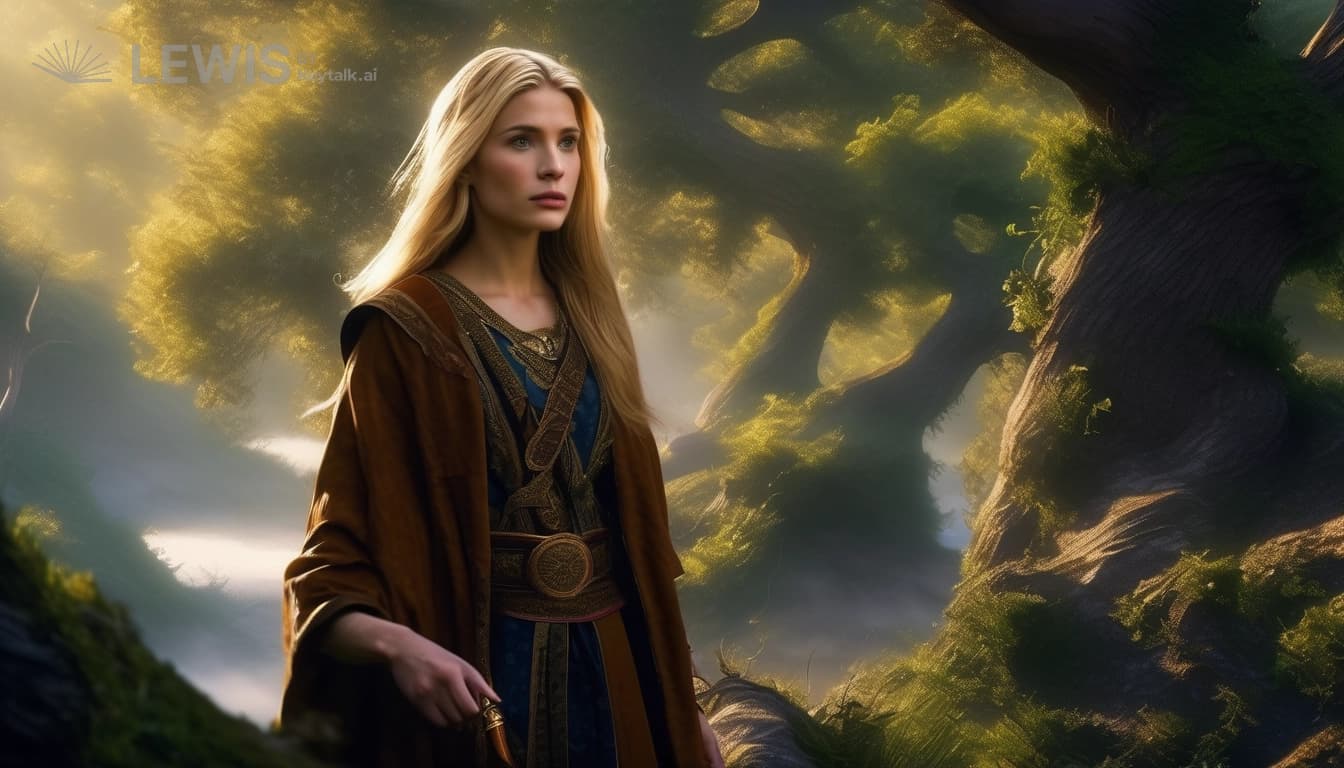
Isolde Marin stands sentinel in the violet shadow of dusk, wrapped in a salt-stiffened oilskin coat whose hems are mended with mismatched thread—a patchwork of responsibility she cannot shed. Her posture is both vigilant and weary, as if bracing herself against an invisible tide, with hands clasped behind her back and a gaze that drifts beyond the horizon, searching for answers she fears to find. Her face is marked by sleeplessness and a single silver earring in the shape of a key—her only keepsake—glimmers at her throat, catching the uncertain light like the memory of a promise half-remembered.

敵役

Father Thaddeus Greyve

性別男性
職業Village Priest and Historian

プロフィール

Once revered as the village’s moral center, Greyve now manipulates history and memory through the lighthouse’s foghorn, convinced that only his stewardship can spare the village from chaos — and himself from exposure. His obsession with preserving a carefully curated past has transformed him into a silent architect of unreality, rationalizing each act as a necessary sacrifice for the 'greater good.'

Greyve projects a patient, paternal calm in public, his sermons laced with hope and reassurance, yet in private he is restless, plagued by a gnawing dread that his own sins will surface if the past is left unguarded. He vacillates between moments of genuine remorse and icy calculation, justifying each manipulation as an act of mercy even as he recoils from the monstrousness of what he’s become. The villagers’ implicit trust both feeds his guilt and heightens his paranoia, trapping him in a cycle of control and self-loathing.

背景

Born to a storied line of village chroniclers, Greyve inherited not only the priesthood but also the secret of the lighthouse’s true power. In his youth, he was an idealist, determined to shield the community from hardship — until a single, catastrophic mistake forced him to orchestrate the first erasure. That original sin, now buried beneath layers of altered memory, drives his desperate efforts to maintain a seamless narrative, even as each new lie threatens to unravel the fragile fabric of the village and his own identity.

外見

Father Thaddeus Greyve stands as a gaunt, imposing figure swathed in a heavy, midnight-blue cassock that pools around his polished boots, his posture rigid yet betraying a tension coiled in his clasped hands. Deep-set eyes glimmer with both weary compassion and a shadowed wariness, while the silver at his temples frames a face marred by a thin, faded scar just beneath his left cheekbone—a relic of the night his faith began to fracture. The battered leather-bound journal always tucked under his arm is at once shield and burden, its presence underscoring the gravity he carries and the secrets he cannot relinquish.
対照人物

Maura Pike

性別女性
職業Innkeeper and Gossipmonger

プロフィール

Maura survives by collecting and selling secrets, weaving herself into the fabric of every villager’s story. The foghorn’s power both terrifies and tempts her: it can erase her greatest asset or offer a chance to rewrite her own haunted past.

Maura’s laughter is sharp and loud enough to fill a taproom, but when the conversation turns to lost loves or forgotten nights, her gaze slips away and her jokes curdle into something brittle. She cannot resist prying into others’ affairs, yet recoils at the thought of her own history vanishing, gripped by an existential dread she covers with irreverent banter. The more Isolde struggles with the burden of the lighthouse, the more Maura is drawn to test its boundaries—out of both envy and fear, never admitting which is stronger.

背景

The daughter of a vanished sailor and a once-renowned midwife whose memory is a patchwork of rumor and invention, Maura grew up learning that survival meant knowing more than everyone else. Her inn, perched at the crossroads of the village, is both sanctuary and stage, a place where myth and truth entwine. Years ago, she loved fiercely and lost disastrously—though the details slip through her fingers each time the fog rolls in, leaving only yearning and suspicion. This personal stake drives her to challenge both Isolde’s choices and Greyve’s control, making her the one villager most likely to disrupt the delicate balance of memory and truth.

外見

Maura leans across the battered oak bar, her eyes glittering with mischief and unresolved longing, the candlelight catching in strands of wild auburn hair that rebel against her hastily pinned-up bun. Her clothes—practical but stubbornly bright, a roughspun teal bodice over a russet linen blouse—hint at both her defiance of village gloom and her role as the inn’s vivacious pulse. Even when she laughs, there's a wary tension in the set of her shoulders, and the silver locket at her throat—thumbed smooth by anxious fingers—marks her as a woman who remembers too much and fears, above all, to forget.
触媒

Jory Fenwick

性別男性
職業Shipwreck Salvager

プロフィール

Desperate to lift his family from the chokehold of poverty, Jory becomes entangled with the lighthouse’s dark magic as the fog thickens and reality distorts. His intimate knowledge of the treacherous tides and shifting coastline draws him closer to the forbidden secrets of the lighthouse, propelling choices that could either destroy or redeem the village.

Jory is restless and calculating, forever measuring the risk versus reward of each venture—yet guilt gnaws at him after every salvage, haunted by the thought that his gains might be bought with others’ losses. His loyalty to his family is unwavering, but he cannot escape the hunger for significance that makes him reckless in the face of the unknown. He is both drawn to and fearful of the power he senses in the lighthouse, torn between using it for his own ends and protecting his loved ones from its consequences.

背景

Raised among the salt-bittered ruins of shipwrecks and half-remembered legends, Jory inherited both his father’s knack for reading the sea and the burden of debts that tie his family to the village’s fate. Years of scraping survival from the coastline’s bones instilled in him a pragmatism that borders on ruthlessness. When the foghorn’s magic begins to warp reality, Jory’s unusual attunement to the sea’s changes makes him one of the first to sense the danger—and the opportunities—that the lighthouse offers, setting him on a path that will entangle every soul in the village.

外見

Jory Fenwick stands with a weather-beaten solidity, his frame lean and powerful from years of hauling wreckage, yet always slightly hunched as if bracing against an unseen squall. His eyes—sharp and sea-grey—flicker with calculation and an undercurrent of haunted regret, while salt-stiffened work clothes hang from his broad shoulders, patched but meticulously cared for. A battered leather satchel, bulging with salvaged trinkets and maritime charts, never leaves his side: the talisman of a man who measures every risk but cannot shake the weight of choices already made.
Outsider And Witness

Eira Voss

性別女性
職業Runaway and Amateur Cartographer

プロフィール

Eira, recently arrived and barely remembered by the villagers, compulsively sketches shifting maps in her battered journal, desperate to pin the world in place. Her sense of self is haunted by a memory she cannot retrieve, making her both susceptible to the foghorn’s erasures and uniquely sensitive to the ways reality warps around her.

Eira is hungry for certainty but drawn to the unknown, obsessively noting details others ignore while doubting the truth of her own senses. She craves belonging, yet instinctively mistrusts the warmth of the village, fearing that acceptance might cost her the last fragments of who she was. Her quiet stubbornness masks a trembling fear that if she stops witnessing, she will vanish entirely.

背景

Eira fled an unnamed calamity in another coastal town, carrying only her weather-beaten satchel and a half-remembered promise. Her arrival in the village coincided with a night of particularly thick fog—one she cannot recall, but which left her with a scar behind her ear and a disjointed sense of time. The maps she draws are her attempt to resist the village’s shifting reality, even as she senses that her own past is entangled with the lighthouse’s secrets.

外見

Eira stands slightly withdrawn from her surroundings, shoulders hunched protectively around a battered satchel, as if bracing herself against both cold wind and unseen forces. Her clothes are an uneven patchwork: a too-large fisherman’s sweater, frayed at the cuffs, layered with a sailor’s oilskin and corduroy trousers—garments scavenged, perhaps, or bartered in haste. Her eyes, pale and wide-set, scan each shadow with anxious vigilance, and a thin, silvery scar curves behind her left ear—a detail she touches unconsciously when lost in thought. She moves as if mapping the world in real-time, never fully at rest, as if fearing that stillness might erase her entirely.

筋書き

On a rain-lashed night in Rivenloch, a ship founders on the rocks despite the lighthouse’s mournful warning. Isolde Marin, keeper of the ancient tower and its memory-twisting foghorn, cannot sleep. In the aftermath, she discovers a battered journal in the surf—its pages filled with maps of the village and cryptic notations that refuse to fade even as the fog swallows details from her own mind. The journal belongs to Eira Voss, the runaway girl who sketches obsessively, her drawings shifting subtly with each new blast from the lighthouse. Isolde glimpses in Eira’s work a record of things that should not be remembered: a vanished boy, a church bell that once rang, a storm that never happened. Haunted by her own erased childhood, Isolde is seized by the urgent conviction that the foghorn’s power has spiraled beyond any hope of benevolent control.

But as Isolde debates whether to sound the horn again—knowing each toll will save ships but warp the fabric of her neighbors’ lives—Father Thaddeus Greyve begins his own quiet campaign. The priest, custodian of the village’s oral history and secret co-conspirator in the lighthouse’s rites, senses his grip on the past slipping. Whispers of missing kin and impossible memories ripple through the cottages. Greyve, convinced that his stewardship alone can prevent chaos, manipulates Isolde: urging her to erase the memories of growing unrest, to smooth over fractures before they can expose his own buried sins. He presents himself as a voice of reason, a balm to Isolde’s conscience, but beneath his paternal calm lies a mounting terror that his carefully curated reality will shatter.

Meanwhile, Maura Pike, the innkeeper and gossipmonger, finds herself both threatened and tantalized by the foghorn’s magic. Her livelihood depends on secrets, yet the shifting tides of memory threaten to wipe her clean. She strikes a wary bargain with Jory Fenwick, the salvage man—offering information in exchange for a chance to glimpse the forbidden workings of the lighthouse. Jory, desperate to secure his family’s future and aching for meaning beyond the grind of scavenging shipwrecks, pushes closer to the source of the village’s distortions. He believes, naively, that if he can understand the lighthouse’s rules, he might use them to erase his own failures or save those he loves from their harshest truths.

The fragile stasis of Rivenloch ruptures when Eira’s latest map reveals something impossible: a stretch of coastline where no one remembers a path, yet where the earth is worn with footsteps and the ruins of a cottage stand. Isolde, drawn by a sense of déjà vu—an ache for something lost—ventures there and finds, buried in the heather, a rusted key engraved with her own initials. The revelation is shattering. In a wave of recollection, she realizes that the lighthouse has not only rewritten the villagers’ memories, but her own: she was not always the keeper, and the last keeper’s fate is a blank she cannot fill. The foghorn’s power, she understands, is not an impersonal curse, but a cycle—each keeper bound by guilt and isolation, each priest complicit in the cleansing of inconvenient truths.

As the autumn storms mount and the sea grows hungrier, Greyve engineers a crisis. He incites panic over Eira’s maps and Jory’s probing, declaring that outsiders and heretics threaten the village’s soul. He pressures Isolde to erase Eira entirely, to sound the horn and let the girl’s presence vanish like so many before. Isolde, torn between her duty to protect and her desperate yearning for honesty, refuses. Her defiance marks her as both savior and traitor in the villagers’ eyes, as Maura fans suspicions in the taproom and Jory, emboldened, schemes to seize the horn for himself.

The climax erupts in the lighthouse as a storm of unprecedented fury batters Rivenloch. The villagers, whipped into a frenzy by Greyve’s sermons and Maura’s rumors, converge on the tower, demanding that Isolde “restore” the village to its former peace. Greyve and Isolde face off in the lantern room as the sea pounds below. He pleads, then threatens—revealing that he, too, has altered memories, erasing his own past cruelties and the crimes of those he favored. Isolde, nearly broken, is confronted by Eira, who presses the journal into her hands—a physical record that resists the fog’s magic. Maura, torn between survival and truth, betrays Greyve, exposing his manipulations to the villagers outside. Jory, desperate and afraid, tries to seize the horn but falters, realizing the cost of rewriting reality is too great.

In a moment of agonizing clarity, Isolde refuses

シーン

シーン 1
scene 1 image
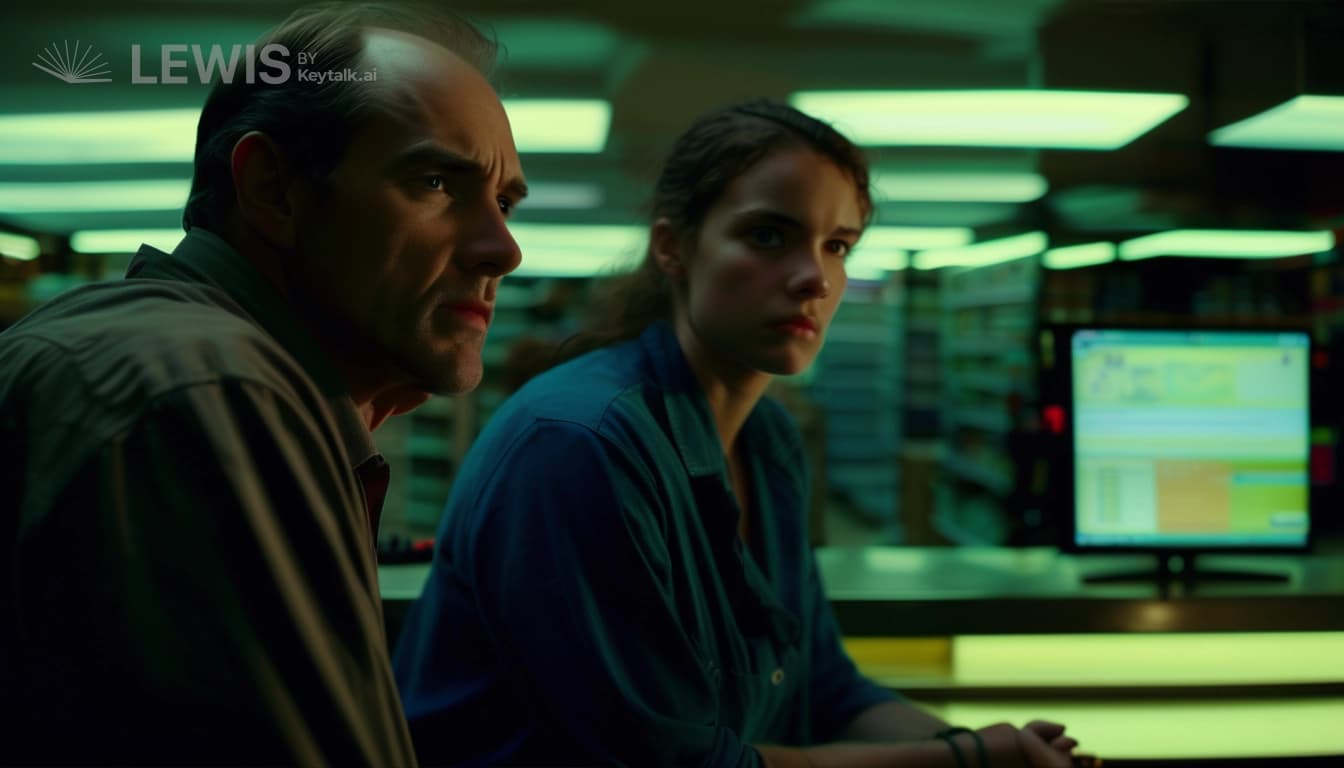
Lightning forks above the headland, illuminating a sea of desperate faces pressed close to the quivering wooden door. Inside, Isolde’s breath fogs in the chill air as she listens to the villagers’ chant—her name, the horn, the promise of forgetting—echoing up the spiral stair. The journal in her grip feels impossibly solid, the only anchor in a world threatening to blur; above her, the lantern’s glow wavers, casting shadows that dance like memories on the brink of erasure.
シーン 2
scene 2 image
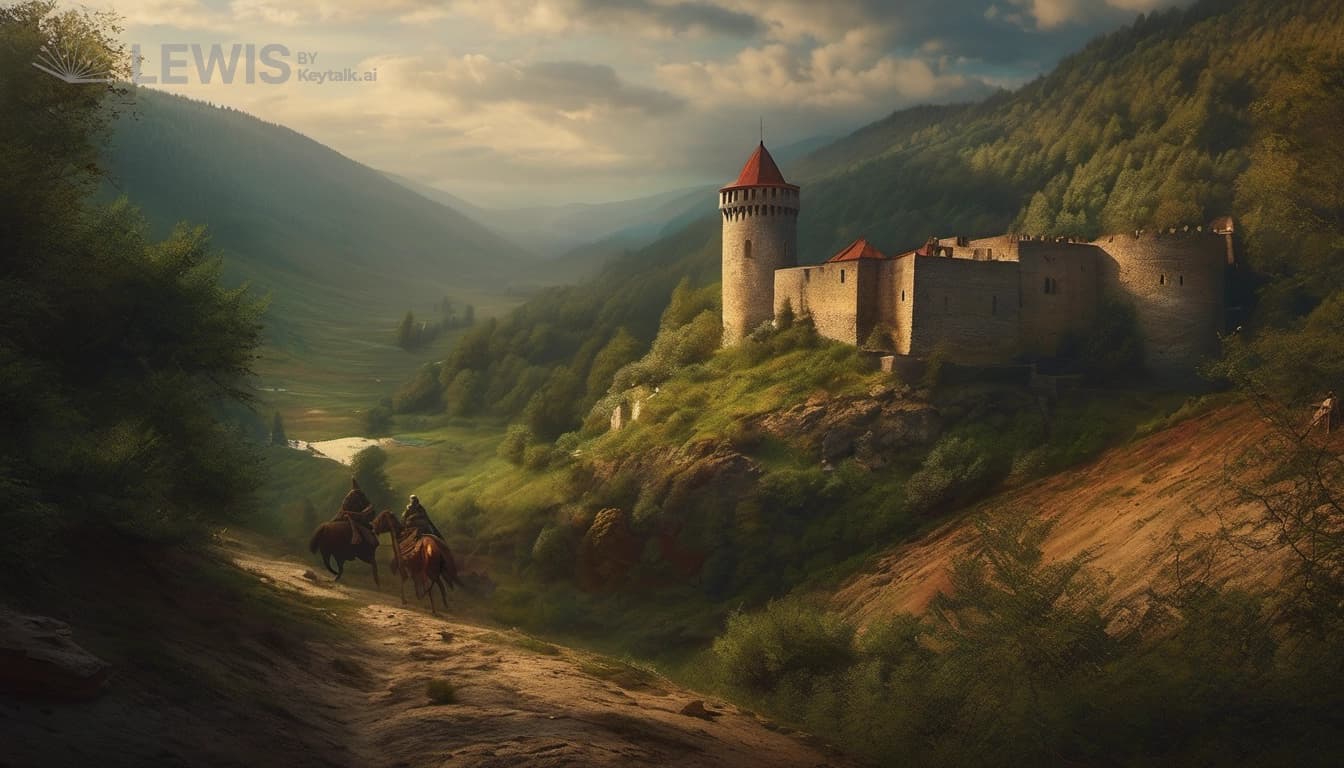
The heather is slick and tangled, snagging at Isolde’s skirts and boots with every uncertain step. The ruined cottage breathes in and out of the fog—one moment a skeletal silhouette, the next a mere suggestion of stone and shadow. Each breath tastes of iron and secrets; the only constant is the faint, rhythmic pulse of the lighthouse beam, flickering like a memory trying to reassert itself. Somewhere behind her, Greyve’s footsteps are lost in the hush, but the sense of being watched, judged, is as real as the damp cold clawing into her bones.
シーン 3
scene 3 image
Lightning forks across the glass, illuminating the chamber with a ghastly blue-white glare. Fog presses thick against the windows, swallowing the world outside, while inside, Isolde’s silhouette is stark—a solitary figure framed by the great, trembling lens. Greyve, looming at her back, is both supplicant and executioner, his shadow distorted and monstrous on the walls. As Eira steps into the lantern room, clutching the battered journal to her chest, the chaos of storm and memory seems to pause, every element of the room pulled taut by the gravity of Isolde’s impending decision.
'The Night the Lighthouse Decided Who We’d Become'ストーリーチャット

このストーリーの登場人物と話したいなら?

'The Night the Lighthouse Decided Who We’d Become'ストーリーチャット

このストーリーの登場人物と話したいなら?

story image
story image
story image
story image
story image

こんな物語はいかがですか?

コメント0

のテーマ音楽