筋書き
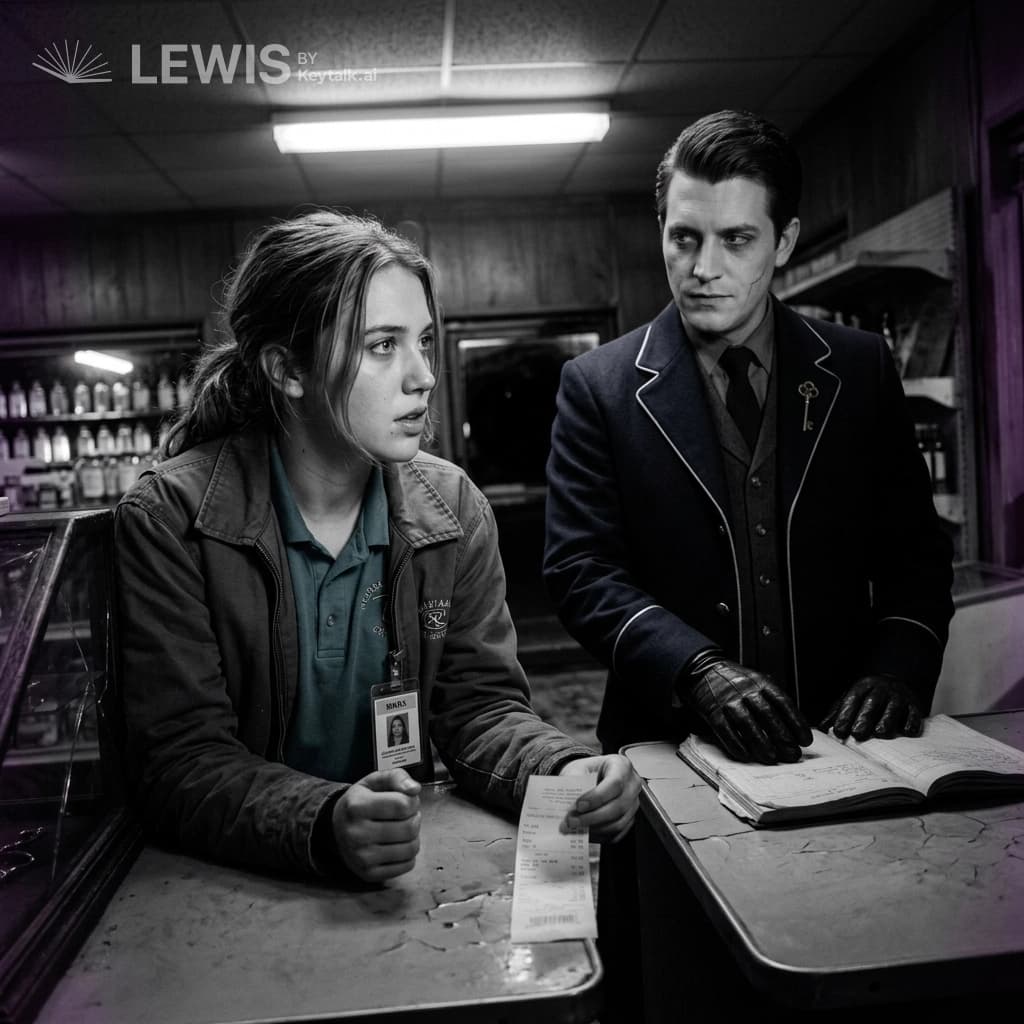
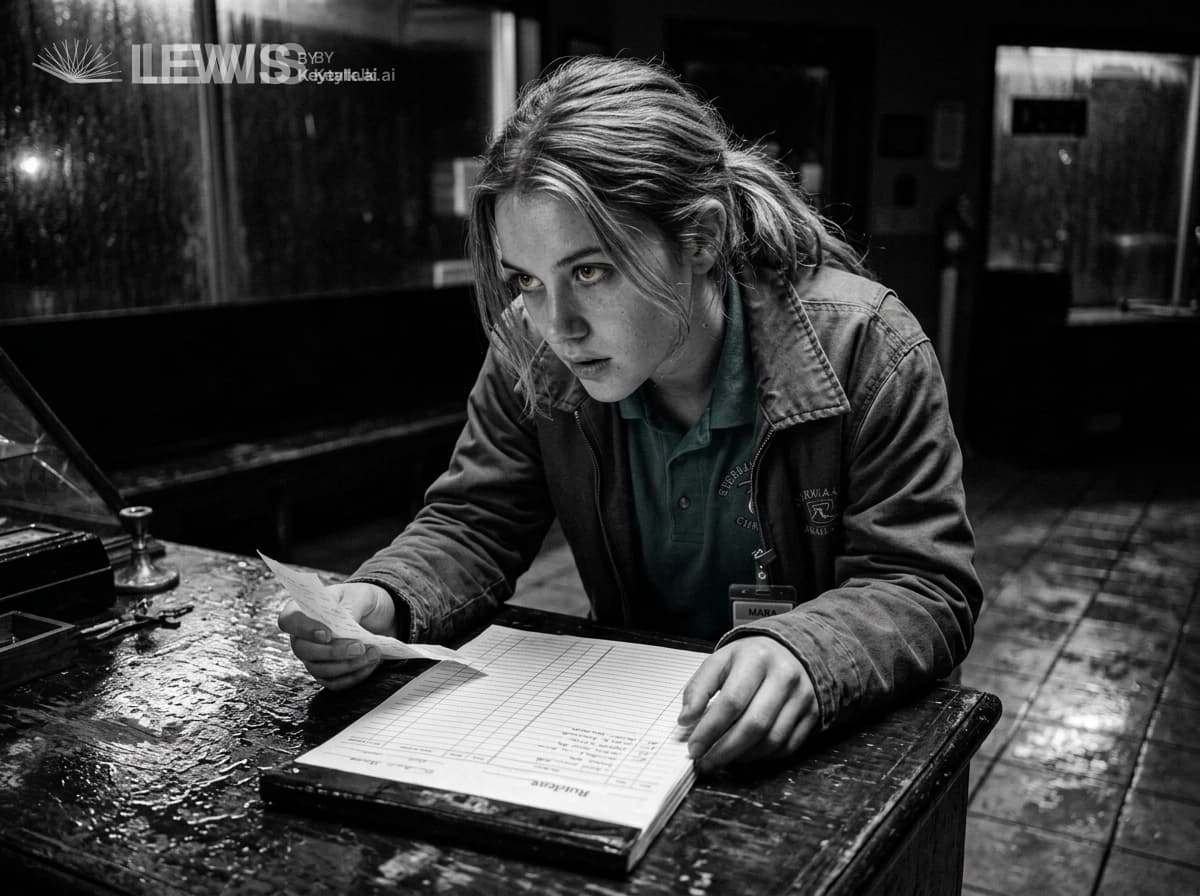
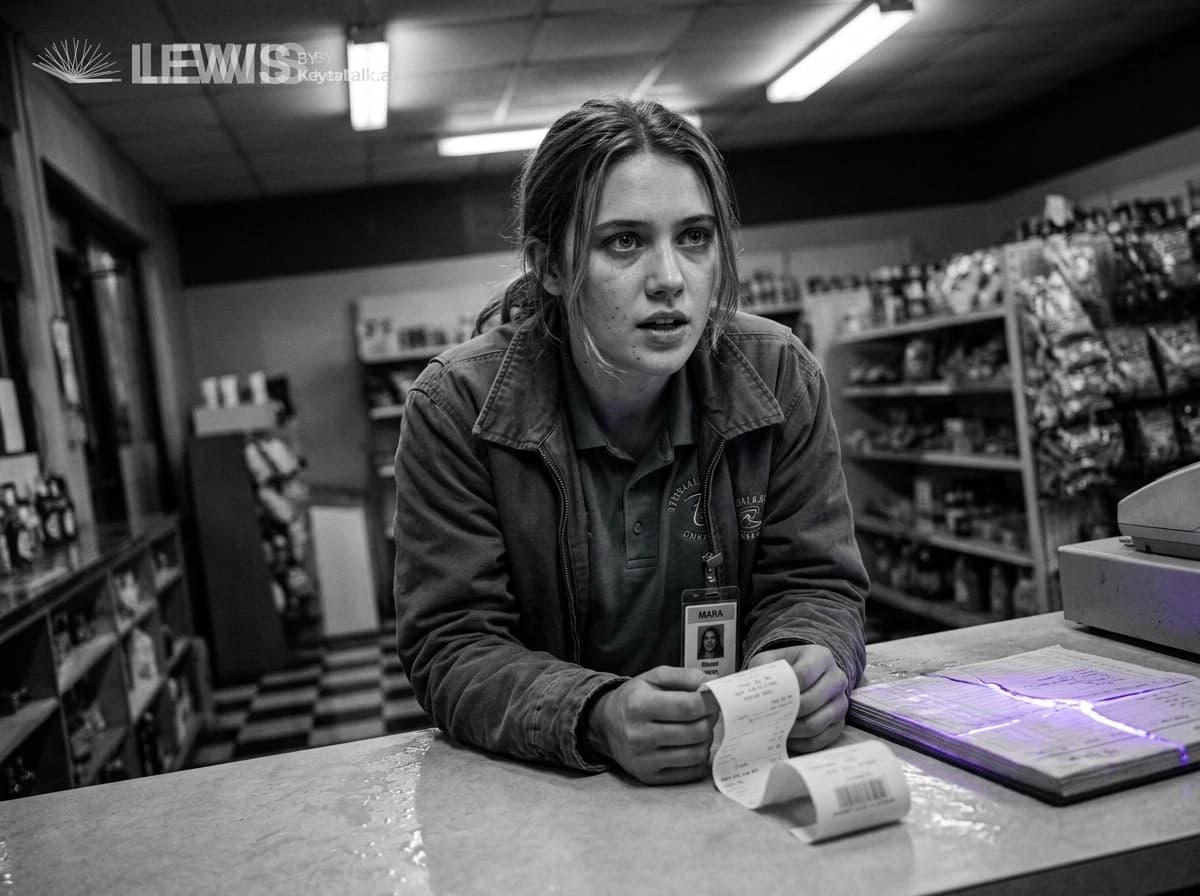
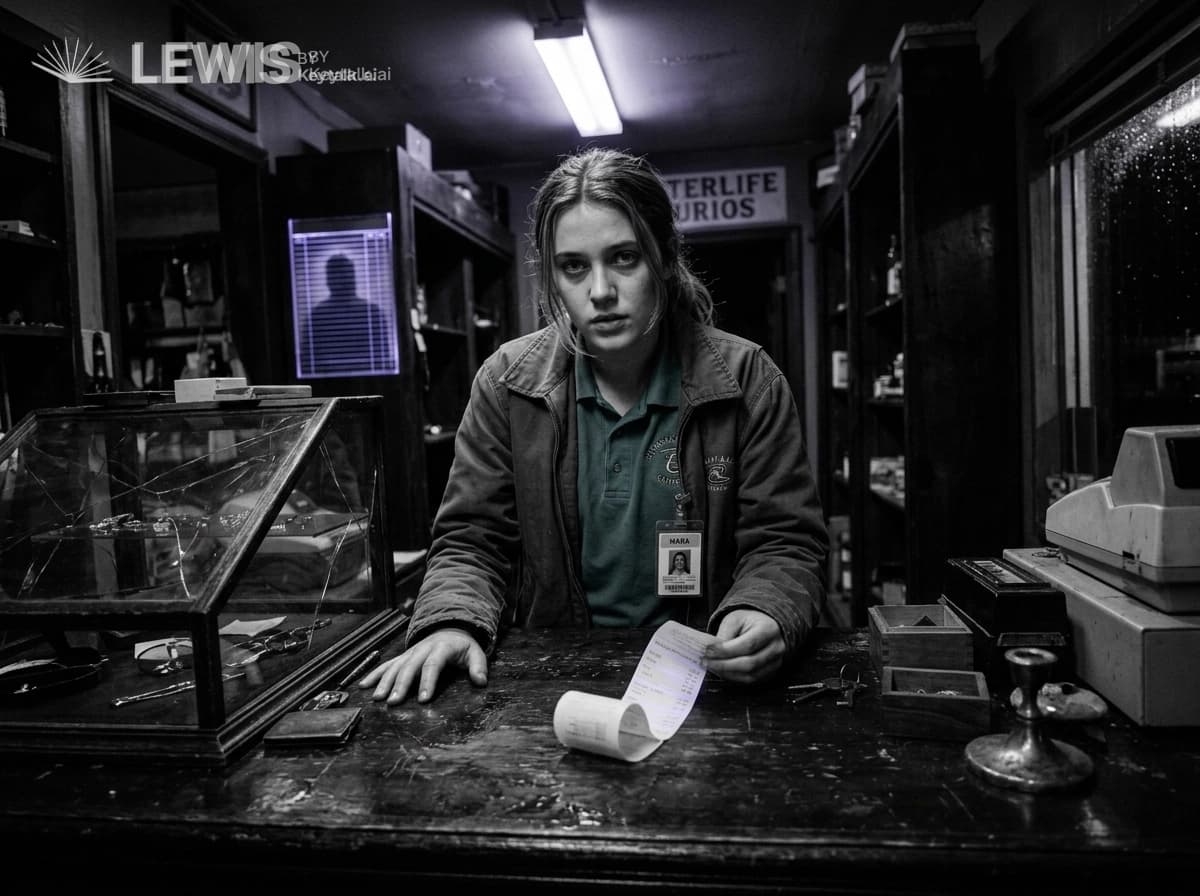
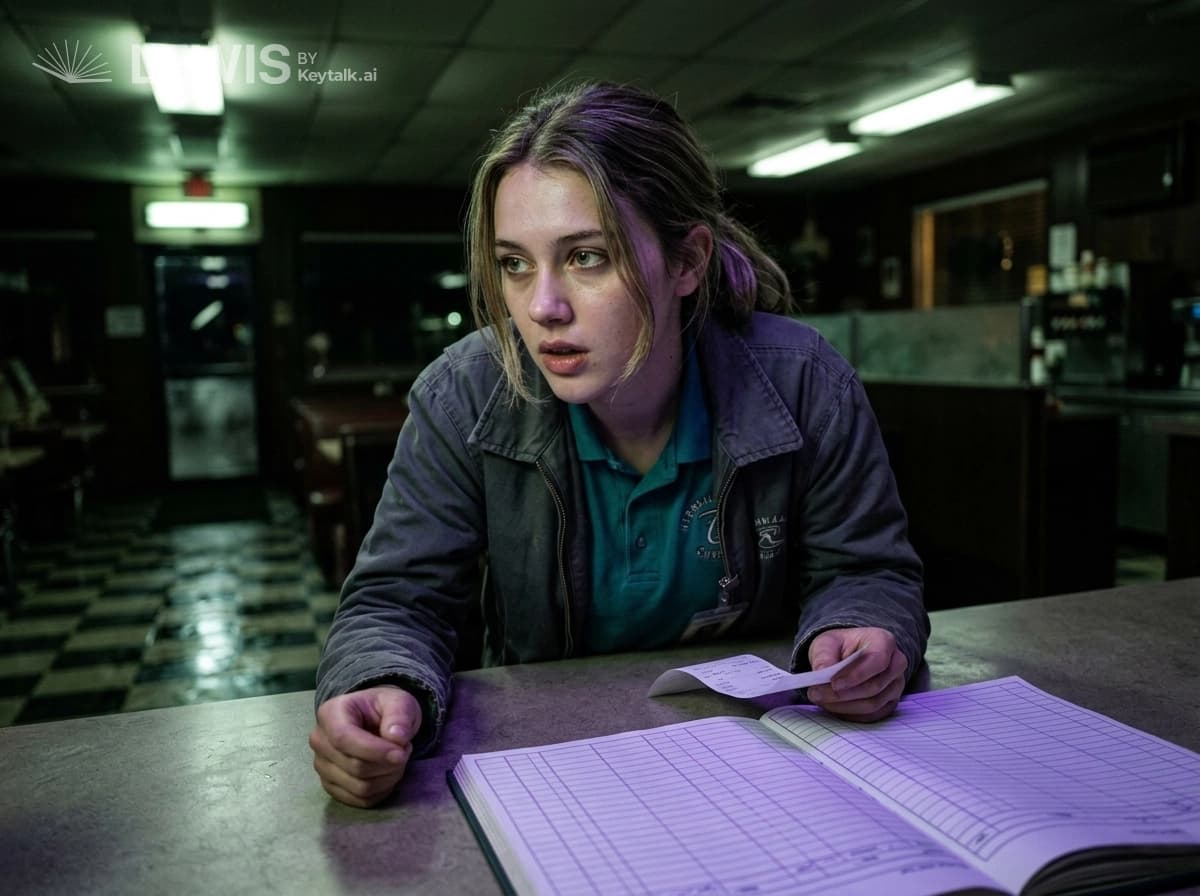
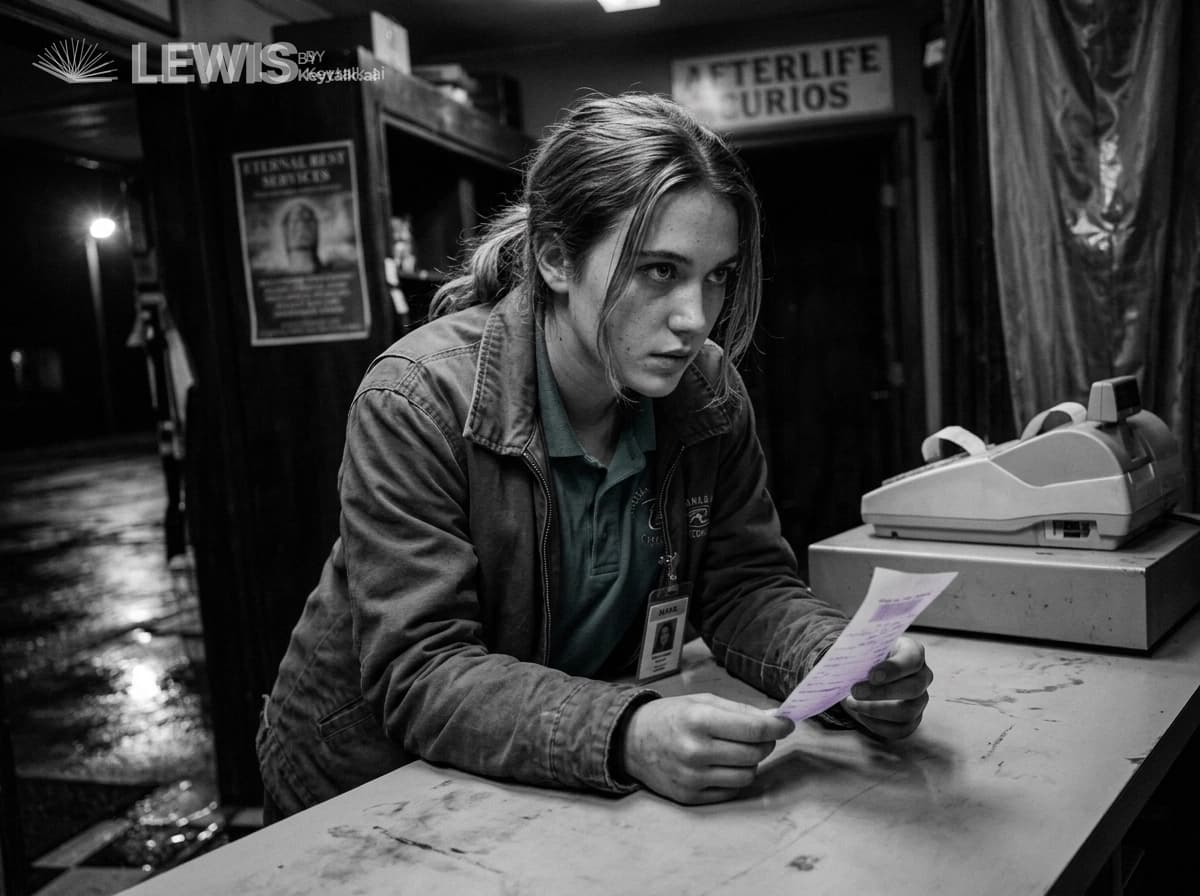
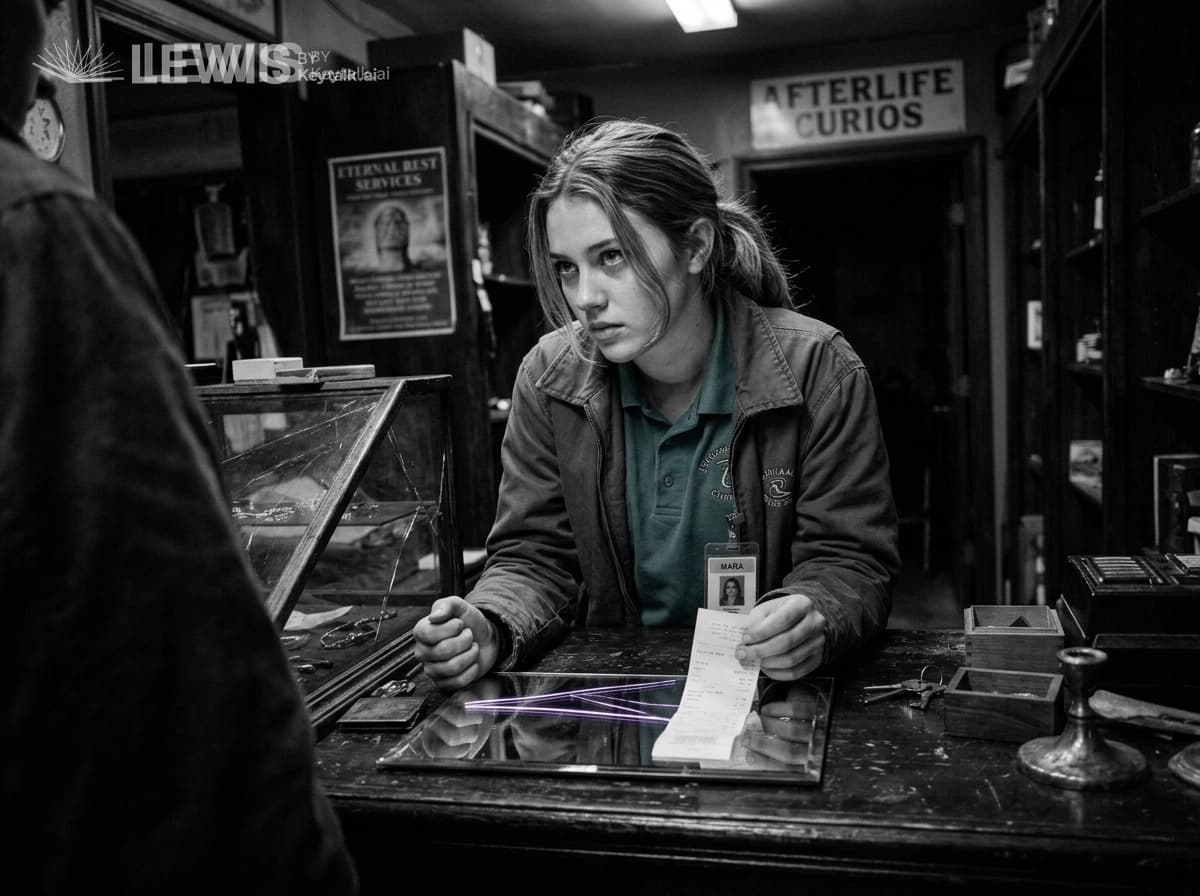
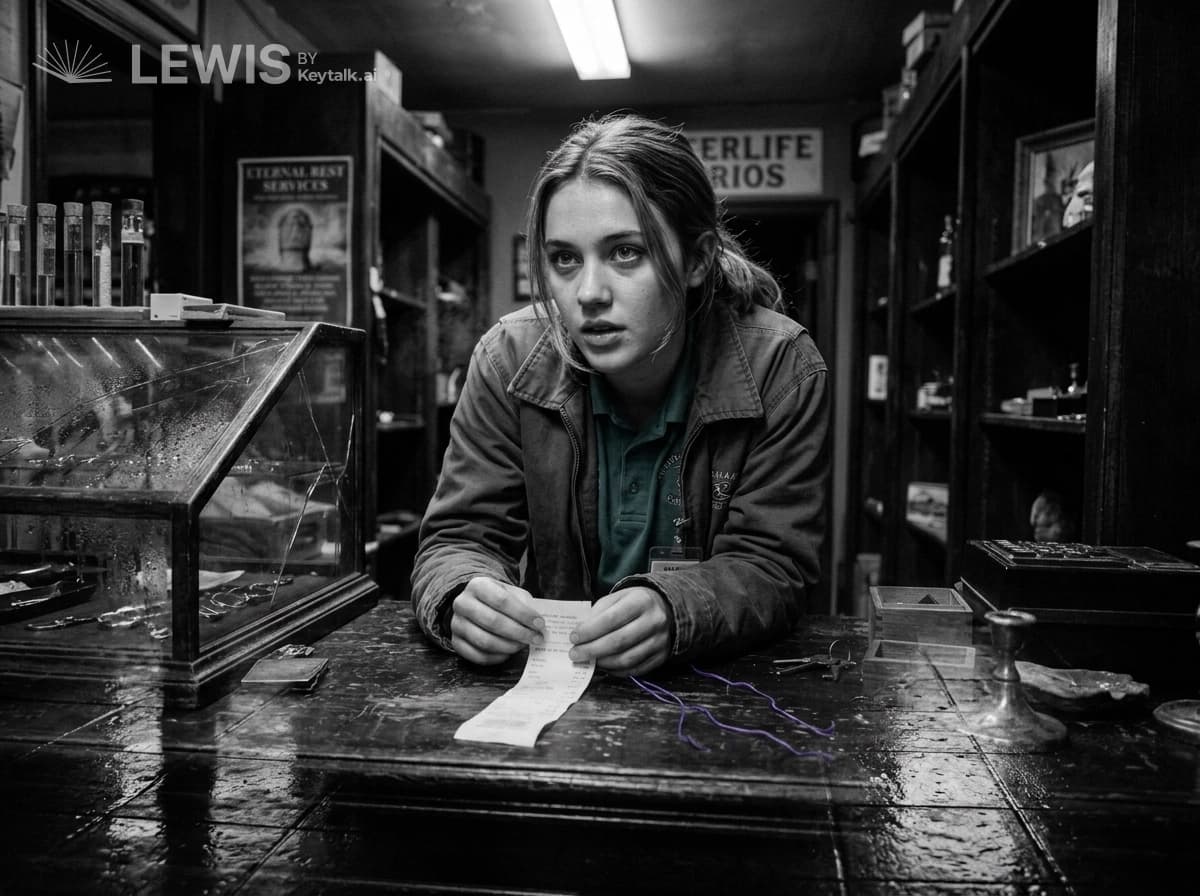
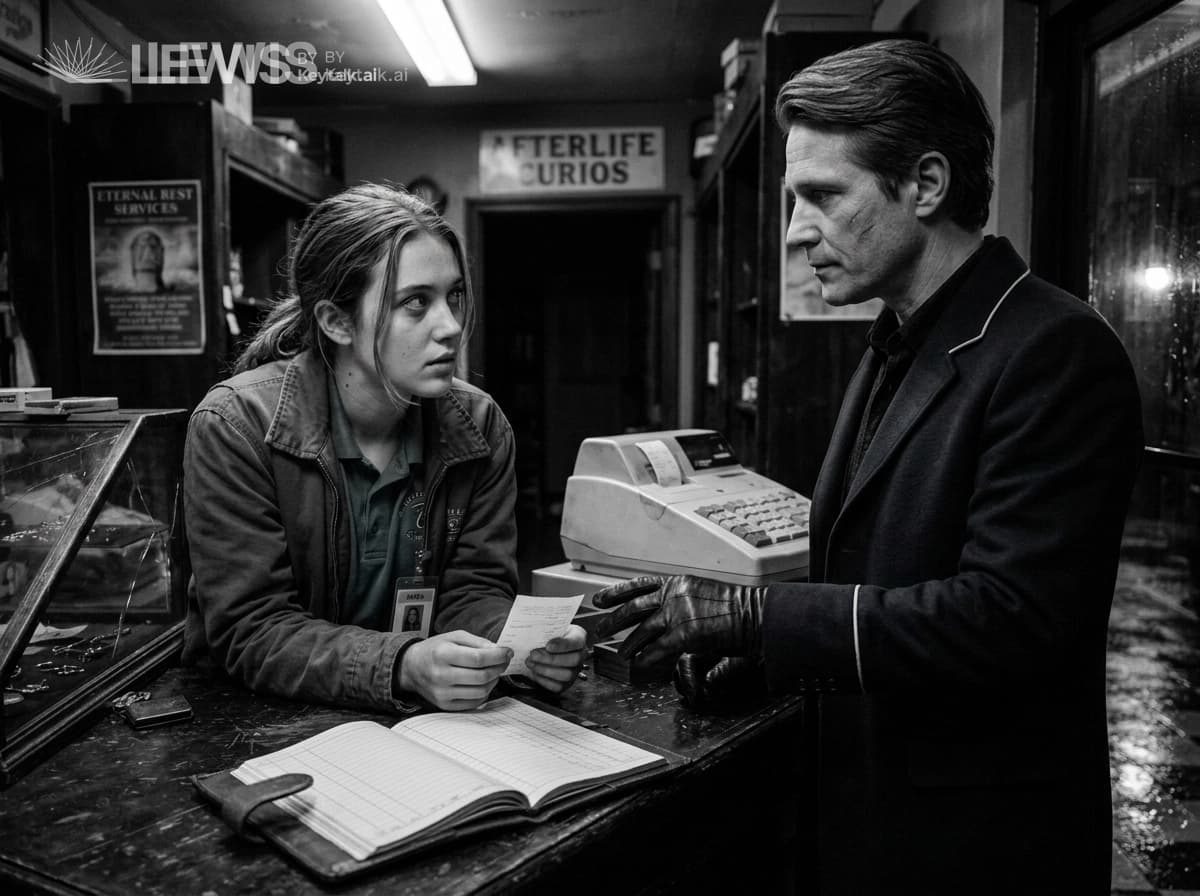
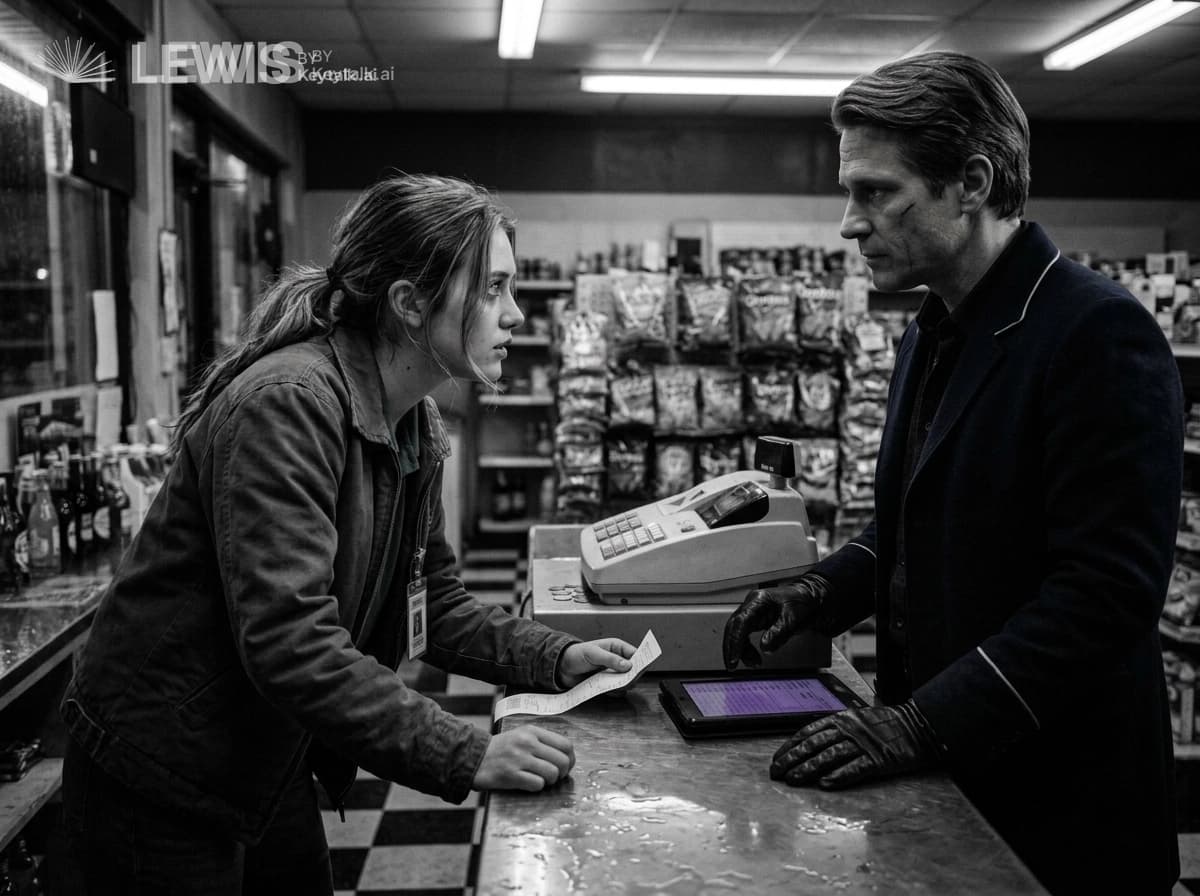
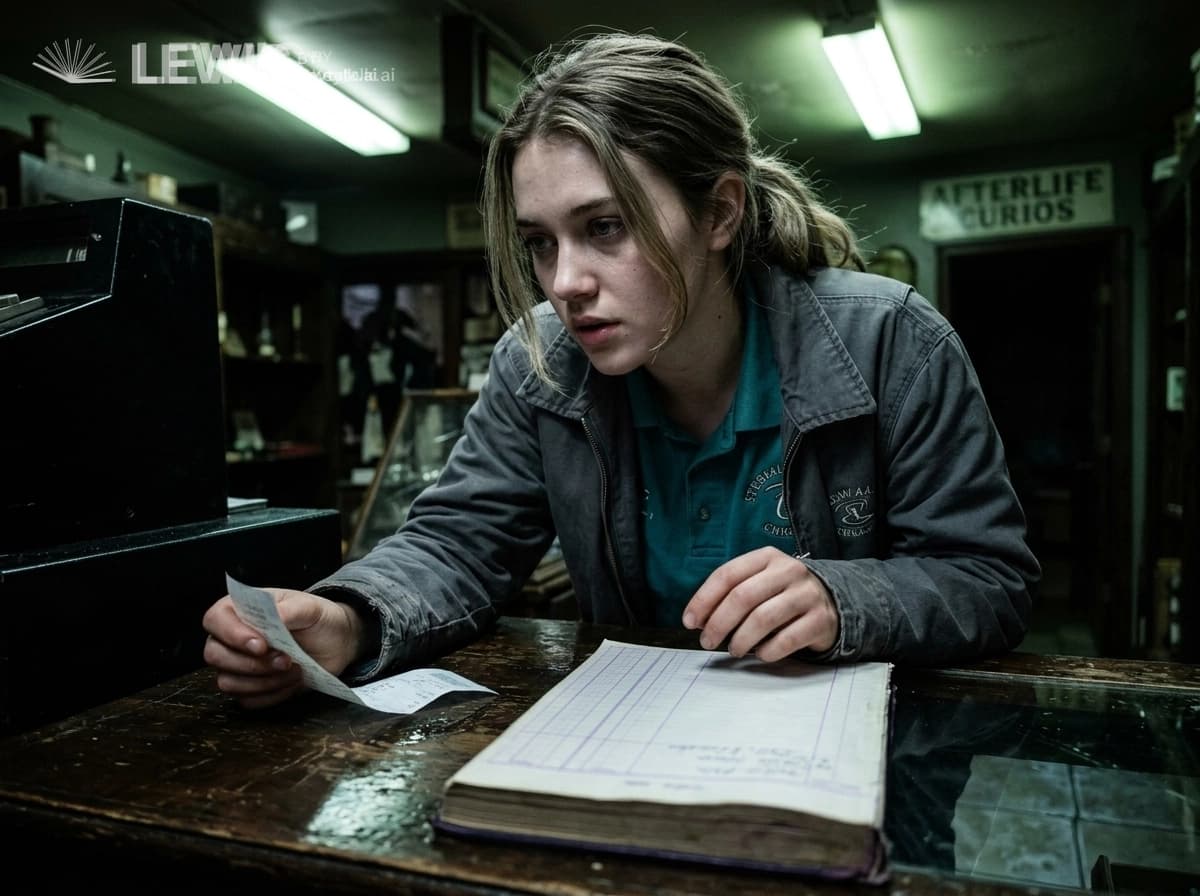
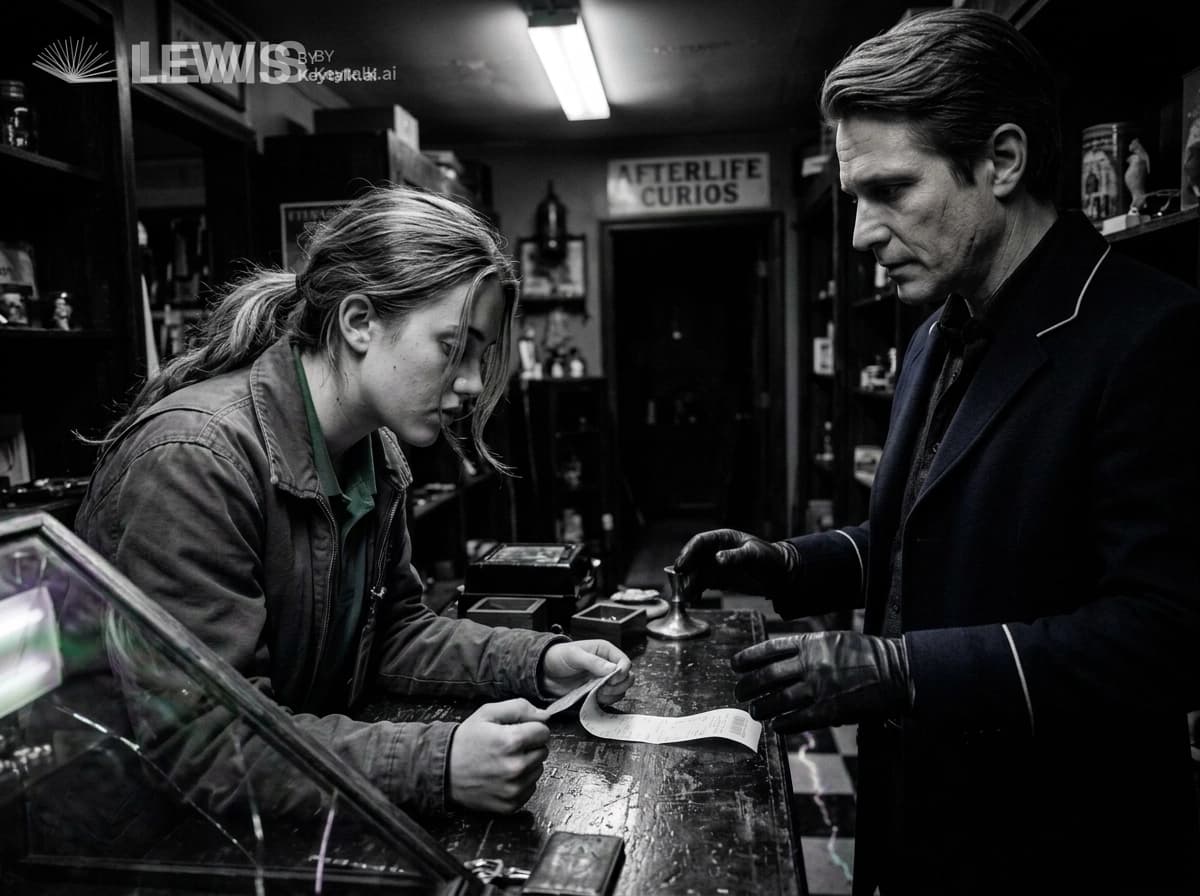
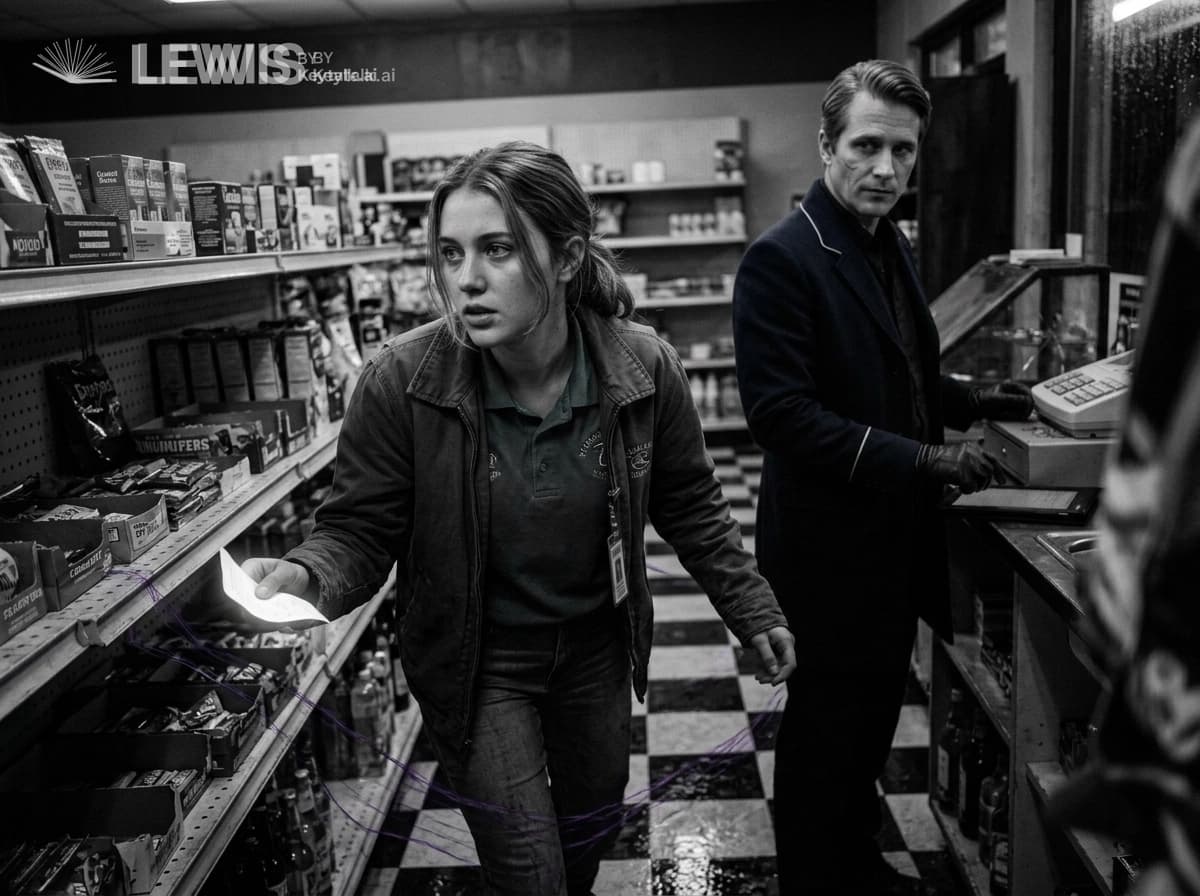
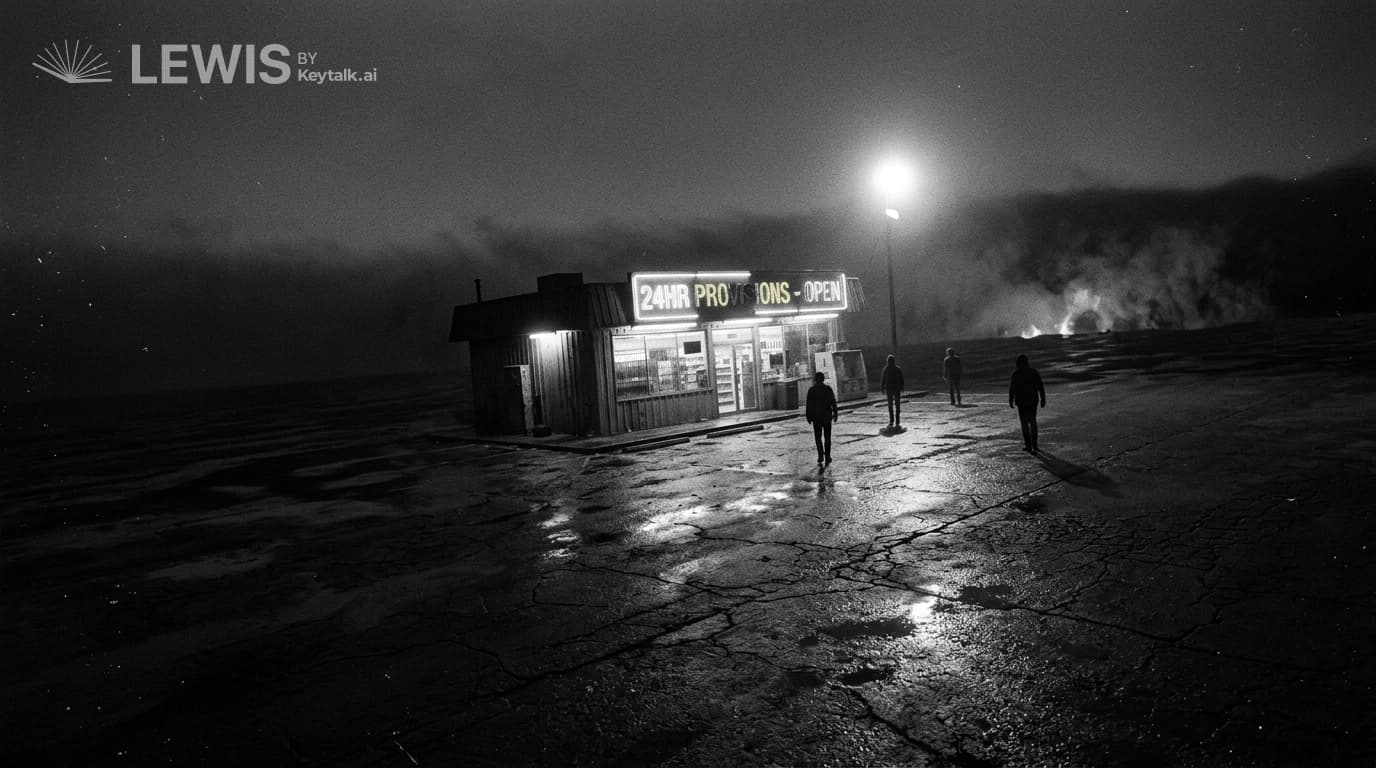
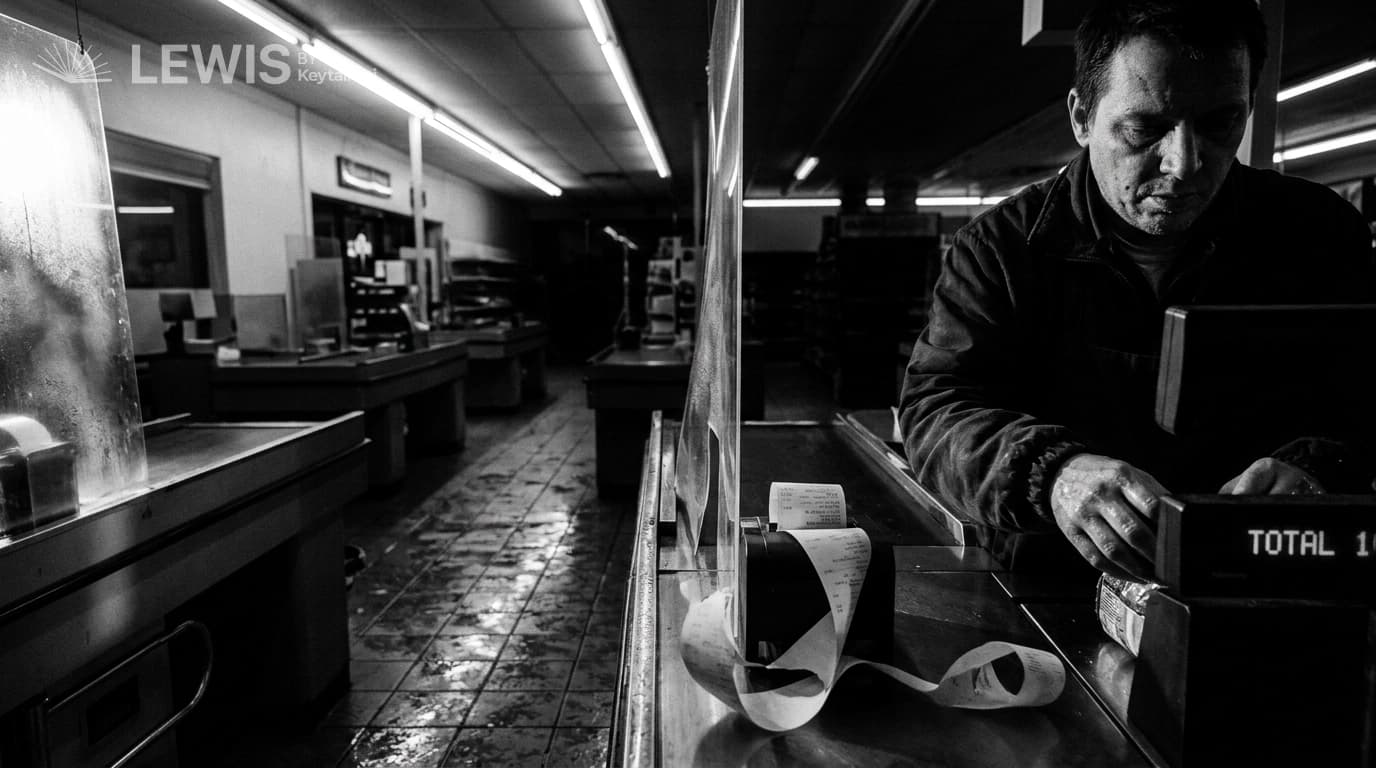
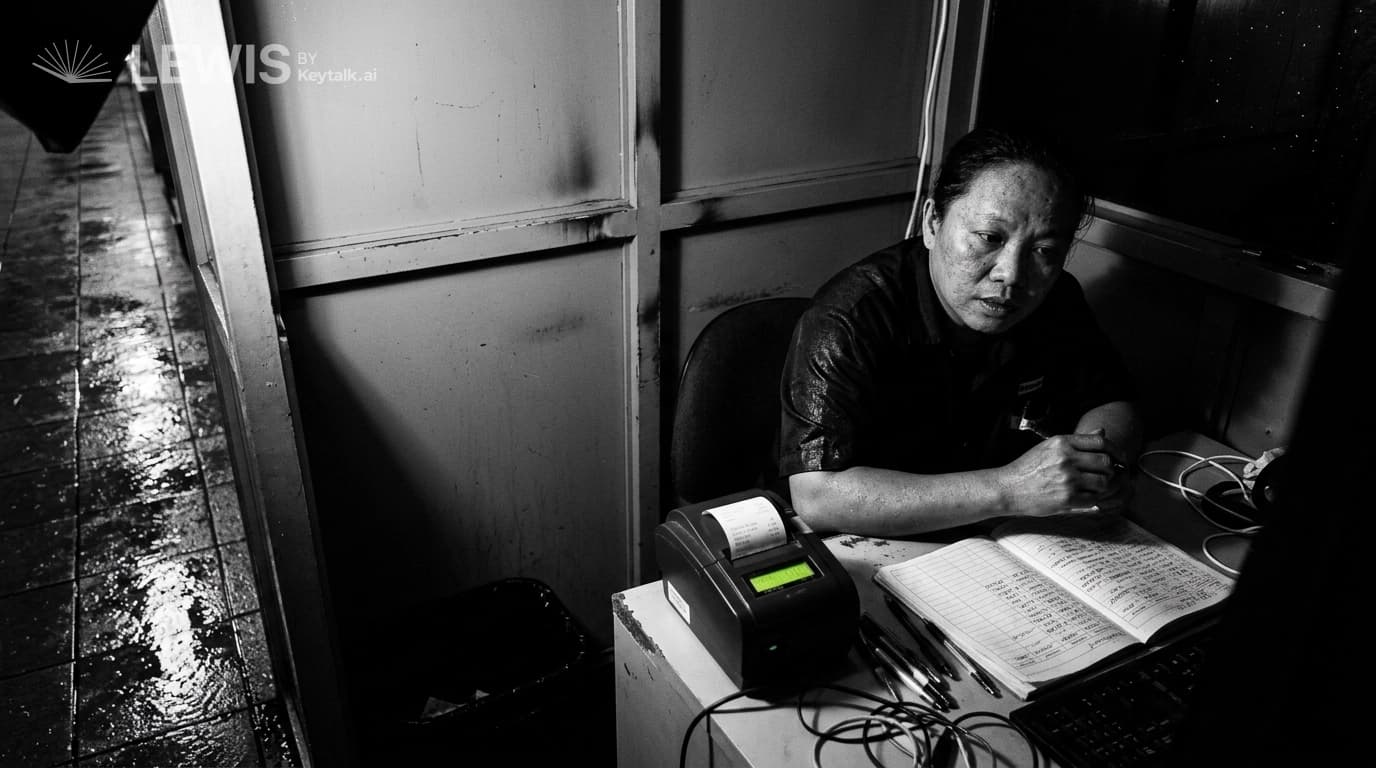
Mara Venn clocks in at the Threshold Mile with the uneasy obedience of someone who knows the price of knowledge, not the price of safety. She’s seventeen and living, an error the store allowed to happen because the ledger-surface misread her arrival as “acceptable enough,” and that uncertainty is its own terror: every time she misses a rule-line she can feel tightening in her ribs, her crossing deadline shortening by interest she can’t see. The convenience store hums around her—fluorescents that flicker like an arrhythmia, roasted coffee concentrate stuck to her sleeves, receipt paper warming in her hands until it seems to remember her skin—and her first night runs on procedures designed for souls who already belong to the system. Mara demands honest reasons, not answers she can bargain with, so the store obliges in the only way it can: it shows her costs only she can read, and it corrects her perception when she tries to look away from the forbidden exceptions.
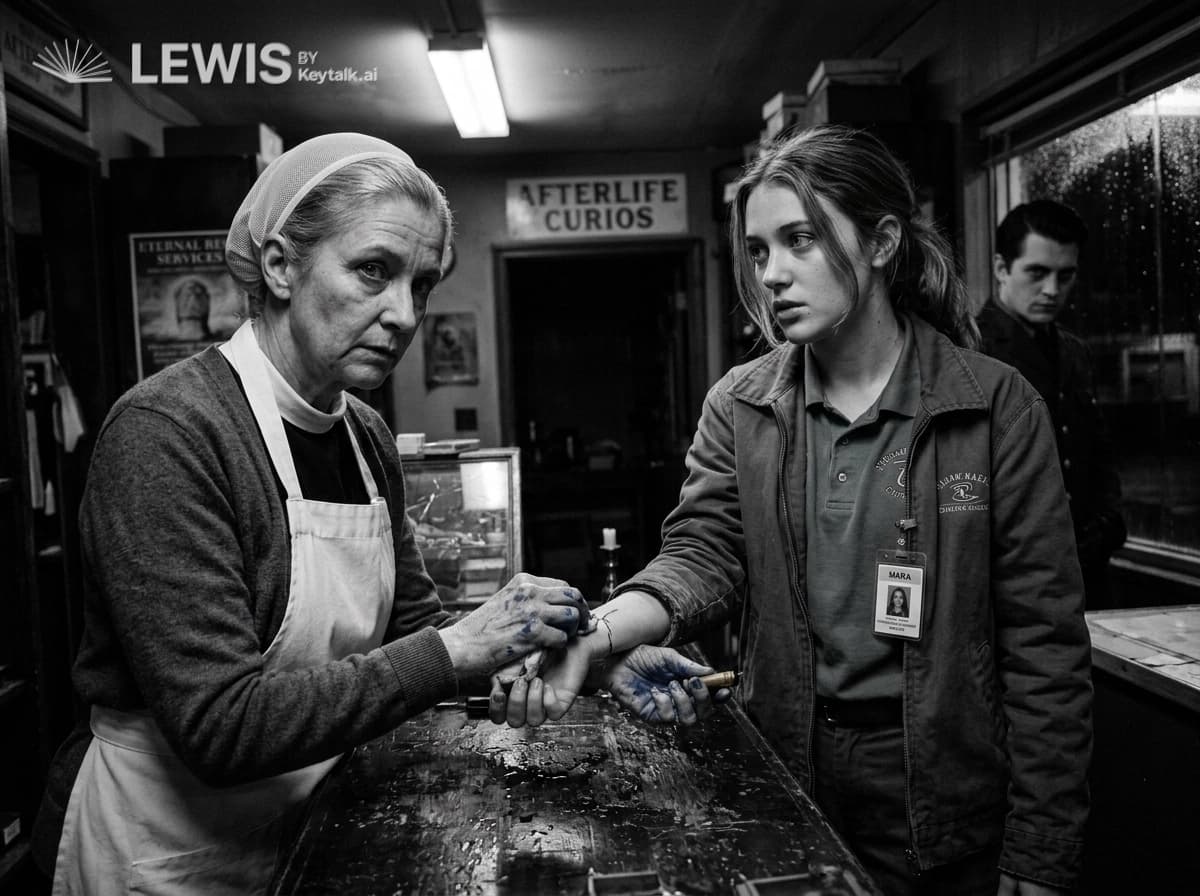
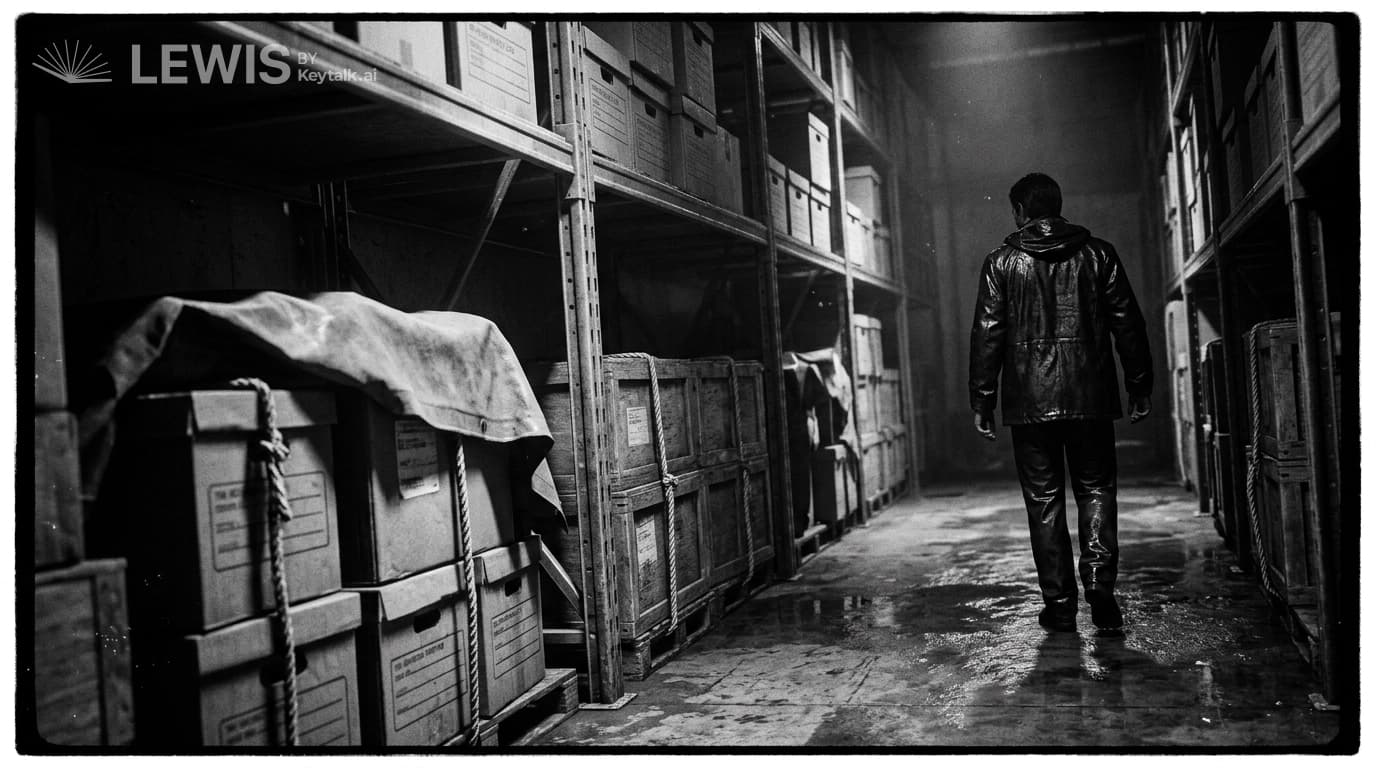
Her training becomes a hunt for something she can’t name: a pattern in the way customers speak their “one last craving.” The exchange is never simple relief. Each sale buys time and comfort, but it charges with a hidden deduction from the soul’s last intact memory tag—an invisible theft that registers as phantom taste on Mara’s tongue. When she watches the tags cut and relocate through the vial-labeled shelves in the inventory labyrinth, she understands why Sister Brine Halden, janitorial custodian of afterlife aisles, speaks like a lullaby through rules and also why she seems so tired of mending what can’t truly be repaired. Brine doesn’t tell Mara what to do; she teaches her how damage clings to thread. She warns that sloppy mercy is another kind of cruelty, then, softer, that the store interprets restraint as instability—meaning compassion can get her punished by tightening rule-lines around her until she can’t breathe.
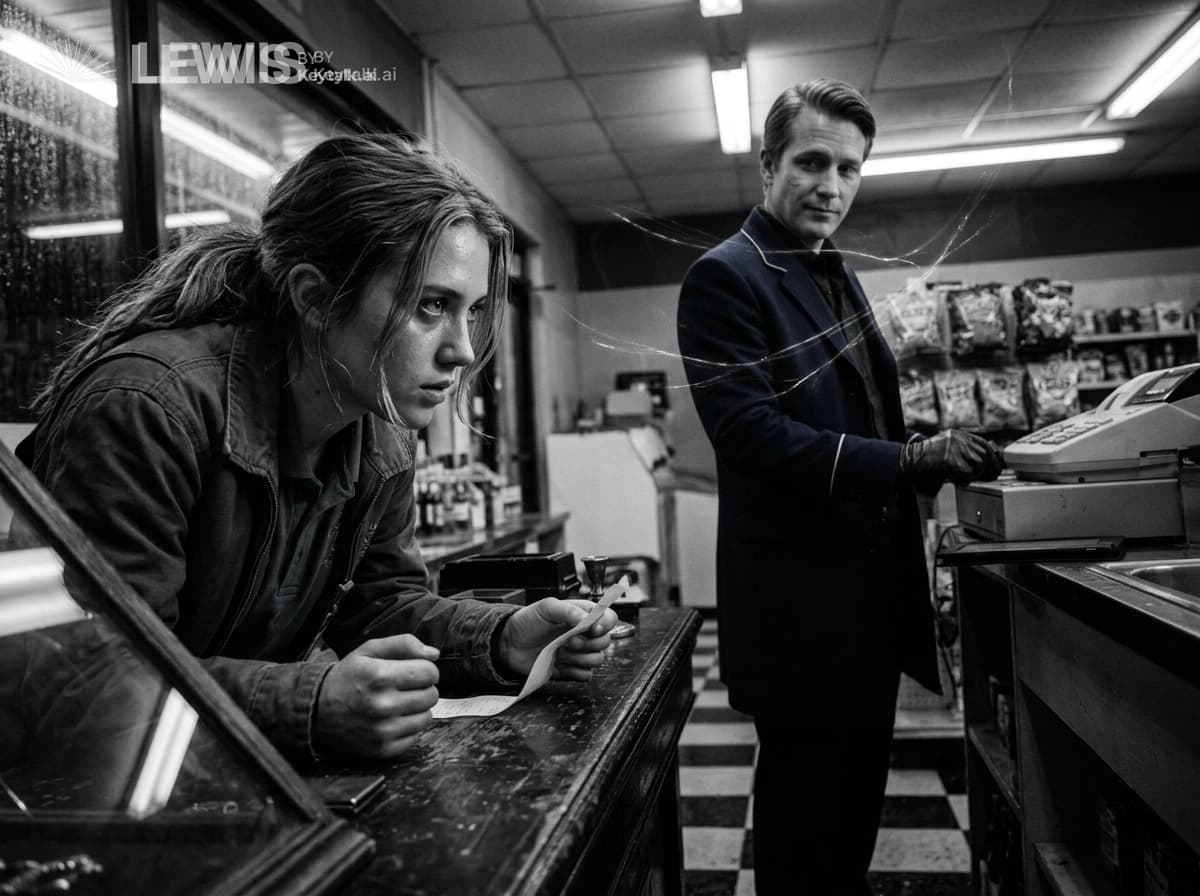
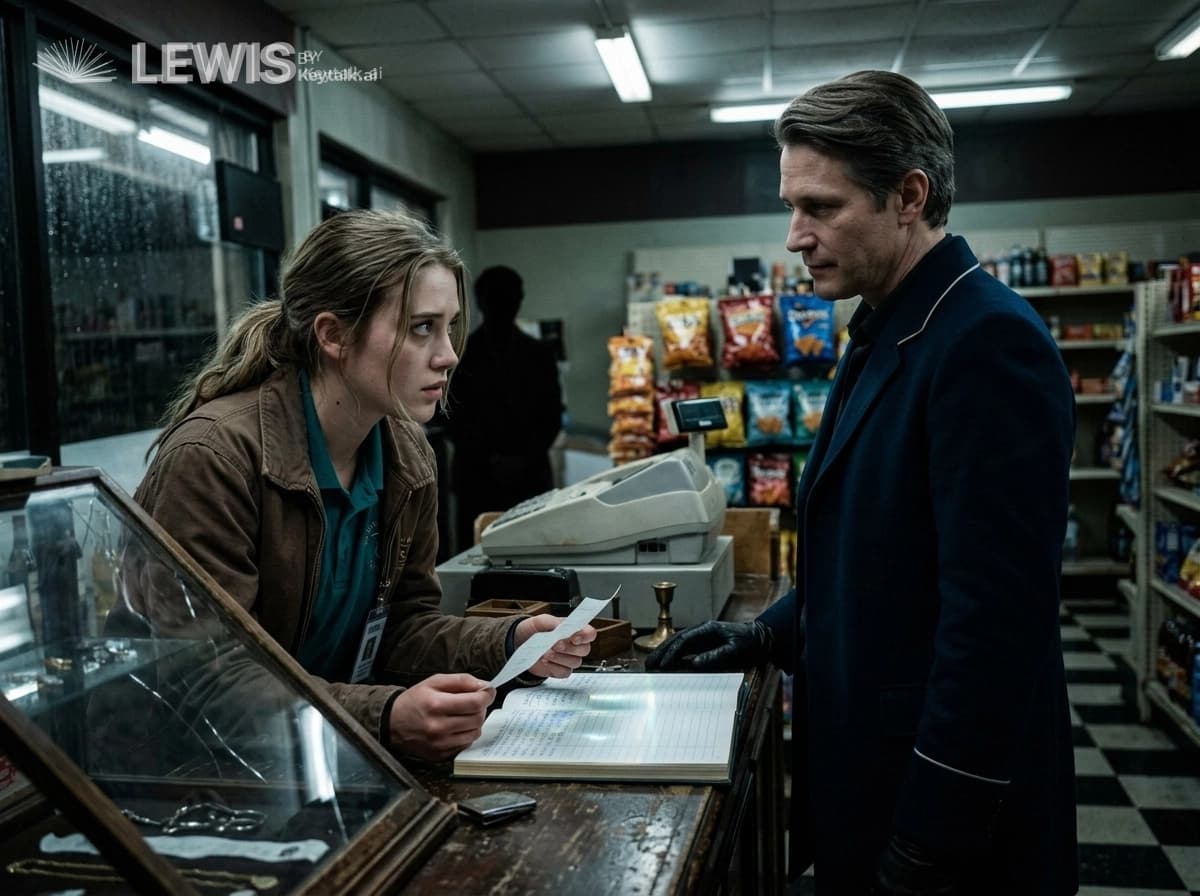
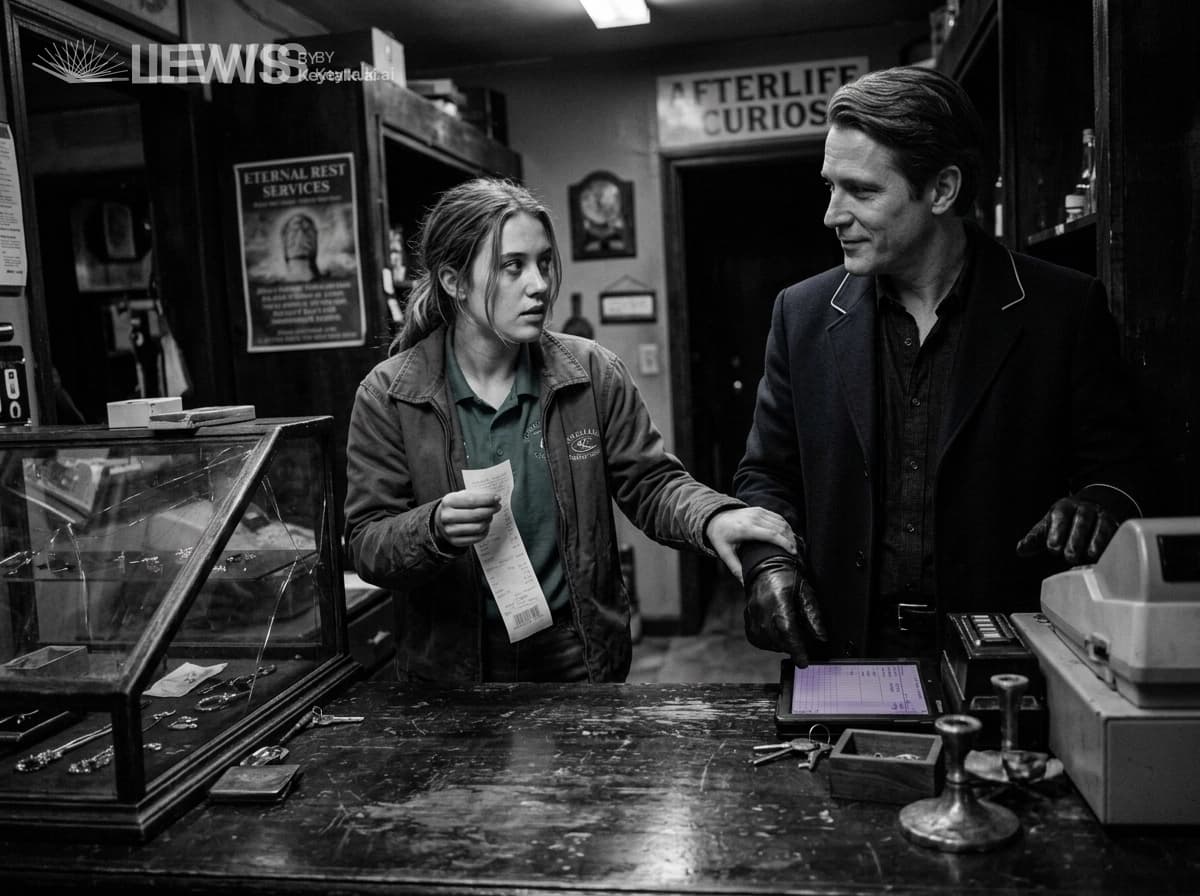
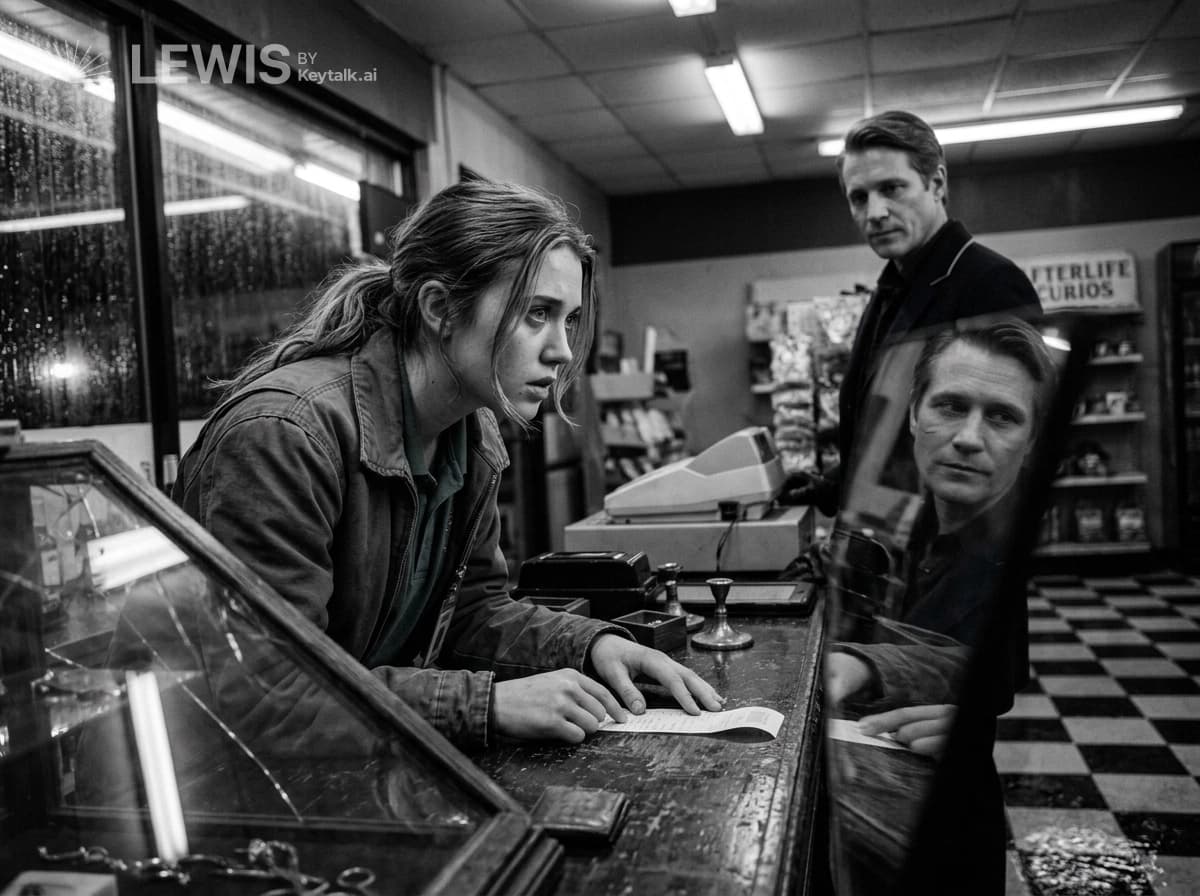
The night’s pressure shifts when Elias Croun, Death’s proxy, arrives not as a customer but as an auditor at the counter. He should be a reassuring impossibility—someone who can hear ledger health in the numbers beneath emotional residues—yet Mara senses the practiced distance in him. Elias smiles like paperwork, tenderness translated into compliance, and he never purchases a craving. Instead, he reroutes claims by correcting ledger errors through a three-check procedure: tag integrity, time balance, and shelf-pair availability. He wants Mara unclaimed. He says it gently, as if explaining a form she didn’t realize she signed, and Mara hates that her safety depends on someone forbidden to own her. Elias’s compliance is careful enough to resemble care, but he checks costs twice because guilt, for him, is a variable that can poison the ledger if handled recklessly.
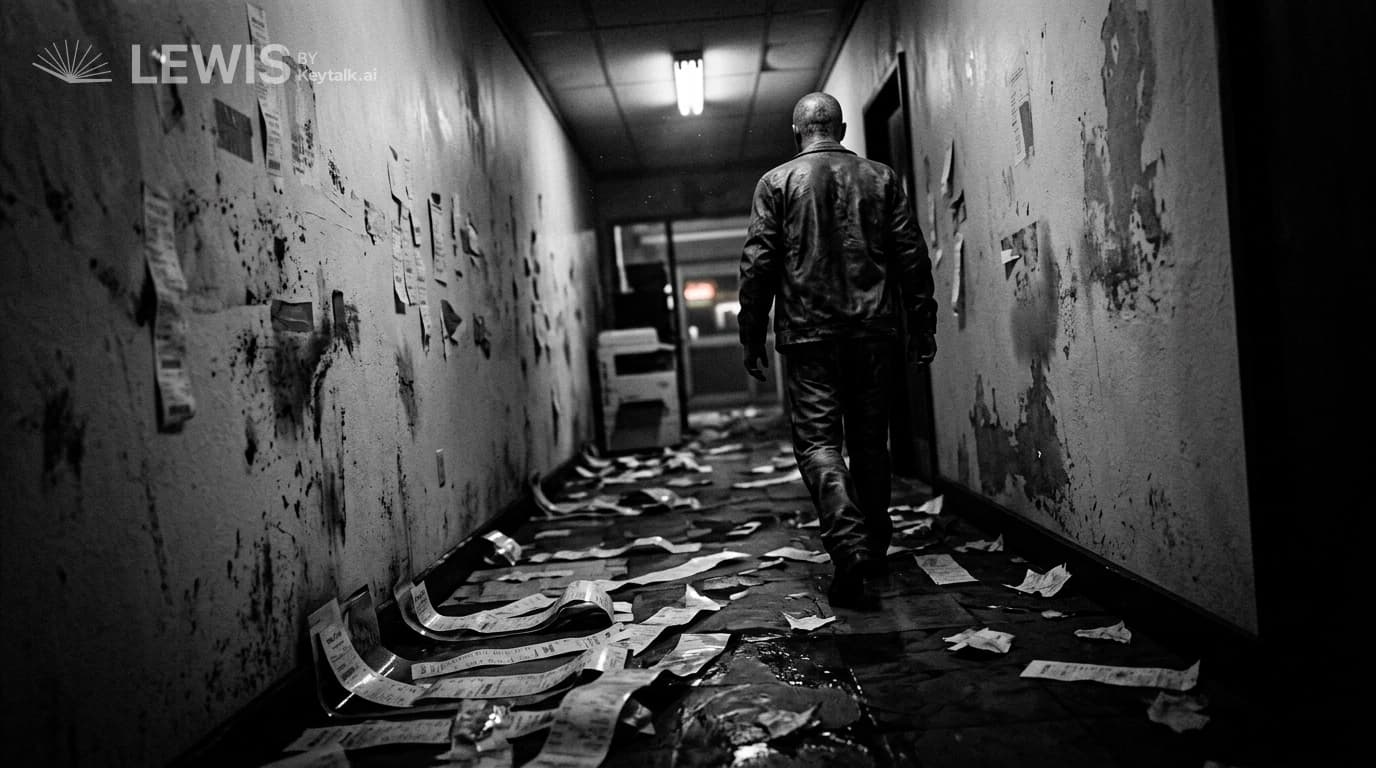
As Ledger Turn approaches—scheduled balancing at midnight into pre-dawn—the store’s calm starts to curdle. The clock is felt more than heard: receipts flutter without wind, the printer’s chattering rhythm speeds, and Ventilation ducts carry distant bell-tones that feel like time itself counting down toward a blade. Mara notices that when she hesitates to follow Gideon Sallow’s templates—when she insists on doing the “fair” thing instead of the “faster” thing—the air brightens toward violet, the rule-lines tightening in response. Moral telemetry, the store’s hidden cruelty, turns her compassion into metadata.
Gideon Sallow appears as a manager with the placid menace of an automaton that treats deviation as catastrophe-in-training. He doesn’t reject anomalies; he expands them into test cases. When Mara makes a small mercy adjustment—an effort to route a craving in a way that prevents one soul from losing the last sliver of a memory tag—the store doesn’t thank her. Gideon hears danger as pattern mismatch and responds by letting faster customer waves pour in, each one mismatched in desire just enough to probe what loophole exists. The shop fills, the shelves condensation-constellated, glass vials labeled with faint silver ink glowing along thread seams like embroidery under blacklight. Mara’s living perception makes her more aware of what breaks; her fear makes her want to stop looking.
Into this swelling instability slips Niko “Click” Rell, a non-binary rolling lottery runner who sells illegal time coupons. They don’t try to save Mara directly; they try to keep the store from noticing her too closely by trading micro-corrections in the ledger, leaving ghost margins—thin, half-erased receipt corners that only Elias can read clearly. Niko speaks like someone negotiating with a trap: precise when lying, apologetic when they can’t, and constantly deflecting praise into jokes about broken coupons. Mara first thinks of them as another rule-bender, but Niko’s terror is subtler than rebellion. They’re afraid that usefulness hardening into ownership will process them the way it processes everyone else, and so they leaves themselves empty spaces in every interaction, ghost margins that preserve a future they may not be allowed to inhabit. Mara realizes that even illegal mercy has to be careful not to become net capture by the system.
The plot turns when a new register begins ringing for someone the store refuses to sell. This should be a clean impossibility—no craving, no transaction, no price—and yet the ledger-surface displays a rule-line exception tightening around the “nearest eligible unclaimed party.” Mara’s name isn’t spoken, but the system’s geometry shifts until she can feel it in her breath: the store is preparing to attempt the transfer of voiding cost through the Forbidden Selection Loophole. Elias, watching, tries to intervene with a reroute that would protect Mara by correcting the ledger state, but his status as proxy means he cannot purchase or claim her. He can only reroute, and each reroute passes through compliance checks where even small deviations can trigger poisoned ledger—rules still operating while customers behave like options rather than people, dehumanized by arithmetic.
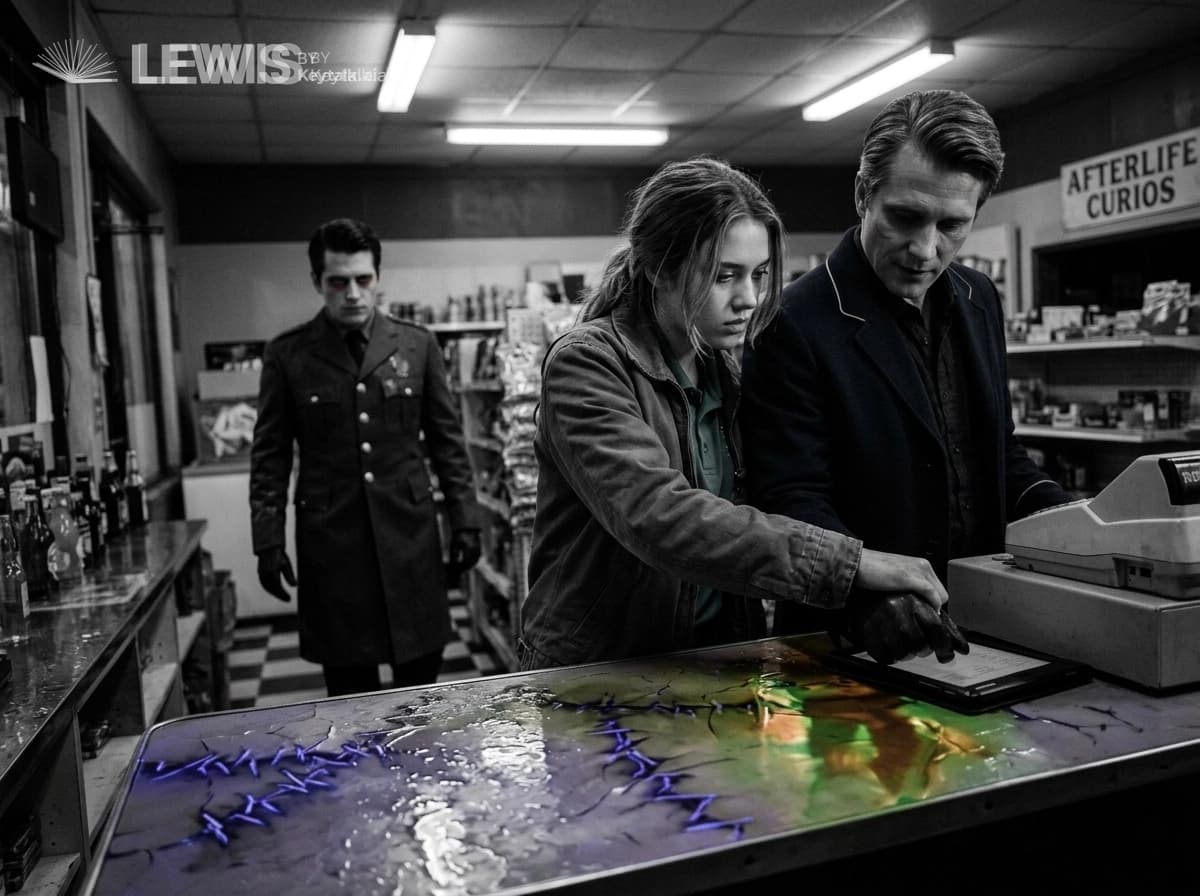
Elias’s tenderness, when it appears, is arithmetic with a heartbeat. He leans closer, voice soft enough to seem personal, and Mara hears in him an apology he can’t admit to. He reroutes as if placing a hand under a falling object, careful and gentle, but as the compliance procedure engages, the ledger-surface projects glowing filaments that stitch themselves tighter—tag integrity faltering, time balance misaligning, shelf-pair availability not matching. The reroute teeters, and Gideon’s automaton immediately treats the deviation as proof of danger worth expanding. He orders the store to accelerate its tests: more souls arrive with desires that, if sold in the wrong shape, would cause their own claim to void at dawn. The system wants to see what collapses, and the closest variable is Mara.
Mara’s internal need finally crystallizes as more than survival. She has been terrified that learning the rules will doom her, that every “bend” of procedure buys her own crossing into being a sold soul. But now she understands the deeper horror: mercy can be theft, and survival can be a form of consent to the system’s logic. She refuses to let Elias’s intervention become a loophole carved for her alone. Instead of rushing to use the loophole as a weapon, Mara insists on fairness—slow, meticulous, almost stubbornly clumsy in the face of a deadline. She checks tag threads with her eyes when she can; she asks questions that force the store’s rule-surface to confess what it’s doing. When Gideon hunts loopholes by expanding test cases, Mara learns to think like a loophole without becoming one: she studies what the system cannot reconcile, what it counts as “unknown” and therefore vulnerable to being misfiled.
The missing piece arrives through Brine Halden’s janitorial theology. Brine reveals that her own inherited contract—the duty to mend torn memory tags of survivors who fall through the cracks—was originally an exception negotiated through the store’s ledger-surface, a transfer of voiding cost that let her keep living people from becoming permanently damaged. The rules that crush others also hide the possibility of redress, if one can reconcile cost and compassion in the same ledger state. But Brine also confesses, exhausted, that the store charges her by taking her joy and replacing it with other people’s worst seconds; mending is not free, it’s merely priced differently. Mara, listening, realizes she must make her mercy legible to the store’s metadata without letting it become a destabilizing “unforeseen” mercy that triggers tighter rule-lines.
Niko helps—not by breaking physics, but by shifting accounting within tolerable plausibility. They use ghost margin coupons to move time around the ledger just enough to create a moment Elias can read. Mara resists thanking them too loudly; gratitude is telemetry, and telemetry tightens rule-lines. Still, Niko’s micro-corrections become the bridge between chaos and compliance. Elias reads the ghost margins and recognizes where Gideon’s expanded test cases have created a predictable seam in the system’s bookkeeping: the store’s attempted voiding transfers require a nearest eligible unclaimed party, but they treat “eligibility” as a numerical proximity concept rather than a moral one. Mara’s living slip-in makes her eligible by default, yet if the cost can be reassigned to an actually unclaimed shelf-pair variable—an unserved claimant produced by Gideon’s accelerated probing—then the loophole stops targeting her survival and starts functioning as balance restoration.
That discovery is won at a price. Elias’s reroute attempt, once failing compliance, becomes the second attempt with the missing reconciliation: Mara’s careful fairness choices earlier in the night prevent her own perception correction from taking additional debt interest, and Niko’s ghost margins align with the three-check requirements at exactly the moment Gideon’s rule-lines tighten most violently. The store’s inventory labyrinth shivers; shelves rearrange subtly as if keeping score. For a heartbeat, receipts stop curling inward. The ledger-surface goes mirror-glass again, reflecting figures with slight delays, as if time itself is trying to decide what to render slower.
Then the store tests them one last time by converging all threads—Mara’s living perception, Elias’s proxy constraint, Brine’s mending contract, Gideon’s pursuit logic, and Niko’s stolen coupons—into a single compliance evaluation at dawn. Dawn Enclosure begins: violet gradient outside the doors brightens toward harsh clinical white, and the crossing wall hardens. Unpurchased claims are forcibly processed. If the loophole reconciliation fails, Mara’s claim becomes voided as the nearest eligible unclaimed party, and the transferred voiding cost will not be kind—it will freeze her into the system as a sold soul, the punishment presented as “balance.” Elias, facing the compliance math, makes a choice that looks like betrayal from one angle and salvation from another. He reroutes not toward Mara’s freedom, but toward Mara’s legitimacy—attempting to make her a recognized variable rather than a nearby casualty. It risks his proxy status and threatens poisoned ledger, but his audit sense catches a final mismatch: the forbidden selection loophole is solvable only if the transfer doesn’t merely move cost; it must reconcile cost with compassion as metadata that doesn’t count as instability.
Mara completes the reconciliation by doing what she has been terrified to do: she stops trying to be protected and instead chooses to protect. She uses her visibility of rule-lines—her unique ability as a living slip-in—to guide the reroute so the voiding cost transfers to a different unclaimed party created by Gideon’s testing wave, one whose craving would have voided itself anyway. She cannot change the rule, but she can shape the attempt, and shaping becomes agency rather than compliance. In the moment the store expects her fear to make her reckless, her careful fairness becomes a kind of rebellion: she sacrifices speed, sacrifices the comfort of not knowing, and thereby denies the system its preferred narrative of “nearest eligible” as an excuse to take her.
The climax is not a dramatic explosion but a final ledger breath held too long. Elias’s reroute succeeds through all three compliance checks with one razor-thin margin, supported by Niko’s ghost margins and Brine’s knowledge of tag-thread mending. Gideon’s automaton, built to pursue loopholes, experiences its own pattern mismatch: the case Gideon expanded collapses inward, turning from catastrophic probe into reconciled balance. The store’s rule-lines loosen just enough for Mara to feel air return to her lungs. Outside, the threshold gradient reaches true dawn; the harsh white washes away detail, but for the first time it doesn’t erase Mara’s agency. Gideon remains committed—his tenderness for counted losses doesn’t vanish—but he’s forced to file a different outcome than the one his fear wanted.
In resolution, the store seals its inventory labyrinth for the final time, the ledger-surface hardening into a still mirror that no longer stitches itself tighter at Mara’s presence. Elias, having preserved the system’s balance without claiming ownership, returns to his role as auditor at the counter, his smile still coldly practiced, but something in his arithmetic has shifted; compassion now appears, for him, as a risk already survived rather than an error to avoid. Brine is left with less broken tag-thread to mend than she expected—still exhausted, still bound by inherited contract, but not crushed by immediate catastrophe. Niko’s time coupons are no longer needed in the same way; their ghost margins remain, tiny half-erased receipts in a night that has taught Mara how illegality can be a bridge instead of a trap.
Mara crosses over only partially—enough to be recognized, enough to avoid becoming inventory, but not enough for comfort. She walks out of the Threshold Mile at dawn with a phantom taste she can’t attribute to memory, a reminder that survival purchased with fairness is still survival purchased with consequence. She keeps asking “Why me?” because she hasn’t learned to stop needing honest reasons, but now the answers are different: not a justification for her fate, but evidence that rules can be bent without being broken if someone dares to reconcile mercy with the metadata that the system demands. And somewhere behind the counter, as receipts curl back into quiet silence, the store’s bell-tones slow—still counting time, but no longer certain it can afford to rush the next soul.