筋書き
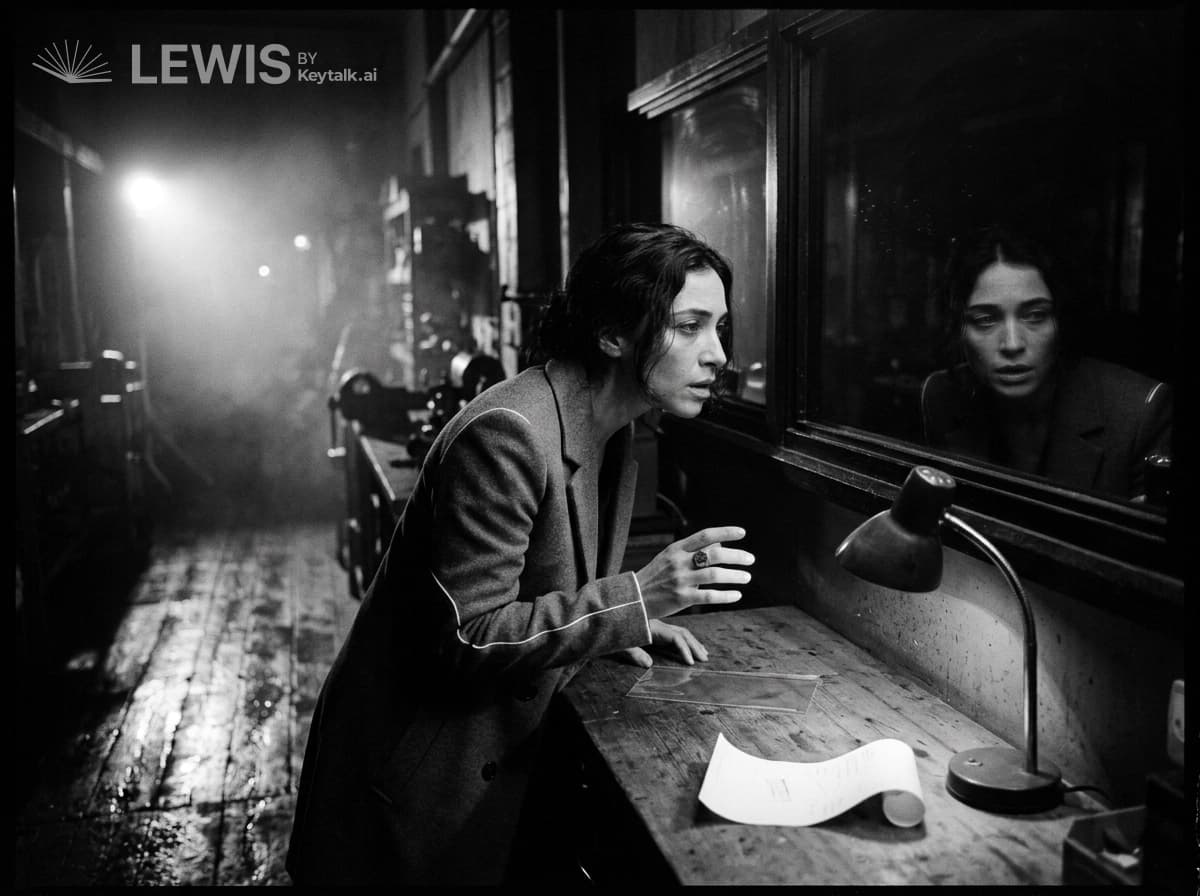
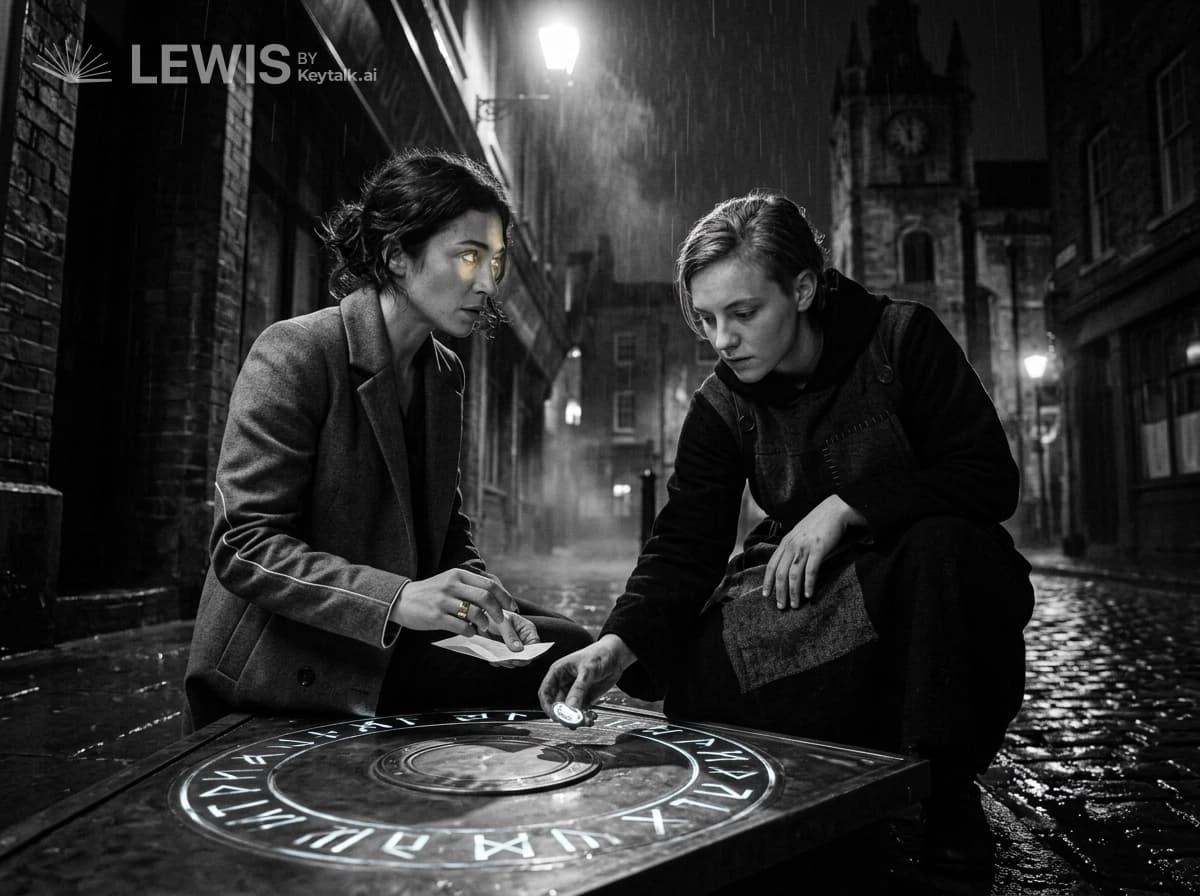
Dawn in Ledgerhollow arrives smeared with bruise-purple fog, and the city’s first Audit Week click-sounds drift through Mara Vellin’s shop like metronomes that have learned to breathe. She has done everything “right” since she broke the one rule that mattered—patched other people’s memories cleanly, kept her hands steady, let the Ounce Ledger’s instruments name the value of everyone else’s love and grief. But last night she sold the one recollection she swore not to trade: the hour her life tilted toward someone who made her feel, for the first time, like she belonged to her own skin. The payment cleared too easily. The signature scar on the ledger systems burned too brightly. And now, as if her body is paying interest on that sale even while she stands upright, the symptoms begin: the streetlights outside her window stutter, a delivery receipt in her ledger desk curls at the edge like it’s been edited, and a customer’s face softens into a blank familiarity when they ask for “the forger who used to—” then forgets the rest of the sentence mid-breath. Mara watches edit gutters glow mint-green under her threshold, the pale mint marching toward her door in a direction she recognizes too well—proximity and recordability, her city’s quiet law of contagion.
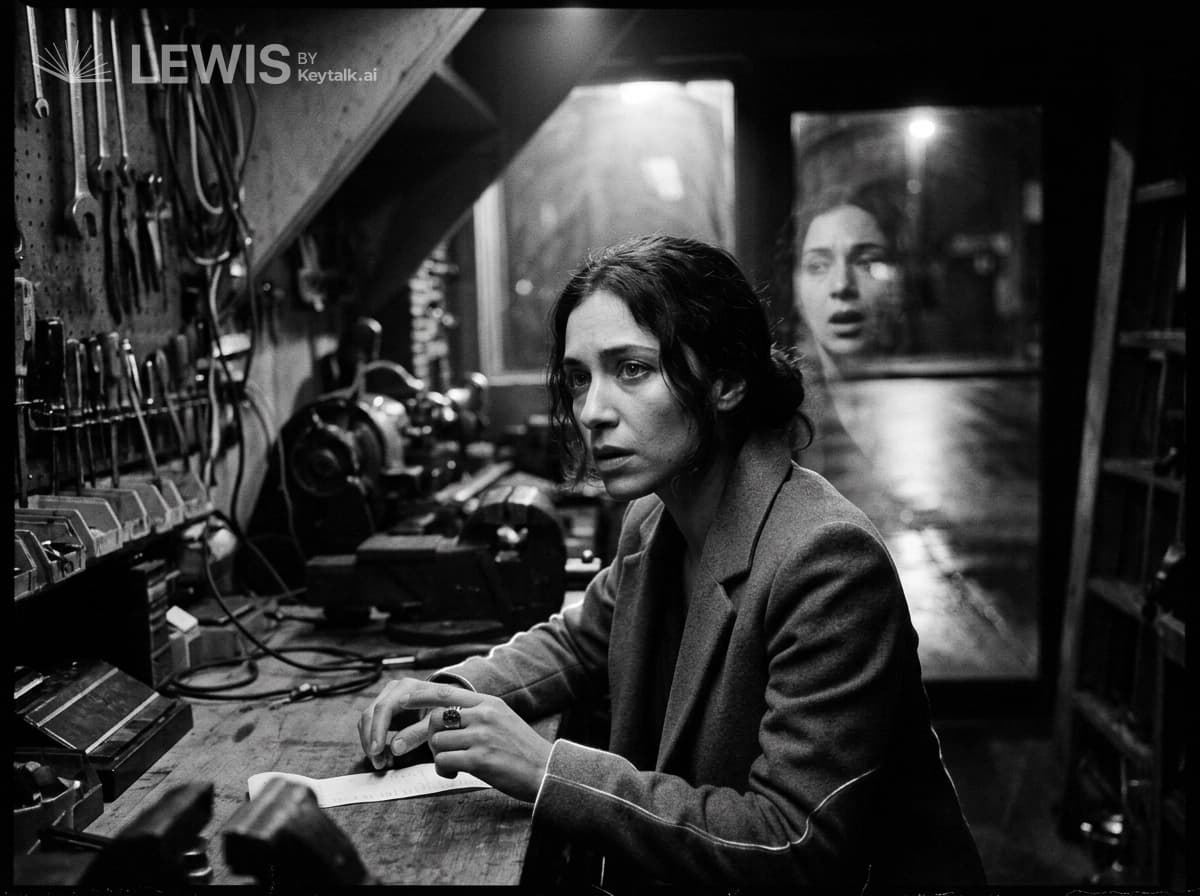
She tries to work anyway, because work is the only ritual that keeps her from unraveling. Her tools are calibrated, her contract templates are stacked in neat rows, and she can repair most damage with the right referent signatures—an existing stamp, an oath-ward imprint, a bureaucratic token that tells the Chrono-Weave what it is allowed to be faithful to. Yet the missing night leaves behind a proof-shaped absence that keeps returning to ledger systems as a fraud-detectable template. The colder truth presses in: by selling that love-night, she didn’t just remove it from herself; she created a ghost referent other people can notice and weaponize. Every hour she hesitates, more witnesses begin to lose her name in their mouths, as if reality is erasing the author the way a clerk blanks a line item.
The knock comes at opening bell. Elias Sorn steps into Mara’s shop holding a receipt with her name on it, ink stamped with her signature and dated for a night that no longer exists in her personal continuity—and in his. His posture is precise in the way of a man who learned control by being made to live without choices; his words arrive as measurements and deadlines rather than feelings, as if language were a corridor he can’t afford to walk without a railing. He should not be able to show up at all. His very presence is a contradiction made physical: a licensed memory borrower with a missing segment, a retrieval courier whose current self displays “variance penalties” that make him compulsively chase the absence that owns him. Elias’s eyes track the space Mara occupies like his gaze is trying to stitch itself to a referent template. He speaks coldly at first—about debt retrieval, about contract compliance—then the moment her name is said out loud, his mask slips, just for a breath. His hand tightens on the receipt as if he is holding onto a cliff edge. He asks her to forge the very evening she just erased.
Mara refuses instantly, the way survival reflexes before reason can catch up. The rules are cruelly clear: once a memory is extracted and paid for, its anchor to the ledger entry locks the owner’s continuity. Deleting or falsifying the ledger entry produces identity drift for the original person—collateral erasures that ripple outward through conversations, documents, and anyone who has recently handled the edited artifact. Forging her missing love-night would not “give Elias his past.” It would create an alternate continuity—one anchored to Mara’s signature, one that would become real enough to alter who she is while she stands there. Still, Elias’s request is not merely an act of obsession; it is also a trap built from the same rules. The receipt he presents is proof that someone else has already negotiated the existence of her erased night into a legal metadata structure. He’s not offering an impossible bargain—he is offering the one bargain reality has already decided is available.
Mara tries to buy time by negotiating repairs, offering smaller restorative stitches that don’t require touching the sold core. Elias listens like a man hearing weather reports he cannot change. He mentions the vanishing debts bureau with the calm of someone reciting the terms under which he was licensed to exist, and he gives her a detail that makes her stomach hollow: the receipt bears dates corresponding to Audit Week recalibrations that only occur at midnight, yet he holds it at dawn. His own missing hours are being rewritten to fit a schedule. Someone is editing his absence at the same time the city is editing her name out of the world.
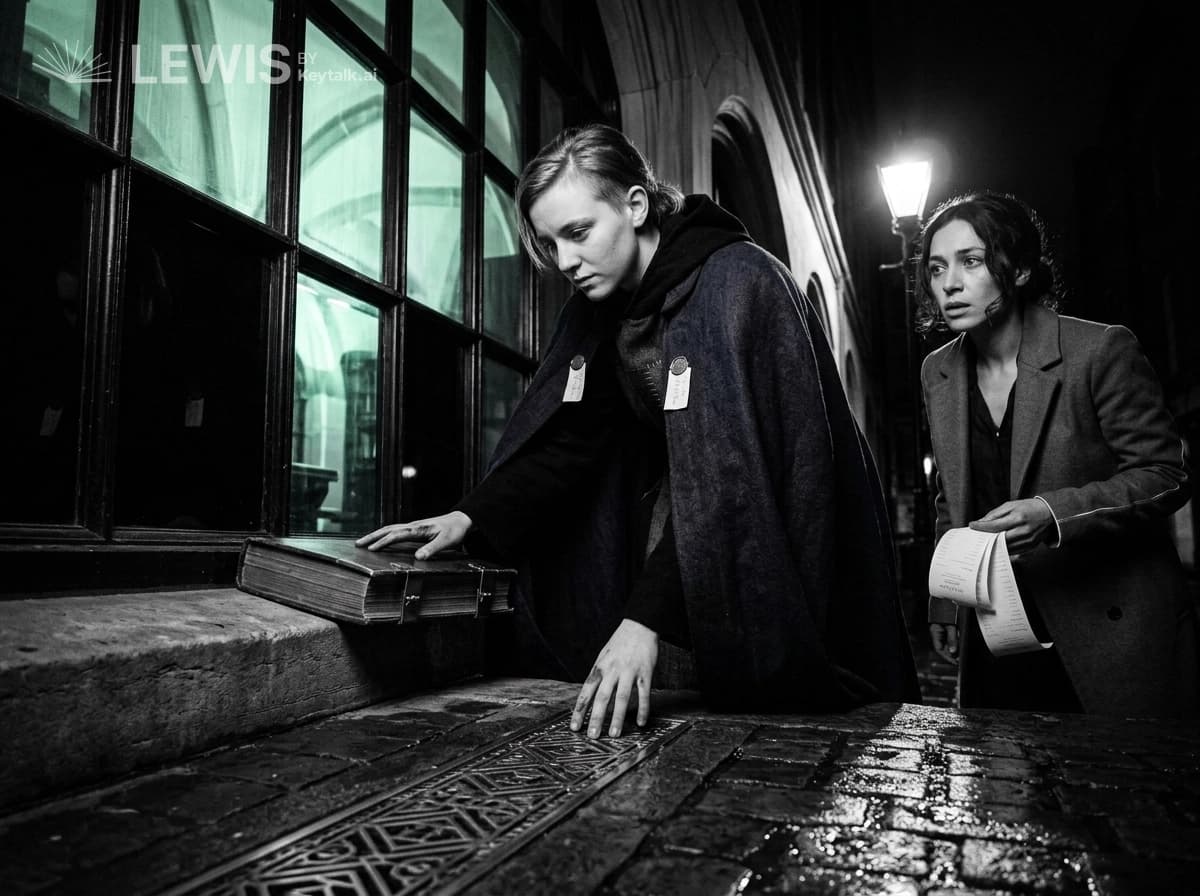
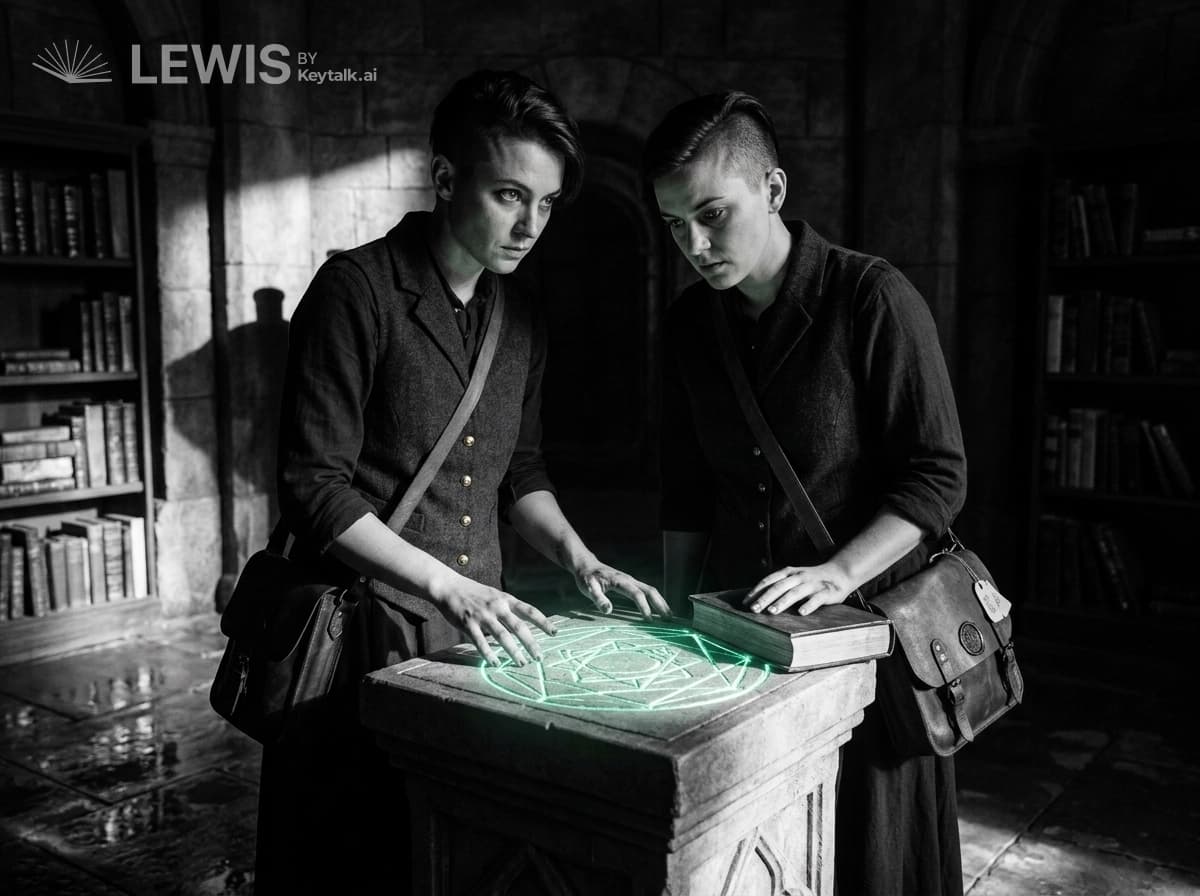
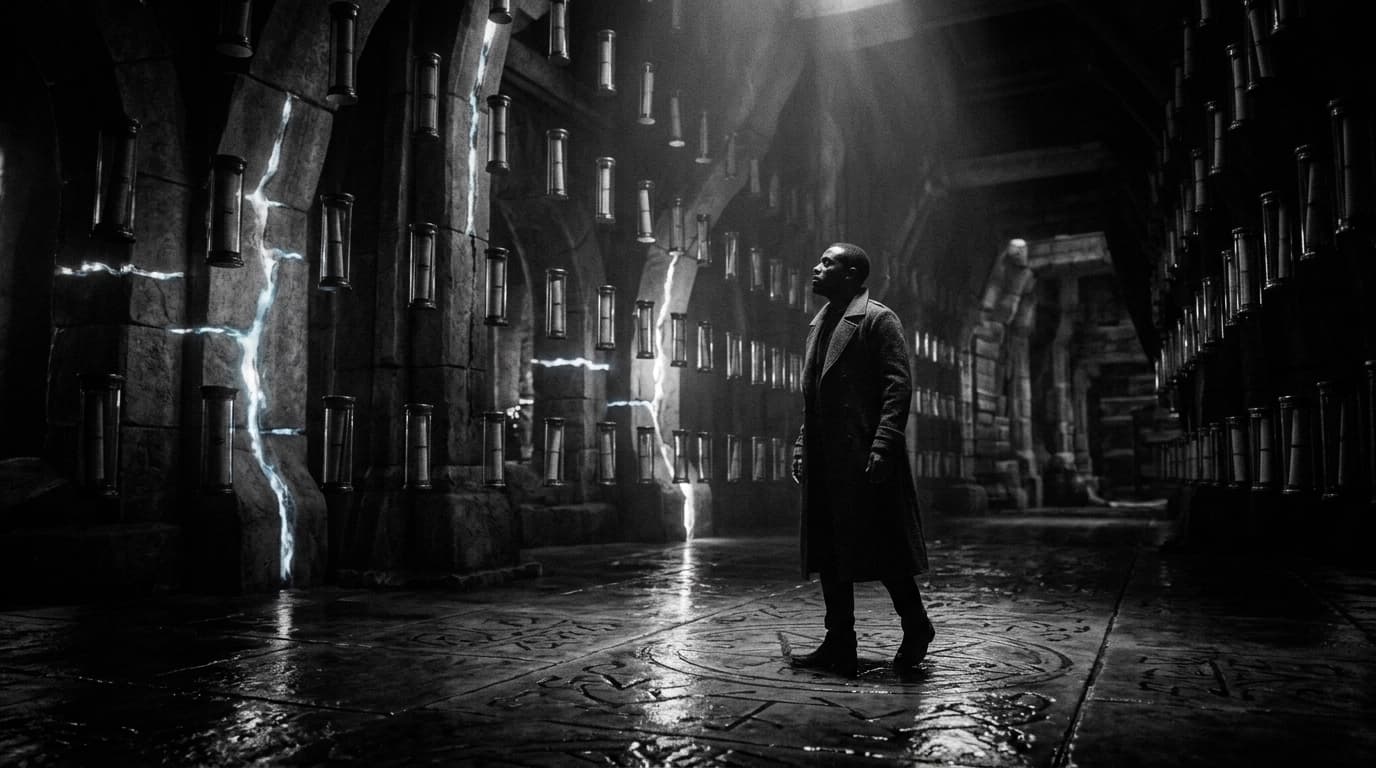
When Mara pivots toward help, Brother Tavi Rell waits where she can’t ignore them—inside the Ward Archive’s legal sanctuary, a place whose oath-wards hum faintly when lies brush too close. Tavi’s presence is a quiet pressure on Mara’s shoulders, not comfort but accountability. Their ink-stained hands smell faintly of copper and paper. They explain, with the gentleness of someone who has had to tell people the same nightmare twice: the Ward Archive can prevent physical sampling without oath-consent tokens, but it can’t stop metadata fraud from counting as consent. If the ledger entry that anchors Mara’s missing night is already poisoned, then any “restoration” will ride the poisoned consent chain. Tavi also warns her about the watermark of signature scars—those unusually bright marks collectors and auditors track. Selling her love-night has made her absence a lantern, and an auditor can follow that light whether she hides behind law or not.
Before Mara can decide what mercy looks like in this particular cage, Galen Rusk arrives like a footnote made into a man. He comes through the shop door rather than the Archive, confident enough to treat sanctuary as a delay. He is a debt collector and certified auditor for memory syndicates, the kind of professional who smiles as if people’s suffering were a variance he can enjoy correcting. In his tidy manner lives a practical superstition: if he misses an audit slot, his own edits begin to leak, and he may become a second “vanishing debt,” erased as collateral for his failure to balance his ledger. His fear gives him predatory urgency. He shows Mara a schedule—tiny clockworks etched into brass ledger plates, each one ticking audibly—and he speaks of “compliance” with the soft voice people use when they are certain their victim will consent out of desperation. He frames Elias’s request as retrieval justice, not theft. If Mara refuses, she will be flagged as a contract broker who violated exchange law, and the collateral identity drift will reach beyond her: her clients, her customers, even people who merely glanced at her name on a transit board.
Galen’s leverage is not only legal. It is intimate in a way that feels like being touched by someone who has read your diary. He references the love-night indirectly, not by saying what happened, but by describing its coherence—the emotional density that makes such scenes expensive—and the particular way Mara’s signature scar marks the proof-shaped absence. Mara realizes the worst part: Galen is already rewriting signatures in memory to keep his own debt ledger clean, and her love-night sale has given him the perfect template to adjust the balance. Her refusal would not stop his edits; it would make his edits bleed into her world faster, because the system always assumes she is the one whose absence must be corrected, priced, or erased.
At the edge of this mounting pressure, Ysolde Kynn moves through the crowd like a warm blade. She introduces herself as a technician from the Chrono-Weave Exchange—courtly precision, practical smile, the kind of friendliness that makes people lower their guard—and she offers to “help” Mara by analyzing the proof-shaped absence. She keeps her gaze on Mara’s hands, on the exact tremor she tries to hide, and her questions are aimed with surgical politeness. Ysolde believes perfect restoration is a kind of justice, but her technique is disruptively close to violence: she siphons living fragments from the same source Mara once tapped and tries to reconstruct refusal-patterns around missing templates. She speaks of accuracy like it is mercy, then she tests the edges of Mara’s refusal-pattern as if prodding a bruise to see how it responds.
Mara tries to enlist Elias rather than fight him alone. She forces the conversation to turn inward, away from contract terms and toward the emotional logic of the absence. Elias admits, in careful increments, that he doesn’t fully remember the vanished night either. He is the product of an edited absence meant to erase his own missing hours. His current behavior, his compulsive pursuit, is not romance—it is a variance penalty pushing him toward the missing segment like a magnet searching for an earlier north. The cold procedural demeanor is both mask and symptom: a man who learned to keep his hands steady because he was built out of omissions. In spite of himself, Elias keeps circling back to a single sensory detail Mara recognizes from the moment she sold: the taste of winter air over warm street-candied nuts at a canal-side stall; a laugh that did not belong to him, yet lands in his chest like a borrowed heartbeat. The more he tries to retrieve it, the more he becomes an echo of Mara’s erased past—a borrowed self taking root.
The turning point arrives when Mara recognizes the receipt stamp as a stable referent signature she once used, long before she sold her forbidden love-night. It is not just her name; it is her method made visible. Someone has traced the outline of her technique and turned it into a template for fraud. The proof-shaped absence—her scar—has been repurposed to bind forgeries to a bureaucratic pattern, ensuring that any attempt to “repair” will be legible to the system as legitimate consent. In other words, the network doesn’t just know she erased something; it knows exactly how she would have repaired it. She has been engineered into being predictable.
Mara and Elias reach a moral collision they can’t avoid. If she forges the evening now, she might create a plausible continuity that ends the identity drift for others—stopping the erasures that are beginning to reach her clients and community. But she will also be manufacturing a new version of herself, one that includes a love-night she no longer holds and cannot verify. Restoration can’t perfectly reconstruct what was sold; it can only recompose plausible continuity using surviving fragments and templates. She cannot guarantee the “justice” she’s asked to provide won’t become another kind of theft, another cycle of erasing someone’s agency under the banner of repair.
Brother Tavi offers a countermeasure that is both legal and dangerous: they suggest rerouting consent metadata through the Ward Archive’s oath-wards without physically sampling the Archive’s prohibited recollections. The plan hinges on a loophole Tavi hates—because it’s the same loophole their institution has used before to protect people by bending the law that protects them. Mara must allow an oath-consent token to be generated by a third party template, one that doesn’t point to her signature scar. If they can break the chain Elias’s receipt implies, they can force the system to treat the forged memory as a new legal artifact rather than a direct correction of her stolen evening. But the loophole will also make Mara an accomplice in the creation of a “legal fiction,” and the burden of that fiction will be on whoever holds the oath-ward imprint. Tavi’s hands shake for the first time since Mara entered the Archive, not from fear of consequences but from guilt at repeating a choice that once erased neighbors’ names overnight.
Galen, hearing whispers of a diversion, escalates by moving the Audit Week recalibration up and forward in time. He wants Mara to comply before the system finishes indexing the absence. When Mara hesitates—just an hour, just long enough to think—the mint-green glow of edit gutters surges under nearby storefronts, and the faces of passersby stutter in the canals like films misregistered by a careless editor. People who have never met Mara look at her shop sign and cannot read the letters; they pronounce them incorrectly as if their mouths remember a different name. Mara’s own reflection in the black-glass canal lags half a heartbeat behind her movements, then begins to drift toward another shape, as if her body itself is losing referent stability. Elias’s variance penalties intensify too; he begins to hallucinate fragments of the night as if he is walking through a double exposure that refuses to resolve.
Ysolde tries to seize control of the procedure at the Chrono-Weave Exchange test grounds. She lures Mara with the promise of “accuracy,” but her real aim is to solve the refusal-pattern behind memories that won’t be sold. She wants the template, not the people. In the amphitheater of segmented mirrors, the air ripples and shows double-exposures of people who aren’t physically present, the ghost-impressions flickering like predatory suggestions. When Mara refuses to hand over her scar-template willingly, Ysolde attempts to siphon living fragments from the same source Mara once tapped—an act that feels less like help and more like harvesting a wound. The restoration attempt behaves like a predatory edit: it doesn’t just correct the missing night; it subtly rewrites who is owed what, turning Mara’s resistance into an input the system can interpret as consent.
The climax converges around the exact thing Mara tried to keep: the night she fell in love. Elias corners her at the edge of the Chrono-Weave mirrors, insisting he won’t survive the continuing drift without some form of retrieval. Galen stands nearby with ledger tokens that hum with authority, eager to certify whichever outcome will keep his solvency intact. Tavi watches from an oath-ward line that glows faintly around their feet, prepared to counter the metadata chain but knowing their own past complicates every protection they offer. Ysolde, smiling warmly, offers Mara a “choice” between imperfect restoration and total erasure, then pushes a device toward Mara that would bind the oath token to the very signature scar Galen wants exploited. The ticking clock isn’t just hours—it’s the speed at which information flows accelerants reality. Every witness looking up a name, every ledger record fetched by a bored clerk, every transit board announcing a contract renewal becomes fuel.
Mara makes her decision not by surrendering to the system’s definition of justice, but by weaponizing the system’s rules against its cruelest tendency. She agrees to forge, but only after reshaping the referent template so the forged evening becomes a new legal artifact with a consent chain that does not claim she is restoring her own stolen past. It’s an act of mercy framed as compliance, and it costs her something immediate: in the moment the memory takes shape in the Chrono-Weave instruments, her shop door briefly loses its sign, and a customer’s face blurs into anonymity as her name is edited out of their continuity for a handful of heartbeats. The cost proves she is still tethered to the missing segment—she hasn’t escaped identity drift by choosing for others; she has simply delayed the knife until after she can choose where it lands. Elias receives the forged evening as a continuity anchor, and his ghost-impressions resolve into a coherent emotional narrative—winter air and warm street-candied nuts, a laugh that belonged to Mara’s erased self. But the restoration can’t perfectly reconstruct the sold love; it recomposes plausible continuity using surviving fragments and templates, and those fragments arrive with an unsettling truth: the night Elias receives doesn’t just belong to him. It becomes a new version of Mara that he now carries inside his borrowed self.
When the mirrors settle, Elias looks at Mara with a warmth that feels like recognition rather than obligation—and for the first time, his control frays in a way that is not procedural. He doesn’t simply thank her. He asks her, quietly, if she remembers what she loved about him. Mara cannot answer. Her missing evening is still missing from her own continuity, yet she can see the shape of it in Elias’s recovered self like a shadow cast by a candle she no longer owns. She realizes the tragic paradox: forging Elias’s night has returned love to a man who was erased, but it has also ensured that love will now overwrite parts of her—through his borrowed memory, through the way he will speak of that evening to others, through the way the system will index her signature as the author of a new continuity. Even as the mint-green glow under her threshold fades, the absence doesn’t stop existing; it migrates. It seeks proximity, recordability, and acknowledgement.
Galen’s fear spikes too late. His ledger tokens fail to certify the outcome cleanly because the oath-consent metadata chain no longer matches the proof-shaped absence template he intended to exploit. He tries to recover solvency by pressing harder—threatening to report contract violations, preparing to correct Mara’s identity drift by force. Tavi steps forward, humor gone sharp at the edges, and points out the legal hazard Galen helped create: his earlier belief that signatures can be balanced without consequence was always superstition wearing a uniform. The system’s rules aren’t neutral; they punish the people who treat identity like arithmetic when edits leak into their own continuity. Galen has mis-timed his slot long enough for the audit recalibration to begin swallowing mismatched signatures. His tidy confidence begins to stutter like the faces in black-glass canals.
Resolution arrives not as a clean victory but as a negotiated ceasefire with reality. Mara returns to her shop to find her name still there—barely, like a stitch holding a hem together. Some customers will remember her, some will not; the erasure has been slowed, not cured. Elias, newly anchored to a love-night he can now describe in coherent emotional density, becomes both ally and reminder. When he speaks of the night, Mara hears the absence behind the words—the bright signature scar where her own continuity should have been. Her internal need remains unchanged: she wants mercy that is immediate and relational, not procedural cruelty disguised as contract. But now she understands the deeper cost of making mercy act like law: every fix can reproduce harm if it uses the wrong template, binds consent to a scar, or treats a person’s identity fracture as collateral arithmetic.
Tavi, bearing their own mentor wound, makes a vow to keep the Ward Archive’s sanctity from becoming another loophole Mara must use to survive. They propose a long-term strategy built on promises rather than debts—collecting evidence of metadata fraud patterns, mapping proof-shaped templates the way librarians catalog dangerous books—yet their eyes carry the fear that truth, once indexed, can be weaponized too. Ysolde disappears from public view after the botched predatory siphon, leaving behind an imperfect restoration lattice that flickers in the Chrono-Weave instruments. Whether she will return as a rival or a cautionary ghost depends on how hungry her justice has become.
In the final quiet after Audit Week’s loudness, Mara chooses to stay in motion rather than chase the stolen night into total self-erasure. She takes on fewer repair contracts that resemble her love-night—because she can feel the tremor in her hands returning whenever someone requests something coherent in the same emotional register—and she starts, carefully, to write new templates into the city’s machinery: referents that don’t bind to her scar. The love Elias now carries does not heal her missing hour, but it gives her a new understanding of what she’s been fighting for: belonging that isn’t granted by ledger solvency. Somewhere in Ledgerhollow’s layered ecology, edit gutters dim to embers, and the city resumes its stuttering glow—less certain, less hungry for erasure. Mara stands in her shop at bruise-purple dusk, listening to the clockworks tick audibly in the walls, and for the first time since she sold the forbidden night, she makes a choice that isn’t about paying a debt or dodging an auditor. It is about refusing—again and again—to let her life be rewritten by anyone holding a receipt.