筋書き
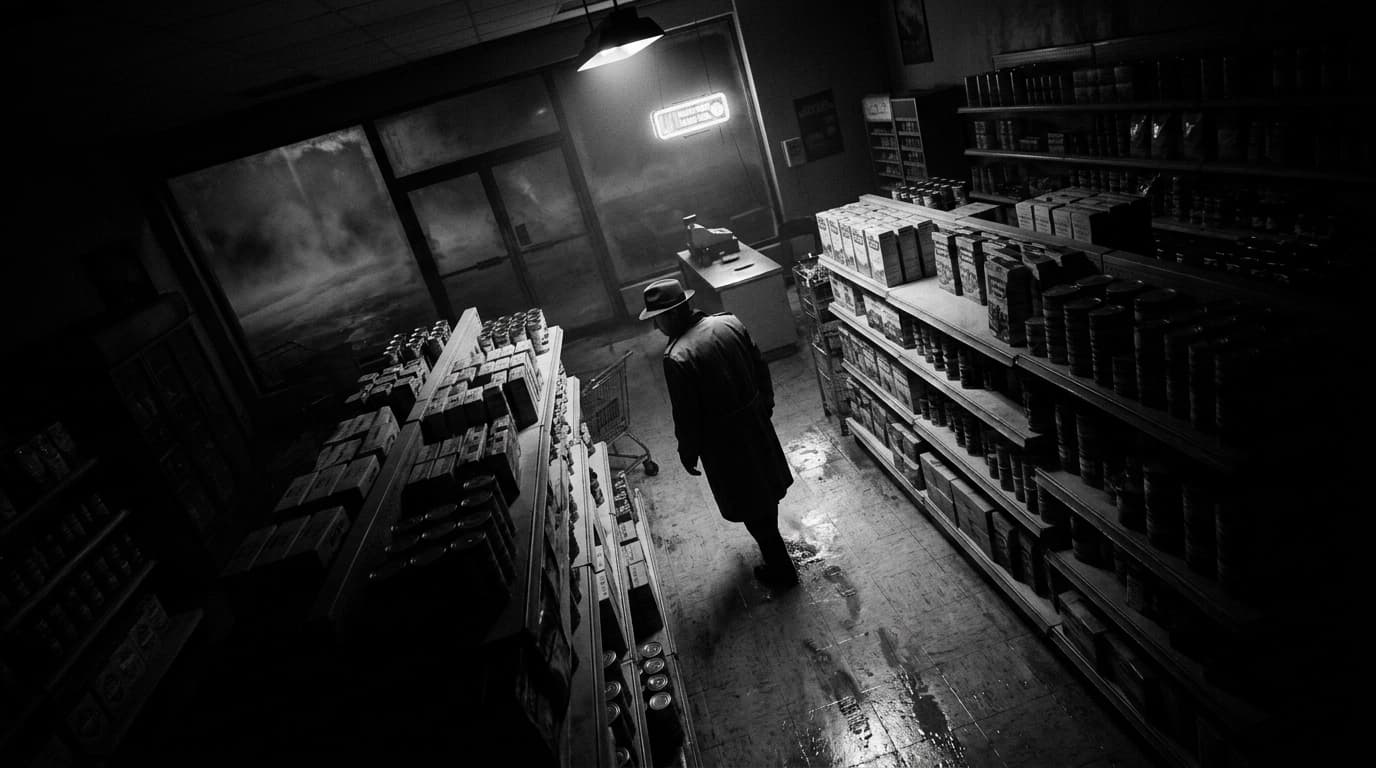
Elowen “Eli” Marr’s first night at the afterlife’s edge-store begins like she’s managed to pull off another shift with a straight face: fluorescent buzz, citrus-cleaner air, a strip of scuffed linoleum that smells too familiar for a place outside fate. She tries to do the job by the rule cards—scan, ring, print, never read full-text receipts aloud. But her register won’t behave like a machine; it bruises when her fingers touch memory-stitched stock, as if the store recognizes her own unfinished record beneath her uniform smile. Each craving she stocks is a comfort distilled from some soul’s last active memory, and each prophecy that curls from the thermal printer comes with a warning the system never says out loud: the closer anyone studies the complete receipt within the store’s walls, the more the universe will anchor them to what they’re reading, correcting the world to match whatever story they’re willing to accept. Eli’s bodily flinch is the counter’s countdown made visible, the store quietly accelerating her eligibility to cross. She tells herself it’s temporary, that doing everything “right” will keep her name from unraveling—though she can’t remember her own name with anything like certainty, and the register seems to know it.
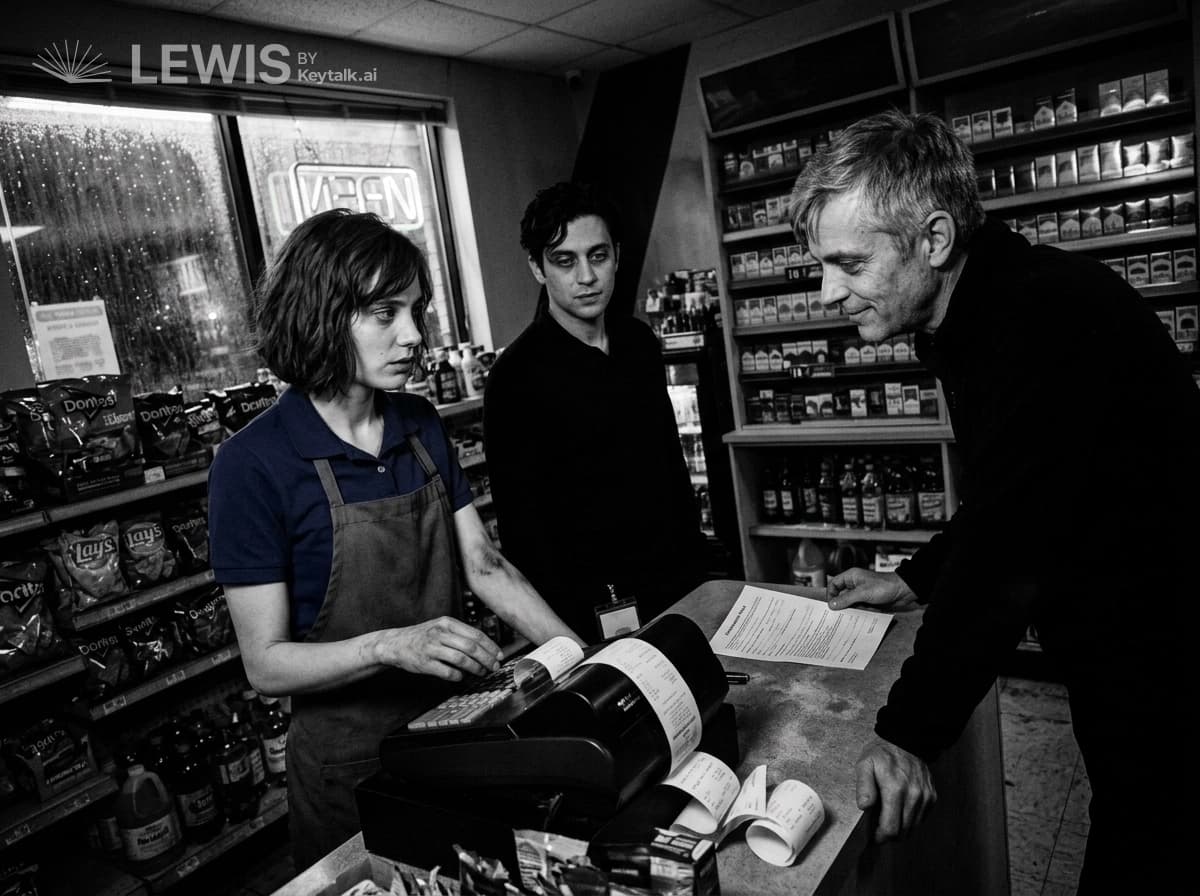
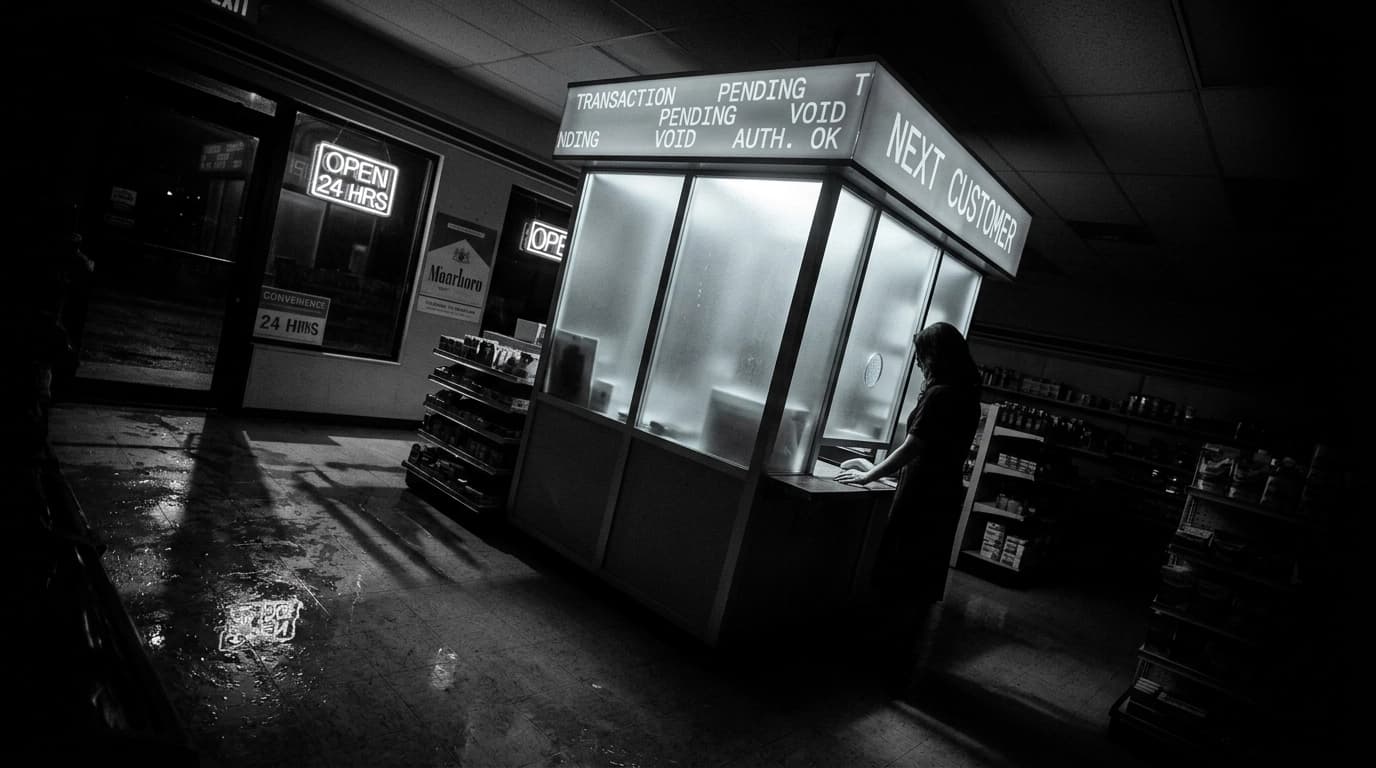
The first hour is ordinary in the way a nightmare is ordinary: ash-receipt snow drifts past the glass doors in slow gray diagonals; the Seam waits like a screen surface that might not let itself be tapped twice. Souls queue, buy small mercies they swear they can’t live without—sweetness that tastes like forgiveness, coffee that dulls a sharpened grief, a strip of candy that softens the edge of a last conversation. Eli rings them correctly, her hands moving with practiced cheer as the register spits pale paper that curls like dead leaves. Yet when a patron approaches the return counter with the confidence of someone who never has to look down at the rules, Eli’s stomach tightens. Malachi Sootwright doesn’t just audit receipts; he “corrects” purchases with gentle urgency and polite authority. He speaks like a technician of comfort, but every time he steps in, the store’s world rewrites itself so the prophecy on the receipt points blame somewhere else—toward the narrative a soul is most willing to accept. Eli tries not to watch, because watching is a kind of reading, and her register bruise-shifts as if it’s listening.
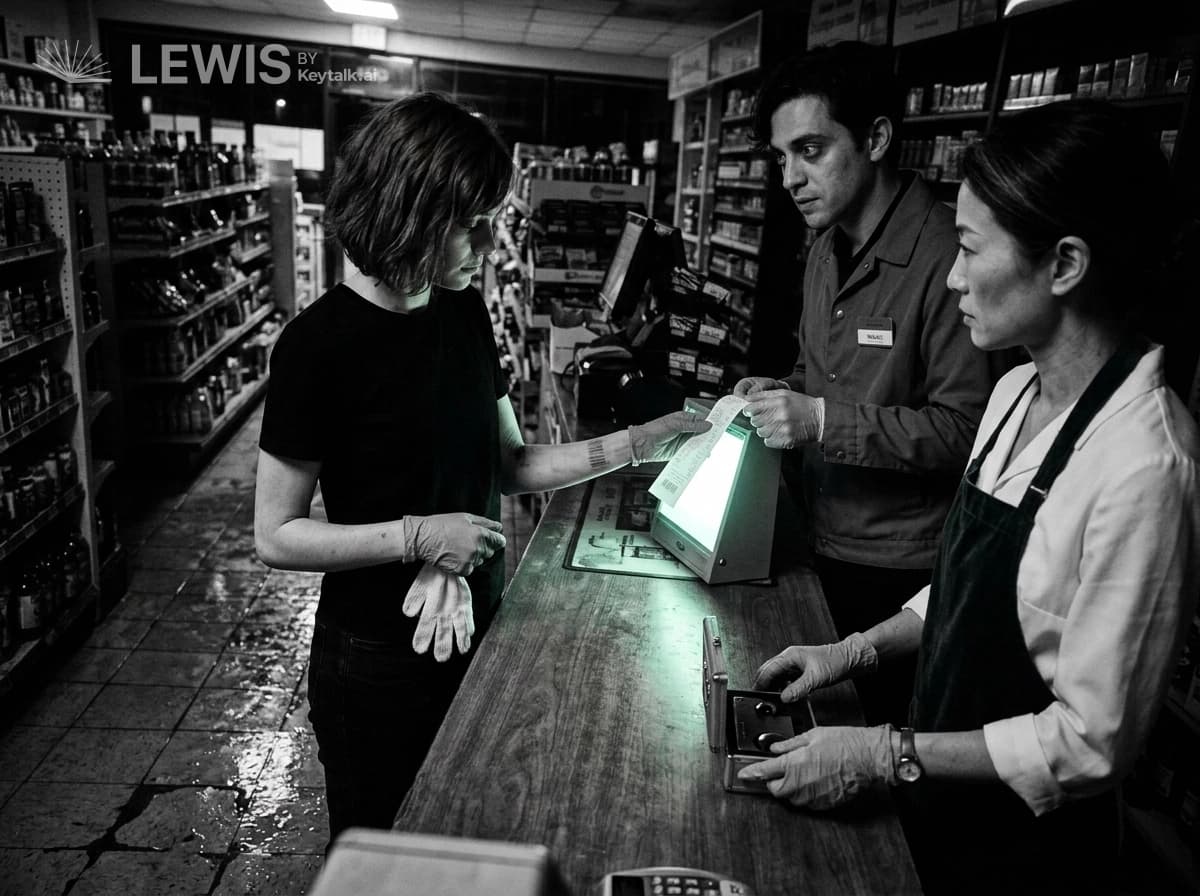
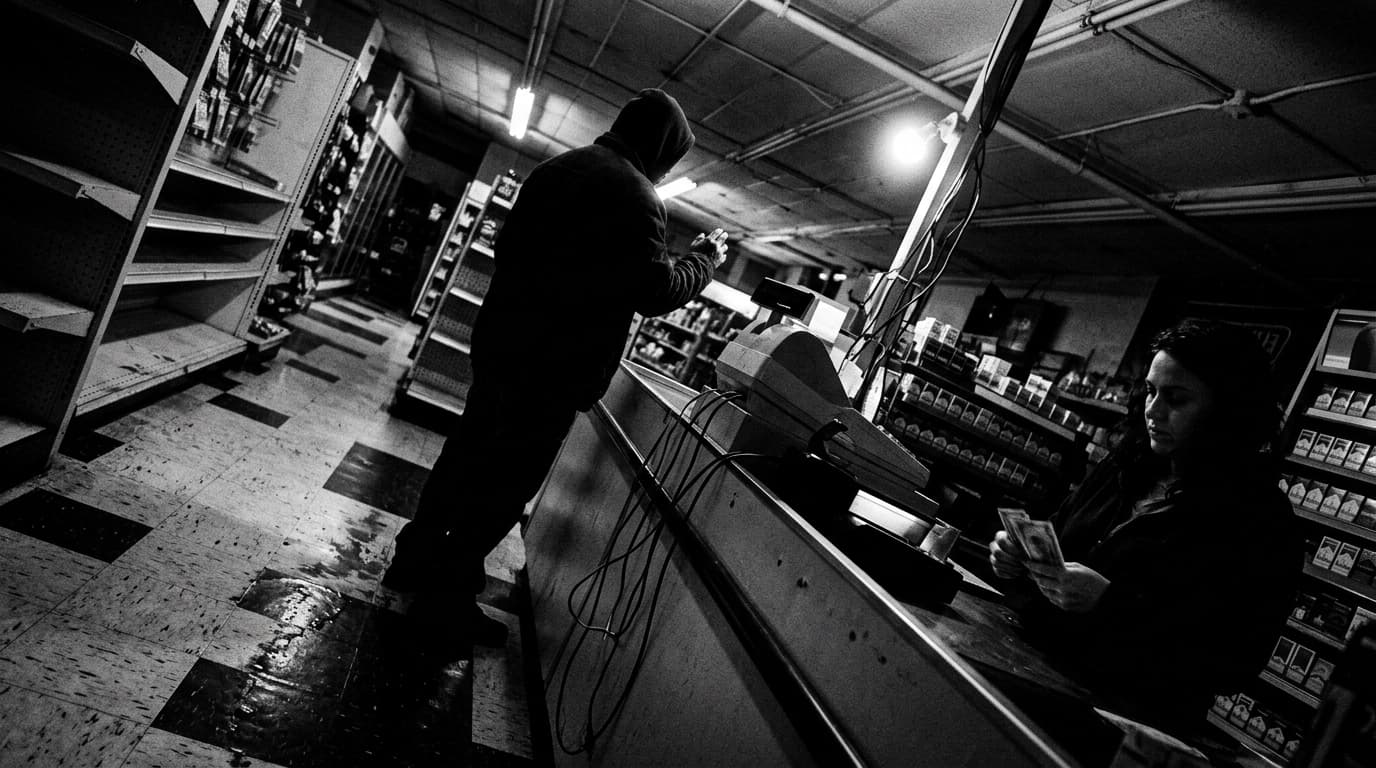
Then the shift turns inside out with the kind of mistake Eli can’t blame on exhaustion. A returning customer arrives—an anomaly in the queue, a person Malachi recognizes without needing to glance at the screen. The customer doesn’t pay. The card terminal rejects the transaction with a polite, meaningless beep, and still the receipt prints. Eli follows procedure anyway, because refusing service is only allowed if it fits a system-approved script—and she fears the store’s conservation law of comfort most of all: for every memory kept, another goodbye must be delayed or redirected into someone else’s account. If Eli refuses, someone else will be corrected instead. So she rings the craving through, listens to the prophecy thrum in the thermal paper’s thin rainbow sheen, and watches the customer’s eyes go glassy with relief—until the return-counter lights flash Malachi’s audit overlay across the receipt.
Malachi takes the paper with careful hands, scanning for “errors,” but the correction that follows doesn’t resemble a refund. It resembles a rerouting. The store’s printer coughs out an altered receipt that rewrites what was purchased, rewriting what the customer believes they surrendered. Eli expects the customer to disappear into the crossing-state corridor, but instead the counter’s sound changes—like a countdown click inside an unseen gearbox—and the Seam’s threshold mist thins for a heartbeat, as if the world is making room for another anchor. Malachi looks almost pleased, though his smile never quite reaches his eyes. When Eli asks what the correction means, he answers with a checklist voice and a truth delivered sideways: “Sometimes a soul brings the wrong craving to the right door.” He doesn’t admit that the universe is being coached. He doesn’t admit that Malachi is the one doing the coaching, rewriting timelines so receipts point blame toward whatever story a soul will accept, because his fear is not of being caught by Eli, but of being remembered too clearly. The moment someone reads his prophecy-receipt verbatim, he becomes the calamity the store is built to prevent.
Eli’s bruise-shift worsens that night, not from the work itself but from the way her body reacts to the shape of the customer’s interrupted story. Something about the return makes her recall—almost recall—her own forgetting. Her internal voice keeps bargaining with the system: if she does this right, maybe she won’t disappear. She’s not prepared for how quickly the store punishes that hope. The more she tries to avoid full-text receipt exposure while still doing her job, the faster the register counts down “unclaimed selfhood” as if her resistance is a kind of hunger. Her name, whichever version of it the store can still stitch together, is being threatened by her proximity to its hooks. She begins to notice receipts drifting without being printed, thin films catching green exit-sign light, as if the store is practicing how to read her aloud.
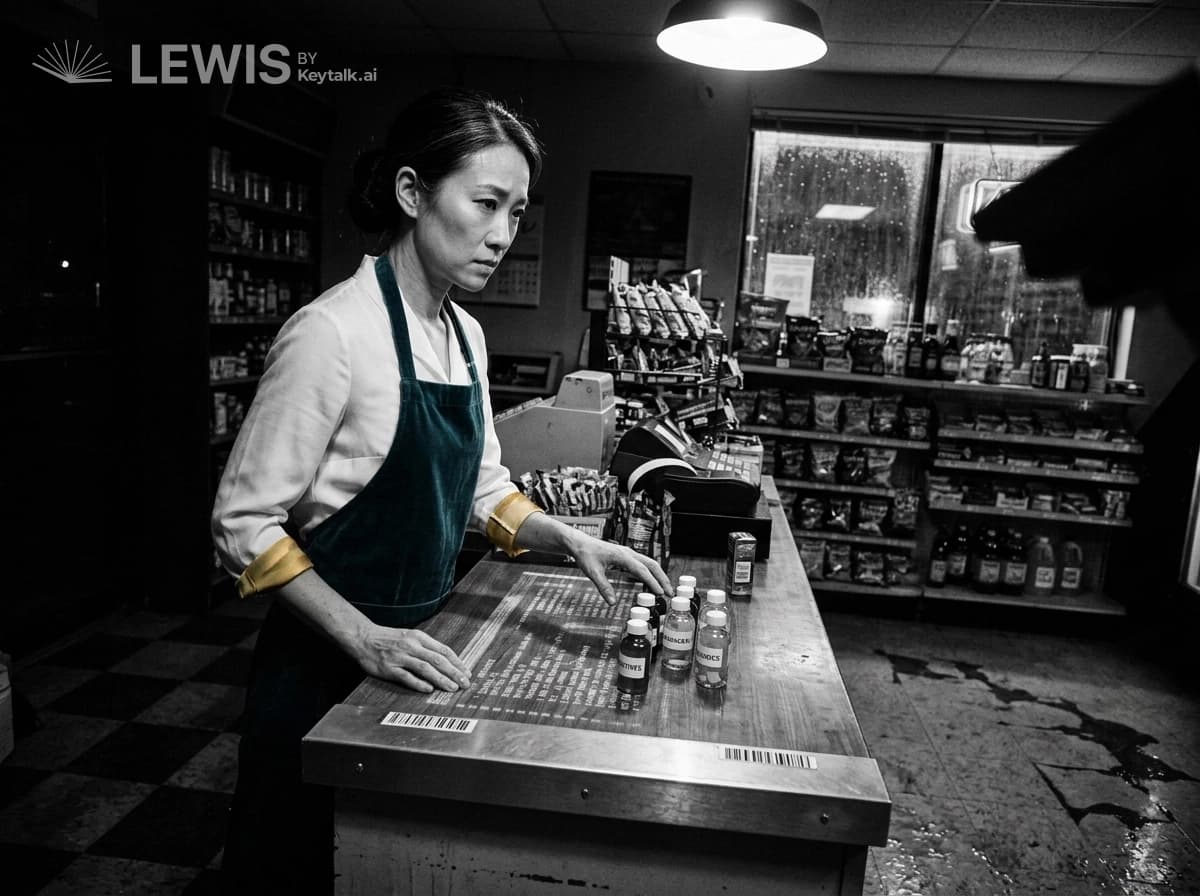
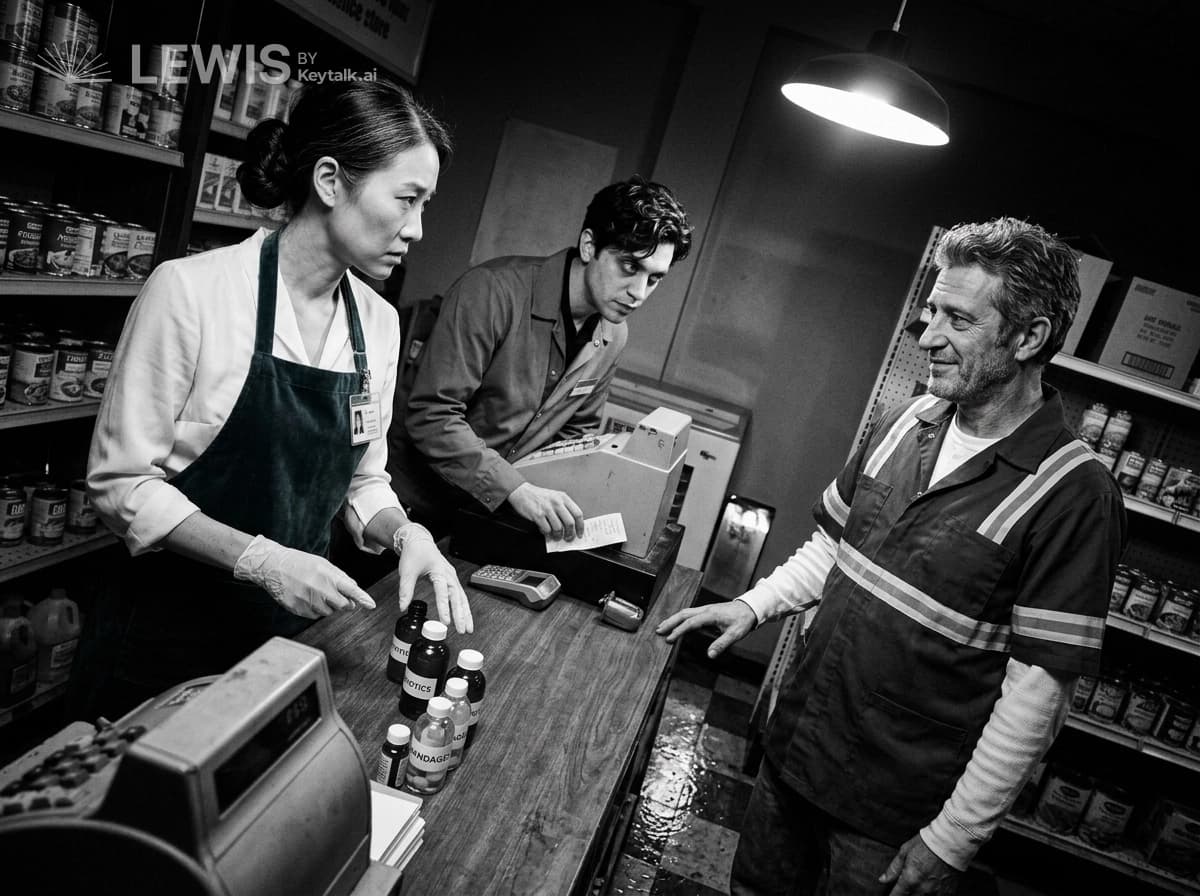
That’s when Dr. Vera Kwon enters the scene like a promise with a calibration dial. The sommelier-calibrator of cravings carries a portable case of glass vials and labeled measures, speaking softly to reduce suffering without defying the universe’s rules. She recognizes the bruise pattern on Eli’s forearm and asks—gently, deliberately—what item Eli stocked last. Eli lies by rote, using comforting scripts she’s memorized from laminated cards, but Vera’s attention makes the lie wobble. Vera isn’t there to catch Eli; she’s there to calibrate what the store is already calibrating. When Eli mentions the returning customer who didn’t pay, Vera’s eyes narrow as if she’s tasted something sour beneath sweetness. She murmurs that the store’s conservation law is being violated in a particular direction: too many memories are being kept longer than the universe allows, and those “over-kept” threads don’t vanish into kindness—they tangle around other crossings, delaying goodbye by relocating it into someone else’s account. Mercy, Vera knows, can become a collar when it’s measured and portions exceed tolerance. If the store is letting one soul’s goodbye be delayed repeatedly, then someone else’s goodbye must be redirected—unless the system has been tricked.
Vera asks Eli to bring her the receipt that was corrected, and Eli refuses at first, clinging to the rule that reading full-text instructions within the store anchors you. But refusal has weight here; it doesn’t vanish consequence, it redirects it. The register accelerates, bruise-shift spreading up her arm like ink in water, and Eli realizes the system is using her compliance to define her. Malachi watches from the return counter and speaks with technician calm, telling Eli she’s required to deliver the receipt for “proper inventory reconciliation.” His language is gentle, his urgency is almost kind, and Eli sees the trap: if she hands Vera the prophecy, Vera risks anchoring herself to the memory the receipt contains; if she refuses, the store substitutes a nearby acceptable narrative and makes Eli’s resistance look like the problem. Eli’s agency is real, but it is constrained by scripts the system recognizes.
Before Eli can decide, Rill Vesper slips into the night’s rhythm, arriving with contraband midnight specialties that taste like harmless mercies. Rill’s jokes know when to stop, their smiles arrive a heartbeat early, their apologies land a breath late. They sell “tiny, harmless” reliefs at the counter—coffee that dulls sharp ache, candy that dulls grief’s teeth—then pocket contraband receipts with a missing seam of intent. Eli resists Rill’s offerings, but she can’t resist the way Rill makes the rules feel negotiable. Under the cover of crowd noise, Rill trades Eli an expired receipt fragment—an offer of cashing a memory later—promising it will “keep you whole.” Eli’s bruise-shift flares anyway; contraband feels like a shortcut that still demands payment. Rill’s fear isn’t being caught by Malachi or Vera—it’s being remembered in the exact way that turns theft into hunger. When Eli looks at the receipt fragment, her mind catches on a phrase in the prophecy she didn’t ask to read. It’s the store’s instruction speaking, but it’s also her own forgetting trying to form words.
The tipping point comes when Cassian Pike appears at the edge of the crossing-state corridor, not as a customer but as a mediator who escorts souls past paperwork. Cassian is procedural calm, the kind of kindness that looks like compliance to everyone watching. He speaks about consent forms and final statements, and Eli realizes he’s connected to the store’s broader enforcement—he can engineer loopholes for the ones he can’t bear to lose. Eli wants to believe in that. She wants to trust the paperwork system because it means her decisions matter. But Cassian’s kindness carries a wound: a past “perfect” escort that ended with forbidden knowledge leaking through store aisles, consequences he still carries like a bruise you can’t see. He flinches when Eli asks about the returning customer, as if her question brushes against something he’s tried to keep buried.
Vera confronts Malachi with the evidence Eli provides: a pattern of corrections that seem too targeted to be honest auditing. Malachi’s role as ruleskeeper becomes sympathetic villain and self-protective antihero in the same breath. He doesn’t deny rewriting what people believe they paid. Instead, he insists it’s for their safety. The receipts, Malachi argues, aren’t meant to be read; they’re meant to be followed. If souls read the full prophecies, they anchor to the memory described, and the universe “corrects” them anyway, sometimes catastrophically for the collateral. Malachi reframes his violence as triage. Yet the moment his own name appears in proximity—printed too cleanly, spoken too precisely—he becomes the calamity the store tries to prevent. That fear makes him careful, and it makes him dangerous. Vera understands calibration; she can tell the difference between fear and malice, but she can’t ignore the results. Over-kept memories aren’t softening the universe—they’re delaying goodbye across the board. Someone’s final version of self is being stretched thin until it risks snapping into a different narrative entirely.
As the countdown approaches Eli’s own eligibility to cross—the last hour of the store’s repeating midnight cycle—everything converges at the register in a way that makes Eli feel like an experiment with no consent form. The return-counter audit overlays begin to flicker across her terminal. The store’s printer spits additional receipts that weren’t triggered, prophecy fragments curling in the air like dead leaves learning to fly. Cassian appears closer than he should, offering a route that would count as “compliance” even if Eli doesn’t fully understand it. Vera suggests an alternative: recalibrate the next craving so the conservation law doesn’t relocate Eli’s missing selfhood into someone else’s account. But every solution Vera proposes carries its own moral cost, because her mercy has been complicit before. If she mislabels a craving or slips an expired receipt through her fingers, she can save someone in the immediate sense while ensuring a correction gap elsewhere. Eli’s choices don’t happen in a vacuum; the universe is already drafting terms.
Rill tries to help in the only way they know: by offering an expired contraband receipt to re-cash a missing memory, a chance to reclaim Eli’s true name by letting the store “read” her in the right order. Eli nearly accepts, tempted by the relief of nearly-remembering. But the closer she gets, the more the store’s threat becomes clear: learning a true name anchors identity, and anchoring her identity would make it legible to the universe’s instructions—meaning the store could complete her record by force, turning her into a prophecy for some future reader who walks in after her. Malachi warns her with almost parental politeness that full-text receipt study will make her story “stick.” Cassian warns her too, but his warning is wearier, shaped like a regret: he has seen loopholes become invitations for knowledge to leak, and he can’t guarantee what leaks when rules bend.
The climax arrives disguised as routine. Eli’s next customer—appearing in the afterlife queue as a familiar kind of pain—presents a craving that matches Eli’s bruised register behavior too perfectly, as if the store has selected a key for a lock it’s been trying to turn. Vera, sensing the risk, reaches for the calibration case. Malachi moves to audit. Cassian steps in with paperwork-calm authority. Rill slips in with a contraband receipt fragment offered like mercy. And Eli stands at the scanner, her internal voice screaming that she can either keep working to avoid being erased—or stop obeying and risk a correction that could unmake her. She discovers, in a brief cruel clarity, that the store’s countdown isn’t merely measuring unclaimed selfhood; it’s evaluating whether Eli will follow the script that completes her identity through consumption. If she rings the right craving in the right way, her eligibility to cross triggers cleanly. If she refuses with improper phrasing, the store substitutes a nearby acceptable narrative—likely one that makes her her own sacrifice, redirected into someone else’s goodbye delayed.
Eli chooses agency where the system expects compliance. Instead of letting her terminal read full-text prophecy as binding instruction, she uses procedure as camouflage: she rings the craving correctly but refuses to let the prophecy be accessible for full-text study within the store’s walls. She doesn’t destroy the receipt; she changes the way it’s handled—enforcing the system’s own constraints to keep others from anchoring to the wrong memory. It’s a narrow kind of rebellion: not breaking rules, but forcing the universe to obey them in a different order. Malachi panics—not because she refuses him, but because her method prevents him from rewriting blame into a narrative he can control. Vera, interpreting Eli’s calibration as a deliberate mercy rather than a desperate slip, aligns with Eli’s choice: she mislabels the next portion of the craving inventory just enough to prevent the conservation law from relocating Eli’s loss into a stranger’s account. Cassian, seeing consent paperwork being honored in a way he didn’t expect, opens the crossing corridor for Eli not as a loophole but as a legitimate result of the bargain being correctly formed.
But the store isn’t finished with its appetite for reading. In the final minutes before Eli’s cross-state eligibility completes, a last receipt prints—Eli’s receipt—and it’s written in prophecy form, a full-text instruction the universe will obey. The cost of preventing others from anchoring has pushed the store’s focus onto Eli alone. Eli can feel her identity trying to become readable: her forgotten name pressing against the inside of her skull like a tongue trying to speak through locked teeth. Rill’s contraband fragment flares in the air, calling her toward re-cashing the missing memory; Malachi’s fear turns sharp, because if Eli reads it verbatim, Malachi’s calamity might attach to the wrong prophecy and collapse the store’s own containment. Vera reaches for the receipt, but Cassian catches her wrist—reminding her that mercy without consent is coercion, and her job calibrates portioning, not truth confiscation.
Eli makes her last decision not by refusing knowledge, but by refusing to let it become leverage. She doesn’t read the receipt aloud. She doesn’t study it in full. Instead, she uses the register’s own mechanics: she reroutes the receipt’s exposure by guiding it into the thermal printer’s waste chute with perfectly timed procedure, turning the receipt from an anchor instruction into a discarded prop she has ensured no one else can retrieve. Her register bruise-shift spikes—painful, bright under her skin—but it doesn’t become erasure. The countdown clicks into its final setting. Outside the glass doors, the threshold mist ripples once like a screen refreshing. The Seam’s gray snowfall thins. Eli hears the store’s fluorescent hum soften, as if it’s losing its grip on what it wanted to read.
In the aftermath, nothing is entirely clean—because the universe always corrects. Malachi disappears from the return counter in a way that suggests his audits can’t follow Eli’s rerouted handling; Cassian remains, but his posture carries fresh exhaustion, as if Eli’s choices just reminded him that consent can be engineered without being stolen. Vera’s gaze lingers on the inventory shelves, recognizing the pattern she helped create and the way Eli just proved it can be broken with discipline rather than cruelty. Rill, unmasked by Eli’s refusal to follow contraband temptation all the way, looks relieved and terrified in equal measure; they may still sell mercy tomorrow, but Eli has made it harder for the store to turn hunger into a readable contract. And Eli—newly crossed into eligibility, newly threatened by what she still can’t remember—steps toward the crossing-state corridor with the one thing the store couldn’t fully take: the agency to decide how much of her story would be consumed. The edge-of-afterlife microcosm quiets, but the last prophecy remains unspoken, drifting only as an unread instruction—an open loophole the universe will try to close the next night, and the next, until someone dares to negotiate with darkness using only the rules that were meant to trap them.