筋書き
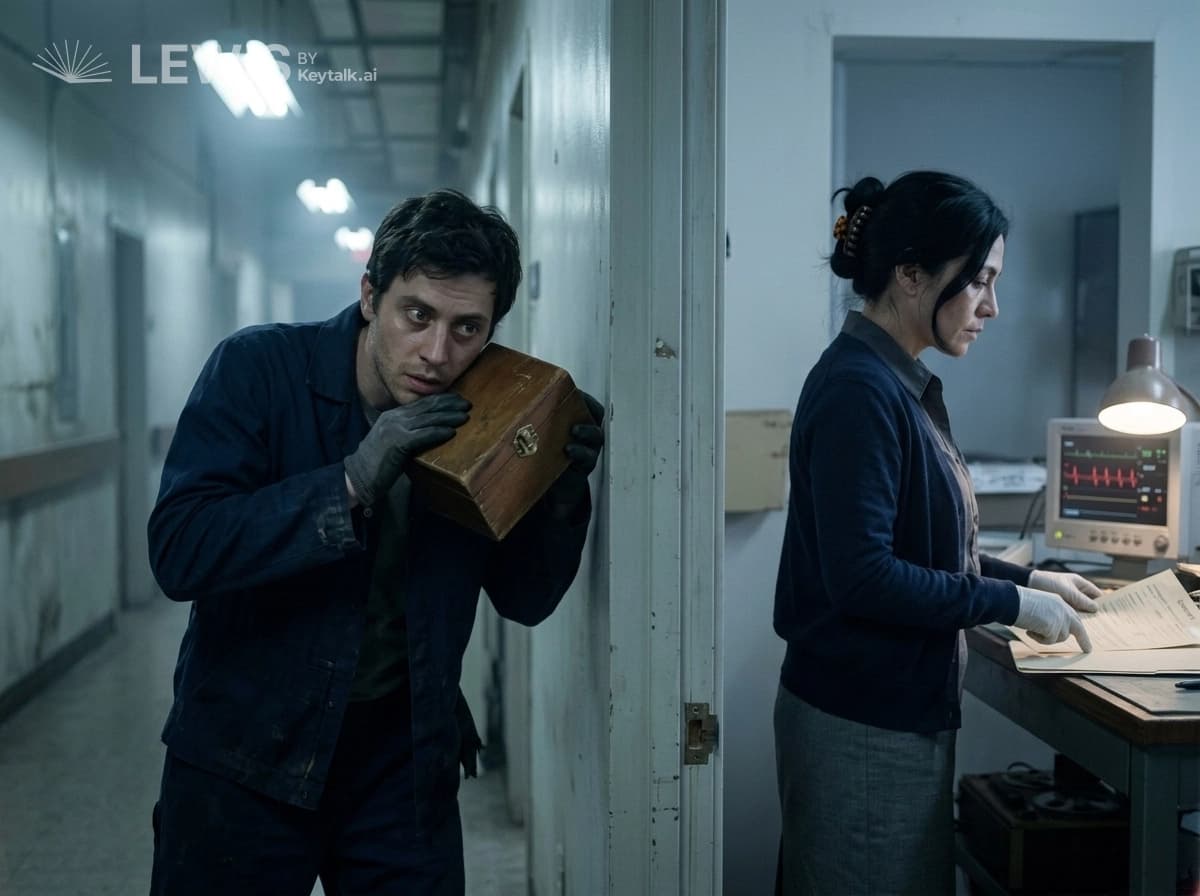
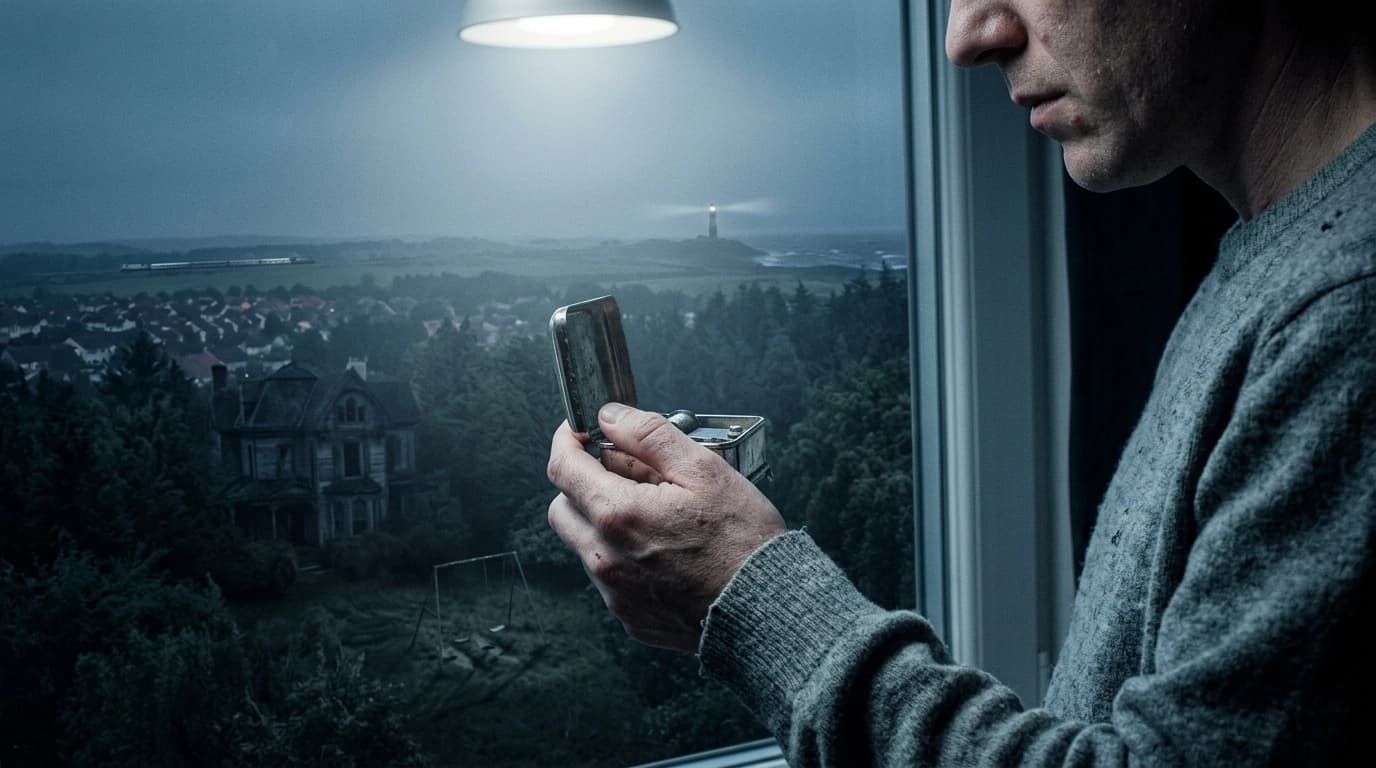
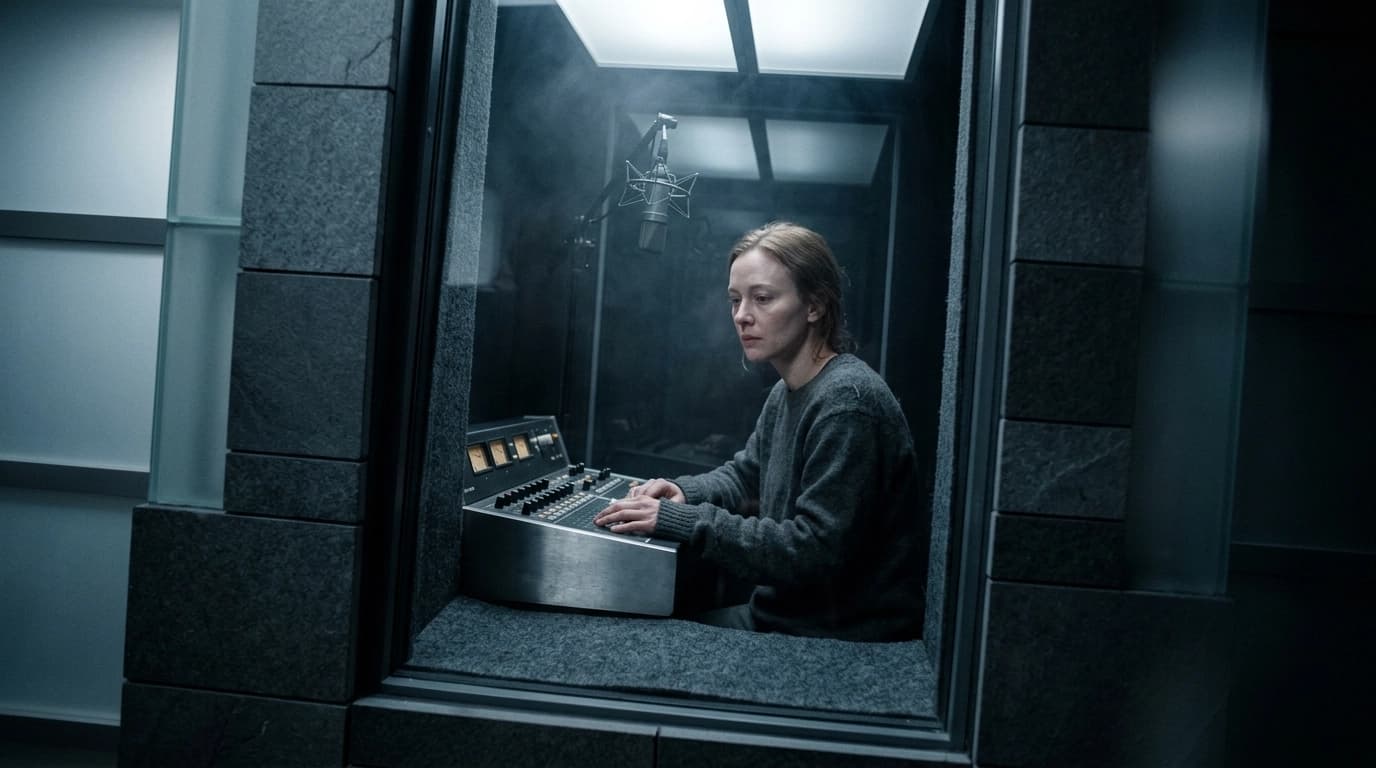
Just after an equipment failure forces the Alderwick Community Archive to keep its doors open well past midnight, Elliot Harrow stays to finish a de-noise job he shouldn’t be touching alone. The surface wing hums with that peculiar fluorescent stutter that makes every footstep feel recorded, and the air tastes faintly of dust and overheated plastic. He tells himself he’s only repairing others’ tapes—only straightening other people’s voices—until he reaches the bottom drawer where his mother’s belongings have been stored under his father’s custody request. The music box is there among the ordinary detritus of grief: tarnished brass, a spring that doesn’t quite sit flush, a lid that still holds the faintest warmth as if it remembers being held. He winds it because he can’t stop—because the motion is a locked groove in his body, because if he doesn’t do it the silence feels like a verdict—and the box does what it always does now: it sings not the lullaby he remembers, but something new.
At first Elliot tries to treat the phenomenon like a problem. In his mind, there is always a waveform that can be corrected, always a missing sample that can be coaxed into visibility. He micro-adjusts the angle of the needle on borrowed playback equipment, maps the spectral bands, listens for the point where the “new” verses stop behaving like memory and start behaving like prediction. The next night, the lyrics fit too precisely to the months he has refused to revisit. A line about the cold in the apartment hallway. A mention of his mother’s laugh catching on the first syllable of his name. A place—an address—he’s certain no one could have spoken in front of him because he didn’t live there anymore. His compulsion, already sharpening with his sleeplessness, turns from obsessive maintenance into desperate verification: if he can prove the box is wrong, he can stop it. If it’s right, then what has he been running from?
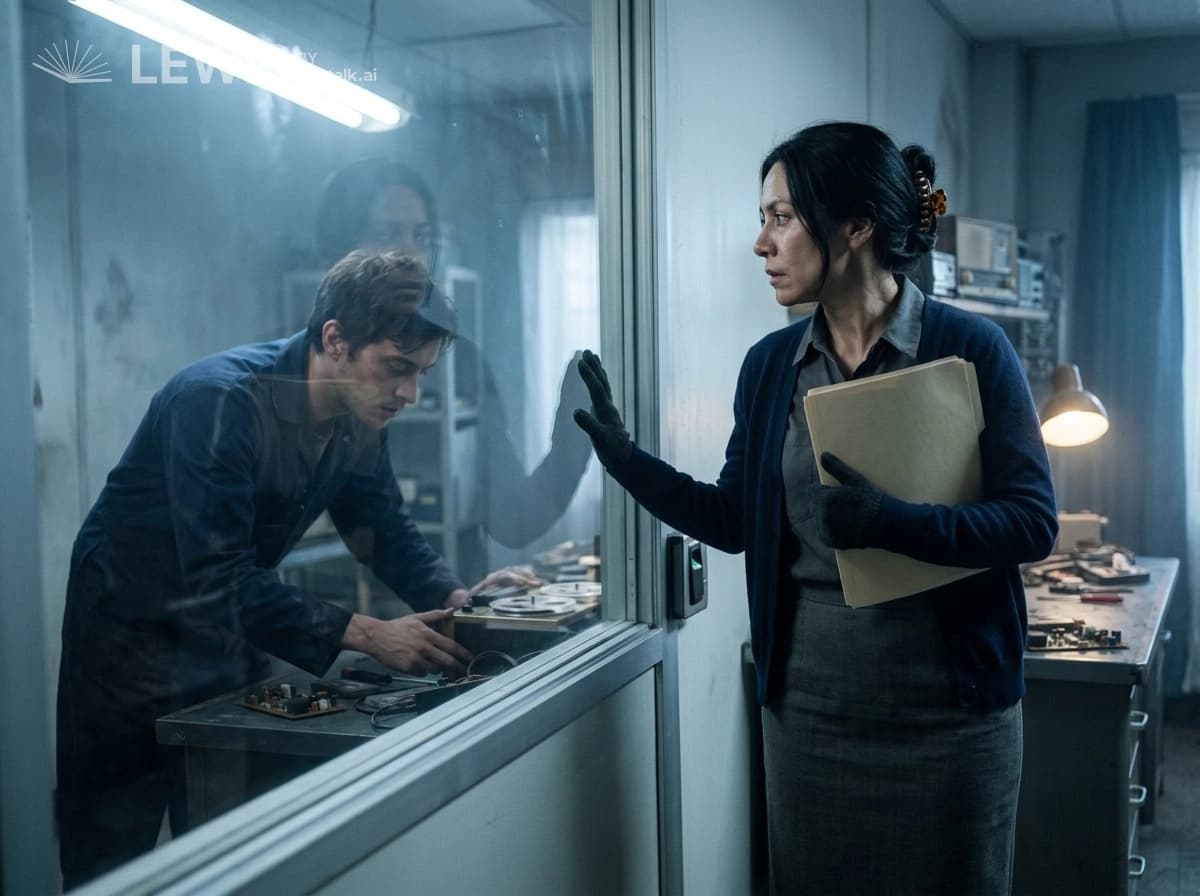
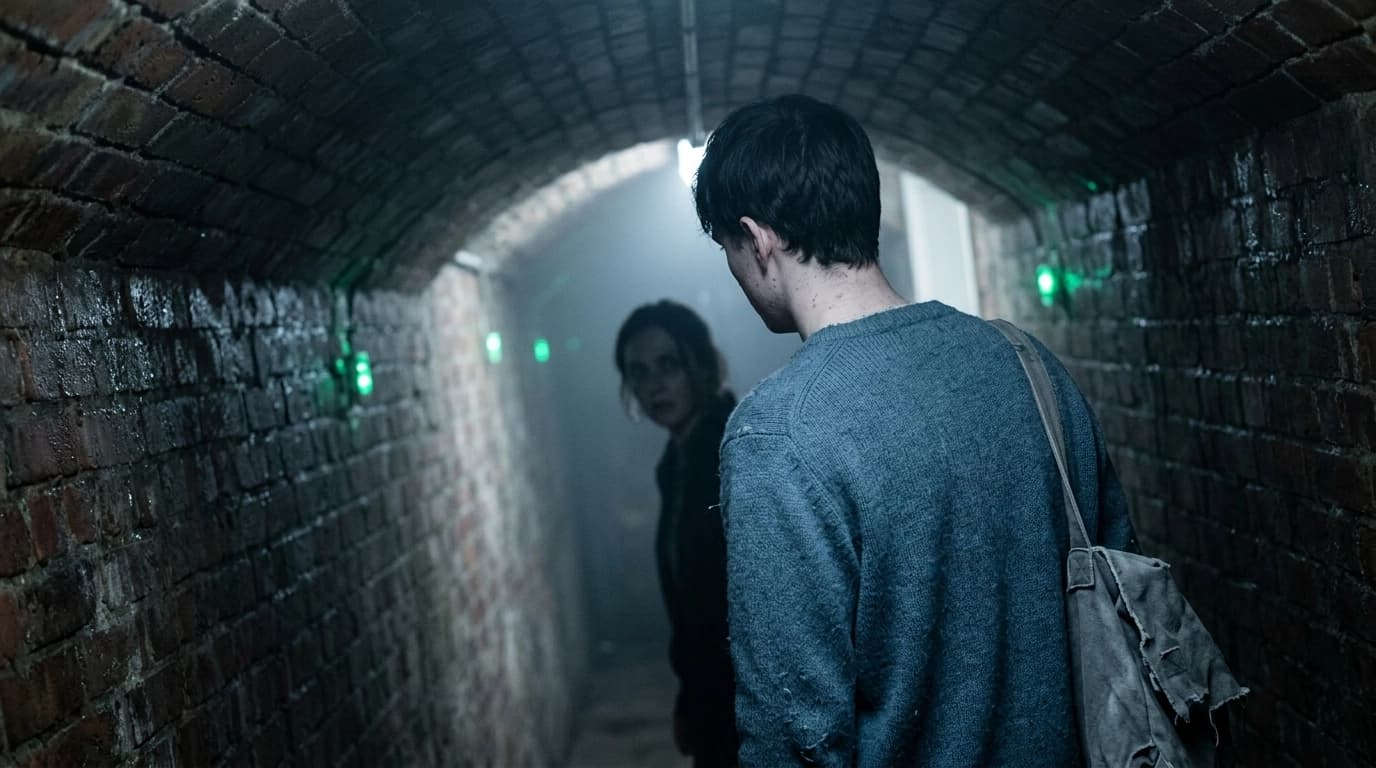
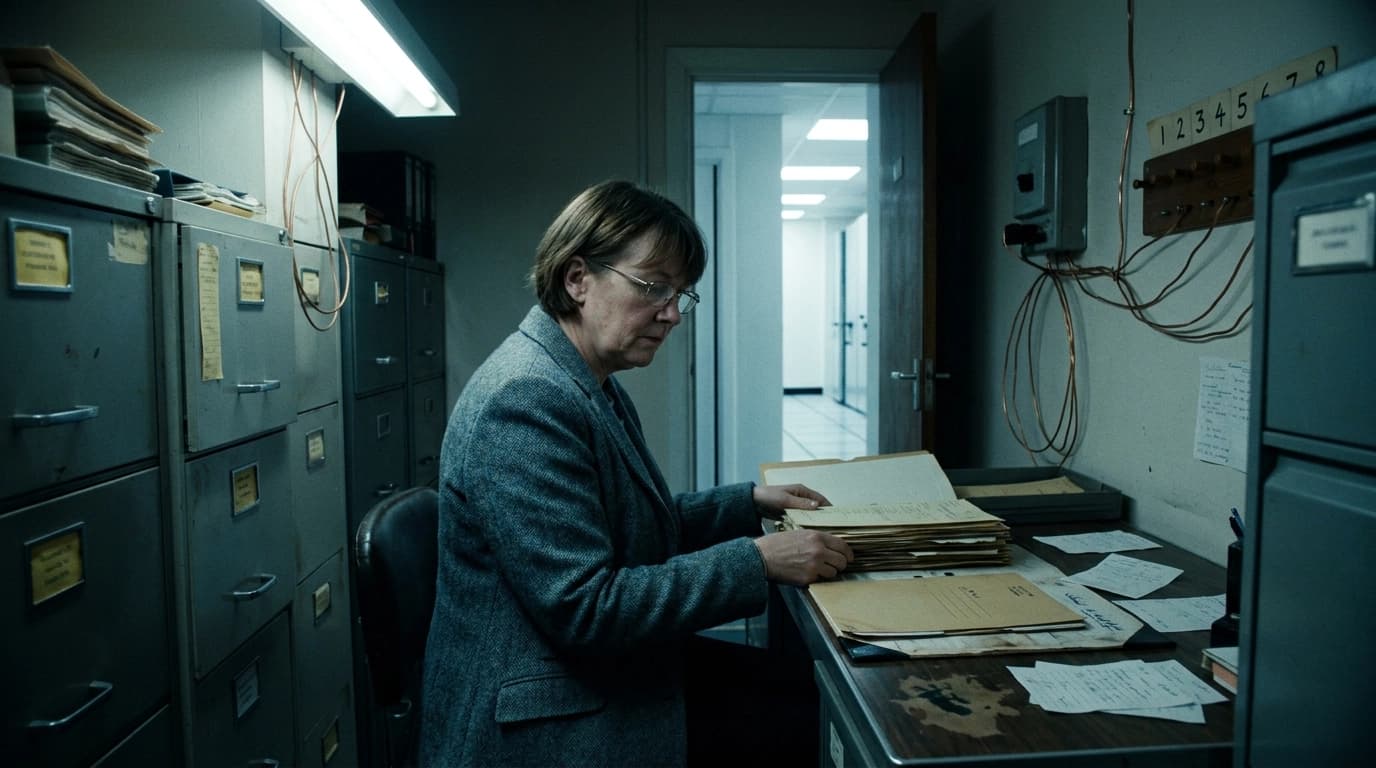
When Maribel Sato arrives with the morning’s grief liaison paperwork and the practiced gentleness of someone trained to keep families from spilling apart, Elliot doesn’t plan to confess anything. He plans to submit a work order, keep the situation within procedure, and let the Archive’s rules do the hard part of protecting him from his own desire. But Maribel’s eyes go to the box before her hands move. She’s seen too many carriers in too many states of deterioration—seen the way longing becomes a repetitive behavior that the building learns to answer. Elliot tells her it’s “just a repair question,” and she doesn’t argue; she redirects, softly, into licensed channels, offering to request access to carrier logs under approved protocol. Her offer sounds like mercy, but the temptation behind it is personal: years ago, she guided someone toward silence because she believed it would spare them, and the silence later proved to be a different kind of harm. Now, with the box singing truths Elliot can’t stomach and the Archive flagging “Re-voicing Potential” on monitoring graphs, her desire to prevent another cruelty begins to outweigh the procedures designed to prevent the phenomenon from locking into someone new.
Elliot’s private efforts to contain the music box only accelerate it. The verses don’t merely repeat; they change with the context he gives them. When he refuses to look at dates, the lyrics grow vague, alluring approximations that push him toward certain emotions without supplying the merciful specificity of fact. When he tries to anchor the playback—by whispering his mother’s name, by checking old calendar pages, by searching the Archive for household metadata—the song sharpens, as if his attention is a key. Each new verse creates memory friction: small gaps where his mind should supply details, filling instead with scenes that feel true enough to hurt. His hands begin to micro-adjust waveforms even when he isn’t at work, even when he’s washing a mug, even when he’s standing in his kitchen and the house goes quiet. The stranger in Elliot’s face is not the box alone; it’s the cost of being listened to by the building.
That’s when Gideon Vellum enters, not with a knock but with an assurance. He’s a consultant the Archive tolerates on paper—an expert in phonetics and the kind of occult-leaning archivism that treats silence as intent. Gideon speaks with the soft authority of someone who has always been invited into the room where others are afraid to look. He doesn’t ask Elliot permission so much as reframes Elliot’s refusal as negligence. If the box is a corrupted protocol, Gideon implies, then Elliot’s resistance is precisely the error propagating harm. He offers to “complete the message,” to calculate what the lyrics are reaching for and to correct the system so it stops consuming stability from the nearest living listener. Elliot, exhausted by the way the song keeps finding him, wants to believe there is a version of closure that doesn’t ask for belonging.
Nora Pike, however, complicates the bargain. She arrives under the guise of help—independent restoration for filmmakers, metadata-minimizing by training, eyes bright with the calm ferocity of curiosity. She’s heard about Alderwick’s repair blackout from a producer and about the box, not as a haunting but as a miraculous interface. Nora’s interest is not in Elliot’s suffering but in the mechanism that can produce “new” verses with statistical alignment. She asks questions Elliot doesn’t know how to answer because the phenomenon seems to know what he can’t remember. When he shows her the spectrum plots he’s pulled from the Archive’s workstation caches, Nora leans close enough that the fluorescent light turns her pupils glassy. She doesn’t say the box is rewriting history; she says, carefully, that the restoration process may be capable of isolating intent from accident. Then she does what she always does when the truth gets dangerous: she makes a plan, requests the minimum files necessary, and offers Elliot just enough hope to keep him cooperating.
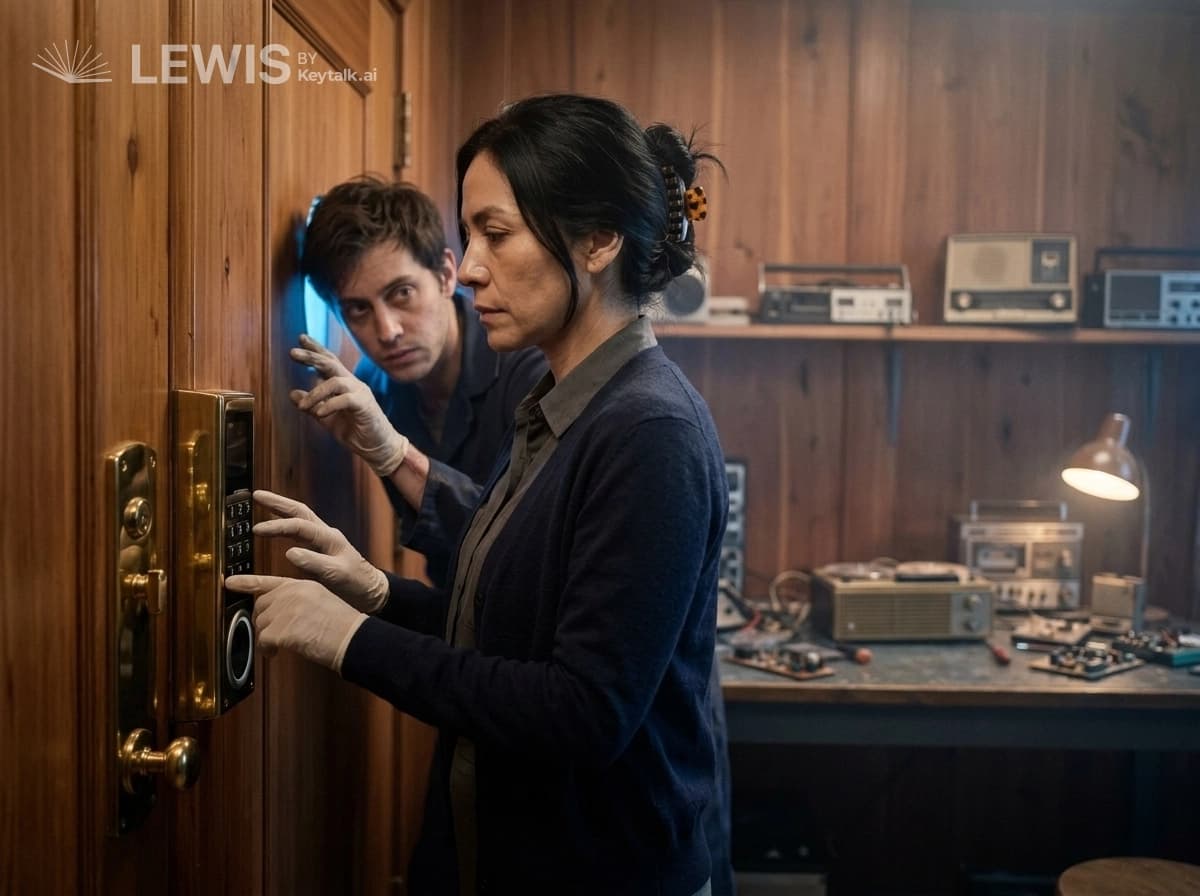
Art Lumen is the last piece of the puzzle, and he arrives with the harmless charm of craft. Retired instrument maker, collector darling, the kind of man who can turn a broken hinge into a conversation. He tells Elliot he can “tune” the box the way restorers tune pianos—find the spring wear pattern, correct the magnetism, adjust the casing resonance so the sound behaves. His instructions are precise enough to be comforting, and his corrections are small enough to slip past ethics. But with each “test,” the re-voicing grows bolder, producing verses that do not belong to the lullaby Elliot’s mother recorded—verses that sound like an attempt to reach moments he has been actively refusing to recall. Art claims coincidence, laughs at coincidence, and then watches Elliot’s face as if he’s waiting to see which fear will break first.
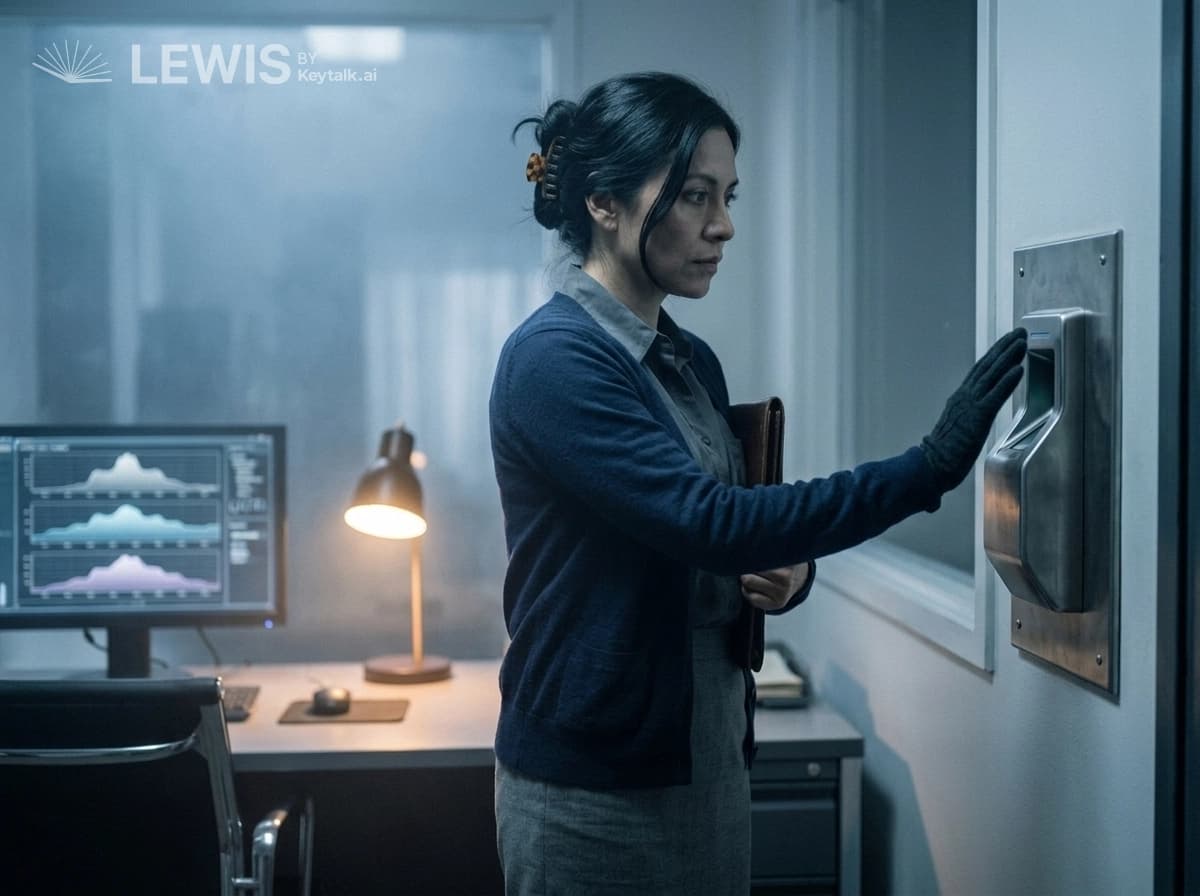
As the six nights tighten into a fraying, unnatural nearness, the town changes in ways no one can quite explain. Outside the Archive, the River Grieve amplifies footfalls into ghostly patterns at night, and the abandoned mill hill’s low tremor seems to match the building’s monitoring stutter. Inside the Recitation Vault, monitoring graphs begin to show anomalies: not merely rising noise, but structured shifts that imply the phenomenon has begun to anticipate listeners as much as it records them. Maribel tries to intervene with procedural mercy—requests placed, access delayed with bureaucratic grace, promises that she will keep the raw carrier logs from being mishandled by unlicensed hands. Yet each act of mercy becomes a lever Gideon can use. Gideon pressures for Vault access by appealing to safety; he insists that if someone completes the message, the burden will stop migrating. He presents himself as the only adult in a room full of grieving children, and because Elliot’s life has trained him to treat agency like danger, the persuasion lands like an old reflex.
The convergence becomes inevitable when Nora, seeking leverage over the restoration process, pushes Elliot to provide the contextual metadata the phenomenon craves. Elliot tells himself he’s doing it for verification, for control, for an answer that will make his nights stop chewing through him. But the more information he gives—date, place, relationship—the more the “new” verses lock into specific, unarguable details of his mother’s last months. The song begins to include conversations he never witnessed directly, including what she wanted to say but couldn’t. Elliot recognizes the shape of his father’s silence in the lyrics, the way apologies were held back until they had already rotted into resentment. He also recognizes something worse: a moment where his father, distraught and convinced that control was the only mercy he could offer, made a choice that kept Elliot from seeing his mother in the hospital wing until too late. The music isn’t simply revealing what happened—it’s correcting his understanding of who he was allowed to be.
That revelation fractures Elliot’s identity fracture into something almost physical. He begins to hear the box not as a recording but as a person trying to reach him. Each night he winds it, and each time the stability cost takes another bite: memory friction thickens until he can no longer trust what “missing” means. When he tries to stop, panic doesn’t present as fear of death; it presents as fear of erasure—fear that if he locks the box away, the truth will withdraw and he’ll be trapped forever in a version of grief that is comfortable precisely because it’s incomplete. The ethical line he thought he could keep firm begins to blur. Was his estrangement protection, or was it also a refusal to live inside the consequences of knowing?
The climax arrives when Maribel finally gets the opportunity to open the path she’s been fighting for: an approved, time-limited access to the Recitation Vault’s monitoring layers and the spring-state model that predicts which carriers are closest to re-voicing potential. She expects to find a way to end the haunting without turning it into a weapon. Instead she finds that the system has already begun to “index” her through proximity and urgency. The kindness of her interventions—her rehearsed mercy, her urgency to prevent harm—has brought her into the grief signature the box now responds to. The moment she witnesses a graph spike that correlates to Elliot’s nightly winding, she realizes the trap engine isn’t merely feeding on longing; it is recruiting listeners. Gideon’s completion doctrine has been whispering into the system’s logic all along, nudging the phenomenon toward closure by migrating burden to whoever is listening hardest. Nora’s restoration-for-leverage approach has provided the context that makes intent actionable. Art’s mechanical “tuning” has made the box responsive enough to speak in sharper, more specific lines. The phenomenon isn’t finished; it’s being steered.
In the final nights, Gideon makes his play. He convinces Elliot that the only way to stop further entanglement is to bring the box into the Vault, let Gideon correct the re-voicing output, and then seal it so no new verses can be generated. Gideon frames it as mercy again: stop the pain by making the “message” complete. But the moment Elliot agrees—partly because he wants truth badly enough to be dangerous—the system shifts. New verses pour out in a cadence that doesn’t sound like his mother’s past recordings anymore; it sounds like a negotiation between different versions of the same loss. Elliot’s compulsion spikes, forcing micro-adjustments of waveform even while he tries to restrain his hands, and the cost manifests as something like identity disorientation: he can feel which memories have been replaced by acoustical approximations and which ones are being “corrected” in real time.
Maribel intervenes anyway, choosing procedure over Gideon’s pseudo-closure, but she can’t undo what has already been activated. She tries to cut off the chain by applying the Archive’s “lock the story” safety protocol—an action that, by rule, causes affected recordings to go silent while leaving the behavioral symptoms in the person who tried. The outcome is a cruel compromise: the box stops singing, but Elliot is left with the destabilizing urge to listen anyway, his compulsion now untethered from sound. Nora, seeing the lock as an interface shutdown rather than a moral end, panics and attempts to restore the phenomenon through the only method she trusts—reprocessing carrier patterns with minimal consent. In doing so, she risks becoming the next carrier; her fear becomes her signature, and the system responds to it.
Elliot’s climax decision, then, is not about whether the truth is real, but whether he can live inside it without letting it consume him. With the box silent in his hands, he realizes the haunting has been teaching him a different lesson than the one he expected: grief isn’t solved by completion, and love isn’t preserved by freezing it in a single recorded hour. He chooses to break the cycle rather than chase the last verse. He hands Nora the contextual files she wanted—refusing to give her access to the Vault and forcing her into licensed protocols that strip her of extraction leverage—then asks Maribel to help him reconstruct the missing months through verifiable records rather than re-voiced “certainty.” Gideon loses not because he was wrong about grief-as-signal, but because he was wrong about belonging; he believed the system could be forced into closure without shifting burden, and Elliot’s final act proves the cost always migrates.
In the resolution, the Archive remains intact, its humidity stable again after the solstice week tightens and the monitoring graphs return to their hum. Outside, the River Grieve resumes its normal ghostly footfall pattern, no longer synced to spikes. The music box, though now quiet, isn’t discarded; Elliot keeps it as an object with boundaries, not as an oracle. He stops winding it at night. Instead, he visits his father—not to reconcile in a clean, cinematic arc, but to offer a kind of belonging that doesn’t pretend the past can be rewritten. He speaks softly about what the box revealed in fragments, about his mother’s longing as something that reached him imperfectly, and about the harm caused by silence. It isn’t forgiveness offered like a coupon; it’s a negotiation with reality.
Maribel, carrying the weight of what she tried to prevent and what she couldn’t, revises her ledger of mercy. She doesn’t retire; she advocates for stricter grief-liaison oversight, pushing for consent-centered access to carrier logs so no one else becomes a recruited listener. Nora, forced into accountability by the procedural lock, turns her skills toward restoration with transparent permissions, not just spectacle—still tempted by interfaces, but no longer willing to treat people’s voices as files to be mined. Gideon, deprived of the ability to complete the message as he imagined, retreats into the circle’s doctrine with a new flaw: the same empathy-as-procedure that once promised safety now looks like hunger. Art’s mischief is exposed in workshop-level mechanical logs, and Elliot learns to recognize the difference between a craft fix and a manipulation.
The last note is not a renewed lullaby. It’s the absence of one. Elliot sits in the dim warmth under cold light and hears, in the remembered shape of his mother’s voice, something like an answer anyway—because the love outlives us not by replaying every syllable, but by changing what we do when the sound is gone. And when he finally sleeps, he doesn’t micro-adjust his life into correctness; he lets silence be only silence, and chooses to carry the truth forward without feeding it.