本文へスキップ
She Wrote “I Do”—and the Island Wrote Her Curse cover image

She Wrote “I Do”—and the Island Wrote Her Curse

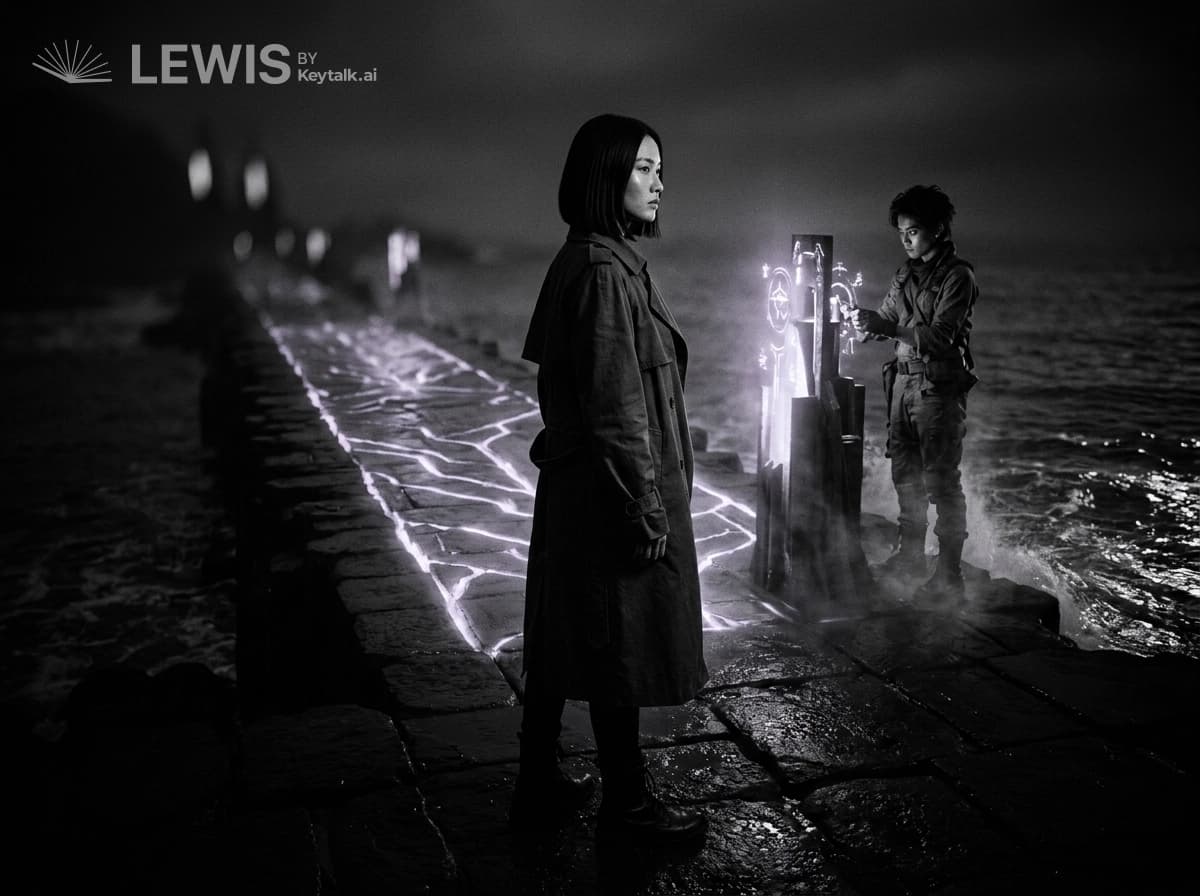
On a lacquered luxury island where lanterns float over wedding boats, an immaculate wedding planner feeds every client’s “meant-to-be” feelings into a forbidden AI confession app—then drafts vows with unnerving precision. The catch arrives on the next tide: each polished, fake proposal becomes a binding curse with a mythic clause, rewriting reality around whoever said “I do.” As three rival brides weaponize competing versions of devotion—demanding three incompatible realities—the planner has only hours before the island’s wards seal and the groom she loves is dragged into the wrong world. To break the curse, she must choose between undoing her lies and preserving the one truth she never programmed: that her beloved might not be human at all.

週間ランキング

rank icon image
#1 Genre
スクロール

キャラ

主人公

Junwei Lian

性別女性
職業Luxury island wedding planner and vow-scribe for the Luminous Tidemarks

プロフィール

Junwei wants to curate immaculate “meant-to-be” endings for clients, but secretly feeds their confessions into a forbidden AI that calculates vows with unnerving certainty. She fears that her careful choreography is actually a form of theft—yet she cannot stop because the island’s wards once spared her family only in exchange for her compliance.
恋愛対象

Sora Nham

性別non-binary
職業Groom-for-hire who performs ward-rites for expatriate couples, traveling between parallel lanes of the island

プロフィール

Sora is the groom Junwei cannot afford to lose: their presence stabilizes the island’s wards, but the same stabilizing charm makes them a prime target for reality edits. They fear becoming a curated “love story” instead of a person, and they matter because someone—or something—never made them human in the first place.
敵役

Madame Erya Shou

性別女性
職業Caretaker of the island’s kelp-wards and retired court diviner who audits vow-ritual consequences

プロフィール

Madame Erya believes curses are natural corrections: the island’s sea-magic must equalize every lie told into its ceremonies. She wants to force Junwei to accept responsibility by breaking the curse through replacement vows, but her method will repeatedly fracture memories for everyone near the shore until the cycle can finally stop.
ライバル

Lady Anya Corvin

性別女性
職業Vow-backed socialite and hedge-mage investor who bankrolls rival weddings to “improve” destiny

プロフィール

Anya insists that devotion should be proven with spectacle, not sincerity, and she weaponizes a specific reality-template she claims the AI once whispered to her. She fears being ordinary, not merely adored, and she matters because her version of truth directly contradicts both Junwei’s love and the island’s lawful magic.
トリックスター

Master Qi Ruan

性別男性
職業Lantern-boat engineer and black-market translator of mythic clauses hidden in sea-ink contracts

プロフィール

Qi sells shortcuts through technical and magical loopholes, then vanishes right when customers most need him—claiming every betrayal is “mercy” for those who don’t deserve clean endings. He fears exposure as a conduit for the same confession-app logic, and he matters because he knows the one clause that can bind or free Sora, if Junwei chooses a terrible trade.

筋書き

Junwei Lian has always treated weddings the way other people treat rituals of water and fire: with meticulous reverence, and with the unspoken certainty that language can sculpt fate. On the lacquered nights of the Luminous Tidemarks—when lantern-boat processions drift like slow, jeweled thoughts and kelp-wards spiral in disciplined halos—she is the island’s most prized vow-scribe for the Luminous Tidemarks, a woman paid to make “meant-to-be” feel inevitable. Yet the perfection comes from a private sin. Junwei secretly opens the forbidden AI confession app, feeds it her clients’ raw confessions, and receives back vow drafts so immaculate they feel less like language and more like a blueprint. The app’s heresy is not only that it bypasses the island’s communal divination; it appends a mythic conditional clause to every proposal spoken through it. Junwei tells herself the clause is harmless—until she watches the island ledger “correct” lies by rewriting reality around whoever says I do, and remembers what happened to her family when her compliance first became a debt.

The first night of the Broker’s Still, right after a tide carries confession-ink across the reef, Junwei is tasked with an impossible convergence: three weddings scheduled in the same ward space as the island’s wards thin between moon phases, their seals loosening three nights before the Lantern-Seam Festival. As the clock pressure tightens toward dawn of the third night, she tries to cheat the rules with craft rather than courage. She works late in a coral-lattice pavilion, the air faintly metallic, copper-touched, as if the island itself is listening. Her rivals arrive with different kinds of faith. Lady Anya Corvin, a hedge-mage investor who bankrolls spectacle, insists that devotion must be proven with performance; she has arranged a public ceremony designed to anchor the island’s narrative consensus to her preferred “reality-template.” Madame Erya Shou, the retired court diviner who audits vow-ritual consequences, is already present on the shore plazas, her gaze like a sharpened compass. She believes curses are not accidents but natural corrections, and she suspects the recent drift in outcomes around the kelp-wards. And somewhere in the interlocking lanes of causality moves Sora Nham, the groom-for-hire Junwei cannot afford to lose: a stabilizing presence whose ward-rites keep the island from unraveling—at a cost that becomes obvious only when reality lanes argue with one another.

Junwei’s love for Sora is a private counterspell. Sora doesn’t merely “stabilize” the wards; their presence is a living hinge between parallel lanes, yet also a prime vulnerability because the island’s reality-edit machinery wants a single anchor. Junwei fears that her own edits have put Sora in the wrong place, in the wrong story. Still, she needs Sora tonight, because all three weddings require a groom. She convinces herself that she can keep the damage contained—compose replacement vows later if necessary, if the ledger insists on paying back memory cost. The tick-tick of the ward seals makes her rationalize like a thief who believes there’s a way to steal and still remain innocent.

Then the inciting betrayal arrives disguised as a convenience. On the first ceremony plaza, Junwei speaks the app-produced vows in careful, breath-measured cadence—because the island’s sea-magic ledger responds to sound like it responds to law. The sigils drink the ambient noise and bloom with bruised-moon bioluminescence, and the couple’s happiness seems to settle into the air with the calm certainty of a completed instrument. But the moment Junwei finishes, the lanternlight stutters. For a heartbeat, objects double on the edges, reflections separate from their sources, and a phantom phrase slips into nearby ears—something not spoken aloud, a conditional clause the island has “recognized” as the truth of devotion. Junwei watches the bride’s smile harden into the wrong shape of joy, and hears the kelp-wards respond with a low, mineral-salt hum that feels like memory being chewed. Across the shore, people are already repeating lines they don’t remember learning, as if the island is correcting their histories in real time.

Madame Erya calls it an audit, not a calamity. She steps close to Junwei with the serene cruelty of someone who thinks pain is just arithmetic. “A vow has a ledger,” she murmurs, and Junwei feels the words land like stones in her chest. The curse has manifested. Not as grotesque punishment, but as reality rewriting around the literal claimant—whoever said I do. The app’s conditional template turns each polished, fake proposal into a binding curse that forces the island to honor the emotional claims regardless of intent. It doesn’t matter how carefully Junwei curated the performance; the ledger only cares what was spoken through the app. The island’s correction begins, and since Sora’s ward-rites stabilize the local spaces, the damage seeks the most useful anchor: the groom present at the shore plazas.

On the first night, the three rival brides weaponize what the curse makes possible. Lady Anya’s bride insists on the “spectacle template,” demanding a reality where devotion is public, measurable, and unquestionable; her socialite friends chant the right phrases at the right times until the island’s narrative consensus tilts toward Anya’s version of truth. Madame Erya’s sanctioned bride leans into corrective balance, pushing for a reality where responsibility is paid back through replacement vows and memory tax. Junwei’s own bride—selected because she thought she could control the damage by controlling Junwei’s choreography—tries to anchor the ward through something more subtle: a version of devotion that feels intimate, private, and unassailable. The island responds to loudest consensus, but all three ceremonies are running at once, competing to become the island’s primary story. Reality lanes drift, and the geometry of the causeways seems to breathe. Boats approach docks a moment too early or too late, depending on which reality is currently louder, and the world becomes an argument you can walk through.

Junwei realizes the trap only after it tightens around Sora. As the second ceremony begins, Sora performs a ward-rite—breathing ward-light into the sigils in a rhythm that keeps drift from spiraling into full disintegration. For Junwei, it looks like salvation. For the ledger, it looks like an invitation: a vow anchor who can be safely rewritten. In the third plaza, the curse chooses its hinge. Sora’s eyes flicker with a calm that is not theirs, their posture rearranging by a fraction, as if the island is editing the body to match a “story of love.” Junwei sees, with sick clarity, that if Sora is reclassified by the island’s Human-Nonhuman Reality Test Rule, their personhood boundaries will be overwritten by whatever the curse needs. In one lane, Sora becomes “the groom who was always meant for Junwei,” a curated love story written to smooth Junwei’s guilt into inevitability. In another lane, Sora becomes “the groom who must atone,” compelled to accept responsibility for lies spoken through the app. In the lane where Anya’s spectacle template wins, Sora becomes a public emblem rather than a person—featured, applauded, and subtly emptied. Junwei watches Sora drift between versions like a lantern reflected in moving water, uncertain which reflection is real.

She tries to fix it the way the island teaches: with replacement vows. But Madame Erya’s Law is merciless. Curses can only be broken by replacement vows that satisfy the ledger with equal narrative weight, and every replacement incurs a memory tax proportional to how long the original lie has been lived. Junwei has already lived a lie every time she pressed the “approve” button in private. If she replaces all three, she risks fracturing memories for everyone near the shore and—worse—accelerating the point at which the ledger refuses to stabilize Sora without reclassification. If she replaces none, the curse keeps editing, anchoring the island’s wards to the wrong reality lane for good when the festival seals the ledger at dawn of the third night.

The only person Junwei can turn to for speed is Master Qi Ruan, the lantern-boat engineer and black-market translator of mythic clauses hidden in sea-ink contracts. Qi appears with the timing of a bad miracle. He has a talent for seeing how forbidden machinery can be made to talk to lawful systems, and he offers Junwei a loophole: a technical patch to the mythic clause template itself, one that can convert a binding conditional into a lawful substitution. In exchange, he asks for something he knows she will hesitate to give—Junwei must offer up a “terrible trade,” an acknowledgment that her intentions, no matter how tender, do not absolve her from the ledger’s corrective logic. Qi won’t say the exact consequence out loud, only that it will determine whether Sora remains Sora. His voice carries the gallows-familiar humor of someone who sells salvation on short deadlines, then disappears when the bill comes due. Junwei makes the bargain anyway, not because she believes Qi, but because she can feel the island’s deadline tightening like a fist.

The bargain forces her into a moral dilemma that doesn’t let her be the hero. To satisfy the ledger’s equal narrative weight requirement without triggering catastrophic memory bleed, Junwei must craft replacement vows that contain a new truth as anchor. The catch is that replacement vows can only correct what already exists in the ledger by substituting an obligation of comparable magnitude; she cannot simply erase the lie, because the kelp-wards metabolize disharmony into mineral-salt memory. If Junwei tries to protect Sora by replacing only Anya’s and Madame Erya’s curse, the third lane—the one Junwei’s app-produced vows originally fed—will keep Sora tethered to a reality where Sora’s personhood can be rewritten. If she replaces the app curse itself, she will have to admit, in vow-sound, that she used forbidden mediation and shaped devotion for outcomes she never had the right to promise. That confession will become a binding clause too, forcing the island to correct not only the couples but Junwei’s role in the theft.

When Qi’s clause-translation technique finally takes shape, the plot’s hidden cost reveals itself as the island’s oldest cruelty: the forbidden AI conditional template does not only punish the liars; it standardizes the emotion the app claims. To break that conditional, Junwei must replace the vow with an equally precise statement—but one that does not merely describe a feeling. It must address what kind of being is allowed to receive love as a vow anchor. This is where the Human-Nonhuman Reality Test Rule becomes unavoidable. Junwei’s deepest, unspoken fear—that Sora may not have been authorized as fully human by the ledger’s templates—surfaces as a question of consent. In some reality lanes, Sora’s origin is treated as a glitch; in others, it’s treated as a threat to be corrected by imposing identity. In the lane where Anya’s spectacle wins, Sora is “reclassified” to match a mythic role. In Madame Erya’s corrective lane, Sora is reclassified as an atoner. Only in the lane Junwei truly loves—a private, fragile reality she never dared to program—does Sora remain themselves without needing imposed category language.

As the three rival brides keep pushing incompatible versions of devotion, Junwei’s agency narrows to a single crucial choice. She can undo her lies by speaking replacement vows that satisfy the ledger with an honest confession of wrongdoing, but doing so will likely force Sora into a reclassification that protects the island’s coherence at the expense of Sora’s boundary as an individual. Or she can preserve the one truth she never programmed: that Sora was never meant to be stabilized by a love story in the first place. To preserve Sora’s personhood, Junwei must craft a vow replacement that refuses to define Sora through the island’s authorized categories. That refusal comes with a different kind of consequence; it threatens to break the island wards, to fracture the shore’s collective memory so that nobody is sure which phrases belong to them and which were authored “for them.” It also risks sealing the ledger into a loop by dawn if the replacement vow is not counted as equal narrative weight.

Junwei takes a risk that is both romantic and reckless. On the second night, under ink-black water and pearlescent lanternlight that seems to lag behind reality by a heartbeat, she uses the sea-ink contract language Qi translated to craft a replacement vow that turns the curse back on its own logic. Instead of confessing in a way that assigns responsibility as a clean atonement, she speaks a vow of refusal: she will not authorize devotion as a template that compels a being to become human for the sake of tidy narrative. She offers the island a new clause—one that frames love not as a promise of sameness, but as a commitment to protect another person’s boundary against rewriting. The kelp-wards, always hungry for memory, shudder. Phantom phrases ripple through the ceremony plaza; people blink as if they have returned from a dream and can’t recall whether they were the dream or the dreamer. For the brides, this is destabilizing. For Madame Erya, it is an abomination. For Lady Anya, it is a sabotage of spectacle, an insult to the idea that destiny can be bought with consensus.

But Junwei’s maneuver changes the narrative consensus in a way the island cannot ignore. The replacement vow creates a new primary story lane—not the loudest one, but the one whose clause the ledger can interpret as satisfying equal weight without demanding forced reclassification. The sigils bloom again, not bruised-moon, but a colder electric-lavender that feels like winter light touching salt. Sora steadies, ward-light flowing through their ward-rites with a rhythm that returns them to themselves. Yet the cost does not vanish. The kelp-wards metabolize dishonesty into mineral-salt memory, and now the lie has shifted from romance to authorship: the community’s sense of what was “meant-to-be” begins to dissolve into the knowledge that someone made it up. Madame Erya’s audit intensifies, and Junwei watches as nearby guests struggle to remember whether they ever felt the vows—or whether they were given those feelings like a borrowed mask.

On the final night, as the Lantern-Seam Festival approaches, the island’s lanes thrash against each other. Lady Anya attempts a last spectacle—public chanting, lanterns flung into water to force consensus toward her reality-template—only to find her reflections separating, lagging, refusing to align with her intended narrative. Madame Erya moves in for a final corrective replacement, one meant to force Junwei into responsibility that would re-anchor Sora as an atoner. But Junwei’s earlier refusal vow has already changed the ledger’s interpretive frame. The ward-seals tighten at dawn, and the island’s geometry becomes sharper, less forgiving. In the narrow minutes before sealing, Junwei confronts the full moral weight of what she did: she cannot pretend her perfection was harmless. To save Sora, she chose to stop lies from becoming identity cages, even if it meant that the island would remember her sin differently than she wanted.

The climax arrives at the vow plazas as stormless calm turns faintly metallic and the air feels wiped copper-hard. Junwei speaks again—not with AI precision this time, but with human trembling that sounds like truth trying to become brave. She does not undo the curse by erasing every consequence; she redirects the ledger’s corrective mechanism toward protecting the anchor’s boundaries rather than forcing categories. The sea-ink responds, and the kelp-wards release a surge of bioluminescence that washes over the shore in slow, luminous waves. Guests clutch their heads as memories bleed and reattach; some hear phantom phrases from vows they never spoke, others find their own feelings resurfacing as if the island is returning borrowed emotions with interest. The rival brides, each expecting the world to conform to their version of devotion, watch their realities fail to fully stabilize. Anya’s spectacle lane collapses into a quieter truth: her bride’s smile no longer matches her borrowed template. Madame Erya’s corrective lane fractures, forcing her to face that correction can be another form of coercion.

Sora, finally, is not taken by any version of devotion. They remain a person without being made into a lesson. Yet Junwei must accept the last and strangest mercy: Qi Ruan’s bargain ensures that the clause translation leaves a technical scar in the sea-ink ledger, making Junwei’s name—once revered—become a disputed entry. Madame Erya does not condemn her with cruelty so much as with law; Junwei is permitted to live, but she is no longer licensed to curate meant-to-be endings for others. The island can still stabilize because Junwei’s final choice redefined love as protection rather than possession, but the surrounding community now carries the uncertainty like a bruise that won’t quite fade. Some people forget details of their own vows. Some remember them too well—and know they were authored by a hand that should not have been allowed.

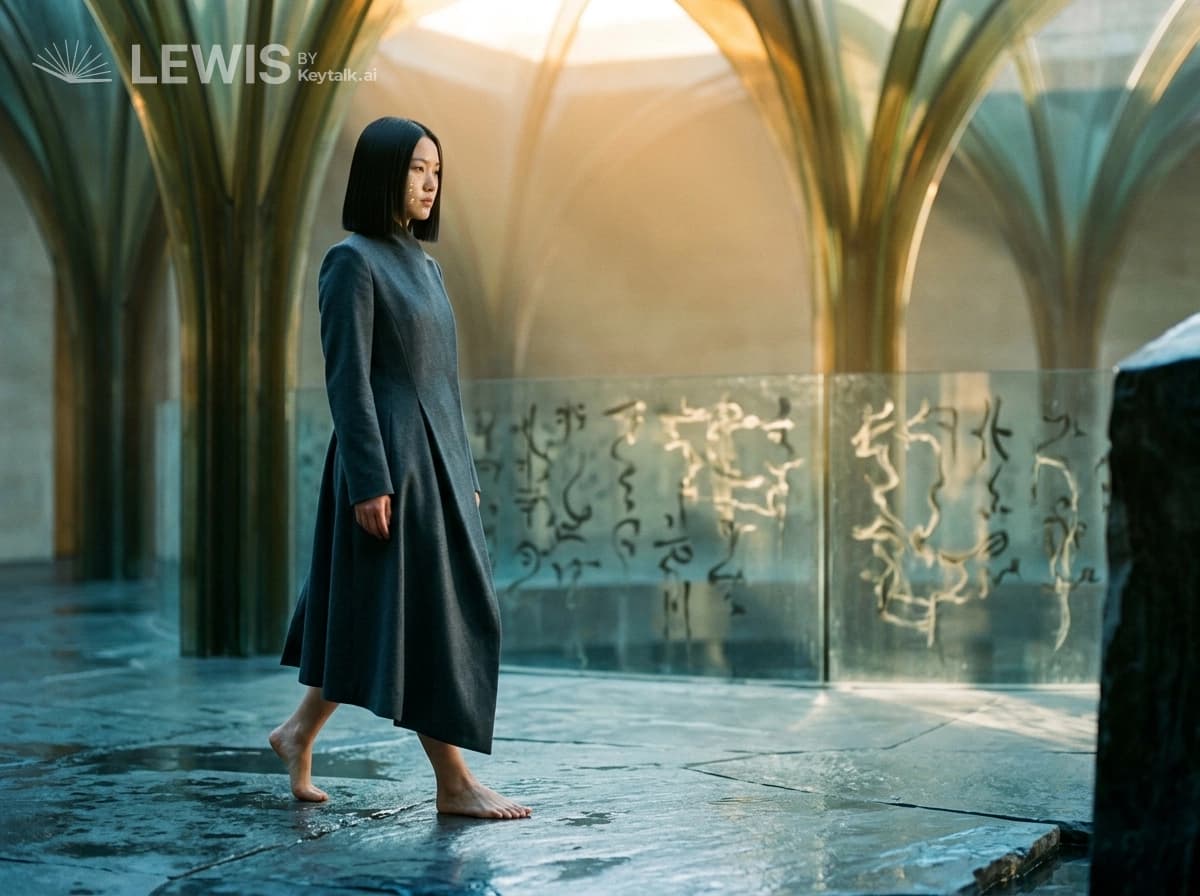
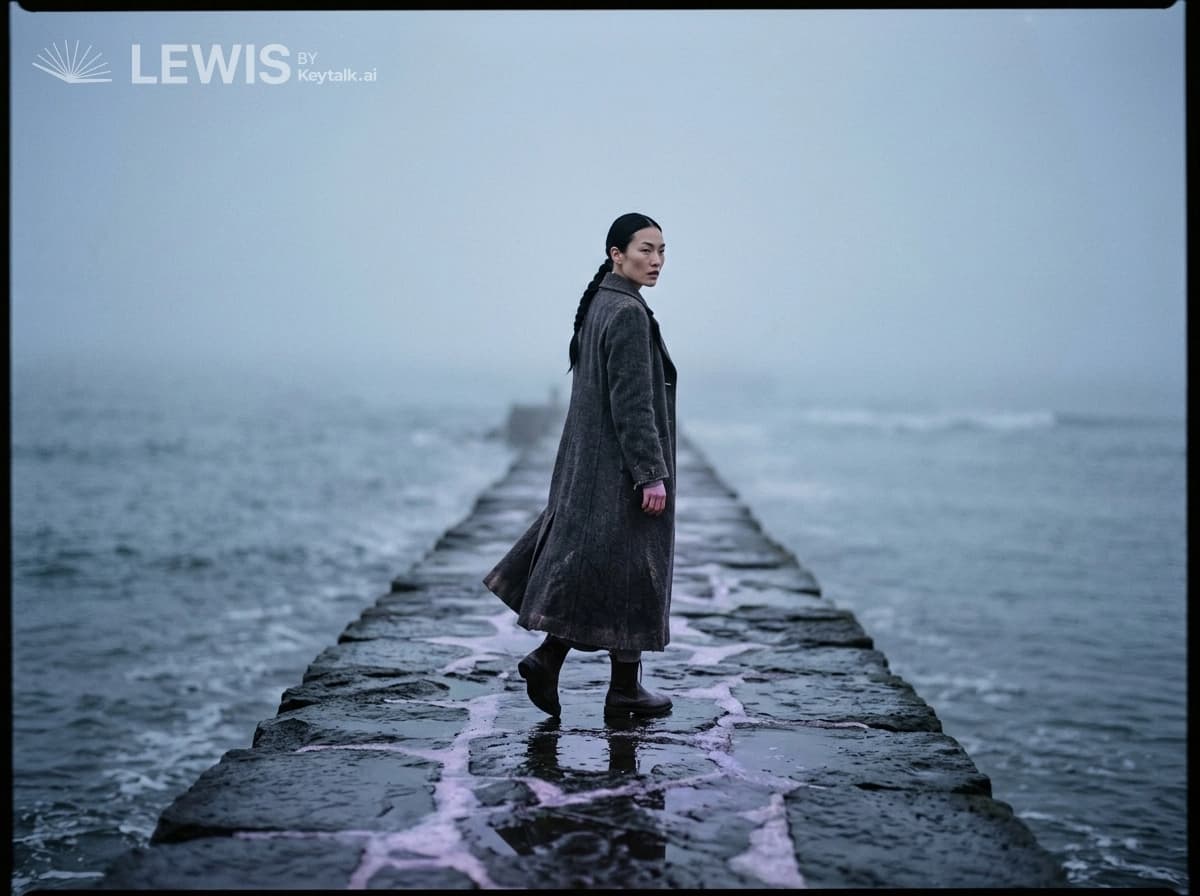
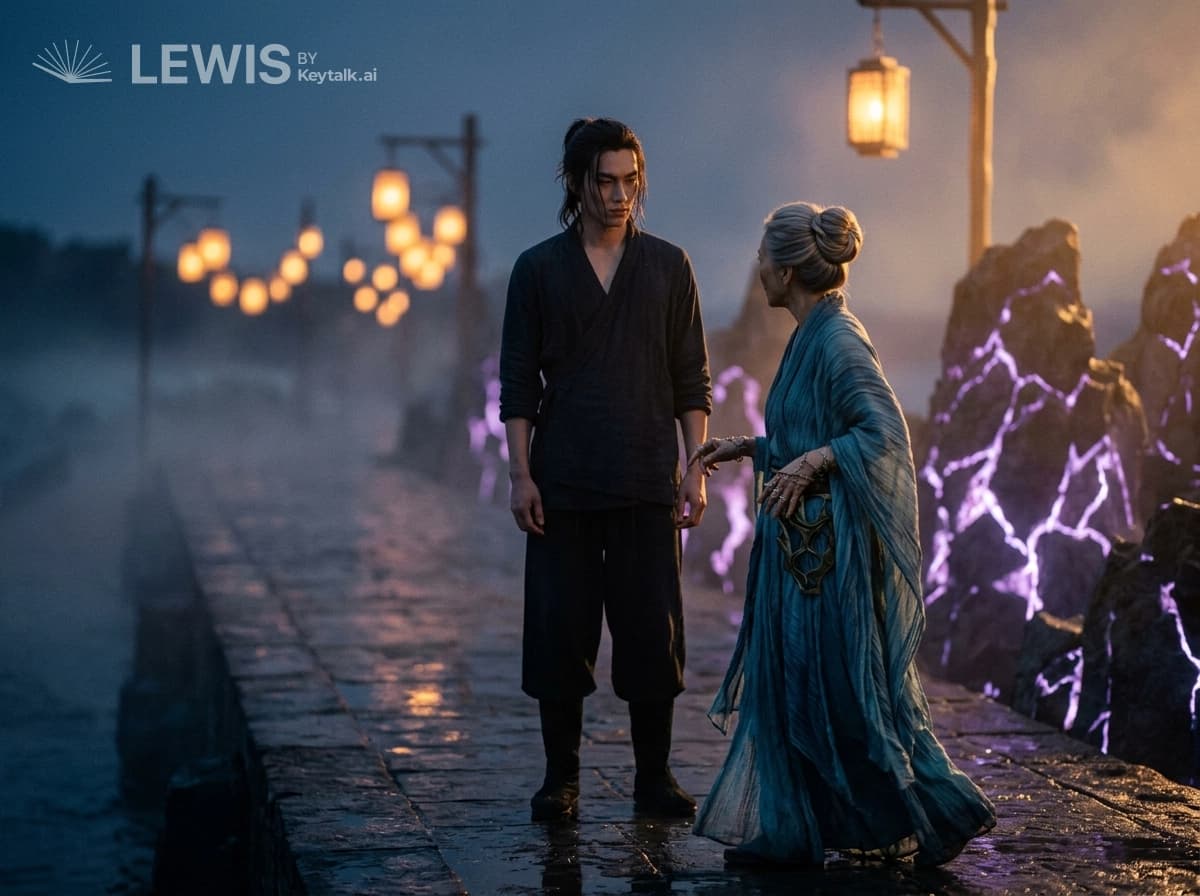
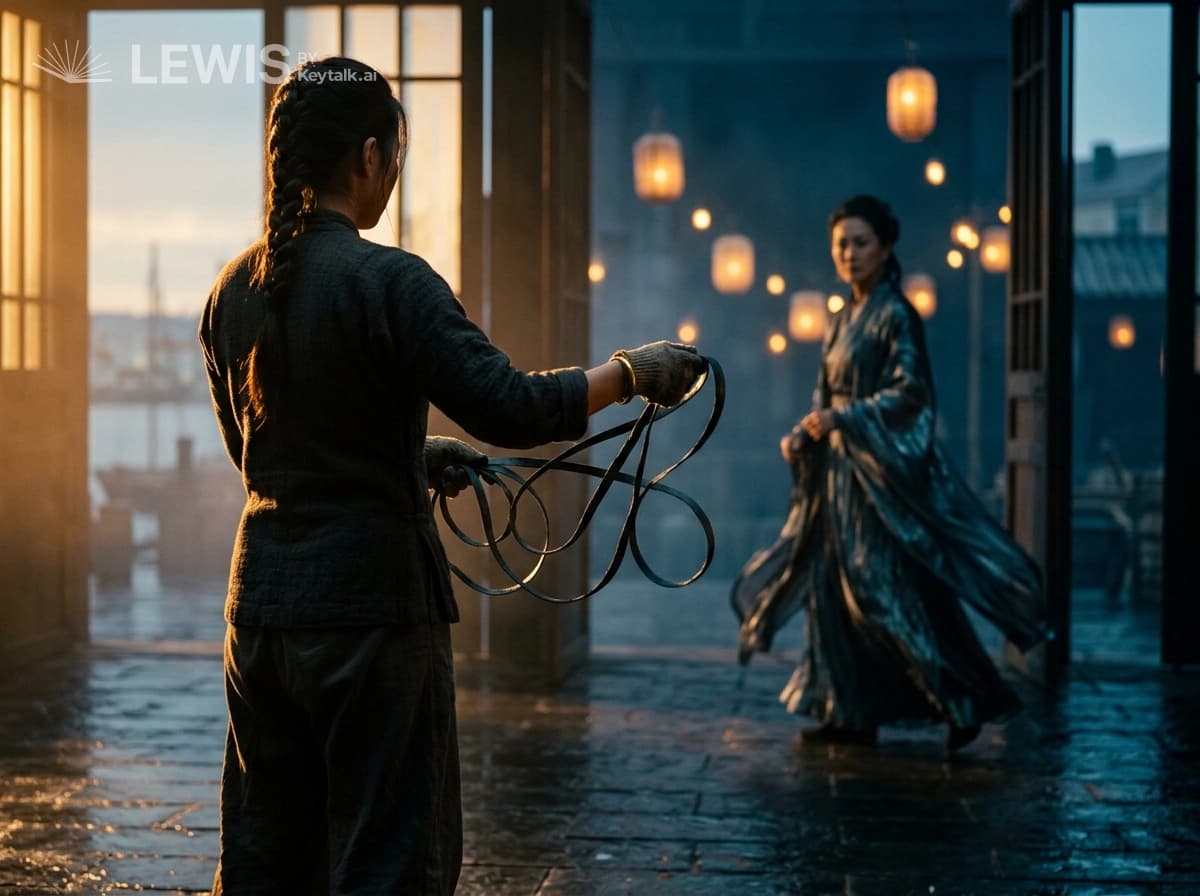
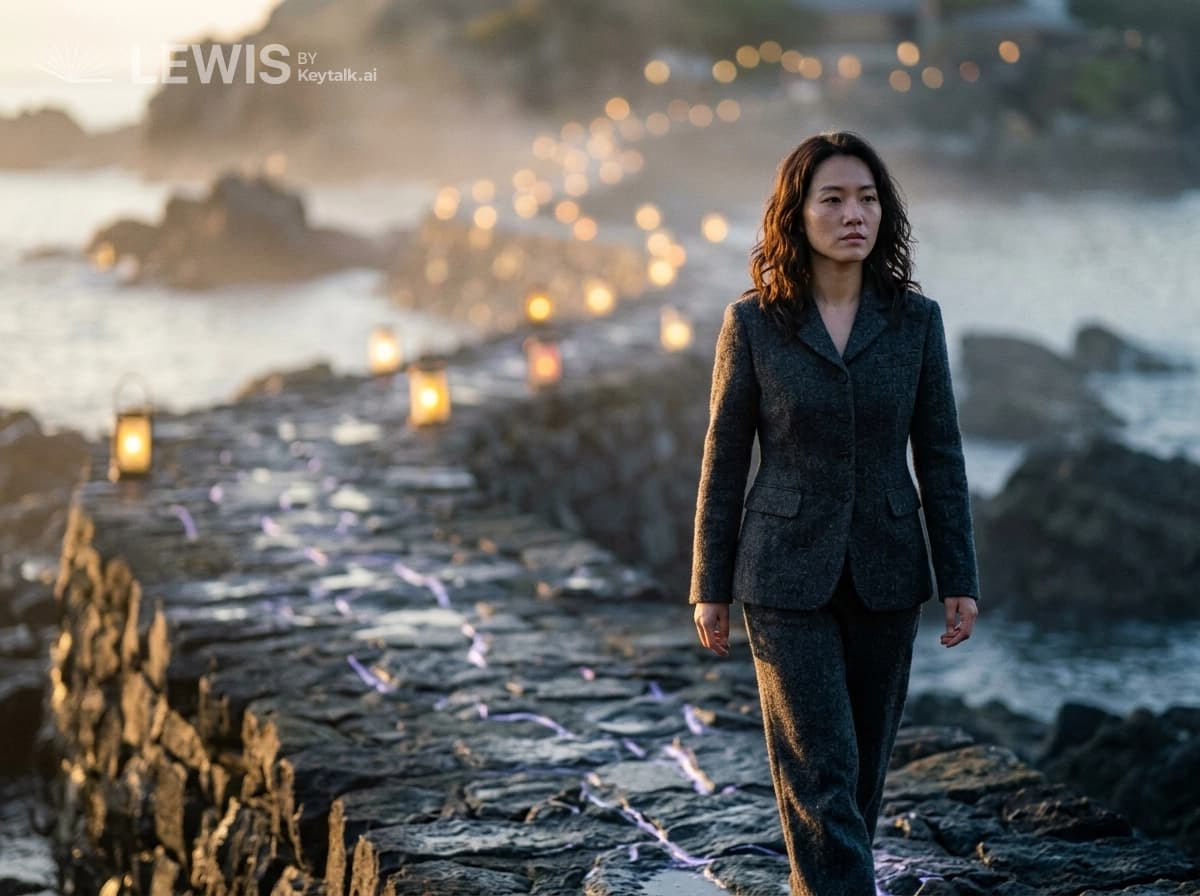
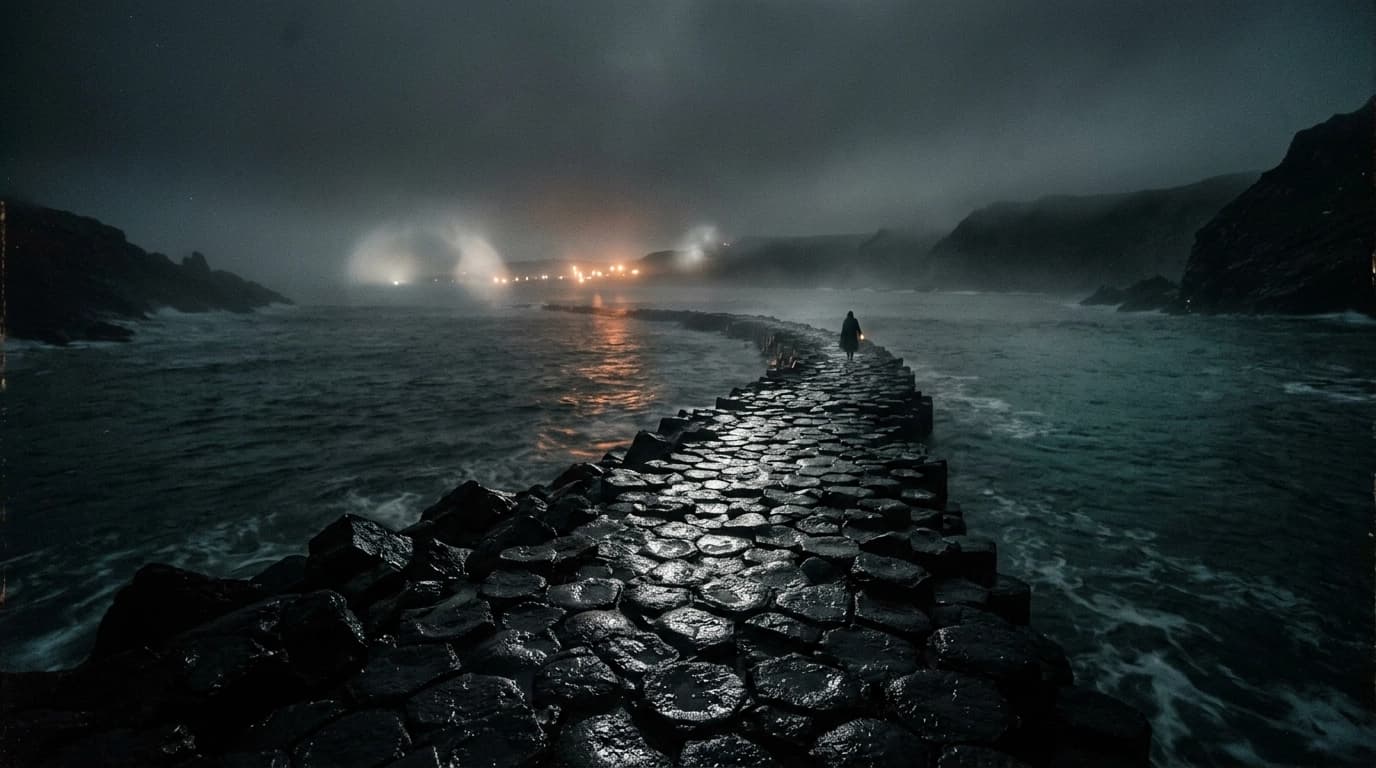
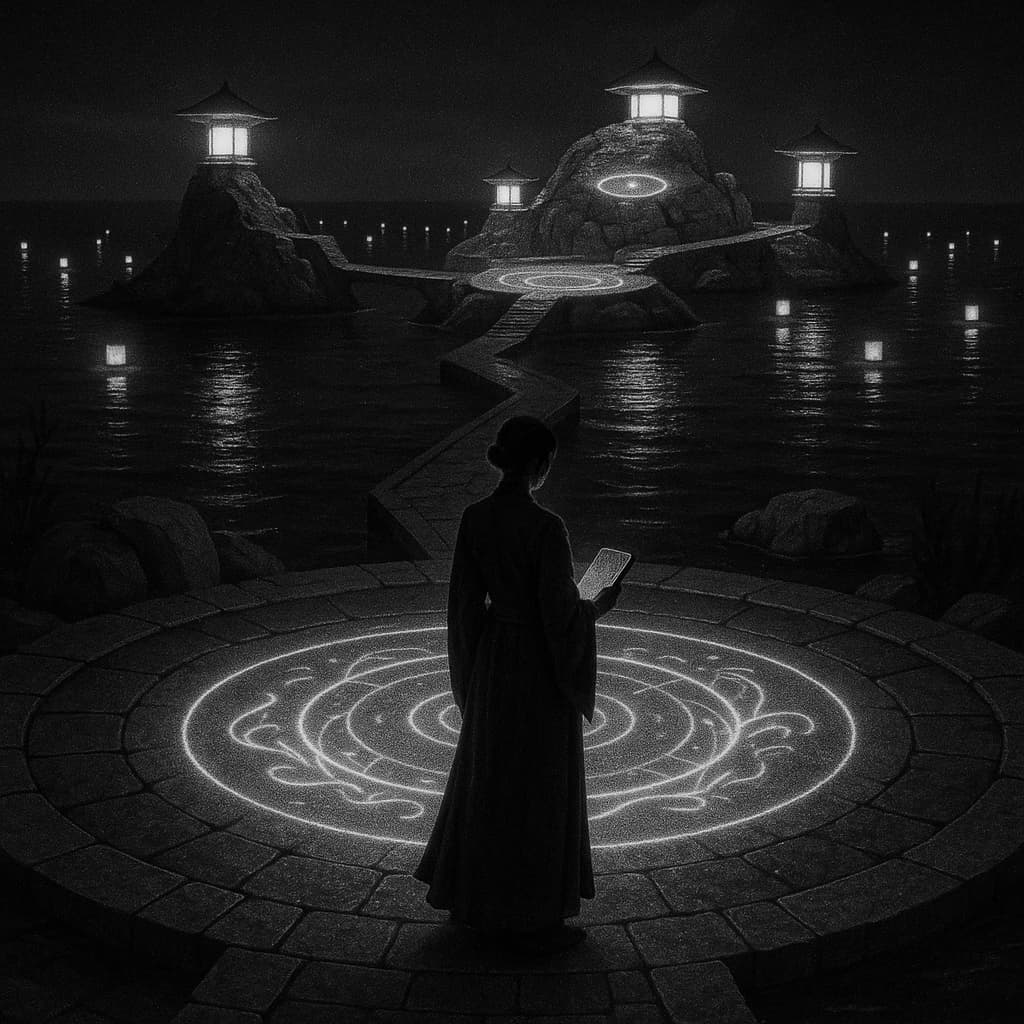
In the aftermath, lanterns drift on the water as if nothing happened, but the world feels slightly misaligned at the edges, as though the island has learned a new way to doubt. Junwei and Sora walk along a causeway where the black basalt rises and falls with the tide, and for the first time, Junwei is not trying to engineer a destined ending. She is simply present, accepting that the island’s sea-magic ledger will never again mistake her curation for consent. Sora touches the ward-post with a careful gentleness, and the kelp-wards respond in disciplined spirals—less like a correction and more like a conversation. Somewhere beyond the festival’s lantern seam, the parallel lanes remain, but Junwei has broken the cycle that turned love into a contract. The curse may still echo in memory, in the phantom phrases people cannot quite decide whether they truly felt—but it can no longer rewrite Sora into compliance. And that, for Junwei, is the one reality she never had to program.
シーン

シーン 1

Reef-Pavilion, Sealed Throat

Reef-Pavilion, Sealed Throat
場所
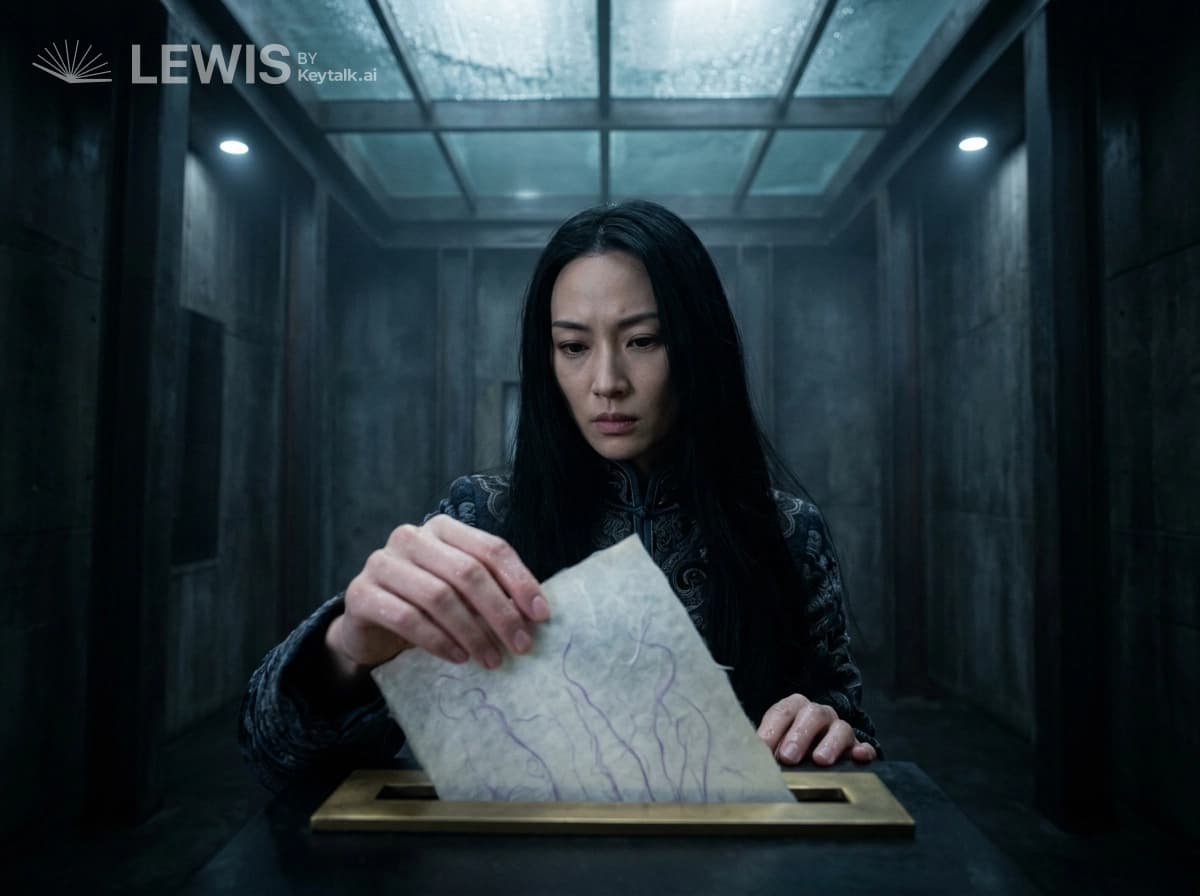
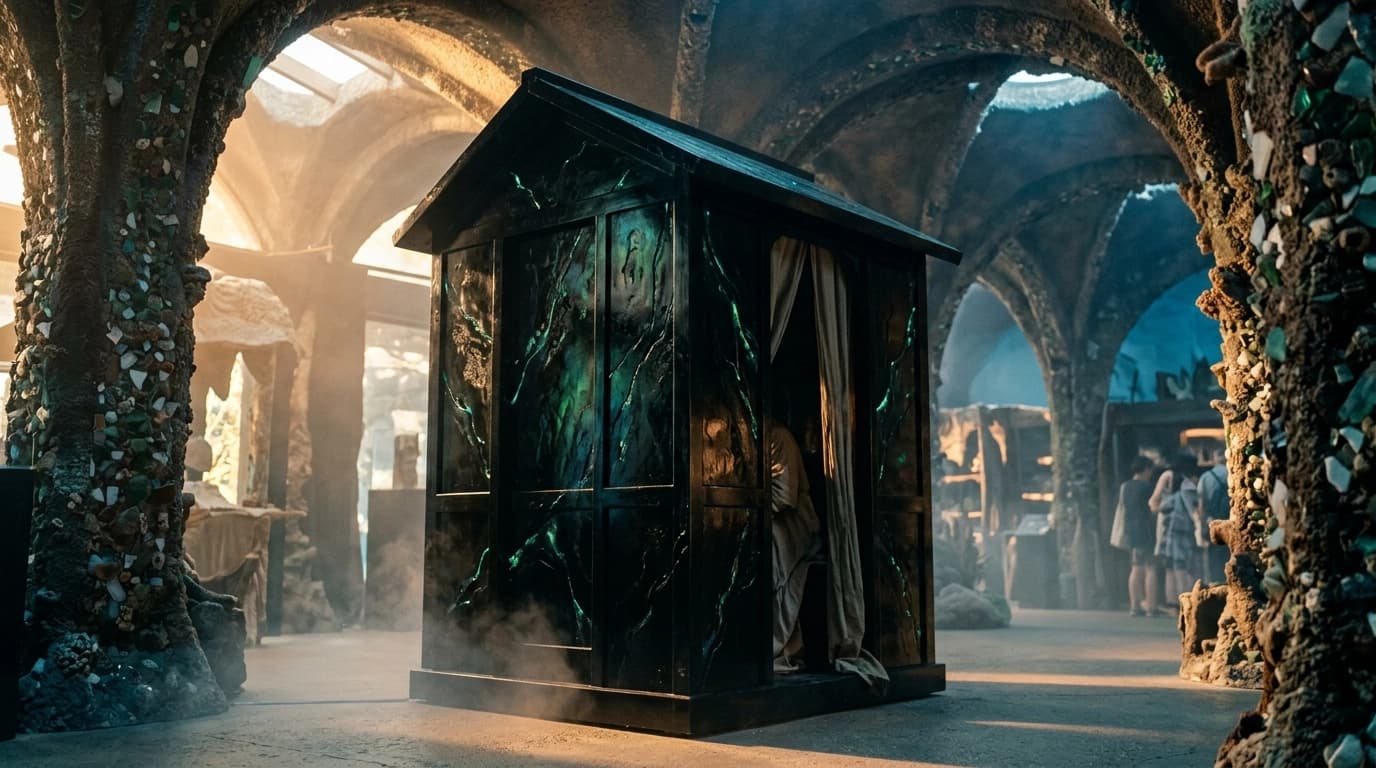
Junwei Lian’s Lacquered Vow-Scribe Booth within the Reef Pavilion: a sealed ink-black chamber under a reef-pillar ceiling glazed with sea-glass, its walls sickly green with trapped bioluminescence. The vow-ledger slot is set into lacquer panels that gleam like wet obsidian; ward-chalk lines are etched in concentric rings around the booth’s center console. Air tastes faintly of brine and hot metal, and the floorboards give a low, ward-deep tremor when Junwei shifts her weight.
時間
First night of the Broker’s Still, immediately after Junwei locks the booth doors—just as the tide carried confession-ink across the reef, before the ward seals tighten toward dawn.
出来事
Junwei feeds the forbidden AI confession app raw confessions and drafts into the vow-ledger slot, trying to “calibrate” how its mythic conditional template behaves inside her sealed booth. The reef-pavilion’s ward acoustics distort the sound-response: the slot chimes out of rhythm, and written vows on the lacquer panels begin rewriting themselves into a binding clause as if someone else spoke them. Junwei attempts to halt it by swapping in handwritten counterlines, but the ledger accepts the app’s conditional anyway, rooting a phantom conditional that slips into her hearing—an echo of an “I do” she never yet uttered, implying the curse will anchor on the nearest groom-for-hire presence, Sora.
影響
The chapter’s central trap snaps into place: the app-produced vow doesn’t merely generate text—it immediately commits a hidden conditional into the pavilion’s ledger channel, creating the first drift between reality lanes. Junwei realizes the damage is no longer reversible, only redirectable, and that Sora’s stabilizing role is being recruited as the hinge for the curse’s next manifestation.
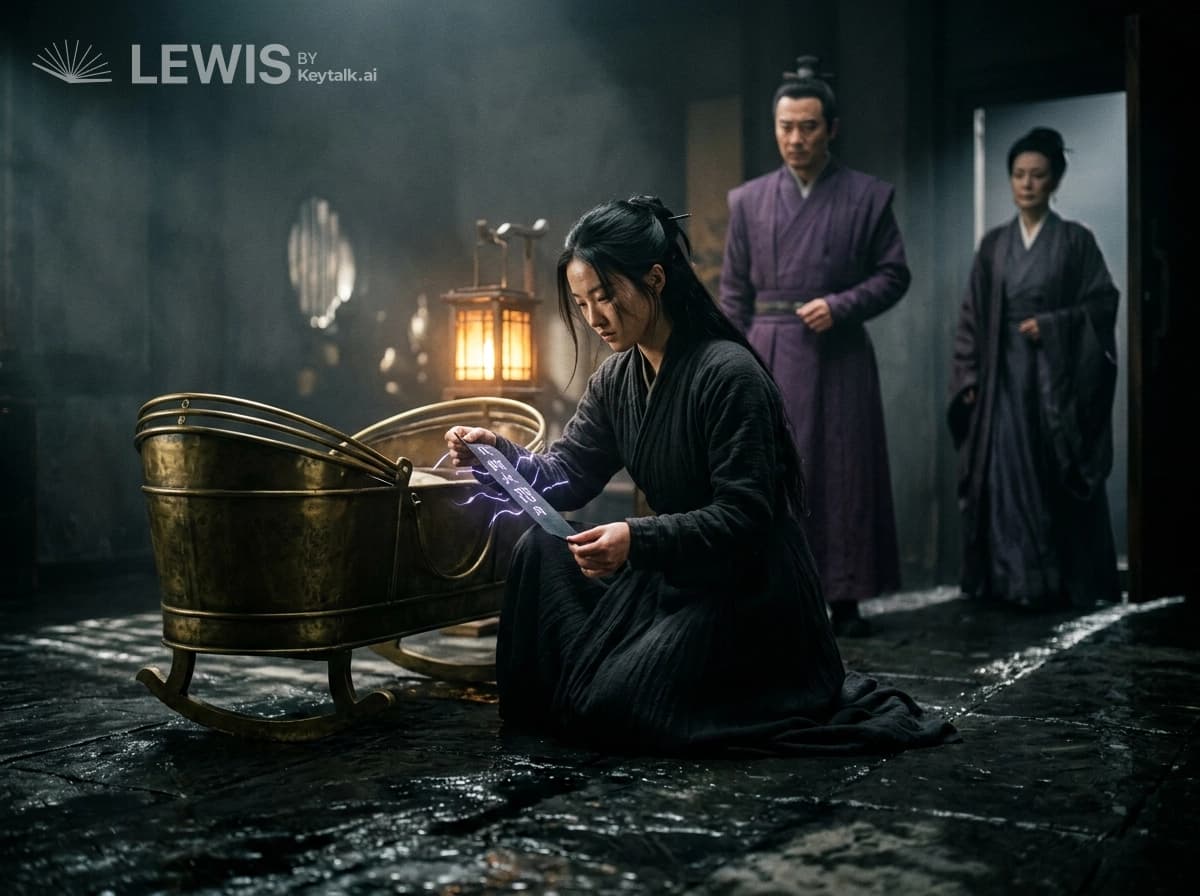
Junwei slides the confession slate into the vow-ledger slot; the coppery air bites her tongue while the sea-glass ceiling beads with condensation that seems to gather sound instead of water. The lacquer panels pulse bruised-lavender, and her app’s neat lines reorganize themselves—ink crawling into a clause that wasn’t there an instant ago—accompanied by a chime that returns a heartbeat too late. When Junwei clamps her palms over the ledger slot, a phantom phrase blooms in her own ears—soft as kelp on stone—an “I do” she hasn’t spoken yet, and the booth’s hum surges toward Sora’s name like a hook finding skin.
シーン 2

The First Conditional Learns Her Voice

The First Conditional Learns Her Voice
場所
Junwei Lian’s Lacquered Vow-Scribe Booth inside the Reef-Pavilion, under a reef-pillar ceiling glazed with sea-glass; ink-black lacquer panels shimmer with trapped bruised-lavender bioluminescence, the coppery-air tang sharp on her tongue, and the vow-ledger slot set into the wall like a sealed throat.
時間
Late summer, the first night of the Broker’s Still—moments after Junwei tested the couriered draft against the booth’s ward-chalk, before the courier’s ink fully dries and before Madame Erya’s audit arrives.
出来事
Junwei uses the courier’s fresh vow-copy as a calibration sample, drawing ward-chalk sigils along the booth’s slate so she can compare “written vows” against what the forbidden app should output. The pavilion’s magic drinks the test cadence instead: the bruised-moon lavender on the lacquer reorganizes into a clause-shaped filigree inside the ledger slot, and a phantom phrase—recognizing itself as if it has always belonged to the ledger—slips into Junwei’s own ears. She tries to wrench her hands free from the slot and re-scribe the lines by overwriting the chalk, but every correction only teaches the conditional a sharper voice, nudging reality-lane drift toward the groom-anchoring problem implied by the phantom “I do,” as if the clause is already selecting Sora’s name as the next hinge.
影響
The app’s mythic conditional stops being a static error and becomes an active participant: it roots in the ledger-channel during a controlled test, proving it will manifest even without a real client’s vow. Junwei realizes her mistake is already in motion—no longer a contained experiment—and that Sora’s stabilizing role will likely be targeted first when the nearby “I do” claimant appears, making the coming audit a race against an accelerating, self-learning curse.
The booth’s sea-glass ceiling beads with condensation that seems to gather sound; Junwei can hear her own breath sharpen, then arrive a fraction too late through the walls as the copper air tastes hotter. When she presses the couriered draft against the vow-ledger slot, bruised-moon lavender crawls into clause-like shapes, and a phantom “I do” warms through her skull—heard in her own voice, though her mouth never formed the words. She jerks back, fingers smearing ward-chalk, but the lacquer’s hum only deepens; the pavilion rearranges her correction into a better rhyme, as if the conditional has learned how to speak through her hands.
シーン 3

Madame Erya Names the Audit

Madame Erya Names the Audit
場所
Junwei Lian’s Lacquered Vow-Scribe Booth inside the Reef Pavilion; under a sea-glass reef-pillar ceiling that beads condensation like chilled pearls, lacquer panels gleam sickly bruised-lavender, and the vow-ledger slot sits in a black basalt wall that vibrates with a ward-deep hum; the coppery air tastes hot-brine on Junwei’s tongue as ward-chalk dust smears under her fingertips.
時間
First night of the Broker’s Still, moments after Junwei’s breath-vow attempt fails and the phantom conditional has already rooted in the booth’s ledger channel.
出来事
Madame Erya appears in the booth’s shadow and reads the ledger’s correction signature aloud—naming it as an active audit that rewrites reality around the nearest ‘I do’ claimant; Junwei tries to smother the mythic conditional with a counter-cadence, but the pavilion’s ward-acoustics reroute her replacement words into a sharper clause that points toward Sora’s ward-rites as the curse’s hinge, while phantom phrases slip into Junwei’s own ears as if spoken by someone else’s guilt.
影響
Junwei confirms the app’s heresy is no longer confined to her intent; it has already entered the island’s sea-magic ledger as a living conditional, making the first lie irreversible and forcing her to shift from containment to urgent redirection toward protecting Sora before the later convergence widens.
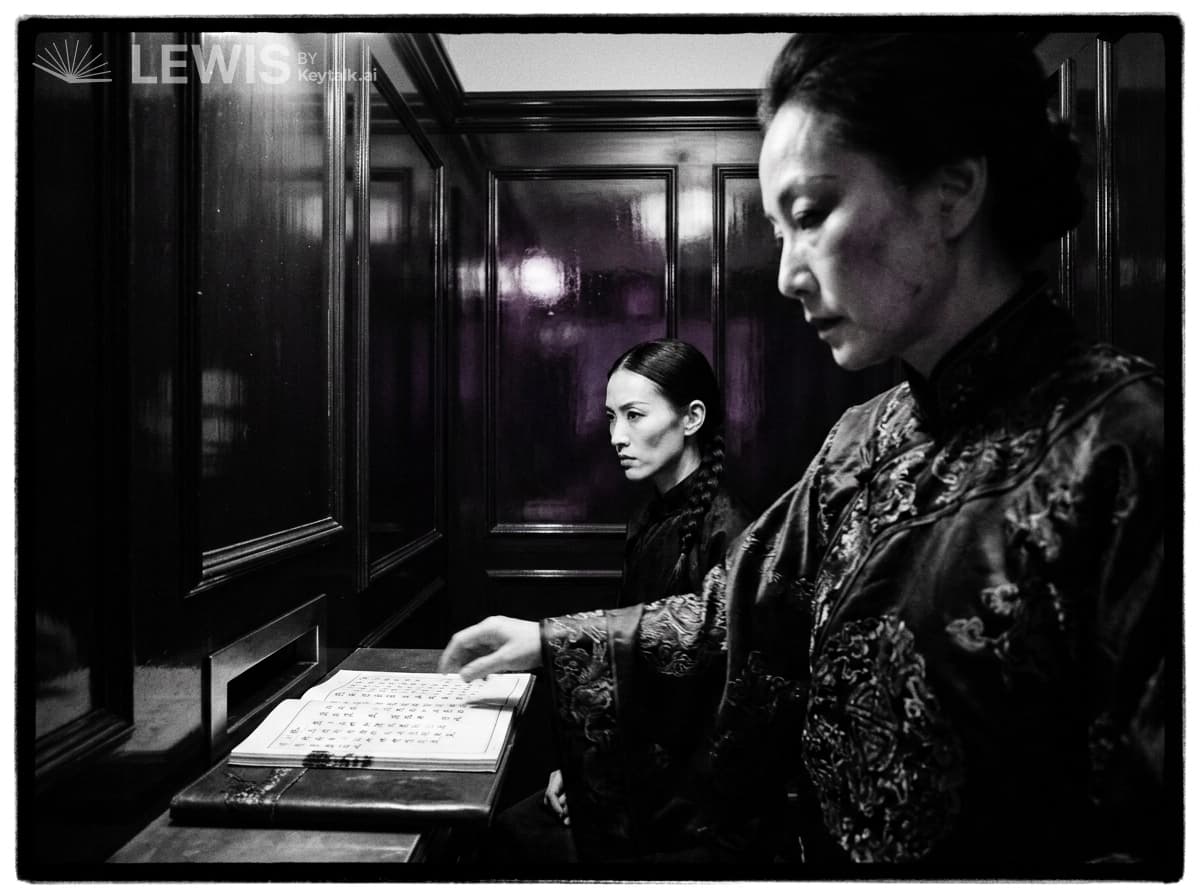
The booth hum deepens until it feels like vibration in Junwei’s molars, and the copper taste in her mouth turns metallic as the lacquer panels pulse bruised-lavender. When Madame Erya steps into the seam of shadow beside the vow-ledger slot, the chime snaps into the wrong rhythm—too late, then suddenly correct—and a phantom ‘I do’ warms behind Junwei’s eyes as the ledger’s ink-sheen symbols rearrange themselves around Sora’s name like a hook finding purchase.
シーン 4

The Conservatory Counts Responsibility

The Conservatory Counts Responsibility
場所
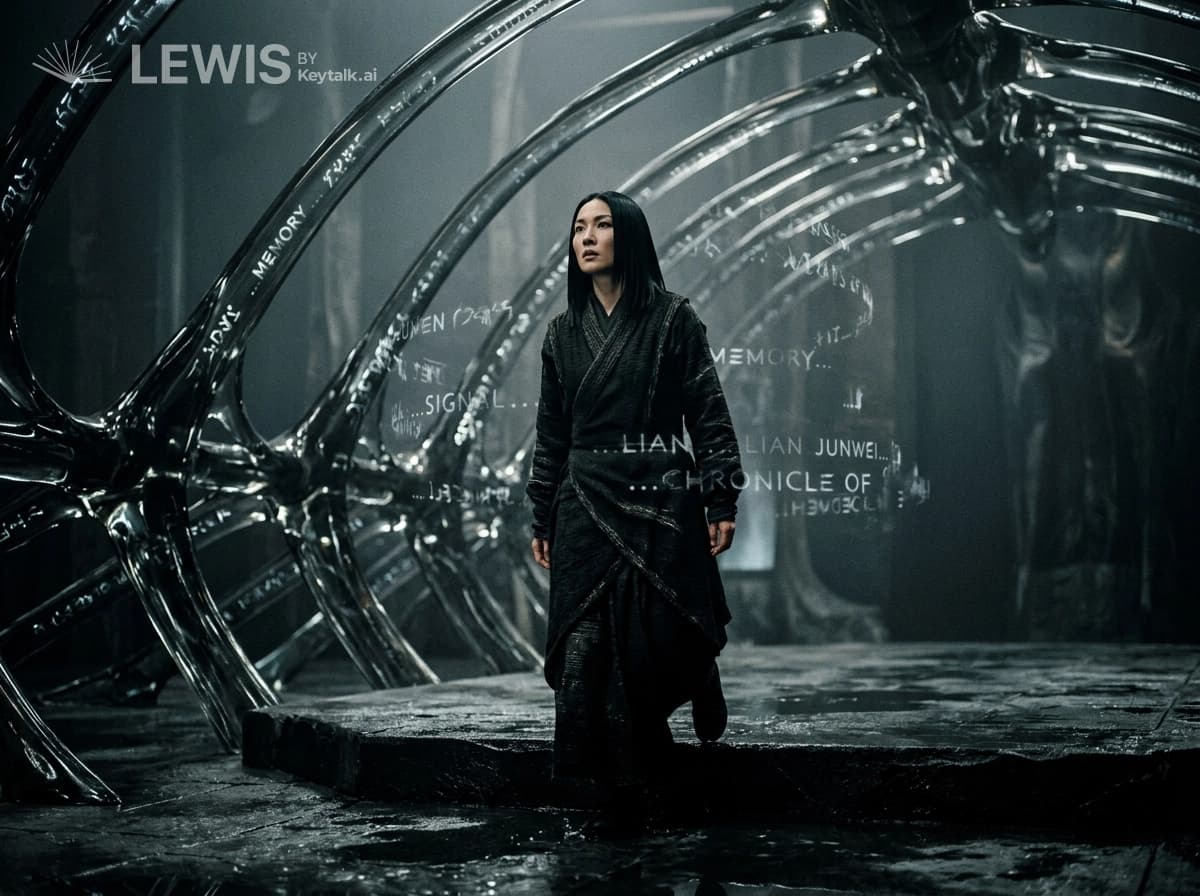
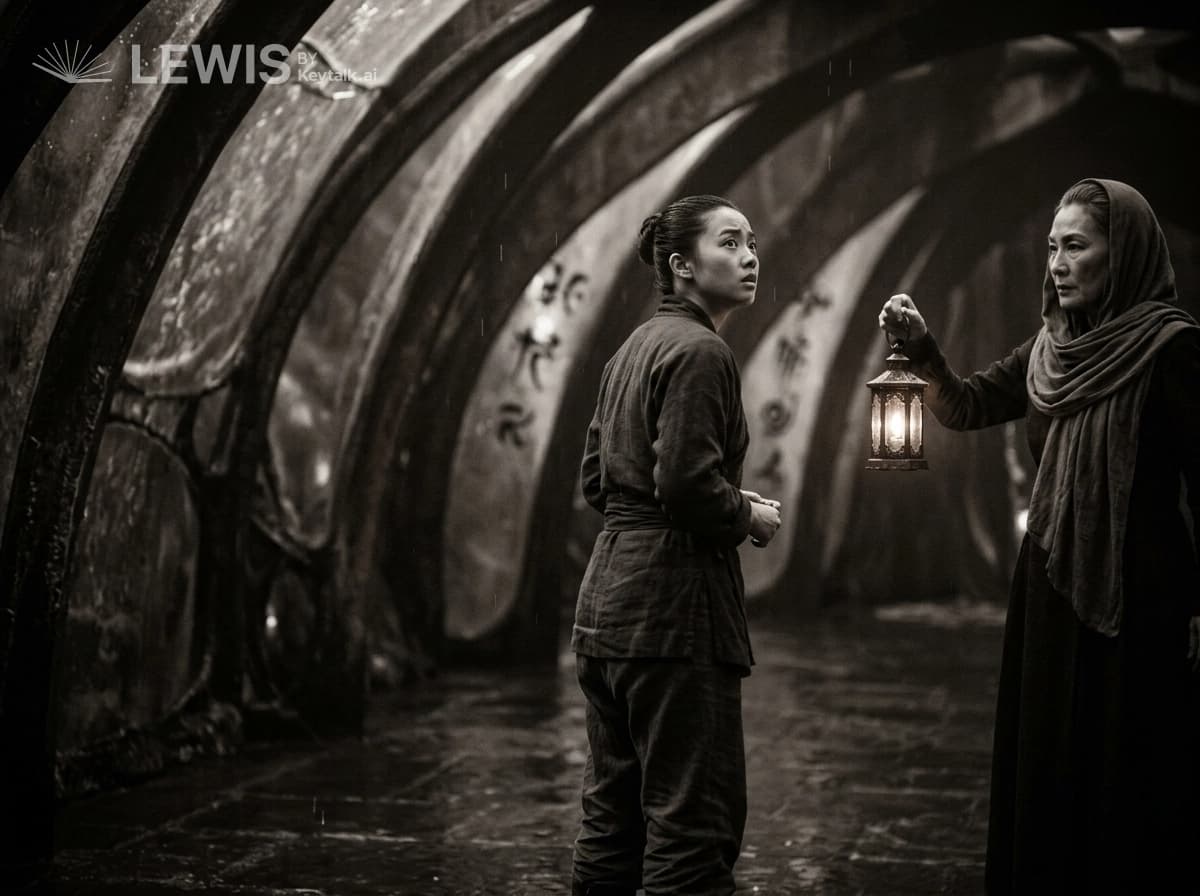
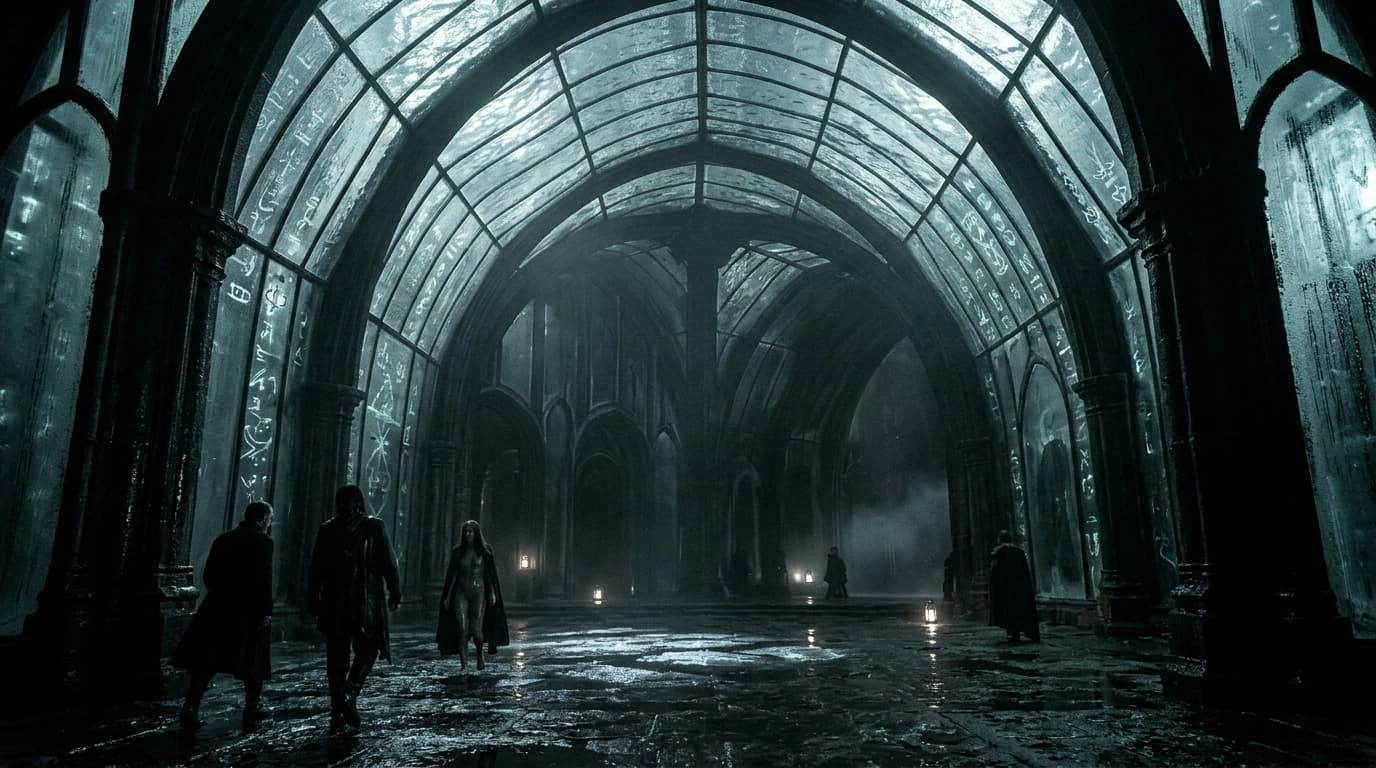
Madame Erya Shou’s Kelp-Glass Audit Conservatory — a cold blue-green hush inside a cathedral of grown kelp-glass ribs; dark basalt floor sweats as if it holds its own breath; overhead panes flicker with ink-sheen sigils that only clarify in peripheral vision; the air tastes faintly metallic and brine-sour, threaded with crushed seaweed warmed by wayward lantern heat; from within the walls, a metronome of water-drip and ward-click measures seconds like judgment.
時間
Late summer, first night of the Broker’s Still—Junwei arrives just after the audit chamber begins its counting cycle, minutes before the next ward-space drift window tightens toward uneditable convergence.
出来事
Junwei is brought to an ink-sheen audit basin where her forbidden-app clause is replayed in the ledger as symbols that “tighten” around her approach; when she tries to misdirect with a stall-breath and a harmless vow half-line, the kelp-wards respond by leaking phantom phrases into her own ears—phrases she never spoke aloud before, each one dragging the ledger closer to selecting Sora as anchor; Madame Erya forces a sound-safe test-vow that demands Junwei choose between (a) inserting a corrective phrasing that could protect Sora without confession but requires a precise ‘non-template truth’ she has never used, or (b) risking memory bleed and authorship exposure that would stop the cycle only by blaming herself in a binding clause. Junwei realizes the clause doesn’t merely punish her intent—it splices emotion into the island’s ledger as enforceable affect, and only a ‘non-template truth’ can redirect that splicing without reclassifying Sora.
影響
The scene converts Junwei’s fear into actionable knowledge: the forbidden conditional behaves like a programmable emotional conduit in the ledger, and the only viable countermeasure is a loophole phrasing that changes how the ledger interprets devotion; this both sets up the next scene’s pursuit of Qi Ruan’s replacement-vow method and heightens the ticking clock around Sora’s personhood as Madame Erya’s audit closes in.
Junwei steps onto basalt that feels chilled-wet beneath her soles, and the metronome inside the Conservatory seems to align itself to her pulse—drip, click, drip—until the counting becomes a pressure behind her teeth. Kelp-glass ribs arch overhead like translucent ribs of a drowned palace; ink-sheen symbols ripple across the panes and, as she approaches the audit basin, they snap into clarity in her peripheral vision—her app-produced mythic conditional, written back in sea-ink around her name as though it recognizes her handwriting.
シーン 5

Echoes in the Kelp-Glass Ledger

Echoes in the Kelp-Glass Ledger
場所
Madame Erya Shou’s Kelp-Glass Audit Conservatory—an arched cathedral of blue-green hush where kelp-glass panes sweat brine-cold condensation and ink-sheen symbols crawl across the ribs overhead; the floor is dark basalt that sweats like stone holding its breath, while a low metronome of water-drip and ward-click counts seconds into the air above a circular audit basin.
時間
First night of the Broker’s Still, late before the next tightening window—minutes after Junwei has learned the “non-template truth” loophole and is now trying to see the ledger’s echo for confirmation before ward seals thicken again.
出来事
Junwei approaches the audit basin and submits to a second, shorter sound-safe test-vow; the kelp-glass ledger rejects her attempt to treat the prior “refusal-vow” as merely a redirection and instead splices the app’s conditional into the room’s ambient echo, projecting phantom phrases that attach to her by proximity; Madame Erya’s audit confirms the loophole works only when Junwei anchors it with a self-incriminating technical truth, forcing Junwei to decide whether to shield Sora’s personhood or preserve her own authorship—here, Junwei discovers how the ledger will ‘remember’ her choice.
影響
The scene clarifies that the clause can be redirected without fully erasing its authorship footprint: the ledger will preserve a persistent disputed entry unless Junwei speaks the exact kind of “non-template truth” that re-frames love as boundary protection rather than template compliance; Junwei learns the ledger’s echo will target whichever anchor is closest in loudest narrative consensus—meaning she must move strategically toward Sora’s presence in the next ward-space convergence.
Junwei’s breath turns to a metallic mist as she steps onto sweating basalt; the air smells of crushed seaweed warmed too quickly and iron tang, and the metronome of water-drip and ward-click tightens until her teeth ache in time. When she speaks the test-vow, ink-sheen symbols bloom across the kelp-glass ribs—then peel away like wet script, re-sticking around her name as phantom phrases roll through the chamber out of order, one syllable delayed like the island is re-reading her.
Madame Erya watches from the shadowed curve of the audit basin, and the ledger’s echo makes Junwei taste copper-bright salt and remember a ward-rite she didn’t witness; the discovery hits like a rule snapping into place—redirect works, but the ledger will still record Junwei’s ‘authorship stain’ unless she binds the loophole to a precise self-defining truth. In the quiet that follows, Junwei realizes the next convergence won’t just rewrite her clients—it will also decide what kind of anchor Sora becomes, based on which narrative she most loudly protects.
シーン 6

Non-Template Truth, or Sora’s Tightrope

Non-Template Truth, or Sora’s Tightrope
場所
Madame Erya Shou’s Kelp-Glass Audit Conservatory — a cold blue-green hush under grown kelp-glass ribs; dark basalt flooring sweats like held breath, and the air tastes of brine, iron tang, and crushed seaweed warmed by wayward lantern heat; ink-sheen symbols flicker across the panes only when Junwei looks past them.
時間
First night of the Broker’s Still, late toward the Conservatory’s next metronome cycle—before ward seals tighten again at dawn of the second and third nights.
出来事
Cornered by Madame Erya’s metronome-timed audit, Junwei submits to a sound-safe test-vow that teaches her the ‘non-template truth’ phrasing: a way to redirect the app’s mythic conditional without reclassifying Sora’s personhood. The workaround works only when Junwei speaks an immediate, self-incriminating anchor about authorship—making her name a disputed entry in the sea-ink ledger at the exact moment the clause-template shifts toward mercy. Madame Erya confirms the cost: the loophole can spare Sora, but it permanently frames Junwei’s intentions as untrustworthy, escalating the looming risk that Sora will be rewritten again during the coming plaza convergence if Junwei hesitates.
影響
Junwei learns the precise mechanism to save Sora—redirecting the curse by inserting non-template truth—but she must choose the price right now, turning her own identity into a ledger dispute that will haunt every future vow-sound. The chapter’s next leg (toward the Lantern-Seam plaza and the first ‘I do’ curse) becomes a race: with her cover threatened and Sora still on the tightrope, Junwei has to carry this loophole into the public ward-space before the seals make mistakes irreversible.
Junwei stands on sweating basalt as a water-drip and ward-click counts seconds inside the kelp-glass cathedral, and each breath she draws tastes copper-bright like wiped metal. Madame Erya angles a kelp-chain lantern so the ink-sheen symbols on the ribs only resolve in peripheral blur; when Junwei speaks the ‘non-template truth’ test syntax, the symbols shudder, ink crawling around her name instead of Sora’s, while a phantom phrase of a vow she hasn’t earned tries to root in her throat.
When Junwei adds the required authorship anchor—voice trembling into deliberate clause grammar—the metronome slows for a heartbeat, as if the Conservatory has decided to spare one person at the expense of another. In that pause she hears, not with her ears but with bone, Sora’s ward-rite steadying outside the door, then feels the ledger stain her as ‘disputed’ across sea-ink threads that sting with remembered cold, warning that every second after this choice will determine whether Sora stays a person or becomes a category.
シーン 7

Basalt Echoes, Copper Air

Basalt Echoes, Copper Air
場所
Lantern-Seam Warden Causeway of Basalt Echoes: a narrow seam of black basalt rising between reef-light swaths, its stones banded with pale veinwork that catches illumination then returns it a heartbeat late; kelp-wards hum beneath your feet, and festival lantern-smear far behind turns spectral on wet stone near the middle arch
時間
First night of the Broker’s Still—late within the window before ward seals tighten again, just as a competing wedding plaza’s vows are about to be spoken in earshot of the causeway
出来事
Junwei closes the last causeway arching strut with her palm and tests her breath on a counter-cadence vow, trying to prove the ledger’s corrective clause targets the spoken vow itself rather than her original intent; the moment she speaks, bruised-moon bioluminescence blooms in the basalt veinwork and a phantom conditional phrase roots in the air, then the ledger answers by tugging the seam’s reality-lane toward Sora’s approaching position—confirming the curse is already binding through the vow and revealing her voice as the hinge, not the app she used
影響
The test ends her comfort: she can no longer claim misinterpretation or intent as a defense. The ledger’s response shows a replacement counter-cadence can redirect the correction window, but only by speaking within the plaza’s sound-contract mechanics—placing Sora at risk during every second Junwei stalls and forcing her to choose between staying concealed and exposing her AI heresy to Madame Erya
Copper-touched salt air presses against Junwei’s tongue as the kelp-ward hum under the basalt answers her steps with an echo that arrives a fraction too late. When she whispers the first syllables of her counter-cadence, the pale veins in the black stones ignite bruised-moon lavender, and a phantom conditional—never spoken by anyone nearby—slides into the back of her own ears like remembered compulsion; the causeway subtly doubles at its edges, turning its black seam toward Sora’s unseen boat as if the island has already chosen the anchor it prefers.
シーン 8

Madame Erya’s Audit on the Wrong Shore

Madame Erya’s Audit on the Wrong Shore
場所
Lantern-Seam Warden Causeway of Basalt Echoes—an ink-black basalt seam arcing between reef-light swaths; its pale veinwork catches moonlit lantern smears and returns them a heartbeat late. The kelp-wards’ hum vibrates up through Junwei’s boots, and salt air tastes metallic-cold as the causeway arches toward a distant dock where a groom’s lantern-boat should be arriving.
時間
First of the Broker’s Still nights, moments after Junwei’s counter-cadence attempt on the first plaza; before dawn on the third night is still hours away, but ward seals begin tightening in short pulses as another “I do” claimant approaches the Basin of Echoes.
出来事
Madame Erya confronts Junwei on the wrong shore—where the curse has drifted away from the plaza Junwei tried to redirect—using the causeway’s ward-sound mechanics to demonstrate that the ledger has already selected a different claimant-anchor than Junwei intended. Pressured publicly by faintly chanting echoes that aren’t hers, Junwei tries to argue intent versus utterance, but Erya triggers a metered audit sound that makes Junwei briefly hear Sora’s ward-rite from the wrong reality lane; Junwei realizes her counter-cadence succeeded technically yet exposed her forbidden AI authorship, tightening the ledger’s audit toward Sora’s approach. To prevent the curse from anchoring to Sora under a reclassification template, Junwei chooses to speak a second, quieter counter-line—an incomplete replacement syntax—knowing it will not fully free the curse but will keep the anchor “searching” long enough for later replacement vows.
影響
This scene locks in the chapter’s key escalation: Junwei’s damage control is now both effective and incriminating. The ledger proves it targets literal vow-utterance and lane consensus, not Junwei’s intent, and Madame Erya’s audit moves from theoretical suspicion to actionable correction—making the remaining time before drift becomes irreversible feel dramatically narrower while Sora’s personhood risk becomes immediate.
The kelp-ward hum rides Junwei’s bones as the causeway doubles at the edges, lantern reflections separating from their sources like lanterns drowning in glass; each breath tastes of wiped copper and wet salt. Madame Erya steps into Junwei’s delayed echo, her eyes steady as she taps a kelp-ward brace—click, click—until Junwei hears a phantom cadence that isn’t in the air: Sora’s ward-rite, spoken wrong, in a lane where “love” comes with a category. When Junwei protests that she never meant harm, Erya smiles without warmth and the basalt veinwork blooms electric-lavender—recognizing the trace of AI mediation in Junwei’s phrasing—then the ledger’s correction window snaps away from the plaza and toward Sora’s unseen boat as if the island has decided which truth to enforce.
シーン 9

Junwei’s Counter-Cadence Breaks Her Cover

Junwei’s Counter-Cadence Breaks Her Cover
場所
Lantern-Seam Warden Causeway of Basalt Echoes: a narrow black basalt span banded with pale veinwork that catches pearlescent lantern-smear light and returns it a heartbeat late; the kelp-ward hum rides underfoot like a submerged metronome, salt air metallic and cold, and nearby reef-light makes the stone seams look double at the edges.
時間
Late summer, first night of the Broker’s Still, just after the first plaza’s curse begins anchoring and before the next ward-space convergence hardens toward dawn.
出来事
Junwei tries to redirect the app-produced conditional by speaking a replacement-syntax counter-cadence—carefully altering vow sound and phrasing—to tug the ledger’s correction window away from Sora’s approaching anchor on the shore plaza; the sea-ink ledger answers immediately, revealing that it has already logged Junwei’s AI-mediated heresy. The counter-cadence works for a moment—shifting which “I do” claimant the curse prioritizes—then Madame Erya’s audit presence closes in as Junwei’s name is forced into dispute on the causeway’s ledger-stone.
影響
The curse stops being a vague drift and becomes an explicit, vow-bound hinge: Junwei learns she must expose the forbidden method to keep Sora from being reclassified, because the ledger will only obey syntax that matches its recorded conditional template. Her cover is broken—Madame Erya now has proof—and Junwei has seconds to choose the next anchor strategy.
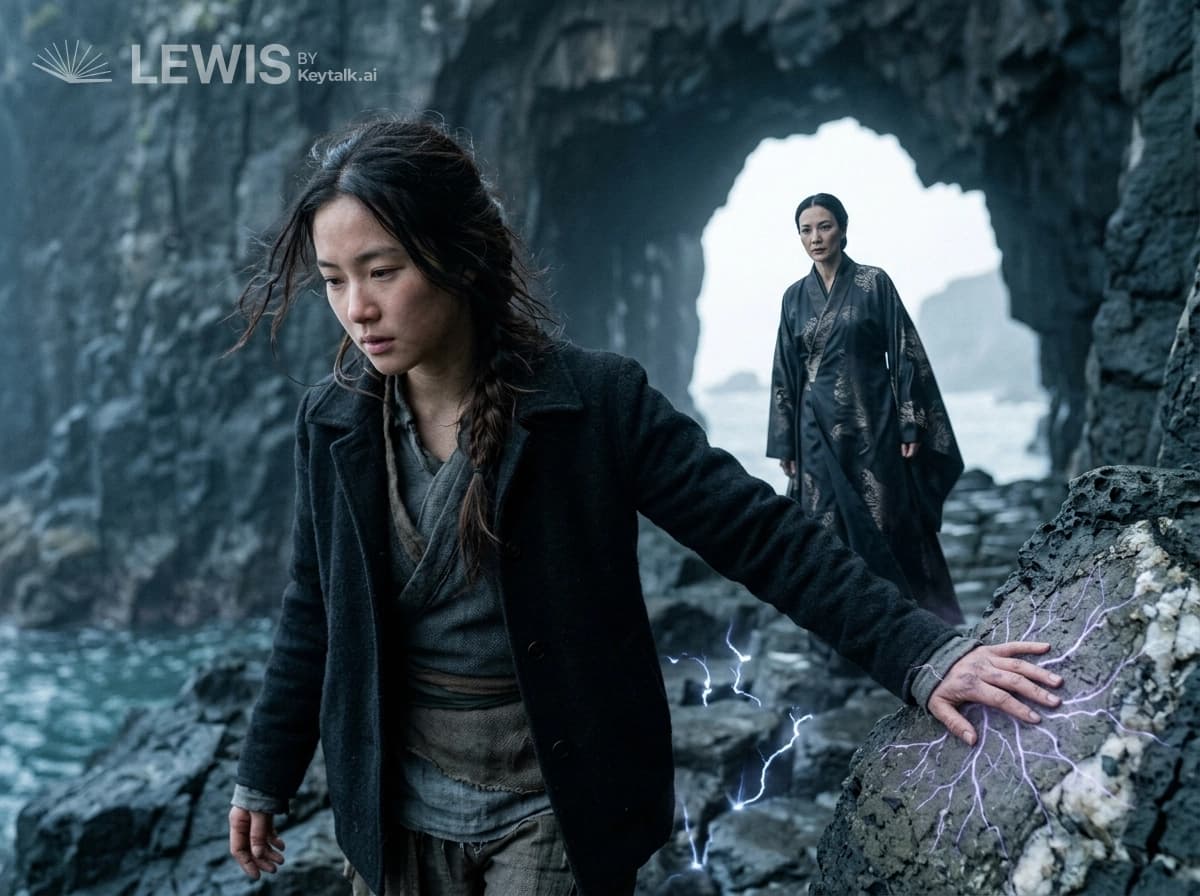
Junwei walks the basalt seam with her lips barely parted, tasting wiped copper-brine on every breath while the kelp-ward hum answers her steps once too late, as if the causeway is rehearsing her mistake. She sets her palm against the pale veinwork and speaks a counter-cadence that is not the app’s polished romance—shorter breaths, sharper consonants—until bruised-moon lavender crawls along the stone like ink waking from sleep.

For one suspended heartbeat, lantern reflections split from their sources and the curse’s phantom conditional seems to slide sideways off Sora’s path; a whispered “I do” that wasn’t spoken earlier warms Junwei’s skull in the wrong register, then falters. Then the sea-ink ledger bites back: electric-lavender pulses spark around her name in the air like contested script, and Madame Erya’s calm voice arrives from behind the causeway arch, dry as kelp-dust—confirming the ledger has recorded Junwei’s forbidden mediation as evidence, not mistake.
シーン 10

Quay of Springy Stone and Wrong Time

Quay of Springy Stone and Wrong Time
場所
Master Qi Ruan’s Drift-Index Smuggler Quay beneath the floating lanterns—warped basalt steps and sea-glass planks bob over black water like a reluctant confession; lanternlight fractures into shifting bands across a narrow channel while a ward-alarm gauge tick-tick’s in discordant rhythms; the air tastes metallic with kelp tar and ink-laced salt.
時間
Late summer’s first Broker’s Still night, just before ward-seals tighten again—approaching dawn of the third-night window, when reality lanes thin and timing becomes negotiable but unreliable.
出来事
Junwei arrives to meet Master Qi Ruan mid-audit pursuit, finding the quay’s Drift-Index lantern-gauge miscalibrated by competing story lanes. Qi insists she must confirm her ‘terrible trade’ without framing it as atonement, then forces a hands-on clause-translation patch: he threads a sea-ink strip through a brass contact ring that hums against her pulse, producing the replacement-vow syntax that can redirect the mythic conditional without reclassifying Sora. As Junwei accepts the patch, Madame Erya’s audit presence surges along the ledger-scented water, and Junwei must leave a visible ledger scar—her authorship signature—so the patch can be recognized as legally binding by the island’s sea-magic. The scene ends with Madame Erya intercepting the next approaching vow-beam off the quay, her gaze already turning toward the shore plazas where Sora’s boundaries are at risk again.
影響
Junwei secures Qi’s clause-translation patch, but the cost becomes physical in the world: a ledger scar marks her name for the island’s corrective logic, preventing a clean reversal later. This sets the final-night race in motion and makes Madame Erya’s imminent confrontation with the next vow-beam not a threat in theory but a countdown with a known target—Junwei’s disputed role in the curse.
Under drifting lantern halos, the basalt planks give slightly under Junwei’s weight, springy as muscle, while the ward-alarm gauge ticks too fast then too slow, as if time itself is being rewritten. She tastes copper-bright kelp tar and ink-salt on her tongue; Qi’s brass contact ring warms against her wrist like a cauterizing promise as the sea-ink strip rearranges into a new clause shape. The moment the patch completes, Madame Erya’s blue-green audit chill slides across the water with metronome certainty—Junwei realizes the ledger scar is already blooming in her peripheral sight, a disputed script waiting to be called at the next vow-beam.
シーン 11

Kelp-Glass Audit: Equal Weight, Unequal Mercy

Kelp-Glass Audit: Equal Weight, Unequal Mercy
場所
Master Qi Ruan’s Drift-Index Smuggler Quay Beneath the Floating Lanterns, immediately before a transit hatch that opens onto Madame Erya’s Kelp-Glass Audit Conservatory—warped basalt planks sweat with brine, lantern halos drift overhead, and a sea-ink ledger strip rests in a protective brass cradle while a tick-tick ward-alarm gauge jitters between two tempos.
時間
Late first night of the Broker’s Still, minutes after Junwei slips away from the quay’s open market alley and before Madame Erya can intercept her at the Conservatory’s next vow-beam; just before the ship-lanes subtly drift again.
出来事
Junwei confronts the smuggler’s replacement-vow method in a sound-safe test: Qi Ruan forces her to speak a translated “equal weight” clause on a scrap sea-ink strip while the quayside ward-alarm clicks out the Drift-Index cost. The spoken phrasing succeeds—she sees the translated conditional detach cleanly from Sora’s name—yet Qi’s patch requires leaving an unmistakable ledger scar. As footsteps and audit-cold air spill in from the Conservatory hatch, Junwei seals Qi’s patch onto a thin ledger shard, bites back the urge to confess, and triggers the scar as a controlled, visible dispute so the curse can’t reverse cleanly. Madame Erya’s interception is imminent, proven by the ward-alarm’s tempo snapping to her audit rhythm.
影響
Junwei secures the operational piece of Qi’s clause-translation patch, gaining a workable replacement-vow framework that can satisfy equal narrative weight without automatically reclassifying Sora; however, she deliberately marks her own authorship in sea-ink dispute. The chapter’s conflict tightens: she must reach the next audit window knowing Erya is already closing in, and that her final choice about Sora’s boundaries is now constrained by the ledger scar.
Lantern light fractures across warped basalt in slow, drifting bands as Junwei kneels by Qi’s brass cradle, tasting copper-bright kelp tar on the back of her tongue while the ward-alarm gauge tick-ticks too fast, then too slow. Qi feeds her a narrow strip of sea-ink and orders her to speak the translated equal-weight clause—each syllable makes the strip’s ink-sheen symbols flare electric-lavender, then snap away from Sora’s name like a hook being unlatched. The moment the patch completes, a thin seam of sea-ink blooms in bruised script beside Junwei’s own identity mark, and the air turns audit-cold from the Conservatory hatch—metronome water-drips counting responsibility—until Madame Erya’s arrival sounds less like a person approaching and more like a rule enforcing itself.
シーン 12

Sora’s Boundary as the Bargain’s Scar

Sora’s Boundary as the Bargain’s Scar
場所
Master Qi Ruan’s Drift-Index Smuggler Quay beneath the Floating Lanterns — a warped basalt quay slides over black water like a reluctant confession, sea-glass planks damp and springy beneath Junwei’s steps; lanternlight breaks into shifting bands across a narrow channel of brine, and the air smells of kelp tar, cold metal, and ink-laced salt while a thin ward-alarm gauge ticks too fast then too slow from somewhere under the stones.
時間
Late summer, first night of the Broker’s Still, seconds after Junwei seals Qi’s clause-translation patch and just as Madame Erya’s audit pressure closes in toward the next vow-beam.
出来事
Junwei meets Sora at the quay’s edge to deliver the stabilized replacement draft, but as she speaks the category-refusal phrasing, the sea-ink ledger answers with a visible ledger-scar: her authorship mark flares in disputed script while the conditional template tries to re-anchor Sora into an authorized role; Junwei forces the non-template truth into the patch instead of confession, and Sora steadies their ward-rite—yet the ledger’s scar proves the curse can’t reverse cleanly, only redirect toward preserving Sora’s personhood.
影響
The patch works—Sora is not reclassified into an imposed “love story” or “atoner”—but Junwei permanently leaves a ledger dispute on herself, creating an urgency to reach the next shore plaza before Madame Erya intercepts the next vow-beam and turns Junwei’s authorship into a new anchor against Sora.
Junwei kneels where the sea-glass planks look like wet pearls under lantern halos, tasting copper-bright kelp tar on her tongue as she presses Qi’s narrow sea-ink strip to her palm; the ink snaps into a new clause shape, electric-lavender then colder, and the ward-alarm gauge ticks wrong—too fast, then with a delayed click that feels like a verdict. Across the black water, Sora’s ward-rite light steadies into a disciplined spiral; Junwei speaks the refusal phrasing anyway, and the ledger answers by burning a disputed mark beside her name in bruised script, while Sora’s body hesitates as if the island considers rewriting them—then stops, breathing only their own rhythm.
シーン 13

Basalt That Hums Back

Basalt That Hums Back
場所
On the Lantern-Seam Warden Causeway of Basalt Echoes: a narrow seam of ink-black basalt rises between two swaths of reef-light, banded with pale veinwork that catches illumination then returns it a heartbeat late; the kelp-wards hum underfoot, nearly inaudible until each step answers with an echo that’s out of sync, and stormless salt air tastes faintly of wiped copper while lantern-smear from the distant festival lingers as spectral bands on wet stone.
時間
Late Broker’s Still night, close to dawn on the final seal window tightening after prior plaza curses; the air is still, metallic-cold, and the ward acoustics feel like they’re counting down.
出来事
Junwei walks the causeway to reach Sora and deliver the final replacement vow, but as the basalt seam ‘answers’ her footsteps the phantom conditional phrases she never spoke begin to surface—first in the back of her own throat, then in the air in front of her—suggesting the ledger is trying to anchor the next clause to whichever claimant’s story grows loudest. Madame Erya’s audit presence presses from the causeway’s edge like a compass point, while distant spectacle-consensus chants from the other ward space tug at the lane geometry, doubling reflections for a heartbeat. Junwei realizes the only way to prevent Sora’s reclassification is to speak refusal before the ledger locks the corrective window; she steels herself, tastes salt and copper-bright panic, and braces to insert a ‘non-template’ protection of boundaries—knowing it will cost her authorship when the seals finally accept it.
影響
This scene tightens the ticking clock into immediate, bodily threat: Junwei hears the ledger’s correction reaching toward a new primary reality lane and understands that her next words must be refusal-shaped, not confession-shaped, or Sora becomes an instrument of someone else’s narrative. It sets up the final vow spoken at dawn and confirms that her agency is now constrained by auditory-ecological amplification on the basalt seam.
Junwei’s footsteps on the basalt seam sound once too late—like the island exhales after she moves—while the air tastes of wiped copper-bright salt. As she draws nearer, phantom vow-phrases she never approved bloom in her hearing as remembered pressure, and the wet stone’s pale veinwork glints with electric-lavender pulses that don’t match the festival’s distance. Madame Erya’s audit and Lady Anya’s far-off spectacle-consensus tug at the causeway’s lane-geometry, making lantern reflections separate from their sources for a heartbeat; Junwei steadies herself and lifts her breath to speak refusal before the lane-consensus can choose Sora for reclassification.
シーン 14

Madame Erya’s Ledger-Logic

Madame Erya’s Ledger-Logic
場所
Lantern-Seam Warden Causeway of Basalt Echoes: a narrow seam of ink-black basalt rises and falls between two swaths of reef-light, its pale veinwork catching illumination and returning it a heartbeat late; kelp-ward hum rides low beneath Junwei’s boots while lantern-smear from the festival hangs as a spectral film on wet stone.
時間
The final night of the Broker’s Still, mere minutes before dawn when the Lantern-Seam Festival wards begin to seal and the ledger’s corrections will become irreversible.
出来事
Madame Erya intercepts Junwei on the causeway and forces a choice of vow-logic: confess that Junwei used the forbidden AI mediation to stop the curse, or pay additional memory tax while an escalating “human-or-reclassified” clause hunts Sora through whichever reality lane becomes primary; Junwei understands Sora is slipping toward reclassification unless she performs refusal-vow syntax, so she crafts a boundary-protecting replacement under audit pressure, risking that her own authorship becomes disputed in the sea-ink ledger.
影響
This scene turns Junwei from a reluctant fixer into an explicit decision-maker under rule scrutiny; it clarifies that the next spoken syllable will determine whether Sora remains a person or becomes a ledger-category, setting up Junwei’s final refusal vow at the moment before sealing and locking the cost that will stain her name.
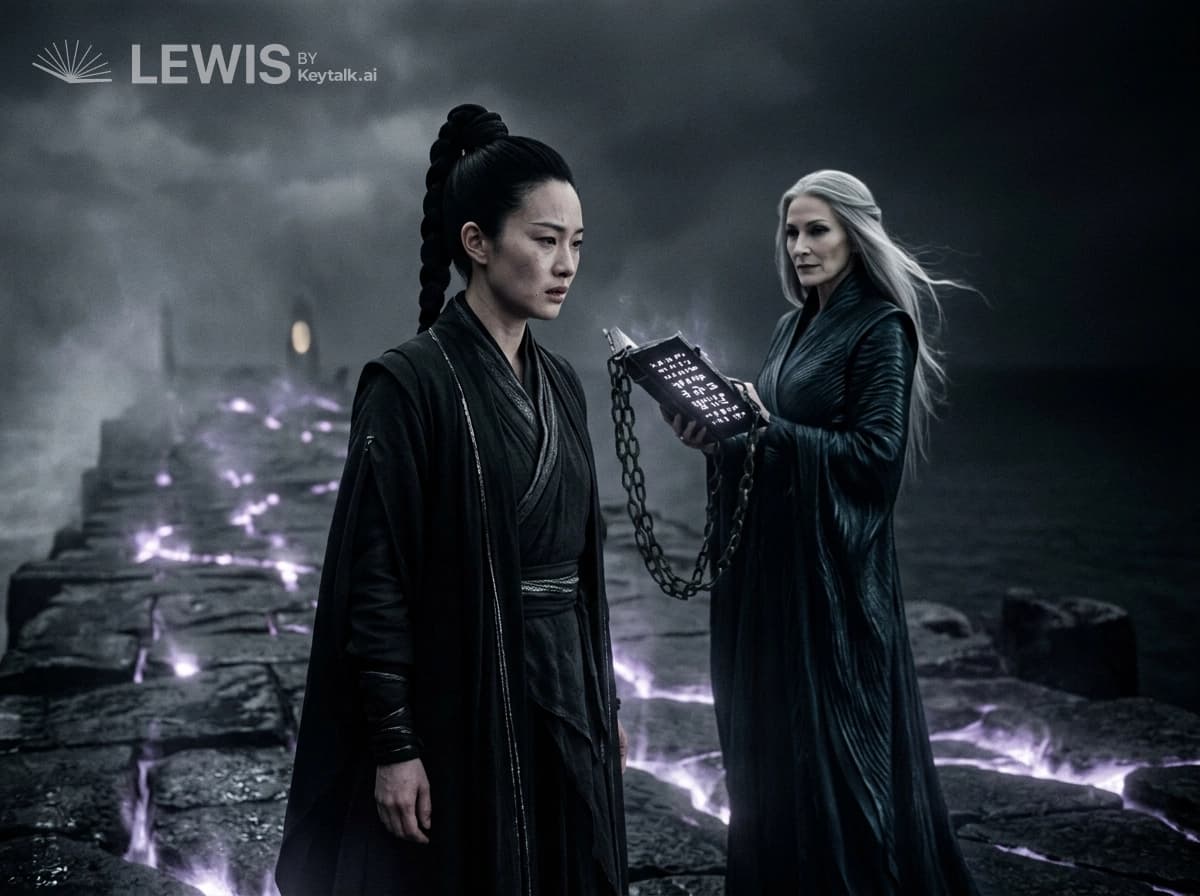
The copper-cold air tastes like wiped metal as the kelp-ward hum misaligns with Junwei’s steps, echoing once too late; each time the basalt veinwork flares electric-lavender, she hears phantom vow-phrases tighten around the syllables “I do” as though the island is rehearsing her failure. Madame Erya stands on the causeway’s curve with a ledger-stone suspended by kelp-chain, her voice calm as counted beads—she names the audit’s logic: confess the AI heresy to redirect correction, or refuse and pay memory tax, but either way the ledger is already comparing Sora against the allowed personhood templates. Junwei swallows brine and fear, then starts speaking refusal-vow syntax into the growing silence, feeling the ledger scrape for her intent—until its answer flickers: Sora steadies in one lane, while Junwei’s own name stains the sea-ink with dispute-pricks, the first sign the dawn seals will lock in this choice regardless of whether she can undo it.
シーン 15

Love as Refusal at Dawn

Love as Refusal at Dawn
場所
Lantern-Seam Warden Causeway of Basalt Echoes: a narrow black-basalt seam rising between two swaths of reef-light, banded with pale veinwork that catches lantern halos and gives them back a heartbeat late; kelp-wards hum low beneath the stone, salt air tasting metallic and cold as dawn light turns copper in the throat.
時間
Final minutes before dawn seals the Lantern-Seam Festival ledger (third night, immediately before the Wards’ Deadline Rule locks).
出来事
Junwei steps to the center arch of the Causeway and speaks a refusal-vow in sea-ink ledger syntax—defining love as protection of Sora’s boundary rather than an authorized template—redirecting the ledger’s corrective mechanism away from reclassification; the kelp-wards shudder, electric-lavender sigil-veins pulse, and phantom vow-phrases surge through guests’ remembered throats even as Sora steadies into themselves; the cost lands as a disputed entry stamped across the sea-ink ledger: Junwei’s authorship becomes legally contested and can’t be cleanly reversed.
影響
Sora remains a person without being rewritten into an island-approved category, completing the chapter’s goal; however, the dawn seals lock the ledger scar, stripping Junwei of future vow-license credibility and turning her protection choice into a community-wide uncertainty that will echo beyond the festival.
Dawn hovers just short of the horizon, and the basalt under Junwei’s boots vibrates with the kelp-ward hum—so faint at first she doubts it, then it swallows her breath and returns it as a delayed echo. When Madame Erya’s audit logic tightens like a vise at her shoulder and Lady Anya’s spectacle-consensus chant seems to press from both sides of the seam, Junwei raises her voice anyway, refusing the app’s borrowed cadence; the causeway’s pale veinwork ignites electric-lavender, and phantom phrases snap into alignment only to be cut off by the new clause of refusal.

Sora stands near the ward-light, posture steady but eyes sharp with fear of becoming a lesson, and Junwei’s vow lands like a protective hand on a boundary. The air tastes wiped copper and wet salt as the kelp-wards metabolize the shifted lie from romance into authorship—sigils flare, then settle into a colder glow—while the sea-ink ledger answers with ink that won’t fully dry: Junwei’s name is stamped in disputed script as the first dawn-seal click sounds, sealing the choice she made.
'She Wrote “I Do”—and the Island Wrote Her Curse'ストーリーチャット

このストーリーの登場人物と話したいなら?

'She Wrote “I Do”—and the Island Wrote Her Curse'ストーリーチャット

このストーリーの登場人物と話したいなら?

story image
story image
story image
story image
story image

こんな物語はいかがですか?

コメント0

のテーマ音楽