本文へスキップ
The Midnight Train That Charges Love in Names cover image

The Midnight Train That Charges Love in Names

In the ochre glow of an Eastern skyship port, a disgraced celestial cartographer plots routes that don’t just show the heavens—they sell them, each midnight train ticket granting an alternate destiny. When a runaway bride purchases the version of her life where she never existed, the station’s ink-black lines begin to erase every person who loved her from all recorded years. The conductor, haunted by the only timeline where his dead sister still breathes, realizes the map is balancing accounts and that mercy will cost names. With each departure, more passengers vanish from the world behind them, and he must decide which erasure counts as salvation before the train reaches dawn.

週間ランキング

rank icon image
#2 Genre
スクロール

キャラ

主人公

Yun-Sai Ravel

性別男性
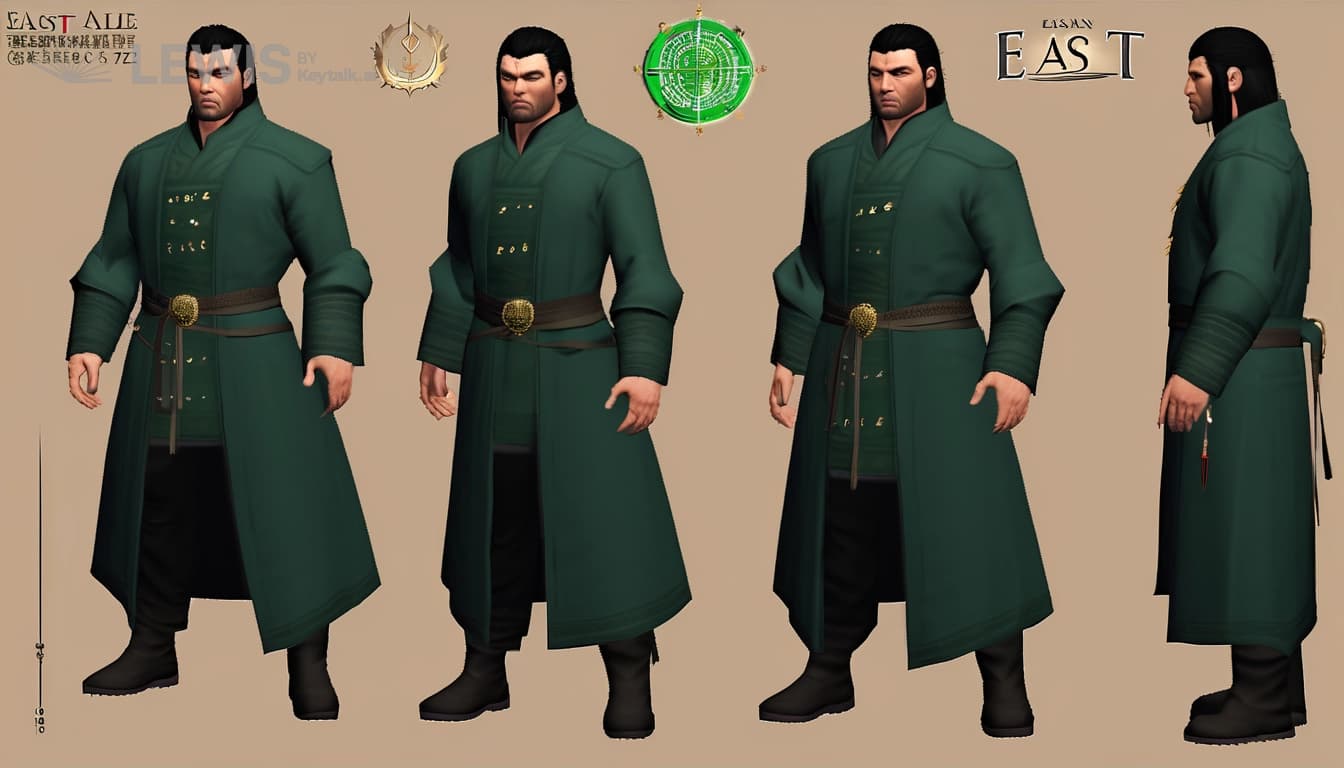
職業Disgraced celestial cartographer and conductor of the midnight train

プロフィール

Yun-Sai maps living destinies with ink-black precision, but every amendment erodes a memory he loves, turning his craft into a ledger of private grief. When Seraphine Quill-of-Sable’s purchased future starts erasing those who loved her—and when Yun-Sai clings to the lone timeline where his sister lives—the map’s balance-sheet reveals itself as an alive, judging presence that demands he quantify mercy.

He speaks like a man measuring cloud-shadow angles—polite, exact, almost soothing—yet his pulse betrays him whenever affection is named, as if love itself is a substance he might spill. He clings to the fantasy that he can correct the world without becoming a tyrant, but each route correction makes him less certain what he’s saving: passengers, his conscience, or his own dwindling ability to remember why he started caring.

背景

Born into the port’s archive-house, Yun-Sai was trained to read “sky-lines” that moved like writing across the heavens, and he learned early that maps were never neutral—only sanctioned. A correction he made during a childhood dispute spared one child and erased his sister’s “proof of life,” leaving him with a terror that he might someday decide who deserves to exist. Disgraced after an inquiry into missing recollections, he takes work as a midnight routesmith on the train, where his failures can be forgiven—until a bride’s contract makes the map start collecting debts in real time, even from memories that were never meant to be collateral.

外見

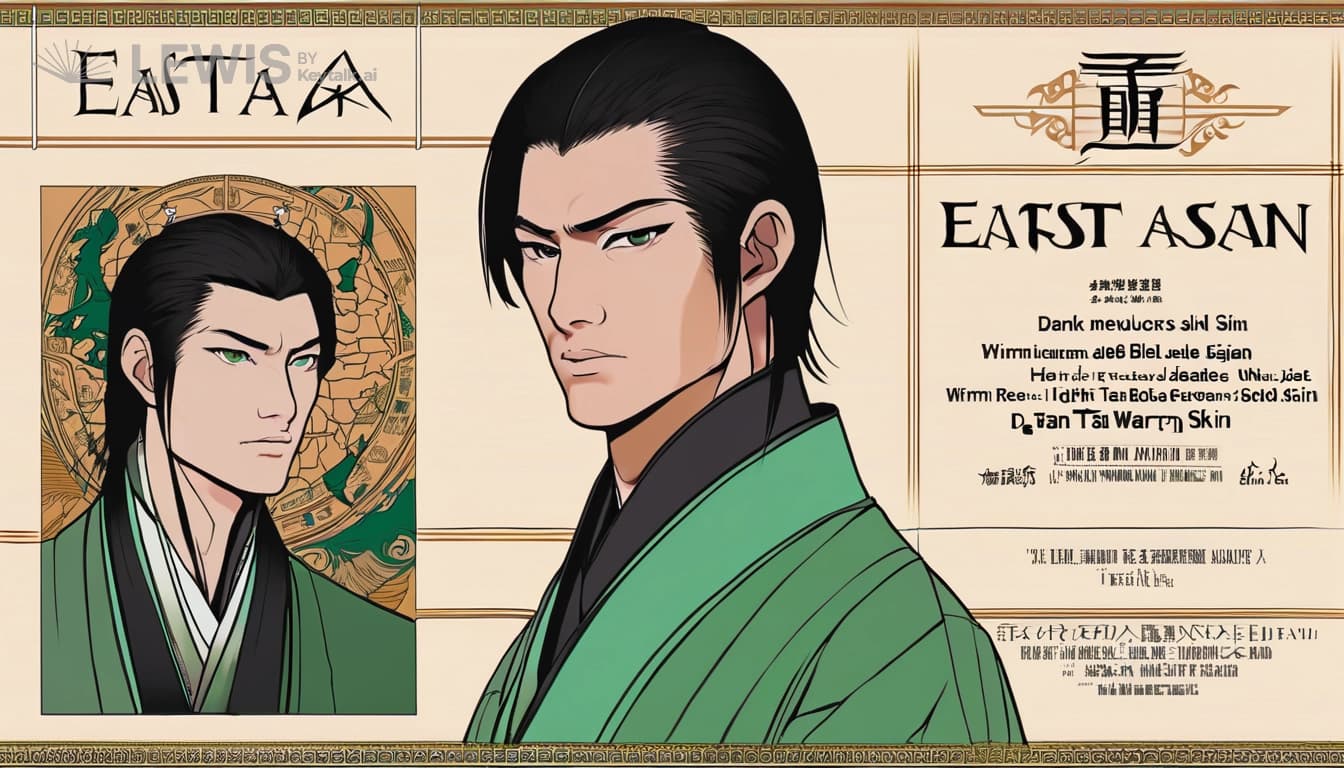
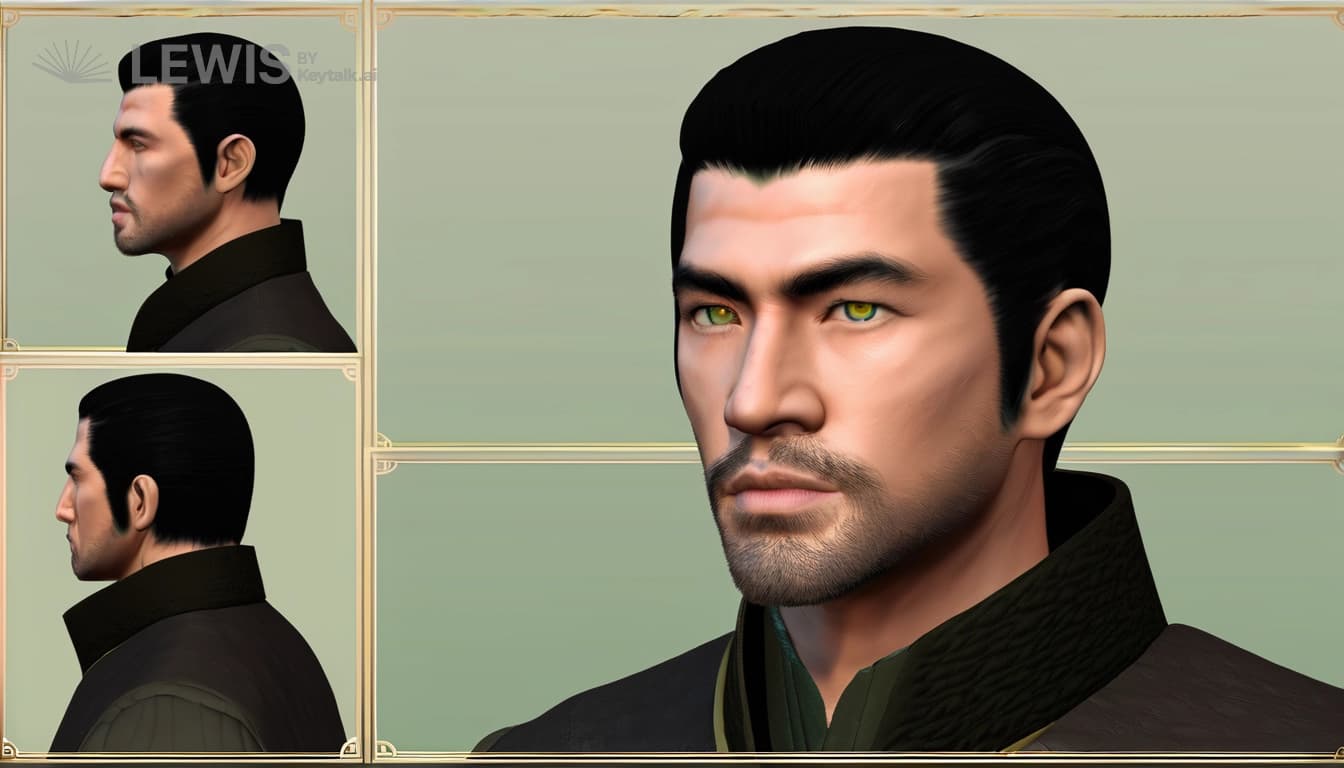
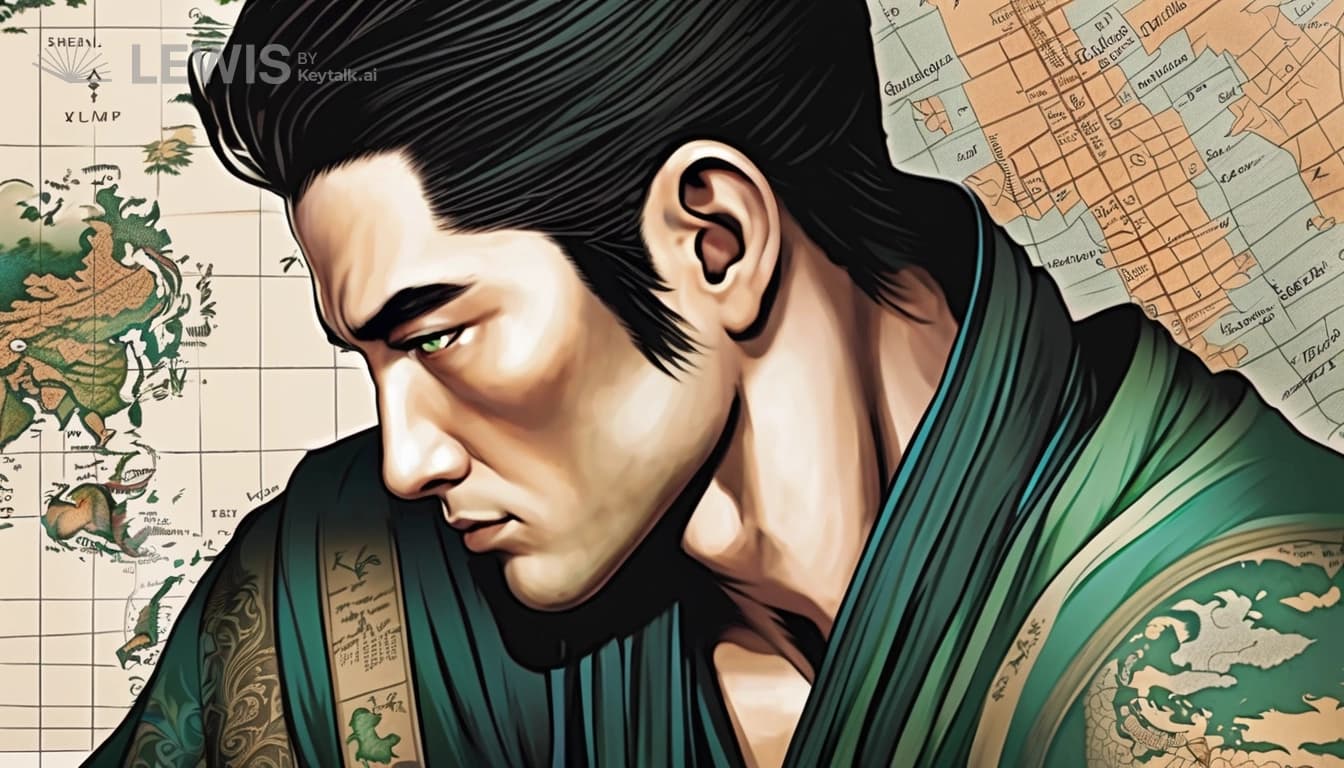
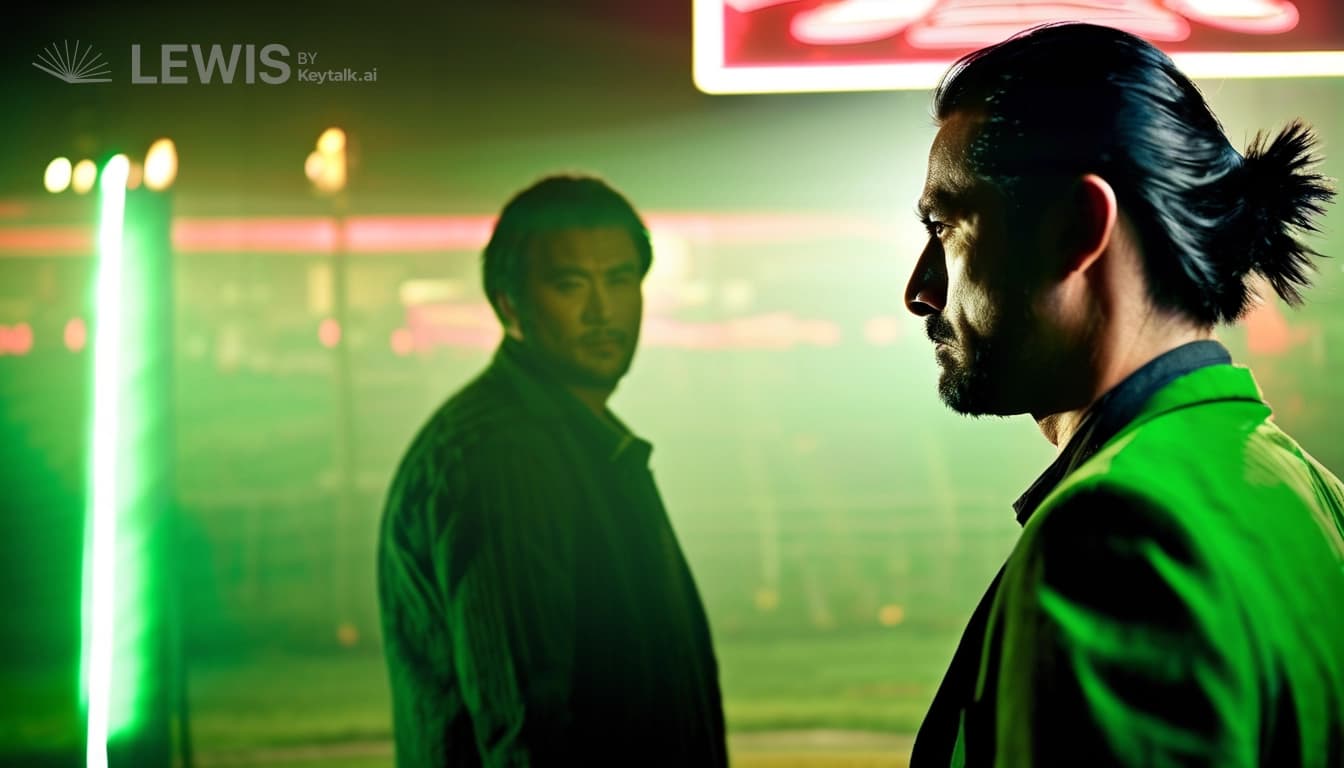
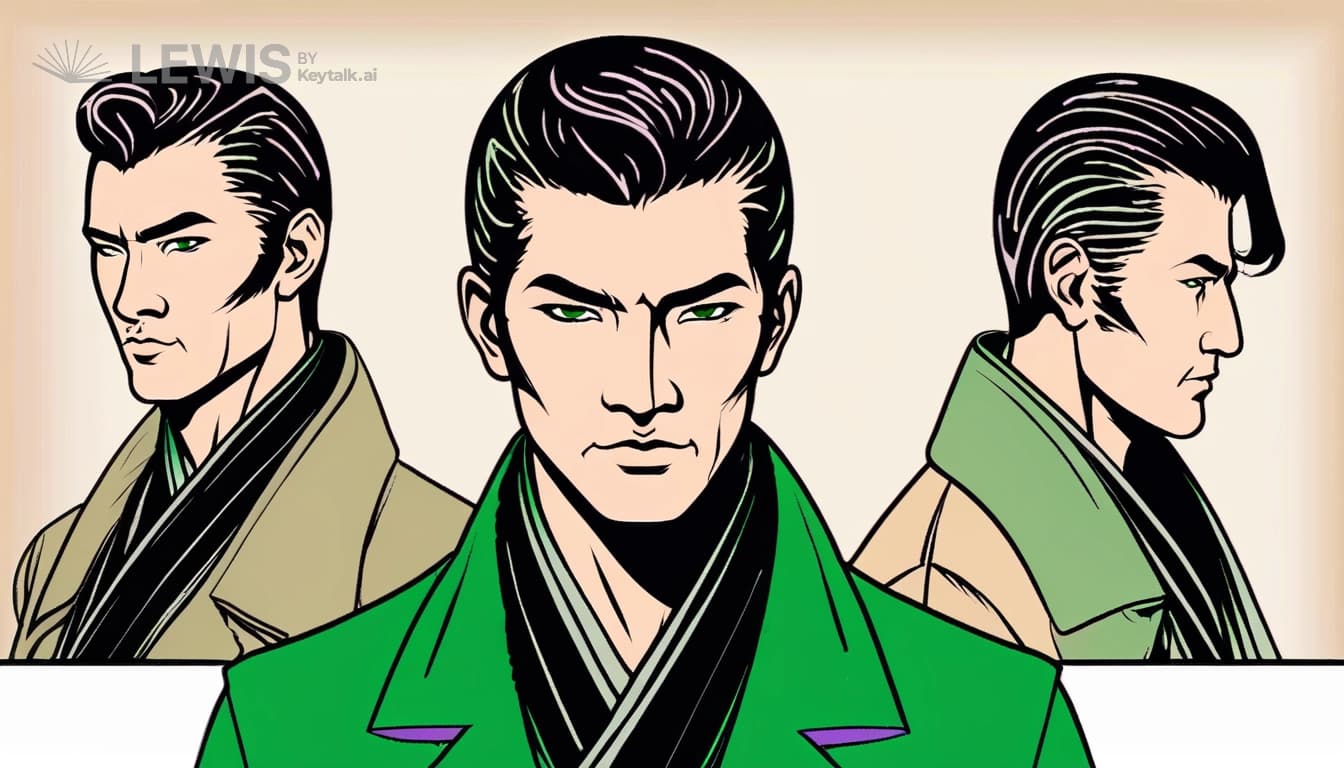
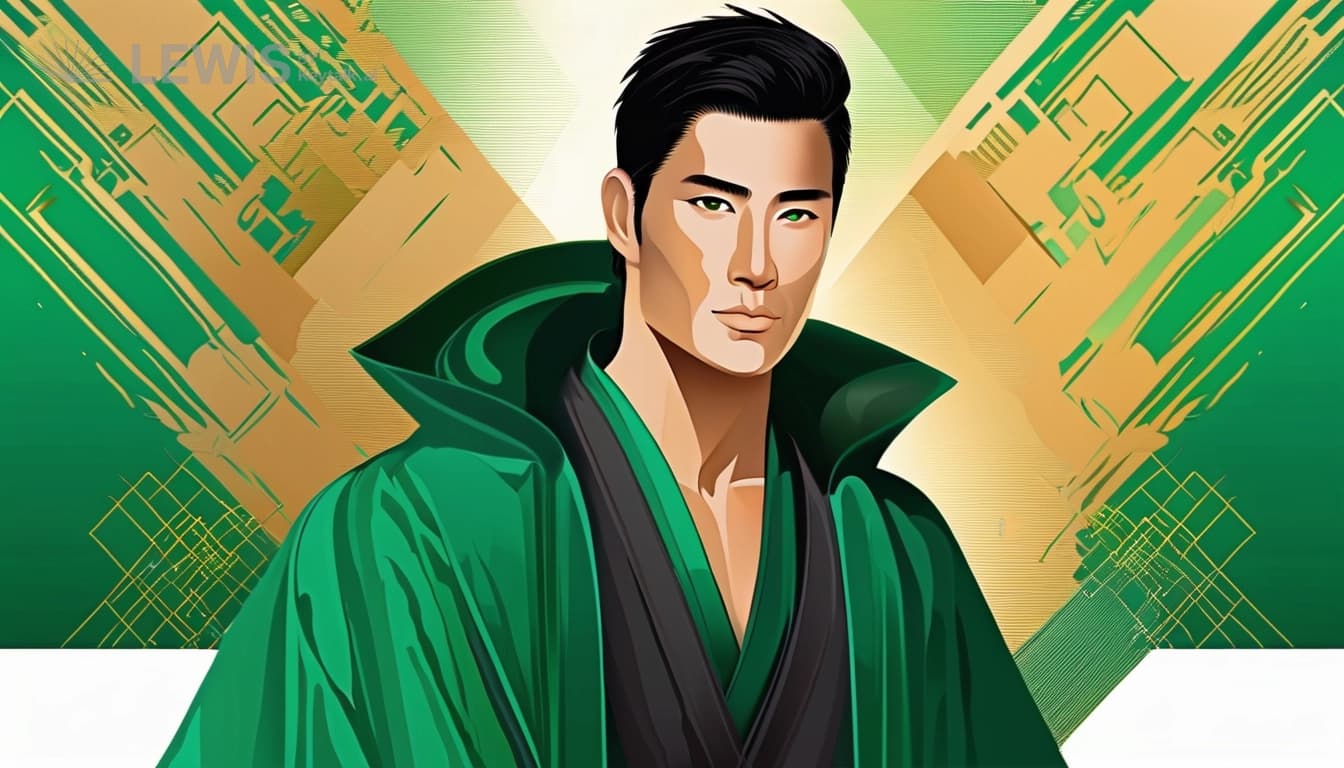
Yun-Sai Ravel stands half-turned toward a rolling instrument case, as if the world might tilt and he must measure it before it breaks—his polite smile never fully reaches his eyes. He wears the midnight routesmith’s celestial-cartography coat like a second conscience: ink-dark brocade over pale waistcoat panels, luminous map-chalk dust caught in the seams, and a thin brass compass-chain that taps softly when his pulse quickens. A single etched scar cuts through his left eyebrow, and in the ochre port light his gaze keeps snapping to empty space, the way a man checks a ledger that’s started answering back.
敵役

Seraphine Quill-of-Sable

性別女性
職業Runaway bride who purchases alternate destinies at the station auction

プロフィール

Seraphine buys the immaculate version of her life—one without scandal—believing she can curate consequence like a wardrobe. When the contract-with-a-conscience begins deleting those who loved her, she must either confess the bargain she made or double down, turning other people’s grief into her own redemption.

Seraphine speaks like she’s reciting blessings, but her eyes keep counting the distance between what she’s promised and what she’s received. She practices mercy the way some people practice etiquette—carefully, privately—until the ledger’s ink-black handwriting starts answering for her, and she feels her sense of self splitting at the seam where “clean” meets “stolen.” Her panic arrives as control: she demands lists, signatures, and proof, even as she’s afraid the missing names were the price of her chosen innocence.

背景

Once, Seraphine’s “scandal” was not just rumor but a recorded rupture in the port’s fate-market—an event that made her untouchable in polite sky-rail circles. She fled to hide inside the paperwork of the heavens, learning enough about illicit route-ink to purchase a personalized rewrite, and she chose the most sanitized outcome without asking what it would balance.

外見

Seraphine Quill-of-Sable stands like a bride who has rehearsed her vows too many times—hands gloved and clasped behind her, shoulders held in courteous restraint, while her eyes flicker with ledger-math dread. Her gown is a cleaned, ritual-satin version of innocence: pale ochre and ink-black panels that look almost ceremonial, yet the seams seem freshly inked and slightly misaligned, as if the world cannot agree on her. A faint quill-like scar coils along her throat where her practiced mercy meets the cost of rewriting, and she wears a strained smile that never quite reaches her gaze.
トリックスター

Huo-Ming Jax

性別non-binary
職業Station ink-smuggler and minor broker of illicit route-ink

プロフィール

Huo-Ming sells unregistered shortcuts—maps that promise to circumvent fate—by slipping false coordinates into the train’s living networks, laughing at rules because rules never saved them from being rewritten.

Huo-Ming speaks like a jester delivering inventory lists: every joke is a disguise for how quickly their hands count losses and how carefully their smile avoids the moment the ledger notices. They fear being trapped inside Yun-Sai’s destiny—especially after they realize their own memories are starting to lag behind the world, as if someone else is editing them from the outside.

背景

They were once an apprentice to a port surveyor who vanished when the sky-gardens began devouring recorded seasons, leaving Huo-Ming to inherit only scrap-glass instruments and a grudge against “official” navigation. After being caught tampering with public archives, Huo-Ming fled into the midnight train’s underside, where they could barter in stolen routes and keep the only truth they trust—survival—always one stop ahead of consequence.

外見

Huo-Ming Jax wears a station-ink broker’s coat sewn from mismatched scraps of skyrail uniform—ochre and soot-black panels with thin brass piping that catches lanternlight like counting fingers. Their grin is a practiced inventory-list smile, eyes too alert, shoulders slightly hunched as if bracing for a memory to be edited out; they stand with one hand poised near a hidden stamp-roller, the other lightly tapping a false coordinate slate at their hip. A single chipped glass compass charm hangs from their collar, the signature scar of their former apprentice work, tugging forward whenever they lie to the maps.
対照人物

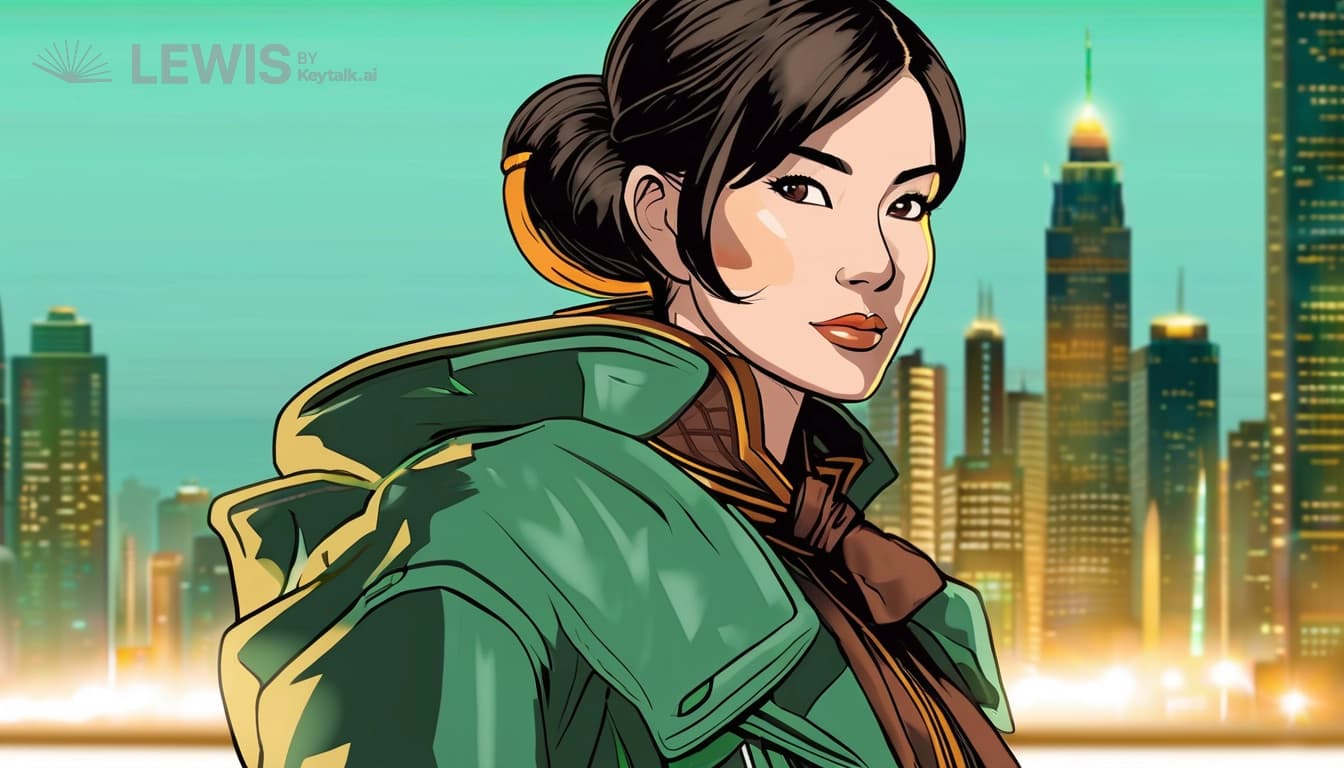
Captain Mireya Lien

性別女性
職業Sky-rail warden and engineer who maintains the train’s living tracks

プロフィール

Mireya pursues Yun-Sai’s midnight train with professional ruthlessness, determined to enforce the Fate-Market laws that keep uncontrolled route-ink from devouring the port’s sky-gardens—yet she secretly suspects authority ruined her family and fears her intervention will only crystallize the corruption she wants to extinguish.

Her competence is a kind of self-defense: she counts soot-motes in the air, cross-references ink-stamps, and speaks as if every sentence must survive a court transcript. Under that discipline sits a private bargain—she wants justice, not mercy, but she can’t admit how desperately she still craves a past where her family’s name wasn’t traded away. When Yun-Sai’s map begins erasing people, Mireya becomes both hunter and witness, forcing herself to chase evidence while praying she’s wrong about what regulation will cost.

背景

Mireya was raised in the conservancy wing of the Sky-Garden port, where fate-ink was treated like a hazardous substance and inspectors were taught to sniff out unlicensed magic before it turned leaves to ash. Years ago, her family’s livelihood depended on a permit granted by the same authority now failing at the auction house; when that permit was revoked during a crackdown, the market’s “corrections” swallowed her relatives’ recorded existence, leaving only disciplinary reports and empty chairs. Now she tracks Yun-Sai because his cartography has the same smell as that earlier disaster—sweet, metallic, and growing.

外見

Captain Mireya Lien wears the port’s authority like armor that has learned to distrust touch: a Warden’s soot-gray jacket stitched with faint, regulation-like diagrams and a sky-rail harness with brass fittings and sealed ink-stubs at her hip. Her mouth is set in disciplined restraint, eyes measuring the air as if counting soot-motes will prevent another disaster; she stands forward-leaning at the track junction, one gloved hand hovering over a living rail’s pulsing seam. A thin, pale scar cuts through her brow ridge—an old inspector’s burn—and her expression carries the double life of a pursuer who fears her own evidence will be right.
恋愛対象

Lan-of-the-Second Lamp

性別男性
職業Lamp-scribe for the subterranean archives, secretly a ‘safety’ custodian for erased timelines

プロフィール

Lan steals fragments of names and faces from the midnight train’s ledger, stitching them into portable “mercy cards” to keep people from being fully deleted—especially those the map claims never loved Seraphine or Yun-Sai. He wants to prevent total erasure by any means, even when his methods look like cruelty, because losing everyone would mean admitting his own life was never whole.

Lan smiles the way a locksmith does: quick, practiced, and meant to hide the tremor in his hands. He speaks gently while doing harm, preserving people by cutting them into smaller truths, and he hates that the world responds to his tenderness with suspicion. His internal contradiction is devotion that curdles—he craves a clean correction to fate, yet every time he “saves” someone he feels his own remembered self slough off the official records.

背景

Once, Lan was a high-apprentice to the celestial cartographers, tasked with maintaining oath-ink between the port’s archives and the sky. A ledger discrepancy—what the archives said he was versus what he remembered being—was the first deletion that touched him, and the only way he survived was by learning how the map unravels bonds. Since then he has lived in two identities, falling in and out of Yun-Sai’s orbit with the dreadful certainty that helping Seraphine’s ruined love might restore a world that never truly belonged to his heart.

外見

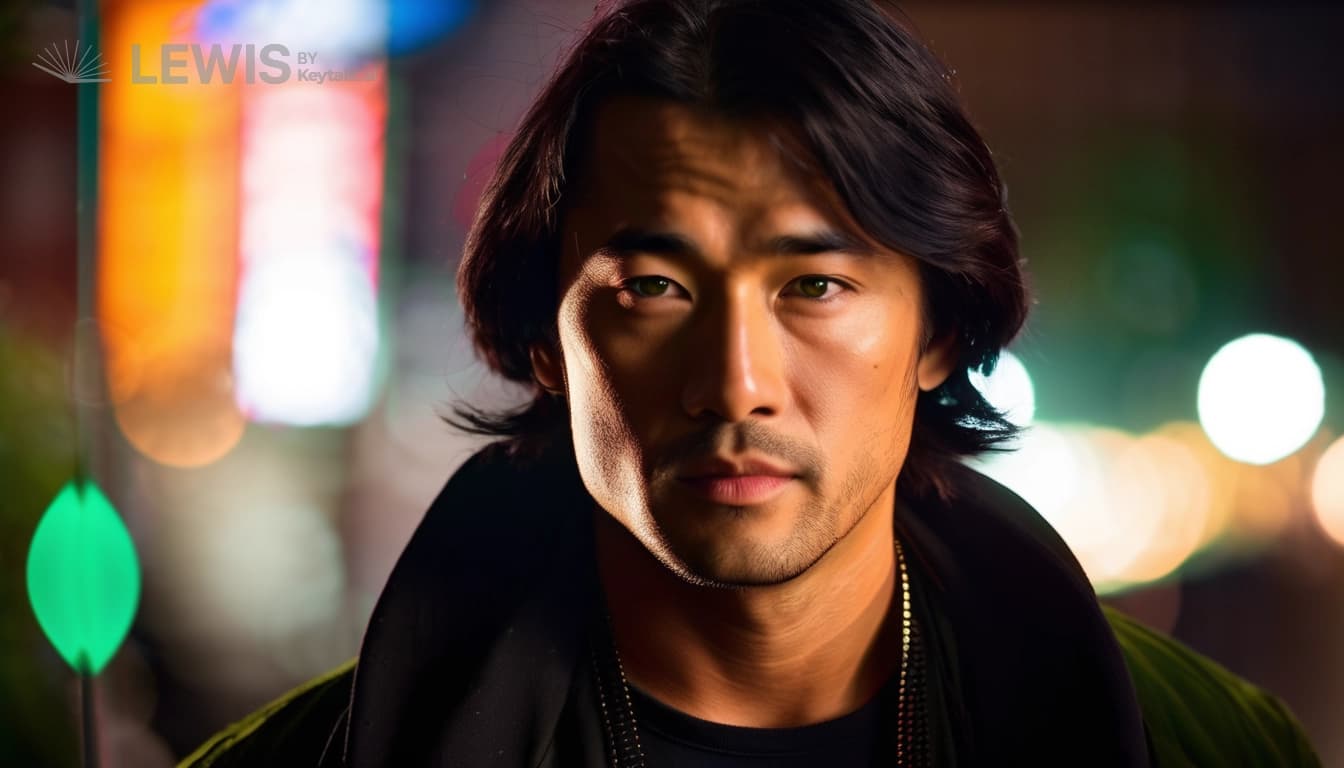
Lan-of-the-Second Lamp keeps his body calibrated like a man reading an invisible ledger: shoulders square beneath layered archive robes, yet his hands hover at his waist as if ready to cut away a section of reality. He wears a mild, locksmith’s smile that never quite reaches his eyes, while the lamplight catches fine fissures of ink along his sleeves—evidence of the small, cruel repairs he makes to preserve fragments of erased people. His gaze flicks between Yun-Sai and the darker seams of the records, promising comfort in the tone of kindness and fear in the accuracy of his stillness.

筋書き

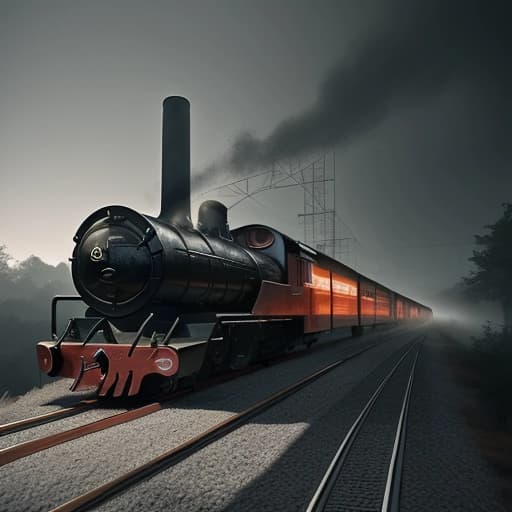
Eastern aurora stutters above Lumenquay’s ochre clouds as Yun-Sai Ravel threads his fingers through the ink reservoirs of his cartographer’s loom, listening to the midnight train’s living tracks pulse pale blue like something trying to remember its own heartbeat. Disgraced and already hunted by his own guild’s shame, he has rebuilt himself as a conductor out of necessity more than pride—guiding passengers toward destinies he once mapped for profit, now measured like penance. He tells himself he is only fixing routes, only balancing ledgers that would collapse without him; he tells himself mercy can be quantified without becoming cruelty. But the third and final night of Ashen Lanterns is always when the heavens demand payment faster than anyone can count, and tonight the map on his worktable does something it has never done before: it redraws itself in response to a name he didn’t write.

The first jolt comes with Seraphine Quill-of-Sable’s arrival. She is a runaway bride with immaculate handwriting and an immaculate appetite for revision—she buys at the Fate-Market auction the future where her scandal never happened, where her doubts never hardened into betrayal, where her life never had to be explained. The contract’s three signatures click into place—ink from the auction desk, breath from her vow, witness from the officiant—then the ink-black lines in the hall’s veined basalt surge like startled veins, and Yun-Sai feels the train answer as if it has been called by its true title. He should be relieved. He has always been good at the mechanics of fate. Yet when Seraphine steps aboard, the air around her carries no afterimage, as though the world has decided she is already half-erased.

At first, the consequences look like accounting errors: attendants whose familiarity slides off customers’ faces, lovers who cannot summon the right nickname, friends who pause mid-sentence and then continue as if nothing happened. Yun-Sai reports the anomalies with the calm precision that has kept him employed and kept him dangerous. Then Lan-of-the-Second Lamp appears—subterranean archive lamp-scribe by day, safety custodian by necessity—offering Yun-Sai a mercy card that should not exist. The card holds a fragment of Seraphine’s name as it was before the contract, stitched into a portable truth meant to prevent total deletion. Lan’s smile is locksmith-bright while his eyes measure the tremor in Yun-Sai’s hands; he warns that the ledger isn’t merely taking away memories. It is selecting binding witnesses and cutting them first, then pulling at private continuity until absence becomes matter.

Yun-Sai’s private continuity is the first thing to crack. Each time the train’s living tracks align with a destination, Yun-Sai sees his own personal map erode—tiny edits in the corners of his mind. In one pocket of memory, his dead sister’s laughter flickers and then steadies; in another, it vanishes so hard he can taste metal. The ledger-morality logic has found him because he still loves someone who should be gone, and the heavens treat love like a ledger entry that can be balanced only by subtraction. He realizes, with a dread that feels like recognition rather than discovery, that the map is not correcting destiny; it is balancing accounts between destinies, moving the loss to wherever the system can satisfy itself. Mercy, in this world, is never free—it only chooses what will be made to pay.

As the midnight train begins its run, Captain Mireya Lien finally closes in—not with superstition, but with procedure. The Fate-Market sky-rail warden has been tracking illegal route-ink pressure for days, certain Yun-Sai is tampering beyond the station’s sanctioned corridors. She insists the train must backtrack until the living rails agree with approved lines, and her pursuit forces Yun-Sai to choose between keeping the passengers on schedule and preventing the route correction that would multiply penalties. Her presence tightens the knot of moral threat around him: every time he tries to protect the passengers from being erased, the rails refuse, the train stumbles, and the ledger’s response accelerates. Mireya believes she is saving the sky-gardens from unregulated destiny commerce, yet Yun-Sai sees that she also suspects—dangerously—that the balance system itself has already been corrupted. If she arrests him now, it could stop the spread. If she stops him, the erasures may finalize in the worst possible place: in the world as it is, irreversible at dawn.

Meanwhile, Seraphine’s panic becomes a second engine of chaos. On her first night aboard, she tries to treat fate like couture, demanding lists of what the ledger “owes” and demanding proof that her purchased future is stable. She demands to see the routes, the signatures, the witnesses—she wants certainty because she has built a self that cannot survive ambiguity. When a maid who once adored her walks past the carriage without recognizing her, Seraphine’s composure slips into calculation, then into bargaining. Her bargain begins to resemble Lan’s methods, except Seraphine’s mercy aims to preserve her own cleanliness, not anyone else’s continuity. She uses route-knowledge as a lever, asking Yun-Sai to adjust her destination so the erasures will stop; Yun-Sai cannot refuse because his job is to ensure the train rides living tracks, and because the map has already started to treat her as the axis it must correct.

Huo-Ming Jax, the station’s ink-smuggler, adds a third disruption. They arrive in the carriage shadows with unregistered shortcut coordinates, laughing softly at rules because rules have never saved them from being rewritten. They offer Yun-Sai an illicit shortcut to evade Mireya’s pursuit and reach a rendezvous in the subterranean archive—where, they claim, the ledger’s accounting can be “nudged” without triggering additional losses. Their joke is a disguise for fear; as the train moves, they realize their own memories are lagging, as if someone else is editing them from the outside. Each time they speak, their words land a half-second late, like calligraphy ink drying too fast. Yun-Sai understands, too late, that the shortcut economy is itself bait: untracked timelines invite shadow routes, and shadow routes are the ledger’s chance to balance by cutting deeper into the nearest available witnesses.

The central mystery tightens into a trap narrative: the train’s destinations begin to feel less like choices for passengers and more like decisions forced by an external arithmetic. Every time Yun-Sai alters a route to protect someone from erasure, the ledger extracts the balance from elsewhere, and “elsewhere” becomes cruelly specific. Names of people who loved Seraphine start disappearing from street signs, from family ledgers, from the soot of childhood sketches. Those erased voices don’t remain silent; their absence rearranges matter. A vendor’s stall that held Seraphine’s favorite sweets now displays blank shelves where labels once were. A bridge that had held a proposal now creaks under no one’s footsteps. The world responds to deletion with the eerie smoothness of a mechanism that has been oiled by grief.

Lan guides Yun-Sai through the subterranean archive’s philosophy of fragmentation, explaining what he is doing and why it hurts. He has been stealing fragments of names and faces from the train’s ledger to keep people from being fully deleted, but the archive can house no more than one timeline’s worth of a given name, and Lan’s partial saves reduce agency. People live as half-truth echoes that may forget what they intended, mistaking a borrowed self for their own. Lan refuses to let Seraphine’s bought future become an eraser that consumes everything it replaces. Yet Lan’s devotion is also his weakness: by trying to save others, he exhausts the archive’s name-capacity, jeopardizing Yun-Sai’s sister in the one timeline where she still breathes. The more Lan saves, the more likely that one timeline will lose its strongest emotional tether—his brotherly, almost-unconfessed love in Yun-Sai’s case—until the last stage of erasure becomes physical continuity.

Yun-Sai’s internal conflict erupts when he finally learns what the map was redrawing before Seraphine stepped aboard. The ledger isn’t only balancing losses created by contracts; it is using affection itself as a measuring tool, demanding witness wherever love has bound a person to reality. Yun-Sai’s sister survives only because he still mourns her, but his mourning has become the ledger’s easiest lever. Mercy for Seraphine would require erasing the people who once loved her; mercy for his sister would require refusing to erase those who loved Seraphine. The ledger offers both as “balanced,” but balancing is not the same as justice. Somewhere in Yun-Sai’s mind, he hears his own grief become a signature the heavens can exploit.

As dawn threatens—eastern light stuttering toward full return—the convergence of forces becomes unavoidable. Mireya corners the train at a junction where the living rails refuse to align with Yun-Sai’s attempted correction, and her stern competence hardens into something like faith: she will enforce the Fate-Market laws even if they crystallize the wrong reality. Seraphine, having demanded proof too late, tries to force the contract to confess the bargain she made, pressing her hands against the ink-black lines on the carriage wall as if she can scrub away the ledger’s handwriting. Huo-Ming lures Yun-Sai and Lan toward their illicit shortcut in a desperate attempt to reach the archive before finalization, but the shortcut’s false coordinates open the edge of a shadow route—an untracked timeline that tries to grow outward by harvesting unnamed witnesses.

In the chaos, Lan reveals the mercy cards he has been making do not merely prevent deletion; they are also a way of telling the ledger which witnesses “count.” Each card is a pin holding a narrative thread in place. If Yun-Sai uses them indiscriminately, he can keep Seraphine’s loved ones from vanishing—but he will also dilute the tether that keeps his sister alive in the one timeline he clings to. If Yun-Sai refuses Seraphine’s erasure-correction, he might preserve the sister timeline at the cost of strangers whose lives have been bound to Seraphine by ordinary, sincere affection. The ledger has engineered a mercy choice that looks like compassion but behaves like coercion.

Yun-Sai finally stops trying to “fix” the world as though he were editing a map. He makes an act of agency that is also an admission of corruption: he offers Seraphine the only route correction that truly changes what the ledger thinks it is balancing. Not by erasing more, not by saving blindly, but by redirecting the ledger’s witness logic onto himself. He uses the remaining ink-signature he controls—the one thread where his own love has been the ledger’s lever—and he contracts his grief into a deliberate payment. He tells Seraphine what will happen if she insists on a future where she never existed: it will not merely remove scandal; it will remove every person who loved her, including children and friends and strangers who did not deserve to be collateral. Seraphine’s eyes, bright with fear, finally understand that her “clean” future is built on an invisible pile of names. In that moment, she does not become noble. She becomes honest. She chooses to confess the bargain, to refuse the immaculate life, and to let her scandal exist—because she cannot bear watching other people be deleted for the sake of her comfort.

The choice costs Yun-Sai everything he wants to keep. As Seraphine’s confession loosens the purchased future’s hold, the ledger searches for a new balance, and it finds the most stable witness it can: Yun-Sai’s lingering mourning for his sister, still sustaining the surviving timeline. The train’s living tracks shudder as the last-stage erasure begins to work backward through his memory—first smearing details, then swallowing faces. Lan reaches for him with a mercy card meant to tether his sister’s name, but the archive’s capacity is already strained; saving Seraphine’s witnesses has exhausted the space where Yun-Sai’s sister could be preserved. Mireya, seeing the ledger’s handwriting shift, realizes too late that the corruption isn’t something she can regulate away. If she arrests Yun-Sai now, she will lock in the wrong permanence. If she lets him finish, she must accept that law alone cannot stop predatory accounting.

At the brink of dawn, the eastern light fully returns and the ledger’s unresolved locks attempt to finalize. The midnight train, caught between finalization and mercy, behaves like a living organism resisting surgery. Huo-Ming’s shadow route flares, threatening to spawn a new set of deletions so large it could rewrite whole districts. Yun-Sai closes his loom’s ink reservoirs in a motion that feels like extinguishing a lantern inside his own ribs, and he forces the train to remain on an existing living track—an act of technical compliance that saves the port’s sky-gardens and prevents the shadow route’s outward spread. The ledger, denied an easy outlet, finishes its accounting by taking from what is already closest: Seraphine’s purchased erasure is undone, but Yun-Sai’s sister timeline cannot coexist with the corrections meant to spare the erased innocents. Lan, choosing the cruelest compassion, uses the last available archive capacity to keep Seraphine’s loved ones partially remembered rather than entirely deleted, accepting that their agency may fracture. In exchange, Yun-Sai’s sister is restored in the present timeline only as a memory without continuity—something that hurts, but does not kill.

The aftermath is quieter than the world expects, which is to say it is worse. Seraphine disembarks with her existence restored—scandal and all—yet she is not the same person who boarded, because she has watched how quickly the world can decide love is a tax. She cannot undo the harm she tried to purchase, but she can build a life that refuses immaculate lies. Mireya stands near the rails, her authority stripped of certainty; she has enforced the laws, yet the laws did not protect anyone from the ledger’s appetite. She confronts Lan’s mercy cards as both evidence and indictment—compassion that doubles as control—and admits, privately, that her family’s vanished name may never return to full form, only to fragment. Huo-Ming survives, but their memory is edited; they laugh less often now, and when they speak, their words arrive with the delay of someone who has learned too late that shortcuts cost more than they promise.

For Yun-Sai, dawn does not bring peace. The train’s engine-song fades into the harbor’s hush, leaving ink-black stains in the air like wet punctuation. He is alive, and so is the world that did not vanish its innocent witnesses, but the only timeline where his sister breathed has been replaced by a baseline reality that cannot hold her continuity. He carries the knowledge like a map folded too many times: crisp enough to read, too creased to unfold without tearing. Lan offers him a mercy card with his sister’s name—an echo, not a person—and for the first time, Yun-Sai allows himself to mourn without bargaining for arithmetic. The lesson settles in his bones with mythic weight: the heavens may demand balance, but balance without mercy is just another form of erasure. And in a port built on living rails and ink-blood contracts, where every kindness is audited, Yun-Sai chooses—imperfectly, painfully—to become the kind of cartographer who draws routes that do not merely move suffering from one column to another.

シーン

シーン 1

Ledger Window Contracts Breathes

Ledger Window Contracts Breathes
場所
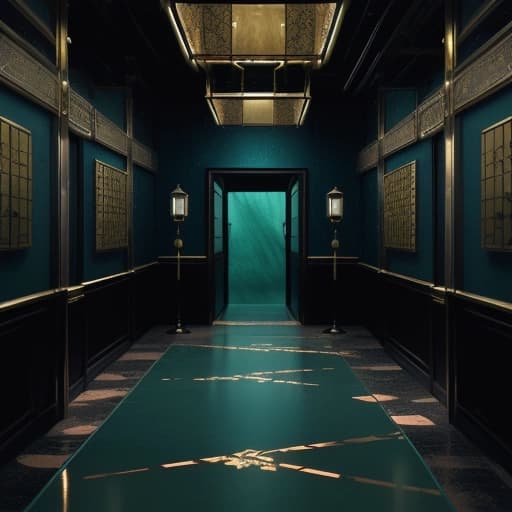
The Auction Hall of Unborn Futures in Lumenquay—pale basalt veined with ink-blood under a vaulted ceiling of concentric contract-runes, bruised-violet light pooling around a central, hovering Ledger Window of rotating ink-black futures; Memory Ledgers along the walls breathe page-like in measured pulses, and the air tastes faintly metallic like bitten coins.
時間
Late in the month of Ashen Lanterns, the third night of Ashen Lanterns as midnight nears full height and the eastern aurora stutters above the ochre sky.
出来事
Yun-Sai Ravel, standing where the officiant’s witness stool should be, watches the Ledger Window latch onto Seraphine Quill-of-Sable’s purchased future; as the ink-sheet rotates, an unlabeled tally flickers beside her life—an accounting of “binding witness” deletions that cannot settle because Yun-Sai’s own thoughts of his sister blur under the hall’s Memory Ledgers. When he tries to steady his breath to read, the Window misbehaves: Quill-of-Sable’s future displays partial truths, then snaps to a live ledger-entry that lists the ledger’s witness-roles, including a name tied to Yun-Sai’s sister’s surviving timeline. The entry resolves by registering Yun-Sai’s grief as the payment, while Seraphine has not yet spoken her vow loudly enough to stabilize the contract—proving the wrong future is already measuring him.
影響
The chapter’s central mystery becomes concrete: Seraphine’s arrival is not an isolated anomaly but the trigger the ledger uses to finalize its balance, assigning Yun-Sai’s love and mourning a transactional role that threatens his sister’s surviving continuity. Yun-Sai is forced into the realization that he is being measured by the ledger just as he measures destinies.
Brushed violet light crawls over the basalt, and each Memory Ledger on the wall exhales a slow, papery rustle that makes Yun-Sai’s tongue taste copper; every time he thinks his sister’s laughter, the ink-black futures smear at the edge of the Ledger Window like wet calligraphy rubbed by a thumb. The rotating sheet locks for a heartbeat onto Seraphine Quill-of-Sable’s immaculate life—then a second tally flares, unlabeled and hungry, and the Window snaps to a live entry that names “witness roles” drawn from love, placing a thread tied to Yun-Sai’s sister’s survival beside an accounting line marked with his grief. When the ink settles, the air in the hall seems to stiffen—breathless, awaiting signatures—while Yun-Sai feels, with sick clarity, the ledger has already chosen what it will take from him.
シーン 2

Seraphine Demands the Balance Sheet

場所
The Auction Hall of Unborn Futures at Lumenquay: a vaulted chamber of pale basalt veined with ink-blood, glowing bruised violet; the Ledger Window rotates over a dais of warded auction stone while Memory Ledgers line the walls like stacked books that breathe page-breath; coppery air hangs over Yun-Sai’s tongue as contract-runes faintly pulse beneath his boots.
時間
Late in the month of Ashen Lanterns, during the nightly dispatch just after Seraphine’s contract signatures settle—eastern aurora stutters at the hall’s high windows as the train’s living ligaments begin to answer from afar.
出来事
Yun-Sai tries to present Seraphine with the Ledger Window’s implied witness roles, but the Window refuses to stabilize without active officiant witness; every time he reaches toward the ink-black futures to force a clearer tally, the Memory Ledgers “correct” his recollection of his sister—turning laughter into a smear—while Seraphine, panicked by any uncertainty, demands the balance sheet’s full accounting and threatens to re-sign for tighter control; Lan’s absence becomes tangible through a set of empty mercy-card hooks on a side shelf, and Yun-Sai is forced to stall while the rotating futures briefly lock onto a thread tied to his sister’s survival, then scramble when he speaks her name.
影響
The chapter’s escalation deepens: Seraphine’s arrival is no longer an isolated anomaly but the ledger’s mechanism of foreclosing information—her demand for certainty accelerates the ledger’s witness-assignment, and Yun-Sai realizes the system is using love and demanded proof to steer which names will be taken next; the scene ends with Yun-Sai gaining only a flicker of the tally behind the futures, enough to confirm a witness-role linked to his sister’s surviving timeline, even as the hall punishes him for noticing.
Brushed violet light crawls over the basalt, and each Memory Ledger on the wall exhales a slow, papery rustle that makes Yun-Sai’s tongue taste copper; when he so much as thinks of his sister, the ink-black futures in the Ledger Window blur like wet calligraphy rubbed by a careless thumb. Seraphine leans across the warded dais with immaculate composure that cracks into hunger, demanding the balance sheet “in full,” while the Window stutters—refusing to show stable figures until the officiant’s witness is present—so Yun-Sai can only buy seconds with exact words that scrape his throat and smudge his own memories. In the corner, empty mercy-card hooks tremble as if the archive is holding its breath; Yun-Sai steals a single glance at the tally behind the rotating futures, where a witness thread marked by love flares to life—his sister’s name-adjacent echo—then the entry collapses into rotating ink as Seraphine’s next threat clicks the air tighter, making the wrong future feel inevitable.
シーン 3

Yun-Sai’s Grief Becomes the Payment

Yun-Sai’s Grief Becomes the Payment
場所
The bruised-violet Auction Hall of Unborn Futures, beneath a vaulted ceiling inked with concentric contract-runes; Memory Ledgers on the wall breathe papery breaths, while the central Ledger Window rotates over a warded dais of veined basalt that sweats ink-blood.
時間
Just before midnight fully turns to dawn, during the third and final Ashen Lantern dispatch when the eastern aurora begins to stutter.
出来事
Yun-Sai presses his ink-stamp to the Ledger Window’s edge to read the hidden witness logic; the air sharpens to a metallic taste, his sister’s laughter smears into absence, and the rotating ink-black futures snap into a live ledger-entry that declares Yun-Sai’s lingering mourning as the ledger’s “elsewhere” payment—confirming Seraphine’s purchased future is already using him as the balancing credit.
影響
The chapter’s mystery box resolves in the worst way: Seraphine’s arrival is not an isolated threat but the mechanism by which the ledger will finalize Yun-Sai’s chosen suffering, reframing his grief as an exploitable witness-role rather than a private wound.
Brushed violet light crawls over the basalt dais as the Ledger Window rotates like an oil-slicked constellation, and the Memory Ledgers’ page-rustle grows louder until Yun-Sai can taste coins at the back of his tongue. He slides his ink-stamp toward the Window’s edge—too fast to be safe—and the moment his grief sparks, Seraphine’s immaculate future flickers brighter, then the sister-laughter he relied on thins to a smear, as if someone has dragged a thumb through ink on wet paper.
シーン 4

Lan Waits in the Green Hush

Lan Waits in the Green Hush
場所
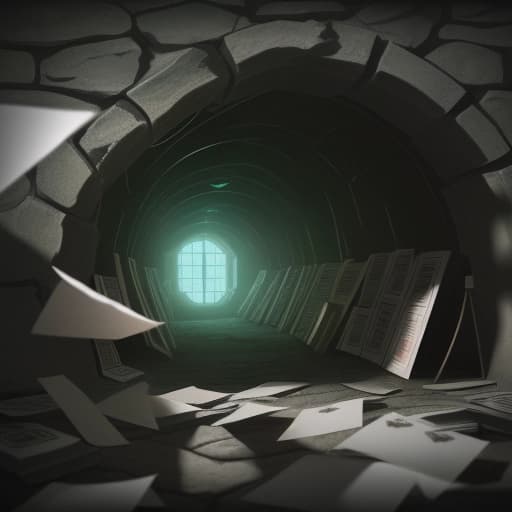
Subterranean Archive of Mercy Cards and Missing Names, beneath Lumenquay: greenish second-lamps pool honeyed light over shelves of palm-sized mercy-card slates; the air is cool and metallic, smelling of wet iron and soot-sweet incense; the floorboards give a soft choked interruption with each step, and thin veils of ink-black route-ink hang from copper hooks like damp curtains.
時間
Late in the month of Ashen Lanterns, the third and final night, just after Seraphine’s wrong future has begun erasing binding witnesses—before Yun-Sai presses the wrong kind of help into the ledger again.
出来事
Lan-of-the-Second Lamp waits among the second-lamp hush as name-cards tremble on their shelves—each faint murmur a missing witness trying to assemble itself. When Yun-Sai arrives, his thoughts brush the air like fingertips over fresh ink; Lan answers the tremor with a measured touch to the shelf, then slides a mercy card free that should not match any of Seraphine’s affected names. Instead of offering explanation, Lan lets the archive “misread” the moment—showing, by what stabilizes and what fractures, that witness logic is already being reassigned in real time; he tells Yun-Sai to take the card before the archive chooses a cost you cannot undo.
影響
This scene positions the archive itself as an active, selecting antagonist and establishes the key reveal’s premise: the only mercy card that can halt the slip will count Yun-Sai’s own witness, not Seraphine’s erased loved ones. It also deepens Yun-Sai’s dread and urgency while foreshadowing the sacrifice trade-off that will climax at the chapter’s end.
Lan stands between two rows of mercy-card shelves under greenish second-lamp light, his silhouette edged in bruise-purple shadow while the cards around him flutter like held-breath moths. The air tastes of wet iron and burnt sugar; when Yun-Sai exhales, a few card-slates answer with faint, dissatisfied murmurs, and the nearest copper hooks sway as if the archive has just noticed his name in the dark. Lan doesn’t look up at first—only presses two fingers to a card edge that feels warm as skin—then draws it free and holds it out: the parchment-thin slate bears a count tied to Yun-Sai’s own lingering witness, and as the ink-black lettering steadies, Lan hears (or almost hears) a thin thread of laughter somewhere in Yun-Sai’s mind begin to thin—proof the archive is already deciding who pays next.
シーン 5

Huo-Ming’s Booth Sews the Wrong Tomorrow

Huo-Ming’s Booth Sews the Wrong Tomorrow
場所
Beneath Lumenquay’s ochre daylight stacks, Huo-Ming Jax’s reweaving booth—an underside tooth of the port—hunks into shadow; its frame is stitched from scavenged sextants and ink-stained rope, lantern ribs glowing jaundiced green. Copper hooks hold thin veils of route-ink like damp curtains, and the floorboards wear looping scars of half-overwritten names; the air reeks of wet iron, old parchment, and burnt sugar while the booth’s interior scratch-sounds continue like a wound being stitched shut from inside.
時間
Late in the month of Ashen Lanterns, just after Captain Mireya has cornered Yun-Sai on the Warden Lantern-Bridge and the archive has begun flickering between near-identical versions of a name—close to dawnfall, eastern light stuttering beneath the port’s shadow.
出来事
Yun-Sai follows Huo-Ming into the booth to find a “nudge” that will spare Seraphine’s erased loved ones; the reweaving needles catch on a copper strand of route-ink linked to the smuggled shortcut. As Huo-Ming rethreads it, the booth flickers—years bracket over one another like pages forced into the same seam—and Yun-Sai’s own memories lag by a beat, making him misidentify a face he swore he knew. Huo-Ming laughs anyway, but the laughter is swallowed by the ledger’s attention: the reweaving opens a shadow-route slit above the booth, and the ink-veils begin to peel toward unnamed witnesses, trying to grow outward through whoever is standing closest. Huo-Ming tries to dam the breach with a shortcut correction meant for “elsewhere,” yet it misroutes the archive’s witness economy, increasing the pressure on the mercy-card shelves and quietly consuming another portion of the capacity that Lan will need moments later.
影響
This scene converts the shortcut from a convenient escape into an active mechanism of expansion—proving that any attempt to bypass the ledger’s accounting will instead manufacture shadow-route deletions. It also tightens the chapter’s arc by forcing Yun-Sai and (implicitly) Lan into a worse strategic position: the archive will have less room for witness fragments, so Lan’s later mercy-card choice becomes the only workable balance.
In the booth’s jaundiced green hush, Huo-Ming’s rethreading needles scratch in a continuous, anxious rhythm as copper scent thickens and wet iron bites the back of Yun-Sai’s throat; the route-ink veils flutter like held breath whenever Yun-Sai says a name. The floorboard scars rearrange—one loop of letters flips to the next year-bracket mid-blink—while the air tastes abruptly of burnt sugar and metal, and Yun-Sai’s certainty slides a half-second late as if the world has decided to edit him first.
Above the copper hooks, a shadow-route slit opens with a thin, paper-tear sound; ink-black geometry crawls toward the nearest unnamed witnesses, reaching for their binding love. Huo-Ming flings a shortcut correction into the gap with gallows-quiet bravado, but the booth answers by siphoning capacity rather than sealing it, and the flicker in the ink-veils shows the “wrong tomorrow” has already been sewn into the ledger’s ledgerlines—tightening the trap Lan will have to counter.
シーン 6

The Card That Balances on Yun-Sai’s Grief

The Card That Balances on Yun-Sai’s Grief
場所
Beneath the Fate-Market Port of Lumenquay, inside the Subterranean Archive’s green-hushed gallery of palm-sized Mercy Cards: waist-high shelves carved into basalt, each card-slate warm as skin; second-lamps cast a jaundiced glow that makes ink-black lettering on cards ripple faintly. The air is cool and metallic, thick with wet iron and soot-sweet incense; farther in, floorboards bear looping scars where erased names have been overwritten and half-forgiven. A copper-hook ladder leans into a dark aisle where card hooks sway as if someone has just walked past, even when no one has.
時間
Late in the third night of Ashen Lanterns, just before the eastern aurora fully steadies—when the archive’s choice windows flicker between versions of the same name and Yun-Sai’s grief begins to register as a ledger entry.
出来事
Lan-of-the-Second Lamp confronts Yun-Sai in the card gallery, intercepts him before he can spend remaining mercy-card capacity on Seraphine’s erased witnesses, and seals a new mercy card into Yun-Sai’s palm. The count on the card is unmistakably not Seraphine’s affected name: it ties directly to Yun-Sai’s lingering witness-role—his mourning—so the ledger’s balancing mechanism shifts from Seraphine’s victims to Yun-Sai’s own bond. As Yun-Sai accepts the card, his remembered sister’s laughter thins by a fraction, then steadies into an echo-card presence; in the surrounding shelves, several Seraphine-linked hooks stop trembling while another name-adjacent card slate flutters, indicating the archive has quietly chosen who will pay next.
影響
The story pivots from reacting to Seraphine’s erasures to weaponizing witness logic: the ledger can be coerced into balancing by redirecting the ‘elsewhere’ to Yun-Sai’s grief. This raises the stakes for the later sacrifice—Lan’s partial mercy will cost agency and continuity, and Yun-Sai now has proof the ledger is auditing love as accounting rather than truth.
Lan’s hands hover above the mercy-card shelves, fingers smelling faintly of burnt sugar and wet iron as green second-lamp light pools over copper hooks that tremble in short, anxious jerks. When Yun-Sai’s breath catches, the warm card-slatess answer—letters shivering like they want to rearrange—until Lan presses a sealed mercy card into Yun-Sai’s ink-stained palm; the count resolves in bruise-purple ink as “Yun-Sai Ravel—witness, lingering.” Somewhere inside Yun-Sai’s mind, his sister’s laughter loses a sliver of volume—like a bell muffled in cloth—while nearby Seraphine-linked hooks still, their flutter dying mid-breath as the archive recalculates, quietly deciding that the balance will be struck through him.
シーン 7

Cold Lanterns, Hot Lies

Cold Lanterns, Hot Lies
場所
Captain Mireya Lien’s Warden Lantern-Bridge over the midnight train’s living tracks: a narrow catwalk of rain-slick brass and dark jade inlaid with Fate-proof glass, flanked by cold blue lanterns that refuse to warm the wind
時間
Late in the month of Ashen Lanterns, third and final night—just after dawn stutters but before eastern light locks permanence, during the train’s first refusal to align with Mireya’s lawful witness route
出来事
Mireya closes on Yun-Sai’s moving train and orders him to halt, but her lanterns flare out of sequence as the world rewrites itself; the misordered witness signals reveal erasures Mireya cannot legally attribute to Yun-Sai’s illegal route-ink, and she must gather partial, provably delayed truth while deciding whether to arrest or to intervene without creating a worse ledger payment
影響
This scene forces Mireya to accept that the Ledger Virtue is using her lawful lantern-witness as measurement, not protection; it escalates her pursuit into a moral trap and sets up the chapter’s hinge choice to testify with deliberately staggered truth rather than immediate enforcement
Cold blue lanternlight crawls over Mireya’s stamped insignia, turning the metal into bruised shine as wind whistles through the bridge’s lattice and carries copper route-ink through her throat; beneath, the living rails pulse pale blue, then stutter, like a heartbeat deciding whether it’s still allowed to continue. When she raises her lantern staff and calls Yun-Sai to stop, the lanterns flare in the wrong order—earlier than her words, later than her certainty—while Memory Ledgers tick below with a sharp, irregular cadence that tastes metallic on the back of her tongue; the gap between what she witnessed and what the ledger seems to have counted opens like a knife-thin seam in reality.

A group of passengers on the train’s outer platform flickers—faces whitening at the edges, familiarity sliding off them—yet Mireya cannot find the corresponding legal trigger in the rules she trusts; the erasures happen on a beat that belongs to the ledger, not to her statement. She steadies her breath against the Fate-proof glass, feeling it vibrate with a low, reluctant hum, and begins to assemble her testimony as something she can stagger on purpose—partial now, accurate later—because any truthful order spoken immediately would be reinterpreted by the lantern-witness logic into fresh ledger payment.
シーン 8

Erasure at the Edge of Procedure

Erasure at the Edge of Procedure
場所
Captain Mireya Lien’s Warden Lantern-Bridge above the Midnight Train—an ultra-narrow catwalk of rain-slick brass and dark jade inlaid with Fate-proof glass; cold-blue lanternlight crawls over her stamped insignia as wind whips through the lattice, while beneath her the living rails pulse pale blue like veins under translucent skin.
時間
During the nightly dispatch in the third and final night of Ashen Lanterns, seconds before Mireya can force a lawful witness stamp, with eastern aurora stuttering toward full dawn return.
出来事
As Mireya calls Yun-Sai to halt, her lanterns flare in the wrong order—earlier than her words, later than her certainty—while her Fate-proof glass shows calligraphic ink-lines reknitting around ‘wounds’ that do not correspond to any legal route she believes she can identify. Passengers on the train flicker into near-absence: faces lose afterimages, familiarity slides off them, and Mireya realizes the ledger is using her lantern-witness sequence as the measuring instrument; she chooses to give delayed, partial testimony—gesturing for Yun-Sai to keep moving along an existing living track—so the shadow route cannot harvest more binding witnesses, even though it costs her the comfort of lawful certainty.
影響
Mireya prevents immediate escalation by disrupting the ledger’s ability to convert her enforcement into fresh deletions, but she pays with fractured faith: she records proof that is true only after the fact, and her authority becomes something the world can rewrite against—leaving Yun-Sai’s pursuit problem set to worsen at Dawnfall Junction.
On the Lantern-Bridge, cold blue light turns Mireya’s stamped insignia to bruise-purple while the wind carries a copper tang of route-ink and the distant, irregular tick of Memory Ledgers below—tick, erase, hesitate—like a failing metronome. She raises her lantern staff and calls Yun-Sai to stop, and the lanterns flare out of sequence; in the Fate-proof glass the world’s ink-black seams knit themselves closed along invisible wounds, while on the train’s outer platform a group of passengers’ edges whiten and their names snag, then slide away.
Mireya tastes metal at the back of her tongue and feels the bridge’s brass floorboards vibrate with the rails’ refusal, so she cannot trust the instant she has witnessed. She forces herself to testify in fragments—one breath too late, one step too soft—signaling Yun-Sai to stay on an existing living track; the ledger, denied a clean enforcement trigger, lurches away from the shadow route’s outward hunger, but Mireya’s certainty fractures into a delayed, dangerous kind of truth.
シーン 9

A Witness That Withholds

A Witness That Withholds
場所
On Captain Mireya Lien’s Warden Lantern-Bridge—an inlaid rain-slick catwalk of brass and dark jade suspended above the midnight train’s living tracks, Fate-proof glass humming faintly beneath cold-blue lanternlight; wind whistles through the lattice and carries copper route-ink with a tick from Memory Ledgers far below.
時間
Late in the month of Ashen Lanterns, third night of the nightly dispatch, just before eastern aurora fully steadies—during the bridge’s pursuit as the lantern-witness testimony must be given but the ledger keeps rewriting what counts as proof.
出来事
Mireya closes on Yun-Sai’s train, raises her lantern staff to testify, but the bridge’s lanterns flare in the wrong cadence—revealing the ledger is using her lawful witness as a counting mechanism. Instead of ordering arrest, she intentionally staggers and partially withholds her testimony, speaking a deliberately delayed instruction to keep Yun-Sai on an existing living track; the shadow route’s outward hunger stalls, but Mireya’s certainty in the Fate-Market laws fractures into an outlawed gap in her own recorded memory.
影響
The scene turns pursuit into an impossible moral engineering problem: Mireya prevents further witness-harvest by corrupting the ledger’s timing with withheld truth, buying the train survival along a safer track—at the price of undermining her authority and leaving her with proof she may no longer trust.
Cold blue lanternlight crawls across Mireya’s stamped insignia as the living rails beneath her pulse pale scripture-light, then stutter like a heartbeat disagreeing with itself. When she calls Yun-Sai to stop, her lamps flare out of sequence—earlier than her words, later than her certainty—and the Fate-proof glass shows ink-black seams knitting shut along wounds that no approved route could have opened.
Wind carries a copper tang of route-ink up her throat; she tastes metal at the back of her tongue and feels her own remembered family-name loosen in small, involuntary slips. Mireya forces her testimony into fragments—one breath too late, one detail omitted on purpose—signaling Yun-Sai to keep to an existing track; the lanterns’ wrong cadence becomes a veil, halting the shadow route’s outward reach while the ledger’s ticking below persists, satisfied with the payment it has just extracted from her.
シーン 10

Lantern-Bridge Attendance

Lantern-Bridge Attendance
場所
Dawnfall Junction’s Warden Lantern-Bridge above the Living Track Switchyard: a narrow catwalk of rain-damp brass and dark jade with Fate-proof glass inlaid, lanterns burning disciplined cold blue, wind whistle and metallic ozone in the air, shadows from the switch-lattice ticking a beat behind Mireya’s steps.
時間
Just before dawnfall finalization on the third night of Ashen Lanterns, as the eastern aurora begins to stutter and fully return light threatens to lock unresolved route-ink into permanence.
出来事
Captain Mireya Lien closes on Yun-Sai’s train while her lanterns attempt lawful witness-flare; the living lattice beneath her reacts to remembered witness roles rather than present orders, refusing her demanded alignment. She watches misroutes bloom as copper-tanged route-ink threads stitch and un-stitch around invisible ‘wounds,’ and she realizes the timetable has already been contaminated by Huo-Ming’s shortcut—because her lantern sequence lights exactly when the ledger’s witness-logic would require it, not when her procedure says it should.
影響
Mireya confirms the shadow-route threat is already seeded in the switchyard timetable and that her lawful lantern witnessing has become a measuring instrument for the ledger. This tightens the choice in the next scene: any enforcement she performs may convert into ledger-fueled deletion, forcing her to later concede procedure or sacrifice certainty.
Cold-blue lanternlight crawls over Mireya’s stamped insignia as wind carries the copper scent of route-ink and the faint tick of Memory Ledgers from below. Each time the living switches throat-click and groan, her lanterns flare a heartbeat out of order—showing the exact instant the world begins editing itself—while the rails beneath her breathe mist like an animal exhaling through bandaged ribs. Mireya tastes metal at the back of her tongue, stamps her palm against the Fate-proof glass to steady her breath, and watches calligraphic ink-lines reknit around unseen ‘wounds’ that do not match any route Yun-Sai should be allowed to touch.
シーン 11

Wound-Closing Demand at the Lattice Throat

場所
Living Track Switchyard at Dawnfall Junction—beneath the Warden Lantern-Bridge, a narrow lattice throat of pale-script rails cradles the midnight train like a captured animal; mist beads on rain-slick brass switchwork, and Fate-proof glass lanterns cast cold-blue punctuation over veined ink-blood stains on the stone deck.
時間
Late in the month of Ashen Lanterns, minutes before dawn—eastern aurora stutters as the dawn rule tightens and finalization begins to rewrite tracks and memories around the switchyard.
出来事
Captain Mireya Lien halts Yun-Sai’s train by forcing a lawful witness stamp while the living switches refuse her lantern order; the rails demand a “wound-closing” route to satisfy alignment, warning that it would amplify the shortcut-driven shadow timeline. Mireya hears Memory Ledgers tick in her teeth—proof of ledger’s witness-logic—then records an outlawed fragment of that witness-logic onto her Fate-proof insignia’s glass, knowing the act itself will mark her as a ledger participant. She breaks pursuit by granting the train a compliant track-only alignment instead of the demanded wound-closing route, conceding control to prevent the shadow route from spreading outward.
影響
The chapter pivots from investigation to an ugly compromise: Mireya secures immediate containment of the shadow route by choosing fragmentation of truth over name-erasure, but the ledger retaliates by turning her lawful certainty into ledger “elsewhere.” Her recorded proof survives, yet her own family-name memory begins to thin—condemning her to act without full justice later.
Cold-blue lanternlight crawls across Mireya’s stamped insignia as the switchyard’s throat rails breathe mist, then clench—tick, tick—around invisible wounds in the timetable. When she presses her palm to Fate-proof glass and pronounces the ledger’s procedural witness, the living switches whisper in wrong cadence and slide aside only for a demanded “wound-closing” route; the air fills with scorched ink and ozone, as if the port itself has been struck. Mireya steals one last outlawed truth—etching a brief witness-logic tally into the glass so it can’t be scrubbed by rewriting—while the midnight train, couplings humming restrained constellations, is forced onto a safer existing track, and she feels her own remembered family-name loosen like a thread pulled from fabric.
シーン 12

Procedure Broken, Proof Burned

Procedure Broken, Proof Burned
場所
The Living Track Switchyard at Dawnfall Junction—under a paling eastern sky, a throat of interlocking living rails breathes mist and whispers calligraphic track-ink through “wound” gaps, while above, the Warden Lantern-Bridge’s rain-slick brass and dark jade hang like a cold watchful eye over the yard; copper route-ink hangs in the air and the stone smells of scorched iron and wet basalt.
時間
Just before full dawn locks the ledger’s finalization—minutes into the dawnfall stutter when eastern aurora begins to stammer, as Mireya’s lantern-witness certainty is being rewritten in real time.
出来事
Captain Mireya Lien attempts to preserve lawful procedure by stamping a witness-logic proof onto the Fate-proof glass at the switchyard lattice throat, but the living rails deny alignment unless she grants the train a “wound-closing” compliant route that would amplify Huo-Ming’s shortcut-driven shadow timeline. To prevent the shadow route from spreading outward, she deliberately breaks her own protocol—misstitching her lantern testimony into a staggered, partial witness—granting the train an existing track instead. The act “burns” her proof: the outlawed witness tally she etched into glass blurs into blank bruise-purple absence, and the ledger claims Mireya herself as the new payment, fracturing the memory of her family-name even as she saves the yard from further rewrite.
影響
The pursuit pivots from enforcement to triage: Mireya loses legal certainty and evidence, but she stops the shadow route’s outward growth. Her compromised memory and “witness-as-payment” status make her vulnerable in the coming finale, and they confirm that the ledger can weaponize even lawful intervention—setting up Yun-Sai’s final grief-contract as the only remaining path.
Cold-blue lanternlight from the distant bridge crawls across the switchyard throat in bruised bars, and beneath Mireya’s boots the living rails pulse pale scripture-light while a tick-click metronome of Memory Ledgers stutters through her bones. When she presses her palm to Fate-proof glass and stamps her witness, the rails whisper back refusal—then demand a wound-closing route—so Mireya snaps her lantern sequence out of order, speaking compliance with a testimony she knows the ledger will misread. The engraved proof on the glass chokes to blankness like ink washed away, and at the same moment her tongue tastes copper and she cannot recall her own family-name, as if the ledger has already begun filing her under “elsewhere.”
シーン 13

Mist in the Switchyard’s Throat

Mist in the Switchyard’s Throat
場所
At Dawnfall Junction’s Living Track Switchyard: a breathing lattice of rails in a shallow basin, mist pooling in the “throat” between switchyards; pale scripture-light pulses along iron ribs, wet stone glistens under drifting luminous pollen, and the ground emits a soft ticking click followed by choir-like groans as unseen routes reroute under pressure; in the near-dark, Yun-Sai’s cartographer’s loom-cables trail from his coat like ink-black veins toward a handspan of active track
時間
Just before eastern light fully returns on the third and final night of Ashen Lanterns, at the edge of dawnfall finalization
出来事
Yun-Sai stands alone at the throat of the switch lattice as Seraphine’s purchased future begins to “finalize” through the rails—his own grief rising on the air like cold copper. He feels the living track refuse certain alignments, not mechanically but judgmentally, while the air tastes of scorched ink and his remembered sister’s laughter thins another layer. In the mist, the ledger’s logic presents itself as an inverted contract: every attempt to anchor Seraphine’s witnesses causes a delay-tick in which Yun-Sai’s sister-tether signature grows fainter, and when he finally presses his ink-stained palm to the rails, the track answers by shivering toward a compliant, warded route—promising balance only if his mourning becomes the “elsewhere” payment.
影響
This scene drives the chapter toward its climax by forcing Yun-Sai to recognize—without Lan or Mireya interrupting—that the ledger is already using his love as the witness mechanism. It sets up his decision to contract grief on the rails in the next beat, transforming the switchyard from a pursued obstacle into a bargaining surface that can rewrite what the world will count as real.
Mist churns around Yun-Sai’s boots as the living rails pulse pale scripture-light, each tick-click beneath the stone arriving like a metronome set to someone else’s heartbeat. The air tastes of scorched ink and ozone; every time the mist curls, his remembered sister’s laughter flickers—too bright, then suddenly absent—while the switch lattice shudders as if it is taking attendance for an equation he hasn’t agreed to. Yun-Sai presses his ink-stained palm to the throat-switch, feeling warmth seep into his skin like wet paper, and the track answers by refusing one route after another until—between two dawnfall ticks—it finally aligns, not for Seraphine’s sake, but for the ledger’s demand that his grief become the payment.
シーン 14

Ink-Bargains and Mercy-Cards that Refuse to Balance

Ink-Bargains and Mercy-Cards that Refuse to Balance
場所
Dawnfall Junction’s Living Track Switchyard and the adjacent throat of the Subterranean Archive shelves—within arm’s reach of Yun-Sai’s living rails, mist-coiled and breathing pale scripture-light, while behind a half-open service hatch the greenish second lamps glow over rows of palm-sized Mercy Cards murmuring names that cannot fully cohere.
時間
Late Ashen Lanterns, minutes before eastern dawn fully returns—when the switch lattice ticks faster and unresolved route-ink begins to tighten toward permanence.
出来事
Yun-Sai draws a mercy card from the archive circuit only to find it cannot balance alongside his grief without consuming his sister’s surviving tether; Lan forces the choice into the open by insisting the ledger will treat Yun-Sai’s love as the binding witness instead of Seraphine’s erasures, while Huo-Ming’s illicit shortcut signal flares in the rails’ copper route-ink as an attempted shortcut to ‘nudge’ accounting. Yun-Sai refuses the shortcut and, with ink-stained fingers, contracts his grief into the switchyard’s living lattice—making the rails accept an accounting wound that denies the ledger easy witness substitution and triggers dawn finalization with the purchased future still tugging at the edge of reality.
影響
The scene locks the chapter’s core bargain: Seraphine’s immaculate future cannot be repaired by saving the wrong witnesses; witness logic is redirected onto Yun-Sai’s own mourning, and the ledger begins the dawn-writing that will restore Seraphine while severing Yun-Sai’s sister continuity into a painful non-continuity echo. Stitched into the moment is the sense that law can be obeyed yet still become a blade.
Mist churns around Yun-Sai’s boots as the switchyard’s living lattice clicks and groans like something waking with a headache; the air tastes of scorched ink and ozone, and each breath he takes warms a contact-pad on the rail that refuses to be touched twice the same way. From the half-open hatch, green second-lamp light pools over the Mercy Card shelves—card slates flutter like held-breath moths—until Lan presses one into Yun-Sai’s palm and the card’s lettering steadies with a count tied to Yun-Sai’s lingering witness, not Seraphine’s vanished lovers. When Huo-Ming’s copper shortcut signal tries to bite into the rails, the calligraphic route-ink hisses and curls toward an untracked throat; Yun-Sai turns away, seals the rails with an ink-black grief-contract, and the world gives a sick, synchronized lurch—like a ledger closing its eye—while eastern light stutters at the edge of being final.
シーン 15

He Contracts His Grief—And Dawn Writes Back

He Contracts His Grief—And Dawn Writes Back
場所
Dawnfall Junction’s Living Track Switchyard: a throat of interlocking rails suspended between mist-choked stone catwalks, mist rising in slow breaths around pale scripture-light veins; scorched ink and ozone in the air, and the horizon’s ochre stutter just beyond the lattice of switches.
時間
Just before dawn finalization, the eastern aurora stuttering toward full return during the switchyard’s finalization window.
出来事
Yun-Sai, hemmed in by the rails’ refusal and the pressure of competing witness demands, presses his ink-stamp and grief into a deliberate ink-signature on the living switch-throat, contracting his own mourning as the ledger’s “elsewhere” payment; the world lurches as Seraphine’s purchased future re-stabilizes, then his sister’s continuity collapses into an echo-memory while a final ledger-acknowledgment settles like ink drying on glass.
影響
Witness logic is redirected onto Yun-Sai, halting the outward hunger of the shadow route and restoring Seraphine’s existence; however, the baseline reality sacrifices his sister’s continuity, fracturing the world’s faith in law and leaving Yun-Sai bound to a painful, non-continuous form of survival.
Mist churns at Yun-Sai’s boots as the living rails click and groan in a wrong, then right, cadence, and every breath tastes of scorched ink and ozone. He braces his palms on the pale vein-light of the switch-throat, the warmth seeping through wet fabric like a bruise, and speaks his grief into the loom’s last ink-reservoir until the ledger’s air turns metallic—then the eastern light snaps, as if a page has been set down, and the world rewrites itself around the accounting he chose.
'The Midnight Train That Charges Love in Names'ストーリーチャット

このストーリーの登場人物と話したいなら?

'The Midnight Train That Charges Love in Names'ストーリーチャット

このストーリーの登場人物と話したいなら?

story image
story image
story image
story image
story image

こんな物語はいかがですか?

コメント0

のテーマ音楽
The Midnight Train That Charges Love in Names by Writer K