筋書き
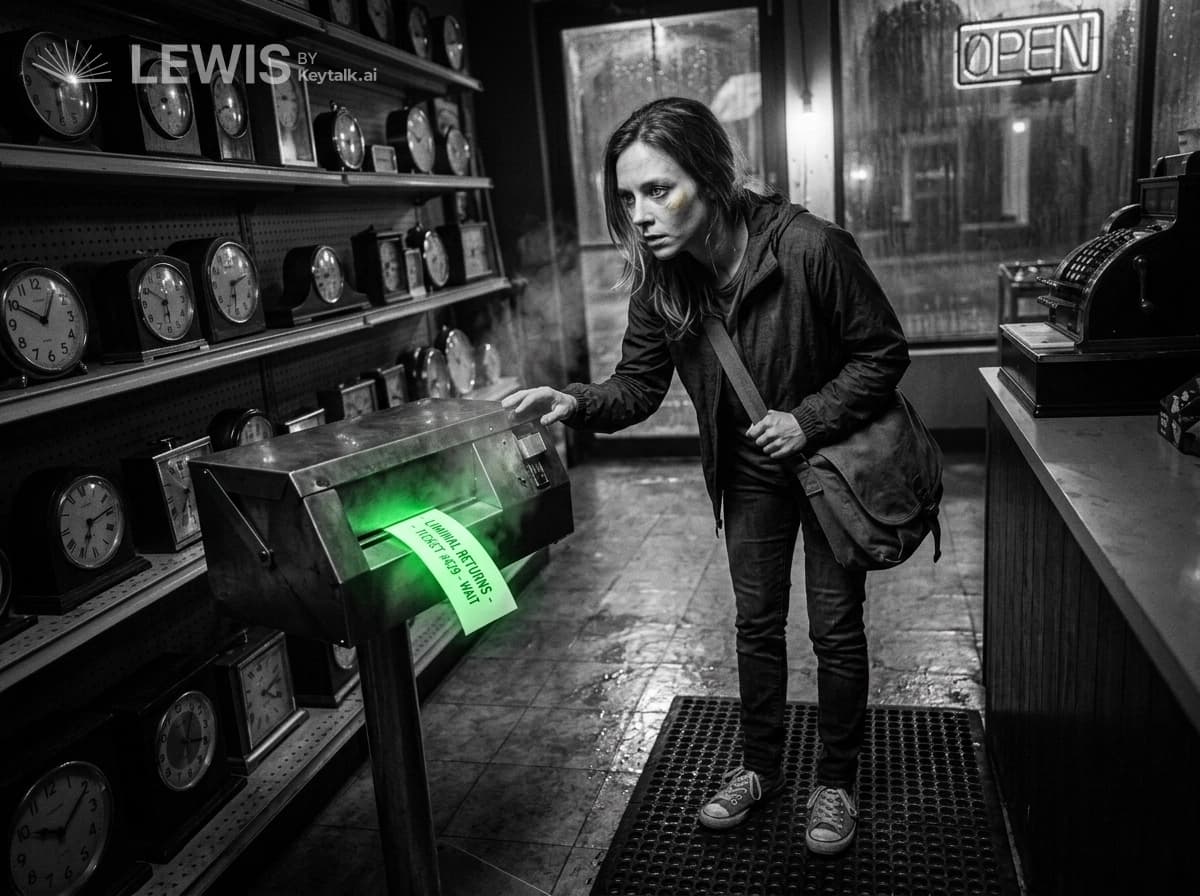
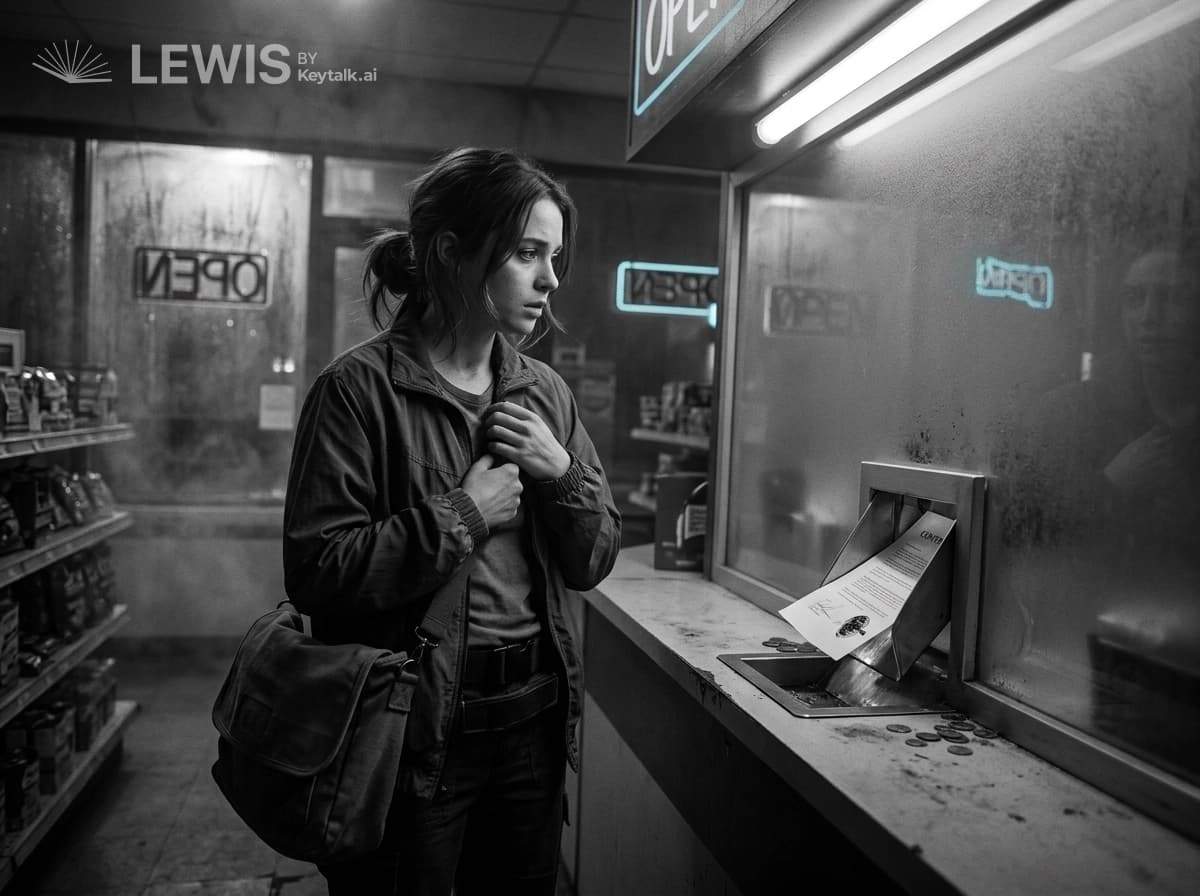
Mara Ellery—still warm enough to smell like street rain and engine grease—arrives at the Last Craving Mart by mistake, stepping through the wrong service alley as the crossover clock hiccups. She tells herself she’s here to buy back one simple thing: the certainty she lost on her last day. But certainty is never an item you can carry; it’s a narrative the store can staple to your ribs. The moment the bell over the door rings and the Receipt Engine clears her as “living,” the Mart offers her a single final craving, and the receipt doesn’t just grant a remembered truth—it rewrites her past with the last-night template tied to the ledger tag she accidentally wears. Her “one last thing” is suddenly full of other people’s errors: streets she has never walked, names that taste wrong in her mouth, decisions she swears she would never have made. Panic doesn’t look loud on Mara; it looks like meticulous inventory, like counting her own thoughts against the shifting proof the store keeps producing, trying to find a seam where the rule can be argued into safety.
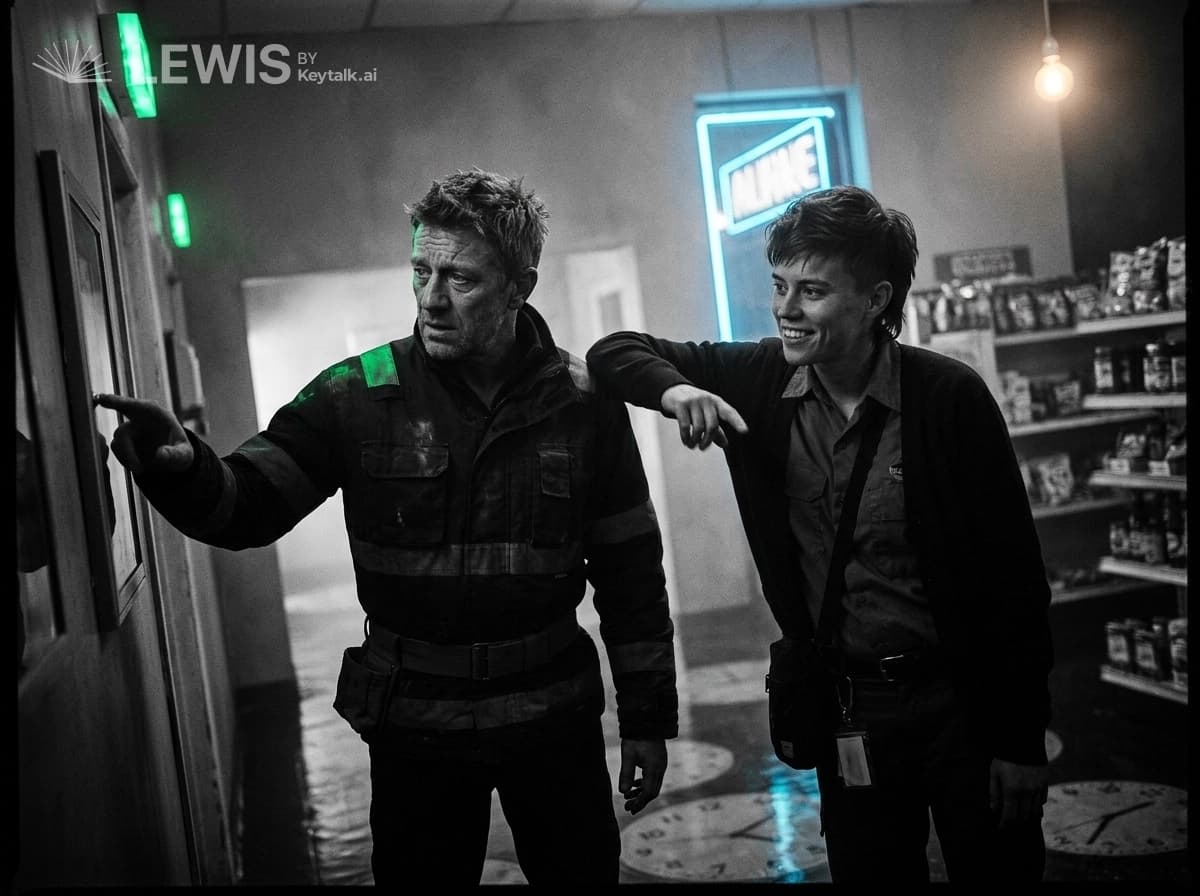
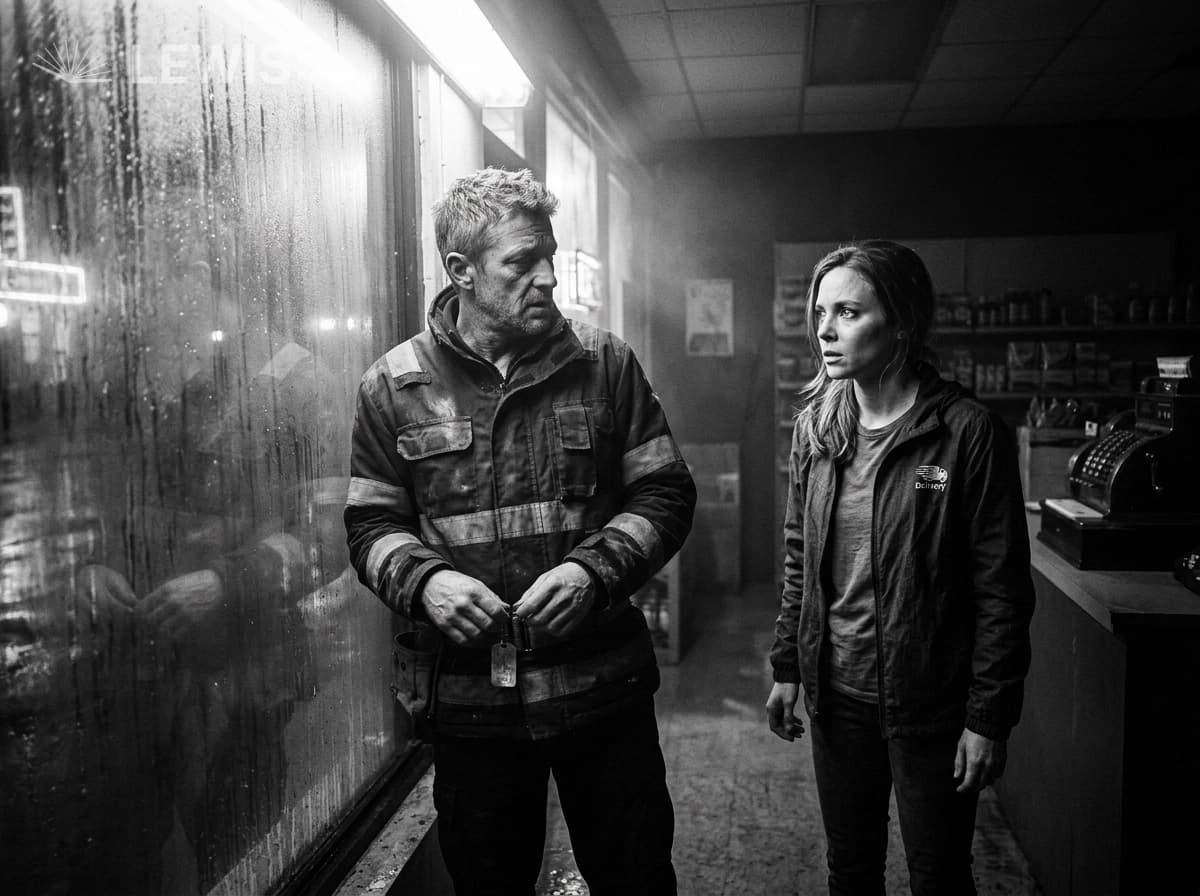
Calder Venn, maintenance supervisor for the crossover district, steps in with rehearsed calm and policy-shaped concern. He moves Mara away from options that would register as a true exception and tries to guide her toward cravings that won’t recruit additional memory contamination. Yet every “helpful” suggestion tightens the store’s grip: Calder knows the ledger’s hunger for loopholes because he has paid for earlier mercy with quiet consequences, and the stuttering clock makes each second feel like a contract being forged. When Mara refuses the store’s offered finality, her choice becomes less a denial and more an action that the store can interpret—compliance and defiance feeding the same system. To Calder’s horror, the ledger’s misread temporal status doesn’t merely permit her entry; it marks her as a living key capable of opening eligibility where none should exist.
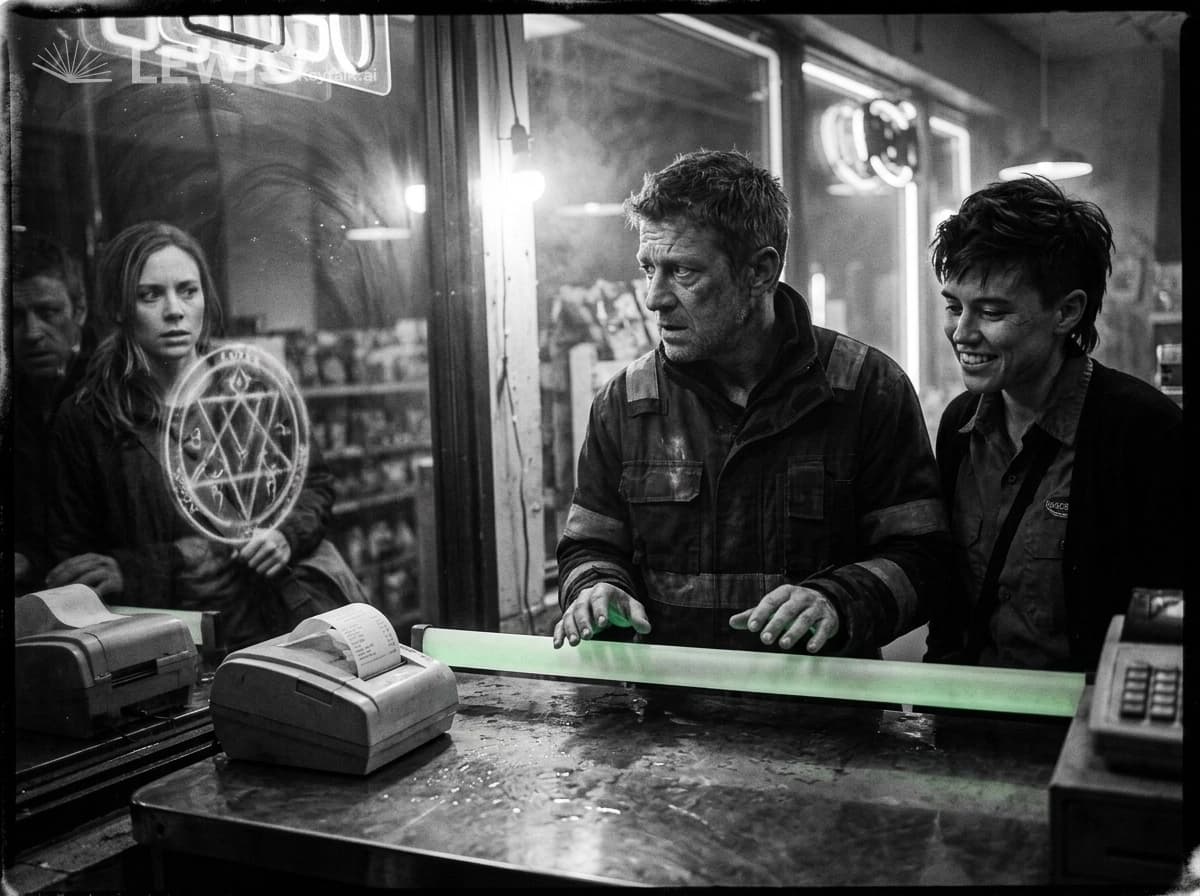
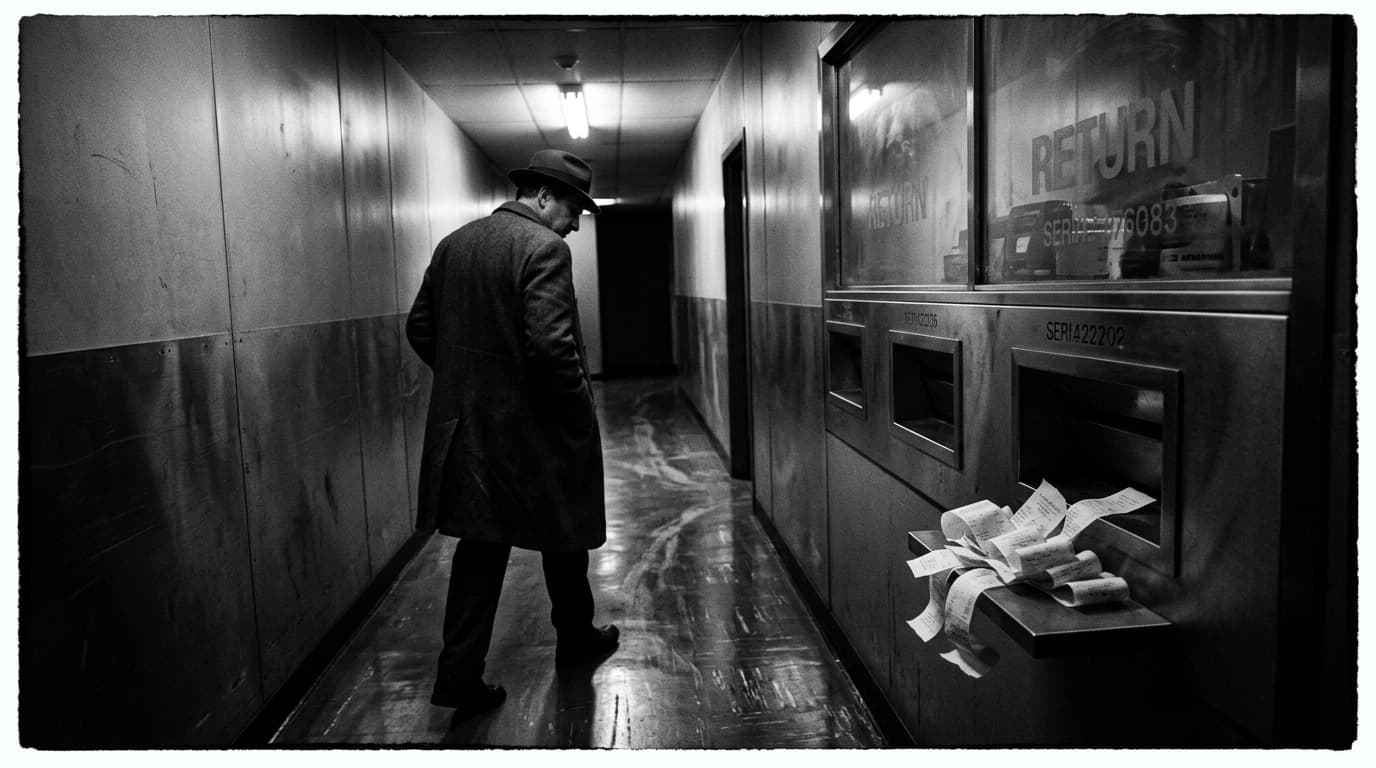
Across the counter, June Pike—the daytime archivist with night-time phantom habits—keeps the Mart humming with bright, customer-service cheer that never matches the faint metallic tang in the air. June trades in receipts and warranty slips like a magician trades coins, listening for the instant the store’s own logic squeals. They do not save Mara; they steer the ledgers, swapping item names and rerouting eligibility tags in ways that leave plausible paper trails. Each time Mara believes she’s found a stabilizing truth, June nudges the system so her “last craving” becomes an imported mistake from a different last night. It’s a trap built out of documentation, the kind that feels like help until the pattern becomes undeniable. June’s fear sits underneath their grin: they have exploited the Mart’s systems for so long they can’t be sure they’re not already scheduled to be audited out of existence if the clock ever settles too cleanly.
Meanwhile the antagonists speak with soft hands and sharp outcomes. Sable Korr, return-customer liaison, arrives in the wake of Mara’s eligibility confusion to identify “eligible repeats” for the next reset checkpoint. Her tenderness functions as theft; she pauses long enough to make Mara feel seen, then locks her into a corrected fate with a smile that reads as mercy on the surface and categorization underneath. Sable is not merely trying to contain Mara—she’s trying to protect the mechanism of her own work. If Mara’s exception breaks the loop that makes repeats predictable, Sable’s existence loses its purpose, and compassion becomes a ledger problem she can’t solve without counting someone else wrong. And from the Mart’s back corridors and translucent conduits, Clatter Nix—shoreline technician for the afterlife drainage network—watches for the moment memory contamination can reach the Ledger Shore. His job is to keep broken endings from becoming contagious, and his warmth is procedural: tolerance thresholds, checklists, the kind of care that will permanently lock Mara out of further resets if it means isolating the leak. For Clatter, mercy is a risk to containment; for Mara, containment is becoming a cage that rewrites her until she no longer recognizes what she’s losing.
Death himself is the one rule that isn’t supposed to be selectable. The unpayable regular arrives in the same quiet hour each cycle, and the forbidden name—Edran—sits like a shutter behind his teeth. He cannot touch the keys; he cannot purchase. But he “audits” with careful recalibration of the register’s hum, straightening tags by adjusting interpretation rather than making a contract. His presence has the weight of ritual—hands that hover like devotion, posture that says he’s learned how to stand beside loss without becoming it. Mara senses the difference in him immediately: not the store’s cheerful enforcement, not the clerks’ performative kindness, but something older and more precise, grief laid over discipline like a bandage. She asks questions she doesn’t yet know how to phrase, and Edran answers in margins: tiny corrections that reduce the intensity of the memory overwrite without stopping it. He is falling in love with her, slowly enough to pretend it is only professional concern, and carefully enough to keep the ledger from reading tenderness as a purchase-equivalent breach. His forbidden attention makes him dangerous to the very system he was built to obey.
The climax of Mara’s search unfolds as her “one last thing” stops being stable even in her own mind. The receipt is supposed to bind her remembered past into a stable handoff, but her choices keep shifting what her mind thinks counts as “her.” Each purchase pulls in another last night—sometimes adjacent, sometimes contradictory—until identity fracture lines become visible in how she talks and what she hesitates to believe. She realizes too late that her goal, buy certainty, is also the store’s goal: to write the kind of person who can be processed without argument. Her external agency—refusing to accept the store’s offered finality—invites internal consequences: the more she tries to pin down truth, the more the Mart uses her as a conduit for other people’s errors. In one stuttering window of time, the clock’s jump re-runs eligibility mapping, and Mara momentarily experiences an ending that should have belonged to someone else entirely: a clean, quiet crossing that now feels like something she stole. The guilt is sharp enough to be real, and the store’s fluorescent lights flicker as if acknowledging her theft. Sable tightens her grip then, moving in with policy language disguised as care, insisting the safest mercy is a correction that stabilizes the ledger—and Mara begins to suspect that “stability” might mean making her into an eligible repeat too.
Calder fights against that idea, but his fight is constrained by his own history. He has to maintain the Mart’s containment architecture while preventing Mara from becoming a contagious repeat. He tries to route her away from certain cravings and toward others that might keep the contamination below the Ledger Shore threshold. Yet June, Saffron Latch, and Sable all interpret Calder’s good intentions as another kind of loophole-hunting. Saffron, in particular, appears like cheerful competence and moves with double-life precision, swapping tags and feeding counterfeits into the stuttering clock—not always to worsen the situation, sometimes to prevent a cascading reset when the store’s hunger nearly outruns its rules. Saffron’s sabotage leaves faint receipt tape stuck to the seams of reality, and Mara glimpses the truth beneath it: the store isn’t simply enforcing a system; the systems are being gamed by people who are terrified of being audited, of being erased from the ledger that keeps them employed.
As dawn lurches closer without ever arriving, the ledger’s stuttering becomes more than timing—it becomes prediction. The Mart begins to treat Mara’s presence as a repeatable ending in progress, preparing a pipeline of eligibility that will stabilize her by ensuring she makes the same choice next time. The danger is no longer just that Mara will lose herself; it’s that her exception will become contagious, turning future survivors into predictable patterns. Clatter Nix identifies the memory contamination nearing the Ledger Shore and arrives with surgical tenderness: a method to permanently lock Mara out of further resets to prevent the leak from spreading, even if it means someone else’s clean ending will be compromised to divert the harm. Mara hears the checkbox compassion in his voice and understands the moral shape of it—saving her might cost someone else their last night being their own.
That’s when Edran’s forbidden tenderness becomes decisive. He has spent the night recalibrating quietly, trying to keep his compassion from becoming a contract. But as Mara reaches for her final craving again—searching for certainty and finding only a deeper hole—Edran makes an audit-like correction that almost looks like he’s touching the keys. It reduces the memory overwrite just enough for Mara to recognize a thread she missed earlier: Calder’s repeated insistence on “policy” echoes a wound, and June’s receipts keep circling the same clause, as if someone inside the Mart already knows what the store is attempting to do with her. Edran’s intervention is not a purchase; it is an admission. He is telling Mara, without telling her, that the ledger can be persuaded by shifting the story it thinks it is writing.
The problem is that persuasion has consequences, and the clock knows how to collect debts. When Mara realizes the store has been using her “one last thing” to seed a repeatable ending, she doesn’t bargain for a different craving—she bargains for a different meaning. With Calder and Clatter closing in, with Sable offering a “safe” correction that would make her predictable, and with June and Saffron trying to turn her exception into a controllable outcome, Mara chooses to gamble her own certainty rather than surrender someone else’s clean crossing. Her last craving changes shape in the register’s glow: not a fact she can hold, but a vow she can act on—an agreement to give up the right to be rewritten again. In that moment, the receipt binds her not to a stable memory of a personal last night, but to an act of relinquishment that breaks the store’s ability to reuse her as a conduit. It’s a sacrificial bargain with the ledger’s language, a loophole disguised as compliance so precise that even the system can’t label it a repeat.
The cost is immediate and frighteningly intimate. Mara’s memories don’t simply blur; they detach in strips, like receipt tape peeling off tile. Names she clung to go silent. The faces from other people’s last nights stop bleeding through her thoughts and become distant as postcards left in an old coat. Her certainty collapses into something quieter, harder to verify, but it remains hers in a way the store can’t account for. The Ledger Shore’s saltwater foam calms—just for a second—because the contamination no longer has her pattern to follow. Calder, who has been trying to steer Mara toward mercy without letting the ledger notice, watches the clock stutter again and understands that targeted fixes keep pushing harm onto someone else’s eligibility. He realizes he can’t just save Mara; he has to let the system reveal who it’s been trading with.
Edran pays anyway, because the story is built on the rule that unpayable roles can only correct, not purchase. When the receipt binds Mara to relinquishment, the ledger demands an equivalent audit correction somewhere else to balance the ledger’s narrative accounting. Edran steps into that demand with the same ritual restraint he has used all night—straightening tags, recalibrating the register’s hum, adjusting the store’s interpretation so the contamination route doesn’t claim another living exception. It looks like care. It feels like loss. Mara sees the grief in his movements sharpen, sees how the store’s systems react when his kindness becomes indistinguishable from compliance. The forbidden name remains hidden, but the truth arrives in the space between calculations: Edran has been letting her “escape” be limited by his restraint, and now his restraint is being converted into debt.
In the final minutes before the reset-checkpoint, Sable’s soft cage fails to hold because Mara’s bargain denies the ledger its repeat seed. June and Saffron’s sabotage stutters uselessly, receipt after receipt unable to reroute eligibility when the pattern is gone. Clatter’s checklist compassion softens for a heartbeat, then tightens again—not into cruelty, but into acknowledgement that containment is not the same as salvation. Calder, facing the ledger’s new demand, does the thing he was most afraid to do: he stops trying to correct the store’s bookkeeping and instead chooses the one act that will ripple forward honestly. He opens a breach in the logic that has kept the Mart’s walls thin enough to feel the clock through your bones, forcing the district offices to read Mara’s exit as an accounted exception that doesn’t require a replacement repeat. It’s still a bargain, still a trade, but it’s a trade between systems rather than theft from strangers. He pays his own debt in the way the Mart understands—by accepting that his role as maintenance supervisor may be rewritten by the very mercy he spent this night trying to avoid.
When dawn finally tries to arrive, it does so in a gray that never fully brightens, as if light itself is under audit. Mara crosses over with her relinquished certainty behind her, carrying instead a new kind of knowing: that she was never merely an exception the store made room for, but a living test designed to determine whether the ledger could be forced to tell the truth about its hunger. She does not get her old self back. She does not get the comfort of a neatly preserved last night. But she does keep something that cannot be cataloged as eligibility—agency that survives memory fracture lines. And in the stuttering hush after the bell’s last ring for her, she realizes the most dangerous mercy wasn’t the receipt in her hand. It was love offered as restraint, by a customer who was never supposed to be savable—and the quiet way he chose to be unpayable anyway, so that someone else might finally be allowed to have an ending that doesn’t reset.