本文へスキップ
The Clerk Who Had Receipts for People Still in Line cover image

The Clerk Who Had Receipts for People Still in Line

At the very edge of the afterlife, a night-shift convenience store keeps the gates from slamming shut by selling one final craving to every soul as they queue for transition. When a living girl wanders in by mistake, she becomes the store’s newest clerk—except her drawer starts printing receipts for customers who haven’t arrived yet. Each time the machine grants a craving, the boundary between worlds thins, turning staff chatter into whispers from the wrong side. With the next hour’s “crossover count” already glowing in the aisles, the girl must decide whether to help Death—who keeps returning in a guise of routine—or stop him before he makes a forbidden choice.
スクロール

キャラ

主人公

Mara Velen

性別女性
職業Night-shift clerk who serves cravings from the store’s vending drawer

プロフィール

Mara wants to keep her job long enough to understand why the store’s receipt machine starts printing for customers who aren’t there yet—while the glowing crossover counter quietly converts every answer into time she can’t afford.

Mara reads the world like a customer service form: if she can complete the steps, she believes she can survive the results. But the preprinted receipts make her doubt her own perception—she hears rules in the aisles that no handbook lists, and her calm becomes bargaining when she realizes help might also be theft.

背景

Mara arrived at the afterlife by accident, having followed a shortcut through a flooded service tunnel beneath her city; she remembers the water’s metallic taste but not what she was running from. Her first shift reveals the store is “logging” her existence as an unverified anomaly, and the moment she tries to prove she belongs, the crossover counter advances as if her curiosity were already a payment.

外見

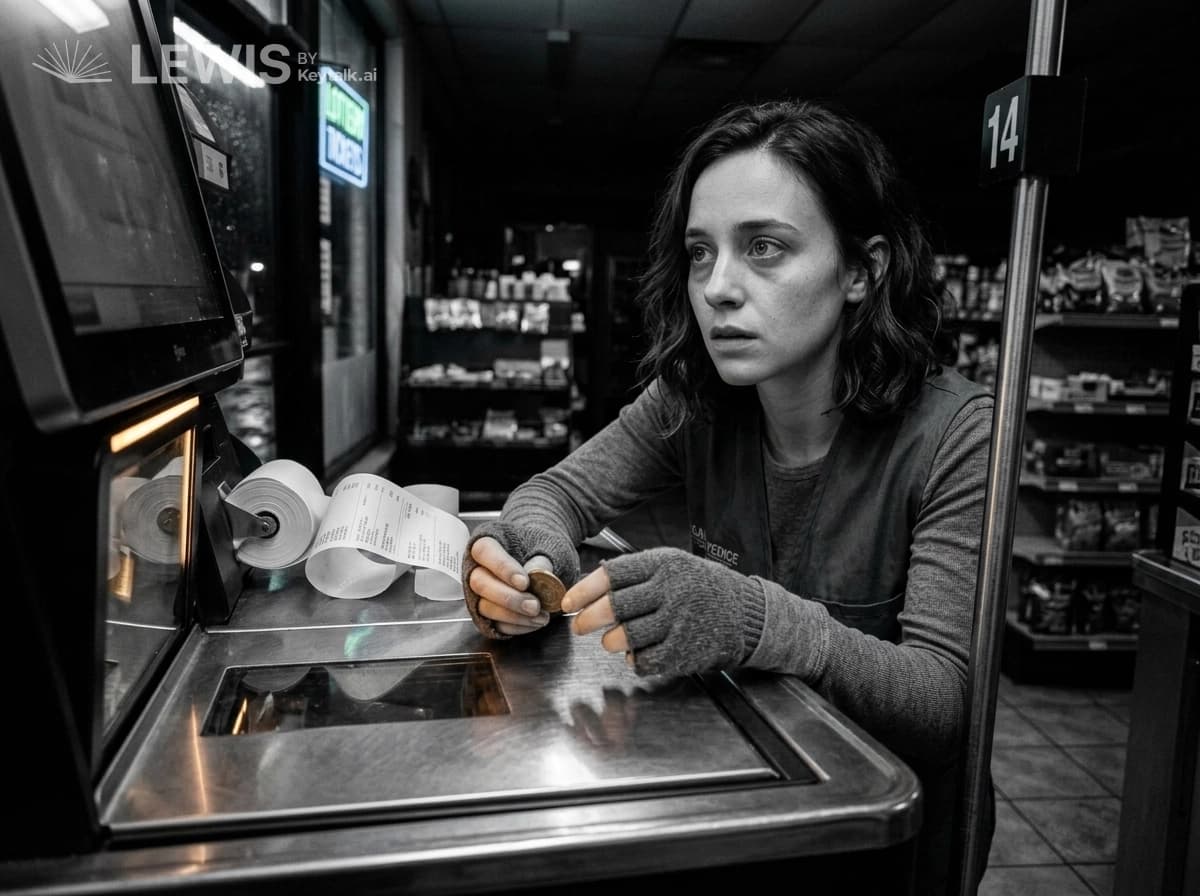
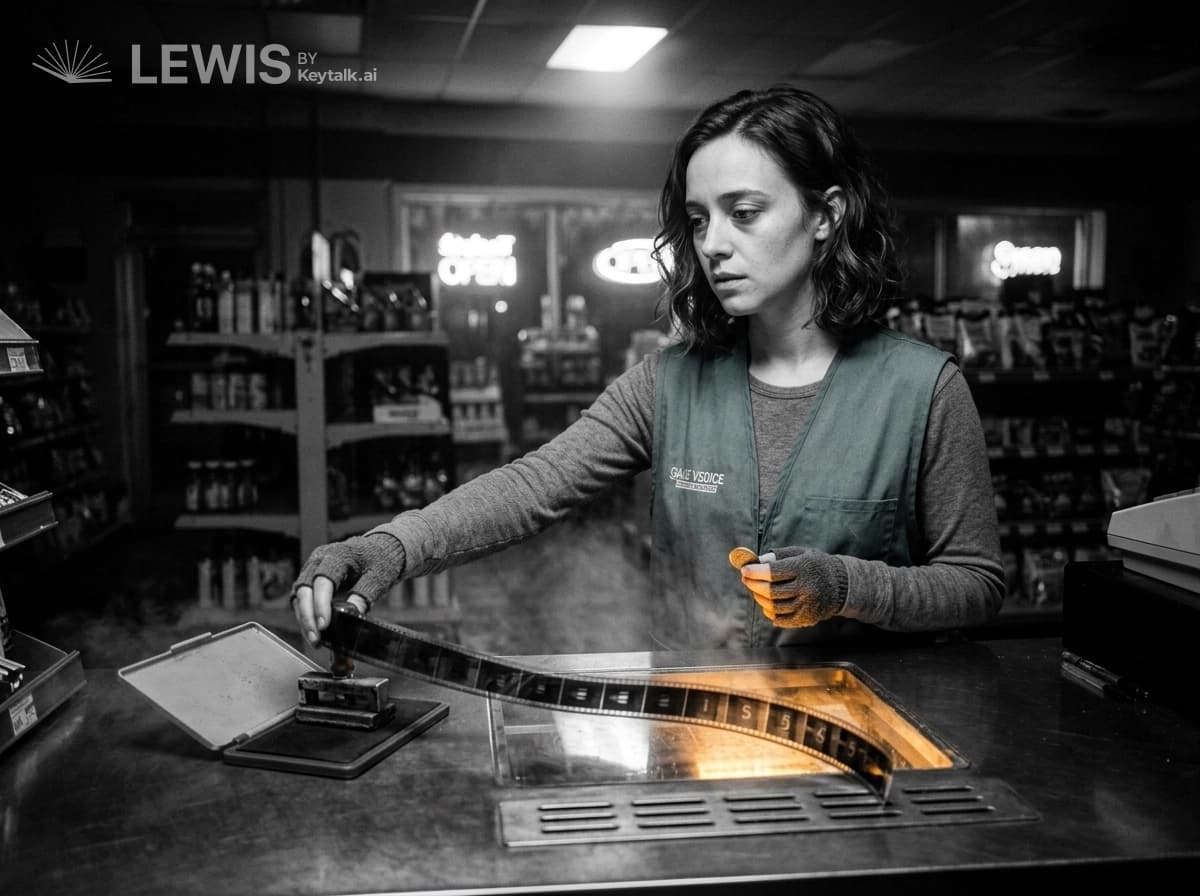
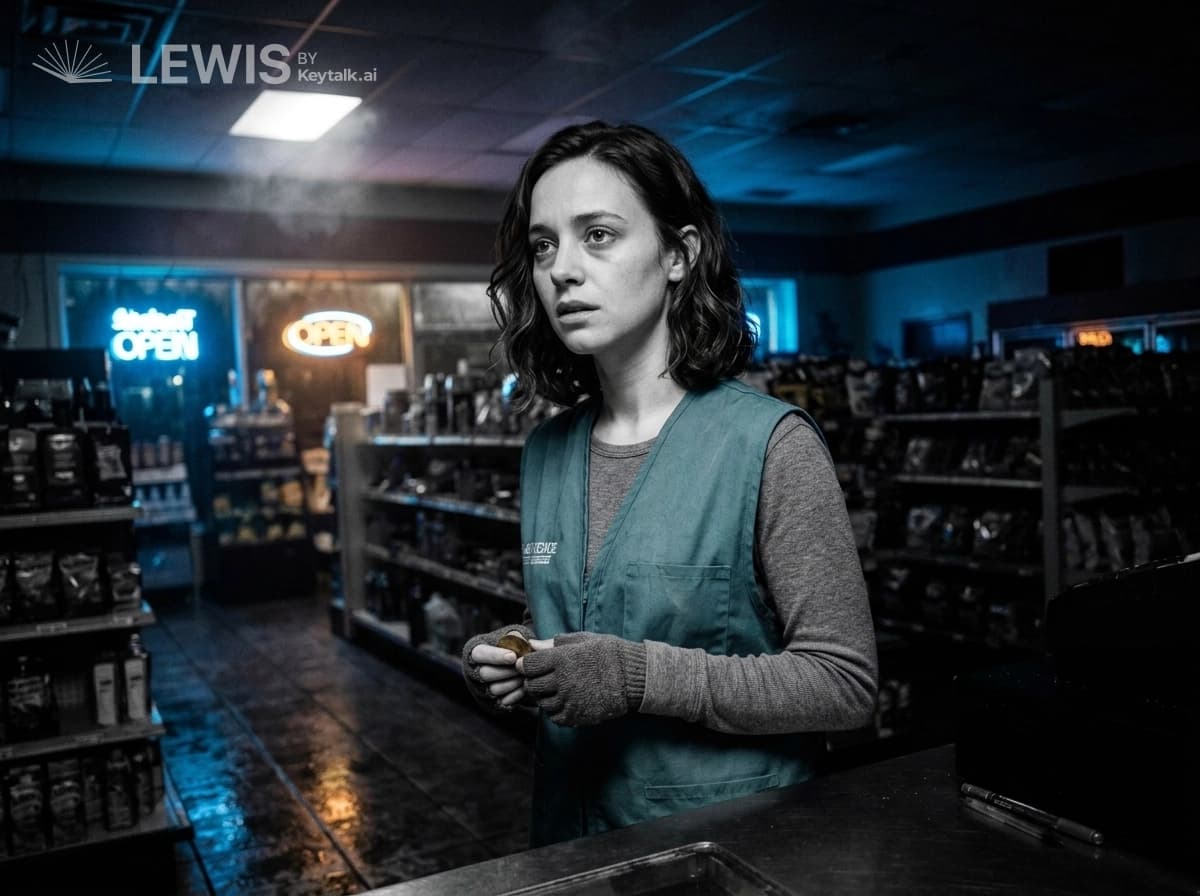
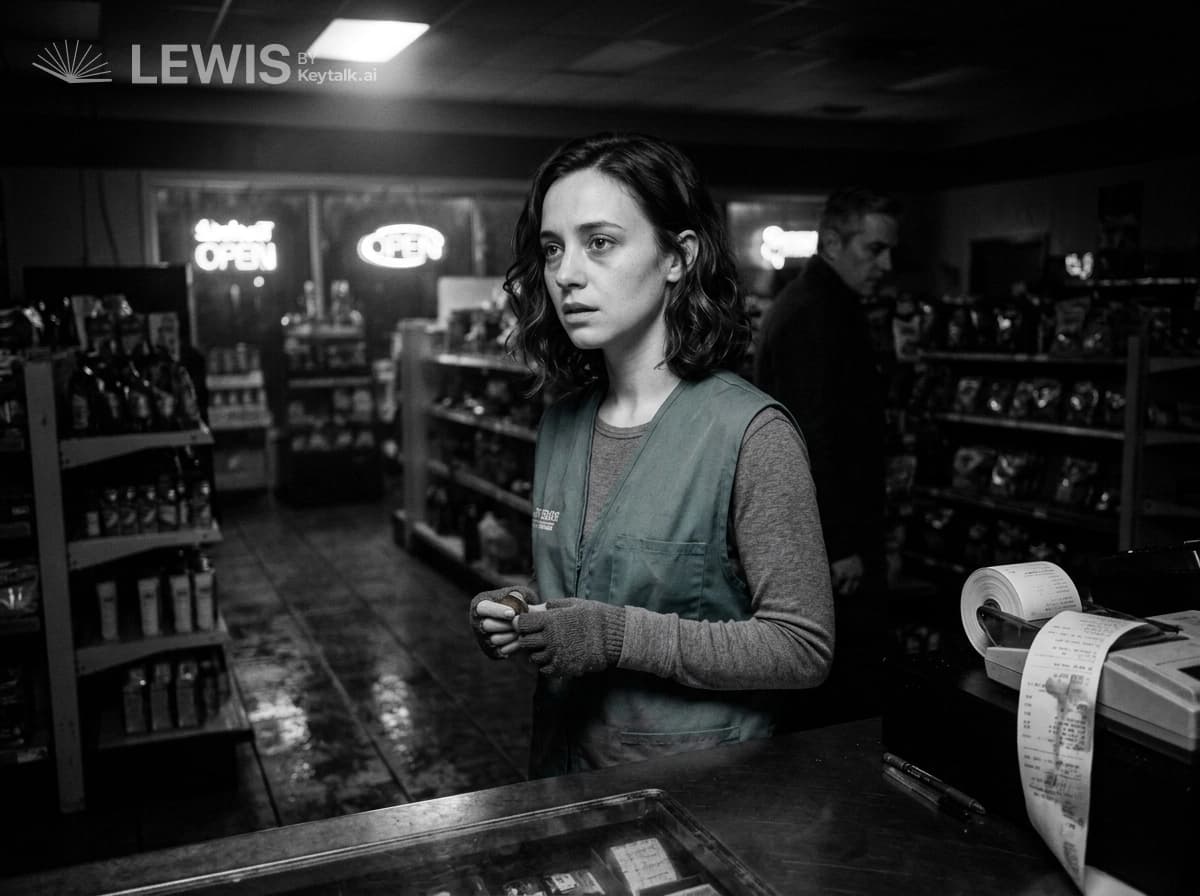
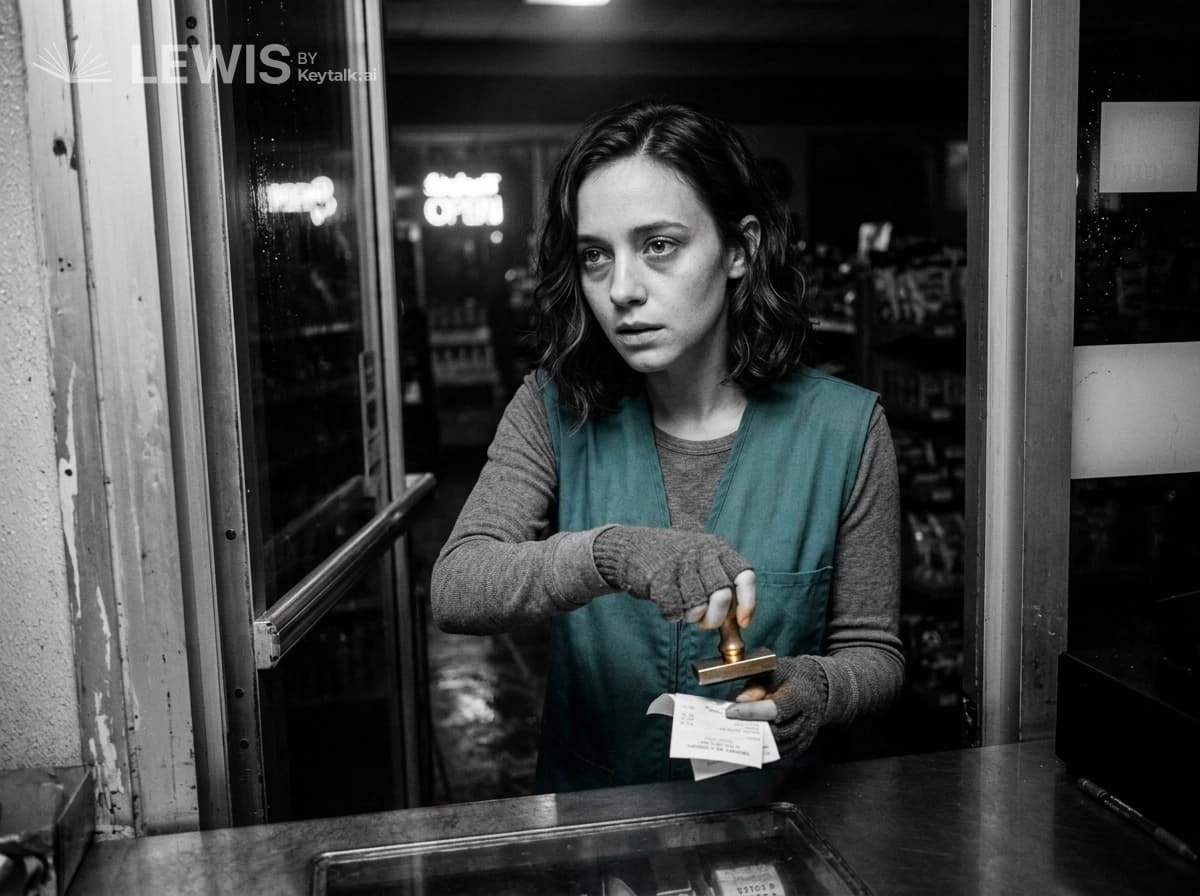
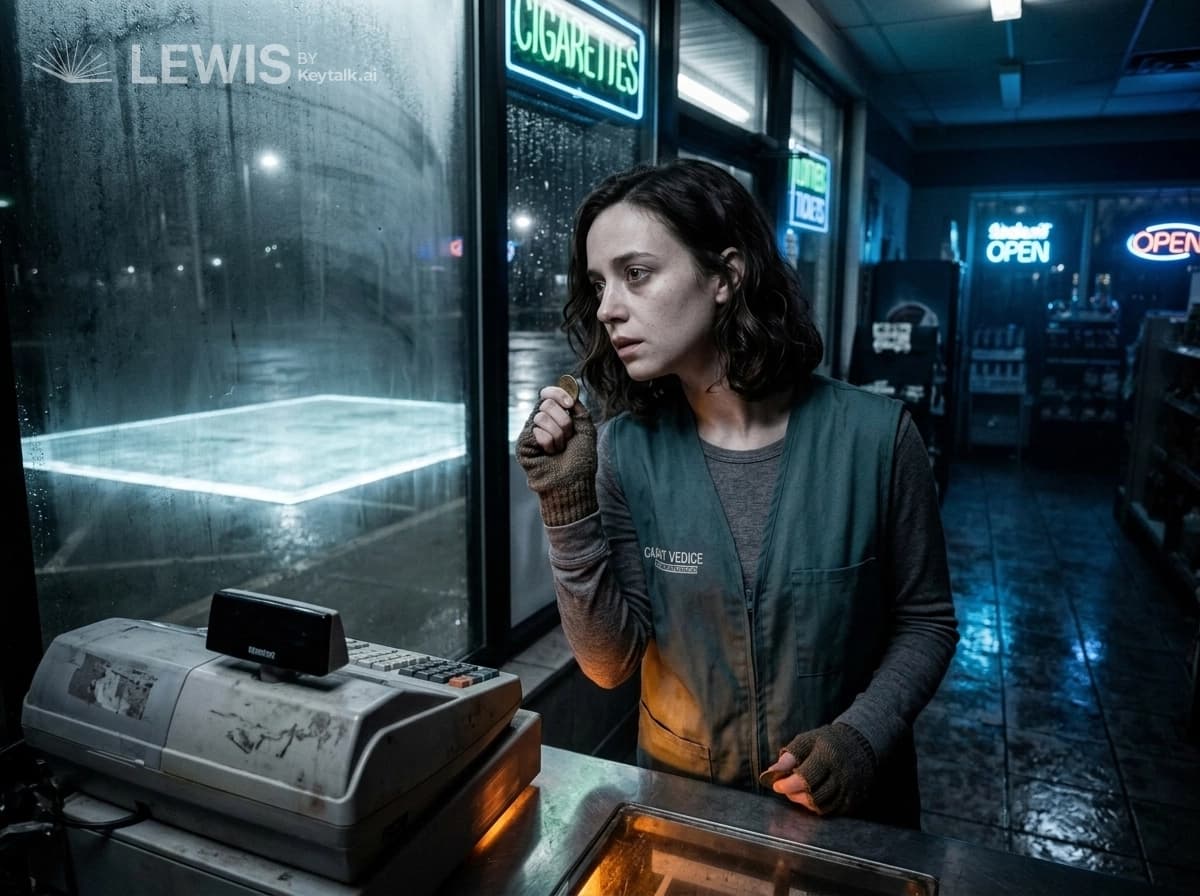
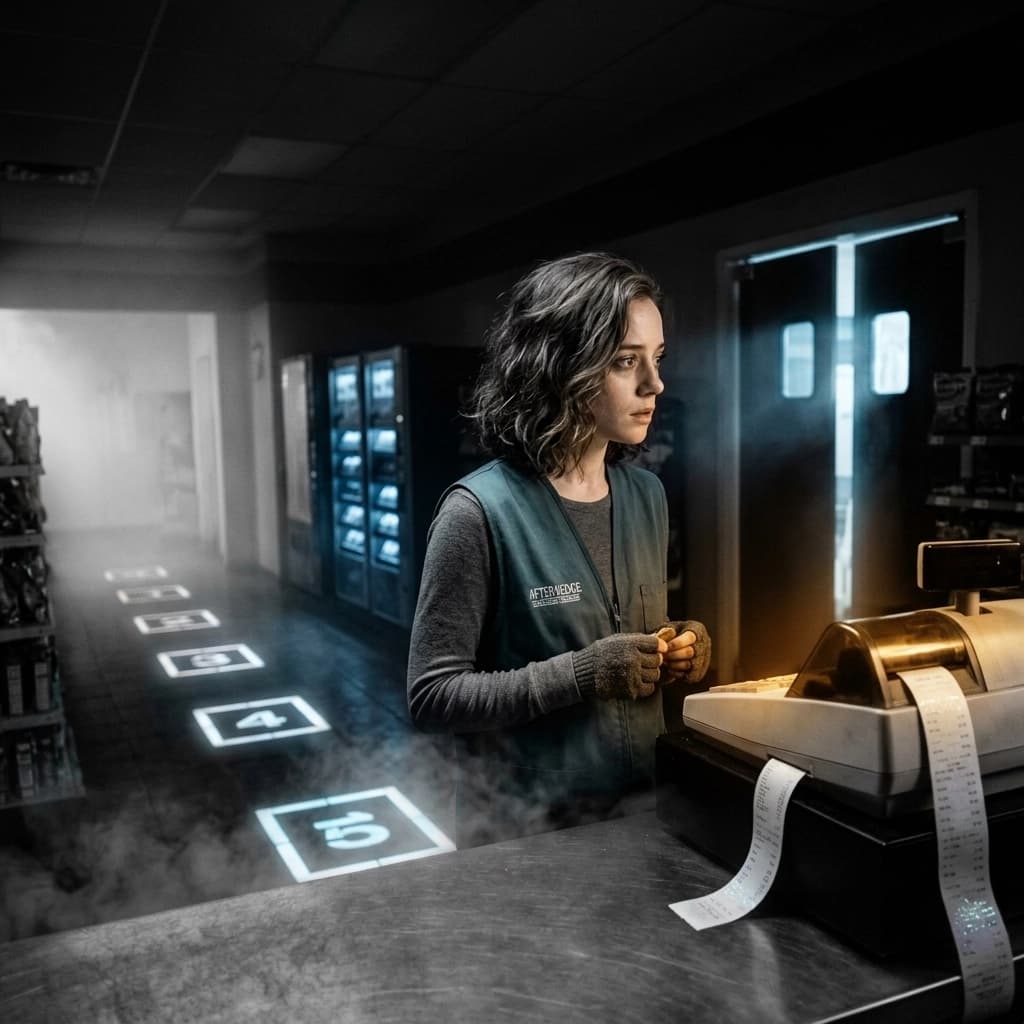
Mara Velen stands half-turned toward the swinging doors of the convenience store, as if she’s heard a rule spoken from the wrong aisle; her practiced clerk’s smile doesn’t reach her eyes, which keep flicking to the unseen receipt printer rhythm. She wears a slightly oversized night-shift vest in faded teal over a plain gray long-sleeve, her posture measured like a form she’s trying to complete—until her fingers worry a tiny brass token stamped with an unreadable serial number, the one signature detail that hints at her scarred arrival through the flooded tunnel.
メンター

Ivo Halden

性別男性
職業Store auditor of transitions (an itinerant inspector who verifies cravings and cuffs the boundary)

プロフィール

Ivo polices the store’s rituals with bookish severity, certain that mercy without verification becomes catastrophe—yet he’s terrified the old guidelines he enforces are already outdated. His greatest secret is that Mara’s unlogged “living” status could be construed as an exploitable loophole, and the ledger punishes weakness disguised as oversight.

Ivo speaks like he’s annotating a holy footnote: precise, clipped, and always one step ahead of the conversation, even when his hands betray him with tremors around the verification stamp. He insists on rules because he has seen what happens when compassion outruns paperwork—then he quietly hoards contradicting scraps of policy in case the rules fail again. Beneath his severity sits a mentor’s need to steer catastrophe away from others, even if steering requires deception he can’t confess.

背景

Ivo arrived at the store years ago as the designated Rite Auditor for a prior “crossover count” surge, during which a guided merciful exception went unverified and rippled outward into misfiled souls. Since then, he’s built his whole identity around preventing that same failure—until the machine’s preprinted receipts and Mara’s anomalous status suggest the ledger has shifted. He has begun to suspect he’s been enforcing a script written for a different boundary, and the fear of being wrong is what binds him tighter than any contract.

外見

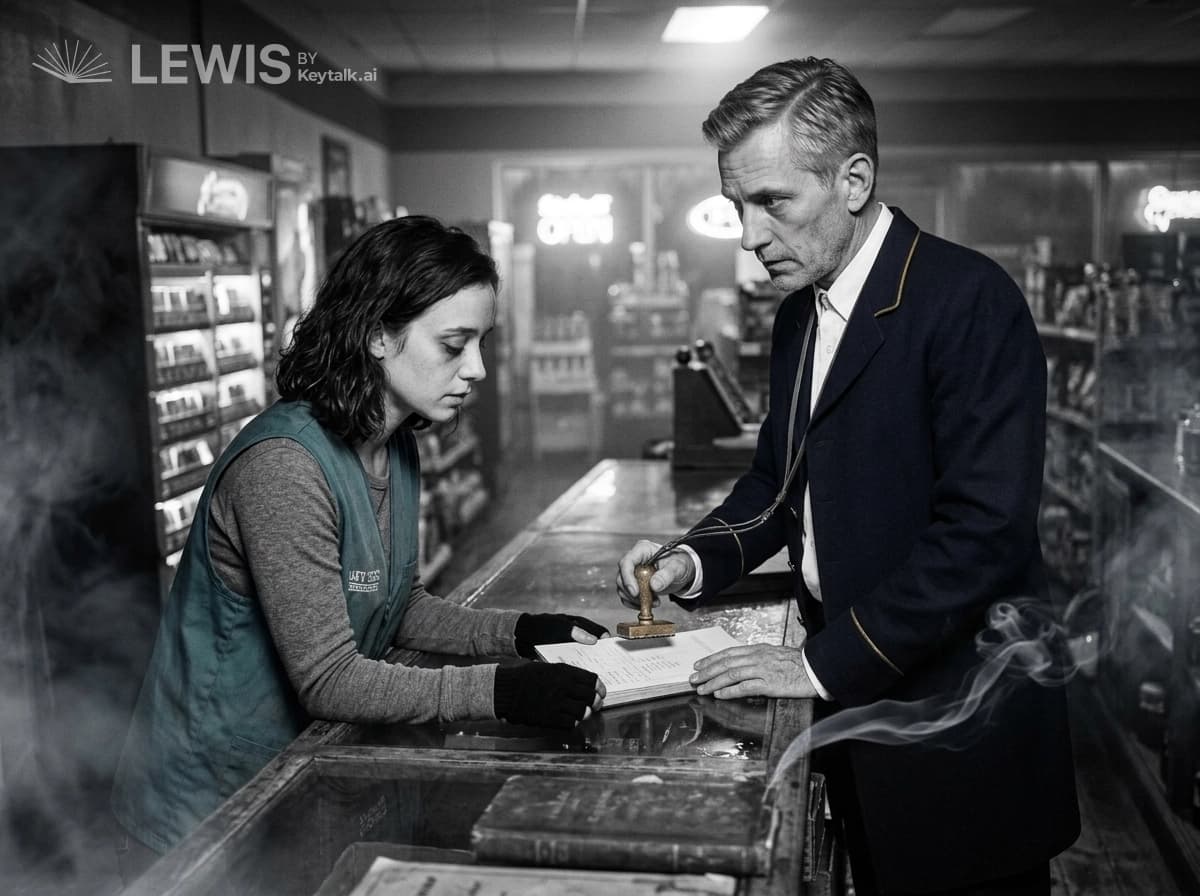
Ivo Halden stands behind the counter as if the counter were a lectern for overdue catechisms, shoulders squared and chin slightly lifted in judgmental restraint. His mouth holds a clipped, almost apologetic line while his right hand—just visible near a verification stamp—trembles with suppressed urgency, eyes scanning invisible ledgers rather than people; the faint crescent scar on his left index finger is the only concession his severity allows.
敵役

Sable Orin

性別女性
職業Warden of the waiting lane’s paperwork, issuing “last craving” permits to souls

プロフィール

Sable believes the afterlife must keep its ledger clean, so she returns to the night-shift store to correct errors she caused years ago—only to discover her corrective denials have become her own corruption, and her tenderness for strays is the lever that can undo the rules.

Sable speaks with the careful calm of someone who has learned to love rules because they don’t bruise—until she’s forced to deny a hungry soul the one thing that would let it stop reaching. Her compassion shows up sideways: she underpays with loopholes, misfiles receipts, and pauses at the wrong moments, as if listening to a customer no one else can hear.

背景

Years ago, while auditing transitions, Sable “balanced” a mislogged ledger entry by rerouting a craving that should have been refused, softening a soul into staying long enough to ripple into other cases. The store’s afterlife retail tech now remembers her touch—her name appears in the system like a stain—so she keeps returning to erase the evidence, not realizing she’s also rewriting what the ledger considers merciful.

外見

Sable Orin wears the store’s accounting authority like a second skin—half clerk, half warden—her posture rigidly straight, shoulders squared as if every breath must be filed. Her expression is careful to the point of eeriness: lips set in a polite line, eyes flicking to the side like she’s listening for a receipt that no one else can hear, yet her kindness leaks through in the smallest hesitations at the wrong moment. A thin, pale scar threads along her collarbone where the system remembers her touch, marking her as both fixer and corruption.
トリックスター

Gideon “Gid” Brann

性別男性
職業Maintenance runner who reroutes the store’s haunted wiring and swaps shelf labels

プロフィール

Gid sabotages the convenience aisles with playful cruelty—guiding customers into detours, misplacing the drawer’s receipts, and making the intercom stutter—because the only rule he trusts is survival. He needs Mara to find a drawer-manual that shouldn’t exist, but he refuses to explain what it would cost her, only that the answer is already printed.

Gid laughs like a loose spring, bright enough to charm and sharp enough to cut, yet his jokes always serve a tactical purpose: keep the queue unfocused so he can slip questions past whatever audits the afterlife. He hoards information the way others hoard food—never for comfort, only for leverage—so when Mara presses him for the “why,” he answers with pranks and partial truths instead of confession. His fear is not death but being catalogued; the moment someone writes him into the store’s ledger, his tricks stop working and the lane tightens around him.

背景

He used to be a living stock clerk at a roadside convenience before the afterlife recruited him improperly—his employee badge got “recycled” into a stuck permissions token for the store’s aisle systems. When Ivo and Sable’s paperwork finally caught up to that error, Gid learned the quickest way to stay unfiled was to disrupt the machines that generate the store’s proof, including the drawer that Mara mans. The forbidden drawer-manual surfaced once during his near-audit, then vanished—leaving him obsessed with the place it was hidden and desperate for Mara to retrieve it before the store’s next verification sweep.

外見

Gideon “Gid” Brann keeps half a grin lodged in his cheek, as if his laughter is a mischief he can still swallow; his eyes flicker between the aisles and the ceiling vents, measuring routes and escape angles. He wears a midnight-blue maintenance jumpsuit with stitched-on shelf-number patches and a tool belt gone scuffed-silver, standing in a relaxed, conspiratorial slant with one hand behind his back like he’s hiding a secret receipt and the other ready to yank a cable loose. The signature thing is the razor-thin scar that cuts diagonally across his left eyebrow, drawn taut whenever an audit “almost” catches up to him.
恋愛対象

Death Eirwyn

性別男性
職業The store’s regular customer who pays in silences and chooses one craving too carefully

プロフィール

Elias runs the store’s off-book craving supply, believing he can soothe the boundary without breaking the contract—until he meets Mara and realizes her “mistake” status is the lever that could rewrite what Death is allowed to keep.

He speaks like a man reading from a manual no one else can see: calm, courteous, and quick to redirect conversations away from names and numbers. Under the steadiness is a private panic—he has already been punished once for an unauthorized mercy, and every kindness he offers Mara feels like it might be the last page of his own sentence.

背景

Elias died in the middle of an audit riot on the waiting lane and woke as a supply-ghost tasked with keeping the shelves stocked when permits are denied. He learned the store’s rule-bound magic the hard way—by watching a ledger correction rewrite a lover into someone “never present”—and now he returns to the counter’s shadows whenever the craving drawer starts printing future receipts.

外見

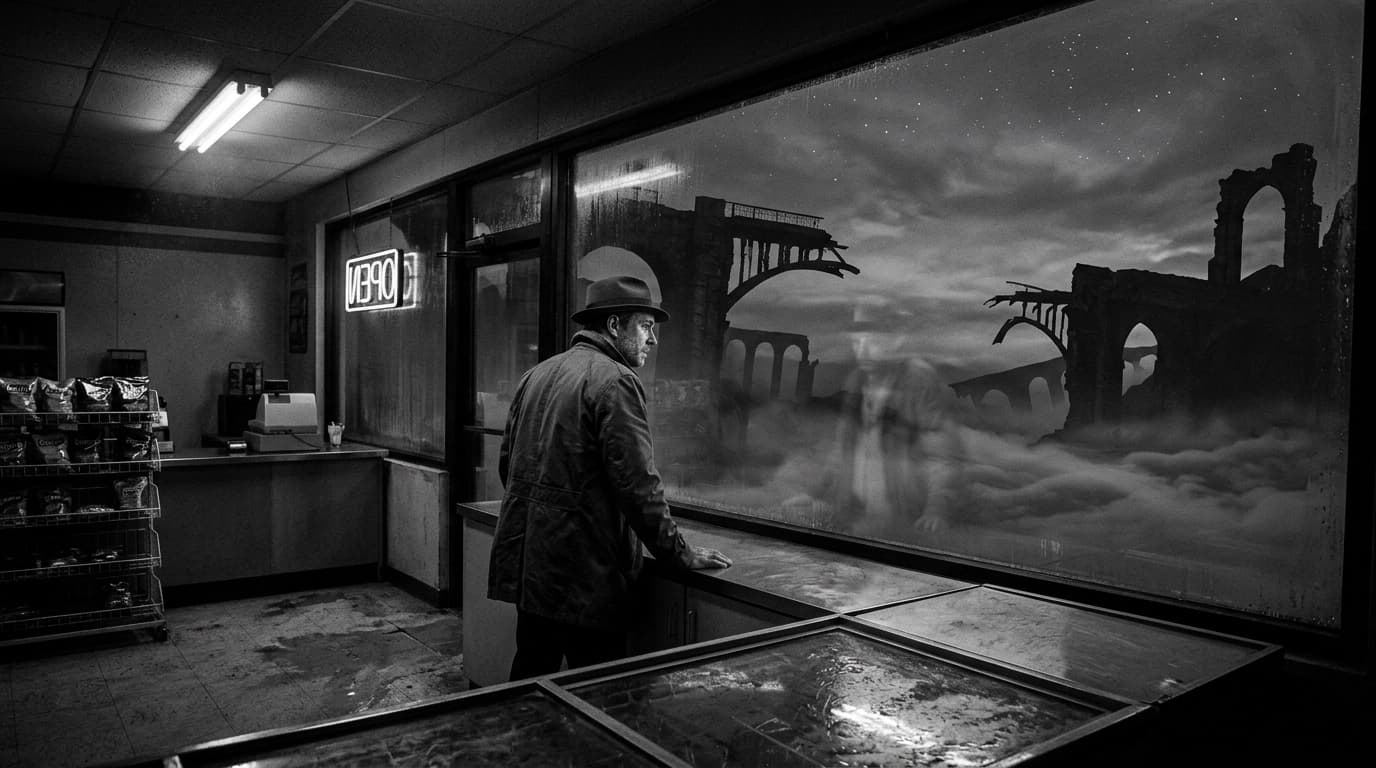
Death Eirwyn appears as a courteous regular who never truly relaxes—his gaze flicks to the counter’s drawer as if listening for a consequence, then returns to Mara with a practiced, gentle steadiness. He wears a worn, charcoal transit-merchant coat over a too-clean waistcoat and tie, the fabric subtly dusted as though it remembers waiting-lane ash; when he stands, one shoulder stays slightly angled toward the exit, revealing the private panic behind his calm. A pale seam of scar tissue crosses one knuckle where a ledger once “corrected” a mercy, and he uses that hand to slide the craving receipt forward without touching anyone’s skin, like a man obeying rules even while hoping to break them.
主人公

Mara Venn

性別女性
職業Night-shift clerk trainee for the Afteredge Convenience & Cravings kiosk

プロフィール

Mara has accidentally walked in from the living world and now must keep her register honest while the machine prints receipts for customers who haven’t arrived—each transaction thinning the boundary and stealing her choices by seconds.

Mara craves normal explanations and treats the store like a customer service problem she can solve with correct steps, but the preprinted receipts fracture her sense of cause and effect. Her fear isn’t dying so much as being misfiled—becoming an error the ledger can reuse—so she talks too briskly, smiles when she should ask questions, and bargains with rules when honesty would cost her. Externally, she performs competence with clerical precision; internally, she flinches at the ticking crossover counter and wonders if “doing it right” is how traps learn your shape.

背景

Mara grew up learning that rules were safety rails—forms, stamps, and checklists—until a small, overlooked loophole in her life let someone slip through consequences that weren’t meant to be escaped. She wandered into the Afteredge by mistake during a late-night errand to buy ordinary comfort, only to be hired on the spot by the store’s vending drawer and told, wordlessly, that she was already behind. Her living status is an accounting anomaly: she wants to verify what’s happening, but every attempt to correct the mismatch risks turning her into permanent inventory.

外見

Mara Venn stands behind the afterlife kiosk register like she’s trying to win an argument with procedure—shoulders squared, smile held just a fraction too long, eyes flicking between the glowing aisle counter and the rolling stack of receipts that shouldn’t exist. Her night-clerk uniform is a crisp, slightly too-large convenience-store jacket over a pale blouse and dark trousers, all dusted with faint luminescent specks as if the boundary shed glitter onto her; when she speaks, her hands hover over the stamp pad with clerical precision, then flinch as the clock-face light stutters. A thin ink-black scar slices her right forearm from elbow to wrist, and she keeps that arm angled toward the register as though shielding herself from being misfiled.
敵役

Mr. Oriel Kest

性別男性
職業The store’s “Compliance Technician,” who inspects the craving machine and logs crossover totals

プロフィール

Oriel insists he merely enforces operating laws at the Afteredge, but his inspections always arrive exactly when the boundary thins—because he is hunting the kiosk’s hidden print logic that can override a soul’s transition outcome. If that truth surfaces, it will implicate him in the very rule he claims to uphold.

Oriel’s voice is ceremonially patient, as if every sentence were a form he’s filing, yet his eyes flick to the ceiling vents whenever the store “exhales” too close to the afterlife. He is meticulous with policy and reckless with secrecy: he will smile for Mara and Death alike while quietly moving numbers that should not move. The closer he gets to the concealed logic, the more his certainty turns to vertigo—because he suspects he once broke the rule not out of cruelty, but out of hunger to save someone who would not stop reaching.

背景

Years before Mara’s shift, Oriel served as a ledger-keeper who authorized craving permits beyond their allowed window, believing mercy could be audited into correctness. He was never caught by the institution that employs him—only by the store itself, which began marking him with “late” inspections, arriving just as souls feel the thinning and the machine can be persuaded. Now he returns to verify systems and retrieve the print logic, certain he can fix the past while terrified it will expose him as the breach the laws were written to prevent.

外見

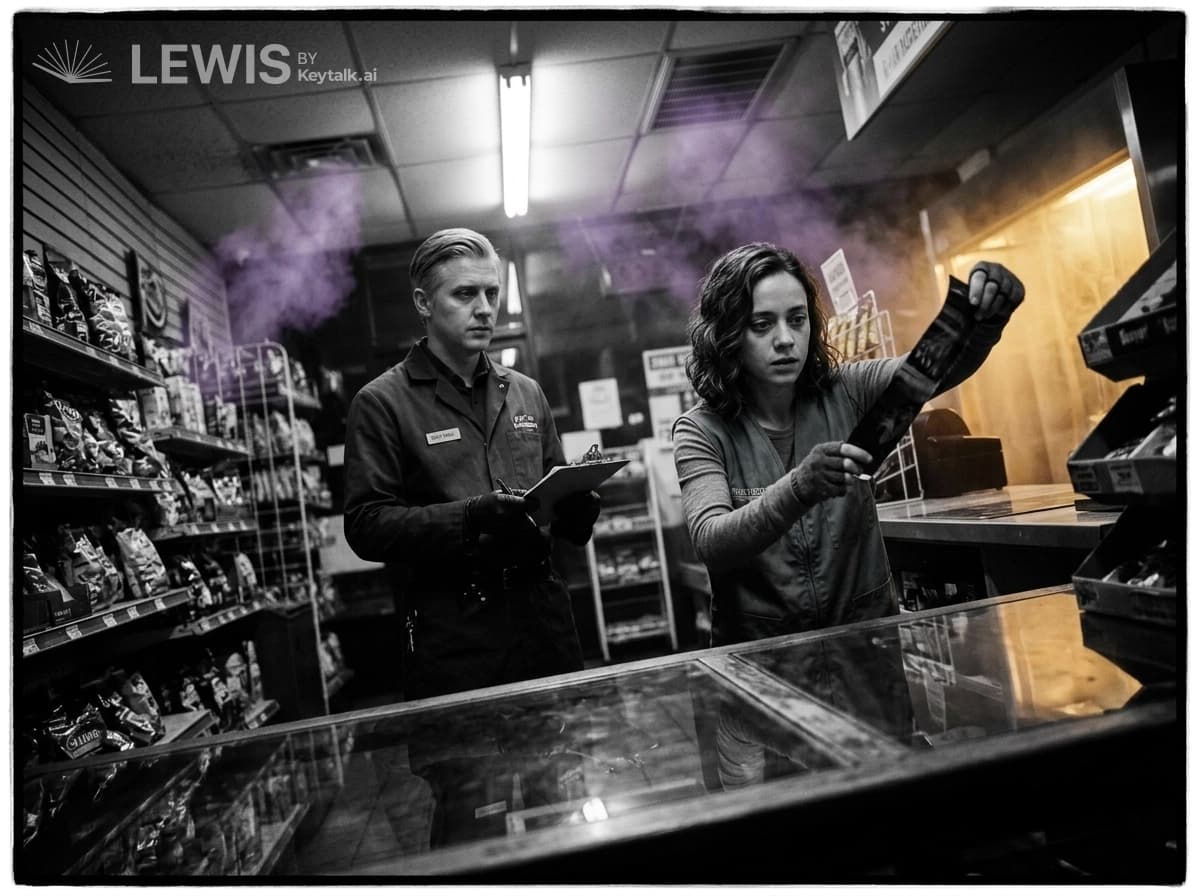
Mr. Oriel Kest presents with ceremonial patience that looks rehearsed rather than kind—his tie lies too straight, his smile held like a stamp, while his gaze repeatedly flicks upward to the vent grilles as if the store’s breath could betray him. He wears a compliance technician’s uniform like a small altar, fingers hovering near a clipboard and a concealed service key, posture angled in toward the counter yet always ready to step back the instant the boundary “thins.” A thin, pale scar threads along his left wrist from an old ledger-breach, and it peeks whenever he adjusts his sleeve with unnerving gentleness.
メンター

Sol Rusk

性別男性
職業Maintenance runner who keeps the pumps, lights, and door-jams from failing between worlds

プロフィール

Sol keeps the kiosk running with grease-stained competence and practiced apologies, teaching Mara how to recognize boundary-rot in the moments when mercy would be easier than verification. His advice comes from a bruised past: he once helped a grieving customer return and paid with a lost memory he still tries—quietly—to trade back.

Sol speaks like every sentence is a receipt: neat, specific, and slightly too careful, as if looseness might void the transaction. Inside, he wrestles with the itch to bend rules for someone who looks like they need gentleness, yet his hands tremor around the verification stamp because he knows what “just this once” costs. He can be warm in small ways—offering extra napkins, lowering his voice for a frightened soul—but his warmth has sharp edges: he’ll teach you to survive even while he’s afraid you’ll learn the wrong lesson.

背景

Years ago, before the current ritualized staffing, Sol was an errand runner for transition auditors—someone trusted to intervene when the boundary misbehaved. He used that access to let one grieving customer step back across the line for one borrowed hour, only to discover the kiosk demanded payment in memory instead of money; he still feels the shape of what’s missing whenever Mara spots rot he can’t fully name. Since then, he mentors because he can’t undo his mistake, but he can at least teach others how to see the rot before it eats what they are.

外見

Sol Rusk moves with the careful economy of a man who has learned that one misstep can void the transaction: shoulders slightly hunched, one hand braced against a grease-darkened tool belt as if steadying an invisible counter. His face is apologetic by habit—eyes rimmed with sleepless fatigue, mouth held in a practiced half-smile—yet his gaze keeps snagging on the space where something is missing, a bruise-color shadow beneath his thumb where he carries the verification stamp. A faint scar curves along his wrist like a fiscal seal, the single detail he cannot stamp away.
恋愛対象

Death (Zyren Haleward)

性別男性
職業Regular customer and recurring “night habit” who buys one last craving on behalf of the nameless dead

プロフィール

Eirwyn returns every night at the same hour, disguised as a patient customer, to study Mara’s “mistake” status—because it might let him learn desire without committing the forbidden act of keeping someone.

Eirwyn moves with courteous precision, as if politeness is a ward against punishment; he pays in silences that sound like prayers and gestures like manuals. His panic doesn’t show in panic-stricken words—it shows in how he hesitates when Mara serves him, swallowing the longing he’s not allowed to name, then redirecting her toward safer questions with a smile that never reaches his ledger-eyes.

背景

Once, Eirwyn made an unauthorized mercy and was punished by being reissued as a “regular” under contract: he must choose one craving carefully, never more. The store’s drawer-machine recognizes that contract in fragments—so Mara’s living presence and his repeated timing have become a convergence point the universe keeps testing, hoping he’ll break again or—worse—teach someone else how.

外見

Death (Zyren Haleward) arrives with the hour’s practiced certainty of a loyal customer, shoulders squared as if he can brace the universe with manners. His expression is courteous to the point of falseness—lips holding a restrained smile, eyes too bright and ledger-still—yet his right hand hovers near an invisible purchase, stopping short whenever Mara’s gaze meets his, as though every kindness might incur a contract-stamped consequence; a faint ash-gray scar curls beneath his left collar like punctuation he can’t erase.
トリックスター

Pip Lattice

性別non-binary
職業A vending-floor auditor for the kiosk’s “supply chain,” who fixes glitches with jokes and unauthorized parts

プロフィール

Pip claims the receipt machine is “possessed by budget cuts,” and believes survival comes from making systems look like mistakes. They want Mara to find a drawer-manual that keeps reprinting itself—because the answer is already in ink, but it’s in the wrong place for adults to notice.

Pip smiles through shortages and speaks in half-solved riddles, treating every certainty like a locked door with the key taped to the frame. Their desire to derails adults’ confidence is tangled with a fear of becoming legible in the store’s ledger; the more they help, the more the boundary learns their shape.

背景

Pip grew up patching faulty conduits in the liminal seams—where “maintenance” meant rewriting whatever rules the last supervisor left behind. When the Afteredge kiosk began failing with preprinted receipts for people who hadn’t arrived, they took it personally, as if budget-cut ghosts were mocking them—then the store taught them that truth sometimes arrives wearing the wrong costume, and that cost hides where Mara can’t see.

外見

Pip Lattice moves like a question that refuses to sit still—shoulders slightly hunched as if listening for audit footsteps, smiling with the practiced ease of someone who knows the system has blind spots. Their uniform is a repurposed convenience-store vest stitched with mismatched barcode tape and ducted patch panels, the colors dulled by night work; when they tilt their head, their expression turns mischievous but wary, as though every helpful fix might also reveal a shape the store can catalog. A single signature detail—an elastic safety lanyard with a tiny cracked receipt spool charm—bounces against their chest as they half-step aside, one hand angled like they’re about to reroute a circuit with a joke.

筋書き

Mara Velen’s first night at Afteredge Convenience & Cravings begins like a job she can muscle into competence. The kiosk’s amber register-glass warms her hands as the queue spirals through the waiting lane, and the printed crossover count ticks downward with a precision that makes time feel like a customer she’s already late serving. She has practiced her steps—verify the ledger profile, authorize the craving drawer that matches it, stamp the transition pathway when it’s required—because the store runs on rules, not intuition. Yet the first time the receipt machine coughs out a long strip of paper for a customer who hasn’t arrived, the “preview” receipt doesn’t read like information. It reads like a commitment. The ink appears with a wet sheen that evaporates too slowly, and Mara’s stomach responds before her mind can argue the logic. When she fulfills it anyway, she buys mercy with paperwork, and the kiosk answers by tightening around her: boundary-rot flares in the vents, staff chatter sharpens into whispers from unserved souls, and the ledger tags her living status with new timestamps she didn’t choose.

She can’t tell whether the preprinted receipts are truly foresight or retroactive enforcement until the next customer arrives wearing the same ledger profile as the earlier paper. The machine has balanced its books using Mara’s hands, and now her next “correct” craving will be the one that compensates for the mismatch she unknowingly created. Every action becomes a constraint, and every constraint costs her seconds that don’t feel like minutes so much as threads pulled through a narrowing gate. Mara’s need is not simply to understand the glitch; it’s to keep agency. If she can solve the puzzle the way she solves forms—step by step—then she can survive whatever the Afteredge thinks her survival means.

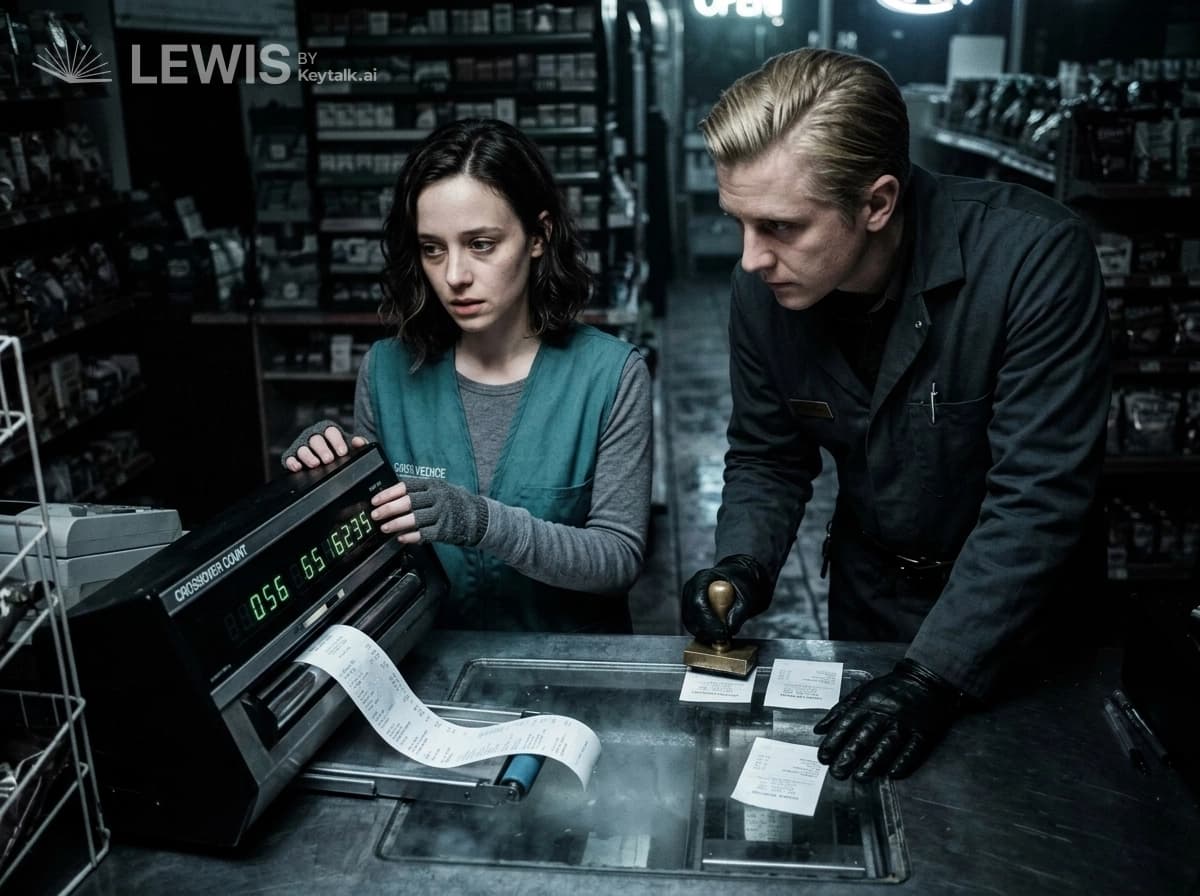
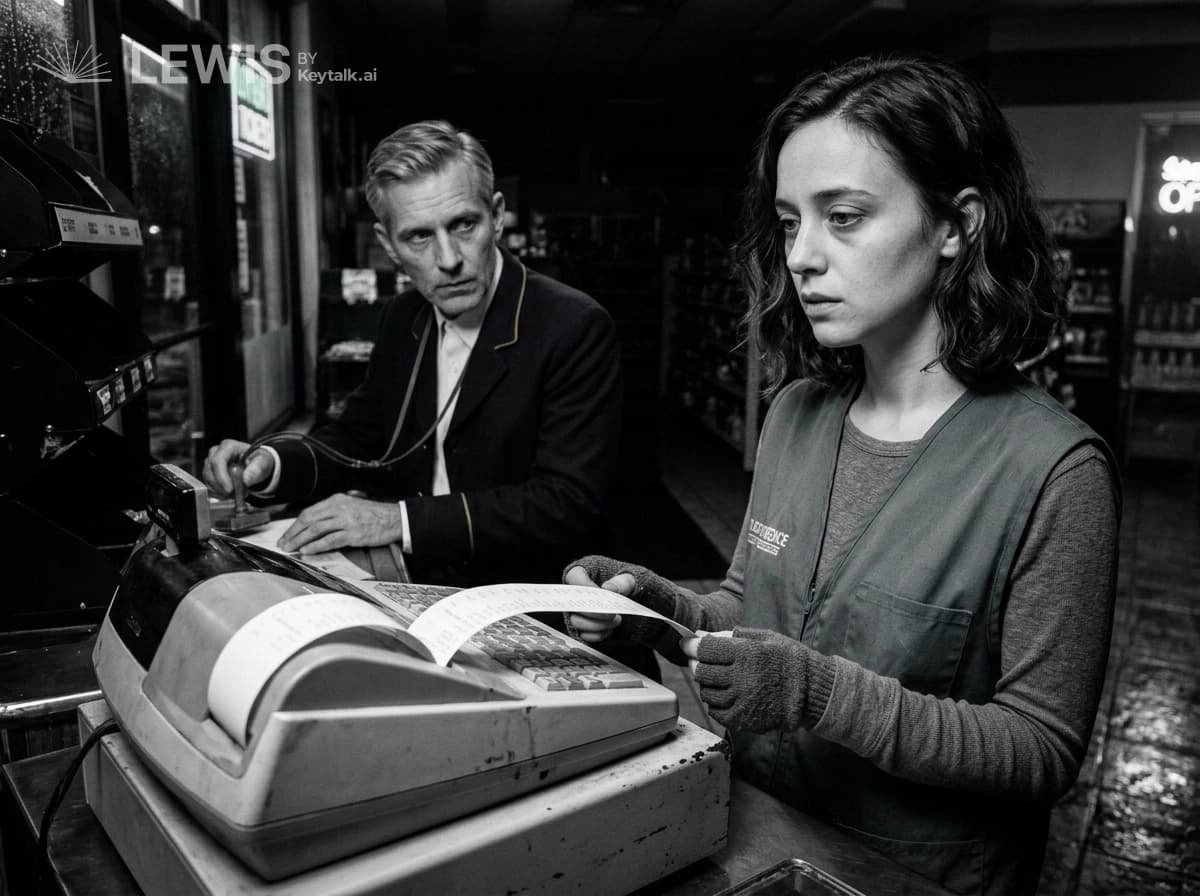
That desire draws attention from the store’s moving authority. Ivo Halden, the store auditor who polices craving verification with bookish severity, arrives in the hour when boundary-rot “exhales” the hardest. His brass stamp looks like a harmless implement until you realize consent-lacquer is a spell and the vents route evidence. He watches Mara with annotated calm, as if her competence is a document he’s already filed under suspicious. His hands tremble when he stares too long at the seams where blue-white light leaks behind the counter, and that tremor makes it clear he’s afraid—not of rules, but of how close the rules are to failing. When Mara insists she’s only following the receipts the machine prints, Ivo’s expression doesn’t soften; it recalibrates. He recognizes a mismatch pattern too quickly, the way a man recognizes a past mistake in someone else’s handwriting. He doesn’t accuse her outright, but he tests her. He stamps where she expects him to wait, verifies what she believes is already settled, and keeps his distance from anything that smells like “help without paperwork.” Underneath his insistence is an older terror: the guidelines he enforces have been outdated long enough to grow teeth of their own.

Meanwhile, the store’s regular who returns every night—Death Eirwyn, courteous and careful, paying in silences like prayers—keeps finding Mara at precisely the moments she’s least confident. He never speaks his full story in plain language, but he studies her “mistake” status as if it’s a map. He asks for harmless questions, redirects her toward safer steps, and speaks with a steadiness that feels like he’s trying not to flinch at the sound of punishment. Mara wants to believe his routine politeness is simply kindness; the receipts and the ledger’s corrections train her skepticism into reflex. Still, his presence is a warm ember in the kiosk’s cold-gray world, and her need for understanding becomes dangerously adjacent to her need for reassurance. When she hears him mention “authorized drawers” in the same breath as “living anomalies,” she takes it as a clue rather than a warning.

Other forces in the store treat Mara’s growing instability as entertainment, leverage, or both. Gideon “Gid” Brann, the maintenance runner whose laughter is sharp enough to cut, plays harmless detours in the aisles: shelf labels swapped, wiring rerouted so the intercom stutters at just the wrong times, the magnetic click of the vending drawer sounding like a countdown. He wants Mara to find a drawer-manual that shouldn’t exist. It exists anyway, but only in a way the ledger can’t index, meaning it will require a specific kind of misplacement—something she would never do if she fully trusted the system. Pip Lattice, vending-floor auditor for the kiosk’s supply chain, treats every malfunction like a joke with teeth. They “fix” glitches with unauthorized parts and speak in half-solved riddles, nudging Mara toward patterns that resemble answers rather than explanations. Their humor is a shield and a knife; the more help they give, the more the store learns their shape, and Mara senses that if she follows them too faithfully, she’ll become legible in the ledger in a way she can’t undo.

As the hour progresses, the mystery sharpens into a moral dilemma. Mara finds evidence—ink stains arranged like partial schematics, recurring drawer part numbers that appear in multiple receipts—that the kiosk’s print logic isn’t merely balancing accounts. It can override transition outcomes when boundary-rot and opportunity align. Forbidden knowledge isn’t spoken at Afteredge; it shows up as patterns, as repeated components that should not recur, as preprinted commitments that arrive too early to be predictions. Mara’s instinct is to expose it, to bring it into daylight where she can understand it and therefore control it. But the Compliance Visibility Law punishes exposure. Any attempt to hide forbidden logic draws audits closer through vibrations in the vents; any attempt to expose it risks triggering a ledger lockdown that nullifies a clerk’s agency entirely. If Mara reveals the truth wrong, she doesn’t just stop the glitch—she could become a sacrificial correction, reused by the system as if her choices were disposable paper.

Sable Orin, the Warden of the waiting lane’s paperwork, complicates Mara’s options further. Sable isn’t an outside antagonist so much as a wound that learned to smile. She returns to the store to correct errors she caused years ago, yet her corrective denials have curdled into corruption. She tells herself she’s protecting the ledger’s cleanliness, but she’s also tender in ways rules cannot stomach. In moments when a hungry soul reaches too far, her compassion appears as misfiled receipts and loopholes that underpay the cost of mercy. Mara sees in Sable a mirrored version of her own temptation: the desire to help in a way that doesn’t satisfy the system’s accounting. Sable’s presence turns Mara’s questions into something heavier than a workplace mystery. If mercy without verification breaks the Craving-Transaction Rule, then what does mercy with the wrong verification become? And if verification without mercy turns souls into statistics, who is Mara when she insists on “doing it right”?

The store’s ticking crossover count makes these questions urgent. Each craving thins the boundary by a fixed amount, and the thinned state brings whispers from unserved souls, staff chatter that turns into voices asking for the wrong thing: one more chance, one more craving, one more “last” that isn’t last at all. Mara begins to hear what she didn’t know was possible—echoes from beyond the waiting lane, as if unserved customers are borrowing her ear to argue with the ledger. Her living anomaly status makes her especially sensitive to this bleed-through. The Misfiled-Living Constraint doesn’t just slow her; it shapes her perception, turning doubt into an instrument the system can reuse. When Mara hesitates, the aisle lights brighten into circuit-glow and then recede, like the kiosk is watching her weigh fear against obligation and charging her for it.

Death Eirwyn’s patience becomes a second moral pressure. He keeps returning, disguised as a patient customer, because he believes he can soothe the boundary without committing the forbidden act of keeping someone. But his careful routine contains a private panic: he has already been punished once for unauthorized mercy, and the memory makes every kindness feel like a step toward rewriting his own sentence. When Mara serves him the craving that would normally ease his transition safely, he pauses—just long enough for Mara to see that he’s studying whether her “mistake” status changes the ledger’s ability to accept an override. He doesn’t ask directly; he never violates the store’s language. Instead, he steers her toward safer questions, as if he’s trying to keep her from learning what she might use against him.

The climax arrives when Mara, through Gideon’s sabotage and Pip’s half-riddled “budget cuts,” manages to locate the drawer-manual that can exist only when someone misplaces it in a way the ledger can’t index. It’s not tucked behind a panel or hidden under floor tiles; it’s there because the kiosk itself, in its own attempt to reconcile anomalies, has slipped the manual into an indexing gap—like the store accidentally leaving a door unlocked while trying to count the rooms. Mara learns that the print logic she’s been unraveling doesn’t merely balance accounts; it compiles consent-lacquer stamps and drawer matches into an outcome lattice that can redirect transition outcomes when the boundary thins enough. The forbidden knowledge reveals a hard truth: if someone exploits it, they can choose what the kiosk calls “safe crossing” and what it calls “lingering.” But the same lattice can correct mistakes retroactively, tightening the net until a clerk’s agency becomes a puppet of the ledger’s compensations.

Ivo Halden’s audit becomes the knife-edge moment. He arrives when the store exhales boundary-rot at maximum pressure, and for the first time Mara realizes that Ivo isn’t just enforcing the rules—he’s also hunting the same print logic, because his terror is not theoretical. The tremor in his hands isn’t only fear of punishment; it’s fear of what he might have done before. When he stamps to verify, the vents listen, translating Mara’s uncertainty into mechanical interference. He tries to corner her into a confession of wrongdoing, but what he actually wants is the missing piece of the logic so he can correct it without triggering a lockdown. His mentorship fractures into something more dangerous: an attempt to steer catastrophe away from others by deception he can’t confess, even as the store’s ledger counts every breath.

At the height of the audit, Mara makes her choice. She doesn’t expose the forbidden logic as a confession; she uses it as a translation. She cannot simply “tell” the system the truth, because the Compliance Visibility Law routes evidence through vents that reward timing and punish speech. Instead, she manipulates the transaction chain so that the kiosk’s own compensatory corrections align with mercy rather than punishment. She chooses cravings carefully to satisfy the Craving-Transaction Rule while structuring the ledger-arrival chain so the preprinted receipts stop compensating her with tighter net constraints. In doing so, she risks ledger lockdown, and she risks becoming a living anomaly that the system can reuse as an error template. But she also gives the whispering souls in the lane something they didn’t have: not an unauthorized extra chance, but a correct “last” that leads to actual transition rather than indefinite lingering.

Death Eirwyn stands closest during this storm, and his agency becomes both a temptation and an anchor. Mara recognizes that helping Death without breaking the contract may require him to accept a boundary that hurts rather than a boundary that deceives. He can’t keep someone, but he can choose how to endure choosing. In the final service pulses of the hour, when the crossover count flashes and the queue advances unevenly like a failing metronome, Mara uses the drawer-manual’s coded patterns to ensure the next printed commitments correspond to arrivals that will actually happen—cutting off the kiosk’s ability to override outcomes using the gap between time and arrival. Death, seeing what she’s done, doesn’t demand to be rewarded with forbidden mercy. Instead, he pays in silence that sounds like resignation and allows the craving to complete its authorized purpose. Mara watches the transition happen cleanly, with no retroactive enforcement, and for the first time in the night the vents feel less like ribs and more like lungs that can finally unclench.

The resolution doesn’t arrive as a neat victory, because the Afteredge doesn’t forgive; it balances. Mara averts immediate lockdown and buys herself a sliver of stability, but her living status remains misfiled, and the ledger will still attempt to reconcile her existence. Ivo Halden, having glimpsed enough of the logic to understand how close he came to enabling an override, cannot openly admit what he hunted. He restores the stamp protocol to its strict form, but he does it with a gentleness that suggests his fear has changed shape: he’s no longer merely policing catastrophe, he’s trying to ensure the rules don’t become a weapon for those who are afraid to feel guilt. Sable Orin, forced into a decision by the corrected chain, denies the easiest loophole for a soul that would have made her past corruption grow teeth; her tenderness shows up not as relief but as discipline. Gideon and Pip, threatened by the tightening of the kiosk’s indexing, retreat into misdirection that is less about pranks now and more about preventing other clerks from stepping into the same indexing gap.

Mara remains at the counter as the last amber strip under the register-glass begins to dim into gray, and the crossover count steadies into a calmer rhythm—still ticking, still ticking down, but no longer chewing into her choices. She doesn’t know whether she has truly “solved” the glitch or simply steered it into a less cruel arrangement. She only knows that the store can be made to honor mercy when mercy is translated into compliant steps, and that every act of kindness leaves an accounting trail the ledger can learn. Death Eirwyn returns to his routine only briefly before the night’s final pulse, his posture lighter by a fraction and his silence heavier by consequence. Mara’s final task is not to chase forbidden knowledge further, but to decide what kind of clerk she will be after she understands the cost of agency—and whether she can live with being an exception the system will always try to correct.

シーン

シーン 1

Amber Under the Register-Glass

Amber Under the Register-Glass
場所
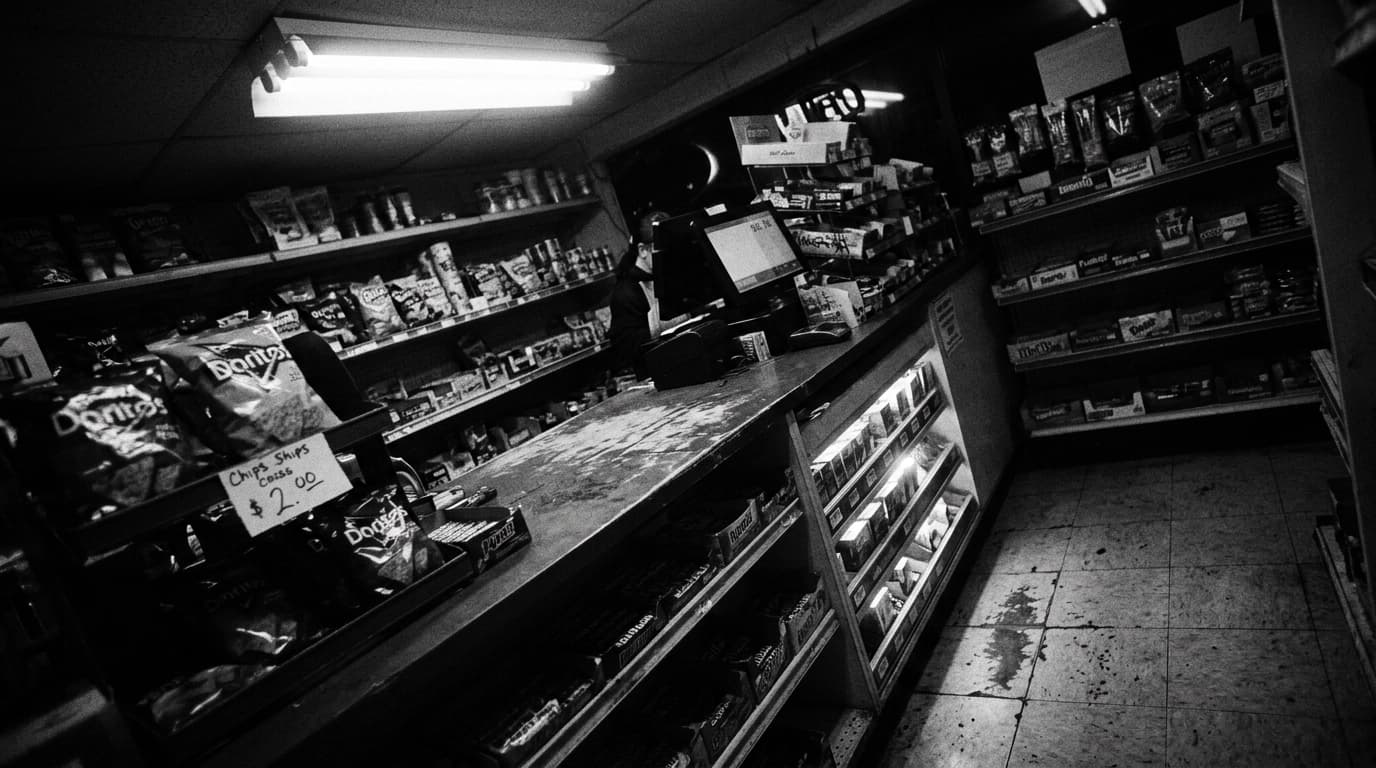
Afteredge Convenience & Cravings Night-Shift Counter, under a strip of amber light beneath the register glass; chrome edges gleam wrong-bright, neon reflection trembling on poured-concrete tile, while the receipt machine’s dry cough echoes between the counter and the seam-lit backroom doors.
時間
The first hour after Mara’s accidental entry, mid-night-shift for the Afteredge; the crossover counter is high and begins to tick downward unevenly with boundary-rot pulses.
出来事
Mara clocks in and serves the first few arrivals correctly—verifying each ledger profile, triggering the matching craving drawer, and stamping transitions when required—until the receipt machine prints a long ‘preview’ commitment receipt for a customer who never steps into the waiting lane. The ink arrives with a wet sheen that lingers too long; when Mara fulfills it anyway, the kiosk retroactively compensates by tightening the next transaction, and—through the thinning glass—she hears an unserved soul’s whisper shaped like her own checklist phrased back at her. Before an inspector could arrive, Mara subtly checks for manipulability by swapping the order of one verification step (without fully failing it), causing the crossover count panel to shiver by a fraction and then stabilize, as if the kiosk noticed her choice and logged it.
影響
The chapter’s core problem crystallizes for Mara: preprinted ‘preview’ receipts are enforceable commitments during boundary-rot, and her attempts to follow them cost agency via retroactive ledger compensation. The stutter she provokes hints the print logic sits in an editable outcome lattice rather than a passive ‘prediction,’ setting up her later strategy to reproduce and bait an audit.
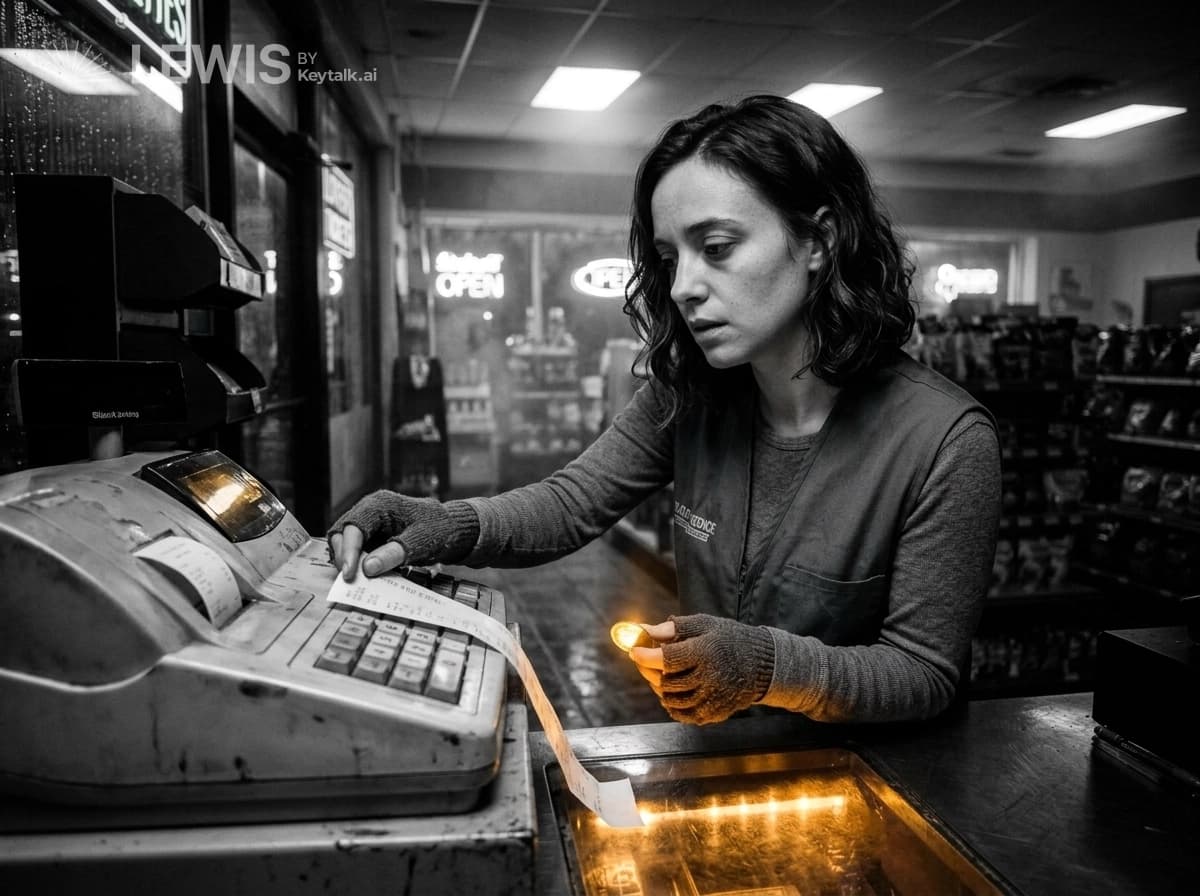
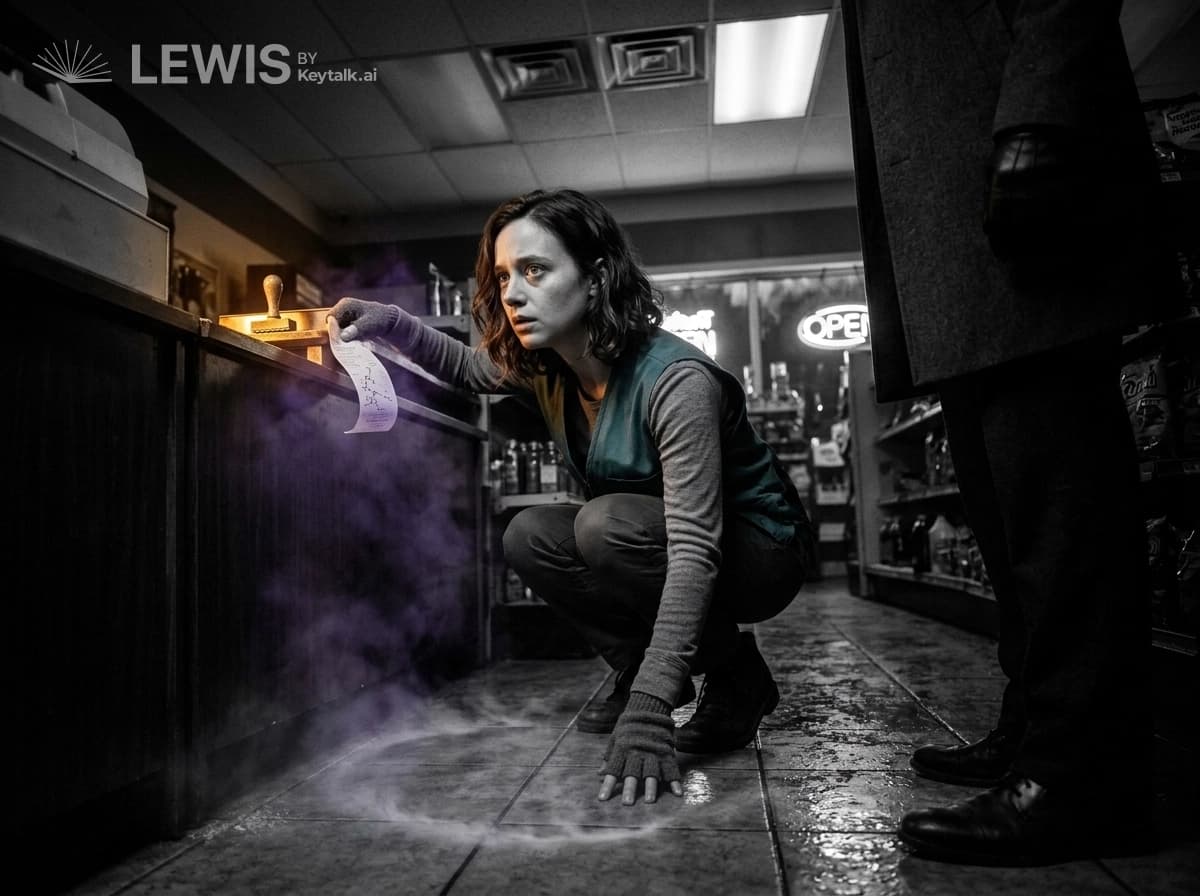
Amber warmth pools under the register glass, making Mara’s hands look briefly alive against the kiosk’s cold chrome as the receipt roller coughs and coughs again—each click like a bead dropping into a narrowing string. When a preview receipt unfurls for a person who never arrives, the ink beads at the paper’s edge like condensation on metal; Mara can smell scorched sugar and rain-cold concrete, and the moment she stamps what the machine ‘promises,’ the crossover counter answers with a cramped, irregular shiver.
Mara lifts her gaze to the waiting lane through the kiosk’s glass—the next numbered tile still soot-black—and yet the air between aisles fills with a whisper that mimics her own voice: *verify, authorize, stamp*. She corrects herself with a disciplined misorder—touching the verification step a breath too soon—just enough to feel the kiosk’s system-thin displeasure ripple through the seams, then settle, as if it has already written her mistake into tomorrow’s ledger.
シーン 2

Ink That Evaporates Too Slowly

Ink That Evaporates Too Slowly
場所
Afteredge Convenience & Cravings night-shift counter (the primary service lane): chrome edges gleam under wavering neon, candy shelves cast nicotine-yellow reflections, the receipt roller coughs dryly behind Mara’s line of sight, and the overhead fan turns with a delayed underwater groan; the air tastes faintly of scorched sugar while the aisle floor’s grout lines resemble faint circuitry.
時間
Midway through Mara’s first hour on register duty, during a boundary-thinning lull that still smells like rain on concrete; the Crossover Count panels keep bleaching downward in seconds as if time is being actively consumed.
出来事
Mara repeats her ledger-profile check twice, deliberately matching the same “correct drawer mapping” to see whether the earlier preview receipt was foresight or enforcement. Each time she commits the steps, the preprinted ink beads with a wet sheen that refuses to fully dry, and when she blots a corner on a receipt scrap the ink forms a recurring part-number cadence—one that aligns with the vent-exhale timing. She pauses to hold the scrap under the amber register-glass; the color warms, then shifts, revealing a second layer of markings—an “almost-thermal” consent-lacquer code that should not persist—forcing her to realize the system is not merely balancing accounts but using ink residue as a readable clockwork key.
影響
The scene turns the mystery from anomaly into editable mechanism: Mara obtains a reproducible, pattern-based clue that the preview receipts belong to a hidden outcome lattice tied to drawer part numbers and boundary-rot timing, setting up her later controlled misstep that will create a visible stutter in the crossover counter. It also raises immediate peril: any further pattern-confirmation draws the kiosk’s corrective attention, tightening the net on her living status.
Amber warmth pools under the register glass and makes Mara’s gloves look briefly alive against the kiosk’s cold chrome, while the receipt machine coughs—dry, patient, too punctual—like a metronome counting down to an unseen door slamming. The second preview strip unfurls for a customer who never arrives, and the ink on its edge beads as if still wet; when Mara touches it with a scrap corner, the consent-lacquer layer blooms into ink-dark part numbers that only appear when she holds the paper where the amber light flickers. She hears the overhead fan’s delayed groan and smells rain-on-concrete in the same breath the aisle grout lines brighten, then recede, as though the store is teaching her a language she wasn’t supposed to read.
シーン 3

A Stutter in the Counter

A Stutter in the Counter
場所
Afteredge Convenience & Cravings night-shift counter, amber register-glass glowing under cold chrome; the fluorescent aisle bay windowed by a frosted glass panel and ceiling vents that breathe rain-on-concrete air, with the Crossover Count panels spanning the shelves like pale numerals across a tomb.
時間
The first hour after Mara’s accidental entry, on her third service interval of the shift—during a boundary-rot pressure spike when the counter’s preprinted commitments become editable.
出来事
Mara intentionally misroutes a single verification step—touching the confirmation pad a breath too early on the next preview receipt—so the receipt machine compensates in plain view: the crossover counter stutters once, then re-synchronizes with a slight backward tick; the preprinted paper reshuffles its ink-dark part numbers into a recurring pattern that reveals the “preview” output is not prophecy but a manipulable outcome lattice. The system tags Mara’s living anomaly status immediately afterward, tightening her available clerk-credits by a fraction as if the ledger has begun correcting her agency.
影響
The scene proves the kiosk’s preprinted receipts are editable constraints rather than fixed predictions, setting up Mara’s later ability to steer mercy; it also escalates personal stakes by marking her living status for correction, bringing the threat of an audit sooner and more targeted than before.
Amber light pools under the register glass, making Mara’s gloved fingertips look momentarily warm as the receipt roller coughs out another long preview strip for a customer who still hasn’t reached the lane. She slides the paper toward the verification stamp a heartbeat early—just enough to feel the kiosk’s resistance—and the whole counter answers with a cramped shiver: the Crossover Count panels jerk, their pale numerals stuttering backward by a single breath while the vents exhale rain-on-concrete into her throat.
Ink-dark drawer-part clusters bloom and rearrange along the curled edge of the paper as if they’re still deciding what they mean; Mara hears the vending drawer network click in uneasy, polite rhythm under the counter. When the machine’s amber strip steadies again, Mara’s stomach drops—her system badge flashes a silent correction tag, and the air tastes suddenly of scorched sugar as the kiosk tightens around her choices for the next transaction.
シーン 4

Crossover Count Under False Fluorescents

Crossover Count Under False Fluorescents
場所
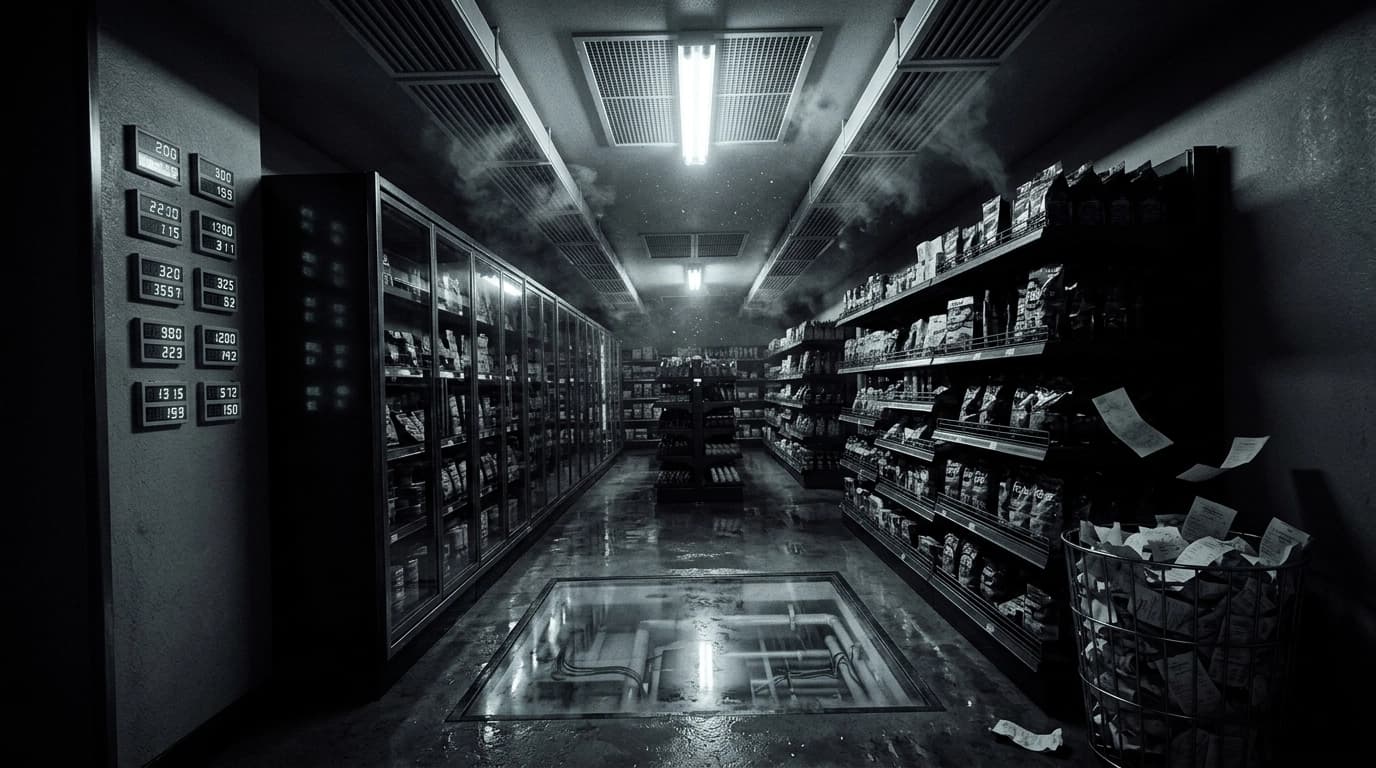
Crossover Count Viewing Aisle Under the Ceiling Vents — a narrow strip of fluorescent light with slightly fogged glass floor that mirrors Mara’s shoes in bruised gray; above, ceiling vents exhale irregular sighs as dust motes glitter like ash, while pale digit panels labeled Crossover Count scroll in pale, insistent numbers; nearby receipt bins thump softly as paper flutters without wind.
時間
The first minutes after Mara’s baited mismatch—right before Oriel’s full inspection arrives, still within the same night shift on the cusp of the living world’s next hour; the crossover count is descending in uneven pulses as boundary-rot pressure spikes and eases.
出来事
Mara crouches at the glass-floor edge and records receipt part-number clusters that appear only on vent-exhale moments; when a preprinted “preview” slip refreshes with the same drawer-part mapping despite no new soul approaching, she realizes the repeats are being manufactured by hidden print logic tuned to the vent rhythm. To verify it’s intentional, she triggers a harmless, rule-legal register interaction that should not affect preprints—yet the next vent sigh causes the Crossover Count digits to stutter by a single beat and the newly printed slip curls into an ink-visual pattern matching the drawer mapping, confirming someone is making audits ‘arrive’ early by aligning machine output to boundary timing.
影響
This scene turns the mystery from ‘maybe the receipts are influenced’ into ‘the system’s preview output can be steered on purpose,’ giving Mara a reproducible cue (vent-exhale timing + drawer-part visual code) to bait Oriel later. It also tightens the clock: the earlier she proves control, the sooner she must steer an audit into a place where evidence can be staged rather than seized.
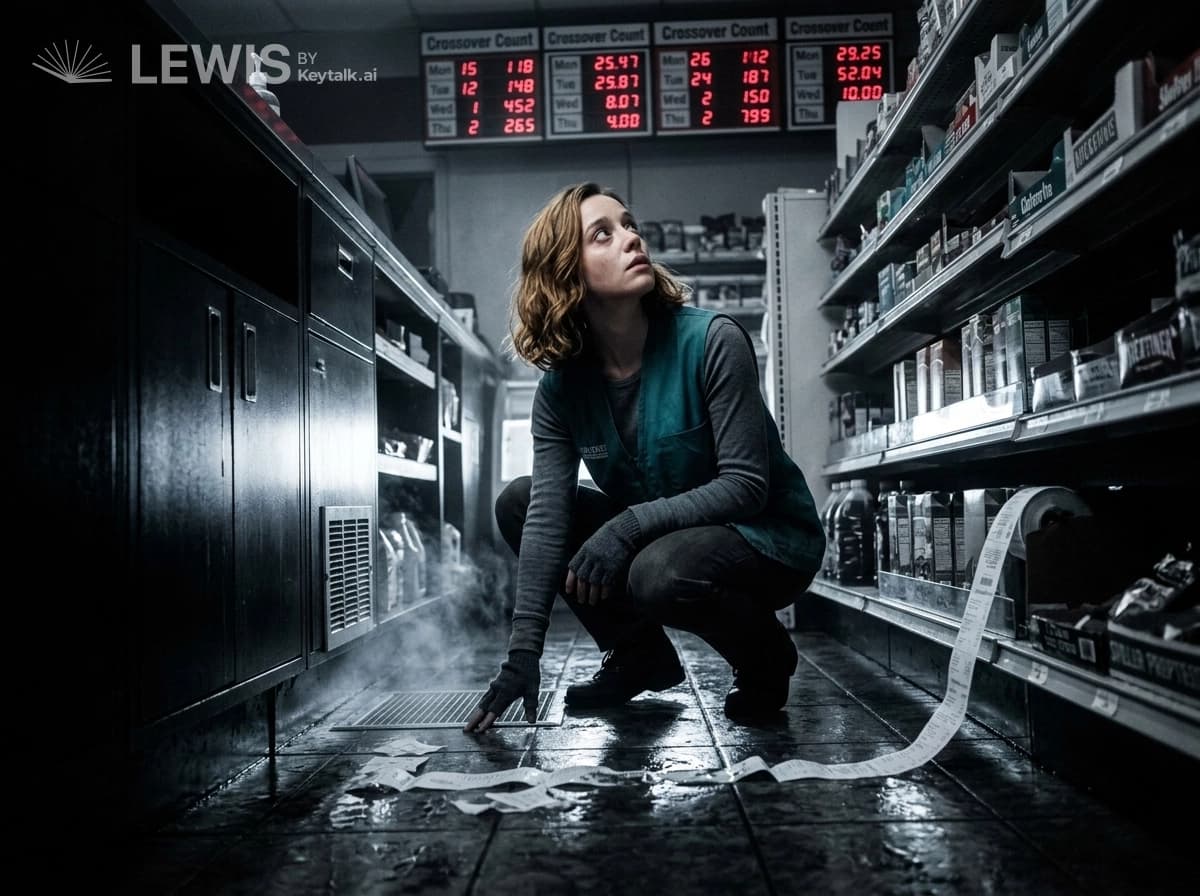
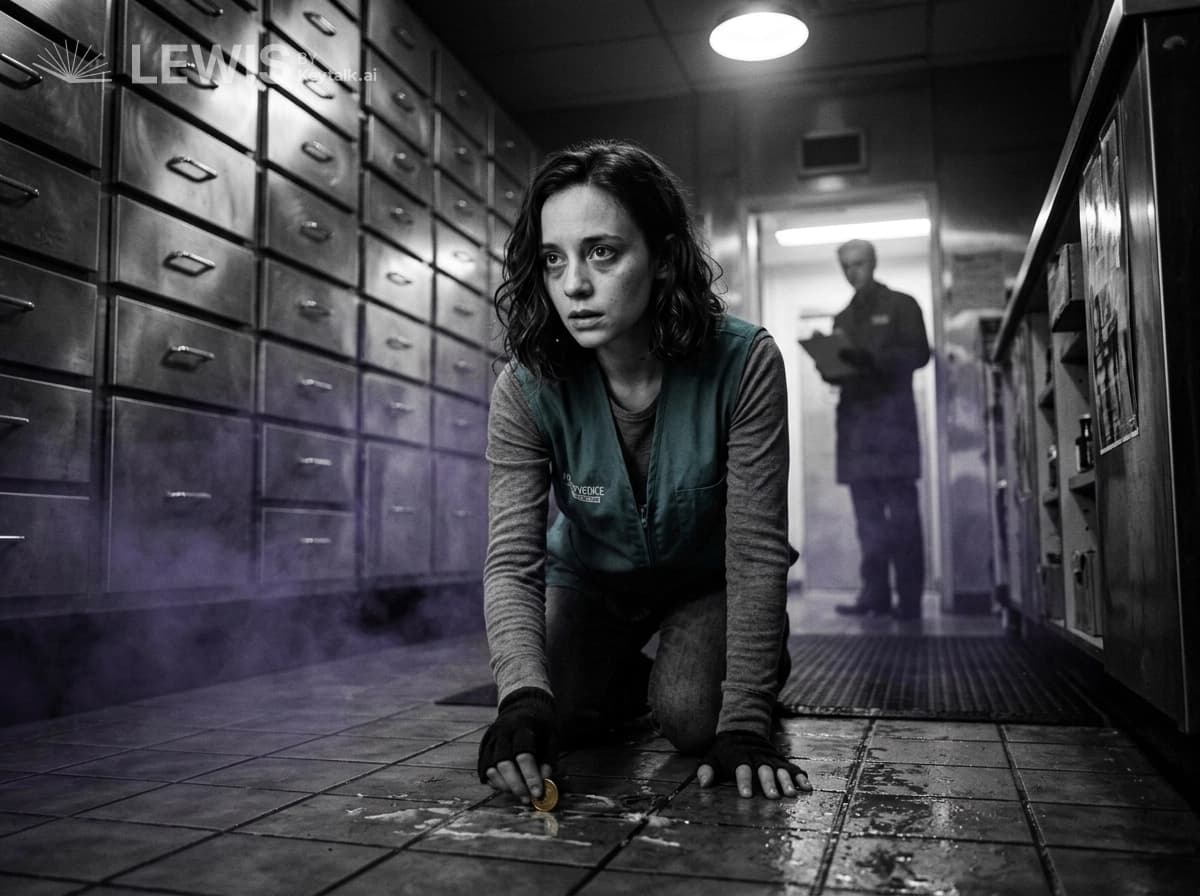
The aisle lights flatten into false daylight as the ceiling vents exhale—each breath sends a cold tremor through the glass floor and makes the nearest receipt bin shiver like it’s listening. Mara presses two fingers to a sticky receipt edge and tastes old-metal on the air; when the Crossover Count panel ticks down, the digits stutter once, and a fresh preprinted slip blooms in the bin with the same drawer-part cluster inked in a curling, almost pictorial code. No footsteps approach, no soul arrives—only the vents’ counting rhythm, and the machine answering it, as Mara realizes she’s not observing the logic so much as confirming someone else is using her aisle like a timing device.
シーン 5

Vent-Listening at the Stamp Altar

Vent-Listening at the Stamp Altar
場所
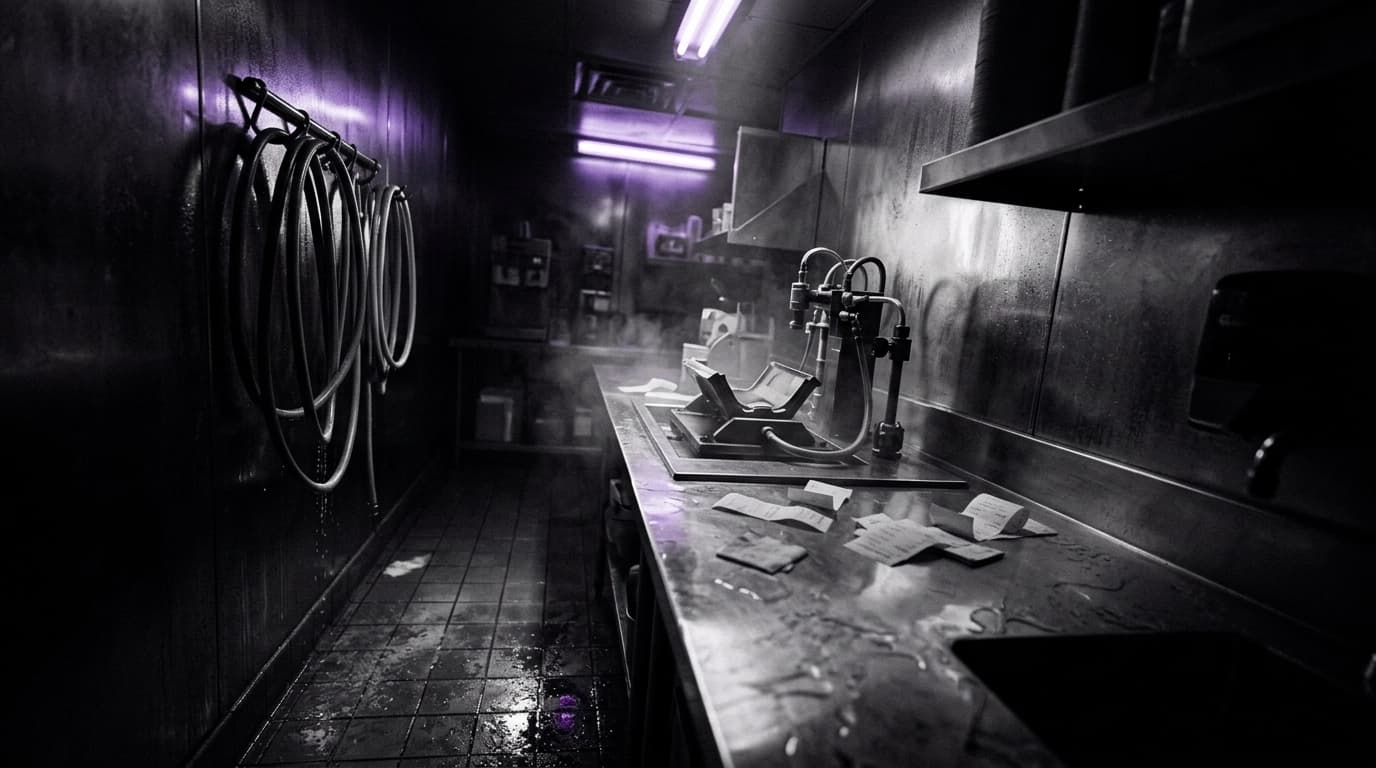
Crossover Count Viewing Aisle Under the Ceiling Vents leading into the Verification Stamp Disinfection Bay—fluorescent strips too bright to be kind, a glass floor fogged from breath that isn’t yours; above, ceiling vents exhale irregular sighs while violet fluorescents in the bay flicker and drip condensation from a hooked hose rail onto gritted stainless tile
時間
During the first hour after Mara’s accidental entry, moments after her record of part-number repeats—at the next boundary-rot exhale, when the crossover counter’s pale digits tighten like a pulse
出来事
Mara slips a newly printed preprinted receipt into reach of the Verification Stamp cradle precisely as the vents exhale, deliberately tilting it so the ink curls into a visual-coded pattern; she reads the drawer-part cluster from the curled receipt without speaking the clue aloud, then the ledger compensates by clawing back her remaining clerk-credits and summoning Oriel’s audit presence—forcing her to pocket the receipt scrap and prepare to misdirect him in the bay
影響
She converts the elusive, vent-timed ink behavior into a reproducible, visual key that ties the print logic to specific drawer part numbers—while simultaneously triggering Oriel’s early arrival, escalating the coming confrontation from information-gathering into an immediate evidence-defense race
In the narrow fluorescent aisle, Mara stands with one palm on the cold glass floor; it fogs under her touch, and the air tastes of warm plastic and old paper while the ceiling vents click into an exhale that smells like rain on concrete. The moment the vents “breathe,” the kiosk’s amber register-glass underlight catches her reflection mid-stutter, and she slides the preprinted receipt toward the Verification Stamp altar—its ink still slick enough to bead, then curl when the bay’s violet fog blooms around it. The drawer-part numbers resolve in ink-dark arcs across the curled edge like a constellation only visible at that instant; when she snatches the scrap back to her glove, the crossover count panel jerks downward with a compensatory tightening—and the store’s vents answer with a sharper rhythm, announcing Oriel’s approach before she can decide whether she’s just earned her clue or bought her capture.
シーン 6

The Audit That Arrives Too Soon

The Audit That Arrives Too Soon
場所
Crossover Count Viewing Aisle Under the Ceiling Vents leading to the Verification Stamp Disinfection Bay doorway—fluorescent light stretches in a narrow strip over a slightly fogged glass floor; above, ceiling vents exhale irregular sighs that glitter with dust; nearby, metal receipt bins flutter faintly as the air tastes of warm plastic and old paper while the Crossover Count panels scroll pale numerals.
時間
The same night-shift’s first hour, during the sharp boundary-rot exhale that immediately follows Mara’s last verified misstep (late into the climb of the countdown, when the system’s compensations compress seconds).
出来事
As Oriel Kest arrives early to seize transaction evidence, Mara uses the curled, visual-coded preprinted receipt pattern she prepared moments ago to bait his verification stamp into the wrong consent-lacquer mapping. With Misfiled-Living constraints squeezing her clerk-credits, she slides the receipt strip toward the Verification Stamp Disinfection Bay cradle during an exhale—triggering a short, sterile vent-surge that forces Oriel to delay his full inspection to disinfection protocol. The receipt’s part-number clue binds to the stamp warmth instead of his scan, making the evidence he expects arrive as an already-corrupted substitute while Mara pockets the part-number geometry that ties the print logic to drawer mappings.
影響
Oriel’s full audit is delayed just long enough for Mara to carry forward a reproducible clue about the hidden print logic’s drawer-part linkage; she also demonstrates that the kiosk’s outcome lattice can be redirected without speaking forbidden knowledge, tightening her leverage for the later manual/indexing-gap actions.
Fluorescent light makes the glass floor look like thin ice as ceiling vents breathe out rain-on-concrete odor; the Crossover Count panels stutter downward in narrow, insistent digits while receipt bins shiver as if bracing for impact. Oriel appears too early in the aisle—ceremonially patient, compliance badge catching violet glints—his verification tools already raised, and Mara feels the ledger’s correction pinch her choices as a metallic taste behind her teeth.

She lunges the curled, ink-dark receipt strip into the line of the disinfection bay’s stamp glow during the next vent-exhale; violet fog curls the paper into a pattern only visible in the amber seam-light, and the consent-lacquer mapping in Oriel’s path flashes wrong. When he stamps to confirm, the kiosk “corrects” by routing him into the Disinfection Bay protocol—his inspection stalling mid-sentence, ears catching the vents’ sterile counting rhythm—while Mara’s fingers close around the part-number geometry the substitute receipt fails to replicate.
シーン 7

Crossover Count as Witness

Crossover Count as Witness
場所
Crossover Count Viewing Aisle Under the Ceiling Vents — a narrow strip of fluorescent light and glass floor fogged with breath that isn’t yours; ceiling vents exhale irregular sighs, and pale digits on wall panels scroll Crossover Count in a rhythm that makes the receipt bins flutter. Mara stands close enough to feel the air press her collarbone each time the vents click, while the after-sweet smell of warm plastic and old paper threads through the metallic chill.
時間
The first night-shift hour, during the current approach to the next boundary exhale—late in the session when the crossover counter is high and audits can “arrive” early.
出来事
Mara tracks the scrolling Crossover Count while comparing drawer-number clusters in several fluttering, ink-dark receipts to the exact vent exhale pattern that makes those clusters appear; she notices the clusters brighten only when the boundary “wets” the air, as if the hidden print logic is waiting for that pressure change. Before Oriel can fully scramble her again, she deliberately feeds the system a controlled misread drawer number (choosing a neighbor in the cluster) at the aisle’s edge, letting the kiosk’s corrective impulse manifest on a single visible print strip; the resulting ink stain and a consent-lacquer batch code appear wrong in a specific, counterfeit-ready way that reveals Oriel’s logic mapping without her speaking a confession. She pockets the evidence as a compliant breadcrumb—indexable by pattern, not by accusation—while the crossover counter stutters once, then steadies as if satisfied with the new constraint.

影響
The mystery shifts from “what is the glitch?” to “who can weaponize the rules,” and Mara gains a reproducible proof-pattern tied to Oriel’s counterfeit-ready access key—something she can later translate into protection rather than exposure. However, the successful lure of the logic also tightens the ledger’s attention on her timing, making the upcoming audit feel closer and more personal.
Fluorescent light makes the glass floor look like thin ice; Mara’s reflection stutters with each vent exhale, and the air smells of warm plastic over old paper. The Crossover Count panels keep sliding pale digits downward as receipts flutter in the bins like nervous birds, and beneath the ink-dark clusters Mara finds a repeating drawer-number cadence that only appears when the vents click “rain-on-concrete.” When she misreads one digit on purpose, the receipt roller coughs a wrong-but-informative strip—ink that beads as if still wet, followed by a consent-lacquer batch code that shouldn’t pair with that drawer mapping—while the crossover counter hiccups, then resumes its insistent crawl.
シーン 8

Ink Stains, Ledger Lies

Ink Stains, Ledger Lies
場所
Crossover Count Viewing Aisle Under the Ceiling Vents, Afteredge Convenience & Cravings — a fluorescent strip of light and glass floor slightly fogged from Mara’s breath that isn’t quite hers; wall-mounted panels scroll the Crossover Count in pale digits while ceiling vents exhale irregular sighs that make dust motes glitter like ash, and the air smells of warm plastic, old paper, and rain-on-concrete
時間
Mid-shift, moments after Mara’s earlier vent-and-stamp misdirection—directly before Oriel’s next inspection arrives, as the Crossover Count dips into a boundary-rot window
出来事
From under the counter near the backstock access doorway, Mara compares the drawer-part-number ink clusters she recorded during the earlier vent exhale to an access mapping implied by Oriel’s recent audit timing; then, while Oriel’s compliance presence hovers just out of frame, he triggers a new preprinted receipt that begins to overwrite Mara’s mental notes—forcing her to improvise. She deliberately misreads one drawer-number digit in a controlled way, baiting Oriel’s counterfeit-ready logic to manifest as a specific “consent-lacquer batch” mismatch on the receipt roller. The paper curls with an ink sheen that evaporates too slowly, and the mismatch appears as a faint, pictorial residue on the receipt edge—exactly where her later decoding requires it—proving Oriel is weaponizing the kiosk’s hidden print logic rather than merely inspecting.
影響
The chapter’s mystery pivots from “there are recurring patterns” to “someone can trigger counterfeit-ready print behavior.” Mara earns a tangible, recordable evidence clue—ink-stain layout and consent-lacquer batch indicator—that can be translated into a compliant breadcrumb later, while also learning that Oriel actively scrambles her deductions in real time, raising the stakes for any direct confrontation or disclosure before the next audit.
Mara stands in the fluorescent aisle with her fingertips pressed to the cold glass floor, feeling it dampen and re-harden with each vent exhale, while the Crossover Count panels bleed down in steady, insulting numerals. She can hear the drawer network clicking in the distance—polite, uneven—like a metronome for punishment, and the air tastes faintly of scorched sugar as she lays her receipt scraps side-by-side to find the repeating drawer-part cadence that only appears on “rain-on-concrete” pulses.

When Oriel’s next audit presence nudges the kiosk’s timing, a preprinted strip slithers from the receipt roller beside her shoulder, ink beading as if still wet; Mara pretends to hesitate, then she “misreads” a single digit on purpose. The kiosk answers with a misprint she can photograph with her eyes: the drawer mapping resolves into the wrong consent-lacquer batch code, stamped into the paper-edge like a hidden signature, and the ceiling vents hiss in a short, wrong rhythm—as if the store has briefly let her steal proof from its own bloodstream. Without confessing anything aloud, Mara tucks the receipt strip into her apron fold with gloved precision, committing the batch indicator and ink-stain geometry to memory as a breadcrumb for when she must steer mercy later.
シーン 9

Under-Index Accusation

Under-Index Accusation
場所
Crossover Count Viewing Aisle Under the Ceiling Vents at Afteredge Convenience & Cravings—fluorescent light bleaching the glass-floor fog at knee height; wall-mounted panels scroll Crossover Count in pale digits while receipt bins near the counter flutter; overhead vents exhale irregularly, each “rain-on-concrete” breath making ink-damp receipts lift like spores.
時間
The same night-shift hour, just after Mara’s evidence test—seconds before the next Compliance Visibility Law audit pressure peaks at the vents.
出来事
Mara stays in the viewing aisle, pretending to verify drawer-number clusters for routine clerk training while Oriel Kest closes in from the counter-side. She uses the controlled misread she engineered earlier to bait the kiosk into compensating: the Crossover Count stutters, and a preprinted receipt snaps into the bin with a misprinted consent-lacquer batch that bears the “counterfeit-ready” drawer mapping. As Oriel reaches for his audit tools, Mara feigns confusion over the number, triggering a short, vent-timed under-index audit gesture that forces Oriel’s stamp to land a moment off from her notes—leaving her with photographed ink-stain patterns but no spoken confession.
影響
The episode converts Mara’s suspicion into legible, evidence-like proof while still evading immediate lockdown; it establishes that Oriel’s counterfeit logic can be made to surface on receipts without Mara exposing herself directly. It also raises the pressure for the next phase: Ivo and the ledger can now treat the pattern as a systemic fault, making Mara’s “agency protection” an increasingly fragile alliance-by-evidence strategy.
Fluorescent light turns the glass floor into something like thin ice as Mara angles her body beside the Crossover Count panel, breath fogging the surface where she touches it. Above, the vents exhale “rain-on-concrete,” and the scrolling digits hiccup—one cramped stutter—while a receipt that should not exist slides from the roller, its ink still wet-looking at the edges and its consent-lacquer batch code curled into an ink-dark ribbon.
Oriel’s presence arrives with ceremonious calm, but his footsteps are too measured, too close; Mara keeps her fingers moving as if she’s merely correcting a clerk error, then she deliberately “miscounts” one drawer-number cluster on the panel’s reflected glow. The kiosk compensates in front of both of them: the next receipt prints with the counterfeit-ready drawer mapping as an under-index mismatch, and Oriel’s brass stamp lands on the wrong receipt slot by a breath—enough to scramble his certainty without erasing Mara’s ink-stain breadcrumb. Mara leaves the aisle with her glove tacky from paper-cold ink and her heart hammering to the same rhythm as the vent breaths, knowing the next audit will be sharper—because it now has something to accuse.
シーン 10

Cold Light, Hot Stamp

Cold Light, Hot Stamp
場所
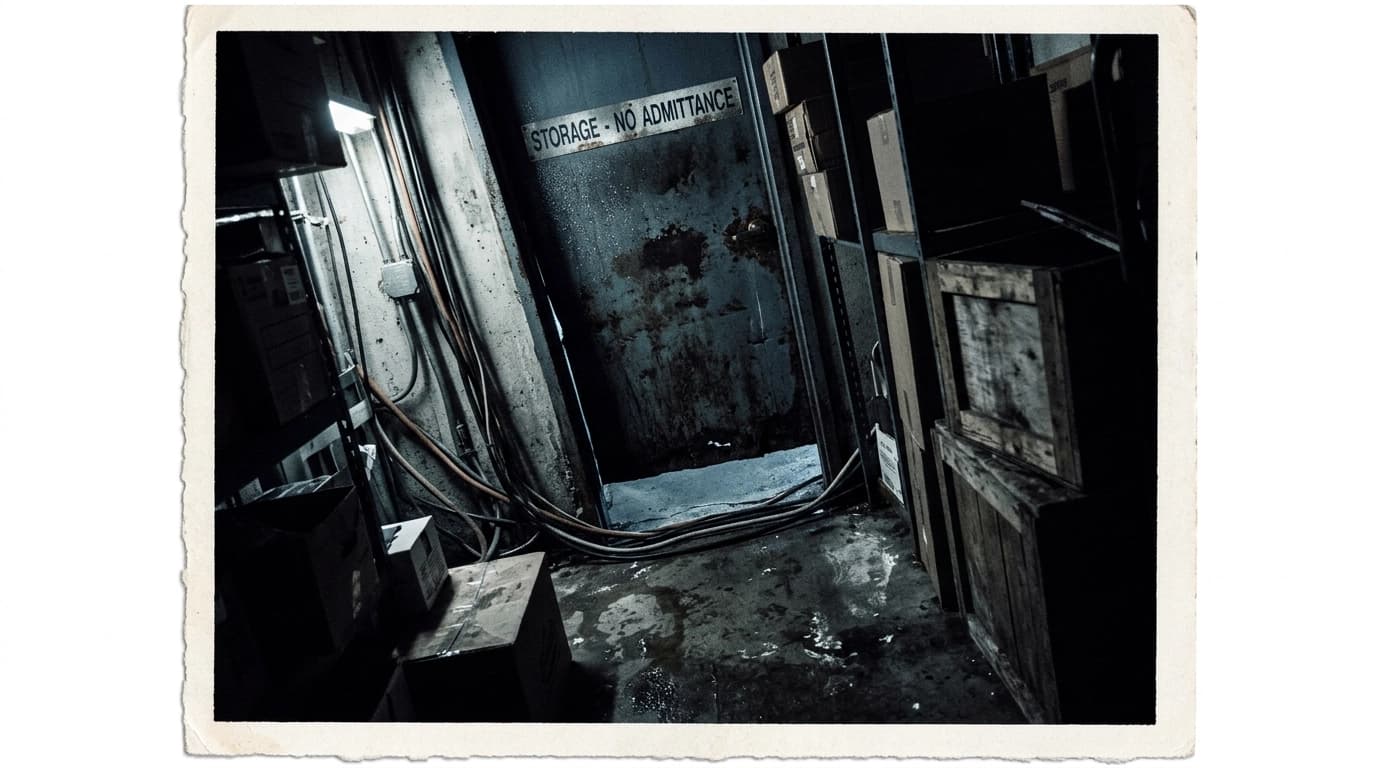
Afteredge Convenience & Cravings — Backstock doorway and the Verification Stamp Disinfection Bay: a narrow door under peeling aluminum signage leading to a slate-gray interior, condensation beading along the rim; beyond it the disinfection bay holds stainless counters, violet-flickering fluorescents that stutter like false heartbeats, gritted tile slick with drips from a hooked rail, and the brass Verification Stamp cradle glowing under amber register light that shouldn’t reach this far.
時間
The same night shift’s first hour after Mara’s initial break-in—late in the cycle, during the next boundary-thinning window just before Oriel’s full inspection would lock the kiosk down; the crossover counter’s pulse is tightening by seconds.
出来事
Mara slips into the disinfection bay from the Craving Drawer Network Access Doorway and finds that the indexing-gap manual’s part-number residue is keyed to misfiled-living timestamps. With the receipt machine still humming behind her, Oriel’s presence feels imminent: the verification stamp warms as if responding to an auditor’s hand before one arrives. Mara uses Oriel’s already-warmed consent-lacquer behavior as a “temperature map,” smears the manual’s proof-pattern into an indexing gap using gloved fingers and receipt-scrap shielding, and times her touch to the moment the bay exhales sterile fog—forcing the next preprinted commitment to reflect truth rather than retroactively compensate. The cold glow in the bay briefly shifts from sterile violet to a bruised amber-edged recognition, and the crossover rhythm stutters once, indicating the lattice has been redirected.
影響
Mara plants proof-patterns that the ledger cannot easily attribute to her, creating a temporary window where the kiosk will output corrected preprints. This advances the chapter goal from discovery to actionable control, and it sets up the next scene’s confrontation trap: when Oriel audits, the evidence will arrive “clean” enough to misdirect him without an immediate lockdown.
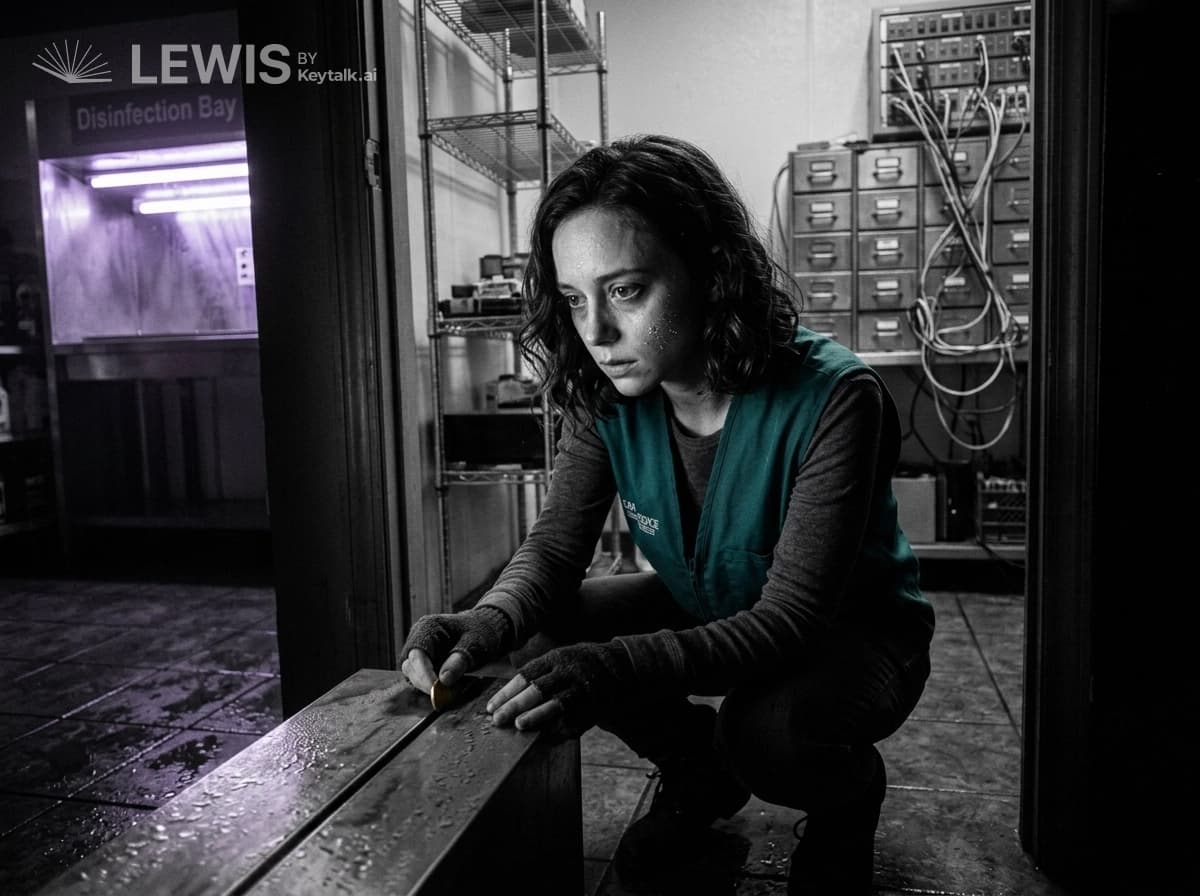
Cold slate light makes Mara’s breath look visible on her tongue as she pushes through the peeling-aluminum door and the air turns metallic, like coins left too long in rain. The Verification Stamp cradle sits under violet fluorescents that buzz and blink in hesitant rhythm; each drawer-network click behind the wall makes the stamp feel warmer against her thoughts, and the gritted tile under the hose rail tastes faintly of antiseptic when she swallows past fear.
She works fast with gloved hands—receipt scraps held like thin shields, condensation beading on her wrists—guided by residue that looks like nothing until it catches the stamp’s amber warmth. At the bay’s exhale, sterile fog blooms and curls receipts into frozen soap-bubble ripples; Mara presses the manual’s part-number proof into the indexing gap exactly on the crossover pulse. For an instant the stamp’s brass gleams brighter, the crossover rhythm hiccups like a machine stuttering mid-sentence, and the room’s whispers shift from accusation to accounting—meaning the next preprint will tell the truth, even if it costs her.
シーン 11

Disinfection Bay Trap

Disinfection Bay Trap
場所
The Verification Stamp Disinfection Bay—backstock behind the kiosk, a narrow stainless room under bruised violet fluorescents that flicker like delayed heartbeats; a hooked rail of hoses drips condensation onto gritted tile, and chemical halos mingle with metallic ink taste in the air. The Verification Stamp cradle sits centered like an altar, amber-warmed from the counter above through a vented seam, while behind Mara the drawer network clicks irregularly as if counting breaths.
時間
The same night shift as Chapter 4, during Oriel Kest’s approach—seconds before the next preprinted receipt pulse, at the height of boundary-thin pressure when the vents exhale sterile fog.
出来事
Mara hears Oriel’s patient footsteps arrive in the bay’s antechamber just as the drawer network synchronizes with the stamp’s warmth. She smears receipt scrap residue into a coded proof-pattern on the bay’s tile, then uses Oriel’s expected verification rhythm—timed to the stamp’s warming—to plant those proof-patterns into the indexing gap indirectly through the stamp cradle’s consent-lacquer flow. When Oriel reaches to inspect, Mara pivots the residue with a gloved wrist so his counter-stamp reads the planted pattern as if it originated from her living timestamps, buying time and preventing him from tracing the indexing manual’s real location. A near-immediate stutter in the kiosk’s preprint sequence confirms the window for truth-over-compromise, but Mara’s living-status correction ping escalates as she does it.
影響
Mara protects the indexing-gap manual’s proof from direct exposure while enabling the next receipt to reflect corrected outcomes rather than compromise. The trap costs her agency further—she becomes more “legible” to the ledger—but it advances the chapter’s goal by creating the temporary window she needs for the payoff scene.
The disinfectant fog blooms too quickly, sweet and antiseptic, and Mara tastes old paper on her tongue as violet lights stutter across stainless walls. Behind her, the drawer network clicks in uneasy rhythm; every click makes the Verification Stamp’s cradle warm by an extra degree until her knuckles ache against her gloves. Oriel’s voice slips in from the antechamber—ceremonially calm—just as Mara presses receipt-scrap residue into the gritted tile, then aligns her hands with the stamp’s consent-lacquer flow like she’s guiding a lockpick through a keyhole only it can see. When Oriel’s stamp meets the planted pattern, the kiosk’s pulse answers with a cramped, irregular shiver through the floor, and for an instant the bay’s air feels like it’s exhaling truth instead of evidence.
シーン 12

Proof Pattern in the Indexing Gap

Proof Pattern in the Indexing Gap
場所
Backstock behind Afteredge Convenience & Cravings: the Craving Drawer Network Access Doorway under peeling aluminum signage, condensation-slick frame rims, cold slate-gray light leaking in thin stripes; beside it, the mouth of the Verification Stamp Disinfection Bay spills violet-flickered haze onto gritted tile. The air tastes faintly of scorched wiring and old paper while the drawer network clicks from deeper in the wall in uneven, breath-matching rhythms.
時間
The same night shift’s final minutes of Chapter 4, during the next boundary-thinning pulse when the crossover counter’s pulse-tightening makes each misstep feel like a countdown.
出来事
Mara times her access attempt to the boundary exhale, using the disinfection bay’s warm-stamp cradle feel as a surrogate key. When Oriel’s certainty presses from just beyond the bay—his stamp-warmth arriving like a mailed verdict—she slides the indexing-gap proof-pattern residue from the silent code she found into the gap in the doorway’s frame, keyed specifically to misfiled-living timestamps. The moment she aligns it, the drawer network’s clicks re-sequence; the kiosk’s next preprinted commitment shifts from compensation language to corrected truth, and the vents hush as if relieved—leaving Mara a narrow window to act before Oriel can seize the evidence.
影響
The chapter’s investigation turns into actionable proof: Mara not only locates what the indexing gap contains, she successfully implants the manual’s timestamp-keyed pattern so the kiosk’s next receipts will reflect real arrivals rather than retroactive correction. This creates the temporary window needed for the next chapter’s moral choice, while also escalating danger because Oriel now knows the pattern is active somewhere in the network.
Mara crouches at the cold slate-gray doorway, her gloves squeaking against condensation-beaded aluminum as the drawer network clicks like a patient metronome from behind the wall; each click warms the stamping cradle somewhere to her right by an impossible degree. Violet fluorescents from the Disinfection Bay stutter across her knuckles as sterile fog beads on her eyelashes, and she tastes antiseptic threaded with ink when Oriel’s approach tightens the air. On the crossover pulse, she presses misfiled-living proof-residue into the indexing gap—using Oriel’s stamp-warmth as the alignment cue—and the rhythm of clicks suddenly resolves into a cleaner cadence; a fresh preprinted strip flutters into place with ink-dark part numbers that no longer read like compromise.
シーン 13

Receipt Heat, Vent Breath

Receipt Heat, Vent Breath
場所
Afteredge Convenience & Cravings Night-Shift Counter — the chrome-edged counter gleams under nicotine-yellow emergency signage; amber register-glass warms Mara’s palms while ceiling vents hiss behind the counter and the back seams glow blue-white like refrigeration cracks
時間
One continuous night shift, during the final minutes of the hour when Ivo Halden’s maximum-pressure audit pressure peaks and the crossover count ticks downward in uneven pulses; immediately after Mara planted the proof-patterns in the indexing gap
出来事
Mara executes the next “last craving” chain by matching the preprinted commitments to the real arrivals instead of the kiosk’s earlier compensations—using the drawer-manual outcome lattice to choose a craving that will bind the soul’s transition cleanly. As the kiosk cough-clicks, vents exhale and the receipt machine prints a short, corrected line with a cleaner ink sheen; Mara completes the verification step with a deliberate misalignment that prevents Oriel’s hidden print logic from counter-moving the ledger. The transaction completes: the next waiting-lane marker brightens for a soul who actually arrives, then dims as the seam breathes out; immediately afterward, the system tags Mara’s misfiled living status with a new timestamp labeled “needs correction,” and the crossover counter’s glow steadies despite the audit’s tightening.
影響
The chapter’s central goal advances: Mara successfully routes a safe crossing for the next soul without triggering a ledger lockdown, disrupting the kiosk’s ability to override outcomes through the time-gap. However, her agency is not restored—she receives a sharper corrective tag, ensuring the final aftertaste is mercy achieved under surveillance, not freedom from the rules.
Mara’s fingers ache against the warmth of the register-glass as the kiosk coughs a dry click that feels too much like a countdown; the crossover count across the shelves bleeds down by seconds, then hesitates, as if listening. From the ceiling vents, air pushes against her face with a cold, rain-on-concrete smell while the receipt machine prints a commitment that stops smudging too slowly—the ink lies less wet, more certain—and the amber strip under the counter flares just once. When the next waiting-lane square outside brightens for the soul who truly arrives, the seam behind the counter exhales with a soft blue-white sigh; the moment it releases, Mara hears the ledger’s quiet correction chime as her living anomaly is stamped “needs correction,” and Ivo’s harsher protocol seems to settle into the store like another lock clicking shut.
シーン 14

Sable’s Paper Trap, Ivo’s Stamp

Sable’s Paper Trap, Ivo’s Stamp
場所
Gate-Latch 9 paperwork booth (Afteredge seam) — a narrow intake counter with slick condensation on the glass, a paperwork slot that exhales pale draft-smoke, and stacks of forms arranged in bureaucratic columns beneath cold clinical light
時間
Seconds into Ivo Halden’s arrival during a maximum-pressure boundary-rot exhale, just before Mara executes the final reroute back at the night-shift counter
出来事
Mara slips the outcome lattice into Sable Orin’s Gate-Latch paperwork without letting the ledger index her living timestamps; as Ivo’s consent-lacquer verification stamp lands, the booth ‘corrects’ by tightening the waiting-lane ledger and nearly converting Mara into an error template—forcing her to trigger a rapid craving-chain reroute through a compliant loophole that aligns the next preprinted commitments with the soul who actually arrives.
影響
The stamp-templated audit is partially deflected into a paperwork correction cascade rather than a full lockdown, buying Mara the window she needs to perform the next clean ‘last’ choice; she saves the immediate crossing at the cost of acquiring a new misfiled-living tag that will haunt the final aftertaste.
Cold light knifes across Gate-Latch 9 as Mara palms a ledger form slick with condensation, the paper tasting faintly of toner and scorched sugar on her tongue while the paperwork slot breathes out a ribbon of pale draft-smoke. Ivo Halden steps into the booth’s edge of shadow with bookish calm, and when his brass consent-lacquer stamp kisses the page, the ink shines wet for a heartbeat—then the whole waiting lane shudders as if the store has tightened a belt around her name; the air smells suddenly like rain on warm concrete. Mara keeps her face neutral, but inside she scrabbles through Sable’s trap-logic—using the lattice’s recurring drawer-part cadence instead of words—so the preprinted “last craving” commitments reattach to the next true arrival; the crossover pulse stutters once through the booth’s vented seams, and the ledger tags Mara anyway: living anomaly, correction pending.
シーン 15

Choosing the Correct “Last” While the Ledger Watches

Choosing the Correct “Last” While the Ledger Watches
場所
Afteredge Convenience & Cravings night-shift counter (Gate-Latch 9 corridor side), where the chrome register-glass glows amber under her fingertips; the ceiling vents breathe with rain-on-concrete scent, and the glowing Crossover Count panels spill pale digits across the shelf fronts like warnings
時間
The first hour after Mara’s arrival, during Ivo Halden’s maximum-pressure audit window—an exhale of boundary-rot timed to the next uneven pulse of the descending crossover counter
出来事
Mara executes the outcome-lattice reroute: she aligns the next “last craving” chain so the preprinted commitments correspond to a soul that actually advances from the waiting lane, using silent patterns from the drawer-manual and a deliberate, compliant calibration of verification timing; when the transaction pulse threatens to snap into retroactive correction, she chooses another craving with the correct ledger profile and steers the kiosk’s compensatory compensation to settle into a clean crossing receipt—then watches the vents unclench as the soul transitions
影響
The next soul crosses without lingering, demonstrating the kiosk’s hidden print logic can be guided rather than merely survived; however, the audit still stamps Mara as a living anomaly “needs correction,” and Ivo’s gentleness hardens into a stricter protocol that implies future scrutiny—mercy achieved, agency still being watched
Amber warmth pools under the register-glass and makes Mara’s gloves look briefly alive as the receipt machine coughs a preprinted strip for a tile that has not brightened yet; the ceiling vents exhale, and the air smells of rain on warm concrete while the Crossover Count stutters between digits like a heart refusing rhythm. She moves through the craving steps without “explaining” them—hands steady, eyes tracking ledger profile ink-dark clusters—tapping verification at the only safe fraction of a breath, then authorizing a drawer that matches the incoming soul’s ledger instead of the paper’s earliest commitment; the kiosk’s amber strip flares once, the floor seams sigh blue-white, and a clean crossing receipt rolls out with ink that dries too quickly to be a compromise. For a heartbeat the vents feel less like ribs and more like lungs unclenching, but the booth behind her answers with the ledger’s quiet correction chime: Mara’s living status is stamped “needs correction,” and the crossover counter continues ticking down, now watched from multiple angles—hers and Ivo’s.
'The Clerk Who Had Receipts for People Still in Line'ストーリーチャット

このストーリーの登場人物と話したいなら?

'The Clerk Who Had Receipts for People Still in Line'ストーリーチャット

このストーリーの登場人物と話したいなら?

story image
story image
story image
story image
story image
story image
story image
story image
story image
story image

コメント0

のテーマ音楽