筋書き
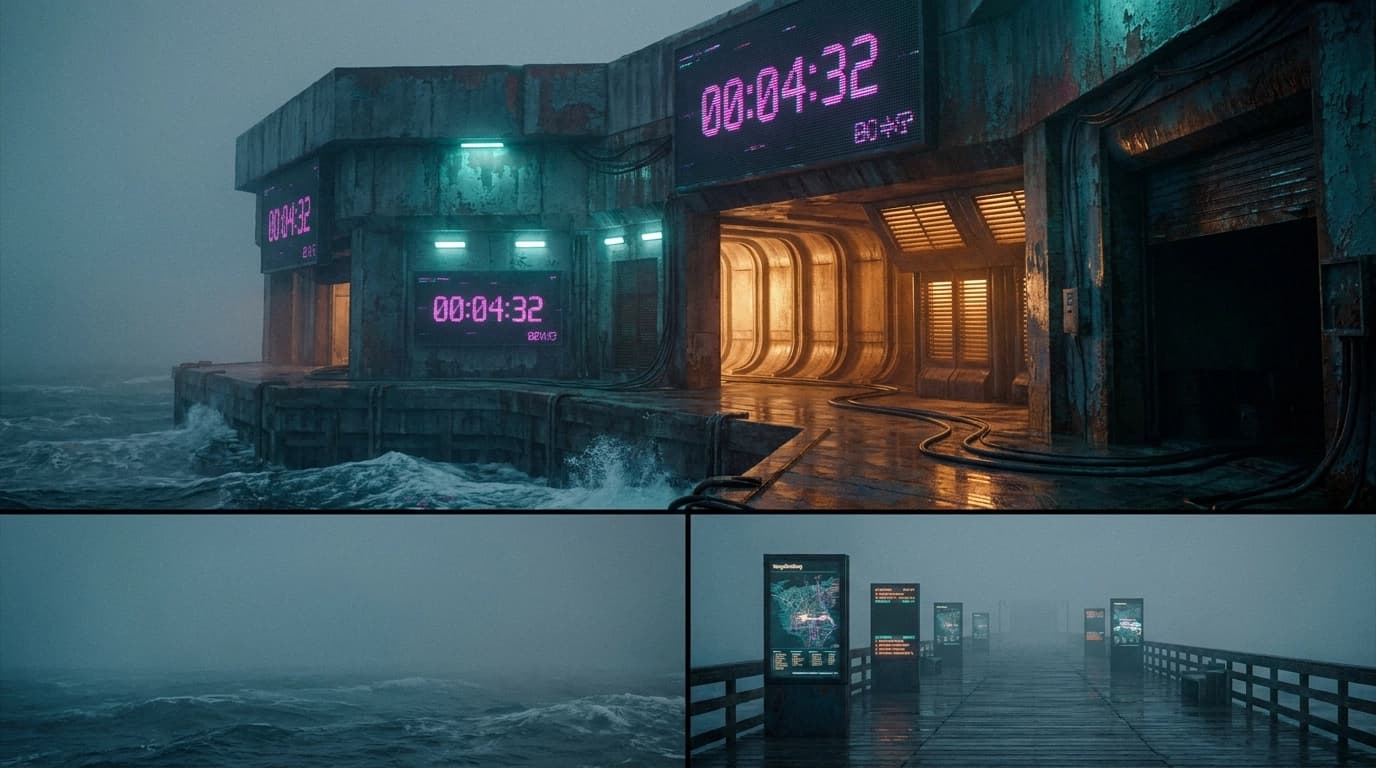
Misty evening clings to the windows of HARBORLIGHT ARENA as the crowd outside the foggy pier bounces on their toes, chanting RIIZE’s name between the harsh magenta flickers of the countdown screens. Inside, the backstage maze feels alive in a way it never does on training days: the ribbed resonance walls shimmer whenever people speak in the wrong tone, and the stage control network—usually “safety redundancy” in staff mouths—has slipped into a glitch window where an impossible timestamp will repeat until the arena is forced to accept the right physical outcome. The first sign isn’t a message or an alert; it’s the way the countdown abruptly freezes mid-cheer, the screens snapping the teaser lyrics out of order like someone yanked a ribbon through a broken music box. The crowd locks in place with their mouths half-open, hands still raised, and a ringing silence pours through the halls as show ops scramble.
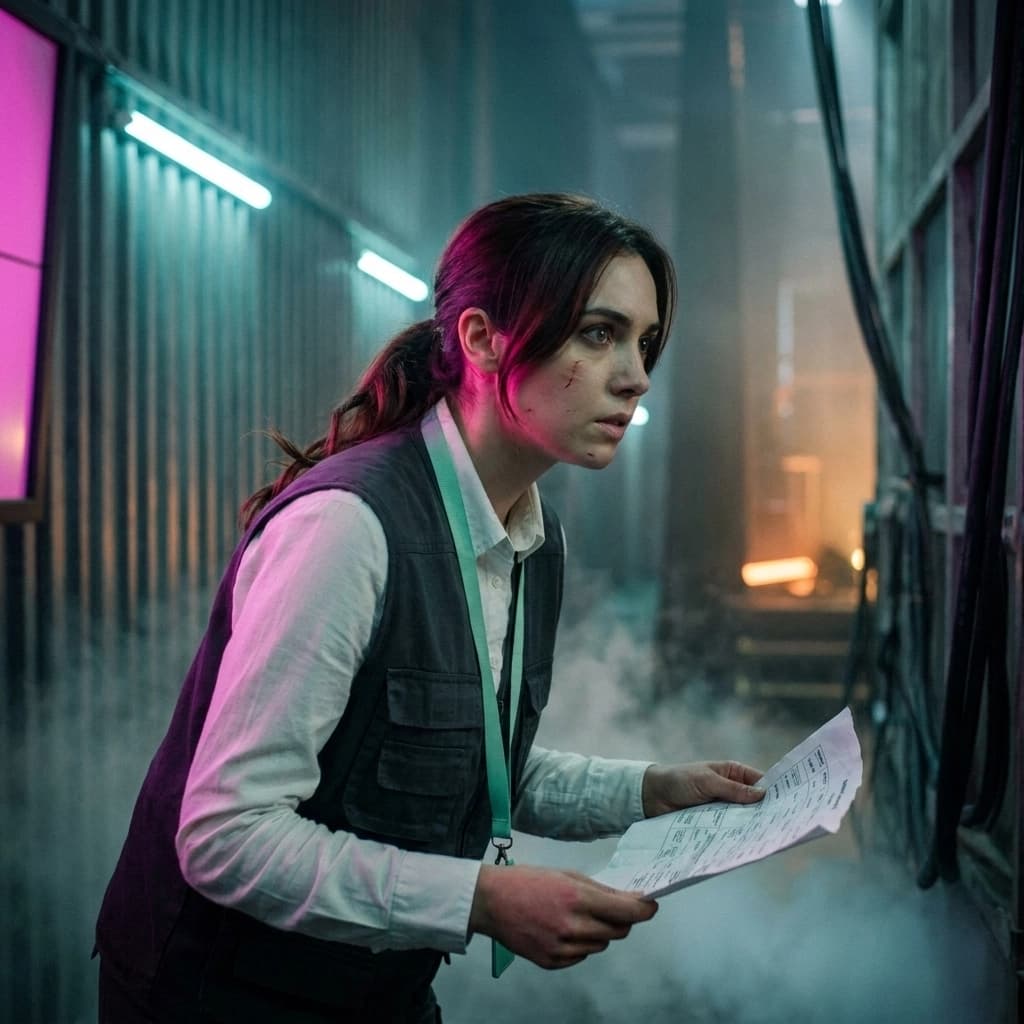
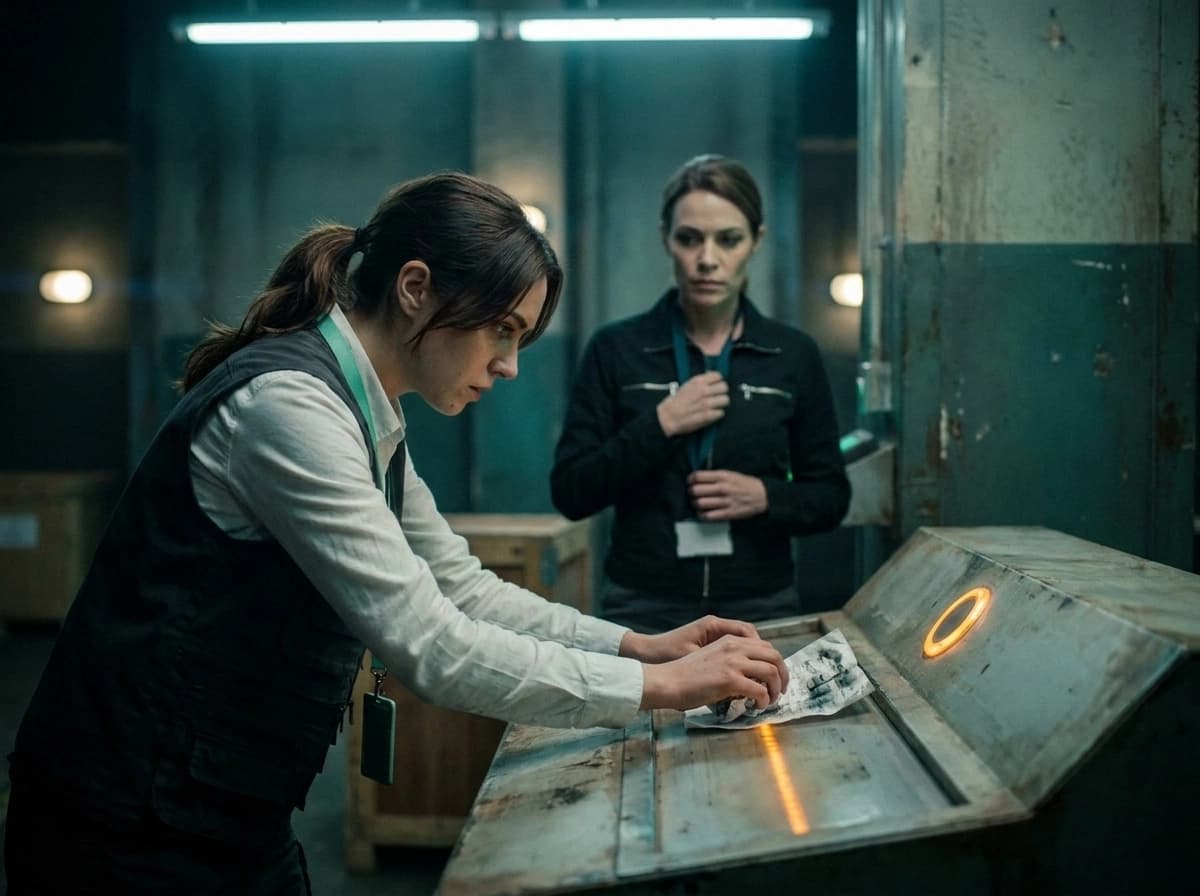
서윤아 feels it in her teeth before she understands it. She isn’t supposed to be running hero missions—she’s a new university public-relations staffer tasked with carrying the “operational paperwork” between check-in points—but when the stage-state freezes, everyone’s hands become useless except the ones that move first. In her pocket she has a hard-copy rehearsal schedule she grabbed earlier from the lost-and-found—because the real one was missing, and “hard copy” is the kind of superstition that gets you through day shifts. The paper is smudged where someone’s thumb must have pressed too hard, and when she angles it under the nearest teal LED, the ink is wet enough to look alive. The schedule is signed by a RIIZE member, dated for tonight—except the date on the bottom corner is the impossible one the glitch window repeats. The signature isn’t just a name; it’s a promise written in a moment that hasn’t happened yet.
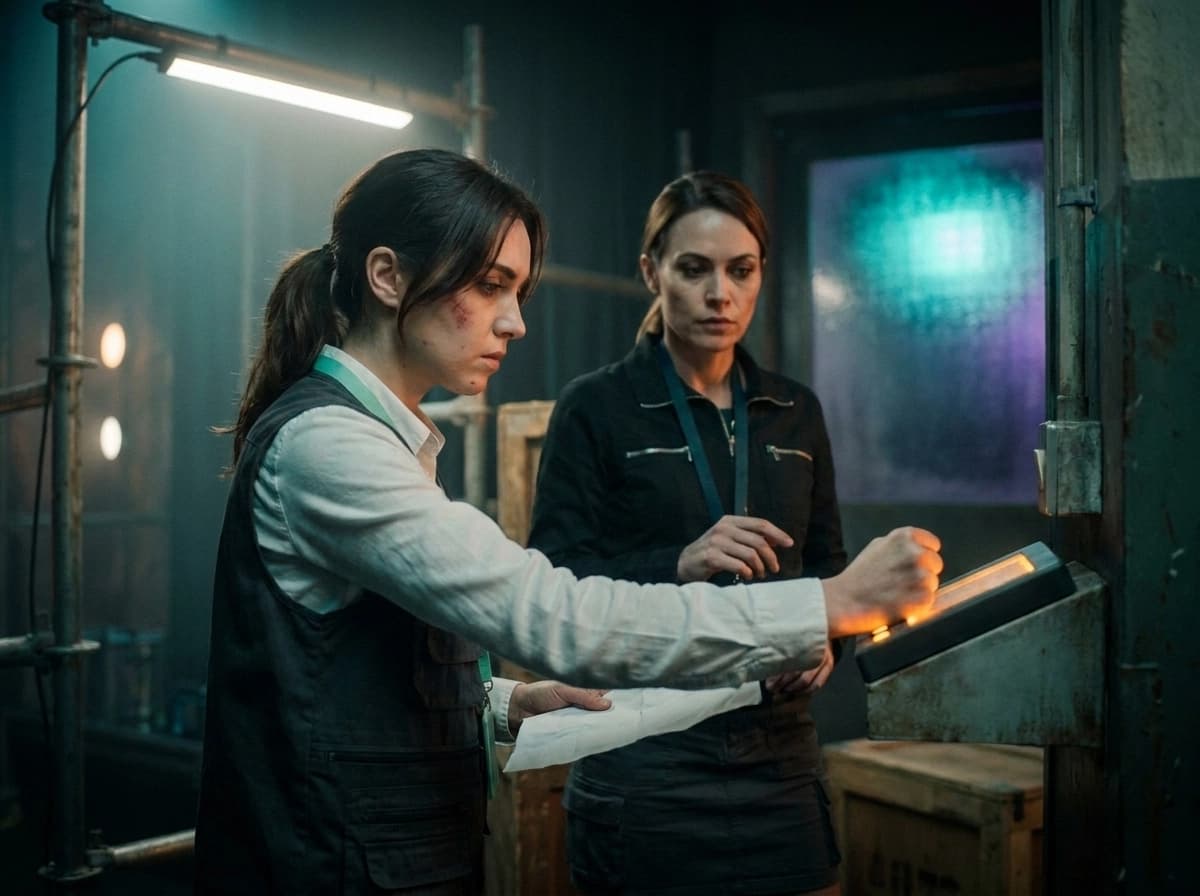
하루정 catches her as soon as 서윤아 steps into the corridor that leads toward the Warm Circuit trench. 하루정’s badge is clipped so tight it scratches her collarbone, and her voice starts low and rules-first, as if the arena itself might penalize her for softness. She demands to see the schedule because fan-club operations run on etiquette and pass integrity—on paper and procedure. But when 하루정 reads the signature, her face goes flat in a way 서윤아 has only seen once during audit week: the kind of blank that means the system just accused you of something without explaining the accusation. Their friendship—built on volunteer hours, shared snacks, and the unspoken comfort of being useful—turns sharp and immediate. 하루정 doesn’t grab 서윤아’s arm to drag her along; she checks the way 서윤아 holds the paper, the way her fingers resist crumpling. Then she opens a small radio channel and tells the nearest fan-pass volunteer desk to go quiet. The arena is “mishearing” people now, and shouting directions would freeze more zones; so she moves like she’s playing within a metronome only she can feel.
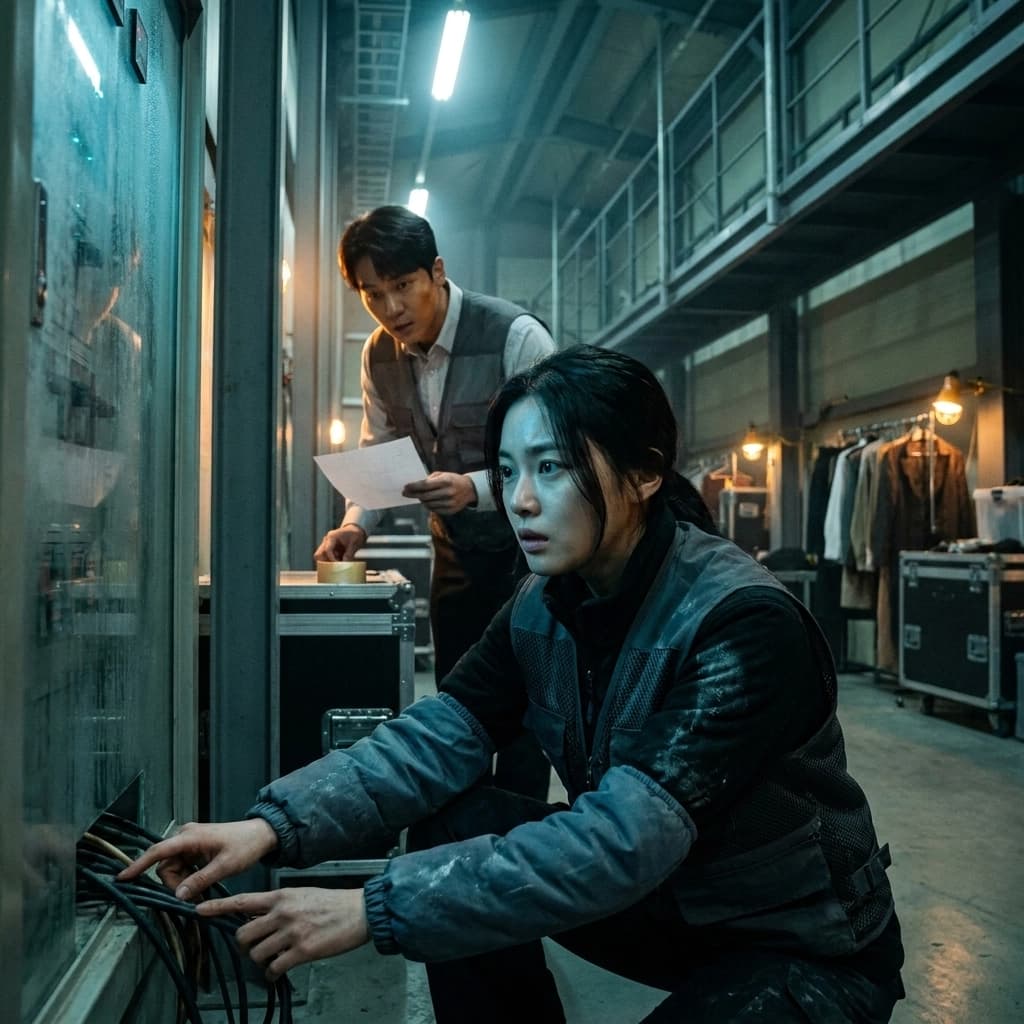
They find 윤도현 behind a gaffer-taped wall panel in the stage access corridor, where the air smells like hairspray mist and warm circuitry. He’s a stage props technician, but he doesn’t look panicked—he looks alert in the way a person looks when they’ve been waiting for a specific kind of trouble. He’s got his hands on a tablet mounted to a cart, but he isn’t typing; he’s tapping a small map of the microphone-map bays with a knuckle, like he’s listening through it. The stage has been perturbed by the public pier’s countdown glitch, and the show-control network is treating every fan-pass token as a binding key for stage-state changes. To restore the stage flow, the system will require exactly one reserved fan pass to be traded for a stage-state reset. Everyone knows it as an awful rumor. 윤도현 knows it as a lever. When he sees 서윤아’s schedule, his eyes flick to the ink stain on her palm—still there from where she touched the page earlier—and he smiles as if the world has just followed his script. He doesn’t say he caused the misordered lyrics, but he does leave a paper strip with the wrong bay code on the cart table, face down like it’s an accident someone will investigate.
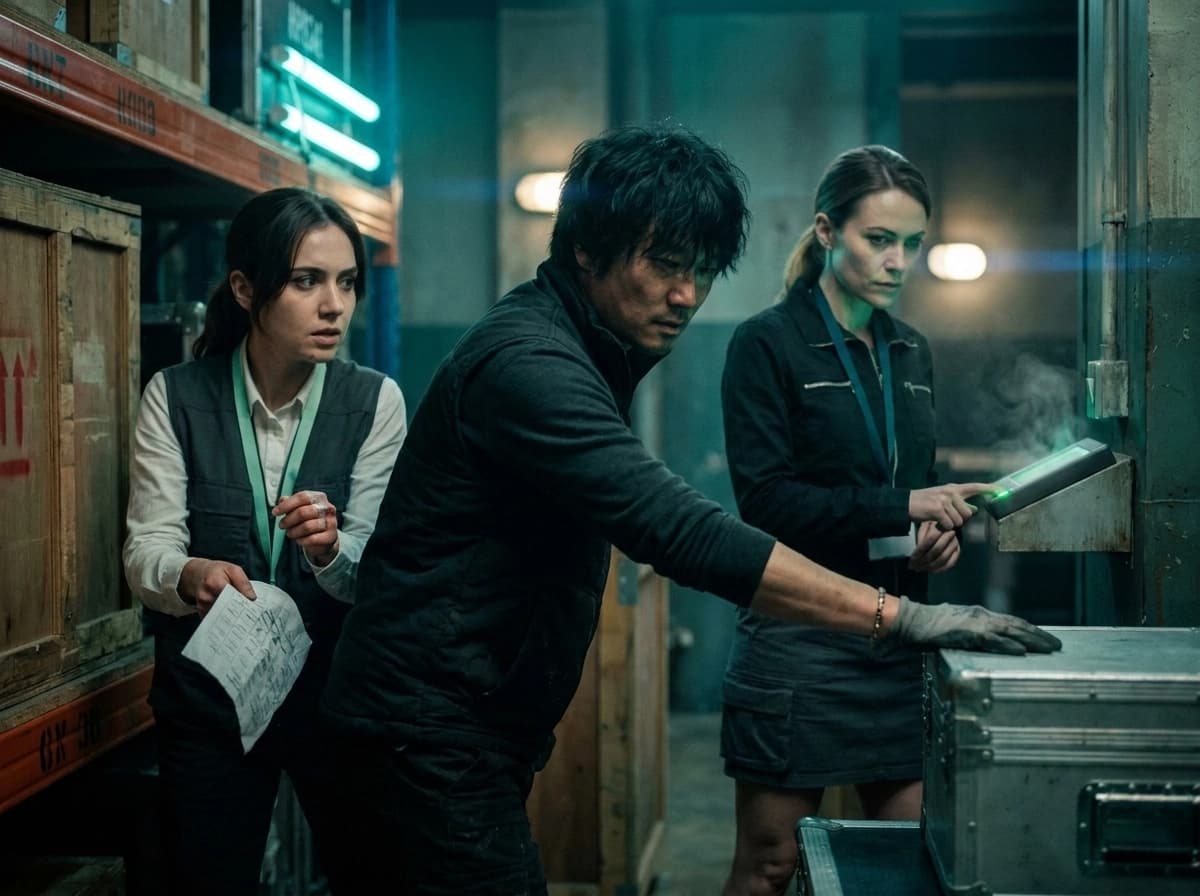
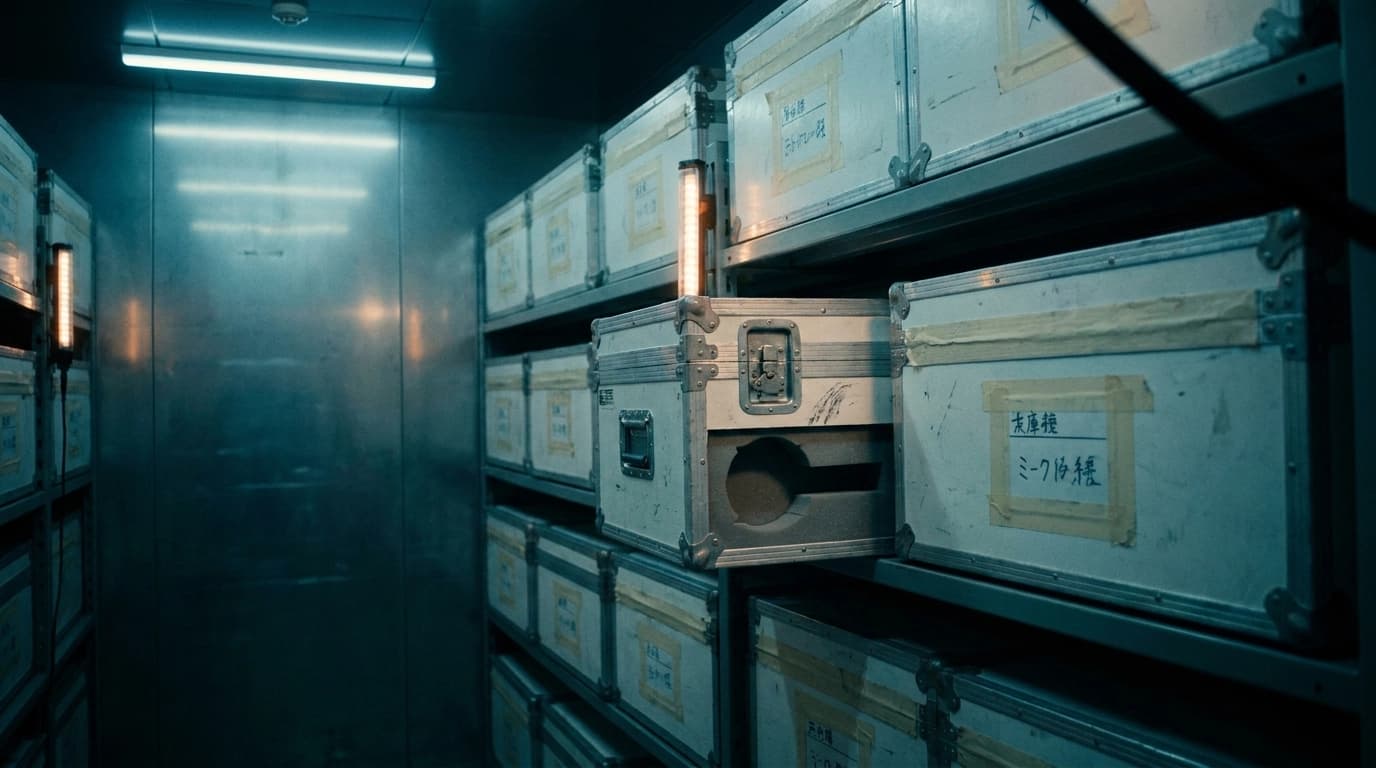
장민서는 already in motion in the Ink-White Storage corridor, where labels look smeared like ink trying to escape the tape. He’s the RIIZE 동선 매니저, obsessed with plans, but his obsession has a scar under it: a previous show where a wrist-check error left someone stranded in the dark for an entire reset cycle. Now he keeps touching his own wrist strap—checking the closure direction, verifying the color barcode—like it can stop fate from misreading him. He stops when he sees 서윤아 and 하루정, because their urgency matches the rhythm of his dread. He doesn’t trust the situation yet, but he trusts physical evidence. He asks for the schedule paper, not because he wants information, but because he wants the trail of ink: schedule-ink residue is his only comfort when the world’s rules start lying. When he reads the signature date, he goes still long enough for 서윤아 to notice his jaw tightening. “Not tonight,” he says, almost under his breath. Then he steps closer to the ribbed wall, listens to the resonance as someone on his team speaks a correction sentence too loud, and the corridor door between them shudders like a misheard note.
김다엘 arrives from the Shadow Load access with her headset angled perfectly, moving with the bright focus of someone who has decided safety must be an action, not a word. Her safety-voice checksum—how the arena respects her tone at the correct volume—isn’t magic, but it is reliable enough that she can block doors without the system freezing additional zones. She hears the frozen cheer through the ventilation like a distant storm, and her eyes go from 서윤아’s ink-stained schedule to the fan-pass lanyards clipped to 하루정’s belt. She understands what is about to be asked even before anyone says it aloud. “One pass,” she says, and her voice lands with the exact pressure that keeps resonance from amplifying the wrong direction. “If the stage needs a reset, it needs a trade. Not a negotiation.” The way she says it makes the threat feel personal: she isn’t warning about the system. She’s warning about people.
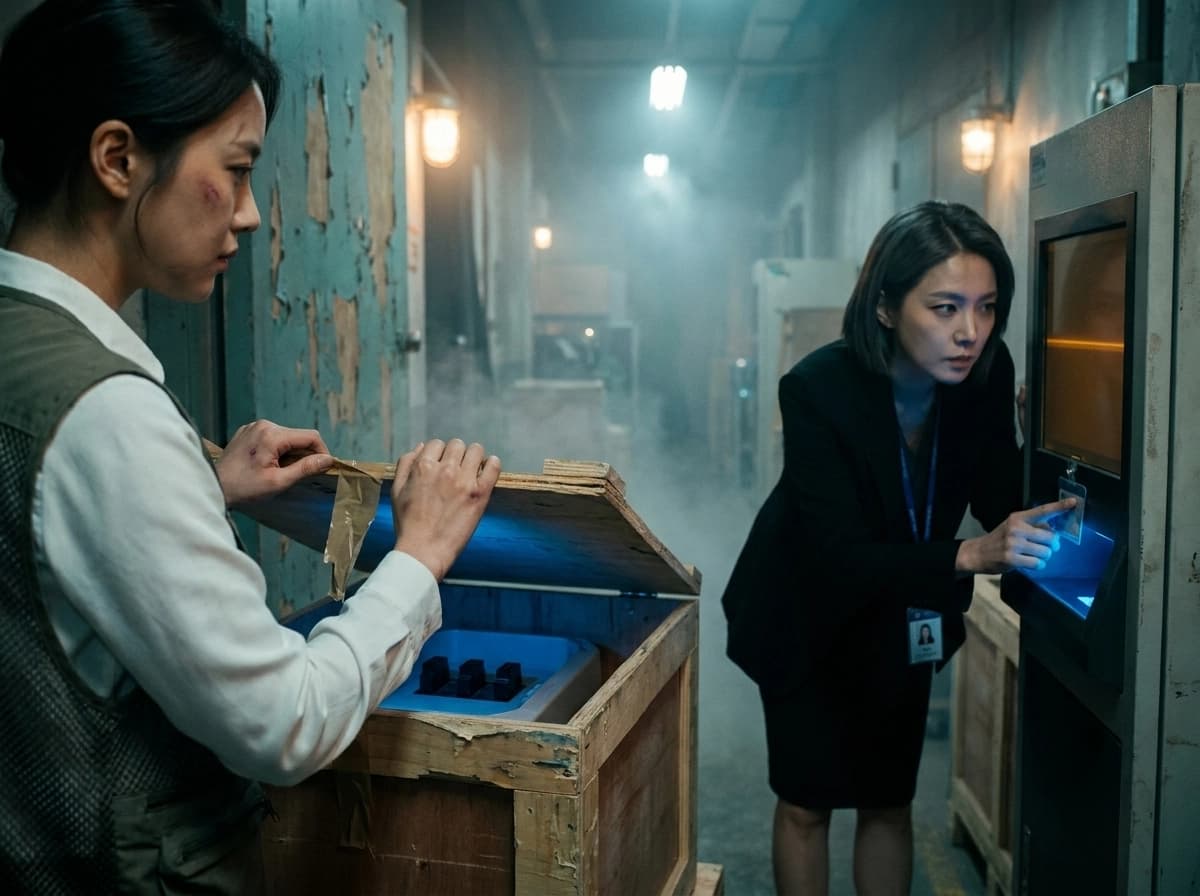
The first reset attempt comes quickly, because time in a glitch window isn’t measured in minutes—it’s measured in how many times the arena will accept a change before it turns harsher. RIIZE members—visible in the edges of backstage life, faces pale under show lights that no longer behave—are brought into the conversation as soon as anyone can get microphones and in-ear setups confirmed. Even frozen, they don’t stop moving their hands; they’re trained, so their bodies keep doing what they know while the world refuses to cooperate. Stage managers shout without meaning to, and the ribbed walls mishear them anyway, locking nearby doors with an extra click and a mist-thickening pulse that coils around ankles like it remembers the last footsteps. 윤도현 uses that hesitation like bait: he walks toward the Ink-White Storage bay signage and points—wrongly—at a prop box labeled with the microphone-map set that should not exist under the stage trench’s expected hardware inventory. Someone follows his pointing with hope. That hope costs them immediately. When the wrong prop box is pulled into the corridor and opened, the RFID-linked microphone-map swaps to an incompatible map. The stage can “continue” only if the missing working microphone hardware is returned physically to the box’s original bay before the lights drop, and the cost of that wrong attempt is paid in time and mist density.
On the next breath, mist rises along the corridor floor, turning the air slick on everyone’s shoes. 장민서 plants his feet and shouts a verification procedure instead of a direction, because speaking in the wrong resonance causes system mishearing. He forces a check of the hand-strap checksum and the exact label alignment on the prop boxes—his hands moving with the certainty of someone preventing repetition of a past mistake. But the system doesn’t care how certain he is. It only cares what pass key was traded and which prop hardware is in which bay. He notices that the wrong prop box choice has tightened the corridor door’s lock, making it harder to reach the microphone bay in time. His plan works until it meets a physical reality he can’t override: someone has already been pulled into the dark by an automatic corridor drop, silhouetted by teal LEDs that flicker like warning strobe. The missing person is one of the stage assistants who wandered to correct a “helpful” misdirection. 장민서’s chest constricts as he realizes the arena is counting on people to pick the path that feels most polite.
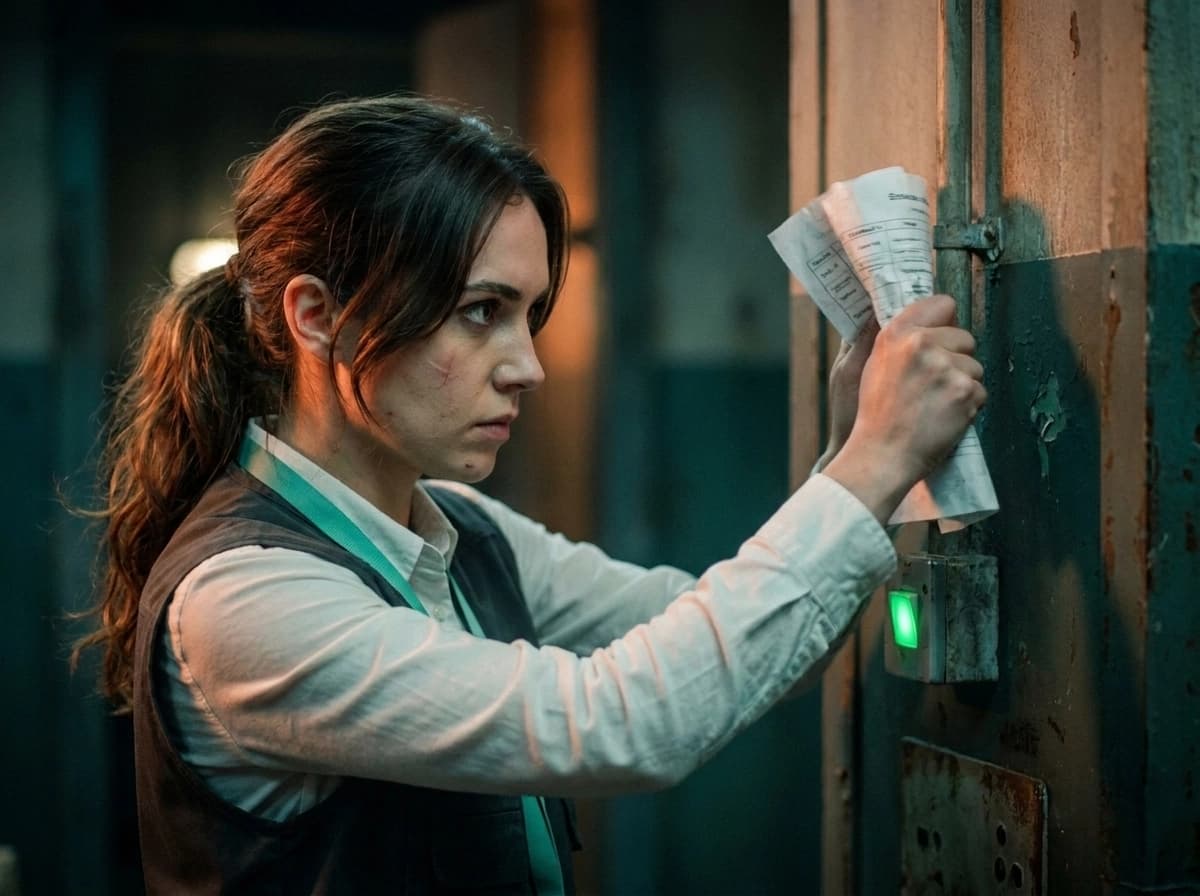
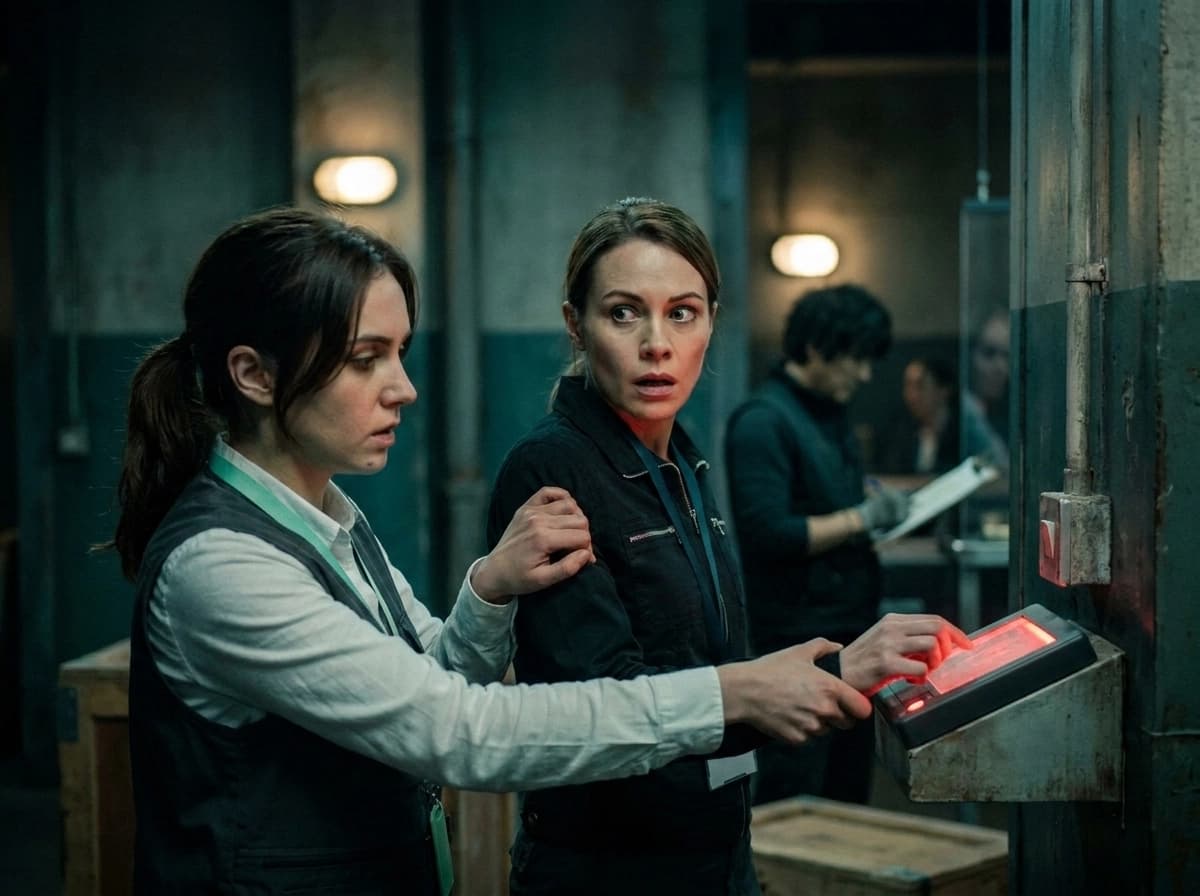
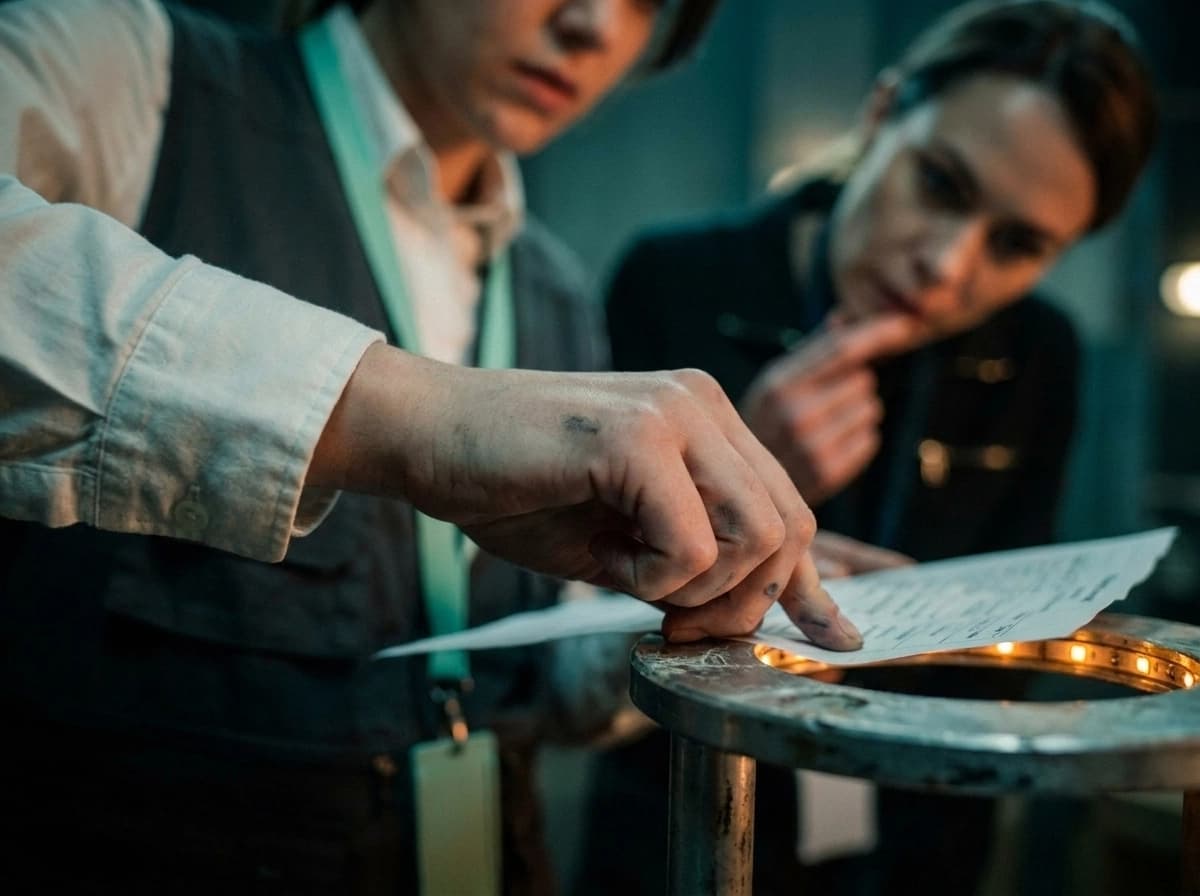
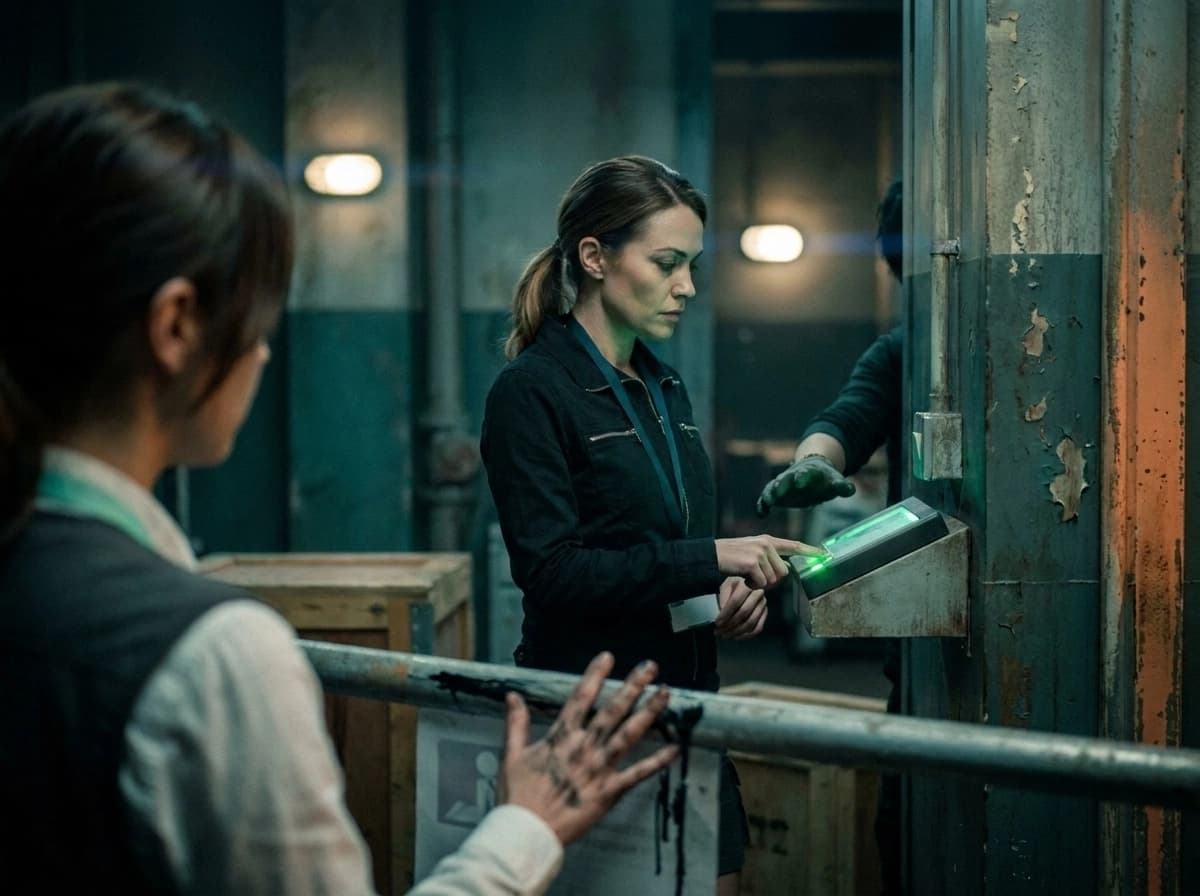
서윤아 makes the first real leap beyond her fear. She doesn’t ask for permission; she checks the schedule paper again and presses her ink-stained palm to the corridor label station, as if the ink could imprint the right timing on the sensors. The schedule-ink residue motif behaves like a clue the arena can accept. Her fingers, trembling, still read the smudged notes that she hadn’t understood earlier: a rehearsed loop through Warm Circuit and Ink-White Storage that arrives at a single prop bay at a specific moment—an impossible moment, yes, but now her body can feel how the arena repeats itself when reset is attempted. 하루정 moves beside her with cold ritual steadiness, refusing to let her step beyond the safe resonance threshold. They communicate with shorter sentences than fear wants to produce, because if they speak too loudly the walls freeze extra zones. When they reach the Warm Circuit corridor door that is currently locked, 하루정 presses her badge clip into the scanner and speaks the rules at a volume that makes the door understand her. “Trade one pass,” she says again, but this time it’s not a warning—it’s a step. The door unlocks with a hiss like fog exhaling.
To get the stage to flow again, someone’s reserved fan pass must be spent for the state reset. 하루정’s entire role has been to protect those passes with procedure, and her mentor wound—being the person who tells others to wait when someone else’s risk is growing—breaks against the need to act. 김다엘 watches her hesitate and doesn’t touch her. She stands close enough to block the route to the fan-pass kiosk unless 하루정 moves. “I won’t force your hand,” she says, and her bright focus hardens into a kind of mercy that still feels like a wall. The person whose pass is spent becomes locked out of every illuminated exit for one full reset cycle. That means whoever trades has to survive in the dark, in the maze, while the rest of the arena tries to get the stage back. 서윤아 sees the physical consequence instantly: the illuminated exits will turn off like stage lights when showtime hits, and the fog afterimage will curl around ankles like a trap remembering the chosen path. She thinks of her own panic, how it makes her late to movements. She thinks of 하루정’s badge-dry ritual—the way she cleans her name tag like she can erase harm. The internal need that drives her isn’t just saving the show; it’s proving she can be useful without hiding behind rules when people’s safety is on the line.
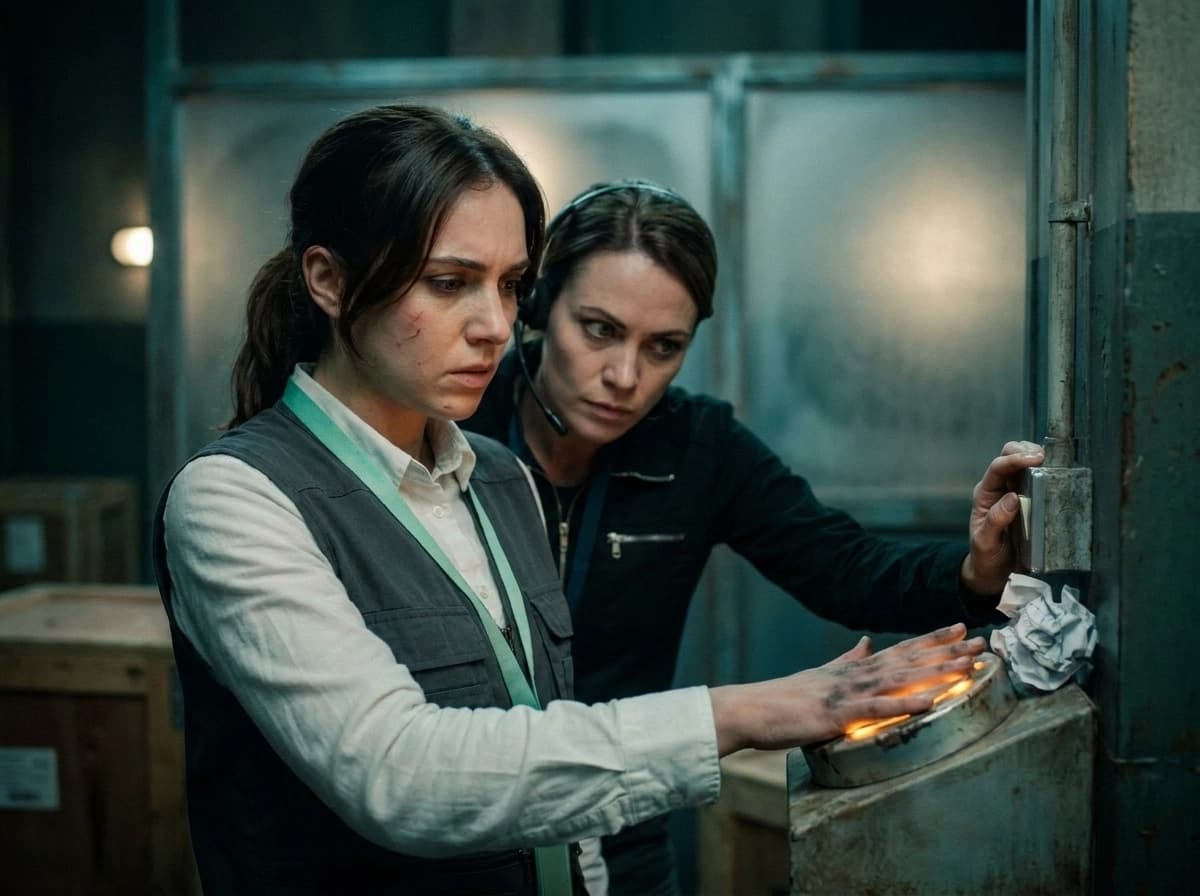
She offers her own pass without being asked. Her hand reaches for it too fast, and she nearly drops it because her fingers are slick with mist. 장민서 notices immediately—he’s been counting wrists and straps all night—and he places his own hand over the lanyard for a second, checking the closure, making sure she doesn’t waste a token with incorrect alignment. “Confirm,” he says, voice steady, eyes darting to the corridor door and back to her face. 김다엘 doesn’t congratulate. She simply nods toward the trench map where the reset key is displayed as a pulsing amber line. 하루정’s eyes go wet but she doesn’t let it show in her posture. She can’t afford to bargain with the arena. She can only commit to the next step.
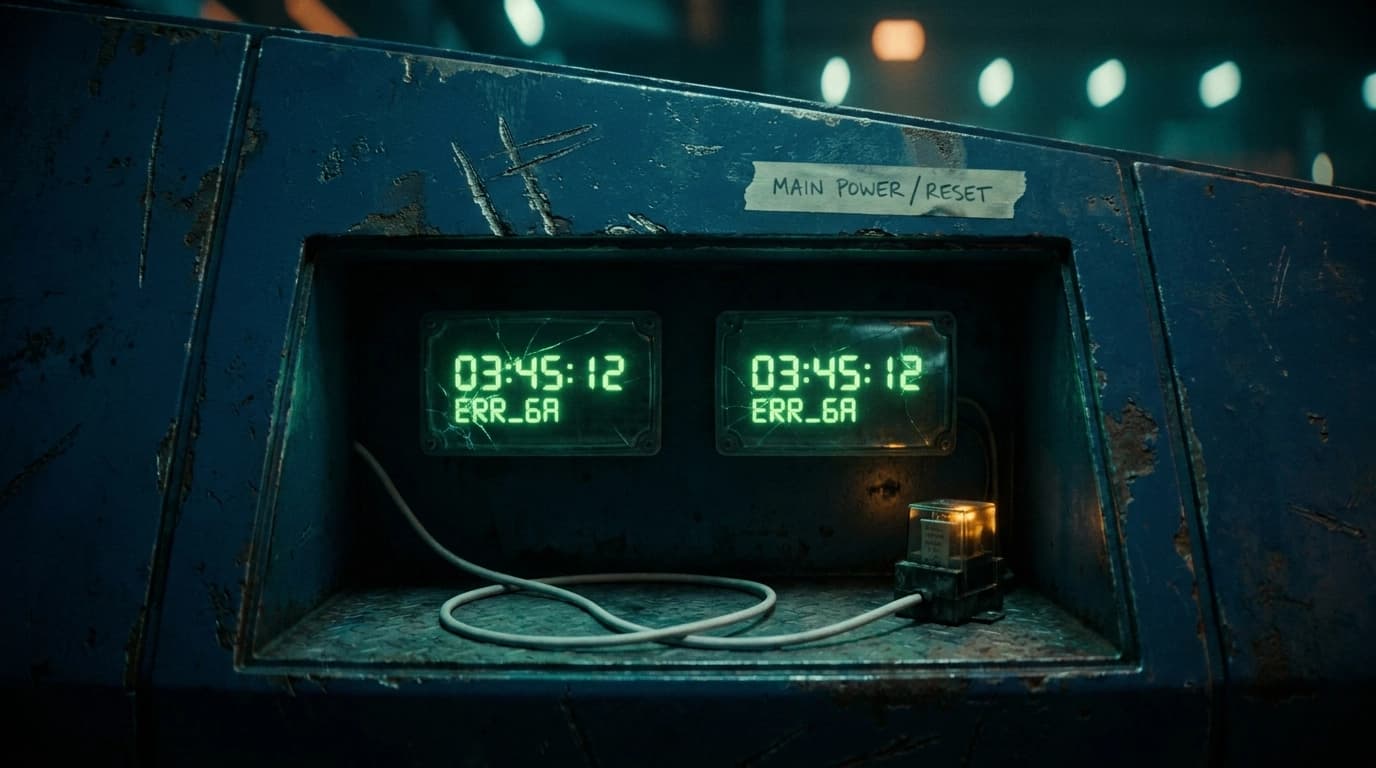
They trade, and the stage-state resets with the feeling of a gust pushing through the ribs of the building. RIIZE members’ frozen bodies loosen just enough for movement—hands flicking, shoulders dropping, breaths audible in the sudden return of stage ambience. But the wrong prop map choice from the previous attempt still has to be corrected. The system will only keep the show running if someone physically returns the exact missing mic hardware from the wrong prop box’s original bay before the lights drop. The corridor timer doesn’t show on a screen; it compresses into the rise of mist and the shrinking windows of access. Each time the arena “resets,” the mist afterimage curls tighter around ankles, and the resonance walls shimmer harder when voices spike.
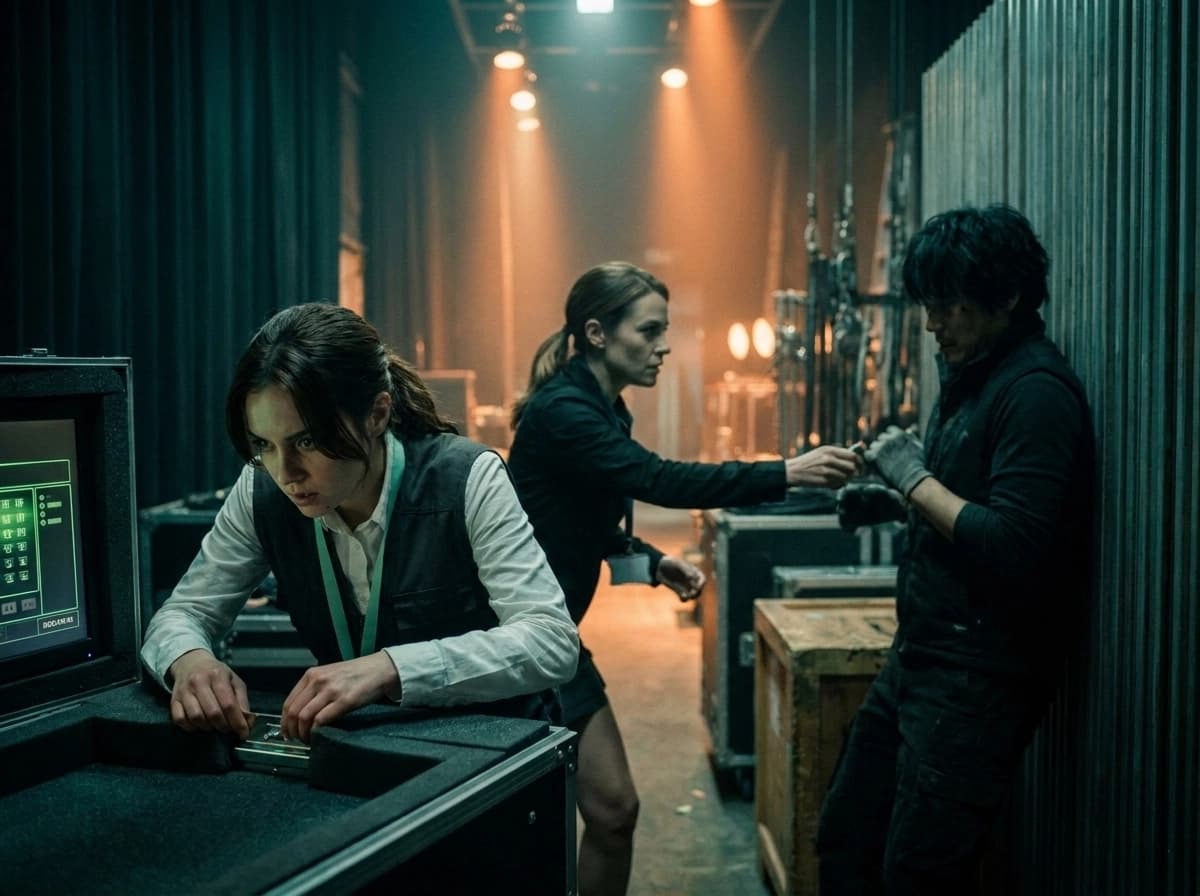
윤도현 slips into the center of the group at the worst possible moment. He’s where he shouldn’t be—near the Shadow Load where light falls violet—his tablet cart blocking the only clean route toward the correct microphone bay. He doesn’t hold a weapon; he holds a micro-case with a bay tag clipped to it like a promise. When 서윤아 reaches for the case, he pivots with his body, not his hands, and the movement forces her to adjust her path. “If you take that box,” he says, “you’ll miss the original bay and the stage will go silent again.” His voice is calm, almost friendly, but his words are a trap made of procedure. He is sympathetic in the way someone can be sympathetic while still guiding you into harm, because he believes he’s buying time—or buying the reader’s understanding—for a larger play.
김다엘 steps in to counter his obstruction, but the moment her safety-voice checksum hits the resonance threshold incorrectly—half a syllable off—another corridor door shudders and locks, stealing their shortcut. The maze punishes loud correction. 장민서 curses under his breath, then quickly adjusts: he doesn’t shout again; he physically moves to intercept the locked door, bracing his palm on the panel while he speaks a verification phrase at the right tone to unlock it. His mentor wound fires: he can’t bear repeating the last time someone’s wrist-check was wrong and someone ended up left in the dark. He checks the wrist strap, then checks it again, then seals the strap with a click so precise it sounds like a countdown bead.
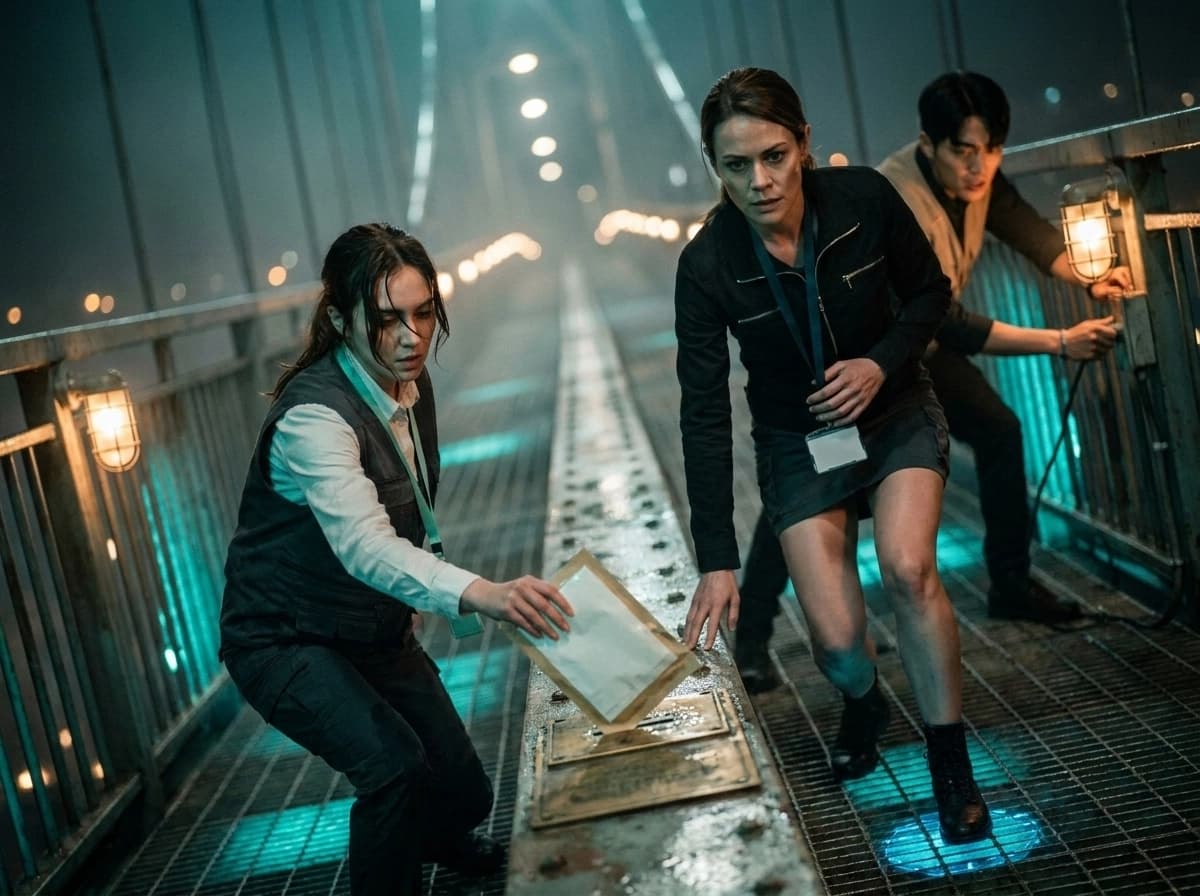
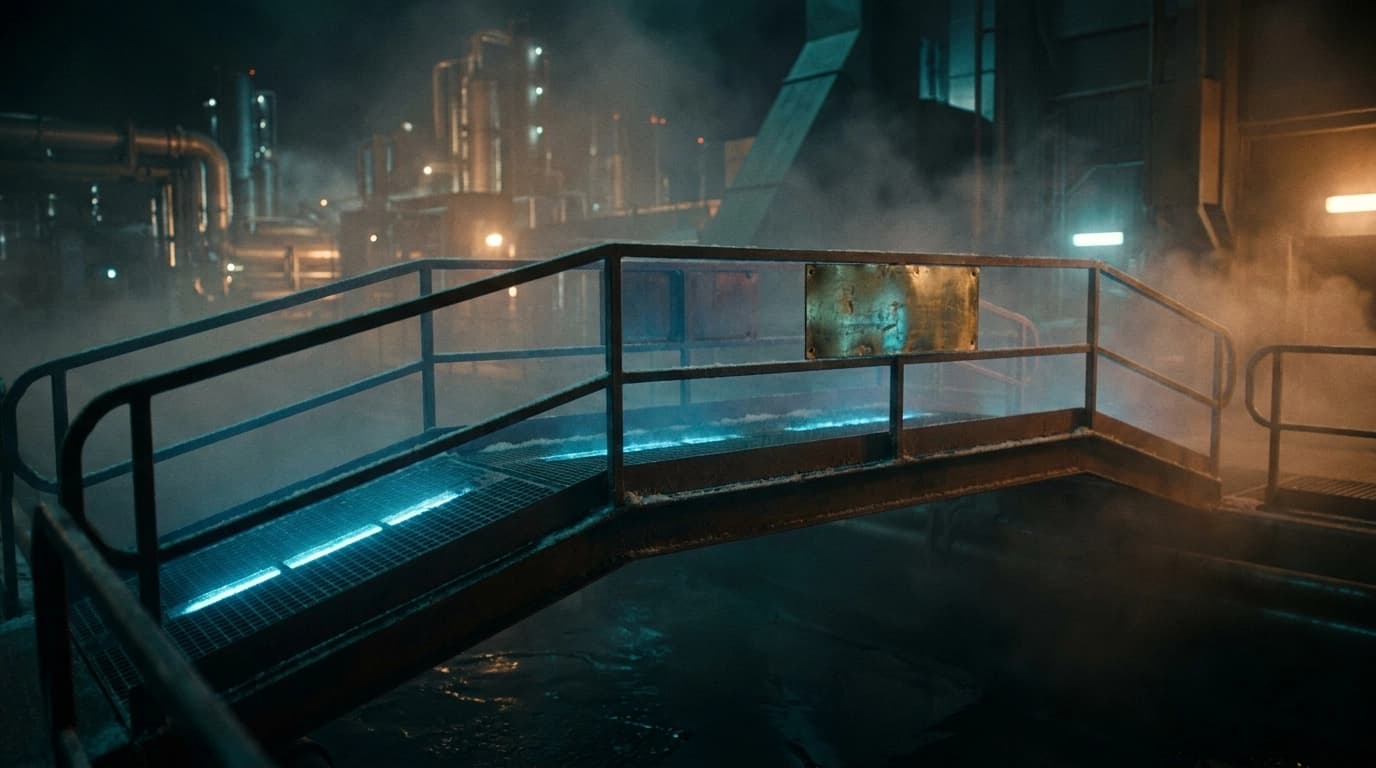
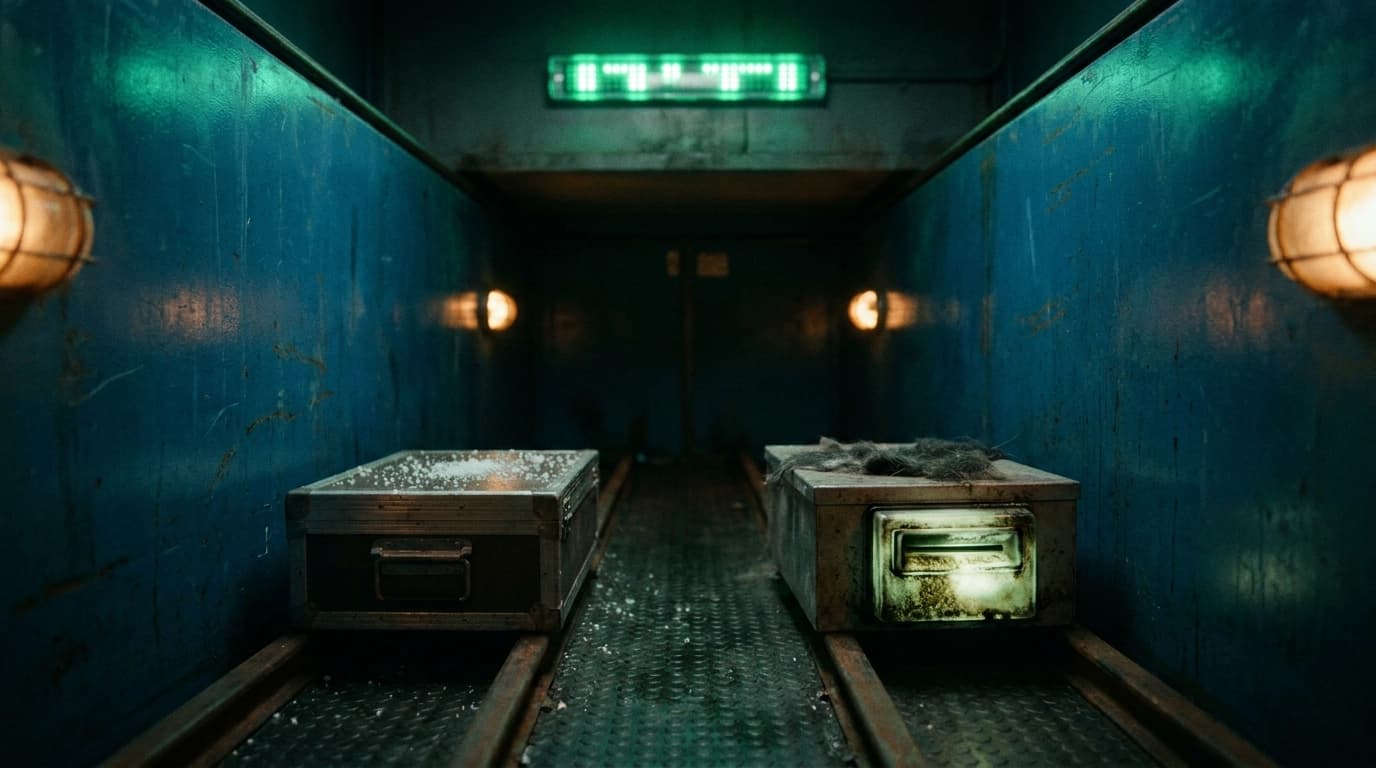
The group converges on a narrow junction where Warm Circuit and Ink-White Storage nearly touch. The air is teal-cold; droplets hang from cable trays and tremble when footsteps disturb the mist. Somewhere ahead, someone’s voice echoes and then gets swallowed as the Shadow Load eats sound into violet. 서윤아 realizes that if 윤도현’s obstruction is followed—if the wrong mic-map correction bay is raided first—then the stage lights will drop before the missing microphone is returned. She also realizes something more unsettling: the schedule paper she stole earlier was not only signed with an impossible date. It had a small crease pattern that matches the RFID label alignment of the exact bay she needs, as if someone mapped this glitch window in advance. Her internal pursuit and evasion becomes physical. She runs straight at the prop case cart, not toward the path 윤도현 expects.
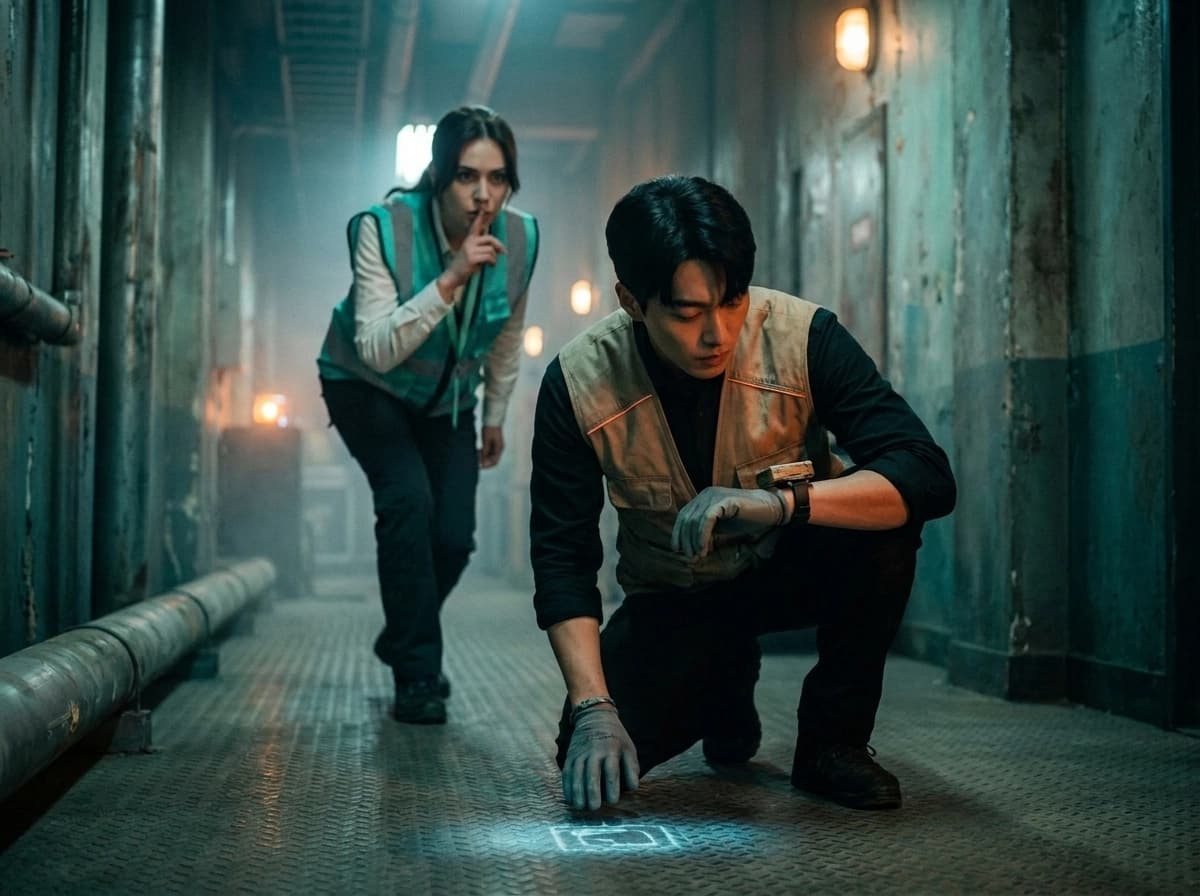
윤도현 sees her intent and tries to redirect with a misheard-volume phrase. He turns his head toward the resonance wall and speaks too loud on purpose, letting the arena “mishear” him into creating a freeze on a nearby zone. It’s micro-sabotage by misdirection ledgers, and he expects the others to react—either by following his words or by arguing with him. Instead, 서윤아 doesn’t argue. She drops to her knees and reaches under the cart to yank the bay tag clip free from the micro-case holder. The tag scrapes her skin, ink mixing with mist like dark paint. 윤도현 lunges—not to hurt her, but to stop the physical theft. He catches her wrist, and for one heartbeat their faces are inches apart, both breathing hard. His expression softens, then hardens again. He releases her just enough to avoid a worse collision with the resonance wall, and in that fraction of space she slams the case tag against the bay panel scanner herself.
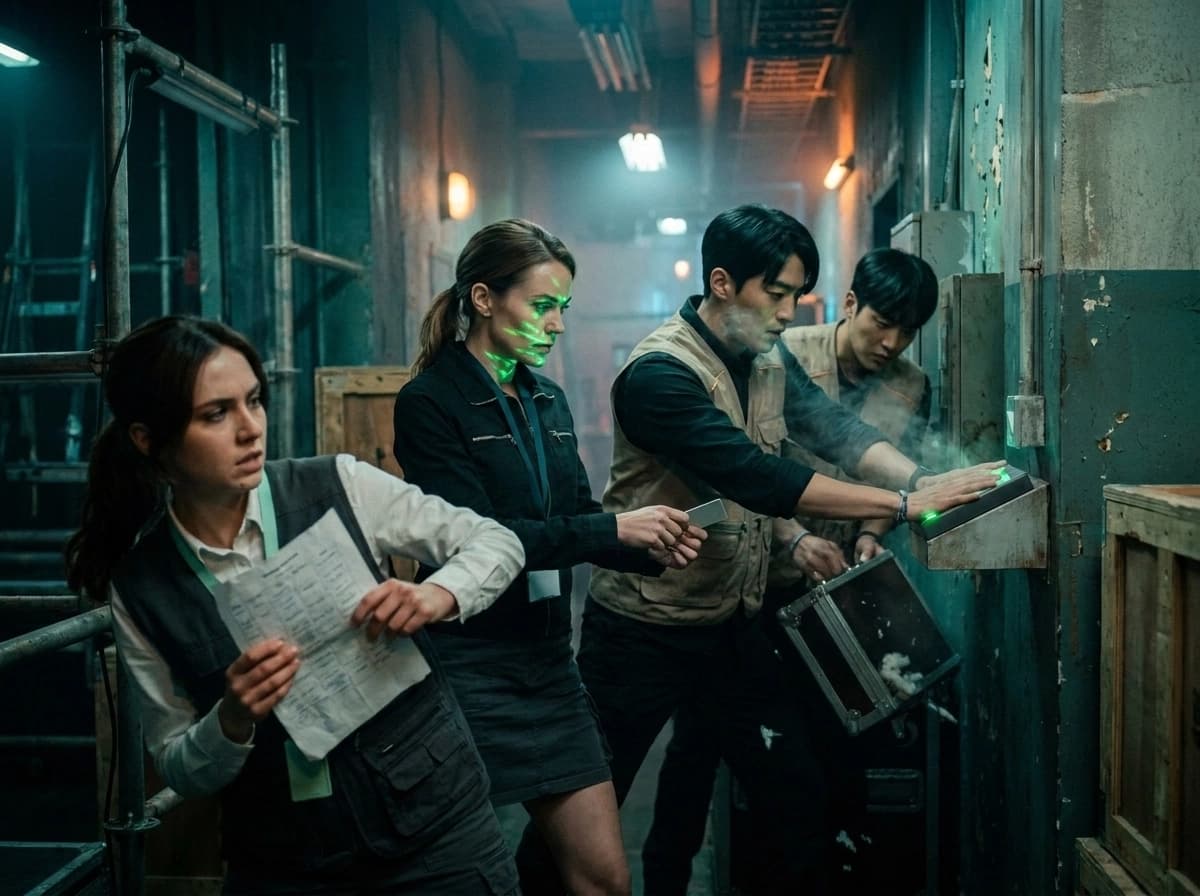
The panel lights amber; a correct bay identifier appears without a spoken command. The stage trench beneath the platform brightens, as if it can feel the right hardware being called back. 장민서—always checking wrists and straps—sees what she did and nods sharply, as if the plan is finally aligning to the physical world. 하루정, still managing fan-pass etiquette and the traded-state consequences, watches the exit lights outside the illuminated corridor begin to dim. She understands the trade she’s witnessing: whoever’s pass was spent—서윤아—will be locked out of illuminated exits for one full reset cycle. That means 서윤아 can’t simply sprint out when the show starts again. She will have to remain in the dark long enough for the mic hardware return to complete and the next reset not to trap her permanently.
So the group splits by necessity, and Kim Dae-el orchestrates the split with action, not speeches. She blocks the corridor door with her body to prevent anyone else from getting trapped in that dark corridor behind the Shadow Load. “You don’t get two people locked out,” she tells the others, and she points toward the bay where the exact missing microphone hardware needs to be returned. Her voice lands right; the corridor doesn’t freeze extra zones because she speaks within the correct resonance volume. 장민서 takes point with the correct prop bay route, dragging a cable tray aside to clear a path, while 김다엘 keeps the door sealed long enough for them to pass. 하루정 stays close to 서윤아 because she can’t afford to lose her; her mentor wound doesn’t let her abandon someone once she’s started saving them.
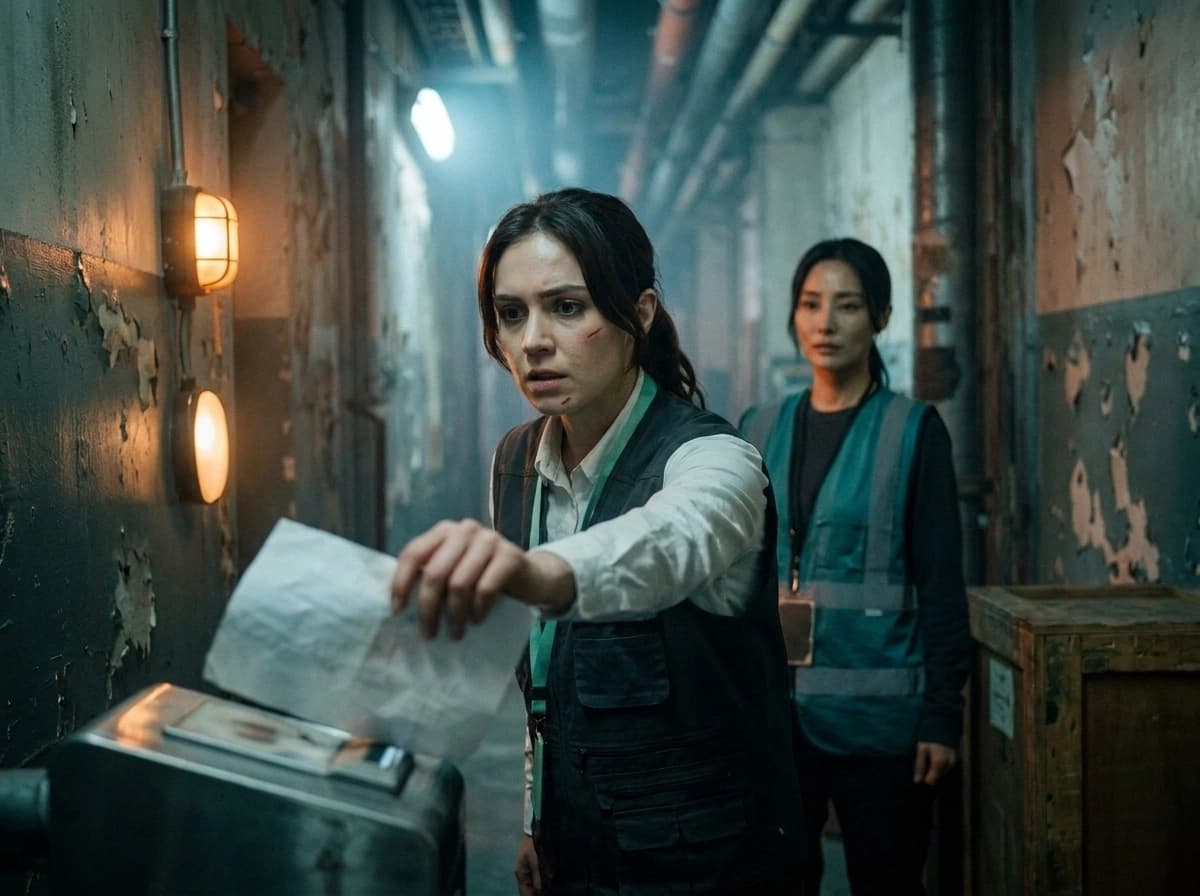
윤도현, meanwhile, slips into the side passage toward the wrong prop box bay again. He wants one more attempt to force the stage into accepting his preferred sequence—because he believes his earlier misdirection will become evidence later, or maybe because he genuinely thinks the system can be convinced to choose the “safe” timeline through repeated controlled errors. But 서윤아 has already stolen the bay tag she needed. She sprints after the micro-case into the ink-white storage doorway, fog smearing across the edges of labels like the arena is trying to hide its own reading. She finds the wrong prop box hardware in its bay—one microphone missing from the working map—and she sees the physical mismatch instantly: the missing microphone hardware is not just absent; its dock mount has scuff marks that don’t match the others, as if it was swapped during a previous reset attempt and the arena is trying to conceal the track. She grabs the microphone unit with both hands, careful not to drop it because the fog is slick and the dock mount vibrates faintly like it remembers being docked. A quick tug, a twist, and it comes free with a soft pop.
Outside the storage doorway, the corridor lights dim sharply as the stage approaches showtime. Mist thickens to a near-whiteness, and the afterimage of their steps curls around 서윤아’s ankles like it wants to keep her in place. She can’t reach an illuminated exit—she’s the person whose pass was spent. The only way out is the dark route, and dark routes don’t stay open long; they swallow light and sound. She runs anyway, dragging the microphone unit against her forearm, leaving thin ink smears behind where labels are sticky with residue.
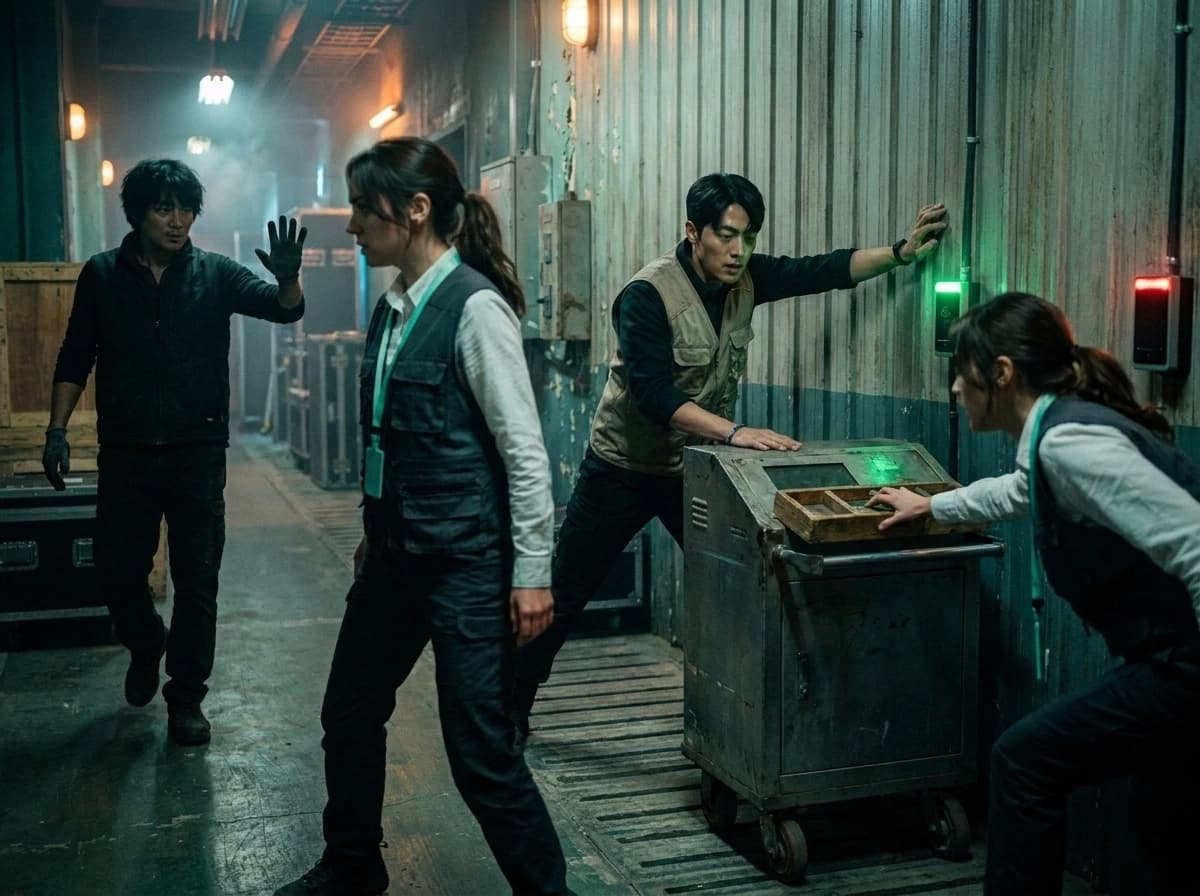
As 장민서 and the others race the correct bay, 윤도현 appears suddenly in the same hallway, blocking their final approach with his body and his micro-case cart. His face is tight; he’s made the kind of choice that only looks clever until it costs someone. “If you insert it now,” he says, not quite a threat, “the stage will lock the wrong state and you’ll both be stuck for the next cycle.” It’s sympathetic villain behavior turned into a blunt physical obstacle. 김다엘, stationed to prevent further trapping, doesn’t let him leverage the corridor resonance again. She steps into his path, shoulders squared, and forces him to choose: shove past her and risk freezing the corridor door to extra zones, or step aside and let the hardware insertion happen. He chooses the lesser disaster, stepping aside with jaw clenched.
For a few seconds, everything is watchable in plain sight. 장민서 kneels by the correct bay and aligns the microphone unit into its dock mount, checking the label smears and the RFID scan indicator with fingertips that tremble only slightly. 하루정 presses her badge against her own belt clip, keeping her voice quiet and correct. The amber trench light flickers; then, like a breath returning, the stage under them wakes. The show-control network accepts the right physical outcome. The lights outside the corridor surge teal and warm, and the countdown screens outside the gates correct themselves, the teaser lyrics finally reordering into the sequence the crowd has been waiting to sing. RIIZE members—released from the earlier frozen mid-cheer—move as if they’re catching themselves falling. Their manager cues begin to echo without distortion, and the arena becomes a living machine again.
But the glitch window doesn’t end cleanly. The reset cycle exacts its cost: the exits that are illuminated for everyone else remain dark for 서윤아. The door she needs is the one that went violet-black under Shadow Load protection. She can hear faint applause beginning beyond the stage, but she cannot step into the light. She is left in the dark for one full reset cycle, as the rules promised. Fog coils around her ankles with patient malice. She hears 하루정’s breathing and tries not to panic, but fear still makes her late—her old habit of moving half a beat late returns. 하루정 notices and counters by making her own body the metronome: she steps close enough that 서윤아 can grab her sleeve, then moves on the beat of the arena’s corrected resonance. “Now,” she whispers, barely more than air, and 서윤아 moves with her, not against her.
When the next reset cycle completes, illuminated exits flicker back on like someone turning pages. 서윤아 stumbles into the light and almost collapses, hands still cradling the bay-tag she stole earlier—proof of the sequence that had tried to hide. Her ink-stained palm looks smeared now, less like a clue and more like a bruise. Kim Dae-el checks everyone quickly, not for blame but for the physical state of the group: knees, wrists, bruises, whether anyone’s helmet or earpiece is missing. 장민서 performs his wrist-check one last time with the solemnity of a vow. 윤도현 stands apart at the edge of the crowd-control line, watching RIIZE’s first live stage moments with a face that is too conflicted for a man who “just did his job.”
As the show surges into full song, the arena’s afterimage begins to loosen, curling away from their ankles like memory losing grip. In a quiet pocket behind the curtain line, where sound is muffled but not silent, 서윤아 finally flips her hard-copy rehearsal schedule over and shows 하루정 the crease pattern. The ink stain at the corner has dried into a map of sorts, a record of the loop she followed because it matched the bay label alignment. She realizes the signature date wasn’t only impossible; it was bait. Someone inside the system had seen the glitch window before it happened, and they’d used a signed schedule to force her to physically follow the right route even when everyone else would have argued about process. She looks at 윤도현, because his misdirection and his fixation on microphone maps were too accurate to be random. He meets her gaze for one beat too long and then turns away, as if he can’t decide whether to confess or protect.
By the time the encore cue lights flash safely green, 서윤아 understands the last piece: the only way to break the glitch window isn’t a clever speech or a perfect schedule. It’s a chain of physical choices—one pass traded, one correct mic hardware returned before lights drop, one door kept shut with bodies instead of arguments—until the stage control network can no longer “mishear” reality. RIIZE performs as if the arena itself has been redeemed. Outside the gates, the foggy pier crowd finally resumes their motions, cheering in real time instead of frozen mid-cheer.
When the night ends, 서윤아 and 하루정 stand in the backstage corridor again, the air still tasting faintly of sea mist and warm circuitry. 서윤아’s fear hasn’t vanished; it’s just been harnessed into motion. 하루정’s rules-first posture softens, not into surrender but into trust—she no longer believes procedure is enough by itself. 김다엘 logs the outcome for safety compliance, her bright tone gone quiet, eyes lingering on the moment someone was trapped in the dark and then brought back. 장민서 checks the wrist strap one more time, and this time he doesn’t tighten it like a fear reflex; he tightens it like a promise to never let a single missed confirmation become a repeat. 윤도현 slips away while the applause continues, leaving behind one small rectangle of tape on the cart table—an unmistakable bay code corrected into the right place, as if he couldn’t fully resist turning his own “accident” into a final breadcrumb.
And 서윤아, holding the paper schedule that started it all, feels the unsettling warmth of ink that was already there when the world told her it hadn’t happened yet. The glitch window may repeat, but so do people—so the story doesn’t end with “fixed.” It ends with learned leverage: next time the arena shakes and the countdown screens glitch again, 서윤아 knows exactly what to do with her hands when fear makes her late, and 하루정 knows exactly which rule can be bent by standing in the right place at the right volume. The stage keeps its music; the maze keeps its secrets; and tonight, for one complete cycle, the arena chose them back.