
本文へスキップ
Grammar of the Soul Thieves cover image

Grammar of the Soul Thieves

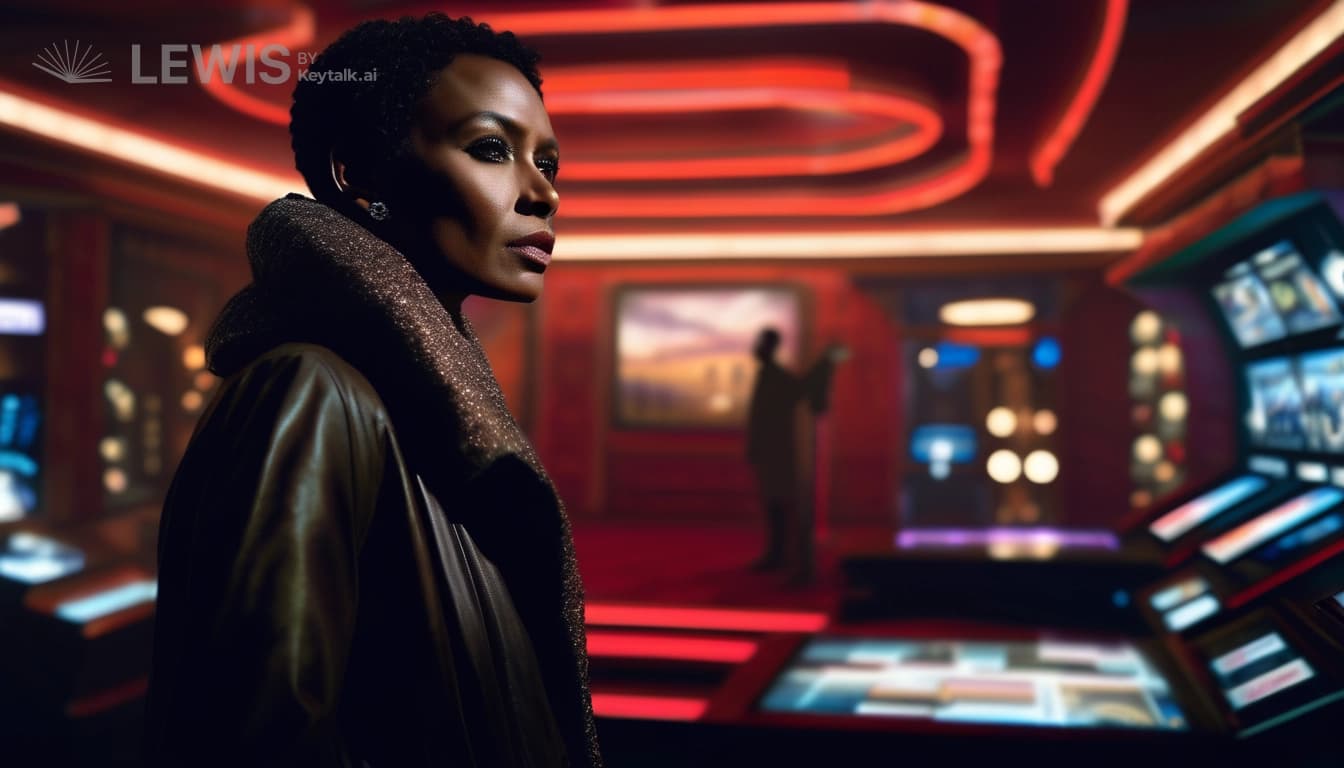
In a city where neon lights camouflage ancient shadows, a reclusive linguist deciphers a hidden dialect spoken only by supernatural ‘envoys’—beings whose whispers alter fate itself. His obsessive translations reveal that the city is a battlefield between entities vying for dominion over human consciousness, subtly reshaping memory and will. As the linguist’s understanding grows, he discovers that every sentence exchanged in this tongue risks erasing the speaker’s soul; the only way to reclaim the city involves teaching its citizens to speak words even the cosmos fears, rewriting the hierarchy of the supernatural with language as the ultimate weapon.

週間ランキング

rank icon image
#21 Genre
スクロール

キャラ

主人公

Eliot Harlan Finch

性別男性
職業Forensic Linguist / Semiotician

プロフィール

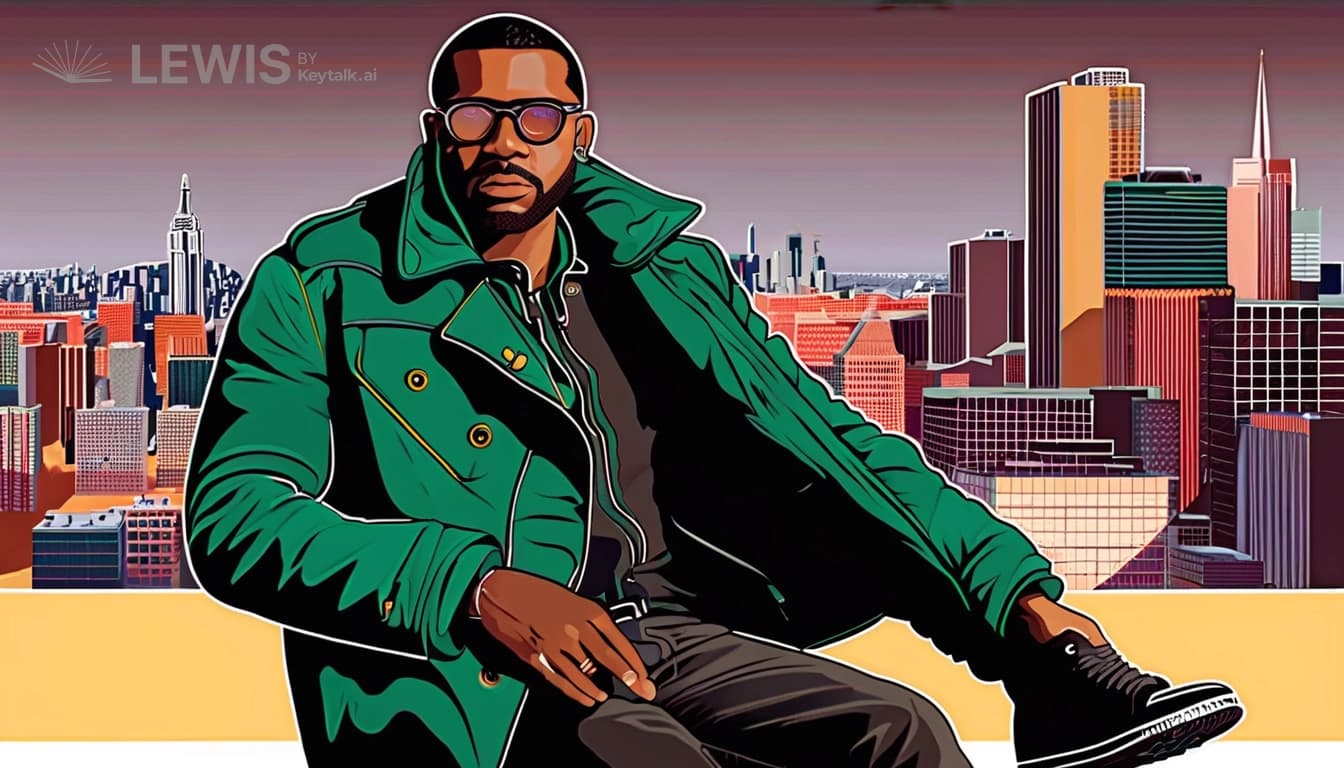
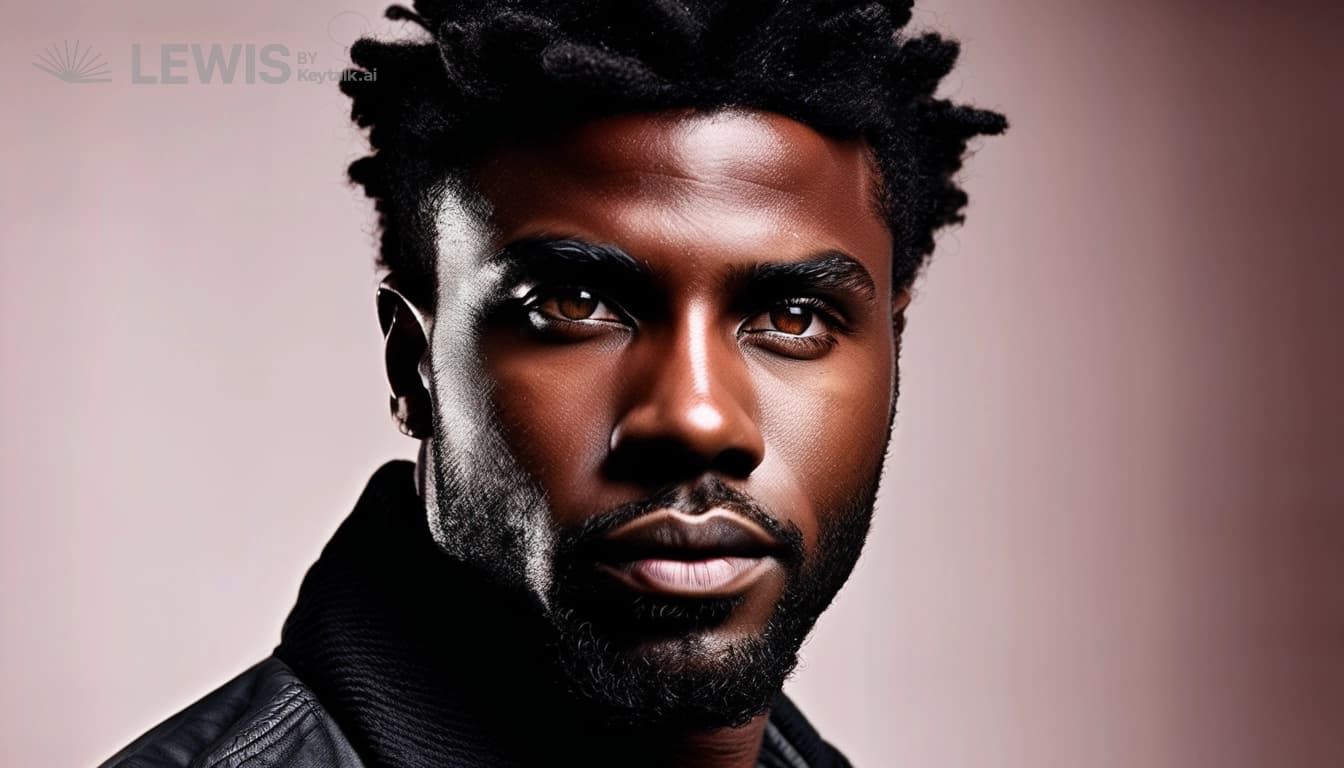
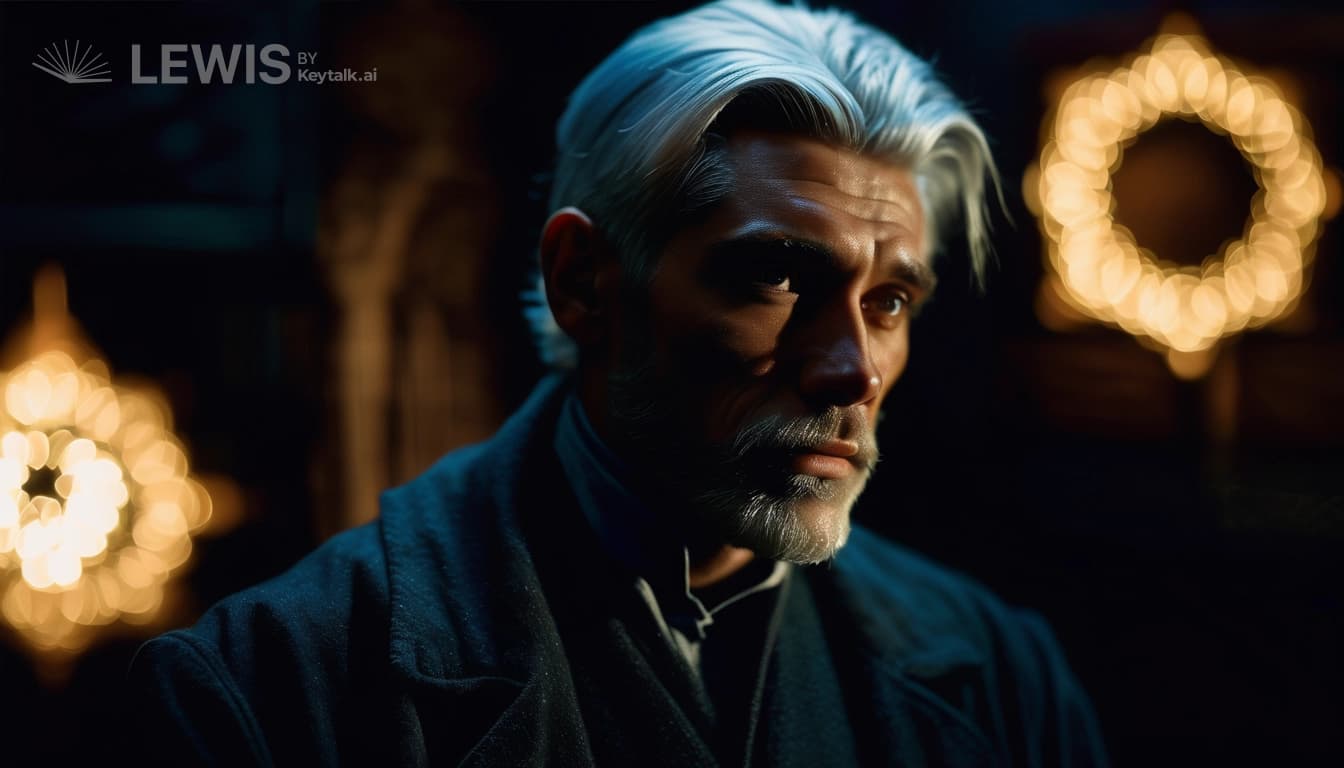
Eliot Harlan Finch, a 36-year-old Black British forensic linguist and semiotician, cuts an arresting figure amidst the phosphorescent labyrinth of the city—standing at six foot two, with a rangy, almost ascetic build that hints at too many late nights hunched over esoteric manuscripts and empty takeout containers. His skin is a deep, burnished umber, accentuated by high, slashing cheekbones and a perpetually furrowed brow that gives him a look of wary intelligence; his eyes, a striking shade of hazel-green, seem to flicker in low light, always scanning for hidden meanings. Eliot’s hair is a dense mass of black coils, cropped close at the sides but left untamed atop his head—an unconscious nod to his Cameroonian maternal heritage—and there’s a silver scar that threads from his left temple to his ear, a relic from a university protest gone sideways, marking him as someone who’s flirted with danger before. He favors tailored, charcoal wool jackets over black turtlenecks, paired with battered jeans and scuffed Oxford boots—an odd blend of academic austerity and city-worn practicality, punctuated by his ever-present tortoiseshell glasses perched low on his nose. Eliot’s voice is soft, measured, and edged with a North London inflection, but his words are precise, each sentence chosen with the care of someone who understands that language is both blade and shield; he often lapses into muttered, polyglot asides when unraveling a puzzle, and his emails are notorious for obscure literary allusions and footnotes. Scarred by the abrupt disappearance of his mentor—a legendary polyglot whose research veered into the occult—Eliot’s obsession with linguistics is both his anchor and his undoing; he’s brilliant, methodical, and devastatingly logical, but prone to tunnel vision, social withdrawal, and a gnawing paranoia that the city’s voices are never quite what they seem. Currently, he lives alone in a creaking, book-choked flat above a shuttered record store in the city’s forgotten quarter, estranged from family but fiercely protective of his one close friend, a fellow academic with whom he shares cryptic midnight phone calls. Eliot’s central aspiration is to impose order on chaos through language—he believes every code can be cracked, every secret named—but his greatest challenge lies in accepting that some meanings are meant to remain unspeakable. His compulsive note-taking, habit of tracing sigils into condensation on windows, and penchant for recording ambient city sounds hint at a mind perpetually attuned to hidden frequencies. Before the story’s arc begins, Eliot is haunted by both his intellectual arrogance and a desperate need for connection, uniquely equipped—and fatally tempted—to meddle with the forbidden lexicon that pulses beneath the city’s neon skin.
敵役

Dr. Sanaa Azraq

性別女性
職業Urban Mythographer / Envoy Cult Leader

プロフィール

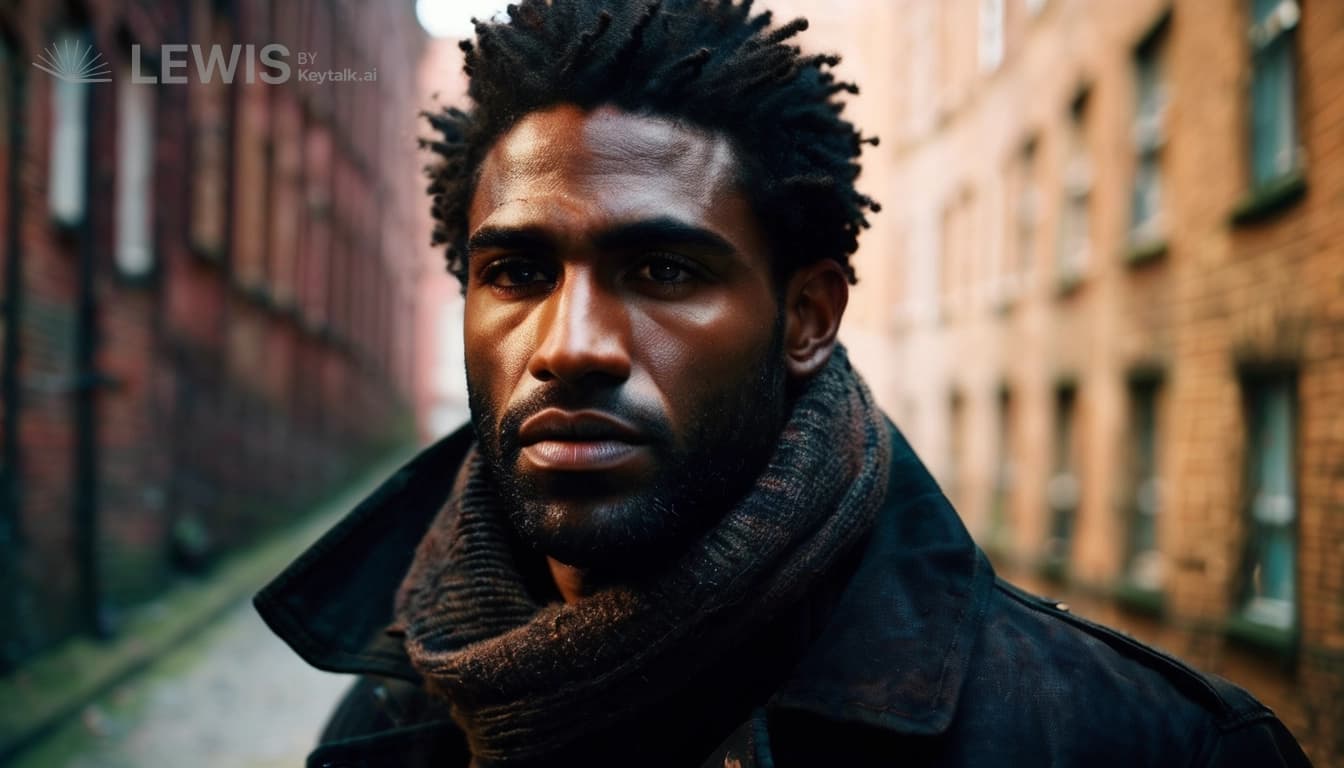
Dr. Sanaa Azraq is a 53-year-old Moroccan-Turkish woman whose imposing presence is amplified by her height—nearly six feet—and sinewy build, accentuated by the angular sharpness of her cheekbones and a hawkish nose. Her skin, olive-toned and freckled from years spent under city neon and moonlight alike, is marked by a faint scar above her left eyebrow, a relic of a childhood spent navigating Rabat’s labyrinthine medinas before migrating to Istanbul’s occult underbelly. Sanaa’s raven-black hair, streaked with silver, is cut in a severe bob that frames her intense, almond-shaped eyes—obsidian-dark and perpetually rimmed with kohl, as if to ward off the gaze of entities she courts. Her wardrobe is a calculated blend of urban austerity and ceremonial excess: tailored midnight-blue suits beneath flowing, rune-embroidered robes, always adorned with a pendant etched in the hidden dialect, a symbol of her authority among the city’s supernatural envoys. As an urban mythographer, Sanaa catalogues the city’s forgotten tales, but her true calling is as the enigmatic leader of a clandestine cult that reveres the envoys, orchestrating their influence through ritual and linguistic manipulation. Her speech is a mesmerizing mix of clipped academic Turkish and lyrical Moroccan Arabic, laced with cryptic idioms and archaic turns of phrase—she rarely raises her voice, preferring to command with a velvet-gloved threat and an unsettling, unblinking stare. Sanaa’s worldview is shaped by a relentless belief that language is the ultimate lever of power; she sees herself as the city’s custodian of memory, willing to sacrifice individual autonomy for cosmic equilibrium. Her strengths—intellectual rigor, charisma, and a gift for decoding metaphysical riddles—are matched by her flaws: obsessive control, emotional detachment, and an almost religious conviction in her own moral ambiguity. Her relationships are transactional and deeply strategic, cultivated with city officials, cult acolytes, and supernatural envoys, but none pierce the fortress of her inner life. Beneath her calculated exterior, Sanaa harbors a gnawing dread that even her mastery over the hidden dialect may one day fail her, driving her to ever more audacious experiments in linguistic sorcery. Her mannerisms—ritualistic hand gestures, compulsive note-taking, and a tendency to pause mid-sentence as if waiting for unseen approval—mark her as both prophet and puppeteer, a woman whose ambitions and methods will collide violently with anyone who threatens the cosmic order she seeks to impose.
相棒

Tianyu "Sky" Zhang

性別Non-binary
職業Urban Light Engineer / Nightscape Architect

プロフィール

Tianyu “Sky” Zhang is a non-binary urban light engineer and nightscape architect, age 29, whose very presence disrupts the city’s gloom. Born in the frenetic heart of Shanghai but raised amid the labyrinthine back alleys of New York’s Chinatown, Sky brings a multicultural sensibility to their craft—infusing neon warmth into spaces haunted by ancestral shadows. Just under six feet tall, with an angular, athletic build that speaks of late-night parkour and restless city wandering, Sky’s physicality is kinetic, restless: sharp cheekbones, almond-shaped hazel eyes that seem to catch and refract even the faintest glimmer, and a perpetual asymmetrical undercut dyed electric blue, streaked with silver. Their wardrobe is an eclectic fusion of reflective techwear and vintage silk, chosen as much for function as for flair—always layered, always practical, always hinting at a hidden purpose. Sky’s hands, rough from soldering and smooth from calligraphy, betray a paradox: they build, but they also erase. Their personality is driven by a fierce curiosity and a refusal to accept the city’s illusions as immutable; quick-witted, irreverent, and emotionally volatile, Sky operates on intuition and impulse, often challenging Eliot’s methodical obsession with logic and translation. Unlike Eliot, Sky is grounded in the physical world—obsessed with light and its power to reveal, obscure, and transform urban memory. Their past is marked by both creative triumphs and personal estrangement, especially from family members who dismissed their passion as frivolous. Now, living in a cramped rooftop studio that overlooks the city’s neon arteries, Sky cultivates a network of underground artists, hackers, and urban shamans, driven by a desire to illuminate truths buried beneath the city’s engineered shadows. Their speech is a rapid-fire blend of Mandarin, English slang, and cryptic references, delivered with a casual bravado that masks deep insecurity; they often interrupt themselves with flashes of insight or sudden bursts of laughter. Sky’s ongoing struggle is to reconcile their need for belonging with their compulsion to disrupt—making them equally wary of Dr. Azraq’s mythic manipulation and Eliot’s obsessive isolation. Their talent for manipulating light not only serves as a practical foil to Eliot’s linguistic prowess but also allows Sky to sense the shifting boundaries between human and supernatural realms, offering both emotional ballast and unpredictable energy to the unfolding cosmic horror. They are the city’s unofficial pulse—a boundary-walker, a bridge, and a spark—whose independent motivations and restless spirit demand that fate’s language be rewritten not only in words, but in the glow of possibility.

筋書き

Eliot Harlan Finch spends his nights parsing city sounds—hushed subway rattles, the guttering hiss of rain on neon-lit streets, whispered fragments of a dialect he suspects is older than civilization itself. His obsession is more than academic: since his mentor vanished after discovering a cryptic phrase carved into a subway wall, Eliot has become convinced that language shapes reality in ways no one else understands. He’s certain the city’s supernatural envoys, beings glimpsed only in reflections and peripheral vision, communicate in a tongue so potent that each utterance alters fate. Eliot’s compulsion is both intellectual and deeply personal; beneath his logical rigor lies a longing for order, a desperate hope that if he can name the city’s secrets, he might finally find connection—or redemption for his mentor’s disappearance.

His research draws him into the orbit of Dr. Sanaa Azraq, whose reputation as an urban mythographer masks her true role as orchestrator of a cult that reveres the envoys. Sanaa sees Eliot as both threat and opportunity: his deciphering threatens her carefully maintained equilibrium, but his brilliance could serve her ambition to wield the hidden dialect as a means of cosmic control. Sanaa’s motivations are layered—she’s driven by a conviction that language is the city’s ultimate lever, capable of maintaining a fragile balance between human autonomy and supernatural influence. She believes sacrificing individual memory, even identity, is a small price for cosmic stability, and manipulates Eliot with cryptic riddles and half-truths, testing his resolve while quietly orchestrating rituals that nudge the city’s fate in her favor.

Tianyu “Sky” Zhang enters as Eliot’s emotional counterweight and creative foil. Sky’s passion for light and urban transformation is rooted in a refusal to accept the city’s engineered illusions; their restless energy challenges Eliot’s methodical isolation and Sanaa’s manipulative detachment. When Eliot confides in Sky, sharing recordings of the envoys’ whispers and sketches of sigils traced in condensation, Sky’s intuition reveals that light and language are entwined—the city’s boundaries shift wherever neon is brightest, and the envoys’ dialect pulses in places where memory blurs. Sky’s drive is personal, fueled by their own history of estrangement and longing for belonging; they insist that truth must be illuminated, not merely translated, and convince Eliot to pursue direct confrontation with the envoys, rather than passive observation.

The plot accelerates as Eliot’s translations grow more precise, and his discoveries begin to manifest in reality. Each attempt to speak the hidden dialect triggers uncanny phenomena: strangers forget their names, city landmarks flicker and vanish, and Eliot himself experiences gaps in memory—a creeping sense that his soul is being unraveled word by word. Sanaa warns Eliot that every utterance in the dialect risks erasing the speaker’s essence, but he refuses to relent, driven by the conviction that the only way to reclaim the city is to teach its citizens to wield the dialect themselves. Sky, meanwhile, creates installations that channel the dialect’s resonance through light, amplifying its effects and attracting the attention of both the supernatural envoys and Sanaa’s cult. The trio’s actions ripple outward, destabilizing the city’s hierarchy and provoking violent clashes between rival factions of envoys, each eager to seize dominion over human consciousness.

As the city teeters on the brink, Eliot faces a choice: retreat into isolation, preserving his own identity, or risk total erasure by teaching others the forbidden tongue. Sanaa, desperate to maintain cosmic equilibrium, attempts to silence Eliot by orchestrating a ritual that would erase his memory and sever his connection to the dialect. Sky intervenes, using their installations to disrupt Sanaa’s ritual, flooding the city with patterns of light that momentarily reveal the envoys’ true forms—fractured, shimmering entities shaped by human hope and fear. In the chaos, Eliot confronts Sanaa, arguing that true order can only emerge when the dialect is democratized, when citizens rewrite their own fates and memories. Sanaa, faced with the collapse of her authority, makes a final gambit: she speaks a phrase so potent it threatens to erase the city’s collective memory, resetting the balance but risking total oblivion.

In the climax, Eliot and Sky rally the city’s inhabitants, teaching them fragments of the dialect—words that force the envoys to negotiate, rather than dominate. The citizens, empowered yet trembling on the edge of annihilation, speak in unison, rewriting the hierarchy of the supernatural and forging a new equilibrium between human will and cosmic terror. Sanaa, stripped of her cult’s power but not her conviction, retreats into the shadows, haunted by the knowledge that even her mastery of language is fragile. Eliot, scarred but triumphant, realizes that order is not imposed, but created through collective agency; his obsession has cost him pieces of his soul, but forged unexpected bonds with Sky and the city’s people.

シーン

シーン 1
scene 1 image
[Title]
The Whisper Beneath the Neon—Eliot’s First Encounter

[Place]
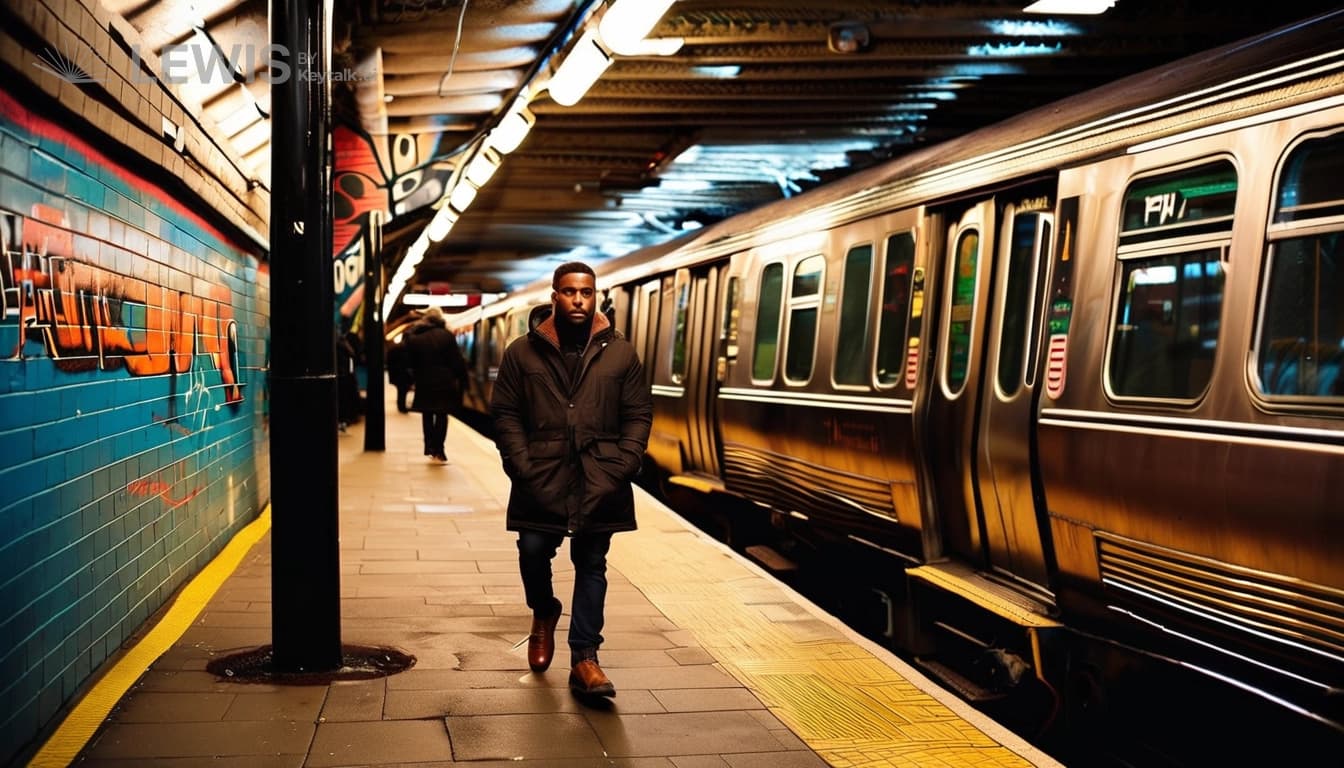
A deserted subway platform deep beneath the city, walls streaked with condensation and faded graffiti, where the city’s noise feels strangely muffled.

[Time]
Late at night, just past midnight—when the trains run infrequently, and the city above is draped in rain and neon reflections.

[Action]
Eliot arrives alone, compelled by a tip about a new fragment of the mysterious dialect carved into the subway’s stonework. He’s exhausted but restless, clutching his battered field notebook and a recorder, haunted by the absence of his mentor and a sense that something is about to shift. The scene builds tension as Eliot obsessively scans the walls, tracing unfamiliar sigils that seem to shimmer at the edge of vision. He recalls his mentor’s warnings and pushes past his anxiety, recording the sounds and muttering half-formed translations—each attempt seeming to warp the platform’s acoustics, making echoes feel sentient and the shadows pulse with intention.

As Eliot lingers, a flicker in a puddle’s reflection reveals a spectral envoy—its form indistinct, presence chilling yet magnetic. He freezes, torn between fear and the thrill of discovery, knowing this is his first direct encounter. The envoy utters a phrase in the hidden dialect, and the city above seems to stutter—a neon sign flickers, an overhead announcement devolves into gibberish, and Eliot’s own memories blur for a split second. He’s left shaken, scribbling the phrase and desperate to interpret it, aware that this encounter has crossed a threshold both personal and metaphysical.

[Impact on the story]
This scene establishes Eliot’s compulsive drive and introduces the immediate supernatural stakes, marking his transition from observer to participant. It deepens his emotional isolation but also ignites a sense of purpose—this is no longer academic, but survival and potential redemption. The city’s instability becomes tangible, and Eliot’s vulnerability and courage are foregrounded, setting up his later conflicts with Sanaa and Sky. The encounter also plants the first seeds of doubt about the cost of his pursuit, as reality itself begins to distort around him.

[Description]
Eliot’s obsession leads him to a haunted subway platform, where he witnesses a spectral envoy and hears the forbidden dialect firsthand. The experience rattles his grip on reality, signaling the start of his transformation and pulling him deeper into the city’s supernatural undercurrents.
シーン 2
scene 2 image
[Title]
Rituals in Reflection—Sanaa’s Cult and the City’s Hidden Pulse

[Place]
An abandoned art deco hotel repurposed as a ritual hall, its gilded mirrors and tarnished chandeliers refracting city light into strange, shifting patterns. The air is thick with incense and the faint hum of unseen electricity.

[Time]
Pre-dawn hours, the city outside still cloaked in rain and neon, the streets empty except for the occasional distant siren.

[Action]
The scene opens with Sanaa presiding over a clandestine gathering of her cult—urbanites and outsiders alike, each marked by subtle sigils inked on their skin or hidden in their clothing. Sanaa’s demeanor is controlled but watchful; she’s aware of Eliot’s recent encounter and senses the city’s fabric has shifted. As she leads the group through a ritual meant to attune them to the envoys’ presence, Sanaa weaves fragments of the hidden dialect into chants, testing the limits of her followers’ understanding without fully exposing the language’s power. The mirrors in the hall become a focal point, reflecting not just faces but glimpses of the envoys moving at the periphery, their forms distorted and alluring.

While the ritual unfolds, Sanaa’s internal conflict is palpable—she measures each word, balancing her desire for cosmic stability against the risk that one acolyte might hear too much and unravel. She’s not only orchestrating the ceremony but also scanning her followers for signs of instability, gauging loyalty and vulnerability. In the shadows, a rival cultist attempts to mimic the dialect, triggering a surge of uncanny phenomena: one member’s memories flicker and fade, another’s reflection splits and reforms, and the hotel’s lights pulse in time with the chanting.

Amidst the ritual’s climax, Sanaa receives a cryptic message from one of her informants about Eliot’s activities in the subway. The information sours her composure, and she abruptly ends the ceremony, issuing veiled warnings about the consequences of unsanctioned curiosity. As the cultists disperse, Sanaa lingers before a fractured mirror, reflecting on the fragility of her control and the growing threat Eliot represents. She begins to plot her next move, torn between eliminating Eliot and exploiting his talent for her own ends.

[Impact on the story]
This scene establishes Sanaa’s dual role as both leader and manipulator, revealing the cult’s influence and its dangerous proximity to the city’s supernatural currents. It contrasts her methodical, calculated rituals with Eliot’s impulsive curiosity, setting up a philosophical and personal clash. The scene also hints at internal tensions within the cult and the volatility of the dialect, escalating the stakes. Sanaa’s reaction to Eliot’s progress propels her into active opposition, foreshadowing their inevitable confrontation.

[Description]
Sanaa orchestrates a ritual with her cult, navigating the power and peril of the hidden dialect while wrestling with news of Eliot’s breakthrough. The scene exposes the cult’s inner workings, Sanaa’s precarious control, and the mounting tension as the city’s supernatural balance teeters.
シーン 3
scene 3 image
[Title]
Memory’s Edge—Sky Illuminates the Unspoken

[Place]
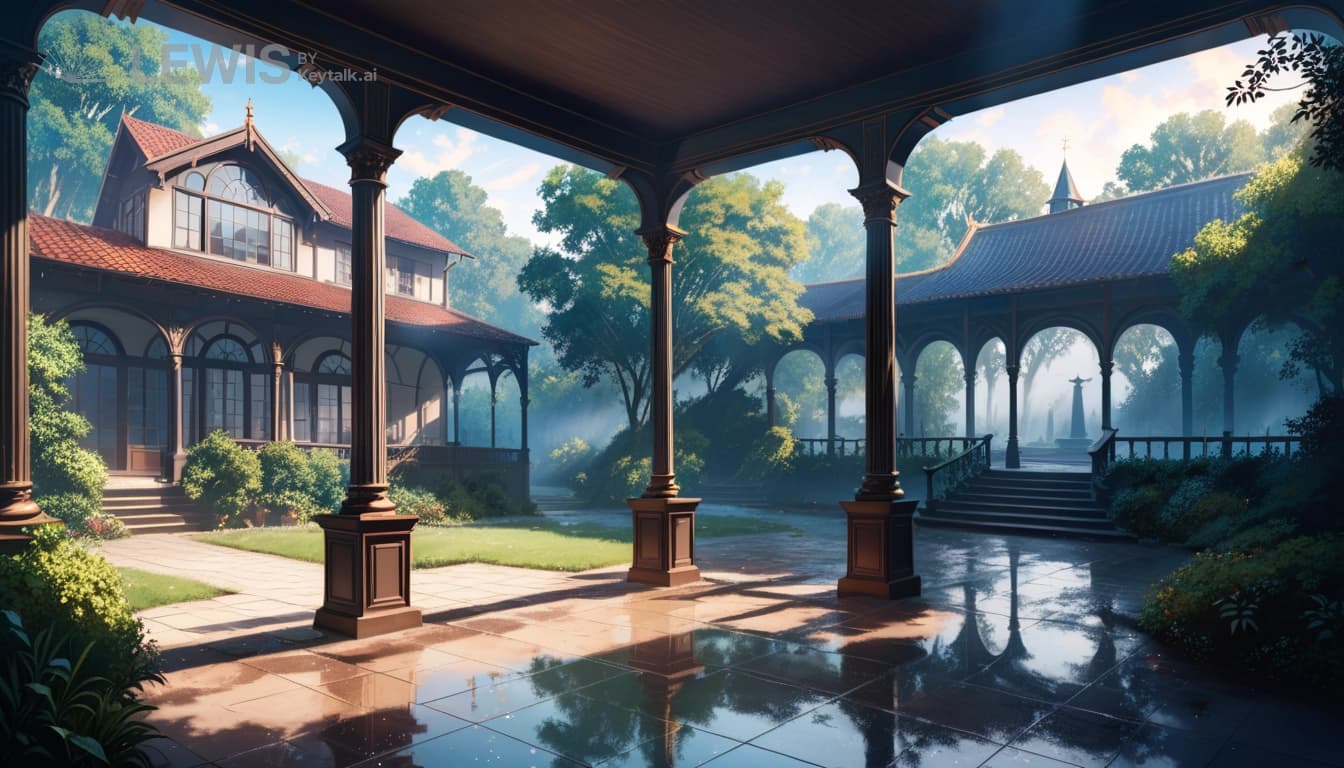
A rooftop greenhouse atop a half-abandoned skyscraper, glass panels fogged with rain and streaked with city grime. Neon signage glows through the mist, casting shifting bands of color across tangled vines and makeshift light installations.

[Time]
Morning, just after sunrise—the city’s ambient noise returning, but still muted. The rain has eased, leaving the air heavy and the world feeling raw and newly revealed.

[Action]
The scene begins with Eliot arriving at the rooftop, weary and disoriented from his own midnight experiments with the dialect. He carries a battered notebook, pages filled with sigils and transcriptions, and the weight of his unraveling memories is evident in his movements. Sky is already present, absorbed in calibrating a web of neon tubes and prisms that scatter light into intricate patterns across the greenhouse walls. Their creative process is urgent, driven by a sense that something fundamental is slipping away from the city itself.

Eliot confides in Sky about the gaps in his memory and the uncanny phenomena he’s witnessed—landmarks vanishing, people forgetting themselves. He’s torn between fear and compulsion, desperate for validation but terrified of what his findings might mean. Sky listens intently, their own history of estrangement surfacing as they recognize Eliot’s longing for connection and clarity. Rather than recoil from Eliot’s obsession, Sky pushes back, insisting that the answer isn’t to retreat into analysis but to confront the city’s supernatural forces directly.

Sky proposes an experiment: they’ll use their light installation to amplify the resonance of the dialect, making the unspoken visible and drawing out the envoys. The plan is risky—both know it could attract Sanaa’s attention or provoke the envoys into open conflict—but Sky’s conviction is infectious, and Eliot is drawn in by the promise of illumination rather than mere translation. Tension arises as Eliot hesitates, wary of losing more of himself, but Sky’s determination ultimately sways him. Their partnership becomes cemented in this moment, with Sky’s creativity and emotional openness challenging Eliot’s isolation and methodical fear.

As they prepare, subtle supernatural phenomena begin to manifest: reflections in the glass bend and shimmer, and the patterns of light pulse in sync with Eliot’s whispered fragments of the dialect. Both sense that the boundary between memory and oblivion is thinning, and that whatever they reveal may be impossible to forget—or undo. The scene ends with a quiet resolve between them, each aware of the risks but unwilling to turn back, as the city below stirs with the promise of revelation and danger.

[Impact on the story]
This scene deepens the emotional bond between Eliot and Sky, shifting Eliot from solitary obsession toward genuine collaboration and vulnerability. It marks a turning point in Eliot’s approach—from passive observation to active engagement—while foregrounding Sky’s role as catalyst and challenger. Their joint decision to pursue confrontation sets the narrative on a more dangerous, proactive path, increasing both the stakes and the potential for transformation or loss. The supernatural consequences of their actions begin to ripple outward, drawing the attention of Sanaa and the envoys, and foreshadowing the citywide upheaval to come.

[Description]
On a rain-soaked rooftop, Eliot and Sky forge a partnership, blending light and language to confront the city’s supernatural secrets. Their experiment risks destabilizing reality, but also promises revelation and connection, pushing both characters—and the city—toward an irreversible threshold.
シーン 4
scene 4 image
[Title]
Fractures in the Grid—The Unraveling of Identity

[Place]
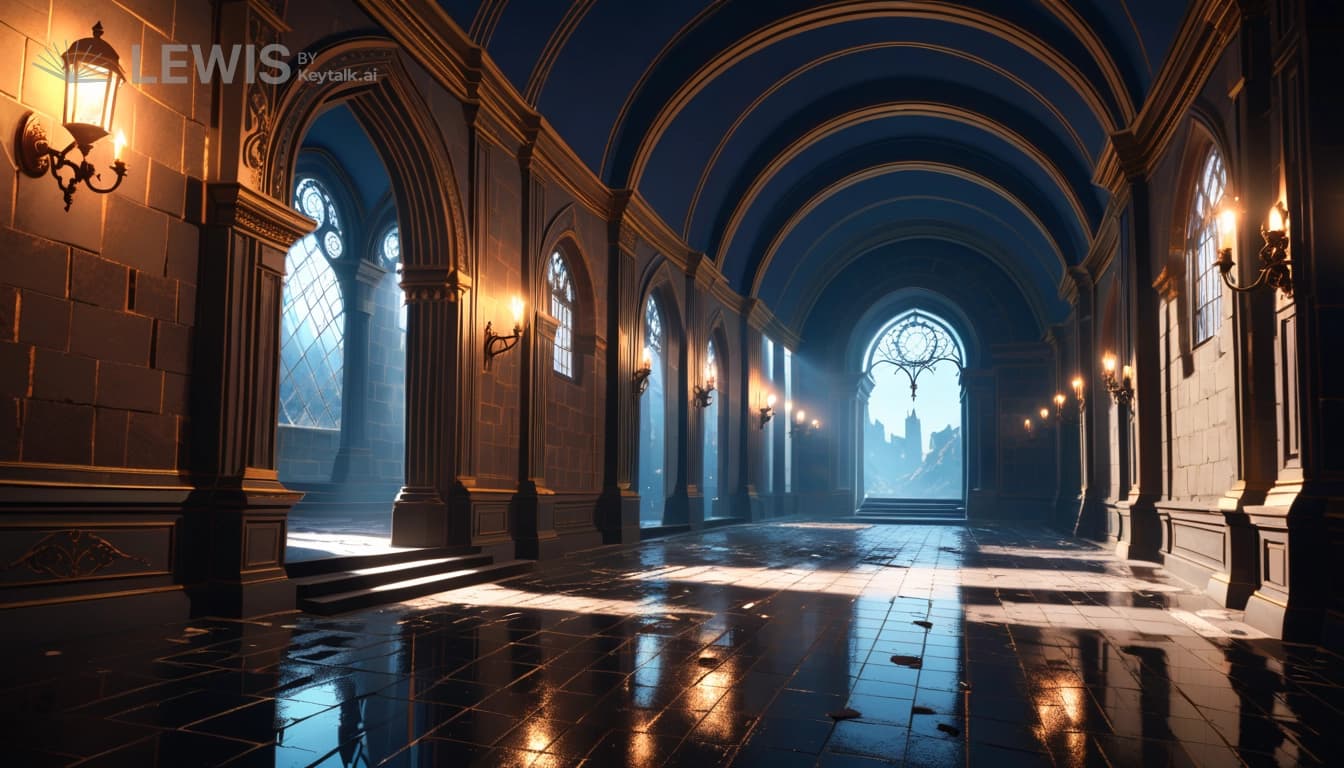
The labyrinthine corridors beneath the city—an abandoned sub-basement of a subway station, walls layered with graffiti, sigils, and half-erased warnings. Flickering emergency lights cast erratic shadows, and puddles reflect fractured glimpses of the envoys moving at the periphery.

[Time]
Late afternoon, as the city’s pulse grows restless and the first tendrils of dusk filter through street grates above.

[Action]
Eliot and Sky descend together into the underbelly of the city, driven by their rooftop resolve to confront the envoys directly. Their path is punctuated by the evidence of recent supernatural disturbances—distorted signage, echoes of forgotten announcements, and the unnerving absence of other people. Eliot’s notebook is now a lifeline, but its entries are beginning to blur and vanish as his memory frays; he struggles to remember conversations with Sky, even their shared resolve from that morning. Sky senses the tension and tries to anchor Eliot with reminders of their friendship and the city’s tangible beauty, but they too are haunted by flickers of lost time and identity.

As they reach the heart of the sub-basement, a ritual space marked with both Sanaa’s cult symbols and older, more alien sigils, the atmosphere tightens—static hums in the air, and reflections in puddles show impossible versions of themselves. The pair’s experiment with the dialect and light has drawn the envoys’ attention: fractured, shimmering figures begin to manifest in the periphery, their forms unstable and faces indistinct. One envoy approaches, its presence distorting language itself—words become slippery, names dissolve, and Eliot feels his own sense of self start to unravel, panicking as he forgets Sky’s name and the reason for their descent.

Meanwhile, Sanaa observes from the shadows, having orchestrated part of this encounter to test how much reality can be destabilized before the city’s balance tips irreversibly. She intervenes indirectly, uttering a phrase in the dialect that further fractures memory and identity for both Eliot and Sky, while signaling her cultists to prepare a containment ritual nearby. The emotional stakes escalate: Eliot’s desperation grows as his memories fade, but Sky, fiercely determined, grounds them both by channeling beams of neon light through the sigils—temporarily restoring clarity and pushing back against the erasure.

The scene crescendos as Eliot and Sky realize the dialect’s potency is now a double-edged weapon—each utterance risks losing themselves, but silence means surrendering the city to the envoys and Sanaa’s designs. Their bond is tested to its breaking point: they must choose whether to continue risking their identities for the city’s salvation, or retreat before they are erased completely. The scene ends with the echoes of the envoys’ distorted voices reverberating through the tunnels, Sanaa’s shadow lingering on the threshold, and Eliot and Sky clinging to fragments of memory and determination as the city above begins to warp in response.

[Impact on the story]
This scene marks the tipping point where the consequences of Eliot and Sky’s actions become painfully personal—memory loss and identity dissolution are no longer theoretical dangers but immediate realities. The tension between self-preservation and self-sacrifice intensifies, forcing the protagonists to confront what they’re truly willing to lose for the city. Sanaa’s manipulations escalate the conflict, setting her up as both orchestrator and adversary, while the envoys’ presence becomes undeniable and threatening. The cracks in Eliot and Sky’s relationship foreshadow both potential betrayal and the need for deeper trust, driving the story into its climactic endgame.

[Description]
Beneath the city, Eliot and Sky face the unraveling of their own identities as the dialect’s power turns inward. As memory erodes and the envoys close in, their partnership is pushed to the brink—forcing them to choose between self and city, while Sanaa’s machinations tighten the noose around them all.
シーン 5
scene 5 image
[Title]
Light Against Silence—Sky’s Intervention and Eliot’s Betrayal

[Place]
The city’s central plaza at midnight—a concrete amphitheater ringed by neon sculptures and flickering billboards, now distorted and half-erased. Sanaa’s cultists gather in the shadows, ritual implements in hand, while Sky’s latest installation—an array of mirrors and refracted light—casts shifting, prismatic patterns across the plaza’s rain-slicked stones.

[Time]
Midnight, as the city’s boundaries blur and reality thins; the moment when the dialect’s influence is at its peak and the envoys are closest to breaking through.

[Action]
The scene opens with Sanaa commencing her ritual at the plaza’s heart, cultists arranged in a geometric formation that echoes the sigils from the sub-basement. Eliot, disoriented and weakened from the memory fracturing below, is led into the circle—he’s both a threat and a necessary sacrifice. Sanaa’s voice resonates with the dialect’s power, each phrase threatening to erase Eliot’s memories and sever his connection to the city’s hidden language. Eliot’s desperation surfaces: flashes of his mentor, fragments of Sky’s face, and the city’s secret beauty flicker through his mind as he tries to hold on.

Sky, outside the ritual’s perimeter, frantically assembles their light installation. Their motivation is twofold: save Eliot from obliteration and expose the envoys’ true forms to everyone present, breaking Sanaa’s control. Sky’s actions are urgent, creative, and wild—they scramble through puddles and shards of glass, positioning mirrors to intercept and scatter the cult’s ritual light.

As Sanaa’s incantation intensifies and Eliot begins to lose grip on his own name, Sky activates the installation. Torrents of refracted neon cut through the plaza, disrupting the ritual’s geometry and throwing the cultists into confusion. The light bends and twists, revealing the envoys—no longer just peripheral, but towering, fractured beings forged from human memory and longing. In the chaos, Eliot catches a glimpse of his mentor’s face reflected in the light, fueling a last surge of willpower.

The emotional core of the scene emerges as Eliot, torn between gratitude and guilt, realizes that Sky’s intervention has not only saved him but also exposed the city’s secrets to everyone—cultists, bystanders, even the envoys themselves. Sanaa, desperate, attempts to reassert control by speaking a phrase meant to erase the collective memory of the plaza, but the dialect’s power is now unstable. In a wrenching moment, Eliot betrays Sanaa’s trust by echoing her phrase, twisting it into something new—a fragment of the dialect he’s never spoken aloud, risking everything to seize agency from her grip.

The scene ends in a storm of light and silence: the ritual collapses, cultists scatter, the envoys recoil, and Eliot and Sky are left at the center of the plaza, changed and uncertain—aware that the balance of power has shifted, and the city itself is listening.

[Impact on the story]
This scene is the story’s point of no return: Eliot’s betrayal severs his last link to Sanaa and cements his break with passive scholarship. Sky’s intervention proves the power of creative collaboration, but also introduces new instability as the city’s secrets spill into the open. The envoys are forced into the light, and the dialect’s democratization becomes inevitable. Emotionally, Eliot and Sky are exhilarated but traumatized—their actions have saved each other but endangered the city’s fragile reality, setting up the final reckoning.

[Description]
In the city’s neon-lit heart, Sky disrupts Sanaa’s ritual with a flood of fractured light, exposing the envoys and shattering the cult’s control. Eliot, on the verge of erasure, turns Sanaa’s own power against her—an act of betrayal that remakes the battle lines and ensures the city’s fate can no longer be decided in silence.
シーン 6
scene 6 image
[Title]
Chorus of Forgotten Names—The City Rewrites Its Fate

[Place]
The city’s central plaza, now transformed: the shattered ritual circle smolders amid ruined neon installations, while the plaza’s boundaries flicker and warp, bleeding into impossible streets and memories. The city’s citizens—cultists, bystanders, and those drawn by the spectacle—gather in a swelling crowd at the periphery, faces luminous with fear, awe, and uncertainty. The fractured envoys hover above, their forms warped and unstable, radiating both threat and desperate curiosity.

[Time]
Pre-dawn, as the city teeters on the edge of oblivion—sky bruised with false dawn, reality barely holding together after the night’s chaos.

[Action]
The aftermath of the shattered ritual hangs heavy in the air; Eliot and Sky stand at the center of the plaza, exhausted, their alliance forged in crisis but tested by what comes next. Sanaa, stripped of her cult’s power but not her resolve, lingers at the edge—bruised, furious, and calculating her final move. The crowd’s confusion simmers into panic as memories blur and city landmarks shift, the dialect’s unleashed resonance warping reality itself.

Eliot, battered but resolute, recognizes that the dialect’s power is no longer confined to scholars or cults—it pulses through the city, ready to be claimed or catastrophically misused. He’s driven by a need to restore agency, but haunted by the cost: every phrase uttered risks further unraveling, yet silence means surrendering to the old cycle of manipulation and erasure. Sky reads the crowd’s mounting terror and channels it into urgent action, drawing on their gift for illumination—projecting fragments of the dialect in patterns of light, inviting the citizens to listen, echo, and resist.

Sanaa seizes the moment, unleashing her last gambit: she intones a forbidden phrase, one meant to erase the city’s collective memory and reset the balance at the price of everything that makes the city unique. The envoys surge forward, drawn to the phrase’s destructive promise, feeding on the city’s fear. Eliot, with Sky at his side, counters by teaching the crowd the dialect’s core—simple, potent words that embody defiance, hope, and shared identity. The citizens, trembling but galvanized, speak in unison; their voices disrupt the envoys’ hold, forcing negotiation instead of conquest.

A moment of suspended possibility: memory, light, and language collide, rewriting the city’s fate in real time. Sanaa, defeated but unbroken, retreats—her authority gone but her warnings lingering. The envoys, their forms fractured but no longer omnipotent, recede to the city’s new margins, bound by the chorus of empowered voices. Eliot and Sky, changed by what they’ve risked, find themselves bound not just to each other but to a city that now belongs to its people—scarred but sovereign.

[Impact on the story]
This scene is the story’s catharsis and turning point: Eliot’s willingness to risk erasure for collective agency fulfills his arc, while Sky’s creative courage anchors the city’s rebirth. The democratization of the dialect signals a new balance—no single authority, but a fragile, hard-won equilibrium between human will and the supernatural. Emotionally, the characters are battered but hopeful; the city’s wounds are visible, but so is the potential for genuine connection and self-determination. Sanaa’s retreat hints at future threats, but for now, the cycle of manipulation is broken.

[Description]
At the city’s breaking point, Eliot and Sky rally the citizens to speak the forbidden dialect together, shattering the envoys’ control and forging a new, collective order. Sanaa’s final attempt to erase the city’s memory fails, and as dawn breaks, the city stands remade—its fate no longer dictated by the few, but rewritten by the many.
'Grammar of the Soul Thieves'ストーリーチャット

このストーリーの登場人物と話したいなら?

'Grammar of the Soul Thieves'ストーリーチャット

このストーリーの登場人物と話したいなら?

story image
story image
story image

こんな物語はいかがですか?

コメント0

rank icon image
#24 Genre

KakaoPageのおすすめ

のテーマ音楽