
본문으로 건너뛰기
Yearning for the End of the World cover image

Yearning for the End of the World

Amid the ashen quiet of a society erased by catastrophe, three spectral women—once exploited as spies and now bound by a punitive curse—operate a confession kiosk that entices the desperate and the powerless. Their shop offers only one thing: the spark of forbidden longing lodged deep within each patron's psyche. One night, a survivor enters with a contract: lure the feared gang matriarch into a sham romance as cover for a high-stakes heist, but as guilty desires blossom into genuine passion, rival appetites awaken across the wasteland. Soon, the fairies must reckon with a world reshaped by contagious, unruly cravings—some tender, some lethal—as both love and violence threaten to consume what little humanity remains.

주간 랭킹

rank icon image
#1 Concept
rank icon image
#1 Theme
rank icon image
#1 Concept
스크롤

캐릭터

주인공

Mercy Locke

성별여성
직업Confession Kiosk Proprietor (formerly Covert Intelligence Asset)

프로필

Mercy Locke, a 37-year-old woman of mixed Haitian and Welsh descent, stands at a poised 5’9”—her rangy, sinewy frame a vestige of years spent slipping through war-torn shadowlands and clandestine rendezvous. Her skin is a lustrous, burnished umber, marred by a lattice of faint scars along her forearms—souvenirs of old tradecraft and broken vows. Mercy’s sharply angular features—high cheekbones, a narrow nose, and a mouth set in a perpetual half-smirk—betray a wary intelligence and an unflinching skepticism. Her eyes, large and obsidian, are quick to narrow in appraisal, hinting at both her predatory vigilance and the weary empathy that has crept in over years of witnessing humanity’s secrets. Black, tightly coiled hair is cropped close, practical for a life of subterfuge; a single streak of premature silver at her left temple catches the weak light of the ruined city, a subtle badge of the curse she bears. She dresses in threadbare formalwear scavenged from the bones of the old world: a battered charcoal suit, once elegant, now patched with mismatched fabric; fingerless gloves for dexterity; a faded silk scarf knotted at her throat that once belonged to a lover lost in the collapse. Once a covert intelligence asset exploited for her ability to slip into roles and hearts alike, she now presides over the confession kiosk with a blend of ironic detachment and fierce protectiveness toward her spectral sisters. Mercy’s voice is low, velvet-edged, her speech precise and faintly accented—her English shaded by Creole rhythms and the clipped consonants of Cardiff, modulating smoothly from formal to playful depending on the secrets she’s coaxing free. She is driven by the compulsion to extract longing—the currency of survival in this ashen wasteland—yet she remains haunted by a longing of her own: to forge connections not merely out of necessity, but out of true, dangerous intimacy. Her strengths—disarming charm, cold-blooded pragmatism, and an uncanny intuition for desire—are shadowed by a tendency toward manipulation, emotional distance, and the gnawing suspicion that every confession is merely another weapon. Even before the story’s upheaval, she is caught between the role imposed upon her and the woman she might become if she ever dared to relinquish control. Mercy’s meticulous nature, dry wit, and habit of sketching coded sigils on scraps of paper when anxious set her apart in the wasteland’s theater of deceit, making her both a natural leader among the spectral women and a magnet for the desperate, the dangerous, and the devoutly hopeful.

적대자

Morya "Mother" Ilyanova

성별여성
직업Wasteland Gang Matriarch

프로필

Morya “Mother” Ilyanova, a 59-year-old Russian-Ukrainian matriarch, looms over the bleak remnants of post-catastrophe society as both its de facto warlord and a paradoxical vestige of vanished civilization. Broad-shouldered and imposing at nearly six feet, she carries the hard-earned bulk of survival—scarred hands, a thick neck, and a face whose sharp cheekbones and aquiline nose hint at once-fierce beauty now weathered by ash and adversity. Her iron-grey hair, kept coiled in a severe braid threaded with scavenged charms, lends her a spectral dignity, while a jagged burn running from brow to ear marks a close call that shaped her legend. Morya’s attire—a patchwork of armored leather, faded military insignia, and the occasional silk scarf—melds pragmatic brutality with flashes of bygone elegance. Raised between Soviet discipline and the lawless chaos that followed, she learned early to distrust sentiment and to wield both affection and cruelty as tools; her rule is absolute, but not without a twisted maternalism, offering protection to her followers even as she demands unwavering obedience. Fluent in a guttural, accented English laced with blunt Russian endearments and threats, she speaks with a measured gravity that brooks no contradiction, her every word calculated yet tinged with a surprising lyricism when she recalls lost loves or vanished homelands. Morya’s core ambition is simple: to forge a bastion of order amid annihilation, even if it means crushing hope to quash dissent. Yet beneath her iron resolve, a deep-seated longing for genuine connection festers, manifesting in odd acts of mercy or cryptic rituals—lighting a candle for each fallen comrade, or humming lullabies to calm her own nightmares. Her greatest challenge is her own calcified heart, grown wary of vulnerability after decades of betrayals and the slow erosion of trust; while her reputation rests on strategic brilliance and ruthless resolve, her rare, almost superstitious curiosity about the confession kiosk betrays a hunger for something beyond mere power. Morya’s presence is a force of nature: at once terrifying and magnetic, a woman whose every decision ripples outward to shape—and threaten—the fragile social order, her methods as unpredictable and dangerous as the world she seeks to rule.
조연

Tomasz "Tomek" Nowak

성별남성
직업Itinerant Scavenger and Folk Healer

프로필

Tomasz "Tomek" Nowak, a 46-year-old Polish-Ukrainian itinerant scavenger and folk healer, stands at an unassuming five-foot-eight, his wiry build shaped by years of traversing the scorched outskirts in search of salvage and medicinal relics. His sun-darkened skin and gaunt, sharp-boned face—set with restless hazel eyes beneath a brow scored by perpetual worry—speak of a life spent both evading and tending to the ruins of others’ mistakes. Wiry streaks of silver thread his once-coal-black hair, which he keeps tied back beneath a battered woolen cap, while his hands—scarred, deft, and tattooed with folk sigils—betray his dual trades: unearthing secrets and mending wounds. Tomek dresses in practical layers: patched olive fatigues, a faded Slavic embroidered shirt, and a long coat bristling with hidden pockets for tinctures, poisons, and scavenged charms. Though his presence is quiet, nearly spectral, his voice carries a rasping warmth, blending the clipped consonants of eastern borderlands dialects with the lilting cadence of folk tales, and he prefers aphorisms and riddles to direct answers, using speech as both shield and lure. Tomek’s worldview is stubbornly pragmatic, shaped by a childhood among partisans and later, the guilt of surviving when others did not; he trusts in improvisation, ritual, and the healing power of small kindnesses, yet is haunted by a suspicion that every act of mercy carries its own unseen cost. Estranged from both the new powers and the old kin who resent his rootlessness, he finds uneasy kinship with the kiosk’s spectral proprietors—especially Mercy Locke, whose own conflicted compassion mirrors his own—serving as a foil to her calculated, emotionally-guarded approach. Where Mercy analyzes and dissects desire, Tomek believes in coaxing it gently to the surface, even if it means risking disappointment or betrayal. His motivations are layered: survival, yes, but also the hope of preserving remnants of human connection, and perhaps redeeming himself for betrayals both real and imagined. Tomek’s impulsive generosity and keen intuition fill the gaps in the kiosk’s more clinical operations, but his penchant for withholding crucial truths—and his tendency to see both sides of a conflict—can make him maddeningly enigmatic, sometimes even to himself. His presence complicates the tense chess match between Mercy and Morya, as he alone moves fluidly between the world of the cursed and the world of the desperate, wielding his own brand of subtle influence, and carrying in his battered satchel the seeds of both healing and destruction.

줄거리

When the world burned, secrets survived. In the ruins of a city no map names anymore, Mercy Locke presides over a confession kiosk beside two spectral sisters—once field agents, now bound by a curse for sins of betrayal. Together, the trio offers the only remaining luxury: the chance to unearth a forbidden longing, to feel desire stir in a world gone numb. Every night, the desperate stumble through the irradiated mist, trading their secrets for a spark of remembered hunger. Mercy, with her cool intelligence and velvet-rough voice, is both confessor and warden, extracting yearning for barter and survival, never letting it touch her own scarred heart.

One midnight, a battered survivor staggers into the kiosk—Tomasz “Tomek” Nowak, a scavenger and sometime healer, who once patched Mercy’s wounds and now carries a desperate proposition. The city’s new empress, Morya “Mother” Ilyanova, rules by force and fear, her gang swallowing what’s left of hope. Tomek has a contract: someone wants Morya distracted, vulnerable—lured into a sham romance. The payoff? Access to the matriarch’s vault, rumored to hold a pre-catastrophe artifact that could restore the spectral women’s lost humanity. Mercy, ever the pragmatist, sees the job as transactional—another mask to wear, another heart to infiltrate. But the task stirs a reckless curiosity in her: what does a woman like Morya truly long for, beneath the armor and the legend?

Mercy begins the seduction as a game of mirrors—she flatters, provokes, lets slip fragments of her own past. Morya, at first, seems impervious, her gaze cold and amused, but Mercy’s probing awakens something buried. Morya confides in Mercy as she’s never confided in her lieutenants—admitting to doubts, to the ghosts that haunt her, to a bone-deep loneliness that no power can quiet. Each meeting leaves Mercy more unsettled, the lines between role and reality blurring as genuine desire flickers beneath every exchange. For the first time since the curse, Mercy finds herself craving not just survival, but connection—something messier, riskier, true.

Tomek watches uneasily from the margins, patching wounds and bartering with the city’s outcasts. He senses the dangerous chemistry between Mercy and Morya, and his own feelings for Mercy—half-tenderness, half-jealousy—complicate his loyalties. Meanwhile, the confession kiosk’s magic begins leaking into the city, infecting its denizens with unruly wants. The powerless grow bold, lovers plot betrayals, the hungry riot for pleasure as much as bread. The currency of longing, once tightly controlled, becomes wildfire. Morya’s lieutenants, sensing weakness in their leader, begin to circle; rival gangs catch the scent of vulnerability and move to strike.

As the city teeters on the edge of chaos, Mercy and Morya’s sham courtship turns real. Mercy confesses her own longing—not for escape, but for the raw, terrifying intimacy that Morya alone can offer. In a moment of reckless trust, Morya gives Mercy access to her sanctum…and the vault. Mercy stands at the crossroads: fulfill the contract, free herself and her sisters, and betray the only real bond she’s forged since the world ended—or refuse, and doom them all to spectral half-life. Tomek, who has uncovered the true nature of the artifact—a device that can break the curse, but at the cost of unleashing an even greater wave of unbridled desire—pleads with Mercy to choose wisely, knowing any outcome could shatter the city.

In the final reckoning, Mercy makes her choice. She shatters the artifact, refusing to let longing become just another weapon. The curse lifts, but at a price: the confession kiosk dissolves, the spectral sisters become mortal once more, and the unleashed wave of yearning remakes the city overnight. Morya, betrayed yet liberated, steps down as matriarch, vanishing into the wasteland with a promise to return if the city loses itself again. Tomek stays at Mercy’s side, tending to the wounded and the hopeful, while Mercy—no longer a confessor, but simply a woman—faces the world stripped of her old armor, daring at last to risk true intimacy.

The city, reshaped by its own cravings, becomes something new—a place where longing is no longer forbidden but embraced, with all its messy, dangerous consequences. Mercy, Tomek, and the remnants of the confession kiosk are left to navigate this uncertain dawn. There is no easy comfort, no tidy victory—only the knowledge that desire, once loosed, can destroy or redeem. And somewhere in the shimmering haze, Mercy

장면

1
scene 1 image
Smoke and Velvet—Mercy’s Midnight Confession
[Place]
The confession kiosk—an ancient subway booth warped by time and magic, glowing faintly in the irradiated mist at the city’s broken heart. Ghost-light seeps from cracks in the tiled floor. The spectral sisters linger just beyond the velvet curtain, their presence a constant chill.

[Time]
Midnight, when the city is quietest and most desperate, the hour when secrets ache loudest and the living dare to hope for comfort.

[Action]
Mercy Locke prepares the kiosk for another night, performing rituals as much for herself as for her spectral companions. She sharpens her mind with memory and sharpens her tongue for the confessions to come, never letting her own longing slip into the open. The sisters—one bitter, one yearning—argue softly about the night’s work, their old wounds flickering between them, hinting at the curse that binds them all. Survivors approach, faces hidden, driven by need: a woman confesses to sabotaging her lover’s escape, a boy reveals he dreams of forbidden touch, a soldier admits he longs to feel anything at all. Mercy listens, drawing out their secrets with a practiced blend of empathy and detachment, always trading their yearning for trinkets, food, or whispered news. Each confession takes something from her, but she never lets it show. Between clients, Mercy argues quietly with the sisters about the cost of their trade, the rules of their curse, and the faint hope of salvation. The ritual is interrupted by a disturbance outside—someone unfamiliar is approaching, footsteps unsteady, carrying a different kind of desperation.

[Impact on the story]
This scene establishes the world’s new rules: desire is currency, and Mercy is both gatekeeper and prisoner. The emotional weight of the confessions—their intimacy and their transactional coldness—sets the tone for everything that follows. Mercy’s carefully controlled detachment, the sisters’ tension, and the haunted atmosphere all foreshadow the dangerous longing about to disrupt their fragile order. The final note of disturbance at the scene’s end signals the arrival of Tomek and the inciting incident that will upend everything.

[Description]
Mercy presides over the midnight confessions, extracting secrets from the desperate in exchange for survival. The haunted atmosphere, tense banter with her spectral sisters, and the emotional toll of each confession lay the foundation for the story’s central conflict. The scene ends with an ominous arrival, promising disruption and change.
2
scene 2 image
The Sisters’ Pact: Ghosts Bound and Bargaining

[Place]
Inside the confession kiosk, its walls flickering with ghost-light, the velvet curtain still closed against the city. The air is thick with the residue of recent secrets, the spectral sisters lingering in half-shadow while Mercy tends to the last tokens traded during the midnight confessions.

[Time]
Immediately following the previous confessions, in the uneasy lull before the city’s next crisis—just past midnight, as the mist outside thickens and the city seems to hold its breath.

[Action]
The scene opens with Mercy and her spectral sisters confronting the emotional aftermath of the night’s confessions. Mercy sorts through the physical remnants of barter—trinkets, food scraps, scraps of paper heavy with longing—while the sisters argue over the ethics and futility of their nightly work. The elder sister, brittle and bitter, insists they are parasites feeding on the city’s misery, while the younger, still clinging to hope, believes each confession inches them closer to redemption. Mercy, pragmatic as ever, tries to keep the peace, but her own mask slips briefly—she admits a flicker of envy at the confessions she collects, longing she cannot allow herself. The sisters’ curse—its origin and terms—becomes the focus of their debate, with each spectral woman recalling fragments of the betrayal that bound them. They reminisce about their lives before the catastrophe, the missions and betrayals that haunt them, and the rumor of a cure: an artifact hidden in the city’s vaults, said to restore the dead to life. The sisters press Mercy to pursue this legend, revealing their desperation for freedom and their dependency on her. As tensions peak, the sound of Tomek’s approach—uneven, labored—cuts through their argument. The sisters urge caution, suspecting danger or opportunity, and Mercy steels herself, signaling the end of their private reckoning as she prepares to face the newcomer.

[Impact on the story]
This scene deepens the emotional stakes for Mercy and the spectral sisters, exposing the cracks in their alliance and the personal cost of their nightly trade. It establishes the sisters’ longing for liberation and their reliance on Mercy, while also underscoring Mercy’s own buried desires. The pact to pursue the rumored artifact plants the seeds for the main plot’s inciting quest, while the imminent arrival of Tomek signals a decisive turning point, forcing the trio out of their haunted stasis and into action.

[Description]
Mercy and her spectral sisters confront the cost of their confessions, arguing over their curse and the faint hope of salvation. Their uneasy alliance and tangled motivations are laid bare, setting up the quest for the artifact and heightening the emotional tension just as Tomek arrives with a dangerous proposition.
3
scene 3 image
A Scavenger’s Proposition—Tomek’s Dangerous Offer

[Place]
Inside the confession kiosk, the velvet curtain now half-drawn. Guttered candlelight and the afterglow of ghostly presence cling to the battered furniture. The city’s radioactive mist presses against the walls, muffling all but the faintest sounds from outside.

[Time]
Moments after the sisters’ confrontation, still deep in the uneasy heart of midnight. The city is suspended in the charged silence before another storm of longing.

[Action]
The scene begins as Mercy, having barely recovered from the sisters’ fraught debate, steels herself and draws back the curtain to admit Tomek. He enters limping and ragged, carrying the grime and exhaustion of the wasteland. His presence is a jolt—he’s both a reminder of the world’s brutality and a rare figure from Mercy’s own tangled past. She’s wary, but an undercurrent of old trust and unspoken longing threads between them. Tomek wastes little time with pleasantries; he’s driven by desperation, haunted by the violence he’s witnessed, and the possibility of hope that’s almost too dangerous to voice. He lays out his proposition: someone powerful wants Morya Ilyanova, the city’s ruthless matriarch, distracted and exposed. The job is for Mercy to seduce Morya, drawing her away from her lieutenants and into vulnerability. The reward is not just barter, but a whispered promise of access to Morya’s vault—rumored to contain the artifact the sisters crave. As Tomek speaks, the spectral sisters hover unseen at the edges, their forms flickering with anticipation and dread. Mercy’s response is layered: outwardly pragmatic and cold, inwardly rattled by the enormity of what’s being asked. She interrogates Tomek’s motives—does he want her to risk herself for the sisters, or for some deeper, messier reason? Tomek’s feelings for Mercy—guilt, yearning, protectiveness—simmer beneath the surface, complicating his pitch. The tension builds as Mercy weighs the risks: the danger of crossing Morya, the seductive pull of the sisters’ possible freedom, the personal cost of playing another role in a world built on lies. The scene ends with Mercy accepting the job, but on her own terms—she’ll do it for the sisters, for herself, and maybe for Tomek, but she refuses to be anyone’s pawn. The sisters, watching from the shadows, are equal parts relieved and terrified, knowing that everything is now in motion.

[Impact on the story]
This scene is the spark that drives the story forward, propelling Mercy and the sisters out of their haunted stasis and into the city’s deadly politics. It introduces the high-stakes seduction plot, intertwining the sisters’ hope, Tomek’s conflicted loyalties, and Mercy’s hunger for meaning. The emotional complexity between Mercy and Tomek is established, setting up a triangle of desire, duty, and risk. Mercy’s choice to act—on her own terms—marks her first step toward reclaiming agency and sets the tone for her evolving relationship with both her spectral companions and the city’s dangerous matriarch.

[Description]
Tomek bursts into the kiosk with a desperate proposition: seduce the city’s matriarch for a shot at the artifact that could free the sisters. Mercy, torn by duty, self-preservation, and buried longing, agrees—setting the story’s main quest in motion and entangling all three in a web of danger, desire, and uneasy alliance.
4
scene 4 image
[Title]
The Matriarch’s Masquerade—First Contact with Morya

[Place]
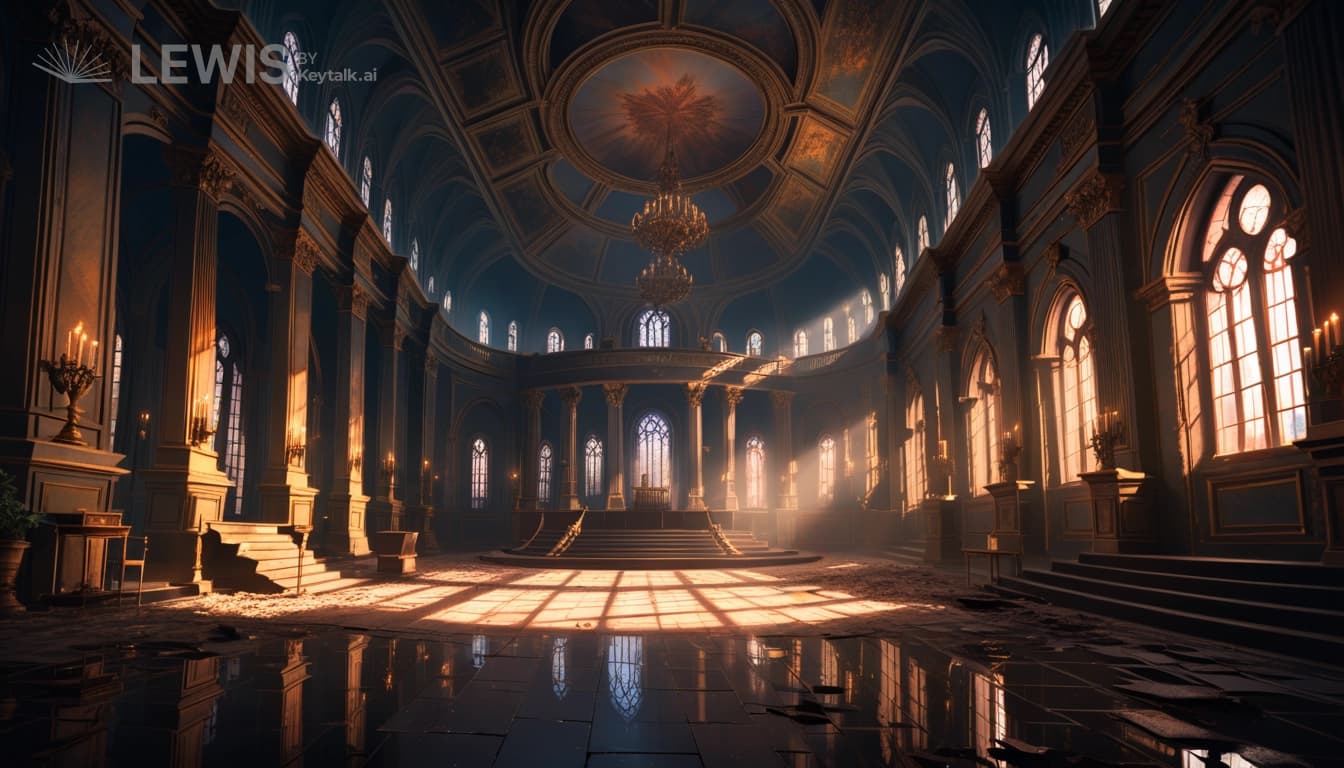
The pleasure parlor at the heart of the city’s old opera house—now a fortress of faded grandeur. Broken chandeliers glitter with scavenged light, velvet sofas threadbare but inviting, the air thick with incense and the metallic tang of ozone. Morya’s lieutenants lounge in the shadows, watching every movement, while Mercy enters as an honored guest and a potential threat.

[Time]
Late the following evening, after Mercy’s agreement with Tomek. The city outside is restless, rumors of new violence swirling, the mist lit with distant fires.

[Action]
Mercy arrives at the opera house under a thin pretense—a traveling confessor, summoned to entertain the matriarch and her court. She is escorted through echoing halls by wary guards, every step a performance. The sisters’ presence lingers at her shoulder, invisible to all but Mercy, whispering warnings and encouragement. Inside the parlor, Morya holds court—a vision of power in patched finery, her eyes unreadable, her laughter cold. The room is a maze of watching eyes and unspoken threats. Mercy must balance confidence with deference, using her skills as a confessor to disarm suspicion and intrigue. She offers Morya a confession, letting slip hints of her own haunted past, subtly mirroring the matriarch’s loneliness and longing. Morya responds with calculated amusement, testing Mercy’s resolve, probing for weaknesses while never dropping her guard. Throughout, Mercy must navigate the shifting currents of court politics: the jealousies of lieutenants, the hunger of the desperate, her own rising anxiety as the seduction begins to blur with real attraction. The sisters urge her to press closer, but Mercy senses danger in every word. The encounter ends with Morya inviting Mercy to return—ostensibly for another session, but with an undercurrent of challenge. Mercy leaves the opera house shaken, aware she’s ignited a spark in the city’s most dangerous woman…and perhaps in herself.

[Impact on the story]
This scene marks the true beginning of Mercy’s infiltration, setting the tone for the complex dance between seduction and survival. Mercy’s first meeting with Morya is fraught with tension, attraction, and mutual recognition—both women sensing the other’s depth and danger. The sisters’ hopes intensify, and Mercy’s emotional defenses begin to crack, pushing her toward a path she cannot predict or control. The stakes for everyone—Mercy, the sisters, Tomek, and Morya—ratchet higher, as longing becomes a weapon and a risk.

[Description]
Mercy enters Morya’s domain and begins the seduction under the watchful eyes of the city’s elite, using confession and subtle vulnerability to intrigue the matriarch. Their charged first encounter sets off a dangerous attraction, drawing Mercy deeper into the city’s power games and awakening her own buried desires.
5
scene 5 image
[Title]
Hunger Unleashed—The City’s Thirst Grows Wild

[Place]
The streets surrounding the confession kiosk and the marketplaces at the city’s fractured heart; alleyways blooming with makeshift shrines, desperate trysts, and whispered deals.

[Time]
The next few days and nights after Mercy’s first meeting with Morya; the city is caught in the feverish aftermath, the air thick with anticipation and unrest.

[Action]
Following Mercy’s charged encounter with Morya, something intangible shifts in the city. The confession kiosk’s magic, once tightly leashed by Mercy’s discipline, begins to seep into the broken streets. It starts as a whisper—old lovers seeking each other out, strangers daring to reach for forbidden pleasures, beggars and barons alike waking to desires they thought long dead. Mercy senses the change as she listens to confessions that turn rawer, more desperate, the sisters’ spectral forms flickering brighter with each story traded for a taste of remembered longing.
The city’s mood turns volatile: markets erupt in arguments as merchants fight over scraps of luxury, gangs clash in alleyways not just for territory, but for a chance to claim the new currency of longing. Tomek, busy tending wounds and brokering uneasy truces, witnesses ordinary people transformed by hunger for touch, power, or simple joy—some blossoming, others unraveling. He tries to warn Mercy that the magic is slipping her control, but she’s distracted, both exhilarated and alarmed by the intensifying connection with Morya.
Rumors swirl: Morya’s lieutenants whisper about her distraction, sensing an opportunity to strike. Rivals plot to seize the kiosk or harness its secret, while Mercy’s own reputation grows dangerously seductive—her name passed like a talisman among those desperate for a taste of real feeling. The sisters urge caution, but Mercy finds herself drawn deeper, caught between her duty to contain the magic and her own awakening hunger.
By the end of the scene, the city is teetering. Nights are thick with riotous energy—pleasure, violence, and longing tangled together. The confession kiosk, once a haven, becomes a focal point for both hope and chaos, and Mercy realizes that what she’s unleashed cannot be easily recalled.

[Impact on the story]
This scene marks the tipping point where longing, once tightly rationed, floods the city and upends the fragile order. Mercy’s influence grows—and so does the danger to herself and her sisters. The city’s unraveling puts all characters on edge: Mercy is pulled between control and surrender, Tomek’s loyalty is tested by jealousy and fear, and Morya’s own vulnerabilities begin to surface as she senses her grip slipping. The stakes are now collective and personal, as desire becomes both salvation and threat.

[Description]
Longing escapes the confession kiosk, transforming the city into a cauldron of riotous desire and unrest. Mercy, her sisters, and Tomek struggle to navigate the chaos they’ve unleashed, setting the stage for betrayal, revelation, and a fight for the city’s soul.
6
scene 6 image
[Title]
The Art of Seduction—Mercy’s Past and Morya’s Unmasking

[Place]
Morya’s private chambers—a fortified suite above the city’s shattered theatre, filled with relics of the world before; high, cracked windows overlook riot-lit streets below. Flickers of candlelight and the distant wail of unrest seep through the faded velvet drapes.

[Time]
The next night, as the city’s fever peaks—late, when only the bold or the desperate move through the chaos.

[Action]
Mercy is summoned—ostensibly for another round of bartered secrets, but beneath the surface, the atmosphere is tense with unspoken challenge. She arrives cloaked in her confessor’s calm, but the city’s wildfire longing has left her raw, edges exposed. Morya waits, armored in silk and steel, but there’s a crack in her composure: her lieutenants circle like wolves, and for the first time, her legendary certainty looks brittle.

Mercy and Morya circle each other, the conversation layered with flirtation and veiled threats. Mercy, determined to keep the upper hand, lets slip fragments of her own story—half-truths about the scars on her body and the betrayals that made her a warden of longing. She’s careful, but her vulnerability is real, and Morya senses it. The matriarch, in turn, offers a rare glimpse behind her legend: she confesses to old wounds, the cost of power, and the loneliness that gnaws at her in the quiet moments between decrees.

The chemistry is undeniable—charged, dangerous, and laced with mutual recognition. Mercy feels the mask slipping, drawn to Morya’s unexpected honesty and the possibility of something genuine in the ruins. Morya, emboldened by Mercy’s candor, lowers her own defenses further than she means to, revealing a secret desire for someone who sees her beyond the icon she’s become.

Meanwhile, the spectral sisters hover at the edge of Mercy’s consciousness, urging caution, torn between hope for release and fear of betrayal. Outside, the city’s unrest pulses closer—shouted threats, distant gunfire, the scent of smoke. The stakes of this seduction are clear: a single misstep could bring ruin, but the lure of real connection is almost impossible to resist.

By the end of the meeting, both women are changed. The boundaries between performance and truth have blurred; Mercy leaves with more than she bargained for, her own longing ignited. Morya is left shaken, both exposed and exhilarated, her grip on power loosened by the very vulnerability she’s tried to bury.

[Impact on the story]
This scene deepens the relationship between Mercy and Morya, exposing hidden wounds and desires on both sides. It marks the point where their sham courtship tips into something dangerously real, raising the emotional stakes for Mercy’s impending betrayal. The sisters’ fate is now tied to Mercy’s heart, and the city’s chaos finds an echo in the tangled longing between the two women. The danger intensifies—for both the individual and the city as a whole—as masks begin to fall.

[Description]
In the shadowed intimacy of Morya’s chambers, Mercy and the matriarch probe each other’s secrets, letting vulnerability slip through cracks in their armor. The game of seduction becomes a crucible, forging a genuine connection that threatens to upend both their plans and the city’s future.
7
scene 7 image
[Title]
A Healer’s Jealousy—Tomek, Mercy, and the Edges of Loyalty

[Place]
The confession kiosk—now battered and haunted by the city’s growing unrest; the air thick with the scent of smoke and want, spectral sisters flickering anxiously between the veils of reality. Just outside, the city’s chaos presses ever closer, shadowy figures darting past, violence only a heartbeat away.

[Time]
The morning after Mercy’s intimate encounter with Morya—gray dawn barely filtering through the irradiated haze, when most of the city is either sleeping off forbidden pleasures or nursing fresh wounds.

[Action]
Tomek arrives at the kiosk, looking more ragged than usual, his hands stained with other people’s blood and his eyes rimmed with sleepless suspicion. He’s come to check on Mercy, but there’s a heaviness to him—a mixture of longing, frustration, and fear. The sisters, sensing the shift, hover protectively near Mercy, their own hopes riding on her choices. Tomek tries to mask his jealousy as concern, but his questions bite: what exactly is happening between Mercy and Morya, how deep is she in, and does she remember the promise she made to the sisters and to him? Mercy, still raw from her night with Morya, is both defensive and evasive; she’s changed by what passed between her and the matriarch, and the lines between mission and emotion have blurred dangerously.

Tomek presses her to focus on the original goal: the vault, the artifact, the breaking of the curse. He reveals new intelligence—rumors that the artifact is more powerful, and more dangerous, than they’d believed. The sisters, desperate and divided, try to sway Mercy: one pleads for trust in Tomek, the other warns that his motives aren’t as pure as they seem. The tension between Mercy and Tomek rises, each poking at the other’s wounds—Mercy’s fear of real intimacy, Tomek’s sense of being used and left behind.

Outside, the city’s unrest seeps into the kiosk. News reaches them: the confessions are spreading like contagion, and Morya’s lieutenants are hunting for anyone who might threaten their power—including Tomek and the sisters. The kiosk, once a sanctuary, now feels like a trap, and the trio must decide whether to trust each other or go their separate ways.

As the scene closes, Mercy is left standing between Tomek and the sisters, forced to confront the cost of her growing attachment to Morya and the price of betraying or keeping faith with those who have risked everything for her. Tomek, torn between wanting to protect Mercy and fearing he’s already lost her, makes a difficult choice—he’ll continue helping, but on his own terms, even if it puts him in the crosshairs of Morya’s wrath.

[Impact on the story]
This scene sharpens the triangle of loyalty and longing between Mercy, Tomek, and the sisters, forcing Mercy to confront how deeply her feelings for Morya have compromised her mission. Tomek’s jealousy and vulnerability raise the personal stakes, while the sisters’ divided loyalties add urgency and tension. The outside world’s chaos is now intruding directly, pushing all three toward a breaking point.

[Description]
At the battered confession kiosk, Tomek’s jealousy and Mercy’s conflicted heart threaten to unravel the pact between them. With the sisters divided and danger closing in, the trio is forced to reckon with shifting loyalties and the high cost of desire in a world where every longing could mean betrayal.
8
scene 8 image
[Title]
Night of Riot, Night of Revelations—Desire’s Price in Blood

[Place]
The city’s heart: streets choked with smoke and desperate bodies, just beyond the confession kiosk. The kiosk itself becomes a war room—its velvet-draped interior now a fragile refuge as the world outside erupts.

[Time]
Night, just hours after the confrontation between Mercy and Tomek. The city’s fever pitch: riot and revelry mingling under the toxic moonlight, the air thick with the scent of burning and the ache of unleashed longing.

[Action]
The scene opens with the city in chaos—rioters surging through the ruins, driven by a hunger that has tipped from yearning to violence. The confession kiosk, once a sanctuary, is now a target: rumor has spread that it is the source of the city’s new madness. Mercy, Tomek, and the spectral sisters fortify the space as best they can, listening to the distant shouts, the crack of gunfire, and the shattering of glass.

Inside, the group is fracturing. Mercy, shaken by her feelings for Morya and the fallout of her last confession, is torn between guilt and a wild, reckless hope. Tomek, having vowed to help on his own terms, is preparing for escape but can’t bring himself to abandon Mercy. The sisters, their spectral forms flickering erratically, are more desperate than ever: one urges immediate action to steal the artifact, the other pleads for mercy toward Morya, believing she, too, deserves redemption.

As the riot spills closer, a mob led by Morya’s lieutenants descends on the kiosk. The sisters’ curse allows them to manifest in terrifying, half-corporeal forms, buying time with ghostly terror. Tomek fights at Mercy’s side, wounded but stubborn. The violence outside mirrors the war raging within: Mercy must choose between protecting her found family or seizing her one chance at personal connection and freedom.

In the chaos, Mercy receives a message from Morya: an invitation to her sanctum—tonight, alone. It’s both a test and a promise, the final step toward the vault and the artifact. As the mob threatens to breach the kiosk, Mercy faces a gut-wrenching decision: stay and defend those she’s come to care for, or risk everything on Morya’s offer, knowing it could be a trap or their salvation.

The scene ends with Mercy slipping out through a hidden exit, torn by her choice. Tomek, bloodied but alive, watches her go, understanding and heartbreak warring in his eyes. The sisters, their forms already fading, beg her not to forget them. Outside, the city burns—set ablaze by the very longing the kiosk once contained.

[Impact on the story]
This scene marks the tipping point: desire, once carefully traded, explodes into open chaos, and the personal stakes for every character reach their breaking point. Mercy’s decision to meet Morya alone sets up the final betrayal and forces her to confront what she’s willing to sacrifice for love, loyalty, and liberation. Tomek’s role as both protector and outsider is cemented, while the sisters’ fate hangs in the balance. The riot makes clear that longing, once unleashed, cannot be so easily controlled or contained—raising the cost of every choice Mercy makes from here on.

[Description]
As riot and revelation consume the city, Mercy is forced to choose between defending her found family and risking everything for a chance at redemption and love. The confession kiosk becomes ground zero for violence and hope, setting the stage for Mercy’s ultimate betrayal—and the city’s transformation.
9
scene 9 image
[Title]
The Sanctum Door Opens—Mercy’s Ultimate Betrayal

[Place]
Morya’s private sanctum: a fortified, candlelit chamber deep within the empress’s stronghold, lined with relics of the old world and guarded secrets. The corridor leading to the vault lies beyond a hidden passage, watched over by loyal sentries and haunted by the city’s tension.

[Time]
Late night, just after Mercy’s escape from the burning confession kiosk. The city outside is still in chaos—sirens, screams, and the distant crackle of burning buildings underscore the tense quiet of the sanctum.

[Action]
Mercy arrives at Morya’s sanctum, her mind a storm of guilt, longing, and resolve. The sisters’ pleas echo in her memory, but she steels herself, knowing this night will decide everything. Morya greets her with cool formality and veiled vulnerability—there is an unspoken awareness that trust, betrayal, and desire now hang in the balance. The two women circle each other emotionally and physically, the air charged with both peril and possibility.

Morya lowers her defenses and confides a secret hope: she wants more than power—she wants to be seen, to be chosen for herself, not just as the city’s matriarch. Mercy, torn by genuine feeling and the mission’s necessity, lets her own guard slip, revealing a fragment of her true longing. The intimacy between them becomes real, blurring every line Mercy thought she could hold. As they draw close, Morya, in a rare act of trust, unlocks the passage to the vault—inviting Mercy into her most protected space and, symbolically, into her heart.

With the sanctum door open, Mercy faces the artifact at last. The sisters’ voices—one urging her to seize freedom, the other to spare Morya—reverberate inside her. At the same time, Tomek, having trailed Mercy to the stronghold, attempts a desperate intervention, warning her in hushed urgency about the artifact’s true, dangerous nature and the cost to the city if it is used. His presence further fractures Mercy’s resolve, pulling her between loyalty, love, and the promise of liberation.

In this crucible, Mercy must decide: betray Morya and claim the artifact for her sisters’ sake, or defy the contract and spare the woman she’s come to love, even if it means losing her only chance at redemption. The emotional stakes are at their highest—every choice feels like a form of self-betrayal. The city’s fate, the sisters’ future, and Mercy’s own heart all hinge on what she does next.

[Impact on the story]
This is the story’s emotional and moral climax. Mercy’s ultimate betrayal—whether of Morya, her sisters, or herself—will irreversibly change every relationship. The trust Morya shows is both a gift and a weapon; Tomek’s intervention heightens the tension and underscores what’s truly at risk. The sanctum’s opening is both literal and symbolic, exposing the raw vulnerability at each character’s core. Whatever Mercy chooses, the city’s destiny and the meaning of longing itself will be remade.

[Description]
Within Morya’s sanctum, Mercy is forced to confront the cost of desire, trust, and sacrifice. As she stands at the threshold of the vault—and her own heart—she must choose between betrayal and redemption, knowing that any decision will shatter lives and reshape the city forever.
10
scene 10 image
[Title]
Dawn in Ashes—Breaking the Curse, Choosing the Messy Truth

[Place]
The ruined heart of the city: what remains of the confession kiosk, now little more than scorched debris and drifting mist, with dawn’s first light bleeding through the smoke. The city’s streets outside are raw with aftermath—a landscape of shattered glass, scattered bodies, and dazed survivors staggering toward whatever comes next.

[Time]
Early morning, moments after Mercy’s decision in Morya’s sanctum. The city is hushed, trembling on the edge of transformation as the artifact’s power begins to surge, threatening to reshape everything.

[Action]
Mercy emerges from the stronghold clutching the artifact, her sisters—now flickering at the edge of mortality—trailing close behind. Tomek is waiting, battered and breathless, hope and dread warring in his eyes. The city’s survivors, drawn by a new, wild current in the air, gather in wary knots, sensing some tectonic shift. Mercy hesitates at the ruins of the kiosk, torn between the promise she made to her sisters, the trust she shared with Morya, and the hard-won tenderness in Tomek’s gaze. The sisters plead for freedom, their voices raw and desperate; Tomek urges her to consider the cost, reminding her that longing, unleashed, could drown the city in chaos.

As the artifact pulses—its energy unraveling the veil between desire and restraint—Mercy makes her choice. She shatters the device against the broken altar of the kiosk, sending a shockwave through the city. The spectral sisters collapse, gasping and alive for the first time since their betrayal, their curse broken. The confession kiosk dissolves, its magic scattering into the dawn. All around, the city stirs awake: suppressed yearnings roar to life, lovers and enemies alike swept up in a tide of raw, ungoverned want. Morya, watching from the shadows, recognizes both her own liberation and her loss—her reign broken, but her heart, finally, unburdened. She vanishes into the wasteland, leaving behind both a warning and the promise of her return.

Mercy, exhausted and unguarded, lets Tomek draw her close. For the first time, she allows herself to be held—not as confessor or survivor, but as a woman stripped bare by her own longing. The city, forever changed, begins to rebuild itself in the image of its own desires—messy, dangerous, and real. Mercy and the sisters, now mortal, must learn to live in this new world, where every connection is a risk and every touch is a choice.

[Impact on the story]
This scene delivers the story’s resolution and emotional payoff, cementing Mercy’s transformation from warden of longing to participant in its messy reality. The sisters are freed, but at the cost of the safe distance the kiosk once provided. Morya’s abdication closes one era and opens the city to unpredictable change. Mercy and Tomek’s uncertain intimacy embodies the hope and peril of embracing desire. The city’s fate is left open, newly shaped by the unleashed force of want, with all its promise and danger.

[Description]
At dawn, Mercy destroys the artifact, freeing her sisters and dissolving the confession kiosk’s old magic. The city is remade in longing’s image—raw, untamed, and alive. Mercy, no longer a confessor, must now risk everything for true connection in a world where desire is both threat and salvation.
'Yearning for the End of the World'스토리 챗

이 스토리 속 캐릭터들과 대화하고 싶다면?

'Yearning for the End of the World'스토리 챗

이 스토리 속 캐릭터들과 대화하고 싶다면?

story image
story image
story image

이런 이야기는 어때요?

댓글0

테마 음악