
본문으로 건너뛰기
Miracles for Sale cover image

Miracles for Sale

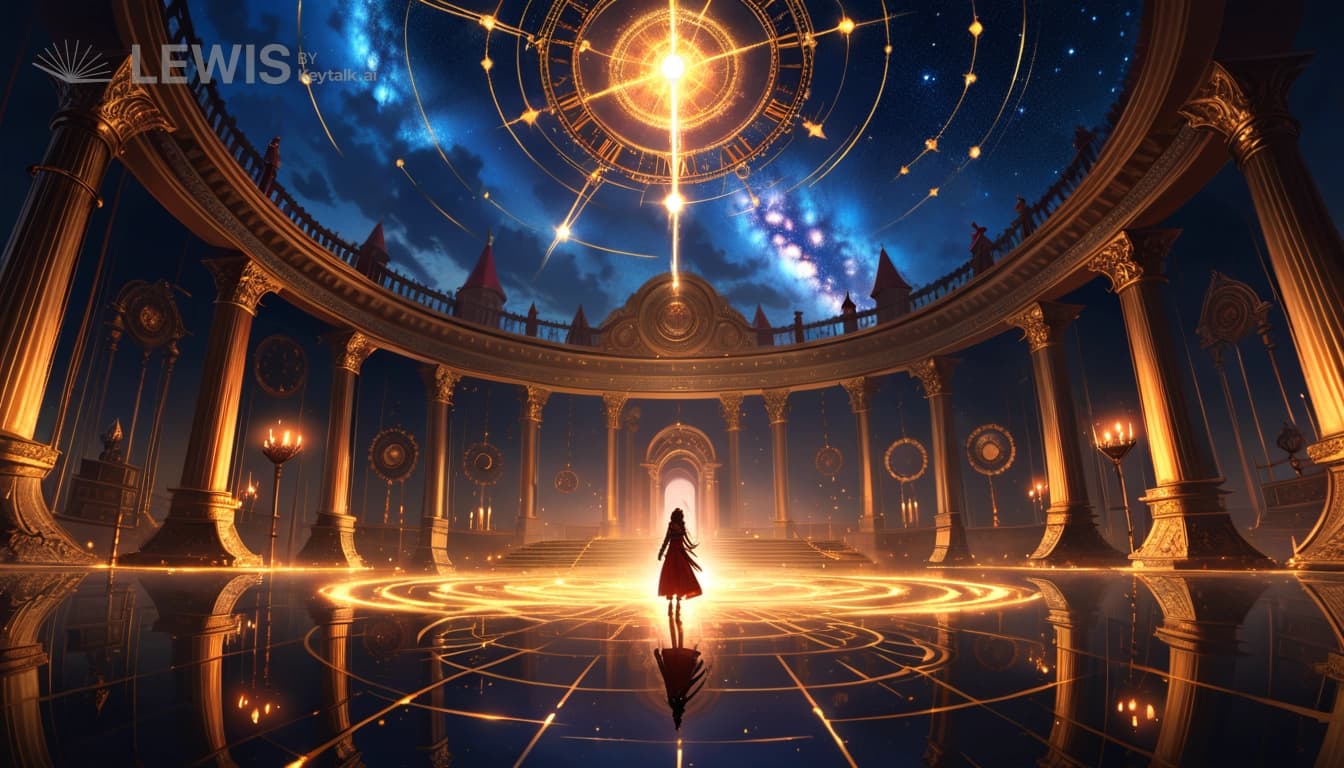
Hunted by zealots for a failed prophecy, a once-revered palace astrologer is exiled to a skybound casino whose patrons revel in paralyzing spectacle and shifting loyalties. To avoid execution at the hands of its theocratic overlord, the astrologer orchestrates a blinding, pyrotechnic 'miracle' during a high-stakes tournament, only to discover that their chic confidante—thought to be a lifeline—intends to use the spectacle as proof to spark a coup, leaving the astrologer trapped between martyrdom and complicity in a cynical regime change.

주간 랭킹

rank icon image
#1 Theme
rank icon image
#1 Concept
rank icon image
#2 Concept
스크롤

캐릭터

주인공

Lucian Faulkner

성별남성
직업Disgraced Royal Astrologer (now Casino Illusionist and House "Miracle-Maker")

프로필

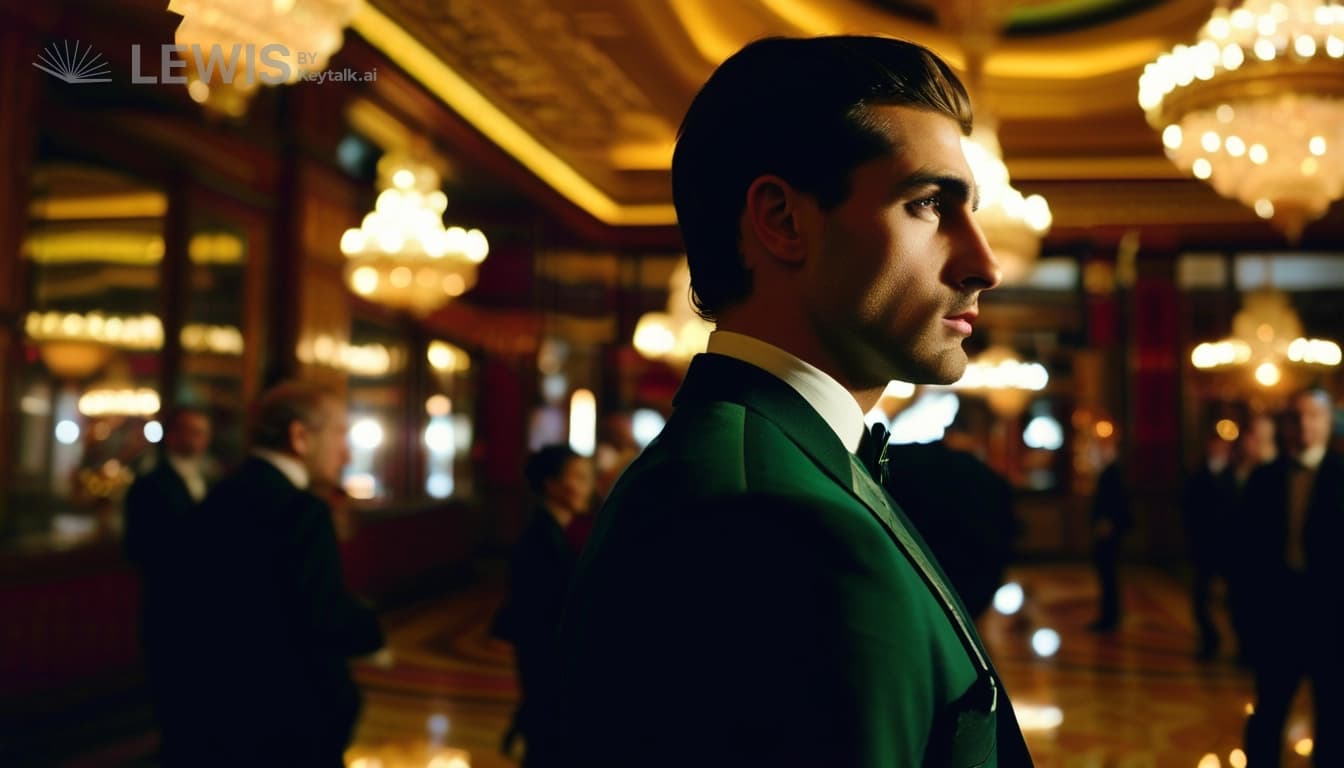
Lucian Faulkner, a 37-year-old man of mixed Sarmatian and Venetian descent, stands at an imposing six feet, his lithe build and balletic posture more reminiscent of a duelist than a scholar. His angular face bears the faint scars of a life spent under both adulation and suspicion, with high, sculpted cheekbones and sharp, green-flecked hazel eyes that seem to appraise every shadow for hidden threats. Lucian’s hair is jet-black, kept shoulder-length and swept back with a silver clasp—an affectation from his days at the palace, now repurposed to project mystery and charisma on the casino’s gilded stages. His clothing blends ceremonial vestments with gambler’s flair: brocaded coats in midnight blue, embroidered with occult sigils, worn over crisp, high-collared shirts and fitted black trousers, always finished with gloves that conceal a burn across his left palm—a memento of his exile. Once the royal court’s most celebrated astrologer, Lucian’s keen intellect and hypnotic oratory made him indispensable to theocratic rulers, but his penchant for rhetorical gamesmanship and his refusal to falsify celestial readings earned him both fierce loyalty and catastrophic enmity. Now forced into the role of “miracle-maker” for the casino’s jaded elite, Lucian moves through the skybound halls with calculated poise, cultivating alliances while quietly mourning his lost authority. His speech carries traces of patrician formality, laced with dry wit and a barely perceptible Sarmatian lilt, and he’s quick to disarm with a sardonic smile or a well-timed proverb. Driven by an unyielding need for relevance and control, Lucian’s motivations are as much about regaining agency as they are about survival—his mind forever calculating odds, his loyalty clouded by a gnawing distrust born from years of political intrigue. He is fiercely private, bordering on paranoid, yet craves connection and validation from the very circles that threaten him most. Lucian’s greatest strengths—strategic brilliance, emotional restraint, and a flair for spectacle—are shadowed by a tendency toward cynicism and moral equivocation, making him both a masterful manipulator and a man in constant peril of betraying his own ideals. His compulsive stargazing, even within the casino’s artificial night, is a private ritual that anchors him to a lost sense of order, while his habit of palming lucky coins—an old childhood superstition—reveals a vulnerability he cannot quite shed. As the tournament approaches, Lucian remains acutely aware that every gesture, every illusion, could mean his salvation or his ruin, and he navigates the shifting allegiances of the casino’s underworld with the weary elegance of a man who knows too well that prophecy is less about fate than about the stories people are willing to believe.

적대자

Vashti al-Mirza

성별여성
직업Theocratic Overlord of the Skybound Casino-Domain

프로필

Vashti al-Mirza, a strikingly tall woman of Persian-Turkic descent, stands at nearly six feet with a regal, sinewy frame honed by years navigating both court intrigue and clandestine violence. Her complexion is the lustrous olive of sun-baked marble, offset by a mane of silver-streaked black hair always bound in an elaborate, archaic braid crowned with a sapphire-studded diadem—an overt symbol of her unyielding grip on tradition and power. Her sharp, aquiline nose and angular cheekbones give her a hawkish visage, accentuated by a single, pale scar that bisects her left brow—an indelible memento from the blood-soaked rebellion she quashed in her youth. Vashti’s eyes are a cold, penetrating amber, rarely betraying emotion save for the occasional sardonic glint; her gaze dissects truth from sycophancy with unnerving precision. Clad in tailored robes of midnight blue brocade laced with silver thread and armored silk, she moves with an economy of motion, her presence alone enough to silence a room. Once a prodigious scholar-priestess, Vashti’s ascent to overlordship was forged through calculated alliances and ruthless suppression, her worldview marinated in a conviction that order is sacred and that spectacle is the perfect vessel for control. To her, the casino-domain is not merely an empire of vice, but a crucible where faith and fear are spun into currency. Her speech is formal and serpentine, laced with archaic idioms and the clipped consonants of her heritage; she wields words as deftly as she does her jeweled cane, which doubles as a concealed weapon. Vashti’s core strength lies in her strategic genius and unflinching pragmatism—she can read a room like a star chart, foreseeing every betrayal before it takes root—yet this same conviction breeds a brittle intolerance for unpredictability and an almost superstitious reliance on ritual. Her closest confidants are invariably tools or potential threats; genuine intimacy is a luxury she has long forsaken. While she hungers for legacy and the ironclad perpetuation of her rule, she is haunted by the gnawing suspicion that control is always illusory—an anxiety soothed only by the blinding, orchestrated miracles she demands from her subjects. Her penchant for calculated cruelty is balanced by a deep, almost maternal protectiveness for the casino’s balance, making her both a terrifying adversary and a paradoxical guardian. As the story begins, Vashti is poised at the zenith of her power yet shadowed by the volatility of faith and spectacle, her every gesture an act of choreography in a world teetering between devotion and mutiny.
조연

Tamasine "Tama" Dax

성별Non-binary
직업Skybound Casino Mechanic and Saboteur

프로필

Tamasine "Tama" Dax, a non-binary skybound casino mechanic and adept saboteur of mixed Mauritian and Corsican descent, stands at a wiry 5'9" with a frame hardened by years of crawling through labyrinthine ventilation shafts and tangled underbelly machinery. Their tawny skin is often streaked with engine grease, and a jagged burn scar arcs from the corner of their left jaw to just below the ear—a souvenir from a sabotage gone wrong, worn as a badge rather than a blemish. Tama’s hair is a mass of black coils cropped close at the sides, the top left untamed, sometimes threaded with copper wire or casino tokens scavenged from the floor. Their eyes, mismatched—one deep brown, the other a pale hazel—scan every room with restless calculation, missing nothing. Tama dresses in layered, practical clothing: sturdy boots, oil-stained coveralls, and a battered, silk-lined bomber jacket that hints at a past life more glamorous than their current lot. Raised amid the shifting allegiances of casino workers and palace outcasts, Tama learned early that survival depends on adaptability and a willingness to play every side; this philosophy informs their sly, sardonic demeanor and penchant for double-edged banter, delivered in a clipped, cosmopolitan accent that slips into Mauritian French when agitated or intimate. While Lucian Faulkner, the ex-astrologer, clings to visions and ideals, Tama’s worldview is grounded in the tangible and the immediate—motors, circuits, the pulse of the crowd, the risk of the next hand. Their loyalty is fiercely pragmatic, shaped by a need to carve out autonomy in a world where power is always shifting and trust is a currency best hoarded. Tama’s skill in rigging games and orchestrating mechanical "miracles" both complements and complicates Lucian’s flair for spectacle, often forcing the astrologer to confront the messy, unpredictable reality beneath his illusions. They harbor their own ambitions: to seize enough leverage to guarantee their freedom from the casino’s gilded cage, and perhaps to upend the suffocating hierarchies that keep people like them in the shadows. Tama’s independence and low tolerance for dogma make them a natural foil to Vashti al-Mirza’s iron-fisted zealotry, yet their willingness to manipulate systems for personal gain means their morality is as fluid as the casino’s ever-changing odds. Beneath their hard-edged exterior, Tama is animated by a restless curiosity and a secretive generosity, often repairing broken machines or smuggling contraband to desperate staff, though always with a calculated eye for how favors might one day be repaid. Their hands, deft and calloused, are never still, and their speech is peppered with technical jargon, wry asides, and the occasional sharp rebuke—a voice that, whether challenging Lucian’s naiveté or undermining Vashti’s authority, ensures they are never mistaken for anyone’s mere shadow.

줄거리

Lucian Faulkner’s exile begins not with a trial, but with a spectacle—a riot of torches and jeering courtiers as his prophecy fails to materialize, the promised celestial omen a blank sky above the palace. Once adored for his uncanny readings, Lucian is now paraded through the city’s skybridges, his vestments scorched, dignity in tatters, bound for Vashti al-Mirza’s floating casino—a skybound labyrinth of glass, gold, and perpetual night suspended above a continent wracked by religious strife. Here, faith is not worshipped but wagered, miracles manufactured nightly for a clientele addicted to wonder and betrayal. Lucian’s mind, still sharp with calculations and bruised pride, seizes on survival as his new imperative: he must prove himself indispensable to Vashti, the casino’s theocratic overlord, or risk being delivered to the zealots who want his head. Every night he dons a smile as false as the casino’s constellations, orchestrating minor illusions and reading fortunes for those who believe spectacle can buy them absolution.

Vashti rules her domain with the precision of a general and the poise of a queen, her every word a performance, her every demand edged with menace. She sees in Lucian not just a fallen star but a tool—a man whose talent for spectacle can galvanize loyalty or quell unrest among the casino’s volatile elite. Vashti’s own motivations are as layered as her brocaded robes: she yearns for order, legacy, and the veneration of the masses, yet she is haunted by the knowledge that her power is fragile, propped up by the very miracles Lucian must now deliver. Her trust is a blade, and she wields it sparingly, wary of both Lucian’s ambitions and the growing discontent among her rivals. Rumors swirl of a coming coup, and Vashti responds with calculated cruelty—making examples of dissenters, orchestrating ever more elaborate spectacles, and pressing Lucian into service for the casino’s most dangerous event: the annual Tournament of Saints, where fortunes and fates are decided in a single, blinding night.

Tamasine “Tama” Dax, the casino’s resident mechanic and saboteur, enters Lucian’s orbit like a rogue comet. Tama is neither gambler nor believer—they live by pragmatism, their hands as skilled at rigging games as at patching broken automatons. For Tama, the casino is both a prison and a playground, a place to hustle for scraps of autonomy while plotting to one day slip its gilded leash for good. Lucian, with his air of tragic grandeur and desperate need for validation, both irritates and intrigues them. Against their better judgment, Tama helps Lucian navigate the casino’s underbelly—showing him the hidden gears behind the miracles, the vulnerabilities in Vashti’s regime, and the currents of resentment running through the staff and disenfranchised gamblers. Their alliance is transactional, yet a grudging respect forms, and Tama’s irreverent wit becomes Lucian’s anchor against the tides of paranoia and self-doubt.

As the Tournament approaches, Vashti demands a miracle that will eclipse all previous spectacles—a feat so dazzling it will silence her enemies and renew the faith of the casino’s patrons. Lucian, cornered by the threat of execution and the promise of restored status, devises a plan with Tama: during the tournament’s climax, they will orchestrate a pyrotechnic display mimicking a divine omen, using hidden machinery, sleight of hand, and Lucian’s oratory to whip the crowd into ecstasy. Every detail is calculated, every risk weighed, but Lucian’s old paranoia festers—he senses that Vashti is testing him, that the spectacle’s true purpose is not salvation, but entrapment. Meanwhile, a chic and enigmatic confidante, long presumed to be Lucian’s ally among the courtiers, reveals a hidden agenda: they intend to use the miracle as proof of Vashti’s sacrilege, triggering a coup that will sweep both Vashti and Lucian from power.

The night of the Tournament is chaos incarnate—dancers whirl through clouds of artificial starlight, gamblers howl and weep as fortunes turn on the spin of a wheel, and Lucian, costumed as a celestial avatar, steps onto the main stage. With Tama running sabotage below decks, the miracle begins: flames leap, glass shatters, and a rain of silver sparks descends as Lucian proclaims a new prophecy. The crowd is rapt, Vashti’s eyes unreadable, and for a moment Lucian tastes the intoxicating power of belief once more. But as the coup ignites—gunfire, masked conspirators, the scent of burning silk—Lucian is forced to choose: martyr himself as a scapegoat for Vashti’s regime,

장면

1
scene 1 image
The Night the Stars Refused
[Place]
The Palace of Altair, rooftop observatory and adjoining skybridges, beneath a cloudless night sky

[Time]
The eve of Lucian’s exile, moments after midnight, as the city below buzzes with anticipation and dread

[Action]
The scene opens with Lucian standing alone at the observatory’s edge, his ceremonial vestments gleaming under torchlight, the crowd below restless with expectation. The air is thick with tension—courtiers and city officials, once eager for Lucian’s every word, now turn on him as the prophesied celestial omen fails to appear. There’s a palpable sense of betrayal; whispers sharpen into jeers, and the silence of the heavens becomes an accusation. Lucian’s mind races, caught between disbelief and mounting panic, while the palace guards close in, ready to escort him away. In this moment, Lucian tries to compose himself, scanning the sky for any sign—desperate for redemption, but met only with emptiness. The High Priestess publicly denounces him, her words cutting and final, and the assembled crowd erupts in outrage. Lucian is seized, his vestments scorched in a symbolic gesture, and marched through the palace’s skybridges for all to witness his disgrace. The journey through the city is a gauntlet of mockery and scorn; former admirers avert their eyes, while opportunists hurl insults and refuse to let him forget his failure. Lucian’s internal struggle is vivid—pride warring with humiliation, and the instinct to survive flickering beneath a crushing sense of loss. The scene ends with the first glimpse of Vashti’s floating casino shimmering in the distance, signaling the uncertain future awaiting him.

[Impact on the story]
This scene establishes Lucian’s dramatic fall from grace, instantly forging empathy and intrigue around his character. The public nature of his disgrace raises the stakes for his survival and sets the emotional tone for his exile. It also introduces the themes of spectacle and betrayal that will define his journey, while foreshadowing the power struggles and shifting loyalties to come. Lucian’s humiliation and desperation lay the groundwork for his complicated relationship with Vashti and the casino’s world of manufactured miracles.

[Description]
Lucian’s prophecy fails before a crowd hungry for wonder, transforming adoration into condemnation. Publicly disgraced and stripped of his former glory, he is paraded through the city toward exile, the glittering casino looming as both punishment and opportunity. This scene marks the end of Lucian’s old life and the beginning of his fight for relevance and survival.
2
scene 2 image
[Title]
Exile on the Skybridges

[Place]
The city’s skybridges—arteries of suspended glass and steel arching between old cathedrals and neon-lit towers—leading to the docking platform beneath Vashti’s floating casino.

[Time]
The dead of night, immediately following Lucian’s public disgrace at the palace, as the city’s torches and lanterns burn low and the casino hovers above like a second, artificial moon.

[Action]
Lucian is marched through the city’s skybridges by palace guards, a shamed procession flanked by jeering crowds and sullen onlookers. The route is deliberately circuitous, ensuring maximum exposure to the city’s scorn. Lucian’s robes are scorched, his wrists bound, but his mind is restless—cycling through panic, shame, and the first embers of defiance. Along the way, he notices how the crowds shift: some faces are twisted with delight at his fall, others turn away, troubled by the spectacle. A few—old friends, former patrons—hesitate as he passes, torn between sympathy and self-preservation.

As the skybridges climb higher, the city’s noise fades into a cold wind and the glitter of the casino grows nearer. Lucian’s thoughts turn to Vashti: what does she want, and why summon him here instead of leaving him to the mob? He rehearses possible answers, calculating how to present himself as useful rather than expendable.

The guards are tense, aware that their charge is both a symbol and a liability. One of them, a junior officer with a nervous tic, mutters about the casino’s dangers—hinting at what happens to those who displease Vashti. Lucian catches this, clocking the power dynamics already shifting around him.

The procession pauses at the final bridge—a glass tunnel suspended above the city’s sleeping spires. Here, a group of Vashti’s attendants meets them: masked, opulent, and impassive. A formal handoff occurs, during which Lucian senses a shift in atmosphere—from raw public hatred to the chilling, calculated hospitality of the casino’s regime. He is stripped of any remaining tokens of his past life and given a new, sterile robe. The attendants inform him, without ceremony, that he is now the property of Vashti’s house and will be taken directly to her for judgment.

Throughout, Lucian is hyper-aware of his precarious status—neither prisoner nor guest, but something in between. The casino looms above, impossibly bright and full of hidden threats. Lucian steels himself, knowing that whatever humiliation he’s endured so far may be nothing compared to what awaits inside.

[Impact on the story]
This scene deepens Lucian’s humiliation while planting the seeds of his survival instinct and latent cunning. The transition from public spectacle to the controlled, enigmatic environment of Vashti’s world signals a new phase in his exile, raising both hope and dread. The reactions of the crowd—ranging from scorn to covert sympathy—foreshadow potential allies or enemies among the city’s factions. The handoff to Vashti’s attendants marks a shift in tone, setting up the high-stakes psychological games to come. Lucian’s internal calculations and observations reinforce his role as a protagonist who will not simply accept his fate, but actively seek to manipulate it.

[Description]
Lucian is marched through the skybridges in a public display of disgrace, enduring the city’s contempt before being handed over to Vashti’s masked attendants. As he sheds the last vestiges of his old life, he braces himself for the unknown dangers of the floating casino, determined to find leverage in his new captivity. This scene cements the end of Lucian’s public life and the beginning of his perilous negotiations for survival and relevance.
3
scene 3 image
[Title]
First Wagers in the House of Miracles

[Place]
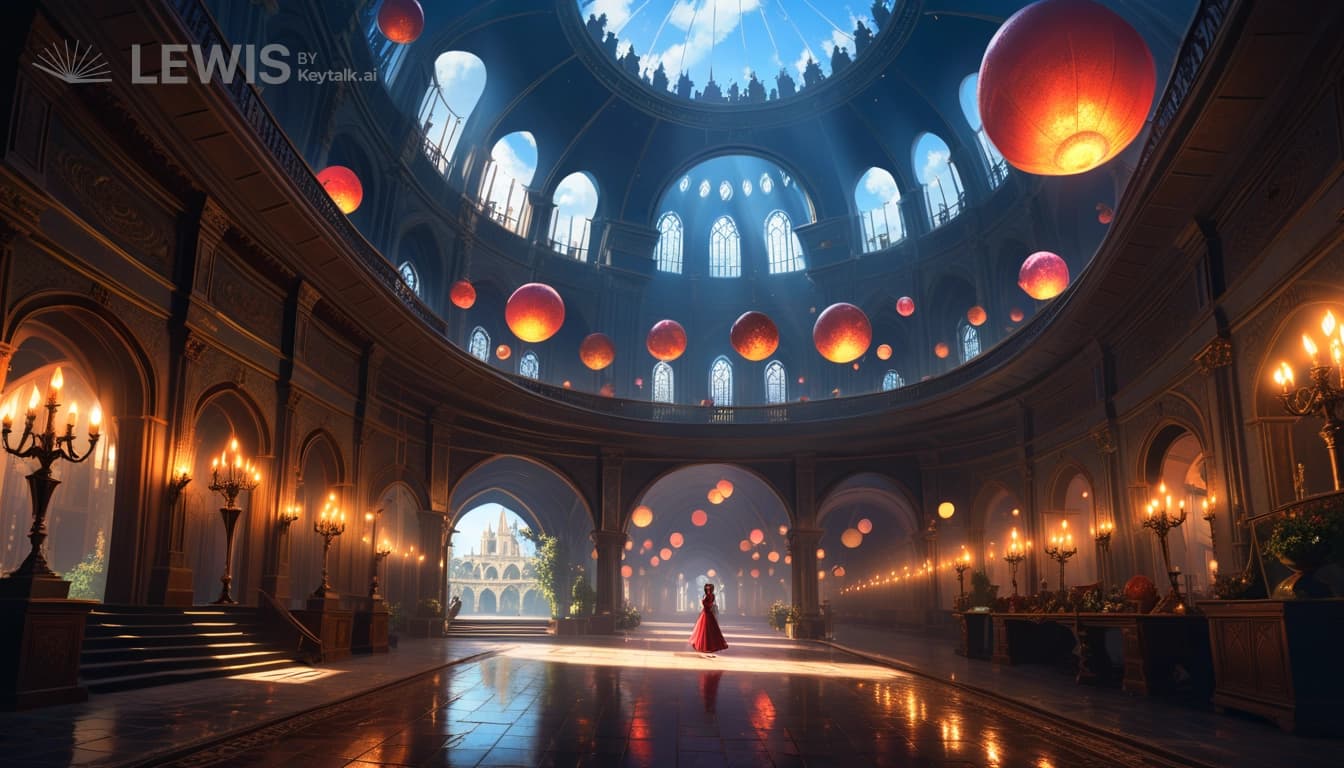
Vashti al-Mirza’s floating casino—an opulent vestibule of glass, gold, and shadow, thrumming with the low hum of machinery and the distant clamor of games. The entrance hall, lined with mirrored pillars and perfumed with incense, serves as both a threshold and a test.

[Time]
Moments after Lucian’s arrival, deep into the sleepless hours of the night, when the casino’s artificial dusk blurs the line between day and dream.

[Action]
Lucian is escorted into the casino by Vashti’s masked attendants, stripped of his old identity and plunged into the dazzling, predatory world of the House of Miracles. The vestibule is a sensory assault: laughter and sobs spill from private salons, clockwork croupiers spin jeweled wheels, and fortunes change with the flick of a card. Lucian’s first steps are observed by patrons and staff alike, their curiosity sharpened by rumor—some see a prophet fallen from grace, others a new piece on Vashti’s chessboard.

He’s led through a maze of spectacle—automata performing mock miracles, gamblers praying to false saints, dancers who move like omens. Lucian is forced to witness the casino’s machinery of faith-for-hire, recognizing both opportunity and threat in the carefully engineered chaos. Vashti’s presence is announced but withheld; instead, Lucian is greeted by a senior attendant who explains the rules of his captivity: he will serve as the casino’s new oracle, his survival dependent on his ability to dazzle and deceive. Failure will mean oblivion—either in the casino’s oubliettes or at the hands of the zealots below.

As Lucian is ushered to his new quarters, he passes Tama Dax, the mechanic, mid-repair on a malfunctioning automaton. Their eyes meet—a brief, electric exchange. Tama sizes him up with a mix of skepticism and curiosity, making a wry comment that cuts through the pageantry. The moment is quick but loaded: Lucian senses both a warning and a possible lifeline.

In private, Lucian’s internal struggle intensifies. He weighs the risks and rewards of playing Vashti’s game, calculating how best to perform a new identity while mining the casino for secrets, allies, and escape routes. The scene ends with Lucian alone in his opulent, windowless quarters, staring at the false stars painted on the ceiling, acutely aware that every gesture from now on is a wager—and the house never loses.

[Impact on the story]
This scene immerses Lucian in the casino’s seductive but ruthless ecosystem, introducing the rules and stakes of his new existence. The first encounter with Tama plants the seeds of an uneasy alliance, while the absence of Vashti heightens tension and anticipation. Lucian’s disorientation and growing resolve are foregrounded, deepening his character and setting up the psychological games to come. The casino’s atmosphere—part sanctuary, part prison—signals that Lucian’s exile has become a high-wire act where every move is scrutinized and survival depends on cunning, adaptation, and luck.

[Description]
Lucian is initiated into the floating casino’s world of manufactured miracles and high-stakes deception, forced to assume the role of oracle under threat of annihilation. He glimpses both peril and potential allies among the staff, especially in his first, charged encounter with Tama. The scene establishes the casino’s treacherous allure and frames Lucian’s captivity as a dangerous game of performance, manipulation, and desperate self-preservation.
4
scene 4 image
[Title]
Vashti’s Gambit: A Queen’s Invitation and a Blade’s Edge

[Place]
Vashti al-Mirza’s private sky chamber—an elevated sanctum of glass and shadow overlooking the casino’s endless night, filled with the scent of rare incense and the distant clamor of wagers below.

[Time]
Shortly after Lucian’s first night in the casino, when the artificial dusk is at its deepest and the House of Miracles is most alive with secrets.

[Action]
Lucian is summoned by Vashti for their first private audience—a meeting that is equal parts coronation, interrogation, and threat. He’s escorted through hidden corridors by silent, masked attendants, his every footstep echoing the gravity of what’s to come. The sky chamber is intimate yet imposing; Vashti waits in silhouette against the city-lights far below, her presence at once magnetic and dangerous.

Vashti opens with calculated warmth, acknowledging Lucian’s talents and the spectacle of his fall, then pivots to the matter at hand: she expects not mere fortune-telling but miracles capable of binding the faith—and fear—of her unruly clientele. She lays out the stakes with chilling clarity, weaving veiled threats into praise, and makes it clear that Lucian’s survival hinges on his usefulness.

Lucian, battered but unbroken, tries to read Vashti’s intentions. He’s keenly aware that this is not just a job offer but a wager on his soul. He offers cautious deference while probing for Vashti’s vulnerabilities—her obsession with control, her hunger for adoration, her fear of losing both.

As the conversation deepens, the mood shifts from negotiation to psychological sparring. Vashti reveals her knowledge of Lucian’s past prophecies and failures, testing his composure. She presses him to confess what drives him—faith, ambition, desperation? Lucian deflects, countering with insights into the nature of spectacle and belief, hinting at his willingness to play the role she demands if given the right incentives.

Vashti concludes the meeting with a dangerous gift: a ceremonial blade, its hilt worked with the iconography of false saints. She tells Lucian to keep it as a reminder—of both his power to dazzle and the consequences of disappointing her. The audience ends with a subtle threat: the next miracle must be his masterpiece, or it will be his last.

Lucian leaves shaken but resolved, clutching the blade—a symbol of both his captivity and his potential leverage. He knows he is being watched, tested, and manipulated, but senses that Vashti, too, is gambling everything on this alliance.

[Impact on the story]
This scene forges the central tension between Lucian and Vashti, establishing their dynamic as a high-stakes game of mutual exploitation and guarded respect. Lucian’s desperation is sharpened by the knowledge that his fate is intimately tied to Vashti’s ambitions, while Vashti’s power is revealed to be as precarious as it is formidable. The ceremonial blade is both a literal and figurative token of their uneasy pact, setting up future moments of betrayal, alliance, and existential risk. The emotional resonance lies in Lucian’s simultaneous fear and fascination with Vashti, and his dawning realization that his survival depends on mastering both spectacle and subterfuge.

[Description]
Lucian is summoned for a private audience with Vashti, where she lays out the perilous terms of his new role and tests his resolve. Their exchange bristles with tension, manipulation, and the promise of mutually assured destruction. By the end, Lucian is left with both a threat and a weapon—a symbol of the dangerous game he has no choice but to play.
5
scene 5 image
[Title]
The Mechanic and the Oracle: An Unlikely Bargain

[Place]
The casino’s labyrinthine underbelly—an industrial maze beneath the spectacle, filled with humming machinery, leaking pipes, and the clamor of unseen labor. Here, in a forgotten maintenance alcove, the world above is just a distant roar.

[Time]
The following day, after Lucian’s harrowing audience with Vashti—midway through his second night in the casino, when most patrons are lost in revelry and the staff slip through shadows to work their own games.

[Action]
Lucian, reeling from Vashti’s veiled threats and the weight of the ceremonial blade, struggles to acclimate to the casino’s relentless pace. He finds himself cornered by a minor crisis—a malfunction in the machinery behind one of the nightly “miracle” displays. Pressed by Vashti’s enforcers to fix the problem or face punishment, Lucian is thrust into the casino’s backstage chaos, where he is clearly out of his depth.

Enter Tama, the casino’s resident mechanic and notorious saboteur, who is already at work patching up the failing systems. Lucian, desperate and unskilled in the practical mechanics, is forced to rely on Tama’s expertise. Tama, at first dismissive and sardonic, sees an opportunity to leverage Lucian’s predicament. They strike a deal: Tama will fix the machinery and cover for Lucian, but in return Lucian must use his access to the casino’s inner sanctums to procure information or favors for Tama—specifically, details about Vashti’s private operations and the clandestine “saints” who enforce her rule.

As Tama works, they offer Lucian a crash course in the casino’s real workings—revealing the machinery that underpins the miracles and the network of exploited labor that keeps the illusions alive. The two exchange barbed observations and reluctant admissions, each recognizing a kindred desperation in the other. Lucian’s pride rankles at needing help, but he is forced to swallow it, realizing his survival now depends on forging alliances in this treacherous environment.

Tama, meanwhile, is intrigued by Lucian’s blend of tragic grandeur and raw ambition. They test his limits, probing for weakness, but also begin to respect his quick thinking and willingness to adapt. As the machinery whirs back to life, the two seal their pact with a handshake—a gesture charged with both camaraderie and mutual suspicion.

[Impact on the story]
This scene cements Lucian and Tama’s uneasy partnership, laying the groundwork for future collaboration and conflict. Lucian’s dependence on others is highlighted, forcing him to confront his vulnerabilities and adapt his strategies for survival. Tama’s role expands from background fixer to essential player, their motivations and ambitions intersecting with Lucian’s in complex ways. The alliance introduces a new axis of loyalty and betrayal, while the tour through the casino’s underbelly exposes the rot beneath its glittering façade. The emotional impact is one of wary hope—both characters sense that this alliance could either save or doom them, depending on which way the casino’s fortunes turn.

[Description]
Lucian, out of his depth amid failing machinery, is forced into an alliance with Tama, the casino’s sharp-tongued mechanic. They strike a bargain: Tama will fix Lucian’s immediate problem in exchange for inside information, forging a partnership built on necessity and mutual distrust. This pivotal alliance exposes the hidden machinery behind the casino’s miracles and sets both characters on a path where survival depends on trust, cunning, and the willingness to risk everything.
6
scene 6 image
[Title]
Broken Machines, Hidden Prayers

[Place]
The machinery catwalks beneath the casino’s central dome—a narrow, vertiginous walkway suspended over clattering gears, exposed wiring, and the faint, constant thrum of the casino’s artificial night. Here, the world’s opulence is only a distant echo, replaced by sweat, oil, and the hiss of steam.

[Time]
Late night, only hours after Lucian and Tama’s uneasy bargain, as the casino prepares for its next round of manufactured miracles. The Tournament of Saints is less than a week away, and tension rides every surface like static.

[Action]
Lucian and Tama converge on a critical malfunction—a core engine sputtering, threatening to plunge half the casino’s lighting and illusions into darkness. Tama, wrench in hand, curses the overworked machinery and the engineers who cut corners for spectacle’s sake. Lucian, still raw from recent humiliation, is determined to prove his worth, assisting with calculations and improvising solutions even as his hands betray his inexperience. Tama, half-mocking, half-instructive, pushes Lucian to face the reality beneath the casino’s illusions: miracles are built on sweat, compromise, and calculated deception, not divine favor. As they work, Tama reveals scars and stories from years spent in the casino’s shadows—moments of sabotage, near-misses, and brief flashes of hope for escape.

While patching the system, Lucian discovers a hidden maintenance hatch—behind it, stashed relics from earlier, bloodier eras of the casino, and coded prayers etched by desperate workers. This discovery unsettles both of them: Lucian is reminded of faith’s dark underbelly, and Tama’s cynicism cracks as memories of past rebellions surface. Together, they manage a temporary fix, but the strain on the machinery is obvious—everything feels like it’s one misstep from collapse.

After the crisis passes, Tama confides a deeper motivation: they’re not just angling for favors, but gathering evidence to expose Vashti’s cruelties and perhaps incite change among the staff. Lucian, seeing new possibilities, floats the idea of using the upcoming Tournament’s spectacle as cover for something bigger. Their partnership, once transactional, now teeters on the edge of real conspiracy. The scene ends with both characters exhausted but newly aligned—uncertain of each other’s full intentions, but aware that the casino’s miracles are built on bones and secrets.

[Impact on the story]
This scene deepens Lucian and Tama’s bond, shifting their alliance from convenience to a shared sense of purpose, tinged with lingering distrust. Lucian’s growing respect for the casino’s invisible labor changes his view of both miracles and faith, while Tama’s willingness to reveal personal stakes marks the start of genuine vulnerability. The discovery of hidden prayers and relics plants the seeds for future rebellion, foreshadowing how the Tournament might become a crucible for change or catastrophe. The emotional impact is one of grim solidarity—two outcasts recognizing the possibility of transformation through mutual risk.

[Description]
Lucian and Tama tackle a catastrophic machinery failure beneath the casino’s glittering façade, uncovering traces of old rebellions and desperate prayers among the gears. Their partnership deepens into a fragile conspiracy, setting the stage for sabotage and subversion as the Tournament approaches. The scene exposes the casino’s fragile foundations and the desperate hope flickering beneath its surface.
7
scene 7 image
[Title]
Masks at Midnight: Betrayal in the Hall of Reflections

[Place]
The Hall of Reflections—a vast, mirrored ballroom at the heart of Vashti’s floating casino, lined with obsidian glass and gilded archways, where every surface distorts and multiplies the revelers in their jeweled masks. Hidden passages thread behind the mirrors, granting secret vantage points for spies and schemers alike.

[Time]
Midnight, two nights before the Tournament of Saints. The casino throbs with anticipation; Vashti hosts a masquerade gala for her most dangerous allies and potential rivals, a prelude to the storm she senses is gathering.

[Action]
The masquerade is in full swing—music shivers through the air, laughter rings false, and fortunes are wagered with reckless abandon. Lucian, costumed in celestial whites and silver, moves warily through the crowd under Vashti’s watchful eye, his every gesture a performance meant to project confidence and mystique. Tama, disguised as a masked server, weaves through the revelers, passing coded messages and quietly mapping the exits and guard rotations for the night of the Tournament.

The tension is electric: Lucian’s nerves are frayed by the knowledge that every word and glance is being weighed by Vashti and her court. Vashti herself is radiant and inscrutable, using the party as an audition for loyalty, engineering moments to test Lucian’s wit and loyalty in front of masked powerbrokers. In the background, Tama intercepts a clandestine exchange between two courtiers—overhearing fragments of a plot to expose the casino’s manufactured miracles and implicate Lucian as the architect of sacrilege.

Lucian is drawn into a dangerous dance with a mysterious confidante from his past—someone whose loyalty is ambiguous, whose whispered threats and promises hint at the coming coup. As the party crescendos, Vashti corners Lucian in a hall of mirrors, confronting him with rumors of betrayal and demanding proof of his devotion with a public display of illusion. Lucian, desperate and cornered, improvises a dazzling but risky spectacle, using his knowledge of the casino’s hidden machinery and a secret assist from Tama behind the scenes.

The illusion momentarily saves face, dazzling the crowd and appeasing Vashti. But the rift between Lucian and his former ally widens—the confidante slips away, leaving a warning of the coup to come. Tama and Lucian regroup in the shadows, shaken by the close call and the realization that their plan for the Tournament is now a race against time and treachery from every side.

[Impact on the story]
This scene ratchets up the stakes, forcing Lucian to navigate treacherous social and political waters while maintaining his precarious alliance with both Vashti and Tama. Lucian’s public success comes at a cost—his paranoia deepens, and the lines between ally and adversary blur. Tama’s intelligence-gathering and subtle sabotage move their conspiracy forward, but also put them directly in the crosshairs of the casino’s security. The masquerade exposes the fragility of trust and the lethal consequences of even a single misstep, setting the stage for the chaos and betrayal of the Tournament.

[Description]
At Vashti’s midnight masquerade, Lucian and Tama maneuver through a maze of deceit, surveillance, and shifting allegiances. A failed plot, a dazzling illusion, and a whispered warning of rebellion force their alliance into sharper focus—and plunge them deeper into the casino’s lethal intrigues.
8
scene 8 image
[Title]
The Tournament Looms: Schemes in the Shadow Gallery

[Place]
The Shadow Gallery—a restricted, dimly lit mezzanine above the main casino floor, lined with velvet-draped alcoves, surveillance nodes, and hidden passageways that overlook the grand arena being prepared for the Tournament of Saints.

[Time]
The eve before the Tournament, late at night. The casino below pulses with frenetic energy as workers and acolytes race to install the final spectacle machinery. Tension pervades every corridor.

[Action]
Lucian and Tama steal away to the Shadow Gallery, using the chaos of last-minute preparations as cover. Here, they hash out the last, most dangerous details of their plan—debating contingencies, scoping the mechanical networks that will trigger the false miracle, and mapping their escape routes in case the coup erupts ahead of schedule. Lucian is frayed by exhaustion and mounting dread, oscillating between flashes of manic inspiration and raw vulnerability as he voices his fears that Vashti is setting a trap. Tama, prickly but protective, grounds him with practical advice and a hard-nosed assessment of their slim odds.

Interwoven with their plotting, they witness secret meetings among Vashti’s trusted inner circle through one-way glass—catching snippets of coded threats, glimpses of bribes changing hands, and the unmistakable presence of Lucian’s enigmatic confidante, now openly colluding with the ringleaders of the coup. The realization lands with sickening clarity: the miracle they’re building is the spark meant to ignite revolution, and Lucian himself is the scapegoat both sides intend to sacrifice.

As tension peaks, Vashti herself enters the Gallery, flanked by loyal guards. She delivers a chilling ultimatum—reminding Lucian of the consequences should he fail, and hinting that she knows more of the plot than she lets on. The scene brims with unspoken threats and razor-edged trust: Vashti leaves Lucian a final token, an antique key, whose purpose is unclear but whose symbolism is unmistakable. After she departs, Tama and Lucian share a rare moment of candor, acknowledging the inevitability of betrayal and the impossibility of true escape. Their alliance, forged in necessity, is now bound by mutual recognition of the abyss yawning before them.

[Impact on the story]
This scene crystallizes the stakes for both Lucian and Tama, forcing them to confront how little control they truly possess and how expendable they’ve become to every power in play. Lucian’s paranoia and desperation reach a breaking point, but Tama’s pragmatic loyalty gives him a fragile anchor. Vashti’s appearance raises the pressure, her ultimatum making the threat of failure—and death—palpably real. The antique key becomes a potent symbol of agency, possibility, or doom. The scene tightens the narrative coil before the Tournament, setting up emotional and strategic fault lines that will rupture in the coming chaos.

[Description]
In the Shadow Gallery above the casino, Lucian and Tama finalize their dangerous plot amid the surveillance and subterfuge of Vashti’s regime. Watching the coup gather momentum and receiving a cryptic warning from Vashti herself, they realize the miracle will mark the point of no return—and that trust may be the greatest risk of all.
9
scene 9 image
[Title]
When Heaven Falls: The Miracle That Wasn’t

[Place]
The Grand Arena of Vashti’s Floating Casino—a cathedral of glass, gold, and velvet, transformed for the Tournament of Saints, with its vast stage gleaming under a storm of electric constellations and feverish crowds pressed against the balustrades above and below.

[Time]
Night of the Tournament’s climax. The casino is at its most frenzied: midnight, on the razor’s edge between spectacle and catastrophe.

[Action]
The Tournament unfolds with escalating spectacle: pageantry, engineered miracles, and desperate wagers. Lucian, costumed in celestial regalia, is ushered onto the main stage as the crowd’s anticipation crests. The atmosphere is crackling—every eye on Lucian, every rival and loyalist waiting for a sign. Tama, hidden in the underbelly of the arena, orchestrates the machinery and sabotage according to their plan, nerves frayed but hands steady. Lucian’s heart pounds with dread and a perverse exhilaration; he feels both puppet and prophet as he prepares to trigger the miracle that could make or break them all.

As the false omen erupts—a dazzling pyrotechnic display mimicking divine intervention—the crowd erupts in awe. For a heartbeat, Lucian feels the intoxicating power of belief flowing back to him. But the miracle’s perfection is its undoing: the spectacle is too precise, too beautiful, and the enigmatic confidante steps forward, seizing the moment to denounce Vashti’s regime as fraudulent. The coup explodes into action—masked conspirators emerge, gunfire cracks, and chaos engulfs the arena. Lucian, spotlighted and exposed, recognizes the trap closing around him.

Vashti, from her gilded balcony, locks eyes with Lucian—her expression a mask of fury and betrayal. Tama, below, is caught between escape and loyalty, forced to improvise as the machinery they’ve rigged threatens to backfire. In the pandemonium, Lucian must decide whether to martyr himself to buy Tama and the innocent staff time to flee, or to use Vashti’s antique key (its true function now revealed amidst the chaos) to gamble everything for his own survival. The scene pivots on Lucian’s split-second choice, as belief, betrayal, and spectacle collapse into violence.

[Impact on the story]
This scene detonates all the tension built throughout the story: Lucian’s carefully orchestrated miracle turns him from pawn to pariah, forcing him to confront his own complicity and the true cost of spectacle. Tama’s loyalty is tested in the crucible of chaos, their connection with Lucian thrown into sharp relief. Vashti’s regime teeters on the brink, and the coup’s eruption makes clear that survival demands more than cleverness—it demands sacrifice, and perhaps the relinquishing of old dreams.

[Description]
Amidst the Tournament’s climactic spectacle, Lucian unleashes the miracle meant to save them all—only to trigger a coup and seal his own fate. The night fractures into violence and revelation, leaving Lucian, Tama, and Vashti each facing impossible choices as belief collapses into ruin.
10
scene 10 image
[Title]
Ashes of Belief: Choosing the Fire or the Fall

[Place]
The shattered main stage of the Grand Arena, half-consumed by smoke and flame, with the casino’s labyrinthine corridors and skybridges echoing with gunfire and panicked screams. Emergency lights flicker on ruined balconies, casting monstrous shadows across toppled statues and the broken machinery of miracles.

[Time]
The immediate aftermath of the failed miracle and erupting coup—minutes after midnight, as the Tournament unravels and the casino teeters on the edge of collapse.

[Action]
Lucian stands at the epicenter of chaos, spotlighted by the fractured stage lights and ringed by both conspirators and loyalists. He clutches Vashti’s antique key, now revealed as the master override for the casino’s security and life-support systems. The coup has fully ignited: masked rebels clash with Vashti’s personal guard, while desperate patrons trample each other in a bid to escape. Tama, battered but alive, emerges from a smoking service hatch, torn between helping Lucian and leading a group of staff and outcasts to safety through secret maintenance tunnels.

Vashti, wounded yet unbowed, confronts Lucian face-to-face on the ruined stage. She accuses him of betrayal, but also pleads—her power is gone, her regime in shambles, and she offers Lucian a place at her side if he can still save her. The enigmatic confidante, revealed as the coup’s architect, holds the crowd in sway with promises of a new order, demanding Lucian’s public confession of fraud to legitimize the uprising.

Lucian is thrust into an impossible choice: use the key to lock down the casino, trapping many—including Tama and the staff—in a fiery tomb, in order to buy Vashti and himself a slim chance at survival and power; or trigger the emergency evacuation, sacrificing his own chance to escape in order to save Tama and the innocents at the cost of his own life and any hope of redemption. The moment is charged with raw emotion—Tama pleads for Lucian to do the right thing, Vashti tempts him with power, and the crowd’s belief hangs in the balance.

As flames consume the false heavens overhead, Lucian makes his decision—not with grand speeches, but in a quiet, desperate act that determines who lives and who dies. Whether he chooses martyrdom or self-preservation, the scene ends with the casino’s fate sealed: the spectacle shattered, the old order over, and the survivors scattered into the darkness above the strife-torn continent below.

[Impact on the story]
This scene forces Lucian to confront the heart of his journey—whether he values power, survival, or the lives of others above his own need for validation. Tama’s fate and future are directly tied to his choice, cementing or breaking the trust forged in their alliance. Vashti’s dream of immortality collapses, and the coup’s true cost is revealed. The emotional fallout will haunt every survivor, reshaping their beliefs and sense of self.

[Description]
In the casino’s final moments, Lucian must choose between self-sacrifice and self-preservation, with the lives of Tama, Vashti, and countless innocents hanging in the balance. The spectacle is over; what remains is the truth of what each character is willing to risk, lose, or become.
'Miracles for Sale'스토리 챗

이 스토리 속 캐릭터들과 대화하고 싶다면?

'Miracles for Sale'스토리 챗

이 스토리 속 캐릭터들과 대화하고 싶다면?

story image
story image
story image

이런 이야기는 어때요?

댓글0

테마 음악