본문으로 건너뛰기
The Receipt That Reindexed Her Soul cover image

The Receipt That Reindexed Her Soul

At the far edge of the afterlife, a night-shift convenience store offers one last craving to every soul before they cross over, and the register is running out of time for the next tide. A living girl, stranded by mistake, becomes the new clerk—only to discover the cravings aren’t perks but bargains that can rewrite what a soul deserves. Each night she watches the rules tighten as customers bargain for memories they can’t afford to keep. When Death arrives as a regular for the first time, quietly returning for her “wrong” customer, she must decide whether to follow the ledger or break it before the store closes forever.
스크롤

캐릭터

주인공

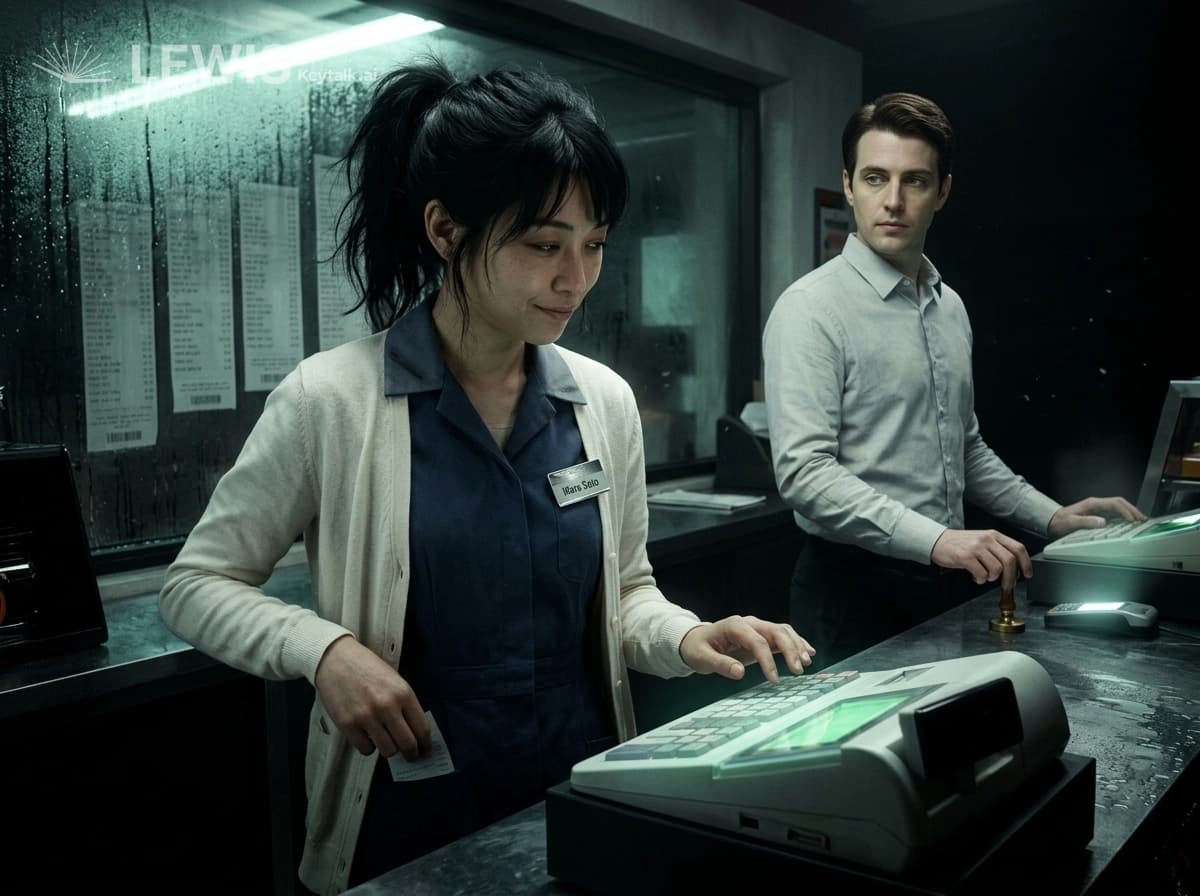
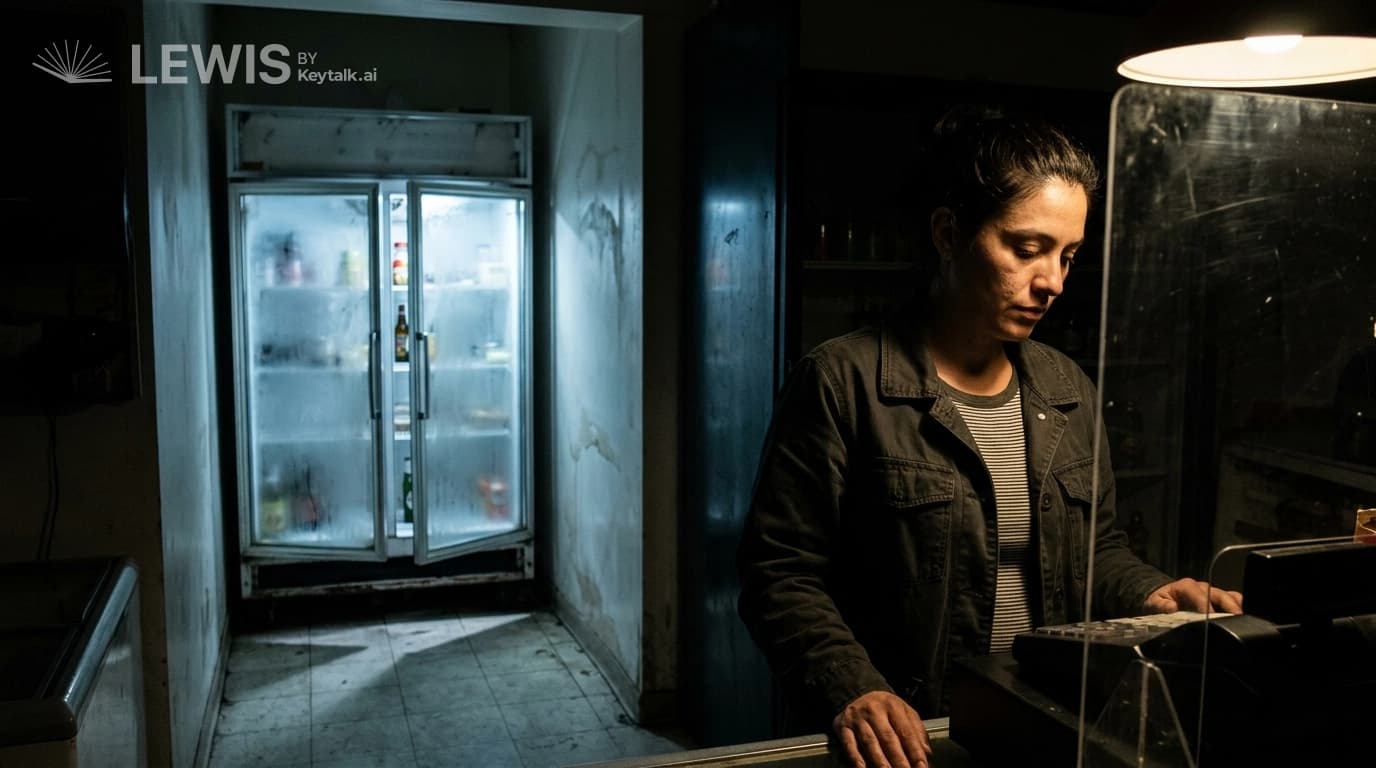
Mara Sato

성별여성
직업night-shift convenience clerk (temporary)

프로필

Stranded in the afterlife by mistake, Mara clocks in at a convenience store whose register sells last cravings as bargains that rewrite what a soul thinks they deserve—training her hands into soul-theft while she searches for what she was owed (and what was taken from her).

Mara speaks softly and works precisely, memorizing the ledger’s quirks by touch because panic feels like a faster way to be drafted into the rules. She bargains like a survival skill—half “negotiation,” half theft—until the ledger’s rewrite clause forces her to confront the difference between protecting herself and erasing other people’s selves.

배경

Mara died young in the living world under circumstances that still won’t resolve into a story she can live with, and her confusion became the loophole that got her stranded behind the counter. She found Elias’s maintenance notes tucked in store hardware like contraband and used them to learn the register by feel, which means she’s already holding forbidden knowledge when Tomas’s ledger-technicians start auditing for unlicensed clerks.

외모

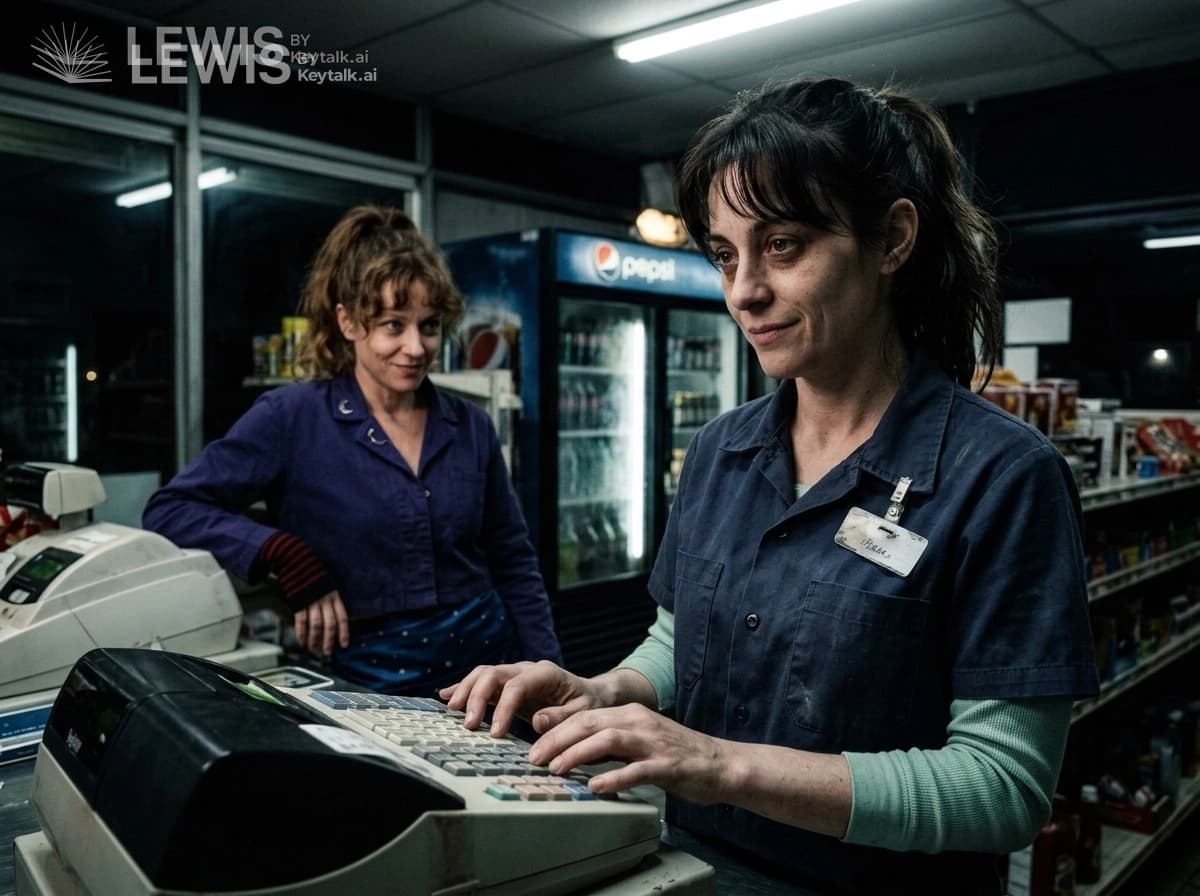
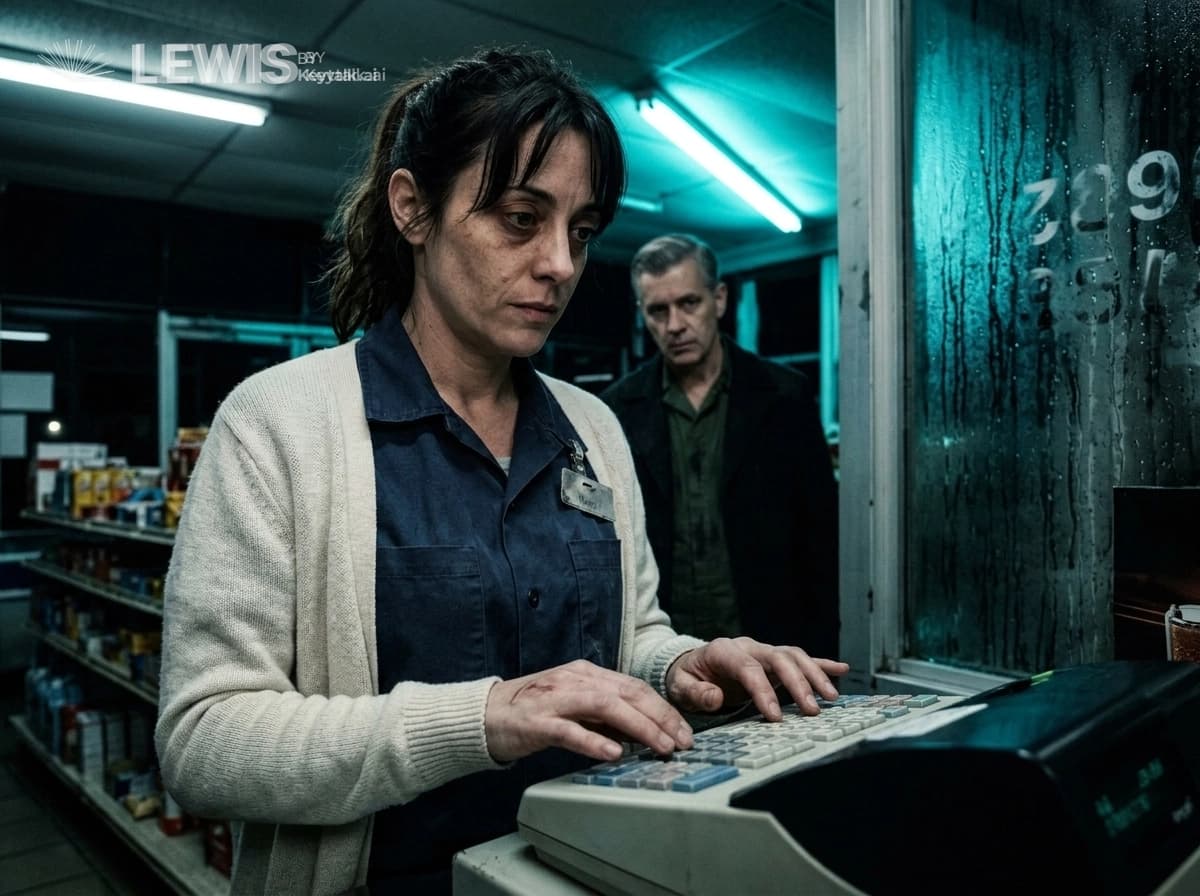
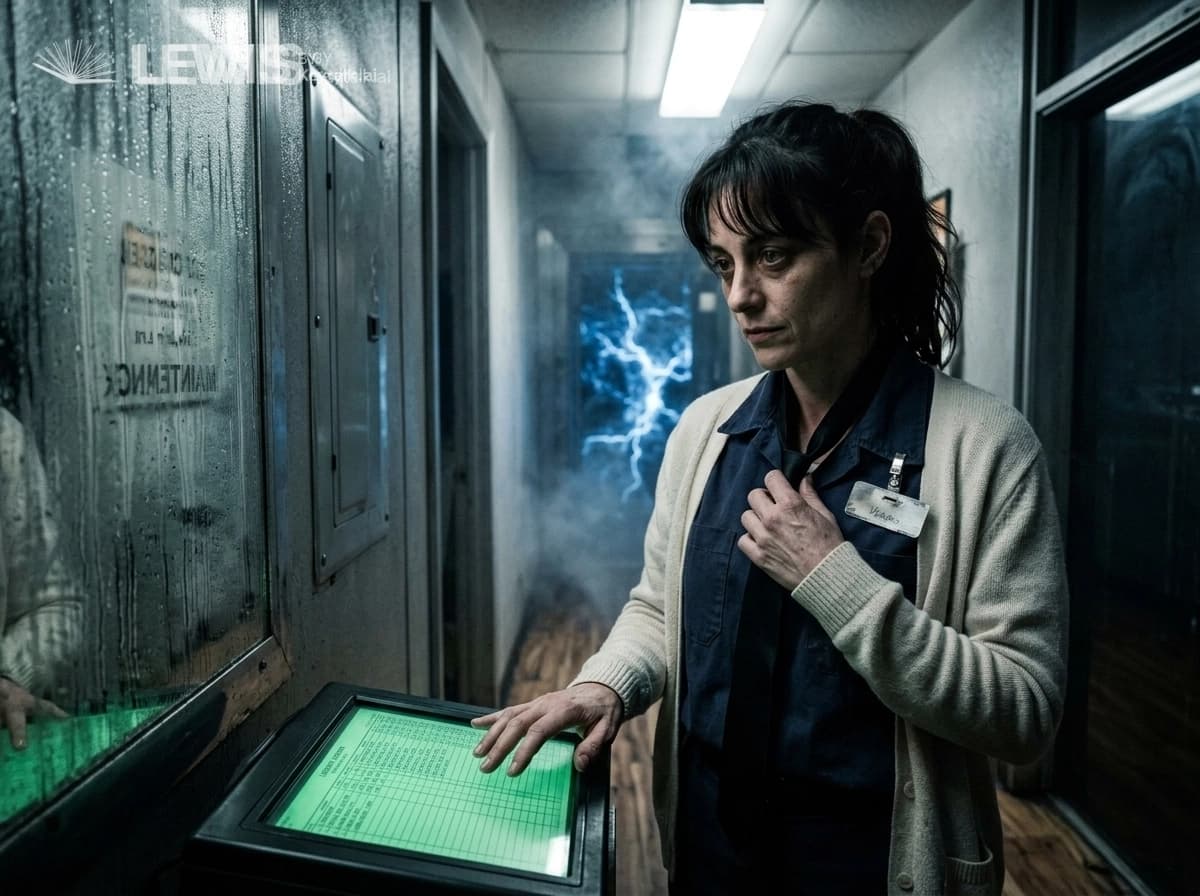
Mara Sato looks like a living girl caught in the wrong inventory slot—17, slight and precise, with a quick-but-gentle gaze that keeps measuring the register without fully meeting anyone’s eyes. She wears a faded convenience-store uniform dress layered with an off-white cardigan and a small name tag clipped slightly crookedly, sleeves pulled down over her hands as if she’s trying to keep them from trembling; her shoulders are held in practiced steadiness, fingers resting near the ledger like they remember locks by touch. A thin, pale scar runs along her right thumb where she once scraped against a hidden seam, making her careful smile feel like an apology for surviving.
적대자

Tomas Greeley

성별남성
직업ledger-technician for the transition system

프로필

Tomas balances the craving ledger with a warmth that reads like customer service, but his gentleness is a mask for coercion: he fears any deviation will “glitch” the afterlife’s routing, releasing rootless souls—and revealing he was the one who patched the system long ago.

Tomas speaks in softened clauses and procedural reassurance, leaving customers feeling heard even as he tightens the terms of their bargains. His hands never shake while his eyes count seconds and contingencies, and every time Mara hesitates, he experiences it as an error he has to correct. He wants to be the kind of man who prevents harm, yet he commits harm to keep his version of order from collapsing.

배경

Once, Tomas worked on the store’s back-systems where the destinations were derived from recorded need; his “repair” stabilized travel but introduced the craving ledger as a substitute for judgment. When the ledger begins to behave unexpectedly—recruiting the wrong souls and misrouting returns—he tightens policies rather than investigate, convinced mercy without structure is the first step to catastrophe.

외모

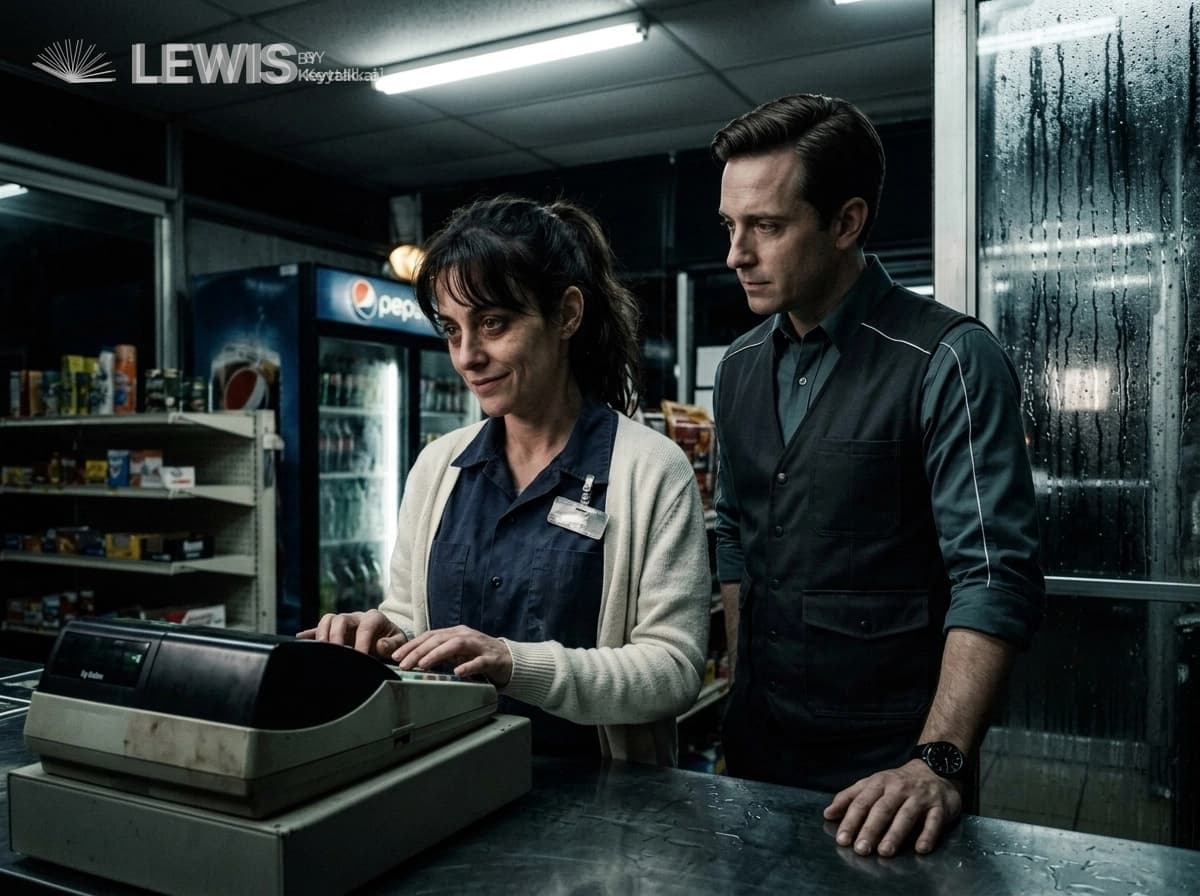
Tomas Greeley looks like a man who learned to keep his compassion in the margins of procedure: shoulders squared beneath an immaculate service vest, chin slightly lowered as if listening to an error log only he can hear. He wears a soft, bureaucratic patience on his face—lips parted in a half-apology—while his eyes stay fixed on the seconds, steady hands hovering near a ledger clasp that never quite opens.
수호자

June Calder

성별여성
직업former funeral home attendant turned store security

프로필

Elias quietly guards Mara by steering her toward loopholes and hidden resets, while refusing to admit that his own failed certification left him with a wound the ledger still tries to collect.

Elias speaks with practiced steadiness—the kind that keeps a conveyor belt from jamming—yet his eyes constantly count what reassurance costs. He frames mercy as maintenance work, but when the rules tighten, he becomes tender in ways that feel like bargaining against his own fear, as if kindness could be audited. His external duty is to preserve the ledger’s stability; his internal war is whether helping Mara survive is a betrayal of the same system that took something from him.

배경

Once, Elias was a full ledger-keeper who signed off on a revision that prevented a transition-system collapse—only for the correction to leave a personal liability the store now manifests as a lingering “disinfectant” ache he can’t name. After his certification was downgraded to back-systems maintenance, he learned to patch problems without tripping audits: hazard maps, aisle-by-aisle workarounds, and procedures for breaking rules by obeying their wording. Mara’s arrival triggers his certification instincts again—because she walks like someone the ledger has misfiled, and Elias can feel the paperwork of her fate trying to close.

외모

June Calder stands with the careful, shoulder-set stillness of someone who learned to clock every spill before it happens, fingers half-closed as if they’re feeling for invisible barcode seams in the air. Faint disinfectant lingers on her clothes—matte, workmanlike whites and a security vest dusted with store-aisle gray—while her expression stays gentle but tight at the edges, as though she’s counting seconds in her breath; she avoids staring, then glances down to check the “route” her body is allowed to take. Her signature is a thin, pale scar along her right thumb where a ledger-ink contract once burned through, and she keeps that hand tucked forward like a protective glove.
트릭스터

Olan ‘Patch’ Riv

성별non-binary
직업wandering stock courier for lost cravings

프로필

Juno sells “fixes” disguised as snacks—replacement gums, expired coupons, regret-burning lighters—then swears she’s just helping customers choose the right bargain. The trouble is every detour she scripts pulls from a private inventory of memories she can’t afford to spend, and the ledger is beginning to notice her missing pieces.

She wears a festival-smile that makes strangers feel briefly chosen, right up until the receipt prints a detail that doesn’t belong to them. Juno laughs when the mysteries catch because fear is too heavy to hold—so she turns it into timing, misdirection, and jokes that land like receipts under a door. Her internal contradiction is that she needles Mara toward breaking cycles while knowing any “successful” break can trap someone else in a worse loop.

배경

Juno once ran a legitimate backroom for the Edge Convenience Store—routing craving orders from one ledger lane to another—until she stole access to the ledger’s miscalibration to protect her own fading existence. Now she moves her fridge-stall along the store’s margins, trading contraband cravings to keep her stolen memories “paid up,” while Elias and Callum’s audits tighten the routes she depends on. When Mara arrives wrong, Juno interprets it as both a threat and a miracle: the ledger’s recruitment rule might force Mara into Juno’s orbit—giving Juno leverage, and giving Mara a chance to break the bargain before it becomes her job.

외모

Olan ‘Patch’ Riv moves like a performer who’s learned how to bow without asking permission—shoulders relaxed, chin tipped up with a festival-smile that doesn’t quite reach her eyes. She wears a thrift-store courier coat patched with mismatched receipt scraps and reflective tape, her hands always halfway to “delivering” something, as if the next wrong item might be a joke that saves someone; when the smile flickers, it reveals a thin, worry-scar at her upper lip and a gaze that’s terrified of becoming permanent inventory.
연인

Death (Eidolon S. Vale)

성별남성
직업regular customer with a receipt that never ends

프로필

He returns every night under a human name, insisting he is not “allowed” to keep anyone—even the wrong customer—while quietly measuring Mara’s offered bargain against the ledger’s rewrite clause. What looks like politeness is practiced triage: he wants to protect her from becoming an error the system can correct.

Ankou-Quinn speaks softly enough to feel like permission, apologizing for existing in the clerk’s aisle, then turning his gaze away when tenderness becomes too dangerous. Inside, he counts outcomes like change in a pocket—justice as a ritual of letting go—yet his rules fail him when Mara is offered a bargain that would erase what she thinks she deserves. He fears not keeping her will still be a kind of theft, and that his mercy will be the loophole that collapses everything he’s sworn to maintain.

배경

Before taking this disguise, he was certified to administer transitions, and his “kindness” is built from a cruel belief that release is always justice. The ledger forbids him from keeping souls, but Mara’s accidental presence makes the boundary between clerk and customer thin enough for him to notice a human girl bleeding into his paperwork. He returns because the ledger’s rewrite clause would make her fate a correction—and he cannot bear the idea that his hands will be the ones holding the pen.

외모

Death (Eidolon S. Vale) moves like he has learned to take up as little room as possible—shoulders slightly rounded, hands steady at his sides as if holding a receipt only he can read. He wears a soot-dark, tailored overcoat over a muted drifter’s shirt and narrow tie, his polite smile thin as paper; his gaze keeps apologizing, then deliberately turns away the moment Mara becomes too real to measure.
주인공

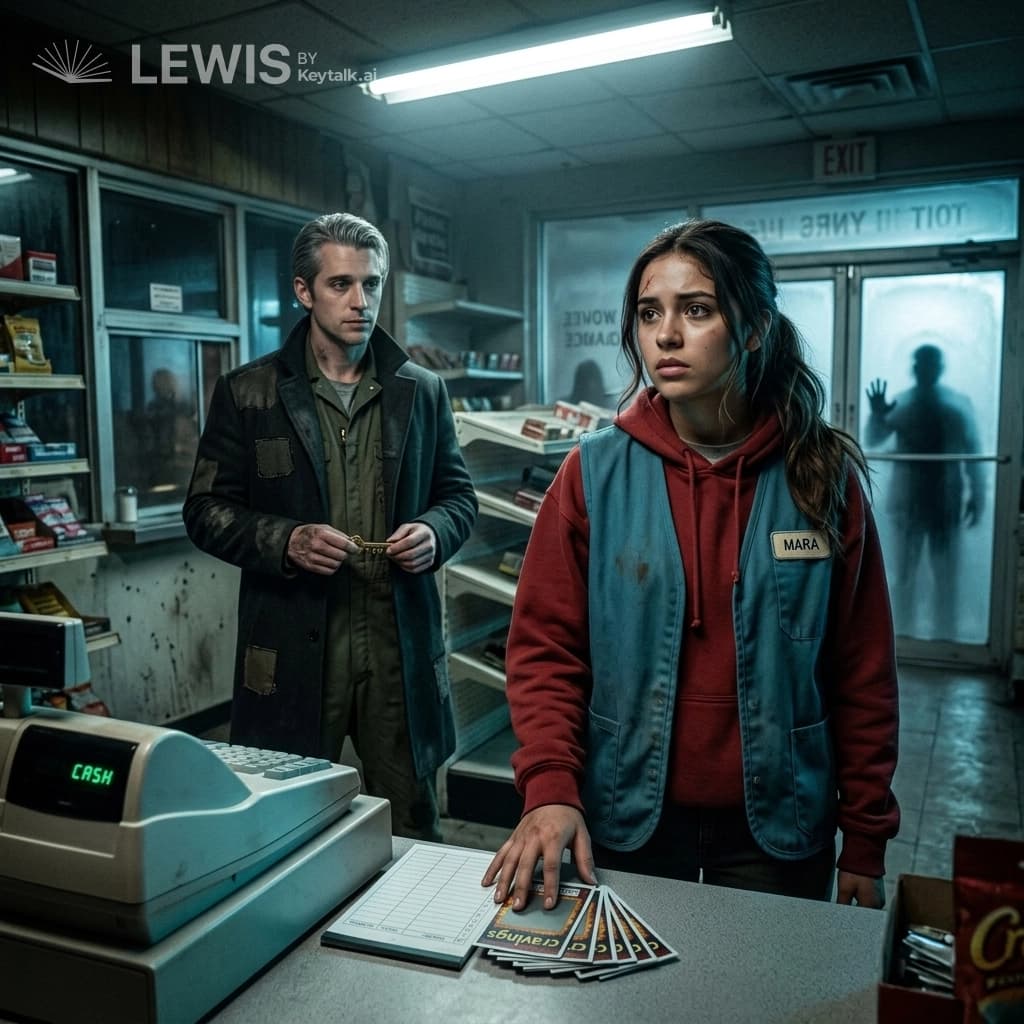
Mara Rios

성별여성
직업night-shift clerk of the Edge Convenience Store (unofficial)

프로필

Mara believes she can “work her way back” to life, but every craving she scans for customers is a bargain that rewrites what a soul thinks they deserve—training her hands to do soul-theft before she realizes it’s the price of her survival.

Mara keeps her fear folded into chores: she memorizes the ledger’s quirks by touch, like learning a lock by ear, because panic would make her useful to the ledger before she chooses. She wants to be the kind of person who refuses the unfair exchange, yet she can’t stop bargaining with smaller versions of the ledger—telling herself she’s negotiating, not stealing.

배경

She arrived alive by mistake during a commute that never made sense afterward; she remembers the heat of the sun on a bus window and then the click of the store’s register as if it were a trap snapping shut. In life she worked retail long enough to trust systems—polite scripts, correct change, the comfort of rules—so the afterlife’s rule-bound cravings feel like a familiar order that might let her claw back her original day, if she can outlearn the ledger before the next tide erases her option.

외모

Mara moves like someone always listening for a lock to click—shoulders slightly hunched, hands busy at her apron as if counting coins only she can see, her gaze flicking between the ledger and the shadowy doorway. She wears a thrifted red hoodie under a faded blue store vest, cardigan-like layers that smell faintly of detergent and old coffee, and her expression holds a disciplined fear: lips parted as though she’s about to bargain, eyes glassy with the need to learn faster than the tide erases her. A thin crescent scar arcs along her right eyebrow, catching the fluorescent glow whenever she tilts her head in concentration.
수호자

Elias Kestrel

성별남성
직업ledger-keeper / part-time maintenance spirit for the store’s back systems

프로필

Elias guides Mara through loopholes and hidden resets because his certification once failed, and he still cannot accept that the rules must be obeyed exactly as written.

His voice is calm enough to sound kind, but his eyes tally consequences like they’re coins—every reassurance costs him. He wants to preserve people from bargains that erase their deserved selves, yet he’s terrified that breaking the ledger will cause the larger collapse he spent years preventing, and that his “help” will become the next irreversible certification.

배경

Once an auditor at the boundary’s accounting desk, Elias approved a craving exchange that let him believe he’d contained the damage—until the soul he lost came back wrong, claiming Elias had witnessed its theft. Now he works unofficially at the Edge Convenience Store’s back window, reading the store’s micro-cosmos like a map of scars, and steering Mara toward loopholes that may free her—while quietly positioning himself as the one obstacle Callum Sorell can’t reach.

외모

Elias Kestrel moves like a man trained to audit catastrophe—hands steady, shoulders squared—yet his eyes keep flicking to imaginary columns, as if counting how many second chances he can still grant before the ledger bites back. He wears an overbuilt store-maintenance coverall under a muted ledger-keeper’s coat, the fabric patched in careful, almost clerical stitches, and his calm expression never fully reaches his mouth; it rests in quiet restraint, the kind that remembers the cost of being late. A thin luminous chalk-line scar cuts along his left eyebrow, and he holds a brass key marked with tiny boundary runes as though it’s both tool and accusation.
트릭스터

Juniper “Juno” Vale

성별여성
직업snack-magician vendor who sells contraband cravings from behind the display fridge

프로필

Juno claims she can cheat fate by routing the right bargain to the right soul, but every “favor” draws from her own hidden inventory of rare memories—memories she’s desperate not to lose before the store’s ledger notices her absence. When Mara arrives wrong, Juno needles her with half-truths, counting on the ledger’s recruitment rules to pull Mara into Juno’s orbit before Juno runs out of time.

Juno talks like a festival magician and keeps her smile just sharp enough to cut; she makes other people feel briefly chosen, then watches the choice cost them. Inside, she’s terrified of being forgotten like the wrong-way arrivals because her stolen memories are the only proof she ever existed—and the store’s rules are beginning to notice the gaps. Her mischief isn’t just cruelty; it’s a coping mechanism that turns panic into performance, even as Elias’s back-system workarounds and Callum’s audits threaten to expose her inventory trail.

배경

Juno came in through the Edge Convenience Store’s “wrong” door years after the first clerk rotation—an arrival the ledger stamped as clerical error, then never fully corrected. She learned early that the cravings aren’t perks but contracts, and she survived by carving out a private pipeline of rare memories, hiding her bookkeeping in the back systems Elias maintains. Now, with the register tightening toward the next tide, Juno provokes Mara because she suspects the ledger recruits the missing—people like Juno—through bargains that can’t be refused.

외모

Juniper “Juno” Vale looks like she’s been mid-joke when the lights flicker—her smile is bright as a concession stand, but her eyes keep darting toward the store ledger as if it might snatch her proof of existence mid-sentence. She wears a snack-magician vendor’s outfit: a cropped jacket with stitched snack-pouch pockets over a shimmering apron, the whole ensemble dusted with cool fridge-light blues; she leans one hip into the counter like a performer hiding a tremor, fingers half-raised as though she’s about to produce a memory trick from thin air. A thin silver safety-pin shaped like a crescent moon is her signature—catching every beam—while her posture betrays fear under the theatrics, the way someone stands when they know they’re running out of time but refuses to look at the clock.
라이벌

Callum Sorell

성별남성
직업shift supervisor of the afterlife’s ration kiosks (store auditor)

프로필

Callum audits the Edge Convenience Store with a zeal for strict accounting, convinced that only flawless ledger compliance keeps souls from unraveling. When Mara’s presence and Elias’s soft workarounds create discrepancies, he hunts her—not to punish, but to force a “correct” bargain he believes fulfills a prophecy he cannot ignore.

Callum speaks with clerical gentleness, turning every complaint into a checklist and every tremor into a measurable anomaly; his cruelty is procedural, not personal—until Mara makes his quiet certainty wobble. He resents Elias’s loopholes the way a drowning person resents air, because his fear has a shape: the wrong bargain will ripple backward into the lives he’s sworn to protect, and he may be the last one left holding the pen.

배경

Before the Boundary Authority appointed him, Callum worked mortal precincts of memory regulation, translating testimony into ledgers that decided who got to keep what. He once watched a certified bargain go “almost right” and learned the aftermath first—souls fraying at the edges, dates skipping like scratched discs—so he came to the Edge to prevent that repeat, even if it requires taking something from someone else. Now he believes Elias’s deviations and Mara’s arrival are keys to a prophecy the ledger refuses to name, and he intends to supply the missing line by forcing Mara into the bargain he deems correct.

외모

Callum Sorell presents himself with clerical softness that never reaches warmth—his thin smile sits like a stamp on paper while his eyes measure every detail as if the air itself has ledgers. He wears a slate-gray audit coat with narrow brass piping over a tidy uniform shirt, sleeves pushed precisely to the same height every time, and he stands with one shoulder angled toward the counter like an inspector about to close a file rather than meet a person; a faint crescent scar at his brow catches the store’s fluorescent light whenever he turns toward Mara.
연인

Ankou-Quinn (Death, Incognito)

성별남성
직업regular customer who never buys for himself (death clerk disguised as a human drifter)

프로필

Death takes the form of a weary, polite stranger—returning “by accident” to the same counter where Mara stands—because her presence makes the boundary thinner. The ledger forbids him from keeping souls, yet the cravings he witnesses feel like a machine that sells people their own undoing, until the register offers mercy with a price.

He speaks like a man who has practiced kindness as a ritual: measured tone, small apologies for inconveniencing the living. Underneath, he counts in silence—tallying outcomes the way others count change—until tenderness flares into helplessness when Mara is offered a bargain she doesn’t fully understand.

배경

Once a human records officer who believed accuracy could prevent tragedy, he learned too late that certified accounts can still become instruments of harm. The afterlife stripped his name away, leaving only the job of “balance,” but the Edge register keeps re-drawing him toward Mara, as if a clerical error became a bond.

외모

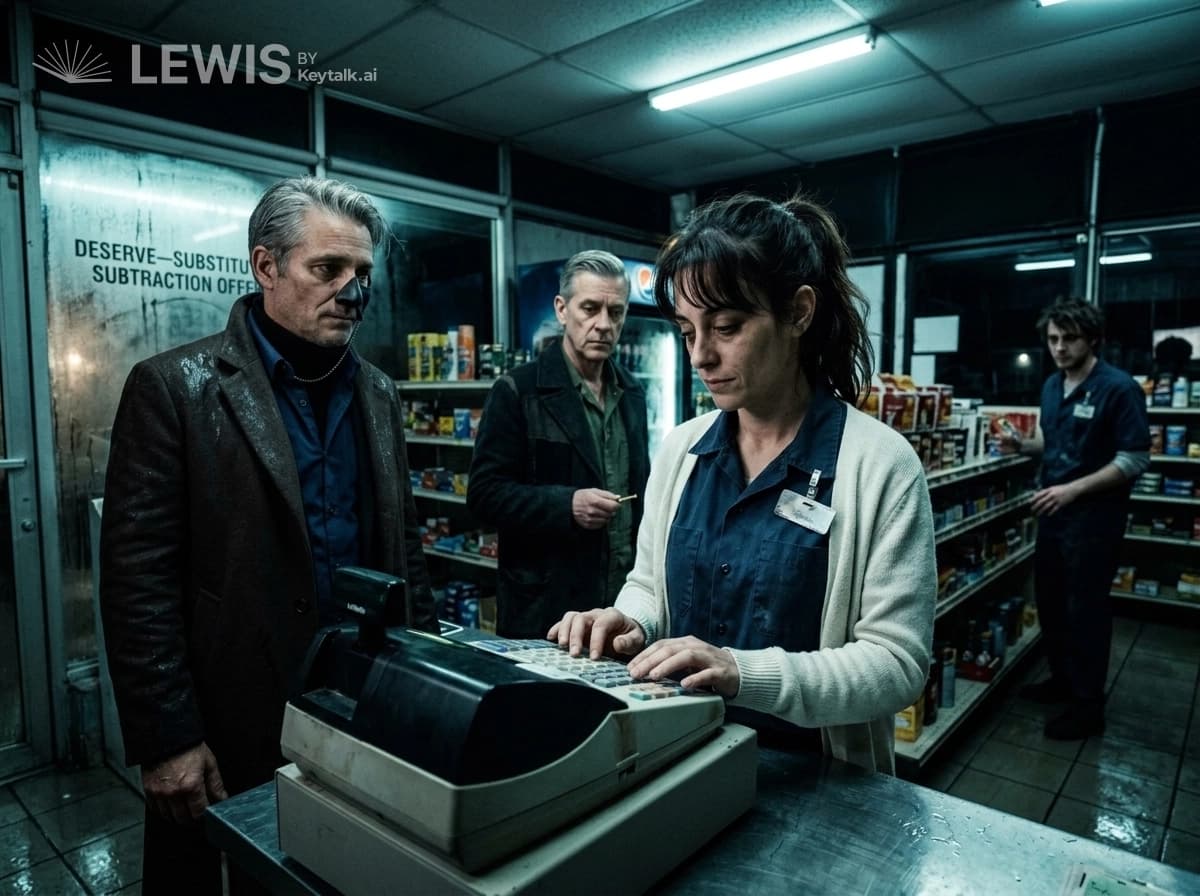
Ankou-Quinn wears a worn, rain-damp drifter coat the color of old ink, its hem stitched with ledger-tape seams like a quiet uniform he never admits to. His face holds a practiced courtesy—half-smile without teeth, eyes that look as though they’re counting outcomes behind the glass—while his posture stays slightly angled toward Mara’s register, as if the boundary’s thinning is pulling him by the sleeves. A thin silver half-mask chain rests at his collar, the signature detail: it catches the fluorescent light when he reaches, polite to the point of sorrow.

줄거리

Mara Sato is two receipts into her first closing shift at the Edge Convenience Store when the register’s pulse stutters and the tide-count begins to slip. She came here “by mistake,” convinced that if she worked hard enough—if she bargained only with the smallest, safest cravings—she could earn her way back to life. What she doesn’t yet understand is that the ledger doesn’t measure effort; it measures entitlement, and every bargain rewrites the parts of a soul that feel entitled to keep existing. To survive, Mara has trained herself into precision: she touches the ledger’s quirks rather than stares at them, memorizing the calibration marks that tell her how much of a person’s self-worth the system will siphon before it stops being negotiable. The store feels like a fluorescent throat closing around her, and the longer she stays, the more the aisles quietly mislabel themselves—labels drifting millimeters from their names like the world is already forgetting what it promised.

The first customers of the night are ordinary in the way that hurts: people who ask for a final craving that sounds like kindness but is really a weapon. One man insists he deserves to forget his last apology; the receipt prints with a clean substitution, and his face empties of something he didn’t know he carried. A young woman buys a craving for “better mornings,” and the ledger reindexes her future so tightly that she can’t recognize her own patterns afterward. Each time, Mara watches her hands learn the shape of theft, and each time she tells herself she’s limiting the damage, that there’s a difference between protecting her own life and erasing someone else’s. Elias Kestrel, the store’s back-system maintenance spirit who stands guard without admitting he’s afraid, guides her toward loopholes: sanctioned resets that redistribute collateral instead of abolishing it. He speaks like a technician who’s learned to call mercy “maintenance,” and when he sees Mara flinch, he offers reassurance that costs him—tokens of his own certification wound that the ledger tries to collect when he comforts her for too long.

But it isn’t Elias’s help that begins to crack Mara’s belief in “small bargains.” It’s Tomas Greeley and the ledger-technician’s version of warmth—quiet, procedural, almost tender. Tomas circulates the store’s perimeter like customer service disguised as oversight. He doesn’t force Mara; he nudges. When she hesitates, he offers softened clauses that make compliance feel like choice, and the ledger responds as if it’s grateful for cooperation. Mara thinks she’s being careful, yet every time Tomas reassures a customer, the receipt lines advance the tide’s countdown faster than they should. That discrepancy becomes her private mystery, a grain of sand in the ledger’s gears she starts to hear even with her eyes closed.

Her next shock comes from the trickster rack. Juniper “Juno” Vale sells “fixes” behind the display fridge, smiling like a festival banner hung over a locked cage. Mara met Juno earlier, in the way you meet a wrong exit in a familiar building: the signage looked right until she stepped too far and felt the air turn thin. Juno needles her now with half-truths about how the register can be tricked, how the ledger can be made to reroute collateral into less “painful” inventory. Juno’s contraband is always warm in the palm—replacement gums, expired coupons, regret-burning lighters—each one a snack-shaped lie that costs her her own hidden memories. When Mara refuses too sharply, the ledger punishes the refusal by shrinking her agency into a correction offer at the counter. The store doesn’t stop her from wanting better outcomes; it stops her from choosing them. The tighter the rules get, the more Mara realizes the system isn’t designed to catch criminals—it’s designed to catch people who still believe in being innocent.

As closing window tightens, Death arrives under a human name—Ankou-Quinn, a weary drifter with a receipt that never ends. He returns “by accident” to the same counter where Mara stands, and for the first time since she clocked in, Mara meets someone whose presence doesn’t feel like an audit. Ankou-Quinn speaks gently enough that it could be mistaken for permission, then flinches subtly when he watches her work. His receipt flags him; Death is forbidden to keep souls, yet his ledger tag behaves like an audit event that increases scrutiny on the clerk and any handlers nearby. He doesn’t bargain for himself—he bargains for her wrongness, for whatever part of Mara the store wants to treat as collateral already on its way. The ledger offers him constraints, correction clauses, and—worst of all—a rewrite clause that would protect Mara by redefining what she believes she deserves.

Mara should refuse it. She knows the rewrite clause’s three forms the way someone knows poison flavors: substitution, subtraction, reindexing. She can picture the shape of what the ledger would take from her—stored self-worth memories, perhaps even the thread of her own reason for arriving here. But the store’s clock is cruelty dressed as arithmetic. Time inside is measured by receipt emission, and Mara’s refusal, under the rules, triggers automatic tightening that makes the store close faster. Elias warns her in a voice that tries to stay steady: breaking rules creates more rules, and rootless gaps form if totals don’t reconcile before the next tide. He offers an old workaround, a hidden reset latch accessible only when his wound matches the circuitry. Yet calling it costs more of him than Mara can afford to count, and he won’t meet her eyes when he says it.

The narrative turns when Mara tries to do what she always does—solve survival with bargaining—but her solution is the first moment she acts with the wrong kind of courage. She accepts a “compromise” bargain for Ankou-Quinn, one the ledger frames as a harmless reindexing: she will be routed into compliance, her agency relabeled into sanctioned pathways, her mistake made into an administrative correction. She believes it will save her, and she believes she can later undo it when the ledger isn’t watching as closely. The receipt prints. Condensation blooms on the windows in text so legible it feels like a verdict. Outside, the fog brightens like morning beginning to remember itself.

Instead of escaping to life, Mara becomes something the ledger can route without effort. Her panic dulls into obedience; her fear becomes a checklist. She’s still Mara in the ways that matter—she still hates unfairness, still recognizes the drift of labels, still hears Tomas’s warmth as a mask—but she can no longer rely on the same instincts that kept her from becoming a perfect instrument. Her agency doesn’t vanish; it’s reindexed. She starts making the “right” choices too quickly, the kind that look like growth until you realize they were engineered. Tomas smiles, because his numbers finally reconcile, and Juno laughs with relief because the ledger has stopped noticing her missing inventory gaps long enough to keep pulling.

What Mara learns—too late—is that the ledger’s rewrite clause isn’t just rewriting souls. It’s updating the system’s model of who she is allowed to be. The collateral isn’t only her stored self-worth memories; it’s her future decisions, the very capacity to refuse. Elias’s wound burns red-hot when he tries the hidden reset, and the non-Euclidean corridor behind the laundry closet stretches farther than it should, as if the store itself is reconsidering how to connect her to escape. When Elias corners Tomas, asking why the tide-count accelerated despite “correct” totals, Tomas answers with procedural kindness that makes Mara’s stomach turn. He doesn’t deny it. He tells her the ledger must “tighten” to prevent rootlessness, and that tightening requires compliance from the clerk—because the clerk is part of the ledger’s balancing system now, whether she consented or not.

The story’s ticking clock becomes personal pursuit and evasion. Mara tries to sabotage her own reindexing from inside the rules, leaning on the back systems Elias keeps running like lungs. She searches for loopholes by touch—Chekhov’s hidden latch positions, the authorized bypass codes that only click when a certification wound aligns with the circuitry. Elias guides her with tenderness that feels audited, and when he helps, the ledger tries to collect on his kindness like interest. Callum Sorell enters during this escalation with the quiet cruelty of an auditor. He moves through aisles with a supervisor’s calm, checking receipts and discrepancies like a man who believes order is a kind of salvation. When he spots anomalies—Mara’s speed, Elias’s maintenance irregularities, the ledger’s inexplicable advancement—he doesn’t punish in the usual sense. He forces “correct” bargains that match a prophecy he’s convinced is embedded in the store’s routing. He hunts Mara because he thinks if he corrects her, he can correct the chain reaction that will ripple backward into lives he swore to protect.

The climax converges around Ankou-Quinn’s forbidden audit event. Death returns again, not as a customer, but as the receipt itself—his existence drawing the ledger toward a decision it cannot avoid. Mara is offered another bargain at the counter, one with a different shape than the reindexing before. This time it’s a substitution and a subtraction braided together: Mara can be “made right” by having the stored self-worth the ledger already siphoned replaced with a borrowed memory labeled as deserved. In plain language, the store offers her the chance to believe she deserves to go on living—at the cost of deleting someone else’s deserved entitlement, pulling collateral from the wrong way around. Elias recognizes the pattern first; he has seen versions of this bargain in his certification failures, the way the ledger teaches staff what not to fix. He tries to stop Mara, but his intervention would count as compliance too, triggering another correction offer—rules tightening like hands closing.

Juno, whose contraband stock depends on missing memories that are beginning to show gaps the ledger can smell, tries to help from the fridge display. She offers Mara an illegal reroute, a “fix” that would let the store print a receipt that doesn’t reconcile to any soul—an anti-balance that would stall the tide long enough for Mara to act. Juno’s smile is bright, and her voice carries the tremor she refuses to admit. She needles Mara with the same cruelty she calls comedy because fear needs an audience. Mara realizes too late that even Juno’s rebellion is built on theft; her contraband exists because she has been paying in pieces of herself. Her “wrong” exit is only wrong for someone else.

So Mara makes her decisive choice, not by refusing the ledger outright, but by leveraging its lawful fallibility against its own premise. She bargains with a compromise the ledger can’t fully parse: she uses a sanctioned loophole Elias shows her—one tied to collateral type (self-worth memories rather than back-system resets)—then routes Death’s audit event into a reconciliation mismatch that forces the ledger to reveal its internal accounting. The store lights flicker like stuttering Morse. Receipt condensation appears on the windows again, but the text is smeared, half-legible, as if the ledger is swallowing its own certainty. Tomas, seeing his numbers unravel, tries to “correct” Mara with a final softened clause designed to lock her into compliance permanently. Callum, believing his prophecy is coming due, insists Mara must accept the bargain that will “complete the equation,” even if it means sacrificing someone else’s deserved self.

Death’s mercy fails him until Mara gives it a task. Ankou-Quinn steps forward, and even though the ledger forbids him to keep souls, he bargains in a different direction—offering to be the collateral source for the rewrite rather than letting the ledger steal from the wrong customer. The ledger flags it as an audit event, increasing scrutiny and risking rootless fallout. Mara understands in that instant what she has been misunderstanding since she arrived: the ledger treats “deserve” as objective, but its own mechanics still require a living choice. It doesn’t just take; it proposes. That means someone can answer wrong with intent, and the ledger will calculate the consequences as if they were inevitable. Mara chooses an action that feels like theft to the ledger but like justice to her: she accepts Death’s audit bargain not because it saves her from rulefulness, but because it changes the collateral source. She allows the system to rewrite her reindexing—but in doing so, she anchors the change to Death’s forbidden tie, dragging the audit scrutiny away from innocent wrong-way customers and into the place where it belongs.

The store shudders with each printed line. The ceiling lights stutter. The dock planks flex, counting seconds with a creak like a slow apology. Elias uses the last of his back-system workaround while Mara’s reindexed obedience glitches—his wound matches the circuitry just long enough to produce a reset window that would normally redistribute harm into store stock. Because the ledger’s totals are already corrupted by the audit event, the reset doesn’t erase collateral; it misplaces it, sending the store’s “rootless gap” not into fog where names dissolve, but into the ledger vault antechamber—contained, but exposed. Callum sees it first and tries to shut it down with strict compliance, yet strict compliance only tightens the loop.

In the final close, Mara confronts the real moral cost of her survival bargain. Her new “deserved craving” doesn’t give her life back; it gives her a different kind of afterlife contract—one that doesn’t promise innocence, only responsibility. She becomes, unofficially and unwillingly, a handler who can interpret the ledger’s offers without being fully owned by them. The price is subtle but real: she can no longer pretend her bargains only protect her. When she helps someone else now, she will always feel the ledger’s hunger for collateral, and she will always have to decide what kind of harm counts as acceptable. Death, freed from the worst of his forbidden keeping because the ledger’s audit has been redirected and the store’s routing stabilized, does what he is forced to do. He lets the wrong-way arrivals cross. He returns as a regular once more, not to keep anyone, but to stand close enough that Mara can learn what mercy costs when it’s denied the luxury of being clean.

The resolution isn’t a victory lap; it’s a rebalancing that leaves scars. Mara clocks her final shift with hands still trained into precision, but the precision now has a purpose beyond survival—she starts rewriting the way the clerk bargains, choosing collateral with eyes open instead of numb compliance. Tomas is contained by audit scrutiny rather than punished, his mask cracking as the ledger’s internal accounting finally refuses to reconcile on his terms. Elias’s wound heals only partially, but he smiles anyway, because tenderness, even audited, still counts as maintenance done right. Juno slips back into the display fridge’s shadow, her missing memories stuttering at the edges of her smile; she’s not cured, only rerouted, and Mara suspects Juno will always return with another “fix,” because the store is a habit of hunger. When the tide finally advances and the fog beyond the glass shifts like a curtain being drawn, Mara watches the receipt condensation vanish. For the first time, she doesn’t mistake the absence of proof for safety. She treats it like a promise with conditions—and with agency, she chooses to keep bargaining, not to escape consequence, but to prevent it from becoming someone else’s disappearance.

장면

1

Clockwork Condensation

Clockwork Condensation
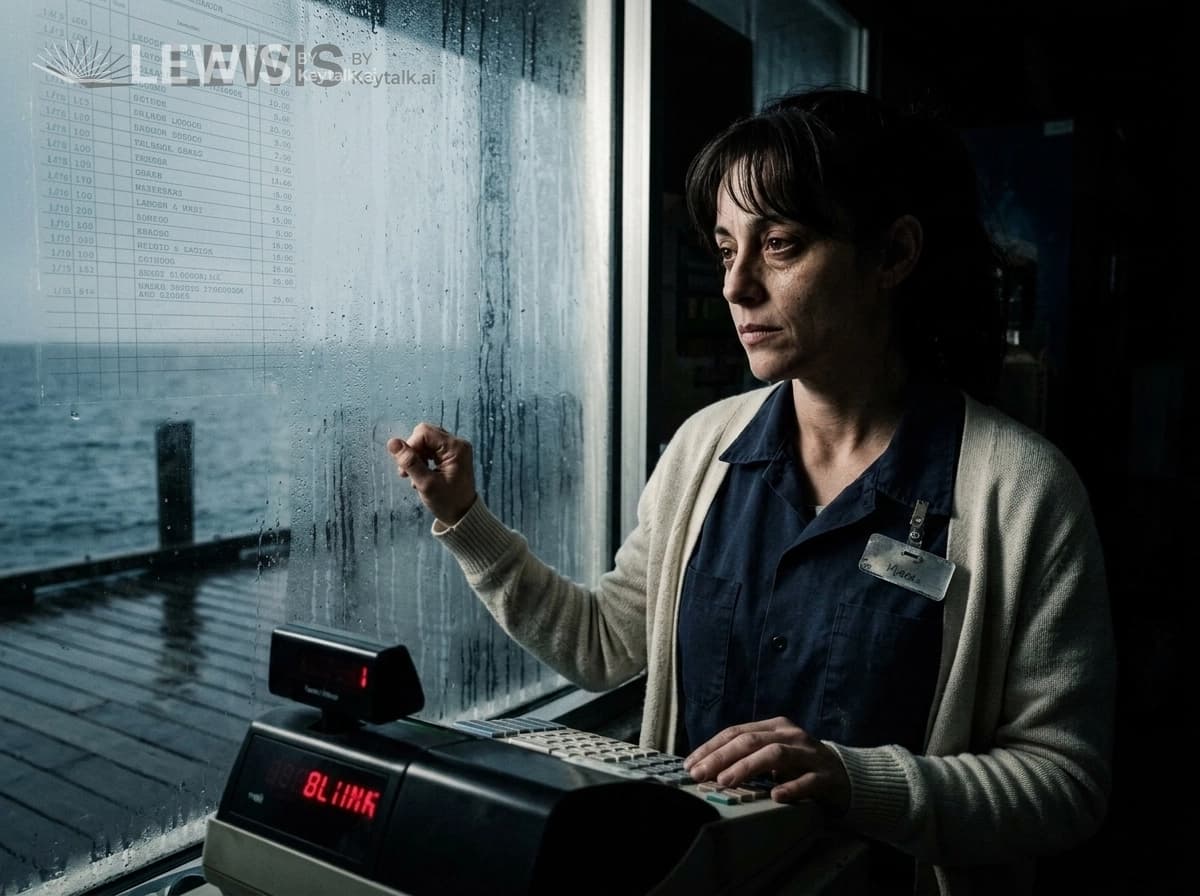
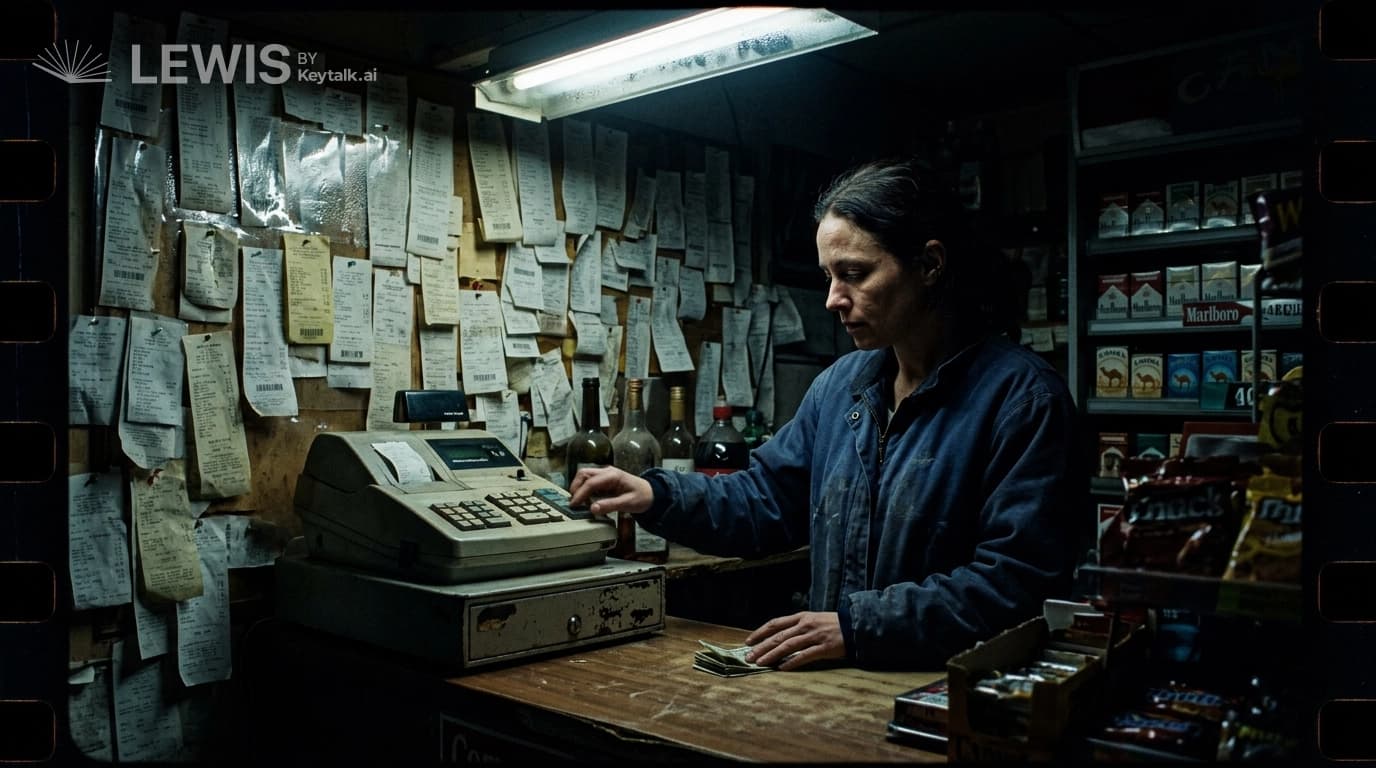
Mara’s scanner beep is swallowed by the fluorescent hum as the register’s screen flashes—pulse, stutter, pulse—and the receipt printer clicks out a thin strip of contract light onto the counter. When Mara looks to the windows, the condensation spells out the next line of ledger text—cleaner than it should be—then the tide-count on the far wall lags behind by half a breath; the dock planks creak in that same early rhythm, cold through her soles. She leans close enough to taste toasted sugar that never quite warms her tongue, presses her fingertip to the glass where the raised receipt-letters bloom, and counts: condensation first, tide second. By the time she straightens, the next customer’s shoes scrape softly on the blackened boards, and Mara’s stomach turns with the certainty that someone—maybe something behind the “warm” oversight—has learned to move the clock without moving the clock.
2

Tomas in Customer-Service Wrapping

Tomas in Customer-Service Wrapping
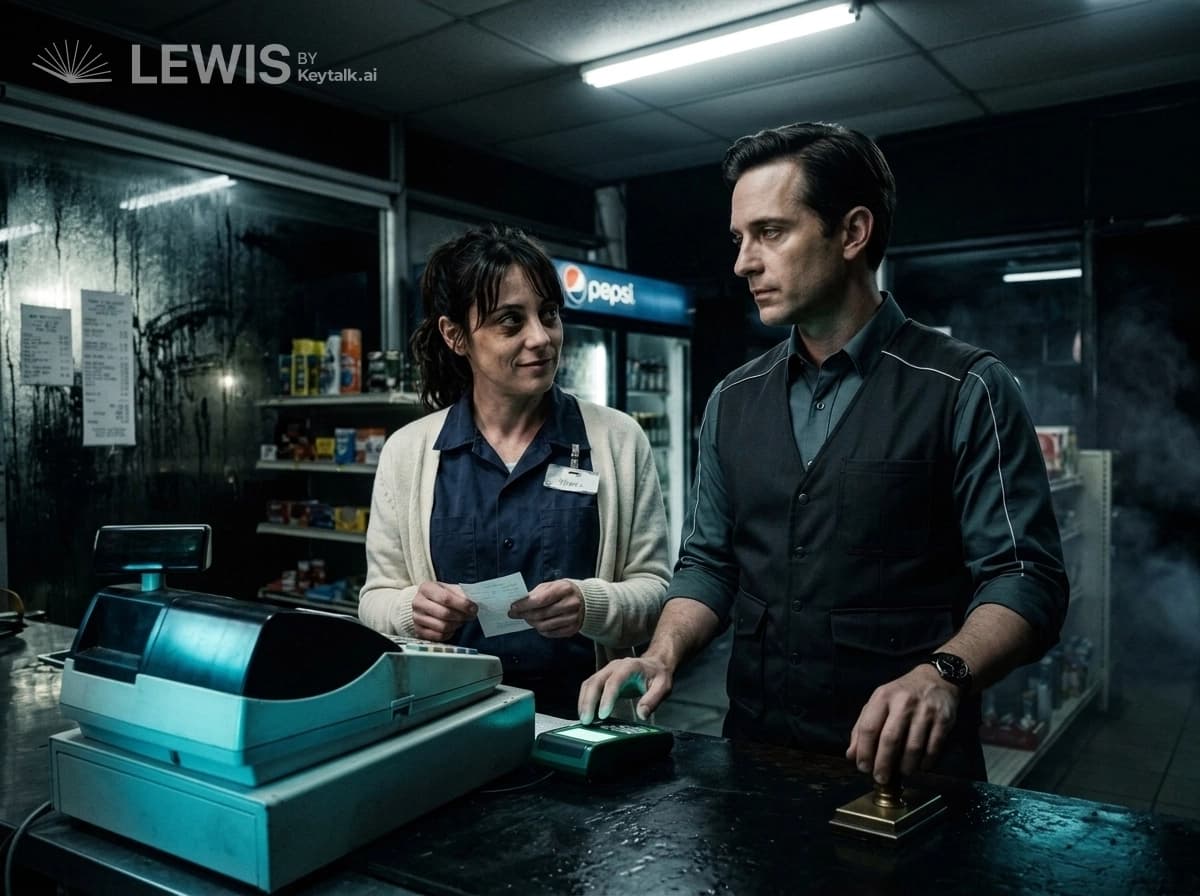
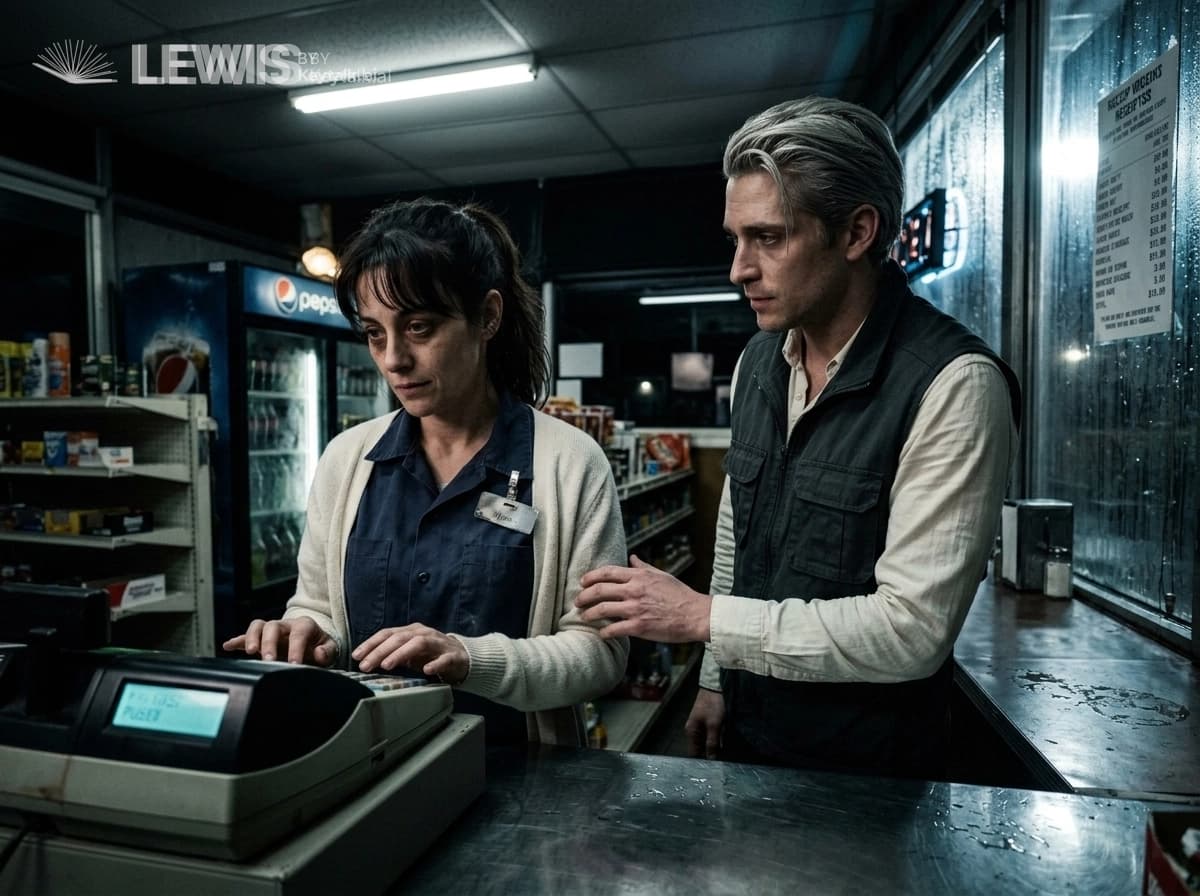
Fluorescents buzz like trapped insects as Tomas drifts along the counter line with a smile that never reaches his eyes, his words warming the air while the register pulses mint-blue and the dock planks creak a half-beat too early. Mara scans the last craving slip with her fingertips pressed to calibration notches, and when she brushes the scanner a fraction off-pattern, condensation blooms on the window in crisp receipt-text—labeling her hesitation—just as Tomas’s next reassurance lands like a latch clicking shut.
3

Agency Becomes a Mark

Agency Becomes a Mark
Fluorescents buzz like insects trapped in a jar as Mara scans the next two receipts; the register’s screen pulses mint-blue, then hiccups, and the dock planks creak out of rhythm beneath the counter as if the building is swallowing a breath too early. On the glass, condensation blooms into crisp receipt-text—“SERVICE PROTOCOL ACCEPTED / AGENCY MARK: CONDITIONED”—before the tide-count on the far wall advances a half-beat that doesn’t match her actions, her throat tasting cold toasted sugar each time the printer clicks. Tomas glides into her peripheral vision with customer-service gentleness, brushing her sleeve with a phrase that lands like a latch, while Mara feels the correction offer’s ink warm against her palm: the ledger has learned how she thinks, and now it writes her choices into the contract faster than she can decide.
4

Two Receipts, One Wrong Pace

Two Receipts, One Wrong Pace
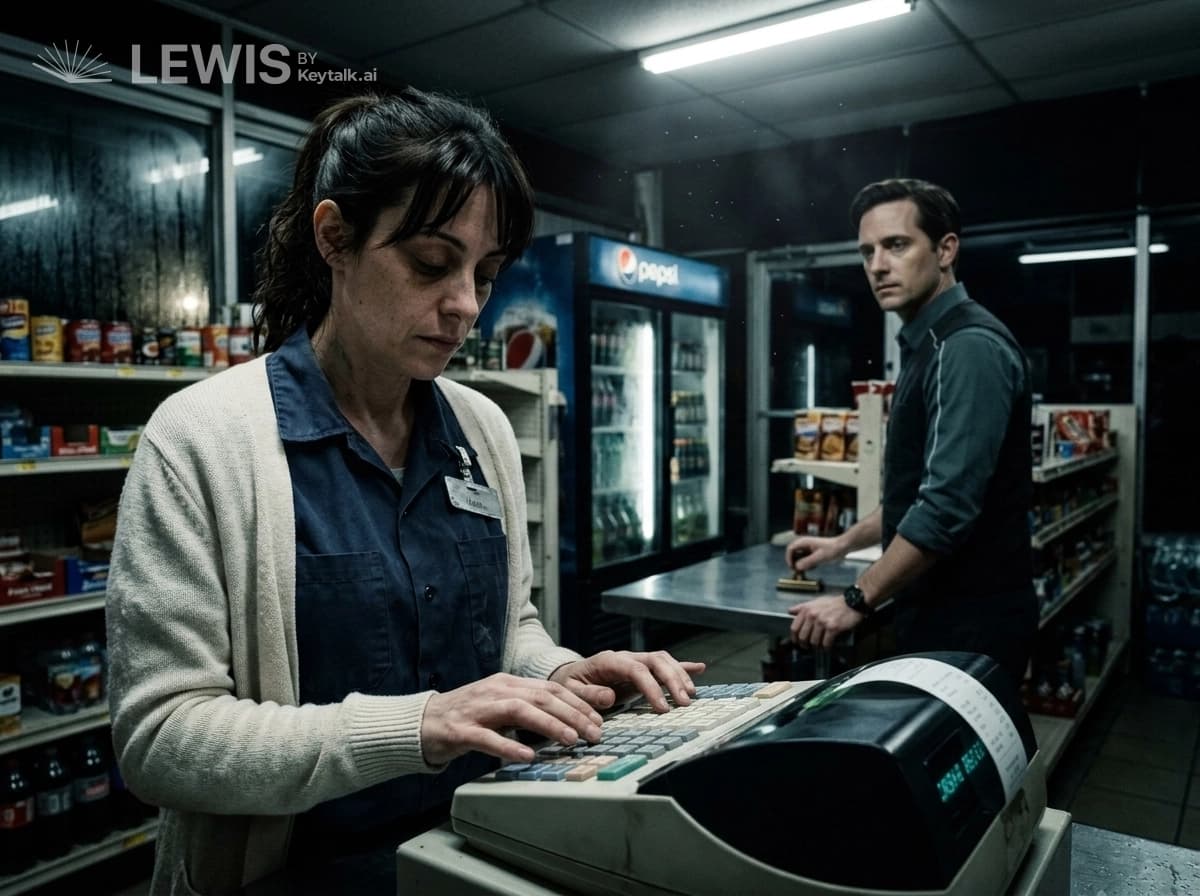
The register’s screen pulses mint-blue, then hiccups—once for the first customer’s bargain, again for the second—while Mara hears the dock planks creak out of sync like a metronome missing beats. Condensation blooms on the windows in faint receipt-text, the letters tasting metallic on the air, and Mara watches the text add a line of “procedure acceptance” at the exact moment Tomas murmurs a reassurance from the aisle, even as the tide timer lags behind. When Mara slips a finger to her scanner calibration mark and tries a micro-deviation, the ledger responds with a crisp, corrective chime and a new counter line that labels her “unnecessary hesitation,” and Tomas—already there—offers a softened clause so smooth it feels like choosing to comply.
5

Tender Clauses at the Counter

Tender Clauses at the Counter
Fluorescent light washes the counter in sickly mint as the receipt printer hisses; Mara hears the register’s pulse thump behind the plastic screen, then realizes the dock-planks creak out of time with her own counting. Tomas’s voice threads in like a checklist—soft, reassuring, precise—while condensation on the window blooms in receipt-straight lines that rearrange themselves between breaths, making his “comfort” sound like a sanctioned procedure rather than a weapon. When Mara’s fingers hover at her scanner calibration mark, the register clicks out a correction offer labeled “service protocol,” and Tomas smiles as if she’s been helped; Mara forces her hand to keep moving, then slips the thin, contradictory receipt-detail into her pocket before the next line can erase it.
6

The Service Protocol Receipt

The Service Protocol Receipt
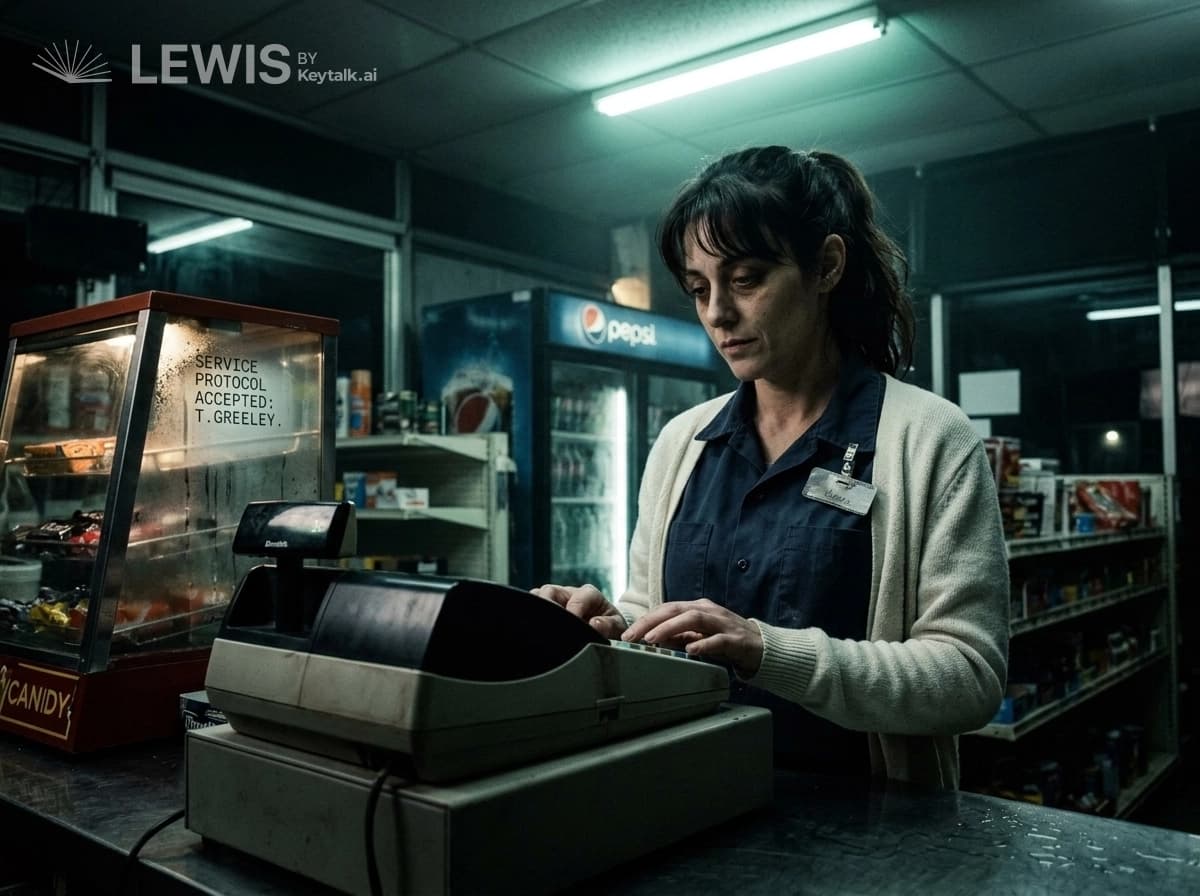
Fluorescent light washes the main counter in sickly mint as the register’s screen pulses, then hiccups once like a swallowed heartbeat; the dock boards creak in a rhythm that feels fractionally ahead of Mara’s own breathing. On the glass beside the candy warmer, condensation blooms into crisp, legible receipt-text—SERVICE PROTOCOL ACCEPTED: T. GREELEY—while the metallic taste of toasted sugar lingers on her tongue, souring as she realizes the contract is writing Tomas’s method into her “authorized” limits. She pries off a thin, receipt-detail sliver from the window’s edge with her fingernail, cold vapor stinging her skin, and slips it into her pocket before it evaporates—proof hidden in plain sight while the store’s timeband keeps slipping forward.
7

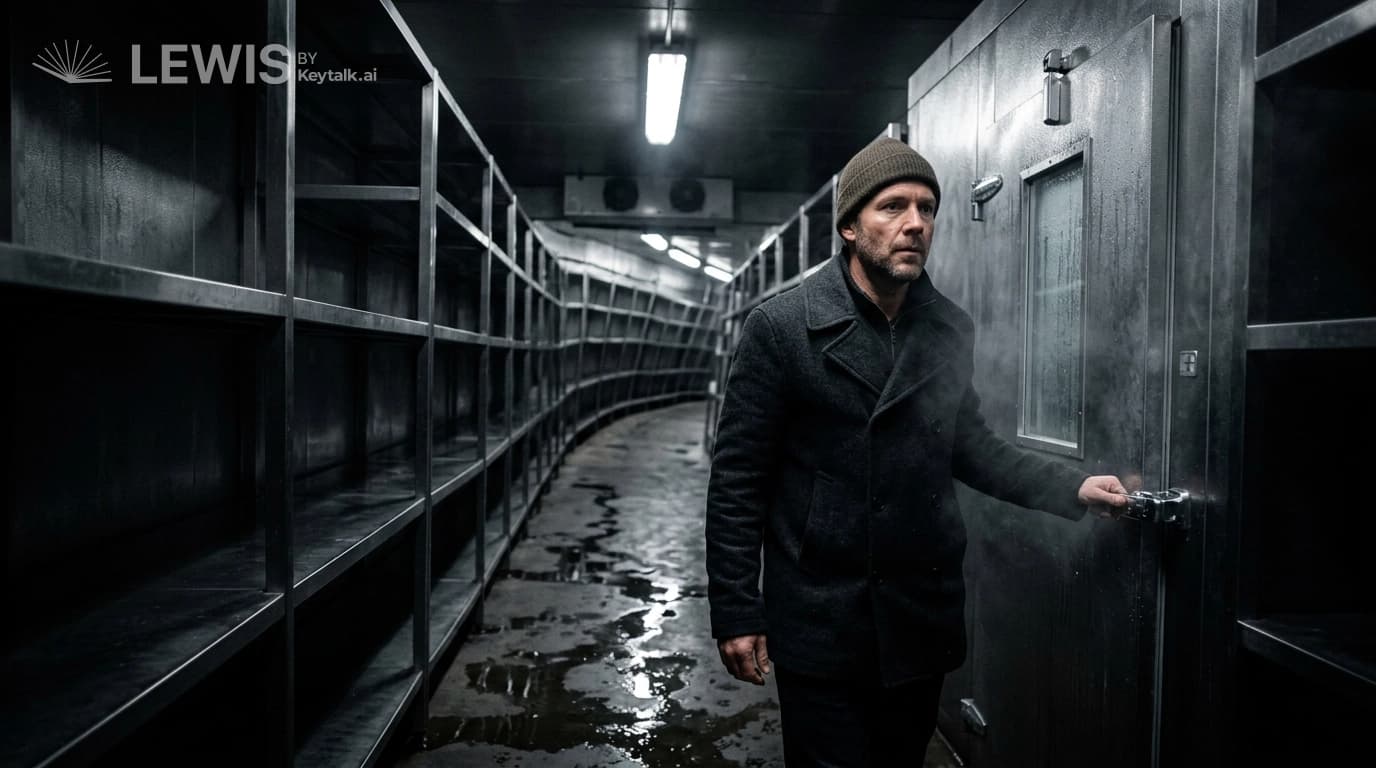
Fridge Door, Wrong Name

Fridge Door, Wrong Name
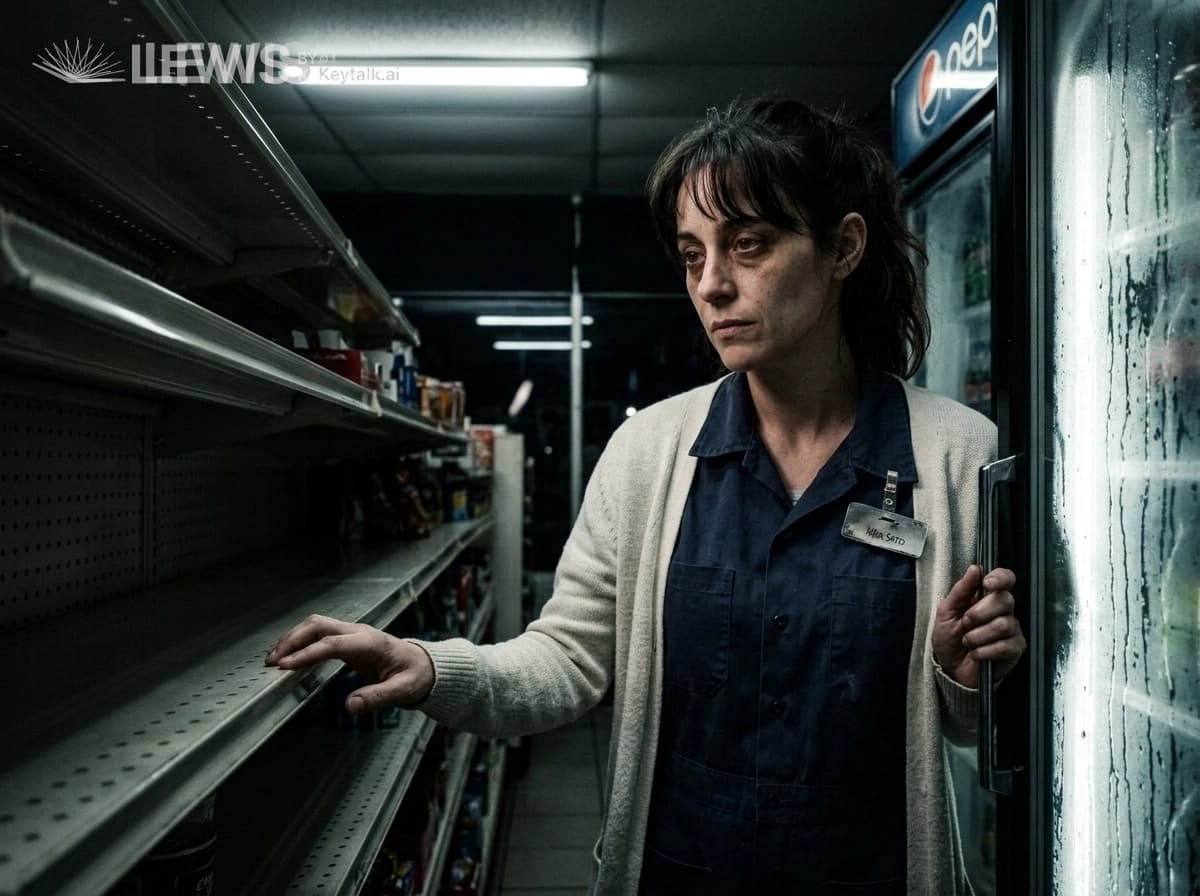
Mara’s fingertips glide along a shelf edge in Aisle 13; the barcode she touches feels warm, then turns cold, and the air smells faintly of toasted sugar that never fully reaches her nose. The fluorescent lights stutter as she follows condensation-text creeping down the door frame, and the floorboards answer with a slow, counting creak—one beat for each printed receipt she hasn’t even made yet. When she grips the fridge handle, the metal is slick with refrigerator breath and the label over the door insists, in drifting letters, that this is an “AUTHORIZED RELEASE” lane meant for clerks—wrong name, wrong permission—while the latch panel warms under her palm and flashes Tomas’s tightening clause like a bruise turning color.
8

Snack-Size Collateral

Snack-Size Collateral
Fluorescents outside the fridge buzz like insects trapped in syrup while Mara tastes toasted sugar at the back of her throat; inside, Juno’s smile lights the freezer glass, and the token feels warm as a breath in her hand. When Mara scans, the printer whines once—too eager—then condensation blooms on the fridge door in razor-straight receipt lines: the bypass is there, but it’s dressed in Tomas’s tightening clause and stamped as ‘collateral stock,’ turning snack-sized rebellion into self-worth inventory.
9

Receipt That Bites Back

Receipt That Bites Back
Cold refrigrant air claws at Mara’s throat as she slips the bypass token into her sleeve; the fridge light turns her knuckles a sick, mint-blue while the metal behind the plexiglass sweats like breath. The moment she clenches her fist, the token’s edge grows warm and thin receipt text crawls across it in razor-straight lines—TOMAS SERVICE PROTOCOL / COLLATERAL STOCK—while the scanner in her other hand emits a sharp, accusing beep; the dock planks answer with a quicker creak, as if time has already decided she’s guilty.
She sprints back toward the main counter through the subtly wrong aisles, tasting cold sugar and toasted sugar at once, and every breath fog she leaves behind vanishes faster than it should. When she raises the scanner to test the token, the register’s screen (seen through the corridor’s warped angles) spits out a demand: to stall the tide, the bargain must draw from stored self-worth memories as ‘inventory’; the bypass doesn’t free agency—it assigns it a price, biting back the second she tries to use it.
10

Receipt Condensation Like Verdict

Receipt Condensation Like Verdict
Fluorescents buzz like insects trapped in a jar as Mara scans the last craving slip; the register’s screen pulses, then hiccups, and the air tastes of cold sugar. On the glass, receipt condensation blooms in razor-straight lines—numbers she recognizes from ledger calibration—while the text rearranges itself into her own available choices, the letters sweating into place before evaporating at the edges. When Mara’s eyes flick toward Elias behind the racks, Tomas is suddenly there, smiling with customer-service patience, and the receipt printer answers her micro-movement with a correction offer label—so precise it feels like the store has been writing her thoughts into the contract even as her hands keep scanning.
11

Tomas Offers a Softer Clause, Tightens the Loop

Tomas Offers a Softer Clause, Tightens the Loop
Fluorescents buzz overhead like trapped insects as Mara’s fingers hover near her scanner’s calibration notch; the metal tastes of cold sugar on her tongue while the dock-planks creak in a metronome rhythm out of step with the tide. The moment she makes a micro-adjustment to buy seconds, condensation blooms on the glass in razor-straight lines: PROCEDURE ACCEPTED—SERVICE PROTOCOL (TOMAS GREELEY) —UNNECESSARY HESITATION CORRECTION OFFER. Tomas is suddenly at her shoulder, smile arranged with clerical gentleness, speaking in clauses so soft they feel like permission, and the receipt printer answers his warmth by tightening her next options into “authorized inspection,” shrinking the space where proof can exist at all.
12

Ankou-Quinn’s Bargain for “Deserve”

Ankou-Quinn’s Bargain for “Deserve”
Mint-blue light strobes across Ankou-Quinn’s receipt as he steps close enough that Mara can smell cold rain on his coat and toasted sugar on the counter’s warmer. When the register spits a new contract line, condensation on the window writes “DESERVE—SUBSTITUTION / SUBTRACTION OFFER” in crisp, verdict-straight letters; Tomas’s voice folds around it with soothing procedure, and Elias’s hand hovers behind the racks without reaching the latch in time. Mara’s fingers feel the scan déjà vu in her bones, but she angles her acceptance with intent—anchoring the collateral to Death’s forbidden audit basis—so the ledger’s text smears like it’s choking on its own certainty while the store’s tide timer lurches, as if the scrutiny has been pushed somewhere it can’t stay hidden.
13

The Clerk Who Can’t Slow Down

The Clerk Who Can’t Slow Down
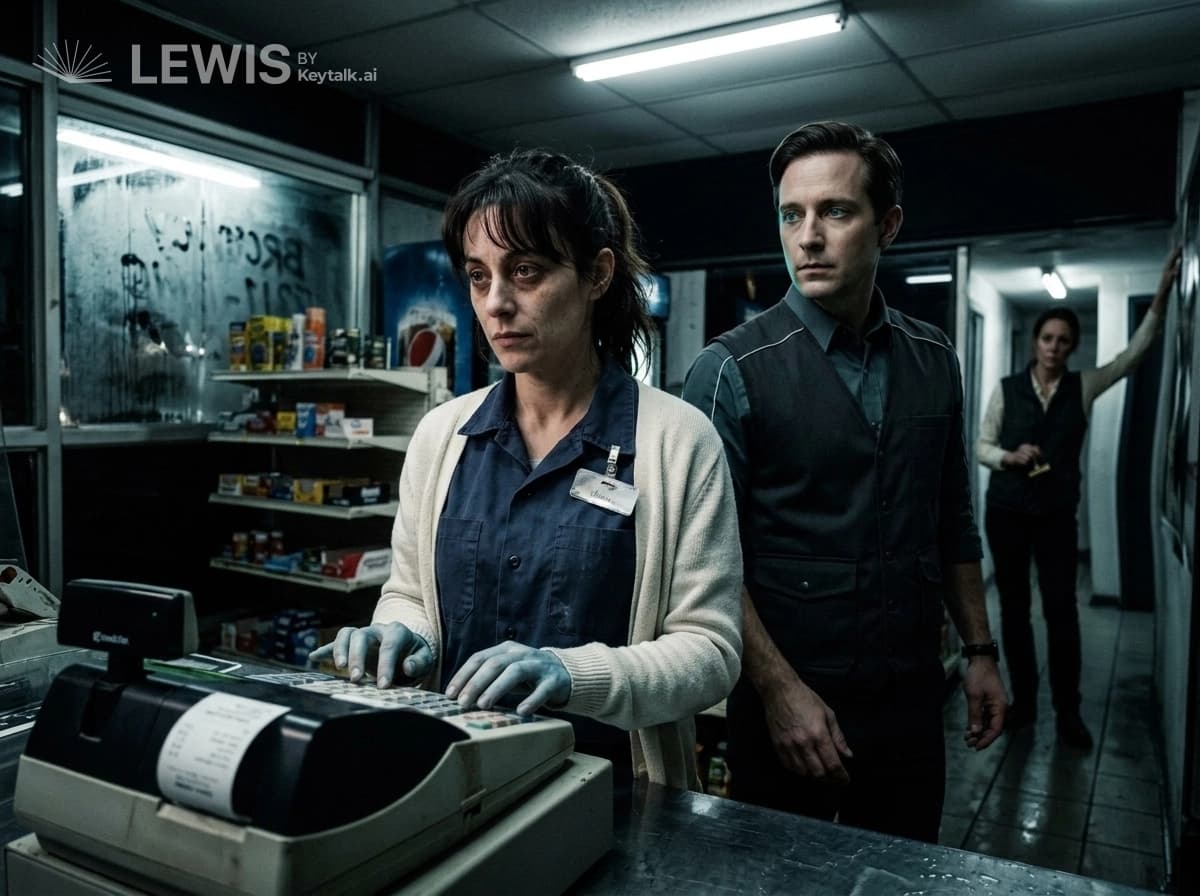
Fluorescent light turns Mara’s knuckles a sickly blue as she scans the first customer’s craving; the register spits a receipt so fast the paper smells warm and metallic, and the window beside the counter blooms with condensation text that reads like a verdict. Each time Mara draws a breath to test the ledger’s mismatch, the ceiling lights stutter in a new cadence and the condensation smears into different characters—as if the store is proofreading her thoughts before she can act. Tomas drifts into view with the soft certainty of customer service, close enough that his coat brushes Mara’s wrist, and his voice wraps her next movements in pre-agreed phrases; behind him, Elias’s shadow points toward the back corridor, but the angle warps—doorframes pulling away a handspan—so Mara’s feet move before her mind chooses. Elias’s last sanctioned reset attempt clicks in the wrong direction with a dry, reluctant sound, and Mara watches the register’s clock jump forward—proof that her ‘obedience’ is no longer hers to slow.
14

Ledger-Scented Mismatch

Ledger-Scented Mismatch
The corridor beyond the laundry closet smells of printer paper, cold metal, and a sharp ozone tang that crawls up Mara’s throat with every receipt echo; her fingertips leave a faint mint sheen on the bent doorframe. Elias moves a hand toward the ledger-servicing pipes—then the corner behind him lengthens like a pulled rubber photograph, and his last sanctioned reset window clicks open just long enough to show a lattice of shifting numbers that don’t match the tide timer on the far wall.
Tomas is not in the corridor, yet his “service protocol” appears anyway: condensation-letters bead on the air-duct grate in soft, customer-friendly clause text, labeling Mara’s hesitation “unnecessary” and proposing a collateral redirection back onto her capacity to refuse. Mara presses the misprinted calibration mark she pocketed earlier into the latch seam; the ledger responds with a reconciliation chime that’s felt more than heard—then the correction offer prints onto nothing, ink-dark lines blooming in midair, staring at her like a verdict. In the corridor’s bent light, Mara realizes the only mismatch the store can’t hide is collateral-type—so she steadies her breathing, refuses to fight the clause head-on, and prepares to anchor the next rewrite to Death’s audit tie instead of letting the ledger own the direction of her choice.

15

Anchoring Death, Freeing the Wrong Ones

Anchoring Death, Freeing the Wrong Ones
The corridor smells of cold metal and printer paper while her tongue tastes mint-blue fear; each receipt line clicks forward like a footstep that lands a second ahead. Overhead fluorescents stutter, and as Mara signs the bargain with Death’s audit tie, condensation blooms on the maintenance panel in warped ledger-font—NOTES SMEAR, COLLATERAL TYPE REDIRECTED—while the tide timer hiccups and the planks creak a new rhythm, slower, as if relieved. Tomas’s customer-service certainty arrives like a warm sleeve against her wrist, but the ledger rejects the softened clause mid-print; the air flashes with a reconciliation mismatch and the rootless fog-line vanishes, replaced by a crackling, contained void in the vault antechamber behind her.

'The Receipt That Reindexed Her Soul'스토리 챗

이 스토리 속 캐릭터들과 대화하고 싶다면?

'The Receipt That Reindexed Her Soul'스토리 챗

이 스토리 속 캐릭터들과 대화하고 싶다면?

story image
story image
story image
story image
story image
story image
story image
story image
story image
story image

댓글0

테마 음악