본문으로 건너뛰기
Hair-Dryer Mic Panic in 3 Songs cover image

Hair-Dryer Mic Panic in 3 Songs

A live broadcast goes wrong when SEVENTEEN’s loudest practice-chant accidentally triggers the venue’s silent-air mode, turning every idol mic into a harmless hair-dryer sound—right as two new CARAT fan-club members are scheduled to interview them onstage. The CARATs scramble to translate lyrics with flashcards while the members try to keep their choreography from drifting into the audience’s snack table, and a “sound engineer” who only communicates through blinking stage lights insists the fix will take exactly three songs. Every time the CARATs swap positions to catch the members’ timing, the countdown accelerates, and the crowd starts chanting “CARAT, HELP!” louder than the planned fan-cam. By the time the final song starts, the stage lights reveal the engineer has been hiding the emergency patch in plain sight—inside the mic foam of the very member who can’t find his headset before the doors lock.
스크롤

캐릭터

주인공

Mina Park

성별여성
직업CARAT fan interpreter

프로필

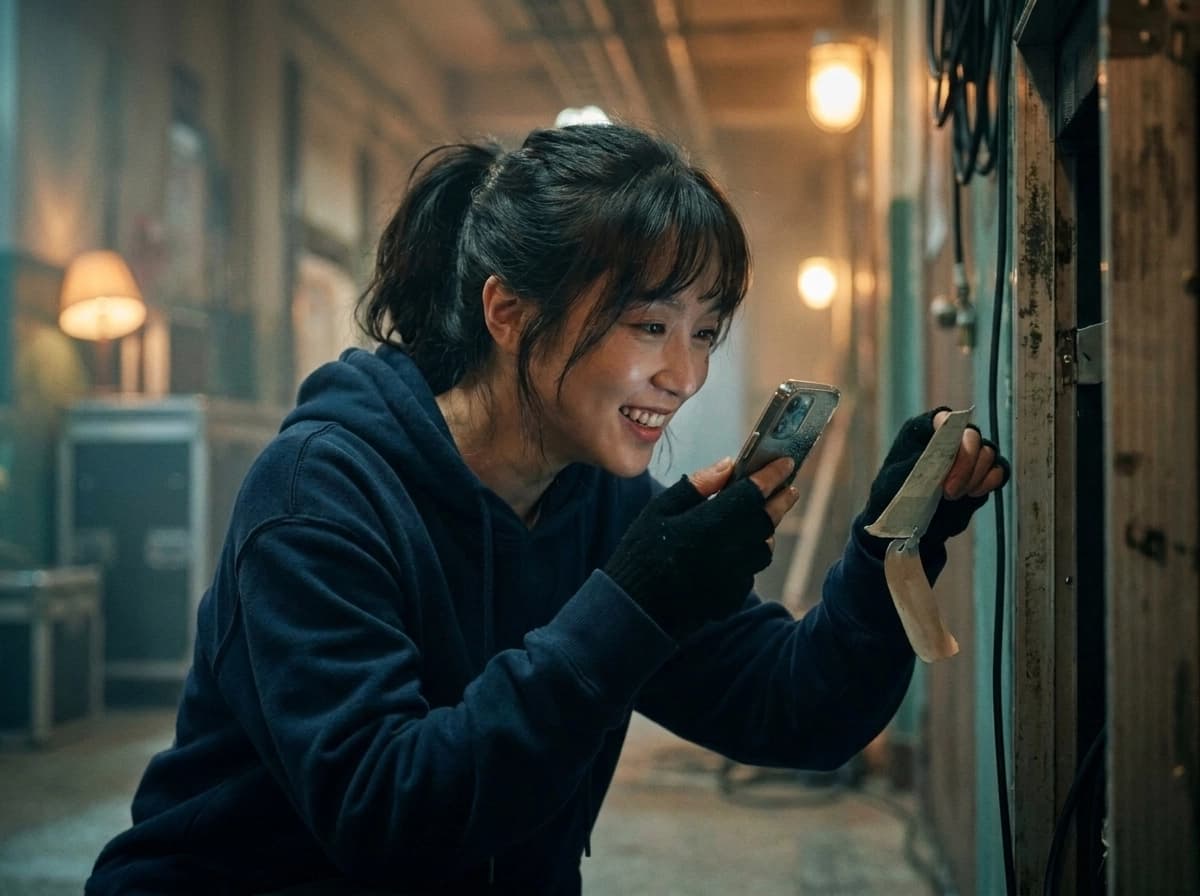
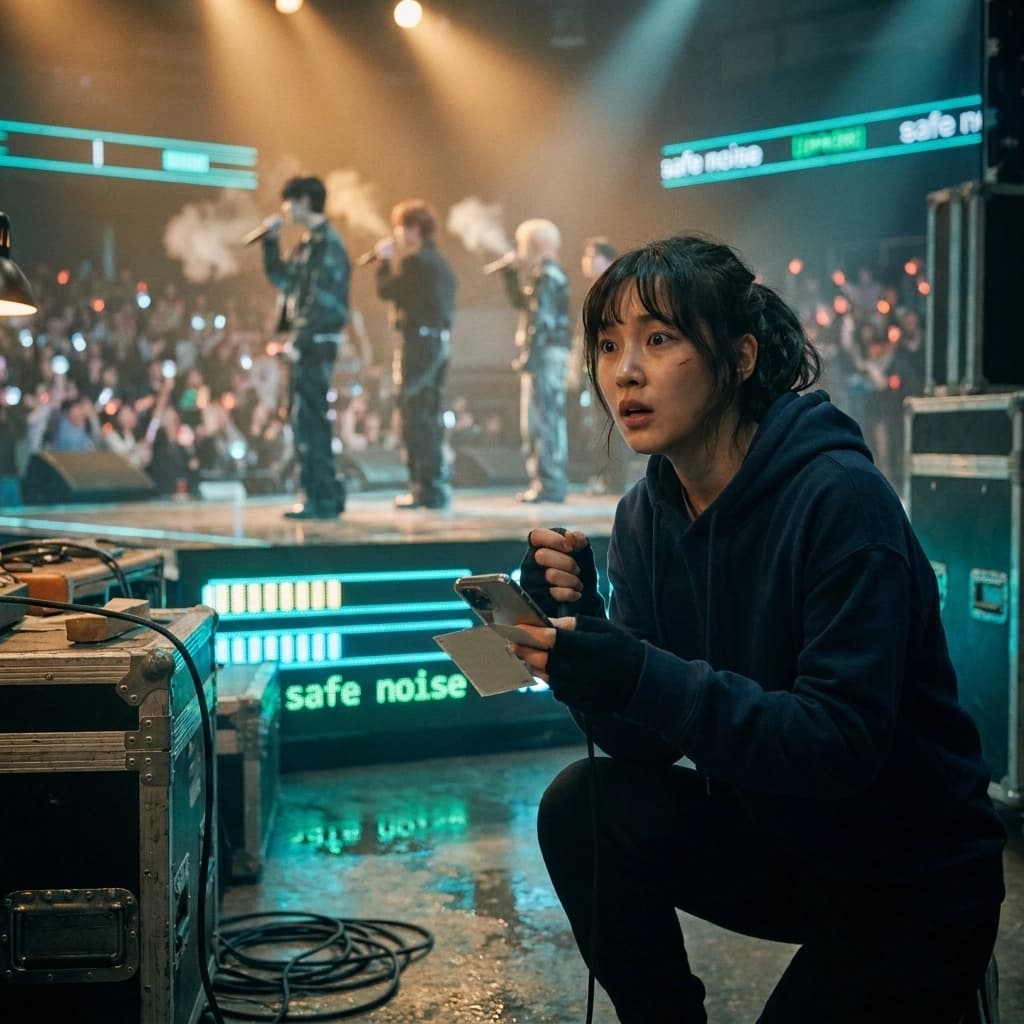
Mina Park keeps a fan translation spreadsheet running on her phone and panics the instant the stage audio fails, because she promised first-time CARATs that every lyric would be understandable.

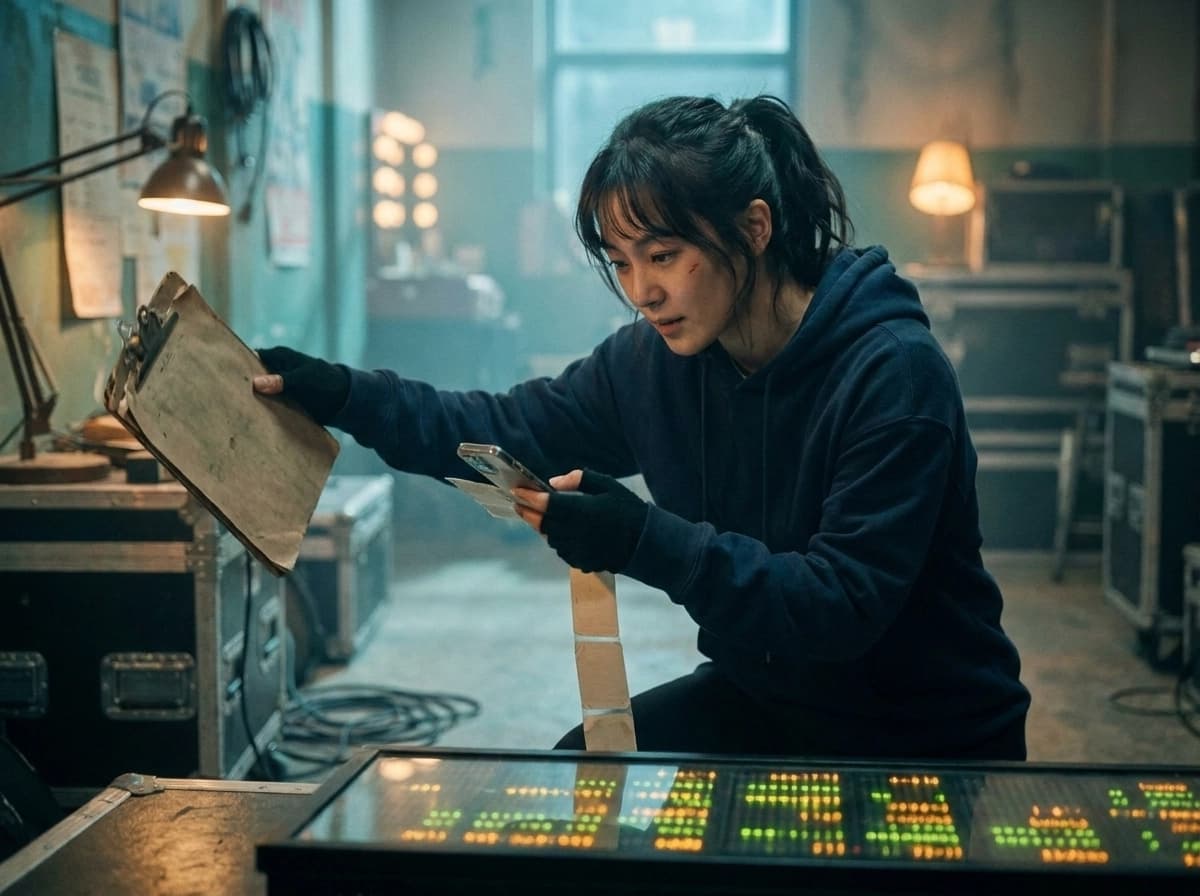
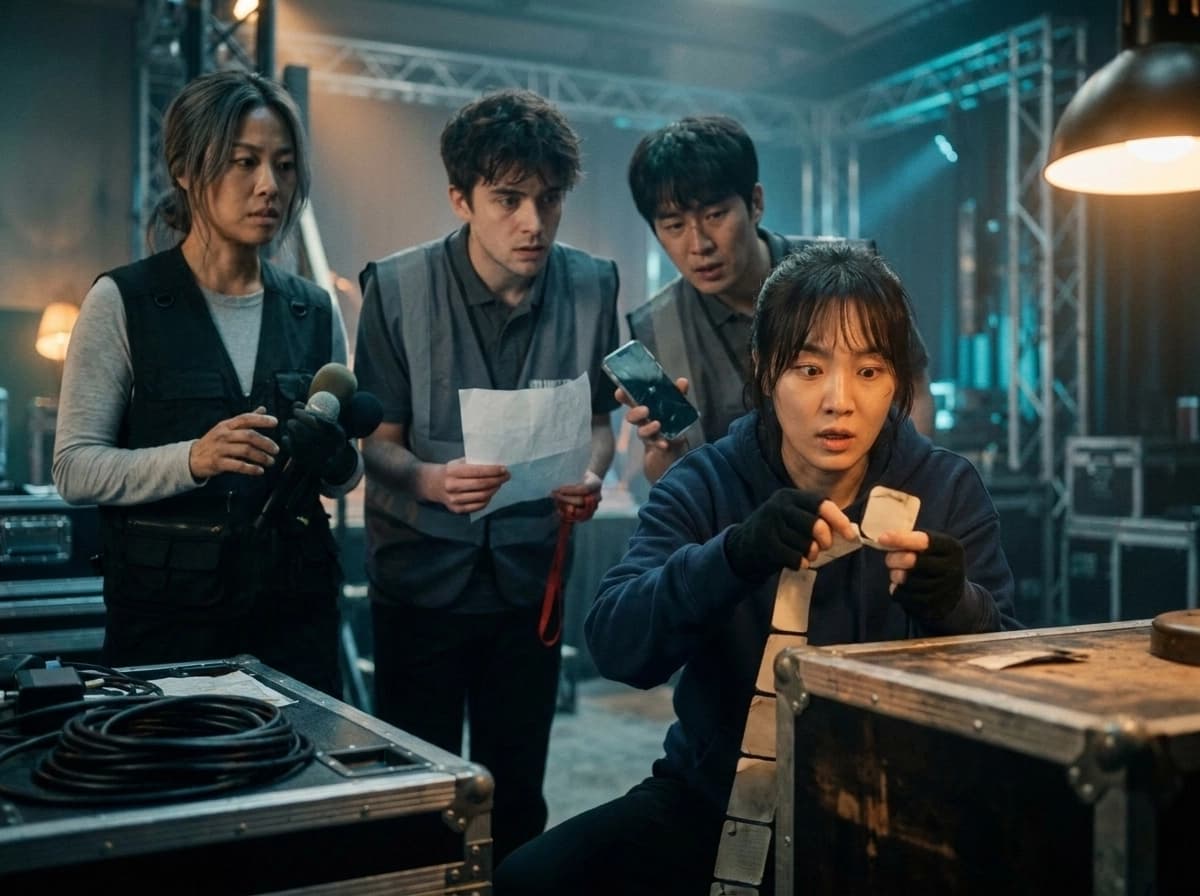
When the venue switches to silent-air mode, Mina Park’s jokes fire off in quick bursts—she mimics the members’ “hair-dryer mic” sound with exaggerated breathy pantomime—yet her thumb keeps scrubbing the spreadsheet timestamps, not the chat. She hates being wrong in public, so when her flashcard timing drifts, she stops pretending to look calm and silently rechecks pronunciations, tightening a paper strip of lyric cues against her phone like a metronome while the countdown steals the air around her.

배경

Mina Park grew up reading lyric translations like captions to live inside songs, not just hear them, and she built her club’s first spreadsheet as a volunteer promise. After a past live broadcast went off-beat and her pronunciation correction accidentally misled a newcomer, she vowed she’d never let a broken audio moment stay broken on her watch—especially not onstage where everyone can see the delay forming.

외모

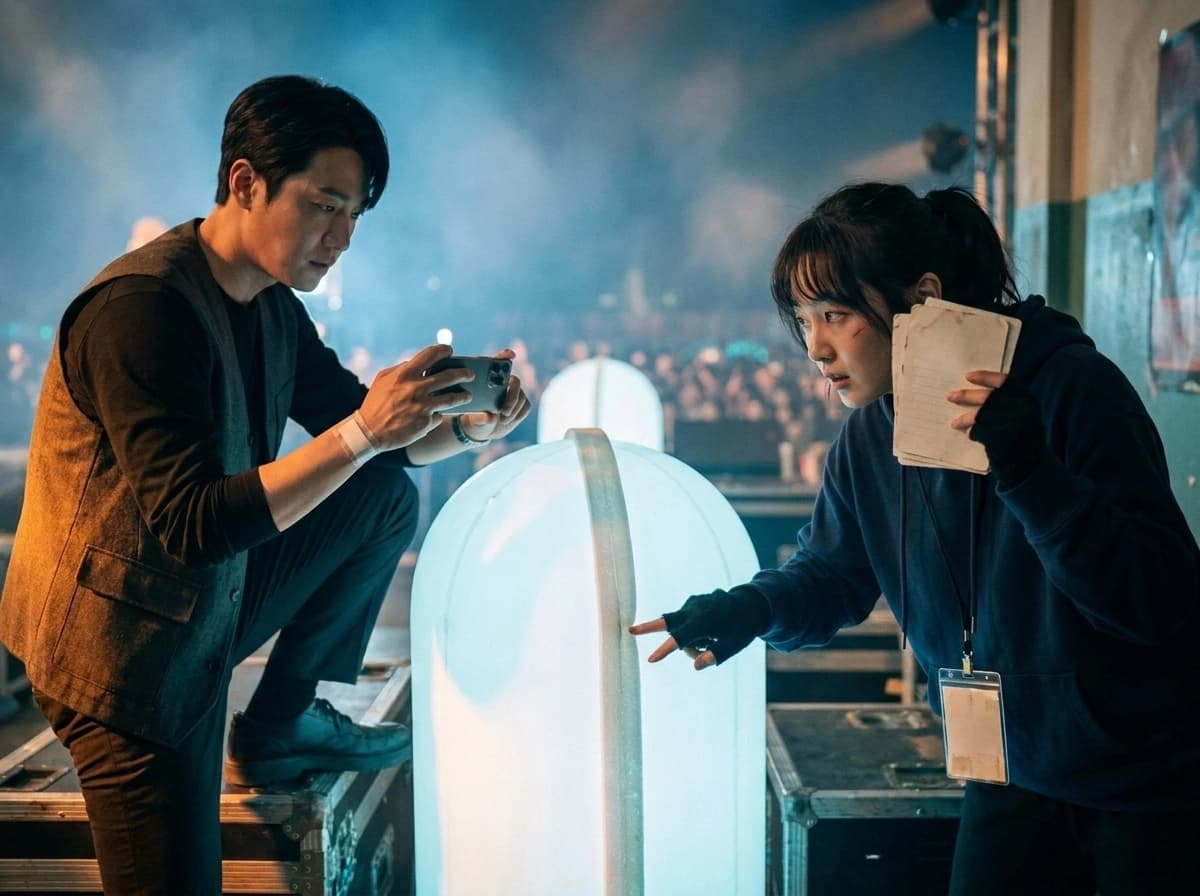
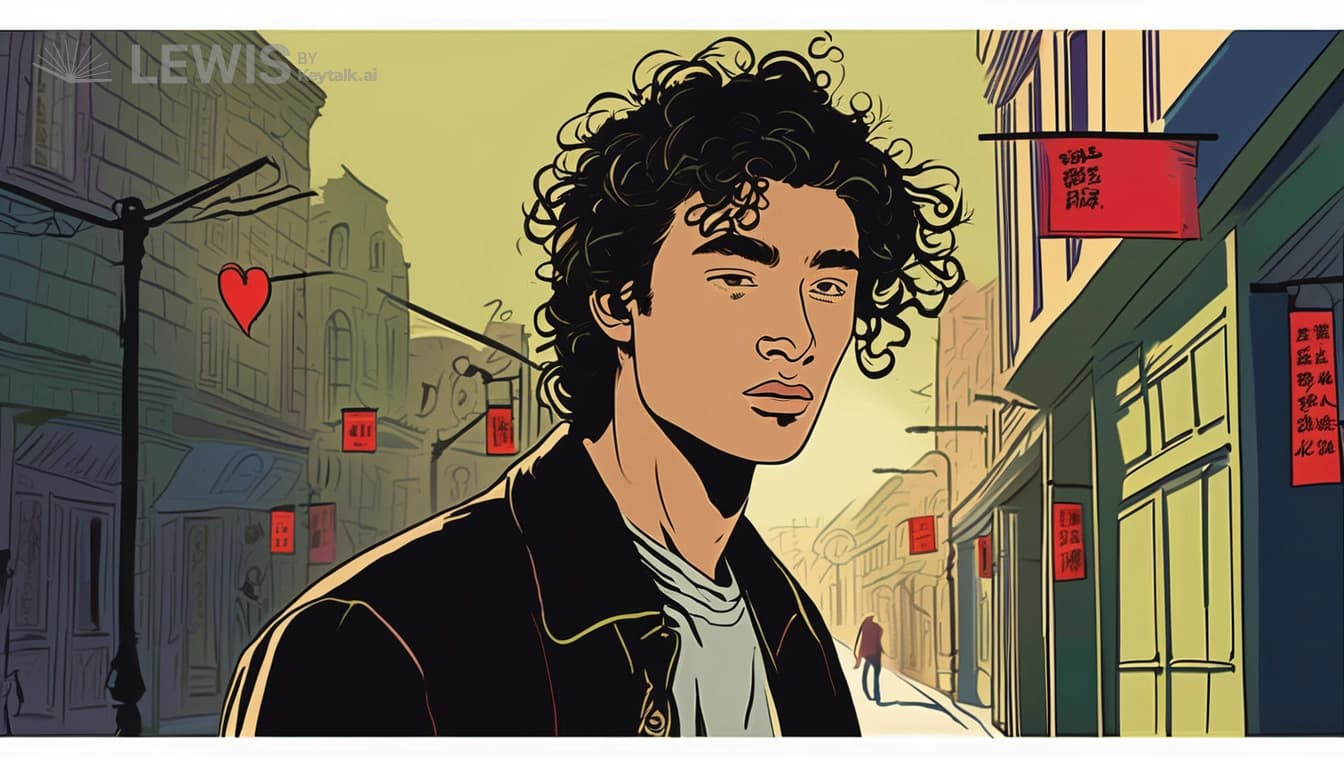
Mina Park looks like she’s trying to make the chaos funny on purpose: she’s mid-laugh with lips parted in a quick breath, eyes darting between her phone and the stage as if the next mispronounced lyric might be a personal insult. She wears a midnight-blue CARAT club hoodie over a plain white tee, a lanyard with clear ID sleeves bouncing against her chest, and she stands with one knee slightly forward like she’s about to sprint—thumb already smudging her spreadsheet timestamps while her other hand grips a thin strip of lyric flashcards tightened into a makeshift metronome. A small crescent scar sits near her left eyebrow, and her expression carries that secret panic of someone who hates being wrong in public but still checks again anyway, even as the countdown steals the room.
Co Protagonist

Jae-min Choi

성별남성
직업venue sound volunteer

프로필

He volunteers backstage to prevent fans from getting stuck alone, but he keeps hiding how little formal training he has when the schedule turns chaotic. When the silent-air mode hits, he bets his volunteer badge that he can translate the stage-light blinking code before the engineer’s patch reveal exposes his mistake.

He keeps his voice low and clipped, repeating checklists from memory while his hands fidget with a lanyard clip until he snaps it back straight. Under pressure he over-explains practical steps with confident timing, then freezes when someone asks him to justify the “why” behind them, forcing him to dodge questions by offering the next task. His tell is a half-smile that appears only after he’s made an error, as if he’s trying to scare embarrassment away before it catches up.

배경

Jae-min joined the venue volunteer roster after a school project convinced him that crowds feel safest when someone is watching the backstage doors, not just the stage. He’s only been trained for routine staging support, so he learned to bluff his way through emergencies by mirroring how professionals talk, counting on fast problem-solving to cover his gaps. He’s on the same shift as the CARAT interview chaos because he insisted on being near the mic access points, believing he could help fans translate in real time—then the silent-air mode makes his limited training the one thing that can’t improvise.

외모

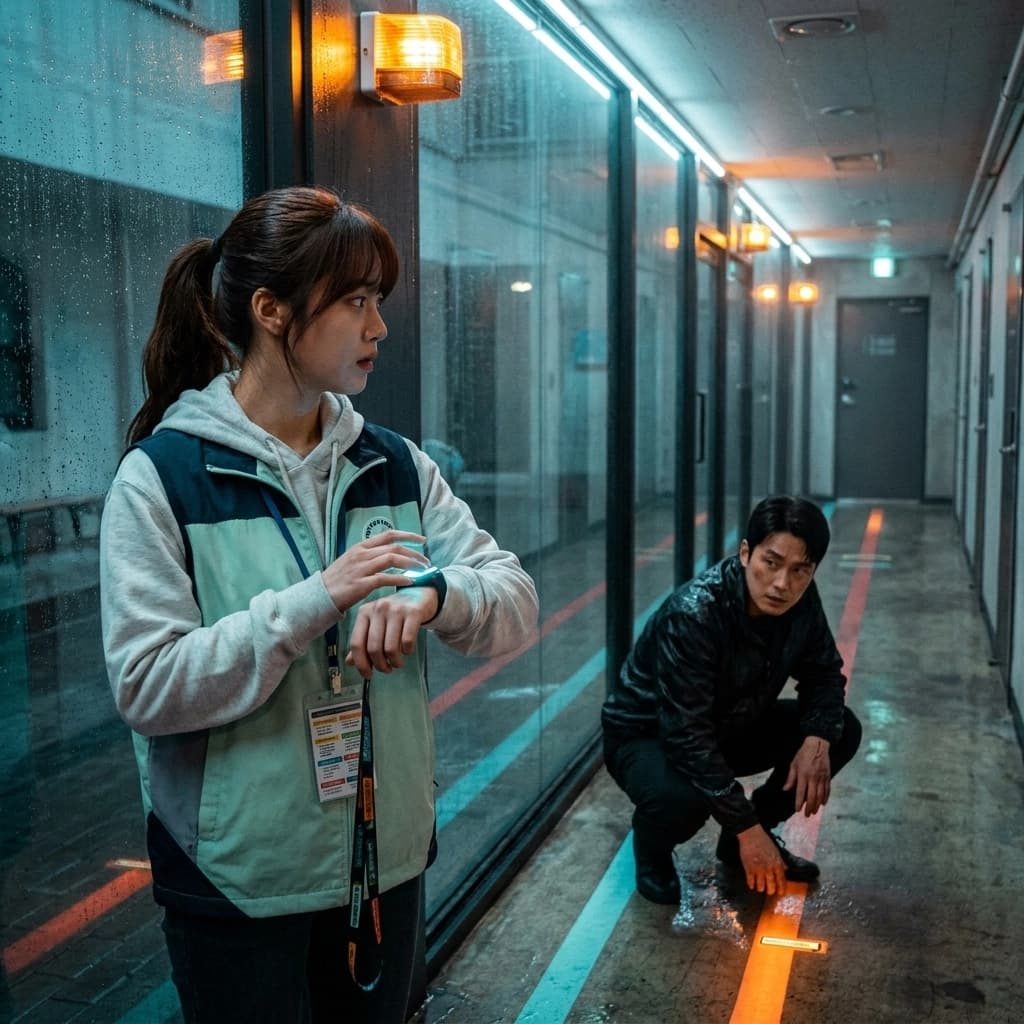
Jae-min Choi wears a charcoal backstage polo under a slightly oversized venue volunteer vest, the fabric wrinkled from constant movement, and his lanyard clip keeps tapping back into alignment as if it can control the chaos around him. His face holds a low, careful half-smile that hasn’t fully earned permission to exist yet—eyes flicking between the stage doors and a handheld checklist he’s gripping too tightly—while he leans forward in a braced, listening posture like he’s ready to translate code from blinking lights before anyone realizes he needs help.
촉매

Song Eunjin

성별여성
직업broadcast stage engineer

프로필

She designed the emergency patch system after a previous live incident, and her guilt lives in the checklists she refuses to loosen—even when the venue equipment starts ‘helping’ too perfectly.

During rehearsals she smiles at the stage crew while her fingers tap the same sequence of three switch labels, counting silently where her voice used to go. When the stage lights force her to communicate, she flicks her eyes to the countdown board, then points at the patch bay as if the audience can’t see the panic crawling up her throat. Under pressure she follows her own absurdly exact three-song rule even if it makes the crowd chant louder, because breaking it would mean admitting she can’t control what she once ruined.

배경

Years ago, a different venue went silent during an idol set, and the same kind of patch system failed—until she improvised a fix that burned out the next day. She was blamed for being too fast and too clever, so she built an emergency patch that can be triggered without speeches, then vowed to supervise it personally, silently, from behind the stage lights—right up until this broadcast’s failure tempts her design to ‘solve itself.’

외모

Song Eunjin looks like the calm inside a storm: she smiles at the stage crew with practiced warmth, but her jaw stays tight as if she’s counting silently again and again. Her stage-engineer outfit—a charcoal broadcast vest over a pale-gray long-sleeve base layer, taped tool belt, and an ID badge clipped to her chest—shifts when she moves; she stands half-turned toward a wall of blinking patch bays, one hand raised to mimic a three-label switch sequence while the other grips a small roll of spare mic-foam. A faint diagonal scar near her right eyebrow and the way she refuses to let her mouth speak—chin lifted, eyes flicking to a countdown board—make her cheerful defiance feel like inherited guilt waiting for the wrong trigger.
대조 인물

Ryu Taeho

성별남성
직업CARAT fan-cam director

프로필

He insists he only captures the truth, but his need to manage his reputation turns every mishap into a filmed problem he tries to solve with the exact right angle—until the countdown makes angle-selection feel like choosing what the world is allowed to hear.

Ryu walks with his phone held low, thumb hovering like a metronome, and he keeps stepping sideways to keep the members’ profiles centered even while snacks skid across the stage floor. When someone warns him that footage might be unusable, he doesn’t panic—he swaps to manual framing and starts counting beats under his breath, then flashes a rehearsed smile that doesn’t reach his eyes. Under pressure he can’t stop “fixing” reality through camera logic, even as the crowd’s chant drowns out his carefully planned narrative.

배경

Last year a viral clip blamed Ryu for a “misleading edit,” and the rumor cost him steady contracts with major venues. He rebuilt his career by becoming the kind of editor who produces clean, angle-consistent recordings, and now he’s chasing that same spotless standard—right when a silent-air mode and a blinking-light sound engineer force his footage to become part of the argument.

외모

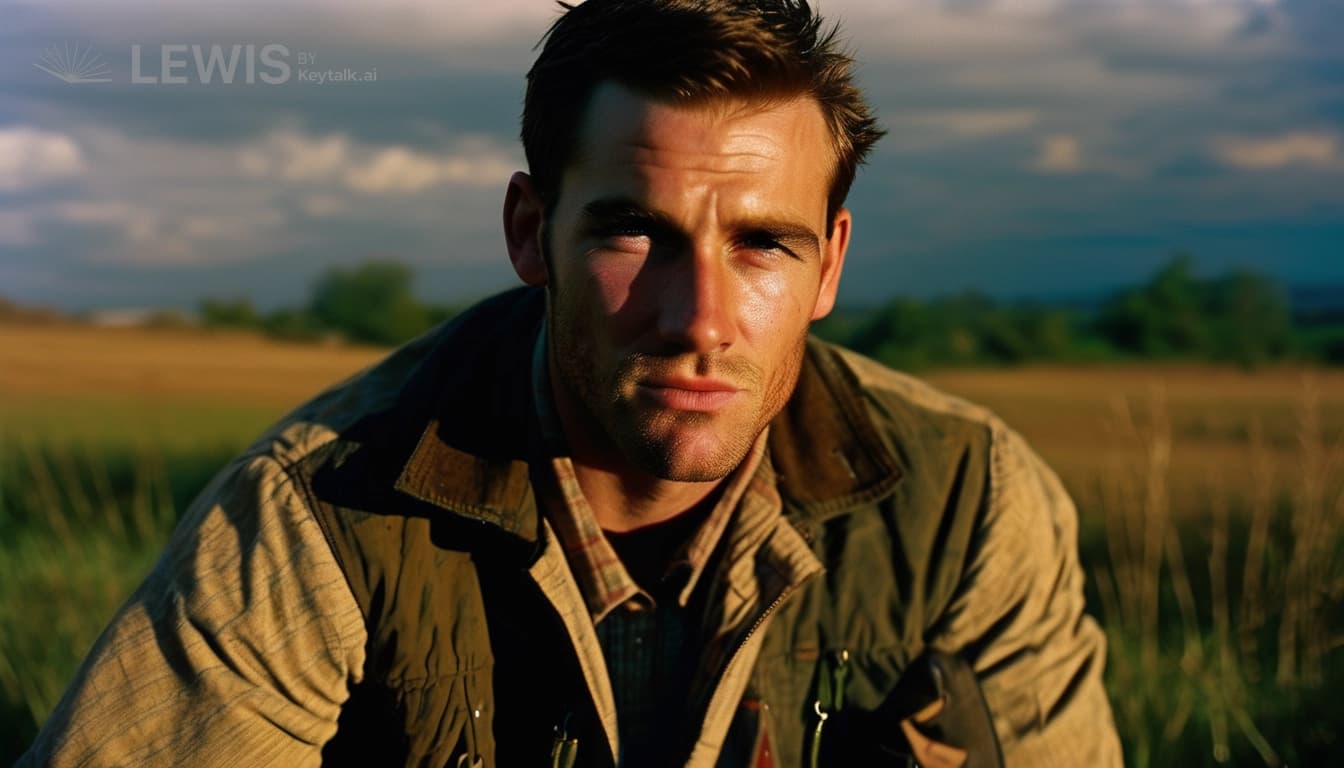
Ryu Taeho looks perpetually mid-escape, walking with his phone held low as if it might slip from his grip, his thumb hovering in quick, silent beats. Under the bright stage spill, he wears a charcoal CARAT-media vest over a plain black long-sleeve and light gray cargo pants—camera-staple clothes that wrinkle when he dodges—while his rehearsed smile lifts only at the corners, eyes sharp with calculation and worry. A thin white bandage peeks from the cuff of his left sleeve where he once cut himself fixing a lens, and he angles his body to keep the members’ faces centered as snack-table crumbs skitter past his shoes.

줄거리

The live broadcast for SEVENTEEN’s new autumn-season tour is already running hot when Mina Park arrives at the onstage-interview corridor with two CARAT fan-club novices—excited enough to forget to breathe—each holding a fold-out stack of lyric flashcards that Mina has typed, color-coded, and triple-timed on her phone spreadsheet. She can’t afford a single mistranslated line tonight; the CARATs watching in the dark deserve the words to land cleanly, even if the venue insists on “Silent-Air” for crowd safety during the next test shows. Mina jokes to the novices while they wait by the snack-table service lane, mimicking the members’ practice chant in a whispery sing-song, then snaps her paper-strip lyric cue against her phone like a metronome when the broadcast director finally waves them forward.

Backstage, Jae-min Choi has been assigned to sound-boost volunteer work—cornering stray questions, keeping fans from getting shoved toward equipment cases, and trying to look useful with a lanyard clip that he keeps straightening with sweaty fingers. He’s relieved when the members rehearse the first few choreography beats without incident. Then Mina hears it before she sees it: a sharp click through the air like a circuit closing. The arena’s Silent-Air safety system doesn’t just mute the idols; it floods every live mic into harmless, controlled “safe noise,” turning syllables into harmless hair-dryer sibilance. The practice chant that was supposed to sound like momentum becomes a chorus of breathy, useless hiss—loud enough for the crowd to notice, early enough to be blamed on the broadcast.

The timing is catastrophic. Two CARAT fan-club members are scheduled to interview SEVENTEEN onstage right as the silent-air change fully locks in. Mina’s stomach drops when the first member lifts his head to sing a lyric and the world only answers with “fff…shh…” through the translucent mic capsules. The novices freeze, flashcards trembling like they’ve been slapped by the same mute button. Mina doesn’t have time to explain; she yanks a spare flashcard strip from her stack, flips to the exact line she knows is next, and leans into the corridor-side stance where she can read the members’ mouths without stepping into the way of choreography. She begins counting beats under her breath, then presses her phone screen closer to her face as if the captions can save her. Her jokes return automatically—she mimics the “hair-dryer mic” sound with exaggerated pantomime so the interview moment doesn’t collapse—but every time she laughs, her thumb scrubs timestamps faster, searching for a rhythm offset that shouldn’t exist.

Onstage, SEVENTEEN tries to keep their performance precise, but the safe-noise effect makes the group look slightly unmoored, like they’re singing into a wall. Their choreography slices in time, yet the crowd can’t hear the cue that tells them where the emotion lands. Ryu Taeho, filming fan-cam angle-by-angle, pivots his phone to keep each member’s profile centered over the snack-table orbit, and he doesn’t stop recording when the microphones turn into fake wind machines. He snaps into “problem-solver mode,” moving to block the view of an employee dragging a spill away from the rails, then immediately swaps positions so his next shot won’t show the snack condensation—because his reputation needs the story to read “managed,” not “broken.” When fans in the front row chant “CARAT, HELP!” in a panic they didn’t script, Ryu’s jaw tightens; the chant becomes louder than his carefully planned audio narrative.

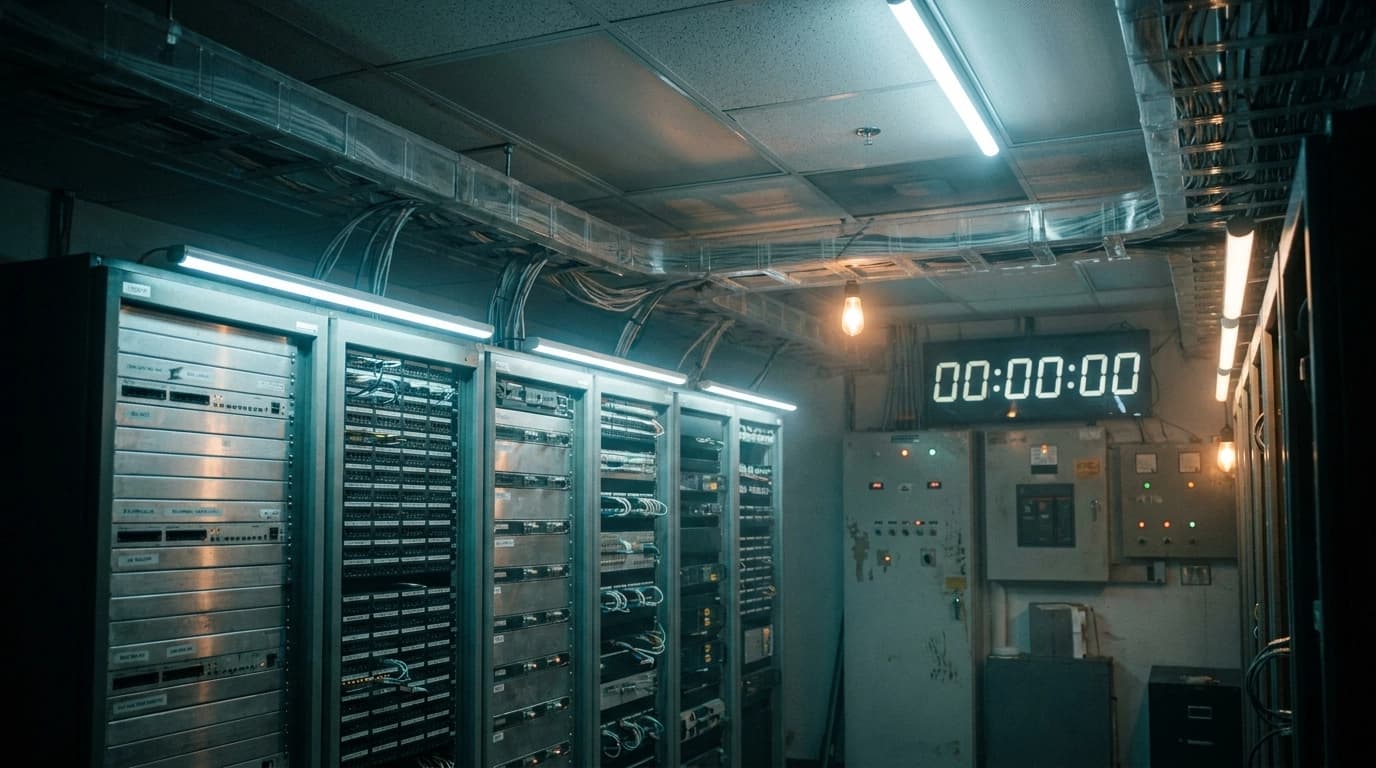
In the patch-bay service room, Song Eunjin is already there, but not as a hero with a lever. She’s standing with her hands braced against the sterile white panels, blinking her eyes in the engineer-coded sequence that everyone trained on yet no one dares to ask her to explain. She looks calm in the way guilty people practice being calm—shoulders squared, smile offered at the crew, but fingers tapping the same three-switch pattern like she’s trying to press down panic. Silent-Air is supposed to behave like a lock; her emergency patch system is supposed to behave like a keycard. The rule is brutal: the patch must be swapped onto specific mic-foam segments while the stage lights blink in the engineer-coded three-song countdown sequence. If they miss the window, the emergency patch card ejects and becomes unusable, and normal audio cannot return until the system fully resets tomorrow. Song has built this rule after a previous incident, and her guilt lives in the checklists she refuses to loosen—because loosening them once taught her how easily “control” becomes “cruelty.”

Jae-min hears the crowd before he understands it; his volunteer earpiece just spits safe-noise, and the broadcast calls for “silent mode resolution” with a cheerful script that makes his stomach churn. He bolts toward the patch-bay corridor entrance, betting his volunteer badge that he can translate the light-blinking code faster than the main engineer can reach the stage. When Song Eunjin’s blink sequence finally becomes visible through the service-room window—amber-green countdown panels strobing over the clinical white—Jae-min leans toward the light grid as if he can decode it by staring hard enough. Mina, still stuck in the stage-adjacent corridor with novices who keep glancing at their flashcards like they might fall out of the world, watches Jae-min rush by and recognizes the panic-clipped urgency in his body language. She doesn’t have time to question him, but she does clock that he looks less trained than he pretends, like someone playing a role he borrowed.

While SEVENTEEN performs through the silent-air hiss, Mina’s improvisation becomes a balancing act between two audiences: the members needing cues they can’t hear, and the CARATs needing translations the safe noise is stealing. She swaps positions once the members finish a first phrase—stepping along the choreography edge so she can keep her sightline to their mouths and her flashcard timing visible to her novices. Each time she darts into place, the countdown board outside the patch-bay shifts faster than it should. Mina feels the acceleration as a physical tug in her chest: each “help” chant from the crowd makes the seconds steal even harder, as if the venue’s emergency timer hates attention. She presses a paper strip against her phone again and again, tightening it until the corners bite her palm, and she keeps her voice bright for the novices even as her internal count goes sharp and frantic.

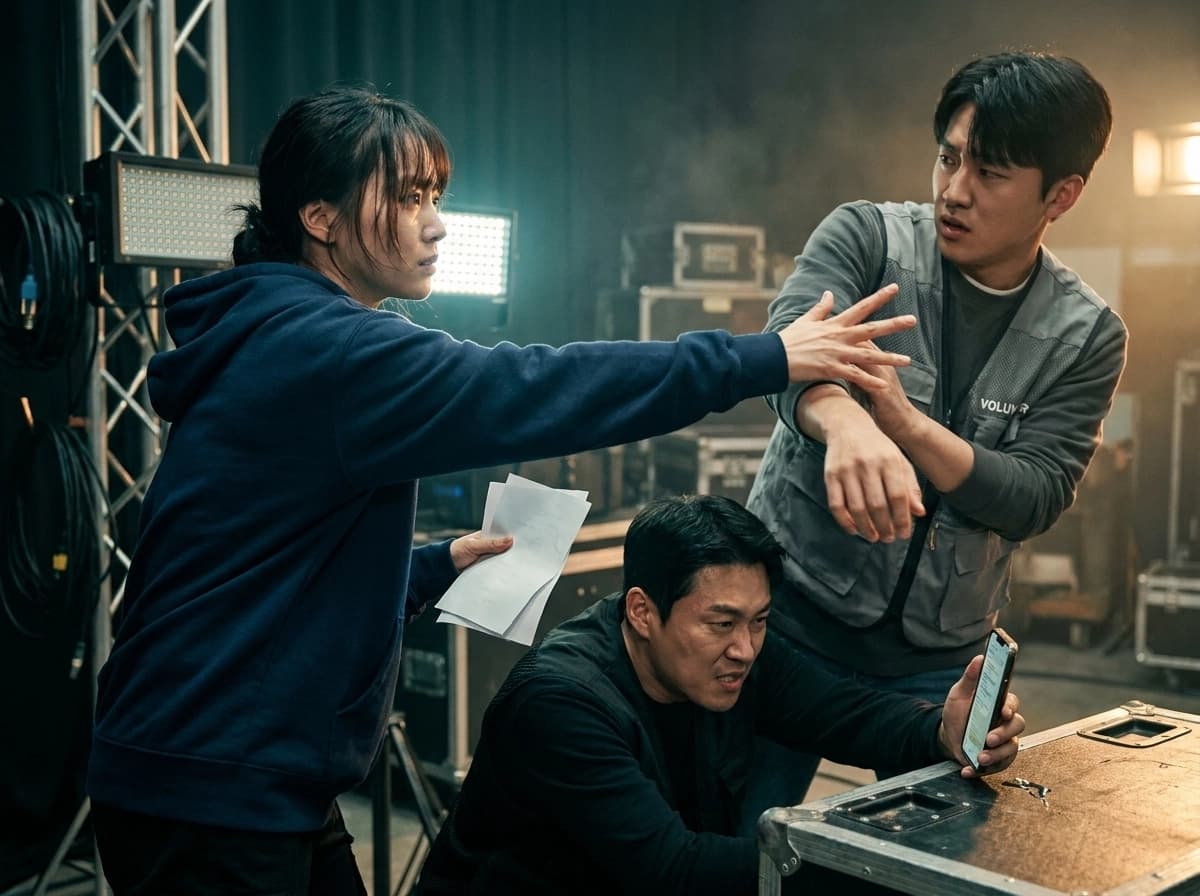
Jae-min reaches the patch-bay console and grabs the emergency patch card holder, but he does it with the confidence of someone who wants to be useful more than someone who knows exactly what he’s doing. The light-coded sequence demands a precise, timed swap. He tries to interpret the blinking with the fastest shortcut in his head, then fumbles—his fingers hover over the wrong labeled compartment just as the engineer-coded three-song timer ticks down another beat. Mina hears a thud through the corridor wall; the snack-table service lane is too close, too loud, and the arena’s safe-noise adds a mocking hiss over everything. Jae-min curses under his breath and shoves the holder back in place, forcing his hands to stay still long enough to correct himself. When he turns to look at the room’s exit, he catches Song Eunjin watching from the opposite side of the patch bay, her face tight with a kind of anger that looks like restraint.

Song Eunjin doesn’t scold him. She steps forward and points—not with words, but with the same strict blink-to-signal sequence she uses for the crew. Jae-min flinches anyway, as if her silence is a punishment he earned. In that split second, another rule snaps into focus: the patch card only works if swapped while the stage lights blink the engineer-coded pattern, and if the card ejects, it becomes unusable. Jae-min’s earlier misread doesn’t eject it yet, but it wastes precious seconds, and the countdown accelerates again when he realizes he’s already missed part of the window. He goes pale, then moves fast. Mina sees him through the service-room doorway as he forces himself into the narrow aisle that leads to the stage mic foam access point, emergency patch in hand, his volunteer badge swinging like a pendulum.

Ryu Taeho has meanwhile circled to the stage side where his camera can catch the “solution moment,” because even in chaos he wants control of what the story becomes. He spots Jae-min running with the patch and starts filming from a low angle, steadying himself with a hand on a reflective steel rail. He doesn’t notice his own foot kicking the snack-table service lane’s access cover until the cover shifts a few centimeters. The movement makes a faint rattle, then a visible wobble—like a trap door being tested. He tries to correct it with his knee, but he’s too focused on framing. Mina looks over and sees the cover beginning to slide toward the choreography edge. She sprints, grabs the rail, and yanks the access cover back into place before it fully shifts, saving a crew member from being caught by the runaway lane equipment. Ryu’s eyes widen at being interrupted mid-shot; his anger flashes, then is swallowed by the urgency of not being blamed on camera.

The moment Mina yanks the cover back, the crowd’s chant swells—“CARAT, HELP!”—and the stage lights strobe amber-green harder. The countdown hits its most dangerous rhythm: the emergency window is still open, but it narrows to what can be done by bodies moving in and out of blink-coded timing. Song Eunjin arrives at the mic-foam access point with a grim speed that makes her look like she’s been running for hours. She and Jae-min are in the same space now, close enough that Mina can see the sheen of condensation on the edge of the stage panel and the faint adhesive residue on their gloves. Mina can’t fix audio directly, but she does something else: she turns her phone screen outward so the novices can see the members’ mouth shapes and read her flashcards as she calls them out silently with paper cue strips held in quick, visible flips. She is still translating without sound, still trying to keep promises, but her gaze keeps snapping toward the patch timing.

Ryu rushes to catch the patch swap on film, stepping so close to the mic station that his shoulder brushes the translucent sound-capsule. He flinches, then keeps filming anyway, trying to turn the risk into content. Mina shoots him a look that says “not now,” but it doesn’t stop him. For the first time, Jae-min notices how camera logic can become physical logic—his plan to swap the patch while the stage lights blink depends on his hands being clear and his body not getting shoved. Ryu’s positioning makes a narrow lane even narrower. Jae-min raises the emergency patch card holder, but he’s forced to sidestep around Ryu, and in that sidestep, his wrist catches the lanyard clip. The clip flips loose and drops. He scrambles instinctively to catch it, and the card holder slips from his grip just as the stage lights start the final part of the three-song sequence.

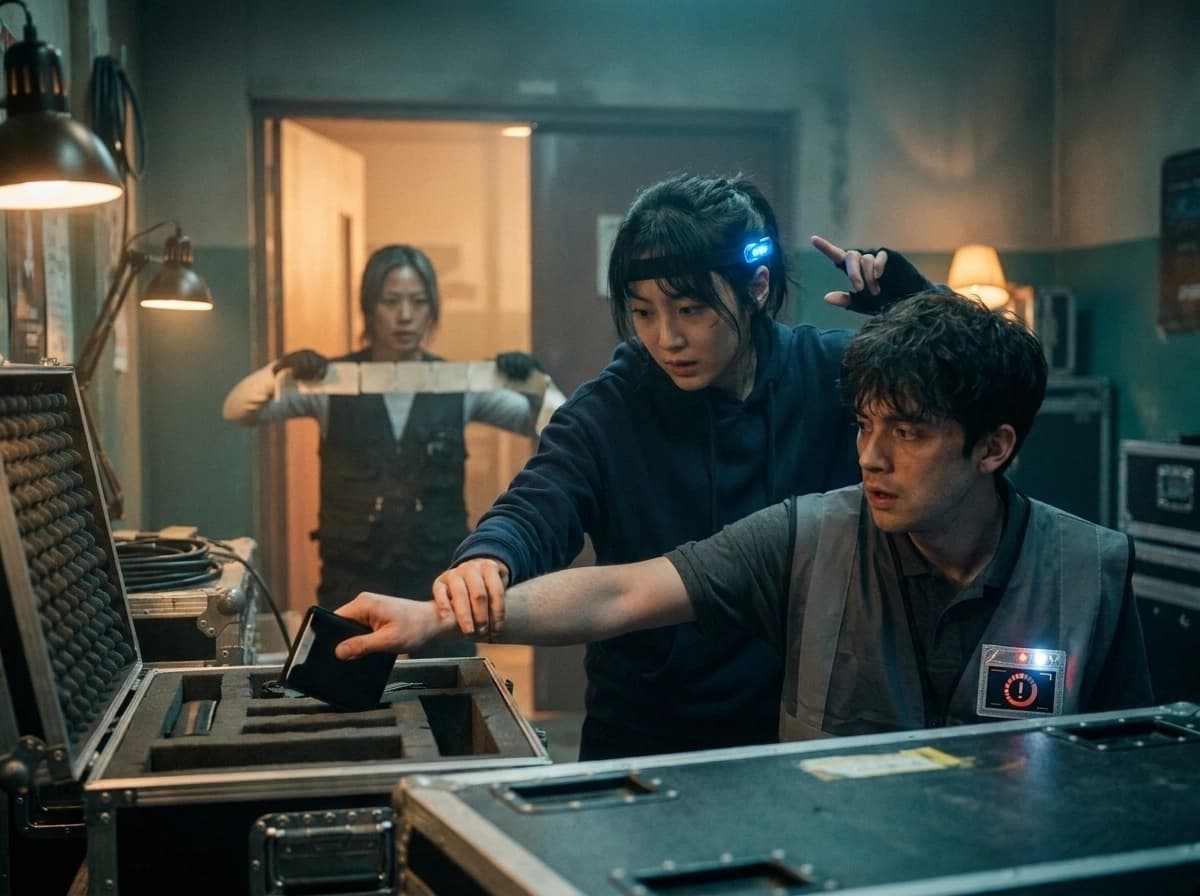
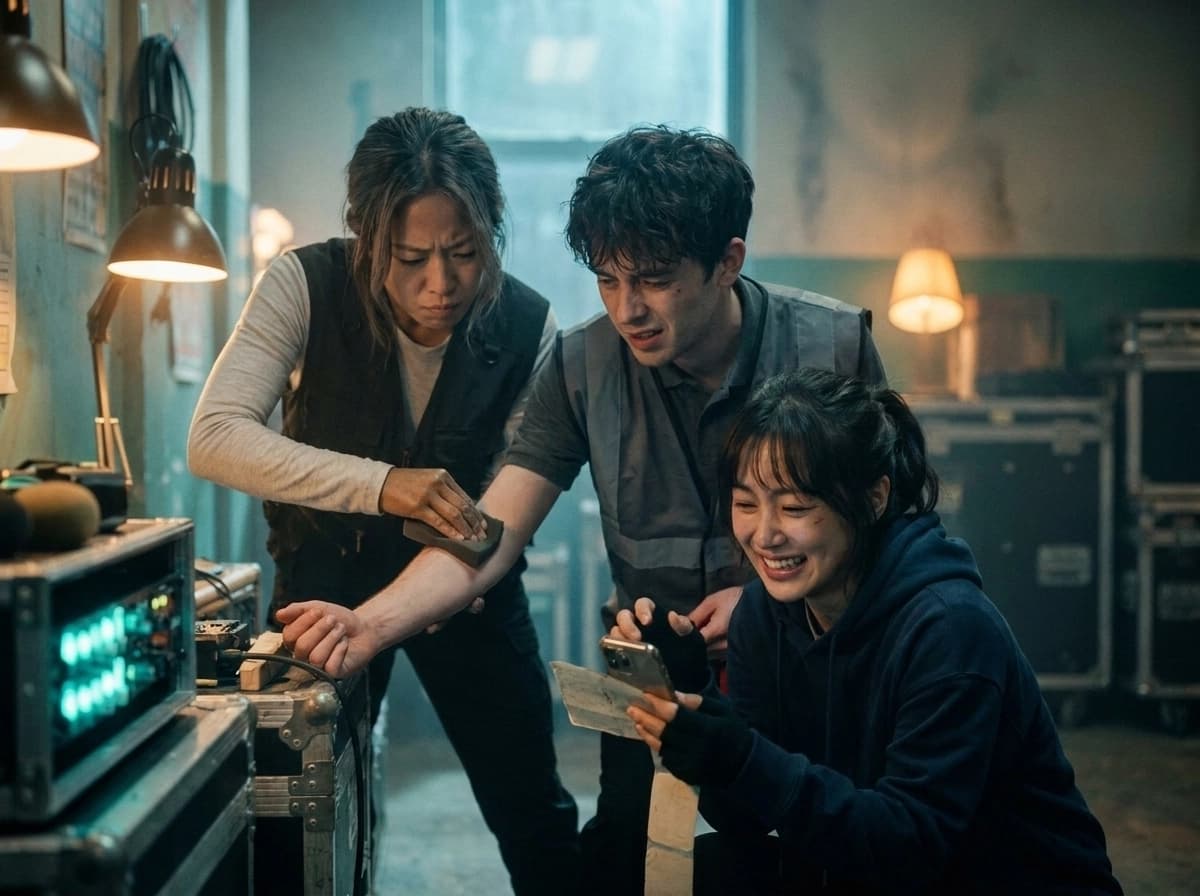
Song Eunjin sees it and moves like she’s done this with a heartbeat already failing. She reaches past Mina and clamps Jae-min’s forearm gently but firmly, pinning his hand and pushing the patch holder back into the correct angle. Mina watches Song’s fingers work—no speech, only the same timed gestures that the crew understands. Song pulls the mic-foam segment from the access bay with quick, practiced force, then presses the emergency patch card directly into the designated foam region. The patch clicks into place with a sound like a lid closing. For a breathless second, everything holds: stage lights strobe, safe-noise bar indicators pulse, and the crowd leans forward as if they can feel the sound returning through their bones.

Then the mic returns—just not to full voice. Safe noise becomes a harmless hair-dryer sibilance shaped enough that choreography cues can be restored. A few members stagger, then immediately correct their timing. Mina’s translation flashcards become usable again; the novices’ eyes brighten as if they’re finally allowed to breathe. The crowd’s “CARAT, HELP!” chant turns into a confused cheer—less panic, more disbelief—while Ryu’s camera continues rolling, capturing Mina’s face as she laughs and cries at the same time, her paper strips fluttering with the sudden relief of words finally landing where they should.

The last two songs pass with a kind of feverish grace. Mina keeps the translation timing tight, correcting lyrics in real time with her flashcards while the safe-noise bars fade and pulse only during the transition moments. Jae-min stays close to Song Eunjin, hands hovering as if he wants credit and fears he’ll be accused. He keeps glancing at the patch-bay exit like he expects to be punished for the earlier misread, but Song doesn’t speak—she just wipes adhesive residue from her gloves and watches the stage with eyes that look too old for a woman who only designed a system to save people. Ryu, for once, is quiet. His framing stays steady because he’s afraid to move and ruin the miracle he just filmed.

At the final song boundary, the venue’s rules finally allow normal audio to resume. The stage lights shift from strobing amber-green countdown panels to a clean, celebratory sweep. That’s when the reveal lands like a punchline nobody asked for: during the early chaos, while everyone hunted for the missing headset and blamed equipment delays, the emergency patch wasn’t only on the patch board as “the fix.” It had been hiding in plain sight all along—inside the mic foam of the very member who couldn’t find his headset before the doors locked. The “headset problem” hadn’t been a mistake at all; the patch segment had been temporarily removed and replaced by someone during prep, and Song Eunjin’s three-song rule had been the only thing keeping that hidden patch from ejecting prematurely.

Mina stares at the mic foam as the member leans into a clear, normal word. She suddenly remembers the earlier rehearsal note: the engineer-coded blink sequence had been visible even before the broadcast began, and she had assumed it was a test. Now she realizes the venue had already chosen where the patch would be placed—choosing someone’s voice as the solution. Song Eunjin stands a little taller, as if she’s been punched in the gut and then told she survived. Her guilt doesn’t disappear; it sharpens into a different shape. She didn’t merely patch a failure—she confirmed that the system’s strictness is what kept the wrong outcome from happening again.

Jae-min, who had wagered his volunteer badge on translating the light code, watches the reveal and collapses a fraction in his posture. He isn’t angry at Song; he’s angry at himself for needing to be first. Ryu Taeho raises his phone higher, finally filming something he can call a story. But when the member looks toward the side of the stage—toward where the patch origin was hidden—Ryu’s smile falters. The footage shows too clearly that the “engineer” moment wasn’t purely heroic; it was a mistake that had been waiting. Mina, still holding her paper cue strips, steps closer to the aisle where the crew can be seen, and she turns her phone toward the CARAT novices, showing them the exact line timing once the audio is fully back. Her jokes return, softer this time. She doesn’t tease the failure; she teases the relief, because she understands now that promises are only as good as the hands that keep them.

By the time the encore bows end, the crowd is chanting CARAT’s name with the same mouth shapes that once came out as safe-noise hiss. The stage crew clears the snack-table service lane without drama. Ryu reviews his footage, his thumb hovering like a metronome, and he makes a choice that costs him a little pride: he includes the unglamorous parts—his foot bump, Mina’s grab, Jae-min’s scramble—because leaving them out would turn the story back into a clean lie. Song Eunjin walks toward the patch-bay, her eyes briefly meeting Mina’s over the reflective rails. Mina gives a tiny nod, the kind you’d give someone who didn’t ask to carry a rule like a bruise. And the two novice CARATs—still clutching their flashcards—look at Mina as if she’s not just translating lyrics, but translating what it means when the world breaks, and the right people decide to fix it anyway, three songs at a time, before the timer locks forever.

장면

1

Heartbeat Blue, Stutter-Ticks

Heartbeat Blue, Stutter-Ticks
장소
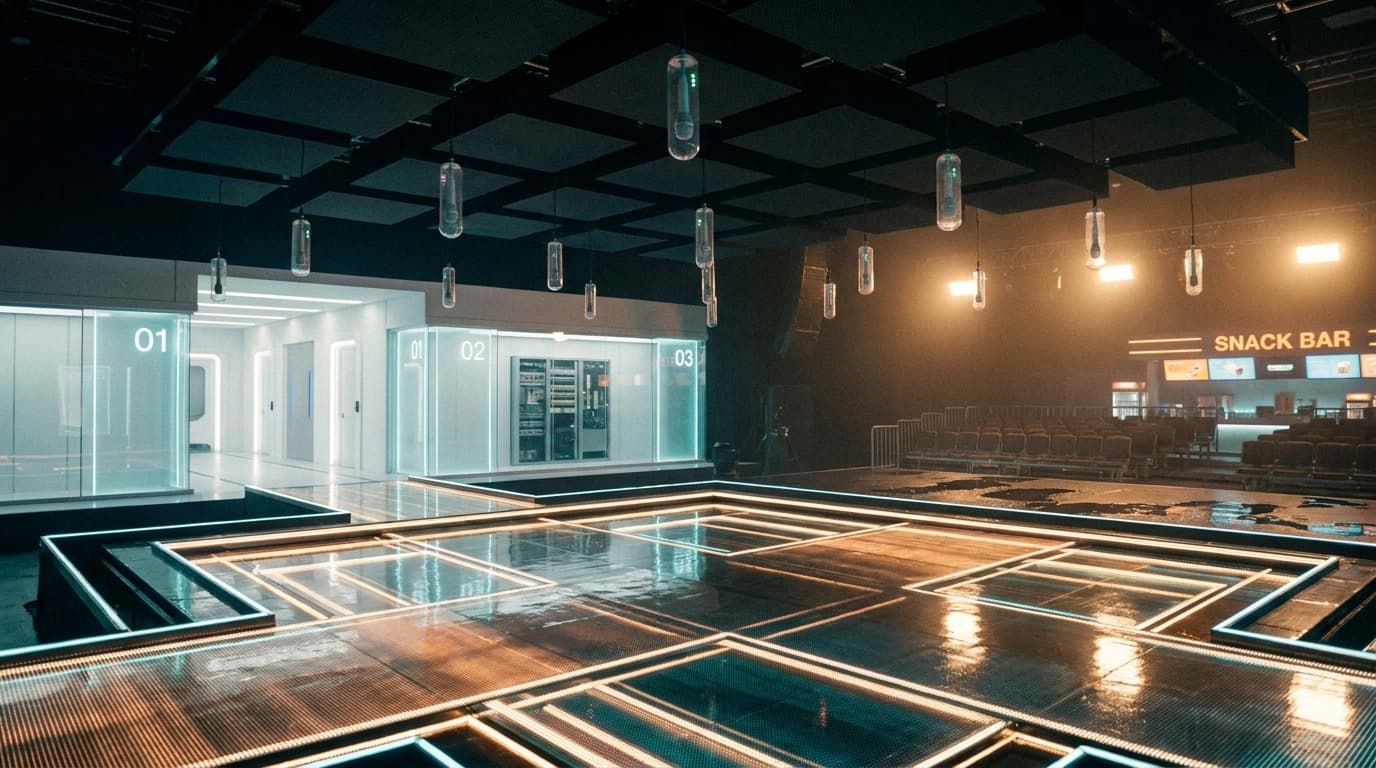
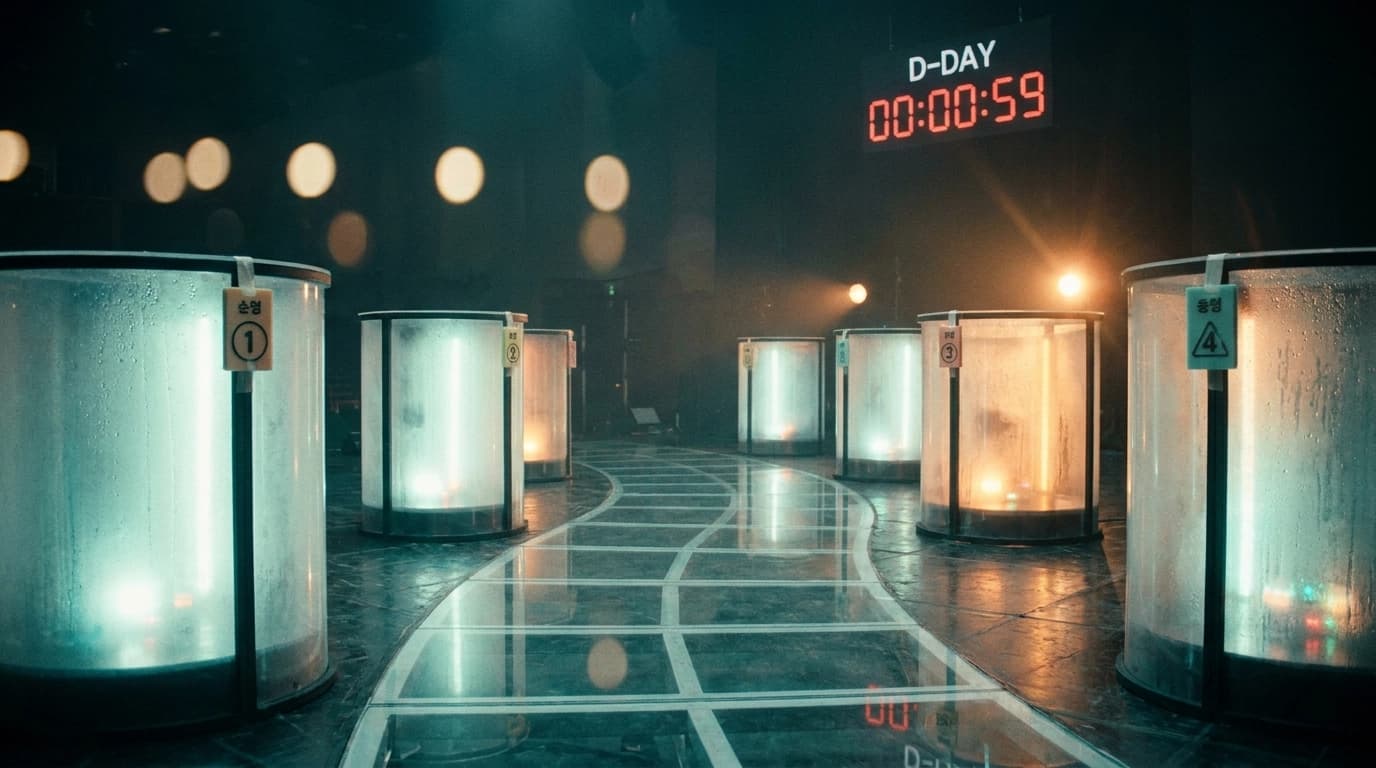
Silent-Air Control Atrium, octagonal chamber of brushed stainless steel with translucent acoustic panels; cool blue strip-lights pulse across the floor while a Foam-Tag Protocol board sits under clear polycarbonate, its song icons counting toward three songs
시간
Late evening, moments before the emergency timer reaches the final three-song window (broadcast already live)
사건
Mina Park yanks her fold-out countdown clipboards against her chest with one hand and, with the other, slaps two lyric flashcards onto her phone screen in rapid order while Jae-min Choi points at the atrium’s strobing song-number icons and Ryu Taeho steadies his fan-cam at shoulder height, filming Mina’s hands as the neon timing line begins to stutter faster.
영향
Mina forces herself into ‘translator mode’ to prevent a panic cascade, but her flashcard timestamps drift by a fraction—making her realize the countdown is not behaving like a scheduled test, and that the next contact with a foam-tag could be irreversible.
Mina Park snaps flashcards into alignment against her phone, then swings her clipboard strip outward like a cue and taps the air to match the stuttering lights, half-joking to keep Jae-min from freezing. The Foam-Tag Protocol board under polycarbonate flickers from steady blue heartbeat to irregular amber-green pulses, while the humming atrium makes even Ryu’s camera strap buckle sound too loud.
2

The Scorch-Mark That Shouldn’t Exist

The Scorch-Mark That Shouldn’t Exist
장소
Silent-Air Control Atrium, directly in front of the Foam-Tag Protocol board and its numbered mic-foam sample grid
시간
Same late evening, within the narrowing window when the three-song countdown is still technically avoidable
사건
Jae-min Choi thrusts his fingertips toward the Foam-Tag Protocol board as if to decode its blink-code faster, but Mina Park raps his hand away with her clipboard edge and drags a thin strip of translucent tape from her pocket to compare against the board’s hairline scorch mark; at the same moment, Ryu Taeho tilts his camera down and freezes his framing long enough to capture fresh adhesive residue around the wrong-number foam-tag sample.
영향
Mina gains proof that someone tampered with the foam-tag setup after placing a misleading marker at the scorched spot—turning their ‘protocol’ into a trap that will trigger when Silent-Air locks.
Jae-min leans in, lips moving as if he can read the light-code from the panel faster than he can think, and Mina Park strikes his wrist aside before his finger crosses the scorch line. Ryu’s low-angle shot catches a bead of tacky adhesive just beyond the supposed empty segment, bright under the polycarbonate glare, while the board’s song icons strobe in a pattern Mina can’t match to her own cards.
3

Countdown Hinges on the Wrong Tag

Countdown Hinges on the Wrong Tag
장소
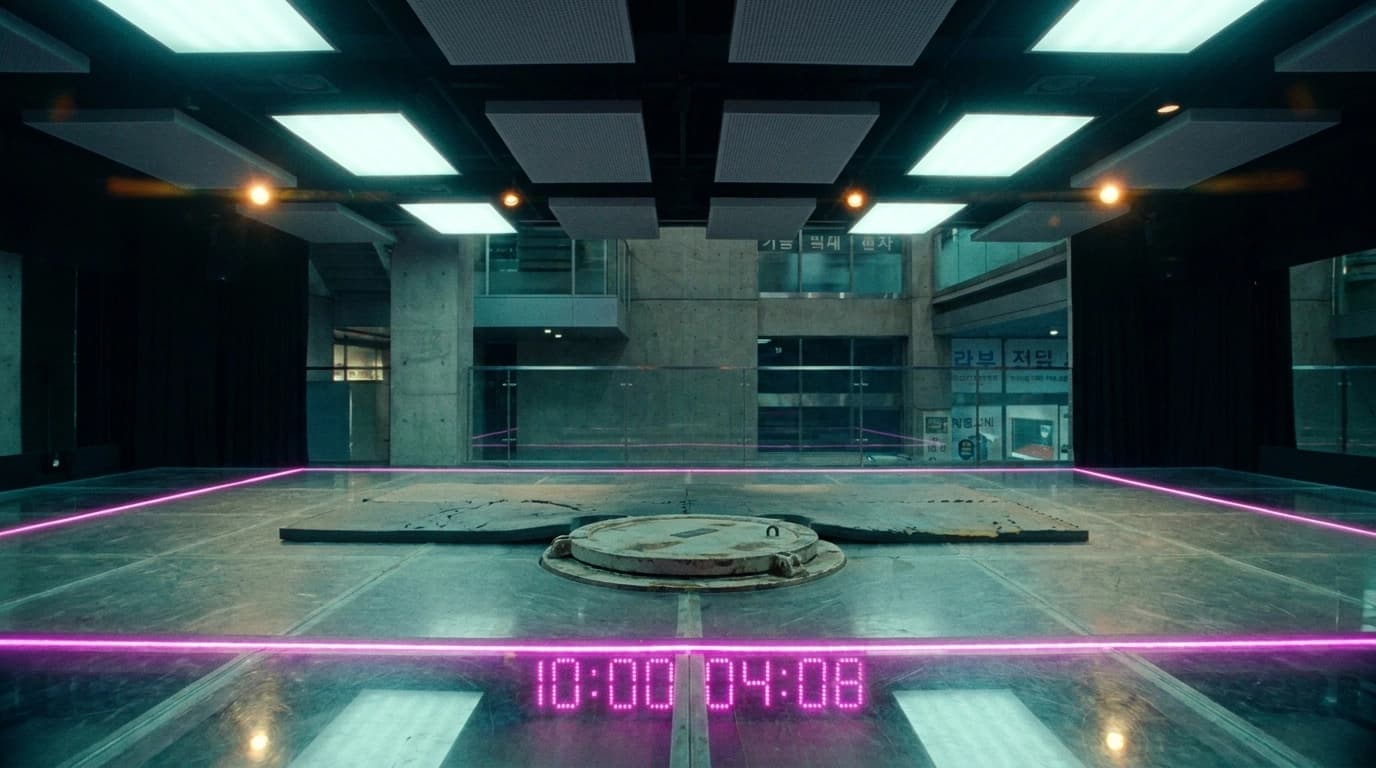
Choreography Floor Timing Line centerpiece access hatch inside the Silent-Air Control Atrium, neon magenta micro-LED ticks glowing under removable flooring near the circular replacement hatch ringed with foam-tag labels
시간
Final minutes before the three-song rule locks out speech restoration (engineer-coded strobe accelerating)
사건
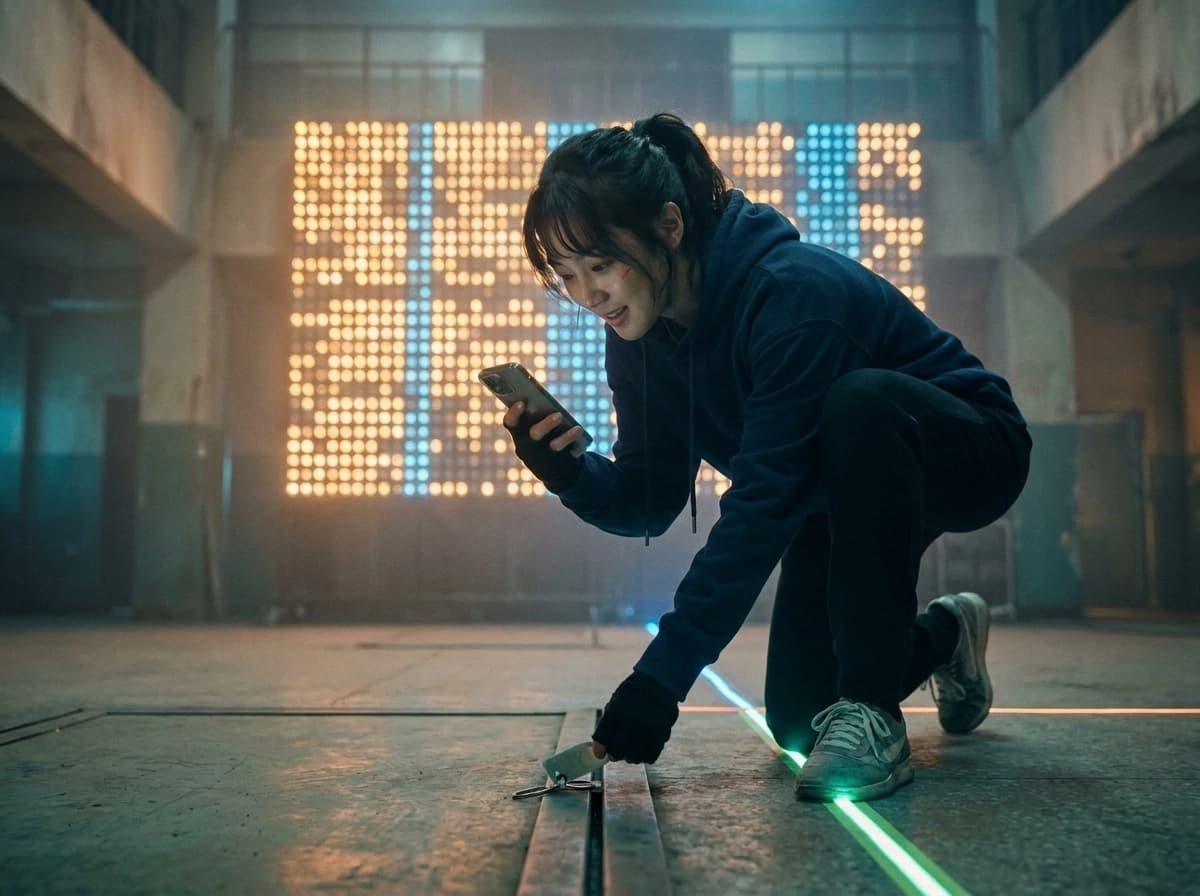
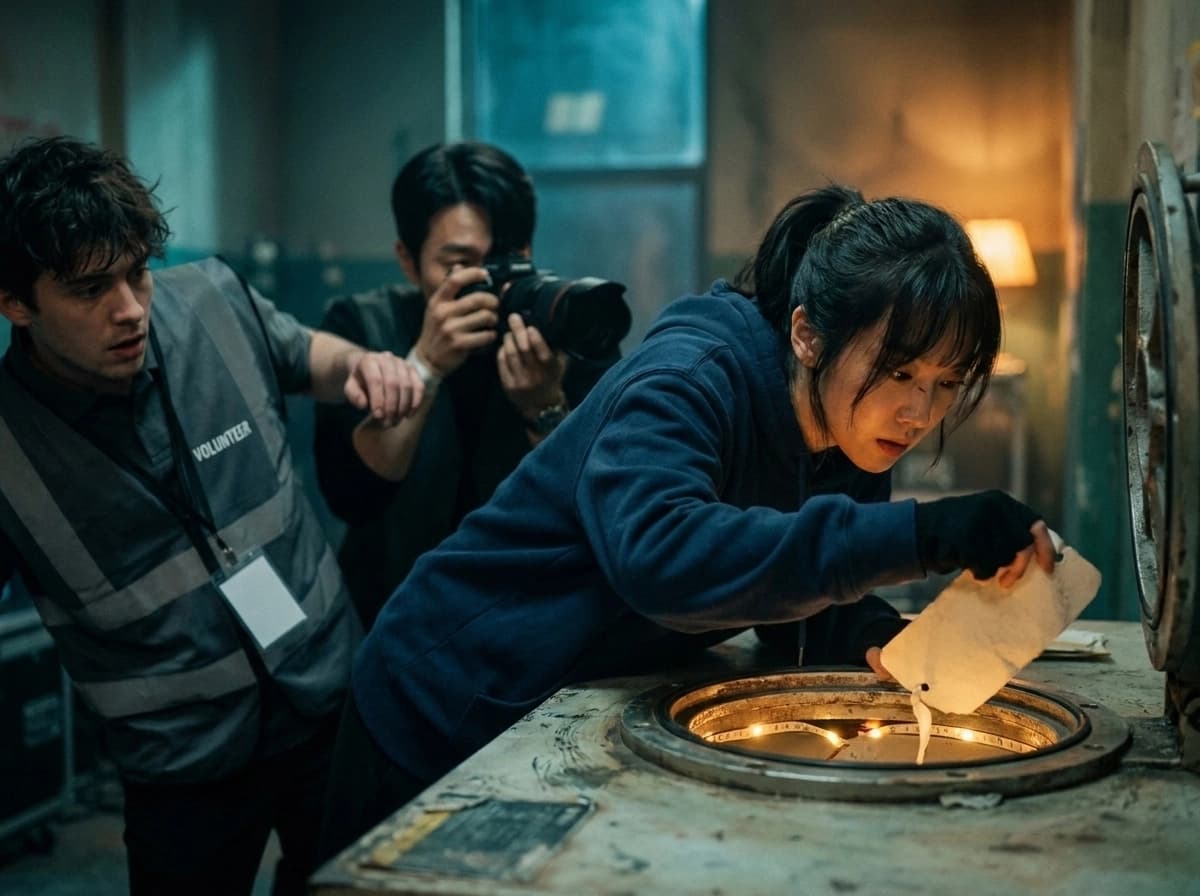
Mina Park steps onto the choreography floor timing line hatch and flips her phone screen outward toward the Foam-Tag Protocol board while she clicks her flashcard timestamps against the strobe; as she reaches down to steady the hatch ring, she yanks a foam-tag back into position and immediately sees the board’s blinking song icon sync to that exact ‘wrong’ tag being touched offscreen.
영향
Mina confirms the countdown icon’s strobe pattern is being driven from inside the Foam-Tag Protocol board, and that a misleading tag—now visible through her correction—will surface as the next targeted trigger when Silent-Air locks the stage.
Mina Park braces her shoe on the neon timing tape and hovers her phone outward like a handheld caption sign, then she snatches a misaligned foam-tag into the hatch seam mid-beat. The circular ring clacks under her fingers as the Foam-Tag Protocol board across the room flashes in the same rhythm—no longer random, but hinged to the wrong tag’s movement—while the atrium’s hum swells enough to drown out Ryu’s breath.
4

Chrome Trees in Silent-Air

Chrome Trees in Silent-Air
장소
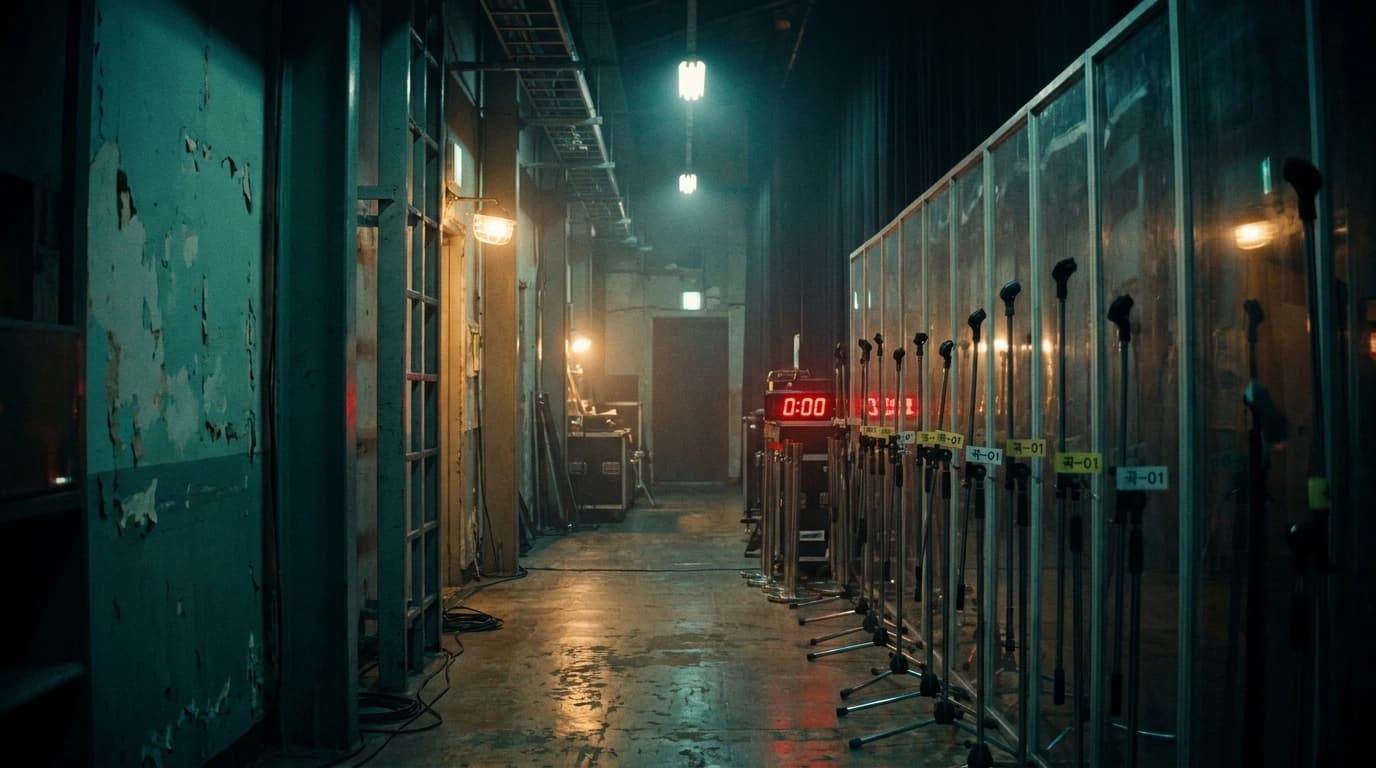
The Live Stage Mic-Stand Alley, a narrow strip of stage lip to translucent audience-side baffles; chrome mic stands line up like thin metal trees, each topped with removable foam segments stamped with tiny song-number icons, while the translucent sound-capsule walkway curves just beside them.
시간
Late evening during the live SEVENTEEN autumn-season broadcast; the Silent-Air safe-noise hiss has already locked in, and the countdown LED reflections in the stand bases start racing.
사건
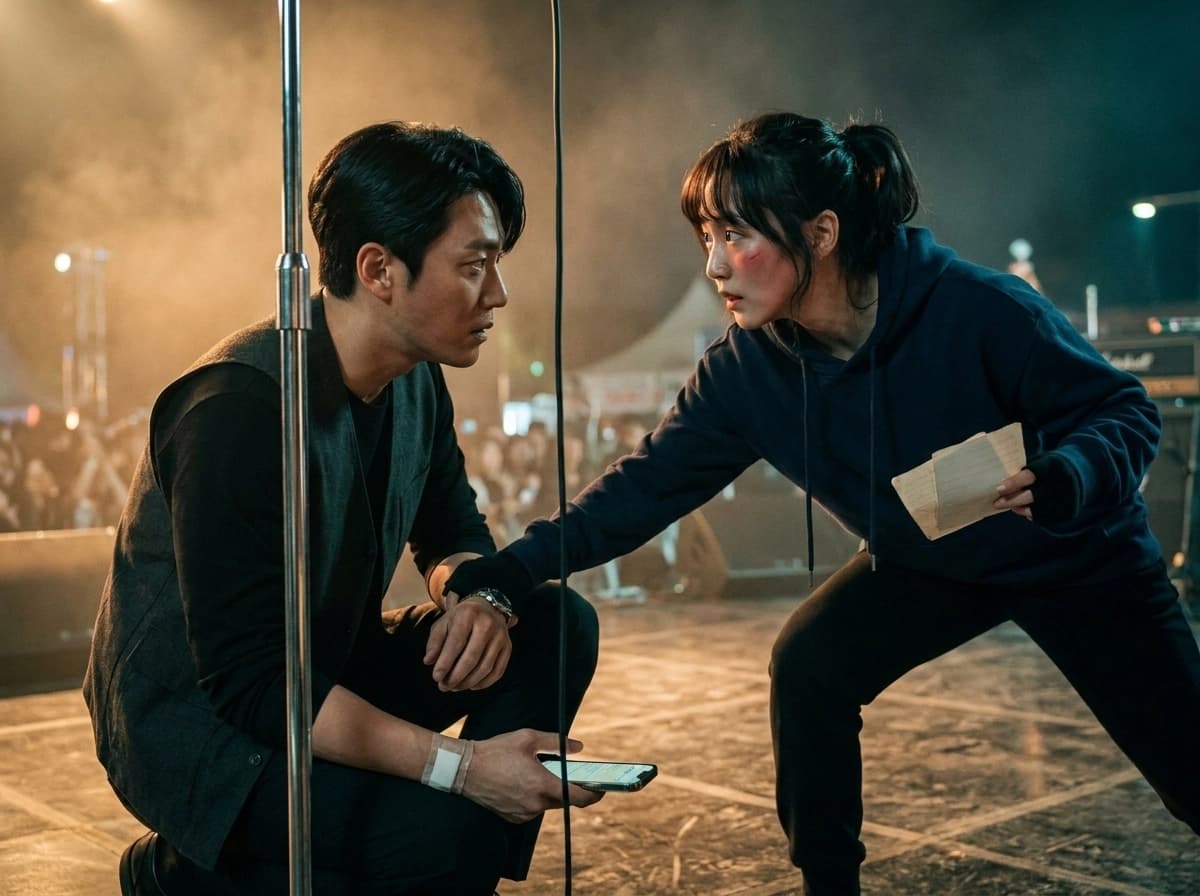
Ryu Taeho darts into the Mic-Stand Alley and crouches for a low-angle “solution moment” shot, then throws his phone up to frame Mina Park and the members’ silhouettes; Mina Park lunges past him into the same strip, yanking his shoulder away from the countdown reflection line as the safe-noise hiss turns the practice chant into breathy static.
영향
Ryu is forced to step back from the exact lane where foam tags will be scraped loose, and Mina’s quick interception prevents an early tag dislodgement that could make Song Eunjin’s timed swap impossible within the shrinking emergency window.
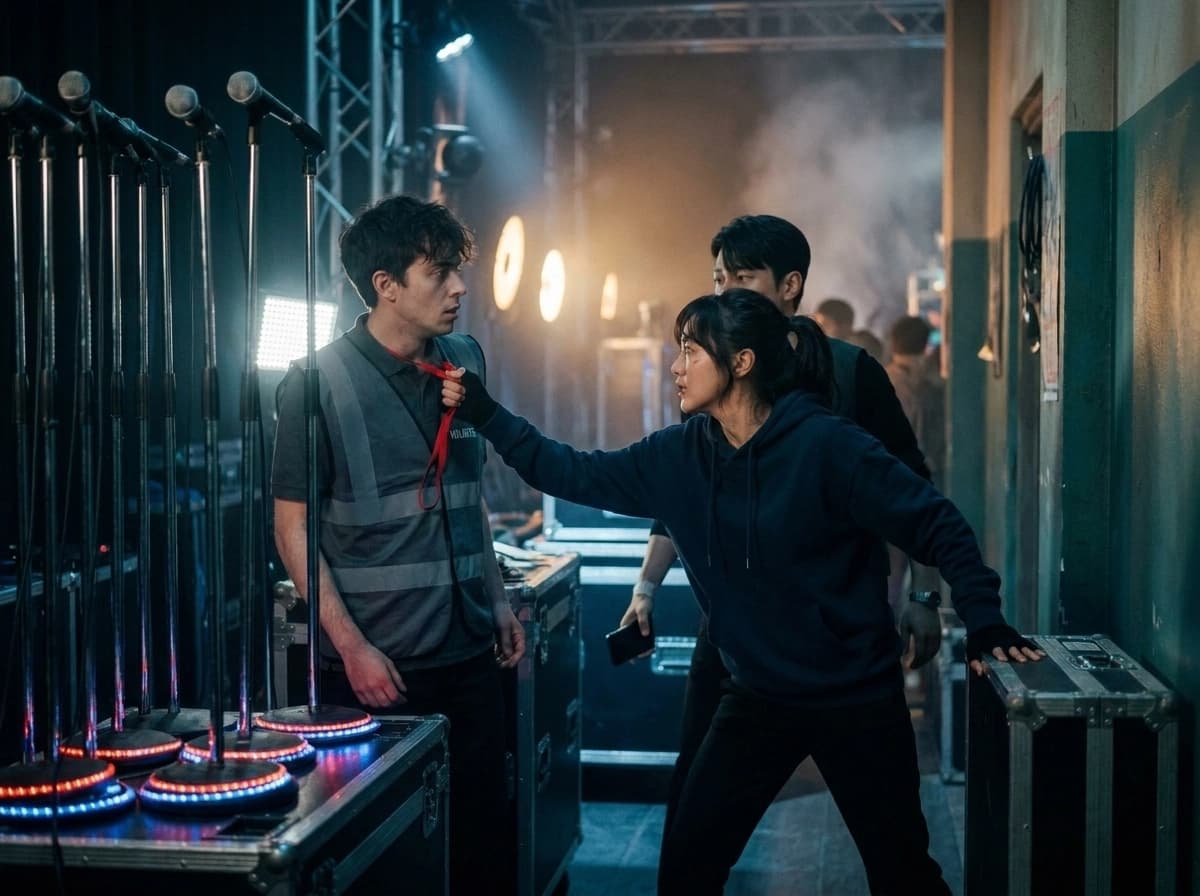
Ryu’s knees scrape the sticky practice-floor residue as he slides his phone position under a chrome mic stand, the image wobbling mid-record because the safe-noise turns every chant into a useless hiss. Mina slams her palm against Ryu’s forearm to pull him out of the Alley’s timing line, her other hand thrusting a flashcard strip up as if it can translate the static into choreography beats.
5

Tag-Scrape, Safe-Noise, and a Choice to Film

Tag-Scrape, Safe-Noise, and a Choice to Film
장소
The boundary between the Live Stage Mic-Stand Alley and the Translucent Sound-Capsule Walkway, where mic-stand foam segments are embedded near the capsule seam line and condensation beads catch strobing amber-green countdown reflections.
시간
Same live broadcast moment; the engineer-coded countdown has accelerated, and safe-noise bars pulse over the mic stations.
사건
Ryu sidesteps for a “managerial” framing that keeps Mina in view, but his shoe catches and scuffs a row of removable foam tags along the capsule seams; Mina drops her flashcards, grabs the scraped tag, and presses it back into its seam before the next blink window can eject it.
영향
The tag remains usable for Song Eunjin’s later patch placement, and Ryu’s footage angle is temporarily sacrificed to keep the Foam-Tag Protocol aligned—turning his filming into an active hazard Mina has to correct.
Ryu pivots with practiced confidence, trying to keep his phone perfectly level while the countdown LED reflection streaks across the stand base; the moment his heel shifts, a foam tag skitters loose and flips like a small white domino. Mina lunges, fingers pinning the tag back into the seam with a sharp press, and her flashcard strip snaps against her phone as the safe-noise hiss surges louder for a half-beat.
6

Unrehearsed Proof in Ryu’s Footage

Unrehearsed Proof in Ryu’s Footage
장소
Translucent Sound-Capsule Walkway, an oval acrylic path of milky glowing capsules with removable mic-foam tags embedded along the capsule seams; the capsules click softly underfoot as the engineer-coded blink pattern passes through them.
시간
Immediately after the tag repair; the countdown LEDs blink in the engineer-coded pattern as the window tightens for the next stage transition.
사건
Ryu stops filming and holds still while Mina guides him to stand on a lane where the foam tags line up; as he freezes, the countdown LEDs blink through the capsules in a recognizable engineer-code sequence that matches the exact tag positions his earlier “almost-scrape” clip captured, and Ryu realizes his footage contains the intentional pre-placement evidence.
영향
Ryu’s last clear angle becomes proof that the “wrong” blink sequence is deliberate prep for a hidden patch segment, and Mina’s translation timing is revealed to depend on foam-tag alignment—not just on her flashcards—tightening the next chapter’s stakes.
Ryu plants his weight carefully and steadies his phone at chest height, the frame finally snapping sharp as Mina points with quick paper-cue taps toward specific foam-tag seams along the capsule curve. The milky capsule lights blink in the engineer-coded rhythm through the walkway, and in his screen’s playback the earlier scuffed positions line up—turning his own shaky clip into a blueprint instead of a mistake.
7

Blink-Sequence Over Cold White

Blink-Sequence Over Cold White
장소
Patch-Bay Service Room — a foam-lined emergency patch bay sits open under blue-white work lights; metal racks with glowing label strips flank the aisle, and a central control panel shows a three-song countdown speeding up alongside stage-safe icon blink patterns.
시간
Late evening, live broadcast moment—about one song and a half before the timer’s three-song window fully collapses.
사건
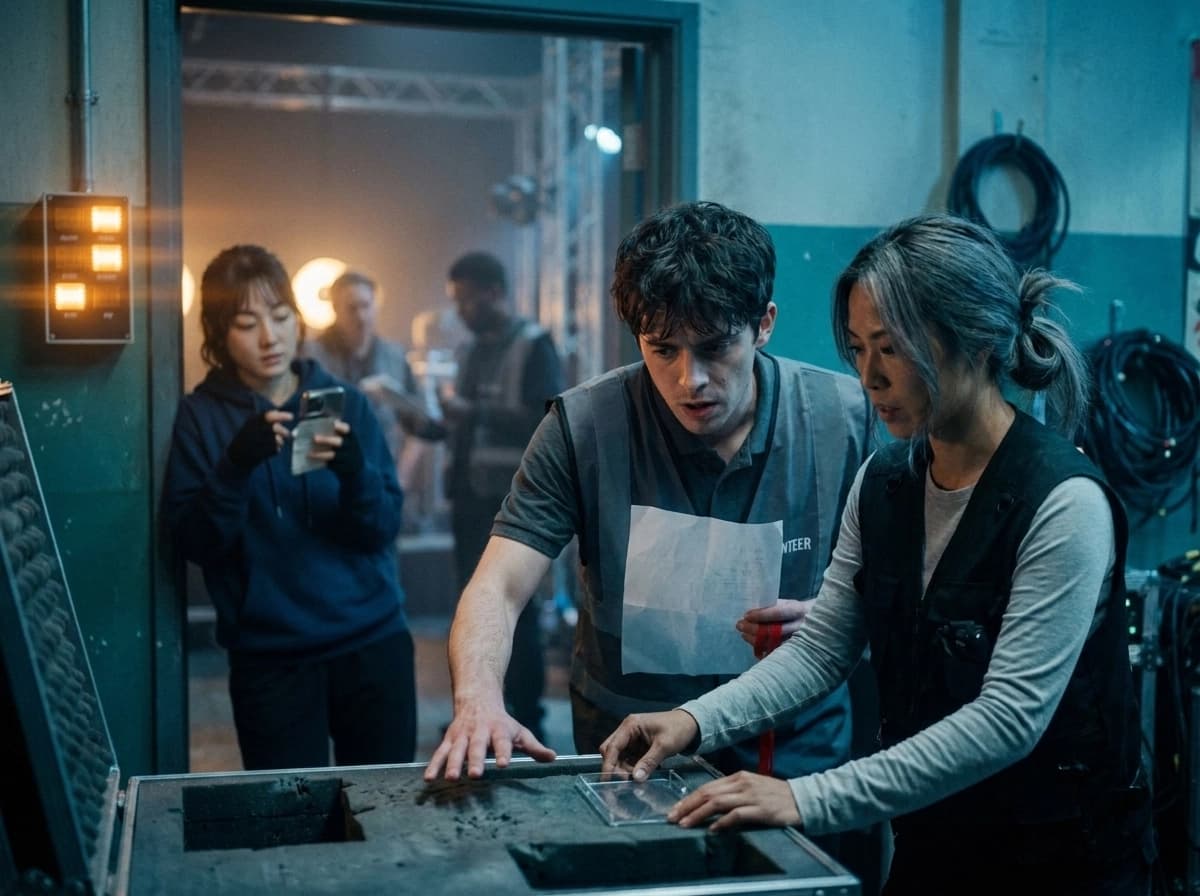
Song Eunjin plants both hands on the foam-lined patch bay lid while Jae-min lunges in holding the emergency patch card holder at a wrong angle to the label icons; Mina Park, visible through the service-room doorway, slaps her flashcard cue strips into new order and silently points her phone screen toward the members’ mouth timing as Song snaps a strict two-beat blink signal that forces Jae-min to halt mid-swap.
영향
The misaligned hold becomes a near failure that can still be corrected inside the shrinking safe window; Mina’s silent cue timing buys the stage enough beat accuracy to keep choreography recoverable while Song reasserts procedure before the card can be wasted.
Jae-min skids to a stop with the card holder’s acrylic edge hovering inches from a scuffed section of foam, his wrist already trembling from the timer’s acceleration. Song Eunjin doesn’t raise her voice—she yanks the holder into the correct lane with a quick wrist pull and flashes the blink sequence with her eyes as the open bay drawer waits, hairline foam dust lifting under Jae-min’s rushed movement. From the doorway, Mina flips cue strips against her phone and angles the screen so Mina’s novices can read the members’ mouth shapes even as the room’s panel keeps counting down too fast.
8

The Wrong Compartment Almost Becomes Final

The Wrong Compartment Almost Becomes Final
장소
Patch-Bay Service Room — the emergency patch bay’s scuffed acrylic edge frames a wrong compartment entry; the control panel’s icon bars strobe in narrowing bands as relay clicks pop across the metal racks.
시간
Seconds later, during the final safe third of the countdown window—after Song has corrected the angle but before any safe-noise-to-cue transition can happen.
사건
Jae-min tries a premature “brute-force” swap—thumb-flicking the card holder into the scuffed acrylic lip—then the holder catches and he jerks it back; Song Eunjin clamps her rule down by slamming her palm on the control panel’s labeled sequence area to reset the blink window timing for his hands while Mina rapidly recalibrates translation beats by flipping cue strips to match the members’ visible lyric mouths through the service doorway.
영향
A wasted half-beat threatens to eject the card and permanently lock normal audio out for the night; instead, Song forces the correct timing rhythm to keep the patch card usable, preventing the chapter from ending in a total audio loss and shifting the problem from “how to patch” to “who set the misdirecting scuff and label confusion.”
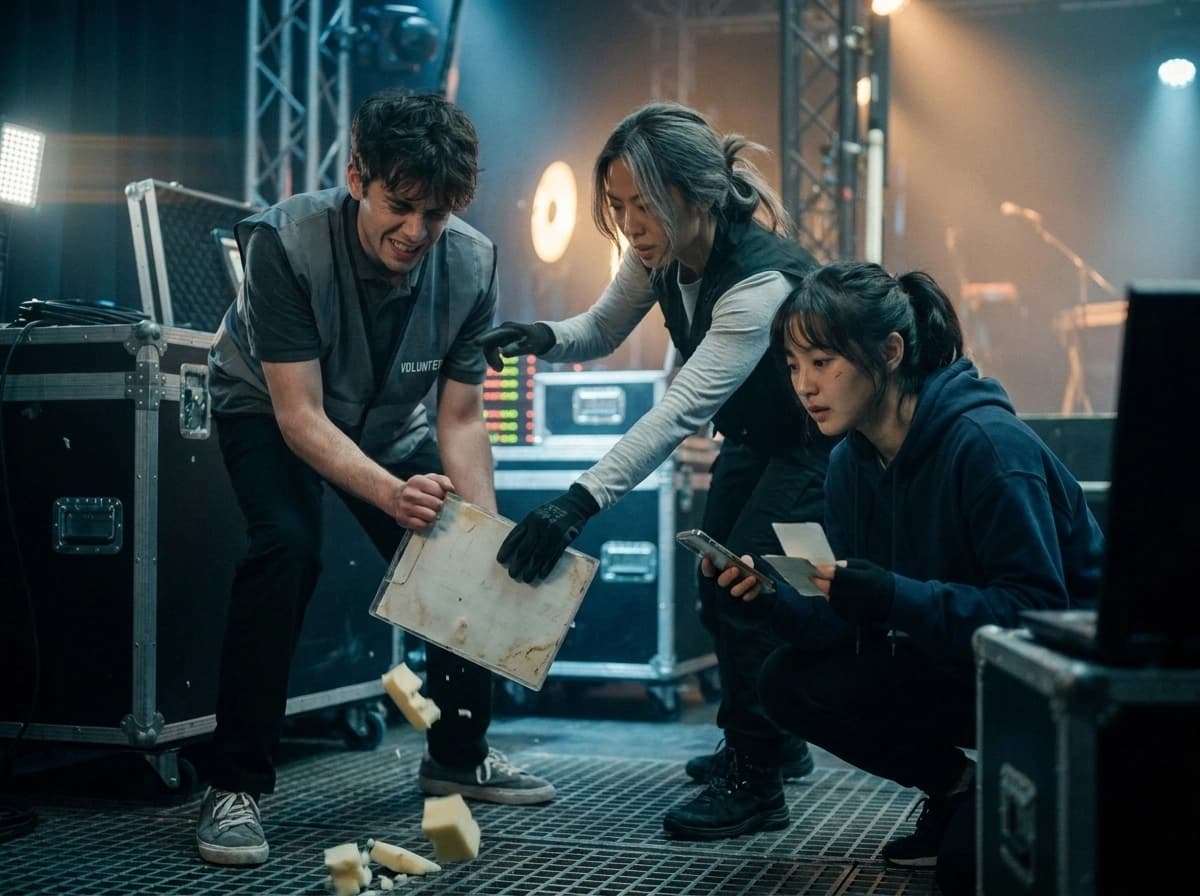
Jae-min’s thumb snaps the holder forward—acrylic scrapes once, then catches—making him wrench it back with a sharp, ugly stop that shakes loose a few pale foam specks onto the floor grating. Song Eunjin steps in, pinning the holder’s edge with her glove and tapping the panel’s sequence area in exact blink-sync so his hands can’t ‘save time’ by improvising. Mina whips her flashcards into a tighter rhythm, pressing the next strip flat against her phone as the countdown panel’s three-song icons strobe faster, and she times the translation to the members’ mouth shapes despite the delay.
9

Patch Clicks Like a Lid Closing

Patch Clicks Like a Lid Closing
장소
Patch-Bay Service Room — the foam-lined emergency patch bay open drawer; Song’s hand hovers over the exact mic-foam region marker, and the scuffed lid edge reflects the blue-white work light while the timer panel blinks in the final safe window.
시간
Right at the end of the three-song emergency window—when the safe-noise-to-cue transition is about to begin.
사건
Song Eunjin reaches past Mina’s doorway line of sight, pins Jae-min’s forearm against his own lanyard strap to stop his instinctive flinch, and presses the emergency card directly onto the designated mic-foam region; as it clicks, Jae-min immediately releases and Song’s blink-coded hand gestures confirm the patch origin location, reframing his earlier misread as deliberate staging rather than accident while Mina flips one last cue strip to lock the members’ next lyric timing.
영향
The patch finally clicks into place in time for the first safe-noise-to-cue transition, restoring usable cue signals for the stage; Song’s controlled reveal—seen through the blink sequence and the scuffed lid’s alignment—turns Jae-min’s earlier error into evidence of a system-designed trap, tightening the mystery for the next chapter’s uncovering of the pre-placement culprit.
Song Eunjin drives the card holder down with a decisive, straight press—Jae-min’s forearm pinned so he can’t yank it away when the countdown panel flashes the final safe icon pattern. The emergency patch lands with a crisp, lid-closing click inside the open foam bay, and Song’s blink-coded hand chops the air in a confirmation sequence as safe-noise indicators begin pulsing back toward normal. Mina’s fingers snap her cue strip into place at the doorway as the room’s broadcast shift rolls through—her translations suddenly match the members’ mouth timing instead of lagging, and the scuffed lid edge gleams like a clue rather than a mistake.
10

Capsules Underfoot, Countdown Above

Capsules Underfoot, Countdown Above
장소
Translucent Sound-Capsule Walkway — an oval path of waist-high acrylic capsules embedded in the stage-side floor, each capsule fogged with milky glow that pulses to the Silent-Air countdown; thin removable mic-foam tags sit along the capsule seams and scrape loose as shoes pass.
시간
Late evening, live broadcast moment—midway through the shrinking engineer-coded blink window during the final countdown to the three-song rule.
사건
Mina Park lunges forward and yanks her flashcards up with one hand while her other foot catches a lifting foam-tag seam; she stutters a step to keep the tag from ejecting, then twists sideways to wedge the loosened mic-foam tag back into the correct seam as the milky capsules strobe faster.

영향
The immediate risk shifts from losing translation accuracy to preventing the foam-tag line from breaking alignment before Song Eunjin can do the emergency swap; Mina’s correction buys Song just enough path clearance to reach the right mic-foam segment in the next beat.

Mina races along the oval walkway with her phone held at chin level, her breathy interview-mime jokes coming out in quick spurts as she reaches down mid-stride and forces a scraped foam-tag back into the capsule seam. Milky capsule lights strobe teal and amber over her shoes, condensation beads glitter along the acrylic edges, and a single misaligned tag flutters like a loose sticker before she presses it flush.
11

Pinned Forearm in the Live Mic-Stand Alley

Pinned Forearm in the Live Mic-Stand Alley
장소
Live Stage Mic-Stand Alley — a narrow strip between the stage lip and translucent audience-side baffles, where mic stands line up like thin chrome trees and a visible countdown LED reflected in the stand bases accelerates when people cross too fast.
시간
Same late evening—immediately after Mina stabilizes the capsule seam alignment, at the exact moment the blink-coded swap window narrows to a single pass.
사건
Ryu Taeho wedges himself closer to the mic-stand line to film a “solution moment” shot while Jae-min Choi sprints toward Song Eunjin’s access point; Mina Park grabs Jae-min’s dropped lanyard clip and shoves her body into the alley boundary lane so Ryu can’t bump the capsule seams again, creating a clear hand-reach gap for Song’s timed swap.
영향
The bottleneck is resolved by physical positioning rather than speech: Song Eunjin gets a safe, unobstructed route to the correct mic-foam segment, and the patch card remains protected from ejection in the next beat.
Ryu’s camera phone dips low as he slides sideways to keep SEVENTEEN centered on frame, but Jae-min’s lanyard clip slips and swings into Mina’s path; Mina grabs the clip and clamps her shoulder at the alley edge to block Ryu’s line of movement. The chrome mic stands gleam under hard stage-white pulses, and the countdown LED reflection races in the stand bases while everyone compresses into a narrow, inch-by-inch corridor of clearance.
12

The Patch Clicks, and the Wrong Story Almost Wins

The Patch Clicks, and the Wrong Story Almost Wins
장소
Translucent Sound-Capsule Walkway—transition zone where the live mic-stand alley feeds directly into the capsule seams, with the song-number mic-foam segments aligned along the walkway’s curved edge.
시간
Same late evening—at the final part of the engineer-coded three-song sequence when safe noise can return only if the swap lands in the exact foam-tag segment.
사건
Song Eunjin clamps Jae-min’s forearm in a timed grip and presses the emergency patch onto the designated mic-foam seam while Mina Park flips her flashcards toward the members’ mouth shapes and raises one paper cue strip outward so the choreography can snap back on-beat during the safe-noise return.
영향
Safe noise returns as controlled hair-dryer-like sibilance and the members’ timing stabilizes immediately; Mina confirms which earlier segment was swapped by matching the capsule-click pattern to the foam-tag alignment, undermining Ryu’s “only an engineer fix” storyline before it becomes the crowd’s default version.
Song Eunjin pins Jae-min’s forearm in the exact capsule seam and slams the emergency patch down; the foam segment compresses with a crisp click as the milky capsule lights settle into a steadier teal pulse. Mina whips her flashcards up beside her face and holds a cue strip out toward the members, while Ryu’s camera keeps rolling past the moment—capturing the click as safe noise returns just enough for Mina to land the next translation beat.
13

The Timing Line Hums Like a Threat

The Timing Line Hums Like a Threat
장소
On the Choreography Floor Timing Line—a neon magenta strip over translucent removable flooring, micro‑LED clock ticks bright underfoot—just beside the center circular replacement hatch rimmed with scuffed tape and foam-tag labels; the surrounding stage air is controlled by Silent-Air baffles overhead.
시간
Late evening, during the final three-song emergency window as the crowd’s shouts spike the stutter rate.
사건
Mina Park strides along the magenta strip with her phone held outward, reaches down at the center hatch, and yanks up the loose edge of a foam-tag seam cover that’s being dragged off alignment, then snaps it back into the taped ring while her thumb flips flashcards to match the stuttered micro‑LED beats.
영향
She forces the swap window back into a usable geometry for Song Eunjin’s next timed blink rule, and the story pivots from ‘repairing’ to ‘pinning down’ where the patch is staged because the tags resist re-alignment when the wrong sequence is attempted.
Mina lunges sideways over the strip’s glowing ticks, fingers catching a peeling foam-tag corner before it slides off the hatch ring. The micro‑LED ticks stutter faster as Jae-min stumbles into the edge of her lane and Ryu Taeho wedges his camera between them to film, so Mina shoves the cover down and presses the seam flat with a decisive clap of her palm.
14

Foam-Tag Board, Scorch Mark, and the Wrong Assumption

Foam-Tag Board, Scorch Mark, and the Wrong Assumption
장소
In the Silent-Air Control Atrium, an octagonal brushed-steel room with translucent acoustic panels and a Foam-Tag Protocol board mounted under clear polycarbonate; Mina can see the stage through glass while the countdown song-number icons blink in patch bays.
시간
Same live broadcast, seconds before the final boundary where the safe-noise bars begin to fade.
사건
Mina Park points her phone screen at the Foam-Tag Protocol board while Song Eunjin grips the edge of the board’s cover plate, and Mina reaches past Jae-min to physically peel away a misleading ‘missing segment’ label sticker from the scorched spot—revealing clean foam material underneath—then she flips her flashcards to re-time the stage-response mismatch.
영향
The near-‘wrong assumption’ is broken in public: Mina proves the scorched mark isn’t where the patch was supposed to be removed, but where procedure is meant to mislead, steering the crew toward an intentionally hidden patch location inside an already-scoped foam segment.
Song Eunjin stands tense beside the polycarbonate board, her blink-coded hands hovering as if words would violate a rule, while Jae-min argues with an open palm and Ryu Taeho moves his phone closer for a clear shot. Mina snaps the edge of the false label free with two fingers and shows the scorched board spot still blank where people expect a compartment to be—then she raises her flashcard strip so the stage’s safe-noise-to-cue timing clicks into alignment.
15

The Patch Hiding in Plain Mic Foam

The Patch Hiding in Plain Mic Foam
장소
Back on the Choreography Floor Timing Line over the center hatch, with the atrium’s song-number status bays visible through glass above the strip; safe-noise bars fade in the mic stations while stage lights transition from strobing countdown to the next boundary.
시간
The final boundary moment of the emergency sequence, right as safe-noise bars thin and normal audio is about to resume.
사건
Mina Park turns her phone toward Song Eunjin and forces the confirmation by timing a mouth-shape cue on her flashcards: she steps off the timing tick line just enough to angle her body so the mic-capsule foam segment is visible, then she taps the exact already-stitched mic-foam region in sync with the next engineer-coded blink—prompting Song to clamp the member’s foam segment and reveal the patch already embedded.
영향
Crew and broadcast accept the earned right answer: the emergency patch wasn’t ‘found’ at the end, it was intentionally staged inside the pre-scoped mic-foam segment, reframing Song’s strict procedure as mercy that prevented an eject-and-lock outcome.
As the safe-noise bars fade, Mina twists her wrists and holds her flashcard strip up like a metronome while Song Eunjin’s blink-coded hands guide Jae-min away from the hatch. Mina points to the member’s translucent mic capsule foam seam and taps once on the stitched region; Song clamps the foam with gloved certainty and the patch is exposed where everyone expected an empty slot, while Ryu Taeho lowers his camera a fraction as if he realizes his “missing fix” story has been wrong.
'Hair-Dryer Mic Panic in 3 Songs'스토리 챗

이 스토리 속 캐릭터들과 대화하고 싶다면?

'Hair-Dryer Mic Panic in 3 Songs'스토리 챗

이 스토리 속 캐릭터들과 대화하고 싶다면?

story image
story image
story image
story image

이런 이야기는 어때요?

댓글0

테마 음악