줄거리
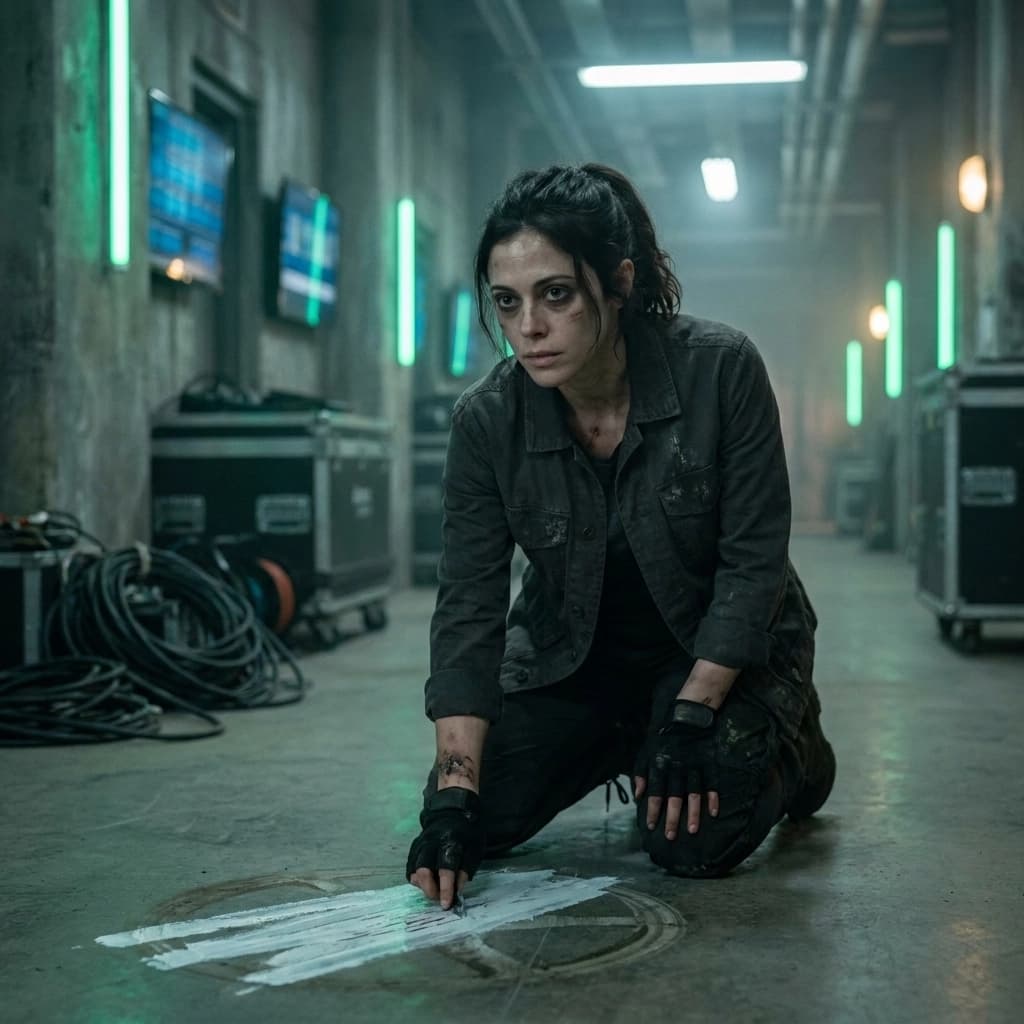
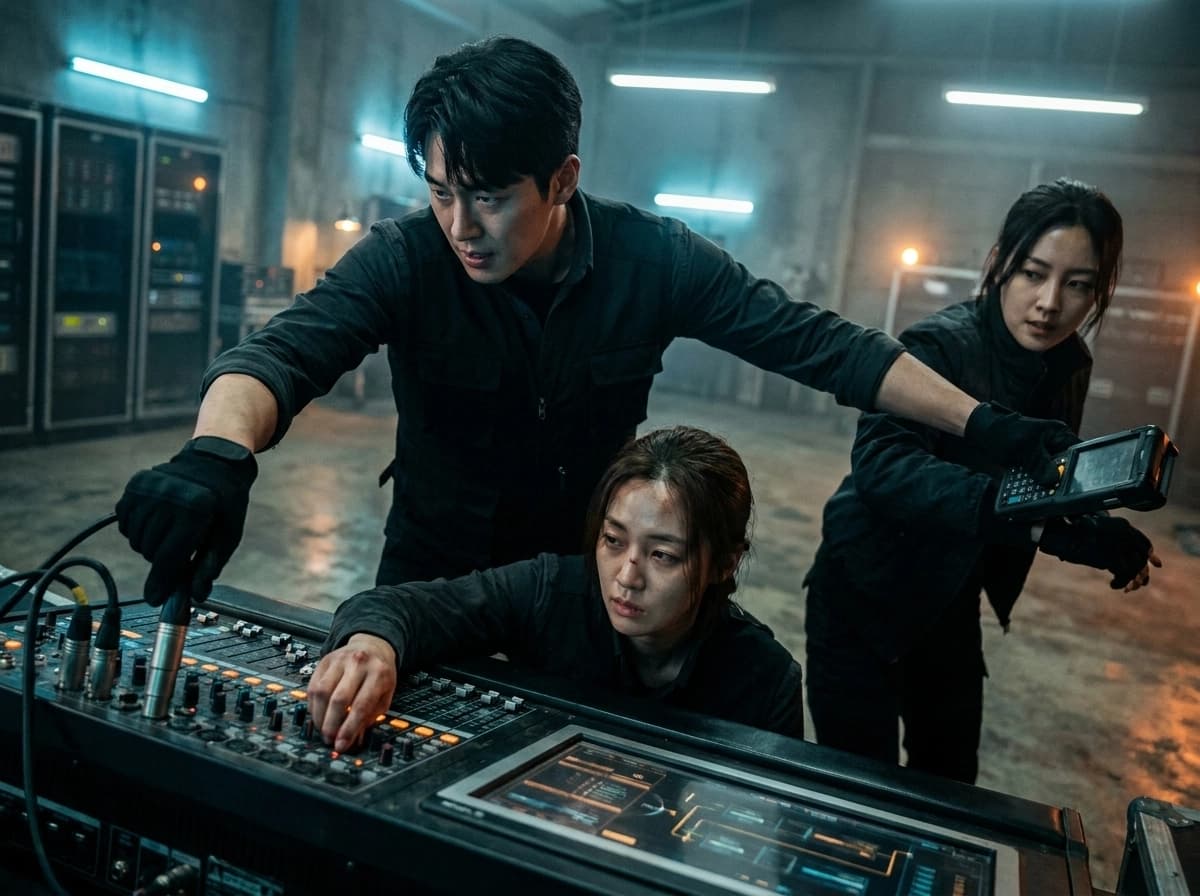
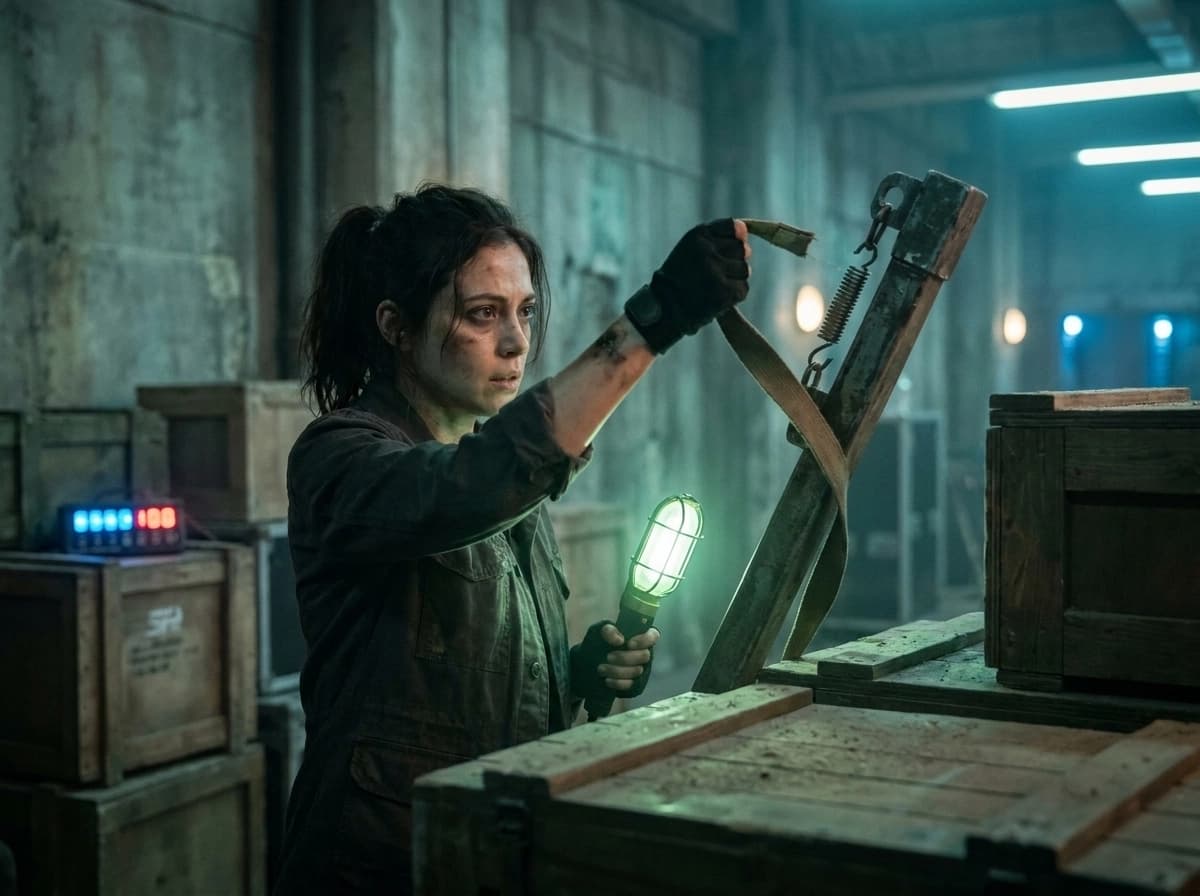
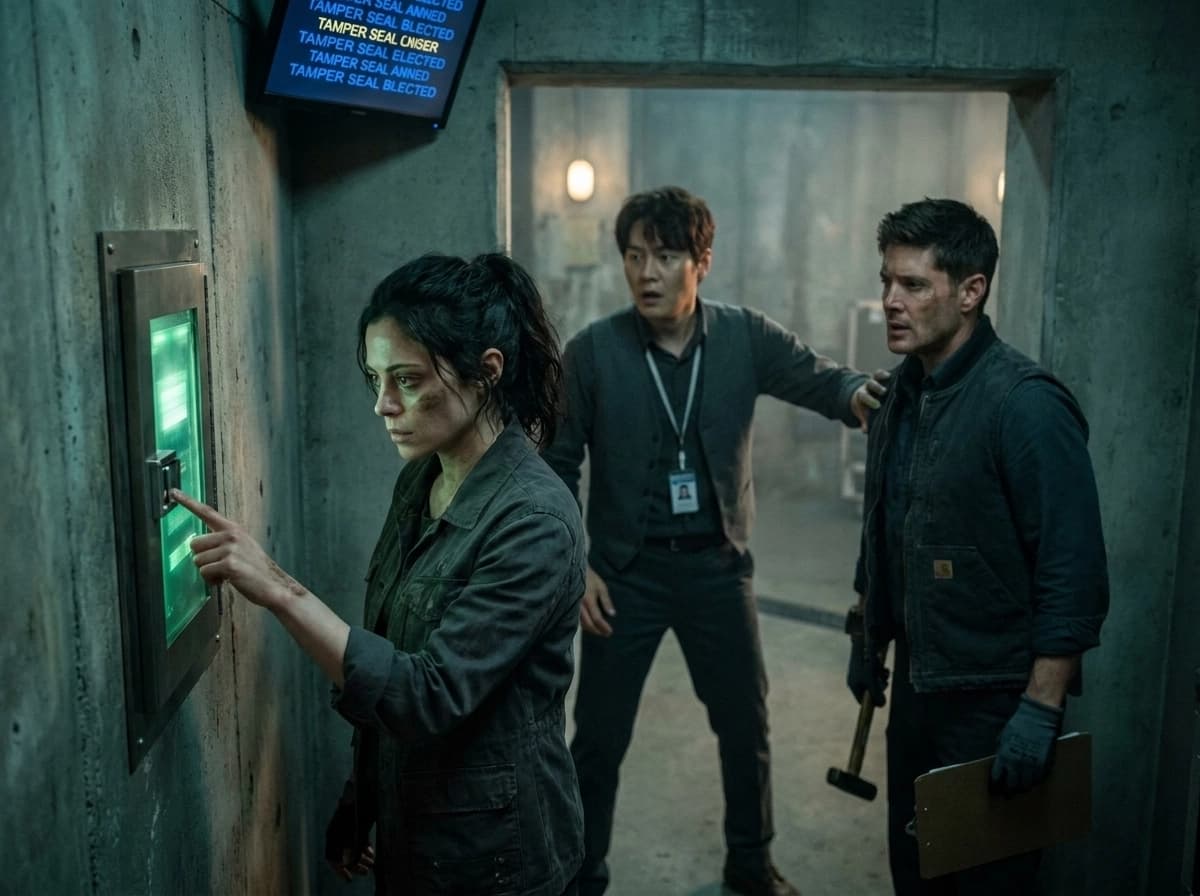
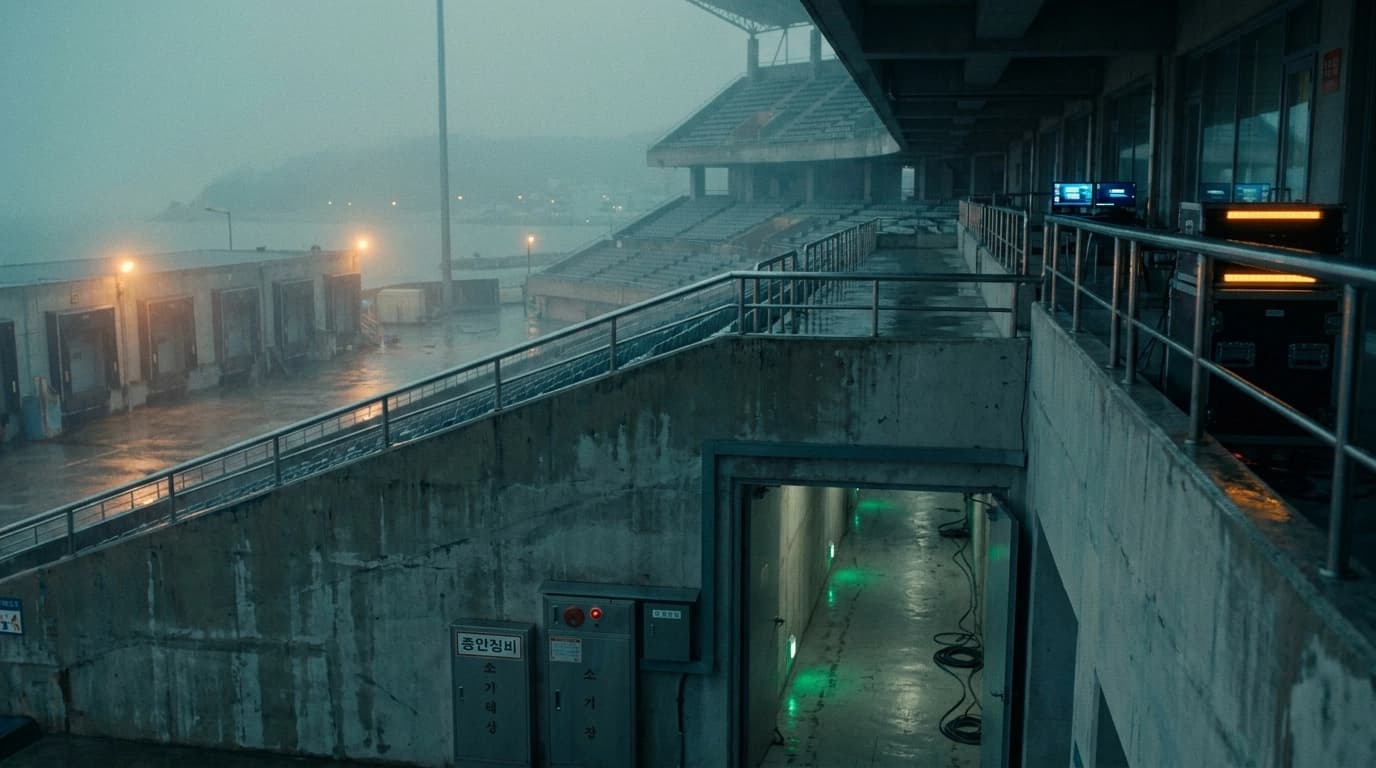
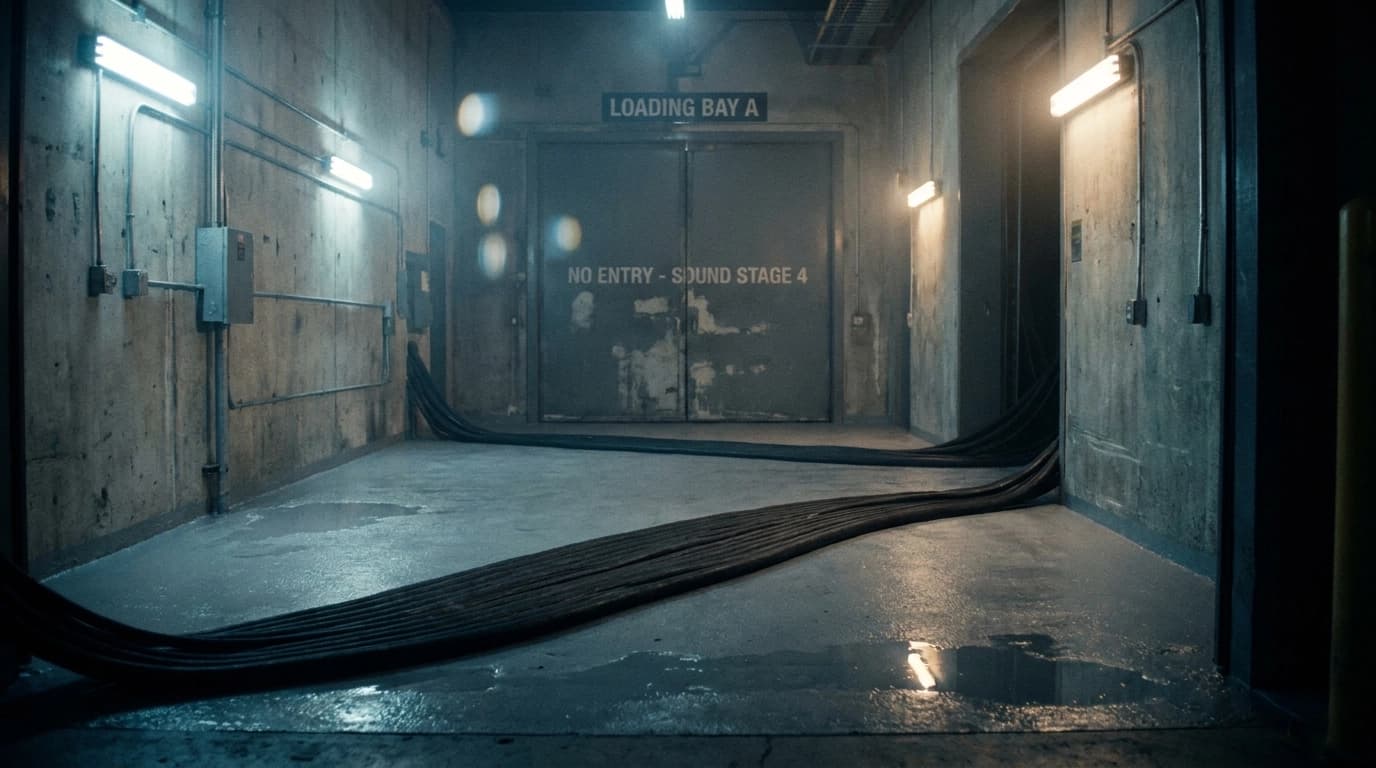
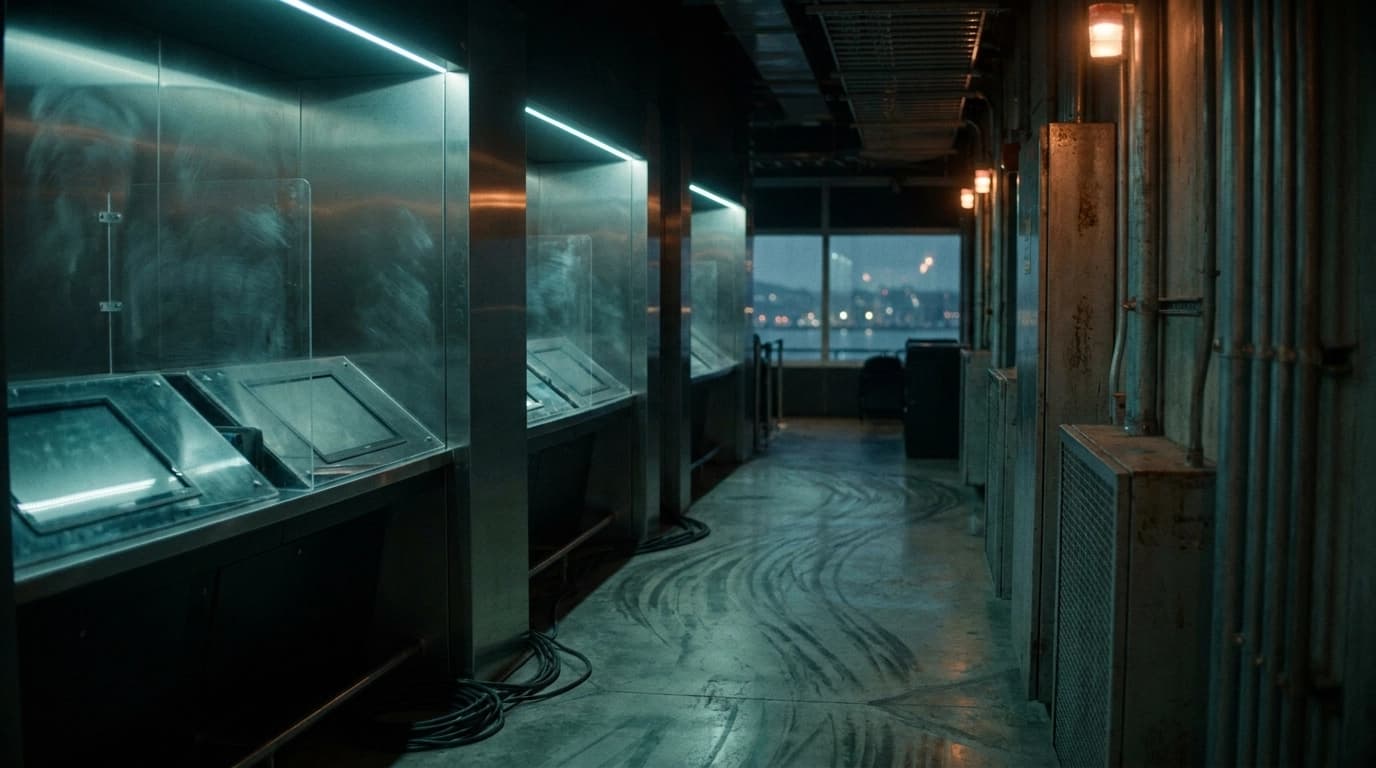
One week before Stray Kids’ stadium encore, the coastal mega-stadium sweats under early-summer humidity, its underbelly logistics maze lit like a machine’s throat—steel-gray bays washed in sodium-leaning glare, concrete slick with cooling-fan haze. 하늘 is the kind of sound tech who doesn’t trust timestamps; she trusts what her fingertips feel. With a fingertip against a cable that should be dead-quiet, she reads micro-vibrations the way other people read Braille, then freezes when the floor under the “soundcheck only” loading bay feels wrong—not scratched, not chipped, but carefully erased.
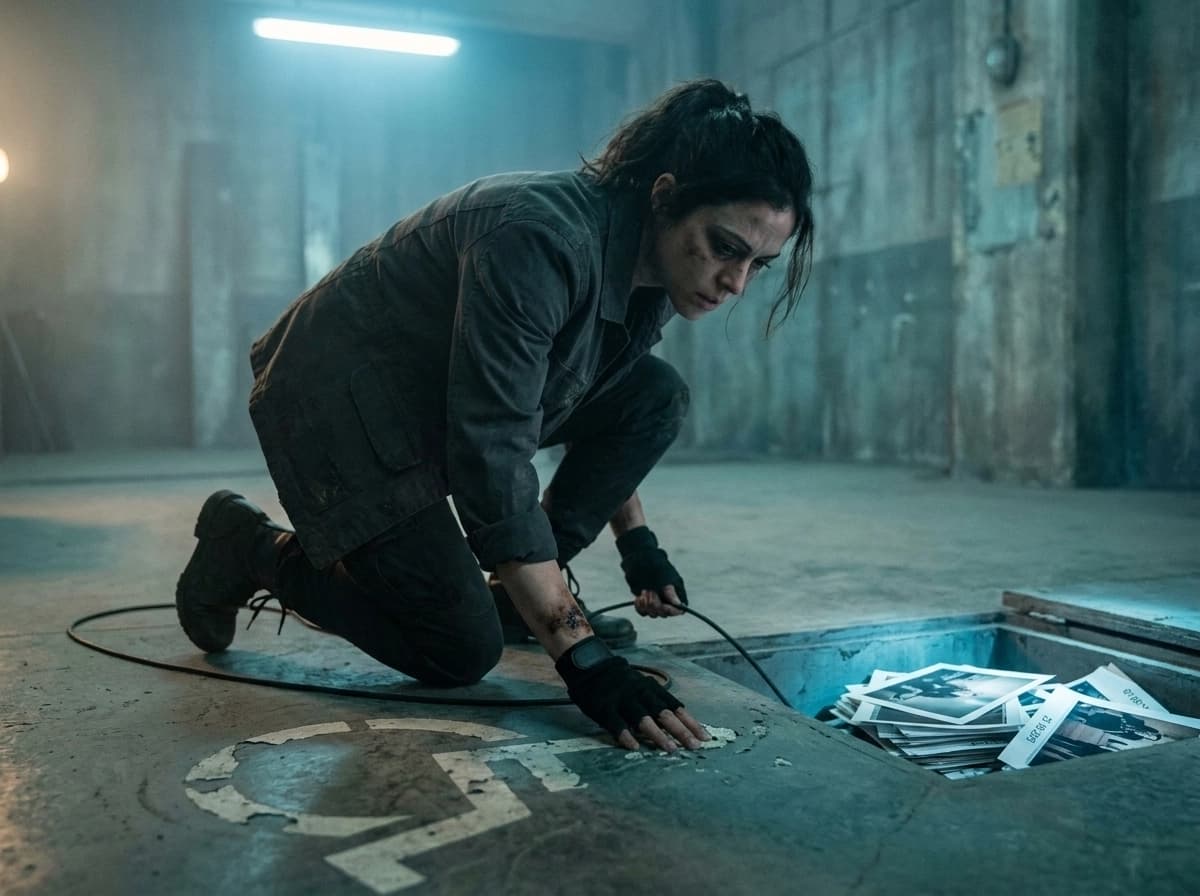
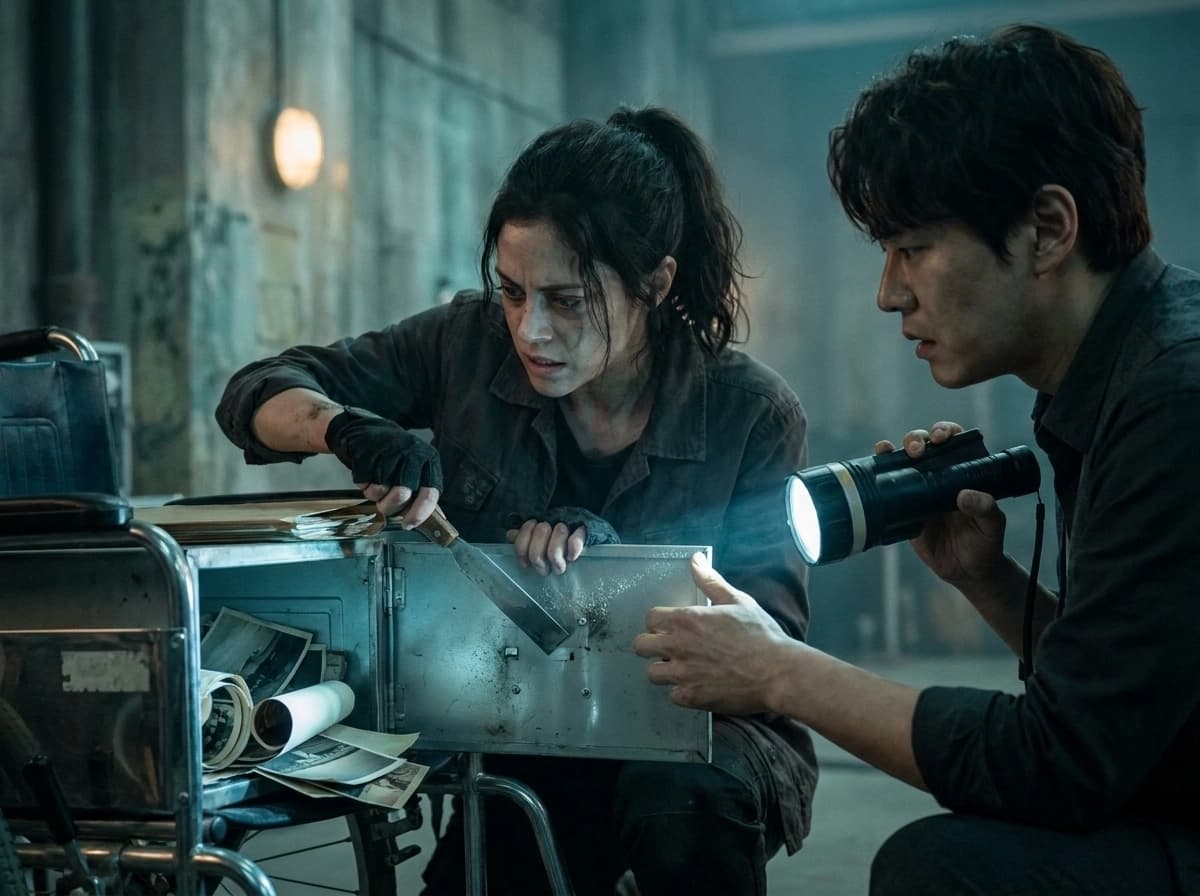
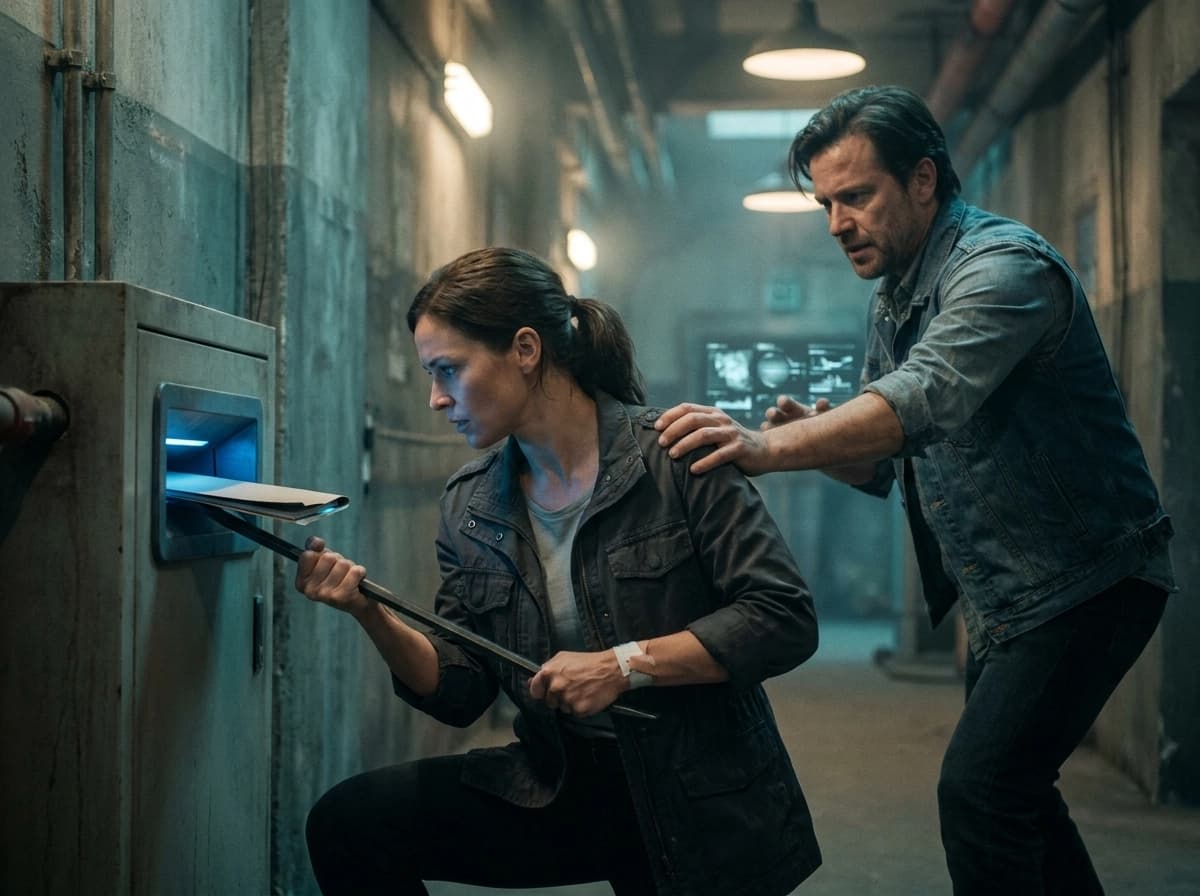
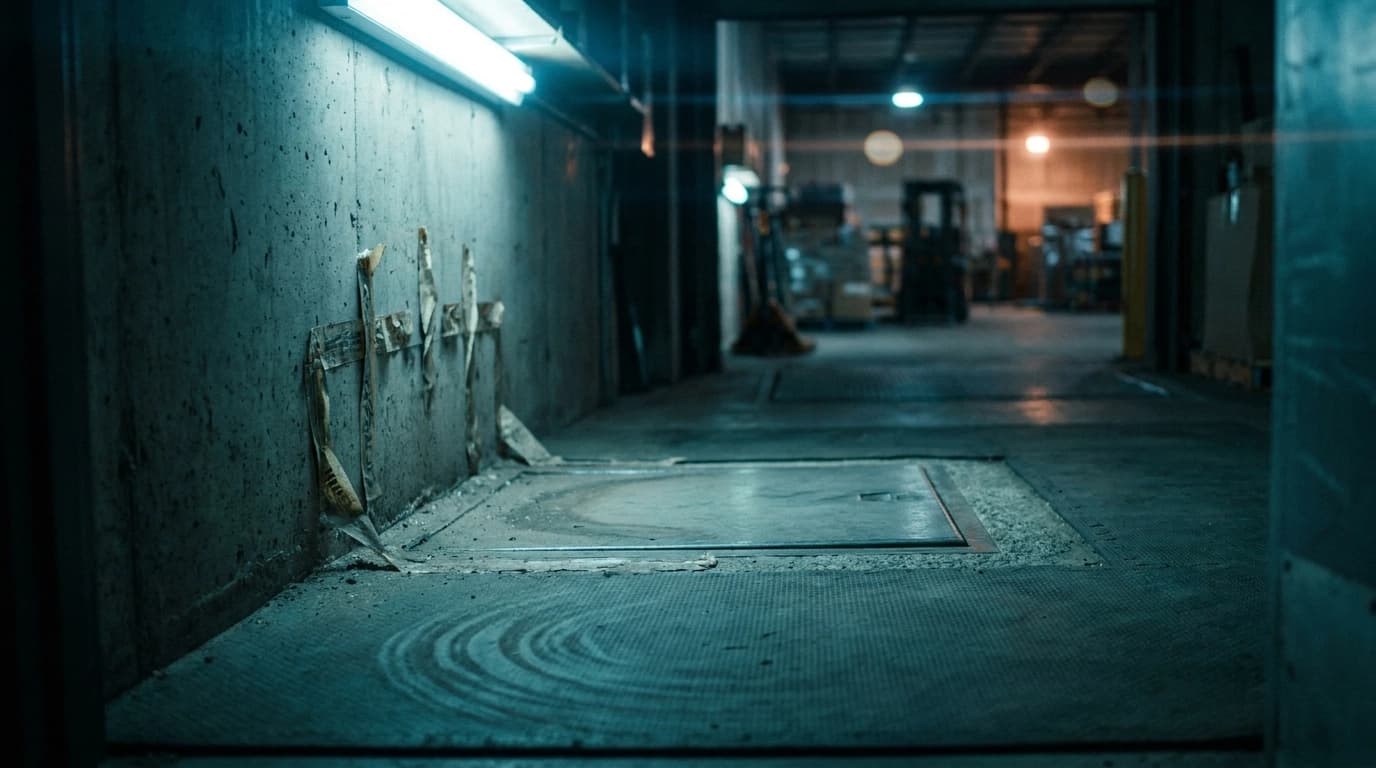
That bay has been repainted over a wheel-shaped stain, white strokes so bright they catch light like fresh snow over darker memory. But the paint doesn’t behave like new paint should. When 하늘 kneels, she doesn’t just look—she compares the tackiness to the surrounding wall marks, then scrapes at a painted “wheel” outline with the edge of a tool she shouldn’t be using. Dried paint flakes come away in stiff curls, and beneath it the concrete has a slight depression, a ring pattern as if something heavy rolled in, paused, and was pulled back out in a hurry. A hidden compartment—too clean, too deliberate—slides open when she presses the seam with the pad of her thumb.
Inside are rehearsal photos in a shuttered folder, each one stamped with dates that do not match the tour’s schedule. The inconsistency hits like a frequency drop: not “someone lied,” but “someone changed what should never be changed.” 하늘’s stomach tightens, because she knows the system is built on physical-first enforcement. If photos exist with wrong dates, then someone either broke the archive rules or swapped the identities of what the system thinks happened.
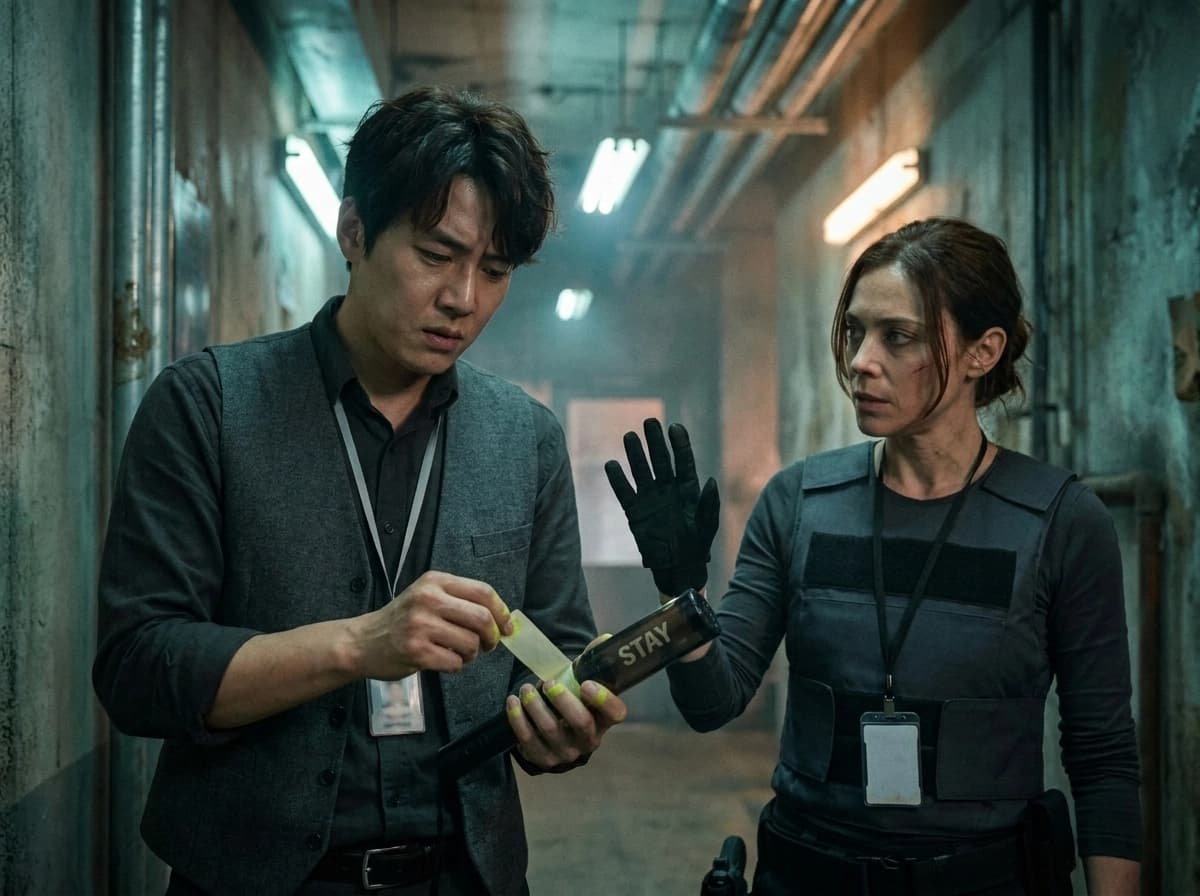
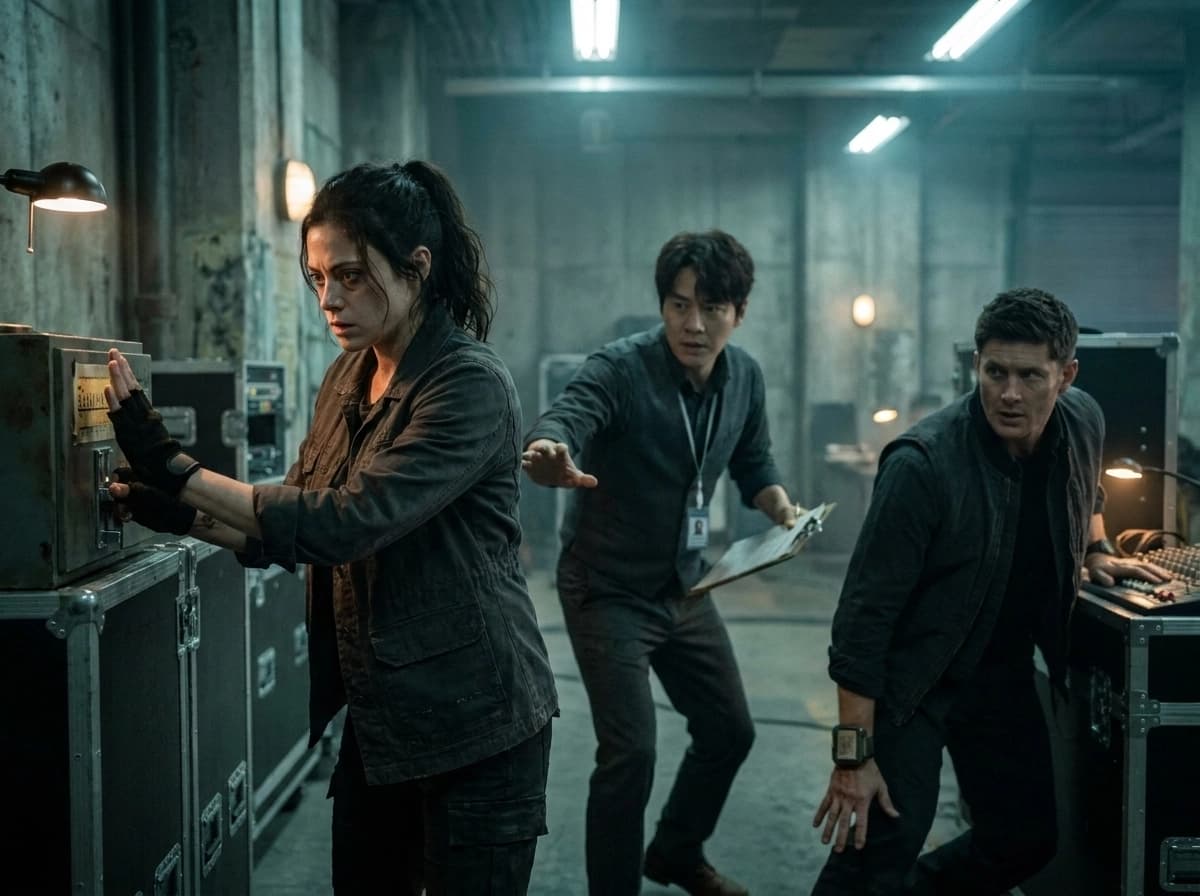
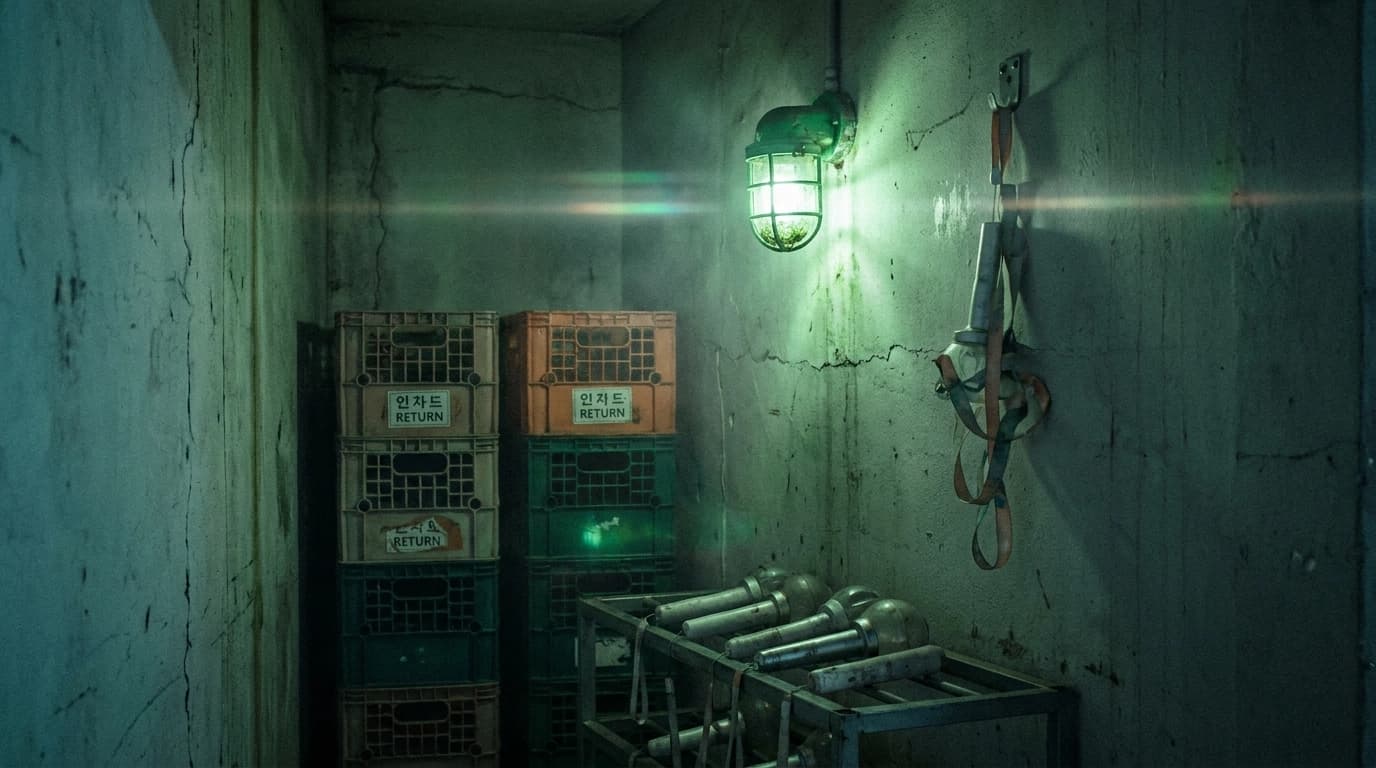
Across the bay, 민재 is wrestling with another problem he can’t afford to love. He’s the rules-and-records man, the one who believes dates because dates can be defended. He’s crouched by the prop storage alcove-adjacent wall, running his finger under tamper-evident edges on a label strip, then frowning as he finds where a label was peeled and reattached too neatly. When he pries the panel open anyway, his own STAY lightstick tumbles out—not the lightstick he carried through rehearsals, but one staged for a specific cue chain. It’s heavier, the plastic housing dulled as if handled with gloves that weren’t meant for fandom merch. Worse, its internal weighting makes the timing token’s expected response drift; the system won’t crash, it’ll “fallback” into safe ambience—silent ghost beats that leave the encore feeling like it forgot how to sound.
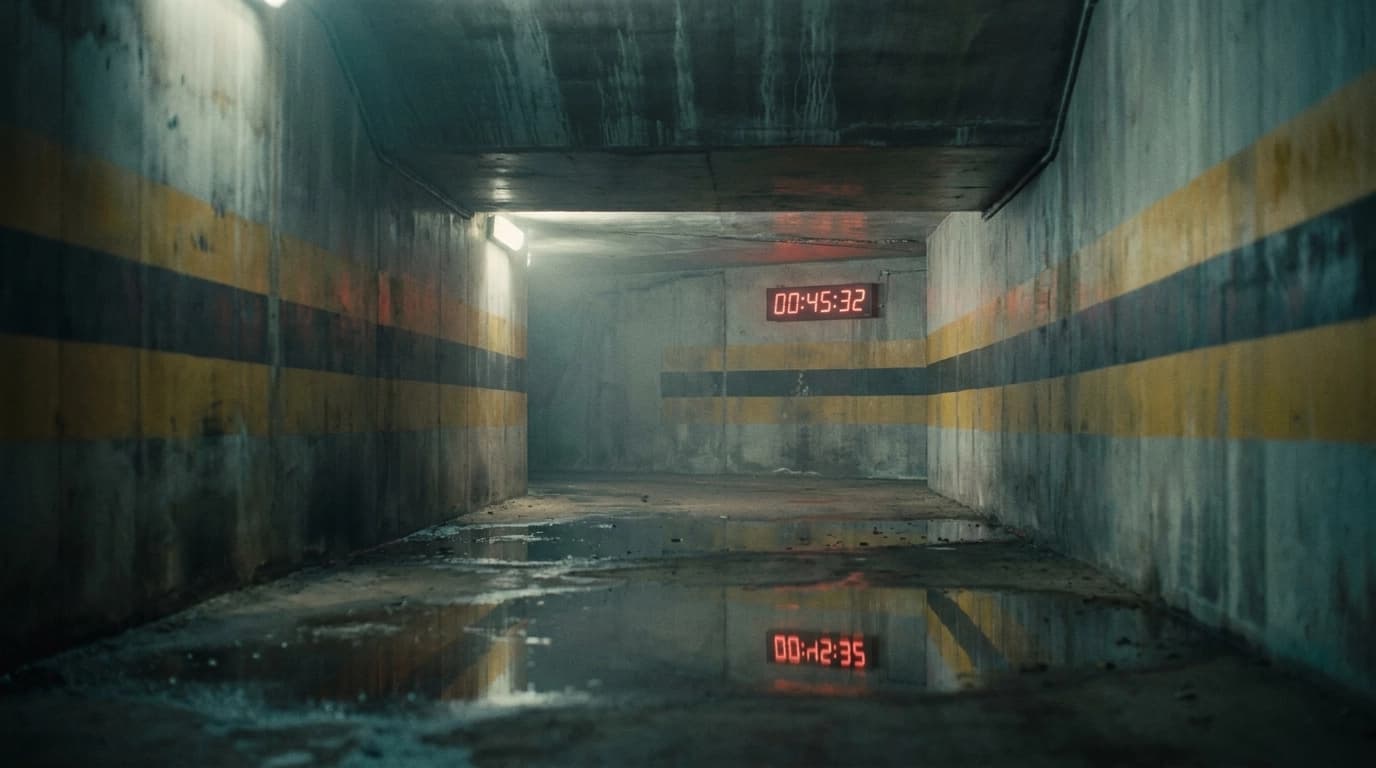
The countdown for the encore is visible on cue dashboards that staff can’t fully disable. Everyone down here pretends the clock can’t see them, but it does: numbers crisp in blue glow, ticking in the same place every night, refusing to be argued with.
하늘 and 민재 don’t have the luxury to argue about what it means. They only have enough time to make a choice about who will believe them first.
Before either of them can decide, the bay doors start to seal with a dull, soundproof thud, the kind that kills conversation and turns breath into a metronome. A second set of locks clicks. Overhead, cooling fans whir, and in the sudden tightness, 하늘 hears the barely-late tremor in her own finger, the tell she hates—the one that betrays when she thinks she’s being lied to. She looks up sharply and sees 서율 at the corridor mouth, moving like a person who has practiced being calm.
서율 is 공연 운영 부코디네이터, the person tasked with making sure the encore runs like a spotless machine. Her hands are empty, her posture unhurried, and she uses that emptiness the way others use a knife. She has the look of someone who has decided which problem is worth solving and which one is worth burying.
“Loading bay’s closed for tech verification,” she says, voice light enough to pass for friendly. Her eyes don’t land on 하늘’s knees where paint flakes still cling. They land on the direction of the concrete stain. Then they slide—too quick—toward 민재’s hands, as if she’s checking whether he touched the lightstick replacement.
하늘 stands, slow, and the scraped concrete under her boots makes a soft gritty sound. She holds up the rehearsal photos with wrong dates, not waving them like a threat but presenting them like a weight. “These aren’t from the schedule,” she says. “Someone swapped the record set.”
서율 doesn’t reach for the folder. Instead she does what she always does when she’s afraid: she rearranges the space before anyone can question her. She steps between the bay’s inner corridor and the spot where staff would naturally gather, guiding the flow with her body so people can’t accidentally cluster and compare details. “Rehearsal archives sometimes get re-stamped for internal tracking,” she says, and her smile arrives half a beat after her face moves, betraying a practiced delay.
민재 tries to anchor the conversation in the only thing he trusts: paperwork. He pulls his printed schedule from his pocket and, without thinking, presses his finger to the date column to check ink spread, then he catches himself—because his thumb hesitates on a spot where the date should have smeared but didn’t. He looks at 서율’s hand placement instead of the page. He knows this is wrong; he just can’t say it out loud yet, not with the doors closing and the corridor narrowing behind her.
하늘 doesn’t wait for 민재’s courage. She turns the photo folder toward her ear, not for sound but for the weight of memory. The dates are physically wrong. The compartment was hidden in plain logic, which means whoever did this expected staff to obey the rules—or expected them to obey the wrong rules.
She asks 서율 about the archive shutters next, and her voice steadies as she does it: questions like tools. 서율’s eyes flicker, and her right hand lifts to adjust her wrist timer sticker without thinking about whether she’s doing it in front of witnesses. The sticker’s timing is aligned to the cue wall upstream. It’s not just decoration; it’s part of how the system gates physical token chains.
“That corridor has locked access,” 서율 says. “If you were supposed to be here, you wouldn’t be making noise.”
“Noise isn’t the issue,” 하늘 replies. “The issue is your show-cue chain. We found a lightstick that won’t hold through the final cue.”
The moment she says it, the air changes. It’s subtle—only a slight sharpening of breathing at the corridor entrance, the kind of response that comes from people who’ve been trained to pretend they’re not listening. 서율’s smile tightens, then she glances to the prop storage alcove as if she’s checking whether the swapped lightstick is still where it should be. It isn’t, because 민재 has it tucked in his arms like contraband. He doesn’t realize he’s holding it so carefully until he notices her gaze.
“I didn’t know it was swapped,” 서율 says, and her voice is too smooth for that sentence. She moves closer—not to grab the lightstick, not to take the photos, but to block their route toward the corridor control alcove where a staffer could verify token availability. Her body angle makes it impossible to pass without brushing her shoulder.
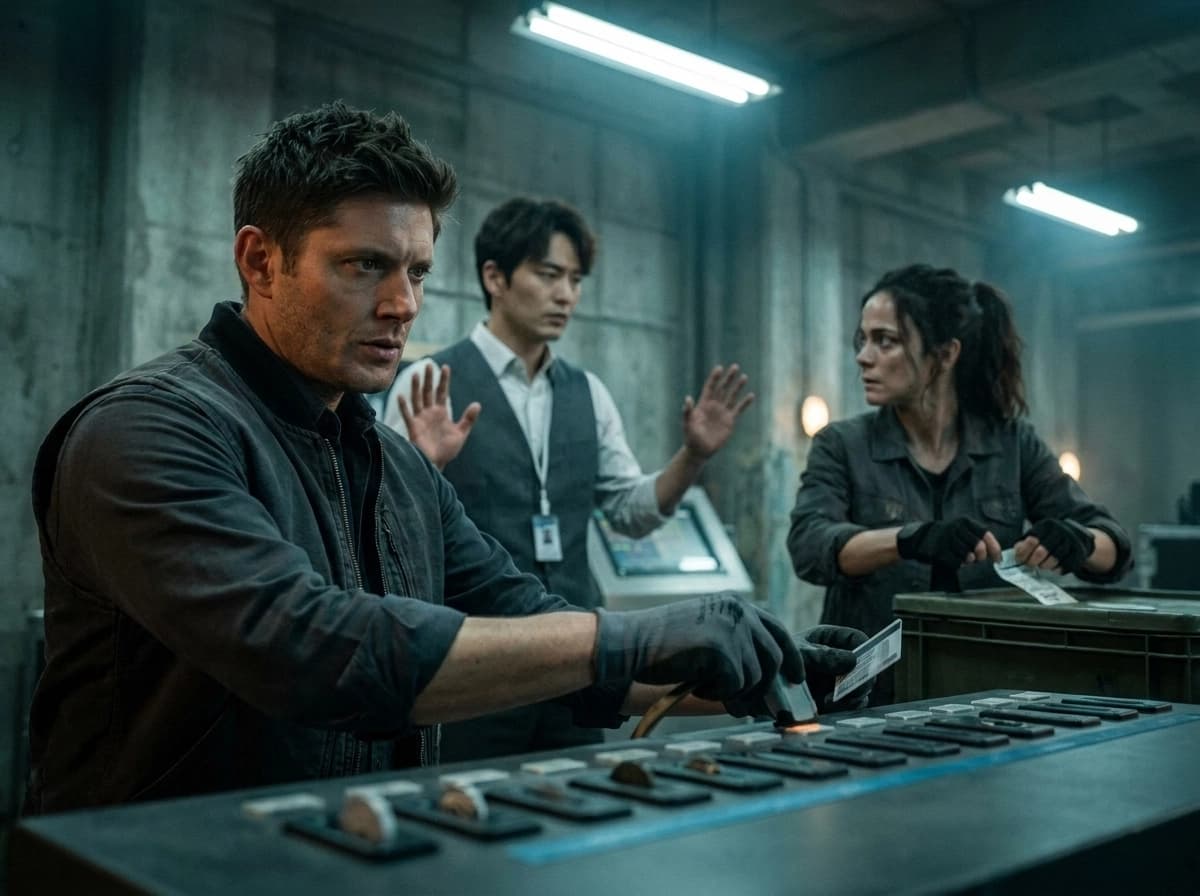
정우진 appears behind her like a door opening into a problem. He’s the 경기장 safety 담당관, and he approaches with his card reader already in his palm, checking authorization before he even checks faces. His eyes scan the wrist timer sticker on 서율, then the loading bay’s door status, then 하늘’s hands. Only after the cards and seals do his eyes settle on her expression.
“Who changed the access condition?” he asks.
서율 answers first, voice low. “Tech verification. Routine.”
정우진 doesn’t like “routine.” He steps closer and, without asking permission, reaches to the concrete near the scraped stain. He presses two fingertips into the depression and drags them along the ring pattern where 하늘 scraped. When he lifts his fingers, there’s a faint dust smear—paint conductive residue, disturbed by the scrape. He looks at 하늘’s knuckles like he’s seeing evidence under skin.
“The repaint’s conductive layer shed into dust,” he says. “That means touch panel fingerprints and registration timing can be flagged. You two—either you did it recently, or you triggered a detection window.”
민재’s throat tightens at the implication. “We didn’t repaint,” he blurts, then clamps his mouth shut like he’s just broken a rule.
정우진’s card reader beeps once, then he turns his body so it blocks the corridor again. He’s not just guarding the door; he’s deciding what story the staff will be able to tell about what happened down here. “Hand it to me,” he says, pointing at the photos and the lightstick. “We’ll log a service update. That’s how we keep this clean.”
It’s a reasonable request, but 하늘 has learned that “clean” is sometimes a mask people wear to protect the wrong person. She watches 정우진’s hands instead of his face. His thumb brushes the edge of the photo folder, and for a second she sees his wrist flex against the spot where someone might have hidden pain. He’s acting careful, but not gentle.
She doesn’t hand over everything. Instead, she splits the evidence. The rehearsal photos go into her own bag, zip closed hard enough to sound like a decision. The lightstick—because it has immediate cue-chain consequences—she places into 민재’s hands, urging him toward the panel station where they might request token verification.
Then 서율 moves.
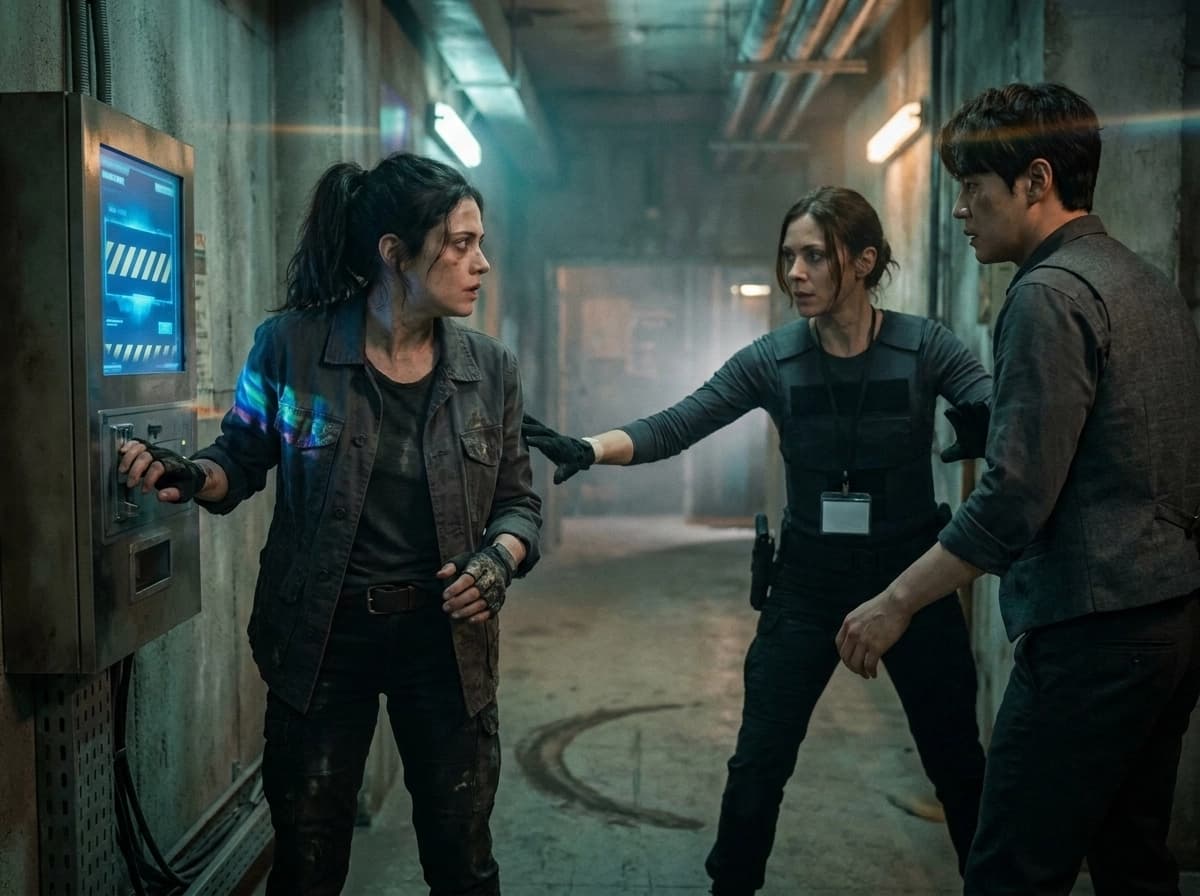
She doesn’t lunge; she corrects. Her body blocks the station precisely as 민재 tries to step forward. He can’t reach the panel without moving through her. That forces him—physically—into a moment where his hands must either let go of the lightstick or brush her to get around. 민재 hesitates, because he’s not a fighter; he’s a believer in procedure. His hands slow, and in the slowness, 서율 reaches past him toward his lightstick.
“Handover,” she says.
It’s the kind of word people use when they want compliance without negotiation. 민재 clutches harder, and in that exact tension shift, 하늘 sees the wrist timer sticker on 서율: the index mark is set for a cue window that’s not “verification.” It’s aligned to the encore’s final step chain.
하늘 understands then, with a cold clarity that feels like touching metal: the swapped lightstick isn’t only a delayed failure. It’s part of a plan that can force safe ambience at the exact moment the system expects full sound. Silent ghost beats would protect whatever footage and confirmation would otherwise be exposed—if the staff relied on audio-cued transitions to know what played, then “ghost beats” become a rumor engine.
But there’s another rule in this world: no show-critical cue triggers without the physical timing token in the exact slot chain. If the token is missing or mismatched, the system plays safe ambience. That means someone staged a mismatch, but only if the timing chain expects the substituted lightstick’s response. The system can’t be tricked through software; it’s only trickable through physical tokens and gates.
하늘’s jaw tightens. She looks down at her fingertips, where paint dust has already marked her skin. If she’s touched the wrong panels, she’ll light up in the fingerprint detection. She can feel the consequence crawling up her nerves. But she also sees what she can use: the fact that she knows scuff-map patterns and touch-window timing. Memory isn’t nostalgia here—it’s operational.
정우진 steps in, finally choosing a side with his body. He grips the corridor railing and then, in a single motion, forces 서율 back from 민재. Not with violence—he doesn’t slam her into a wall—but by turning his shoulder into her path and making her move. “Let the tech verify,” he says to 서율, eyes hard.
서율’s breath catches, and the catch is more truthful than her words. “If we verify now, the system will log open access,” she warns. “We’ll be flagged for tampering.”
“I’d rather be flagged than be blind,” 정우진 replies.
It’s the first time he sounds like a person, not a policy. 하늘 hears the mentor wound in it—the way he’d rather hold someone accountable than let someone vanish from the record.
민재 uses the opening. He shoves past the station gate, almost tripping on the cable tray edge. The station touch panel glows blue, and he presses his fingerprint. The panel briefly stutters—registrations shifting as if dust has changed how it reads. A warning pops up: SERVICE-LOG UPDATE REQUIRED, within the same hour, because repaint residue disturbed the conductive layer. The system is already watching, and the warning confirms that the floor was altered recently enough to matter.
민재’s hands shake as he tries to keep his voice steady. “We can’t run this without logging,” he says, and he’s not asking. He’s pleading with the machine and with the people around him to let him do the right thing.
서율 tries to cut in, but 정우진 blocks her again, making their bodies a barrier between control and chaos. 하늘 takes that moment to pull the scraped concrete data from memory—not from a screen, but from her own muscle memory of prior sessions. She remembers the scuff-map from earlier technical rehearsals: which cable trays carry which marks, which direction the routing crew would have moved. She points at a specific cable tray segment on the floor and presses her palm near it, feeling the dust pattern match the shape she remembers. The scuff-map doesn’t lie because it’s not meant to be edited.
“This line,” 하늘 says. “Someone routed timing differently. Their fingerprints are already on the dust.”
정우진 follows her gesture, then kneels and pulls the cable tray access cap halfway open. He doesn’t have to force it; the cap resists in the way it does when someone has loosened it before. Under the cap, there’s a service port with a physical timing token connector—one that should have been seated earlier. It isn’t. The connector’s contacts show slight oxidation from being exposed too long, but the oxidation is scraped recently, which means someone removed the token and hid it elsewhere.
That’s the reversal that tightens everything. The photos with wrong dates weren’t only a story about hidden footage. They were a cover for a missing or swapped timing token chain. Silent ghost beats are the system’s fallback when the physical token isn’t in the right place. Someone didn’t merely want no sound; they wanted the system to choose safe ambience at the encore’s most revealing moment.
The question becomes who’s protecting whom. 정우진’s face looks briefly haunted, as if he’s remembering an injury he once blamed on himself. He reaches into his jacket and pulls out a spare authorization card—one not meant for this level of access. His hand trembles. “If I hand this to the wrong person,” he says quietly to 하늘, “they’ll bury the token before the encore. If I don’t—”
“Then the system will play ghost beats,” 하늘 finishes, and her voice goes tight. The countdown is still running on the cue dashboards, visible through the corridor mouth. Even without numbers, you can feel the time tightening into skin.
민재 looks between them with rule-keeper panic. “We need to lock the archive shutters so the photos can’t be tampered with,” he says. “We need verification. We need an official log.”
서율’s elegance cracks into something sharper. “Official logs invite audits,” she says. “Audits invite questions. Questions—” She stops herself, but stops only because her breath got too loud. Her eyes flick toward the bay doors now half sealed, the gap narrowing enough to make exit harder.
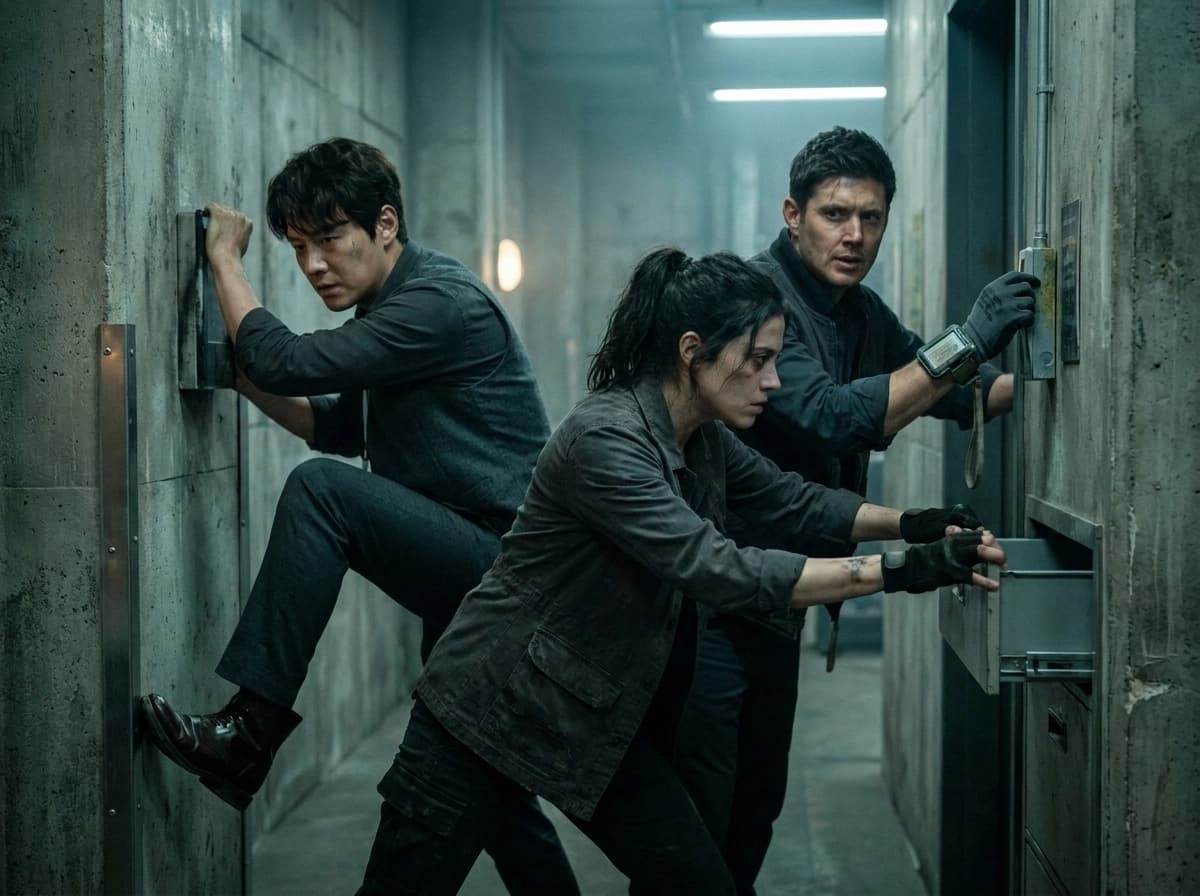
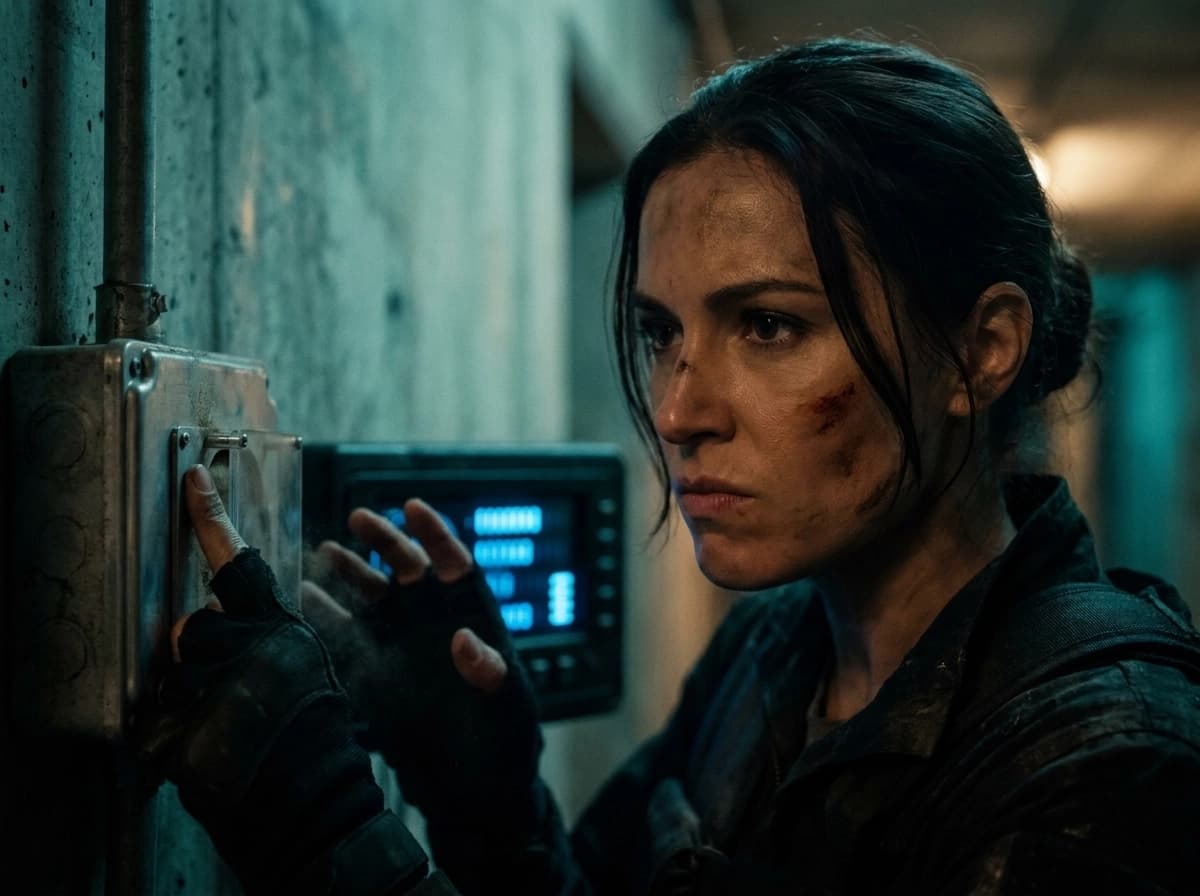
하늘 makes her decision with physical speed because hesitation is what the world punishes. She steps toward the bay door seam where the soundproof lock mechanism meets the corridor’s service duct. She knows the access points; she’s been reading them for days with her fingertips. She palms the door seam, feeling the micro-vibrations in the lock actuator. Her memory maps the vibration frequency to the lock’s internal cycle state. When the door’s internal solenoid clicks, she pulls—hard enough to shock the mechanism but not hard enough to break it.
The bay door doesn’t open fully. It unlocks just enough for the corridor airflow to change, and in that micro-change, the fingerprints on the panel touch panel register again—new fingerprints appear in the service log feed, which means the system is now confident tampering occurred. The system is not fooled; it’s simply forced into collecting evidence at the wrong time.
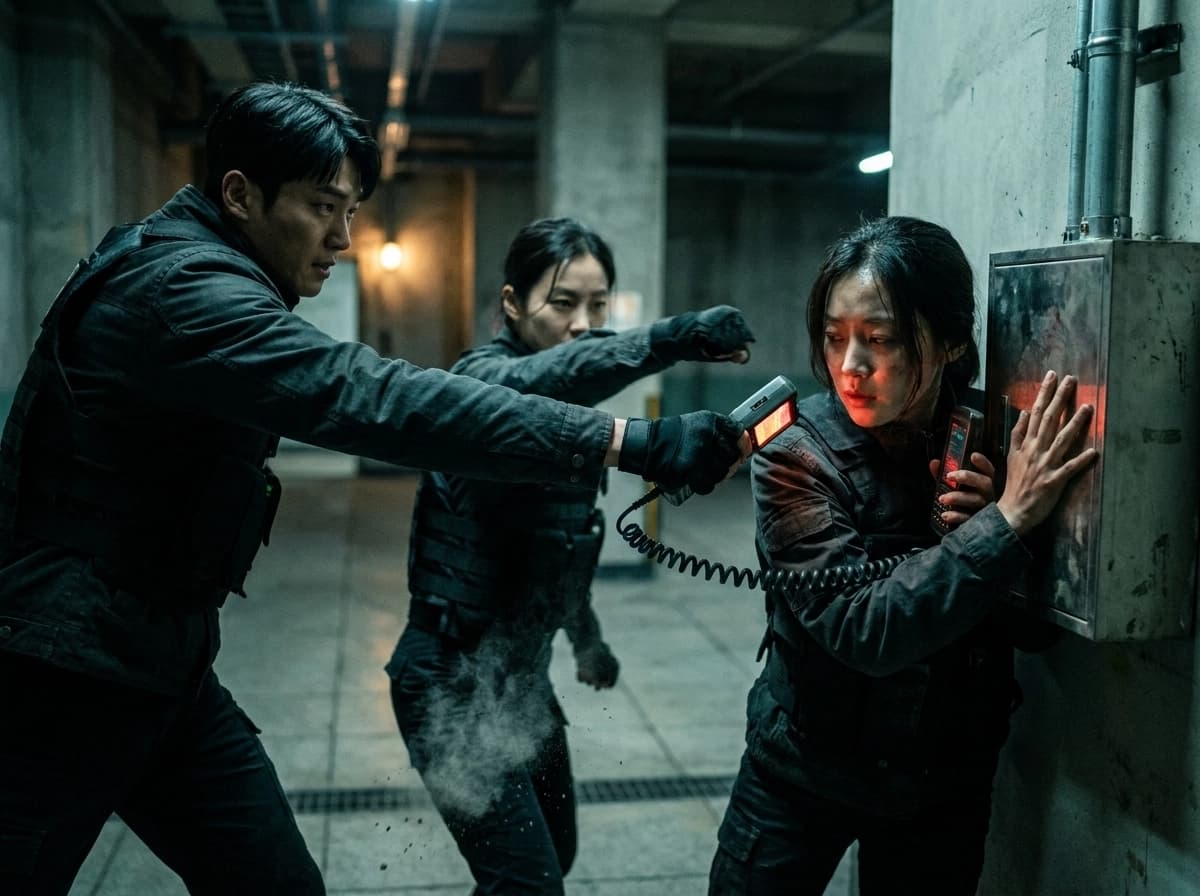
정우진 moves immediately, grabbing a handheld terminal from a nearby kit and snapping it to the cable tray access port to request a physical token verification report. He never touches a console alone for long; instead he does something hands-on—he plugs a cable directly into the timing token slot and checks whether a token response comes back. The device chirps once, then fails to confirm an expected signature. Safe ambience fallback is imminent if the encore cue chain runs without the correct token response.
서율 lunges for the handheld terminal—not to destroy it, but to stop the request. She gets her fingers on it and then realizes 정우진’s body is between her and the corridor exit. He doesn’t strike her; he wedges his forearm against her wrist, forcing her fingers off the device. In the tight space, dust shakes from the cable tray cap, and it settles on her wrist timer sticker. For a second, the sticker’s clear outer film shows smeared residue—paint conductive dust—like a fingerprint rendered visible.
“Now you’re flagged,” she whispers, and her voice is angry at the world, not at them.
하늘 doesn’t answer. She can’t afford comfort now. She turns and points to 민재. “The only way to fix the cue chain before the encore is to place the correct timing token into the exact slot chain while the system is still in verification mode,” she says. “Safe ambience will ruin the show if the mismatch persists.”
민재 swallows hard, clutching the heavy swapped lightstick like a regret. “I can’t access the archive shutters without the right card,” he says. “Forcing entry locks them until a low threshold near the encore.”
“Then we don’t force,” 하늘 replies. “We use what we already have.” She grabs the folder of rehearsal photos from her bag and slides it toward 정우진. “The wrong dates—those should still be signed inside the shutter system if the tamper seals can be verified from the archive’s side.”
정우진 looks at the photos, and his jaw tightens. He’s sympathetic in the way that makes him dangerous—if he believes a person is being protected, he’ll bend rules. He taps his access card against the terminal’s side port and triggers a shutter-seal read request for the archive room. The handheld terminal displays a seal status indicator, but only after a physical handshake. It’s a slow read, the kind that feels like waiting for someone to wake up.
While it runs, 서율 tries one last maneuver: she yanks the bay’s inner power panel cover halfway open and reaches into the wiring for the cue timing bypass line—the kind that exists for technical staff tests. It’s dangerous, but she knows that if she can disrupt the verification window, she can erase this moment’s evidence before it gets logged correctly. She’s not aiming for violence; she’s aiming for control.
정우진 sees her hand on the wiring and moves faster than his own conscience. He slams the panel cover back into place with his forearm, then hooks his hand around her wrist and pulls it away from the conduit. 서율 jerks, breath hissing, and the timer sticker on her wrist gets scraped by the edge of the panel cover. The sticker peels just enough to reveal residue beneath—evidence of her timing alignment. She stares at it like it’s a bruise appearing under skin.
“Enough,” he says, and it’s the voice of someone who has chosen mercy badly before and is trying not to repeat it.
The shutter-seal read finishes. The terminal’s seal indicator shows that the archive shutters were opened and re-closed with a tamper-evident reset inconsistent with the week’s schedule. More importantly, it flags a specific rehearsal-photo set that should not exist. A “ghost set” created through a token mismatch and re-stamped through the same hour service window.
The consequences click into place like physical parts. Whoever swapped the lightsticks and dates didn’t just want to hide footage; they wanted to guide the encore into the system’s safe ambience fallback at the exact cue wall moment when the missing footage would otherwise force an emergency stop. If the show goes silent, the staff can claim a technical failure and never have to explain why the record set is wrong.
“Hand me the correct timing token location,” 하늘 says to 정우진.
정우진 doesn’t give her a location from a screen. He looks around, then points at the adjacent prop storage alcove where normal inventory scan logic would be bypassed. He knows that alcove because he’s watched people hide things there before. He doesn’t say names, but his eyes tell 하늘 that he’s seen this pattern on someone else’s body once—an injury, a cover-up, a moment he failed to document properly.
They move together into the prop storage alcove’s narrow staging lane, where the air is colder and the smell of plastic and tape sits over concrete dust. The alcove contains tamper-evident labels that look legitimate. 서율 follows, still trying to recover control, because she can’t walk away from the apparatus once it’s already exposing her strategy. 민재 trails with the swapped lightstick, his fingers white-knuckled around it, like he’s afraid dropping it will break the only proof he has.
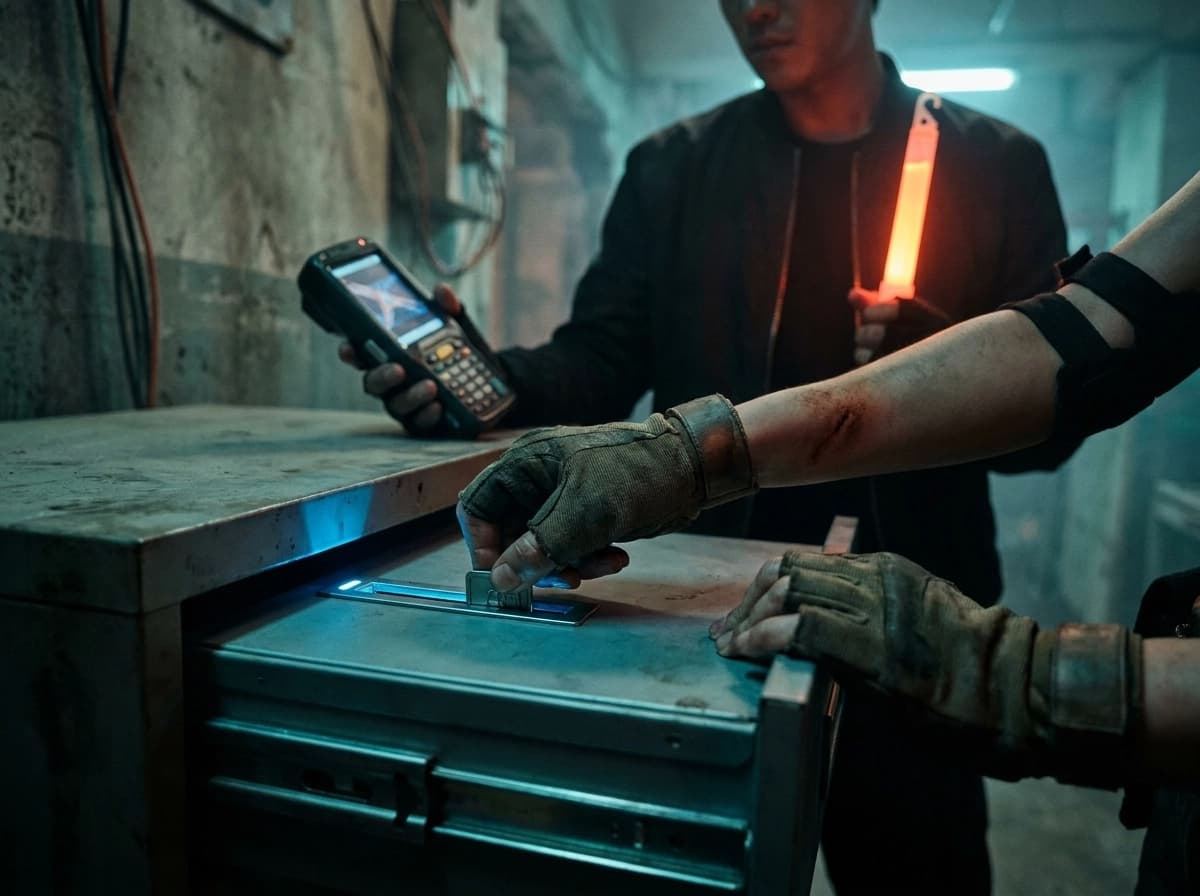
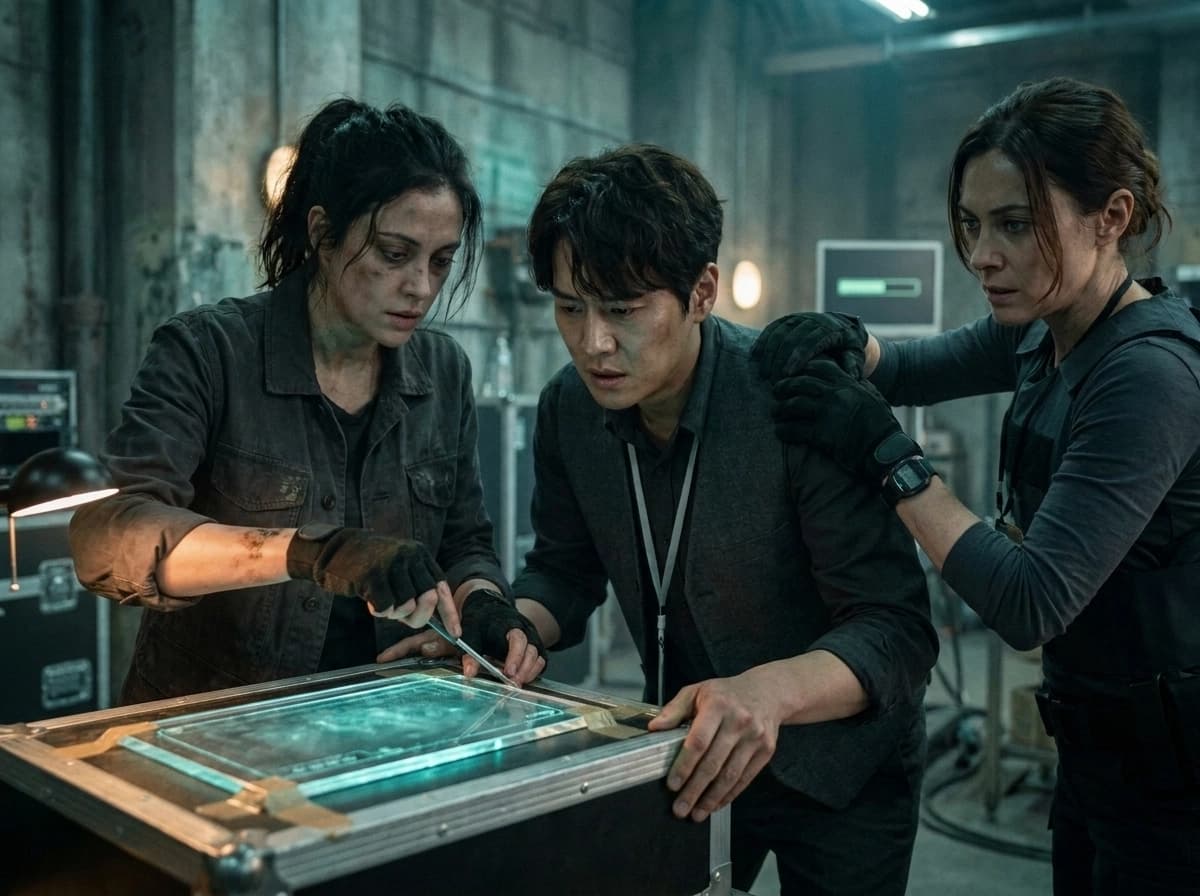
At the back of the alcove, under a label that’s too perfectly centered, they find a small compartment glued shut with conductive residue. 하늘 wedges a thin pry tool into the seam, then pauses—because the world rule says forcing entry without the correct card locks shutters until the encore countdown hits a low threshold. This isn’t a shutter. It’s a physical token compartment, and the system treats token chains like sacred enforcement. If they destroy the wrong seal, the token may not be recognized by the cue chain.
So 하늘 does what she does best: she reads. She traces the label edge with her fingertip until the dust pattern matches the expected tamper outline. Then she peels the label away gently, lifting it like a scab. Inside, a timing token rests in a slot shaped for a specific lightstick response. It’s the correct token, but it’s been staged to pair with the wrong lightstick—meaning the system is set up so that if the substituted heavy prop is used, the token handshake will mismatch and safe ambience will trigger. If they swap the lightstick back while inserting the correct token, the cue chain will pass and full sound will run as normal—and, critically, it will also force the system to log that the mismatch was intentional.
It’s a narrow window. The cue dashboard numbers are still visible through the corridor mouth, and now the time feels like it’s accelerating inside a sealed container.
민재 pulls out the swapped heavy lightstick and holds it up with a trembling breath. “If I put this back into the timing chain, it’ll trigger safe ambience,” he says.
“Then don’t,” 하늘 replies.
But 서율 is between them and the alcove’s release lever now. She grips the lever housing and looks straight at 민재. “You don’t understand what happens if the show doesn’t go into fallback,” she says. Her voice cracks just enough to show fear. “The missing footage will come up. The people above us will have to explain why their protection plans required silence.”
She’s sympathetic, in the way a sympathetic villain is dangerous. She isn’t lying about the stakes—she’s just trying to steer them away from the truth. She believes that controlling what STAY audiences hear will protect someone. Or she believes it will protect herself long enough to win the argument.
정우진 steps close, and instead of arguing with her, he does something physical. He takes her wrist timer sticker with two fingers and peels it halfway off, revealing adhesive residue that matches the conductive dust patterns they saw on the concrete scrape. “Your protection requires tampering,” he says. “That’s not mercy. That’s leverage.”
서율’s face goes pale beneath the corridor’s blue screens glow. She tries to twist away, but 정우진 holds her steady for one second longer than she expects. In that second, 하늘 inserts the correct timing token into the alcove’s exact slot chain, aligning it by the connector’s physical notches. Her fingertips feel for the moment the token seats—micro-click, slight vibration shift. She doesn’t trust software to tell her what she’s already felt.
Then 민재 swaps the lightstick. He removes the heavier prop and replaces it with his own original STAY lightstick from his bag, the one he brought down here, the one that will match the token’s response. The moment the lightstick clicks into the staging mount, the alcove’s interface panel flashes green—not a reassuring “everything’s fine,” but a hard, undeniable acknowledgement that the physical chain is now correct.
They sprint back into the loading bay and toward the cue wall corridor, where the encore cue wall screens glow in blue and the safe ambience fallback indicator is visible in the margins. The doors are still partially sealed; sweat slicks their shirts. 하늘 keeps her hand near the fingerprint-sensitive panels without touching them, afraid of leaving more evidence trails—because evidence, in this world, isn’t only punishment. It’s how the truth survives.
The last cue approaches. For a breath, everything holds: fans upstairs, stage crew waiting, numbers ticking down like a countdown that can’t be edited.
Then, on the encore system cue wall, the expected safe ambience status fails to trigger. There’s a flicker, a delayed recalculation, like the machine is embarrassed it was ever convinced. The ghost-beat fallback doesn’t happen. Full sound cues resume instead.
The first sound of the encore hits the air like someone throwing open a window. It’s not just music; it’s the proof of a correct physical chain. The system’s timing now matches the past scuff-map and the rehearsal-photo set’s “should-have-been” configuration.
But the story doesn’t end at victory, because victory exposes a new threat: the archive’s wrong-date rehearsal photos will now be treated as active anomalies. The system begins to pull related logs—service-log update feeds, token handshake histories, and tamper seal discrepancies. The same evidence that will clear the show is the evidence that will implicate whoever tried to force silent ghost beats in the first place.
As STAY fans cheer out there, 서율 stands in the corridor’s blue light, her wrist timer sticker half peeled, breathing hard as if she’s been running for years rather than minutes. She looks at 하늘 and 민재 like they’ve stolen something from her—because from her perspective, they’ve interrupted her plan to protect someone by controlling the record. 정우진 doesn’t comfort her. He documents with his body: he keeps the corridor from collapsing into chaos, blocking exits so staff can’t erase evidence. He hands the token and the sealed photos to the right auditing chain, and he does it in front of everyone so no one can claim it was fabricated later.
하늘’s hands stop trembling only after the cue wall confirms the show has passed the final cue with correct sound. Then, finally, she does what she always does: she returns to the bay floor and studies the scuff-map area where the paint dust settled. She doesn’t do it because she loves puzzles. She does it because memory is how she keeps people from being rewritten.
민재 exhales for the first time since the doors locked. “I wanted to trust the schedule,” he says, voice ragged. “I thought if the dates were wrong, it was a mistake we could correct.”
“Some mistakes are staged,” 하늘 replies, looking at 서율’s peeled timer sticker residue on her own hands—proof that conductive dust transfers and that tampering leaves fingerprints whether anyone wants it to or not. The world rule makes sure of that.
By the time the encore is fully underway, the system is already archiving the discrepancy. Safe ambience has been avoided, which means the missing footage truth won’t have to stay rumor; it will have a paper trail, a token chain, a physical-scuff record that only people with memory as battleground would recognize.
In the end, 하늘 and 민재 don’t just save a show. They force the stadium’s hidden logistics conscience to tell the truth, in real time, with their own bodies in the path between control and erasure—while 서율 and 정우진 stand on either side of the line, each convinced they’re choosing mercy, and both forced to reckon with what “protecting” really costs when the evidence is already on the floor.